Wild Search (伴我闖天涯, Ringo Lam Ling-Tun, 1989)

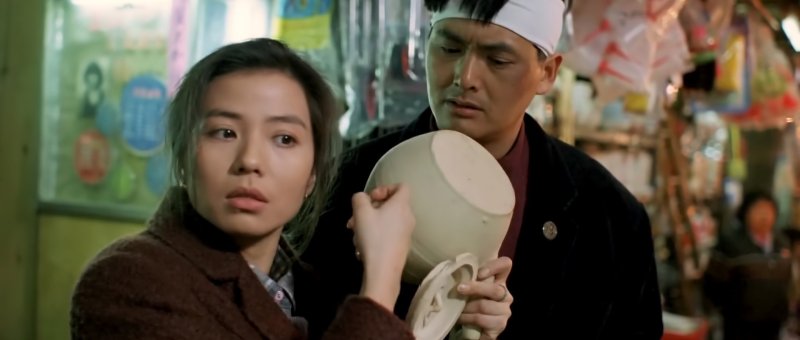
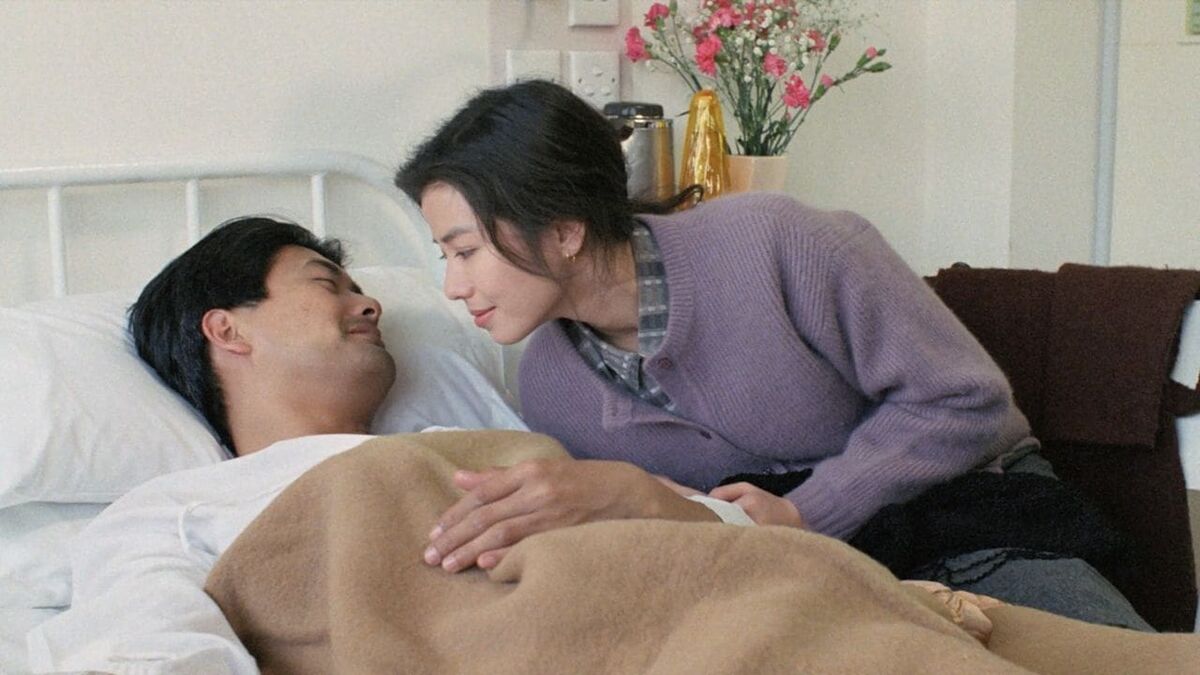
Loosely inspired by Peter Weir’s Witness, Ringo Lam’s Wild Search (伴我闖天涯) sees Chow Yun-fat’s melancholy cop falling for Cherie Chung’s isolated village girl while chasing down arms dealers in a changing Hong Kong. Just as Mew-Mew enters the more traditional world of the inland Chinese community, Hong Kong also seems to be facing incursions from the outside while becoming richer and more sophisticated as a burgeoning financial centre.

This clash of cultures can perhaps be seen in the relationship between Elaine (Elaine Jin), an antiques dealer from the inland Chinese village, and Hung (Paul Chun), a Chinese-Vietnamese gangster with friends in high places. Suckered into using her antique shop as a front to smuggle guns in from Vietnam and sell them on to Japanese yakuza, when is Elaine killed by one of her own men during a police raid Hung denies all knowledge of her and refuses to accept paternity of her now orphaned daughter Ka-Ka. He says that he has plenty of mistresses and suggests to Mew-Mew that he is essentially untouchable thanks to his connections. 

Hung appears to be the source of corruption both the inland Chinese community and Hong Kong as a whole. Elaine’s father has disowned her because of her relationship with Hung and having a child out of wedlock. Despite her orphanhood, the grandfather (Ku Feng) rejects Ka-Ka, refusing to speak to her or waving a knife in her face and screaming that he’ll sell her if she doesn’t stop crying. Mew-Mew first bonds with her because she’s the only witness in his arms dealing case, but also adopts a quasi-paternal position over her largely because no one else is willing to do so. He also draws closer to Elaine’s sister Cher (Cherie Chung Chor-hung) who is caring for Ka-ka, even if the implication is that she is the pure-hearted innocent uncorrupted by contemporary capitalism unlike her sister who went to the city.

But there are incursions and corruptions even within the Inland Chinese community as Cher is pressured by her ex-husband who spent a long time in China where he had another woman and a family he kept secret from Cher. Now he’s insistent on moving back into the family home despite being officially divorced, and becomes increasingly paranoid about Cher’s relationship with Mew-Mew. There might then be a minor irony in the fact that Leung had a wife and son in China, while Mew-Mew is also a widower who lost his wife and son and was originally wary of embarking on another romance. 

Nevertheless, there is a kind of healing that takes place through these interconnected relationships that eventually squeezes the Vietnamese gangsters out. Though he resented Ka-ka as a symbol of all the ways his daughter had wronged him, the grandfather eventually comes to love and accept his grandaughter. Leung, meanwhile, ends up going completely crazy when he begins to realise that Cher has chosen Mew-Mew but eventually concedes defeat on witnessing Mew-Mew’s selflessness when he rescues him from the marauding gangsters even though he’d just been trying to kill him with a meat cleaver a few moments ago. Hung, by contrast, is laid low when his men start turning against him in the hope of better treatment.

Somehow, this world that had seemed broken beyond repair in the opening scenes in which the Christmas lights and neon signs are juxtaposed with scenes of women escaping violent men and bloodied corpses in the street, has been made whole again and not least through the repeated refrains of Teresa Teng’s The Moon Represents My Heart along with shots of the moon above Hong Kong that echo the innocence of the romance that arises between Mew-Mew and Cher. To that extent, the action scenes may play second fiddle to the drama but are also themselves visceral and kinetic from the high-speed car chases to the final showdown in which the gangsters make it all the way to the village as Mew-Mew’s romantic and professional lives collide in a bloody fight to the death with the twin forces of their corruption. While the gangsters might be willing to unleash terror in public places little caring for the lives of ordinary people, Mew-Mew and friends will seemingly counter that with compassion and solidarity while protecting all that they hold dear.


Trailer (Traditional Chinese / English subtitles)

The Heroic Trio (東方三俠, Johnnie To, 1993)

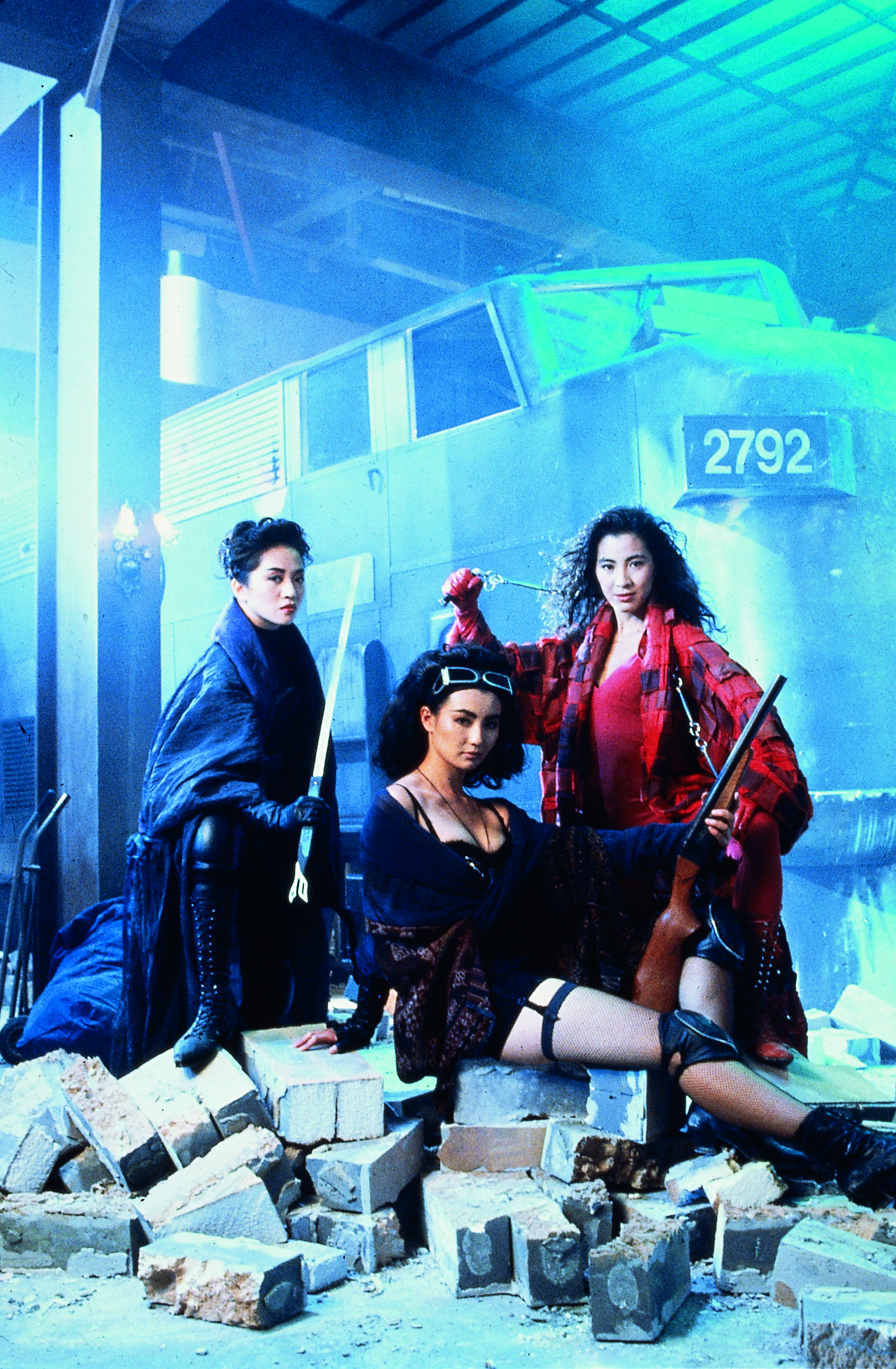
Female solidarity becomes an unexpected weapon against stealthy authoritarian take over in Johnnie To’s gloriously camp superhero action fest, The Heroic Trio (東方三俠). Uniting three of the top stars of the age in Anita Mui, Maggie Cheung, and Michelle Yeoh the film flirts with Handover anxiety in the “Evil Religion” that threatens to steal the children of Hong Kong, but eventually locates the source of salvation in the heroine’s shared humanity brokered by a tripartite solidarity of justice and equality that defies both the patriarchal world around them and the cruel authoritarianism in which they have been raised. 

In an almost biblical allegory, large numbers of male infants have been going missing over the last 18 months and the police are, predictably, mystified relying on the reappearance of the mysterious superhero Wonder Woman to solve the mystery herself. Truth be told, top Inspector Lau (Damian Lau Chung-Yan) hasn’t yet realised that Wonder Woman is his own wife, Tung (Anita Mui Yim-Fong), so perhaps his investigative skills aren’t all that despite the dynamism of the opening scenes which see him demonstrate his masculinity by leaping out of a window stop a thief from driving off in his classic car which is parked outside a creepy mansion in the middle of nowhere. Nothing really gets done until the chief of police gets a note that his own infant son is next on the list, though he briefly considers simply swapping his kid for another couple’s child while hiring “Thief Catcher” Chat (Maggie Cheung Man-Yuk) to get him back when he’s kidnapped by an “Invisible Woman”, Ching (Michelle Yeoh), whom Tung manages to wound while saving the decoy baby. 

As it turns out, Ching has been taking the babies on behalf of “Evil Master” (Yen Shi-Kwan) who lives in an underground lair in the sewers and is the head of a mysterious cult hellbent on finding a new king for China. There may be a degree of Handover anxiety in Evil Master’s mission, seeking to possess and control Hong Kong by brainwashing its children eventually possessing Ching by removing her bodily autonomy while her sisters must quite literally free her from his icy grasp. Each of the kidnapped boys is said to have a divine destiny, though Evil Master doesn’t know which one is the new king and has a habit of simply killing the ones who disappoint him while the others are raised as mindless automatons consuming those like them and destined to become thoughtless killing machines like the bloodthirsty Kau (Anthony Wong Chau-Sang). 

Chat, who was raised as one of Evil Master’s minions but managed to escape thanks to the largess of Ching and his since become an ultra-capitalist bounty hunter if one less cynical than she originally seems, thinks it’s better to simply end the cannibal kids’ misery before they end up like Kau while Tung prioritises saving the infants so they can be returned to their parents before being subject to one of Evil Master’s weird rituals. Ching, meanwhile, is only participating in Evil Master’s plan to protect the man she loves, a mad scientist slowly succumbing to poisoning caused by his invention in true genre fashion. It is then in a sense love that causes Ching to reject her programming, but it’s the solidarity of Tung and Chat, along with a desire for vengeance, that finally gives her the courage to rebel. 

In a brief flashback, Tung had failed to save Ching during a tough training session with their mentor who had cruelly told her that she’d have to fight for justice alone while Ching, cast out, sought support by turning to the dark side. The scene repeats itself twice in the film’s closing scenes in which Tung is this time able to save Ching but only because of the support from their friend and equal Chat making up the third point of the triangle and anchoring them both firmly to ensure they will not fall. “Life is meaningful if you can face yourself” Tung tells Ching, shedding her mask having presumably dealt with her own dark past and pulling her sister up with her as an equal leaving the past behind to fight for a future of justice and freedom. 

To and action director Ching Siu-tung recast Hong Kong as Gotham with a production design quite clearly inspired by Western comic books in which the three heroines end by getting fancy capes that flicker in the wind. Chat, a motorcycle-riding delinquent force of nature, even at one point launches herself into battle on an oil drum propelled by dynamite which she later uses to take out the cannibal kids not to mention Evil Master himself. But it turns out the spectre of creepy, ritualistic authoritarianism doesn’t die so easily, Evil Master’s charred skeleton gets back up for one last hurrah until his brain finally explodes when confronted by Ching’s rejection having returned to the fold and now ready to sacrifice herself for a freer future for all. Essentially a comic book wuxia, To’s ironic action drama allows its heroic trio to find salvation in female solidarity anchoring each other in a world beset by fear and villainy.


The Heroic Trio screened as part of this year’s San Diego Asian Film Festival.