Maru (まる, Naoko Ogigami, 2024)

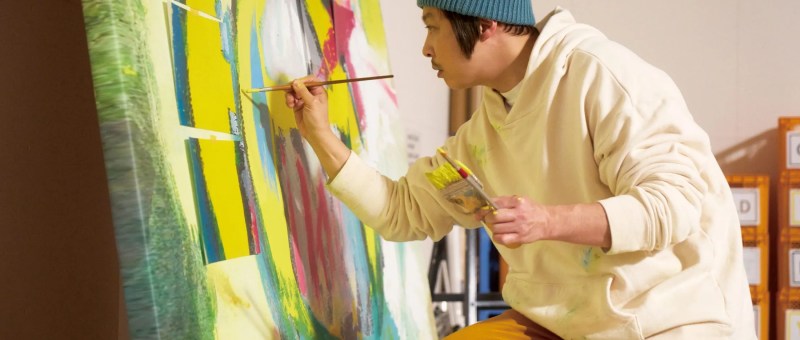
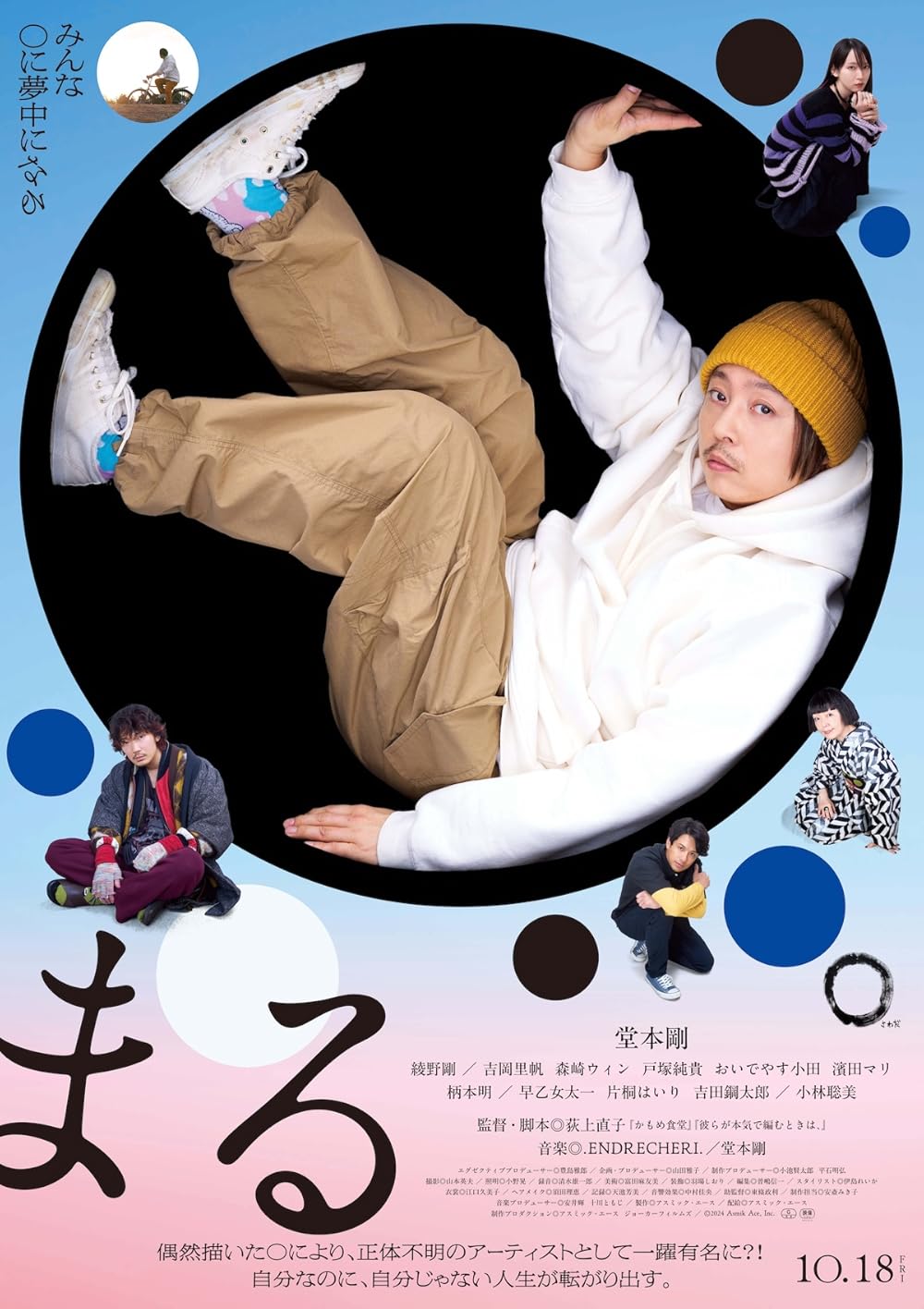
Taken to task by a coworker (Riho Yoshioka) for allowing himself to be exploited as an assistant to an internationally famous artist who views them as little more than tools and takes all the credit for their work, Sawada (Tsuyoshi Domoto) asks if she knows who built Horyu Temple. He has to supply the answer himself, Prince Shotoku. But of course, he didn’t. It wasn’t  as If he drew up the plans or cut the wood with his own hands. 1300 carpenters built it, but no one thinks about them. Only about Prince Shotoku, because he commissioned the work and paid for it. Sawada doesn’t think what he’s doing is all that different, and that times haven’t really changed all that much. Not many people get to make a living doing what they love, so perhaps that’s enough for him. 

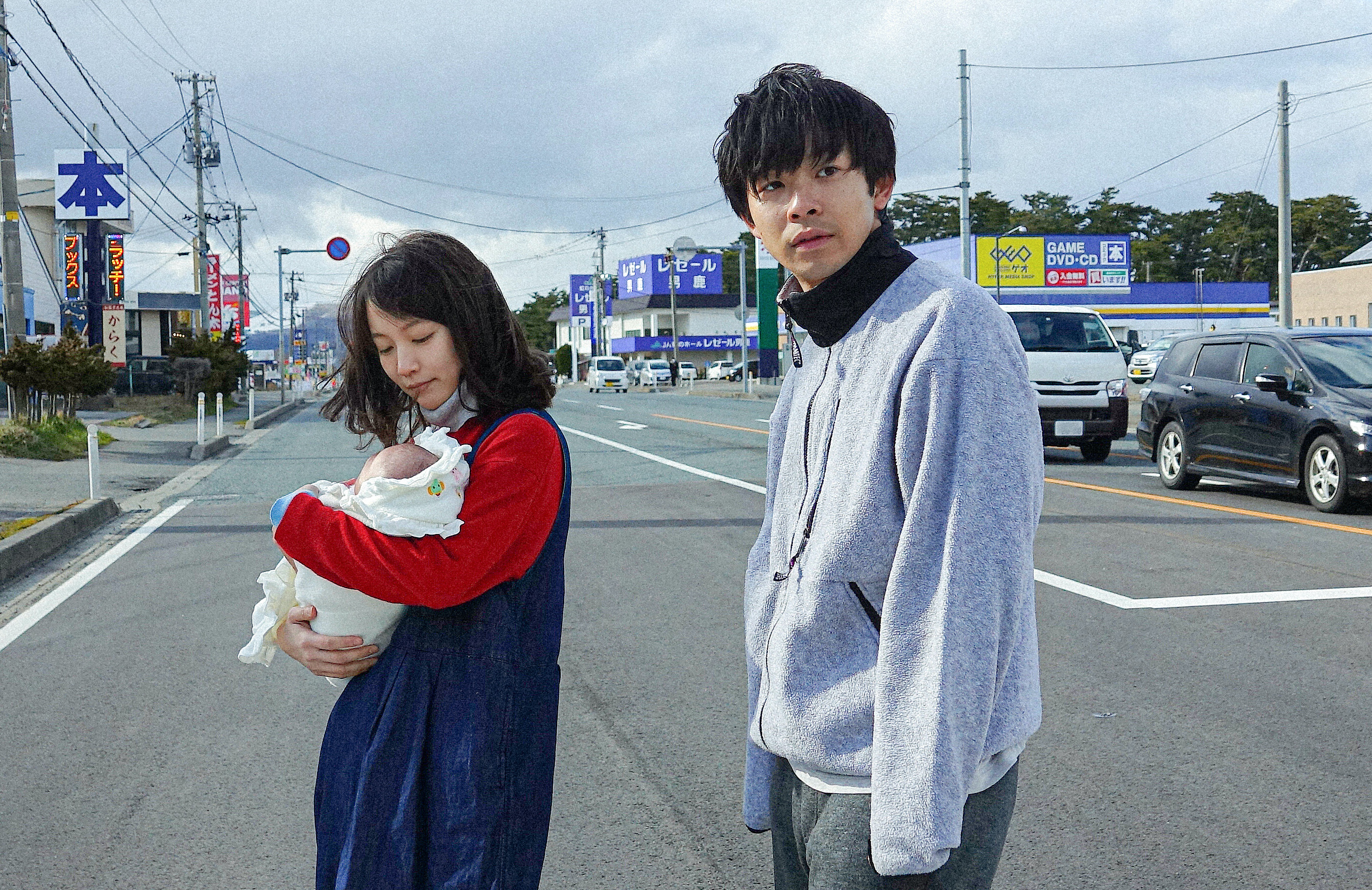
But his colleague asks if he sees himself more as a worker than an artist, as if she were unintentionally making a value judgement on the nature of art. The line between artist and artisan maybe so thin as to not exist, but why is it that we think of art which is perceived to have a practical application differently from that which we assume is intended only as a means of self-expression? “What about your own art?” she asks Sawada, but he doesn’t really have a notion of it because he’s been so focussed on earning a living as part of a wider capitalist superstructure in which art too is a commodity. Akimoto (Kotaro Yoshida) is basically running an art sweatshop mass-producing pieces for an international market and operating it like a brand in which everything is released under his own name. When Sawada falls off his bike and breaks his dominant arm, Akimoto simply fires him.

But then, things begin to get strange. Sawada draws some circles with his left hand and includes them with a few things he plans to sell to a second-hand shop where they’re picked up by a strange man who describes himself as a “magician who can’t do magic” and offers him fantastic amounts of money for his work even though all he did was draw a circle. Sawada discovers what he drew is called an “enso” and represents “serene emptiness”, but at the same time others seem to project whatever they want to see in the hole inside while Sawada himself is uncertain what should be there. The magician tells him that his follow-up work is no good because his enso are full of desire in his newfound lust for fame and riches, but at the same time he and his art have also become a commodity and like Akimoto he’s locked into producing more of what people want rather than expressing himself or finding artistic fulfilment. 

His colleague returns to attack him again. Now she criticises him for exploiting art to make money. “Art that’s expensive and just for a few wealthy people isn’t real art,” she says. She sticks to her message that the labour of those like her is being exploited and the world is set up for a few wealthy elites. Their chant of “we want sushi too” might seem flippant, but it represents the world that they’re locked out of. Sawada’s incredibly intense, struggling mangaka neighbour is obsessed with getting sushi too, though there’s plenty of it on the buffet at Sawada’s show which Sawada eyes hungrily. Eventually he’s reduced to grabbing some to eat on his own in a stairwell, signalling his liminal presence within this space. He’s the artist and it’s his show, but he isn’t really part of this world and no one’s really interested in him except when he’s giving mystical quotes as part of his marketing brand. 

The conclusion that he comes to that his art at least should exist for art’s sake. That all he ever wanted to do was paint as a means of being true to himself, only that simple desire has got lost amid the complications of modern life. It’s very hard to draw circles of serenity when you’re living in a rundown apartment block with a worrying subsidence problem and your neighbour screams all night in despair before punching a hole in your wall which you’ll probably have to pay to have fixed. Nevertheless, through Ogigami’s elliptical tale, Sawada does perhaps begin to find a path back to his own art or at least what art means to him which is after all what’s in the middle circle even if all anyone looks at is the edges. 


Maru screened as part of this year’s Camera Japan.

Trailer (no subtitles)

Lumberjack the Monster (怪物の木こり, Takashi Miike, 2023)

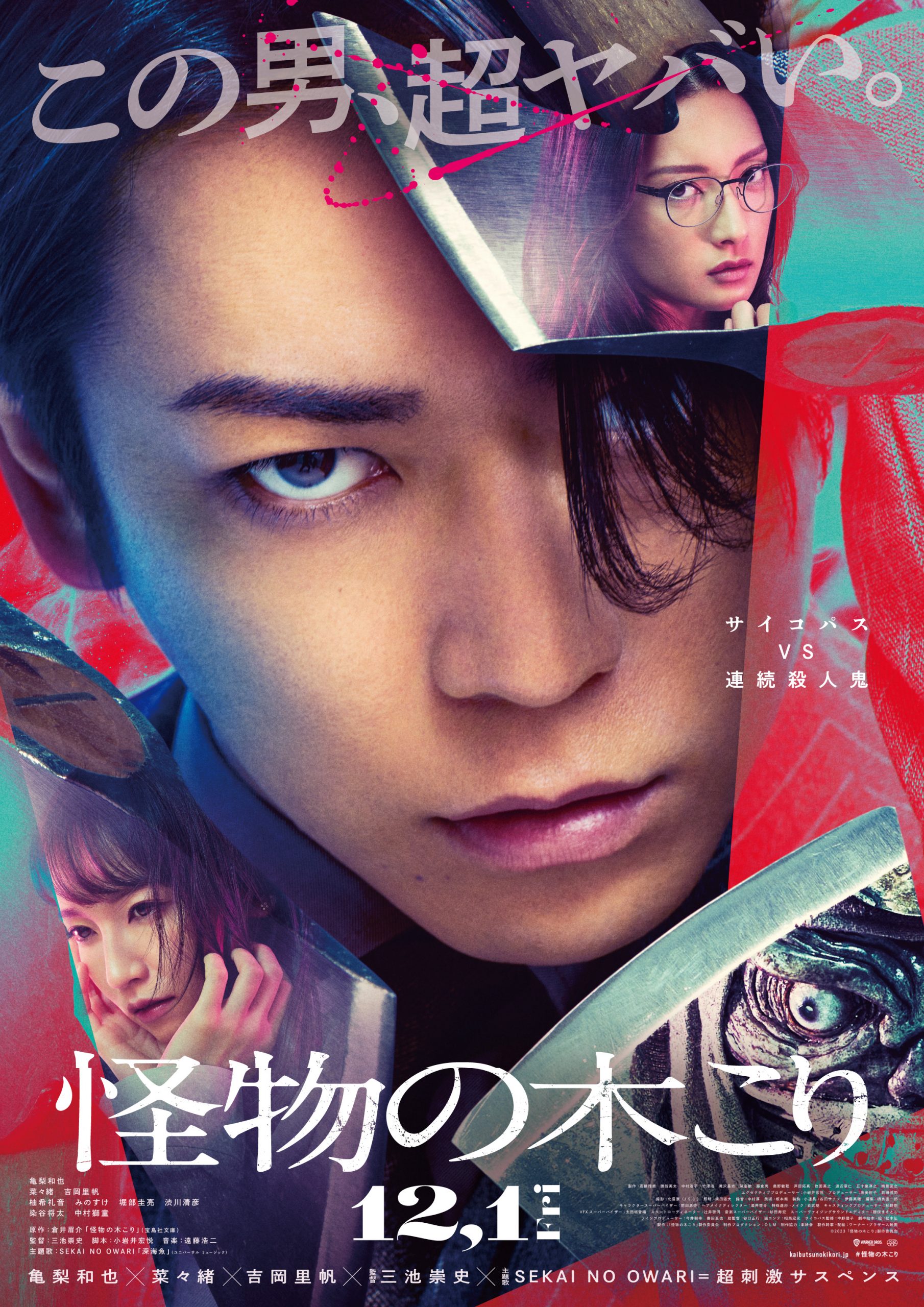
Could being a psychopath actually be better? It might be an attractive thought for some, the absolute freedom of living without emotional or moral constraint. Emotion is after all a difficult thing to bear, though life without it might also be lonely and unfulfilling leaving a void often filled by other desires such as a lust for wealth, status, power, or proof of superiority. Based on a novel by Mayusuke Kurai, Takashi Miike’s Lumberjack the Monster (怪物の木こり, Kaibutsu no Mikori) finds its hero at a point of existential crisis no longer certain of his true nature or identity.

The film takes its title from a fairytale featured in a picture book being read by a small boy who has been abducted and illegally experimented on. A monster begins living as a lumberjack in a small town where he begins killing and eating the residents, only no one notices. Eventually it realises that he spends more time being the lumberjack than the monster and is confused about his identity. With no friends left to talk to (because it ate them all), the monster decides to move to another town to make more friends but ends up sneaking into the house of a lumberjack, stealing a baby, and fashioning after itself to create another monstrous lumberjack.

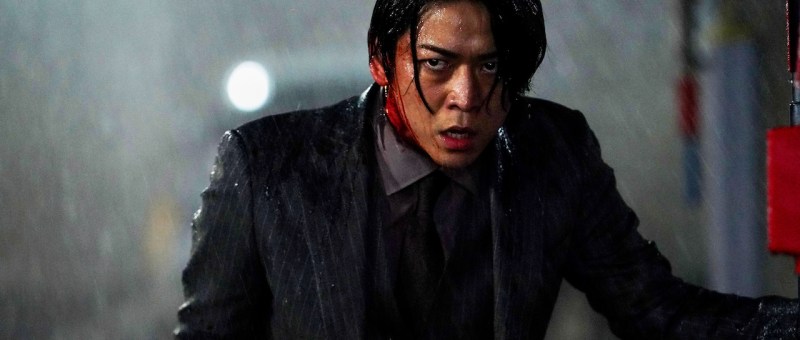
This is in a sense what’s happened to Akira (Kazuya Kamenashi), now a lawyer who discovers he has a “neuro-chip” in his brain that suppresses his emotions after he’s attacked by a masked figure and it breaks re-introducing him to an unwelcome humanity. This is quite inconvenient for him in that he’s done quite a lot to feel guilty about, firstly participating in a scheme with his “friend” Sugitani (Shota Sometani), a natural-born psychopaths, to facilitate his experimentation on live humans, and secondly that he murdered his boss who is also his fiancée’s father to take over his law firm. Though the fiancée, Emi (Riho Yoshioka), seems to be afraid of him, it’s also true that simple proximity to her warmth and kindness may have begun to reopen his heart.

Of course, it could be true that the mad scientists who abducted the children accidentally picked up a few who were already psychopaths but in this case it seems like the chip did its job on each of the victims of the axe-wielding assassin. Meanwhile, we also see “psychopathic” traits in lead investigator Toshiro (Nanao) who admits that she will do whatever it takes to get to the truth even if it includes throwing out the police rulebook. Akira asks her if her desire to solve the case isn’t also a roundabout means of vengeance for the death of her brother, leaving her not so different from the assassin who is also extracting vicarious revenge on man-made psychopaths, but she replies that that’s exactly how a psychopath might see it while also deflecting a similar question from embittered cop Inui (Kiyohiko Shibukawa) who remarks that if the killer’s only taking out psychopaths then why bother stop them?

In some ways, Akira is like the lumberjack. He was simply being what he was and knew no different, but gradually beginning to rediscover his humanity is burdened with guilt and remorse now acutely aware not just of the feelings of others rather than their consequences but of his own feelings too. The couple who abducted the children claimed they were doing it to save their son, trying to reverse engineer psychopathy so they could cure him though their actions were themselves psychopathic and like the lumberjack they created only more monstrous children like themselves. Akira has it seems rediscovered the person he may have been if he had been raised in the loving family from which he was abducted and is determined to search for the meaning of life, but he is also responsible for the decisions he made as a man who knew no guilt or remorse and may in fact have to pay for the moral transgressions he was not fully aware he was making. Miike conjures a sense of the gothic in the creepy, candlelit mansion where the children were kept and otherwise sticks to standard procedural for the “real” world, but finally lands back in the realms of fairytale as his hero finds himself part of neither one world nor another while faced with a choice that may earn him redemption but also loneliness and futility.


Trailer (English subtitles)

Ice Cream Fever (アイスクリームフィーバー, Tetsuya Chihara, 2023)

“Cold and sweet” is the way a customer to Million Ice Cream describes their produce, but it might also be an odd way to describe its comforts echoing the melancholy of the series of women who pass through its doors in Tetsuya Chihara’s adaptation of a short story by Mieko Kawakami, Ice Cream Fever (アイスクリームフィーバー). For each of the heroines it represents a kind of purgatorial space as they find themselves torn between past and future while seeking new directions.

For Natsumi (Riho Yoshioka), who took the job working part-time at the ice cream shop after experiencing burn out in her career as a designer, that new direction appears in the form of Saho (Serena Motola), an alluring yet sullen woman dressed all in black who turns out to be a formerly successful novelist plagued by writer’s block. A series of flirtatious encounters seem to rejuvenate the creative impulses of both women with Natsumi returning to doodling new signs for the shop and Saho beginning to write again, though there remains something distant and elusive between them. Saho later describes herself as like a summer storm destined to pass by in an instant and soon forgotten though in an ironic way her aloofness and enduring mystery may in fact be a way to ensure she is not forgotten while she at least seems unable to embrace her romantic desires instead sublimating them into her literature.

This inability to forget has also marred the life of Yu (Marika Matsumoto), a similarly lost woman approaching middle age who is suddenly approached by a niece she’s never met because she cut ties with her sister after she stole her boyfriend. Her mother having now passed away, Miwa (Kotona Minami) has come to Tokyo in search of her father and though seemingly aware of the circumstances of her familial estrangement enlists her aunt to help find him thereby forcing Yu to confront the past and reassess her life. Like Natsumi she is also becoming disillusioned with contemporary working culture and contemplating making a change. While she is a devotee of ice cream, it’s the local bathhouse, “an oasis for working women” as she describes it, that her been her refuge. When it suddenly closes due to the elderly owner’s (Hairi Katagiri) own decision to pursue a different kind of life, Yu wonders if she might be happier giving up her high powered corporate job to take it over. 

The dilemma both women face is reflective of a generational shift away from a desire for conventional success achieved by hitting each of life’s landmark events to that for immediate individual happiness derived from small comforts such as an ice cream cone or a soak in a large bath. The irony is that Miwa comes to Tokyo in search of an absent father and finds her aunt, while Yu is able to make peace with her past and accept the new gift life has given her in accepting a maternal role in her niece’s life. What both women choose are pleasant lives rooted in community and giving pleasure to others rather ones of consumerist desire or external validation.

Still, that doesn’t necessarily mean romantic resolution. While one woman’s decision may reflect a desire to move on, the other’s may not but rather an intention to wait if also to do so in a happier and more fulfilling environment that unlike the Mexican salamanders in Saho’s tank she has chosen for herself. Gradually we come to understand these events are unfolding at differing time intervals though weaving through around each other, pursuing a logic of memory rather a more literal reality while driven by the natural rhythms of a life which continues onward around them in continual oscillation. Gradually spinning outward it ropes in the unfulfilled romantic desires of Natsumi’s punkish co-worker choosing to move on in the realisation that her feelings have not been acknowledged and are unlikely to be returned, along with the cruel irony of the happy life seemingly being lived by Miwa’s long absent father. With its gentle framing and pastel colours, the film has an atmosphere of calm and serenity that belies its underlying melancholy in the frosty sweetness of a dormant love kept in the deep chill waiting for summer’s return.


Ice Cream Fever screens in New York July 20 as part of this year’s JAPAN CUTS.

Original trailer (English subtitles)

We’re Millennials. Got a Problem? International (ゆとりですがなにか インターナショナル, Nobuo Mizuta, 2023)

Seven years on from the hit TV series, the guys find themselves dealing with the problems of early middle age along with increasing internationalisation as members of the so-called Yutori generation in Nobuo Mizuta’s We’re Millennials Got a Problem? (ゆとりですがなにか インターナショナル, Yutori desu ga, naninka Internationa). Now they’re in a different place and increasingly confused by the youth of the day while reconsidering their own life choices and facing a series of impromptu crises.

Among them would be that both the yakiniku restaurant where the guys worked in the TV series and the company that used to distribute the sake produced by Masakazu’s (Masaki Okada) family brewery have been taken over by Korean conglomerates. To make matters worse, the company tells Masakazu at an online meeting he’s embarrassingly turned up to in person because no one thought to tell him it was remote that they’re shifting production entirely to makgeolli because no one drinks sake anymore and his takings are about to fall off a cliff. The only way he can keep the contract is by agreeing to introduce a new product, either makgeolli or alcohol free sake. 

Meanwhile, his friend Maribu (Yuya Yagira) has returned after seven years in China with a Chinese wife and three children but apparently no job prospects. Masakazu offers him a job at the brewery, forgetting that it’s a bit awkward because he used to date his sister, Yutori (Haruka Shimazaki), who has quit her corporate job to start a business selling nordic knickknacks. It’s Maribu’s live streaming of the moribund brewery that unwittingly exposes the cracks in Masakazu’s marriage when Chinese netizens starts sending aphrodisiacs through the post to help him overcome the problems of his sexless life with wife Akane (Sakura Ando) who is herself struggling with the demands of looking after two small children and taking care of all the domestic chores with no help.

Later Akane tells mutual friend Yamaji (Tori Matsuzaka) that she’s worried she has post-natal depression and is fed up with her home life. We see can how stressful it is in the opening sequence in which Masakazu (ironically) tries to become a YouTube sake star but is repeatedly heckled by offscreen calls from Akane asking him to bathe the children and otherwise help out before she finally has no choice but to bring the kids to him. When they go to city hall to apply for a place in childcare they’re immediately dismissed, Akane somehow told that she doesn’t have as many “points” as her husband even though they’re both self-employed and there are many more needy candidates before the (probably well-meaning) civil servant not so subtly checks their daughter’s arm for signs of abuse or neglect. It’s not that surprising therefore that when the aphrodisiacs start piling up at home she wonders if Masakzau’s having an affair placing further strain on the relationship. 

Shin-hye (Haruka Kinami), the Korean-Japanese-American CEO of the company that bought out their old distributor (for whom Akane was once a regional manager) also a expresses a similar anxiety about the place of women in the workplace on the one hand coming from Korean corporate culture and finding that Japan might not as be “as bad” at least in its every increasing list of harassment which at least admit there’s problem with workplace bullying, sexist culture, and unwanted sexual advances from men in positions of power. Yamaji, meanwhile, finds his well-meaning attempts to foster diversity in the classroom floundering when the kids declare themselves unable to understand the intricacies of LGTBQ issues explaining that at their age “dating” just means hanging out though they’re unexpectedly accepting of the Thai transfer student with an inexplicable crush on the incredibly obnoxious American boy who transferred in the same time as him. 

In other ways, however, Yamaji is the same as ever. On his first appearance he’s on an awkward date with a woman from a dating app which he largely spends talking to his mentor on an iPad and making sexist remarks. They are all struggling with the demands of a more concrete adulthood in which much is already decided while their settled lives are undermined by unexpected crisis from the fallout from the conravirus pandemic and ongoing economic malaise to marital discord, the demands of caring for small children, and a friend a they had no idea was a top star live-streaming star in China. A recurring gag sees people undertake zoom meetings dressed in a suit jacked with sweatpants underneath. Yutori eventually exclaims that there’s no point even having dream while her family have a lot of sensible questions about her new business like where all the stock is whether it was worth the risk leaving her stable job that was presumably subject to all the harassment and otherwise oppressive corporate culture of contemporary Japan. Nevertheless, the millennials eventually come to a kind to acceptance and understanding of where they are in their lives along with a re-appreciation of everything they already have.


We’re Millennials. Got a Problem? International screened as part of this year’s Nippon Connection

Original trailer (English subtitles)

Any Crybabies Around? (泣く子はいねぇが, Takuma Sato, 2020)

“Get your act together” an exasperated new mother exclaims, but it seems even new fatherhood isn’t quite enough to jolt the aimless hero of Takuma Sato’s paternity drama Any Crybabies Around? (泣く子はいねぇが, Nakuko wa Inega) into accepting his responsibility. Fatherhood is indeed a daunting prospect, however Sato isn’t interested solely in Tasuku’s (Taiga Nakano) attempts to “grow up” and embody the ideals of masculinity in a patriarchal society but also in the nature of fatherhood itself along with its legacies and the effects of male failure on those caught in its wake. 

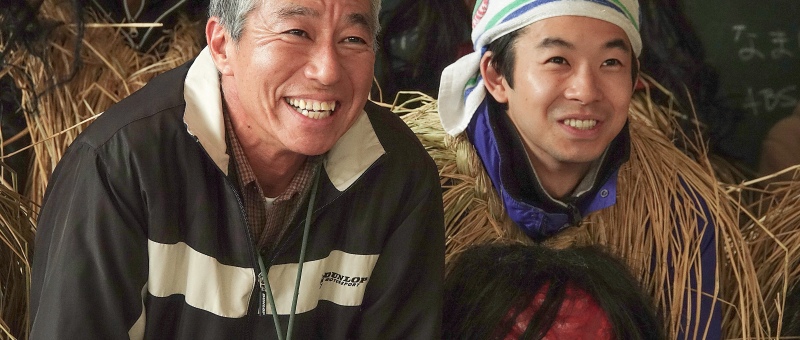
Everyone in the small town of Oga seems to be aware that Tasuku has undergone a shotgun marriage though it’s more the subject of gentle ribbing than scorn or disdain. Many remark on his relative youth, though he’s perhaps not so much younger than his parents might have been when he was born it’s just that times have changed. In any case, his wife, Kotone (Riho Yoshioka), is beginning to get fed up with him worried that he isn’t ready to be a father and isn’t taking the responsibility seriously enough. As young men do he still drinks like a single man and is vulnerable to peer pressure. Kotone begs him not to participate in the local Namahage festival but he insists they have to keep the tradition alive while apparently feeling an obligation to Mr. Natsui (Toshiro Yanagiba) who ensures it continues. She makes him promise not to drink, and he does his best in the beginning but, paradoxically, the Namahage is a drinking festival. Soon enough, Tasuku has had a little too much and beginning to feel hot takes off all his clothes, running around in the nude save for the large oni mask on his face while local reporters there to cover the traditional festival decide to make him a viral sensation. Unable to bear the shame, Tasuku abandons his wife and child and runs away to anonymity in Tokyo. 

The irony is that introducing the festival to the reporters, Mr. Natsui had flagged it up as a bastion of family values, that it’s not about “scaring” children but teaching them “good ethics” while reassuring them that their fathers will always protect them. According to Mr. Natsui, those children then grow up to become fathers who protect their offspring, Tasuku’s unfortunate streaking somewhat undermining his argument. It’s interesting in a sense that Tasuku is himself fatherless, his father having passed away some years earlier leaving not much of himself behind other than the oni masks he carved for the Namahage. Tasuku’s brother (Takashi Yamanaka), who was supposed to be getting married but apparently did not perhaps because of Tasuku’s scandal, later becomes upset on deciding to sell the family business lamenting that he was able to save “nothing” of his father, rejecting the Namahage mask that Tasuku offers him as “trash” while acknowledging perhaps that the Namahage is all is he left them along with the transitory lessons it imparts. 

Tasuku was clearly not quite ready to be a dad, but having spent some time growing up and hearing that his father-in-law has passed away leaving his ex with little choice than to work as a bar hostess on the fringes of the sex trade, he decides to go home and try to make amends. He swears repeatedly that he won’t run away again and will do whatever it takes until he’s forgiven, but still he flounders failing to find secure employment while periodically visiting his grandmother in a nursing home and helping his mother (Kimiko Yo) out selling traditional ice creams at local tourist attractions. “You’re not the only one who can be Nagi’s father” she reminds him as he perhaps begins to realise that there are some bonds you can’t repair even if you’re eventually forgiven for having broken them. 

Performing the Namahage forces Tasuku uncomfortably into the role of the authoritarian father safe scaring the child in order to instil in them a sense of confidence that encourages them not to be afraid of life, in the way that he may ironically be, because there will always be someone there waiting to catch them. The ability to protect a family is a defining feature of the masculine ideal, and the Namahage in its way perpetuates outdated ideas of gendered social roles while Tasuku’s mother and even grandmother are always there for him with unconditional acceptance, supporting him even in the depths of his “disgrace” and encouraging him to move forward even if that means accepting defeat. Keeping the Namahage alive is also in a sense to preserve the paternal legacy, just as Tasuku’s father may have passed nothing else down to his sons so Tasuku may find he has nothing more to offer, perhaps no longer a “crybaby” but still struggling to shift into the role of the father even while belatedly coming of age in the knowledge that he may have left it too late. 


Any Crybabies Around? streams in Germany until 6th June as part of this year’s Nippon Connection. For viewers outside of Germany it is also available to stream in many territories via Netflix.

International trailer (English subtitles)

Zokki (ゾッキ, Naoto Takenaka, Takayuki Yamada, & Takumi Saitoh, 2020)

“Thanks to secrets carefully kept by people the world keeps turning” according to one of the many heroes of Zokki (ゾッキ), a series of intersecting vignettes adapted from the cult manga by Yoshiharu Tsuge and directed by three of Japan’s most prominent actor-directors, Naoto Takenaka (whose Nowhere Man also adapted Tsuge), Takayuki Yamada and Takumi Saitoh. According to the philosophical grandpa who opens the series of elliptical tales everyone has their secrets and without them you may die though each of the protagonists will in fact share their secrets with us if by accident or design. 

Seamlessly blended, the various segments slide into and around each other each taking place in a small rural town and primarily it seems around 2001 though as we’ll discover the timelines seem curiously out of joint as motifs from one story, a broken school window, an awkward moment in a convenience store, the retirement of a popular gravure model/AV actress etc, randomly appear in another. This is however all part of the overarching thesis that life is an endless cycle of joy and despair in which the intervals between the two gradually shrink as you age before ceasing to exist entirely. 

Or so says our first protagonist, Fujimura (Ryuhei Matsuda), a socially awkward man heading off on a random bicycling road trip in which he has no particular destination other than “south” or maybe “west” as he later tells a potential friend he accidentally alienates. Fujimura’s unspoken secret seems to link back to a moment of high school trauma in which he betrayed one burgeoning friendship in order to forge another by joining in with bullying gossip and eventually got his comeuppance. Meanwhile the reverse is almost true for Makita (Yusaku Mori) who relates another high school tale in which he overcame his loneliness by befriending Ban (Joe Kujo), another odd young man rejected by teachers and the other pupils for his often strange behaviour such as his tendency to shout “I want to die”. Ban claims to have heard a rumour that Makita has a pretty sister and Makita goes along with it, eventually having to fake his sister’s death in order to seal the lie only for Ban to find happiness in his adult life largely thanks to Makita’s act of deception. 

The broken window which brought them together turns up in another tale, that of Masaru (Yunho) whose adulterous father Kouta (Takehara Pistol) took him on a midnight mission to steal a punching bag (and some adult DVDs) from the local high school only to encounter a sentient mannequin/ghost who is later likened to the young woman from Fujimura’s past. Bar some minor embarrassment there’s no real reason the ghost sighting would need to be kept secret, the deception in this case more to do with Kouta’s affair and his subsequent departure from his son’s life only to make an unexpected return a decade later. The affair also makes him a target for fisherman Tsunehiko, the betrayed husband and one of the fisherman celebrating the birthday of a colleague along with an existentially confused Fujimura. Meanwhile, Fujimura’s fed up neighbour secretly writes a rude word on a note to himself instead of the usual “good morning” only to realise it’s been moved when he opens the local video store the next morning. 

Eventually coming full circle, Zokki insists what goes around comes around, everything really is “an endless cycle”, and that in the grand scheme of things secrets aren’t always such a bad thing. They keep the world turning and perhaps give the individual a sense of control in the necessity of keeping them if running with a concurrent sense of anxiety. The criss-crossing of various stories sometimes defying temporal logic hints at the mutability of memory while allowing the creation of a zany Zokki universe set in this infinitely ordinary small town in rural northern Japan. As the various protagonists each look for an escape from their loneliness, unwittingly spilling their secrets to an unseen audience, the endless cycle continues bringing with it both joy and sorrow in equal measure but also a kind of warmth in resignation. Beautifully brought together by its three directors working in tandem towards a single unified aesthetic, Zokki defies definition but rejoices in the strange wonder of the everyday in this “obscure corner of the world”.


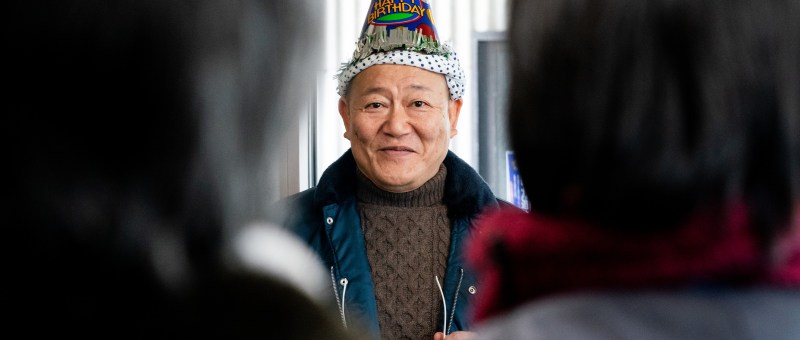
Zokki streamed as part of this year’s New York Asian Film Festival. It will also screen in London on 24th October as part of this year’s London East Asia Film Festival.

Original trailer (no subtitles)

NYAFF intro

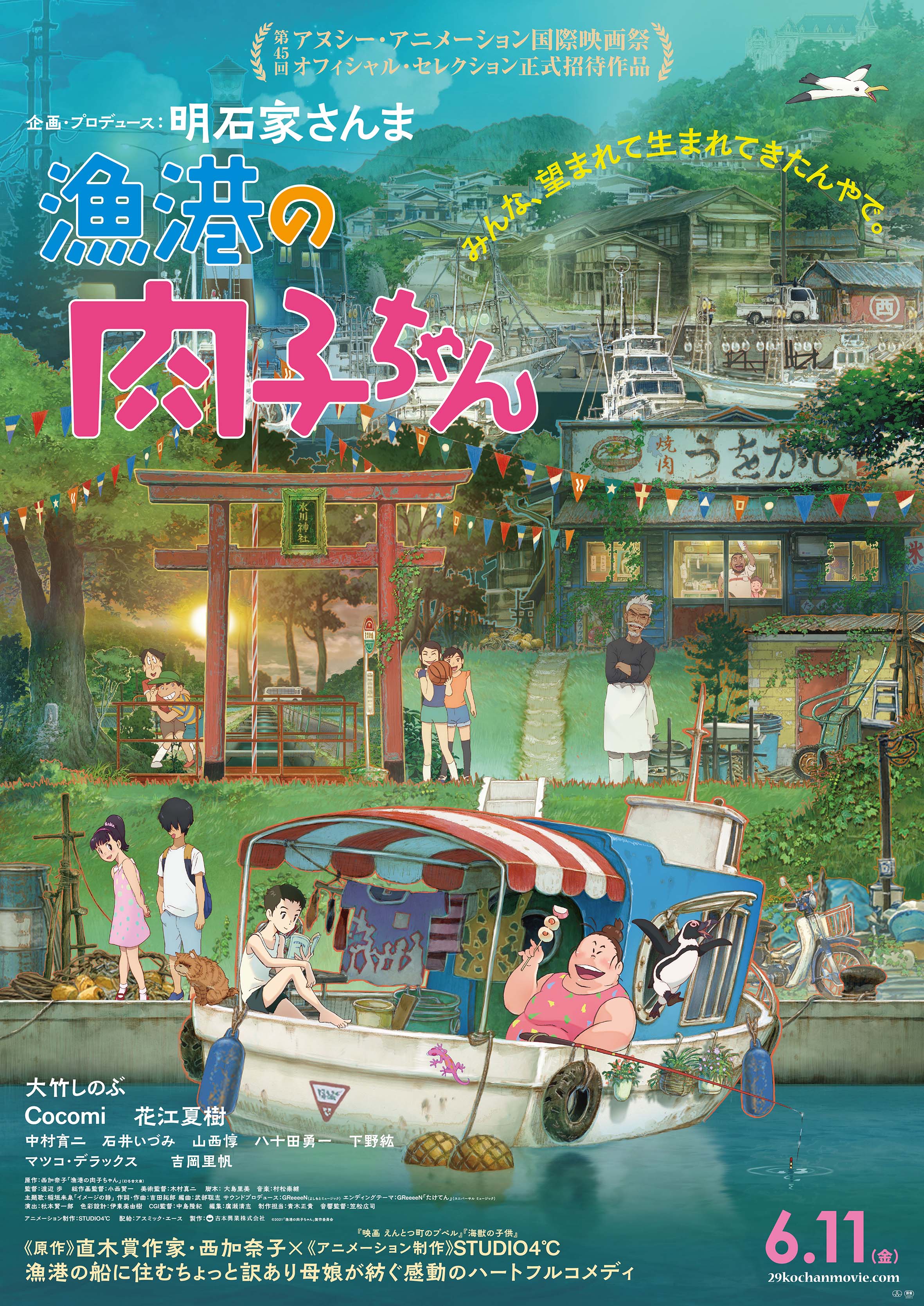
Fortune Favors Lady Nikuko (漁港の肉子ちゃん, Ayumu Watanabe, 2021) [Fantasia 2021]

Most children begin to find their parents embarrassing as they approach adolescence, but the problem seems to be particularly acute for young Kikuko. Adapted from the (quite wonderful) novel by Kanako Nishi, Ayumu Watanabe’s Fortune Favors Lady Nikuko (漁港の肉子ちゃん, Gyokou no Nikuko-chan) finds its young heroine struggling to define herself in world of constant anxieties while coming to accept that “ordinary is best” after all and even if her mother is “imperfect” it hardly matters, she loves her all the same. 

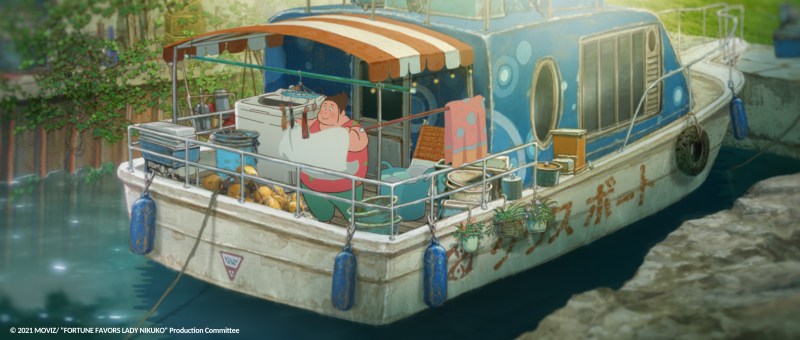
As Kikuko (Cocomi) outlines in her opening monologue, she’s recently moved to a small Northern port town with her larger than life mother, Nikuko (Shinobu Otake), after weaving a trail of romantic disappointment over half of Japan. In fact and somewhat unusually, mother and daughter share the same first name (if written with different characters), which is why the sometimes exasperated Kikuko has taken to referring to her mother as “Nikuko”, “Niku” meaning meat in reference to her weight. Though the film Kikuko is less caustic than her counterpart from the novel, there is a good deal of fat shaming in her sometimes contemptuous dismissal of her mother, also often regarding her as stupid both in terms of her intellectual ability, she’s obsessed with kanji puns but often makes spelling mistakes, and in her tendency to be duped by a string of no good men who generally take advantage of her kind heart. 

Being young as she is, Kikuko hasn’t yet learned to appreciate the importance of a kind heart, a lesson she’s about to learn as she finds herself in the middle of a burgeoning conflict between her classmates some of whom feel “left out” in never being picked by the popular girls when they peel off to play basketball at lunch time. When her friend Maria (Izumi Ishii) stages a rebellion, Kikuko doesn’t quite know what to do. After all, what Maria’s doing is only a different kind of bullying, but as she says it isn’t nice to feel left out and even if her solution may be wrongheaded perhaps Kikuko should have looked more deeply at why her friend felt that way rather than rather cruelly assuming she was doing it for attention and deserved everything she got. Bonding with a near silent boy, Ninomiya (Natsuki Hanae), who finds himself compelled to pull faces when no one’s looking, shows her the error of her ways in that she never thought herself to be such a “mean and nasty” person. 

It’s this lack of emotional intelligence that causes her to feel embarrassed by her mother who is, it has to be said, something of walking cliché of a stereotypical working class Osaka woman, loud, brash, and nattering away in her Southern dialect. Mother and daughter couldn’t be more different, tomboyish Kikuko stick thin and a serious bookworm, while the bubbly Nikuko is childishly impulsive and openhearted. Kikuko sometimes feels as if she’s the parent and is embarrassed by Nikuko’s larger than life qualities in a culture that prefers women to remain quiet and take up as little space as possible. Not to mention the fact they live on a boat. About to enter adolescence she’s also sick of being constantly on the move and is becoming paranoid that Nikuko is about to start another relationship with a terrible man meaning they’ll have to move again. 

Yet Nikuko hardly minds Kikuko’s contempt of her and despite having lived a hard life remains compassionate and understanding, seeing the best in everyone and always finding the small moments of joy life has to offer. She is also infinitely in tune with her daughter, half thinking she can hear it too when Kikuko “hears” various creatures and even a shrine “talking” to her as she wanders about the town exercising her rather overactive imagination. A series of climactic events culminating in a medical emergency in which she figures a few things out forces Kikuko to wrestle with herself and stop judging her fiercely non-judgemental mum to realise that she loves her after all even if she can’t resist being a little unkind in expressing it. A gentle coming-of-age tale set in a delightfully old-fashioned and beautifully animated fishing village, Fortune Favors Lady Kikuko is chock-full of heart (not to mention expertly translated kanji puns) as its somewhat resentful heroine begins to find safe harbour and finally steps into herself with a spirit of acceptance and understanding. 


Fortune Favors Lady Nikuko screened as part of this year’s Fantasia International Film Festival.

Original trailer (English subtitles)

Fukushima 50 (フクシマ50, Setsuro Wakamatsu, 2020)

The “Fukushima 50” (フクシマ50), as the film points out, was a term coined by the international media to refer to the men and women who stayed behind to deal with the unfolding nuclear crisis at the Fukushima Daiichi Nuclear Power Plant. Loosely inspired by Ryusho Kadota’s non-fiction book On the Brink: The Inside Story of Fukushima Daiichi which featured extensive interviews with those connected to the incident, Setsuro Wakamatsu’s high production value film adaptation arrived to mark the ninth anniversary of the devastating earthquake and tsunami which occurred on 11th March, 2011 and closes with a poignant callback to the plant’s role in Japan’s post-war reconstruction as the nation once again prepares to host the (now postponed) Olympics with a torch relay beginning at Fukushima as a beacon of hope as the country continues to rebuild in the wake of the disaster. 

Though inspired by real events Wakamatsu’s dramatisation is heavily fictionalised and while surprisingly frank for a mainstream film in its criticism of the official reaction to the disaster, is also quietly nationalistic while doing its best to pay tribute to the selfless sacrifice of the plant workers who stayed behind to do what they could many of whom had little expectation of surviving. Chief among them would be Izaki (Koichi Sato), an imperfect family man and veteran section chief, and the plant’s superintendent Yoshida (Ken Watanabe) who are both local men and old friends. Local, it seems, is later key with multiple appeals to the furusato spirit as each is at pains to point out that they stay not only to prevent a catastrophic meltdown that would leave most of central Honshu including Tokyo uninhabitable, but because they feel a greater duty to protect their hometown and the people in it. 

Meanwhile, they find themselves burdened rather than assisted by official support as government bodies’ political decision making undermines their attempts to avert disaster while the boardroom of TEPCO who operate the plant reacts with business concerns in mind. A few hours in the prime minister (Shiro Sano) decides to make a visit, in political terms he can’t not national leaders who don’t visit sites of crisis are never forgiven, but his presence actively hinders the recovery efforts. Referred to only as the PM, Wakamatsu’s film presents the man leading the nation as an ignorant bully overly obsessed with his personal image. He has little understanding of nuclear matters or the implications of the disaster, refuses to abide by the regular safety procedures required at the plant, and mostly governs through shouting. Beginning to lose his temper, Yoshida does his best to remain calm but resents the constant interference from those sitting in their offices far away from immediate danger while he does his best to contend with the increasingly adverse conditions on the ground, mindful of his responsibilities firstly to his employees and secondly to those living in the immediate vicinity of the plant who will be most at risk when measures taken to prevent meltdown will lead to an inevitable radiation leak. 

Yoshida’s hero moment comes when he ignores a direct order from the government to stop using seawater to cool the reactors, knowing that he has no other remaining options. Meanwhile, the government refuse offers of help from the Americans, who eventually make a strangely heroic arrival with Operation Tomodachi, discussing plans to move their families to safety while their commander reflects on his post-war childhood on a military base near the site of the nuclear plant. Japan’s SDF also gets an especial nod, granted permission to leave by Yoshida who is beginning to think he’s running out of time but vowing to stay and do their duty in protecting civilians in need. 

In essence, the drama lies in how they coped rather than the various ways in which they didn’t. The conclusion is that the existence of the plant was in itself hubristic, they are paying the price for “underestimating the power of nature” in failing to calculate that such a devastating tsunami was possible. They thought they were safe, but they weren’t. Perhaps uncomfortably, Wakamatsu mimics the imagery of the atomic bomb to imagine a nuclear fallout in Tokyo, harking back to ironic signage which simultaneously declares that the energy of the future is atomic while the plant workers reflect on the sense of wonder they felt as young people blinded by science back in the more hopeful ‘70s as the nation pushed its way towards economic prosperity. Frank for a mainstream film but then again perhaps not frank enough, Fukushima 50 is both an urgent anti-nuclear plea and an earnest thank you letter to those who stayed when all looked hopeless, suggesting that if the sakura still bloom in Fukushima it is because of the sacrifices they made.


Fukushima 50 is available to stream in the US until July 30 as part of this year’s Japan Cuts.

International trailer (English subtitles)

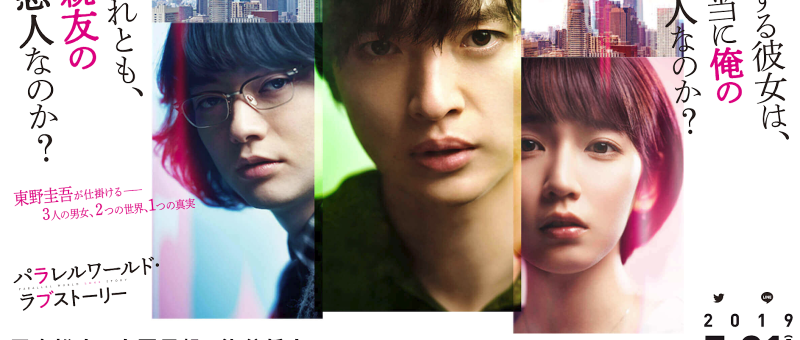
Parallel World Love Story (パラレルワールド・ラブストーリー, Yoshitaka Mori, 2019)

Have you ever had the feeling that you’re going out of your mind? Something just doesn’t feel right, your sense of perception and memory of the past don’t match the “reality” you’re currently experiencing but you have no way of knowing what’s at fault, you or the world. The hero of Parallel World Love Story (パラレルワールド・ラブストーリー) finds himself in just this situation as he begins to experience two very different states of being, one in which he’s living happily with the love of his life, and another where she’s dating his childhood friend. Is he a love crazed fool, or is someone messing with his head?

Travelling the same train into college every day, Takashi (Yuta Tamamori) fell in deep silent love with a young woman whose train crossed his every Tuesday morning. On his very last Tuesday, he decided he’d switch trains and try to find her, but she did exactly the same thing and so they missed each other, leaving Takashi feeling as if his fated romance was matter for another universe. He is then shocked when an old friend from middle school, Tomohiko (Shota Sometani), introduces that same young woman, Mayuko (Riho Yoshioka), as his girlfriend some time later. A little resentful at this twist of fate, Takashi tries his best to keep his feelings hidden. Meanwhile we see him “wake up” in his own apartment where Mayuko, who lives with him, is lovingly making him breakfast. He has a vague recollection of Tomohiko turning up in his dream, but can’t seem to remember what it is he’s doing these days. In this “reality”, Tomohiko introduced Mayuko to Takashi, and has abruptly moved to LA without even saying a proper goodbye, apparently working on a top secret research operation which keeps him entirely out of contact. 

Both men are involved with the research of perception and memory. Talking to another friend before “meeting” Mayuko, Takashi points out that it’s your brain which constructs the current reality from your sense perception. He grasps her hand and her brain tells her she feels it, but she’d feel the same thing if he isolated and activated the relevant sectors of her brain which tell her her hand is being grasped. Tomohiko, meanwhile, has gone one step further. He’s discovered that it’s neural networks rather than the brain which store memories and that, by stimulating those neural receptors in a particular way, memory can be rewritten or fake memories introduced. He proves this by illegally experimenting on a friend, making him think he’s from Tokyo when he’s really from Hiroshima, and reconstructing the image of an old teacher so that she’s now a pretty young woman and not a portly old man. 

The gap between what you want to be true and the “reality” is shrinking. It turns out that it’s easy enough to trick yourself into thinking something is true when it isn’t when you really want it to be. According to Tomohiko, once your brain has decided to approve the “fake” reality, cognitive dissonance is overcome by everything else being forced to fit into your new conception of the world. Takashi, however, is struggling to integrate his two parallel lives, one bleeding inconveniently into the other leaving him wondering which one is the “reality” and which the “dream”. 

Takashi’s less palatable qualities, however, exist firmly in the recent past of reality A in which romantic jealousy appears to have driven him half out of his mind, causing him to semi-stalk the innocent Mayuko and consider betraying his childhood friend by stealing the woman he loves. Takashi’s sole justification for his behaviour is the unspoken romantic connection which brought them together on the train, a connection he is “certain” she remembers without being given any particular encouragement from her side. Reality B Takashi, who lives with Mayuko, similarly becomes obsessed with the idea that Mayuko in some way belongs to Tomohiko, awakening an unpleasant sense of misogyny in his desire to prove that Mayuko is his because he saw her first on the train. 

Meanwhile back in Reality A, he starts to suspect that Tomohiko is up to no good pursuing unethical research practices and working towards a sinister goal. It’s unfortunate that Tomohiko also has a prominent limp from a lame leg, playing into the unpleasant association of villainy and disability. Even Takashi, having turned dark, accuses Mayuko of dating him out of pity, while Tomohiko describes him as a “hero” for having rescued him from childhood bullies. Takashi starts to suspect him, not only of being a mad scientist, but perhaps actively hostile and plotting revenge against him for stealing Mayuko. In a particularly Higashino-esque touch, Tomohiko’s motives turn out to be kinder than they might at first seem even if they’re a little on the extreme side, leaving Takashi pushed to make a similarly extreme yet strangely counterproductive move by his infinitely shady boss who is also exploiting the increasingly conflicted Mayuko. Yet, aside from all the philosophical musings on the nature of reality, the interplay of desire and memory, and the ethics of manipulating the perception of others, this is in essence a love story between two people who gazed at each other from passing trains. If you find each other once, you can find each other twice, and, in love, reality might not be so important.


Original trailer (hit subtitle button for English subs)

Hot Gimmick: Girl Meets Boy (ホットギミック ガールミーツボーイ, Yuki Yamato, 2019)

Hot Gimmick posterStrangely enough, shojo manga adaptations can in fact be among the most problematic exercises in contemporary Japanese cinema. Targeted very specifically at adolescent girls, the romantic world that they present is often consumed by its own sense of blind innocence as the shy heroine eventually finds love with a “handsome prince” who, though sometimes an inappropriate figure, is either improbably gentlemanly or a “difficult” Mr. Darcy type who more or less bullies her into submission. Yuki Yamato’s adaptation of Miki Aihara’s Hot Gimmick, given the subtitle “girl meets boy” (ホットギミック ガールミーツボーイ), however, seems to be well aware of the genre’s uncomfortable tendency to reinforce conservative social norms and normalise unhealthy relationship dynamics, even if it perhaps fails to entirely reject it in its broadly positive yet ambivalent conclusion.

Innocent and naive high schooler Hatsumi (Miona Hori) has been charged with secretly picking up a pregnancy test for her younger yet much more worldly sister Akane (Hiyori Sakurada) who ends up losing it on their way home from school. Unfortunately, it’s found by a schoolmate, Ryoki (Hiroya Shimizu), who uses it to blackmail her, forcing her to become his “slave” or he’ll send the test straight to her mother. For reasons not entirely clear besides her natural diffidence, Hatsumi goes along with it but is still carrying a torch for a childhood friend, Azusa (Mizuki Itagaki), who has since gone on to become a top idol. Unbeknownst to her, Azusa has in fact returned, apparently missing them all at the estate where he used to live. Increasingly terrorised by Ryoki, Hatsumi is more worried that Azusa will get the wrong idea and assume she is romantically involved with him. Meanwhile, her brother Shinogu (Shotaro Mamiya) is worried about both guys, overprotective in a disappointingly patriarchal way.

This is indeed a very patriarchal world. Unlike her sister, Hatsumi is romantically naive and terrified of the consequences of someone finding out about the pregnancy test even if Akane is fairly unfazed, simply brushing off questions from her mother by implying that someone is probably playing tricks on them. Hatsumi is preoccupied with the nature of “cuteness” and intensely insecure, which is perhaps why she allows herself to go on being manipulated by Ryoki even while knowing that is exactly what he’s doing. “I’m just stupid and unattractive” she’s fond of saying, fully believing that she has no right to her own agency because she is unable to see her own worth.

That essential insecurity seems to make her a magnet for all the creepy guys in a 10 mile radius. Talking to another somewhat imperfect boy, Akane tells him that guys like girls like Hatsumi who seem “vulnerable”, lamenting for a moment that that’s something she definitely is not (ostensibly, at least), but stopping short of reflecting on how dark a comment that might actually be or how the whole concept of “kawaii” is built on the idea of disempowered femininity. Azusa, who is originally posited as the “innocent” love interest, later turns out to be anything but, while Ryoki is later redeemed (to a point) in leading Hatsumi towards an awareness of an agency over her own body, while she, again problematically, turns to her protective brother rather than engage with the various ways in which all three guys have continually misused and manipulated her.

A intense subplot concerning the legacy of illicit romantic relations in the previous generation binds all of the troubled teens inside a net of moral resentment in which they embrace a kind of conservatism they reject their parents for rejecting. They are all, in a sense, attempting to break free of familial legacies, but find themselves paying for their parents’ mistakes while the parents themselves remain more or less absent, occasionally resurfacing to enforce obedience through shame. What Hatsumi comes to realise, however, is that the lesson they were teaching her was not quite wrong but misguided. Where they told her that she should guard her body because not to do so was shameful, she discovers that there is power in owning herself, that she is free to decide what she does and does not do with her body and has the right to grant or refuse access to it.

Nevertheless, her final sense of empowerment is undercut by her continued relationship with Ryoki who, while perhaps growing to accommodate a less misogynistic world view, is still a boy who tried to make her his slave and repeatedly calls her stupid even if eventually agreeing that the whole world turns in her. Yamato’s stylish visuals add to the sense of absurdity which defines the closing moments as Hatsumi at once affirms an awareness of herself as a being with worth and agency, yet also embraces her “stupidity” as she takes her first few diffident steps towards an assurance of adulthood.


Currently available to stream via Netflix in the UK (and possibly other territories)

Original trailer (no subtitles)