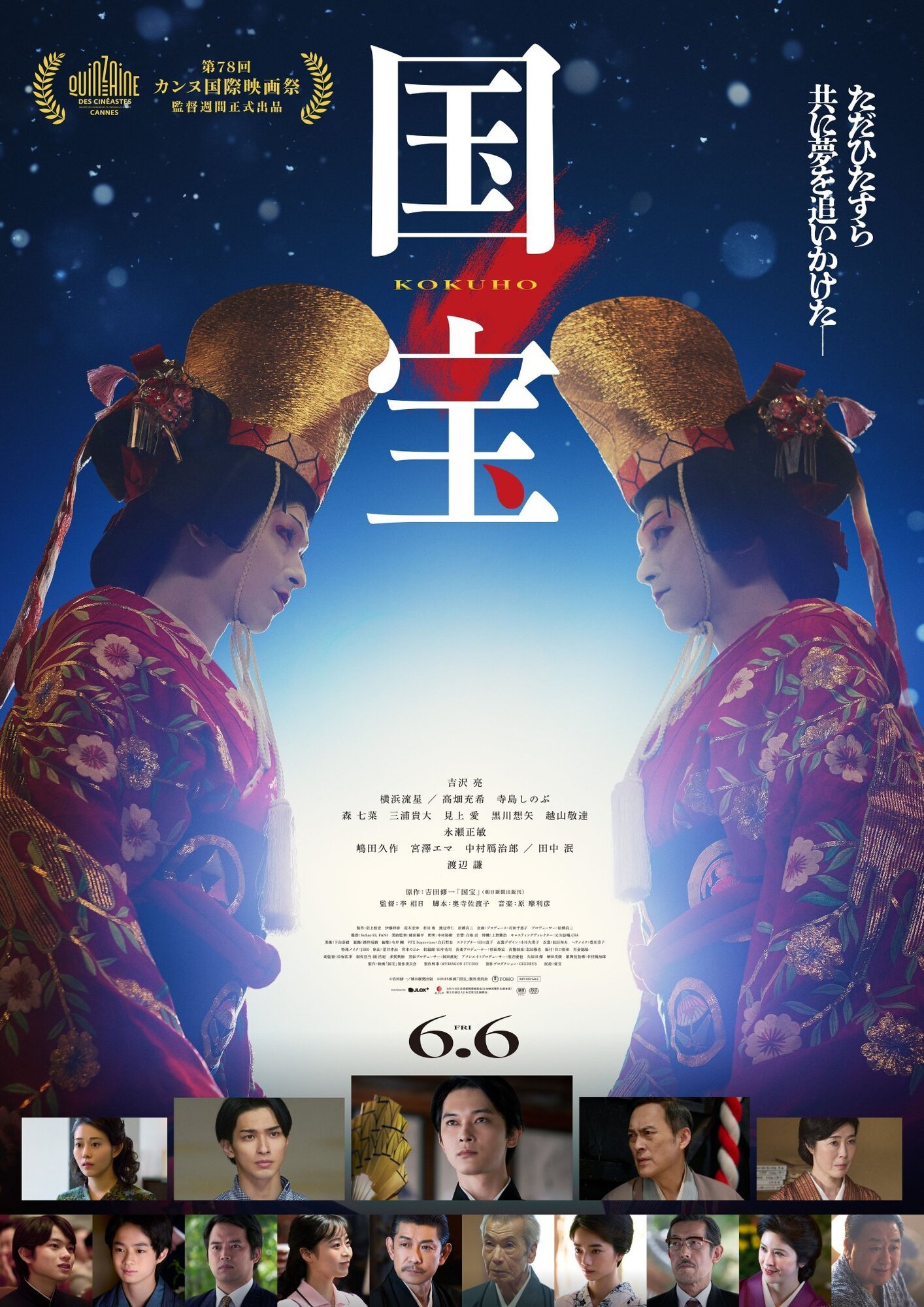
Kokuho (国宝, Lee Sang-il, 2025)

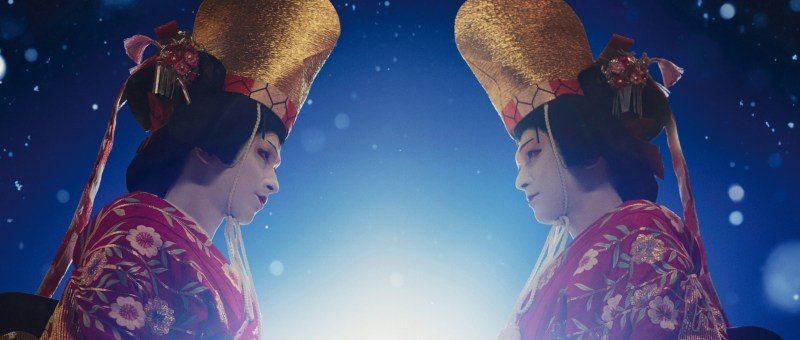
What does it mean to commit yourself so entirely to your art that you become it and effectively cease to exist? Playing the role of Ohatsu in Chikamatsu Monzaemon’s Love Suicides at Sonezaki, Kikuo (Ryo Yoshizawa) asks if Ohatsu’s lover Tokubei is really resolved to die for their love. The scene is intercut with his brother and rival Shunsuke leaving the theatre, led away by Kikuo’s girlfriend Harue (Mitsuki Takahata), just as Ohatsu leads Tokubei towards their mutual fate, as if Shunsuke were agreeing that he is not resolved to give his all to art in the way Kikuo evidently feels himself to be, at least in this moment.

The roles between them are reversed several times before they eventually perform the play again, but each of them are, in effect, in a love suicide with the art of kabuki, though kabuki itself is destined to live on. In any case, the “kokuho” of the title is a living national treasure and one who has indeed embodied their art. We’re introduced to one early on, Mangiku (Min Tanaka), an ageless onnagata, or player of female roles, who has a quasi-spiritual quality and warns the young Kikuo that though his face maybe beautiful, it could also be a barrier to his art and, in the end, consume him. It is said of Mangiku that all he will leave behind him is his art. The words are spoken with pity, but this is really what it means to be a kokuho and the highest compliment that might be paid to an artist. Mangiku himself would likely approve, casting an eye around his spartan room and declaring himself unburdened. 

But Kikuo is only half-joking when he says he cut a deal with the devil to make him the best kabuki actor in Japan. As a woman he abandoned later scolds him, all his sacrifices were made by others. Actors are greedy, another laments, and it’s true enough that Kikuo feared little in his need for success. The irony is that he too was an heir, only to a yakuza dynasty to which he could not succeed. His was father was gunned down in front of him while preparing to draw his sword, while Kikuo’s rebound tattoo does him no favours in the end and his attempt to avenge his father’s death apparently fails. Nevertheless, he vies for the approval of his surrogate father and kabuki master Hanjiro (Ken Watanabe) who values his skills above those of his biological son Shunsuke (Ryusei Yokohama) who alternately resents having his birthright stolen from under from him and acknowledges that Kiku has an innate talent with which his bloodline can’t compete.

Nevertheless, there’s a genuine and enduring brotherhood between the two men that never quite slips into hate or acrimony even as circumstances conspire against them. They both want what the other has. In the kabuki world, bloodline is everything and Kikuo is viewed as a interloper usurping Shunsuke’s rightful position, while Shunsuke wants the raw talent he knows he lacks and no amount of training and commitment can buy. Yet it is in a way about resolve, or at least the willingness to give your life to the stage and die in the pursuit of art. Kikuo’s signature piece is the Heron Maiden, in which a heron falls in love with a young man and becomes a young woman. But her love is unrequited. She goes mad, and can only show her love for him by dancing until she dies. This is, in effect, Kikuo’s dance with kabuki, a waltz to the death as he yearns for the “scenery” he as been searching for and eventually finds the apotheosis of his art in the moment of the heron’s demise.

Like Lee Sang-il’s previous films Villain and Rage based on a novel by Shuichi Yoshida, the film is a poetic meditation on the price of the pursuit of art that revels in its sumptuous production design and the intricacies of the kabuki world. With shades of Farewell, My Concubine, it frames its central dynamic not quite one of straightforward rivalry but a brotherhood between two halves of one whole who each know that neither of them can really win, while becoming a kokuho is an endless pursuit of artistic perfection in which one must be resolved to kill the self and die on stage in a lover’s suicide with a forever elusive kabuki.


Kokuho screened as part of this year’s LEAFF.

Trailer (English subtitles)
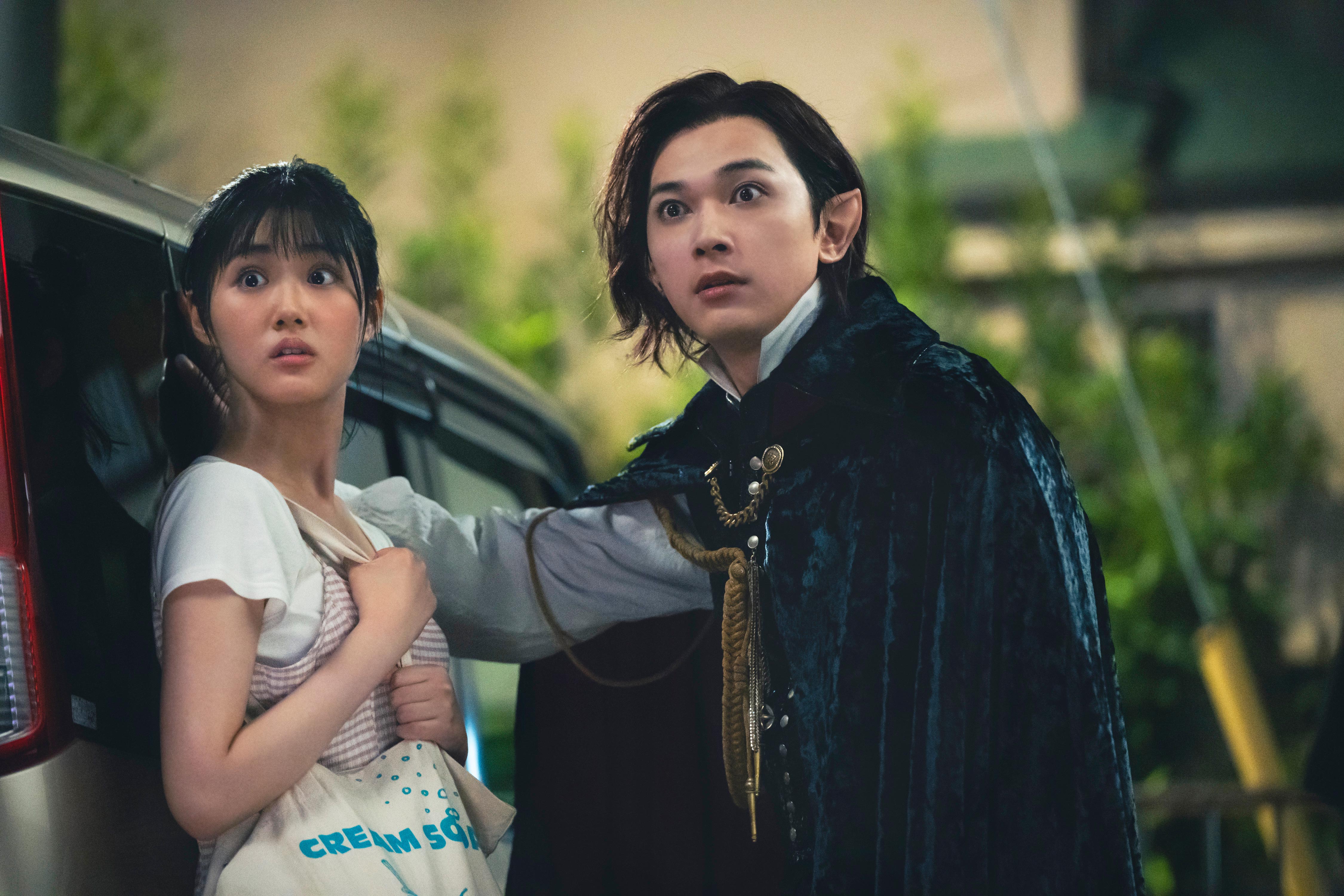
Babanbabanban Vampire (ババンババンバンバンパイア, Shinji Hamasaki, 2025)

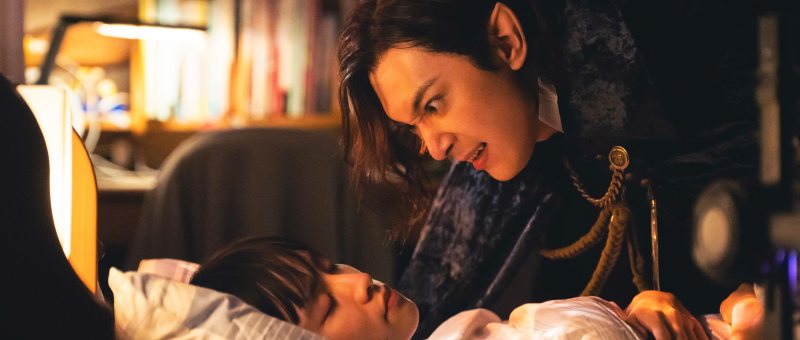
It turns out immortality’s not all it’s cracked up to be in Shinji Hamasaki’s adaptation of the manga by Hiromasa Okujima, Baban Baban Ban Vampire (ババンババンバンバンパイア). At 450 years old, Mori Ranmaru (Ryo Yoshizawa), one-time lover of Oda Nobunaga (Shinichi Tsutsumi), is working as an attendant in a bathhouse in an attempt to, as he says, “live an ordinary life earnestly,” while staving off the darkness of an existence free of the spectre of death. 

Yet, there is an uncomfortable darkness at the centre of this otherwise humorous and ironic tale in that what Mori Ran is actually doing is grooming a child so that he can enjoy him when he judges that he is “ready.” There’s an obviously unpalatable reading of the film that renders it as an allegory for paedophilia, while there’s also an undeniable poignancy in likening the figure of the vampire of that of a gay man in an oppressive society. Mori Ran accosts his victims in dark alleyways and his assignations with other men are necessarily short and secretive. They also result in death, while Mori Ran describes most of his victims as tainted and disgusting as if echoing an internalised sense of self-loathing. He continues to hold up Rihito (Rihito Itagaki) as a figure of innocence and purity because he once saved his life when he was baking in the heat of an usually hot spring when the boy was only five years old. 

Mori Ran’s internalised homophobia is somewhat mirrored in that of the teacher Sakamoto (Shinnosuke Mitsushima) who is also a vampire hunter but bewitched by Mori Ran and longing to be initiated by him, though Mori Ran declines to give him what he sees as a curse. Imbued with a gothic sensibility, Mori Ran believes that humans are beautiful because they die, while vampirism is debased and ugly. He refuses to condemn someone he admires to his own fate which he describes as a kind of inescapable hell in which he is unable to die. He no longer believes in love, though is haunted by his loss of Nobunaga, and sees humans merely as food. 

Nevertheless, it seems he has found purpose in his present life of living with Rihito’s family and working in their bathhouse despite convincing himself that he’s only biding his time until Rihito is ripe for the picking. According to Mori Ran, the sweetest blood belongs to that of 18-year-old male virgins which is why his goal of ensuring that Rihito remains virginal and pure is becoming more difficult now that he has entered adolescence. Much of the comedy derives from Mori Ran’s emotional cluelessness and paranoia on discovering that Rihito has fallen for a girl, Aoi (Nanoka Hara), with whom he had a stereotypical meet cute on his way to his high school entrance ceremony. Knowing that he has to nip this in the bud as soon as possible, he pays a visit to Aoi to warn her off but fails to realise that not only did she barely notice Rihito let alone fall in love with him, but that she is actually obsessed with vampires and is keener on him. 

But then again, there’s something additionally troubling about Rihito’s immediate classification of Mori Ran as a “love rival” in the mistaken belief he’s after Aoi too rather than as someone who should probably be reported to some kind of authority. After all, even if he were not 450 years old but the 25 he claims to be, hanging around exclusively with high schoolers is odd and bordering on inappropriate in itself. Having misunderstood his intentions, Aoi also believes that Mori Ran is waiting for her to be “ready,” in a partial recognition that this is wrong because she’s a child but also prepared to wait for the mysterious vampire without considering the implications of his being interested in a 15-year-old girl if that actually were the case. 

Nevertheless, what Mori Ran discovers is really a different kind of love in his gradual integration into the human world and the the friendships he forms not only with Rihito, but Aoi, her muscular brother Franken (Mandy Sekiguchi) who also has a crush on Mori Ran, and the lovelorn teacher Sakamoto, even if he’s still focused on his mission of keeping Rihito pure so he can drink his blood on his 18th birthday. His attempts to prevent a relationship forming between Rihito and Aoi are all countrerprodcuteive and would like end up bringing them together if it were not for the fact of Aoi’s crush on him of which he remains oblivious. The inherently zany humour of the situation with its series of concentric love triangles along with the warmheartedness of Rihito’s homelife when contrasted with the “mysterious” serial killings on the news cannot completely overcome the unpalatable undercurrent of Mori Ran’s pederastic quest, if glossing over it with admittedly delicious irony and absurdism.


Babanbabanban Vampire screens 27th July as part of this year’s New York Asian Film Festival.

Living in Two Worlds (ぼくが生きてる、ふたつの世界, Mipo O, 2024)

Mipo O had been quietly building a reputation as one of Japan’s most promising young indie directors with such lauded films as The Light Shines Only There but has been on an extended hiatus since 2015’s Being Good. Living in Two Worlds (ぼくが生きてる、ふたつの世界, Boku ga Ikiteru, Futatsu no Sekai) marks her return to filmmaking after taking a break to raise a family and, adapted from from an autobiographical book by Daisuke Igarashi, not only explores the realities faced by the deaf community but the complicated relationship between a son and his mother.

Indeed, at times the issue is less that both of Daisuke’s (Ryo Yoshizawa) parents are deaf as it is that he does not listen. When he becomes a teenager, his mother Akiko (Akiko Oshidari) spends a huge amount of money on a high tech hearing aid because she wants to hear his voice, though most of what he says to her is hurtful and unpleasant. His older self is probably regretful, ashamed of the way he treated his mother in particular but also in regards to his rejection of his family because he felt embarrassed by their difference in what is a fiercely conformist culture. He doesn’t give his mother a letter about parents’ day because he doesn’t want her to come and also thinks it would be pointless because she wouldn’t be able to hear anything anyway. Later he tries to get his grandmother to come with him to a parent teacher meeting about his plans for high school and beyond, telling his mother she’d only be in the way. In fact, the meeting is quite awkward because the teacher talks directly to him without trying to include Akiko while Daisuke makes infrequent signs under the table as if embarrassed to have the teacher see them.

As a young child, Daisuke had interpreted for his mother using sign language publicly despite the awkward attitude towards it at home. His grandmother writes things down on paper instead, telling him that it’s too difficult for her to learn. That doesn’t make sense to his young brain as after all he’s picked it up since birth. But this early tension perhaps contributes to his increasingly conflicted feelings. When he brings a friend home, he asks him why his mother speaks in such a funny way but of course it’s normal to Daisuke and this perhaps innocent question begins to cement for him that his family isn’t “normal” and he isn’t like the other children. Resentment towards his mother only grows to the point he begins to blame all of his problems on her including his failure to get into the better high school though she has done nothing but support and encourage him. As she points out, she never had any choice about her schooling and received little education because her parents thought she’d recover her hearing and refused to send her to a specialist school until she was 14 meaning she was just sat there all day twiddling her thumbs while unable to make friends with hearing children who mostly ignored her.

The parents were also against the idea of her marrying her husband Yosuke (Akito Imai) because he was also deaf, nor did they support their decision to have a child believing two deaf parents would not be able to raise one safely or effectively. Such attitudes lay bare the lingering stigma towards disability which remains even within the family unit. Unable to separate himself from being the child of working class deaf parents, the teenage Daisuke abruptly moves to Tokyo with a vague idea of becoming an actor signalling his internal search for an independent identity. The film hints that his liminal status existing between the worlds of the hearing and the deaf has left him with subpar communication skills as seen in his repeated faux pas at job interviews until he finally tells the truth and is offered a job on the spot. There’s an intimacy involved in his interactions with his parents which often can’t be understood by others, but also a less pleasant undercurrent in the way these interplay with speech and his own decisions of when to switch between dialogue and sign. 

Having gone to Tokyo to escape being the child of deaf parents, he discovers that being “ordinary” doesn’t really suit him either and only begins to accept his identity after meeting a deaf woman at a pachinko parlour who invites him to her class for learning sign language in a more a formal way while another of her pupils gently explains to him that though he means well he sometimes does them a disservice by taking over as a hearing person when he should let them do the things they can do for themselves. The absence of musical score and variation in the sound mix emphasise Daisuke’s transition between worlds and his own attempts to locate himself within them eventually discovering the equilibrium that allows him to realise he was the one who couldn’t hear along though his mother had always been talking to him. Touching but resisting sentimentality, O’s poignant drama never shies away from the failings of its protagonist but equally from those of the society within which he lives that can itself be unwelcoming of difference.


Living in Two Worlds screened as part of this year’s BFI London Film Festival

International trailer (English subtitles)

Black Night Parade (ブラックナイトパレード, Yuichi Fukuda, 2022)

According to the opening voiceover of Yuichi Fukuda’s seasonal comedy Black Night Parade (ブラックナイトパレード), we’ve all got Christmas wrong. It’s not completely true that Santa only gives presents to the nice kids for there are in fact two Santas, the other one, the anti-Santa, making sure that bad children have a very unhappy Christmas receiving gifts ranging from the traditional lump of coal to offal. The Santa dressed in black is described as being a little more egalitarian, but does indeed pedal in disappointment and the opposite of the holiday spirit though in another way perhaps he’s just an embodiment of a sense of resentment towards to the unfairness of the contemporary society. 

Miharu (Ryo Yoshizawa) is very definitely grown up and a good example of someone who regards themselves as earnest but is becoming fed up with seeing those he regards as acting inconsiderately prosper. Still working part-time at a convenience store having repeatedly failed to get into university or find a full-time job, he’s irritated by his loudmouth slacker colleague Kaiser (Taishi Nakagawa) who just seems to constantly fall up in life while Miharu ends up being the responsible one doing most of his work for him. When Kaiser asks him to cover his shift Christmas Eve so he can go on a date with his pretty girlfriend seconds after telling him he’s actually had a full-time job offer, it obviously stings more than a little. But when Miharu takes a leaf out of his book and tries to take home one of the expired Christmas cakes, he’s immediately caught and threatened by his boss not to mention being deemed a bad boy by the Santa in black. 

Though in his case, it results in an ironic job officer to become one of Santa’s helpers at a gloomy Santa centre where they run a virtual surveillance state to figure out whether the kids that send in letters to Santa have really been as good as they claim to have been. Surveillance queen Shino (Kanna Hashimoto) decides one little lad hasn’t on catching him cheating on a test despite having emphasised how hard he’d been studying in his letter. Cheating on a test is obviously not “good”, but perhaps it’s not innards in your stocking bad either and Miharu’s moral compass is going haywire trying to understand the strange world he finds himself in while participating in a contest to join the elite Reindeer division of Christmas shock troops. Meanwhile, he’s also confronted by a conspiracy in which the red Santa has already been murdered by rats controlled by a mysterious group who hate Christmas and are trying to eradicate it. If they don’t find a new red Santa soon, the magic will be broken forever.

Despite the zaniness of the concept, the humour is a little less grating than the broad variety style generally employed by Fukuda in his other films even if several of the performances are on the larger side. Rather than rediscovering the true meaning of Christmas or coming to an accommodation with the unfairness of the contemporary society, Miharu is guided towards dealing with his own unresolved childhood trauma which repurposes the empty consumerism of a contrived holiday tradition as a means of signalling of a lack of something or the roots of unhappiness. Even if most most kids are asking for the latest toys it may be because they want others to play with with them, while some just want company because their parents have to work long hours and they’re lonely at home. 

Despite making the astute observation that the best way to disappoint a naughty child is to get them what they asked for but not quite right, Miharu eventually discovers a calling in making sure no child is left empty-handed on Christmas Day spreading the spirit of the season wherever he goes even while being chased by packs of evil rats out to destroy the joy of Christmas forever. Then again, there is some mildly satirical humour in the likening of Santa Claus House to a “black company” ruthlessly exploiting its employees while engaging in some very dubious corporate shenanigans in its use of customer data and clear invasion of privacy in its all-seeing surveillance network. In any case, it does appear that Christmas is safe from the rat race for the moment and children good or bad will wake up to a surprise equally so on Christmas morning for years to come.


Original trailer (no subtitles)

Awake (Atsuhiro Yamada, 2020)

Japanese cinema has gone shogi mad in recent years with biopics such as The Miracle of Crybaby Shottan and Satoshi: A Move for Tomorrow emphasising the intense toll the famously fiendish game can take on the lives of those who are determined to turn pro often studying from a young age to the exclusion of all else while at the risk of losing everything if not making the required standard before reaching the age cap after which it becomes impossible to progress. Inspired by the real life match between an AI shogi system and a professional player in 2015, Atsuhiro Yamada’s Awake is in someways no different but also suggests that true victory may lie in not giving up while progress is possible only through a process of mutual collaboration. 

After opening with a brief flash forward to the climactic match between shogi prodigy Riku (Ryuya Wakaba) and his childhood friend turned programmer Eiichi’s (Ryo Yoshizawa) new AI system, the film flashes back to find the pair enrolling in the same shogi club but with very different approaches to the game. While Riku is bright and open, relishing the challenge of facing a strong opponent, Eiichi is sullen and defensive spending all his time memorising shogi strategies while failing to embrace the spirit of the game in his unwillingness to accept defeat. The pair eventually become rivals, Eiichi apparently the only player to beat Riku but losing out in the crucial game that decides who is promoted to the next rank and thereafter quitting in a huff realising that his rigid thinking is no match for Riku’s intuitive play style. Yet as their mentor suggests, Riku’s game has only improved through playing a worthy challenger like Eiichi, players learn through experience and cannot progress solely by studying the game alone. 

Like The Miracle of Crybaby Shottan, Awake is clear on the toll shogi failure can take on a life as Eiichi finds himself too embarrassed to explain why he’s a couple of years late entering university though most assume it’s likely because he chose to resit his exams in the hope of getting into a more prestigious uni only to settle for this one. A socially awkward young man there appears to be little else in his life to fill hole left by his abrupt rejection of shogi itself caused by an inner insecurity that prompts him to give up rather than persevere after an unexpected setback. That’s one reason he gets hooked on the idea of programming a virtual shogi game, at once captivated by the calming sound of the voice components on the basic online version played by his dad and mystified by its seeming random play style. 

In this Eiichi comes to realise that he can’t do it alone, working closely with fellow AI enthusiast Isono (Motoki Ochiai) who introduces him to open source software and explains that the code is public so that others can build on it. Riku meanwhile still a shoji prodigy struggles with everyday life and didn’t even have a PC until offered the opportunity to become the challenger to Eiichi’s Awake system. His sister had to set it up for him while he was so preoccupied that didn’t quite recognise the name of his own nephew. What he’s looking for is a kind of vindication following a setback of his own along with the novelty of another real challenge though he bears no animosity towards Eiichi and makes it clear he’s playing the robot not the man who built it. 

Rather than a technophobic panic over AI, the film seems to insist it too may have its uses and that the challenge it presents to human thinking is only another opportunity for improvement even if the machine is imperfect while the player has to resort to trickery in order to beat it. The message that Eiichi gets is that failure isn’t always such a bad thing and that nothing’s ever over ’til it’s over so there’s no need to give up so easily in pure petulance. Rather than setting one player against another as villain and hero, Yamada allows the two men to rediscover a sense of mutual admiration, finally allowed to play shogi somewhere more “relaxed” remembering that it’s supposed to be “fun” as they pass the game down to the next generation in another process of mutual evolution. 


Awake streams until 27th February in several territories as part of Japanese Film Festival Online 2022.

Original trailer (English subtitles)
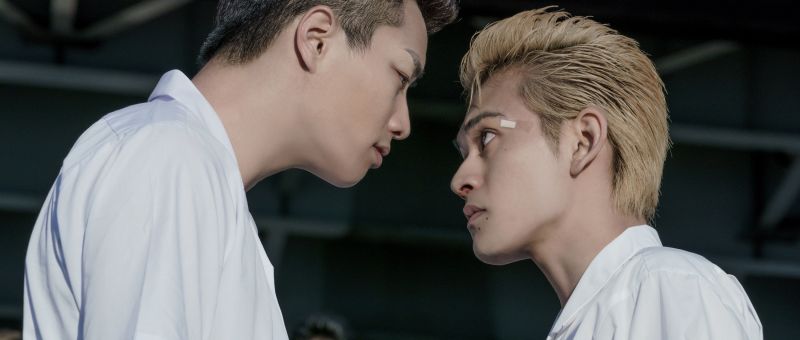
Tokyo Revengers (東京リベンジャーズ, Tsutomu Hanabusa, 2021) [Fantasia 2021]

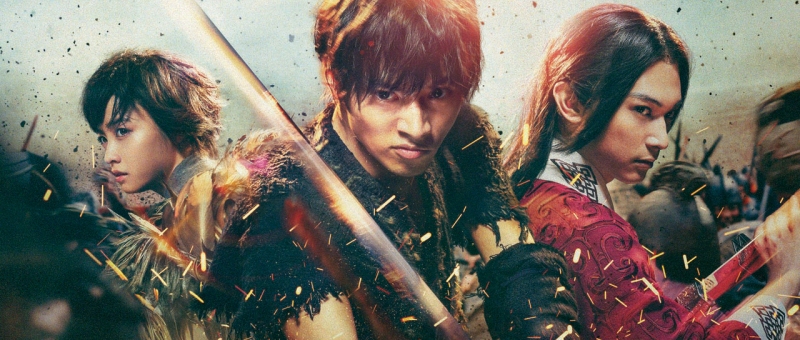
“You don’t deserve to change my life” the hero of Tsutomu Hanabusa’s adaptation of Ken Wakui’s manga Tokyo Revengers (東京リベンジャーズ) eventually affirms in finally facing his fears while trying to change destiny not least his own. In contrast to its original meaning in English, the wasei eigo “Revenge” usually means not payback but “rematch” or at least a second chance to prove oneself or make up for a past mistake. Through his time travel shenanigans, this is perhaps what young Takemichi (Takumi Kitamura) is attempting to do in revisiting the events which he feels ruined his life and left him a useless coward too cowed to offer much resistance to his continual degradation. 

Now 27, Takemichi lives in a rundown, untidy apartment and works part-time in a bookstore where his boss inappropriately mocks for him for still being a virgin, the kind of guy who peaked in high school and can’t move on from adolescent bravado. He might have a point in a sense in that Takemichi is indeed arrested but hearing on the news one day that his first love Hinata (Mio Imada) has been killed in a car accident supposedly caused by the Tokyo Manji gang alongside her brother Naoto (Yosuke Sugino), he finds himself thinking back to his school days. It’s at this point that someone shoves him off a train platform and, facing certain death, he suddenly finds himself in the body of his 17-year-old, bleach blond delinquent self. Takemichi assumes it’s a near death flashback, but later wakes up back in the present and realises that his actions in the past have consequences in the future. 

Quite clearly taking its cues from classic high school delinquent manga in which moody high school boys vie for the top spot through relentless violence, Tokyo Revengers nevertheless undercuts the genre’s macho posturing in firstly having Takemichi broken by his first defeat and then allowing him to reclaim his space as a hero through his determination to care for and protect others even if his final victory is in facing the man he held responsible for shattering his sense of self. Sent back into the past to prevent the Tokyo Manji Gang from ever forming, Takemichi refuses the obvious early solution but remains conflicted in realising that at its inception “Toman” saw itself as a compassionate force for good, a far cry from the nihilistic violence it now brings to the city. Rather than more violence, he finds a solution in its reverse, safeguarding relationships and preventing heartbreak in order to ensure no one else’s soul is corrupted by grief or loneliness. 

Takemichi feels himself powerless but is valued by his friends for his determination to protect others no matter the cost to himself, as he unwittingly proves through his time travel adventures attempting to save himself as much as Hinata by restoring his sense of self apparently shattered by his subjugation at the hands of a rival gang back back in high school. At 27 he’s a meek and broken man, forever apologising for his existence and living an unfulfilling life always running away from challenge or difficulty. Given an improbable second chance, he begins to find the courage to do it all differently with the benefit of hindsight and the stability of age, finally facing his teenage trauma as a fully adult man.  

Like any good delinquent movie, Hanabusa makes space for more than a few mass brawls along with intensely personal one-on-one battles drawing a direct line between high school violence and street war thuggery. “Thugs aren’t cool anymore” Toman leader Mikey (Ryo Yoshizawa) had explained, his compassionate second in command Kenchin (Yuki Yamada) reminding him to “have a heart” in keeping gang violence within the confines of their society and refraining from injuring innocent people. Toman aren’t yakuza, but they are perhaps the inheritors of jingi, or at least would be if left untouched by trauma and betrayal. In beating his own trauma, Takemichi undoes his destiny saving his friends and himself by learning to embrace his inner strength and refusing to back down in the face of intimidation. Part high school delinquent manga, part time travel adventure, Hanabusa’s sci-fi-inflected drama swaps macho posturing for a more contemplative take on the weight of past mistakes while giving its hero a second chance to be the kind of man he always thought himself to be.


Tokyo Revengers screened as part of this year’s Fantasia International Film Festival.

Original trailer (English subtitles)
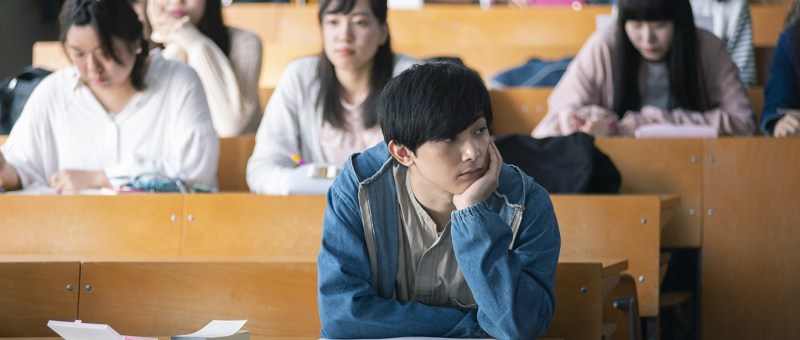
Blue, Painful, Fragile (青くて痛くて脆い, Shunsuke Kariyama, 2020)

“If I became the person I wanted to be, would the world have changed?” the conflicted hero of Shunsuke Kariyama’s Blue, Painful, Fragile (青くて痛くて脆い, Aokute Itakute Moroi) eventually asks having undergone a kind of awakening but still perhaps struggling with himself caught between the desire to be better and the fear of the vulnerability that may entail. As the title implies, this is a tale of painful youth and bitter revelations but also of the fragile male ego, the damage that can be done by a young man who feels himself scorned, and the various ways an embittered, self-absorbed mind can reorder the world to accommodate its sense of righteousness. 

The hero, Kaede (Ryo Yoshizawa), opens with a voiceover revealing his life philosophy of social isolation afraid both of upsetting others and of getting hurt. Despite himself, however, he finds himself drawn into a friendship with the bright and friendly idealist, Hisano (Hana Sugisaki), whom he first noticed in one of his political science classes when she challenged the teacher advancing her life philosophy that peace is born only of mutual surrender and allows no role for violence. A true cynic, Kaede mocks her internally for her “naivety” but is moved on leaving the room to notice that she looks hurt not to have been taken seriously. Noticing him too, she tracks him down and makes a point of sitting next to him in the cafeteria, badgering him into a friendship he doesn’t resist because of his tenet of not challenging the views of others. Together they found the “Moai’ club which is dedicated to building a better world by helping people to become the people they want to be. 

Or at least, that’s what he tells us. As we slowly discover, Kaede is not a completely reliable narrator. Three years later he recruits a friend, Tosuke (Amane Okayama), to help him take down Moai, which has since become some kind of creepy cult corrupted by corporate interests that many seem to be using as a path towards employment, so that he can rebuild it to reflect the values he and Hisano intended when they founded the organisation she apparently having passed on. Yet the more he tells us, the more we start to wonder if there isn’t something else to it, especially when social welfare grad student Wakisaka (Tasuku Emoto) enters the scene. Is this really about the better world, or petty male romantic jealousy? Shy and introverted, it seems that Kaede never had the courage to tell Hisano how he felt and perhaps took it for granted that she understood, unfairly feeling betrayed when she showed interest in someone else despite her near constant prompts for him to speak up whether it be about her or their movement. Kaede says nothing, then blames Hisano for “rejecting” him as if the only reason she could have had for befriending him in the first place was the eventual breaking of his heart. 

In true “nice guy” fashion, Kaede can’t help but see himself as the wounded party. In the flip book he’s been idly drawing which opens the film, a man runs smack into a rock and bangs his head much in the way he seems to feel he has done in his abortive attempts to enter society. Yet later he begins to gain another understanding, his stick figure getting back up and climbing on top of the head of Moai to behold a new world below him. He starts to realise that to change the world you really do need to start with yourself and that in this he has resolutely failed. His petty act of revenge may in a sense be morally justifiable, exposing Moai for the questionable force it has become, but it’s also sordid and unpleasant intended solely to wound in order to avenge his sense of male pride. Only too late does he realise the consequences of his actions and what they say about the kind of person he is and wanted to be. Consumed by a sense of inadequacy, he is defeated by life, too afraid to become the person he should be lest the world reject him but his brief moment of fantasy of what could have been if only he’d been less cynical and cold is bathed in a kind of golden light he perhaps realises he could feel again if only he change himself in order to change the world in which he lives. A masterclass in male gaslighting, Kariyama’s duplicitous drama refuses to let its hero off the hook but reserves for him the right to start again, become the person he wants to be and lay down his arms in willing vulnerability in the hope that others may do the same. 


Blue, Painful, Fragile is currently available to stream via Netflix in the UK and possibly other territories.

Original trailer (no subtitles)

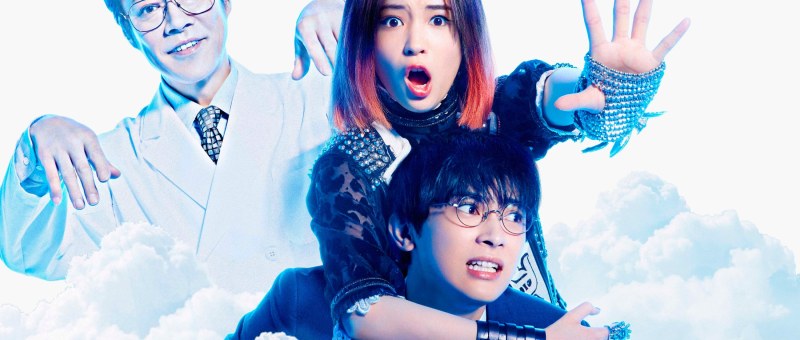
Not Quite Dead Yet (一度死んでみた, Shinji Hamasaki, 2020)

©2020 Shochiku Co., Ltd. Fuji Television Network, Inc.

“What’s important is purpose, to live for something. Without it you’re as good as dead” according to the hero of madcap existentialist farce Not Quite Dead Yet (一度死んでみた, Ichido Shinde Mita). The feature debut from ad director Shinji Hamasaki pits a rebellious student against her overly literal, authoritarian dad as the pair begin to come to a kind mutual understanding only once he “dies” after being tricked into taking an experimental drug in order to unmask conspiracy within his own organisation. 

College student Nanase (Suzu Hirose) intensely resents her father (Shinichi Tsutsumi), the CEO of Nobata Pharmaceuticals which he has long been pressuring her to join. She’s currently the lead singer in death metal band Soulzz only according to a record scout at one of their shows their problem is that they’re all “zz” and no soul. Meanwhile, Nobata has assigned an underling, Matsuoka (Ryo Yoshizawa), to shadow her partly because Matsuoka too has very little presence and is in fact nicknamed “ghost” for his essential invisibility. The trouble starts with the escalation of a corporate feud as Nobata’s old buddy Tanabe (Kyusaku Shimada) starts manoeuvring to get his hands on the company’s research into an anti-ageing serum codenamed “Romeo”, planting a mole inside the organisation. As a consequence of his research another of the scientists nicknamed “Gramps” has stumbled on another drug which renders someone temporarily “dead” for a period of two days, naming it “Juliet”. Watabe (Yukiyoshi Ozawa), a consultant Nobata has brought in to streamline the business, convinces him to take the experimental drug in order to flush out the mole while secretly working with Tanabe to take over the company by forcing through a merger while Nobata is out of action. 

A typical socially awkward scientist, Nobata believes that life is about experiment and observation, a belief system which has thoroughly irritated his daughter who still lives at home but has divided the territory in half with clearly marked red tape. Nanase’s animosity towards her father apparently stems back to the death of her late mother Yuriko (Tae Kimura), angry with him that he never left his desk and didn’t make it to the hospital in time to see her before she passed away. “Life’s not a lab experiment” she sings, recalling her childhood during which her overly literal father took away life’s magic by patiently over explaining fairytales, scoffing that Prince Charming probably didn’t revive Sleeping Beauty with a kiss but a transfer of static electricity, while continuing to order her around in fatherly fashion now she’s all grown up. Perhaps still stuck in a petulant adolescence she started the band to vent her frustrations with the world in the form of a death metal “mass”, but she’s growing up. Her bandmates are getting jobs or getting married, she’s still stuck with no real clue about what it is she actually wants to do with her life except that she doesn’t want anything to do with Nobuta Pharmaceuticals.  

Once her father “dies”, however, she begins to gain a new appreciation for his life philosophy able to see but not hear his “ghost” while his body lies on a table in the office cafeteria. Nobata went into pharmaceuticals to help people, but has been led on a dark and vacuous path pursuing anti-ageing technology which is in itself a rejection of change and transience. Ending all her sentences with the word “death”, that’s not something Nanase can get behind. She believes in growing old gracefully, that they make drugs not to cheat death but to be able to spend longer with those they love. As her father had advised Matsuoka to do, she begins to find her purpose, rediscovers her soul, and figures out what it is she’s supposed to do with her life.

Matsuoka, however, seems to be permanently “invisible” despite the tentative romance that develops as he and Nanase attempt to subvert the conspiracy to stop them doing her dad in for good, brushing up against the venal Tanabe who seems set to muster all his corporate advantages against them partly because of an old grudge against Nobata. Of course, you have to wonder why the conspirators didn’t just poison him rather than having him go Juliet and then entering a race against time to cremate him before he wakes up, but as Nobata reminds us there are many things which science cannot explain. A cheerfully silly Christmas tale of rediscovering what it means to be “alive” in the presence of death, Not Quite Dead Yet is zany seasonal fun but with plenty of soul as its heroes learn to shake off cynical corporatism for a healthy respect of the values of transience.


Not Quite Dead Yet screened as part of Camera Japan 2020.

Original trailer (English subtitles)
Images: ©2020 Shochiku Co., Ltd. Fuji Television Network, Inc.

Kingdom (キングダム, Shinsuke Sato, 2019) [Fantasia 2019]

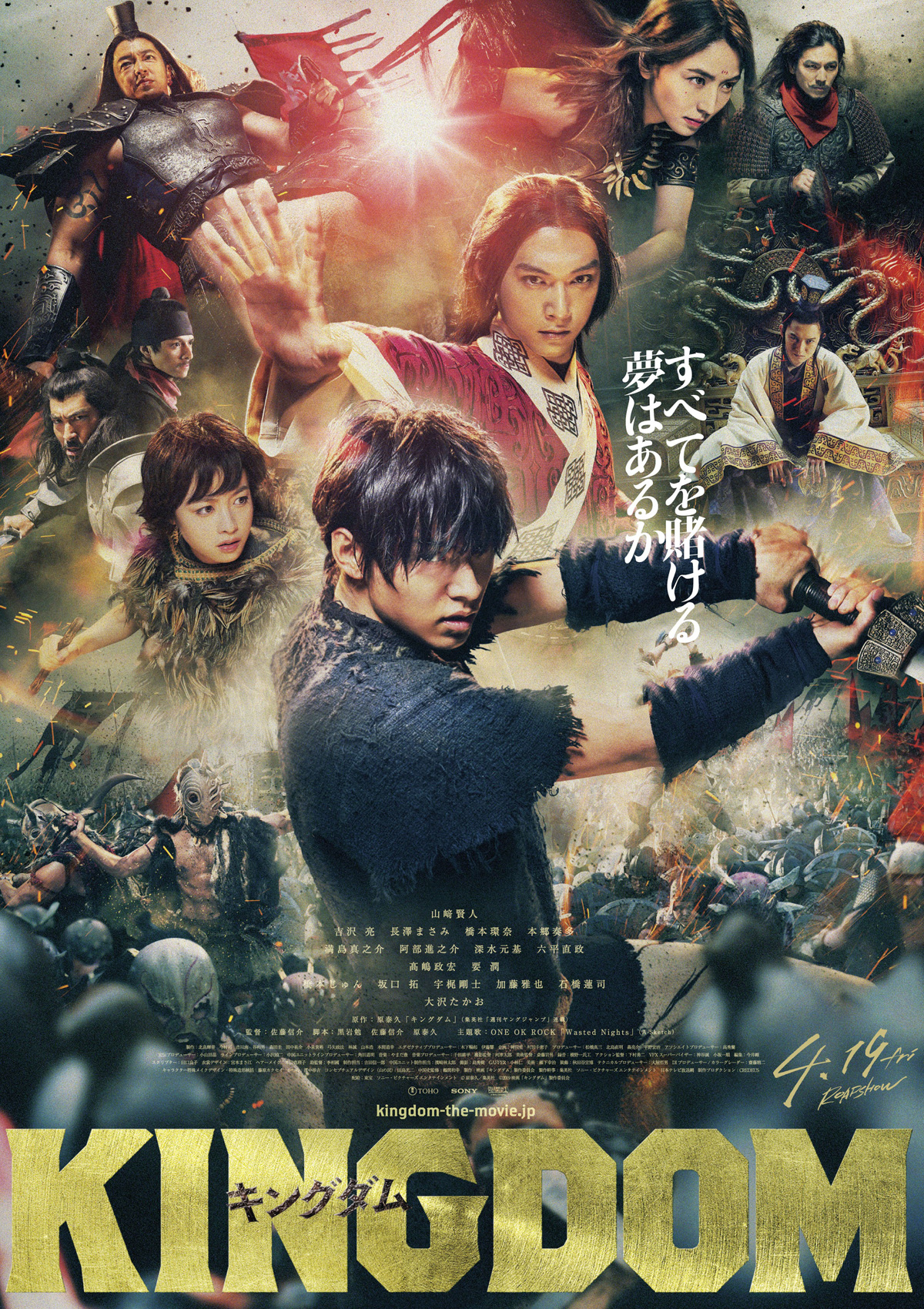
Kingdom poster 1The class war arrives in feudal China via modern Japan in Shinsuke Sato’s big budget adaptation of the wuxia-inspired manga by Yasuhisa Hara, Kingdom (キングダム). Set in China’s Warring States period, Kingdom offers a surprisingly progressive message, if mildly tempered by a failure to tackle the system in its entirety, in which the oppressed (which in this case includes the king) rise up against sneering aristocracy fuelled mostly by righteousness and fierce defence of the right to dream.

The tale begins with a fateful meeting between enslaved war orphans Piao (Ryo Yoshizawa) and Xin (Kento Yamazaki) on a small farm somewhere in rural China. The boys, realising there is no way out of their enslavement save the sword, commit themselves to perfecting their martial arts with the ultimate goal of becoming the world’s greatest generals. Their intense bond is broken when a mysterious man, Lord Chang . Wen Jun (Masahiro Takashima), appears and offers Piao a job at the palace. Though he agonises over leaving his brother behind, Piao seizes his destiny little knowing he has been hired not quite so much for his sword skills as for his resemblance to weakened king Ying Zheng (also played by Ryo Yoshizawa). Sometime later, Piao returns close to death, entrusting Xin with an important mission – go to Ying Zheng and seek his own destiny by restoring rightful rule.

The two boys are about as oppressed as it’s possible to be – orphaned slaves with no prospect of improving their condition save the one they’ve already decided on, fighting in a war. This doesn’t quite explain how they can release themselves from the farm, but Xin’s eventual flight, in which his master does not attempt to stop him, might suggest the first hurdle is not as big as it seems. In any case, Xin finds an unlikely ally in Ying Zheng who has been deposed from the throne by his younger brother for not being royal enough because his birth was illegitimate and his mother was a dancer.

Of course, Ying Zheng’s intention to regain his “rightful” throne is in defence of a necessarily unequal social order, but it’s also a blow against the kind of elitism which mark’s his brother Cheng Jiao’s (Kanata Hongo) philosophy. Cheng Jiao believes that he is the most rightful king because his blood is the most royal. He looks down on Ying Zheng as low born, and has no respect for his subjects or the lower orders. “A peasant in fine clothes is still a peasant” one of his minions intones to intimidate an opponent, but someone with a sword is still someone with a sword no matter their circumstances of birth and provided you have access to acquire one, perhaps swordsmanship is a truly egalitarian art given that it largely depends on how well you wield a blade. Eventually, Ying Zheng makes an ally of another oppressed people – the mountain dwellers subjugated, and previously betrayed, by the powers that be who lend their strength to toppling a corrupt power structure in order to restore something like peace and balance to the land.

Indeed, asked to give a brief manifesto speech, Ying Zheng cooly declares that he aims to create a unified China by eliminating borders and therefore the need for war. Insisting that when a king picks up a sword it ought to be in service of his people, he makes the case for a borderless world, little caring that, as his general points out, history may brand him a tyrant. Nevertheless, he remains a “puppet king” whose status is dependent on the loyalty of key general Wang Yi (Takao Ohsawa) with whom true power lies. Wang Yi, as we later find out seems to be a “good” person who used his troops to protect the innocent and ensure no civilians were harmed during the chaos of the insurrection but he does indeed wield dangerously vast power for just one man. Meanwhile, Ying Zheng may reject the primacy of blood, but does dare to claim his birthright as an oldest son and is of course acting in service of an inherently oppressive system even if he means to make minor improvements towards the kind of meritocracy that allows men like Xin to embrace the power of their dreams.

The power of dreams is indeed the key. Though Cheng Jiao’s hardline mercenary may sneer that “dreams are bullshit” and deny a slave like Xin’s right to have one at all, to men like Xin dreams are all they have. As he says, they get you back on your feet when everything else seems hopeless. Learning that Piao achieved his dream even if it was only for a few moments gives him the strength to pursue his own in service not just of himself but his brother, friends, and kingdom.

Appropriating the aesthetics of wuxia may prove problematic for some, but like many Japanese manga with international settings, Kingdom’s mechanics are essentially home grown which is perhaps why Sato heavily leans on Kurosawa’s legacy, possibly overusing the distinctive side wipe and giving his heroine a look echoing that from Hidden Fortress while other influences seem to feed back from Star Wars in the strangely cute masked mountain elders and gleaming golden armour of bad ass warrior queen Yang Duan He (Masami Nagasawa). A surprisingly positive, perhaps ironically bold plea for a borderless world and if not actual equality at least a friendly kind of egalitarian nobility, Kingdom hands victory to those who fight hardest for their right to dream while subtly advocating for their right to rebel against an inherently unjust social order in order to claim it. 


Kingdom was screened as part of the 2019 Fantasia International Film Festival. It will also be screened in US cinemas from Aug. 16 courtesy of Funimation.

International trailer (English subtitles)

Psychic Kusuo (斉木楠雄のΨ難, Yuichi Fukuda, 2017)

psychic kusuo posterMany may bristle at an attempt to label director Yuichi Fukuda an auteur, but you can’t argue with the fact that he’s developed something of a house style. That house style may have just catapulted him to the top of the box office with two successful movies inspired by the gag filled Gintama, but outside of his big budget studio efforts he’s something of an acquired taste. Take Hentai Kamen, for example. For some a hilariously perverse super hero adventure comedy. For others one childish joke stretched out for 90 minutes. Psychic Kusuo (斉木楠雄のΨ難, Saiki Kusuo no Sainan), coming from the same general area as the phenomenally successful Gintama in adapting an absurdist gag manga only this time one by Shuichi Aso, undoubtedly belongs in the latter category.

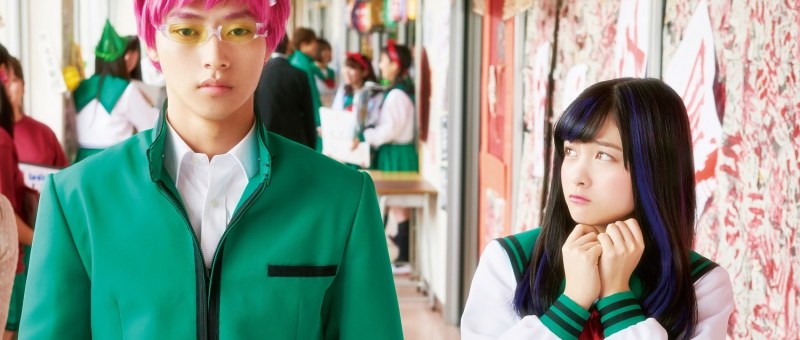
16-year-old Kusuo Saiki (Kento Yamazaki) is the most powerful esper on Earth. Seeing as he was born to a lovely, hippyish couple who didn’t mind that he was a bit strange, Saiki grew up appreciating his superpowers for what they are but also mindful that they could cause him a problem if they got out of hand. He uses his powers to hypnotise those around him so that they don’t notice his neon pink hair or the antennas in his head which keep his emotions in check and prevent him accidentally destroying all of Tokyo. Nevertheless, it is quite a bother to be burdened by unnatural abilities especially in that it makes life extremely dull not to mention a little stressful when you can hear everything everyone is thinking in every tiny detail.

The big problem is that Saiki is coming up on his first high school culture festival. Saiki is not big into celebrations and hanging out with other people so what he likes about festivals is that no one’s going to miss him so he can escape for a little me time. The last few festivals, however, have each descended into chaos and if it happens again this year they’re going to be cancelled for good. In order to save his precious haven of relaxation, Saiki will have to forgo it this time to make sure no one starts any trouble.

Fukuda began his career writing skits for TV variety shows and the humour in his films is indeed very specific and of the kind familiar to fans of Japanese television comedy, which is to say it is extremely broad and somewhat meta with frequent breaking of the fourth wall. The major antagonist of Psychic Kusuo is conceited high school classmate Kokomi (Kanna Hashimoto) who is accounted by all as the school’s number one beauty and knows it. As he’s able to read minds, Saiki knows she’s in no way as pretty on the inside and makes a point of ignoring her. Of course, this only ends up attracting her attention because she’s incapable of accepting that there’s a boy who doesn’t instantly sigh on catching sight of her. In keeping with Fukuda’s over the top approach, Kokomi becomes little more than a collection of preening looks alternating between calculated cuteness and outright bunny boiler villainy.

Meanwhile, Fukuda throws in a series of in jokes and random references to other franchises from Assassination Classroom to Dragon Ball, piling absurdity on top of absurdity through a series of possible crises as yankees from another school threaten to cause a ruckus and the Dark Reunion turn up to prosecute their conspiracy on school grounds. Meanwhile a creepy stage magician and his surprisingly sprightly mother/assistant take credit for all the strange goings on and Saiki accidentally ends up marooned in space.

Yet the problem is that it just isn’t very funny or particularly interesting. It comes to something when the most entertaining part of the movie is Saiki’s extremely nice parents and their unflappable acceptance of the strange goings on which often befall their family. Over reliant on reaction shots and schoolyard humour, Psychic Kusuo may play well to Fukuda’s many fans, those familiar with the anime or manga, and lovers of TV variety skits but anyone else may find themselves scratching their heads at its decidedly lowbrow, scattershot attempt at humour and longing for an end to its considerably dubious charms.


Original trailer (no subtitles)

https://www.youtube.com/watch?v=UApe_k1Db_A