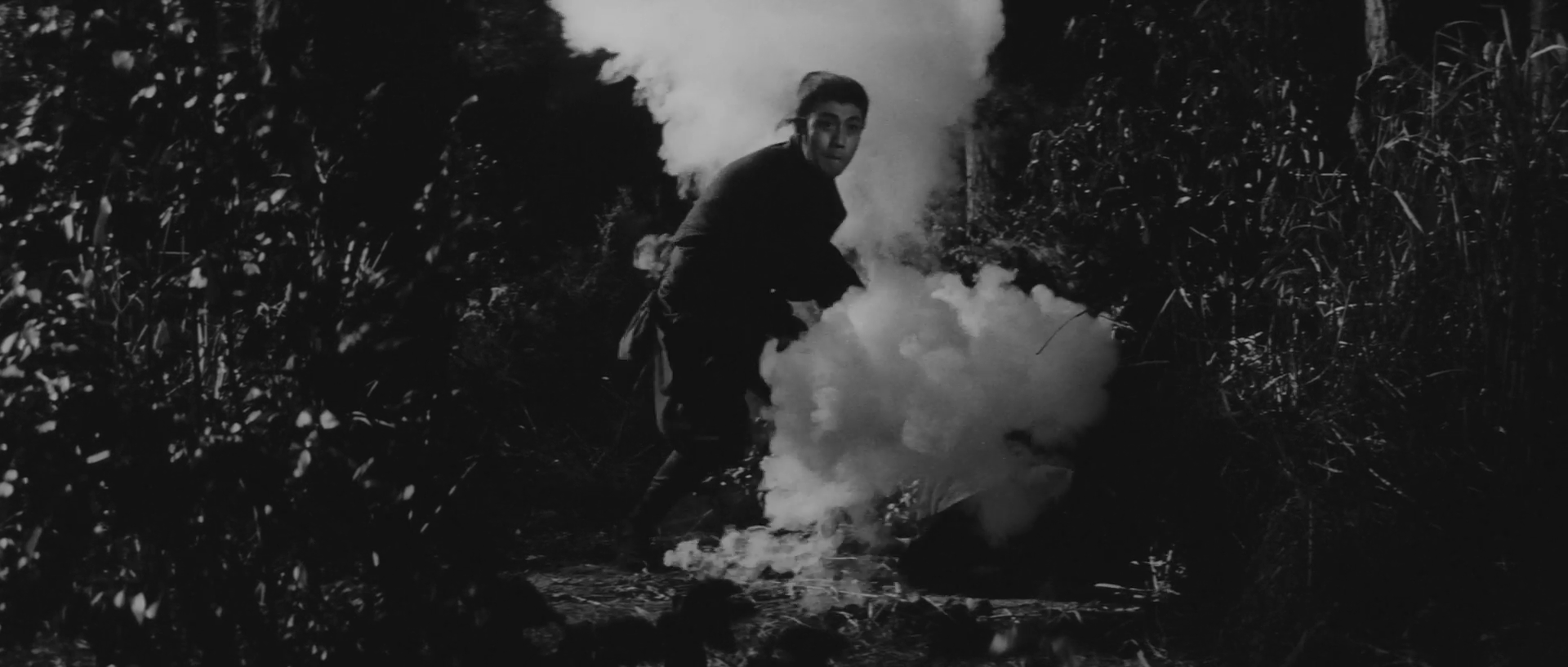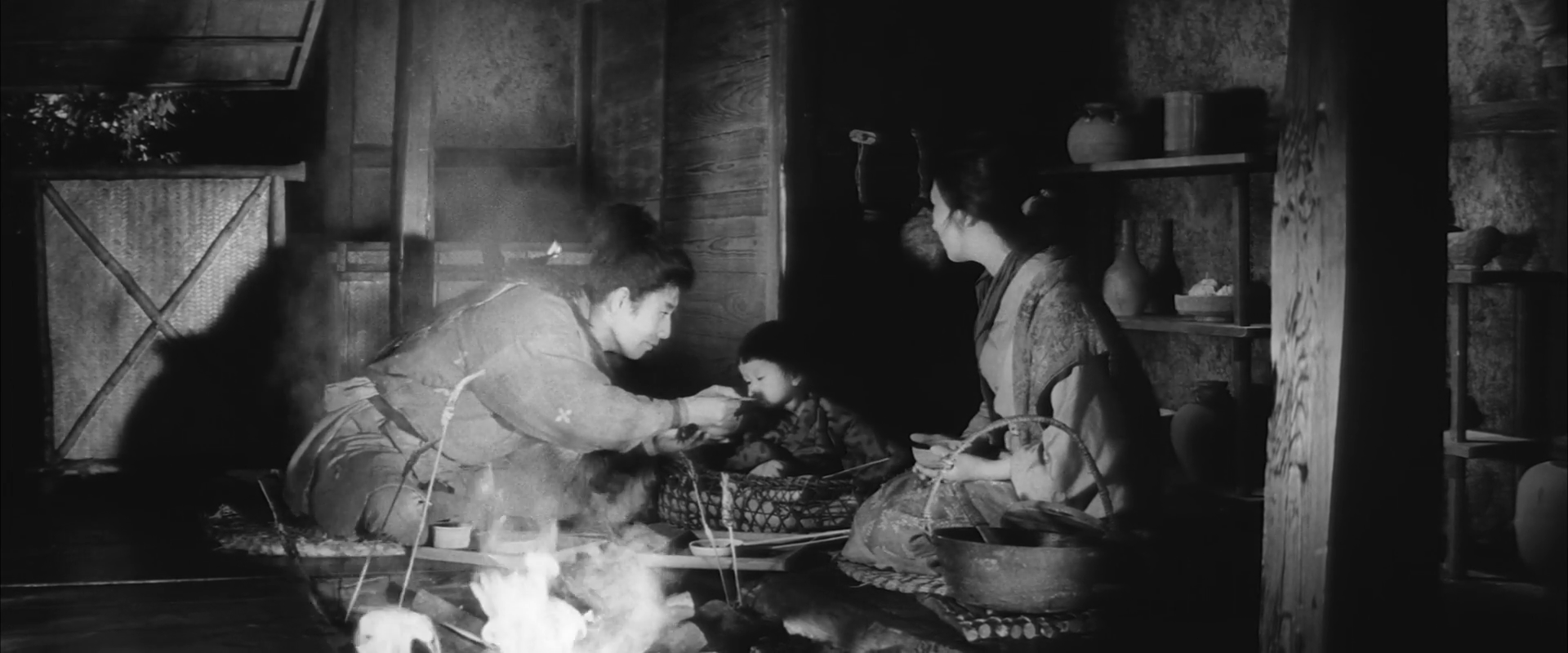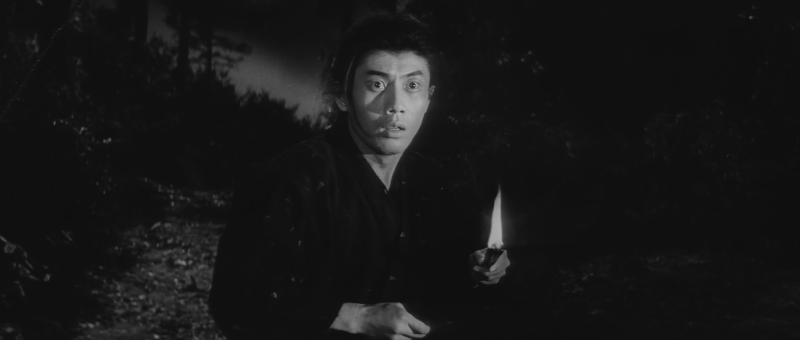
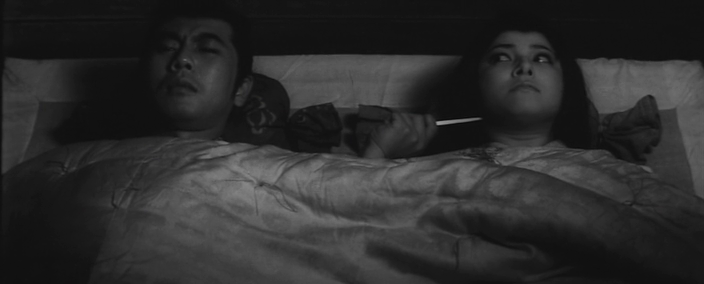
A Bullet Hole Underground (地下街の弾痕, Kazuo Mori, 1949)

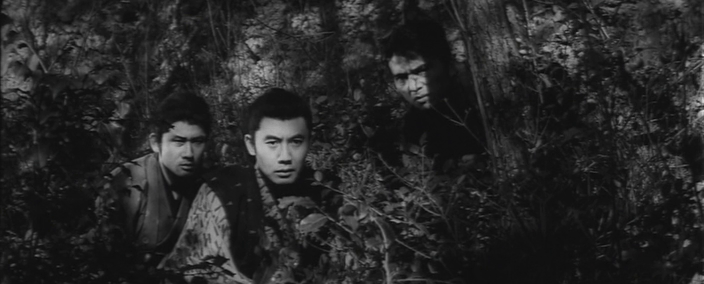
Produced by Daiei Kyoto under the guidance of the Osaka Police, Bullet Hole Underground (地下街の弾痕, Chikagai no Dankon) is keen on selling a vision of order in a new Japan in which the police force employs all the latest technology to solve crimes calmly and methodically. We see them approach the crime scene forensically and conduct a series of scientific tests with microscopes and gadgets such as lie detector machines and code breaking equipment as they proceed towards the truth while earnest policeman Minagawa (Hiroshi Nihonyanagi) battles the ghosts of his past on realising that the dead man’s wife is his own lost love.

In any case, the film opens with a noirish scene at Umeda Station, Osaka, which then turns strangely comic. A man stumbles toward the exit and we assume that he is probably drunk but another man soon comes up behind him and pushes a pistol into his back. The second man pulls the trigger, then again to make sure, before calmly walking up the steps and leaving the station. A little while later, another drunk man arrives and has a little banter with the body before covering it with a signboard which is one reason it isn’t spotted until the shoeshine boys turn up in the morning. 

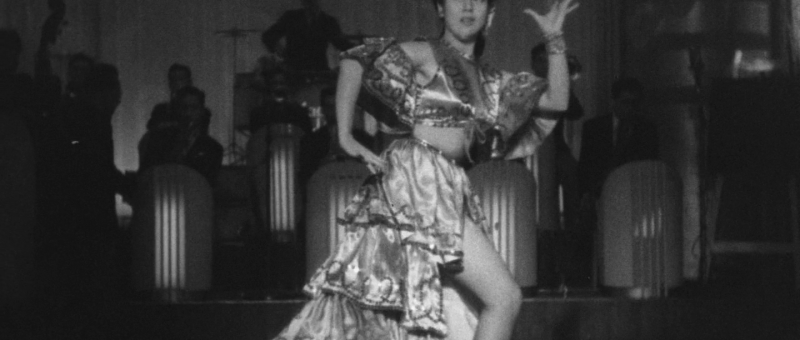
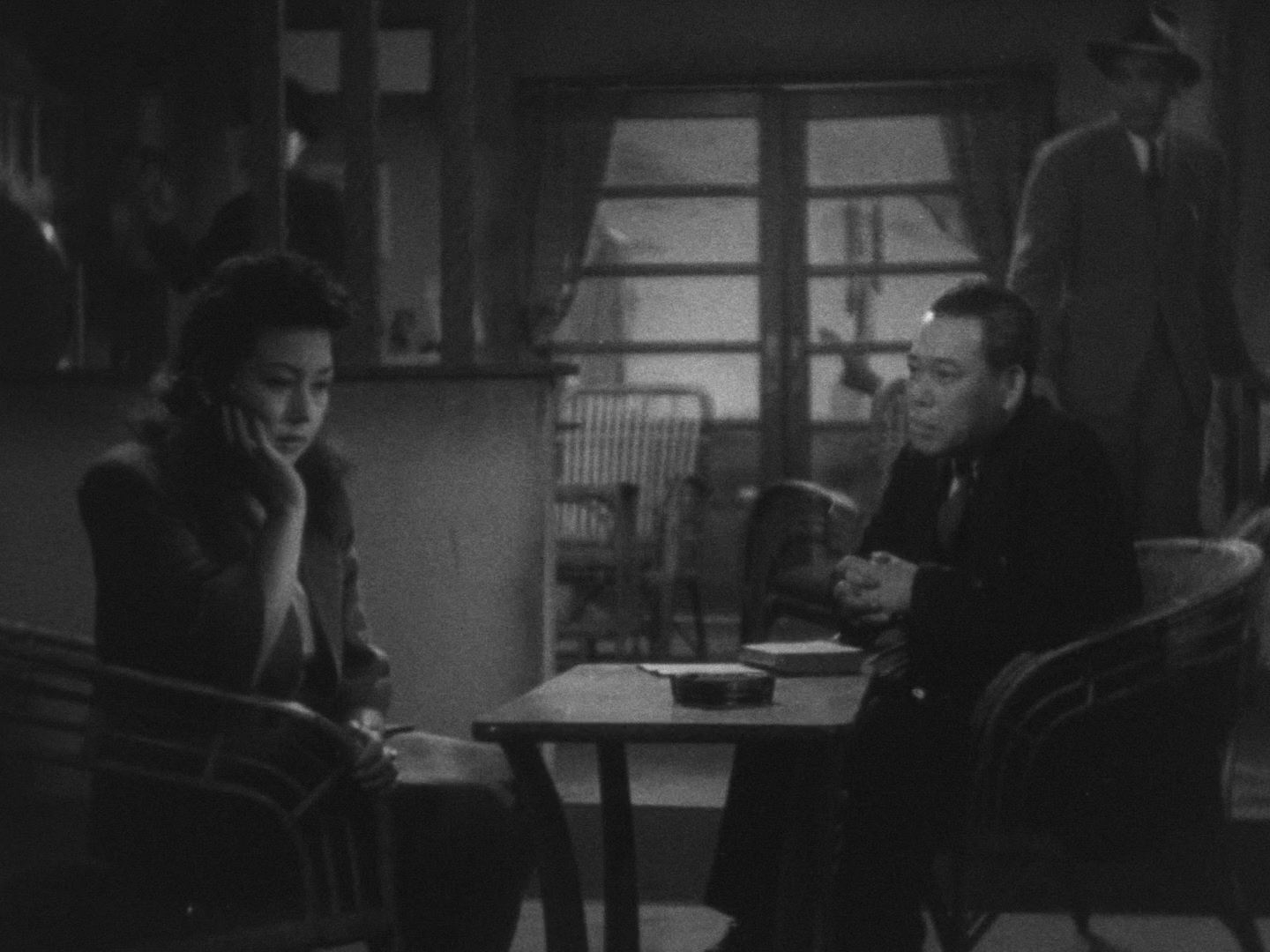
This sudden influx of children at rush hour is another symbol of the destabilisation of the post-war society in which the war orphans try to support themselves amid the still difficult economic environment. The lack of economic opportunities is also posited as a reason that the deceased, later identified as Kaneko, may have turned to crime by getting involved with a criminal gang smuggling drugs and money to destabilise the society even further. Yet the rot may have set in a little earlier than that. Before the war, Minagawa had wanted to marry Michiko (Machiko Kyo), the sister of his friend Sekiguchi (Toshiaki Konoe), but she later threw him over to marry the wealthy son of a family running a pharmacy. She admits she married him for the money, but after the war he lost everything. Unable to find work, Kaneko became a wastrel while Michiko gained employment at a cabaret bar as a dancer. He told her that he’d found a job at a company, but this turned out to be a lie and chief investigator Fujimoto (Takashi Shimura) assumes he must have been working for the gang. 

Still, to begin with it seems like it may have been a case of mistaken identity. Kaneko’s clothes turned out to belong to other people, a fact easily explained by Michiko that they were second hand, but also suggesting that someone may have set him up to take their fall. The gang needed the skills he learned in the navy but maybe they didn’t need him anymore. The root of the evil is located, ironically enough, in a jewellery store presenting a front of affluence and elegance but in reality founded on crime and misery when so many are still struggling to rebuild their lives. Michiko too seems to have turned cynical. She snarls and pushes Minagawa away, but privately cries and appears to regret her youthful decision to reject love for material comfort.

Perhaps because of its genesis as a film designed to promote the local police force, it has a much more upbeat conclusion and particularly for Michiko who is, unusually, allowed to redeem herself and gain a second chance to make a better decision by reuniting with Minagawa who does not and never has held her past against her. The pair of them look out over the fracturing city and remark at how it just carries on as if nothing had happened which feels like advice intended for the post-war society that it should do the same and try to leave the past behind to start a new life in this new era. Meanwhile, huge numbers of policemen swarm the harbour to crack down on the smuggling gang sending the not altogether comforting message that this city is well protected against all kinds of crime and the police force is a well-trained, modern institution that has the latest technology at its disposal along with astute and compassionate officers. There may be sleazy clubs, duplicitous men and heartless gangsters, black markets and smuggled dangers, but there are, the closing scenes with their wide-open vistas in which scorched trees stand behind the burgeoning city imply, better days to come.


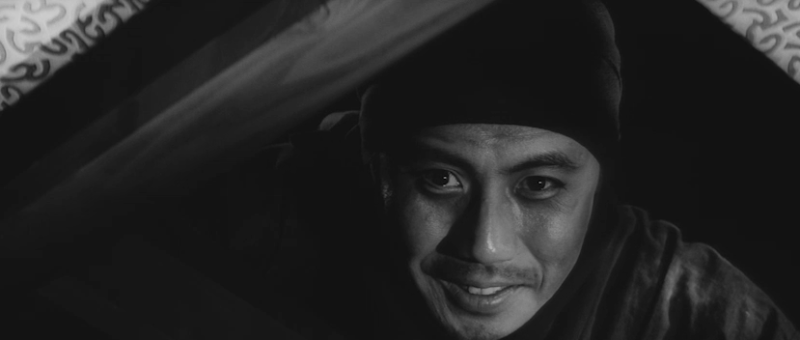
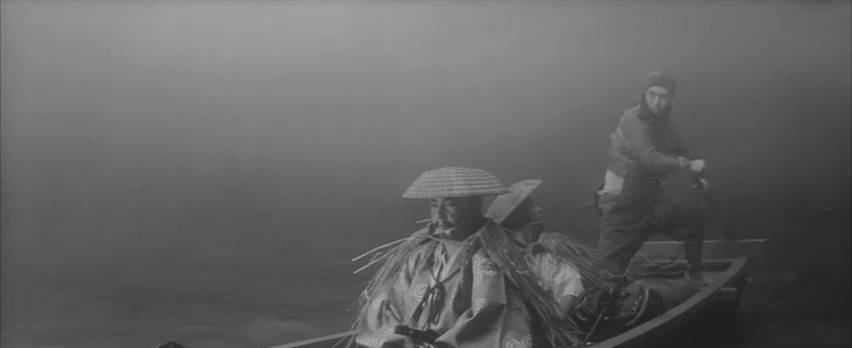
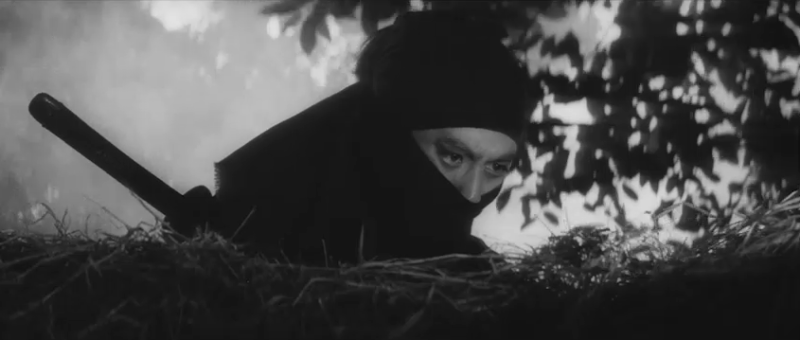
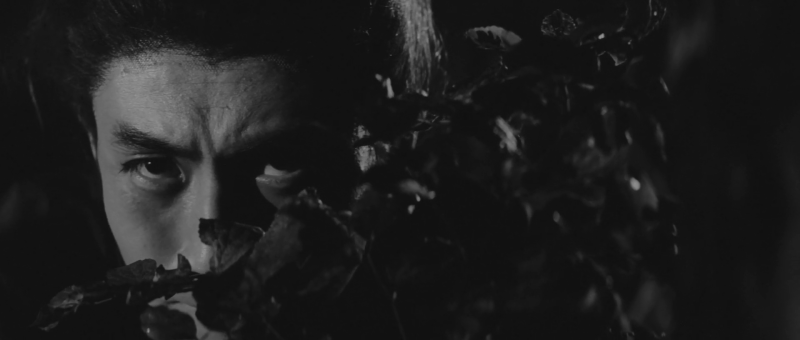
Bloody Shuriken (赤い手裏剣, Tokuzo Tanaka, 1965)

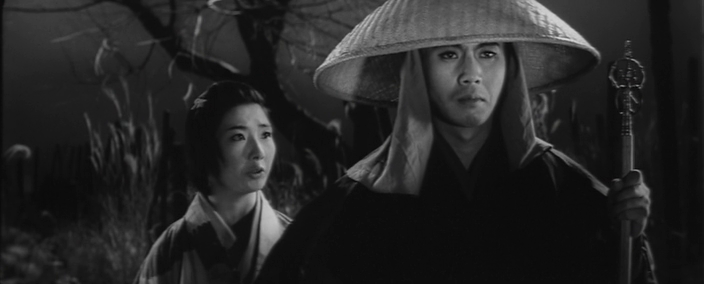
A cynical ronin spots a business opportunity when he rides into a town beset by gangsters in Tokuzo Tanaka’s samurai western, Bloody Shuriken (赤い手裏剣, Akai Shuriken). Despite the name, this is not a ninja movie. The title refers to the knives the hero throws with almost supernatural skill. Adapted from a short story by noir master Haruhiko Oyabu, the action may sound reminiscent of Yojimbo but there’s a different kind of irony in its humour and a lightheartedness to its cynicism even if its final message is that the wages of greed are death.

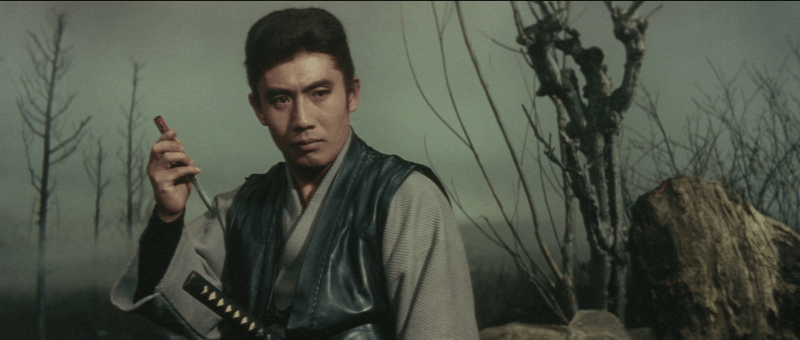
We can tell that Ibuki (Raizo Ichikawa) is both good man and bad in that he immediately breaks up a fight between rival gangs on entering town, depriving the men in question of their money, but then handing it straight to the owner of the bar they were fighting in to cover the damage. He’s concerned about his horse too, but can’t quite afford the lodging fees at the stable run by the grumpy Yuki (Chitose Kobayashi) who loathes samurai, and with good reason. After hearing about the complicated makeup of the town’s hierarchy, Ibuki decides to stay and make some money by essentially playing each of the three gang leaders off against each other so they end up taking care of themselves. 

So far, so Yojimbo. But this town seems to be even further out, much more like a decrepit western outpost filled with scum and villainy. When the wind picks up, the dust blows through as if signalling the murky air and sense of futility. We’re told that the leader of the biggest gang, Hotoke (Isao Yamagata), is also the police chief, while his rival Sumiya (Yoshio Yoshida) complains that he’s usurped his position as his family has been there longer. Hotoke arrived a starving man three years previously and got back on his feet thanks to the support of the community, but then he turned around and got rich running a gambling den targeting local miners. Kinuya (Fujio Suga) has been here a little longer, but is otherwise biding his time until the other gangs fall from grace.

Of course, Ibuki foments conflict and strikes deals with all of them, but the real trouble is some missing gold that was stolen from the government causing even more disruption in the town with inspectors targeting ordinary people who weren’t even involved. Bar owner Chinami (Masumi Harukawa) is one of many interested in finding out what happened to the money, but she’s also in a precarious position, on the one hand throwing her lot in with Hotoke but on the other hating him and approaching both Ibuki and moody ronin Masa (Koji Nanbara ) to help her be free of the troublesome gangster. 

The fact that the two most prominent business owners are women is perhaps uncomfortably intended to signal the breakdown of the town in which Ibuki becomes the only real “proper” man amid bumbling gangsters and crazed ronin. Yet Chinami is directly contrasted with the pure and innocent Yuki who hates all the gangsters, as well as the samurai and generally everyone who isn’t a horse. Cynical and greedy, Chinami wants the gold and she’s prepared to use her body to manipulate men into doing what she wants, whereas Yuki defiantly keeps her head down and refuses to participate in gangster nonsense because she just wants to run her stables in peace. Only later does she develop a fondness for Ibuki on realising that he’s not so cynical after all and is interested in a kind of justice and getting rid of the corruption in the town for reasons other than money. Having discovered the location for the gold, he leaves the knowledge to Yuki so she can avenge her father who was killed during the robbery. 

But in other ways, this is already a post-apocalyptic hellscape as Ibuki discovers on spotting a pair of crows feeding on a corpse in a river. Perhaps taking pity on one less fortunate than himself, he throws one of his darts and skewers them. Ibuki’s knife supply seems to be inexhaustible, and he never appears to go back and retrieve the ones he’s thrown though his skill does seem to lend him an almost supernatural quality. In any case, Tanaka injects a degree of weird humour in the strange town with its eccentric residents including ronin Masa who looks permanently evil yet has a strange love of dolls, while the fight scenes themselves are often somewhat comical as the gangs seem to clash like a pair of cats slapping each other. There’s even something quite funny about the way the film bluntly drops exposition at unexpected moments even in the midst of the farcical scheming between the gangsters and Ibuki running back and forth to stoke the fires of conflict. This land is so bleak, it seems to say, all you can do is laugh or you’ll end up face down in a river with crows picking at your back too, so you might as well ride off into the sunset like Ibuki looking for the next corrupt town to purify and onward towards the bounty on the horizon. 


Trailer (no subtitles)

The Woman in the Rumour (噂の女, Kenji Mizoguchi, 1954)

A mother and daughter find themselves deceived by the same man, each hemmed in by realities which cannot be altered but eventually coming to a place of mutual understanding that allows them to restore their relationship not only as parent and child but as women in Kenji Mizoguchi’s 1954 melodrama, The Woman in the Rumour (噂の女, Uwasa no Onna). The first question we might ask ourselves is to which of the women the title refers, or indeed to which rumour, though in a sense rumours matter little for either of them when the problem is the constraints which each of them feel as women in the contemporary society. 

Even so, the sense of shame is evident when Yukiko (Yoshiko Kuga) is brought back to the geisha house run by her mother Hatsuko (Kinuyo Tanaka) after having attempted to take her own life in Tokyo. As we learn, the reason for her despair is in part heartbreak. She had been engaged but her fiancé’s family convinced him to end their relationship when they discovered that her mother ran a geisha house. Thus the suicide attempt is also a reflection of her sense of futility. She will always be the daughter of a woman who earned her living in the sex trade. This is a fact that cannot be changed and may lead her to think that her situation is hopeless because the same thing is likely to happen again leaving her unable to marry in a society in which there are few options for a single woman to make a life for herself not to mention the loneliness of living without romantic love. 

Hatsuko, meanwhile, is uncertain how seriously she should take the situation in part believing that it’s a product of youthful naivety in her daughter’s first romantic heartbreak. When a young doctor with whom she is close, Matoba (Tomoemon Otani), explains to her that Yukiko is depressed because she feels deep shame, self-loathing, and hopelessness due to her mother’s occupation, Hatsuko struggles to understand it and does not fully believe him. Nevertheless, she took care to bring her daughter up largely outside of the geisha world, sending Yukiko to Tokyo to study music implying that she herself to some degree sees her work as improper. The other girls view Yukiko with a degree of disdain, realising that her refinement was bought with their exploitation and noticing her animosity towards them. 

Hatsuko is mother both to Yukiko and the young women under her care who are always quick to point out that this is one of the better geisha houses because they are well looked after. When one of the women, Usugumo (Kimiko Tachibana), is taken ill, Hatusko calls in the doctor and allows her time off to rest which likely would not be granted at another house. She is reluctant to send her to hospital, but would if the situation called for it. In a sense it’s this solicitation that eventually allows Yukiko to find accommodation with her mother’s profession as she grows closer to the other women while nursing Usugumo herself and comes to understand their particular circumstances that have left them no choice but to live as geisha. Usugumo is reluctant to go to hospital because she is worried about the money she’d usually send to her sister Chiyoko (Sachiko Mine) who works the family farm and cares for their sickly father, but when she dies Chiyoko herself is left with little option other than to petition the geisha house to take her sister’s place. 

On seeing Chiyoko sitting on the step and pleading to be taken on, another of the women laments as she’s leaving that she wonders when there will be no more need for women like them. The geisha world is perhaps an unchangeable reality, just like Yukiko’s birth and her mother’s age. The rumours that surround Hatsuko are to do with her closeness with Matoba with whom she has clearly been in an intimate relationship, dreaming of becoming his wife and even considering selling the geisha house to buy a large property where they could live together as a couple while he runs a private clinic. Matoba predictably decides he prefers the younger Yukiko, Hatsuko increasingly desperate after overhearing their conversation about leaving her behind to move to Tokyo together where Matoba ponders finishing his education. The play they’ve gone to see almost feels like a personal attack as an actor intones that feelings of love at 20 are fine but at 60 it’s merely shameful. “Even carp know better than to fall in love at this age”, he adds, the old woman a figure of ridicule in her romantic delusion leaving Hatsuko feeling both humiliated and resentful.

When Hatsuko finally confronts Matoba, she does it as a scorned woman rather than as a mother, while Yukiko in turn first turns on her rather than Matoba even as she begins to realise the reality of the situation that the man who seduced her had been using her mother for his own gain in total disregard of her feelings. In short, even if Hatsuko were not her mother which certainly makes this a very complicated situation, he is not the sort of man she’d want to make a life with. Acutely aware of her own experiences of heartbreak, she fears for her mother’s wellbeing and comes to an understanding of her as a woman while accepting that “men are all alike” and in that at least perhaps her mother’s profession is the most honest of all. Mutually betrayed, mother and daughter are able to repair their familial bonds while Yukiko finds herself taking refuge in the geisha house as a space of female solidarity and bulwark against a cruel and patriarchal society. 


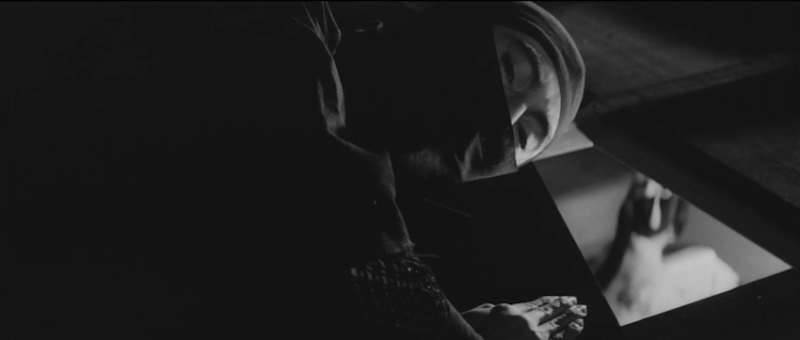
The Blind Menace (不知火検校, Kazuo Mori, 1960)

Two years before finding fame as Zatoichi, Shintaro Katsu starred as his mirror image in a tale of pure villainy, The Blind Menace (不知火検校, Shiranui Kengyo). As the title suggests, the film follows the upward trajectory and eventual downfall of an unsighted man who gleefully rapes and pillages his way to becoming the leader of his community aided and abetted by the ills of the feudal era which allow him to profit from his crimes until the past finally catches up with him.

After all as he later says, “as long you as you keep rising in the world, past misdeeds don’t matter.” In any case, even as a child the man who would later be known as Suginoichi (Shintaro Katsu) is incredibly unpleasant. In the opening festival sequence he picks his nose and flicks it in a barrel of sake so that the men drinking will abandon it. The only sign of possible goodness in him is that he takes the sake home for his mother to enjoy, though he seems to relish the idea of her unwittingly drinking his snot so perhaps that was the real purpose. Other hobbies of his include conning wealthy passersby out of a ryo with a well worn scam in which he asks them to read a letter from his uncle which mentions that it should include one ryo only what’s in there is a stone. When the reader explains the situation, he accuses them of trying to take advantage of his blindness and makes a fuss about it until they’re embarrassed into coughing up a ryo of their own (not a small sum for the time period). 

In some ways his poverty and disability might explain his behaviour. His family set up is subverted with his mother much like him money hungry and willing to do anything to get it while his saintly, henpecked father is gentle and honest. This might have taught him the wrong lessons about masculinity that lead him to see his father as weak in allowing the world to trample him while taking his mother’s advice to heart that if they only had a 1000 ryo they could get him trained up properly so that he might one day become a Kengyo which is a little bit like a community leader for the blind with social status and political influence. 

It’s this kind of social affirmation he seems to crave, but is essentially a narcissistic sociopath who takes advantage a stereotype that in some ways infantilises the blind and those with other disabilities who are believed to be pure-hearted and incapable of intrigue or evil. He seems to come to the rescue of a noblewoman who asked his boss, the Kengyo, to lend her money secretly because her brother has been caught embezzling but then rapes her, asks for the money back, and blackmails her into further acts of sexual exploitation offering her only 5 ryo a time knowing she needs 50. He thinks nothing of using his acupuncture skills to kill a man who was carrying 200 ryo to buy a “boneless girl” for a freak show and then framing a man who saw him do it but agreed to say nothing for a 50% cut for the crime. Suginoichi later teams up with “Severed Head” Kurakichi (Fujio Suga) to commit a series of burglaries including that of the Kengyo master who he also has killed to usurp his postion. 

But as he said, once his recognition is in sight with an invitation from the shogun everything begins to fall apart as all his wrongdoing starts to catch up with him. The feudal world had allowed him to prosper partly because of other people’s greed but also the social codes that favour shame and secrecy along with people’s unwillingness to accept that a blind man can also be selfish and evil despite a lot of evidence to the contrary. Elegantly lensed by Kazuo Mori who brings a sense of realism to the hardbitten backstreets of the feudal poor, the film may suggest that the wealthy only get that way by trickery and exploitation and the only way to rise to the loftiest place is to be like Suginoichi and not care what you do to get there but is clear that once you arrive you won’t stay very long because one day the past will really will come back to bite you. 


4K restoration trailer (no subtitles)

Typhoon Club (台風クラブ, Shinji Somai, 1985)

A collection of frustrated teens find themselves trapped within a literal storm of adolescence in Shinji Somai’s seminal youth drama Typhoon Club (台風クラブ, Taifu Club). “You’ve been acting weird lately” one character says to another, but he’s been “acting weird” too and so has everyone else as they attempt to reconcile themselves with an oncoming world of phoney adulthood, impending mortality, and the advent of desires they either are unable or afraid to understand, or perhaps understand all too well but worry they will not be understood. 

Most of the teens seem to look to the pensive Mikami (Yuichi Mikami) as a mentor figure. It’s Mikami they call when some of the girls end up half drowning male classmate Akira (Toshiyuki Matsunaga) after some “fun” in the pool gets out of hand. Luckily, Akira is not too badly affected either physically or emotionally, but presents something of a mirror to Mikami’s introspection. Slightly dim and etherial, he entertains his friends by seeing how many pencils he can stick up his nose at the same time, but he’s also as he later says the first to see the rain once it eventually arrives. Notably he leaves before it traps several of the others inside the school without adult supervision and otherwise misses out on the climactic events inside. Even so, Rie (Yuki Kudo), who also misses out by virtue of randomly stealing off to Tokyo for the day, later remarks that he too seems like he’s grown though her words may also be a kind of self projection. 

Mikami’s kind of girlfriend, perpetual spoon-bender Rie, finds herself at a literal crossroads after waking up late because her mother evidently did not return home the night before. Eventually she sets off for class running all the way, but then reaches a fork in the road and changes her mind heading to Tokyo instead. Mikami has been accepted into a prestigious high school there, and perhaps a part of her wanted to go too or at least to get closer to him through familiarity with an unfamiliar environment. Unfortunately she soon encounters a firearms enthusiast (Toshinori Omi) who buys her new clothes and takes her back to his flat which she thankfully manages to escape even if she’s stuck in the city because of a landslide caused by the typhoon.  

Mikami, however, continues to worry about her unable to understand why he’s the only one seemingly bothered about her whereabouts believing she’s “gone crazy”. Trapped in the school, the kids try to ring their teacher Umemiya (Tomokazu Miura) for help but he’s already drunk and can’t really be bothered. In any case he has problems of his own in that his girlfriend’s mother suddenly turned up during class to berate him for stringing her daughter along and also having borrowed a large amount of money which obviously ought to have some strings attached, only as it turns out Junko leant the money to another guy she was seeing though it’s not exactly clear whether she and Umemiya actually broke up or not. “In 15 years you’ll be exactly like me” Umemiya bitterly intones into the phone when Mikami directly states that he no longer respects him deepening Mikami’s adolescent sense of nihilistic despair. 

Of all the teens, he does seem to be the most preoccupied with death. “As long as she’s an egg, the hen can’t fly” he and his brother reflect on discussing if it’s possible for an individual to transcend its species and if it’s possible to transcend it though death all of which lends his eventual decision a note of poignant irony even if its absurd grimness seems to be a strange homage to The Inugami Family. As he points out to his somewhat disturbed friend Ken (Shigeru Benibayashi), “I am not like you” and indeed Ken isn’t quite like the other teens. Obsessed with fellow student Michiko (Yuka Ohnishi) but unable to articulate his feelings, Ken pours acid down her back and watches her squirm as it eats into her flesh. Repeating pleasantries to himself as a mantra, he later attempts to rape her after violently kicking in the dividing walls of the school only to be stopped in his tracks on noticing the scar again and being reminded that he is hurting her. 

The storm seems to provoke a kind of madness, the teens embracing an elusive freedom entirely at odds with the rigid educational environment. The other three girls trapped in the school are a lesbian couple who’d been hiding out in the drama department and their third wheel friend who might otherwise have been keen to hide their relationship from prying eyes having previously been caught out by a bemused and seemingly all seeing Akira. But in this temporary space of constraint and liberation, the teens are each free for a moment at least to be who they are with even Ken and Michiko seemingly setting aside what had just happened between them. They co-opt the stage for a dance party and then take it outside, throwing off their clothes to dance (almost) naked in the rain while a fully clothed Rie does something similar on the streets of the capital. In some ways, in that moment at least they begin to transcend themselves crossing a line into adulthood in a symbolic rebirth. In any case, Somai’s characteristically long takes add to the etherial atmosphere as do his occasional forays into the strange such as Rie’s encounter with a pair of ocarina-playing performance artists in an empty arcade. “We want to go home, but we can’t move” Mikami says looking for guidance his teacher is unwilling to give him neatly underlining the adolescent condition as the teens begin realise they’ll have to find their own way out of this particular storm. 


Typhoon Club screens at Japan Society New York on April 28 as part of Rites of Passage: The Films of Shinji Somai

In a Ring of Mountains (中山七里, Kazuo Ikehiro, 1962)

A noble-hearted libertine stands up for love in an increasingly corrupt Edo in Kazuo Ikehiro’s adaptation of the well-known novel by Shin Hasegawa, In a Ring of Mountains (中山七里, Nakayama Shichiri, AKA 7 Miles to Nakayama). The son of a Daiei executive, Ikehiro joined the studio in 1950 working as an AD to Kenji Mizoguchi, Kazuo Mori, and Kon Ichikawa before being promoted to director in 1960 and then briefly demoted back to AD for annoying studio head Masaichi Nagata with the satirical content of his second film. Nevertheless, he later developed a close working relationship with top star Raizo Ichikawa and gained a reputation for unconventional jidaigeki displaying many of the techniques associated with the New Wave rather than the often more classically minded period films which were a Daiei mainstay. 

In this rather more modern tale set sometime in the Edo era, Ichikawa stars as big guy around town Masakichi who is nevertheless viewed with suspicion by local law enforcement officer Tohachi (Koh Sugita) who rebukes him for spending too much time with “yakuza” while out on the road conducting business for the lumber yard where he works. As we’ll come to discover this is a bit rich because Tohachi is as bent as they come, later raiding a gambling den in order to seize the proceeds for himself while in cahoots with equally corrupt magistrate who is also Masakichi’s boss but has designs on his girlfriend Oshima (Tamao Nakamura). After Masakichi proposes to her and goes so far as to set up a house and set a date to solemnise the union, his boss rapes Oshima which leads to her committing suicide and Masakichi killing him thereafter heading out on the run vowing to be Tohachi’s enemy for evermore. Sometime later, however, he gets himself mixed up in intrigue in another town where the corrupt magistrate is actually running the illegal gambling den and taking advantage of a naive young man, Tokunosuke (Koichi Ose), to press him into debt while trying to get his hands on his fiancée Onaka (also Tamao Nakamura) who happens to look exactly like Oshima. 

Something is very definitely rotten in Edo, the corruption so rampant as to be all but inescapable but Masakichi is so jaded that to begin with he doesn’t much care only to be reawakened on realising the same thing is happening again and to another woman who looks like his first love. Before he even sees her, he half-heartedly tries to warn Tokunosuke off gambling realising that he has no idea what he’s doing and seems to be having a run of very bad luck but Tokunosuke is a stubborn and insecure man who doesn’t know what’s good for him making one bad decision after another. When they are forced on the run together, Tokunosuke can’t help but feel his masculinity is being challenged by Masakichi’s infinite capability and is convinced that Onaka will eventually choose to leave with him. Consequently he repeatedly attempts to convince Onaka that Masakichi is a third wheel while quite obviously out of his depth and entirely incapable of protecting her from the mess that he has in part made through his series of poor decisions and general uselessness. 

In this case, the hero isn’t so much standing up to injustice in the corrupt Edo-era society as standing up for love, exorcising his guilt over having been unable to protect Oshima by ensuring that Tokunosuke and Onaka’s romance is allowed to blossom. Even so, Onaka eventually concedes that his eyes frighten her while he remains trapped in the past reassuring her that he is aware she and Oshima are not the same and has no desire to intrude on her romantic destiny. The final showdown literally takes place in the ruins of the destroyed society as the trio take refuge in an abandoned village, an entire house later collapsing as Masakichi fights off Tohachi’s goons while beset by a heavy mist. Making frequent use of dissolves and canted angles to reflect Masakichi’s listlessness and sense of despair along with a couple of songs performed by Yukio Hashi, Ikehiro’s jidaigeki drama is an unusually romantic affair as the hero stands up to injustice only indirectly as means of rescuing love from the oppressive corruptions of Edo-era society. 


Trailer (no subtitles)

The Wife of Seishu Hanaoka (華岡青洲の妻, Yasuzo Masumura, 1967)

The close relationship between two women is disrupted by the reintroduction of a man in Yasuzo Masumura’s fictionalised account of the rivalry between the wife and mother of pioneering Japanese doctor Seishu Hanaoka. Scripted by Kaneto Shindo and adapted from the novel by Sawako Ariyoshi, the refocusing of the narrative is apparent in its title, not the life of but The Wife of Seishu Hanaoka (華岡青洲の妻, Hanaoka Seishu no Tsuma) less a tale of scientific endeavour than of domestic rivalry born of the inherently patriarchal social codes of the feudal society which cannot but help pit one woman against another while forcing each of them to play a role they may not wish to fulfil in order to secure their status and therefore their survival. 

Samurai’s daughter Kae (Ayako Wakao) first catches sight of the beautiful Otsugi (Hideko Takamine) at only eight years old and is instantly captivated by her, a fascination which persists well into adulthood when she is approached to marry into the Hanaoka household as wife to oldest son Seishu (Raizo Ichikawa) away studying to become a doctor like his father. Kae’s father originally objects to the match because of the class difference between the two families, Seishu’s father Naomichi (Yunosuke Ito) being only a humble country doctor of peasant stock whereas they had envisaged a grander station for their only daughter. Yet Kae is already old not to be married and continues to decline prospective suitors and so her mother and nanny (Chieko Naniwa) are minded to put it directly to her discovering that she is in fact more than willing to become a Hanaoka though mostly it seems in order to get close to Otsugi whom she has continued to idolise. 

The strange thing is that the wedding is conducted in Seishu’s absence, a medical text standing in for him while Kae in effect marries her mother-in-law Otsugi. These early days are spent in blissful tranquility as Kae does her best to be the ideal daughter-in-law, Otsugi even remarking that she’s come to love her more than a daughter. The two women share a room, Kae often staring longingly at the back of Otsugi’s head, their relationship one of mutual respect and affection that allows them to forget their respective stations but when three years later Seishu finally returns, it forces them apart in reverting to the roles of wife and mother their statuses conferred only by proximity to a man. 

Pregnant with her first child and about to become a mother herself, Kae’s resentment towards Otsugi begins to boil over. In an ironic premonition of the way the relationship between Masumura and his muse would eventually break down, she claims to have seen through Otsugi’s beauty and concluded that she is cold and calculating believing that she only brought her into the household as an unpaid servant forcing her to work a loom to raise money for Seishu’s medical training. Alternately jealous and condescending, Otsugi’s resentment is mediated through attempts to undermine her daughter-in-law’s authority finally leading to an ironic and absurdist battle between the two as they attempt to outdo each other volunteering to become test subjects for Seishu’s ongoing experiments to discover a safe anaesthetic in order save patients who require surgery but cannot endure the trauma. 

The marriage itself perhaps represents a moment of change in the feudal society, it becoming clear that the samurai are on their way down while skill and knowledge will define success in this new age of enlightenment. While Seishu works on his anaesthetic, the superstitious local community begins to view the Hanaokas with suspicion, believing that the misfortune that befalls them is the result of a curse owing to the large number of cats and dogs which have become casualties of Seishu’s failed experiments while a pedlar brings news of a mysterious disease attributed to the rain which is in fact due to mass malnutrition following a famine caused by the bad weather. When news of Seishu’s prowess as a doctor spreads they are soon overwhelmed with patients, many of whom cannot pay but are seemingly treated anyway. 

Seishu’s eventual victory is one of science over superstition, but it also requires faith which is the battleground contested between wife and mother. Having found a successful solution in cats, Seishu needs human test subjects with both instantly volunteering only to become locked into an absurd, internecine contest to prove who is the most self-sacrificing. The competition goes so far that it effectively becomes a game of dare with each determined to be the one to die for Seishu’s discovery but later realising that the stakes are even higher than first assumed because the winner will be dead but the loser saddled with guilt and possible ostracisation as someone who allowed their mother/daughter-in-law to die to in their place. 

Even so, the pair of them are described as “wonderful examples of womanhood” in their willingness to risk their lives for their “master’s success”. Kae is reminded that a woman’s job is to give birth to a healthy baby, later weaponising her ability to do so as currency in realising that Otsugi has all the control but the one thing she can’t do is bear Seishu’s child. Ironically enough, the cases Seishu is trying to treat are of aggressive breast cancer, the oft repeated maxim being that a woman’s breasts are her life and to remove them is as good as killing her contributing to the sense that maternity is the only thing that gives a woman’s life meaning. It’s not without irony that the first successful surgery under anaesthesia directly juxtaposes a massive tumour removed from a woman’s breast with a baby being removed from a pregnant Kae who, at this point having lost her sight as a consequence of Seishu’s experiments, must bear the pain with no relief. 

Brought together by tragedy, Kae comes to a better understanding of her relationship with her mother-in-law only after she dies learning to see her once again as the kind and beautiful woman she met at eight years old while her unmarried sister-in-law having witnessed their painful war of attrition prays that she won’t be reborn as a woman glad that she was never forced to become a bride nor a mother-in-law. “The struggles of the women in this house were in the end just to bring up one man” she laments, suggesting that Seishu most likely noticed the conflict between the two and used it to his advantage in getting them to participate in his experiments as they desperately tried to prove themselves the better through dying for his love. 

Going one step further, it seems that being a woman is an exercise in futility the only source of success lying paradoxically in birth or death alone, the natural affection between Otsugi and Kae neutered by the presence of Seishu who inserts himself as the pole around which they must dance for their survival. Kae becomes a local legend, a woman who sacrificed her sight in service of her husband but now rejects this mischaracterisation of her life along with the implication that it’s somehow a wife’s duty to deplete herself for her husband’s gain retreating entirely from the society of others while Seishu’s practice continues to prosper. Even so Masumura ends on a note of irony in the literal transformation of Kae into the figure of Otsugi recreating the opening scene as she walks among the bright flowers she can no longer see.


Original trailer (no subtitles)

Sword Devil (剣鬼, Kenji Misumi, 1965)

An orphaned son’s attempts to overcome his cursed destiny are poisoned by the duplicities of the samurai society in third part of Kenji Misumi’s loose “Sword Trilogy”, Sword Devil (剣鬼, Kenki). Perhaps unfairly dismissed by some as a mere genre craftsmen, Misumi was also an intense visual stylist, a quality very much on show in this vibrant drama which pits the beauty of the natural world against the samurai order but eventually finds its hero succumbing to cruelties of his age unable to outrun himself or his destiny. 

In the prologue which opens the film, shot in an arty theatrical style, a young peasant woman formerly a maid to the late Lady Makino gives birth to a “stranger’s” child after having been promoted and given a place in the women’s quarters as a reward for her loyalty in continuing to serve her mistress in the depths of her “madness”. Lady Makino claims that Kin’s kindness brought her back to reality and is keen to ensure she continues to be taken care of after her death, but also asks her to take charge of her precious pooch hoping that she will treat it “as herself”. This is perhaps why it is rumoured that the child, given the name “Hanpei” which ironically is in part inspired by the dog-like “Spot” coupled with a suffix which implies a lowly rank, is in fact the product of a taboo union between the maid and the dog (rather than admit he is almost certainly the illegitimate son of Lord Masanobu). For some reason this bizarre rumour persists throughout the boy’s life, cast out as he is from the palace and raised in an ordinary village as the son of a low-ranking samurai who appears to be kind and loving, worried enough about Hanpei’s (Raizo Ichikawa) future to advise him to find a special skill that will allow him to support himself and perhaps overcome some of the persistent prejudice against him after the old man’s death. 

The skill he perfects, however, continues to set him apart from his fellow men in that he chooses the cultivation of flowers. A particularly snotty neighbour describes Hanpei’s art as “annoying”, though others are impressed enough by his skill to marvel that they have such a man in their clan while also pointing out that in these times of peace becoming a samurai florist might be much more useful than perfecting the art of the sword. Ironically, however, it drags him back towards the court and intrigue when he’s invited to craft a flower garden to cheer up the present young lord who seems to be succumbing to the same “madness” as his mother. The trouble starts when the garden is completed to the lord’s satisfaction but marred by the sudden and apparently unexpected arrival of a bumblebee which damages the lord’s tranquility and provokes a violent outburst in which he begins to hack at the flowers hoping to punish the one which “rudely” invited the bee to the garden. Hiding behind a tree, Hanpei perfectly aims a rock at the lord’s head to prevent him destroying his precious work and is spotted by his chief retainer, Kanbei (Kei Sato), who earmarks him for future use in his nascent conspiracy. 

Hanpei finds himself at the centre of intrigue, increasingly seduced by promises of advancement that he might be “titleless” no more and perhaps in fact escape his lowly position as the son of a dog. He ingratiates himself by, like his mother, being one of the few servants willing to bear the lord’s violent rages in volunteering to accompany his horse even though he has none of his own and has to run along behind thereby demonstrating his slightly supernatural athletic ability that gives further credence to his canine origins. In similar fashion he learns by observation, captivated rather than appalled on witnessing an old ronin practicing his sword technique by cutting in half a butterfly in the forest. Preoccupied by his lowly status and consequent lack of sword skills, Hanpei is reassured by the man’s explanation that there’s nothing more to it than draw, strike, and sheath but takes yet another step towards the samurai dark side in accepting the gift of a sword. Later he breaks it, meaning to break with the cruel path on which fate has set him, only to pick up another, supposedly cursed sword to which he was attracted because of its “evil spirit”.

Osaki (Michiko Sugata), a kind and innocent woman seemingly attracted to Hanpei because of his difference in his gentle sensitivity in contrast to the rough men around her, refuses to believe the rumours he has become an assassin working for Kanbei because no one who loves flowers like he does could be a coldblooded killer. This is in fact what he has become, sent, like a dog, after Kanbei’s enemies killing without even knowing who it is who must die only to be remorseful on discovering he has killed someone known to him. There is division and sedition within the court caused by the lord’s madness, Kanbei and his associates keen to rule in his stead while keeping his mania secret from the shogun while others, a small group of lower samurai rebels, prefer to depose him in favour of his adopted heir. Hanpei is once again a pawn, taking no side in this debate but unthinkingly doing Kanbei’s dirty work in the service of his sword. He hopes that by taking the “evil” instrument in his hands he might double his bad luck to overcome his unhappy destiny, gazing at his distorted face in its reflection, but discovers himself merely outcast once again as the villagers begin to realise he is an obstacle to their rebellion and responsible for the assassinations of their loved ones. 

The ironic conclusion finds the hero’s planned flower garden, a shared endeavour with love interest Osaki, rendered a bloody graveyard, men cut down like weeds as Hanpei’s quick draw philosophy makes a mockery of their fancy samurai fencing. The poisonous samurai legacy, infected with madnesses literal and figural, destroys everything, all beauty and grace falling under Hanpei’s “evil” sword as he finds himself, quite literally, chased out of town like a stray dog condemned to wander exiled from human society. 


Destiny’s Son (斬る, Kenji Misumi, 1962)

“Sad is his destiny” laments a seemingly omniscient lord in Kenji Misumi’s elliptical tale of death and the samurai, Destiny’s Son (斬る, Kiru). A chanbara specialist, Misumi is most closely associated with his work on long running franchises such as his contributions to the Zatoichi series and Lone Wolf and Cub cycle, and though sometimes dismissed as a “craftsman” as opposed to “auteur” is also known as a visual stylist capable both of the most poetic imagery and breathtaking action. 

Scripted by Kaneto Shindo, Destiny’s Son follows cursed samurai Shingo (Raizo Ichikawa) who finds himself the victim of cruel fate and changing times during the turbulent years of the bakumatsu. His mother, Fujiko (Shiho Fujimura), a maid misused by a plotting courtier and talked into murdering the inconvenient mistress of a wayward lord, was executed for her crime by the man she loved, Shingo’s father who later renounced the world and became a monk. In a sense, it’s Shingo’s sense of displacement which later does for him, allowed the rare freedom of a three year pass from the apparently compassionate lord of the clan which took him in to go travelling during which he learns superior sword style something which came as a surprise to his old friends on his return who’d always thought him gentle and bookish. His talent makes him dangerous to an unexpected rival in his strangely mild-mannered neighbour who happens to have a crush on his sister Yoshio (Mayumi Nagisa) but is quite clearly under the thumb of his finagling father, Ikebe (Yoshio Inaba), who is convinced the family can “do better” as long as he triumphs in a contest of martial prowess with a passing master to whom the clan has given temporary shelter after he was cast out of his own. Of course, nothing goes to plan. The master easily defeats even the clan’s most talented warriors until Shingo is called up as a last resort only to best him with his signature move learned out on the road, a dangerous throat thrust. 

In a theme which will be repeated, Shingo finds himself in the middle of accidental intrigue through no fault of his own though the ill-conceived Ikebe revenge plot does at least allow him to discover the sad truth of his family history even as it deepens his sense of displacement. Slashing right into the mores of the chanbara, Misumi pares Shindo’s screenplay down to its poetic minimum as the hero sets off on his elliptical journey, achieving his revenge as the first stop before walking back into the past and then into an accidental future as a retainer to Lord Matsudaira (Eijiro Yanagi) himself at the centre of bakumatsu intrigue in trying to quell the divisions within the Mito clan some of whom have been involved in anti-shogunate terrorism setting fire to the British Legation shortly after the nation’s exit from centuries of isolation. An eternal wanderer, he resolves to have no wife and wanted no ties, haunted by the trio of women he couldn’t save from the mother who birthed him in part as a bid for mercy, to the sister who died a pointless and stupid death because of samurai pettiness, to another man’s sister whose name he never knew who stripped naked and threw her kimono at her assailants to save her brother’s life while they too were on the run after standing up to samurai corruption. He loses three women, and then three fathers, the first he never knew, the second taken from him in more ways than one, and the third betrayed by the complicated world in which they live. 

“I cannot be forgiven” Shingo exclaims, his end tied to that of his mother as a sword glints gently in the bright sunshine and blood drips, the only blood ever we see, on another woman’s breast. Elegantly composed and often set against the majestic Japanese landscape, Misumi’s ethereal camera with its dynamic tracking shots, controlled dolly movement, and frequent call backs to the setting sun lend Shingo’s journey an elegiac quality even in its evident nihilism as he finds himself consumed by the samurai legacy, discovering only futility in his rootlessness unable to protect himself or others from the vagaries of the times in which he lives. 


Original trailer (no subtitles)

The Third Shadow Warrior (第三の影武者, Umetsugu Inoue, 1963)

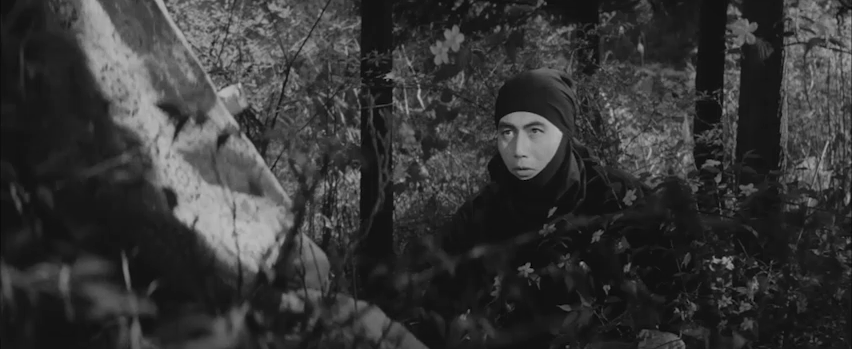
“In this world the weak are playthings of the strong” according to the hidden villain concealing himself slightly to the side in Umetsugu Inoue’s dark identity drama The Third Shadow Warrior (第三の影武者, Daisan no Kagemusha). Adapting a novel by Norio Nanjo, Inoue, most closely associated with sophisticated musicals, shoots in the manner of a ghost story adapting the trappings of a minor parable on the consequences of selling one’s soul for advancement in complicity with an inherently broken feudal order. 

Opening in 1564, the film wastes no time reminding us that the samurai were cruel and duplicitous, a troop of them riding through the contested mountain territory of Hida bearing the severed heads of their enemies casually insulting peasants as they go. Young farmer Kyonosuke (Raizo Ichikawa), however, can’t help but think that they’re heroic and dashing, longing like many young men as the voiceover explains to make his fortune as a samurai in this the age of war. Kyonosuke gets his wish when retainer Shinomura (Nobuo Kaneko) turns up and offers him a job at the castle, only it’s not quite what he expected. Bearing a striking similarity to lord Yasutaka, he has been hired as his third “shadow”, a decoy intended to shield the lord from harm. 

Sitting down with his two new brothers, Kyonosuke remarks how ironic it is that he’s here to escape the land but Kuwano (Katsuhiko Kobayashi) is patiently saving up his pay with the intention of using it to buy a farm and settle down with a beautiful wife. His is the most dangerous of doubling roles as the lord’s battlefield stand-in, while Ishihara (Yuji Hamada), a former actor apparently not much good with the sword, takes his place behind closed walls. Kyonosuke is quite taken with the world of the samurai, but Ishihara cautions that he’ll soon tire of this “phoney life”. In accepting this devil’s bargain, Kyonosuke has in essence consented to his own murder. A shadow man, he can no longer call himself Kyonosuke, but nor can he say he is Yasutaka. He has no fixed identity and is merely in waiting for a veil. Worse still as Ishihara has begun to suspect, they no longer have bodily autonomy because their physicality must match that of the lord. When he is blinded in a battlefield mishap with an arrow, so must they be. Deciding he’d rather not lose an arm, Kyonosuke finds himself in an altercation with his other self which leads to his demise. He intends to make a life for himself under his own name with another clan, but is forced to permanently assume Yasutaka’s identity after being cornered by Shinomura intent on manipulating him for his own ends. 

“I’m no puppet, I no longer need a puppeteer” Kyonosuke exclaims drawing strength from embracing his new identity as a samurai lord, but perhaps overreaches himself in ambitious desire failing to see the various ways he is still merely a pawn in a bigger game as Yasutaka himself once was because the lord is only ever an empty vessel and far more expendable than might be assumed. Princess Teru (Hizuru Takachiho), Yasutaka’s conquest bride, declares that she is “just a doll, the strongest will win me” but is of course playing a role herself, one which she does not desire but has been thrust upon her while her cousin, Sadamitsu (Shigeru Amachi), is engaged in a much more active piece of long form role play. Only the lord’s concubine (Masayo Banri) sees through him, falling for the gentle peasant after the rough lord who toyed with her, but their complicated love eventually seals his fate even as he believes it offers him victory. Kyonosuke became a samurai to escape his lack of agency but is arguably much less free than he ever was, driven slowly out of his mind by his fractured sense of identity and realising that in killing the only man who knew who he “really” was, he also killed himself. 

Quite literally imprisoned, Kyonosuke finds himself a shadow once again neither one man nor another, denied an identity and forever a puppet of duplicitous game players better versed in the realities of the samurai existence. “How ugly fighting over this transient kingdom” the princess disdainfully remarks while herself engaging this apparently meaningless foolishness, reminded by her cousin that a princess may hold the keys to a castle or even a nation even if he implies she is little more than his tool, a puppet to be manipulated if knowingly. Shooting with deep, expressionist shadows, chiaroscuro lighting, and a melancholy voiceover Inoue frames his tale as a parabolic caution against selling one’s soul for gold but also a crushing indictment of the inequalities of the feudal order built on wilful hypocrisy and cynical exploitation.