Finding Her Beat (Dawn Mikkelson & Keri Pickett, 2022)

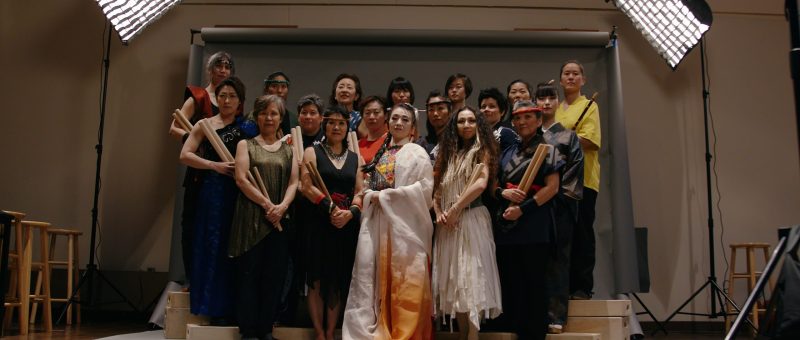
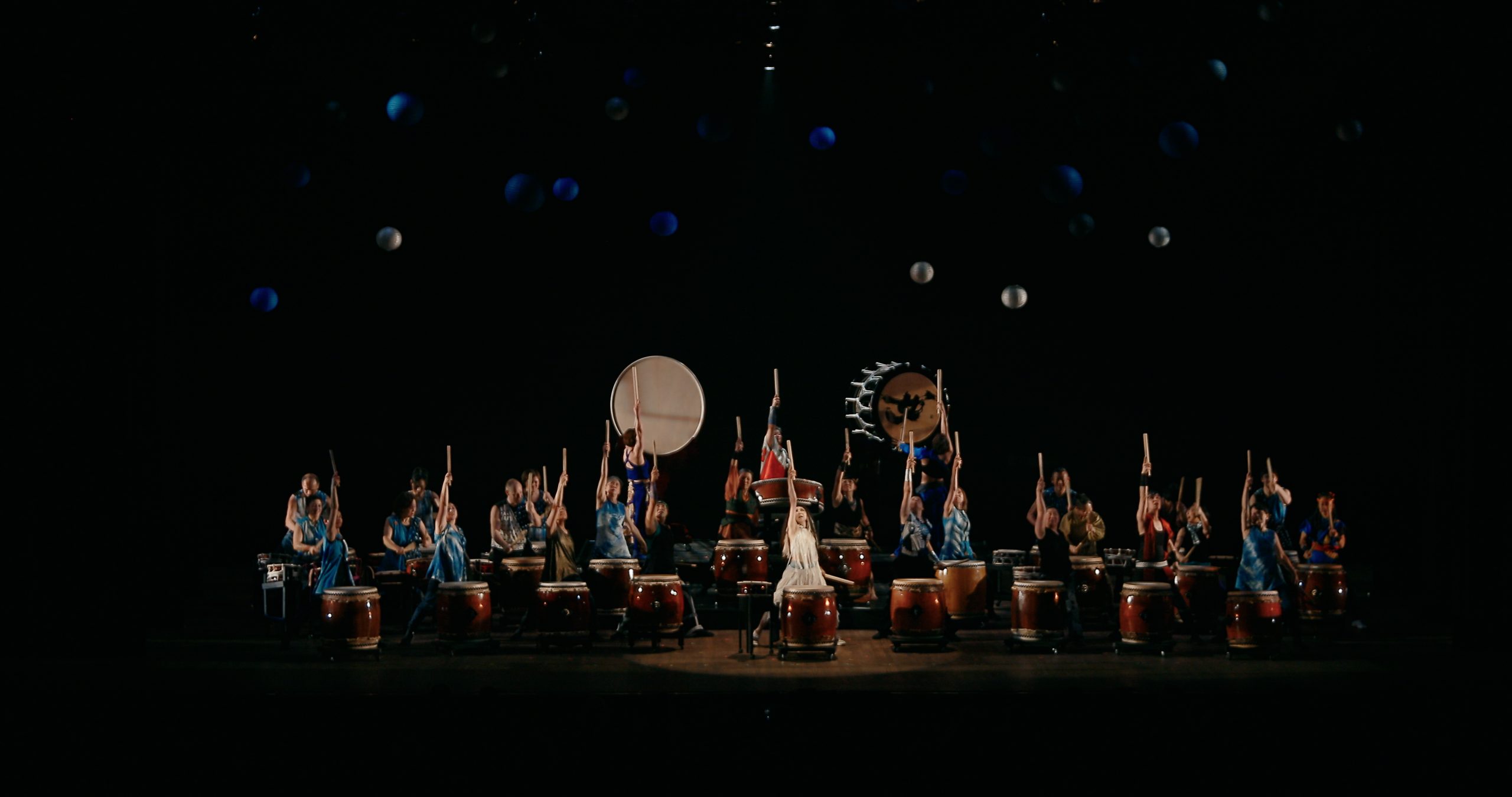
“We belong here, we deserve this.” It might sound like a redundant statement, but there are many reasons why the subjects of Dawn Mikkelson & Keri Pickett’s mostly observational documentary Finding Her Beat might have come to doubt their right to practice their art if not that simply to be who they are. As the opening text relates, taiko drumming has long been a male preserve and even if women were not expressly forbidden from playing conventional notions of femininity often forbad them. 

That’s in part the reason that Jennifer Weir, director of TaikoArts Midwest, embarked on the HERbeat project aiming to bring together female taiko players from the US, Japan, and around the world for a collaborative performance in Minneapolis. As Jennifer reveals, she is a Korean-American adoptee and had no particular reason to embrace taiko but like many of the other women who come to participate in the event, she has found a new home and community as a taiko drummer. The same is true for her wife, Megan, who once lived with a taiko drumming group in Japan before returning to the US and starting a family. 

Conversely, Chieko Kojima who is a founding member of the prominent taiko group Kodo on Sado Island explains that taiko gained a resurgence in the post-war era as young Japanese people looked for a way to rediscover traditional Japanese culture as a rejection of growing American cultural influence. Chieko herself had wanted to drum, but women were not really welcome to do so and so she became a dancer. Kaoly Asano’s practice at Gocoo is conversely rooted in post-war avant-garde performance art and incorporates other elements of traditional Shinto dance along with more modern influences such as trance and tecnho music. 

In a sense, their involvement with taiko is also a means of recovering a traditional culture that has often been mediated through a fiercely patriarchal society. Though there is no direct prohibition on women playing the taiko drums as there might be for entering a sumo ring, it has often been associated with masculinity as a celebration of physical strength and endurance. Socially enforced notions of gender therefore made it difficult for women to participate lest they be thought unfeminine and therefore unmarriageable particularly in ages in which marriage was the only secure path to a comfortable life for a woman. 

Many of the taiko players also mention that they have felt displaced within their societies, sometimes because those societies too did not accept their gender presentation or sexuality. They have all, however, found a source of solidarity as members of a taiko drumming group which is after all about togetherness and harmony. “In a way, taiko gave me a family” echoes Koaly Asano, “by meeting you, Tiffany, I finally felt I was not alone.” she affirms while talking to US-based taiko master Tiffany Tamaribuchi. For Asano, taiko is also a force that connect us with a place and the rhythms of the Earth. “What’s important is your sound, to transform your life into sounds” she adds as a kind of manifesto for her taiko. 

In a way it’s this sound translation that allows the women to come together, overcoming language barriers to find a common voice. Nevertheless, they are faced with a series of additional challenges including the looming coronavirus pandemic with the concert scheduled for February 2020. The show turns out to be the second to last staged in its venue for the almost two years of pandemic-related restrictions, while many of the drummers have already had future gigs cancelled in their home countries. All of which lends the concert an additional an additional weight and poignancy as the drummers prepare to claim a space only to have it taken away yet again. Nevertheless, the project does allow them to rediscover an international sense of solidarity along with individual pride in the practice of their art. Fittingly enough, the concert ends with a routine titled “Eijanaika?” which is both a reference to a carnivalesque protest movement during the Meiji Restoration, and a phrase which might be translated as “so what, what’s wrong with that?” neatly echoing the celebratory sense of defiance at the heart of HERbeat.


Finding Her Beat screened as part of this year’s San Diego Asian Film Festival Spring Showcase.

Trailer
The Bride with White Hair (白髮魔女傳, Ronny Yu, 1993)

“This is the so-called underworld rule. You have no choice.” the hero of Ronny Yu’s gothic fairytale The Bride White Hair (白髮魔女傳) is told, only to reflect “Yes, I do.” though the world will eventually prove him wrong. Tinged with handover anxiety, the film finds its star-crossed lovers longing to exercise their choice of exile, to be allowed to live quietly outside of the political turbulence that surrounds them. But in the end their love is not strong enough to overcome their difference and doubt becomes the ultimate act of emotional betrayal. 

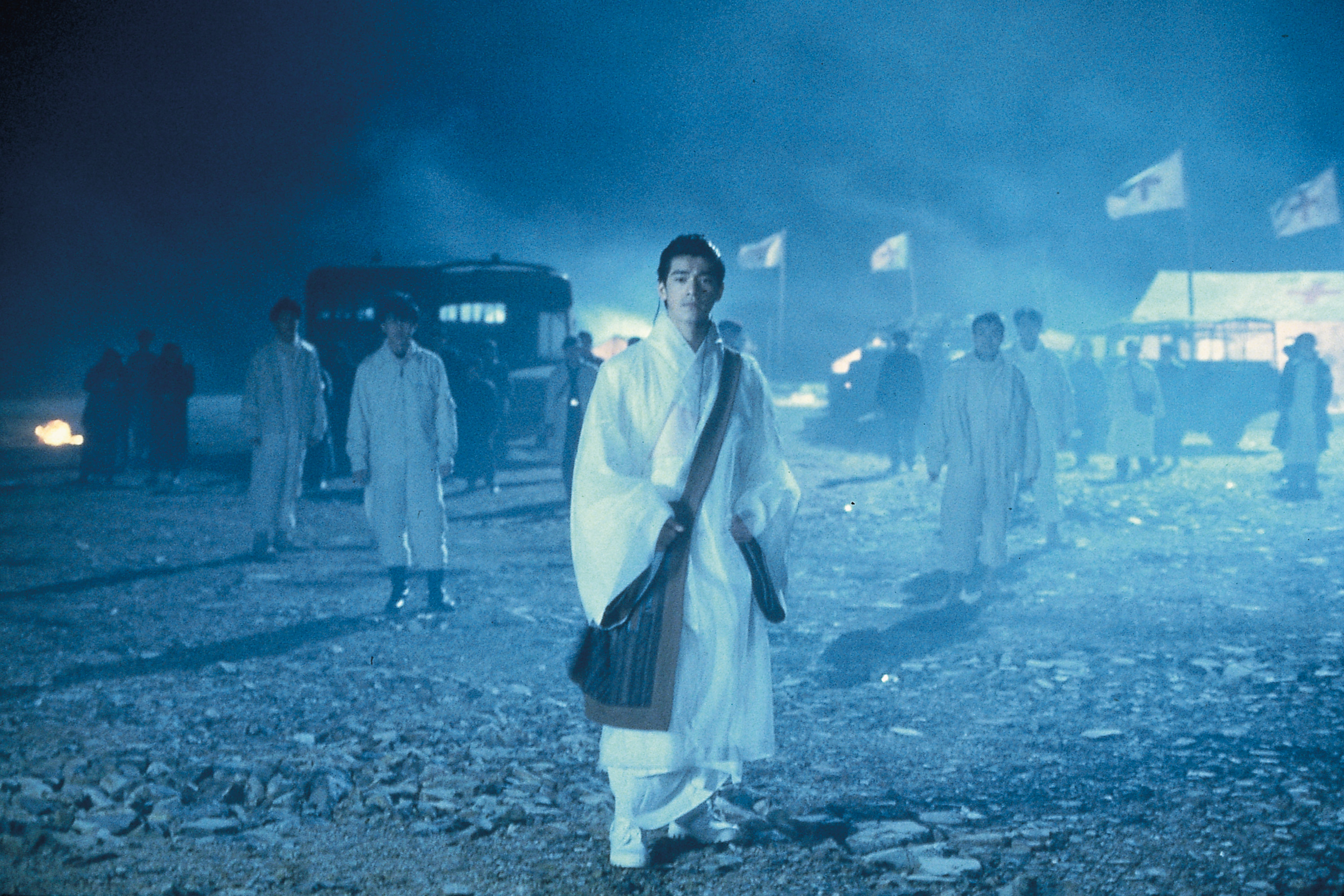
This is a tale that signals its tragedy from its inception. The Ching emperor is deathly ill and only a flower growing on a distant mountain that blossoms only once every 20 years can save him. “This flower is not for you” the emissaries are told by man who appears to be frozen in more ways than one, relating that he has waited 10 years for a woman who may have forgotten him. As a young man, Yi-hang (Leslie Cheung) was the roguish heir to the Wu Tang clan whose recklessness sometimes caused him to behave in unorthodox ways in the name of justice. The eight clans of Chung Yuan are beset on both sides, caught between the conflict of Ching and Ming while fearful of an “Evil Cult” that otherwise destabilises their icy grip over the local area. 

It’s becoming clear to Yi-hang that he may not be on the right side. The people are oppressed and starving but their attempt to procure a little sustenance for themselves leads to a bloody raid with clan soldiers cutting down peasants until a mysterious woman in white (Brigitte Lin) arrives wielding a whip that can cut people in half. Interrupted by a tragic scene while napping in the forest, Yi-hang is immediately smitten with the female assassin whom he later realises is the same girl he saw as a child who saved him from wolves with the song of her flute. 

The woman is an orphan taken in by the cult and trained up as an assassin. She has only a surname, Lien, and is then symbolically “reborn” when Yi-hang gives her her name, Ni-chang. Having fallen in love, the pair vow to leave the underworld together and live in the pastoral paradise of the watering hole where they first made love. “This underworld doesn’t belong to us, let them fight for it” Yi-hang insists, attempting to exercise his choice to escape a system he sees as corrupt before it strains his integrity but as he’ll discover he’s not as much choice as he thought. 

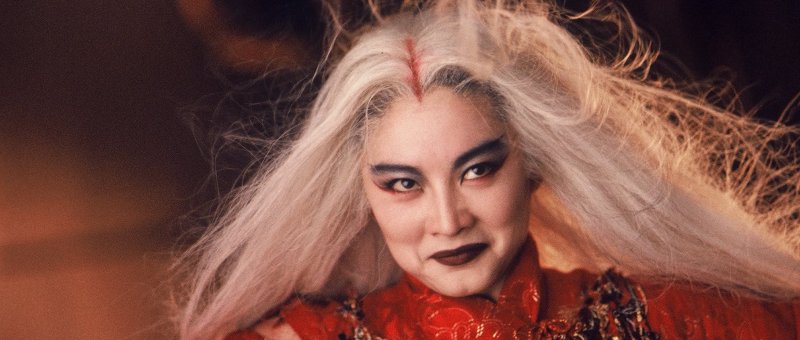
In the shadow of the Handover, it might be tempting to read Lien and Yi-hang as ordinary people who just want to live quietly and resent the intrusion of politics into their lives, though they remain caught between two opposing powers with no neutral space for them to occupy. The same could be said of the cult’s leaders, a pair of crazed conjoined twins, one male one female, who are fused at the back in a potent symbol of duality. The twins were once members of the Wu Tang clan but were betrayed and exiled, driven mad by their banishment. At the film’s conclusion, Yi-hang symbolically frees the twins by splitting them apart but their separation leads only to their deaths. In the end, Yi-hang betrays his love because the underworld does not permit it to exist. He doubts Lien’s word and his rejection of her sparks her metamorphosis into the title’s Bride with White Hair, a vengeful spirit of hurt and rage now condemned to eternal wandering just as Yi-hang is condemned to life a waiting only to watch a flower wither and die knowing that he has damned himself. 

Yu’s world of melancholy romanticism is typical of that of early ‘90s wuxia though carries a touch of the gothic not least in the Bride’s cobweb-like hair which eventually becomes her finest weapon. The pervading sense of longing seems to hint at a future act of imperfect union, tinged with volatile ambivalence but perhaps finally suggesting that this romance is doomed to failure because the corruption of the world into which Yi-hang, the authority, was born is simply too great to be conquered by the innocence of his love. 


The Bride with White Hair screens screens at UltraStar Cinemas Mission Valley April 23 as part of this year’s San Diego Asian Film Festival Spring Showcase.

Trailer (English subtitles)
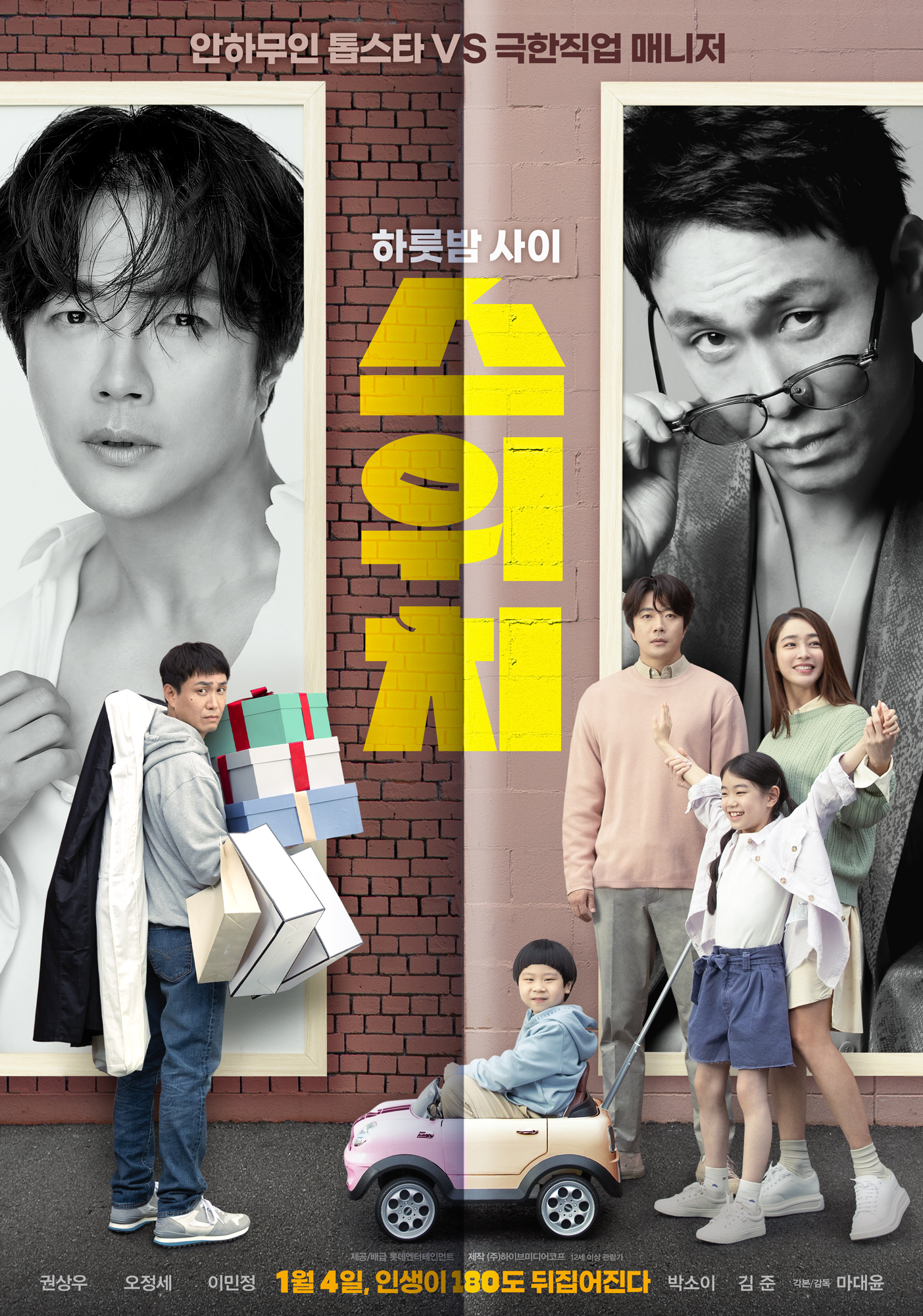
Switch (스위치, Ma Dae-yun, 2023)

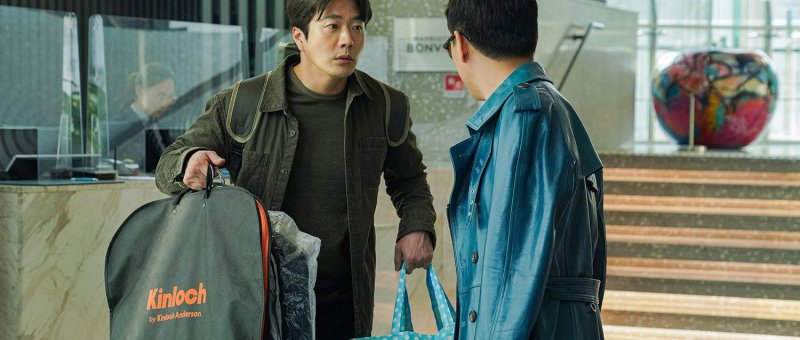
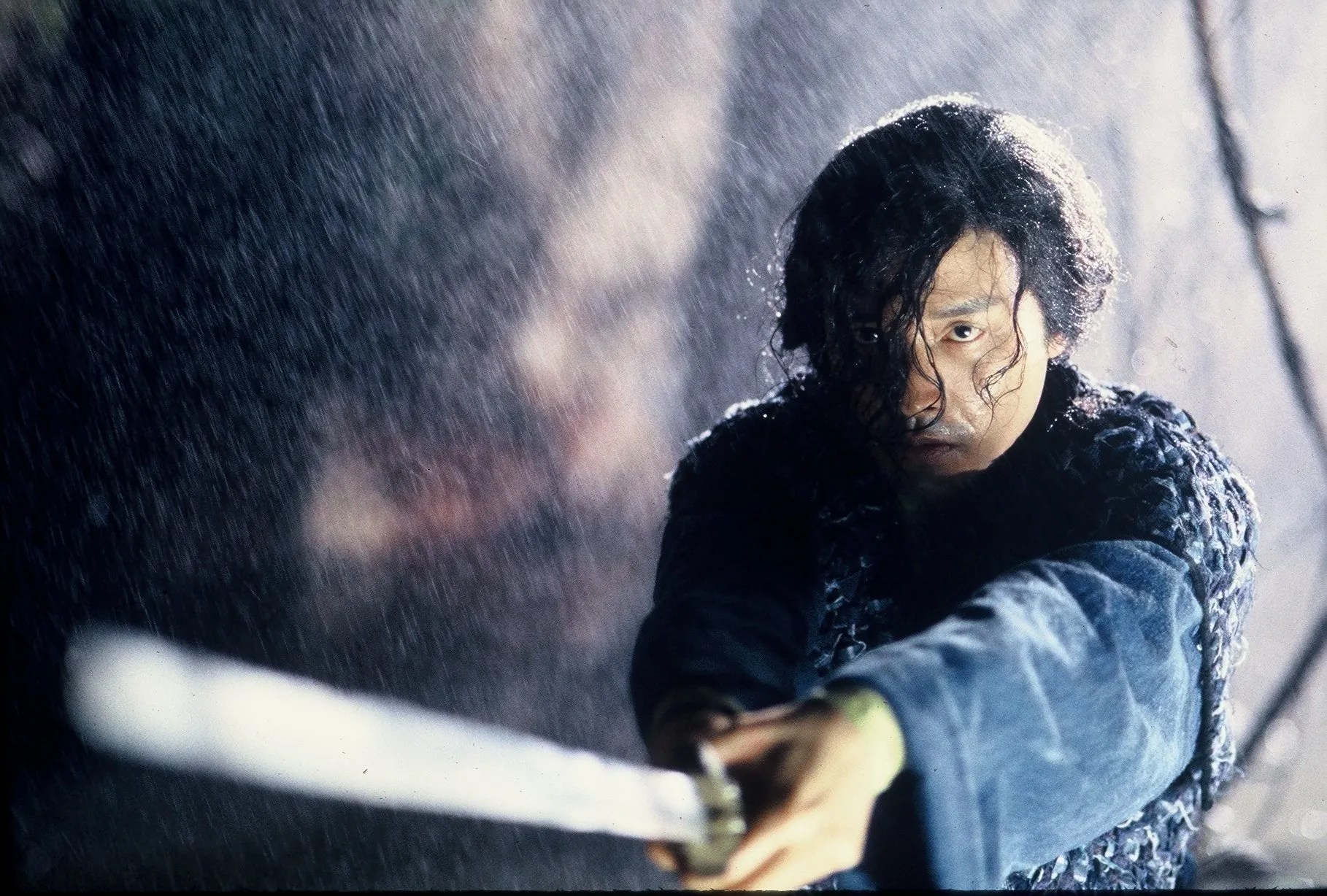
An egotistical actor is given an unexpected lesson in what it is that makes life worth living when he’s suddenly transported to a parallel world in Ma Dae-yun’s charming Christmas dramedy, Switch (스위치). Rather than the body swap comedy the title might suggest, Ma’s warmhearted morality tale is a more a meditation on what might have been and may be again while contemplating the emptiness of a life of fame and riches when there’s no one to share it with. 

“What matters more than money?” top star Park Kang (Kwon Sang-Woo) chuckles after telling his manager he’ll accept a job he just described in quite insulting terms after being informed it comes with a hefty paycheque. Kang is currently riding high. He’s become enormously successful and even a recent sex scandal involving his co-star in a TV drama has only boosted his profile. Yet he tells his analyst that he can’t sleep and attributes it to “depression and anxiety”. He treats those around him poorly and most particularly his long suffering best friend from his fringe theatre days, Joe Yoon (Oh Jung-Se) who now works as his manager, while struggling to accept his loneliness and meditating on lost love in the memory of the woman he broke up with in order to chase stardom. 

After getting into a weird taxi one Christmas Eve, he’s suddenly granted the “wish” of getting to find out what would have happened if he’d made a different choice. After waking up in an unfamiliar house he discovers that he’s married with two children and slumming it fringe theatre while Joe Yoon is now the superstar having aced the audition Kang ran out on to chase Soo-hyun (Lee Min-Jung) to the airport and convince her not to leave. Of course, Kang is originally quite unhappy about all of this. He doesn’t understand why no one recognises him anymore and resents that he’s suddenly subject to the rules of “ordinary” people again after a decade as a pampered star. In his acceptance speech after winning an award, he’d stated his intention to “forget” his roots as a humble actor and embrace his new role as a member of the showbiz elite fully demonstrating his sense of alienation and insecurity along with his intense loneliness. As the taxi driver had said, Kang has “everything”. He’s achieved his dreams and lives the high life he’d always dreamed of, yet he’s deeply unhappy.

But his “new” life immediately challenges his sense of masculinity in realising that he has little power without money and is in fact financially dependent on Soo-hyun whom he may also have robbed of a bright future by preventing her from studying abroad and achieving success as an artist. Meanwhile he looks down on himself for continuing to follow his artistic dreams in fringe theatre when his plays attract few audiences members and make little money. Just as Joe Yoon had become his manager, so he ends up getting a taste of what it’s like trying to manage a “star” while coming to appreciate that Joe Yoon may be feeling just as lonely and unfulfilled as he once had. 

Yet even as Kang settles into his new life as a husband and father while slowly rebuilding his acting career though a combination of talent, supportive friendship, and good luck, he fails to learn the right lessons continuing to yearn for external validation through material success. He spends money on fancy dinners and tries to move the family into a swanky apartment in Seoul without realising that he’s already got a “home” in the quaint little provincial house he and Soo-hyun set up together filled with memories (that admittedly he doesn’t actually have) of the children when they were small. Slowly, he begins to look beyond himself while developing a new sense of security that means he doesn’t need to chase status-based affirmation in empty materialism but now has a new sense of what’s really important. A charming season morality tale with a little more than a hint of A Christmas Carol, Ma’s gentle drama never suggests that success itself is wrong or that Kang must give up his movie star persona to become a happy everyman but only insists that true happiness is brokered by treating others well and being treated well in return much more than it is by consumerist success.


Switch screens at UltraStar Cinemas Mission Valley April 22/24 as part of this year’s San Diego Asian Film Festival Spring Showcase.

International trailer (English subtitles)

#Manhole (#マンホール, Kazuyoshi Kumakiri, 2023)

“Who are you? Why are you here?” both questions that might occur to anyone at any point in their lives, but don’t seem to bother the hero of Kazuyoshi Kumakiri’s off the wall B-movie thriller #Manhole (#マンホール) until he’s been trapped underground long enough to realise that his literal fall from grace might not be an accident after all. An existential journey deep into the soul of a seemingly blessed salaryman, Kumakiri’s defiantly absurdist drama is part social satire revolving around fluctuating identity in the social media age and meditation on the inevitability of karmic retribution. 

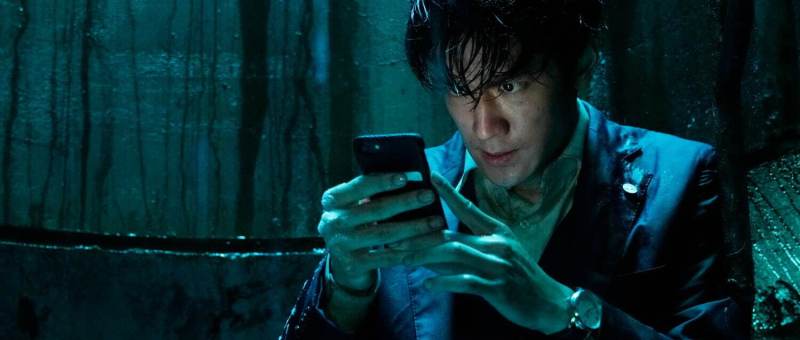
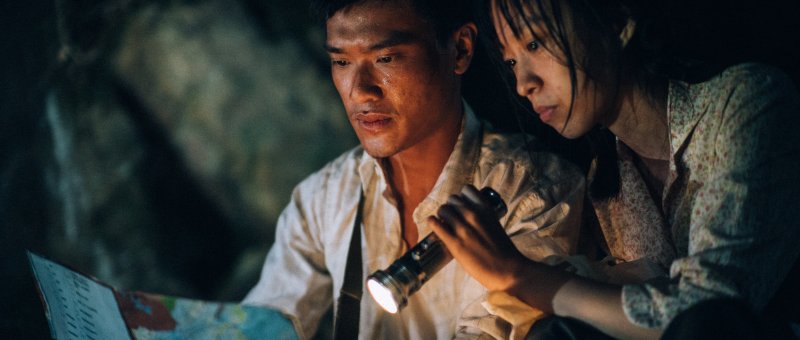
Shunsuke (Yuto Nakajima) does indeed seem to have it all. A successful estate agent, he’s about to get married and even has a baby on the way, only on his way home from a “surprise” party hosted by his work colleagues the night before his wedding he somehow manages to fall down an open manhole in the middle of Shibuya and becomes trapped there. His attempts to simply climb out are frustrated by a nasty gash on his thigh and a broken ladder while no one seems to be able to hear his cries for help. Though his phone still works, the only person who picks up when he calls is a former girlfriend, Mai (Nao), whom he threw over to court the boss’ daughter five years previously which makes it somewhat awkward to ask for help. 

As we can gradually gather, Shunsuke is not really a great guy and is in part in a hole of his own making. Even so, you can’t really confine someone to a hole just for being one. To begin with he busies himself with trying to solve various hole-related problems such as a leaking gas pipe with the salaryman tools at his disposal like the tiny of roll of sellotape in his pencil case or the cigarette lighter he was gifted by suspiciously aloof colleague Kase (Kento Nagayama) as a wedding present though there’s not much he can do about the weird foam or various animal corpses that surround him. 

It’s at this point he decides to enlist the help of the internet in setting up a profile on Twitter-like social media app Pecker where he identifies himself as “Manhole Girl” under the rationale that people are more likely to rush to the rescue of a pretty young woman than a 30-year-old salaryman who had too much to drink and fell in a hole. His readiness to do this hints at his internal duplicity and a confident sense of entitlement. It doesn’t seem to occur to him that whoever comes to his rescue might decide not to bother on discovering the truth. In any case, he soon becomes Pecker’s main character with engaged netizens keen to help him figure out where he is and, once it becomes clear it might not be an accident, who put him there. But claiming to be his own sister he’s also confronted with sordid speculation about his personal life and character that reveal there might be quite a few people who privately hoped he’d someday disappear down a hole in the ground and never come back up again.

Even before his ordeal, Kumakiri often frames Shunsuke looking at his own reflection hinting at a lack of self-recognition in the images that he sees of himself. Of course, he doesn’t know who any of the helpful netizens are either because most of them don’t use their “real” names or profile pictures that are actually of “themselves” just as he pulled a picture of a cute girl off the internet to create the Manhole Girl persona. He can’t even be sure of the identity of the people he speaks to on the phone, and wonders if Mai really did come to look for him when she says she’s been all over Shibuya and couldn’t find any open manholes. 

For a while it really does seem like he’s in “a completely different place”, some alternate dimension of existential purgatory. The sense of eeriness is only deepened by the strong blue-green lighting and ominous clouds above the hole that obscure the image of the full moon which, in the urban absence of stars and the disruption of his GPS seemingly caused by an unknown force, are all he has to go on in trying to figure out where exactly he is. Few will be prepared for the answer, though as some may expect Shunsuke knew all along for as much as it’s a “real” place it’s also a part of himself he sought to deny. Kumakiri excels in capturing the claustrophobic otherworldliness of Shunsuke’s near literal hell hole while mining a deep seam of cynical dark humour and anarchic absurdity culminating in an incredibly ironic and deliciously wry use of cheerful 1960s hit Sukiyaki. 


#Manhole screens at UltraStar Cinemas Mission Valley April 20/21 as part of this year’s San Diego Asian Film Festival Spring Showcase.

International trailer (English subtitles)

Gyeong-ah’s Daughter (경아의 딸, Kim Jung-eun, 2022)

“It’s not your fault. And it’s not mine either.” a young woman declares, finally freeing herself of internalised shame while trying to live under the oppressively patriarchal social codes of contemporary Korea in Kim Jung-eun’s quietly enraged drama, Gyeong-ah’s Daughter (경아의 딸, Gyeongaheui Ddal). As the title implies, the film is as much about parents and children and the various ways the older generation unwittingly fail the younger in mistakingly clinging to the conservative ideas that defined their own youth but bring nothing but misery to all as it is about the pervasive misogyny of the modern society. 

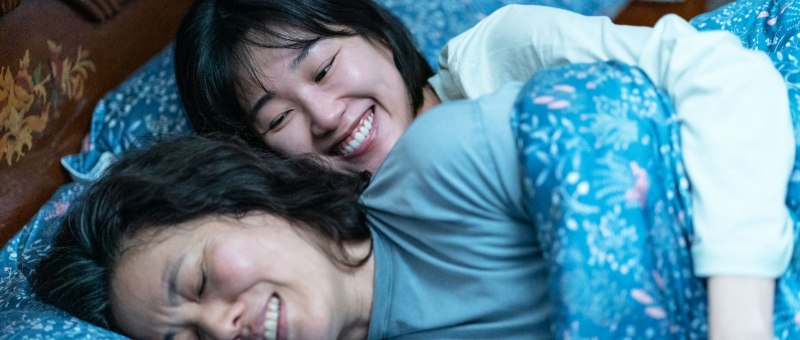
Pushed to the edge, Yeon-su (Ha Yoon-Kyung) exclaims that she cannot bear being Gyeong-ah’s (Kim Jung-Young) daughter sick of her overly possessive, controlling parenting along with her initial failure to support her during one of the most miserable moments of her life. As the film opens, Gyeong-ah facetimes her daughter and the pair chat cheerfully for a while even though Gyeong-ah criticises Yeon-su’s new haircut as she shows her around her new apartment showing off the cheerful lights she’s stringed above her bed. But then, the conversation takes a turn for the strange with Gyeong-ah suddenly insisting that Yeon-su prove she is alone, taking the phone to the bathroom to show her there’s no one hiding in there and then even out in the hall in the event that she knew her mother might ask. We can well understand why Yeon-su, who is a grown woman about to start her first job as a high school teacher, might prefer to keep her mother at arm’s length unwilling to take the trouble of sharing her private life with her.  

It’s this sense of distance that informs Gyeong-ah’s reaction when she suddenly receives a strange video from an unknown number and realises that it is a sex tape featuring her daughter. First of all she feels betrayed that Gyeong-ah lied to her when she repeatedly, and invasively, asked if she had a boyfriend while otherwise badgering her about not being married. But then she also feels ashamed, horrified, to see her daughter engage in behaviour that she views as somehow sordid. When Gyeong-ah confronts Yeon-su she blames her, disgusted that her adult daughter was sexually active in the first place but doubly so that she allowed herself to be filmed while doing it. 

The fact that Yeon-su knew her boyfriend, Sang-hyun (Kim Woo-Kyum), was filming and did not stop him is brought up repeatedly as if this is all her fault for being so stupid or perhaps perverse to have agreed to it. As we discover, Yeon-su broke up with Sang-hyun because he was possessive and controlling a fact he proved by continuing to harass her with relentless text messages and phone calls to which she did not respond. Eventually he turns up at her place of work with flowers and does not take well to Yeon-su’s attempt to explain that his actions are not “romantic” but have actively frightened her. As she gets into a taxi to leave, he further threatens her by giving the cab driver her address reminding her that he knows where she lives while making it clear to him that she’s his woman. “What a reliable boyfriend” the driver quips, chuckling that he probably suspects he might kidnap her. Yeon-su wisely decides to go to her mother’s instead, only to get another earful about the dangers of staying out too late alone. 

Sang-hyun’s decision to send the sex tape to all of Yeon-su’s close contacts including Gyeong-ah is another attempt to exercise control over her life as act of revenge in being scorned. A sense of patriarchal entitlement seems to surround her. When a (negative) pregnancy test is found at the school, the principal mutters about conducting some kind of witch hunt on the look out for teenage lovers adding that “girls today are shameless” as if the boy bears no responsibility or else is simply led astray by a “bad” girl who should be taught a lesson in feminine purity. Later in a cafe, Gyeong-ah hears a man remark that he’s “popular with women at work”, when he makes a move they can’t resist him. Unable to cope with rejection, Sang-hyun destroys Yeon-su’s life yet faces no consequences of his own. She can no longer bear to be looked at, distancing herself from her friends and taking a leave of absence from her job barely leaving a tiny one-room apartment and forced to pay exorbitant sums to a data security company to try and erase the video from the internet knowing it will never really be “over” because someone could always just reupload it. 

On going to the police she’s again asked if she consented to the video being filmed and told that in practice no one really gets convicted for these crimes because they just say their phone was stolen or that they were hacked. Even Yeon-su’s lawyer later pressures her to settle out of court while she’s further harassed by Sang-hyun’s otherwise well-meaning mother who is forced to realise that she’s raised such a fragile boy. Gyeong-ah in turn is forced to reckon with her maternal failures, that though Yeon-su had supported her through her abusive marriage she was not there when she needed her and in fact tried to reinforce the same oppressive social codes that caused her nothing but misery all through her life. When the report of a woman who had killed her husband after long years abuse being sentenced to a lengthy prison term plays on the television in a cafe, even Gyeong-ah’s best friend exclaims that a woman should stick with her husband no matter what unable to understand what might have motivated the woman’s actions. 

Yet Gyeong-ah continues to ask her daughter why she’s not married, forcing her into this selfsame cycle of abuse and control. The old man that Gyeong-ah looks after has several sons, yet they’ve hired a middle-aged woman to look after him while his daughter, a successful lawyer, looks in occasionally and beats herself up that she’s somehow failing in her duty of care. She explains that she didn’t want to get married, but might have liked to have children, eventually sympathising with Gyeong-ah’s dilemma and offering some free life and legal advice to an increasingly depressed Yeon-su, though Gyeong-ah had perhaps judged her implying that she was wrong to choose a career over becoming a wife and mother. Gyeong-ah is beginning to realise the mistake in her complicity, but as Yeon-su says it’s not her fault and nothing good will come of it until each of them learns to stop blaming themselves so they can move on with their lives. When Gyeong-ah finally removes the family portrait from her wall and leaves it out for the bin men, just as Yeon-su had tried to do with the remnants of her relationship with Sang-hyun, it’s as if she’s freeing herself from the outdated patriarchal social codes that convinced her she had no right to resist or claim her own agency over her life. Yeon-su has perhaps taught her a valuable lesson while rediscovering her self-confidence and fighting back against the sheer entitlement of the fragile men that thought it was their right to ruin her life by shaming her into submission. 


Gyeong-ah’s Daughter screened as part of this year’s San Diego Asian Film Festival.

International trailer (English subtitles)

Remember Me (金門留念, Hung Chun-hsiu, 2022)

Some way into Hung Chun-hsiu’s documentary Remember Me (金門留念) a woman takes part in a military reenactment firing large scale artillery from a now disused military base. What’s ironic is both that what was once a frightening reality of ongoing warfare has now been commercialised as an attraction for tourists, and the fact that the woman firing the gun pointed at China on this technically Taiwanese island is herself Chinese. As the opening graphics point out, the island of Quemoy (also known as Kinmen) is geographically closer to Mainland China though governed by Taiwan and for much of its mid-20th century history at the front line of an ongoing ideological battle between communists and nationalists. 

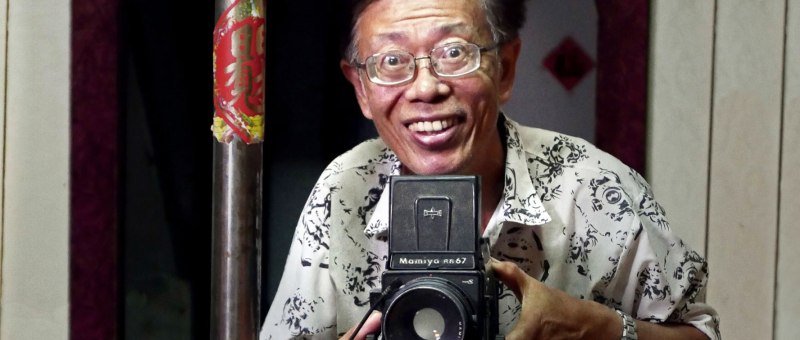
In the stock footage often employed by Hung, newsreaders can be heard uttering phrases about “vile communists” and eliminating communist “scum” along with impassioned sloganeering about taking back the “motherland” and freeing its people from the yoke of communism. The island was under near constant shelling until as recently as 1979 and consequently largely populated by the military many of whom were ordinary young men conscripted for national service. The island has obviously changed a great deal since then, though one unexpected casualty has been the gradual decline of the island’s photo studios. Less due to technological than demographic change, the first of Huang’s subjects explains that given the precarity of life in Quemoy soldiers would have their pictures taken as often as once a week, often full body portraits they would send home to their families as evidence that they had not been severely injured. Kuo-ming has been operating his photo studio for 46 years now one of only two still operating on the island. Like the gun show, the military portraits have also become a kind of costume play, Kuo-ming handing out army uniforms and prop weapons for people to pose with often against a painted matte backdrop of a local lake or else Japan’s Mount Fuji. 

Meanwhile, the photographs taken at the time hint at the loneliness felt by the men who were dispatched to the island, many of them opting to have pictures of their wives or girlfriends inset alongside them. Those who had no girlfriends sometimes used a picture of a famous model or actress as a personal keepsake though one photo which goes unexplained is inset with the photo of another man in uniform. It has to be said that many of these photos have a homoerotic quality, especially the ones featuring shirtless well-built men striking muscle poses, while others are unexpectedly feminine in nature featuring the soldier in soft focus and surrounded by flowers. The ones from later years are also sometimes playful, featuring soldiers sitting in a model speedboat in or in more relaxed, artistic poses. A man who had his photos taken there while on his military service reads a letter he wrote to a woman he loved promising a photo, one in which he later inset her portrait, little knowing that she did not return his feelings and only kept the correspondence up in fear he might harm himself if she turned him down. Though he discovered on his return she had married someone else, the couple found each other decades later and decided to have a “real” photo taken together at Kuo-ming’s shop dressed in faux army uniforms. 

Having married a local woman and decided to stay on Quemoy, former solder Shan-yung also used to have his picture taken at Kuo-ming’s to send back to his mother. He joined the army voluntarily as his family was poor and was shocked to be sent effectively to the front line. After leaving the service, he and his wife opened a karaoke bar largely catering to military personnel and though his business still seems to be doing well, bears out Kuo-ming’s description of the economic changes brought about by decreasing militarisation. Even so he feels a sense of guilt that his life has taken him so far away from his family that he is no longer able to care for his parents in their old age while taking care of his in-laws on Quemoy.

Chen-mei, the woman staging the live reenactment of firing the artillery gun, expresses something similar while explaining that she came to the island from the Mainland for an arranged marriage and now works as a civil servant. She concedes that it’s a little awkward for some of the Chinese visitors realising that their nation had been firing shells at the island for three decades, but suggests that it’s all in the past while espousing a well-meaning but possibility reductive One China philosophy that they are all one Chinese family who no longer need to care about labels like “communist” or “nationalist” because they live in an era of peace. The gun, and the remaining military garrison, may be a reminder it might be dangerous to take that for granted given the rising rhetoric on the Mainland in response to the desire for a recognition of Taiwanese independence. A father explains to his son that the artillery gun was a loan from the Americans to help resist communism, but when the boy asks him how long is left on the lease the man can only look confused and reply that he doesn’t really know. In any case, Remember Me seems to be keener on remembering the rosier side of life on Quemoy under fire as old soldiers look back on their youth if grateful that goats now roam their barracks and the only shells to be found are the ones commemorating a war that for now at least has ended. 


Remember Me screened as part of this year’s San Diego Asian Film Festival.

Original trailer (English subtitles)

Executioners (現代豪俠傳, Johnnie To & Tony Ching Siu-Tung, 1993)

At the end of The Heroic Trio, the shadowy rise of authoritarianism seemed to have been beaten back. The three superwomen at the film’s centre had discovered joy and liberation in female solidarity and were committed to fighting injustice in a flawed but improving world. If Heroic Trio had been a defiant reaction to Handover anxiety, then sequel Executioners (現代豪俠傳) is its flip side shifting from the retro 40s Hong Kong as Gotham aesthetic to a post-apocalyptic nightmare world where nuclear disaster has normalised corporate fascist rule. 

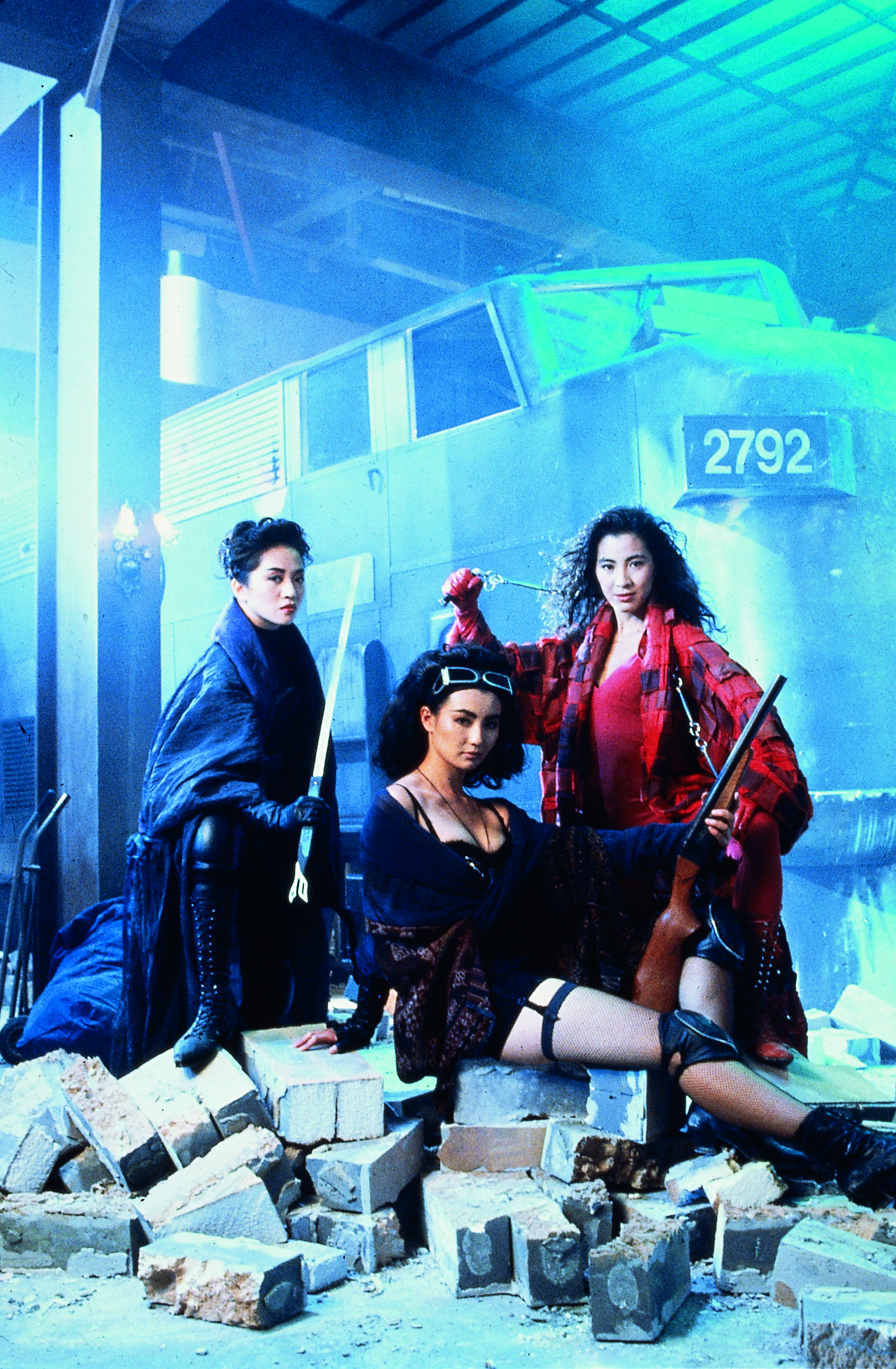
As Ching (Michelle Yeoh) explains in her opening voiceover, a nuclear attack has ruined the city contaminating its water and leaving ordinary citizens dependent on the Clear Water Corporation for safe drinking supplies and basic sanitation. The trio have been scattered, pushed back into the roles from which they escaped at the first film’s conclusion save perhaps for Ching who continues to serve a duplicitous authority but does so with clearer eyes and a humanitarian spirit driving a medicine truck to ensure those in need have access to healthcare. Chat (Maggie Cheung Man-Yuk) meanwhile has reverted to her cynical bandit lifestyle, hijacking water trucks mostly for her own gain but also ensuring the water gets to the needy. Tung (Anita Mui Yim-Fong) has abandoned her Wonder Woman persona on the insistence of her husband who is now a high ranking policeman with the military authority devoting herself to the role of the traditional housewife and mother to her daughter Cindy. 

Though the women seem to have maintained their bond, Ching and Chat turning up for a Christmas celebration with Cindy, the political realities soon disrupt their friendship as they find themselves at odds with each other given their shifting allegiances. As in the first film, Chat has continued to accept work from dubious authority in the form of the Colonel including tracking down a man who embarrassed the police by firing a gun at a rally for a cult-like protest leader, Chung Hon (Takeshi Kaneshiro), only the gunman later turns out to be a patsy and Chat has unwittingly helped them bump off the voice of the people as an overture for a military coup. Ching is secretly working for responsible government trying to safeguard the President to prevent his assassination by the Colonel, but obviously cannot say very much about her mission arousing Tung’s suspicions that she may have been part of a plot to have her husband killed. 

In any case, the true villain turns out to be a kind of Wonder Woman mirror image in that the mysterious Mr. Kim (Anthony Wong Chau-Sang), CEO of Clear Water Corporation, is a man who wears a mask to hide his scarred face and dresses like an 18th century aristocrat as if engaged in some kind of Man in the Iron Mask cosplay. Kim and the Colonel have been collaborating to engineer a military coup by deliberately restricting water supplies. The oblivious Chung Hon had unwittingly been Kim’s stooge, stoking up public resentment about the water situation to give the government an excuse for a crackdown and the Colonel to move. Chat’s path to redemption amounts to vindicating the faint hope that the water contamination was a hoax, which she eventually does by taking Cindy with her to smash the corporate dam and return the water to its rightful flow and the people of the city. But like the Evil Master, Kim does not die so easily turning up for a surprisingly hands on fight squaring off against the barely unified trio who are only just beginning to repair their friendships on coming to a fuller understanding of the reality of their circumstances. 

They are all in a sense liberated, though less joyfully than in the first film and largely through violent loss. The good guys don’t always win and a fair few die while all the women can do is keep moving, fighting off one threat after another with few guarantees of success and not even each other to rely on. Where the first film had embraced a hopeful sense of comic camp, Executioners skews towards the nihilistic in its dystopian world of corporate overreach and increasing militarism in which the trio no longer trust each other and are each re-imprisoned inside their original cages from patriarchal social norms to capitalistic inhumanity and questionable loyalties with the only hopeful resolution resting on “the sincerity of our friendship” in a world which may be healing but is far from happy. 


Executioners screened as part of this year’s San Diego Asian Film Festival.

The Heroic Trio (東方三俠, Johnnie To, 1993)

Female solidarity becomes an unexpected weapon against stealthy authoritarian take over in Johnnie To’s gloriously camp superhero action fest, The Heroic Trio (東方三俠). Uniting three of the top stars of the age in Anita Mui, Maggie Cheung, and Michelle Yeoh the film flirts with Handover anxiety in the “Evil Religion” that threatens to steal the children of Hong Kong, but eventually locates the source of salvation in the heroine’s shared humanity brokered by a tripartite solidarity of justice and equality that defies both the patriarchal world around them and the cruel authoritarianism in which they have been raised. 

In an almost biblical allegory, large numbers of male infants have been going missing over the last 18 months and the police are, predictably, mystified relying on the reappearance of the mysterious superhero Wonder Woman to solve the mystery herself. Truth be told, top Inspector Lau (Damian Lau Chung-Yan) hasn’t yet realised that Wonder Woman is his own wife, Tung (Anita Mui Yim-Fong), so perhaps his investigative skills aren’t all that despite the dynamism of the opening scenes which see him demonstrate his masculinity by leaping out of a window stop a thief from driving off in his classic car which is parked outside a creepy mansion in the middle of nowhere. Nothing really gets done until the chief of police gets a note that his own infant son is next on the list, though he briefly considers simply swapping his kid for another couple’s child while hiring “Thief Catcher” Chat (Maggie Cheung Man-Yuk) to get him back when he’s kidnapped by an “Invisible Woman”, Ching (Michelle Yeoh), whom Tung manages to wound while saving the decoy baby. 

As it turns out, Ching has been taking the babies on behalf of “Evil Master” (Yen Shi-Kwan) who lives in an underground lair in the sewers and is the head of a mysterious cult hellbent on finding a new king for China. There may be a degree of Handover anxiety in Evil Master’s mission, seeking to possess and control Hong Kong by brainwashing its children eventually possessing Ching by removing her bodily autonomy while her sisters must quite literally free her from his icy grasp. Each of the kidnapped boys is said to have a divine destiny, though Evil Master doesn’t know which one is the new king and has a habit of simply killing the ones who disappoint him while the others are raised as mindless automatons consuming those like them and destined to become thoughtless killing machines like the bloodthirsty Kau (Anthony Wong Chau-Sang). 

Chat, who was raised as one of Evil Master’s minions but managed to escape thanks to the largess of Ching and his since become an ultra-capitalist bounty hunter if one less cynical than she originally seems, thinks it’s better to simply end the cannibal kids’ misery before they end up like Kau while Tung prioritises saving the infants so they can be returned to their parents before being subject to one of Evil Master’s weird rituals. Ching, meanwhile, is only participating in Evil Master’s plan to protect the man she loves, a mad scientist slowly succumbing to poisoning caused by his invention in true genre fashion. It is then in a sense love that causes Ching to reject her programming, but it’s the solidarity of Tung and Chat, along with a desire for vengeance, that finally gives her the courage to rebel. 

In a brief flashback, Tung had failed to save Ching during a tough training session with their mentor who had cruelly told her that she’d have to fight for justice alone while Ching, cast out, sought support by turning to the dark side. The scene repeats itself twice in the film’s closing scenes in which Tung is this time able to save Ching but only because of the support from their friend and equal Chat making up the third point of the triangle and anchoring them both firmly to ensure they will not fall. “Life is meaningful if you can face yourself” Tung tells Ching, shedding her mask having presumably dealt with her own dark past and pulling her sister up with her as an equal leaving the past behind to fight for a future of justice and freedom. 

To and action director Ching Siu-tung recast Hong Kong as Gotham with a production design quite clearly inspired by Western comic books in which the three heroines end by getting fancy capes that flicker in the wind. Chat, a motorcycle-riding delinquent force of nature, even at one point launches herself into battle on an oil drum propelled by dynamite which she later uses to take out the cannibal kids not to mention Evil Master himself. But it turns out the spectre of creepy, ritualistic authoritarianism doesn’t die so easily, Evil Master’s charred skeleton gets back up for one last hurrah until his brain finally explodes when confronted by Ching’s rejection having returned to the fold and now ready to sacrifice herself for a freer future for all. Essentially a comic book wuxia, To’s ironic action drama allows its heroic trio to find salvation in female solidarity anchoring each other in a world beset by fear and villainy.


The Heroic Trio screened as part of this year’s San Diego Asian Film Festival.

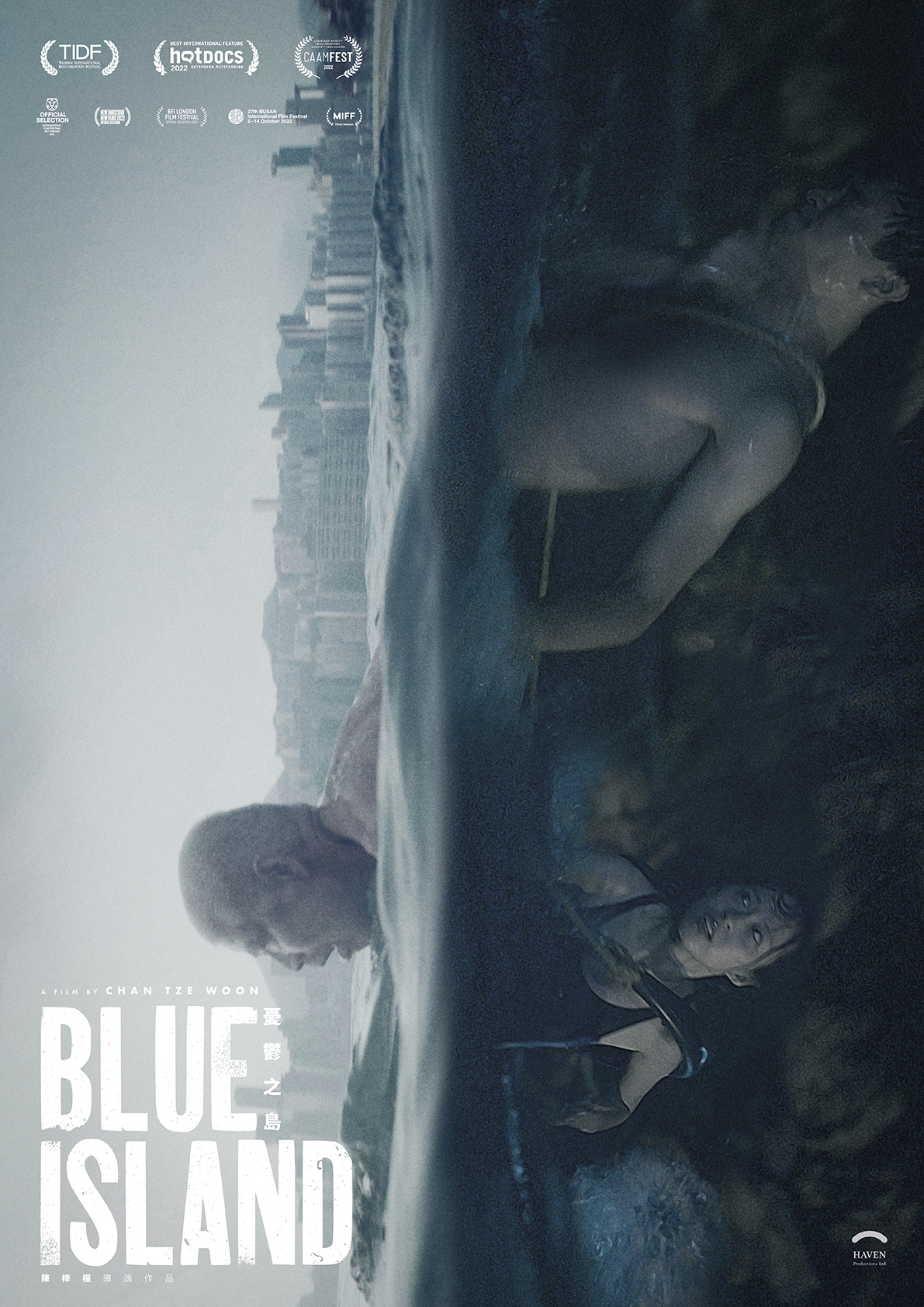
Blue Island (憂鬱之島, Chan Tze-Woon, 2022)

“In reality, we are just the abandoned kids of the riot.” an ageing protestor advises, sitting in a jail cell talking to a younger version of himself about the way that youthful revolutions fail and age erodes ideals. Chan Tze-Woon’s documentary Blue Island (憂鬱之島) places the protestors of today into the protests of the past, asking them to reenact the actions of their forebears while considering what Hong Kong means to them now and how they feel about those who simply decide to leave believing this is a battle that cannot be won. 

In a scene that seems to reference Tang Shu Shuen’s China Behind, a young couple fleeing the Cultural Revolution in 1973 attempt to reach Hong Kong by swimming, the camera then finding the same man nearly 50 years later still swimming in the bay. As one of the protestors of today puts it, he fled injustice because he could not fight it as many young Hong Kongers have also now chosen to do in the wake of the Security Law. Yet most of these young people have chosen to stay, most accepting the choice of others to leave though perhaps feeling it premature, explaining that to them Hong Kong is their home and their family. 

The old man, Chan Hak-chi, says he saw Hong Kong as a place of freedom yet it was also colonial outpost ruled by another distant and oppressive power. In a key scene a young protestor, Kelvin Tam, is charged with paying the part of a protester arrested during the anti-colonial riots of 1967. “I am Chinese” he answers the English civil servant, in English, when pressed why he resists them as someone who grew up in their colony and attended their schools, “And here belongs to China”. He tells the Englishman that this is his place and it is the Englishman who should leave. The situation then reverses, the now invisible voice on the other side of the table asking him in Cantonese “why do you oppose China?” as someone raised on Chinese soil who studied in government schools. “I’m a Hong Konger”, he replies.

The man whose shoes he’s filling is in many ways his opposite number. The riots of 1967 were led by left-leaning activists who desired a reunification with Mainland China in reaction to oppressive British colonial rule. The scenes of young people being carted off by the police are near identical, but it is true enough how identity is often constructed in opposition. The ’67 rioters declared themselves Chinese as distinct from the British, while Tam identifies himself as a Hong Konger in opposition the Chinese. Yet as Raymond Young, once a young man imprisoned for riot, points out when has Hong Kong ever been able to control its own fate? Other young protestors lament that they are offered only two conflicting narratives of their history, one which begins with British rule as if the island just popped up out of the sea in the early 19th century, and the other penned by Mainland authorities to encourage a One China philosophy.   

Now a disappointed old man, Young remarks that he no longer takes an interest in Hong Kong politics also pointing out that in order for you to love your country your country must first love you implying perhaps that he does not particularly feel loved by the Mainland. He may have something in common with Kenneth Lam who arrived in Hong Kong in 1989 after Tiananmen Square and holds up a small scarf with the innocuous message that the people will not forget now that the annual vigils that used to mark the June 4 Incident have been banned. Becoming tearful at a gathering he remarks that he has something in common with the youngsters in that they both dreamed of a better world and have experienced the “shattered faith” of a failed revolution, like Young feeling abandoned in the society he failed to change. 

Lam now works as social justice lawyer, defending many of these young people who have been arrested for vague offences such as “incitement to incite public nuisance”, “conspiring to subvert state power”, or simply “rioting”. Chan ends on a montage of faces sitting in the dock accompanied by their occupations and the “crime” with which they have been charged, some young some old, many students but also lawmakers and civl servants, delivery people, your friends and neighbours accused just for voicing an opinion. The court itself is ironically a colonial hangover in which barristers wear wigs and conduct their legal business, if not the questioning, in English. A blue island indeed, Chan ends on a note of sorry futility echoed by an extending list of credits marked only as “anonymous”. 


Blue Island screened as part of this year’s San Diego Asian Film Festival.

Original trailer (English subtitles)

Stonewalling (石门, Huang Ji & Ryuji Otsuka, 2022)

A young woman finds herself caught between one generation and the next while dealing with an unexpected pregnancy in Huang Ji & Ryuji Otsuka’s pressing examination of contemporary womanhood, Stonewalling (石门, Shímén). Faced with an impossible situation she makes a decision that is in someways very old-fashioned and others very modern but certainly as another young woman describes it, very naive. Realising she has very little control over the decisions of her life the woman struggles to reaccommodate herself to the contradictions of the modern China. 

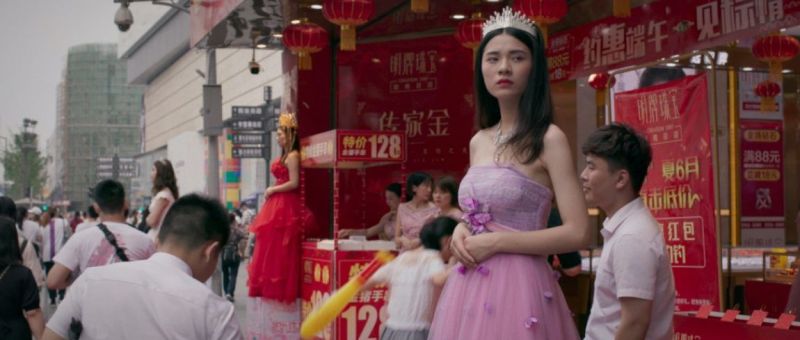
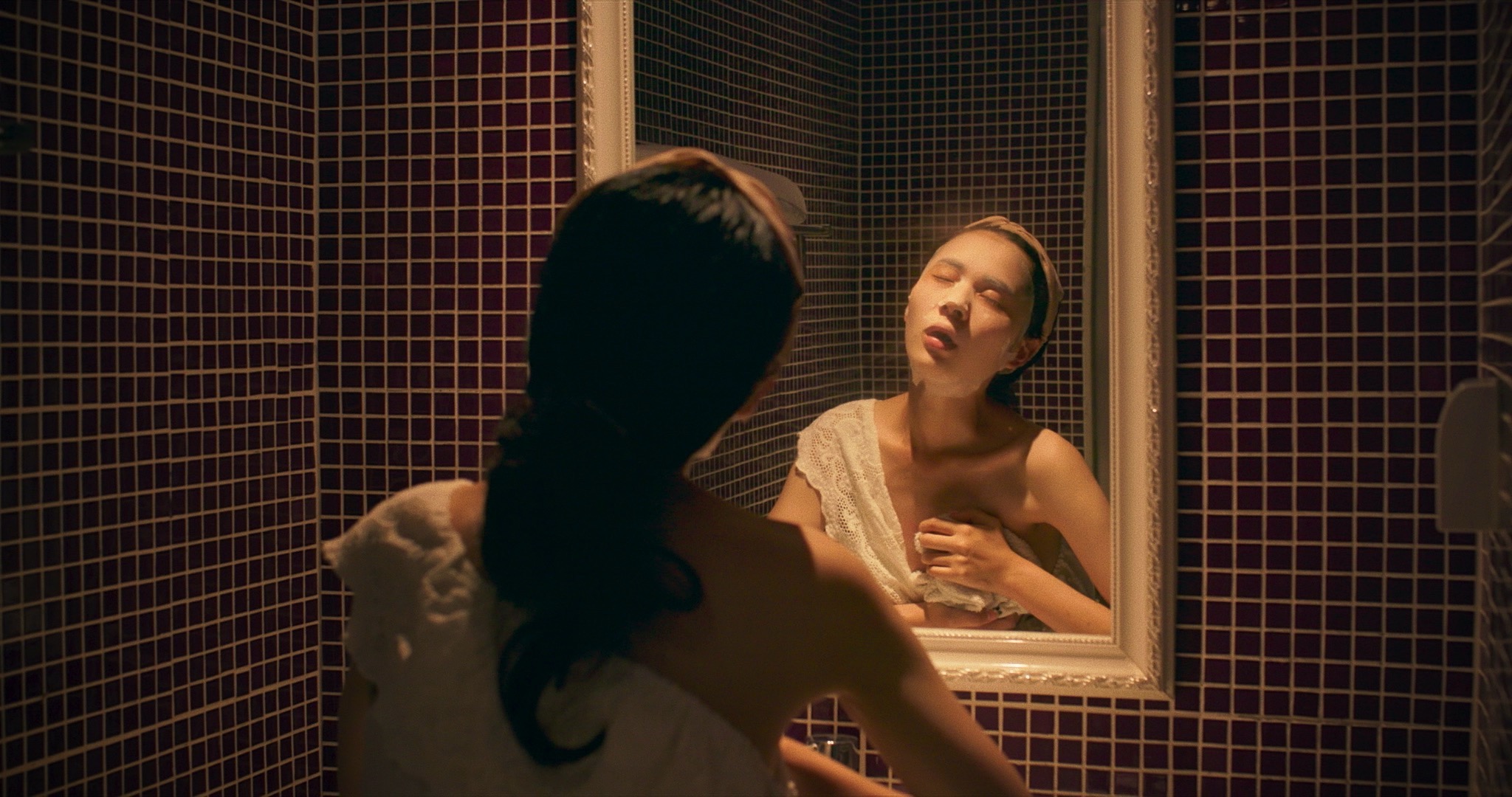
At 20, Lynn (Yao Honggui) has moved to the city from her home in provincial Changsha and is studying to become a flight attendant. Pressed to make money to support herself and pay off her mother’s debts, she’s taken up part-time modelling work and is dating a fellow student who seems to be something of a social climber constantly pressuring her to improve her English and mingle with the internationalist set. Hoping to earn more money she finds herself acting on a suggestion from an acquaintance to sell her eggs and discovers she is pregnant. While the boyfriend pressures her into an abortion, she isn’t really sure and decides to return to her parents’ home. One there she discovers her mother is struggling to pay off compensation payments after a mistake at her obstetrics clinic resulted in a woman losing her baby. Rather childishly Lynn suggests that she carry her child to term and then offer it to the other woman in return for the cancellation of the debt. 

It’s a very feudal solution to a very contemporary problem. Lynn does not see it as selling her baby only a way to overcome the futility of her situation. Everyone around her tells her to have an abortion as if it were as simple as having a tooth pulled and there’s really not much need to think about it. The film seems to ask if the silent consequences of the three decades of the One Child Policy have profoundly affected the way people think about motherhood and childbirth, normalising abortion to the point of becoming numb to its emotional dimensions. Lynn tells her mother that she does not want the baby to die inside her, having apparently witnessed an abortion going wrong at the clinic though her mother only tells her not to be so silly. She knows she can’t raise the child herself and accepts the arguments of others that early motherhood will derail her life and prospects, but wants the child to survive and naively believes both that it will help heal another woman’s pain and be raised in a loving family with better prospects than she could ever give it. 

But it’s obvious that the man she’s dealing with who claims to be a cousin of the woman who lost her baby is in no way on the level and most likely intends something quite different for the child perhaps selling it on in China’s child trafficking network, another unintended consequence of the One Child Policy. He suggests the cruelest solution of all, that Lynn and her family should raise the baby for a year and then part with it to him which aside from its emotional implications destroys the point of giving it away in the first place in that Lynn needs to keep her pregnancy secret to avoid the social stigma of unwed motherhood while returning to her studies after giving birth. Meanwhile, through the contacts she made in egg donation Lynn finds herself shepherding other young women many of whom are from the persecuted Uyghur minority to shady appointments with men in hotel rooms who quiz them on their physical health and mental attitudes in what seems to be a matchmaking/surrogacy service. In any case, these women seem to have little value outside of their ability to bear “healthy” children. “What is the standard for health?” a Lynn asks the middleman only for him to tell her that he’ll know it when he sees it, leading her to fear he may reject her child once it’s born leaving her quite literally holding the baby. 

Left with little means of support, Lynn is forced to continue working throughout her pregnancy even though medical personnel imply she is malnourished and should make sure to get plenty of rest while eating a protein rich diet. The only reason she is given such care at all is ironically because of the accidental commercialistion of the baby, the middleman willing to fund its development in return for the end product. Lynn’s mother tries to reason with the middleman to take the baby as soon as its born fearing that he will change his mind or that Lynn will be unable to go through with it after bonding with her child but does not really appreciate how little power they have in this situation. Using shady connections, the middleman has engineered it so that Lynn is getting medical care as “Sylvia”, the woman whose baby died and whose name will appear on its birth certificate leaving Lynn with no legal right to it anyway. 

Her mother, meanwhile, trying to take agency over her own life has been sucked into an obvious pyramid scheme selling fancy skin cream and has gained a false sense of success in her new business enterprise, arguing with her husband and wanting to close down the outdated maternity clinic altogether. Lynn struggles with English but is caught amid the dichotomies of the modern China, translating between standard Mandarin and the local Changsha dialect while trapped between the need to support her parents and providing for the next generation leaving little room for herself, her own hopes and desires. A grim picture of life on the margins of the contemporary society, Huang and Otsuka’s pressing drama ends with rain and hazard lights along with a helpless sense of abandonment and little hope in sight.


Stonewalling screened as part of this year’s San Diego Asian Film Festival.

Original trailer (English subtitles)