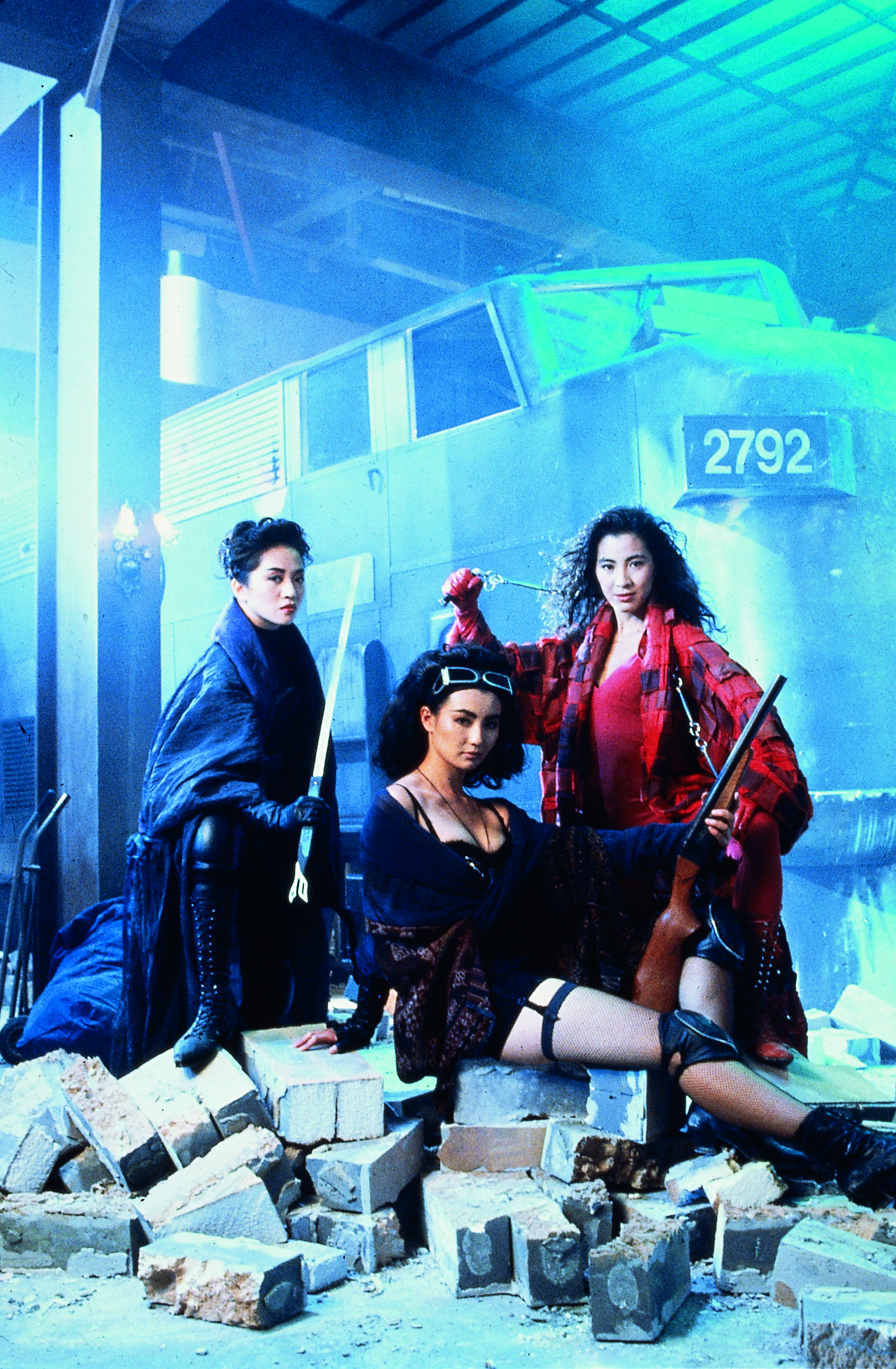
The Heroic Trio (東方三俠, Johnnie To, 1993)

Female solidarity becomes an unexpected weapon against stealthy authoritarian take over in Johnnie To’s gloriously camp superhero action fest, The Heroic Trio (東方三俠). Uniting three of the top stars of the age in Anita Mui, Maggie Cheung, and Michelle Yeoh the film flirts with Handover anxiety in the “Evil Religion” that threatens to steal the children of Hong Kong, but eventually locates the source of salvation in the heroine’s shared humanity brokered by a tripartite solidarity of justice and equality that defies both the patriarchal world around them and the cruel authoritarianism in which they have been raised. 

In an almost biblical allegory, large numbers of male infants have been going missing over the last 18 months and the police are, predictably, mystified relying on the reappearance of the mysterious superhero Wonder Woman to solve the mystery herself. Truth be told, top Inspector Lau (Damian Lau Chung-Yan) hasn’t yet realised that Wonder Woman is his own wife, Tung (Anita Mui Yim-Fong), so perhaps his investigative skills aren’t all that despite the dynamism of the opening scenes which see him demonstrate his masculinity by leaping out of a window stop a thief from driving off in his classic car which is parked outside a creepy mansion in the middle of nowhere. Nothing really gets done until the chief of police gets a note that his own infant son is next on the list, though he briefly considers simply swapping his kid for another couple’s child while hiring “Thief Catcher” Chat (Maggie Cheung Man-Yuk) to get him back when he’s kidnapped by an “Invisible Woman”, Ching (Michelle Yeoh), whom Tung manages to wound while saving the decoy baby. 

As it turns out, Ching has been taking the babies on behalf of “Evil Master” (Yen Shi-Kwan) who lives in an underground lair in the sewers and is the head of a mysterious cult hellbent on finding a new king for China. There may be a degree of Handover anxiety in Evil Master’s mission, seeking to possess and control Hong Kong by brainwashing its children eventually possessing Ching by removing her bodily autonomy while her sisters must quite literally free her from his icy grasp. Each of the kidnapped boys is said to have a divine destiny, though Evil Master doesn’t know which one is the new king and has a habit of simply killing the ones who disappoint him while the others are raised as mindless automatons consuming those like them and destined to become thoughtless killing machines like the bloodthirsty Kau (Anthony Wong Chau-Sang). 

Chat, who was raised as one of Evil Master’s minions but managed to escape thanks to the largess of Ching and his since become an ultra-capitalist bounty hunter if one less cynical than she originally seems, thinks it’s better to simply end the cannibal kids’ misery before they end up like Kau while Tung prioritises saving the infants so they can be returned to their parents before being subject to one of Evil Master’s weird rituals. Ching, meanwhile, is only participating in Evil Master’s plan to protect the man she loves, a mad scientist slowly succumbing to poisoning caused by his invention in true genre fashion. It is then in a sense love that causes Ching to reject her programming, but it’s the solidarity of Tung and Chat, along with a desire for vengeance, that finally gives her the courage to rebel. 

In a brief flashback, Tung had failed to save Ching during a tough training session with their mentor who had cruelly told her that she’d have to fight for justice alone while Ching, cast out, sought support by turning to the dark side. The scene repeats itself twice in the film’s closing scenes in which Tung is this time able to save Ching but only because of the support from their friend and equal Chat making up the third point of the triangle and anchoring them both firmly to ensure they will not fall. “Life is meaningful if you can face yourself” Tung tells Ching, shedding her mask having presumably dealt with her own dark past and pulling her sister up with her as an equal leaving the past behind to fight for a future of justice and freedom. 

To and action director Ching Siu-tung recast Hong Kong as Gotham with a production design quite clearly inspired by Western comic books in which the three heroines end by getting fancy capes that flicker in the wind. Chat, a motorcycle-riding delinquent force of nature, even at one point launches herself into battle on an oil drum propelled by dynamite which she later uses to take out the cannibal kids not to mention Evil Master himself. But it turns out the spectre of creepy, ritualistic authoritarianism doesn’t die so easily, Evil Master’s charred skeleton gets back up for one last hurrah until his brain finally explodes when confronted by Ching’s rejection having returned to the fold and now ready to sacrifice herself for a freer future for all. Essentially a comic book wuxia, To’s ironic action drama allows its heroic trio to find salvation in female solidarity anchoring each other in a world beset by fear and villainy.


The Heroic Trio screened as part of this year’s San Diego Asian Film Festival.
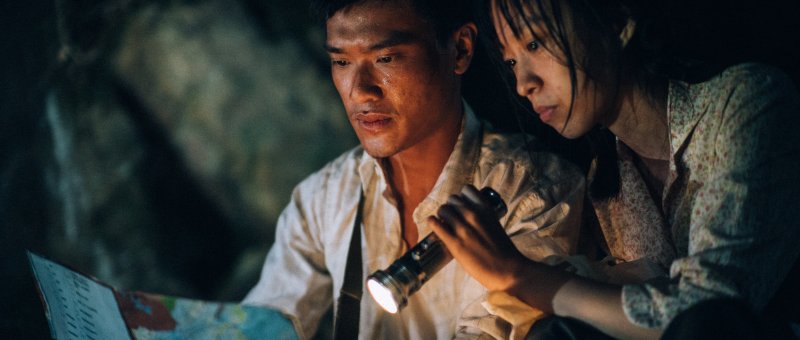
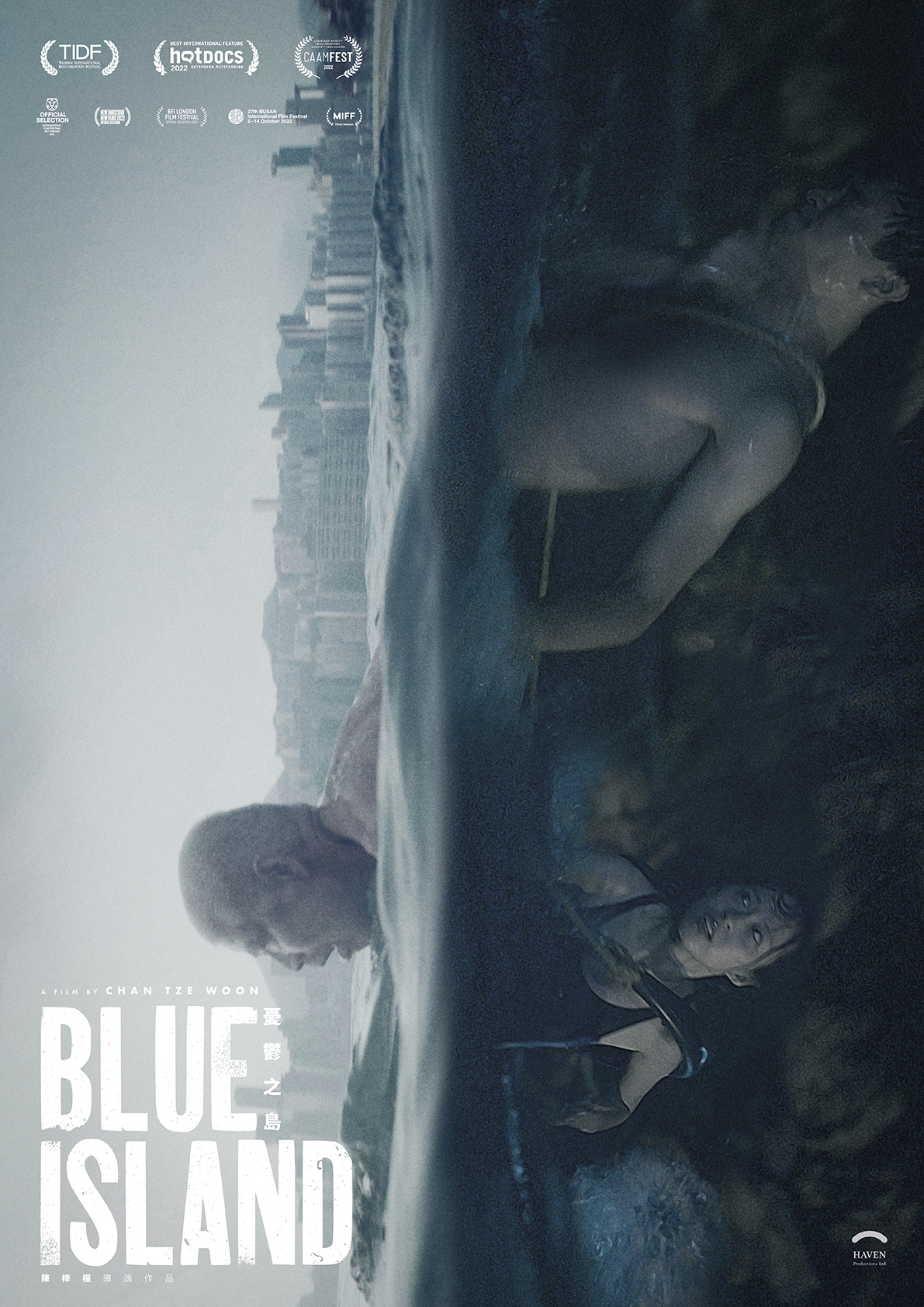
Blue Island (憂鬱之島, Chan Tze-Woon, 2022)

“In reality, we are just the abandoned kids of the riot.” an ageing protestor advises, sitting in a jail cell talking to a younger version of himself about the way that youthful revolutions fail and age erodes ideals. Chan Tze-Woon’s documentary Blue Island (憂鬱之島) places the protestors of today into the protests of the past, asking them to reenact the actions of their forebears while considering what Hong Kong means to them now and how they feel about those who simply decide to leave believing this is a battle that cannot be won. 

In a scene that seems to reference Tang Shu Shuen’s China Behind, a young couple fleeing the Cultural Revolution in 1973 attempt to reach Hong Kong by swimming, the camera then finding the same man nearly 50 years later still swimming in the bay. As one of the protestors of today puts it, he fled injustice because he could not fight it as many young Hong Kongers have also now chosen to do in the wake of the Security Law. Yet most of these young people have chosen to stay, most accepting the choice of others to leave though perhaps feeling it premature, explaining that to them Hong Kong is their home and their family. 

The old man, Chan Hak-chi, says he saw Hong Kong as a place of freedom yet it was also colonial outpost ruled by another distant and oppressive power. In a key scene a young protestor, Kelvin Tam, is charged with paying the part of a protester arrested during the anti-colonial riots of 1967. “I am Chinese” he answers the English civil servant, in English, when pressed why he resists them as someone who grew up in their colony and attended their schools, “And here belongs to China”. He tells the Englishman that this is his place and it is the Englishman who should leave. The situation then reverses, the now invisible voice on the other side of the table asking him in Cantonese “why do you oppose China?” as someone raised on Chinese soil who studied in government schools. “I’m a Hong Konger”, he replies.

The man whose shoes he’s filling is in many ways his opposite number. The riots of 1967 were led by left-leaning activists who desired a reunification with Mainland China in reaction to oppressive British colonial rule. The scenes of young people being carted off by the police are near identical, but it is true enough how identity is often constructed in opposition. The ’67 rioters declared themselves Chinese as distinct from the British, while Tam identifies himself as a Hong Konger in opposition the Chinese. Yet as Raymond Young, once a young man imprisoned for riot, points out when has Hong Kong ever been able to control its own fate? Other young protestors lament that they are offered only two conflicting narratives of their history, one which begins with British rule as if the island just popped up out of the sea in the early 19th century, and the other penned by Mainland authorities to encourage a One China philosophy.   

Now a disappointed old man, Young remarks that he no longer takes an interest in Hong Kong politics also pointing out that in order for you to love your country your country must first love you implying perhaps that he does not particularly feel loved by the Mainland. He may have something in common with Kenneth Lam who arrived in Hong Kong in 1989 after Tiananmen Square and holds up a small scarf with the innocuous message that the people will not forget now that the annual vigils that used to mark the June 4 Incident have been banned. Becoming tearful at a gathering he remarks that he has something in common with the youngsters in that they both dreamed of a better world and have experienced the “shattered faith” of a failed revolution, like Young feeling abandoned in the society he failed to change. 

Lam now works as social justice lawyer, defending many of these young people who have been arrested for vague offences such as “incitement to incite public nuisance”, “conspiring to subvert state power”, or simply “rioting”. Chan ends on a montage of faces sitting in the dock accompanied by their occupations and the “crime” with which they have been charged, some young some old, many students but also lawmakers and civl servants, delivery people, your friends and neighbours accused just for voicing an opinion. The court itself is ironically a colonial hangover in which barristers wear wigs and conduct their legal business, if not the questioning, in English. A blue island indeed, Chan ends on a note of sorry futility echoed by an extending list of credits marked only as “anonymous”. 


Blue Island screened as part of this year’s San Diego Asian Film Festival.
Original trailer (English subtitles)

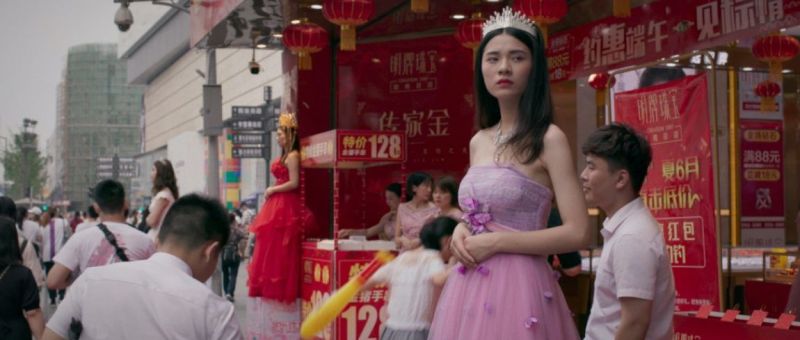
Stonewalling (石门, Huang Ji & Ryuji Otsuka, 2022)

A young woman finds herself caught between one generation and the next while dealing with an unexpected pregnancy in Huang Ji & Ryuji Otsuka’s pressing examination of contemporary womanhood, Stonewalling (石门, Shímén). Faced with an impossible situation she makes a decision that is in someways very old-fashioned and others very modern but certainly as another young woman describes it, very naive. Realising she has very little control over the decisions of her life the woman struggles to reaccommodate herself to the contradictions of the modern China. 

At 20, Lynn (Yao Honggui) has moved to the city from her home in provincial Changsha and is studying to become a flight attendant. Pressed to make money to support herself and pay off her mother’s debts, she’s taken up part-time modelling work and is dating a fellow student who seems to be something of a social climber constantly pressuring her to improve her English and mingle with the internationalist set. Hoping to earn more money she finds herself acting on a suggestion from an acquaintance to sell her eggs and discovers she is pregnant. While the boyfriend pressures her into an abortion, she isn’t really sure and decides to return to her parents’ home. One there she discovers her mother is struggling to pay off compensation payments after a mistake at her obstetrics clinic resulted in a woman losing her baby. Rather childishly Lynn suggests that she carry her child to term and then offer it to the other woman in return for the cancellation of the debt. 

It’s a very feudal solution to a very contemporary problem. Lynn does not see it as selling her baby only a way to overcome the futility of her situation. Everyone around her tells her to have an abortion as if it were as simple as having a tooth pulled and there’s really not much need to think about it. The film seems to ask if the silent consequences of the three decades of the One Child Policy have profoundly affected the way people think about motherhood and childbirth, normalising abortion to the point of becoming numb to its emotional dimensions. Lynn tells her mother that she does not want the baby to die inside her, having apparently witnessed an abortion going wrong at the clinic though her mother only tells her not to be so silly. She knows she can’t raise the child herself and accepts the arguments of others that early motherhood will derail her life and prospects, but wants the child to survive and naively believes both that it will help heal another woman’s pain and be raised in a loving family with better prospects than she could ever give it. 

But it’s obvious that the man she’s dealing with who claims to be a cousin of the woman who lost her baby is in no way on the level and most likely intends something quite different for the child perhaps selling it on in China’s child trafficking network, another unintended consequence of the One Child Policy. He suggests the cruelest solution of all, that Lynn and her family should raise the baby for a year and then part with it to him which aside from its emotional implications destroys the point of giving it away in the first place in that Lynn needs to keep her pregnancy secret to avoid the social stigma of unwed motherhood while returning to her studies after giving birth. Meanwhile, through the contacts she made in egg donation Lynn finds herself shepherding other young women many of whom are from the persecuted Uyghur minority to shady appointments with men in hotel rooms who quiz them on their physical health and mental attitudes in what seems to be a matchmaking/surrogacy service. In any case, these women seem to have little value outside of their ability to bear “healthy” children. “What is the standard for health?” a Lynn asks the middleman only for him to tell her that he’ll know it when he sees it, leading her to fear he may reject her child once it’s born leaving her quite literally holding the baby. 

Left with little means of support, Lynn is forced to continue working throughout her pregnancy even though medical personnel imply she is malnourished and should make sure to get plenty of rest while eating a protein rich diet. The only reason she is given such care at all is ironically because of the accidental commercialistion of the baby, the middleman willing to fund its development in return for the end product. Lynn’s mother tries to reason with the middleman to take the baby as soon as its born fearing that he will change his mind or that Lynn will be unable to go through with it after bonding with her child but does not really appreciate how little power they have in this situation. Using shady connections, the middleman has engineered it so that Lynn is getting medical care as “Sylvia”, the woman whose baby died and whose name will appear on its birth certificate leaving Lynn with no legal right to it anyway. 

Her mother, meanwhile, trying to take agency over her own life has been sucked into an obvious pyramid scheme selling fancy skin cream and has gained a false sense of success in her new business enterprise, arguing with her husband and wanting to close down the outdated maternity clinic altogether. Lynn struggles with English but is caught amid the dichotomies of the modern China, translating between standard Mandarin and the local Changsha dialect while trapped between the need to support her parents and providing for the next generation leaving little room for herself, her own hopes and desires. A grim picture of life on the margins of the contemporary society, Huang and Otsuka’s pressing drama ends with rain and hazard lights along with a helpless sense of abandonment and little hope in sight.


Stonewalling screened as part of this year’s San Diego Asian Film Festival.
Original trailer (English subtitles)

A Confucian Confusion (獨立時代, Edward Yang, 1994)

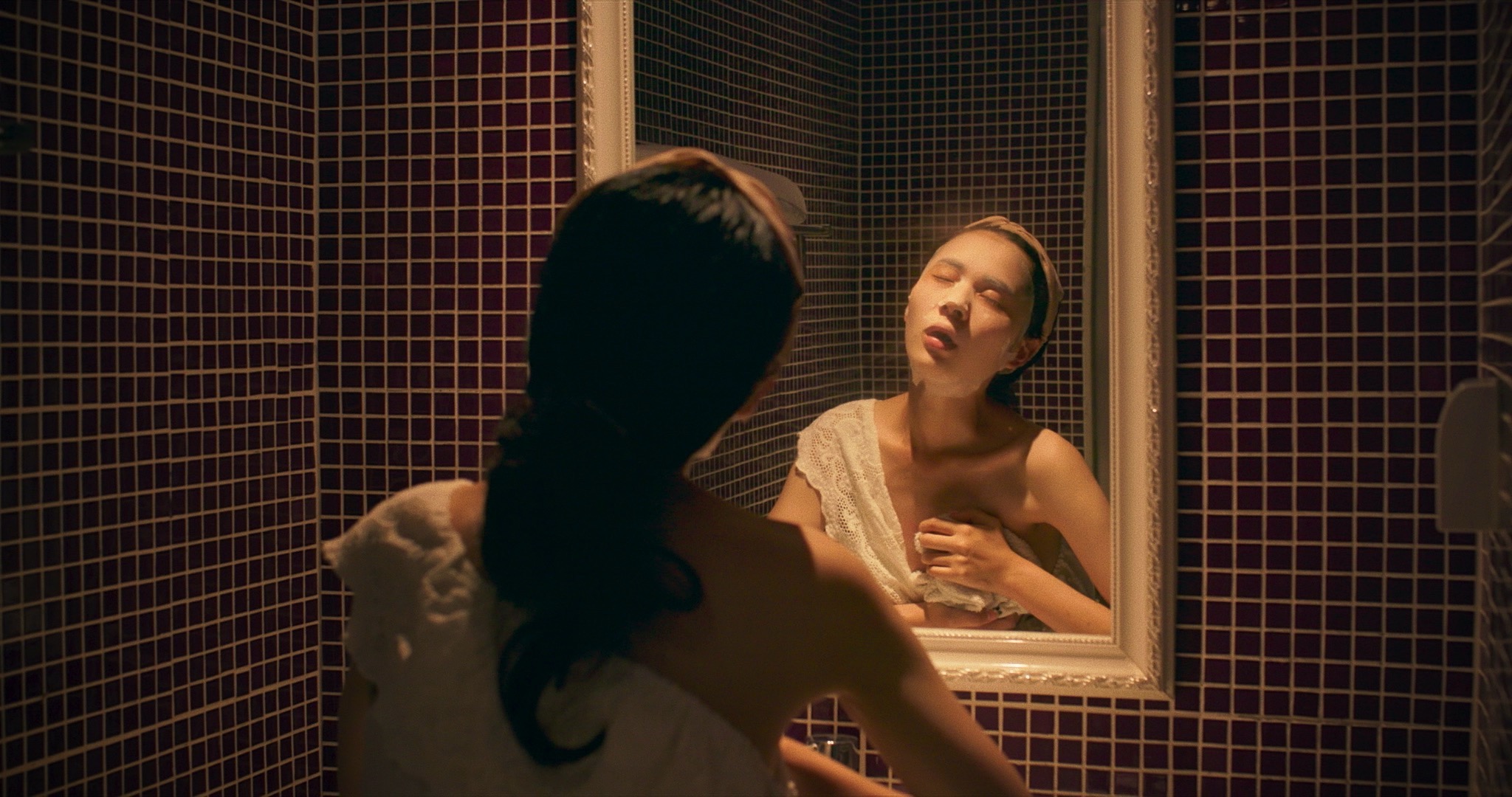
A collection of conflicted urbanites find themselves lost in a rapidly changing society in Edward Yang’s bitterly ironic social drama, A Confucian Confusion (獨立時代, dúlì shídài). Floundering in the post-martial law society, they struggle with the new freedoms of the democratic future torn between the blind obedience of the authoritarian past and the risky business of having to figure out who they are and what they want in a Taipei that seems to have its lost soul to rapidly advancing consumerism. 

Much of the confusion is centred on Chi-chi (Chen Shiang-chyi), a demure young woman admired by all for her radiant quality yet herself under-confident and worried that on some level others might resent her assuming that her genial persona is in someway an affectation. Chi-chi’s tragedy is that she is genuinely nice and relatively authentic in comparison to those around her only she’s beginning to realise that she doesn’t really know herself and has no idea what it is she really wants. “I didn’t have views of my own, it doesn’t mean I agreed with you” she eventually fires back at her ultra-conformist boyfriend Ming (Wang Wei-ming) after he takes the step of resigning for her when she expresses reluctance to accept a job offer set up by his father’s girlfriend.

“You weren’t like this before” Ming continues to berate her, telling another woman, Feng (Richie Li), that feels he no longer understands the changes in Chi-chi’s mind. A symbol of old school patriarchal thinking, he attempts to overrule all her decisions while frustrated that she can’t see he’s only acting in the best interests of her future. Ming thinks that everyone being the same is a good thing, determined to follow the conventional path for a “stable” life as a civil servant but carrying a degree of personal baggage that his politician father was once sent to prison for corruption. He tells Feng, the one person most at home with the duplicities of the modern society, that he chased Chi-chi because she most conformed to the image of his ideal woman which does rather imply that he preferred her to appear as an extension of himself not having any particular thoughts or opinions of her own. The realisation that she does indeed have individual agency seems to destabilise him even as his allegiance to the social conformity of the authoritarian era is shaken on witnessing the hypocrisy of contemporary corporate culture in which his straight-talking friend (Chen Yi-wen) is forced to pay for Ming’s own mistake. 

It’s the hypocrisy which seems to weigh heaviest on the mind of a struggling writer (Hung Hung) who finds it impossible to accept the democratic revolution and has given up the cheerful romance novels which made his name to write “serious” books. Now living in a tiny apartment without electricity, he has become estranged from the wealthy woman he married as a student (Chen Li-mei) who defied her family to turn down an arranged marriage just to be with him. She now hosts a fairly conservative TV programme aimed at housewives pushing family values which is one reason it would be a problem if their separation became public knowledge. The man she was supposed to marry, Chin (Wang Bosen) the foppish son of a business associate of her father’s, is now engaged to her sister, Molly (Ni Shu-Chun), and mainly conducts his business in Mainland China looking ahead to a kind of “One Country, Two Systems” future which may in a sense be a return to a more authoritarian society albeit one fuelled by corporatism. 

In any case, more than anyone Chin is caught between old and new desperately trying to make his engagement to Molly work by hoping they will eventually fall in love while she is more or less just going along with it while convincing him to continue investing in her failing business. In this very confusing environment, communication is never direct. Molly, who is also a childhood friend of Chi-chi and Ming, never really discloses her feelings but according to Chin’s sleazy business manager Larry (Danny Deng) is too “unique” for the times in failing to appreciate the necessity of emotion as a corporate tool. Yet she goes along with the arranged marriage unable to fully break with feudal norms as her much more conservative sister had ironically done even if she is no longer happy with her choice. As is so often pointed out, anything can happen anytime. Sudden reversals and accidental revolutions are just a part of life. 

Conformity had perhaps been a way of coping with life’s uncertainty, but in its way only created more misery and resentment. Ironically the radiant smile Larry so admires in Chi-chi is also the symbol of a societal defence mechanism. The angrier you get, the wider your smile, Larry had tried to teach Chin who nevertheless remains the most “emotional” of all the protagonists, eventually breaking with feudal past in ending his engagement to Molly after randomly falling in love with a voice on a telephone. “We’re all so lonely” Ming admits, disillusioned with his life of dull conformity and edging towards seizing the new freedoms open to him to finally be “independent” no longer bound either by lingering Confucianism or the authoritarian past. The writer’s last book had followed Confucius as he found himself in the modern society but discovered that the people no longer believed in his sincerity, seeing him as a kind of motivational speaker and wanting to learn the quick fixes of his philosophy. Yet in meeting his own destiny, the writer hits on an epiphany that the best weapon against hypocrisy is to live honestly and authentically. Finally integrating into the democratic future, each is finally becoming accustomed to making their own decisions but informed by a kind of mutual solidarity in navigating the still confusing landscape of a changing Taipei.


A Confucian Confusion screens at the Museum of Photographic Arts on Nov. 11 as part of this year’s San Diego Asian Film Festival.
Restoration trailer (Traditional Chinese / English subtitles)

Walk Up (탑, Hong Sang-soo, 2022)

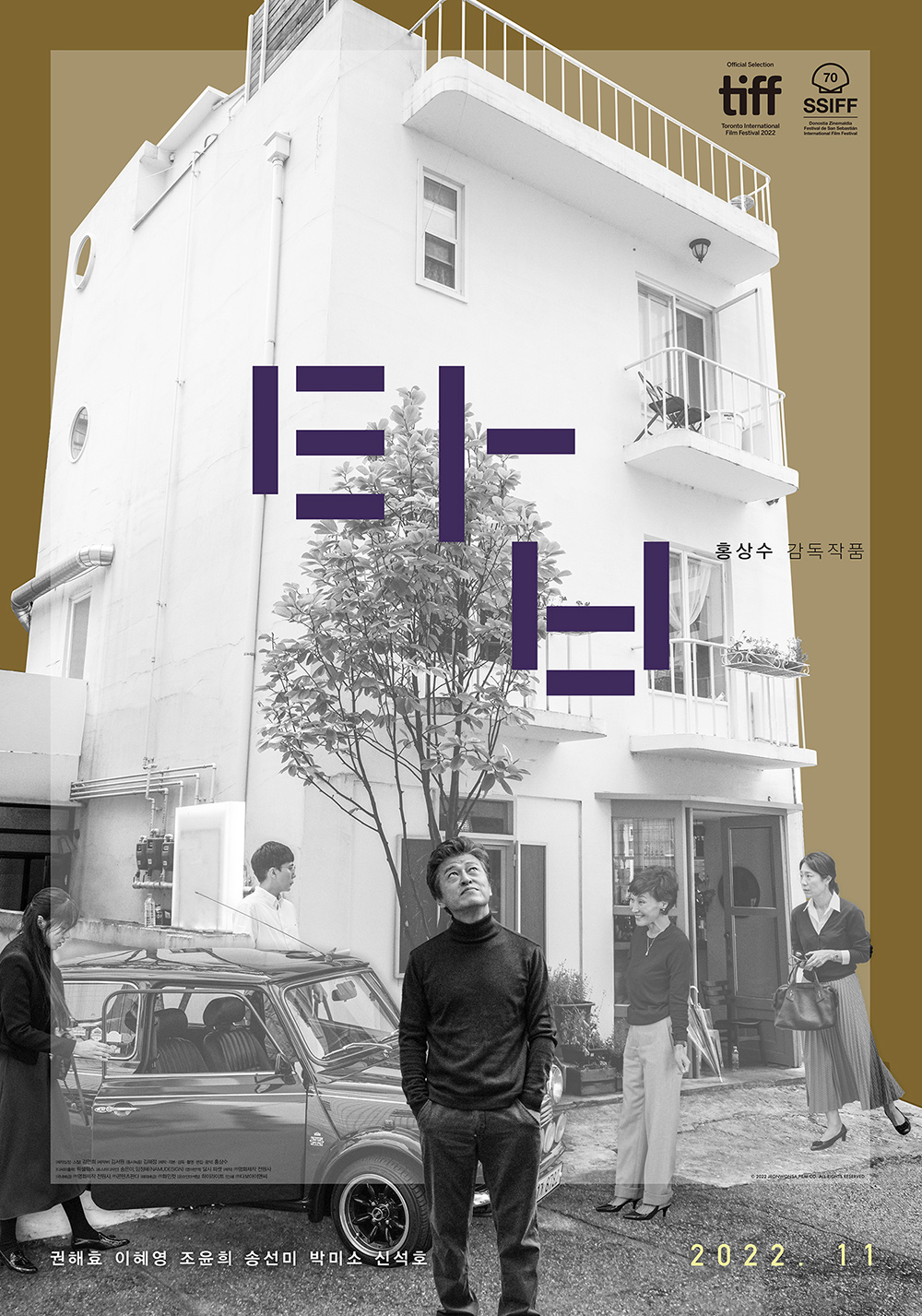
“Really all of us are like that. We’re different when we go out” an older woman tries to console, ”you want to believe that the person you see at home is the real him”. The second remark may come out more cuttingly than she means it, unsubtly suggesting that really you never know anyone and the intimacy you might believe exists within a family is just a performance. The director at the centre of Hong Sang-soo’s Walk Up (탑, tab) is indeed several different people with several different women across multiple floors of a small building owned by an old friend, Mrs Kim (Lee Hye-young), with whom he repeatedly checks in across the space of several years. 

Distance does seem to define Byungsoo’s (Kwon Hae-hyo) existence. When he turns up at Mrs Kim’s the first time, it’s with his daughter, Jung-soo (Park Mi-so), whom he later reveals he had not seen for five years. Jung-soo is there trying to make a connection, hoping Mrs Kim will take her on as an apprentice interior designer having experienced a moment of crisis on leaving art school and discovering that “art has nothing to do with money”. That’s also a problem that repeatedly plagues Byungsoo. During their conversation he’s called away to a meeting with a film producer, and later reveals that a project has fallen through after the funding was pulled at the last minute. Byungsoo embarks on a small rant about the commercialisation of the film industry in which artistic decisions are overruled by investors and no one really cares anymore about whether the film is any good only if it’s going to make money. 

Jungsoo had described her father as “feminine” and “domesticated” during her early childhood before her parents’ divorce, explaining that he seemed to change after his film career took off. Where once he’d been content to spend time a home, suddenly he was out all the time partying with actresses. Jungsoo seems to regard this personality shift as a kind of betrayal, hurt by Mrs Kim’s suggestion that Byungsoo may have been repressing himself at home and the “real” Byungsoo was the one who liked to go out on the town. Then again, people can be many things at once and perhaps there’s no one “real” Byungsoo so much as there’s the Byungsoo of the moment. Sunhee (Song Seon-mi), another failed painter who now runs a restaurant on the second floor, panders to his wounded ego repeatedly telling him how much she likes his films, though mostly for the things they’re not, and that she hopes that he will go on making films for many years to come. 

But it’s obvious that Byungsoo is deeply insecure, eventually drifting into an affair with Sunhee and living with her in the second floor apartment having taken a break from filmmaking due to ill health. He bristles when she tells him she’s going to visit a friend who slighted him on a previous occasion and tries to guilt her into not going, repeatedly texting her while she’s out to a degree that seems uncomfortably possessive and controlling. Yet he eventually ends up hugging his pillow and admitting to himself that perhaps he’s no good at relationships and deep down gets along better on his own. Even so, he later ends up with a third woman, an estate agent, who brings him wild ginseng to help with his health worries while he moves up to the studenty top floor flat which while barely big enough to turn around in comes with a spacious roofgarden. By this point his relationship with Mrs Kim, who basically begged him to move in when he first visited with Jungsoo, has clearly become strained, she perhaps also a little hurt in appearing to have carried a torch for him while hinting at feeling trapped in an unsatisfying marriage as the building itself continues on a course of disrepair. 

Mrs Kim too appears to have differing personas as she shuffles between the floors of the building she owns while each of the episodes replays with only slight differences and subject to the consequences of the last. Failed artists moving to Jeju to start again becomes a repeated theme, though it’s as if Byungsoo is resisting the pattern, talking of buying a dog with Sunhee when they relocate but then putting it off for another three years while they save money. By the time he’s made it to the top floor it’s like he’s hit rock bottom, raving about a vision from God telling him to move to Jeju and make 12 films while still ostensibly on an extended break from filmmaking. Shooting once again in a crisp black and white, Hong finally brings us back to where we came in leading us to wonder how much of what we’ve just seen really happened and how much was just a kind of thought experiment created by a bored and insecure director feeling maudlin and trying to figure himself out while his career collapses around his ears. Maybe you have to go up so you can come back down, but it doesn’t seem to leave you any less lonely as the melancholy Byungsoo discovers smoking a solitary cigarette looking up at the house from outside as if trying to decide where exactly he belongs. 


Walk Up screens at Ultrastar Mission Valley on Nov. 9 as part of this year’s San Diego Asian Film Festival.

Trailer

Gaga (哈勇家, Laha Mebow, 2022)

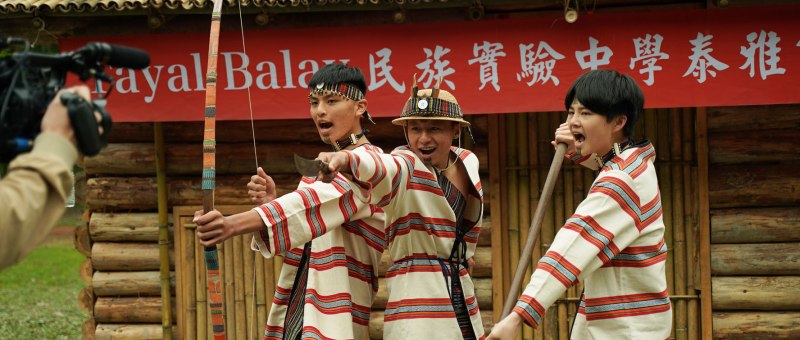
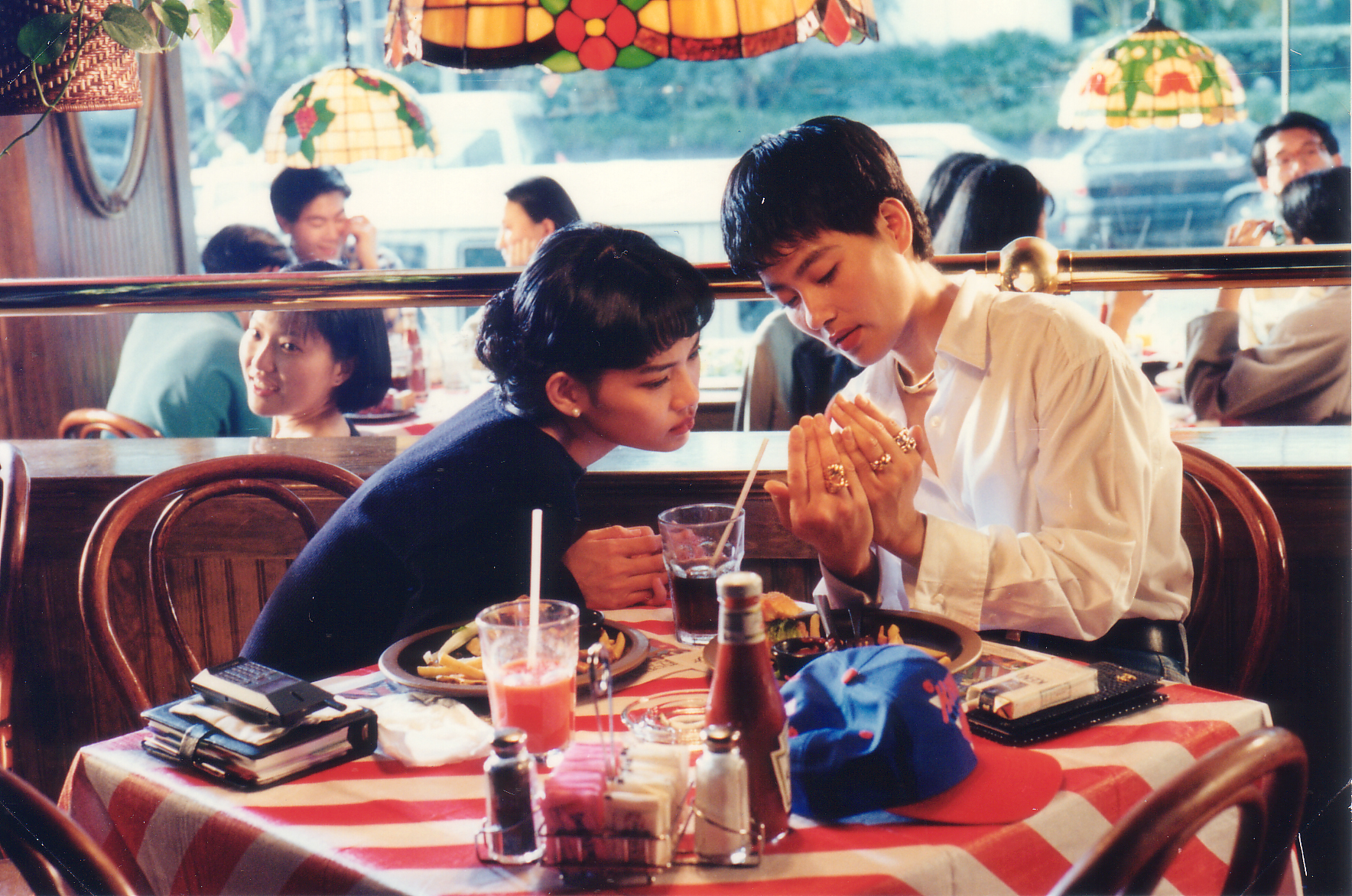
“Children will find their own way” a grandmother reassures while her community fractures all around her in Laha Mebow’s lighthearted drama, Gaga (哈勇家). “Gaga” refers to the traditional rules of the Atayal people which find themselves under increasing pressure from the wider society. While one granddaughter returns after living abroad in New Zealand and is caught between her affection for her family and her desires for her future, her cousin is devotes himself to his culture but may end up marooned amid encroaching modernity. 

As the film opens, Enoch is hiking with his grandfather Hayung on the mountain where he tells him that he used to come to catch fish in his youth but not anymore. Back then, he explains, it was considered important not to transgress on another’s turf. If someone had set fish traps already, you’d be expected to move yours somewhere else. But it doesn’t work that way anymore, as the family discover on entering a dispute with a neighbour who’s engaged a surveyor to essentially annex a third of their land. Father Pasang appeals to the mayor, but is given short shrift and reminded that making an offering is no longer sufficient to mark a boundary. This crisis informs Pasang’s fateful decision to stand for mayor himself which places increasing strain on family relations especially in the wake of Hayung’s death. 

With Hayung gone, there is a sense that the traditional practices of the Atayal people are being lost. His grandson, Enoch, has a Christian name but is close to his grandfather and seems to be devoted to preserving their culture, often seen playing his mouth harp, singing traditional songs and dancing. His cousin Ali, meanwhile, has been studying abroad in New Zealand and seems increasingly at odds with the traditional ways of the village not least when it is discovered that she’s become pregnant out of wedlock with her overseas boyfriend who is also of an Asian background but is unable to speak Mandarin let alone the Atayal language. Ali isn’t sure she wants to keep the baby, but abortion is against Gaga while her father is chiefly worried about his electoral prospects amid a scandal concerning his only daughter. 

Pasang’s response hints at the inherent corruption in the electoral system. Resolving to neutralise a scandal before it takes hold, he decides to slaughter 10 pigs as a sacrifice and give the meat to other villagers, holding what is staged as a wedding reception for Ali and her oblivious boyfriend Andy who suddenly arrives for a surprise visit. Local politics is essentially transactional, villagers are accustomed to voting for whoever gives them the most stuff rather than whoever offers them the best prospects for their future perhaps cynically deciding to take what they can get having little faith that those in power are really going to have their best interests at heart. Pasang plays the game, but the game costs money endangering not only his own financial security but that of his family and most particularly his younger brother Silan whose land was at issue in the first place. Pressured by his mother, Silan is emotionally blackmailed into “helping” his brother with the promise that he will pay him back when he wins which he must do or else they are all ruined. But Pasang soon discovers that taking power over one’s life is not so easy, because those who already have power will be forgiven for breaking the rules while those who do not will not. 

On some level, Pasang is still expecting Ali to stay in the village and Andy to move there to be with her, while Andy, a little older than Ali, is seemingly unfazed by the prospect of youthful fatherhood but wants to take his family home to New Zealand. Communication issues are only part of the problem, the indigenous community switching between their own language, Mandarin, and Taiwanese Hokkien while adding English into the mix but eventually discovering that in the end they don’t need really words to communicate with Andy but are satisfied that he loves their daughter while the choice should be hers alone. Ali meanwhile is beginning to feel railroaded, as if everyone is trying to make her choices for her. Grandma has already named the baby after Hayung seemingly assuming that she will raise it to be an Atayal adult in the village. 

In parallel, Enoch’s sister Agnes is forced to enlist in the military in order to support the family following their financial ruin each of them accepting that Enoch is not suited to life outside the village and can do nothing other than continue their traditional way of life. But then again, it’s also clear that as an alternative revenue stream the villagers are forced to parade their culture as entertainment for tourists. Pasang even strikes a funding deal agreeing to host a temple on his land where tourists can stay, while attempts to construct a “traditional” Atayal house in the central square to provide cultural education are co-opted by builders from the city who ignore all of Hayung’s advice about how to build. Part of the roof collapses during the opening ceremony. Enoch asks why some of the children are excited about the “real” New Year which they think of as the Spring Festival pointing out that the Atayal celebration takes place after the harvest, Christmas is for Westerners and Dec. 31 the Japanese. In the end it’s up to him alone to stoke the fires of his culture amid an uncertain modernity. 


Gaga screens at USCD Price Center Theater Nov. 6 and Ultrastar Mission Valley on Nov. 7 as part of this year’s San Diego Asian Film Festival.
Original trailer (English subtitles)

The Novelist’s Film (소설가의 영화, Hong Sang-soo, 2022)

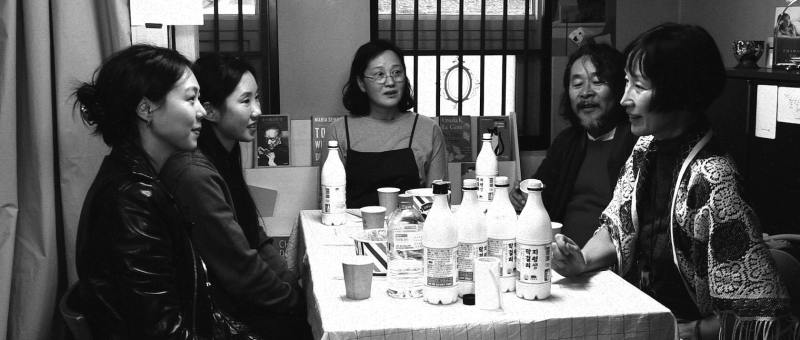
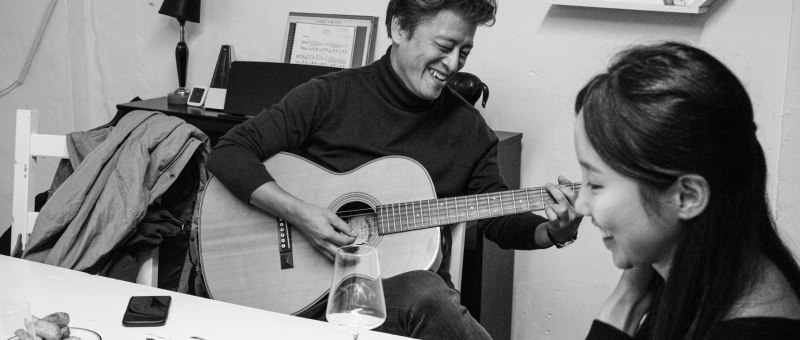
Once again in a meta mood, Hong Sang-soo’s The Novelist’s Film (소설가의 영화, Soseolgaui Yeonghwa) seems to be peopled by those who’ve already given up. The heroine’s friend has given up her writing career to run a small-town bookshop while she herself is struggling with writer’s block, her friend’s assistant has given up acting to learn sign language, and a movie star she later meets has apparently retired because she doesn’t feel the desire to act anymore. In similar fashion a director declares that some have perceived a shift in his career that leads him to concede that he just doesn’t feel the sense of “compulsion” that used to drive him and his work may have become freer and more authentic as a result. 

As usual, Hong may partly be taking about himself, about his relationship to filmmaking and to his muse Kim Min-hee who is herself given a meta moment when berated by the director, Park (Kwon Hae-hyo), who tells her that her decision to retire is a “waste” of her talent only to be shouted at by blocked novelist Junhee (Lee Hye-young) who is hoping to make a film in order to rejuvenate her creative mojo. Junhee tells Park in no uncertain terms that Kilsoo is not a child and if this is the choice she’s made he ought to respect it, circling back to the offensiveness of the word “waste” and its various implications. The situation is so awkward that it leads Park’s wife to leave it all together, but it’s true enough that after this outburst Junhee seems to find a more comfortable relationship with Kilsoo than with any of her old acquaintances as they bond in mutual admiration and shared creative endeavour. 

It’s with a sense of tension that the film opens, Junhee venturing into the bookshop run by an old friend (Seo Young-hwa) only overhear a heated argument between her friend and a younger assistant, Hyunwoo. As so often with Hong the nature of the relationship is unclear, the argument intimate in quality not really the kind one has with an employee or casual acquaintance and so awkward that Junhee decides to wait outside until it’s over. In any case, Junhee’s manner even with the friend she’s deliberately tracked down and come to see is somewhat accusatory and passive aggressive as if hurt by her friend’s decision to abruptly drop out of contact apparently having given up writing and intending to cut herself off from her city life in its entirety.

Her encounter with the director is similar in that she seems clearly annoyed with him, firstly pretending not to recognise his wife then accusing of them of deliberately hiding from her at a popular tourist attraction. Picking up on the vibes, he asks her if she’s still upset with him over a project to adapt one of her novels that fell through. She says she isn’t but is obviously annoyed about something while his wife elaborates on his creative process and the ways she thinks he and it have changed. Then again the wife is also a little strange, introducing herself to Kilsoo, whom they’ve randomly bumped into in a park, as someone who lives with director Park rather than as his wife answering Kilsoo’s question of how long she’s lived with him with a very matter of fact 30 years. Junhee is similarly vague about the extent of her relationship with an ageing poet and former drinking buddy (Gi Ju-bong) with whom she had herself lost touch or perhaps partially ghosted when his interest turned romantic. We hear brief snippets about Kilsoo’s personal life, an allusion to scandal and drinking problem but never see her offscreen husband, only his filmmaker nephew (Ha Seong-guk). 

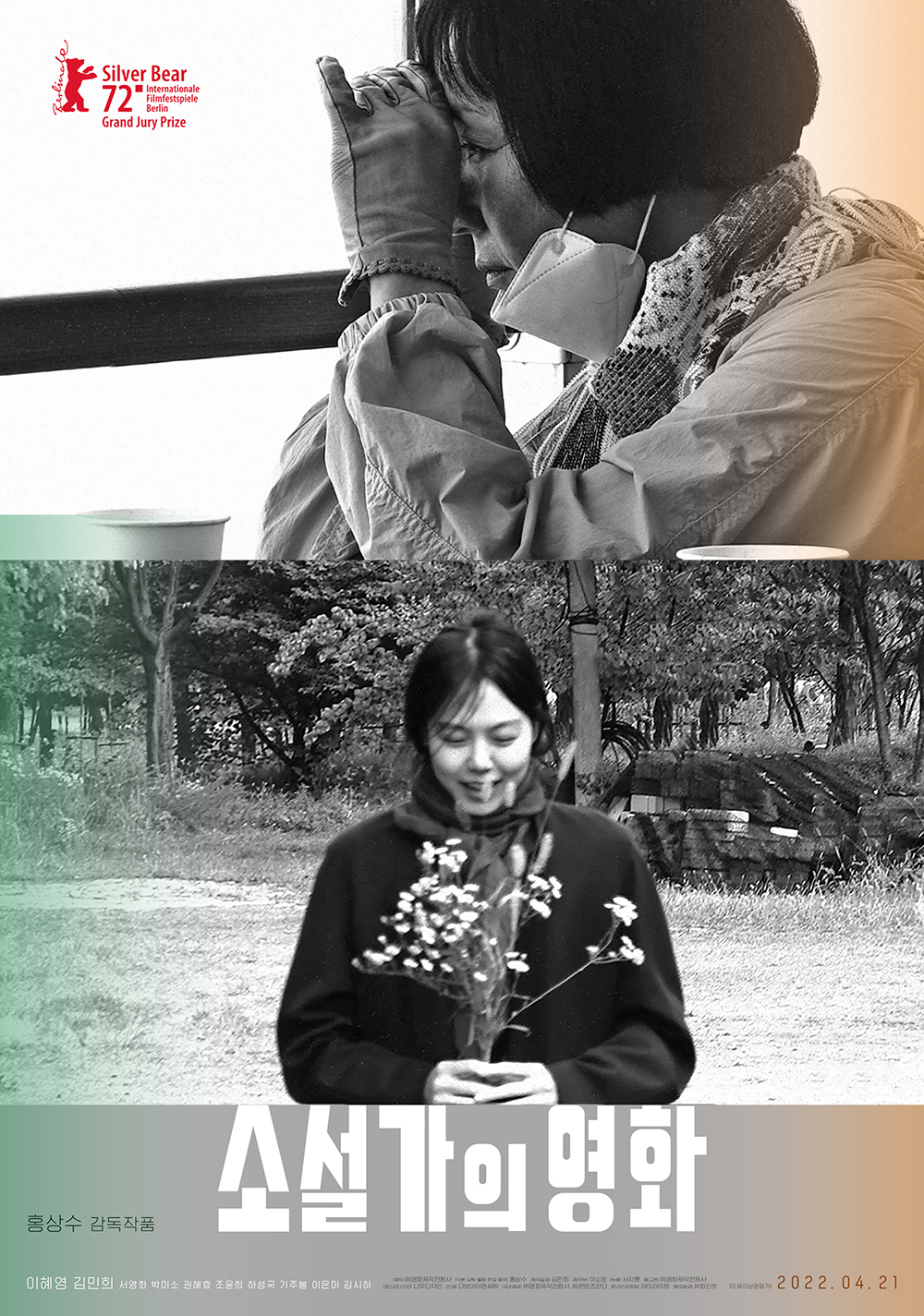
Yet the the serendipitous connection between Kilsoo and Junhee allows each of them to reignite their creative spark while generating an unexpected friendship. The film novelist envisions is scripted but intended to capture something of Kilsoo as she is while ostensibly playing a character, exposing the reality of the vague relationships by cutting through artifice to the truth. In another series of meta comments, the poet reminds her she needs a hook to draw the audience in but she simply tells him she’ll figure that bit out later because the story is in its way irrelevant. “He writes what he lives” she later says of him, a little dismissively. In any case, the film she makes takes on another meta quality, Hong himself perhaps behind a camera as Kim Min-hee and another woman gather flowers eventually ending with a mutual declaration of love and a sudden burst of colour in what has been a static and monochrome affair which hints at the sense of freedom and comfort Hong like the director may have found in new artistic connection. 


The Novelist’s Film screens at Ultrastar Mission Valley on Nov. 4/7 as part of this year’s San Diego Asian Film Festival.
US release trailer (English subtitles)

After the Rain (两个星球, Fan Jian, 2021)

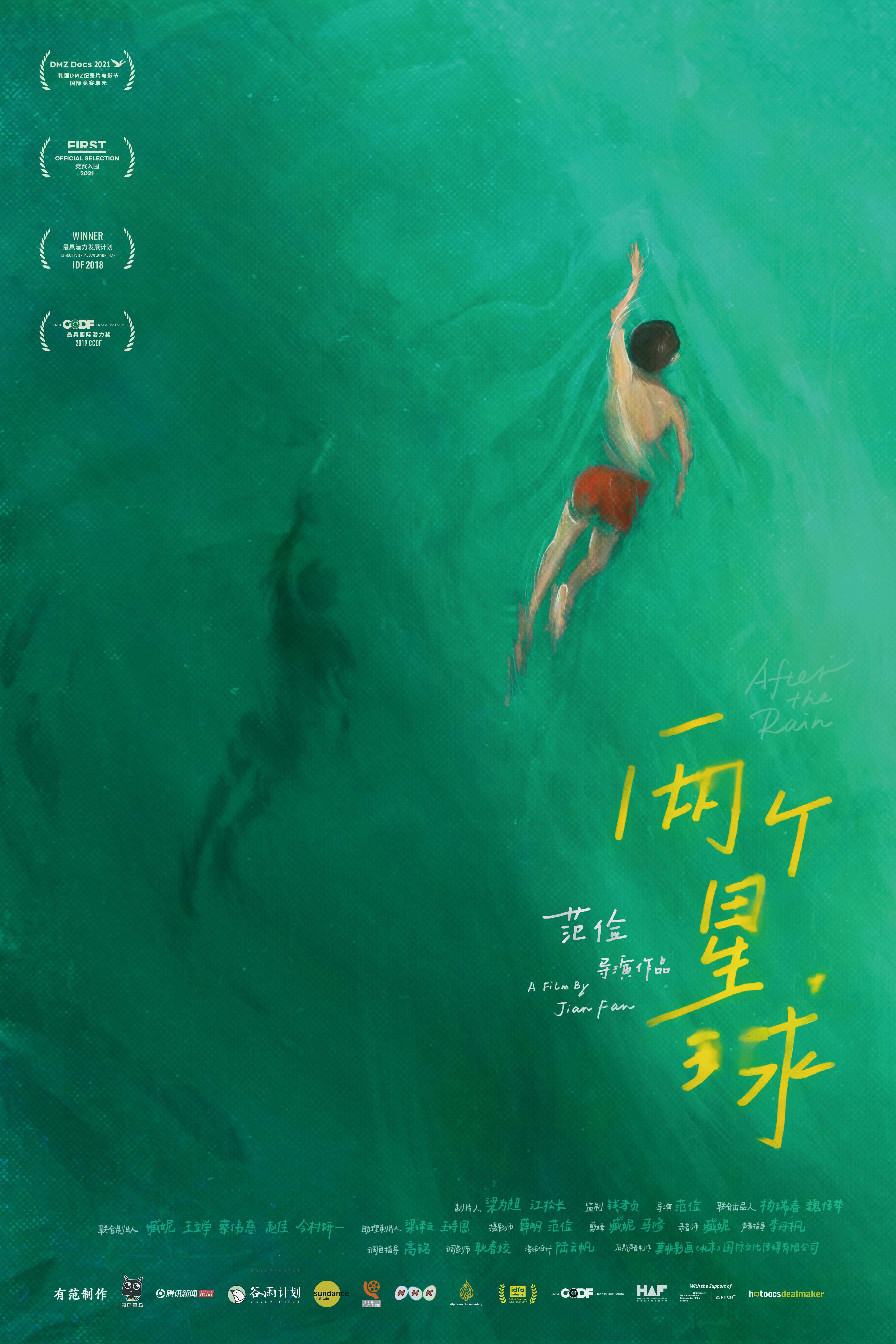
When the Great Sichuan Earthquake struck in 2008, 69,000 people lost their lives while a catastrophic blow was dealt to local infrastructure. With the One Child Policy then still strictly enforced, parents who had lost children in the disaster were offered government assistance in order to conceive a second child. It might be crass to describe these children as “replacements”, yet in one sense that is what they were intended to be. Jian Fan’s observational documentary After the Rain (两个星球, liǎng gè xīngqiú) follows two such children and their traumatised parents as they try to move on as a family in the wake of tragedy. 

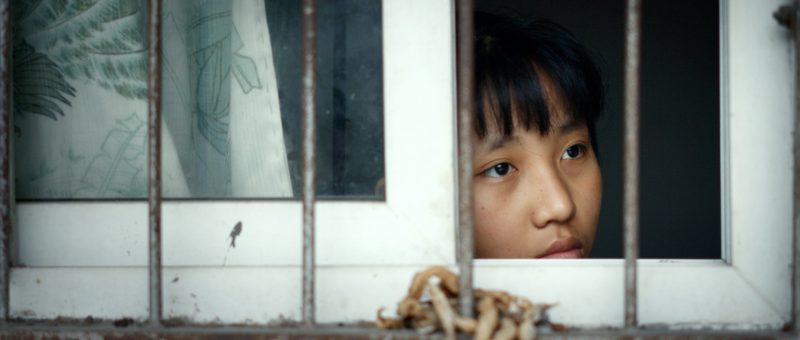
Sheng is still haunted by his inability to rescue his daughter, Rain, from beneath the rubble of her school house. He and his wife Mei have decided to take part in the IVF programme and are hoping for a girl, believing in a sense that they’d be getting their daughter back. IVF doesn’t work out for them, but Mei conceives naturally a few months later and gives birth to a baby boy, Chuan. On what should be an unambiguously happy occasion, the sense of disappointment is palpable, Sheng in particular feeling cheated and resentful to have been denied a reunion with his daughter. Ying and her husband, meanwhile, are also unsuccessful with IVF but are simultaneously struggling to rebuild a relationship with their second daughter, Ranran, for whom they had to pay the second child fine subsequently sending her to stay with relatives in the countryside before bringing her back when their eldest girl, also called Rain, was killed in the earthquake. 

Both children are over burdened with the knowledge that they owe their existence to their sibling’s death, Mei bluntly telling Chuan that Rain’s life was sacrificed for his while later revealing that she sometimes dressed him as a girl as an infant while Ranran is forced to reckon with her parents’ decision to send her away only to be recalled when her sister died. At a memorial event other mothers discuss what they’ve told the children they conceived after the earthquake about their older siblings with most disapproving of Mei’s blunt approach fearing that such knowledge will burden their children or leave them feeling guilty and unloved but Mei is unrepentant. After all it is in a sense the truth. Because of the One Child Policy, the existence of these children would not have been possible had their elder sibling not have died in a such a horrifying way. 

Even so, Sheng in particular struggles to bond with his son catching himself letting it slip out that he wasn’t allowed to spend time with his daughter so he’s little interest in doing so with Chuan refusing to take him out to an amusement park harping on about how wasteful Chuan is and how much money he’s costing him. He constantly runs the boy down, criticising his performance at a school sports day and snapping at him at home with the obvious consequence that Chuan mainly ignores him and stays close to his mother though she is also at times unsympathetic, angry with him for crying while in pain after a medical procedure. 

A heartbreaking sequence sees little Chuan all alone and looking lost amid the graves at a memorial event for the earthquake while his parents talk with others in the same position, as if for a minute they’d forgotten he existed. Trapped in grief, Sheng still lovingly washes one of his daughter’s dolls on the rooftop and seems at times torn and remorseful complaining that it made him feel sad inside to notice there was no light in Chuan’s eyes but still harbouring resentment towards him as if blaming his son for “replacing” his daughter. Ying meanwhile recounts all the ways Ranran is different from Rain as if the differences sometimes upset her even if she is in a sense closer to her than she had been to her older daughter leaving her with an additional sense of guilt. 

“Losing a kid leaves your heart empty” Ranran’s grandma remarks each of the parents still struggling to come to terms with their loss while the children equally struggle to accept the absence of an older sibling they never knew of whose loss they are constantly reminded and expected to mourn. Nevertheless they are all doing their best trying to move past their grief and rebuild their lives but ultimately unable to let go of the traumatic past while their children grow away from them left with only loneliness and resentment. 


After the Rain screens at UltraStar Cinemas Mission Valley, San Diego April 25 as part of this year’s SDAFF Spring Showcase.

Original trailer (English subtitles)

Big Night! (Jun Robles Lana, 2021)

In the opening scenes of Jun Robles Lana’s darkly comic farce Big Night! a young man is shot in the head by another young man, this one wearing a motorcycle helmet with its visor down, who calmly walks away and gets back on the back of the bike he arrived on his friend then driving them both away. Of course people are shocked but then again not all that much, they barely pause despite the fact that his man, Ronron, was well known to them and no one really thought he had much to do with drugs. Beautician Dharna (Christian Bables) gossips about the killing with his friend Biba but gives it little thought before returning to his day, so normalised has death on the streets become in Duterte’s Philippines. 

Dharna may not have given much thought to extrajudicial killings, but then it’s different when it’s you who might be next in the firing line as he discovers when Biba gets an advance view of the following day’s “Watch List” from her law enforcement boyfriend. What ensues is a kafkaesque quest to clear his name though there’s no real “official” path towards getting off a watch list when you’re on one. His boyfriend Zeus who is due to perform in a “Big Night” pageant at a local gay bar that very night suggests simply fleeing to another district, but flight implies guilt and as Dharna points out he’ll lose all his customers if he has to move to another area and neither of them have the money to start all over again somewhere new. Like many of Dharna’s friends and acquaintances Zeus doesn’t seem to share his concern. “The police won’t bother you if you’re not doing anything illegal” he naively advises, sure it’s all just a random mistake that soon will blow over but otherwise so numbed to the idea of extrajudicial killing that he doesn’t really think too much of it and is mainly annoyed that Dharna has lost interest in helping finish his costume for the big show. 

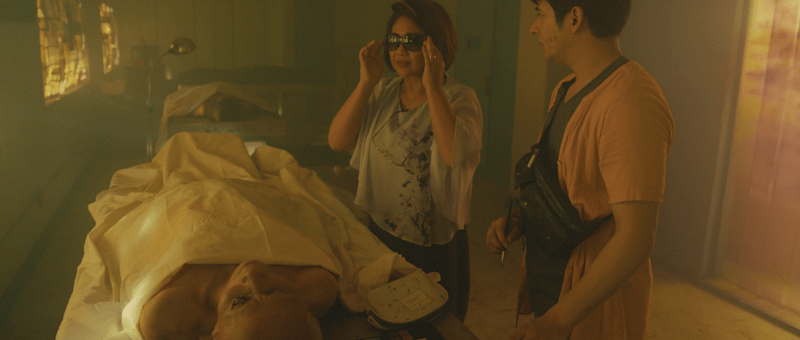
Neither of them can think of a reason why Dharna, under his full legal name, would have been placed on a list as he’s not a drug user and doesn’t know anyone who is. He does, however, have some useful connections including local law enforcement official Cynthia who isn’t terribly interested or helpful but manipulates his anxiety to force him to help her out by filling in for her regular mortician, Connie, who has mysteriously not shown up for work. The morgue is currently overflowing, Cynthia making a dark joke that undertaking is a growth industry while revealing that there are so many bodies in part because families have to pay a fee to get them back and most of those involved in extrajudicial killings are from the slums so they can’t afford it. Even so, she explains to Dharna that they get more donations when families can see the body which is why he’s supposed to make them up to look as good as they can despite many of them having sustained gunshot wounds to the head or face. 

Cynthia sends him on to local community leader Roja warning him that he’s “allergic to gays” while he too makes Dharna do his bidding pointlessly walking laps around a fountain in some sort of macho display of endurance while insisting that he’s so anti-drug that even if he gets a stomach upset he just powers through it with raw masculine energy. He too is a self-interested hypocrite spouting religious nonsense while hanging out in “massage parlours”, dangling the idea of salvation but unprepared to grant it. Dharna wonders if it might have been someone from the area where he grew up who reported him but discovers that unlicensed midwife Melba (Janice De Belen) makes a point of not putting any names forward at all and is herself willing to risk breaking the law to help women in need who are denied medical treatment because of their poverty.

It’s impossible to avoid the implication that this is happening to Dharna in part because he’s poor and powerless in an authoritarian and hierarchal society but he’s eventually forced to consider that someone may have put his name in a drop box anonymously, that perhaps they gave a random name when someone asked for one to save their own, because they had something against him, or sought to profit in some way from his absence. Like the witch trials of old, the war against drugs is another tool that can be manipulated for personal gain and so inured to violence has the society become that many are prepared to use it. Dharna finds himself at the centre of a random conspiracy in which he has no other option than to accept his complicity or die, discovering that as the radio report that opened the film had suggested the same officials in charge of prosecuting the war on drugs are in fact secretly using it to secure their stranglehold over the local drugs trade. 

Dharna finds himself compromised at every turn, beginning by offering free haircuts to help his case to progressing to covering up state crime, literally, by repairing the faces of the dead and graduating to faking a seizure in an ambulance to bypass a checkpoint. At the hospital he is confronted by the face of an old lady filled with despair one hand holding that of a little girl and the other a pair of bloody sandals before she simply collapses. Dharna tries to wash the sandals clean but there’s only so much you can do when the stain runs so deep. The irony of his big night taking place on All Souls Day is not lost though there’s precious little time for honouring the dead when your survival can no longer be assured. 


Big Night screens at UltraStar Cinemas Mission Valley, San Diego April 23/27 as part of this year’s SDAFF Spring Showcase.

Original trailer (English subtitles)

Nothing Serious (연애 빠진 로맨스, Jeong Ga-young, 2021)

Through her first three features in which she also played the lead, Jeong Ga-young had established herself as a provocative indie voice casting herself as an often unsympathetic if transgressively frank heroine contending with the vagaries of the modern society. Nothing Serious (연애 빠진 로맨스, Yeonae Bbajin Romance), by contrast, marks her debut as a commercial film director and perhaps softens some of her harsher edges but nevertheless maintains her characteristic saltiness and often witty dialogue in what is otherwise closer to Nora Ephron than Hong Sang-soo. 

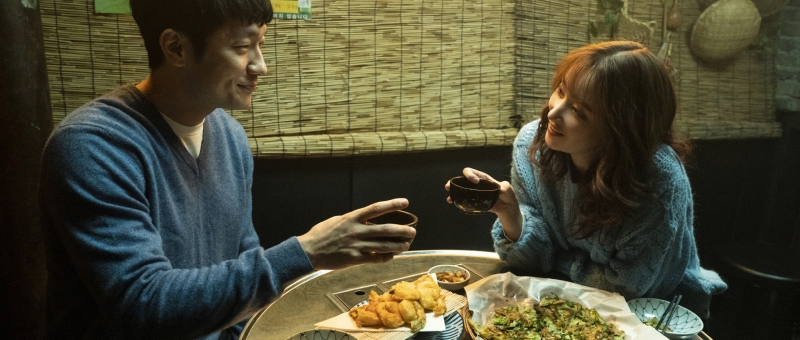
Though played by Jeon Jong-seo rather than the director herself, 29-year-old Ja-young is a classic Jeong heroine transgressively frank in terms of her sexuality and finding herself in something of a tailspin as she approaches her 30th birthday as a single young woman drowning in debt with neither career nor relationship success to boast of. Meanwhile across town nerdy magazine staff writer Woo-ri (Son Suk-ku) finds himself having to write almost all of the magazine himself in part he suspects as punishment for having helped a friend leave to start up their own online publication. His particular problem is that his boss has asked him to take over his friend’s sex column which is really not his thing especially as he’s in an on again off again non-relationship with colleague Yeon-hee (Lim Sun-woo) who has just informed him she’s getting engaged to her old boyfriend. 

Inevitably the pair end up meeting through dating app Love Bridge to begin with just for a no strings New Year one night stand only to inconveniently realise they quite like each. Even so, their personal issues continue to overshadow the relationship, those being Ja-young’s hurt and anxiety on hearing that an old boyfriend who treated her badly and broke her heart is getting married, and the fact Woori signed up to Love Bridge mainly to find inspiration for his column which becomes an unexpected hit with readers who prefer the slow-burn tease of their romance to the X-rated content of Woo-ri’s predecessor. 

While not really “dating” the couple continue to share their relationship woes with each other, Ja-young continually fed up with her attempts to meet “normal” men who don’t invite their mother on dates, turn out to be married, or are just plain odd. Her previous boyfriend branded her an insanely jealous “alcoholic nymphomaniac” while she simply tells it like it is as a sexually liberated young woman who refuses to feel ashamed for feeling desire but is also in her own way lonely and looking for companionship as perhaps is Woo-ri while conflicted in his betrayal of her even if he is careful not to use any identifying details in his column. 

Along with their romantic woes, the pair also share a sense of hopelessness about the future, Woo-ri disappointed in himself for his lack of success as a serious writer and Ja-young staking her hopes on a career in podcasting after being forced to leave a job at a radio station because of the awkwardness between herself and a colleague she’d previously dated. Interviewing her grandmother and a series of other women she fears were denied the right to become the protagonist of their own lives, always someone’s wife or mother looking after children or in-laws, she wonders if she’s managed it herself or if things are really as different now as she had thought them to be while she continues to struggle drowning in debt and loneliness with very little hope for the future. 

Jeong’s prognosis is, however, a little more hopeful than in her previous films Ja-young and Woo-ri each flawed but basically good falling in love despite themselves only to see their connection undermined by its superficial inauthenticity. If nowhere near as caustic, she retains her sense of playfulness, even throwing in a reference to her first film Bitch on the Beach not to mention the tiny animated heads emerging from the pair’s phones, through sophisticated dialogue instantly capturing a sense of the everyday life of the average 20-something in the contemporary society longing to overcome their sense of cynicism and believe in a genuine romantic connection. Strangely charming in its breeziness, Jeong’s commercial debut loses none of her wit but gains a little in warmth as these crazy kids learn to put their anxieties aside and give love a chance even if it turns out to be nothing serious after all. 


Nothing Serious screens at UltraStar Cinemas Mission Valley, San Diego April 23 as part of this year’s SDAFF Spring Showcase.

International trailer (English subtitles)