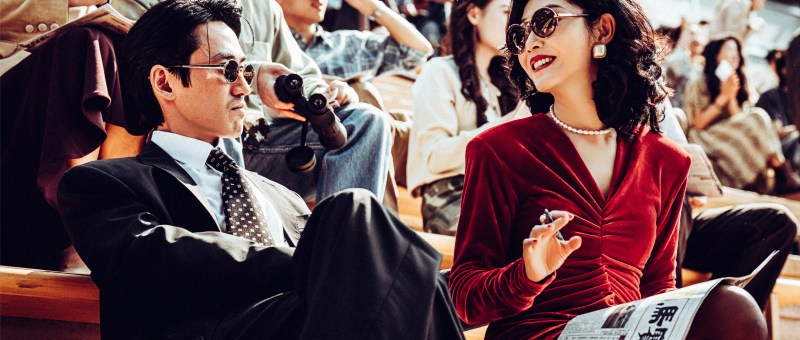
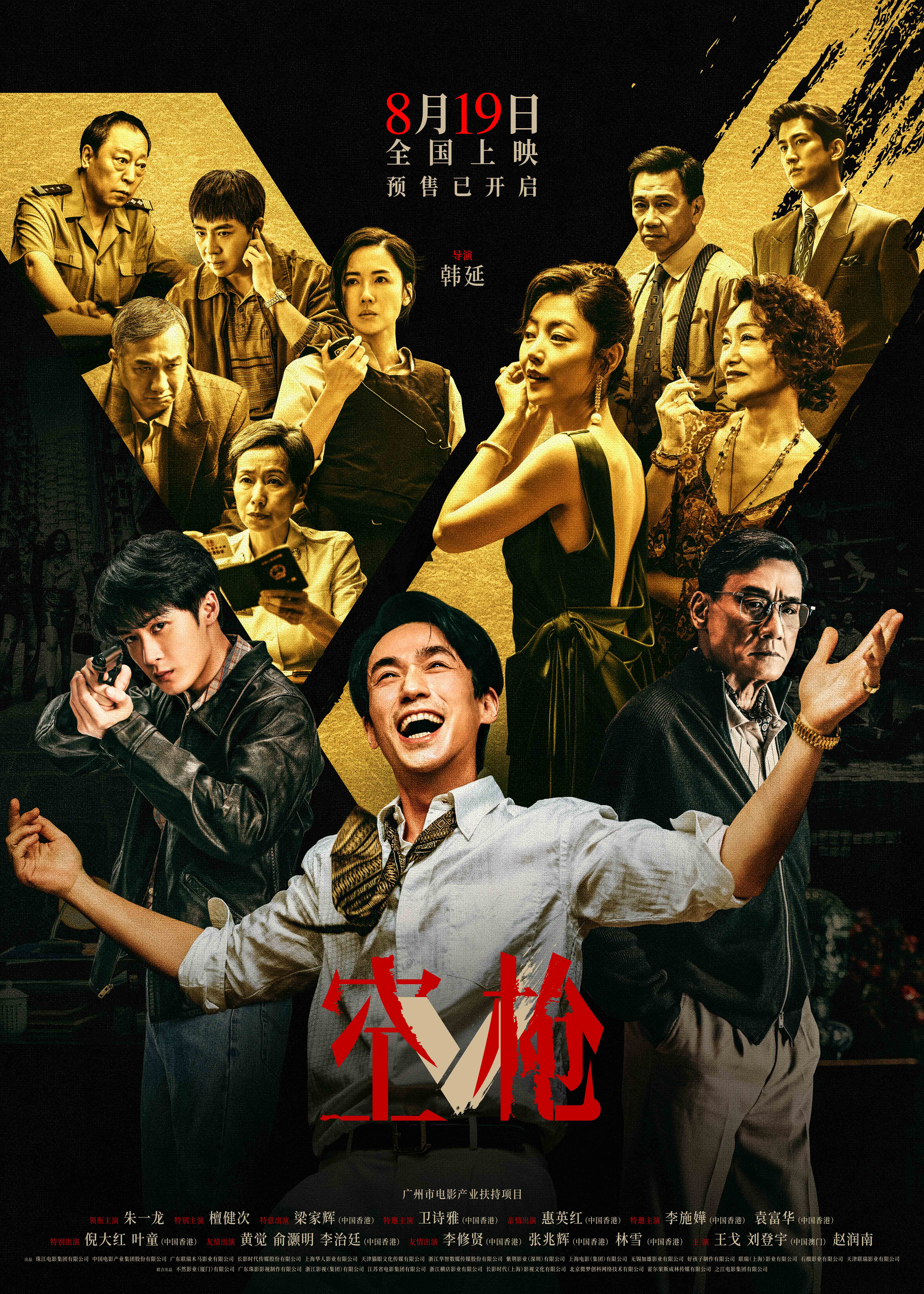
Mainland director Han Yan is the latest to tackle the story of notorious Hong Kong gangster Cheung Tze-keung, though unexpectedly his take on the Handover has a more cynical edge than typically seen in this kind of film even if once again branding the mid-90s as a lawless era in which order had all but collapsed as the colonial authorities prepared to withdraw. With his frantic editing and production design, Han does his best to echo the Hong Kong action cinema of the era while characterising the hero as a kind of revolutionary, a Robin Hood figure kicking back against the rise of billionaires amid rampant social inequality.
Man Tze-keung (Zhu Yilong) describes himself as a farm boy who’s come to Hong Kong in search of a better life following the death of his father. Whatever the truth of that might be, he starts out as a petty crook robbing jewellery shops as a henchmen for corrupt Anti-Triad Squad inspector Wing (Ben Yuen) and his right-hand woman Lady Yu (Kara Wai Ying-hung). When Wing gets pissed off with them over a job and kills one of the guys as a lesson to the others, Keung decides to shoot his shot. Wing makes him an offer he can’t refuse by getting him to play Russian Roulette with his service weapon. Keung pulls the trigger five times and survives, leading to him developing an invincibility complex and believing that he is uniquely blessed by the heavens. The film’s Chinese title “Empty Gun”, however, signals both Keung’s powerlessness and his delusion. Wing always left one chamber empty, meaning that he tricked Keung knowing that the gun wasn’t loaded in the first place.
Nevertheless, it’s the faith in his immortality and a kind of god complex that give Keung the chutzpah he needs to pull off Hong Kong’s biggest ever heist with the help of cardsharp and air stewardess Yuen (Michelle Wai Sze-Nga). The pair marry, but after they’re targeted by the police Yuen seems perpetually terrified, unsure of what her husband is going to do next. Eventually she figures out that Keung is out of his mind. He’ll never be satisfied and will likely continue to do ever more reckless and increasingly public things. After managing to get himself acquitted for the heist, he sues the Hong Kong Police department for wrongful arrest and mistreatment while in custody earning a record payout. His real target, however, is Hong Kong’s richest man, Chan Fai-Yi (Tony Leung Ka-fai), whom he once idolised but then takes against after he runs into him in a men’s bathroom where Chan assumes he was the attendant and didn’t even look at him.
Though it may have started with a desire to be rich, in some ways the money doesn’t seem to matter to Keung. He throws out gold jewellery to the well-wishers at his wedding in his hometown, and after getting the payout for kidnapping Chan’s son, throws the money out in the streets from a helicopter. All of which makes him a kind of folk hero to some, including the triads who eventually come over to his side after he promises them a new revolutionary future in which they can be the ones with money and power rather than men like Chan. Chan makes a point of wearing a cheap wristwatch to make him seem more like an everyman, but secretly has a room full of expensive designer watches in his home as if to signal the vacuity of his wealth.
The film is rather coy on this front, but Keung’s habit of sniffing with one nostril coupled with his increasing sweatiness seem to hint at a serious cocaine problem which in part explains his mania and delusional sense of invincibility that sees him taunt the police and engage in a homoerotically charged cat and mouse game with Mainland cop Qi (Tan Jianci). Han has an obvious problem in that he will need to end the film in a way that suits the censors, while Cheung Tze-keung’s own end was rather unheroic. Keung tells his wife that he knows there’s a bullet coming for him someday, but he’s confident that he will be able to dodge it when it comes. Nevertheless, it’s like he’s pursued by the missing bullet from Wing’s gun, propelled by a sense of greed and aspiration while gazing at one of the many posters of Chan that line the city. Played out with a grim sense of absurd humour in its continued product placement for pineapple butter buns, Han’s anarchic drama echoes a contemporary, or perhaps timeless, sense of resentment towards those who hoard their ill-gotten gains while simultaneously suggesting all rebellions are doomed to fail as Keung finally begins to realise that his luck may be running out.
Trailer (Simplified Chinese / English subtitles)

