
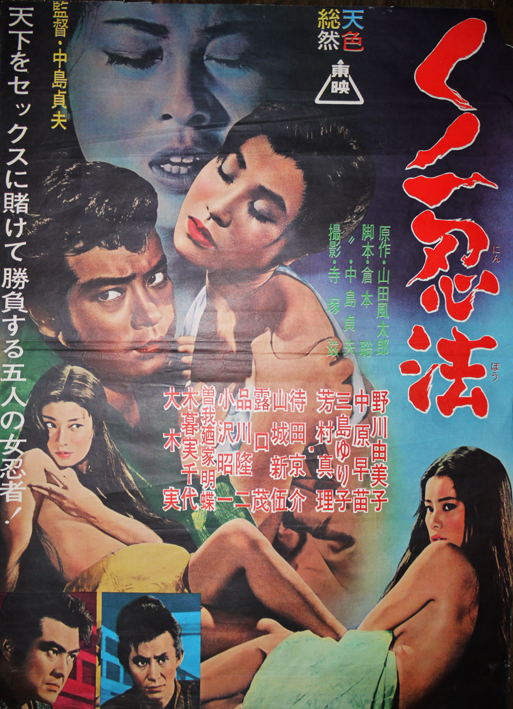
 Sadao Nakajima, a veteran director and respected film scholar, is most often associated with his gritty gangster epics but he made his debut with a noticeably theatrical fantasy tale of female ninjas and their idiosyncratic witchcraft. Adapted from a novel by Futaro Yamada, Female Ninja Magic (くノ一忍法, Kunoichi Ninpo) is an atypically romantic take on the ninja genre, infused with ironic humour and making the most of its embedded eroticism as a collection of wronged women attempt to change the course of history and mostly pay with their lives.
The night before the fall of Osaka castle in 1615, Sanada Yukimura (Eizo Kitamura) comes up with a cunning plan to ensure the survival of the Toyotomi clan. Following the death of Hideyoshi, his son Hideyori had inherited the title but he was sickly and had no children of his own. His wife, Princess Sen (Yumiko Nogawa), was not able to bear an heir and so Sanada has hit on an idea. He wants to send five women of Iga to Hideyori’s bed chamber in the hope that one of them will become pregnant and ensure the survival of the Toyotomi line. Princess Sen is very much in on the plan and hopes to raise the child herself. However, she is by birth a member of the Tokugawa which is where she is eventually sent following fall of Osaka. Refusing to return to her birth clan, Sen rejects her father and insists on remaining true to the memory of her (now departed) husband and his unborn child. Tokugawa Ieyasu (Meicho Soganoya), however, has learned of the Toyotomi heir and is determined to see it killed…
Nakajima opens in grand fashion with a ghostly sequence in which Sanada outlines his plan. The ninjas sit silently before magically fading from the frame and being replaced by Sasuke, Sanada’s messenger. Soon enough, both Sanada and Sasuke are cut down by a rogue assassin but rather than going straight to heaven they decide to hang around and see how well the plan works out, becoming our narrators of sorts, hovering around in the background and occasionally offering the odd ironic comment from beyond the frame.
The ghostly effects don’t stop with the two undead commentators but comprise a key part of Nakajima’s deliberately theatrical aesthetic. Like many ninja films, Female Ninja Magic is filmed almost entirely on studio sets but never pretends otherwise. Its world is unrealistic and deliberately over the top, filled with with visual motifs both from traditional Japanese and classical European art. The female ninjas dance, topless, beckoning and seducing but they do it against a stark black background moving firmly into the film’s magical space in which all things are possible.
Meanwhile, Tokugawa Ieyasu has sent five male ninjas to take care of our five female witches, making use of their own, devious, ninja magic to combat that of our heroines. The first nefarious male ninja technique involves the murder and identity theft of a trusted maid, while another tries a similar trick by “projecting” himself into the consciousness of a handmaiden he has figured out is pregnant by listening for additional heartbeats, and convincing her to commit harakiri. His villainy is eventually turned back on him as the female ninjas make use of the most important of their spells – the “Changing Rooms” technique which effectively shifts the foetus from one womb to another.
Deliciously named – Rainbow Monsoon, Dancing Snow, Robe of Wings etc, the spells run from the sublime to the ridiculous with the self explanatory Eternal Gas which sends noxious purple smoke billowing from under the skirts of an elegant princess. Each has its own erotic component, even if it doesn’t necessitate a shift into the film’s elegantly designed dreamscape, but by and large the female ninja fight with supernatural rather than earthly powers. Facing such extreme threat, the women form a tight group of mutual support in order to ensure the survival of the child which Princess Sen will raise but not birth. Though her quest originated as a fierce declaration of her loyalty to the Toyotomi, she later recants on her tribal zealotry. Shocked by her father’s cruelty and sick of a persistent suitor, she admits that she has come to loathe the world of men and prefers to think of the baby as belonging to her band of women alone. Nevertheless, male violence eventually saves her as her aggressor, ironically enough, is moved by her devotion to the new life in her arms – he is “defeated by her strength as a woman”, and turns on his own kind. Female Ninja Magic eventually achieves the revenge it sought, allowing a princess to survive in triumph while the male order quakes in its boots.
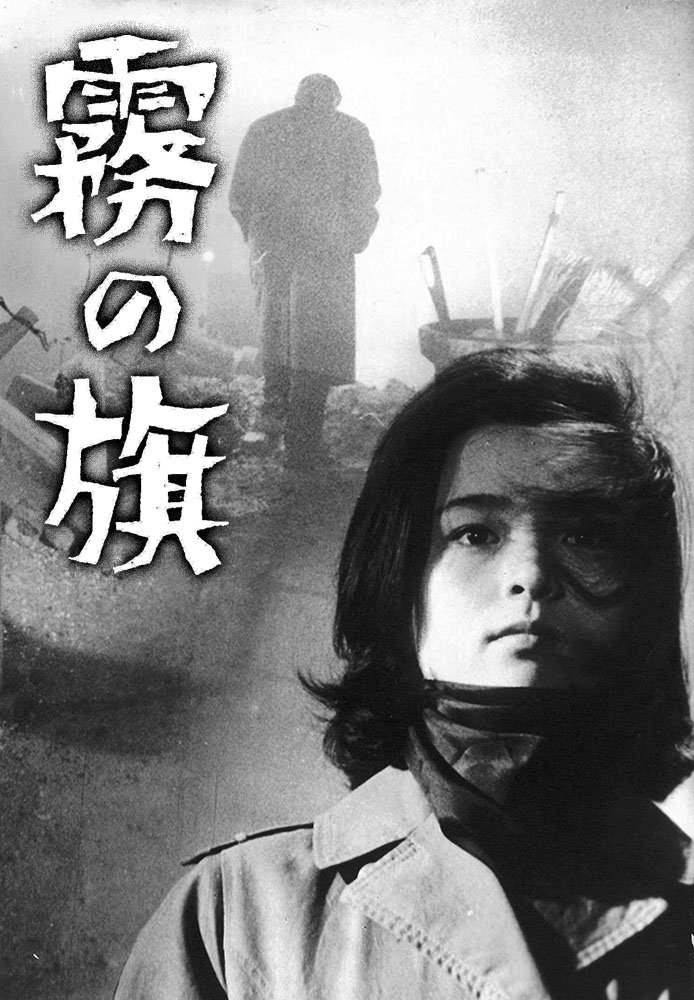 In theory, we’re all equal under the law, but the business of justice is anything but egalitarian. Yoji Yamada is generally known for his tearjerking melodramas or genial comedies but Flag in the Mist (霧の旗, Kiri no Hata) is a rare step away from his most representative genres, drawing inspiration from America film noir and adding a touch of typically Japanese cynical humour. Based on a novel by Japanese mystery master Seicho Matsumoto, Flag in the Mist is a tale of hopeless, mutually destructive revenge which sees a murderer walk free while the honest but selfish pay dearly for daring to ignore the poor in need of help. A powerful message in the increasing economic prosperity of 1965, but one that leaves no clear path for the successful revenger.
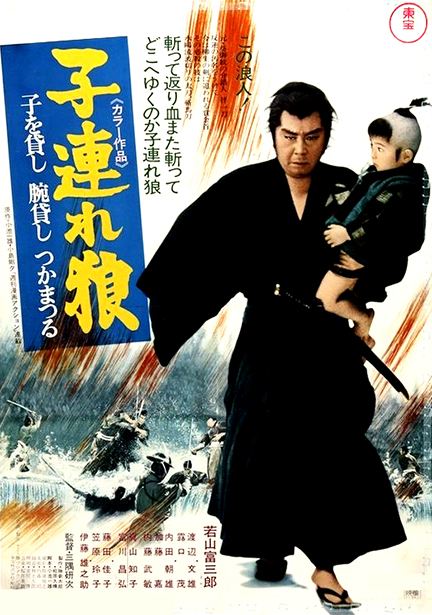 When it comes to period exploitation films of the 1970s, one name looms large – Kazuo Koike. A prolific mangaka, Koike also moved into writing screenplays for the various adaptations of his manga including the much loved Lady Snowblood and an original series in the form of Hanzo the Razor. Lone Wolf and Cub was one of his earliest successes, published between 1970 and 1976 the series spanned 28 volumes and was quickly turned into a movie franchise following the usual pattern of the time which saw six instalments released from 1972 to 1974. Martial arts specialist Tomisaburo Wakayama starred as the ill fated “Lone Wolf”, Ogami, in each of the theatrical movies as the former shogun executioner fights to clear his name and get revenge on the people who framed him for treason and murdered his wife, all with his adorable little son ensconced in a bamboo cart.
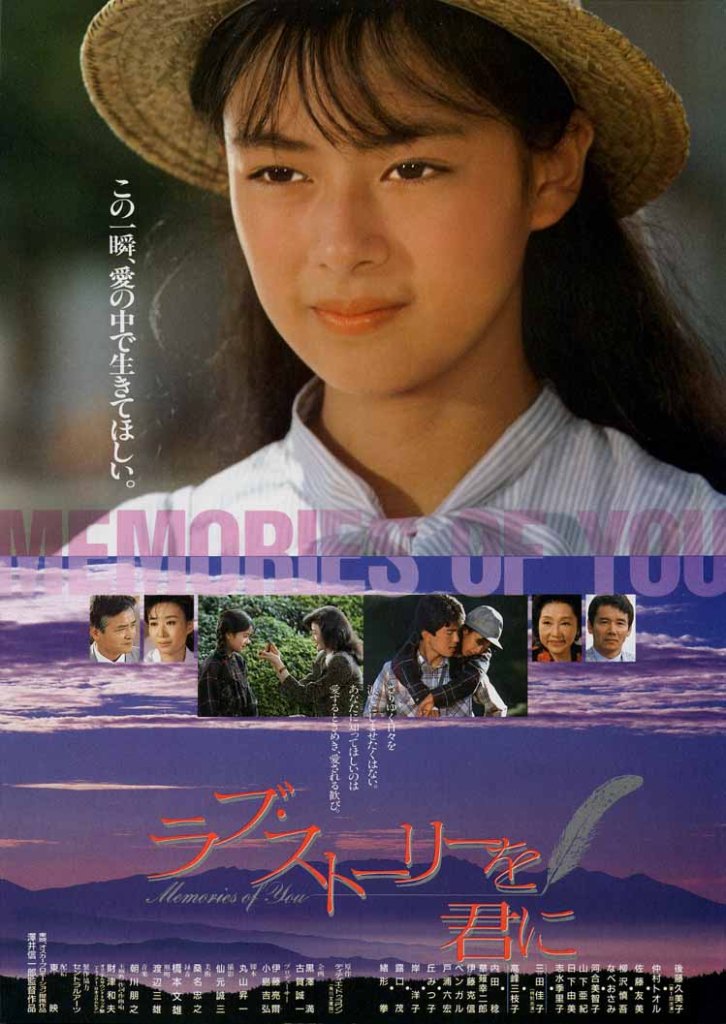 If you thought idol movies were all cute and quirky stories of eccentric high school girls with pretty, poppy voices then think again because Memories of You is coming for you and your faith in idols to make everything better. Directed by
 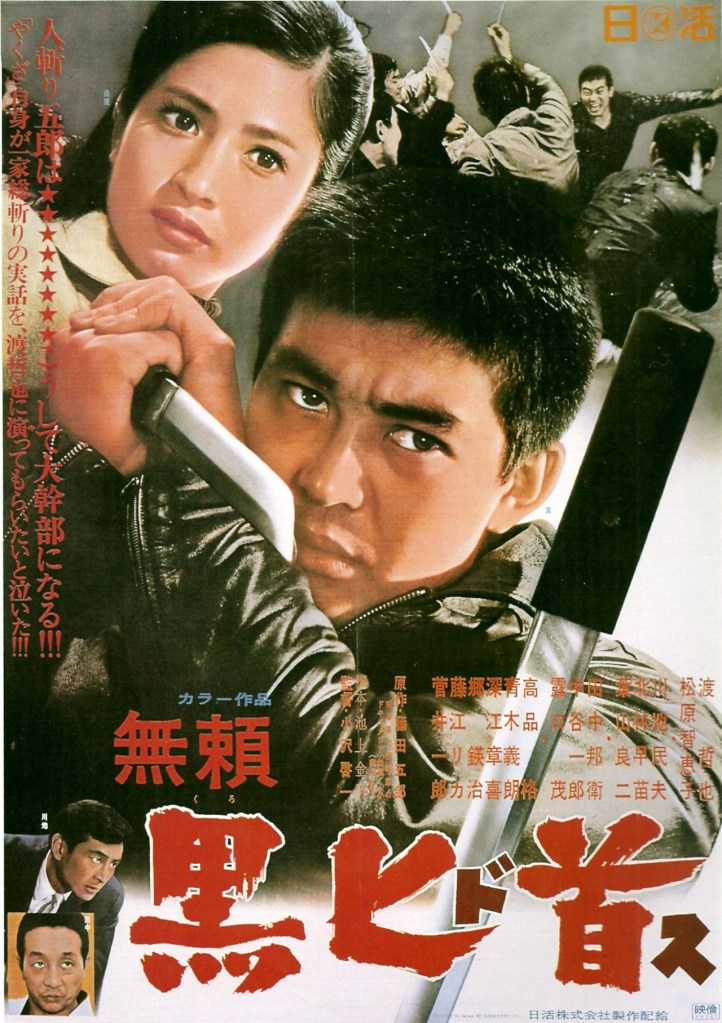 Goro (Tetsuya Watari) just can’t catch a break. He sends his one true love off on a train to safety only to see her dramatically return because she can’t bear to leave his side. Her devotion costs her her life as she places herself between Goro’s manly chest and an assassin’s knife. Heartbroken, Goro gets out of town only to run into another old flame who is now a mama-san and has apparently married another yakuza (despite the fact that Goro parted with her because of his chaotic yakuza lifestyle). As usual, the past won’t let him go – this time in a more literal sense as Goro encounters another woman who looks exactly like the girlfriend who died in his arms….
 Windows on Worlds