Nightingale (鶯, Shiro Toyoda, 1938)

Set in a quiet northern town, Shiro Toyoda’s Nightingale (鶯, Uguisu) finds the nation still struggling to emerge from the feudal past into the modern era. The film opens with a scene in the local train station, yet we’re also told that it is literally cut off from prosperity because the express train does not stop there and so it is relegated to the status of provincial backwater. Physically trying to flag the train down, the Mayor has been trying to get the town placed on the fast track but has had no luck so far.

The ticket man, who’d been more or less ignoring him, suggests they can’t put the station on the express line because the population of the town is decreasing presumably as young people migrate to the cities in search of work. One of the people waiting there is a man with two sons who tries to get the younger to pretend he’s younger than he is so he won’t have to pay for his ticket, though the ticket man refuses to give him a discount leaving the man with only the option to leave one of the boys behind while the family can no longer survive in the town. He explains that he’s been financially crippled by the medical fees to care for his now late wife and is clearly at his wits end trying to find a way to support his children.

The costs of medical treatment seem to be a direct driver of poverty and crime. Shifting to the local police station, we’re introduced to a man who’s become a serial chicken thief having begun stealing neighbour’s birds to pay for doctors to treat his sickly wife only she eventually left him for another man because he was always away conducting poultry heists so she thought he’d abandoned her due to her illness. His problem is compounded by the fact he had not formally registered their marriage intending to wait until the first child was born leaving him without a leg to stand on.

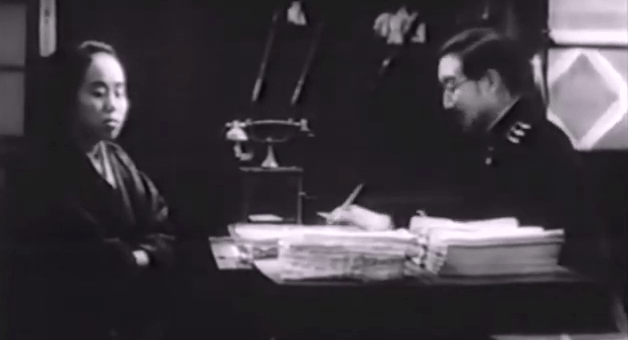
An official doctor later jokingly complains that he’s losing custom because no one in the area can afford modern medical care so they’re turning to dubious snake oil-style miracle cures proffered by a “fake priest” the police are about to arrest for fraud. Meanwhile, they’ve also arrested a middle-aged woman (Haruko Sugimura) who assists with births for violating the medical practice law. Branded a midwife she is really more of a wise woman who is well respected in the local community as someone who had had many children herself and also offers advice about folk remedies for various illnesses. She never claims to be a doctor and does not regard it as a job, merely as helping people even if she perhaps also enjoys the sense of being needed and important, and is unable to understand how that could ever be a crime. Unlike the priest, she takes no payment and uses her own resources though people sometimes give her small compensatory gifts such as parcels of rice as a thank you. When a woman goes into labour and the “official” midwife is not available, the policeman is unwilling to let her in but hearing the woman’s distress she runs to help her kicking all the policemen out of this very personal female space.

Her confusion bears out that within the general society as people struggle to adjust to a more ordered modernity and the encroachment of urbanity which is what the police themselves represent. Then again, they are presented as being more compassionate certainly than the staff of the railway and seemingly have a duty of pastoral care for the local area which is separate from their role in enforcing the law. A secondary drama that began at the train station involves a young woman who is being sold into sexual slavery by her father against her will. She is eventually rescued by an earnest school teacher who says the sale isn’t valid because she also signed a contract to become a teacher, convincing her father to change his mind with the help of the police who remonstrate with him that it’s wrong to sell your child even if the practice had been somewhat normalised which plays into a propagandistic element about the importance of moving on from “backward” rural practices still mired in the feudal era. The police also have access to a fund which can be used to get the broker out of the way in an effort to stamp out this morally indefensible situation in which parents sell their children into indentured servitude for reasons of poverty. 

They also agree to help an old lady who’s arrived in search of a child she fostered a decade previously who was taken back by her birth mother and sold to a circus. Like the chicken thief, the old woman was caught out by the modern convention of paperwork. She had been led to believe the adoption had been processed and the child placed on her own family register, but was illiterate and therefore easily deceived. The old woman also becomes a victim of the dodgy priest and the disease currently spreading because of his problematic cure-alls which people have turned to out of desperation in their poverty.

But despite the police’s apparent altruism, the arrival of a young woman selling a captive nightingale reveals the irony that she’s come there because it’s the only place anyone has any money. Unfortunately it turns out that capturing a nightingale has also been ruled illegal, even if one of the policeman was interested in buying it if only it could sing, so she’s come to the wrong place and if she doesn’t release it she’ll end up with a fine. The nightingale’s song is later replaced by that of a flute player who had been arrested for being drunk and disorderly having spent some money he was given towards the funeral of his baby on drink. 

The police are in some ways a disruptive influence, trying to bring a new urban order to this rural place which has its own laws and customs often at odds with those of the city. Their efforts tie in to a persistent message of modernising for the good of the nation which was particularly current in the late 1930s though the film is equally sympathetic towards the plight of the rural poor who are not after all being given very much support as the youngsters move to the city leaving the old behind, trapped on the slow line cut off from the benefits of modernity while otherwise expected to simply adapt to new visions of civility in a society still trying to emerge from the feudal past. 

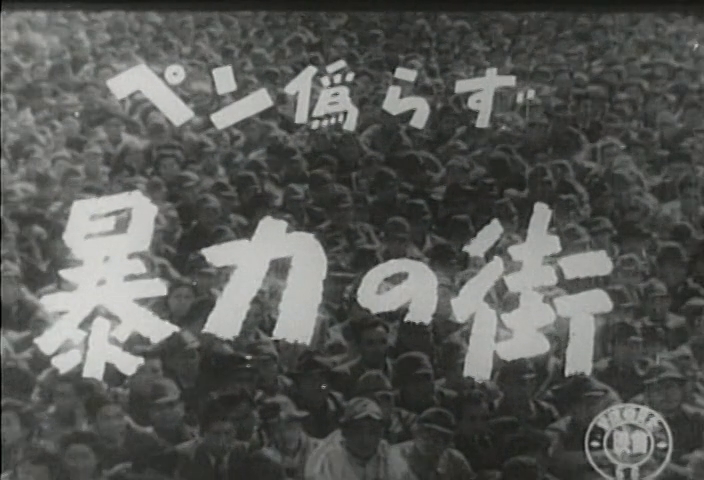
Street of Violence: The Pen Never Lies (ペン偽らず 暴力の街, Satsuo Yamamoto, 1950)

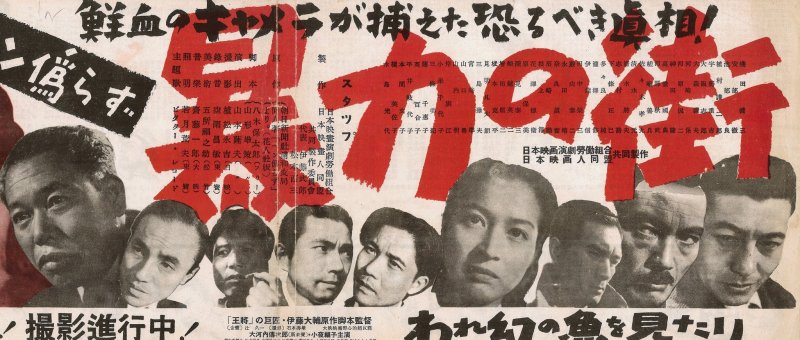
vlcsnap-2020-01-16-00h05m26s354The immediate post-war era was one marked by fear and anxiety. The world had turned upside down, food was scarce, and desperation had provoked a widespread moral decline which rendered compassion a luxury many thought they could ill afford. Yet, in hitting rock bottom there was also the opportunity to rebuild the world better than it had been before. Street of Violence: The Pen Never Lies (ペン偽らず 暴力の街, Pen Itsuwarazu Boryoku no Machi), is one of many pro-democracy films arriving in the wake of Japan’s new constitution and makes an unlikely hero of the local newspaperman as the sole means of speaking truth to power in the fierce belief that the people have a right to know.

Tojo, a small town Northwest of Tokyo, was once the centre of the silk trade but as the industry declined, it gradually became home to gangs and a hub for wartime black market shenanigans. The sad truth is that the growing nouveau riche middle-classes profiting from post-war shadiness have more or less got the town sewn up. The corrupt police force is in cahoots with the gangsters who call themselves a “police support organisation” and make a point of wining and dining the local police chief, while also making sure the local paper is firmly in their pocket. The trouble starts when rookie reporter Kita (Yasumi Hara) is invited to a policeman’s ball and figures out the whole thing is sponsored by the silk traders’ union, which he thinks is not quite right. He takes what he’s learned back to his editor and is warned off the story but publishes something anyway, quickly becoming a target for prominent “politician” Onishi (Masao Mishima).

Street of Violence opens with onscreen text taken from the press code which emphasises that mass media has a duty to preserve the truth. Kita’s paper had been in league with the police and the gangsters enabling the atmosphere of casual violence which is gradually consuming the town. Kita, a new recruit, is not yet inured to the way things are and immediately thinks his duty is to blow a whistle, most obviously on the corrupt police force and judiciary. He is only allowed to do so because the previous editor stepped down and a similarly idealistic older gentleman (Takashi Shimura) from out of town has taken over. He decides to fight back, standing up to the crypto-fascist goons by continuing to publish the truth about the links between the police, black market silk traders, gangsters, and the rest of the local press who eventually gain the courage to join him.

Onishi continues to masquerade as a “legitimate businessman” and “respectable politician” claiming that he’s “striving for democracy” to help the “downtrodden”, but is also responsible for directly targeting Kita’s mother and sister in an attempt to intimidate him. The editor assigns another reporter, Kawasaki (Ryo Ikebe), to keep Kita safe and starts trying to find locals who will consent to be interviewed about gang intimidation while Kita’s friends from the Youth Association generate a kind of resistance movement holding protests and handing out flyers condemning the atmosphere of violence which has ordinary citizens turning off their lights and avoiding going out after dark to protect themselves from thuggery.

The silent cause of all this strife is of course post-war privation which has made the blackmarket the only means of survival for those otherwise starving but has also given free rein to selfish immorality. The Onishis of the world, the spineless police chief, and the cynical local press, have all abnegated their human responsibilities in wilfully taking advantage of a bad situation to further their own cause. When the press chooses not to turn a blind eye to entrenched corruption, it raises a flag that ordinary people can follow. Too intimidated to speak out, the townspeople had been living in fear but post-war youth has the courage to say no and demand a better future. A mass rally crying out “democracy” and insisting on an end to the cronyism and the corrupt systems of pre-war feudalism produces a people power revolution that can’t be ignored, forcing Onishi into submission, and a clean out of corrupt law enforcement. But, the earnest voice over reminds us, the victory is only partial – violence still exists and will rise again when it thinks no one’s looking. The press, most of all, cannot afford to look away if “democracy” is to be maintained.


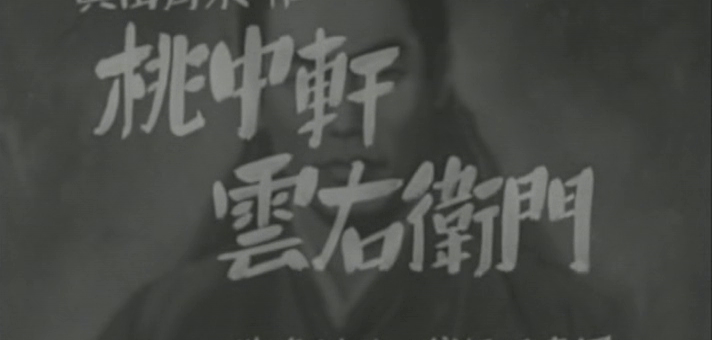
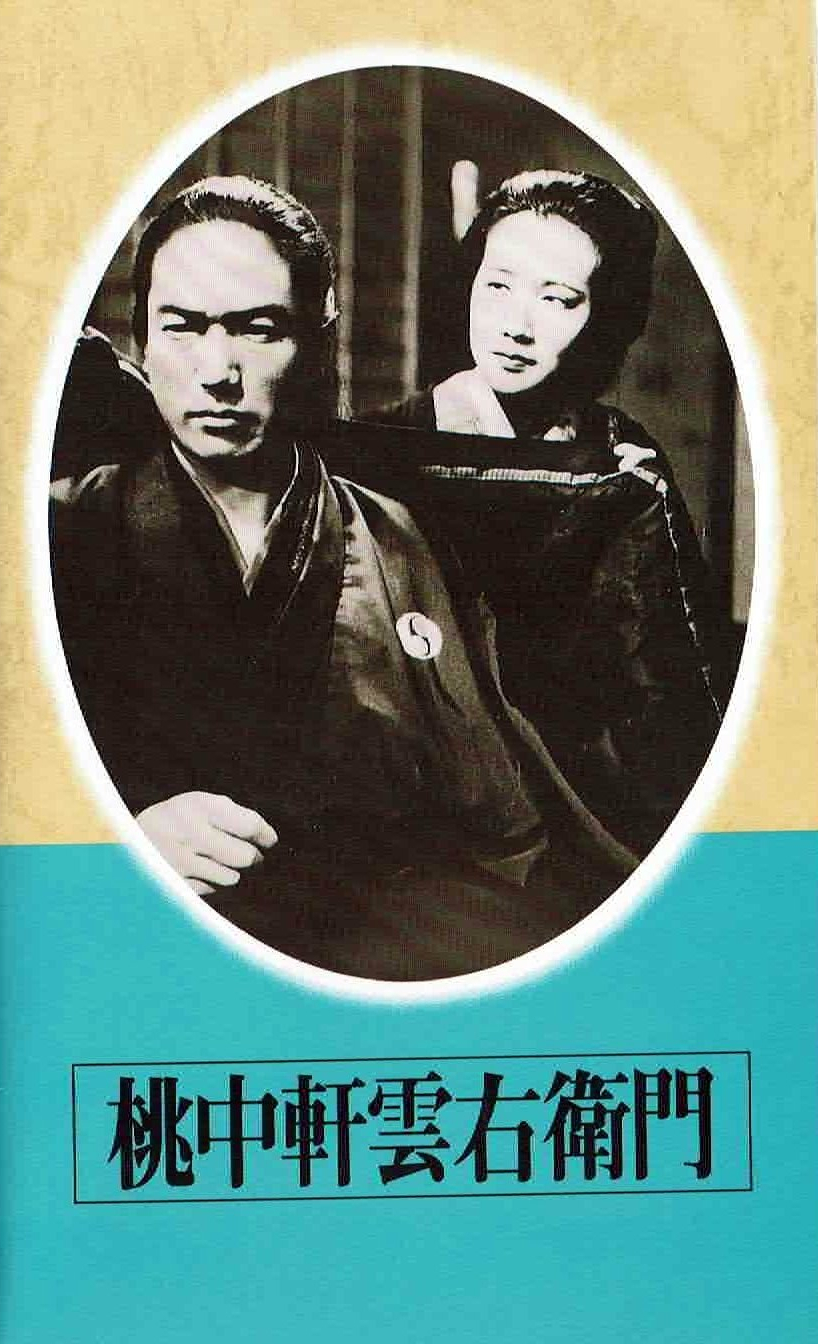
Tochuken Kumoemon (桃中軒雲右衛門, Mikio Naruse, 1936)

Tochuzen KazoemonIt’s an age old question, but does being a great artist give you the right to treat other people terribly? Hopefully, most people would say no, it does not. Most “great artists”, however, may have a different opinion. The hero of Mikio Naruse’s 1936 biopic Tochuken Kumoemon (桃中軒雲右衛門, AKA Man of the House) is very much of the opinion that inflicting suffering on others, and thereby vicariously suffering himself (but not really because who cares about them), is the source of all his supposedly “great art”.

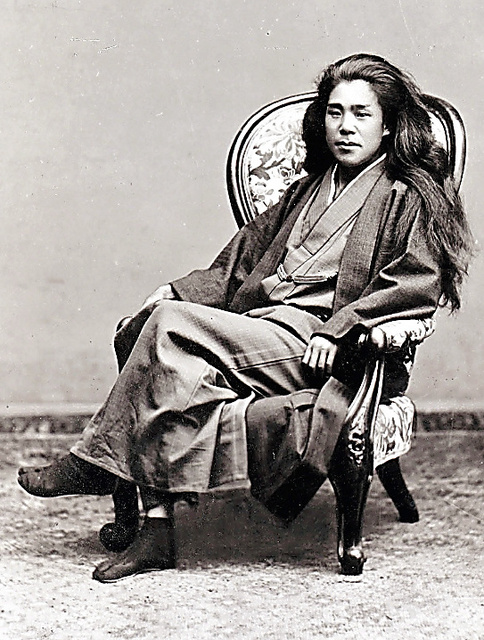
Tochuken Kumoemon was in fact a real person who died twenty years before the film’s release and had his heyday as a renowned yet scandal ridden performer of “rokyoku” in late Meiji. To brings things full circle and explain why perhaps his life was fit for cinematic exploration in the politically fraught atmosphere of 1936, it’s helpful to remember that Tochuken Kumoemon’s performances of such patriotic fare as the 47 Ronin helped to rouse nationalist sentiment during the Russo-Japanese conflict. “Rokyoku”, also known as “naniwabushi”, is a traditional art of narrative singing accompanied by shamisen which found favour with the militarists for its essential Japaneseness and hearty rustic vulgarity.

In any case, we meet Tochuken Kumoemon (Ryunosuke Tsukigata) on a train drawing closer to his planned return to Tokyo after having been forced to flee it eight years previously because of a sex scandal which led him to separate from his first wife, leaving a son, Sentaro (Kaoru Ito), behind, and marry Otsuma (Chikako Hosokawa) – his shamisen player with whom he is currently travelling. The troupe are supposed to be breaking their journey at Kozu, but for reasons unexplained, Tochuken Kumoemon decides to get off the train at Shizuoka and promptly disappears without a word to anyone. 

The disappearance is problematic on several levels, the first being that the stop was only engineered to allow Tochuken Kumoemon to visit his estranged son Sentaro. Some in the group posit that Tochuken Kumoemon has come down with a rare case of stage fright seeing as this Tokyo show will be his biggest to date, while others assume he is embarrassed to go back to the city because of the scandals which previously engulfed him there, and some believe he is simply conflicted about visiting the son he abandoned to run off with another woman.

Anyone who knows him, however, might be better placed to realise that the great Tochuken Kumoemon rarely has a reason for doing anything save that it pleased him to do so at the time. Nevertheless, what we discover about him as he tours the inns of Kozu throwing his money about like some crazed libertine, is that he apparently liked his life better when he was poor but is bravely suffering under the burdens of wealth “for his art”. In fact everything in Tochuken Kumoemon’s life is “for his art”, including the thoughts and feelings of those closest to him.

Tochuken Kumoemon’s story may be intended as a kind of militarist parable about a man who devoted everything of himself to a particular ideal, in his case art but for the militarists perhaps country. The major problem here is that Tochuken Kumoemon never particularly suffers himself, grinning broadly throughout, but forces others to suffer on his behalf while he extracts from them qualities he can use to enhance his performance. Pain may be good for art, but it’s rarely good for life, and most would find themselves questioning why it is those around him remain contented to suffer solely to facilitate Tochuken Kumoemon’s artistic fulfilment.

Loyal wife Otsuma begins to reconsider, bravely challenging Tochuken Kumoemon on the inauthenticity of his performances which, though growing in popularity, she feels to be increasingly hollow. She remembers the early days of their courtship which were apparently marked by a fierce competitive rivalry which proved artistically beneficial to them both before spilling over into other kinds of offstage passion which now appears to have cooled. Otsuma, now weakened as she finds herself succumbing to the later stages of consumption, something Tochuken Kumoemon refuses to acknowledge, fears that she is now unable to inspire him with her playing which is why he’s been up to his old tricks consorting with geishas. Claiming that Otsuma wouldn’t care about his affairs because she’s an artist too and will therefore “understand”, Tochuken Kumoemon has taken up with a pretty little thing, Chidori (Sachiko Chiba), from whom he intends to steal “youth and innocence” for his performances, little caring what he might leave behind.

For Tochuken Kumoemon everything is simply fuel for art and so he’s excused himself from the need to treat others with respect or kindness. Sentaro, his rejected son, rejects this aspect of his father’s philosophy, immediately bonding with his kindly step-mother and resenting his absent father’s treatment of her. In “raising” his son, Tochuken Kumoemon bangs on about traditionally “militarist” values of manliness, explaining that he is imperfect because he is a “great artist” and that his life has been full of problems but that he has overcome them with strength and perseverance. He tells his son that “weakness is the worst thing in a man”, but appears primed to hit the roof on learning that Sentaro may be expelled from school for fighting with his schoolmates because they mocked his unconventional family setup. Worst of all he casts his son away as one of the many who unfairly demand “perfection” from him even though he is an artist and cannot be expected to abide by the rules of “normal people”.

Meanwhile, Otsuma lies dying in a hospital. Tochuken Kumoemon won’t see her because he refuses to view her as “just a woman”, preferring to remember her as “a woman who lived only for art”. The subtext being for “his” art, rather than her own. He betrays himself when he admits that he “doesn’t want to be any more sad” than he is now, simply refusing to deal with the unpleasantness and personal suffering of facing the fact that someone important to you is in pain and will soon be gone. Yet despite a brief rebellion after an ill-advised gift from Chidori, Otsuma eventually agrees to sacrifice herself for Tochuken Kumoemon’s art, to die “quietly” as an artist and not as a woman. 

It’s only at this point that Tochuken Kumoemon decides to embrace the romance of the moment, finally travelling to her deathbed in order to sing a song. If Tochuken Kumoemon is a militarist hero, he’s not a particularly sympathetic one. He remains monstrously self-involved, hypocritical, an emotional coward who uses the suffering of others for his own ends with only the justification of the primacy of his art. Naruse undercuts the propaganda potential of the piece by painting his patriotic singer as a ridiculous prig who embodies the militarists’ coldness towards the thoughts and feelings of their fellow humans but displays none of their supposedly romantic heroism in his empty swagger and well worn platitudes. Is naniwabushi really worth all this pain? No. Someone needs to tell Tochuken Kumoemon he’s not as important as he thinks he is. And while they’re at it, they could have a word with the militarists, too.


The real Tochuken Kumoemon

Real TOCHUKEN KUMOEMON

The Shiinomi School (しいのみ学園, Hiroshi Shimizu, 1955)

vlcsnap-2016-07-09-01h53m10s460Hiroshi Shimizu is well known as one of the best directors of children in the history of Japanese cinema, equalled only by the contemporary director Hirokazu Koreeda. The Shiinomi School (しいのみ学園, Shiinomi Gakuen) is one of the primary examples of his genius as it takes on the controversial themes of the place of the disabled in society and especially how children and their parents can come to terms with the many difficulties they now face.

The Yamamotos are a happy family with two sons. However, their elation at the birth of their first child soon turned to tragedy as the boy became seriously ill with polio. Times being what they were, the treatment is not completely effective and although their son thankfully survived, he did so with a lamed leg. Now an older child, Yudo walks with a crutch and is constantly left out or bullied by his fellow children. After their second son, Teruhiko, also contracts the disease and is left even more seriously affected than his brother, the Yamamotos decide to open a school for survivors of polio where they can play together, learning how to live with the effects of the disease, free of the stigma which plagues them in their everyday lives.

Yudo just wants to play baseball and the other kids tell him he can if he brings a catcher’s mitt of his own but when he does they take it away from him and use it themselves while he sits and sadly watches them play. When his dad arrives and tries to tell them off, the kids form a mob and all leave together, fake limping as they go. Children are monsters, and often far less forgiving of difference than their adult counterparts (though it has to be said that the parents of other children are hardly blameless here). It’s not surprising that Mr. Yamamoto would want to protect his son by taking him out of this harsh environment where he’s constantly reminded of his disability and a target for the other kids’ cruel games.

The Shiinomi School may be at odds with modern thinking, but its heart is definitely in the right place. The Yamamotos are operating from a humanist perspective – they want to provide a place which helps the children to grow up strong and independent, fully able to cope with their various disabilities, where they can also escape the extreme prejudice which infects society in general. This prejudice is best brought out not by Yudo’s treatment by the other boys, but by the sad case of Tetsuo whose father had so little idea what to do with him that he used to tie him to a pole. Tetsuo’s dad has since remarried and his new wife has no intention of looking after a disabled child so they’ve brought him to Shiinomi with the intention of abandoning him there. Mr. Yamamoto is shocked and originally refuses to take the boy in protest at the idea of a father who wouldn’t want to try and do everything for his son, but eventually reconsiders when he thinks about what the boy is going back to.

Unintentionally segregating the children has some benefits in the short term but there are those who may feel that it sends a message that the problem is with the children and not with the society which rejects them. Perhaps by giving these children a happy childhood and protecting them from the cruelty of others it’s also leaving them unprepared to deal with that same cruelty once they come of age. In any case Shimizu shoots with his trademark humanity, valiantly showing the children singing loudly and learning to enjoy their lives despite their many hardships. From tiny acorns mighty oaks do grow, the Yamamotos want nothing more than to raise these children in love and acceptance and, if the final scene of the children walking down the lane alone with a song on their lips is anything to go by, you could say their efforts have been richly rewarded.