
The Young Strangers (若き見知らぬ者たち, Takuya Uchiyama, 2024)

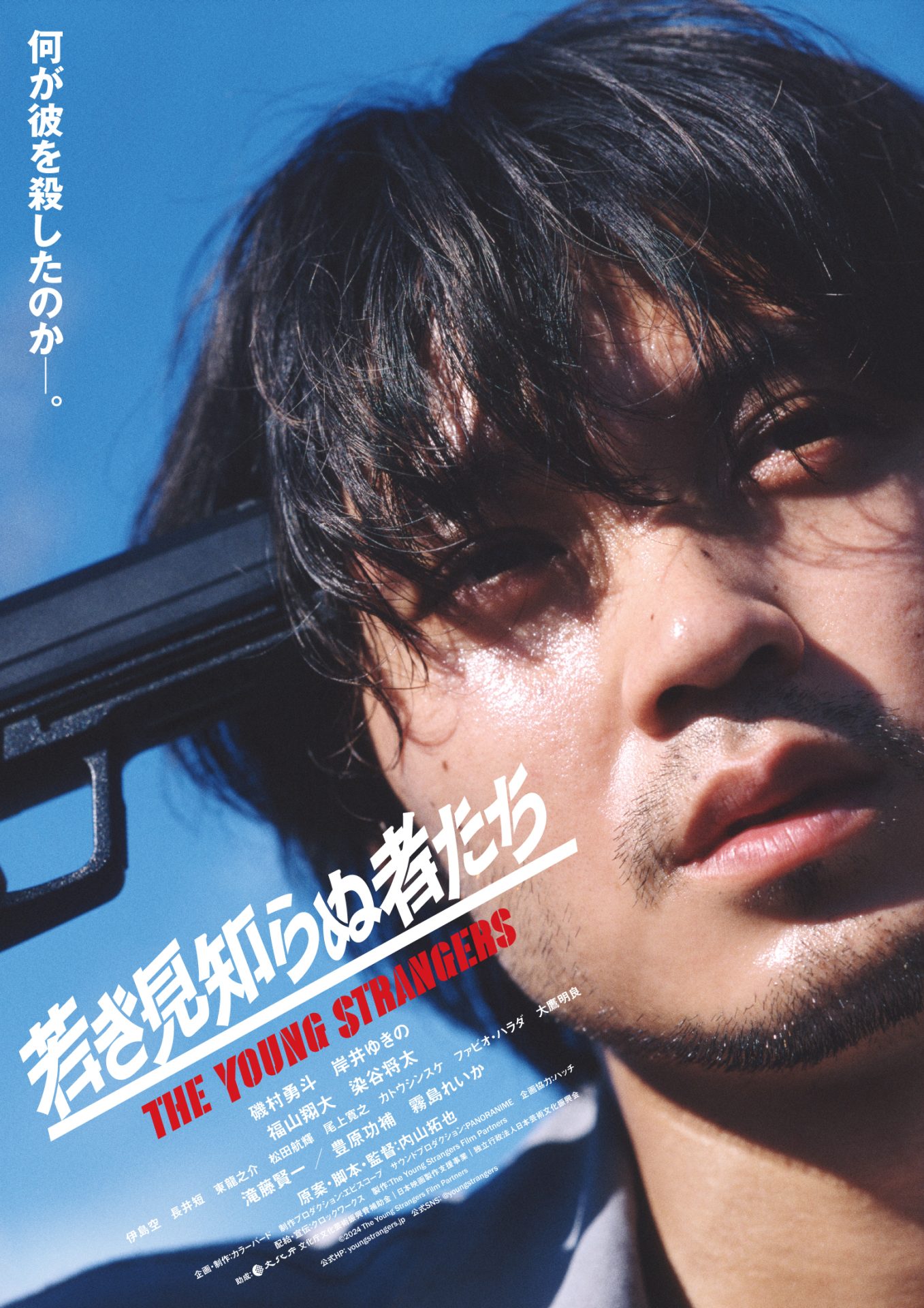
You have to protect your space from the violence of this world, a compromised father advises his sons, yet it’s something that neither he nor they are fully capable of doing. Billed as the “commercial debut” from the director of the equally emotionally devastating Sasaki in my Mind, Takuya Uchiyama, The Young Strangers (若き見知らぬ者たち, Wakaki Mishiranu Monotachi) paints a somewhat bleak portrait of contemporary Japan as place of desolation and abandonment, but at the same time is melancholy more than miserable in the earnestness with which they all dream of a better life somewhere beyond all of unfairness and injustice.

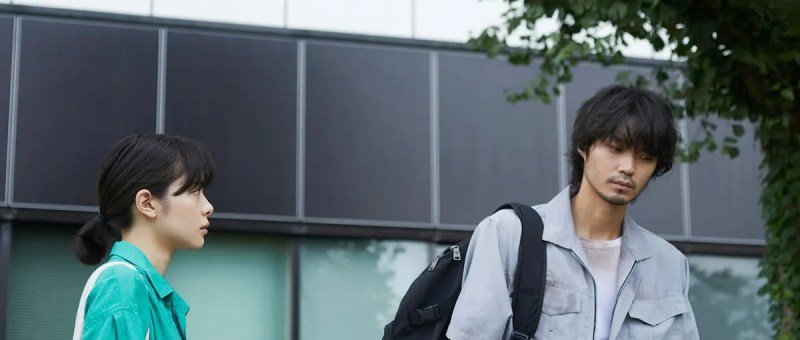
But Ayato (Hayato Isomura) seems to know that he’s burdened with some kind of karmic fate. His life oddly echoes that of his former policeman father and takes on an ironic symmetry even as he was unfairly left to pick up the pieces as a teenager adrift in the wake of parental betrayal. Now his late 20s, Ayato is a worn out and dejected figure who barely speaks after years of doing multiple jobs, in addition to running the snack bar his parents opened as a new start, to pay off the debts his father left behind. Now his mother has early onset dementia and her care is also something else he must manage as best he can with support from his girlfriend Hinata (Yukino Kishii), a nurse, and less so from his conflicted brother, Sohei (Shodai Fukuyama), who has a path out of here as an MMA champion if only he can stick to the plan and keep up with his training. 

As his best friend Yamato (Shota Sometani) points out, he’s hung onto everything his father left him but is equally in danger of losing his future. He seems wary of his relationship with Hinata, afraid to drag her into his life of poverty and hardship, while he watches friends get married and start families. He once had a promising future too, as the star of the school football team, but like everything else that came to an abrupt end in the wake of family tragedy. There are hints of trouble with law in his younger years that may have made it even more difficult for him to earn a living wage, along with giving him an unfavourable view of authority figures. Seeing another young man hassled by the police, he steps in to inverse but ends up in trouble himself. The policemen, take against him and when he’s beaten up by thugs who drag him out of the bar, they arrest him instead and let the others go. Time and again, bad actors seem to prosper and get away with their crimes, while good people like Ayato continue to suffer. When Yamato tries to come to his defence and questions the police, they lie and tell him Ayato’s just a waster as if the world were better off without him.

The boys have this game they play where put two fingers up against the back of a friend’s head and shout “bang”. It’s like there’s a bullet that always coming for them, and Ayato too fantasises about shooting himself in the head to escape this misery. Sohei, meanwhile, makes violence his weapon in taking the martial arts his father left him to forge a new path for himself while vowing not to be intimidated by violence. But violence is all around them from the literal kinds to that of an uncaring and oppressive society, and as much as Ayato fights in his own way to protect his family he can’t keep them all together nor the darkness at bay. He badly needs Sohei’s help, but also knows he can’t ask him to give up his way out or take away his future while Sohei is already pulling away. He thinks it’s time to look into a more permanent solution for their mother, and that they should let the past go, but Ayato wants to hold on to all of it as a means of giving his life meaning. “It’s not your fault, but it will be if it carries on,” a sympathetic neighbour tells Ayato after finding his mother in his cabbage patch again and leaving him to one again clear up the mess. Haunted by images of the past that in Uchiyama’s masterful staging segue into and out of the present, Ayato desperately searches for a way out of his suffocating existence, but encounters only betrayal and injustice amid the constant violence of an indifferent society.


The Young Strangers screened as part of this year’s Camera Japan.

Trailer (no subtitles)

BAUS: The Ship’s Voyage Continues (BAUS 映画から船出した映画館, Hokimoto Sora, 2025)

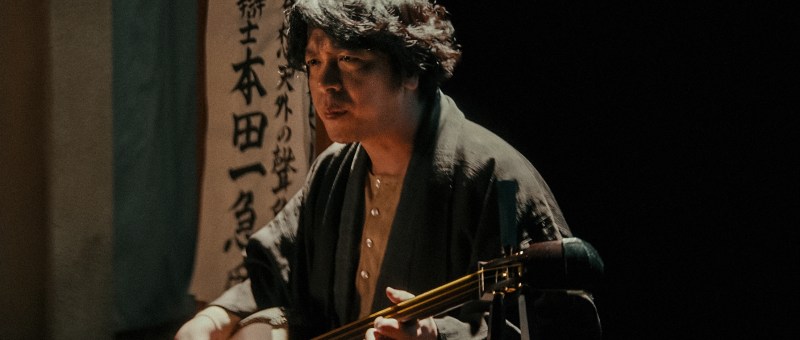
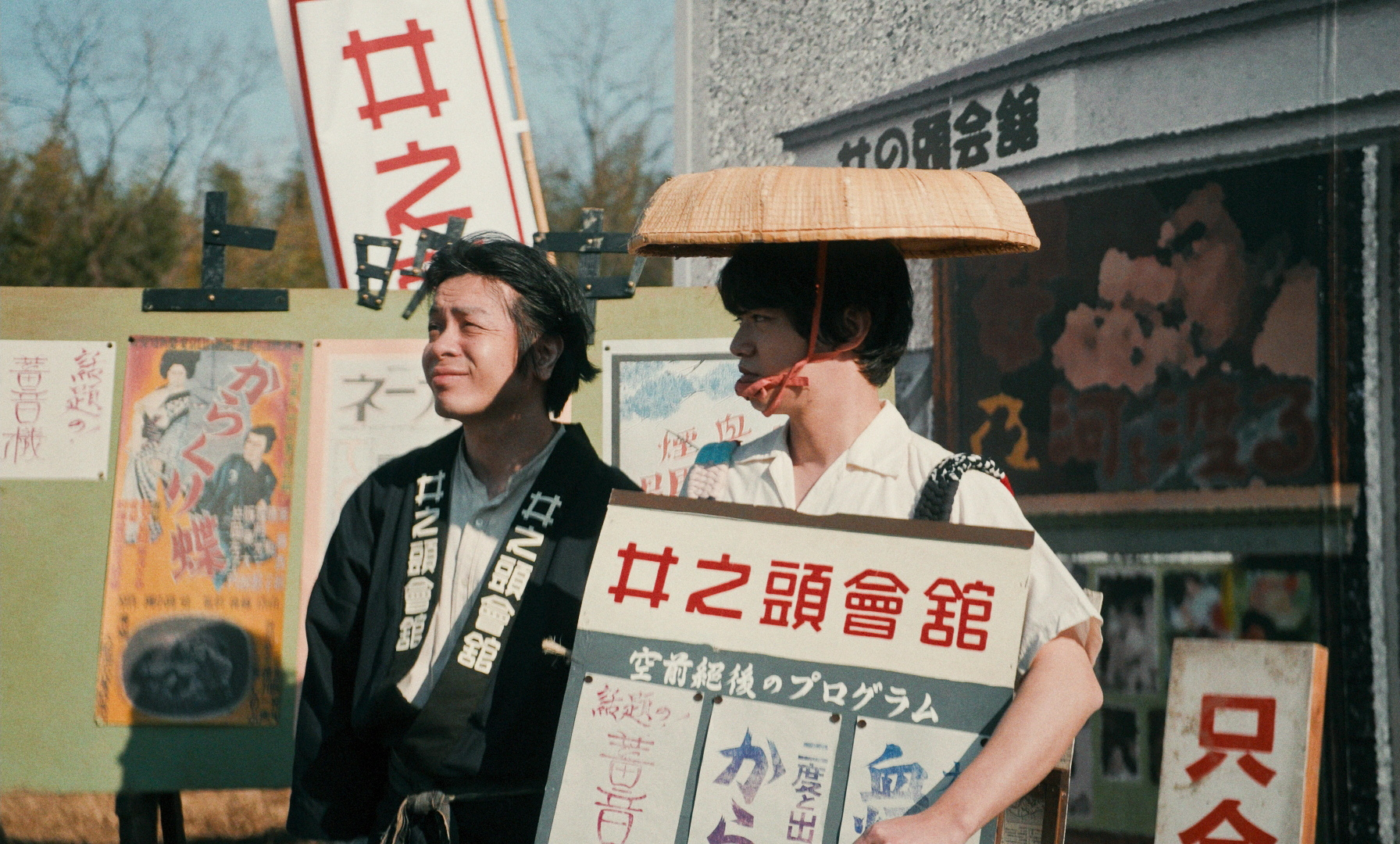
According to the hero of Sora Hokimoto’s BAUS: The Ship’s Voyage Continues (BAUS 映画から船出した映画館, Eiga kara Funadeshita Eigakan), films are born of man’s battle against time and the desire to extend one moment into eternity. Yet his father was always looking for a new “tomorrow” and a path towards the future that ironically kept him from being fully in the  present. Inspired by the memoirs of Takuo Honda, the film is effectively a people’s history of cinema culminating in 2014 with the closure of the Baus Town cinema amid a climate in which film itself seems to have entered a terminal decline.

Indeed, Takuo’s father Shigeo (Shota Sometani) becomes almost a ghost himself. Having come to Tokyo insisting that movies were his “tomorrow,” the war leaves him a shadow of his former self and a spectral presence in the auditorium. Though Takuo’s mother (Kaho) and others at the cinema have discovered a new community eating together every night after the final screening, Shigeo is often out drinking with the chamber of commerce and rarely returns home. Still looking for “tomorrow,” he appears lost for direction despite opening a new, more modern cinema fit for the post-war era. 

As the mother of Shigeo’s wife Hama says, men are focused on past and future while it’s women who are forced to face the present leaving most of the more practical problems for Hama to deal with. Shigeo’s brother Hajime (Kazunobu Mineta) had perhaps been overly obsessed with the past and ultimately unable to move forward. After coming to Tokyo with Shigeo, he became an unsuccessful benshi only to be rendered obsolete by the arrival of talkies. Despite being drawn to the anti-capitalist rhetoric of the migrant workers, he later falls hard for militarism and becomes a casualty of the war both literally and spiritually. Shigeo laments the increasing censorship of the late 1930s complaining that it has become impossible to make or show films, but it’s little better afterwards as the Occupation forces push Hollywood movies at the expense of the European or Japanese.

Hajime had snapped back that entertainment wouldn’t change anything and that war purified the world, but Shigeo insists that films are a window from which the local population can learn about other lives and other places, a means of “building the heart” that might a save a soul. The older Takuo envisages a world in which watching a film normally or loving someone normally might become political acts in themselves. He weaves his personal history of film, which is also that of his family, with the political realities of the mid-20th century in which beautiful forests are cut down to make coffins for the endless dead and unexploded incendiaries lurk like ticking time bombs both literally and psychologically as, as one old man puts it, the nation’s struggles to reckon with its role in the war or its traumatic consequences. 

Nevertheless, even if Takuo is closing Baus Town for reasons stemming from his own traumatic loss, he continues to look for tomorrow despite his old age. Asked what his dream was, he replies only that he wanted his children to have better lives than he did, though he worries he may have failed. In any case, he remains lost within the labyrinths of cinema. The building itself, originally surrounded by fields in a much smaller Kichijoji, becomes a haunted space in his memory, half dream and longed-for place of warmth and salvation in which he remains a small child searching for his father in the empty auditorium.

The name for Baus Town is taken from the bow and stern of a ship, echoing Takuo’s own search for other horizons and a constant process of moving through the world. He too is trying battle time and make a moment last an eternity while admitting that there’s nothing so beautiful as smoke in the projector beam. He asks his daughter if smoke, like movies, isn’t connected to the afterlife and there are ways in which Takuo has also become a ghost, both haunted and haunting while films are themselves a kind of other world of the living past and a way of communing with those no longer here. Taking over production after Shinji Aoyama passed away, Sora gives the film an elegiac, poetic quality while asking if cinemas too might be resurrected in the same way as film even as Takuo ponders new directions while continuing to sail ahead in search of tomorrow.


BAUS: The Ship’s Voyage Continues screened as part of this year’s Nippon Connection.

Original trailer (no subtitles)

Images: ©Honda Promotion BAUS/boid 

Lumberjack the Monster (怪物の木こり, Takashi Miike, 2023)

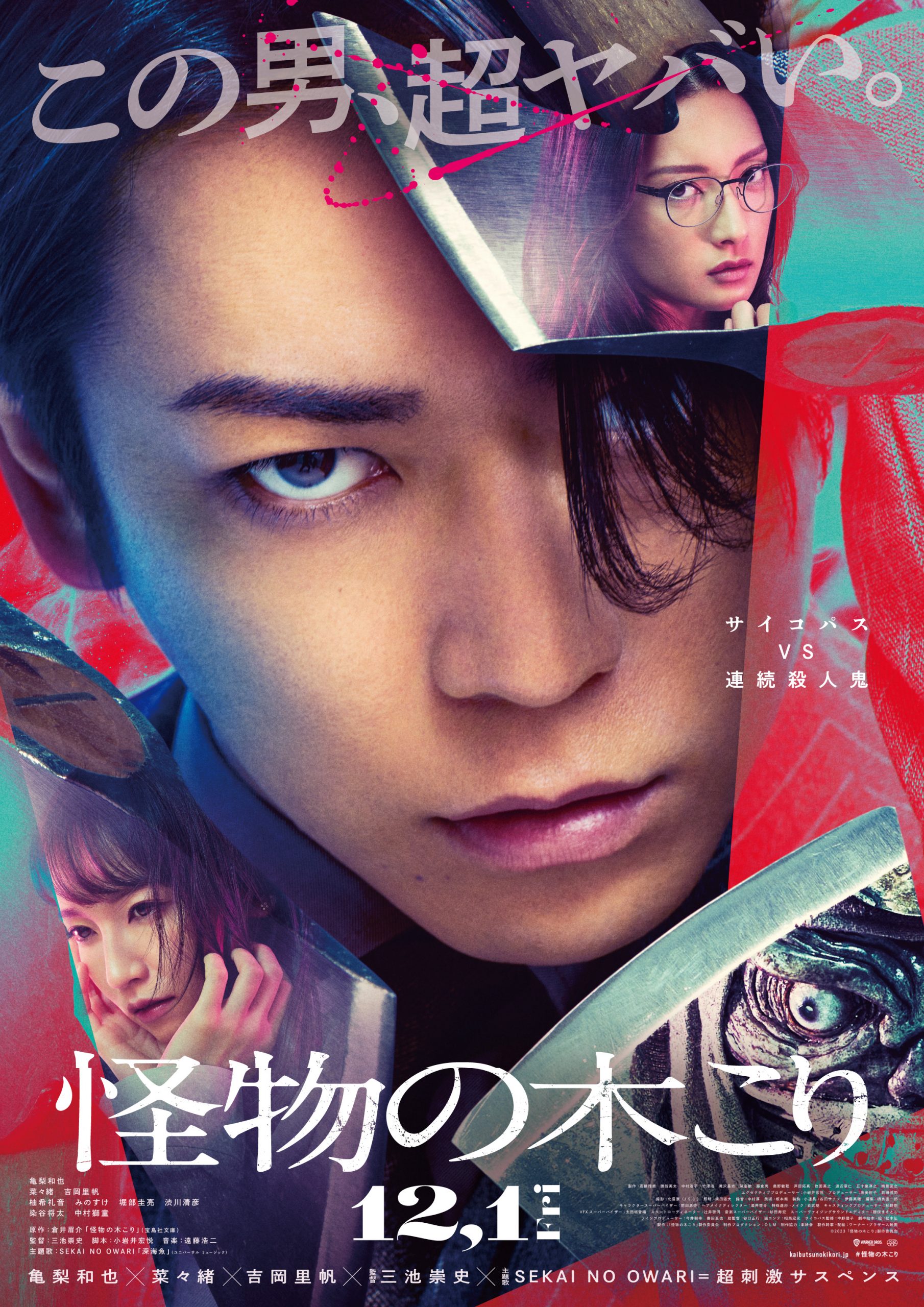
Could being a psychopath actually be better? It might be an attractive thought for some, the absolute freedom of living without emotional or moral constraint. Emotion is after all a difficult thing to bear, though life without it might also be lonely and unfulfilling leaving a void often filled by other desires such as a lust for wealth, status, power, or proof of superiority. Based on a novel by Mayusuke Kurai, Takashi Miike’s Lumberjack the Monster (怪物の木こり, Kaibutsu no Mikori) finds its hero at a point of existential crisis no longer certain of his true nature or identity.

The film takes its title from a fairytale featured in a picture book being read by a small boy who has been abducted and illegally experimented on. A monster begins living as a lumberjack in a small town where he begins killing and eating the residents, only no one notices. Eventually it realises that he spends more time being the lumberjack than the monster and is confused about his identity. With no friends left to talk to (because it ate them all), the monster decides to move to another town to make more friends but ends up sneaking into the house of a lumberjack, stealing a baby, and fashioning after itself to create another monstrous lumberjack.

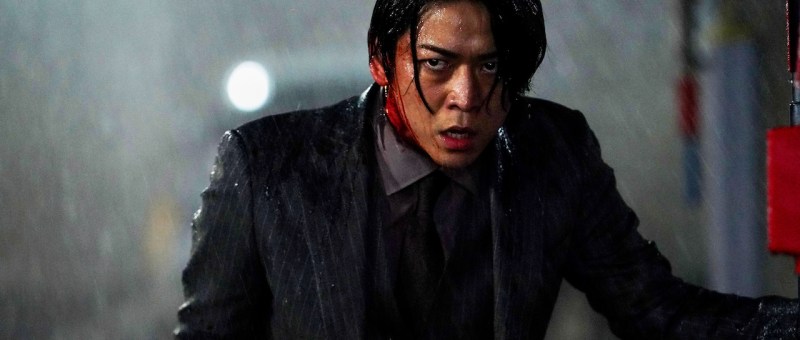
This is in a sense what’s happened to Akira (Kazuya Kamenashi), now a lawyer who discovers he has a “neuro-chip” in his brain that suppresses his emotions after he’s attacked by a masked figure and it breaks re-introducing him to an unwelcome humanity. This is quite inconvenient for him in that he’s done quite a lot to feel guilty about, firstly participating in a scheme with his “friend” Sugitani (Shota Sometani), a natural-born psychopaths, to facilitate his experimentation on live humans, and secondly that he murdered his boss who is also his fiancée’s father to take over his law firm. Though the fiancée, Emi (Riho Yoshioka), seems to be afraid of him, it’s also true that simple proximity to her warmth and kindness may have begun to reopen his heart.

Of course, it could be true that the mad scientists who abducted the children accidentally picked up a few who were already psychopaths but in this case it seems like the chip did its job on each of the victims of the axe-wielding assassin. Meanwhile, we also see “psychopathic” traits in lead investigator Toshiro (Nanao) who admits that she will do whatever it takes to get to the truth even if it includes throwing out the police rulebook. Akira asks her if her desire to solve the case isn’t also a roundabout means of vengeance for the death of her brother, leaving her not so different from the assassin who is also extracting vicarious revenge on man-made psychopaths, but she replies that that’s exactly how a psychopath might see it while also deflecting a similar question from embittered cop Inui (Kiyohiko Shibukawa) who remarks that if the killer’s only taking out psychopaths then why bother stop them?

In some ways, Akira is like the lumberjack. He was simply being what he was and knew no different, but gradually beginning to rediscover his humanity is burdened with guilt and remorse now acutely aware not just of the feelings of others rather than their consequences but of his own feelings too. The couple who abducted the children claimed they were doing it to save their son, trying to reverse engineer psychopathy so they could cure him though their actions were themselves psychopathic and like the lumberjack they created only more monstrous children like themselves. Akira has it seems rediscovered the person he may have been if he had been raised in the loving family from which he was abducted and is determined to search for the meaning of life, but he is also responsible for the decisions he made as a man who knew no guilt or remorse and may in fact have to pay for the moral transgressions he was not fully aware he was making. Miike conjures a sense of the gothic in the creepy, candlelit mansion where the children were kept and otherwise sticks to standard procedural for the “real” world, but finally lands back in the realms of fairytale as his hero finds himself part of neither one world nor another while faced with a choice that may earn him redemption but also loneliness and futility.


Trailer (English subtitles)
Worlds Apart (違国日記, Natsuki Seta, 2024)

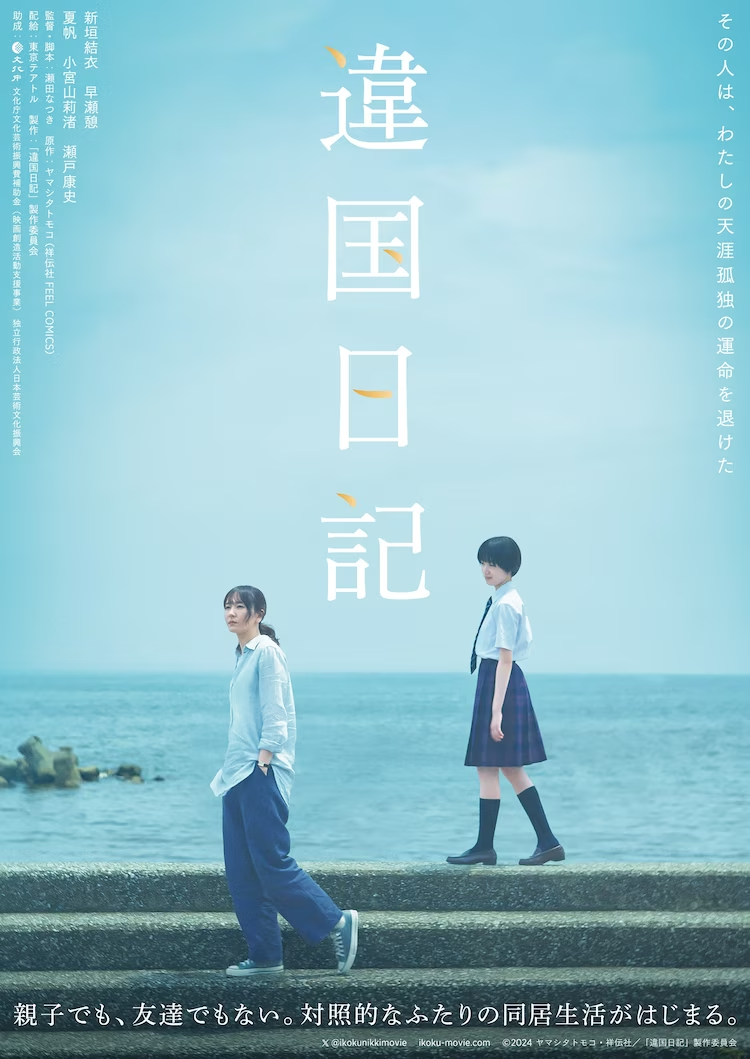
Adapted from the manga by Tomoko Yamashita, Natsuki Seta’s quietly empathetic drama Worlds Apart (違国日記, Ikoku Nikki) eventually reveals the private lonelinesses and hidden sorrows that everyone has which isolate them from others. The film’s Japanese title plays on a homonym for the word for “foreign country” instead using the character for “different” which in itself suggests each person is an entire world often unable to make contact or be fully understood by those who cannot after all ever travel there. 

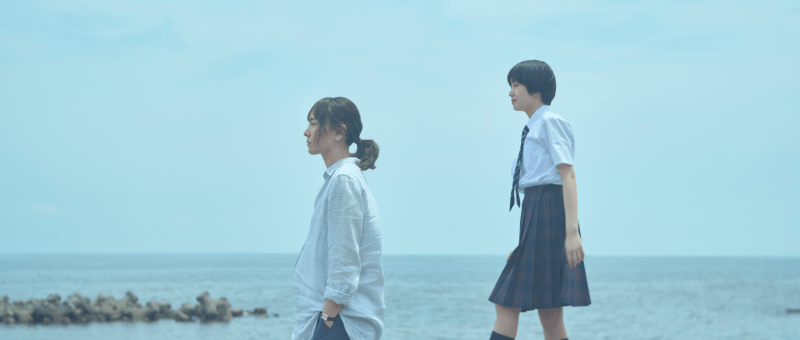
Perhaps that’s something most people feel every once in a while but becomes acutely obvious to 15-year-old Asa (Ikoi Hayase) when her parents are killed in a surreal traffic accident in the film’s opening scenes. She sits struck dumb and vacant at the funeral, having no idea what’s going to happen to her now while other relatives crassly describe her as having been cast adrift like an “unwanted barrel”. It’s this insensitive phrase that seems to drive her aunt Makio (Yui Aragaki), a novelist, into an impromptu decision to offer to take her in though they had only met briefly long in the past and had no real relationship with each other. Makio had been estranged from her sister for many years and never makes any attempt to disguise her utter loathing and resentment towards her for having been so cruel and judgemental when they were children. 

It’s refreshing, in a way, that the film doesn’t encourage her to change her feelings after her sister’s death. She doesn’t discover another side to her through bonding with Asa nor are her feelings invalidated much as Asa originally tries to make her like her mother as a means of reclaiming her. In fact, what Makio does is normalise whatever way Asa is feeling telling her at the hospital when forced to identify her parents bodies that it’s alright not to know how she feels. The two sisters were it seems very different, though the grandmother eventually offers an explanation that Makio’s sister had once been seriously ill and therefore unable to live a “normal life” which might explain why she was so enraged by Makio’s decision to chart her own course and wilfully spurn conventionality. 

These are also hints to the hidden world contained with the diaries Asa’s mother left behind to opened when she graduated high school. Makio wrestles with whether or not to pass the notebooks on and when, unsure if Asa is ready to receive the knowledge that might be inside them. Though she settles in to Makio’s home quite comfortably, Asa keeps her grief and occasional bouts of resentment to herself. Seta often frames her as standing alone in vast empty spaces or total darkness, isolated and lonely, now displaced by her liminal status no longer anybody’s daughter but not quite independent. 

Yet this isolation also blinds her to that of others. She doesn’t quite pick up on it when she clumsily attempts to talk about boys with her best friend Emily (Rina Komiyama) who directly tells her she has no interest in them and deflects the question when she asks if she likes girls instead. Emily is also lonely and isolated in feeling anxious to reveal her sexuality to Asa who in any case reacts clumsily when she eventually does. A similar thing happens with a girl in their class who studied hard to apply for a special programme only to be told the organisers are looking for a male student because it requires “physical strength,” while Asa also seems to develop a fascination with a bass player in the school music club who declines an offer to collaborate because she doesn’t want to get her hopes up only to be disappointed in the end. 

Makio hadn’t previously wanted to share her life, separating from an old boyfriend she still seems attached to out of an apparent fear of intimacy but nevertheless opens herself to Asa in deciding to respect her as an adult giving her agency over her own choices along with good, empathetic advice while simultaneously being clear that she doesn’t know if she can come to love her given the depth of hatred and resentment she bore towards her sister. But what the pair of them realise is that good or bad they can each share their memories rather than being forced into a frosty silence even if as Makio points out Asa will never understand her hurt and she will never understand Asa’s loneliness. Gentle and wholesome, the film ironically lays bare how opening up to others can in fact expand the world inside you instead filling the space rather than leaving you isolated inside it and returning light to a world that might otherwise have seemed dark and lonely.


Worlds Apart screened as part of this year’s Camera Japan.

Original trailer (no subtitles)

The Yin Yang Master Zero (陰陽師ゼロ, Shimako Sato, 2024)

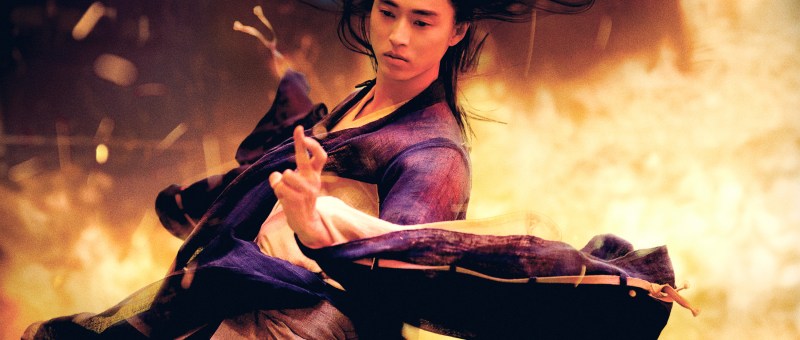
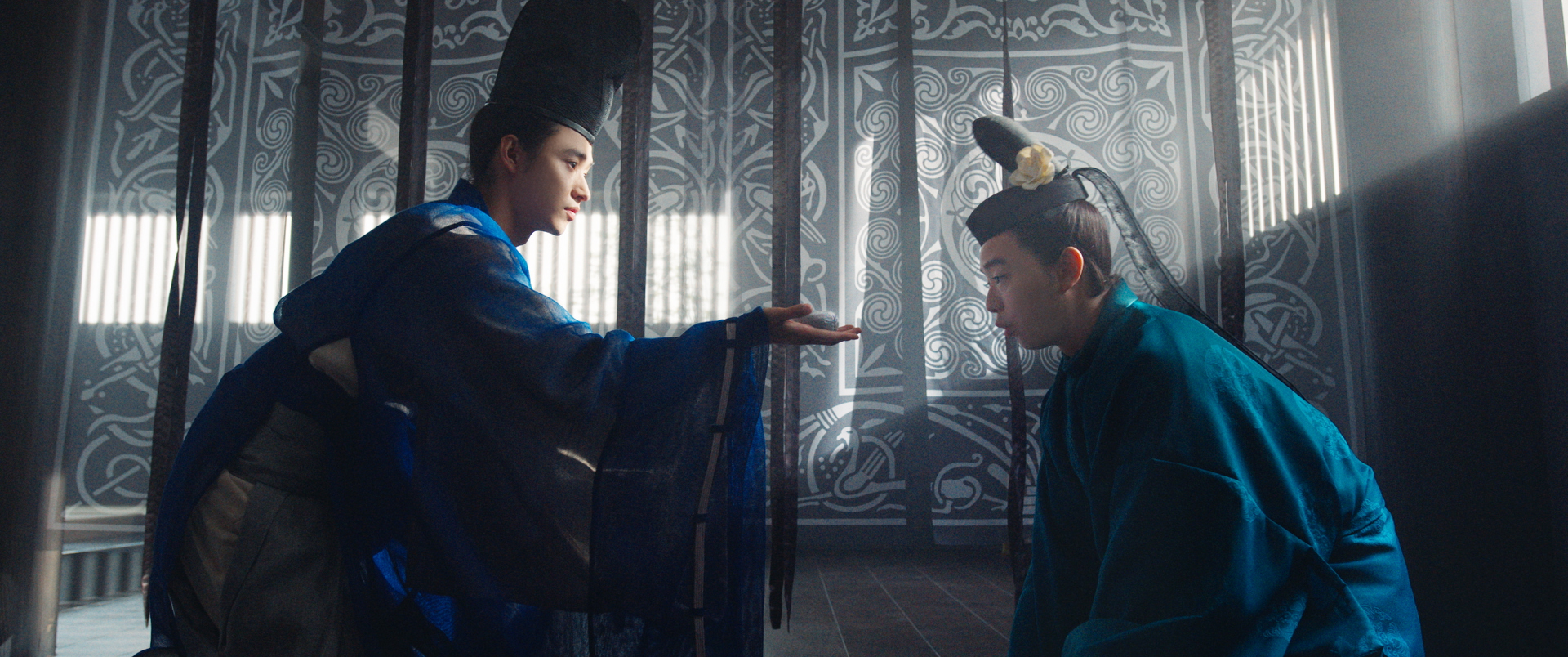
In the Heian era, who was it that kept the social order in check if not the onmyoji or “Yin Yang Master”? Shimako Sato’s big budget fantasy drama is technically a kind of prequel origin story adapted from Baku Yumemakura’s series of novels which were previously adapted as pair of movies in the early 2000s, and introducing the young Abe no Seimei (Kento Yamazaki), a Detective Dee-esque exorcist working as a state magician to protect the nation from supernatural threats such as demons and curses in an era in which ordinary people lived side-by-side with goblins and monsters.

That said, Seimei doesn’t really believe in that sort of thing, though in an ironic twist knows it to have a kind of truth at least, and is sick of being called out to look at a potential goblin infestation that turns out to be nothing more than a creaky old house settling amid the changeable weather. Which is all to say, he is both an earnest scientist looking for rational explanations to strange phenomena and an excellent diviner who can catch a dragon spirit in a bottle. In a touch of the Sherlock Holmes, he’s also gruff and aloof, distinctly uninterested in achieving high position and makes no secret of his contempt for his fellow alchemists insisting the Ying Yang Masters merely perpetuate superstitions to keep people frightened and themselves in employment.

When one of the other alchemists turns up dead of a suspected curse, the cat is set amongst the pigeons as the young apprentices respond to the offer of his higher status spot of they can solve the crime. This of course exposes their own greed and vanity as they each fall over each other desperate for a chance to get another foot on the ladder in a hierarchal system, a step that must be taken if they’re to make it all the way to the position of the emperor’s advisor on spiritual matters. Seimei’s disinterest further arouses suspicion against him with a fellow alchemist already 45 years old and stuck at the bottom rank directly accusing him of the crime perhaps less out of a genuine conviction than a desire to advance himself. 

In any case, Seimei investigates in a more modern, scientific way gaining access to crime scene and corpse ironically through a connection he’s made at court to an influential musician, Hiromasa (Shota Sometani), who hired him to sort out a problem the princess, Yoshiko (Nao Honda), was having with snapping strings on her harp. That turned out to be caused by a giant golden dragon spirit which Seimei later claims represented her feelings for Hiromasa, who is also quietly in love with her, which are somewhat forbidden because of the class difference between them. In this way, the spirits are merely a manifestation of the conflict between personal feelings and the social order as Yoshiko finds herself all but powerless, a princess in a golden cage to be sent wherever she is called with no real say over her fate. 

Fittingly, these feelings are resolved in a kind of artificial reality that Seimei believes to be a space of shared consciousness though he’s also fond of remarking on the malleability of “reality” and the ways in which vision and perspective can be manipulated. Then again, he also says all that matters is what they are seeing and experiencing in that very moment which is as good a benchmark for objective reality as anything else. There is something quite poignant about his developing relationship with Hiromasa which has its homoerotic qualities even as he becomes the “idiot” stand in for the audience, a kind of Watson figure that Seimei can explain everything to so that he can explain it to us. Even we can see the restrictions of the court and the irony in the eventual victory of “order” rather than personal freedom as volatile emotional forces must be put back in their bottles lest they create problems for everyone. Such conditions will doubtless create a series of cases of Seimei and Hiromasa to solve in a potential series starring the ace exorcist and his flautist friend in a Heian society beautifully brought to life by Sato’s sumptuous production design and flair for fantasy action.


The Yin Yang Master Zero screened as part of this year’s New York Asian Film Festival

Original trailer (English subtitles)
Punk Samurai (パンク侍、斬られて候, Gakuryu Ishii, 2018)

Gakuryu Ishii began his career under the name Sogo as a representative of the youth voice, in fact still a college student when invited by Nikkatsu to film a feature-length version of his Panic High School short though they paradoxically saddled him with the more experienced Yukihiro Sawada as a co-director in case his voice turned out to be more youthful than anticipated. In any case, he went on to make his name with a series of anarchic punk films such as Burst City and The Crazy Family before retreating from filmmaking in the early 2000s. When he returned in 2012 with Isn’t Anyone Alive?, he did so under a new name, Gakuryu, as if signalling a new phase in his artistic career that seemed to have left punk behind.

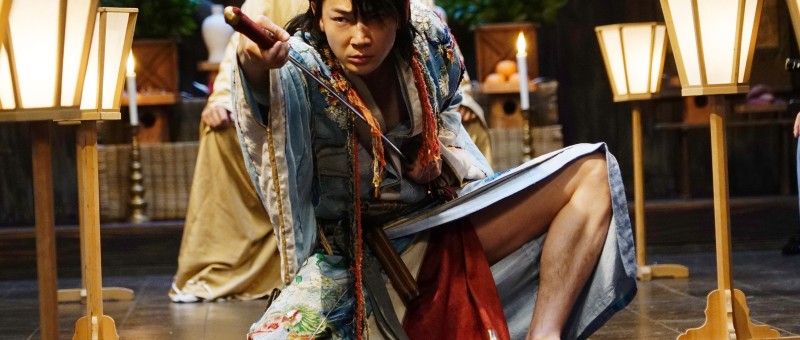
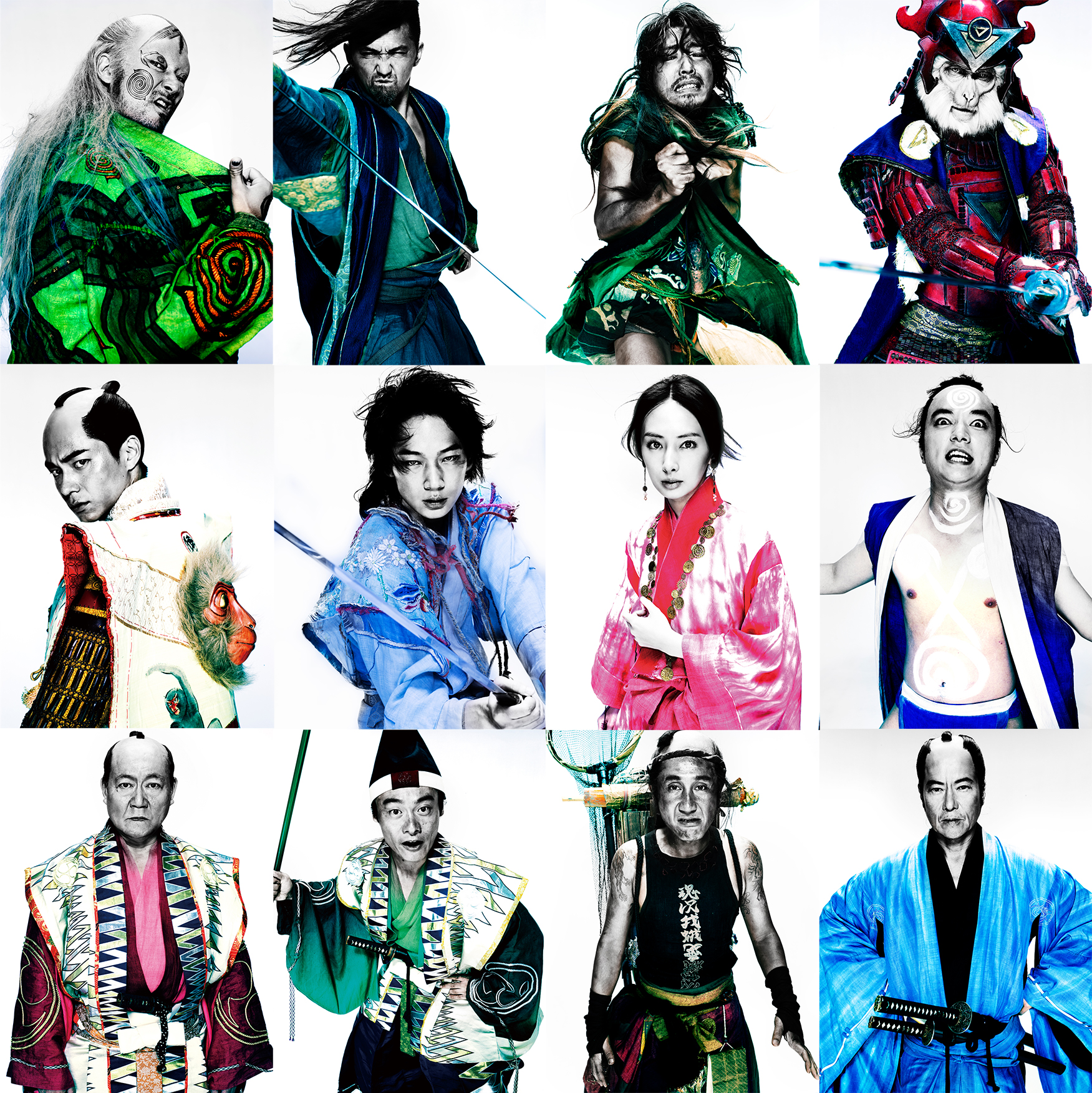
Like 2015’s That’s it, Punk Samurai is billed as a kind of return to Ishii’s anarchic roots while also harking back to surreal samurai movie Gojoe. Even so, Punk Samurai isn’t really a punk samurai film even in its irreverence towards the genre so much as an ironic jidaigeki comedy which eventually positions its hero’s nihilistic outsider status as his saving grace in a “fake” world where nothing has true meaning. “This world might be fake, but I’m alive” he insists, claiming not to ask anything of it, simply stating that he is “different” because he belongs to no group and has been a lonely a wanderer.

Nevertheless, Kake (Go Ayano) had wanted to join a clan so desperately that he spun a tale of dangerous cult rebellion to a naive retainer of a useless lord whose inability to rule has ruined his fiefdom. After killing a pilgrim he believed to be a member of the Bellyshaker Party, Kake is taken in by the Kuroae where he is enlisted by duplicitous councillor Naito (Etsushi Toyokawa) who seizes on the idea of the Bellyshaker threat as a means of undermining his rival, Ohura (Jun Kunimura), to seize the reins from overly serious lord Kuroae (Masahiro Higashide). 

The Bellyshaker cult believes that this “fake” world exists within a giant tapeworm and seeks escape though being excreted by it into the “real” world as a means of achieving some kind of spiritual enlightenment. Their furious belly shaking is deliberately meaningless in an effort to antagonise he tapeworm to such a degree that it gives it spasms to “spew” the believer into a more authentic existence. Not even the cult leader believed this to be true, and as Kake later suggests the appeal lies in a kind of Manichaeanism that allows the believer to believe nothing is their fault it’s just that this “fake” world is wrong. In the end, the conflict comes down to a battle between “monkeys and idiots”, while even an enlightened ape (Masatoshi Nagase) finds his revolution failing and is left with no option other than to retreat to the Heavens. 

The world is indeed in disarray, Kuroae is constantly plagued by his own poor decision making, or failure to make decisions at all, while there are constant allusions to the decline of his clan from persistent famine to military weakness after having made most of his foot soldiers redundant as part of an austerity programme. Many of the recruits to the “fake” Bellyshaker cult resurrected by Naito with the assistance of former devotee Chayama (Tadanobu Asano), who has two telepathic servants who speak for him, are in fact refugees from Kuroae who fled its disorder. Kake prides himself on being an outsider but in reality had wanted to join the clan, and there is perhaps something in the sudden collapse of the world around him along with a return to blue skies the moment his rebellion is ended. 

Yet for all its weirdness and incomprehensibility, for much of is running time Punk Samurai is a typical jidaigeki comedy about a useless lord, his clever underlings, and a chaotic ronin if one that also hints at the absurdist meaninglessness of the hierarchical samurai society. Only in its closing moments does the film truly embrace its punk spirit with psychedelic kaleidoscope backgrounds, electric swords, and the true slash down of the social order as Kake’s life comes full circle proving that even in this “fake” and meaningless world there are some things from which there is no escape.


Punk Samurai is released on blu-ray in the UK on 13th March courtesy of Third Window Films.

Original trailer (English subtitles)
What to Do With the Dead Kaiju? (大怪獣のあとしまつ, Satoshi Miki, 2022) [Fantasia 2022]

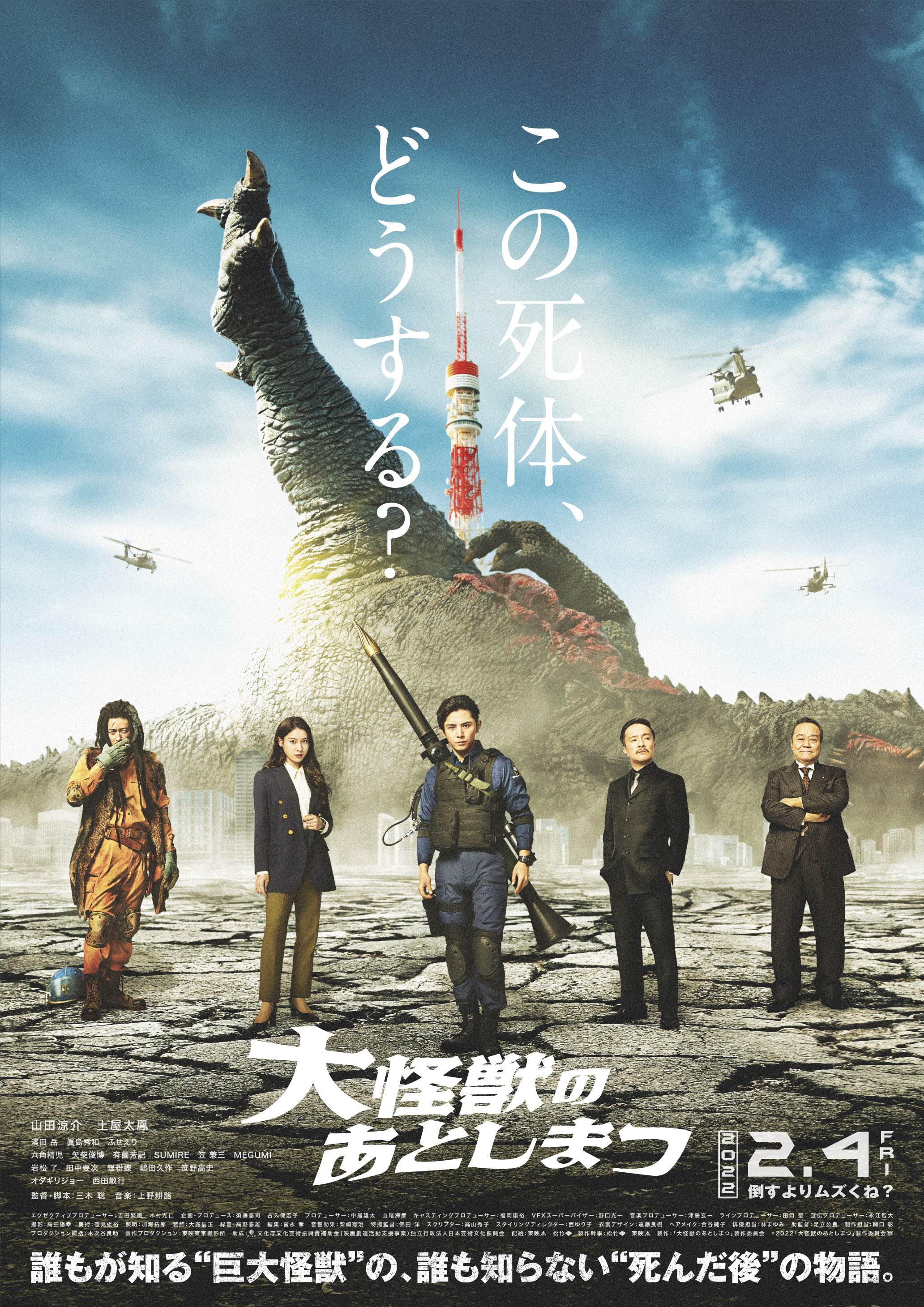
The sudden appearance of a deus ex machina is usually where a story ends. After all, that’s the point. Whatever crisis is in play is suddenly ended without explanation. But what happens then? Satoshi Miki’s What to Do With the Dead Kaiju? (大怪獣のあとしまつ, Daikaiju no Atoshimatsu) steps in to wonder what it is that comes next after a giant monster has been defeated. Someone’s going to have to clean all that up, and in a surprising twist a fair few people are keen to take on the burden. Like Hideaki Anno & Shinji Higuchi’s Shin Godzilla, which the film is on one level at least attempting to parody, Miki’s kaiju comedy is a government satire this time casting shade on the nation’s pandemic response, though with considerably less nuance. 

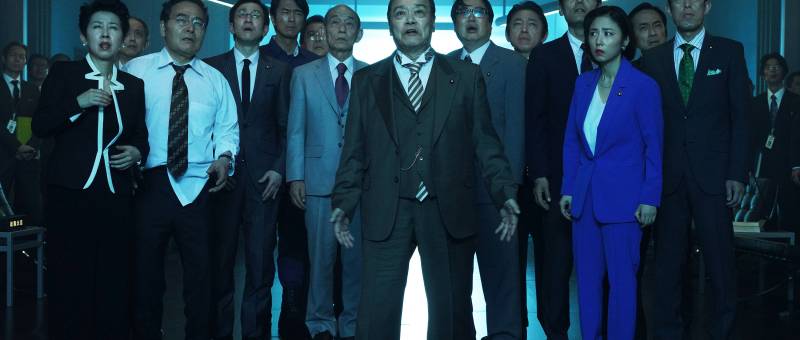
As the opening onscreen text, a nod to Shin Godzilla, and accompanying voiceover tell us Japan had been plagued by a kaiju but it suddenly died after being engulfed by a mysterious ball of light. While attempting to comedown from the constant state of anxiety under which they’d been living, the prime minister (Toshiyuki Nishida) is at a loss for what to do next especially as no-one really knows if the kaiju corpse is safe. While trying to ascertain whether or not the fallen kaiju might explode, spread dangerous radiation, or present some other kind of threat, government departments start fighting amongst themselves about whose responsibility the clean up effort must be all of them wanting the glory but not the work or expense. 

Some suggest turning the kaiju’s body into a massive tourist attraction and are therefore less keen on anything that involves destroying it while others think it should be preserved and put in a museum. The government has placed the SJF, a militarised science force set up after a terrorist incident, in charge but isn’t listening to much of what they’re saying. Meanwhile, evil moustachioed staffer Amane (Gaku Hamada) is playing his own game behind the scenes which also involves his wife, Yukino (Tao Tsuchiya), who was previously engaged to the leader of the SJF Taskforce, Arata (Ryosuke Yamada), before he abruptly disappeared after being swallowed by a mysterious ball of light three years previously. 

The political satire largely revolves around the indecisive PM, who at one point says he has no control or responsibility for what the other ministers do, and his anarchic cabinet meetings in which politicians run round in circles and insult each other like children. Not exactly subtle, much of the humour is indeed childish and scatological while one minister’s running gag is making sleazy sexist remarks even at one point accidentally playing a saucy video instead of displaying the latest kaiju data on the communal screen. The government experiences a public backlash in deciding to name the kaiju “Hope” which lends an ironic air to its rampage not to mention the necessity of its destruction, while the decision to declare the body safe for political reasons despite knowing it probably isn’t (“protecting the people’s right not to know”) casts shade on the pandemic response among other crises as do the constant refrains about getting back to normal now the crisis is over. 

Then again, there’s something a little uncomfortable going on with the film’s geopolitical perspectives, throwing up an angry politician on the screen with a mangled name who insists that the kaiju originated on their territory and must be returned to them in what seems to be an awkward allusion to Japan’s ongoing territorial disputes with Korea even while it’s suggested that the Americans wouldn’t mind getting their hands on the corpse either for purposes of experimentation and research. On the other hand it also becomes apparent that the Japanese military have deliberately destroyed civilian homes and cost lives in a reckless attempt to stop the kaiju which obviously failed. 

The closing scenes hint we may have been in a slightly different franchise than the one we thought we were dealing with, another deus ex machina suddenly arriving to save the day after the villains almost cause accidental mass destruction. The film’s problem may be that it’s the wrong kind of silly, relying on lowbrow humour while otherwise trying to conform to a blockbuster formula in which the kaiju corpse becomes the new kaiju but the battleground is bureaucracy. Ultimately the film’s prognosis is bleak. Even when the PM has achieved sufficient growth to realise he should make some kind of decision he makes the wrong call leaving everything up to a lone hero while fundamentally failing to come to any conclusion on what to do with a dead kaiju save trying to ensure it does not blow up in his face. 


What to Do With the Dead Kaiju? screened as part of this year’s Fantasia International Film Festival.

Original trailer (English subtitles)

Detective Chinatown 3 (唐人街探案3, Chen Sicheng, 2021)

Cerebral sleuth Qin Feng (Liu Haoran) and his larger than life uncle Tang Ren (Wang Baoqiang) are back on the case in the third instalment in the Detective Chinatown franchise (唐人街探案3, Tángrénjiē tàn àn 3) picking up as promised in Tokyo as the duo take on another locked room mystery on the invitation of dandyish local investigator Hiroshi Noda (Satoshi Tsumabuki). This time around, the mystery is only tangentially connected to a Chinatown though the solution in itself does indeed lead back towards the Mainland and the complicated relations between China and Japan, while Qin in particular finds himself confronting the idea that oligarchy is in fact the “perfect crime”. 

Hired by a yakuza boss, Watanabe (Tomokazu Miura), accused of offing a Thai rival, Su Chaiwit, following a dispute over development rights in the local Chinatown, Qin and Tang Ren quickly find themselves hamstrung by their own discovery of evidence which further implicates their client and brings them to the attention of top cop Tanaka (Tadanobu Asano) who wastes no time telling them to mind their own business. Meanwhile they are also being pursued by muscly Thai detective Jaa (Tony Jaa) working for the other side. In a new high tech motif, the guys are each handed a simultaneous translation earbud which allows the Japanese and Chinese guys to converse with each other in their own languages though Hiroshi often chooses to speak directly in Mandarin instead while the Thai contingent exclusively use English. Unlike previous instalments the duo do not venture into the local Chinese community and Chinatown itself is merely territory contested by Japanese yakuza and South East Asian gangsters. 

Even so Qin and Tang Ren find themselves at a nexus of cross-cultural conflict caught between the cops, yakuza, and Thai gangsters each looking not so much for the truth but some kind of advantage for their side all of which culminates in a hilarious series of mixups at a morgue. Once again, Tang Ren falls in love with a local woman, in this case Su Chaiwit’s secretary Anna Kobayashi (Masami Nagasawa) who is certain Watanabe is guilty and later apparently kidnapped by a crazed serial killer (Shota Sometani) just by coincidence. Of course, all this cycles back towards the franchise’s growing mythology, Qin pursued and manipulated by the mysterious entity known only as “Q” which, as we learn, is as obsessed with the idea of the perfect crime as Qin largely in that they think they’ve perfected it in the stranglehold placed over civilisation by a shady elite. 

In this, the film may be taking aim at hidden oligarchy and the immorality of growing social inequality, but in its Japanese setting Chen is also freer to take potshots at contemporary Chinese society such as in Tang Ren’s confusion that they can’t simply bribe the police to get Qin out of jail when he is wrongfully arrested. “Justice and equality require sacrifices” Qin explains after solving a grim riddle only to be asked some difficult questions about the nature of justice and his own role within it by a manipulative villain, but in a classically censor-friendly move ends the movie with a brief monologue declaring that “justice always prevails and light overcomes darkness”, he and his team recommitting themselves to fighting “vices”, and presumably the shady elitism fostered by Q, wherever they arise. 

Like Detective Chinatown 2’s New York setting, the vision of Japan on display is deliberately stereotypical from an Akihabara cosplay carnival to tasks involving masked kendo fighters and a sumo wrestler, not to mention bumbling comedy yakuza forever threatening to cut off their fingers, the Shibuya Scramble set piece, or a playful homage to Phoenix Wright: Ace Attorney. Meanwhile, Chen continues his taste for huge ensemble action such as the complex slapstick routine that opens the film and now traditional end credits sequence featuring the cast dancing to theme tune “Welcome to Tokyo” dressed in the classic green detective mac worn by Qin. Truth be told, the solution to the central mystery is heavily signposted and slightly unsatisfying though Chen’s visualisations of Qin’s deductions are expertly rendered even as the hero’s growing confidence as a crimefighter unbalances his relationship with the increasingly silly if goodhearted Tang Ren. Boasting a host of A-list Japanese acting talent, the film also makes space for an unexpected cameo from one of the most recognisable faces in Sinophone cinema before teasing a further instalment to take place in London, home to the greatest consulting detective of them all. 


Detective Chinatown 3 is available to stream in the UK via iTunes, Google Play, Amazon Prime, Microsoft, Sky, and Virgin Media courtesy of Cine Asia.

Original trailer (English / Simplified Chinese subtitles)

Parallel World Love Story (パラレルワールド・ラブストーリー, Yoshitaka Mori, 2019)

Have you ever had the feeling that you’re going out of your mind? Something just doesn’t feel right, your sense of perception and memory of the past don’t match the “reality” you’re currently experiencing but you have no way of knowing what’s at fault, you or the world. The hero of Parallel World Love Story (パラレルワールド・ラブストーリー) finds himself in just this situation as he begins to experience two very different states of being, one in which he’s living happily with the love of his life, and another where she’s dating his childhood friend. Is he a love crazed fool, or is someone messing with his head?

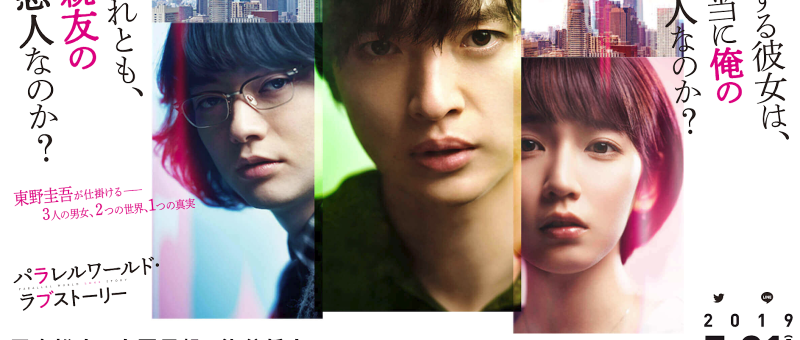
Travelling the same train into college every day, Takashi (Yuta Tamamori) fell in deep silent love with a young woman whose train crossed his every Tuesday morning. On his very last Tuesday, he decided he’d switch trains and try to find her, but she did exactly the same thing and so they missed each other, leaving Takashi feeling as if his fated romance was matter for another universe. He is then shocked when an old friend from middle school, Tomohiko (Shota Sometani), introduces that same young woman, Mayuko (Riho Yoshioka), as his girlfriend some time later. A little resentful at this twist of fate, Takashi tries his best to keep his feelings hidden. Meanwhile we see him “wake up” in his own apartment where Mayuko, who lives with him, is lovingly making him breakfast. He has a vague recollection of Tomohiko turning up in his dream, but can’t seem to remember what it is he’s doing these days. In this “reality”, Tomohiko introduced Mayuko to Takashi, and has abruptly moved to LA without even saying a proper goodbye, apparently working on a top secret research operation which keeps him entirely out of contact. 

Both men are involved with the research of perception and memory. Talking to another friend before “meeting” Mayuko, Takashi points out that it’s your brain which constructs the current reality from your sense perception. He grasps her hand and her brain tells her she feels it, but she’d feel the same thing if he isolated and activated the relevant sectors of her brain which tell her her hand is being grasped. Tomohiko, meanwhile, has gone one step further. He’s discovered that it’s neural networks rather than the brain which store memories and that, by stimulating those neural receptors in a particular way, memory can be rewritten or fake memories introduced. He proves this by illegally experimenting on a friend, making him think he’s from Tokyo when he’s really from Hiroshima, and reconstructing the image of an old teacher so that she’s now a pretty young woman and not a portly old man. 

The gap between what you want to be true and the “reality” is shrinking. It turns out that it’s easy enough to trick yourself into thinking something is true when it isn’t when you really want it to be. According to Tomohiko, once your brain has decided to approve the “fake” reality, cognitive dissonance is overcome by everything else being forced to fit into your new conception of the world. Takashi, however, is struggling to integrate his two parallel lives, one bleeding inconveniently into the other leaving him wondering which one is the “reality” and which the “dream”. 

Takashi’s less palatable qualities, however, exist firmly in the recent past of reality A in which romantic jealousy appears to have driven him half out of his mind, causing him to semi-stalk the innocent Mayuko and consider betraying his childhood friend by stealing the woman he loves. Takashi’s sole justification for his behaviour is the unspoken romantic connection which brought them together on the train, a connection he is “certain” she remembers without being given any particular encouragement from her side. Reality B Takashi, who lives with Mayuko, similarly becomes obsessed with the idea that Mayuko in some way belongs to Tomohiko, awakening an unpleasant sense of misogyny in his desire to prove that Mayuko is his because he saw her first on the train. 

Meanwhile back in Reality A, he starts to suspect that Tomohiko is up to no good pursuing unethical research practices and working towards a sinister goal. It’s unfortunate that Tomohiko also has a prominent limp from a lame leg, playing into the unpleasant association of villainy and disability. Even Takashi, having turned dark, accuses Mayuko of dating him out of pity, while Tomohiko describes him as a “hero” for having rescued him from childhood bullies. Takashi starts to suspect him, not only of being a mad scientist, but perhaps actively hostile and plotting revenge against him for stealing Mayuko. In a particularly Higashino-esque touch, Tomohiko’s motives turn out to be kinder than they might at first seem even if they’re a little on the extreme side, leaving Takashi pushed to make a similarly extreme yet strangely counterproductive move by his infinitely shady boss who is also exploiting the increasingly conflicted Mayuko. Yet, aside from all the philosophical musings on the nature of reality, the interplay of desire and memory, and the ethics of manipulating the perception of others, this is in essence a love story between two people who gazed at each other from passing trains. If you find each other once, you can find each other twice, and, in love, reality might not be so important.


Original trailer (hit subtitle button for English subs)

The First Supper (最初の晩餐, Shiro Tokiwa, 2019)

“Family” – what does it mean? The concept itself has been under examination for some time, at least as far as the “family drama” goes, but Shiro Tokiwa’s The First Supper (最初の晩餐, Saisho no Bansan) has it more positive than most as its somewhat emotionally distant hero begins to piece his back together and rediscover his place within it. He does so largely through the Proustian power of food as his lonely step-mother does her best to unite the family by reviving warm memories of the various meals they shared together. 

Yet, as Rintaro (Junya Maki / Shota Sometani), a Tokyo-based freelance photographer grappling with the art/commerce divide, is insensitively told at his father’s funeral, his is not an “ordinary” family. That would be (partly) because it was a blended one. Rintaro and his sister Miyako (Nana Mori / Erika Toda) were being brought up by their single father, Hitoshi (Masatoshi Nagase), their mother having apparently left the family, before he brought Akiko (Yuki Saito) and her teenage son Shun (Raiku / Yosuke Kubozuka) to live with them. As a grown man, Rintaro still claims not to be able to understand what his father was thinking, why he wanted to start a “new” family by bringing Akiko and Shun into their home, especially as it led to him giving up his lifelong love of mountaineering to get a steady job in a factory. It never seems to occur to him that perhaps his father simply fell in love again and wanted to share his life with a woman who loved him, becoming a father figure to her teenage son in welcoming an expansion to their family. 

There is, perhaps, still a resistance to the entire idea of blended families or even remarriages especially in the more conservative countryside. Dealing with an offensive uncle, Rintaro fires back that this kind of thing is perfectly normal and no kind of issue at all in Tokyo, so he’s not sure what the problem is but it’s clear that there is still a degree of disapproval of Hitoshi and Akiko’s union even 20 years later. Part of that might be to do with the circumstances of their meeting which we later discover had their share of moral ambiguity. That central secret, and the ones which spur off it, is the reason that Rintaro has never quite been able to put his family together, while Miyako, married at a young age and now the mother of two daughters, is experiencing a degree of marital strife with her mild-mannered husband (Shinsuke Kato) who accuses her of cheating with an old classmate at a reunion. 

Akiko stuns them all by abruptly announcing that she’s cancelled the caterers for the wake and is planning to cook herself, serving up a selection of dishes one wouldn’t usually expect at a funeral but which she claims are taken directly from Hitoshi’s will and each reflect a particular memory of their life together as a family. There is a gaping hole, however, in that we don’t see Shun. “Why should he come?” Miyako replies to Rintaro’s questions, “He’s an outsider here”. A rather cold cut-off for a step-brother, even one you haven’t seen in a long time, and a partial negation of the idea of families not bound by blood even if it’s snapped partly out of hurt. 

While Miyako struggles to reconcile herself to her place within her new family and her decision to form it, Rintaro chats on the phone to his sympathetic girlfriend, Rie (Hyunri), who has, perhaps surprisingly, not accompanied him on this emotionally difficult occasion. The problem seems to be, however, that he’s told her not to come even though she’d have liked to be there and it doesn’t seem as if anyone would have objected. An agent ringing him at a spectacularly bad time to tell him he hasn’t won a competition is forced to reveal, in the nicest possible way, that he narrowly lost out because his pictures are “cold”, he has no affection for his subjects and it shows. He remains diffident in his relationship with Rie because he hasn’t worked out this whole family thing for himself and is worried he simply doesn’t know how to fit into one. 

Through re-experiencing his childhood through the meals shared with his father, Rintaro begins to regain a sense of belonging, discovering what it was that lay at the heart of his family drama and why it eventually led to a painful breakup. Before all that, however, they’d been happy. Trying to quell a spat between Miyako and Shun over different kinds of miso soup not long after they moved in, Akiko declares that from now on she’s only making one, “blended”, kind for everyone though the choice is theirs whether or not they choose to eat it. Truths are shared, new understandings are reached, and the family is in some sense restored. Their childhoods explained, Miyako and Rintaro begin see a path forwards towards a happy family life of their own while taking their bittersweet memories with them, no longer burdened by anxious insecurity but strengthened by a new sense of belonging that has nothing to do with blood.


The First Supper screens in New York on Feb. 16 as part of this year’s New York Asian Film Festival Winter Showcase.

Original trailer (no subtitles)