Golden Partners (黄金のパートナー, Kiyoshi Nishimura, 1979)

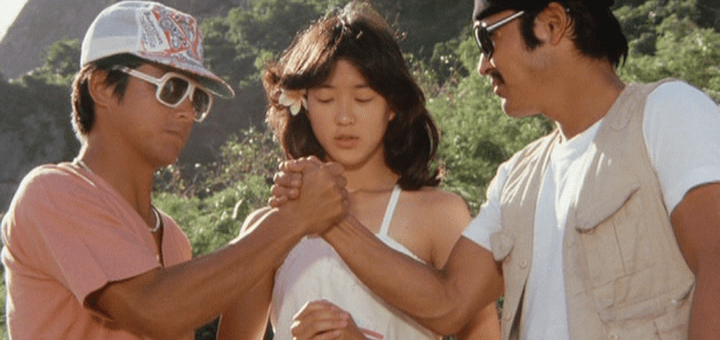
Kiyoshi Nishimura began his career in the action genre with a series of paranoid thrillers so it feels particularly odd to see him tackle similar themes in such a breezy, lighthearted way as 1979’s Golden Partners (黄金のパートナー, Ogon no Partner). Though based on a novel by Kyotaro Nishimura, the film seems to have been envisioned as an homage to Robert Enrico’s Les Aventuriers in following two men and a young woman on a quest to track down a missing person and also find a large amount of gold supposedly contained in a downed submarine. 

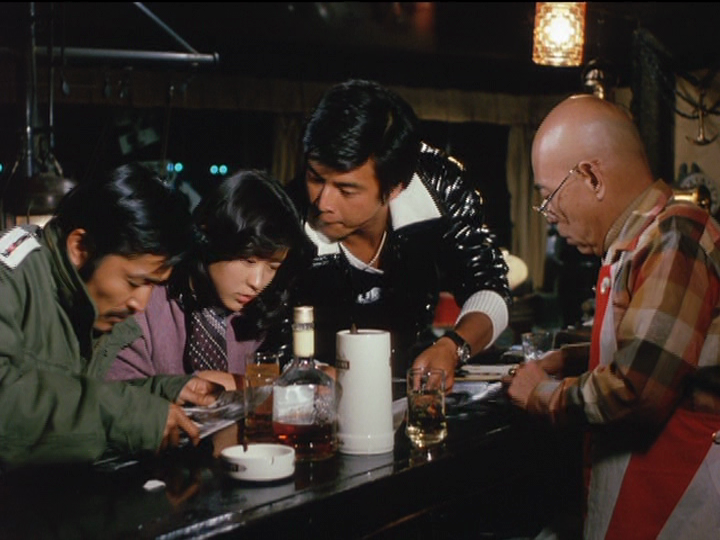
Kosuke (Tomokazu Miura) is a rather aimless young man who lives on a fishing boat and has a career as a freelance photographer taking photos of things people would rather weren’t photographed, while his best friend Shusaku (Tatsuya Fuji) is a motorcycle-riding policeman who has a strong sense of civic duty yet mostly spends his time giving out tickets to locals traveling slightly over the speed limit. They’re both good friends with the landlord at the Polestar bar whom they affectionately refer to as Pops (Taiji Tonoyama). Pops has let them run up a significant tab even though he doesn’t appear to have any other customers. In any case, their aimless days are interrupted when Kosuke begins hearing a strange SOS message but can’t seem to identify where it’s coming from to be able to help. Meanwhile, a young woman arrives looking for Pops and explains that her father, an old friend of his, has gone missing which may be connected to the mysterious stash of gold bars Pops is fond of talking about every time he has too much to drink. 

Figuring out that the SOS message is using a code employed by the Imperial Navy during the war, the trio embark on trying to solve the mystery partly to help the young woman, Yukibe (Misako Konno), and partly because they want to find the gold. Basically a buddy movie, the film has a childlike quality as it mainly follows the trio hanging out on the beach in Saipan solving puzzles and getting into minor arguments. Things take a slightly darker turn when Shusaku decides to stay on even after his paid leave from the police force ends despite realising it’s unlikely they’re going to find the gold bars or even figure out what’s happened to Yukibe’s father. Having realised that Yukibe likes Kosuke and despite his own feelings for her, he’s beginning to feel like a third wheel but in the end cannot bring himself to leave this unending holiday adventure.

But after making a shocking discovery, what they stumble on is a wartime conspiracy in which a corrupt spy killed the other men assigned to transport the gold and took it for himself. He then used it to become a rich and powerful man in post-war Japan, apparently suffering no consequences for his actions hinting at the essential corruption of the post-war society. Realising he likely can’t be prosecuted nor would justice really be served if he went to prison for a few years, they decide on blackmail as their way of recovering the gold little realising how far someone who has killed before will go to protect their secrets. Nevertheless, despite the conspiratorial overtones the atmosphere remains largely cartoonish rather than dark or threatening right up until another tragedy occurs and brings the whole thing to an end.

This laidback sensibility is aided by the soundtrack provided by Takao Kisugi who briefly appears at the end of the film as his city pop folk songs run constantly throughout. Nishimura’s use of a ghostly zero fighter as the gang investigate the former airbase on Saipan proves slightly uncomfortable though ties in with some ghostly imagery as an evocation of a past that’s apparently still very present and largely unresolved. In any case, like a classic children’s adventure story the film does not particularly engage with its larger themes but concentrates on the trio’s attempts to solve the mystery along with their zany plans and crazy stunts culminating in the guys parachuting out of a private plane after aiming it right at that of the bad guys in a moment of extreme irony. A little bit sad and more tragic than it perhaps ought to be, the film is nevertheless a warmhearted tale of male friendship, the childish glee of solving a mystery, and the satisfaction of getting one over on the bad guys even if it comes at a very high price.


Trailer (no subtitles)

Great Absence (大いなる不在, Kei Chikaura, 2023)

“She’s not here. That’s everything,” is what the hero of Kei Chikaura’s poetic drama A Great Absence (大いなる不在, Oinaru Fuzai) is told when enquiring about the whereabouts of his missing stepmother and in the end is forced to accept it. That’s all there is, she isn’t here. The ways that Naomi (Hideko Hara) is there and at the same time not become central to the narrative in which absence is also of course a deeply felt presence.

That might also describe Takashi’s (Mirai Moriyama) relationship with his estranged father whom he’s barely seen since his parents divorced when he was 12. Yohji (Tatsuya Fuji) was evidently a difficult man, fussy and superior. Every line that comes out of his mouth is delivered as a mini lecture and generally filled with barbed criticism even if that might not really be what he meant to say. That might be why Takashi has stayed out of contact with him, though he has little choice but to respond after being contacted by the police who tell him that Yohji called them claiming he and his wife were being held hostage. Apparently suffering with advanced dementia, Yohji has now been placed in an eldercare facility though no one seems to know what’s happened to Naomi with a vague idea that she had been hospitalised sometime after falling ill and that living alone exacerbated Yohji’s cognitive decline.

Someone later asks Takashi why he came given that with the long years of estrangement no one would have blamed him for saying it was no longer any of his business, but there does seem to be latent desire for some kind of connection albeit one frustrated by awkwardness and the unhealed wounds of the past. Yohji had been a ham radio enthusiast which suggests that he was trying to reach out to people though struggled with communication and only ever found the words in writing as evidenced by the unexpectedly poetic love letters Takashi finds stapled into the diary which once belonged to Naomi but now somehow rests with him. 

Takashi spends much of the rest of the film wanting to return the diary as if he would be abdicating responsibility for it, refusing this particular inheritance along with any curiosity about the man his father is both then and now. In the care home, Yohji believes he is being held prisoner by a foreign power and offers only bizarre and disturbing explanations for what might have happened to Naomi, while attempts to communicate with the sons from her previous marriage are frustrated by longstanding resentment. Takashi’s stepbrother informs them that Yohji refused to contribute to her medical fees claiming he didn’t see why he should though it seems that he is trying to enact some kind of revenge or is seeking compensation for what he feels Yohji took from him. He also blames Yohji for the decline of his mother’s health convinced that the strain of living someone so casually cruel even before the intensification of his dementia eventually caused her to become ill.

He might in a way have a point, though it seems it was absence that also ate away at Naomi as the man who wrote her all those long and profound letters began to slip away, becoming aggressive and irritable. He may not have forgotten her, but also did not quite recognise the woman she was. It may be that it became impossible for her go on living with someone who was no longer there just as Yohji feels the ache of her absence and is mired in the regret and longing of the young man he once was who first let her slip through his fingers. 

This sense of absence may also have crept into Takashi’s own marriage with his wife (Yoko Maki) complaining that he may not have told her what had happened with his father if he had not needed to cancel another family event, nor did he want her to accompany him though eventually she insisted and perhaps succeeds in closing a gap through their shared attempts to unravel the secrets of Yohji and mysteries of the past. The sequences from the play which Takashi is performing that bookend the film, he speaks of a broken king who may not even be a king at all and echoes the sense in which Yohji has finally become absent from himself. At times profound and elegiac, the crisp 35mm photography adds to the sense of ongoing melancholy and irresolvable loss if tempered by an elusive serenity.


Great Absence screened as part of this year’s Toronto Japanese Film Festival. It will also be making its New York Premiere as part of this year’s Japan Cuts on July 18 ahead of its theatrical opening in the US on July 19.

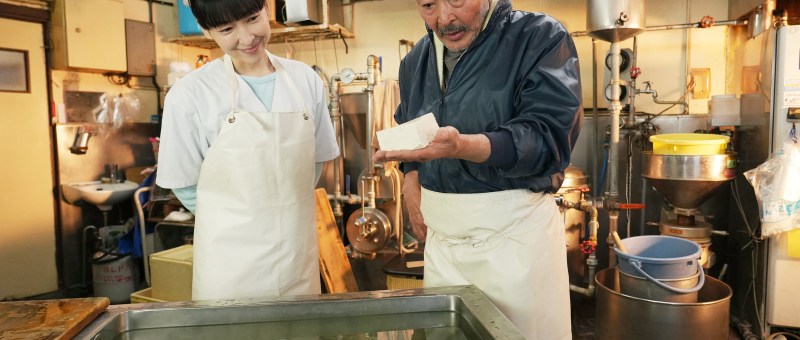
Takano Tofu (高野豆腐店の春, Mitsuhiro Mihara, 2023)

There’s an untranslated title card at the beginning of Mitushiro Mihara’s poignant dramedy Takano Tofu (高野豆腐店の春, Takano Tofu-ten no Haru) that describes the film as a story about the end of Heisei and it is in many ways about the end of an era, or perhaps of eras, but equally new beginnings and the eternal wellspring of life. With subtle hints of Ozu playing out as a kind of mashup of Late Autumn and Late Spring, it suggests that it’s never really too late to find happiness or to start something new even while preserving the best of the old. 

Harbingers of change are, however, lingering on the horizon as a customer to Takano Tofu remarks agreeing with daughter Haru (Kumiko Aso) that they need to innovate to stay in the game when the big new supermarket opens a few streets away. But change is not something father Tatsuo (Tatsuya Fuji) is keen on and especially when it comes to his tofu which is why he’s cancelled Haru’s popular new product of fried tofu and cheese despite its popularity and is also dead against her idea of expanding their network to sell in Tokyo.

There is something inherently comforting about the peacefulness of this quiet corner of Onomichi as Mihara captures it even if it also seems like a place out of time more Showa even than Heisei with its family businesses and old-fashioned shopping arcade. But equally there’s an underlying loneliness and answered longing along with a sense of lives disrupted by historical circumstance. Ironically enough, Tatsuo receives news from the hospital that one of the arteries to his heart is blocked requiring an operation to get everything working again and then immediately bumps into an old woman about his own age with whom he eventually bonds over the shared traumas of living in post-war Japan along with the lingering social stigma towards those affected by the dropping of the atomic bomb. We later learn that the failure of Haru’s marriage was in part caused by her father-in-law’s prejudice fearing her irradiated genes would contaminate his bloodline.

Then again, perhaps the pity expressed towards Fumie (Kumi Nakamura) as a woman who never married plays into outdated and sexist social attitudes that also lead Tatsuo and his friends to decide to find a mate for Haru given his sudden mortality crisis and fear that like Fumie she will be left alone when he eventually passes away. Of course, what it amounts to is a bunch of old men trying to decide who a middle-aged woman should marry while deliberately avoiding asking her if that’s even something she’s interested in. Having experienced marriage already perhaps she’s no desire to do so again and is perfectly happy the way things are. In any case she’s infinitely capable of finding a husband for herself if she wanted one. The prospective match they come up with for her is perfect on paper, youngish, handsome, wealthy and cultured, yet as it turns out what Haru might prefer is someone more ordinary, down to earth, and straightforward ironically enough just like tofu. 

As she later says, Tatsuo’s tofu has the flavour he gives it. Nicely textured, surprisingly soft on the inside, with a slight hint of astringency. There may be a minor pun involved in the Japanese title in that it can be read either as “Haru of Takano Tofu”, or as the meaning of her name implies “Spring at Takano Tofu” hinting both at a sense of transience and resurgence as Tatsuo takes in the cherry blossoms with Fumie and reflects on all they’ve experienced throughout the long years, the hardship and heartbreak of the post-war era. Yet as he says life is for living and it’s as much as you can hope for to look back and laugh at a life well lived. Maybe some things don’t need to change all that much, like carefully produced artisanal tofu as rich in soul as those who make it, but there’s always room for a little innovation and tiny chances for new happiness that could easily pass you by if you aren’t willing to take a risk or two and place a bet on change.


Takano Tofu screened as part of the 18th Season of Asian Pop-Up Cinema.

Original trailer (no subtitles)

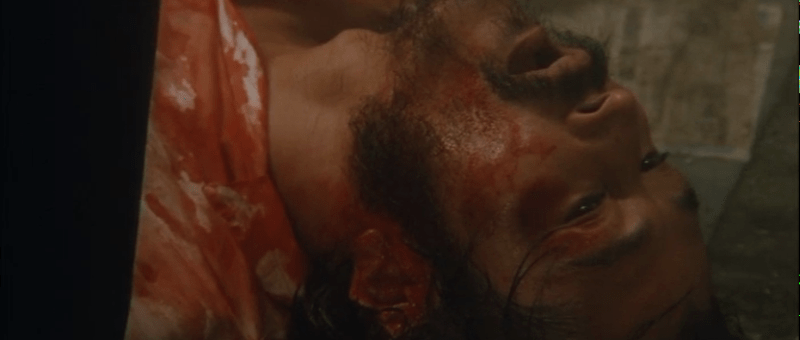
Break Out (行き止まりの挽歌 ブレイクアウト, Toru Murakawa, 1988)

Good cop or bad cop? A maverick detective crosses the line in the name of justice in Toru Murakawa’s hardboiled thriller, Break Out (行き止まりの挽歌 ブレイクアウト, Ikidomari no Banka: Break Out). Like many of Murakawa’s films throughout the ‘80s, the main villain turns out to be political corruption along with a complicit police force which the hero must in a sense divorce realising that he can enforce the law only by breaking it but tragically failing to protect those most in need of his care. 

Kaji (Tatsuya Fuji) is indeed the archetype of the lone wolf cop. Stumbling out of bed with an obvious hangover and fuzzy beard that stands in stark contrast to his clean-shaven colleagues, he immediately butts heads with follow officer Sakura (Renji Ishibashi) who is technically in charge of the latest homicide case which Kaji believes may be connected to the death of a young woman at a hotel that the force has so far proved reluctant to investigate. To him, it all seems to point to local gangster Nakai (Kiyoshi Nakajoe) with whom he seems to have an ongoing rivalry which might be why Nakai has implicated Kaji’s ex wife Saeko (Saiko Isshiki) in his drug smuggling operation. 

Kaji quickly identifies the body as a bass player, Shimada, who just happens to have played at a club connected to Nakai, and soon realises that a young woman, Miki (Yoko Ishino), who belongs to a local biker gang, is most likely responsible for his death. But, somehow feeling sorry for her and suspecting she may have access to information that would help him take out Nakai for good, Kaji actively helps Miki evade the police by harbouring her in his own apartment while they are both stalked by a mysterious, Terminator-esque hitman who seems intent on recovering some kind of evidence obviously harmful to his client whoever that may be. 

Murakawa’s greatest successes had occurred in the 1970s partnering with the great Yusaku Matsuda who had at this point moved away from genre films though he would later reunite with the director in his final screen appearance, a television movie in which he played an earnest policeman investigating a terrorist incident, before sadly passing away of bladder cancer at only 39. In any case the image of Matsuda hangs heavy over Murakawa’s subsequent films and it’s quite obvious that the menacing hitman has a distinctly Matsuda-esque silhouette, while Tatsuya Fuji plays a similar role to that he’d inhabited in Yoichi Sai’s Let Him Rest in Peace only this time as a world weary ‘80s cop who has his own particular code of righteousness he feels the world has failed. 

His more cynical boss, played by Murakawa stalwart Mikio Narita, is quick to tell him that he should have resigned after a previous incident and that if he had done so his wife would not have left him, a sentiment which she later confirms which is in part surprising because the incident involved him fatally shooting her father. The implication is that Kaji is a true defender of justice who refused to surrender to institutional corruption even at great personal cost. Yet we do definitively see him cross the line, coldly executing a suspect who goads him by claiming he has already killed someone he cared about and thereafter little caring for conventional morality deciding to take the bad guys down with him no longer having anything left to lose except perhaps the girl, Miki, with whom he has developed a paternal bond. 

Meanwhile his earnest partner, Nishimura (Hiroaki Murakami), who originally disapproved of Kaji’s old school, maverick policing has changed his tune now seeing the value in his belligerence not least when his own wife is taken hostage by Nakai leaving him equally powerless at police HQ. Kaji is constantly told to back off the hotel case because of pressure from above, eventually discovering a connection to a sleazy politician but knowing that he can’t touch him or Nakai while bizarrely ordered to continue investigating Shimada’s death despite the evidence that suggests they are quite clearly connected. Still as the rather more poetic Japanese title which means something more like “elegy for a dead end” implies, this world is already beyond redemption and the only recourse open to Kaji is to make a sacrifice of himself in the name of justice. A good bad cop, all he can do is pass on his outrage to those left behind. Shot with Murakawa’s trademark hardboiled mist, and a noirish sense of fatalism the film paints a bleak picture of infinite corruption in Bubble-era Japan in which the only hero on offer is a morally compromised cop prepared to die for an illusionary justice. 


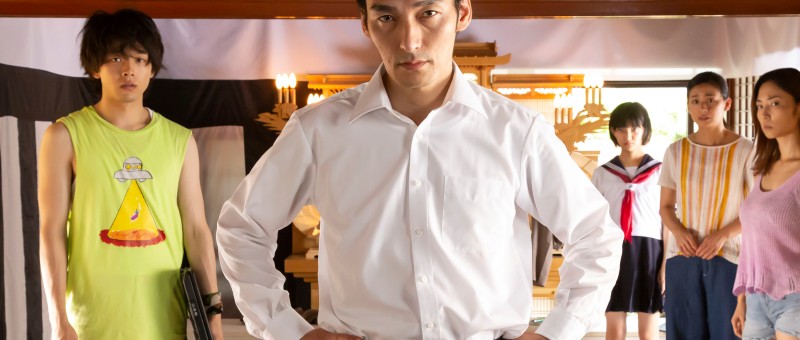
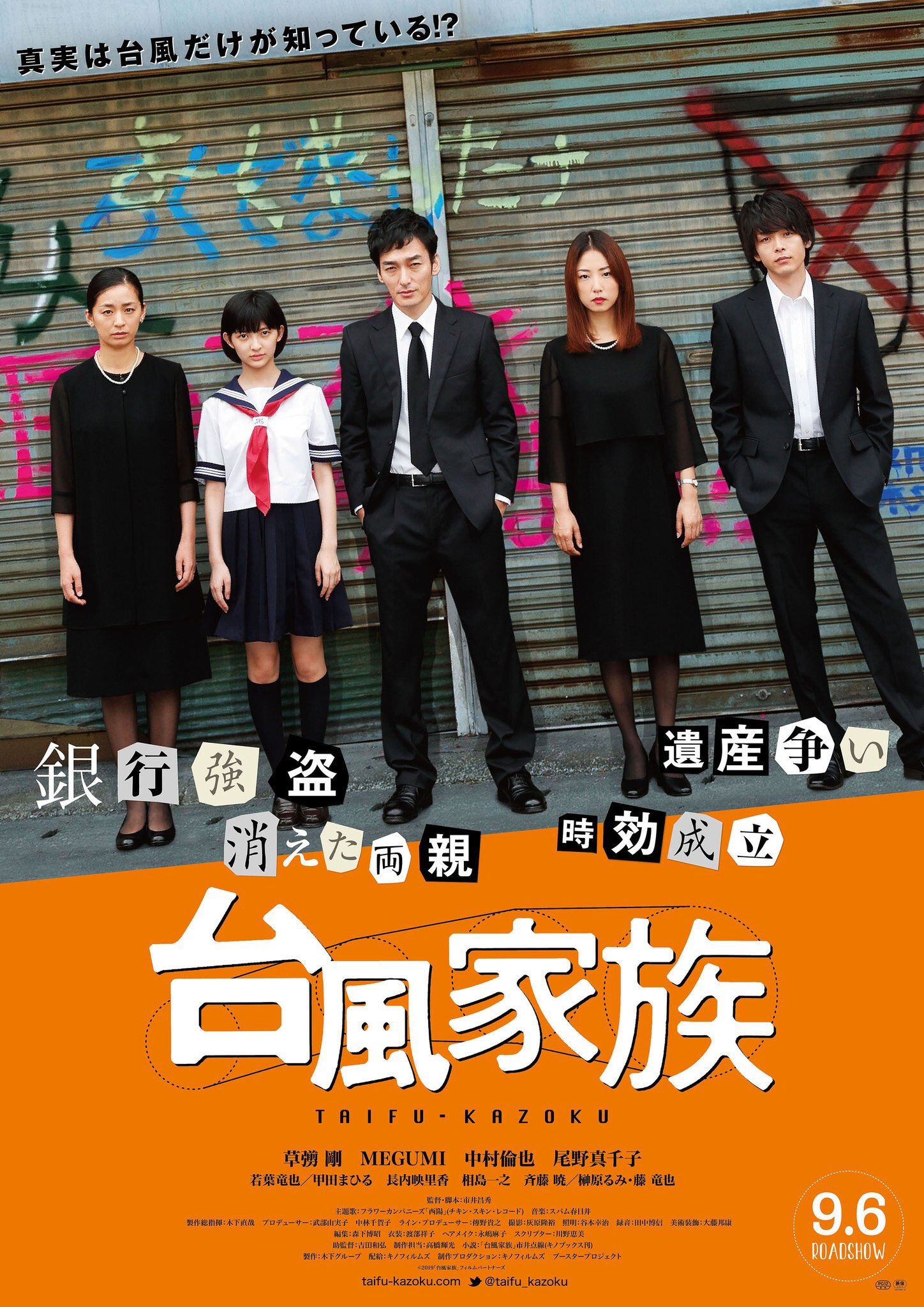
The Stormy Family (台風家族, Masahide Ichii, 2019)

A disparate group of now middle-aged children orphaned by the storm of their parents’ abandonment struggle to find solidarity on reuniting to put the past to rest, but eventually come to an understanding in letting go in Masahide Ichii’s darkly comic tale of familial resentments, The Stormy Family (台風家族, Taifu Kazoku, AKA Typhoon Family). Battling not just a sense of betrayal, but intense resentment in being left to deal with the fallout of a corrupted parental legacy the kids squabble over their “inheritance” but later perhaps regain a sense of mutual connection in reclaiming their shared history. 

10 years previously, Ittetsu (Tatsuya Fuji) and his wife Mitsuko (Rumi Sakakibara) robbed a local bank and then apparently made a run for it in the family hearse. With the statute of limitations now expired, the children decide to hold a funeral having had their parents declared dead so they can divide the estate and presumably draw a line under their shared trauma. The problem is, partly, that they’re hurt believing that their parents committed a crime and then simply abandoned them, but they have each also had to deal with the stigma of being the children of the elderly bandits who robbed a bank with a hearse. Oldest son Kotetsu (Tsuyoshi Kusanagi) lost his job, daughter Rena’s (Megumi) marriage broke down, and while middle son Kyo (Hirofumi Arai) does not particularly mention how the crisis affected him, youngest brother Chihiro (Tomoya Nakamura) who was a teenager at the time remains resentful that as he only had a part-time job anyway no one from the media was very much interested in hassling him. 

Rather than finding siblings’ solidarity in their shared trauma, the crisis only seems to have driven them further apart. If perhaps slightly ashamed, they freely admit that they’ve only come to sort out the inheritance but even this leads to another argument as Kotetsu tries to use his oldest son privileges to claim he’s entitled to an unequal share because the others all went to uni on the parents’ dime, complaining that he needs the money more because he’s been unable to hold down a steady job and has to pay for his teenage daughter Yuzuki’s (Mahiru Coda) education, hoping to send her to music conservatoire in Vienna. As expected, that doesn’t go down very well with everyone else, while even Yuzuki expresses disdain and exasperation for her father’s amoral venality, telling him to get back on his feet with honest work rather than trying to cheat his siblings out of their birthright. In this, however, the family largely agree he might not be so different from patriarch Ittetsu who despite his motto of “don’t bother others” often penny pinched to an extreme degree and even seemed inappropriately happy to receive new business considering he ran a funeral parlour. 

On closer investigation of their parents’ home, what the kids learn is that there were things they didn’t understand perhaps because Ittetsu didn’t want to “bother” them with an explanation, though as someone else points out family aren’t “others” and probably it should be alright to bother them. Having argued with his father when he left to pursue his dream of being an actor, Kotetsu eventually sacrificed his desires recommitting himself to making his daughter’s dreams come true instead but like Ittetsu struggles to find a way to support her emotionally. Ittetsu may have been a difficult, perhaps less than honest, man but in learning the truth the family begin to realise that his actions came from a deep place of love even if it was a love he was unable to show on the surface. 

In an extremely ironic twist, the funeral and a climactic storm eventually allow the siblings to let their parents go, forgiving them for the fallout from their crime but also for their abandonment and all the petty resentments of their childhood. The world may be a pretty dishonest place, filled with greedy monks, telephone fraudsters, schemers and thieves, and perhaps you can’t even really trust your family but a father’s love is apparently the one true thing though it might not always be easy to understand. A darkly comic take on dysfunctional family bonds and the radiating legacy of crime, The Stormy Family gradually creeps towards its macabre but surprisingly moving finale allowing the family to rediscover itself in letting go only to set them at odds once again with the corrupting influence of greed. 


The Stormy Family streamed as part of this year’s Nippon Connection.

Original trailer (no subtitles)

Images: ©2019 “The Stormy Family” FILM PARTNERS

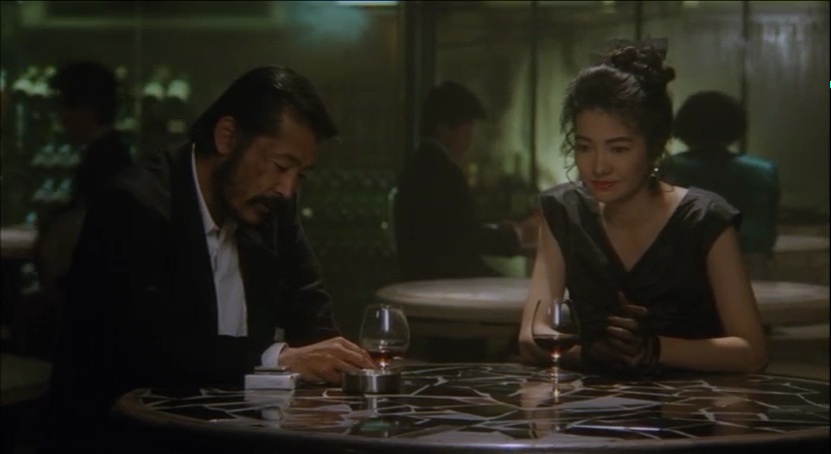
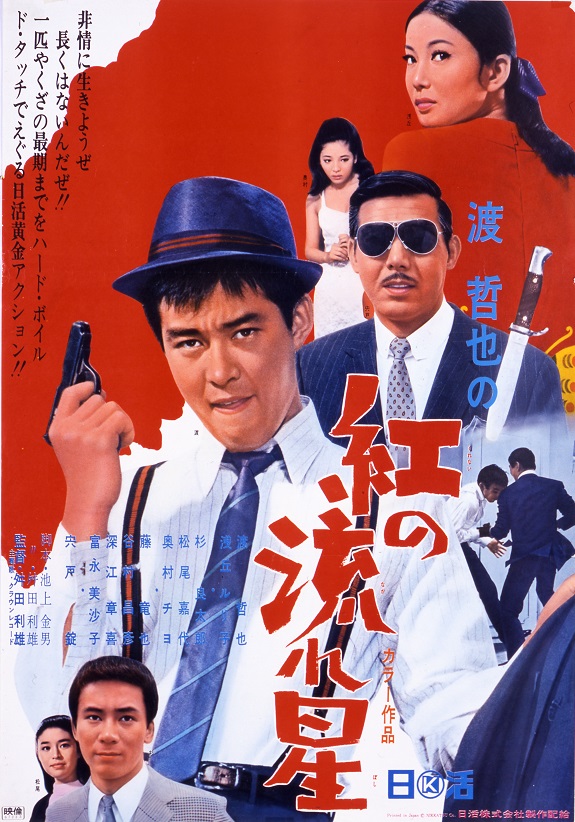
Velvet Hustler (紅の流れ星, Toshio Masuda, 1967)

Perhaps overlooked in comparison with his better known contemporaries, Toshio Masuda was a bankable talent at Nikkatsu directing some of the studio’s biggest box office hits largely thanks to his long association with tentpole star Yujiro Ishihara. Nine years on from their collaborative debut Rusty Knife, however, times had perhaps begun to change. Featuring vibrant colour production design by Tokyo Drifter’s Takeo Kimura, a frequent Seijun Suzuki collaborator, 1967’s Velvet Hustler (紅の流れ星, Kurenai no Nagareboshi, AKA Like a Shooting Star) is a reworking of Masuda’s own Red Pier, itself inspired by Julien Duvivier’s 1937 French thriller Pepé le Moko, with Tetsuya Watari in the role originally filled by Ishihara. Apparently drawing inspiration from Godard’s Breathless, Velvet Hustler is a thoroughly post-modern retake, a parodic tale of gangster ennui and post-war emptiness in which rising economic prosperity has brought with it only despair. 

When we first meet petty gangster Goro (Tetsuya Watari), he’s coolly standing by, leaning on a fencepost like a bored gunslinger as he waits for the perfect getaway vehicle. Jumping into a fancy red convertible which it seems has already been stolen by the young man who parked it in this packed car park, the wires handily hanging striped and exposed, Goro barrels along the highway and and performs an infinitely efficient drive-by shooting on a rival gang boss. According to the man who hired him, Goro was only supposed to cause serious injury, not death, but as he points out if the guy insists on dying that’s hardly his problem. Taking his paycheque, Goro agrees to lie low in Kobe for the next six months after which his boss will come and get him. A year later, however, and he’s still there doing not much of anything, hanging out with the local kids and acting as a procurer dragging sailors on shore leave into gang-run clubs where Americans get into fights with Vietnamese émigrés. So desperate for escape are they that Goro’s underling even suggests they go to war, later thinking better of it when he remembers seeing horrific photos from the front.  

In a convenient but unsatisfying relationship with bar hostess Yukari (Kayo Matsuo), Goro explains that it’s not that he doesn’t like her, but he’s bored, “bored with fooling around with women”, but also of the business of living. The sun comes up, the sun goes down, and then it comes up again, every day all the same. His life has become completely meaningless and he has no idea what to do about it. He longs to go back to Tokyo, but is trapped in this strange Kobe limbo land, an end of the line sea port in which there is ironically no sense of escape. He doesn’t know it yet, but there’s a killer (Jo Shishido) on his trail, a killer who eventually reminds Goro that even if he kills him first another man will come. The bullets you fire are aimed squarely at yourself, Goro’s destiny is already set. There is only one way out of Kobe and it doesn’t lead back to Tokyo. 

Meanwhile, another possibility presents itself in the beautiful Keiko (Ruriko Asaoka), a temporary visitor from the capital looking for her missing fiancé presumed to have done a bunk with her father’s money. Keiko is a distinctly cool yet self-assured figure, generating an instant connection with the affable gangster at once reassured by a sympathetic mama-san that Goro is good but also warned that he’s still a yakuza and as such no good for a smart young woman like her. Keiko thinks that Tokyo is pretentious and boring, confused by Goro’s insistence on getting back there but like him perhaps in waiting. “I love you to death” she later ironically confesses while simultaneously insisting that men and women are different. There is no escape for her. Goro is tired of running but refuses to be handcuffed, choosing perhaps the only path to freedom presented to him. 

A nihilistic tale of gangster ennui in which life itself no longer has value, Velvet Hustler is a curiously cheerful affair despite its essential melancholy, Goro and Keiko sparring in a romantic war of attrition while he almost flirts with the dogged detective (Tatsuya Fuji) determined to bring him down. The kitschy production design gives way to Antonioni-esque shots of a strangely empty city while an ethereal sequence of dissolves eventually leaves the pair alone on the dance floor as if to imply their single moment of romance is but a brief dream of emotional escape. The trappings of post-war success are everywhere from Keiko’s elegant outfits to the cute red sports car and the weird club where Goro dad dances in front of his minions, not so much older than them but clearly out of place in this distinctly unhip seaside bar, but finally all there is is a dead end and an infinite emptiness the embrace of which is, perhaps, the only viable path to freedom. 


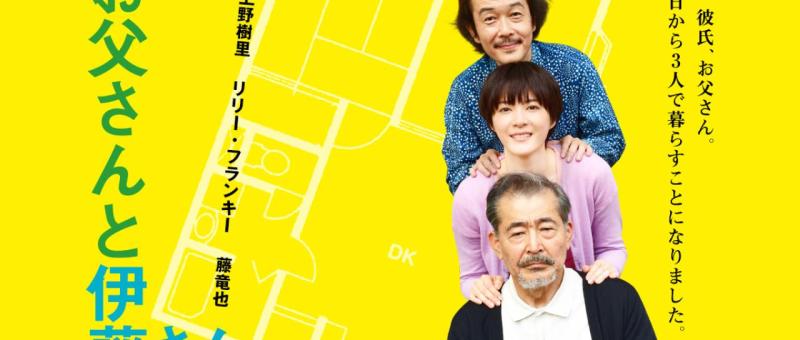
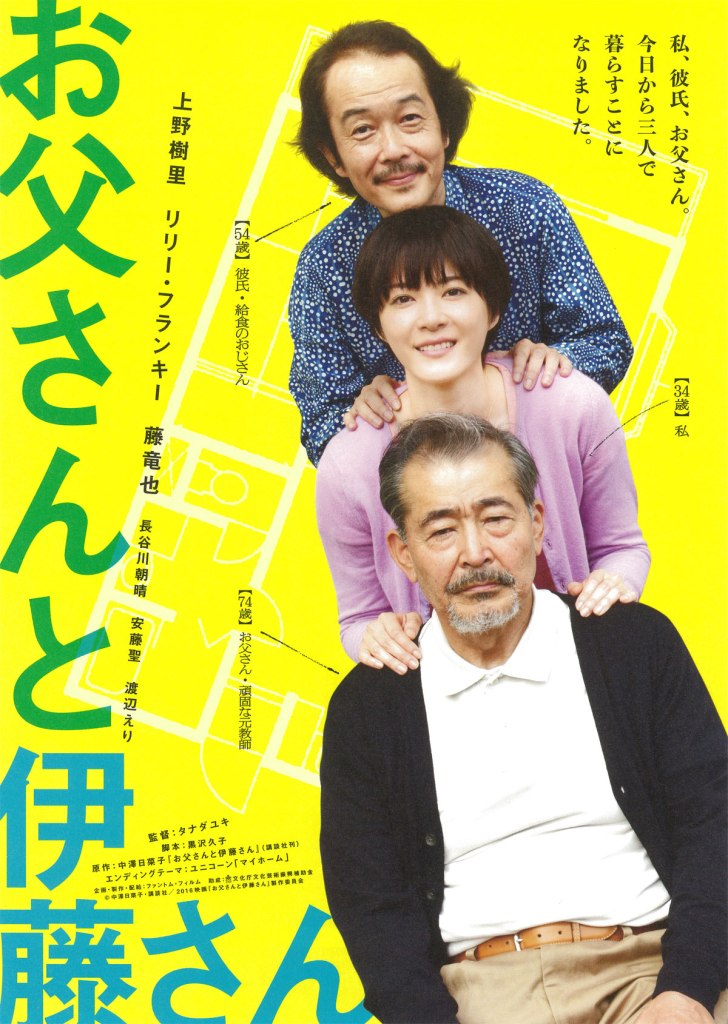
My Dad and Mr. Ito (お父さんと伊藤さん, Yuki Tanada, 2016)

Family. It can be surprisingly hard work. The rootless patriarch at the centre of Yuki Tanada’s exploration of the dissolution of the family in contemporary society My Dad and Mr. Ito (お父さんと伊藤さん, Otosan to Ito-san) is a case in point, “stubborn and difficult” as his daughter describes him to the man she lives with but had never seen the need to introduce to her relatives. He might be impossible, a “ticking time bomb”, but he’s still your dad even if he doesn’t approve of any of your life choices and insists on presiding over your home as if it were a schoolroom and he the headmaster. 

34-year-old Aya (Juri Ueno) is currently living with but not legally married to Mr. Ito (Lily Franky), a 54-year-old school cafeteria assistant she met while they were both working part-time at the same convenience store. Despite the age difference, the couple are very well suited and though they are not exactly wealthy, Aya now working part-time in a bookshop, they have enough for what they need and enjoy a quiet life growing their own produce in the small patch of garden behind their apartment. She is evidently not particularly close with her brother Kiyoshi (Tomoharu Hasegawa) who had no idea she is no longer living alone, otherwise he might not have asked her to take in their widowed 74-year old father for the next six months while his twins cram for exams to get them into an elite middle school. He quickly apologises, but as soon as Aya gets home she realises they have an unexpected visitor. Dad (Tatsuya Fuji) has already arrived carrying a mysterious box and is non-plussed to say the least on having encountered Mr. Ito. Nevertheless, he abruptly declares that he’ll be moving in, announcing that he prefers Japanese-style food, lightly seasoned. 

Dad, as he points out, was a schoolteacher for 40 years and has a distinctly conservative, authoritarian outlook. He’s not been in Aya’s apartment more than a few minutes before he starts criticising her lifestyle choices, though evidently like Kiyoshi he knew almost nothing about her and had no idea that she is not a regular company employee but a laidback part-timer. Obviously, he has issues with Mr. Ito, not least the age gap, but also with his equally laidback approach to life, poking Aya for information by idly remarking on the private lives of baseball players in the paper while she reveals that she knows almost nothing of him save that as far as she can remember he’s from Yokohama and has been married once before. She has no desire to know who he was before he met her and is happy enough to know the man he is now and draw her conclusions from that. 

Mr. Ito does indeed seem to be a very nice man, played by Franky with a characteristically laidback charm. Detecting a degree of hostility between father and daughter he tries to diffuse the situation with patience and kindness, immediately making space for Dad in their lives and trying to accommodate him as best as possible despite his unpleasantness and tendency to correct their “bad habits” such as serving teriyaki sauce with tonkatsu like common people while the civilised settle only for “Wooster”. After an initial period of hostility, Dad eventually warms to Mr. Ito, describing him as “my son-in-law” and bonding with him over manly things like power drills and oversize screws to the extent that he eventually considers moving back to his childhood country home and randomly asks Mr. Ito, but not his daughter, to come too. 

Mr. Ito, however is no Noriko, the child-by-marriage who alone is willing to shoulder the burden of filial responsibility, only someone attempting to mediate a difficult family situation. We realise that the reason Dad has been kicked out of Kiyoshi’s house is because he’s driven his wife Ririko (Sei Ando) into a near nervous breakdown with his tyrannous tendency for “correcting” what he sees as poor behaviour, apparently even criticising the way his late wife held her chopsticks right up until the day she died. His behaviour borders on the abusive and though we have no idea how his wife coped with it, it’s clearly too much for Ririko who is consumed with guilt in having “failed” in her filial responsibilities as daughter-in-law by no longer being able to bear his constant microaggressions, the final straw of which is apparently his attempt to interfere in the kids’ education by demanding they put a stop to the intensive cram schooling and give-up on elitist private tuition.

Aya and Kiyoshi could not be more different, he a wealthy and conservative middle-class salaryman obsessed with money and status, and she a laidback, hippieish part-timer happy to live the simple life. Dad disapproves of them both. After all things were different in his day, but perhaps he’s not quite as rigid as you’d think, quickly getting over his qualms about his daughter living over the brush with a man 20 years her senior while sick of his children’s “pity” and realising that he’s not wanted in either home even if superficially tolerated. Mr. Ito advises him to take some responsibility for himself, but is also keen to help Aya do the same by supporting her desire to take care of her difficult dad even if traditionally speaking the “obligation” is Kiyoshi’s by reassuring her she won’t have to make a choice even if Dad is a definite loose cannon. Capricious to the last, he may surprise them yet again with another unilateral decision but perhaps it’s never really too late to make up for lost time.


My Dad and Mr. Ito streams for free in the US on June 20 as part of Asian Pop-Up Cinema’s Father’s Day Cheer mini series. Sign up to receive the viewing link (limited to 300 views) and activate it between 2pm and 10pm CDT after which you’ll have 24 hours to complete watching the movie.

International trailer (English subtitles)

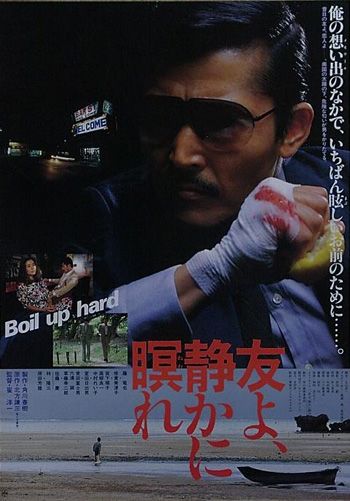
Let Him Rest in Peace (友よ、静かに瞑れ, Yoichi Sai, 1985)

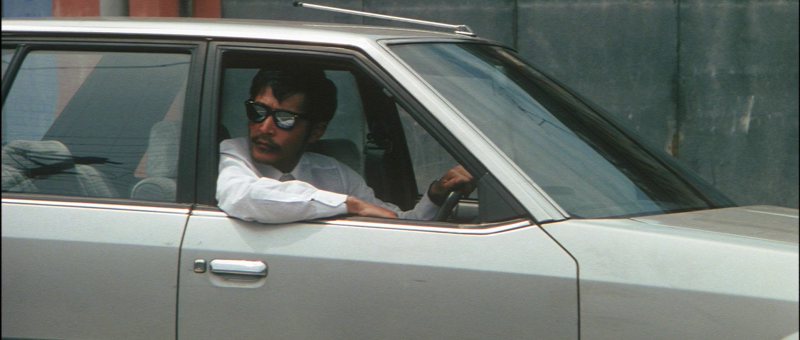
“There are times when you need to stand for something” according to an ultra masculine avenger giving a few lessons in manliness to the already defeated teenage son of a friend. A noirish, stranger in town affair, Yoichi Sai’s Let Him Rest in Peace (友よ、静かに瞑れ, Tomo yo, Shizukani Nemure) locates itself in an awkward frontier landscape, moribund small-town Okinawa seemingly devoid of life now that the Americans have pulled out and moved on. The Americans have, however, been “replaced” by beefed up corporate thugs backed by yakuza muscle and corrupt police. Sometimes you have to take a stand, if only to show them that you won’t be pushed around because if you give in once you’ll never be free. 

Disgraced doctor Shindo (Tatsuya Fuji) has come to Okinawa in search of the Freein, but every time he tries to ask someone for directions, he is met with intense hostility, the last man even telling him “You shouldn’t go there, that place is no good”. This is not because the Freein is mostly home to a collection of brassy sex workers, but because its owner and Shindo’s old friend whom he has come to help has become a local pariah. Sakaguchi (Ryuzo Hayashi) is currently in jail because he apparently went crazy and started waving a knife around at construction magnate Shimoyama (Kei Sato). As Shindo quickly finds out, Shimoyama is in the process of buying up the whole town and Sakaguchi is the last remaining hold out. As such, he is hated by most of the other residents and the subject of persistent harassment by Shimoyama goons who have not only thrown bricks through the windows but gone so far as to kill his son’s dog, later kidnapping the boy to put pressure on the pair of them. 

What’s not lost on Shindo is the extent to which Shimoyama’s corruption has already seeped into the town. Meeting Sakaguchi’s son Ryuta (Makoto Mutsuura) by chance, Shindo takes the boy to see his dad but is again met with hostility by the local bobby, Tokuda (Hideo Murota), who tells him that “Shimoyama Construction is the savour of this town”. “There’s no other company that is so giving”, he goes on, “to have the employees of a company like that working here, I can’t have a wild man like Sakaguchi running about”. According to Tokuda, Sakaguchi is the odd man out, an inconvenience to all those around him who believe in Shimoyama and are trying to save the town. Tokuda looks sheepish when Shindo asks him why he’s so into Shimoyama, confirming the mild suspicion aroused by his improbably fancy watch. 

Tokuda’s warning is however borne out by the townspeople who continue to shun and ignore Shindo while the other kids mercilessly bully Ryuta, calling him the “craziest kid in Japan” and calling for his dad to get the death penalty despite the fact that all he seems to have done is aggressively wave a fruit knife at the wrong person. The local cafe owner describes him as an embarrassment and accuses him of holding out to get more money. After all there’s no future in this tinpot town which seems to exist in the ruins of the post-war era and Shimoyama is already offering triple the going rate so Sakaguchi is only being greedy and selfish. Komiya (Ryoichi Takayanagi), the bellboy, if you could call him that, at Freein, spins it slightly differently, explaining that no one supported Shimoyama in the beginning but they’ve all been harassed themselves and have long since given in. Shindo convinces Ryuta to talk about his kidnapping, but Ryuta tells him that on his return he told his father they should leave, that it was pointless to resist. Shindo asks him if he’s ever been in a fight, but the boy asks what the point is if you know you’re going to lose, “the strong are always strong”. 

That kind of defeatist thinking is anathema to Shindo’s conception of manhood. Despite his father’s incarceration, Ryuta is too afraid of being kidnapped again to go to school. Trying to be nice about it, Shindo calls him a coward for telling his father to leave even though he wants to stay because he allowed himself to be threatened into sumbmission. He tells him that he has to stand up for himself, report his kidnapping to the police. Ryuta tells him he’s crazy, the police are in on it, but Shindo counters that it’s worth trying to get his father out of jail because if they don’t they’ll never know. Ryuta snaps back that he knows already, and indeed bottles his chance when Shindo manipulates Tokuda into “helping” him oppose Shimoyama’s cult-like hold over the town.  

Shindo might not be that much better, he’s prepared to fight dirty, getting hard evidence of Tokuda’s corruption and trying to use it against him but even these methods prove ineffective against such a vast and entrenched mechanism of control. Shindo also realises that Shimoyama’s minion Takahata (Yoshio Harada) is another old university classmate, a member of the boxing club, bringing this widening drama down to the level of three men who went to the same prestigious university but all ended up here, pretty much at rock bottom. Though ironically enough Shindo’s broody silence and dedication to his friend have a few of the women wondering if he might be gay, his preoccupation is with a failure of masculinity. He doesn’t think Shindo was actually capable of threatening anyone, and knows that he had reasons that he might have wanted to try and sort this out sooner rather than later. His son’s words pushed him over the edge. He used his body as a weapon, tried to make Shimoyama damn himself, but his efforts were frustrated. Shindo acknowledges that “saving” his friend might look quite different than one might think, inadvertently teaching young Ryuta a few problematic lessons about what it means to be a man. Still, the town might have been “saved” in one sense at least in being freed of this particular oppressor. A stand has been taken, and a man’s self worth restored, but as Sakaguchi’s wife (Mitsuko Baisho) points out even while fully understanding the codes by which the men around her live, what is to become of those left behind?


TV spots (no subtitles)

Bright Future (アカルイミライ, Kiyoshi Kurosawa, 2003)

Bright future posterThe cinema of the late ‘90s and early 2000s is one defined by alienated youth kicking back against a stagnant society in which they see no place for themselves now that the dull and conventional salaryman world of their parents can no longer offer security in place of fulfilment. Kiyoshi Kurosawa’s early masterpieces had edged towards the nihilistic, embracing this sense of generational hopelessness but finding perhaps glimmers of possibility in the longing for escape no matter how far off. Bright Future (アカルイミライ, Akarui Mirai), shifting away from the genre fare which had made his name, does something much the same but perhaps even bleaker in its melancholy acceptance of intergenerational disconnection.

Our two heroes, Yuji (Joe Odagiri) and Mamoru (Tadanobu Asano), have workaday jobs at a factory which they find fulfilling only in their emptiness. The guys have found a fan in the factory’s ageing boss, Fujiwara (Takashi Sasano), who begins giving them special jobs and trying to hang out with them while promising a special signing bonus should they agree to become regularised employees. Bonding in their resentment towards men of Fujiwara’s age who romanticise their youth while exercising paternal authority and entitlement, the two hatch their revenge on an unforgiving society through the strange plan to acclimatise their pet jellyfish to life in modern Tokyo.

The jellyfish, closely associated with the ethereal Yuji, becomes a kind of symbol of the “bright future” the two young men fear will elude them. They, like the jellyfish, have tried to acclimatise themselves to living in the otherwise hostile environment of contemporary Tokyo but also accept that the ability to survive may not be enough and it may eventually be necessary to remove oneself from an unforgiving society until such time as it is possible to return.

This or something like it seems to be Mamoru’s key philosophy as the owner of the jellyfish and the chief architect of the “bright future” both men dream of – literally in the case of Yuji who is the idea’s unwilling prophet. Mamoru has, for reasons unknown, decided to take the strangely melancholic Yuji under his wing, eventually entrusting sole custody of the jellyfish to him in an attempt to force him to look after “himself”. In service of this ideal and perhaps of Yuji’s unwilling visions, Mamoru takes more immediate revenge against the literal Fujiwara – murdering his boss and his wife (Marumi Shiraishi) in their well appointed middle-class home (only their small daughter is spared). Yuji interprets this gesture as protective seeing as he himself had found the bodies after wandering into the Fujiwara home with violence on his mind, but misinterprets Mamoru’s intentions for him in disappointing his mentor by insisting that he is prepared to “wait” for him rather than take this cue to step up and take control of his own life’s direction. 

Yuji is indeed, like the majority of heroes in turn of the century Japanese cinema, entirely directionless. He appears to have no surviving family in the older generation, only an exasperated sister who does her best to help but doesn’t know how, attempting to straightjacket him into a salaryman world of conventional success with an office boy job at her understanding company. A strange young man, Yuji has has vivid dreams and a need for control and routine – it’s the closure of the local bowling lanes which sends him round to the Fujiwara’s in a calm yet violent rage while repeatedly losing in a video arcade to his sister’s boyfriend also sends his insecurity into overdrive. He once dreamt of a “bright future” but now sees only darkness. Stepping up onto the roof of a building in which he is learning to find a home, he is forced to admit that despite attempting to look far into the distance he can’t see much of anything at all from where he is right now.

Yet for all his resentment towards men like Fujiwara, it’s a father figure which eventually begins to push him in a more positive direction. Mamoru’s father Shinichiro (Tatsuya Fuji) takes his son’s vulnerable best friend under his wing, giving him a home and a purpose as he begins to teach him how to repair things that might ordinarily be thrown away. Shinichiro’s previous assistant quit because he saw no future in this line of work, but Yuji seems to delight in the repurposing of the previously useless for arcane ends even if his chief contribution is a continuation of his jellyfish experiments. Shinichiro, superficially supportive, cannot understand the obsession with the jellyfish. Attempting to reassure a thwarted Yuji, he asks him what exactly the jellyfish could achieve in a world so resistant to real change yet he also berates him with the impassioned impotence of age in decrying his contemptuous dismissal of the reality which, after all, belongs to men like Shinichiro who will demand respect while offering very little in return.

The jellyfish find they can’t live in Tokyo, but youth adopts a different solution as it runs rampant with out purpose or direction but seemingly delighting in meaningless anarchy. A group of teens Yuji runs into wear identical Che Guevara T-shirts while sporting light-up microphone headsets as they wander round the city kicking cardboard boxes and laughing as they go, like overgrown children with no clear forward path before them. Age and youth seem primed to exist in differing realities, perpetually unable to understand each other while youth struggles to find direction in the absence of parental guidance. Ironic in the extreme, the “bright future” here seems to exist only as a vague hope but, perhaps, the only guiding light in an ever darkening world.


Original trailer (English subtitles)

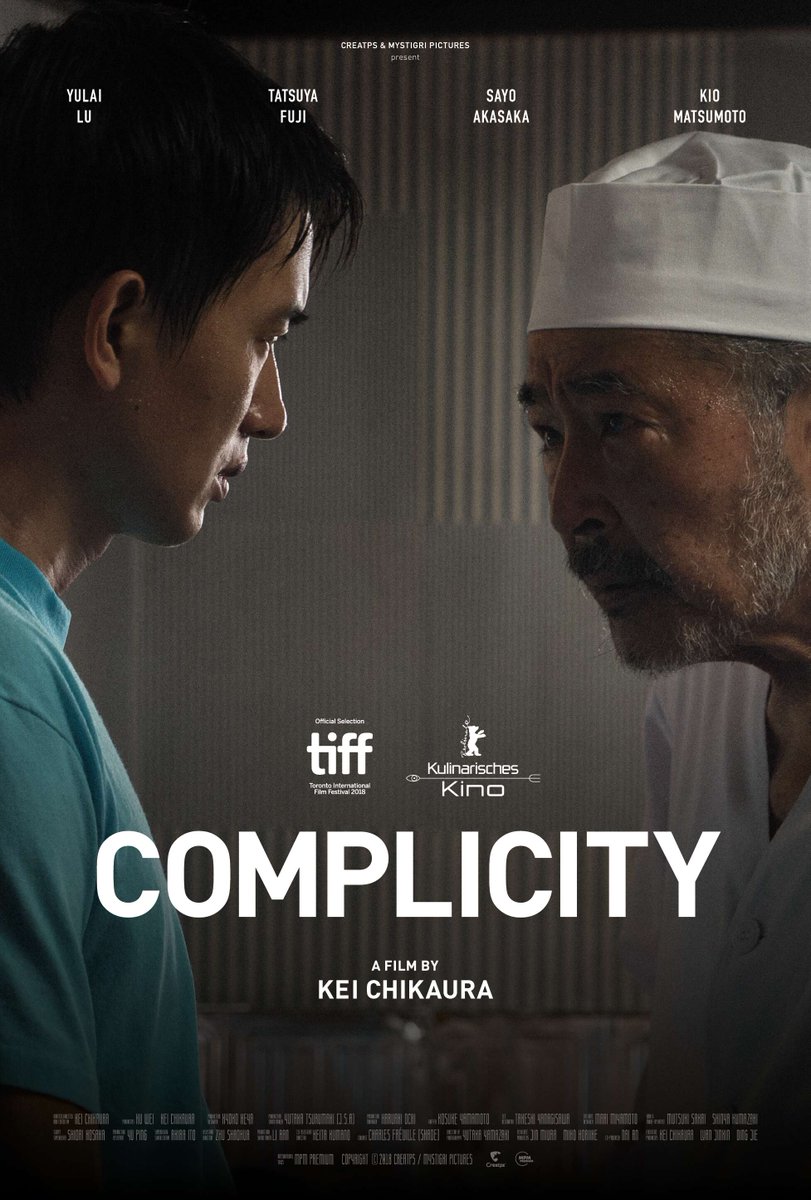
Complicity (コンプリシティ, Kei Chikaura, 2018)

Complicity posterWith an ageing population and an economy trapped in a long period of stagnation, Japan has found itself in an awkward moment of possible crisis as it begins to realise it will need to embrace immigration or face a serious labour shortage. Like many nations, unfortunately, much of Japan remains uncomfortable with the idea of overseas labour especially when it comes to “low skilled” work in construction, manufacturing, and casual jobs such those in restaurants and convenience stores. Given government intransigence and pressing need, workers from other areas of Asia are often employed illegally and subject to exploitation by gangs or unscrupulous employers.

The hero of Kei Chikaura’s Complicty (コンプリシテ), Chen Liang (Lu Yulai), finds himself in just this position as he leaves his sickly mother and feisty grandma alone in rural China in the hope of making enough money in Japan to come home and restart the family business. What he discovers, however, is that he’s essentially been trafficked as cheap labour and is already in hock for an ID card he was conned into paying three times the going rate for on the pretext it was “safer”. Now living under the name Liu Wei, Chen Liang is disturbed to receive calls on his new phone intended for his namesake but is tempted when Liu Wei receives a job offer from an employment agency. Passing himself off as his cover identity, Chen Liang takes the job only latterly realising it’s the rather incongruous position of a trainee chef in a family-owned soba restaurant.

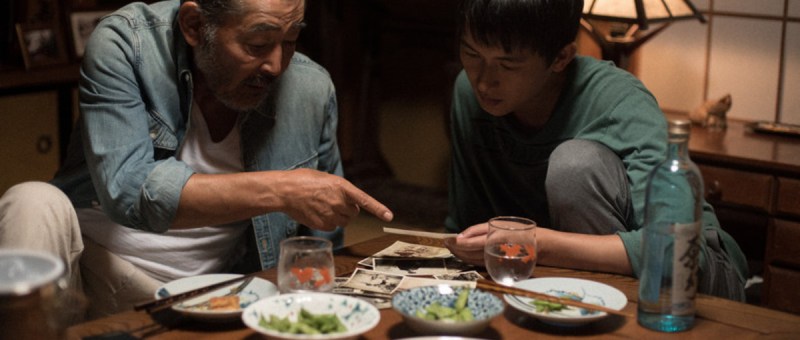
Against expectation, ageing soba chef Hiroshi (Tatsuya Fuji) and his daughter Kaori (Kio Matsumoto) are warm and welcoming people who are actually a little bit excited that someone from China wants to learn about soba. Taken in almost as a member of the family, Chen Liang begins to feel conflicted – he is after all lying to them, at least about his name and circumstances, and his presence in their home might cause them trouble if he is ever found out. Meanwhile, he also strikes up a friendship with an artist who is learning Mandarin but has to lie to her too, pretending they may one day meet up in Beijing when in reality he has never even been there.

His burgeoning romance with Hazuki (Sayo Akasaka) is what precipitates his downfall as she, unaware he is undocumented, reports his stolen wallet to the police. The lies do not stop there – Chen Liang is also lying to his worried mother back at home who thinks he’s working in an office, while she is simultaneously lying to him in pretending everything’s fine in order to facilitate his “happy” life in Japan where he is supposed to make lots of money and come back a wealthy man. In order to make his dream succeed, Chen Liang must become Liu Wei at the exclusion of all else, forsaking his life as Chen Liang and living carefully as if he has nothing to fear.

Chen Liang is onto a good thing and has fared much better than some of his friends who either got themselves picked up by the police for doing the gang’s dirty work or found themselves out in the cold with no feasible way to get back “home”. Hiroshi’s son, with whom he seems to have some kind of bad family history, looks down on Chen Liang unable to understand why his father employed someone from China when the business is on the rocks. His attitude seems to be one shared by many (though not the universally supportive customers in Hiroshi’s soba shop) who see only difference rather than commonality. Despite the language barrier, Hiroshi and Chen Liang are often able to communicate through written characters, while another poignant moment of bonding sees Chen Liang sing the Mandarin lyrics over the top of Hazuki’s cheerful refrain of a popular Japanese song by Teresa Teng beloved all across Asia. Hiroshi himself was born in Beijing at the end of the war – a painful reminder of the complicated history between the two nations, but also one of how much they are interconnected and how little place of birth has to do with cultural identity.

Emphasising how much they have in common rather than the various ways in which Chen Liang differs from the world around him, Chikaura paints a much more sympathetic portrait of a migrant worker than the one usually found in the media. Filling the void left behind by Hiroshi’s own resentful son, Chen Liang becomes a valued and trusted member of the family who are in a sense “harbouring” him but to protect rather than exploit. Pushed to go to Japan despite his misgivings and drifting into the soba shop job through accidental opportunism, Chen Liang had in a sense abandoned his identity in avoiding making concrete decisions. Being Liu Wei was also a way to hide from his insecurities and fears for the future, but only through the unconditional love he received under false pretences is he finally able to reclaim his name, fugitive but free at last. A powerful plea for empathy and cross cultural connection, Complicity is a beautifully drawn character study in which kindness and compassion eventually open new paths for a conflicted young man trying to find his place in an often hostile world.


Complicity was screened as part of the 2019 Nippon Connection Film Festival.

Original trailer (English subtitles)

Teresa Teng’s – Toki no Nagare ni Mi wo Makase

Mandarin version – I Only Care About You