Suzaki Paradise: Red Light (洲崎パラダイス 赤信号, Yuzo Kawashima, 1956)

Suzaki paradise posterBy 1956, things were beginning to look up. Post-war privation was receding into the distance with the consumerist future already on the horizon, but as much as there were possibilities for some others found themselves floundering, unable to find direction in a world of constant change. Yuzo Kawashima’s Suzaki Paradise: Red Light (洲崎パラダイス 赤信号, Susaki Paradise: Akashingo)* was released in the same year that the anti-prostitution law came into force forever changing the face of the red light district and like its heroes finds itself hovering on a precipice caught between an old world the new.

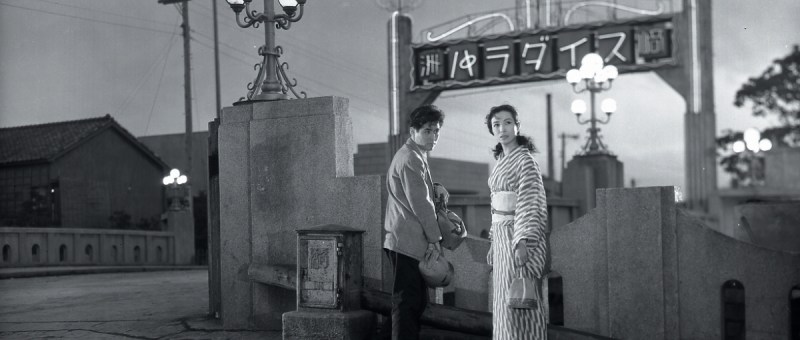
Lovers Tsutae (Michiyo Aratama) and Yoshiji (Tatsuya Mihashi) have found themselves at a crossroads, or more accurately on a bridge, unsure whether to go forward, or back, or some other place entirely. Tsutae is disappointed in Yoshiji, expecting him as the man to have some kind of plan, while he is a little resentful of her fortitude and tendency to take the lead. Yoshiji grows maudlin and moody, berating himself for his failure of manhood, a failing for which Tsutae has little sympathy. Fed up with him, she runs off and catches a bus. He chases her, and they both get off at Susaki, home to a famous red light district. Yoshiji isn’t happy with this development, worried that Tsutae will cross the bridge and fall back into her “old self”, perhaps hinting at the kind of life she lived before. Luckily for them, Tsutae spots a help wanted sign at a tiny bar firmly on this side of the river. The landlady, Otoku (Yukiko Todoroki), is a kind woman raising her two sons alone, but is wary of handing the job to a woman the like of Tsutae. As she tells her, no one stays here long, most just see it as a stepping stone, a place where they can acclimatise themselves to the idea of crossing the bridge into the ironically named “Susaki Paradise”.   

Once you cross the bridge, most seem to say, you never really cross back. Later we learn that Tsutae is from the other side of the water and seemingly forever trying to escape her past though mostly through trying to attach herself to a man she thinks can carry her out it. Yoshiji seems to be aware that Tsutae is a former sex worker and is desperate to prevent her returning to her previous occupation, worried that he’ll lose her if she does or perhaps just unfairly judgemental. Likewise, we learn that he lost his job through some kind of impropriety, perhaps committed trying to keep Tsutae with him. Each of them is in one way or another trapped by patriarchal social codes, Tsutae believing that the only way she can save herself is by finding the right man to save her, and Yoshiji increasingly resentful for not living up to the male ideal. He can’t keep his woman, can’t provide for or protect her, most pressingly he cannot find a job but is also proud, shamed by the idea of accepting low paid manual work. He feels belittled and humiliated and is embittered by it.

Tsutae meanwhile takes to Otoku’s bar like a duck to water, quickly bringing in a host of male custom while bonding with the cheerful owner of a radio shop in nearby electronics centre Kanda, Ochiai (Seizaburo Kawazu). Otoku manages to find a job for Yoshiji delivering soba noodles in a local restaurant which he decides to take despite his intense resentment and wounded male pride. Ironically enough, the name of the soba restaurant is “Damasare-ya” which sounds like “tricked”, explaining why he might be reluctant to take the job, but the biggest problem is that he can’t trust Tsutae and is always paranoid about her meeting men in the bar or deciding to cross the bridge in his absence. Eventually, Ochiai offers to make Tsutae his mistress and provide a flat for her in Kanda, leaving her with a choice – “love”, if that’s what it is, with the feckless and jealous Yoshiji, or perfectly pleasant yet transactional comfort with Ochiai. Yoshiji, meanwhile, attracts the attentions of an earnest waitress in the soba noodle restaurant (Izumi Ashikawa) who seems to support his attachment to Tsutae but is also rooting for him to get over himself and live an honest life of hard work by knuckling down at his new job.

Yet that post-war restlessness won’t seem to let either of them go. Once you fall, you fall and it may not be possible to climb back up, or at least not without the right person to help keep you from slipping back down. Otoku has managed to keep a steady hand on the tiller, apparently waiting, we’re told, for the return of her husband who ran off with a woman from the red light district four years previously. The red light district, like toxic masculinity, cuts both ways and you’ll pay a heavy price for crossing the bridge. “People had better live honestly” a middle-aged man avows after having apparently seen the error of his ways, but it’s easier said than done.

When their worlds come crashing down, Tsutae and Yoshiji find themselves right back where they started, hovering on the bridge. “We have to live until we die” Tsutae once said, dismissing any fears we might have had that the pair might jump, but their course is both set and not. Now chastened, Tsutae’s decision to take a step back is both a reflection on the failure of her Susaki experiment, and also perhaps a mild concession to patriarchal social norms as she actively assumes the submissive role, affirming that she will follow Yoshiji’s lead while he reassumes his masculinity by finally taking charge. No longer quite so liminal they move on, another pair of floating clouds, perhaps more at home with who they are and can never be, but with no clear destination in sight.


*The reading of this place name is “Susaki” but the film has become more commonly known under the title “Suzaki Paradise”

Currently streaming on Mubi as part of an ongoing Yuzo Kawashima retrospective.

Title sequence (no subtitles)
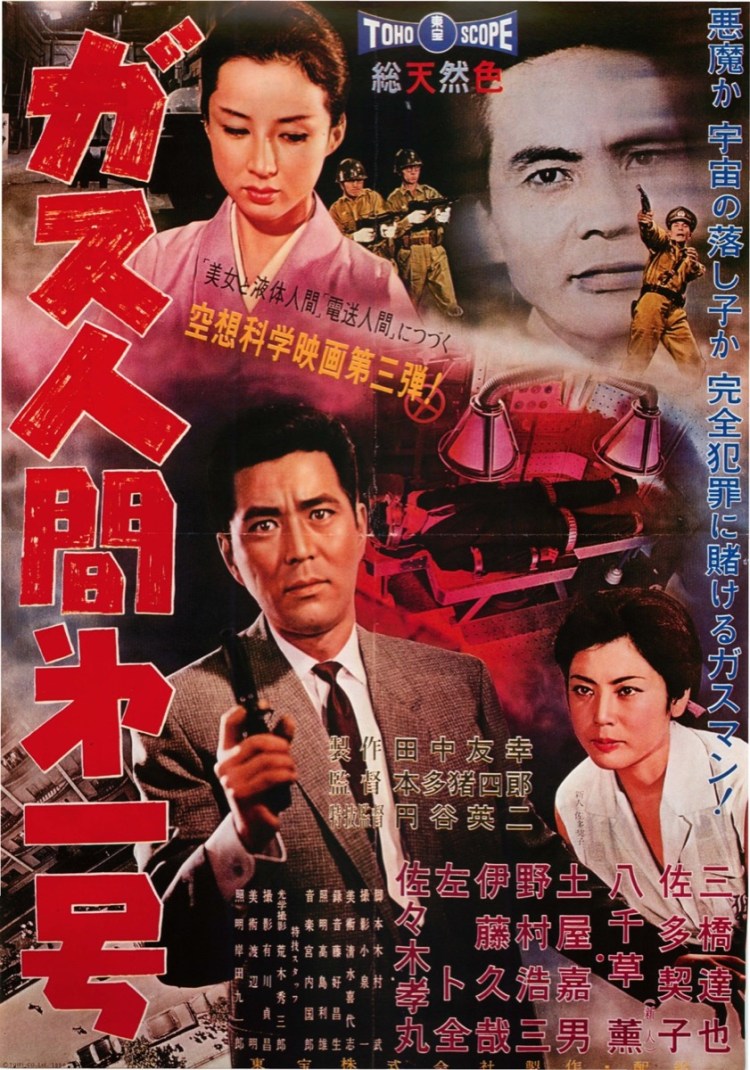
The Human Vapor (ガス人間第一号, Ishiro Honda, 1960)

The Human Vapour poster“The world is full of hysteria towards things they don’t understand” admits the strangely chatty “villain” at the centre of Ishiro Honda’s The Human Vapor (ガス人間第一号, Gas Ningen dai Ichi-go). Third in a loose trilogy of “mutant” films put out by Toho beginning with The H-Man and followed by The Secret of the Telegian, The Human Vapor is at once the most futuristic and the most traditional in that it’s no longer wartime guilt or nuclear anxiety which has corrupted our increasingly amoral hero but unwise ambition in which desperation to win the space race has produced a new and dangerous threat we may not be able to contain.

Honda opens with an exciting bank heist which on later consideration might not make much sense, filled as it is with shots of a faceless man pointing a gun at terrified staff while the vault doors open seemingly on their own. Earnest policeman Okamoto (Tatsuya Mihashi) is on the case, chasing a suspect car down a narrow country road only for it to crash and be discovered empty with no trace of the driver to be found. Okamoto’s feisty reporter girlfriend Kyoko (Keiko Sata) is dismayed to find out he has no leads, but later picks up on his mention of a buyo dancer, Fujichiyo (Kaoru Yachigusa), who lives near the scene and might have something to do with the case. 

Chasing Fujichiyo takes Okamoto to a library, where he becomes further convinced she is in contact with the mysterious bank robber. A strange and isolated woman, Fujichiyo is apparently from a noble, wealthy family but lives alone in a small cottage with only a single male servant where she devotes herself entirely to perfecting the art of traditional Japanese dance. We discover that Fujichiyo has been in poor health, which is why she hasn’t given a public performance in some time. Okamoto posits that the bank robber is bankrolling her comeback, though he never seems to have much of an explanation why she would need him when she has access to her own resources.

He is however correct, though it seems Fujichiyo was not aware that the money was stolen otherwise she might have been more careful in using it. In a contrast with genre norms, honest cop Okamoto never falls for Fujichiyo but does become oddly invested in her sad love story while sparking with his cheerful reporter girlfriend who ends up doing much the same. In fact, Kyoko is the only one doing much investigating but largely finds herself having to do it in spite of the (generally useless) men around her, including an unpleasant younger colleague who mocks all her ideas but does nothing much of anything on his own.

In any case, smirking villain Mizuno (Yoshio Tsuchiya) later makes himself known to the police in a selfless gesture of love in order to clear Fujichiyo’s name and get her released from police custody. He does this by taking the police to a bank and demonstrating how he was able to get in the vault without a key which involves his curious ability to turn himself into a gas. When Fujichiyo is not released, he takes matters into his own hands and frees all the prisoners in the cells, but Fujichiyo refuses to leave, insisting that she has no intention of running away and prefers to stay until the police affirm her innocence by releasing her.

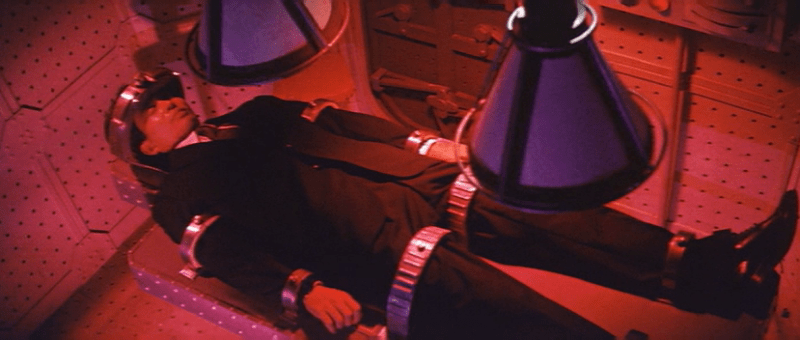
Mizuno’s intention to bypass the law is one of the many signifiers of his increasing danger, that now believes himself “above” the rest of humanity and therefore no longer subject to their laws. He later tells the police exactly that, sitting them down for a mini audience to explain himself during which he recounts his history as an SDF pilot discharged on a diagnosis of lung cancer after which he took the boring job in the library and fell in love with Fujichiyo. A shady doctor, Sano (Fuyuki Murakami), later approached him claiming to be working for Japan’s space programme and suggested that his fighter pilot background made him a perfect fit for becoming an astronaut. Mizuno agreed to participate in his research to “change the existence of the human body” in preparation for life in space, but when Sano’s weird experiments turned him into a “gas man”, the doctor committed suicide in horror leaving Mizuno just another lonely victim of a mad scientist.

Like many other “mutant” heroes, the change in Mizuno’s body has also changed his soul though his love for Fujichiyo remains unchanged. It seems he’s only committing these crimes to fund her ambition of performing traditional buyo dance on the contemporary stage, while she though obviously devoted to her art finds it difficult to accept the man that he’s become. He promises to give her the world, sacrificing anyone that gets in his way. She remains conflicted, not wanting to accept his offer if it involves that kind of cost, and defending him to her colleagues only with the rationale that he is “different from what they are accustomed to”. While some advise caution, that perhaps Mizuno is not as dangerous as they think despite already having killed and should be given the chance to reform, others take a harder line eventually opting to use a different kind of gas to counter him.

Kyoko pleads with Fujichiyo as one woman in love to another, trying to protect Okamoto while advising her to pull Mizuno back from the brink by cancelling her performance, but precisely because of the understanding that exists between them she cannot. Sadly, as many point out, no one is really interested in buyo dance – the only audience members in attendance are there for the drama and the possibility of seeing the gas man in action. “You and I have finally won” Mizuno tells Fujichiyo on completion of her dance, as if this performance was all that ever mattered to either of them. But their victory leaves them with nowhere else to go, and the world unready to accept the latent threat a gas man represents. Fujichiyo makes her choice, one perhaps informed by her art and her love, while the authorities can only wait outside for the vapours to disperse.


Original trailer (No subtitles)

The Bad Sleep Well (悪い奴ほどよく眠る, Akira Kurosawa, 1960)

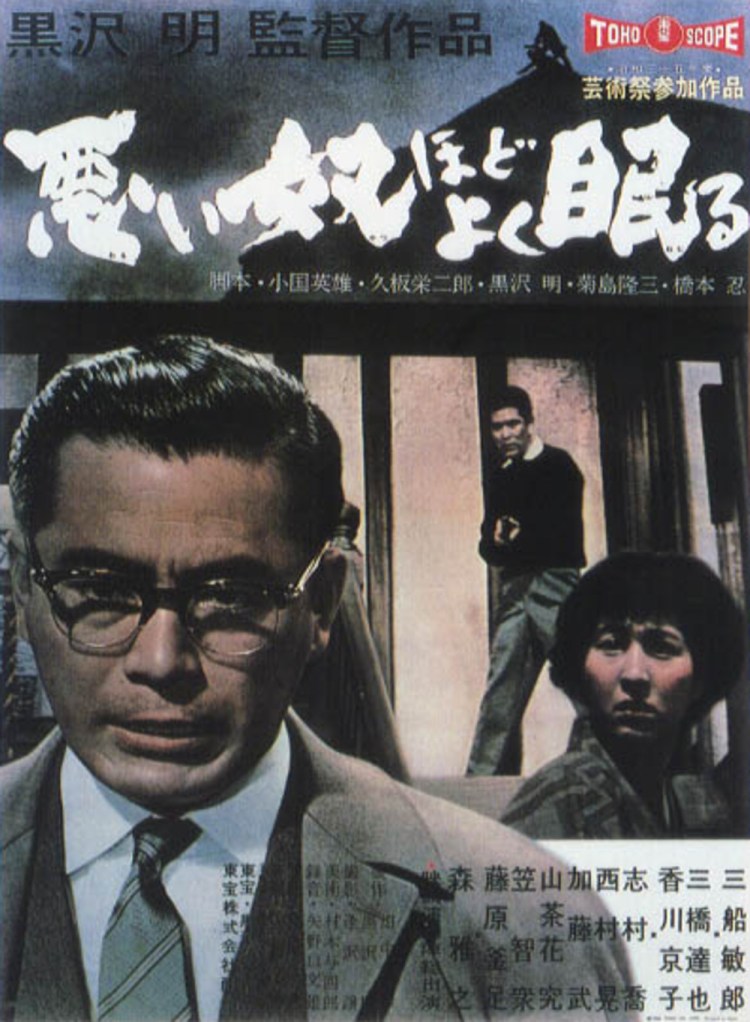
Bad Sleep Well posterThere’s something rotten in the state of Japan – The Bad Sleep Well (悪い奴ほどよく眠る, Warui Yatsu Hodo Yoku Nemuru), Akira Kurosawa’s take on Hamlet, unlike his previous two Shakespearean adaptations, is set firmly in the murky post-war society which, it becomes clear, is so mired in systems of corruption as to be entirely built on top of them. Our hero, like Hamlet himself, is a conflicted revenger. He intends to hold a mirror up to society, reflecting the ugly picture back to the yet unknowing world in the hope that something will really change. Change, however, comes slow – especially when it comes at the disadvantage of those who currently hold all the cards.

We open at a wedding. A small number of attendants lineup around a lift waiting for the arrival of the married couple only for a carriage full of reporters to pour out, apparently in hope of scandal though this is no gossip worthy society function but the wedding of a CEO’s daughter to his secretary. The press is in attendance because the police are – they believe there will be arrests today in connection with the ongoing corruption scandal engulfing the company in which a number of employees are suspected of engaging in kickbacks on government funded projects.

The rather strange wedding proceeds with the top brass sweating buckets while the bride’s brother (Tatsuya Mihashi), already drunk on champagne, takes to the mic with a bizarre speech “refuting” the claims that the groom, Nishi (Toshiro Mifune), has only married the bride, Yoshiko (Kyoko Kagawa), for financial gain before avowing that he will kill his new brother-in-law if he makes his little sister sad. Nishi, as we later discover, has indeed married with an ulterior motive which is anticipated by the arrival of a second wedding cake in the shape of a building at the centre of a previous corruption scandal with one black rose sticking out of the seventh floor window from which an employee, Furuya, committed suicide five years previously.

The police are keen to interview their suspects, the press are keen to report on scandal, but somehow or other the system of corruption perpetuates itself. The top guys cover for each other, and when they can’t they “commit suicide” rather than embarrass their “superiors” by submitting themselves to justice. The system of loyalty and reward, of misplaced “honour” mixed with personal greed, ensures its own survival through homosocial bonding with backroom deals done in hostess bars and the lingering threat of scandal and personal ruin for all should one rogue whistleblower dare to threaten the governing principle of an entire economy.

Nishi chooses to threaten it, partly as an act of revolution but mainly as an act of filial piety in avenging the wrongful death of his father who had, in a sense, cast him aside for financial gain and societal success. Wanting to get on, Nishi’s father refused to marry his mother and instead married the woman his “superiors” told him to. Later, his father threw himself out of a seventh floor window because his “superiors” made him understand this was what was expected of him. Furuya wasn’t the last, each time a man’s transgressions progress too far his “superiors” sacrifice him to ensure the survival of the system. Strangely no one seems to rebel, the men go to their deaths willingly, accepting their fate without question rather than submitting themselves to the law and taking their co-conspirators down with them though should someone refuse to do the “decent” thing, there are other ways to ensure their continuing silence.

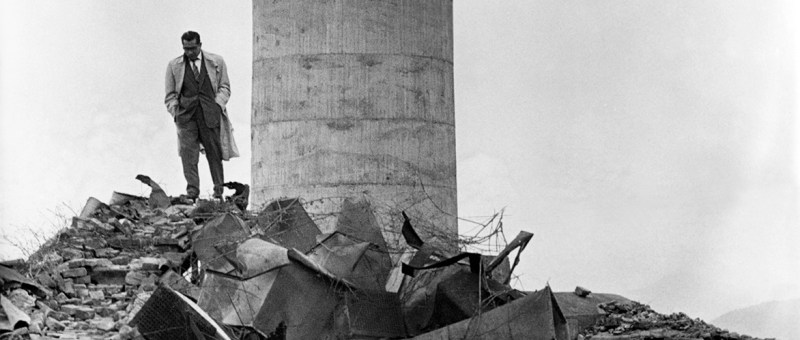
Reinforcing the post-war message, Nishi chooses a disused munitions factory for his secret base. Both he and his co-conspirator, a war orphan, had been high school conscripts until the factory was destroyed by firebombing and thereafter were forced to live by their wits alone on the streets. Nishi swears that he wants to take revenge on those who manipulate the vulnerable, but finds himself becoming ever more like his prey and worse, hardly caring, wanting only to steel himself for the difficult task ahead.

In any revolution there will be casualties, but these casualties will often be those whom Nishi claims to represent. Chief among them his new wife, Yoshiko, who has been largely cushioned from the harshness of the outside world thanks to her father’s wealth and seeming care. She loves her husband and wants to believe in her father or more particularly that the moral arc of her society points towards goodness. Nishi, tragically falling for his mark, married his wife to destroy her family but ironically finds himself torn between genuine love for Yoshiko, a desire for revenge, and a mission of social justice. Can he, and should he, be prepared to “sacrifice” an innocent in the same way the “superiors” of the world sacrifice their underlings in order to end a system of oppression or should he abandon his plan and save his wife the pain of learning the truth about her husband, her father, and the world in which she lives?

In the end, Nishi will waver. Yoshiko’s father, Iwabuchi (Masayuki Mori), will not. Goodness becomes a weakness – Iwabuchi turns his daughter’s love and faith against her, subverting her innocence for his own evil. He makes a sacrifice of her in service of his own “superiors” who may be about to declare that they “have complete faith” in him at any given moment. The only thing that remains clear is that Iwabuchi will not be forgiven, the wronged children of the post-war era will not be so quick to bow to injustice. Let the great axe fall? One can only hope.


Original trailer (English subtitles)

Kokoro (こころ, Kon Ichikawa, 1955)

kokoro coverAmong the most well-regarded of his works, Natsume Soseki’s Kokoro (こころ) is a deeply felt mediation on guilt, repression, atonement, and despair as well as an examination of life on a temporal threshold. Kon Ichikawa’s long career would be marked by literary adaptations both of classics and genre fiction but even among these Kokoro is something of an exception, marshalling all of his skills bar his trademark irony in a melancholy tale of loneliness, self loathing, and the destructive effects self-destruction on those caught in the cross fire.

Ichikawa opens in media res as Nobuchi (Masayuki Mori) and his wife, Shizu (Michiyo Aratama), appear to have had an argument. She darns angrily while he paces and eventually seems to relent on his decision not to let her accompany him to the grave of a mutual friend, Kaji (Tatsuya Mihashi), who died when Nobuchi was still a student. Eventually Nobuchi goes alone but is disturbed in the graveyard by the approach of an enthusiastic young university student, Hioki (Shoji Yasui), who has been redirected by Shizu after turning up to ask to borrow some books. Nobuchi is not really in the mood to talk but the two men chat, eventually sharing a drink together in the local bar before Nobuchi abruptly returns home, pausing only to invite Hioki to visit another time for the books he wanted to borrow.

Though the marriage of Nobuchi and Shizu may seem to be a model one, their lives together are mostly performance. Nobuchi is a melancholy, gloomy man who does not work and lives the life of a scholar, living off family money. The household is not wealthy but they are able to afford one maid and live in reasonable comfort. They have no children and, it seems, the marriage may be one of companionship rather than passion.

On their first meeting Nobuchi refuses to tell Hioki the reason why he is the way he is, but decides he must explain and that Hioki is the only person he can unburden himself to. Badly let down by those who should have had his best interests at heart at a young age, Nobuchi has learned not to trust, believes that love is a “sin”, and that he is unworthy of any kind of personal happiness or fulfilment. As a young man, Nobuchi did something completely unforgivable for the most selfish (and fiendishly complicated) of reasons and his best friend, Kaji, later died as a direct result.

Where Nobuchi is cynical, Kaji is ascetic and closed off but sincere in his Buddhist practice. Nobuchi’s actions are not only hurtful in their deliberate betrayal, but amount to a slow implosion of Kaji’s entire spiritual universe. Having been tempted away from his religious beliefs by irrepressible desire, Kaji’s path to spiritual fulfilment has been severed and his path to other kinds of happiness blocked by Nobuchi’s own panicked act of personal betrayal. Unable to reconcile his cowardly, cruel actions which have, in a sense, broken Kaji’s “heart”, Nobuchi resolves to deny himself the life he stole from his friend, committing himself to a living death defined by the absence of physical love, desire, or success.

Hioki first meets Nobuchi when he sees him attempt to walk into the sea and saves him from drowning. Immediately drawn to him, Hioki believes he and the man he calls “sensei” share the same kind of existential loneliness. His eagerness to forge a friendship with the older, aloof scholar may seem strange but Ichikawa is keen to build on a much disputed subtext of the original novel in Nobuchi’s possible repressed homosexuality. Hioki steps into the space vacated by Kaji which has been empty the last 15 years as the sort of man who might understand Nobuchi’s “heart”.

Shizu attempts to ask the question directly, both about Nobuchi’s relationship with Kaji whose name she is forbidden to mention and to new friend Hioki whom she fears maybe taking Kaji’s place in her husband’s affections. Pleading that she just wants to understand his “heart”, Shizu tries to get some clarification on the empty hell that is her married life, but Nobuchi’s heart is firmly closed to her and she’s shut out once again.

On hearing of the death of the Emperor Meiji, Nobuchi’s gloom descends still further as he feels himself to be a man who’s outlived his age. At one point, long before, he pushes Kaji on his spiritual weaknesses prompting him to admit he doesn’t know whether to go forward or back. Nobuchi, cynical and perceptive, points out that there likely is no back even if you wanted to go there. Taking the teacher/student relationship to its natural conclusion, Nobuchi’s final testament in which he confesses the circumstances which have led to his spiritual death is intended only for Hioki in the hope that the younger man can learn from his mistakes and prepare himself to step forward into the bright new age where Nobuchi fears to tread. Once again his actions are selfish in the extreme, but there is something universally understood in Nobuchi’s particular pain and the steps he takes to ease it.


Previously available on DVD from Eureka, now sadly OOP.

Scene from midway through the film

https://www.youtube.com/watch?v=9piqtmNzFZY

Dolls (ドールズ, Takeshi Kitano, 2002)

dolls posterOutside of Japan where he is still primarily thought of as a TV comedian and celebrity figure, Takeshi Kitano is most closely associated with his often melancholy yet insistently violent existential gangster tales. His filmography, however, is one of the most diverse of all the Japanese “auteurs” and encompasses not only the aforementioned theatre of violence but also pure comedy and even coming of age drama. Dolls is not quite the anomaly that it might at first seem but perhaps few would have expected Kitano to direct such a beautifully colourful film inspired by one of Japan’s most traditional, if most obscure, art forms – bunraku puppet theatre.

After opening with a bunraku performance featuring an excerpt from the Chikamatsu play Courier For Hell, Kitano moves on to his overarching narrative which connects the tripartite structure in a tale inspired by the classic story The Bound Beggars. This first pair of lovers, Sawako and Matsumoto, wander blankly through the ever changing landscape tied together with a long red rope. The two had previously been a young couple, very much in love, but Matsumoto was pressured into abandoning Sawako to accept a semi-arranged marriage to his boss’ daughter. Distraught, Sawako attempts suicide only to survive but in an almost catatonic state.

The second pair of doomed romantics consists of an ageing yakuza who looks back on his life which has forced him to act in a way that he is not always proud of and now finds himself remembering the girlfriend he parted with thirty years ago after fearing he was about to lose his job. She promised to wait for him, he promised to return a fine man but he became a yakuza and never saw her again. All these years later, she’s still exactly where she said she’d be, waiting.

Story three is strange tale of modern love as a young man becomes obsessed with an idol star who only ever notices his rival. After she is injured in a car accident and decides to retire, the young man takes drastic action to be able to meet with her on what he sees as a more equal footing.

Fools for love, each and every one of them. Love has ruined them, removed rational choice from their field of vision, yet there’s something noble and beautiful in the way in which it has penetrated each of their lives. They love as if possessed by an incurable madness, Sawako tries to kill herself because her heart is broken, a woman grows old spending each Saturday lunch time sitting on a bench with a second lunch box which is going to go to waste, and a young man maims himself to finally get his love’s attention. Was it worth it, in the end? Perhaps not if the desperately sad outcomes of each of these stories is anything to go by.

Kitano rejects his idiosyncratic blue colour palate for a world of vibrant colours. Travelling through a year we move along the seasons as punctuated by their symbolic scenery from cherry blossoms to green verdant landscapes, the overwhelming redness of autumn leaves and finally the purity of the winter snow. We travel one way, but also in circles as we navigate the story of love as it too changes with its seasons yet remains unchanged in essence. Each of the lovers is no more free than a bunraku puppet, manipulated by forces outside of their control and forced into a desperate unhappiness that is in part vindicated by their romantic bonds.

Love is tender, love is cruel. Each of the men, in particular, makes terrible choices which cause only pain to the women they supposedly love and, in their pride and arrogance, they fail to realise the consequences of their actions until it is far too late. The tragic inevitability of life’s suffering and the inability to escape it are the foundation stones of Chikamatsu’s world.

Working with fashion designer Yohji Yamamoto Kitano has created a beautiful, theatrical world of hyper realistic colour and life. Like much of Kitano’s work, Dolls amounts to a sad collection of tales coloured by melancholy and a resignation to the pain and suffering inherent in being alive. The lovers are inexorably bound to each other for all eternity because of the suffering they have each endured at the other’s hand. This is a sad world, but it’s a beautiful one too and even if hurts one must try to live.


Dolls is re-released in the UK on blu-ray courtesy of Third Window films.

(This is an original release trailer and does not reflect the quality upgrade of Third Window Films’ blu-ray release)

I first saw this film I guess almost fifteen years ago (!) and I still occassionally get this song stuck in my head:

Review of Takeshi Kitano’s Dolls (ドールズ) – first published by UK Anime Network.