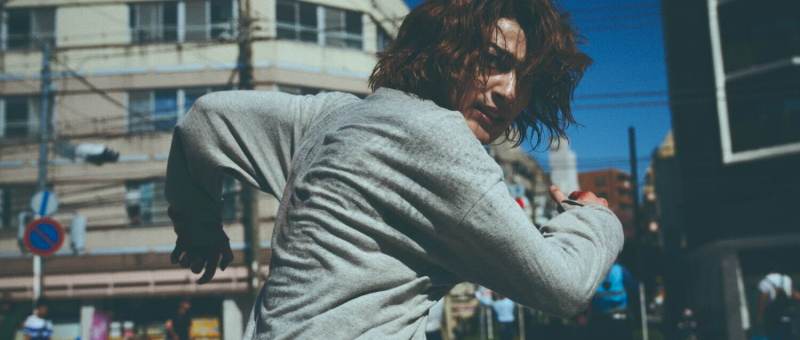
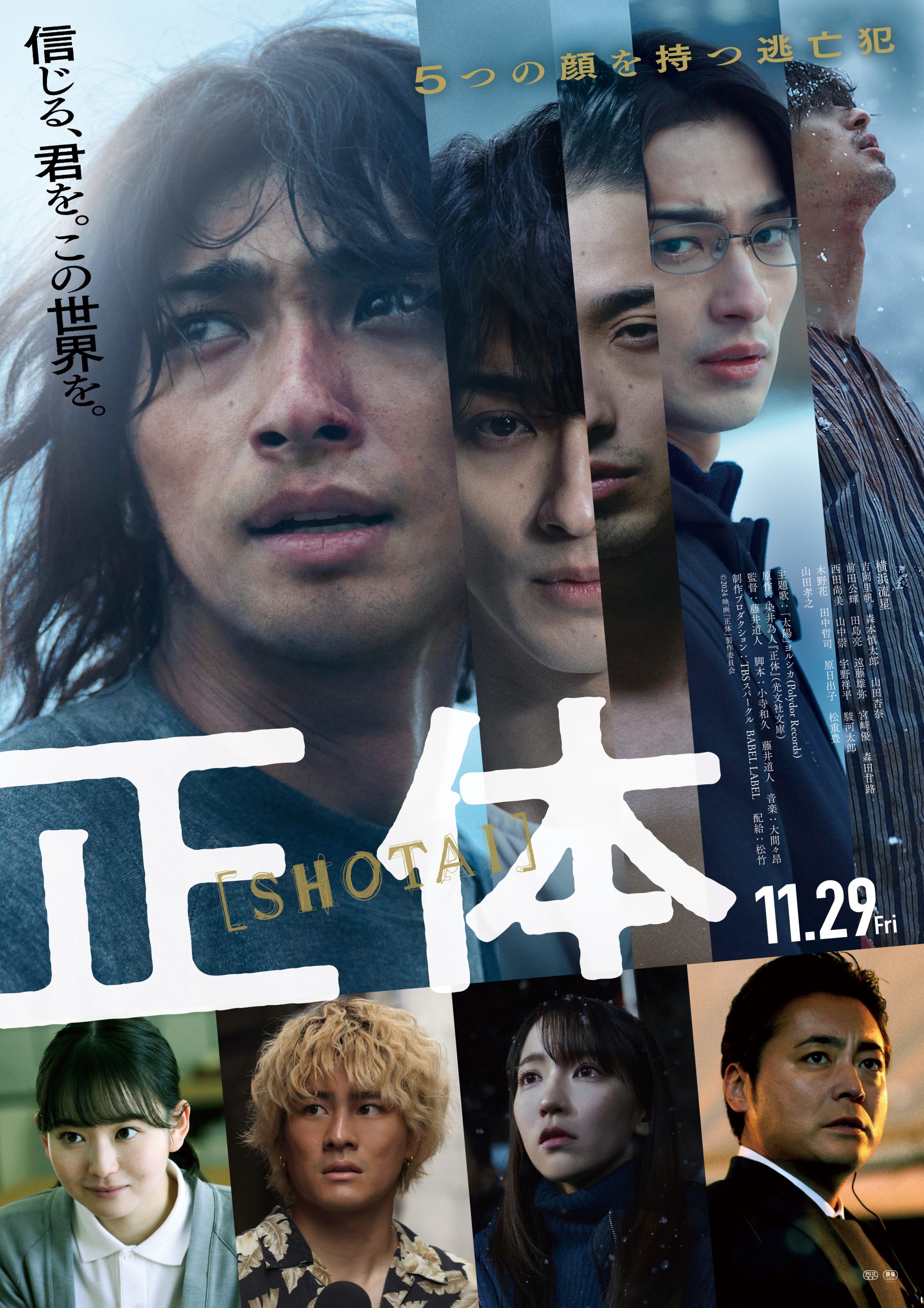
The Japanese title of Michihito Fujii’s crime thriller Faceless (正体, Shotai), “true identity”, might suggest that there is a mystery surrounding the hero, that he is deliberately misrepresenting himself so that it is difficult to know who he “really” is. But in reality the opposite is true. His cover identities are only ever superficial and, in essence, he is always his true self which is one reason he encounters so many supportive people during his flight from the law in an attempt to clear his name after being convicted of a crime he didn’t commit.
Inspired by Tamehito Somei’s novel, the film is another in a long line critical of the authoritarian Japanese justice system which has a 99% conviction rate. Though its defenders may say that the lack of acquittals proves that cases are only brought to trial when the police are absolutely sure, that isn’t quite the case and the judicial system is often over-reliant on confessions which may be given under extreme duress and are therefore unreliable. Sayaka (Riho Yoshioka), a reporter who becomes determined to prove Keiichi’s innocence, has her own negative experience with the justice system when her father, ironically a lawyer, is falsely convicted of groping a schoolgirl on a train. As her father points out, when so many people are hounding you he can understand why some give in and just say they did it to make it all stop.
The police officer, Matanuki (Takayuki Yamada), also appears conflicted from the beginning and requests a full investigation of the crime but his superior tells him to just pin it on Keiichi (Ryusei Yokohama). The law is about to change so that 18-year-olds will be tried as adults, so he thinks it would set an example for other young people that they can’t take advantage of their adolescence to commit crimes assuming they won’t be prosecuted fully or that their records will be wiped when they come of age. There had been a minor moral panic at one time about children actively exploiting this legal loophole, though Matanuki’s boss’ dismissive attitude hints at his conservative perspective and authoritarian viewpoint. When Keiichi’s case begins to receive public interest, he tells Matanuki that the conviction must stand and that the “truth is unimportant in this case” because admitting they made a mistake would be disadvantageous for the police force’s reputation. Despite himself, however, Matanuki continues to follow his boss’ orders and pursue Keiichi even if he stops short of following them fully by refraining from firing at him when he tries to get away.
Asked by Matanuki why he tried to escape from death row, Keiichi tells Matanuki that he wanted to believe the world was good and that if he stood up for what was right people would listen. It’s a trite sentiment that’s undermined by the central flaw of the narrative which is that Keiichi is an ideal wrong man. That he prospers simply being “nice” seems like a kind of cosmic judgement that insists, despite all the bad things that have happened to Keiichi, the universe rewards people who are “good” which is both a moral judgement and highly unrealistic. Like Fujii’s Day and Night, the film hints at the prejudice directed at men like Keiichi who have no blood family and were raised in care while also pointing the finger at similar systemic injustices such as exploitation of labourers denied proper compensation for workplace injuries by thuggish bosses who intimidate them out of pressing for their rights under existing labour law.
As such the film posits solidarity as the best weapon against an oppressive system as the various people who’ve witnessed Keith’s “true self” and been helped by him come to his aid in return. What turns his fortunes is a critical mass of ordinary people standing up and saying that this isn’t fair, giving Matanuki the confidence to defy his boss by going rogue and admitting their mistake publicly at a press conference thereby returning the case to the people and preventing the authorities from covering it up. That justice is eventually served sort of reinforces the idea that this is a good world after all because it’s filled with basically good people who believe in truth and fairness even if the people that govern them don’t, which, though it might be a superficially happy ending for all, is rather optimistic and otherwise ignores that not everybody is so lucky and nothing has fundamentally changed within the justice system to prevent things like this happening again.
Trailer (no subtitles)












 Windows on Worlds