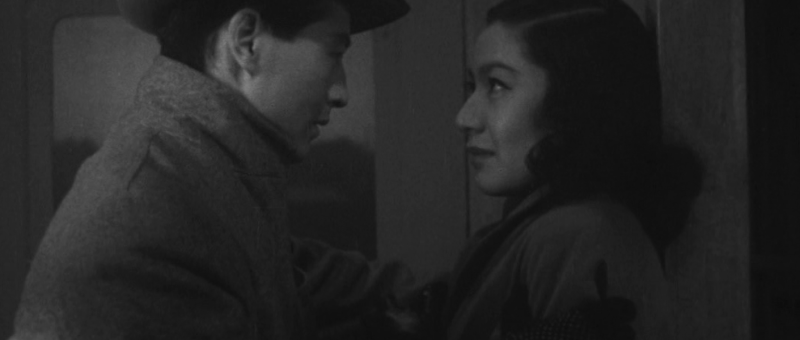
Struggling with the end of her marriage, a young woman finds herself listless yet considering new possibilities in Shiro Toyoda’s The Wind Blows Twice (風ふたゝび, Kaze Futatabi). Adapted from a serialised novel by Tatsuo Nagai, the title is echoed in a remark from one of two potential suitors that youth is something that can come two or even three times so as long as you remain young at heart. They are each, however, each currently frozen and unable to move forward in the wake of their personal traumas.
Kanae (Setsuko Hara), it seems, married for love but her husband has apparently been arrested for some kind of corruption. She has severed all ties with him and returned to the house of the uncle and aunt who raised her after her mother’s death where she helps out in their shop. Meanwhile, she learns that her semi-estranged father Seijiro (Ken Mitsuda), a university professor who lives in Sendai and hasn’t been in contact despite his daughter’s difficult circumstances, collapsed on the steps of the local station and is being cared for by a former student, Miyashita (Ryo Ikebe). She travels to look after him and becomes closer to Miyashita, who currently works as an auctioneer and has dreams of becoming a greengrocer, but is perturbed to learn that her father is a suspect in the theft of 10,000 yen from the wallet of a wealthy man, Michihara (So Yamamura), who carelessly left in the toilet and discovered the money missing when he went back to pick it up. Worried that the rumour may damage her father’s career, Kanae goes to apologise and find out what’s going on but Michihara tells her not to worry and it was his own fault anyway but his sudden magnanimity seems suspicious. In any case, Kanae later tells her friend Yoko that Michihara frightened her, also remarking to Miyashita that she felt as if she managed to slip away from him as she made her escape.
Though he later turns out to be sympathetic, Michihara appears as the villain of the piece. He thinks Kanae reminds him of his late wife and intends to ask her to marry him one the seventh anniversary memorial service is concluded. He starts using his wealth and power to gently interfere in her life, setting up a job for her on hearing that she’d been looking for employment and later approaching her father with the idea of investing in his research into the use of fluorides in the production of resin. Despite her initial dislike of him, Kanae goes along with everything and is soon sucked into Michihara’s world while otherwise wilfully oblivious of his feelings for her (which she does not share) and hoping he’ll help her convince Miyashita that he ought to return to science and help her father with his research which would obviously pave the way for them be together romantically.
The problem is that like Kanae Miyashita has become frozen inside, scarred by his wartime experiences and soured on science. Yet just as staying with him restores Kanae’s spirit and encourages her to want to look for work and find purpose in her life, her influence on him reawakens his passion for scientific research only he is less happy about it than she was. The interest that’s sparked in him ironically lies in the frozen north, travelling to Hokkaido to see an old friend and researching how to prevent potatoes from freezing in order to improve people’s quality of life. In essence it seems as if the futures they may want are too different. Now much more cheerful and energetic, Kanae genuinely enjoys her work in broadcasting and is less than keen to give it up and move to rural Hokkaido to help Miyashita study potatoes while secretly hoping she can convince him, with Michihara’s help, to become a respectable academic like her father and live a nice middle class life researching things that are more useful to industry and big business than to regular people.
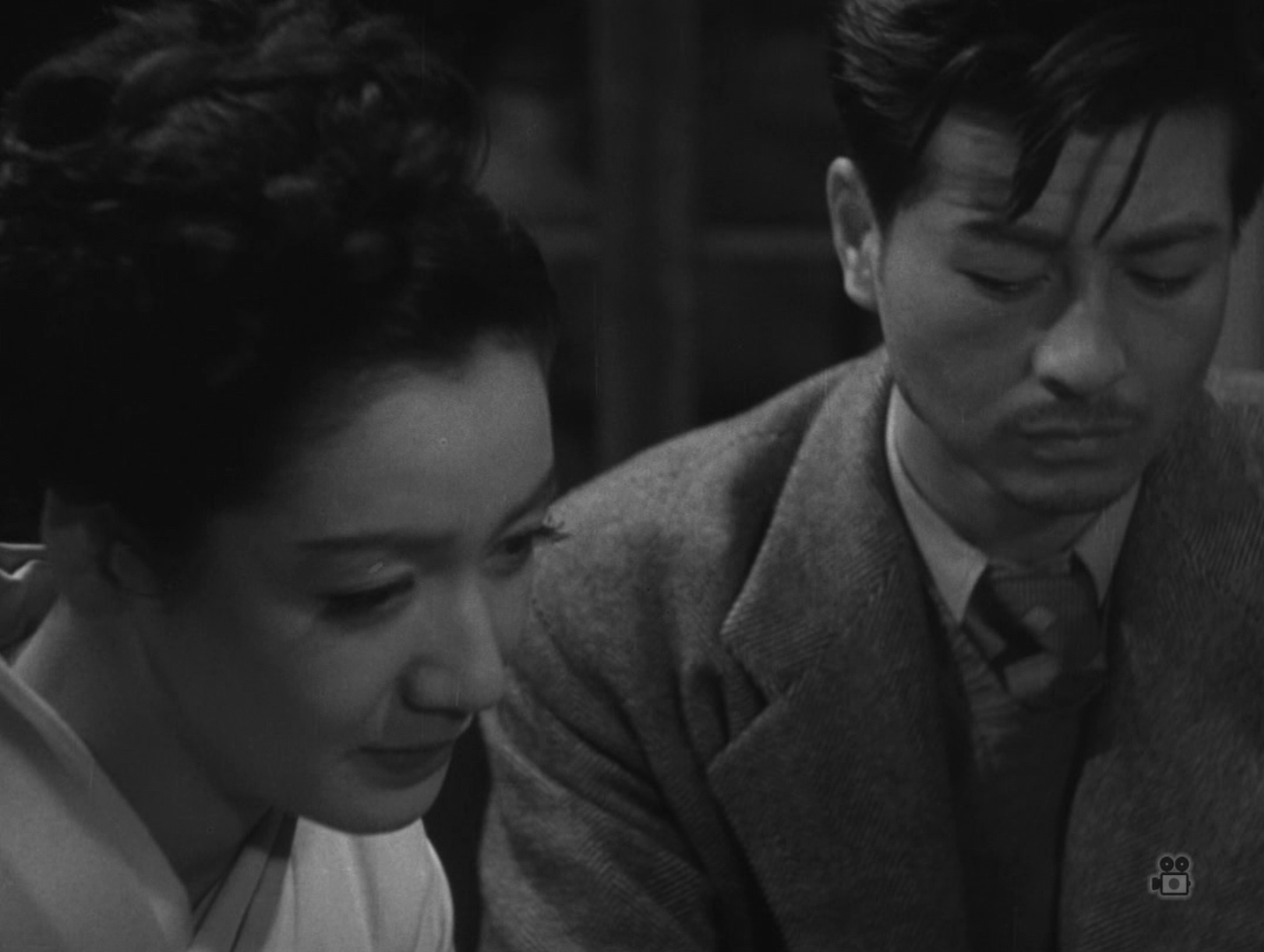
Miyashita is disinclined to do so. He bounds straight off a train to see her with three day stubble from the journey, only to be disappointed witnessing in her in an elaborate kimono with her hair constrained in traditional style while Michihara is there waiting to see him to discuss a job offer from Seijiro. It’s at this point that he seems to decide his romantic desire for Kanae is most likely futile and she has chosen the rarified world of Michihara rather a rustic and homely life with a man like himself. Of course, this makes it sound as if Kanae doesn’t have much choice at all herself and to an extent she doesn’t or at least she feels backed into a corner while her aunt pressures her to remarry, unbothered to which man but excited about the proposal from Michihara because it means she will enjoy a life of uninterrupted financial comfort.
Having chosen her own suitor and seen things go drastically wrong also increases her aunt’s conviction that she shouldn’t make the same mistake again while she too is perhaps wary of remarrying. In any case. Kanae seems to want work and enjoys her job in broadcasting as much as she’s naturally drawn to Miyashita who brings out in her a greater desire to live while Michihara only seems to want her to be a shadow of his late wife suggesting that to marry a man like that may itself be a kind of death sentence. To that extent, the choice Kanae makes involves a predicable sacrifice, but still in any case it is a choice that she makes for herself to strike out for happiness and fulfilment of her own choosing rather than allow herself to be railroaded by conventionality unable to express her own desires.
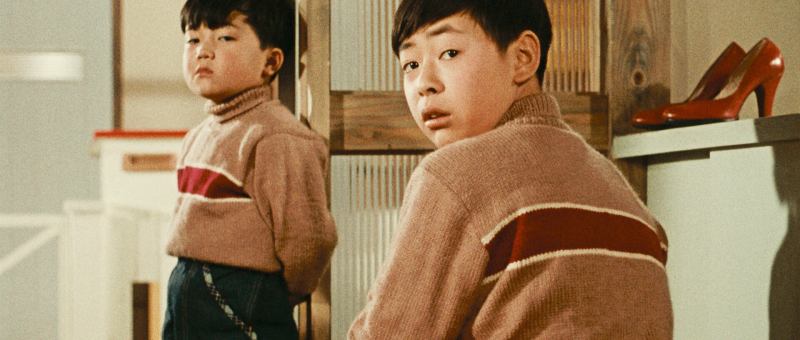
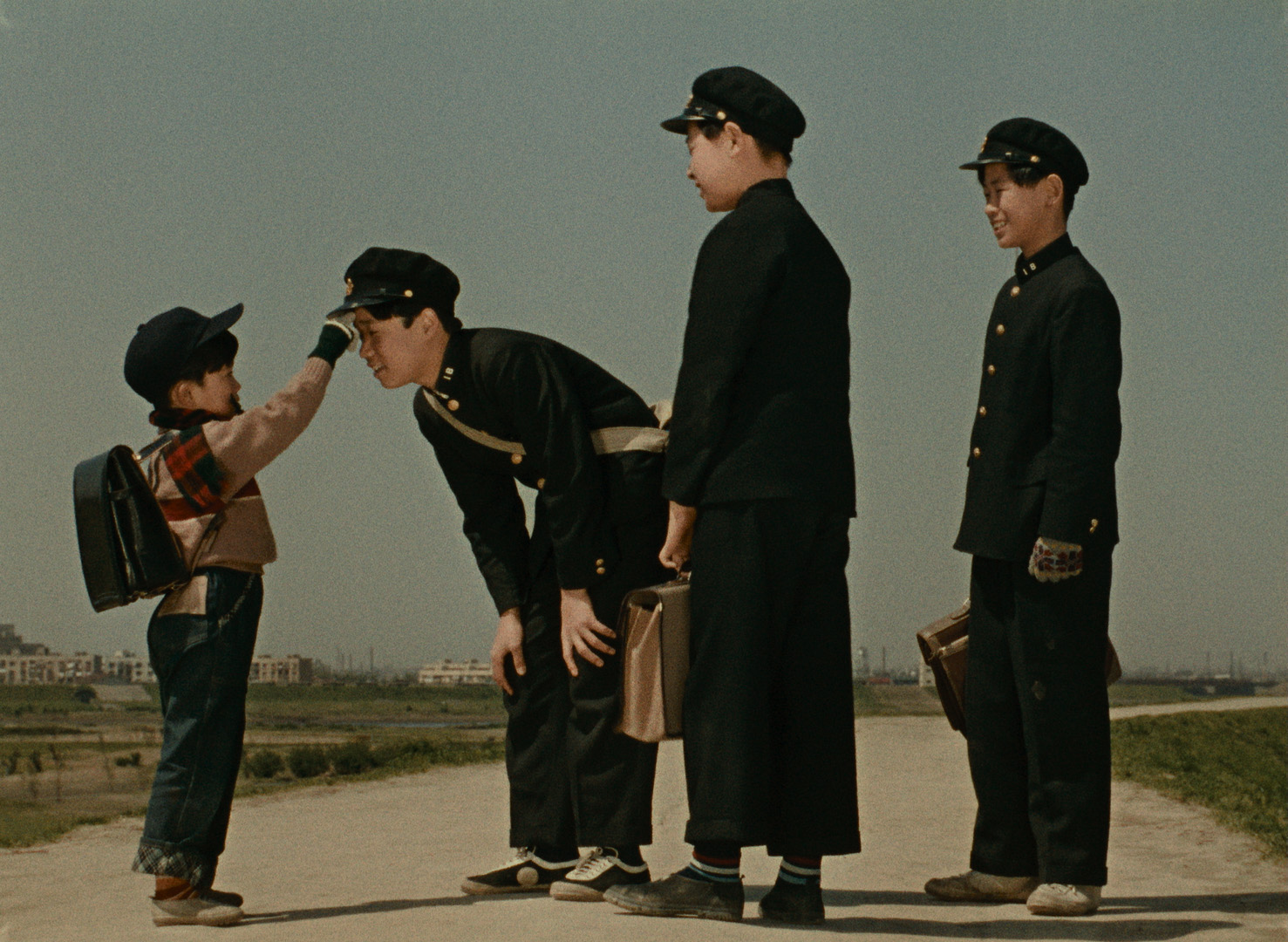


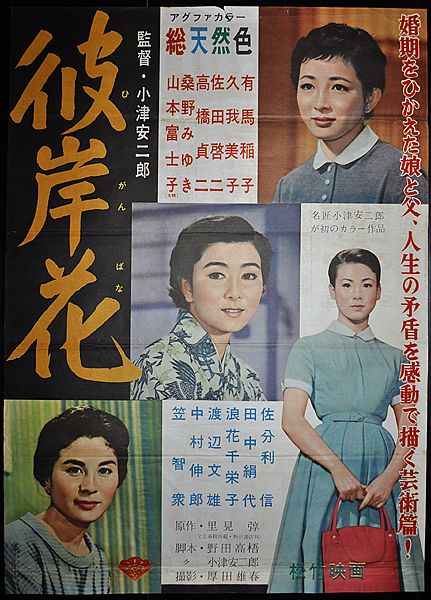


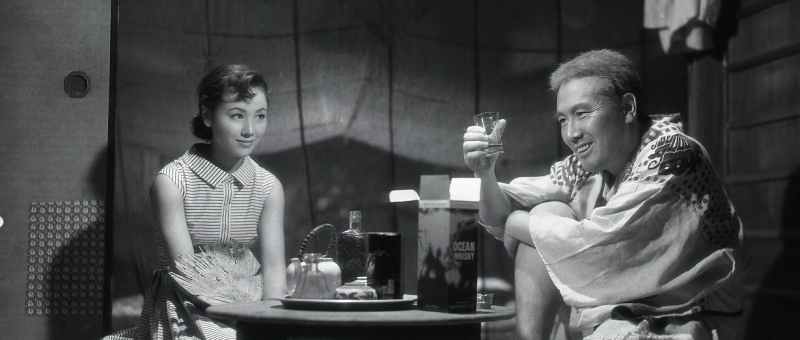

 An Autumn Afternoon (秋刀魚の味, Sanma no Aji) was to be Ozu’s final work. This was however more by accident than design – despite serious illness Ozu intended to continue working and had even left a few notes relating to a follow up project which was destined never to be completed. Even if not exactly intended to become the final point of a thirty-five year career, An Autumn Afternoon is an apt place to end, neatly revisiting the director’s key concerns and starring some of his most frequent collaborators.
 Windows on Worlds