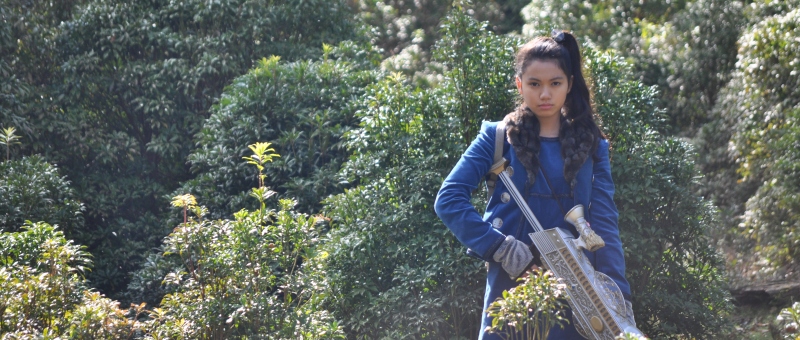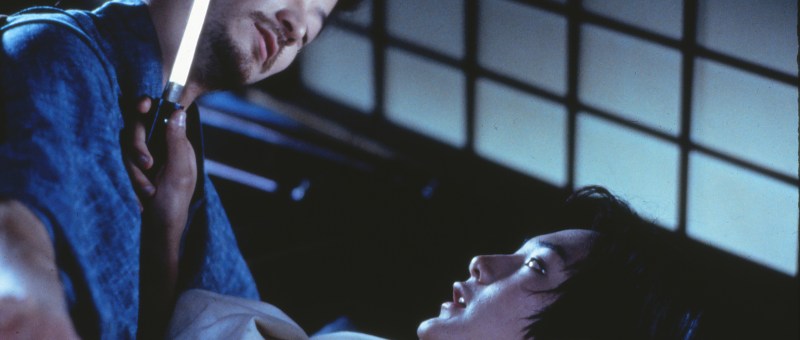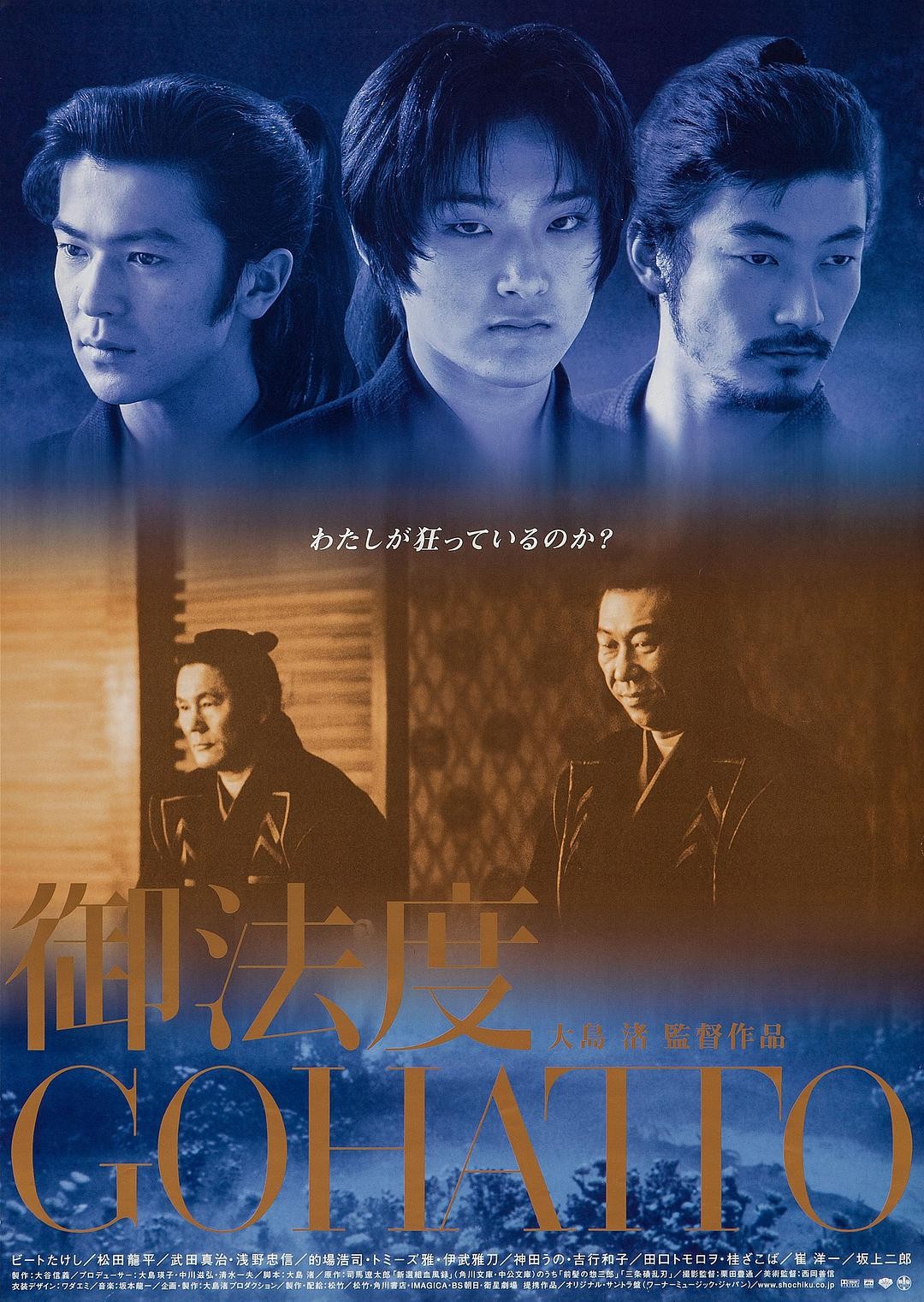
Broken Commandment (破戒, Kazuo Maeda, 2022)

Toson Shimazaki’s 1906 novel The Broken Commandment (破戒, Hakai) has been adapted for the screen several times, each version taking a slightly different approach to the source material. A new constitution film, Keisuke Kinoshita’s Apostasy (1948) focuses more keenly in the necessity of abandoning latent feudalism to create a truly free society of social equality, while Kon Ichikawa’s The Outcast (1962) essentially tells a coming out story in which the hero finds a kind of liberation in the embrace of his identity and resolves to fight for the rights of others forced to live in shame by an oppressive social order. 

One could say that each adaptation in its way reflects the time in which it was made. Kazuo Maeda’s The Broken Commandment focuses more on the threat of rising militarism and an increasingly authoritarian social order than the hero’s internalised conflict between the necessity of keeping the promise he made to his father never to reveal his roots as a member of the burakumin class and the knowledge that not to do so is to remain complicit in the oppression of others like him. 

Set during the Russo-Japanese War of the early 1900s, the film opens with a scene in which the hero, Ushimatsu (Shotaro Mamiya), is woken by a commotion in the inn at which he is staying. Another of the guests in town to receive medical treatment has been outed as a burakumin, a member of a near untouchable class. The woman running the inn apologises profusely and explains that all the tatami mats throughout the building now need to be replaced while following the elderly gentleman ejected from the building out onto the street throwing salt on the ground to purify it from his presence. Ushimatsu’s problem is that he is himself a burakumin who has kept his heritage secret and is living an ordinary life as a teacher in a small rural town. The school which he works for is extremely conservative and aligned with the proto-militarist conservative right which is currently in ascendency with the war in full swing. Ushimatsu is already treated with a degree of suspicion not of his class background but his socialist views which advocate for peace, freedom, and equality. 

Yet it’s clear that not even he has been fully able to relinquish feudalistic thinking. Though he urges some of his pupils that it is alright to play together despite the class difference which exists between them explaining that the class system ended with the Meiji Restoration, he feels beginning a relationship with the adopted daughter of a temple where he is currently living, Shiho (Anna Ishii), would be inappropriate not just because he is a burakumin and it would be unfair to marry without telling her which he cannot do because of the commandment from his father, but because she is descended from a former samurai family. As we can see social class is largely distinct from wealth, a corrupt local politician marrying the daughter of a burakumin who has become wealthy but keeping her origins secret while the old man ejected from the inn was also someone of means dressing in elegant Western suits in contrast to most in the impoverished village who still wear kimono. Wealth did not free the burakumin from prejudice, while even in poverty Shiho and her father Kazama (Kazuya Takahashi), who is about to fired by the school so they won’t have to pay his pension, are still thought of as members of the nobility. The old ideas don’t disappear so easily even among those who know them to be mistaken. 

Yet as Ushimatsu’s mentor Inoko (Hidekazu Mashima) says, even if the burakumin were to be accepted by society prejudice itself would not die merely migrate to another minority. In Inoko, a socialist writer who proudly comes out and says he is a burakumin, or “eta” meaning pariah in the language of the time, Ushimatsu discovers a second father who grants him the courage to free himself from his feudal vision of filiality and break his father’s commandment to better help those like him and resist the mounting authoritarianism of the education system in which boys in particular are being brainwashed that they are little more than tools for imperialist expansion. In his impassioned speech to the students, Ushimatsu tells them that he wants them to grow up to be people who can think for themselves rather than blindly accept their programming, the kids seemingly getting the message in defying slimy militarist plant Katsuno to see Ushimatsu on his way when he decides he must leave the village to foster freedom elsewhere. 

Unlike previous adaptations, the film does not much go into how he plans to do that save his intention to find a position as a school teacher in the city and educate the young away from prejudice. Breaking his father’s commandment is in its own way a way of breaking with the past, refusing to be complicit with an oppressive social order still bound up with feudalistic notions of class hierarchy which all point towards the emperor and reinforce the increasing authoritarianism of the militarists. Speaking to the rising nationalism of the contemporary society, Maeda’s adaptation positions education as the best weapon against an oppressive social order but also insists that its hero must first free himself from his own internalised shame and outdated ways of thinking. 


Broken Commandment screens at Asia Society 28th July as part of this year’s New York Asian Film Festival.

Original trailer (no subtitles)

© 2022 BROKEN COMMANDMENT Film Partners

Ring Wandering (リング・ワンダリング, Masakazu Kaneko, 2021)

“Don’t forget me” pleads a mysterious young woman guiding the hero of Masakazu Kaneko’s Ring Wandering (リング・ワンダリング) towards the buried legacy he is unwittingly seeking. In this metaphorical drama, the aspiring manga artist hero is on a quest to discover the true appearance of the long extinct Japanese wolf, but is confronted by a more immediate source of unresolved history while working on a construction site for the upcoming Tokyo Olympic Games. 

The manga Sosuke (Show Kasamatsu) is working on is about a wolf and a hunter, Ginzo (Hatsunori Hasegawa), whose daughter Kozue was killed by one of his own traps. Though praising the general concept, his workplace friend points out that his manga lacks human feeling but Sosuke claims it’s unnecessary in a story that’s about a duel to the death between man and nature while matter of factly admitting that Kozue is merely a plot device designed to demonstrate Ginzo’s manly solitude. Yet Soskue complains that he can’t make progress because the Japanese wolf is extinct and he can’t figure out how to draw it. 

His quest is in one sense for the soul of Japan taking the wolf as a symbol of a prehistoric age of innocence though as it turns out he knows precious little about more recent history. The workers at the construction site have heard rumours about a stoppage at another build and joke amongst themselves that if they should find any kind of cultural artefact they’ll just ignore it rather than risk the project being shut down or any one losing their job. The site itself symbolises a tendency to simply build over the buried past erasing traces of anything unpleasant or inconvenient. When Sosuke comes across an animal’s skull buried in a pit he has recently dug, he is convinced it’s that of a Japanese wolf only later realising it is more likely to be that of a dog killed in the fire bombing of Tokyo during the war along with thousands of others on whose bodies the modern city is said to lie. 

Then again, impassive in expression Sosuke is particularly clueless when it comes to recent history. While searching for more wolf cues he comes across a young woman (Junko Abe) looking for her missing dog but completely fails to spot her unusual dress aside from assuming the old-fashioned sandals she is wearing are for the fireworks show set to take place that day incongruously in the winter. Similarly in accompanying her to her home he is confused by all her references to things like the metal contribution and her brother having been sent to the country. He wonders if she might be a ghost, and she wonders the same of him, but still doesn’t seem to grasp that he’s slipped into another era fraught with danger and anxiety only realising the truth on exiting the dream and doing some present day research. 

The fallacy of violence works its way into his manga in the fact that Ginzo’s traps eventually lead to the death of his daughter while he becomes on fixated on besting the wild wolf as a point of male pride though others in the village are mindful to let it live. A pedlar meanwhile explains that the wolf has been forced down towards the village because of the declining economic situation as more people hunt in the mountains for food and fur depriving him of his dinner. He tells Ginzo that the country has been “brainwashed in militarism” and the gunpowder that killed Kozue and will one day be repurposed to create joy and awe is now his most wanted commodity. In the end Ginzo too is saved by a kind of visitation, a ghost from the past offering a hand of both salvation and forgiveness along with an admonishment forcing him to take responsibility for his role in his daughter’s death.

In forging a familial relationship with a lost generation Sosuke comes to a new understanding of more recent history and in a sense discovers the connection he was seeking with his culture, weaving the anxieties of 1940s into an otherwise pre-modern fable about the battle between man and nature in which wolf becomes not aggressor but casualty in a great national folly. Like Kaneko’s previous film Albino’s Trees deeply spiritual in its forest imagery and oneiric atmosphere, Ring Wandering finds its hero transported into the past while unwittingly discovering what it is he’s looking for without ever realising that it has always been right beneath his feet. 


Ring Wandering streamed as part of this year’s Nippon Connection.

Original trailer (English subtitles)

Images: ©RWProductionCommittee

The Warped Forest (あさっての森, Shunichiro Miki, 2011)

“Life is about making the most of what you get” according to a former blackmailer seeing the error of his ways when his attempt to use his ill-gotten gains to woo a lover abruptly fails, but you can always dream in the wild and wacky world of Shunichiro Miki’s The Warped Forest (あさっての森, Asatte no Mori). A quasi-sequel to Funky Forest: The First Contact which Miki also co-directed, Warped Forest is in someways more conventional lending a loose overarching narrative to its otherwise disconnected scenes set in a bizarre village where the residents can spend acorns and pinecones to tinker with their dreams assuming they don’t mind the possibility of emerging with a curse. 

Like Funky Forest, the film revolves around three trios in the black and white sequence which opens the film two staying at the same inn but adopting vastly different personas in the full colour alternate universe to which we are soon transported. The older male trio are informed they’ve been “missing” for two days though they don’t remember going anywhere and are very confused by the apparent forward motion of time. One does remember, however, that some of his students with whom he’d been on a camping trip turned up at his door and explained they’d been mysteriously beamed to a forest and had to hike their way back. 

The Japanese title simply means the forest of two days from now, but warped might be a good way to describe it if it weren’t for its judgemental implications seeing as it is indeed somehow out of shape seemingly inhabited by giants and tiny people who co-exist in the same space with tinys prioritised, the giants squashing themselves into tiny chairs and drinking tiny coffees while appearing to also occupy spaces of their own (in which tiny people are not really seen). In any case, this is also a place where everyone is obsessed with the very suggestive Kattka fruit which pulses and gyrates, oozing a sweet liquid and growing from trees in the form of human women which Miss Au Lait, one of the sisters from the inn but here in kimono and walking with a cane, waters by drinking from her flask and passing liquid via her mouth. 

Even here, everyone is lovelorn and unhappy. “If only we could have fun in our dreams” one young man laments after trying out a positive thinking training hall where they’re told to repeat the phrase “I am happy” only to discover their instructor is far from happy himself. They know they can’t have real happiness, so all they can do is dream of it which is why some of them are intent on “dream-tinkering” despite the rumours of negative consequences and vast costs required. Each of the inn trio, all romantically frustrated store owners in this reality, eventually decide to give it a go after one of them gets hold of a special guide that apparently allows them to bypass the curse by promising to sacrifice two days. Appli (Fumi Nikaido) meanwhile is wracked with guilt after having asked to see her whole family happy in her dreams only for her sister to encounter an accident which is why she roams the forest with a gun which shoots white liquid from its penis-shaped tip to trap a “pinky panky” monster and get hold of a weird bug to get the worms out of Miss Au Lait’s leg. 

As for Miss Au Lait, “dreams are just dreams. I have to accept reality” she sadly remarks on turning down a invitation, “I’ll leave my beautiful dream untouched” too fearful and insecure to chase happiness while her suitor later echoes her words unwilling to run away in flights of fancy. Even so we might wonder which is the dream world and which the real, the hotel guests later finding each other and experiencing a kind of true happiness in togetherness unknown in the forest where everything seems to be not quite right. Continuing the slightly vulgar aesthetic of Funky Forest with his fleshy fruits and frequent innuendo, Miki conjures a bizarre world which nevertheless possesses an internal normality in which people are distanced from one another, not least by their respective size differentials, but each longing for something more which they fear cannot be found not even in dreams. 


The Warped Forest is released on blu-ray in the UK on 21st March courtesy of Third Window Films alongside Funky Forest: The First Contact in a set which also includes a feature length commentary, director interview, and introduction.

Original trailer (English subtitles)

.

Gohatto (御法度, Nagisa Oshima, 1999)

Nagisa Oshima once said that his hatred of Japanese cinema extended to absolutely all of it, decrying the hackneyed nativism of “foggy beauty and stupid gardens”, yet his final film is filled with Mizoguchian mist and almost a paen to Japanese aesthetics which ends with a cherry blossom tree in full bloom cut down in its prime. Burdened by the slightly more salacious title “Taboo”, Gohatto is less about love between men in an intensely homosocial world even as it asks what it might mean by “forbidden” or “against the law” than it is about idealism and aesthetics as its band of contradictory conservatives unknowingly approach the end of their world in a coming modernity ushered in by dangerous beauty. 

Set in the Kyoto of 1865, a scant three years prior to the Meiji Restoration, the film opens with an audition of sorts as the Shinsengumi search for promising new recruits among talented swordsmen. Already a mess of contradictions, the Shinsengumi is, loosely, a kind of official police force dedicated to defending the Shogunate against the revolutionary forces set on restoring power to the emperor. Nevertheless, in an odd way and in contrast to the elite Mimawarigumi which was staffed only by direct retainers to the Shogun, the Shinsengumi was noted for its lowkey egalitarianism in that it made a point of admitting those of ordinary birth as well as lower level samurai and ronin. Of course, the notions of equality only went so far and perhaps only fuelled its reputation for merciless savagery, but also make it a strangely progressive force fighting against progress in defence of the feudal status quo. 

Only two of the hopefuls are thought to be any good, one a young ronin, Tashiro (Tadanobu Asano), and the other a beautiful boy, Kano Sozaburo (Ryuhei Matsuda), the third son of a wealthy merchant whose line were once samurai but are no longer counted among the noble retainers. A talented swordsman, Sozaburo’s dangerous beauty presents an existential threat to the Shinsengumi order, the steely Hijikata (Takeshi Kitano) looking on conflicted in witnessing the way his commander, Kondo (Yoichi Sai), looks at this vision of androgynous beauty remarking that he had not known him to be “that way inclined”.

Being that way inclined does not seem to be a particular issue within the Shinsengumi, it is not against their draconian rules and in fact appears to be tolerated at least as long as it causes no further problems. Kondo is however mindful of the chaos caused by a similar wave of homoerotic lust which took hold shortly before a climactic battle which would prove to be their last success. What Sozaburo seems to arouse in them is something more dangerous than the accepted patterns of love between military men which is in a sense sublimated as a mentor/student relationship, loyalty more than romance. Tashiro, who is of a similar age to the apparently 18-year-old Sozaburo, lets his desire be known, vowing to sleep with him before he dies ironically acknowledging Sozaburo for what he is, an angel of death. 

For his part, Sozaburo remains curiously passive in each of his encounters, aroused only it seems by the act of killing. Yet Hijikata discerns that he has indeed become Tashiro’s lover on witnessing them fight, Sozaburo losing clumsily despite being the more skilled in a dynamic that mimics their relationship in which Tashiro is the dominant partner. Aware of the danger in Sozaburo’s allure, Kondo suggests having a superior take him to the red light district to show him the delights of woman hoping to guide him back towards a less dangerous path, only the attempt backfires on several levels. Firstly, Sozaburo has no interest in women and continues to decline believing his commander is also hitting on him (like everyone else), thereafter determined to seduce him after all. Another retainer does indeed succeed in seducing Sozaburo, developing a mild obsession, but later ends up dead, Tashiro a main suspect in his murder with the motive of sexual jealousy though all of this additional violence is perhaps only an expression of Sozaburo’s dangerous beauty. 

As so often, sex if not love becomes the force which destabilises the social order only here it’s equated both with death and with an alternative mediation of male violence. Perhaps reflecting the way they look to the 18-year-old Sozaburo who makes a faux pas in accidentally suggesting at least one of them is of pensionable age, the ranking members of the Shinsengumi are played by actors already well into their golden years as if relics of a bygone era though in reality most were in their 30s. As Soji (Shinji Takeda), a filial figure like Sozaburo wearing long hair, puts it, there are no old men in their unit which is in essence an anti-revolutionary force. Nevertheless, the Shinsengumi is on the wrong side of history and already living in its end times, perhaps ushered towards its doom by the figure of the beautiful boy. “You were too beautiful”, Hijikata eventually laments as he finally perhaps understands the nature of the revolution he is witnessing. Perverse to the last, Oshima sets his ethereal finale in a stygian fog and pays an ironic tribute to the Mizoguchian classicism he so railed against in his youth, taking a sword to the cherry blossoms as he like Hijikata severs his own legacy in a moment of destructive beauty. 


Gohatto screens at Genesis Cinema on 25th September as part of this year’s Queer East

International trailer (English subtitles)

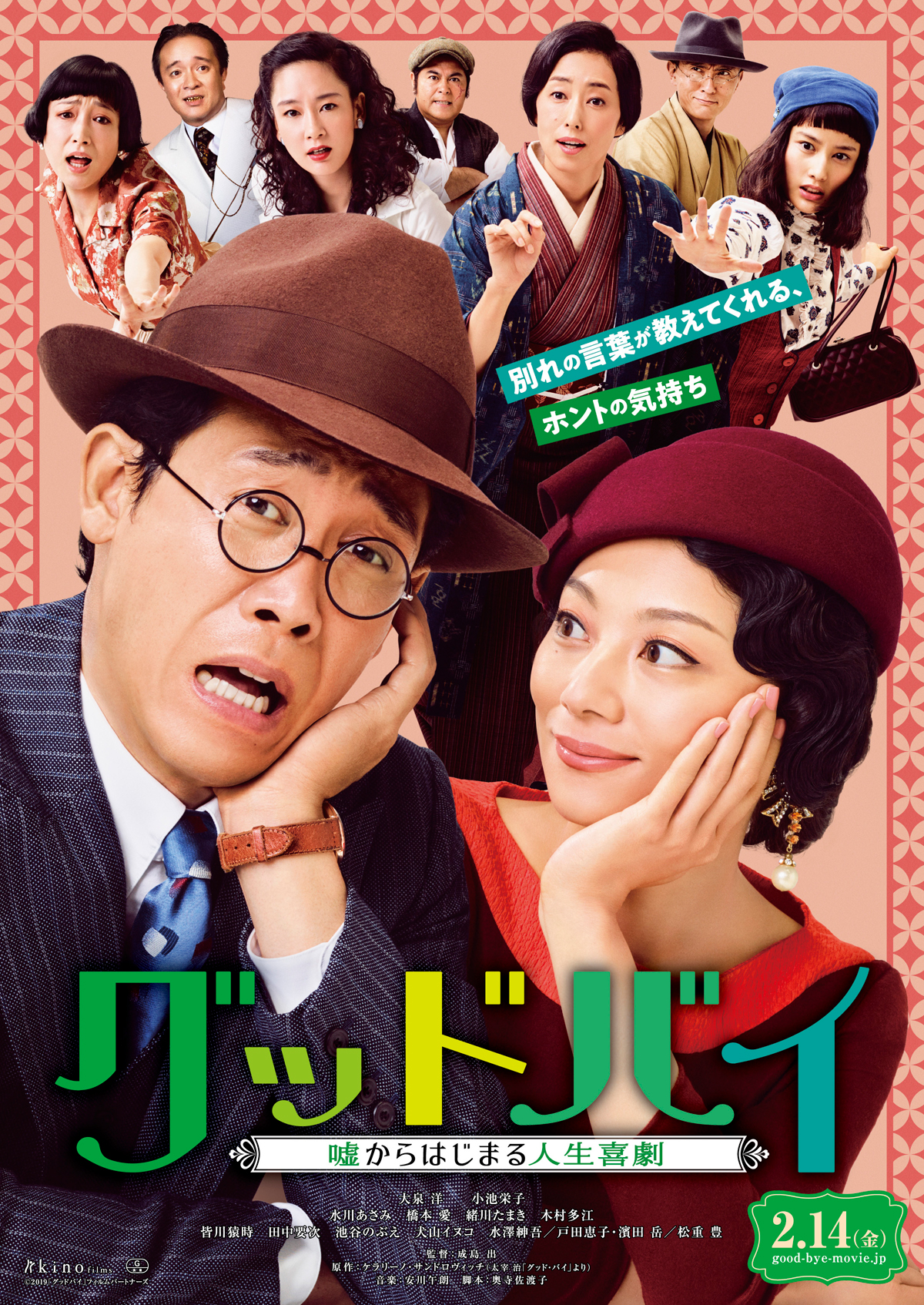
Farewell: Comedy of Life Begins with a Lie (グッドバイ~嘘からはじまる人生喜劇~, Izuru Narushima, 2019)

“You wrote that a man should be pure and honest” a conflicted editor reminds his friend, “yes”, he replies, “but that was fiction.” Osamu Dazai is not particularly remembered for his sense of humour, but Farewell: Comedy of Life Begins with a Lie (グッドバイ~嘘からはじまる人生喜劇~, Goodbye, Uso kara Hajimaru Jinsei Kigeki) adapted from a play by Keralino Sandrovich (Crime or Punishment?!?) inspired by his final and in fact unfinished novel Goodbye is a dark-hearted farce grafting ‘30s screwball comedy onto an ironic satire of heartless post-war capitalism through the prism of one man’s emotional cowardice. 

As the black and white newsreel-style opening informs us, literary magazine editor Tajima (Yo Oizumi) made a bit of money on the black market amid post-war chaos but is beginning to feel conflicted about his Tokyo existence especially after receiving a postcard from his small daughter Sachiko in provincial Aomori whom he hasn’t seen since her infancy. His problem is that he’s an inveterate womaniser with several mistresses on the go at once who ironically all already know that he’s a married man, to that extent “honest” at least, but remain unaware of each other. Suddenly wanting to reform his image and become a proper father to his little girl, he’s realising he ought to sort out his problematic love life but Tajima is also the sort of man who can’t bear unpleasantness and is too frightened to break up with his lady friends in case they cry. His writer friend, Rengyo (Yutaka Matsushige), comes up with a cunning ruse – find a pretty woman to pretend to be his long absent wife returned and the mistresses will most likely retreat voluntarily. Tajima decides to do just that on catching sight of a beautiful lady through a peephole in the gents at a bathhouse only she turns out to be someone he already knows, manly black-markeeter Kinuko (Eiko Koike) who secretly loves dressing up in the latest fashions. 

Kinuko is in a sense everything Tajima is not. An abandoned child, she’s learned to take care of herself and is strong both physically and emotionally. She agrees to help him with his nefarious plan because he offers to pay her handsomely, feeding her well in her copious desire for food which perhaps indicates her strong desire to live in a society where many are starving. She’s a black-marketeer because that’s all that’s left for her to be and perhaps has made her peace with exploiting the desperation of others in the knowledge that they also need the service she provides. In any case, she won’t let herself be trampled, frequently getting into fights with male dealers and later throwing Tajima off a balcony when he follows some bad advice from Rengyo and attempts to seduce her in the hope that then he wouldn’t have to pay her for participating in his scheme to rid himself of extraneous women. 

Yet it’s also clear that it’s women who are most at the mercy of the times, Tajima’s first mistress being a heartbroken war widow (Tamaki Ogawa) making a living as a florist who later attempts suicide after saying “Goodbye” to Tajima and the possibility of romantic salvation from post-war hopelessness (though her involvement with him does perhaps eventually lead her to that). The second mistress is a young painter (Ai Hashimoto) who approached him for work on the magazine attempting to support herself while her brother (Sarutoki Minagawa) remained in a Siberian labour camp, and the third is a self-assured doctor (Asami Mizukawa) looking perhaps for company though seemingly aware that Tajima is a weak-willed, unreliable man. His wife, Shizue (Tae Kimura), meanwhile, has become fed up with waiting for him to accept his male responsibility as a husband and father and unbeknownst to him his plans to keep her looked after may have backfired. 

Yet strangely Kinuko finds herself falling for the “pathetic” Tajima without quite knowing why while he perhaps begins to accept that maybe what he needs is a capable woman to look after him because he is after all too cowardly to look after himself. He’s fond of saying that the war changed everything for everyone, but she points out that her life has always been one of scrappy survival and now perhaps they are all equal in that. The post-war world however seems to be in permanent decline, an associate of Tajima’s (Gaku Hamada) eventually becoming accidentally rich, buying a suburban mansion, dressing in a garish white suit and snarling with a mouth full of gold teeth as he advances that money is everything and can even love can be bought. In this at least it turns out he may be wrong. Taking a “detour” allows Tajima to shed his commitment phobia and finally say “Goodbye” to post-war limbo in embracing both a desire to live and the possibility of enduring love. 


Farewell: Comedy of Life Begins with a Lie streamed as part of the 2021 Japan Foundation Touring Film Programme.

Original trailer (no subtitles)

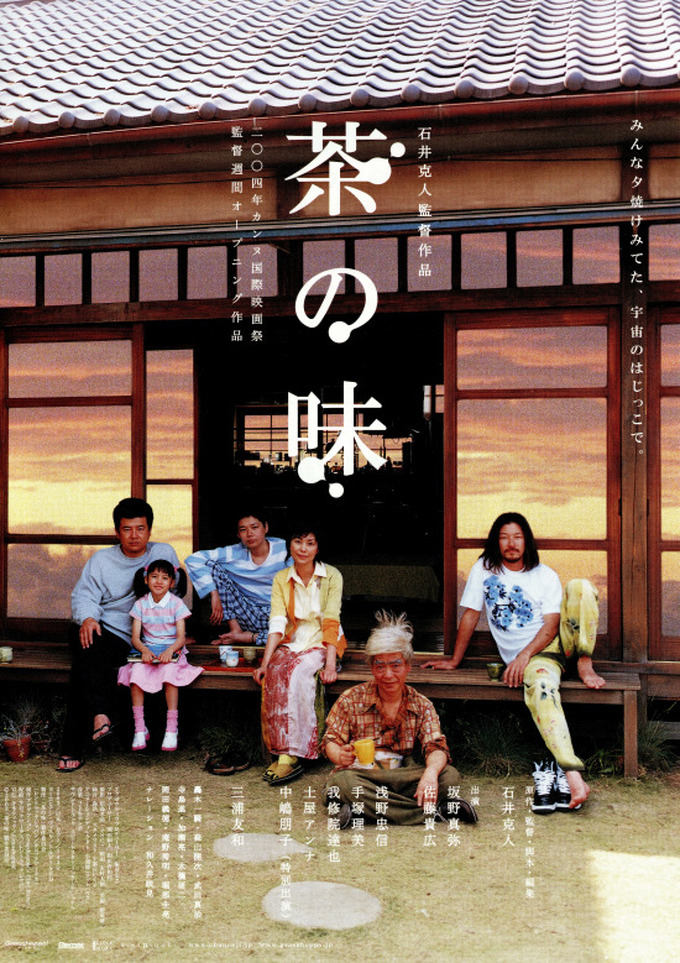
The Taste of Tea (茶の味, Katsuhito Ishii, 2004)

Katsuhito Ishii is among a small coterie of directors who developed a cult following in the early 2000s but have since fallen by the wayside. In Ishii’s case, that may partly be because he chose to shuttle between live action and animation, continuing to work on short films and TV projects with the consequence that he’s directed only five (solo) features since his 1998 debut Shark Skin Man and Peach Hip Girl, the last of which, grisly manga adaptation Smuggler, was released back in 2011. Smuggler had perhaps taken him back to the “Tarantino-esque” (Ishii also worked on the animated sequence for Kill Bill), as they were sold at the time, absurdist gangster dramas of his earlier career, but all these years later it is something altogether softer if no less strange that has stood the test of time. 

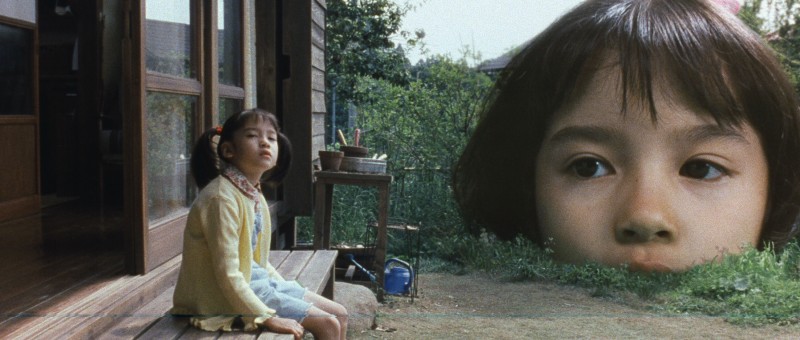
2004’s The Taste of Tea (茶の味, Cha no Aji) with its Ozu-esque title, rural setting, and preference for meditative long takes, is a “conventional” family drama. A collection of surreal episodes in the life of an ordinary family living in the countryside in the contemporary era, there are no real crises though each member is perhaps heading into an individual point of transition which, in the main, they cope with alone. Son Hajime (Takahiro Sato), whose flat-out running opens the film, is in the midst of adolescent romantic confusion while his younger sister Sachiko (Maya Banno) is quite literally plagued by self-consciousness, haunted by a giant version of herself continually staring at her. Mum Yoshiko (Satomi Tezuka) is making an indie animation at her kitchen table in an attempt to assert herself outside of her role as wife and mother, while dad Nobuo (Tomokazu Miura), a hypnotherapist, is a barely visible presence. And then there’s grandad Akira (Tatsuya Gashuin), a playful figure tormenting the children while helping Yoshiko figure out the bizarre poses needed for her project. 

Ishii signals his commitment to the surreal during the opening sequence which begins in darkness with only the sound of Hajime’s panting as he chases the train which will take his love away from him. Sadly he is too late, she is already gone and he can’t even console himself that he did his best because he knows deep down that even if he saw her he would have not have had the courage to say what he wanted to say which in any case he could have said at any other time but never did. As he’s thinking, a bulge develops in his forehead from which emerges a small train, carrying her out of his present and into a nebulous other space of memory. Nevertheless, it’s not long before Hajime finds a new love, a blissed out expression permanently on his face as he dreams of go-playing transfer student Aoi (Anna Tsuchiya). 

For all the idyllic countryside, however, there is darkness even here as the children each discover, Hajime and his dad witnessing a yakuza altercation outside the station, and Sachiko given the fright of her life by a “mud man” in a patch of ground technically out of bounds but central to her quest to be free of her other self. Uncle Ayano (Tadanobu Asano), an aimless young man working as a sound mixer undergoing a wistful moment of his own in insincerely congratulating his high school girlfriend on her marriage, tells his niece and nephew of his own strange haunting incident involving a ghostly gangster (Susumu Terajima) from which he thinks he was able to escape after learning how to do a backflip on the monkey bars. As it happens, that wasn’t it at all, but even small achievements have value as Sachiko discovers on realising that someone else was watching her struggle from a distance and evidently envisaged for her a happy resolution, a giant sunflower eventually engulfing all with a wave of love that also marks a point of transition, washing away its anxiety.  

A timeless portrait of rural family life, Ishii’s vision is surreal but also very ordinary and filled with the details of small-town living with all of its various eccentricities from two nerdy guys working on their robot cosplay to baseball playing gangsters and avant-garde dancers performing for no one on the shore. “It’s more cool than weird, and it stays in your head” Yoshiko says of a song composed by eccentric third brother Todoroki (Ikki Todoroki) in praise of mountains. The Taste of Tea has a strange and enduring flavour, savouring the surreal in the everyday, but finding always a sense of joy and serenity in the small moments of triumph and happiness that constitute a life. 


The Taste of Tea is released on blu-ray in the UK on 5th October courtesy of Third Window Films in a set which also includes a 90-minute making of feature and the “Super Big” animation.

Original trailer (English subtitles)

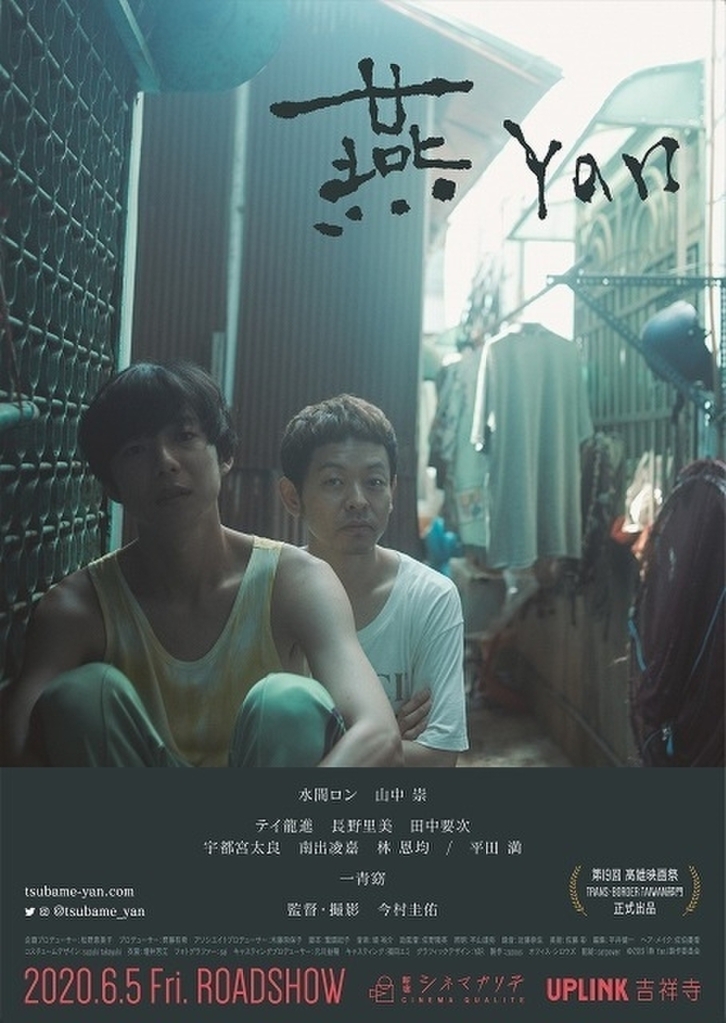
Yan (燕, Keisuke Imamura, 2019)

A sense of dislocation plagues the drifting heroes of Keisuke Imamura’s elegantly lensed Yan (燕), a poetic meditation on the legacy of abandonment both cultural and familial. As much about the disintegration of a family as the complexities of identity, Imamura’s nuanced character drama finds its hero looking for himself in the shadow of his long lost brother and rediscovering perhaps a long absent sense of security in reconnecting with his childhood self while learning to let go of his fierce resentment towards the mother he assumed had forgotten him. 

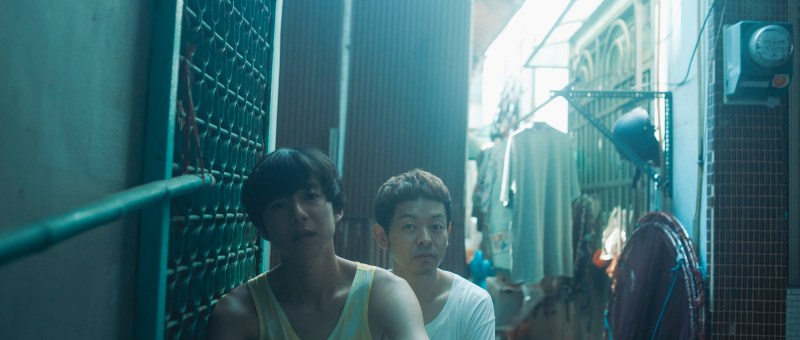
28-year-old Tsubame (Long Mizuma) is a workaholic architect with a successful, settled life in Tokyo. He is also, however, slightly disconnected and harbouring a great deal of anger towards his family, aside it seems from his cheerful step-mother. An awkward meeting with his father following a rare summons to the family home results in some distressing news. His company’s gone under and he’s deep in debt, which is why he wants Tsubame to go to Taiwan to deliver some important papers to his estranged older brother Ryushin (Takashi Yamanaka) whom he hasn’t seen in 23 years since he left with their mother (Yo Hitoto) so he can renounce his rights to an inheritance to avoid being liable for his father’s debts. Tsubame is reluctant, he didn’t even go to Taiwan for his mother’s funeral and has done his best to erase that side of his life from his memory, but after his step-mother guilt trips him by explaining that his father’s in poor health so it might be the last thing he’ll ever ask he finds himself on the next flight to Kaohsiung.

Despite his animosity towards his Taiwanese heritage, Tsubame seems to have maintained his Mandarin which is a definite help in the busy city but finds himself conflicted in being taken at first for a local and then recognised as not. Sitting down at a dumpling stand the proprietress and another customer guess that he is probably Japanese but on hearing that he was born in the area and his mother was from there immediately remind him that he is then also Taiwanese, something that appears to bother him. Flashing back to his childhood we witness both warm scenes of his mother conversing with her children in Mandarin while they mainly reply in Japanese, and a series of xenophobic micro-aggressions from neighbours who accuse her of trying to harm their children with new year dumplings containing lucky coins while Tsubame finds himself a victim of bullying by the local kids after mistakenly using his Chinese name, Yan, or making the usual kinds of language mistakes that all young children make but being made fun of over them as someone not quite Japanese. Like the heroines of What’s For Dinner, Mom? he also remembers a sense of embarrassment on being the only kid with a non-standard bento but sadly never managed to convert any of his classmates to Taiwanese food, internalising a sense of shame over his difference and becoming hyper Japanese in response. In a particularly painful moment, he berates his mother for her poor language skills and lack of cultural awareness, tearing up a drawing he’d made and crying out that he wished he could swap her for a “normal” Japanese mum like everyone else’s. 

Why exactly she chose to leave only him behind, taking her older son with her, is never quite explained but perhaps a part of her felt that Tsubame preferred to stay in Japan. Ryushin meanwhile is carrying his own burden having left with his mother but resentful over her longing for the son she left behind. He appears to have felt dislocated himself as a boy raised Japan struggling to adapt to his new environment and is now a divorced father, it seems living with another man who left the Mainland for the comparatively liberal Taiwan to escape a conservative father and the pain of having to keep his true a identity a secret even from himself. Bonding with Tony (Ryushin Tei), his brother’s partner, Tsubame comes to a realisation that he has been doing something much the same in rejecting his Taiwanese heritage but struggles to accept that a person can be more than one thing and like the sparrow from which he takes his name could be equally at home in both Japan and Taiwan. 

As Tony tells him, somewhat cynically, bitterness is also born of love which is after all what has brought Tsubame all the way to Kaohsiung. Tsubame’s mother had told him the Chinese proverb that a mother’s love is like a flowing river, but a child’s is the like breeze that rustles the leaves. The small Tsubame replied that he’d always love his mother but has spent the majority of his life in silent resentment, only latterly acknowledging it might have been true after all after coming to an understanding of his mother’s choices and realising that in her heart at least she had never abandoned him. 


Yan was streamed as part of this year’s online Nippon Connection Film Festival.

Original trailer (English subtitles)

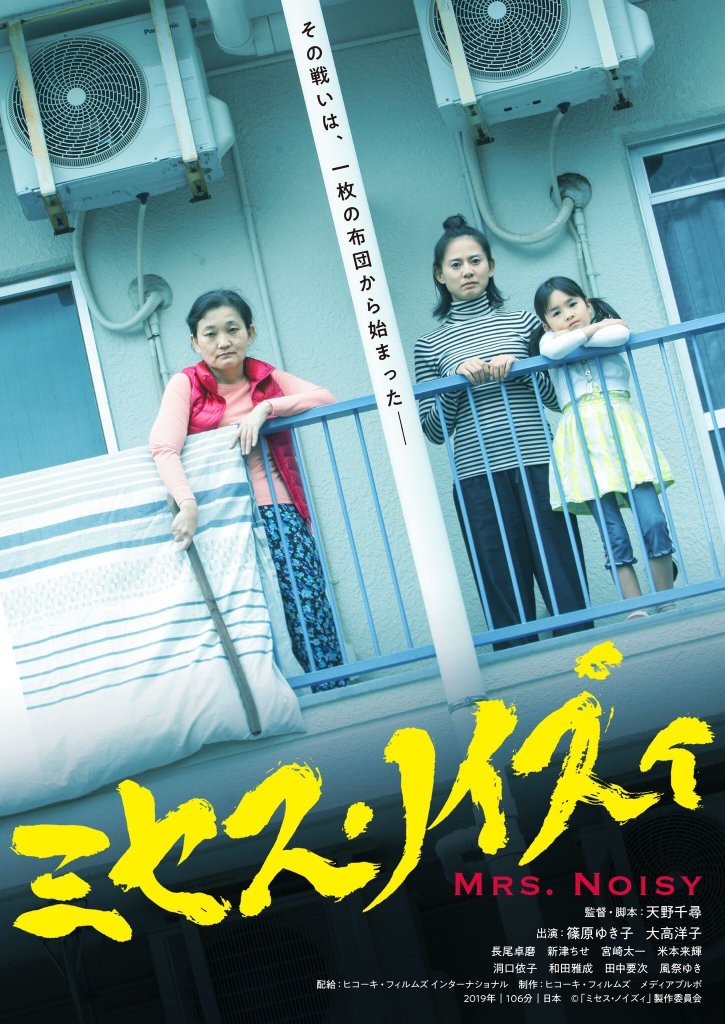
Mrs. Noisy (ミセス・ノイズィ, Chihiro Amano, 2019)

“Cases involving two parties must be viewed from differing angles” according to a lawyer trying to point out why a case that was cast iron days before is now a non-starter. Most of us know it’s a bad idea to judge people on appearances, but few of us have made the leap to acknowledging that it’s wrong to judge people at all, especially when you don’t and can’t know what’s happening in other people’s lives. Being self-involved is hardly a crime, but if it’s a bad quality in a human being it’s an unforgivable sin in a writer, which is why the heroine of Chihiro Amano’s Mrs. Noisy (ミセス・ノイズィ), apparently inspired by an early viral video phenomenon, is struggling to overcome a nasty case of writer’s block. 

Some years ago, under a pen name, novelist Maki (Yukiko Shinohara) made a name for herself with an award-winning book. After giving birth to her daughter, Nako (Chise Niitsu), she swore motherhood wouldn’t slow her down but six years later she’s published nothing of note. After moving to a new apartment with her freelance musician husband Yuichi (Takuma Nagao), Maki hopes to kick her writing career back into gear but an immediate spanner is thrown in the works by a strange noise early in the morning that turns out to be the old woman next-door furiously beating her futon. Maki asks her to stop, but her impatience only gets her neighbour’s back up and starts an ongoing conflict that only worsens after Nako, feeling neglected by her mother’s dedication to her work, wanders off and the neighbour, Miwako (Yoko Ootaka), accompanies her to the park. 

Later, we’re shown things from Miwako’s point of view and realise that when she said there were “reasons” she was out beating a futon at 6am she was telling the truth. Not only that, she tried to explain but was abruptly cut off by an impatient Maki who was not in the mood to listen. It doesn’t help that the Japanese word for “bugs” also means “ignore”, but many of the upcoming problems could have been resolved with a little more patience and politeness, which is something Maki decided she didn’t need to bother with in deciding not to go around introducing herself to her new neighbours as is the usual custom.  

Likewise, when Yuichi abruptly announces he can’t watch Nako the following day as planned, it’s easy enough to think he’s being unreasonable, letting his wife down and implying his career’s more important than hers, but that rather ignores the fact that his explanation is perfectly reasonable in that freelancers cannot (in contrary to popular opinion) dictate when and where they work, and that he offers to keep Nako occupied that evening instead so Maki can meet her deadline. As time wears on, we start to doubt Maki’s sense of subjectivity, realising that she’s begun to blame all of her problems on the old woman next door whom she doesn’t even really know. 

Of course, there are other conflicts, social and generational differences. To a woman of Miwako’s age, it seems “common sense” for an older woman to look after a little girl who seems lonely, in the same way it seems “common sense” that’s it’s wasteful to throw out perfectly good food just because it’s slightly misshapen, but then the world is not as accepting of “common sense” as it likes to think it is. To Maki, a younger woman not used to living in a tight knit community, it seems inappropriate to take someone else’s child to the park without checking with them first. Admittedly, Nako’s claim that Miwako’s husband (Taiichi Miyazaki) gave her a bath (not quite what happened) also sets alarm bells ringing, as perhaps it should, but again could have been settled with much less acrimony if it weren’t for an unfortunate personality clash between the two women in which Miwako offers some “common sense” advice that Maki herself is to blame for her daughter wandering off, touching a nerve in Maki’s conflicted sense of maternity that sees her cruelly firing back and drawing something of a battle line. 

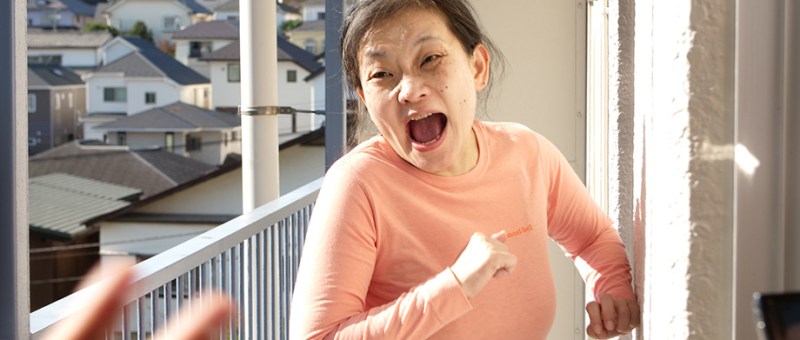
Perhaps unpredictably, Yuichi sides with Miwako, pointing out that whatever Maki says, the fact remains that Nako wandered off because she felt neglected. Maki’s mother (Yuki Kazamatsuri) tells her that she needs to pay more attention to her husband and family, be more of a “wife” and make an effort with the housework, which sounds like old-fashioned sexism and perhaps it is but there’s also truth in it in that Maki really is only thinking about herself. Her editor too tries to guide her to a self-realisation that will reinvigorate her writing career, but she remains blinkered and obtuse. Maki decides Miwako is a batty old woman, and takes bad advice from her get rich quick cousin (Masanari Wada) to use her as a model for a story which becomes a big hit with a new, younger editor who selects it as a serialised column in a magazine for young people where its snarky mean-spiritedness finds a natural audience. Her cousin even uploads a video of the two women comically fighting on the balcony which goes viral and sends sales through the roof. But the meanness of the new, online world is something which cannot be controlled and can have terrible, unforeseen consequences when ordinary people become the focus of malicious rumour and painful ridicule. 

Even so, Maki takes a long time to see the light. She bristles when her editor tells her that her work is shallow, but fails to understand that the cause of its shallowness is her own unwillingness to engage with the world around her. “Following the surface of things is pointless” he tells her, only by taking the time to understand others can she write with true authenticity. Maki assumed Miwako was a horrible old woman after seeing her swipe offerings from a roadside shrine, only to later realise that she in fact replaces them every day (and perhaps it was her who put those cute little clothes on the statues to keep them warm). You can’t know what’s going on in other people’s lives, but if you don’t take an interest eventually people will stop taking an interest in you. 


Mrs. Noisy screens as the Opening Night movie of this year’s CinemAsia Film Festival on 4th March where the director Chihiro Amano will be in attendance to present the film.

My Long Awaited Love Story (わたしに運命の恋なんてありえないって思ってた, Takafumi Hatano, 2016)

My Long Awaited Love Story posterChristmas is synonymous with romance in Japan, but should you really rush into love just to get a pretty picture under the bright lights of a shopping mall holiday display? Perhaps not, but rom-coms are not generally the best place to look for realistic dating advice. “Realistic dating advice” is what the lovelorn heroine of My Long Awaited Love Story (わたしに運命の恋なんてありえないって思ってた, Watashi ni Unmei no Koi nante Arienaitte Omotteta) ends up giving when she runs into a socially awkward CEO with a crush on an employee, but in true rom-com fashion finds herself falling for him instead.

27-year-old Riko (Mikako Tabe) has given up on love, at least in the “real” world. Ironically enough, her job is writing romantic storylines for dating sims at which she is apparently very successful which is why she’s been hired as a consultant by a tech firm looking to branch out in the hope of capturing the female market. The problem is that the more she observes “real” guys in the world all around her, the more they disappoint. The handsome “prince” at a coffee shop says all the right things but then claims to have forgotten his wallet. The clingy cutie has another girl on the line, and the domineering Type-A hunk crumbles in front of a strong woman. Riko knows that Hollywood-style meet cutes don’t happen in everyday life, but finds herself repeatedly running into them only for something to burst her bubble unexpectedly.

At the meeting for her new game, the assembled team being almost entirely female which, when you think about it, is a little bit depressing because it means the boss has used it to get all the women off the floor, Riko is taken by the handsome, sensitive Midoritani (Jun Shison) but gets a rude awakening when another guy turns up and immediately makes it clear he hates all her ideas. According to him, women who play dating sims must be ugly or stupid, the sort of people unwilling to see reality, retreating into a frothy fantasy land to escape their unhappy lives. Thoroughly fed up, Riko sets him right, only to realise this man, Kurokawa (Issey Takahashi), is actually the president of the company.

They haven’t exactly hit it off, and Riko is further enraged when she overhears him giving an interview to a women’s magazine in which he claims to be “supporting women”, parroting all the words she threw at him to make himself sound progressive. Gently teasing him about his obvious crush on Momose (Aya Ohmasa), a pretty employee, however brings them a little closer and earns her an apology. Kurokawa takes some of her advice, tries out a tactic from a game she wrote, finds it kind of works, and eventually asks her to teach him the ways of love. Despite feeling under confident in her own love life as an unattached 27-year-old, she agrees.

Gradually we discover that Riko’s taste for romantic fantasy is a clear eyed choice designed to keep her “safe” from heartbreak because it’s not real and the idealised 2D guys from her games are never going to let her down. Annoyingly, Kurokawa was right up to a point, but you can’t deny that the world Riko lives in is in itself disappointing, a fiercely sexist society in which the men are timid children and the women socially conditioned not to make the first move. Kurokawa’s courtship of Momose, it has to be said, borders on harassment considering he’s the boss and she’s much younger than he is. Early on, Riko outs herself as a youthful devote of shojo manga, given unrealistic ideas about romance from idealised stories of innocent love filled with charming, handsome princes and infinite happy endings. Riko wanted to fall in love like that, which is to say, unrealistically without fully engaging with all the difficult bits of being in a relationship.

Needless to say, she begins to fall for Kurokawa who, for all his awkwardness, has a good a heart and the willingness to learn. Thanks to him she gets the courage to humiliate a bunch of high school bullies at a reunion, but still struggles with the idea of opening herself up to “real” love and the possibility of heartbreak. When Kurokawa has a crisis and calls her, she knows where he’ll be but sends Momose instead, either out of a sense of awkwardness or perhaps just afraid to face him in such an emotional state. A professional humbling and the miracle of Christmas conspire to convince them both that you’ll never be happy hiding your feelings and if you want “real” love you’ll have to accept the risk of getting hurt. That’s reality for you, but it can probably wait until after the festive season.


Currently available to stream via Viki.

Teaser trailer (no subtitles)

Girl in the Sunny Place (陽だまりの彼女, Takahiro Miki, 2013)

girl in the sunny placeThe “jun-ai” boom might have been well and truly over by the time Takahiro Miki’s Girl in the Sunny Place (陽だまりの彼女, Hidamari no Kanojo) hit the screen, but tales of true love doomed are unlikely to go out of fashion any time soon. Based on a novel by Osamu Koshigaya, Girl in the Sunny Place is another genial romance in which teenage friends are separated, find each other again, become happy and then have that happiness threatened, but it’s also one that hinges on a strange magical realism born of the affinity between humans and cats.

25 year old Kosuke (Jun Matsumoto) is a diffident advertising executive living a dull if not unhappy life. Discovering he’s left it too late to ask out a colleague, Kousuke is feeling depressed but an unexpected meeting with a client brightens his day. The pretty woman standing in the doorway with the afternoon sun neatly lighting her from behind is an old middle school classmate – Mao (Juri Ueno), whom Kosuke has not seen in over ten years since he moved away from his from town and the pair were separated. Eventually the two get to know each other again, fall in love, and get married but Mao is hiding an unusual secret which may bring an end to their fairytale romance.

Filmed with a breezy sunniness, Girl in the Sunny Place straddles the line between quirky romance and the heartrending tragedy which defines jun-ai, though, more fairytale than melodrama, there is still room for bittersweet happy endings even in the inevitability of tragedy. Following the pattern of many a tragic love story, Miki moves between the present day and the middle school past in which Kosuke became Mao’s only protector when she was mercilessly bullied for being “weird”. Mao’s past is necessarily mysterious – adopted by a policeman (Sansei Shiomi) who found her wandering alone at night, Mao has no memory of her life before the age of 13 and lacks the self awareness of many of the other girls, turning up with messy hair and dressed idiosyncratically. When Kousuke stands up to the popular/delinquent kids making her life a misery, the pair become inseparable and embark on their first romance only to be separated when Kosuke’s family moves away from their hometown of Enoshima.

“Miraculously” meeting again they enjoy a typically cute love story as they work on the ad campaign for a new brassiere collection which everyone else seems to find quite embarrassing. As time moves on it becomes apparent that there’s something more than kookiness in Mao’s strange energy and sure enough, the signs become clear as Mao’s energy fades and her behaviour becomes less and less normal.

The final twist, well signposted as it is, may leave some baffled but is in the best fairytale tradition. Maki films with a well placed warmth, finding the sun wherever it hides and bathing everything in the fuzzy glow of a late summer evening in which all is destined go on pleasantly just as before. Though the (first) ending may seem cruel, the tone is one of happiness and possibility, of partings and reunions, and of the transformative powers of love which endure even if everything else has been forgotten. Beautifully shot and anchored by strong performances from Juri Ueno and Jun Matsumoto, Girl in the Sunny Place neatly sidesteps its melodramatic premise for a cheerfully affecting love story even if it’s the kind that may float away on the breeze.


Original trailer (no subtitles)