 Written by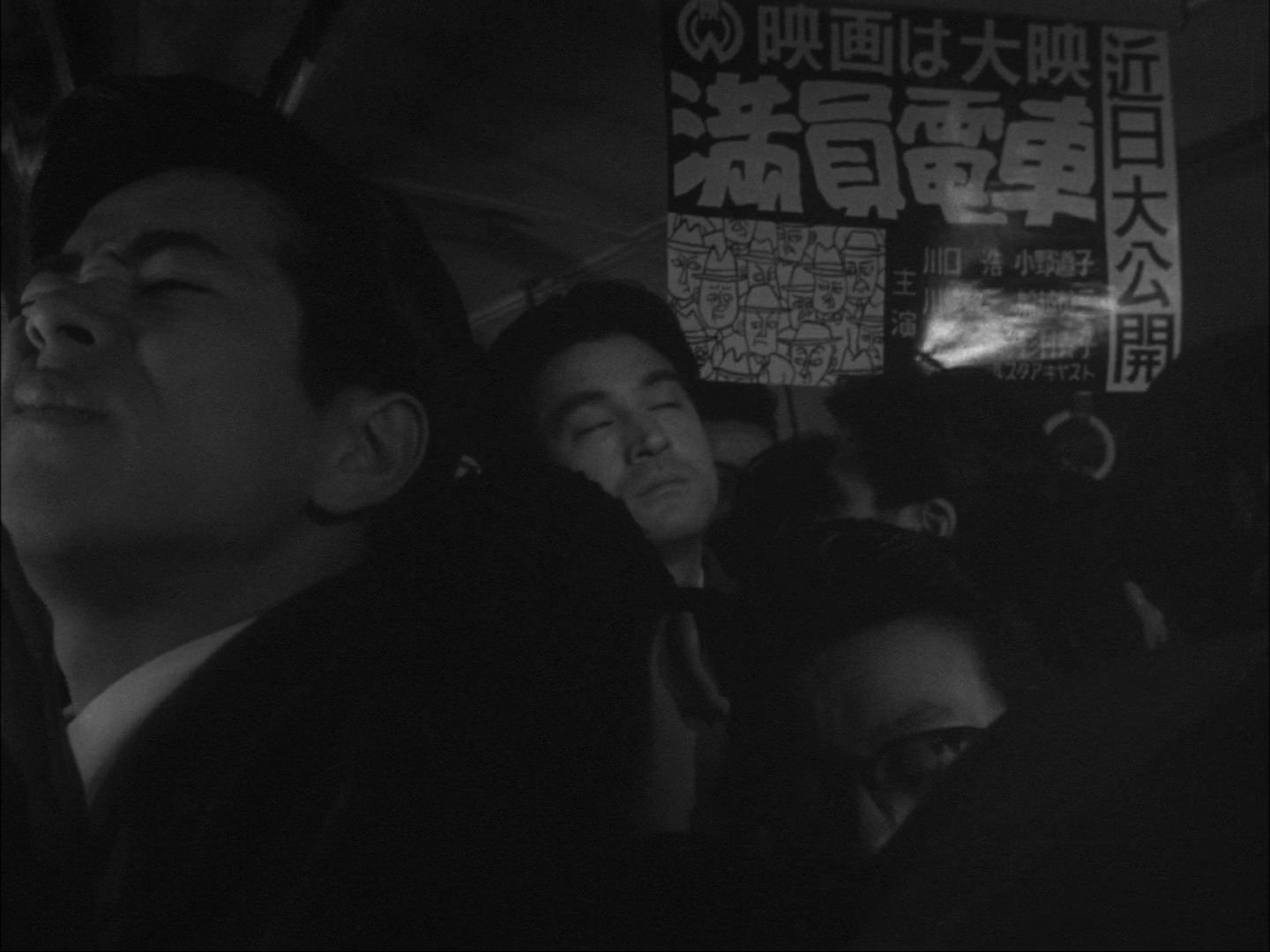
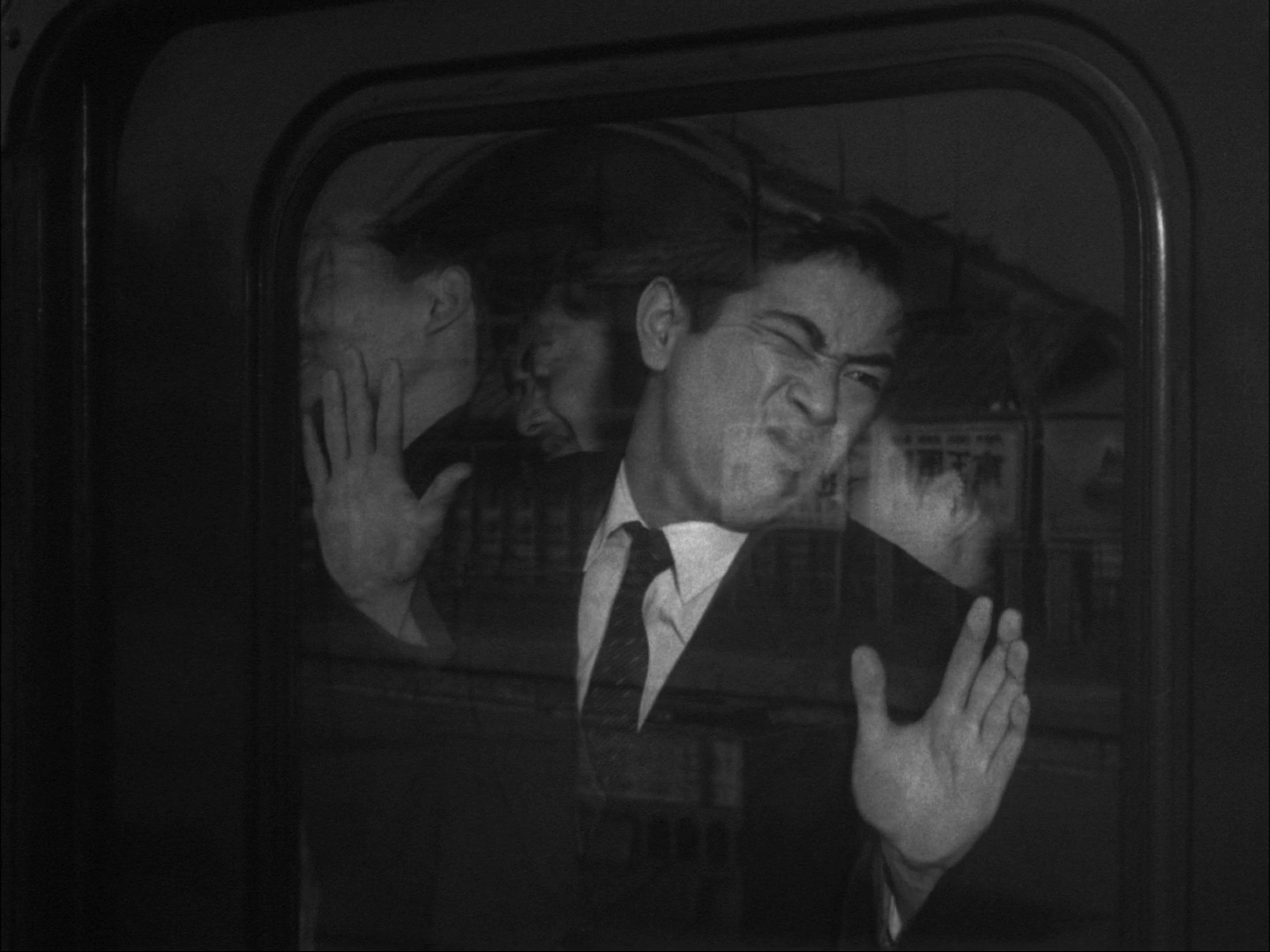
The Japan of 1957 moves like clockwork in Kon Ichikawa’s absurdist satire, The Crowded Train (満員電車, Manin densha). You can’t expect a seat to be there just because you want to sit down, according to go-getter Tamio, you have to fight for your place on the crowded train that is the post-war economy. His horologist father raised him to prize things like order, precision, and self-reliance, yet the irony is that in a nation like this, if everyone else’s clocks are wrong and only yours are correct, you may be better off resetting them.
Nevertheless, Tamio (Hiroshi Kawaguchi) comes to think of himself as part of the machine and does his best to slot himself into the rhythms of contemporary urban life. People move around in the same way as the bottles manufactured at the brewery where Tamio gets a job after graduating from a top university. But he soon learns fitting into the system requires a degree of compromise. On his first day at the office, he’s told off by his new boss for being overly efficient. He finished all his work before 10:30, but his daily quota is fixed and his productivity only makes things difficult for others. The head of brewery anticipates that increasing automation will allow them to increase efficiency through shedding personnel, only the unions and cultural practice won’t let them. Tamio is one of only three people was recruited for his skills. The other seven joining with him are nepotism hires that will likely drain resources due to their lack of ability, but will be promoted anyway because of their connections.
In any case, he might have hoped for a better job after graduating from such a good university. A rational man like his father, Tamio meticulously works out how much he can expect to earn over a lifetime subtracting things likes taxes, insurance, and the costs of raising a family. It turns out, the salaryman life is rather disappointing and there’s relatively little reward at the end of it. His constant toothaches and mounting health problems are manifestations of his anxiety and buried desperation. He lives in a company dorm with no furniture surrounded by long corridors of identical rooms. Everyone leaves at the same time every morning to take their place on the train. His colleague Sarai (Eiji Funakoshi) tries to make friends with him, but also explains how most of the other men in the building have been ruined in one way or another by the salaryman life. One has returned to the dorm after his wife left him. Another has a heart condition, but has run through his sick leave and has no choice but to return to work. Tamio only got his position because the previous occupant of his room jumped from the window.
Sarai says that he held off on making friends with Tamio because he was afraid of him. Graduates overthink things, he says, and are ill suited to the regimented life of a salaryman. The film opens with another kind of conveyor belt visualising the expansion of the educational sector beginning with a handful of graduates in the Meiji era to the present day in which there are so many the ceremony has to take place outdoors in the rain. Tamio loses his job after falling into a coma for month without giving prior notice and is told by a friend he asks for help that they just don’t need graduates from top universities. He’s eventually only able to get a job as a school caretaker by leaving his degree off resume, but is then abruptly fired when they find out. Despite the system apparently overproducing graduates it has no need for, all the teachers want their kids to university and are open to Tamio’s plan to set up school to teach people how to get in.
Meanwhile, Tamio’s father has since entered a mental institution and is apparently very happy there. Everyone else is mad except for me, he claims, but also appreciates the sense of order and precision he couldn’t find in the outside world. The doctors find it impossible tell patients apart from visitors suggesting lack of division between sanity and madness, while Tamio’s father had originally accused his mother of insanity simply for being cheerful. Cheerfulness or insanity seem to be the only ways out of this impossible situation as Tamio desperately tries to hold the roof on his shack during a storm while his mother is just happy to be able to live with her son and hopeful that her husband will get “better” so they can all live together again. “There is always another school year ahead of you,” the head teacher of the primary school tells his new charges somewhat omniously, suggesting that they too are destined to spend their lives fighting for a seat on a packed-out train with no clear destination.

