The Parades (パレード, Michihito Fujii, 2024)

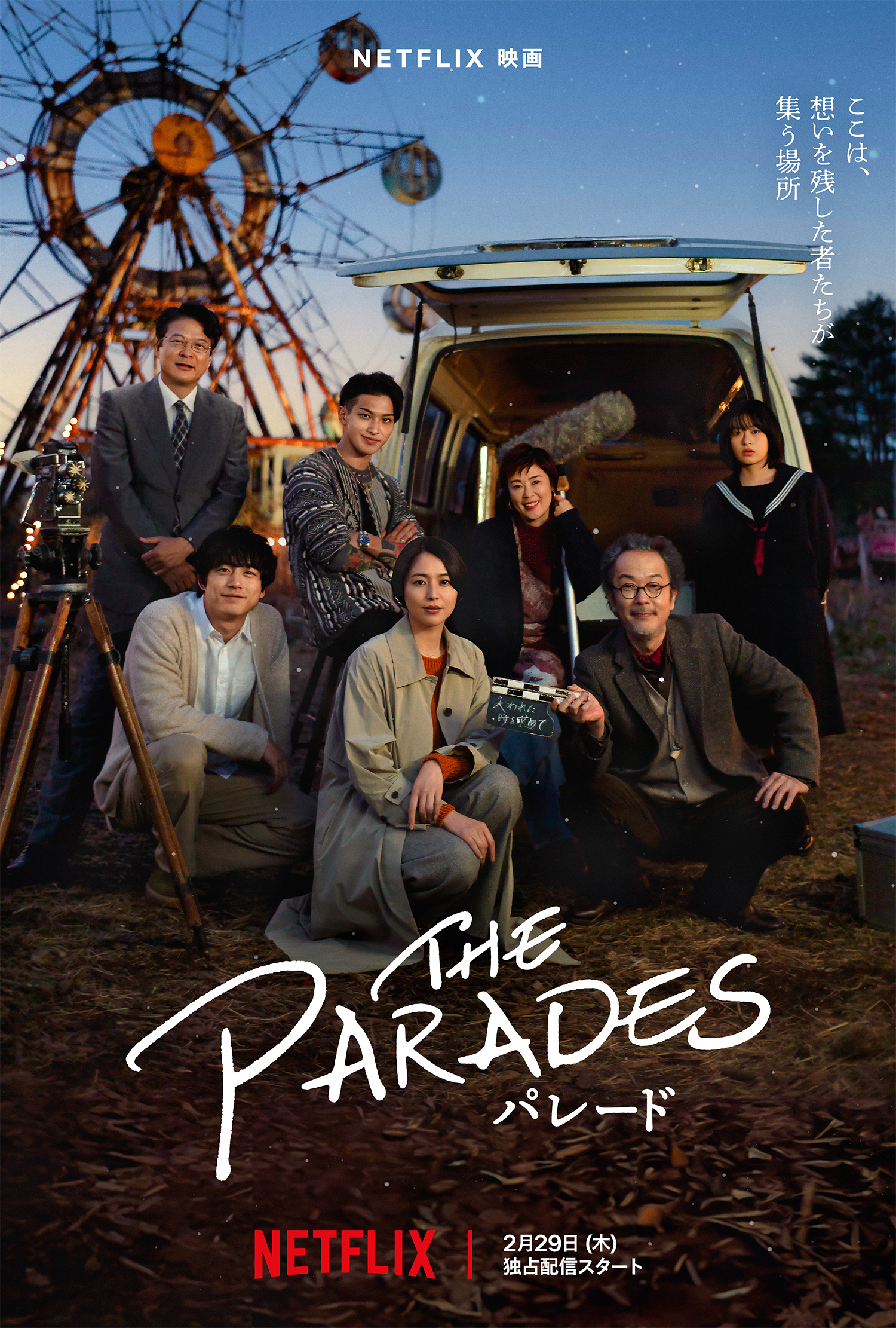
Living a life without regrets is easier said than done. The protagonists of Michihito Fujii’s The Parades (パレード, Parade) each have unfinished business that prevents them moving on from this world, but what they discover is an unexpected sense of solidarity among similarly lost souls as they try to lay themselves to rest. After all, all they can do now is observe and reflect while helping others like them with their own lingering doubts and regrets.

Drawing inspiration from the 2011 earthquake and tsunami, Fujii first introduces us to Minako (Masami Nagasawa). A 35-year-old single mother, she wakes up on a beach and frantically looks for her seven-year-old son Ryo (Haru Iwakawa) little realising that the reason no one seems to be able to hear or react to her is because she’s already dead. Picked up by fellow ghost Akira (Kentaro Sakaguchi), she’s taken to a disused fairground that doubles as a hub for wandering souls. Though it takes her a while to accept her new situation, she gradually bonds with others at the camp each of whom have their own unfinished business which isn’t all that different from her own in that they mostly want to be sure the people they left behind will be alright.

The film takes its name from the monthly processions in which wandering souls meet by lantern light to look for their missing people together. This sense of solidarity and empathy seems to echo the best of humanity along with a melancholy longing. There appears to be little rancour in this afterlife, a yakuza who was killed in a gang war simply feels sorry for his father and so guilty about the girlfriend he left behind that he’s been afraid to face her for the last seven years, and a high school girl who took her own life because of bullying first thinks her unfinished business is vengeance on the bullies but later accepts is actually a desire to apologise to her best friend who then had to take the brunt of the bullies’ cruelty on her own.

What the film seems to say is that we should have more of this fellow feeling in life. Former film producer Michael (Lily Franky) constantly references his days as a student protestor remarking that they might not have amounted to very much but at least they had unity. His regret is less his failed revolution than a moment of emotional cowardice that saw the woman he loved marry someone else instead. Constant references to the end of Casablanca echo their plight as if Maiko (Yuina Kuroshima / Hana Kino) married Sasaki (Ayumu Nakajima / Hiroshi Tachi) for the good of the revolution though she really loved Michael who unlike Rick just walked out on it because in the end he wasn’t brave enough to risk the consequences of its success or failure. 

The world building may not always be consistent and the rules of this universe appear unclear. It seems that in general the ghosts don’t linger long. Even the heavenly liaison Tanaka (Tetsushi Tanaka) appears to have been dead not longer than 40 years with Michael seemingly the only other long-stayer with the others’ deaths fairly recent. In general they are only really waiting for themselves or others, wanting to make sure that their loved ones will be alright in their absence even though there’s nothing more they can do for them now other than observe. Though they can walk through this world and interact with physical objects, their presence is otherwise invisible unless the person they wish to contact happens to be in an altered state. To this extent, the resolution may seem like a bit of a cop-out but does lend an additional poignancy and imply that these lessons learned in limbo can still be taken into the mortal realm creating additional empathy and solidarity among the living so that they may be able to live their lives freely and fully perhaps not entirely without regrets but at least with fewer of those that would prevent them from moving on when their time comes. But even if they find themselves trapped in limbo, they’ll hopefully find others like themselves and a gentle sense of hopefulness about what’s to come even as they prepare to leave this world.


Trailer (English subtitles)
A Family (ヤクザと家族 The Family, Michihito Fujii, 2020)

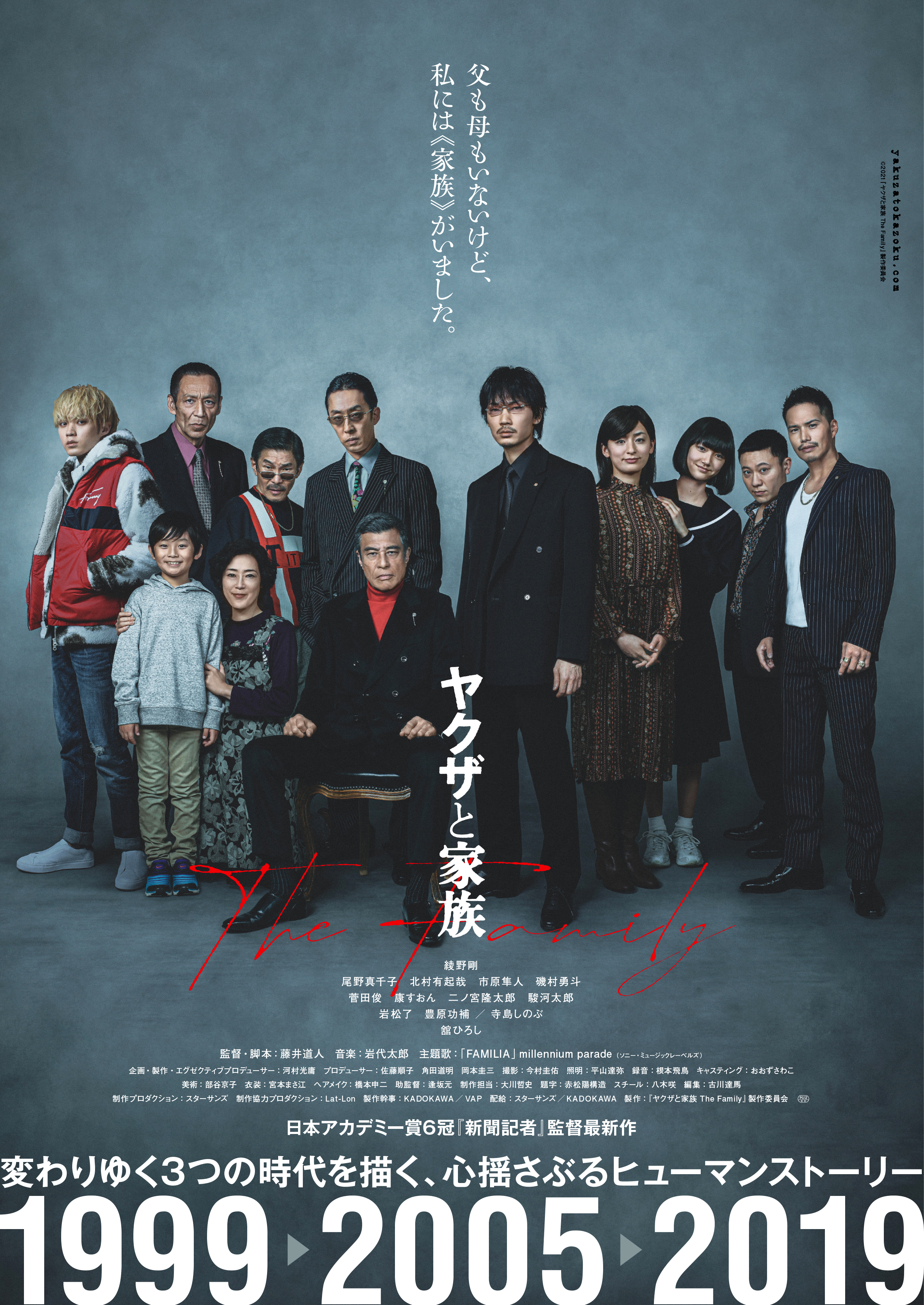
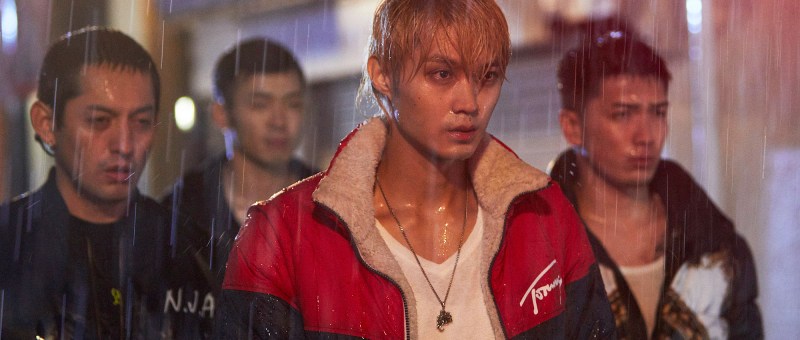
“No one can survive as a yakuza in this world” according to another orphaned son playing the long game of a crime adjacent existence in Michihito Fujii’s melancholy gangster drama, A Family (ヤクザと家族 The Family, Yakuza to Kazoku The Family). The yakuza, or at least yakuza in the movies, has long been a relic of the Showa era rendered increasingly irrelevant in a society no longer in need of its dubious claims of protection. In truth, it’s hard to mourn the passing of organised crime, but Fujii at least finds a kind of pathos and infinite sympathy for these men for whom the gangster brotherhood took the place of a family even if one with a self-destructive legacy. 

To begin with, petty street punk “Li’l Ken” (Go Ayano) wants nothing to do with the yakuza, seemingly the only guest at the funeral of the drug dealer father he resented other than a corrupt cop from the organised crime squad, Osako (Ryo Iwamatsu), who expresses regret that had he simply arrested him perhaps Ken’s father would be still be alive. Visiting another “familial” environment, a Korean barbecue run by the maternal Aiko (Shinobu Terajima) herself the widow of a gangster currently with a baby on her back, Ken gets himself noticed by local mobster Shibasaki (Hiroshi Tachi) by taking on some punks who stormed into the restaurant and attacked his guys. Explaining that his guys don’t associate with drugs, Shibasaki offers him a job which he refuses but having his card in his pocket literally saves his life when he’s pickup by rival gang leader Kato (Kosuke Toyohara) after having stolen and then destroyed some of their stash after stumbling across a drug deal. The course of Ken’s life is set, he joins the Shibasaki gang along with his two delinquent friends and accepts Shibasaki as his “oyabun” or “father”. 

In Shibasaki, Ken finds a father figure more palatable than the one he lost. As in many a yakuza movie, the Shibasaki clan is positioned as “good yakuza” of the old school kind who believe in things like duty and honour and are apparently pursuing the path towards becoming “true men”. The rival Kyoyo, by contrast, are “bad” new yakuza who no longer play by the old rules and make their money through destructive vices such as drugs. The expected turf war does exactly materialise though the uneasy truce between the rival gangs becomes increasingly strained as the economic situation of millennial Japan begins to shift, the local town council apparently set on demolishing the red light district as part of their plans for redeveloping the city. Kyoyo would rather take over its entirety, pushing Shibasaki to retreat in exchange for a small amount of monetary compensation while shady cop Osako tries to play the situation to his own advantage. 

Yet it’s also clear that the yakuza as an institution is on its way out. After a 14-year prison term, Ken emerges into a very different world in which organised crime has been hounded further into the margins thanks to effective, though the film would also argue inherently vindictive, legislation. No one can make any money anymore, and the slightest slip up can lead to arrest. The Shibasaki gang is now a handful of old men, most of the guys having moved on only moving on from the yakuza life is not easy as Ken’s old friend Hosono (Hayato Ichihara) explains. In order to rejoin regular society, a former yakuza must endure five years in the wilderness unable to open a bank account or get a regular job leaving them with few possibilities for basic survival that enable them to leave a life of crime. Now with a young daughter and job in waste disposal, Hosono is nervous and reticent, reluctant to be seen in public with Ken lest he be tarred with the criminal brush and lose access to the new life he’s managed to build for himself as a responsible husband and father. 

Urged by Shibasaki, Ken eventually leaves one family for another in reuniting with a woman he loved before prison who has since made a respectable life for herself as a low level civil servant but once his life of crime is exposed by a thoughtless colleague at his new job in deconstruction, he discovers that there is no place for a “reformed” yakuza in the contemporary society because in a sense there can be no such thing. Once gangster always a gangster, there is no path forward. Complaining that Osako has stolen his right to life, Ken is told only that the yakuza lost human rights long ago. 

“They’re my family. No reasons are needed” Ken replied when asked why he became a yakuza, but he continues to find himself torn between the various concepts of family and the inheritances of his two very different father figures. “Your time is over old man”, Aiko’s fatherless son Tsubasa (Hayato Isomura) tells an unrepentant Kato attempting to hang on to his territory in the face of a younger generation operating on an entirely different level, rejecting the codification of gangsterdom but seemingly embracing its romance. Tsubasa too is later sucked in by the hyper masculine revenge drama of the yakuza way, seeking vengeance for the death of his father and apparently prepared to ruin his life in order to gain it. It’s for this surrogate son, now a kind of father figure himself, that Ken will eventually make a sacrifice. A sad tale of dubious paternal legacies, frustrated fatherhood, life’s persistent unfairness, and a perhaps uncomfortable lament for a bygone Japan defined by giri/ninjo conflict ruled by manly men, the ironically titled A Family has only sympathy for those trapped by an inescapable spiral of manly violence but also reserves its respect for those who know their time has passed and elect to end the cycle in order to set their “sons” free. 


Original trailer (no subtitles)

The Asadas! (浅田家!, Ryota Nakano, 2020)

There’s a kind of irony at the centre of Ryota Nakano’s The Asadas! (浅田家!,Asada-ke!) in that its photographer hero makes a name for himself photographing his family yet at times neglects them or appears curiously insensitive, perhaps even selfish in the pursuit of his dreams. Inspired by the life of photographer Masashi Asada, the film is at once a celebration of the family and an advocation for the tangibility of a photograph as a repository of memory that can bring comfort even in the absence of its subject.

The first part of the film is narrated from the perspective of Masashi’s (Kazunari Ninomiya) much more conventional older brother Yukihiro (Satoshi Tsumabuki) who is generally exasperated by and a little resentful of the family’s indulgence of Masashi, a seeming free spirit who acts on impulse and gives little thought to the consequences of his actions. People frequently describe both Masashi and his father Akira (Mitsuru Hirata) as “not normal,” and there is something unconventional in their family setup with Akira a househusband in a small town in the 1980s while his wife Junko (Jun Fubuki) supports the family with her career as a nurse. It’s Akira who first gives Masashi a camera and his dream of becoming a photographer which he eventually achieves through taking amusing pictures of his family in various scenes casting them as firemen, racing drivers, or even gangsters. 

Masashi attempts to get the photos published as a book, but is quickly dismissed and told that no one wants to buy his personal family photo album. Though the publisher may have a point that in general people value photos of their own family but not those of others, the family photo itself is treated as a triviality as if it had no real worth. The same could be said of Masashi’s work, that some do not take it seriously because the subject is his own family. Yet Masashi finds new value in it in his ability to capture the essence of a moment in family life through a staged photograph such as that he designs for the family of a little boy who is dying of a brain tumour.

In the back of his book, eventually published by an eccentric woman who runs a small press and decides to take a loss because she found the photos so funny, Masashi pledges to travel anywhere to take similar photos for other families which of course means he is often separated from his own whom he then rarely photographs much to his father’s disappointment. After leaving for university, he had barely contacted them for two years while after travelling to the zone of the 2011 earthquake and tsunami he abruptly drops out of contact with his long suffering girlfriend Wakana (Haru Kuroki) after becoming immersed in the task of cleaning up the orphaned photos found among the wreckage. 

Of course, there are those who object to his work thinking that there are more important things to do while so many people are still missing, but as he discovers recovering the photos gives people a sense of comfort and healing as if they were getting back a little bit of the past that had been taken from them and most particularly if the people in the photographs are no longer here. A little girl who’s lost her father is alarmed and resentful that she can find no photos of him, realising that he was rarely in the ones they took as a family and wondering if that meant he didn’t really love them hinting at an ironic sense of parental absence in that parents often take the photos of their children so do not appear themselves but still leave their imprint in a sense of absence in which every photograph also contains the invisible presence of the photographer.

And then sometimes the reverse is true. A grandmother comes looking for pictures of her grandchildren, but ironically finds pictures only of herself. The triviality with which the family photo was regarded seems almost offensive for something that can offer such comfort and warmth in a time of profound grief as a tangible link to a past that will never return. Masashi makes his family’s unrealised dreams come true through his photos, bringing them joy if also a little anxiety in a creating a perfect record of their unconventional family while Nakano does something similar capturing of the essence of a happy family life filled with equal parts laughter and tears.


The Asadas! screens Feb. 24 as part of Family Portrait: Japanese Family in Flux

Original trailer (Traditional Chinese / English subtitles)

Life of Mariko in Kabukicho (探偵マリコの生涯で一番悲惨な日, Eiji Uchida & Shinzo Katayama, 2022)

It’s all go in Kabukicho in Eiji Uchida and Shinzo Katayama’s zany tale of aliens, serial killers, and secret assassins. The film’s Japanese title (探偵マリコの生涯で一番悲惨な日, Tantei Mariko no Shogai de ichiban Hisanna Hi), the most tragic day in the life of detective Mariko, may hint at the melancholy at the centre of the story in putting the titular investigator front and centre even while her success is fuelled by her position on the periphery but this is also very much the story of an area and community in a shrinking part of the city. 

It’s true enough that Mariko’s (Sairi Ito) karaoke bar seems to have become a local community hub filled with a series of regulars each of whom have stories of their own. Born and raised in Kabukicho, Mariko knows every inch of the area and thanks to the confessional quality of her work has her finger truly on the pulse which is what makes her such a good detective. Her case this time around is though a little more difficult as she’s been hired by the FBI to track down an escaped space alien because all aliens apparently belong to the US. This one’s been liberated by a mad scientist, Amamoto (Shohei Uno), who they say wants to team up with the alien for ill intent.

In what seems to be a nod to cult 1983 horror movie Basket Case, Amamoto carries the alien around in a picnic basket from which it occasionally irradiates people when frightened. Meanwhile, a serial killer is also stalking the area. One of Mariko’s regulars, Ayaka (Shiori Kubo), is keen to catch him though not for justice but the reward because she’s become obsessed with a bar host who’s been spending a lot of time with another customer because she can pay more. Mariko turns her offer down on the grounds that she doesn’t want to enable her romantic folly and otherwise seems rather uninterested in the serial killer case perhaps because no one’s hired her to solve it, but she also refuses a job from another regular who wants to track down his estranged daughter after being forced on a suicide mission by his former yakuza associates possibly because she suspects he won’t like the answer when she finds her. 

Home to the red light district, Kabukicho has a rather seedy reputation but here has a kind of homeliness in which the veneer of sleaze is of course perfectly normal and unremarkable. A yakuza intimidates a love hotel worker while standing directly in front of a rotating electric dildo in an S&M-themed room later visited by one of Mariko’s regulars with her nerdy film director crush who is so sensitive he can barely walk after exiting the cinema so moved is he by the cinematic expression. Most of the regulars are in their own way lovelorn and lonely, perhaps no less Mariko herself who has an attachment to a middle-aged ex-chef (Yutaka Takenouchi) who now runs a moribund dojo teaching ninja skills to anyone willing to learn. Despite the warmth of the community, life in Kabukicho can be hard as the host later echoes looking around his tiny apartment and sighing that he’s tired. It took so much out of him just to get this little and he barely has it in him anymore. 

Mariko too has her sorrow and buried trauma, hiding out in her bar but secretly imprisoned within the borders of Kabukicho as a kind of self-imposed punishment linked to her tragic past. The intersecting stories paint a vivid picture of an absurd world in which the innocuous civil servant next to you might be a secret assassin or you could turn a corner and run into a serial killer, not to mention a mad scientist with an alien in a basket. But for all its craziness it has a kind of integrity in which the strange is also perfectly normal and Mariko becomes a kind of anchor restoring order to an unruly world. As she’s fond of saying thing’s will work out and it’s difficult not to believe her or the defiantly upbeat spirit even among those depressed and downtrodden otherwise unable to escape the confines of a purgatorial Kabukicho.


Life of Mariko in Kabukicho screened as part of this year’s Camera Japan.

Original trailer (English subtitles)
A Hundred Flowers (百花, Genki Kawamura, 2022)

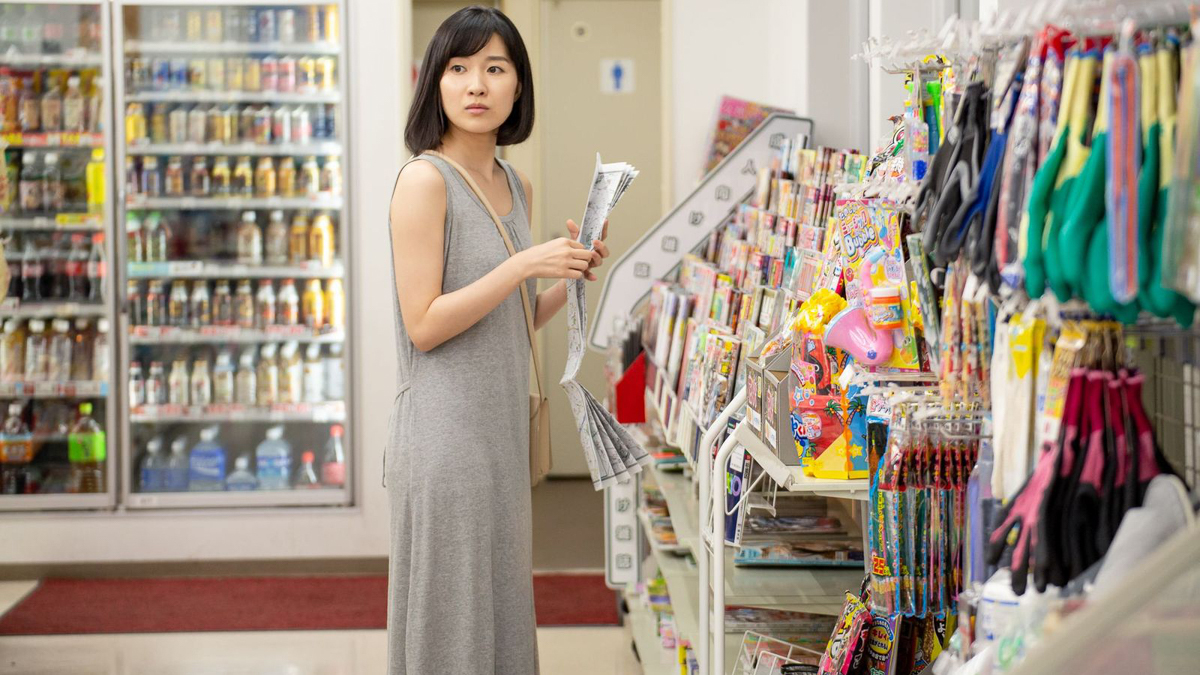
An expectant father finds himself confronted with paternal anxiety and past trauma on learning that his mother has been diagnosed with Alzheimer’s in Genki Kawamura’s adaptation of his own novel, A Hundred Flowers (百花, Hyakka). A prolific film producer behind such hits as Lee Sang-il’s Rage and Tetsuya Nakashima’s Confessions, Kawamura also penned the international bestseller If Cats Disappeared from the World which was later adapted into a film starring Takeru Satoh and here makes his directorial debut with a semi-autobiographical exploration of memory and forgetting. 

Kawamura neatly signals his central concern in the opening scenes as Yuriko (Mieko Harada) seems to become unstuck in time, a withered dandelion on her kitchen table as she flits between swapping it for a new one and playing the piano eventually watching herself from an alternate temporal space. Her grown-up son Izumi (Masaki Suda) seems surprised to witness her decline on a visit home, running panicked through the streets looking for her only to find his mother sitting on the swings at the park muttering about “half fireworks”. When he approaches her she seems to mistake him for someone else, Izumi rejecting her too intimate hug and later making his exit earlier than expected, leaving the New Year food Yuriko has prepared uneaten and making an excuse about an emergency at work. 

The chase through the streets may have awakened traumatic memories in Izumi too, forcing him to remember another time as a child he came home and found his mother gone. Disappearing again, Yuriko is found at his old school, guided by a memory of a parents day at which Izumi read out sections of Osamu Dazai’s Run, Melos!, a story of a man running back to the city to save his friend before he is executed in his place. Thrown back into the past, Yuriko later berates the grown Izumi for his habit of wandering off, suggesting that he gets lost on purpose so that she’ll look for him which is perhaps what Yuriko is doing longing for her son to understand and forgive her for an act of childhood betrayal. Kawamura often places the camera directly behind Izumi’s head, following him as he chases the mother who he fears has forgotten him while he feels foolish in his inability to forget her despite the depth of his resentment. 

Ironically enough, Izumi and his heavily pregnant wife Kaori (Masami Nagasawa) both work at a music company developing a virtual idol whom they explain has been fed thousands of memories as data in order to improve her AI but ends up oddly soulless as if these fragments of moments in time are meaningless in isolation. His friend quips that maybe they should have given the AI the ability to forget, as if that would make it more “human” and relatable. Izumi is pretty sure he hasn’t forgotten anything important, but memory remakes itself every day and is in some ways selective. Though he holds his mother at arm’s length, he begins to put the past behind him in learning to forgive her and in the process regaining the happy memories of his earlier childhood that his trauma had taken from him. 

The flowers so closely associated with Yuriko who is often dressed in a bright yellow are perhaps another allusion to Dazai and his insistance on embracing the gift of a single dandelion as a kind of metaphor for the frustrated love between mother and son, while the half fireworks they later see also resemble a dandelion dispersing mimicking the continual scattering of Yuriko’s memories. Izumi remarks that it’s like her memories are being stolen while charting her decline as a depletion of her identity until there is nothing left of her at all, the various boxes in her apartment standing in for blocks of data slowly being shed. Shifting between the perspectives of mother and son who are each in some way blind to the other, Kawamura touches on the tactile quality of memory as one moment sparks another while for Yuriko time proceeds on a maddening loop of overlapping incidents that robs of her present, past, and future in equal measure. The irony may be that only in losing his mother does Izumi begin to find her again, searching for her within the halls of his own memory and rediscovering a sense of himself as a child that he had long forgotten. 


A Hundred Flowers screened as part of this year’s London East Asia Film Festival 

International trailer (English subtitles)
Prior Convictions (前科者, Yoshiyuki Kishi, 2022)

An earnest young woman finds herself questioning her way of life after one of her charges is implicated in a spate of murders in Yoshiyuki Kishi’s social drama Prior Convictions (前科者, Zenkamono). As the double meaning of the English title implies, the issue is as much about preconceived notions and unfair judgements as it is about “crime”, its causes and legacies, while ultimately arguing for a more compassionate approach to law enforcement which prizes healing and rehabilitation over meaningless punishment. 

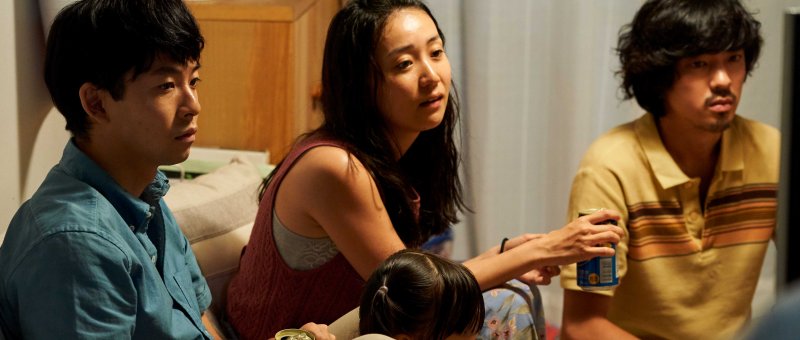
Kayo (Kasumi Arimura) is what’s known as a volunteer probation officer which is to say that she assists those who’ve recently been released from prison to reintegrate into mainstream society so that they can live comfortable lives within the law. She is not however a civil servant and though making regular reports to an official probation officer has very little power and no pay for her work which can at times be difficult and emotionally draining especially considering that she also needs to work a regular job in a convenience store to support herself. In what seems like a very poor safeguarding decision, she meets most of her clients in her own home where she lives alone one of them even breaking in while she’s not there for an impromptu hotpot party. 

While she is exasperated by some of her charges such as a woman who can’t seem to stick to a regular job no matter how many she finds her, Kayo is incredibly proud of her work with Kudo (Go Morita), a quiet and soulful middle-aged man who was convicted of murder after stabbing a co-worker who had been bullying him so badly that he lost the hearing in one ear. Kudo had been struggling to reconcile himself to his crime, intensely worried that while unable to understand why he did it he might end up doing it again. When Kudo suddenly disappears after being linked to a series of suspicious deaths most assume the worst, but Kayo alone refuses to believe that Kudo could be the killer and is determined to find out what’s really going on if only to vindicate her conviction that her work is good and useful rather than naive and misguided as some including intense police officer Takimoto (Hayato Isomura) seem to see it. 

As Kayo later reveals she’s carrying some baggage herself which contributed to her decision to begin working with those who’ve been convicted of crimes, but is doing it with the aim of reducing suffering and ending the cycle so that there are no more victims or victimisers. Also wounded, Takimoto tells her that murderers aren’t human and can never be rehabilitated, while she’s forced to consider the problem from all angles meeting with a lawyer (Tae Kimura) who defended an abusive husband who murdered his wife and learning that she did so for similar reasons to herself certain that he too deserved a second chance and could perhaps be reformed if given the proper treatment. Kayo sees that many of the people she meets ended up committing crimes because of traumatic personal circumstances and if someone had helped them earlier they may not have offended in the first place. She can’t change the past but at least in helping them now she might prevent further crimes in the future while giving them a source of stability as they attempt to root themselves more firmly in mainstream society. 

Inspired by Masahito Kagawa’s manga, Prior Convictions was previously adapted into six-part WOWWOW TV drama to which the film is technically a sequel though fairly stand alone in its gentle unpacking of Kayo’s own unresolved trauma and subsequent epiphanies as regards her relationships with those she’s trying to help. As one young woman puts it, they find her vulnerability reassuring in contrast to the often authoritarian, didactic approaches taken by law enforcement and social services who only talk down to them from a condescending place of superiority rather than trying to meet them on a more human level. In the end it’s about healing, trying to find an accommodation with the traumatic past and limiting its legacy to break the cycle of pain and violence. The prior convictions which most need addressing are those of a judgemental society that all too often contributes to the mechanisms of violence in seeking to punish rather than to help.


Prior Convictions screened as part of this year’s Camera Japan.

International trailer (English subtitles)
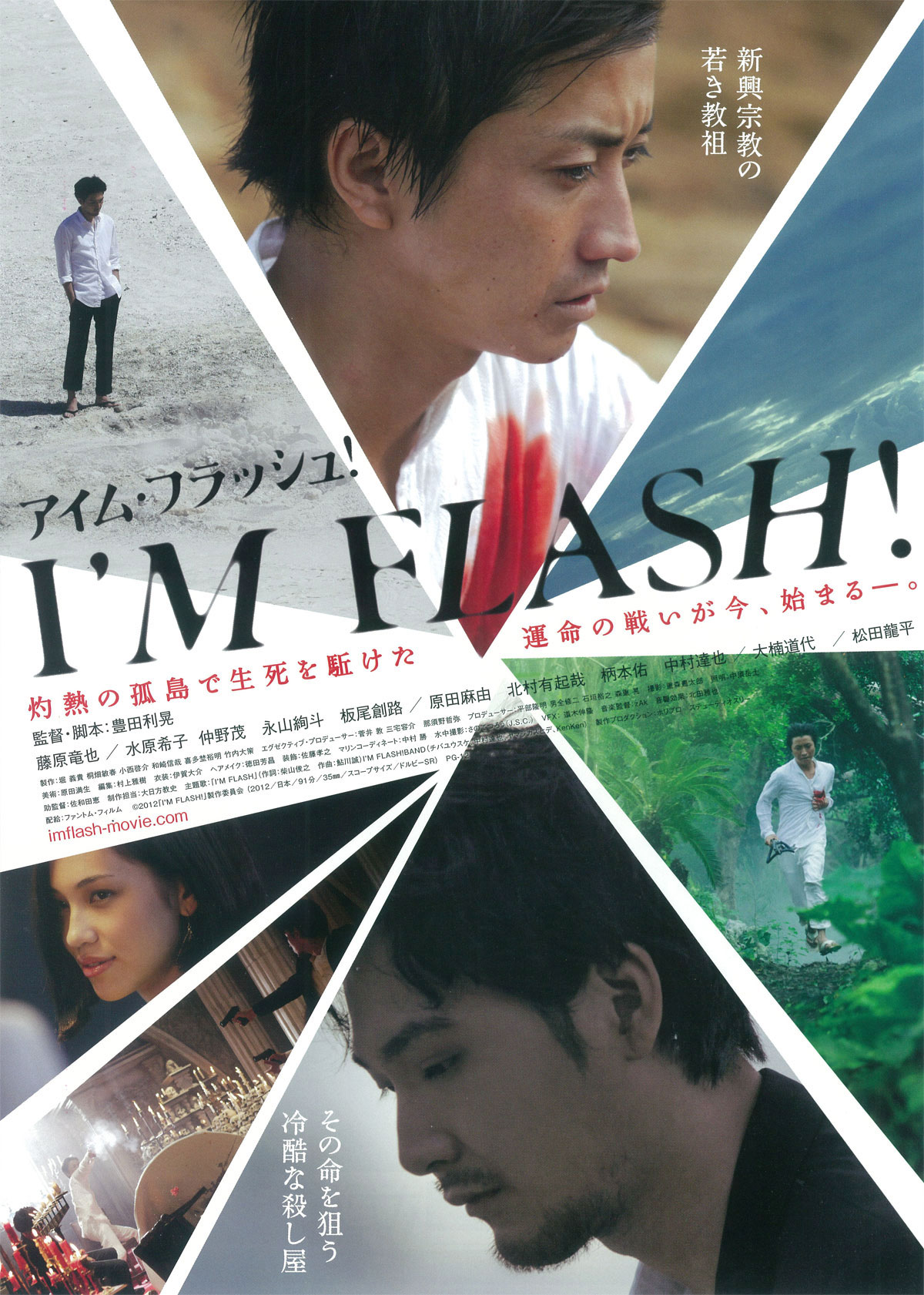
I’m Flash! (Toshiaki Toyoda, 2012)

A conflicted cult leader’s existential crisis plays havoc with the “family business” he’s unwillingly inherited in Toshiaki Toyoda’s ironic contemplation of life, death, and everything in-between, I’m Flash!. Taken from a Sheena & The Rokkets song, the slightly awkward title refers not to the hero’s taste for visible wealth, but to the briefness of life. Shot in the wake of the 2011 earthquake, Toyoda apparently intended the film to “shake off death” but ultimately casts off only its shadow while suggesting once again that “death is the ultimate salvation” and the only true path to freedom. 

As the film opens, “guru” Rui (Tatsuya Fujiwara) literally collides with destiny as the bright red sports car he’s driving meets a motorcyclist coming in the other direction. The unnamed cyclist (Tasuku Emoto) is killed instantly and thereafter callously forgotten while the girl in the passenger seat next to him (Kiko Mizuhara) who’d he’d only met that evening in a bar is now in a coma with no indication of when or if she may wake up. Rui is shaken, however, most in being confronted with the real world cost of his phoney religion something which he has perhaps been ignoring in order to continue living his life. “If you want to make serious money there’s nothing better than religion” he’d cynically joked, playing the playboy enjoying the attention his gurudom grants him, particularly with the opposite sex, while living a life of undeserved luxury built on exploiting the vulnerability of others. 

Yet as we come to realise his troubles are not only moral or spiritual but personal in realising that he is but a puppet of his own organisation which is in reality run by his pragmatic mother (Michiyo Okusu) and hard-nosed sister (Mayu Harada) to whose marketing genius he attributes the cult’s recent success. One of three bodyguards hired to protect him quips that Rui is “kind of like a mob boss”, and he’s not far off except that Rui is only the face of the organisation with no real power to affect change. The cult, which runs under the slogan “Life is Beautiful”, was apparently founded by his grandfather and can only be inherited through the male line but Rui later discovers that both his grandfather and father whose skulls sit in his ossuary may have died unnatural deaths suggesting perhaps that they too came to experience this same sense of existential impotence or fell victim to the machinations of others. Feeling emasculated, Rui was forced to become the guru when his middle sister decided to transition, joining older sister Sakura and his mother as part of the matriarchal governing body while refusing the burden Rui must now carry. 

“Everyone needs something to cling to” Rui’s mother rationalises, justifying herself that the members of the cult would merely have joined another organisation if not theirs. Veteran hitman Kamimura (Shigeru Nakano) says something similar when the bodyguards are asked to switch sides and take Rui out of the picture, insisting that if they don’t do it someone else will. Rui’s decision to dissolve the church sparked by his meeting with the girl in the bar creates a serious business problem for his mother and sisters, yet reflecting he realises that he had plenty of opportunities to change his life and let each of them pass him by. “Is life supposed to be enjoyable?” zen hitman/bodyguard Fujiwara (Ryuhei Matsuda) answers when Rui asks him if he’s happy living on the sidelines, but it’s he alone who seems to see the value of living in the present ironically embodying the cult’s central messages that it’s only the fear of death that prevents one living a happy life while also correcting Rui’s minder that the contemplation of mortality shouldn’t be as “effortless” as the solutions they offer profess.  

Rui’s only escape lies in the ocean, in a sense diving into life while swimming towards the sun in search of rebirth while Fujiwara asks himself if he’s completely free if the world is but a fleeting dream and after death everything disappears as if it never existed. The guru may have fallen victim to his own philosophy, looking for salvation in death while perhaps selfishly prioritising his own liberation rather than destroying the corrupt system of which he was a part and in which he will simply be replaced. “Not at any time will the illusion of hope be destroyed” according to an ethereal voiceover casting doubt over its own message of positivity even while its hero swims toward the light. 


I’m Flash! is released on blu-ray in the UK on 18th October as part of the Toshiaki Toyoda: 2005 to 2021 box set courtesy of Third Window Films accompanied by a typically insightful commentary from Tom Mes.

Original trailer (English subtitles)

The Real Thing (本気のしるし, Koji Fukada, 2020)

“It’s hard to see weakness, especially your own” the oblivious hero of Koji Fukada’s perhaps uncharacteristically optimistic romantic melodrama The Real Thing (本気のしるし, Honki no Shirushi) is told, though it’ll be a while before he realises how annoyingly right his rival has read him. Adapted from the manga by Mochiru Hoshisato and first aired as a 10-part TV drama, Fukada’s tale of mutual salvations finds its dissatisfied heroes struggling to define themselves in a conformist culture but finding perhaps the “signpost” towards the real through a process of romantic misadventure in realising that the emotional crash of a failed connection can perhaps bounce you into a moment of self-realisation and the courage to carry it through. 

Last to experience such a moment, the hero 30-year old Tsuji (Win Morisaki) is a thoroughly bored salaryman working at a company which sells fireworks along with cheap plastic toys for children. Entirely passive, he is in two contradictory romances with a pair of diametrically opposed office ladies at his company (which has a strict rule against inter-office dating) but is emotionally invested in neither of them. His life changes one day while he’s idly buying a bottle of water at a convenience store and notices a confused woman has picked up a damaged children’s toy he was trying to get taken off the shelf by the disinterested cashier but she hardly pays attention to him changing it over for her because she’s intensely confused by a map of the local area. After his attempt to help her fails, Tsuji leaves the store but later comes across the woman again when she somehow stalls in the middle of a level crossing and is about to be hit by a train, heroically leaning through an open window to put the car in neutral and push it out of the way with mere seconds to spare. He stays with the woman, Ukiyo (Kaho Tsuchimura), until the police arrive but she panics and tries to make out he was driving before thinking better of it and coming clean. 

It’s a pattern than will often be repeated in the earlier parts of their relationship. Having tried to do something good, he finds himself incurring only infinite trouble. Bugged by the rental company who find his business card in the abandoned car, Tsuji is bamboozled into Ukiyo’s very complicated world of lies and broken promises but nevertheless feels oddly compelled to help her. “You’re too kind to everyone”, the first of his office romances Ms. Hosokawa (Kei Ishibashi) tells him with mild contempt, though he offers her a wry smile that suggests he doesn’t quite think of it as kindness implying his capacity for altruism may be masking a deep-seated sense of emptiness and inadequacy. When his affair with Hosokawa is exposed, he expresses consternation that she shouldn’t have to be the one to transfer simply because she’s a woman, describing himself as an average employee going through the motions while she is clearly keeping the place together, though she again accuses him of selling himself short unable to see how many people in the office look up to and depend on him precisely because of his rather dull efficiency and air of confident reliability born of having no real personality. 

In fact he seems to be in flight from the “real”, consciously or otherwise afraid of facing his authentic self and wilfully masking it by putting on the suit of the conventional salaryman. Ms. Hosokawa is much the same, having initiated the relationship on a no strings basis but secretly wanting more. Approaching middle age she finds herself suffocating under her various demands, playing the part of the dependable senior office lady but dreaming of escape through romantic salvation. Only once her relationship with Tsuji begins to implode does she rediscover a new sense of self. The other girlfriend, meanwhile, Minako (Akari Fukunaga) plays the contrasting role of the office cutie irritatingly sweet and simpleminded but after being cruelly dumped suddenly dyes her hair pink and becomes feisty and uncompromising no longer unable to stand up for herself while refusing to conform to idealised visions of youthful femininity. 

Tsuji meanwhile fixates on the idea of “saving” Ukiyo while she battles an internalised victim complex which encourages her to think that all the bad things happening to her are entirely her own fault because she is a bad person, constantly apologising for her own existence. Yet the situation is later reversed, Ukiyo repeating word for word the speech Tsuji had given to Hosokawa as she explains there’s another man she must save because he is incapable of saving himself. Investing their entire worth in the act of saving someone else, the pair attempt to paper over their lack of selfhood, but in essence find their positions reversing in pattern which seems to suggest you have to save yourself before you can find the path towards your romantic destiny. As Tsuji turns fugitive, imploding in a perceived defeat in having failed to take control over the forces of change in his life, Ukiyo finally develops the strength to take care of herself bolstered by the certainty of her love for him. 

Painted alternately as a damsel in distress and a femme fatale who ruins men and drags them to hell, Ukiyo is of course neither just, as an old friend explains, an unlucky woman subject to a series of societal prejudices. There is however something in the pair’s mutual claims that there was someone trapped who couldn’t climb out without their help even if that help is slightly less literal than they’d assumed. Even when relationships fail, or crash and burn as another puts it, they invite the possibility for growth and become perhaps signposts on the way to the “real thing”. Shot with a whimsical realism and filled with a series of twists and reversals, Fukada’s elliptical tale is less one of romantic fulfilment than a search for the true self but finally allows its heroes to find mutual salvation in staking all on love. 


The 10-episode TV drama edit of The Real Thing streams in the US until May 2 as part of San Diego Asian Film Festival’s Spring Showcase.

Feature edit trailer (no subtitles)

All the Things We Never Said (生きちゃった, Yuya Ishii, 2020)

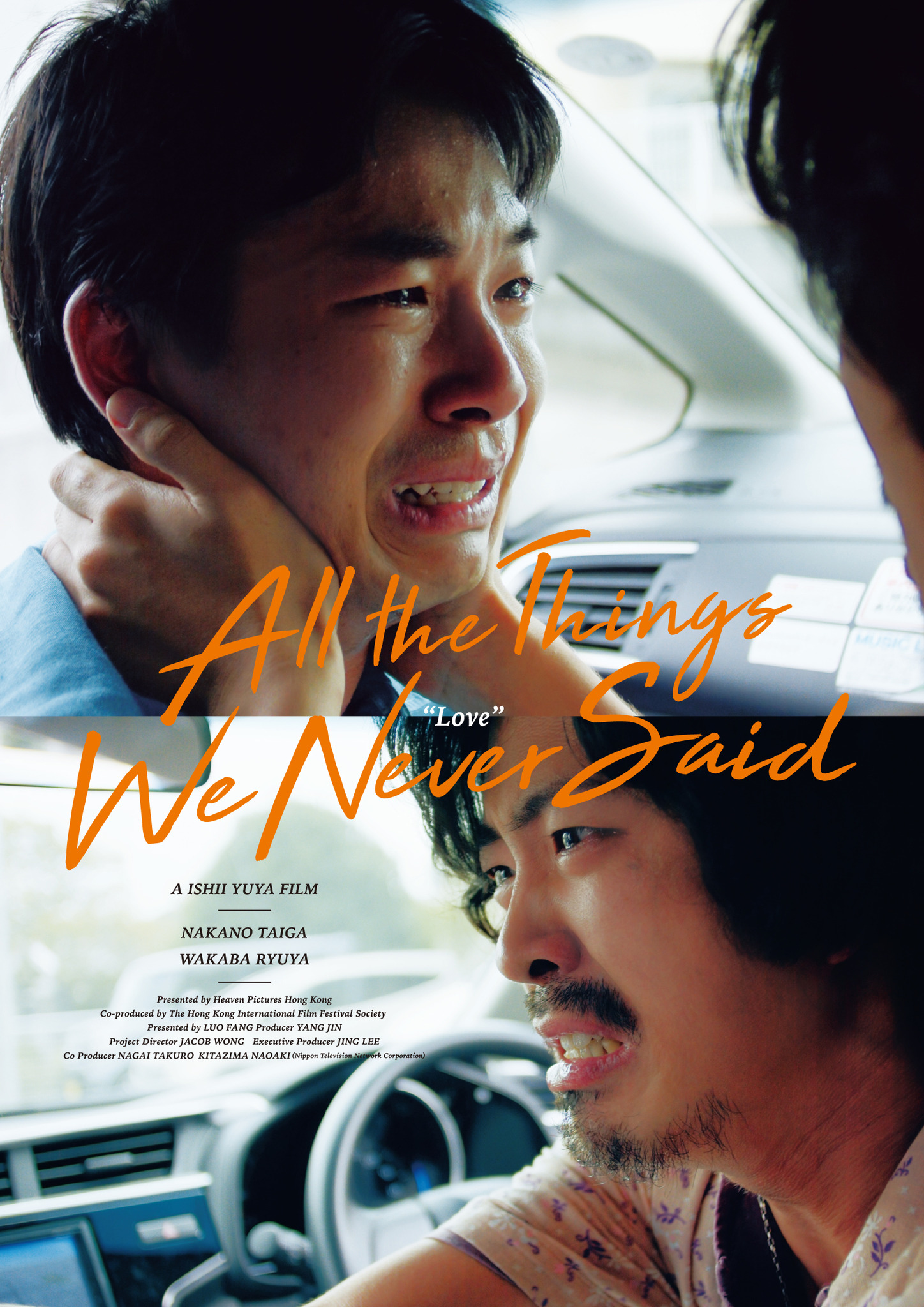
The broken dreams of youth and middle-aged malaise push a trio of former high school friends towards existential crisis in Yuya Ishii’s melancholy exploration of emotional distance,  All the Things We Never Said (生きちゃった, Ikichatta). Commissioned as part of the B2B A Love Supreme project created by the Hong Kong International Film Festival Society and China’s Heaven Pictures which tasked six Asian filmmakers with the task of proving that high quality films can still be made on a micro-budget, Ishii’s latest finds him in the same register as his poetic take on urban angst The Tokyo Night Sky is Always the Densest Shade of Blue as his frustrated protagonists each pay a heavy price for the seeming inability to communicate their true feelings honestly. 

Opening with an idyllic scene of three high school friends enjoying a breezy summer day, Ishii cuts abruptly to the present, interrupting the wistful love song playing in the background mid-flow. Now in his 30s, Atsuhisa (Taiga Nakano) is a married father whose only dream is to be able to afford a nice house with a garden for his wife and daughter, maybe even get a dog. To this end, he’s been taking lessons in English and Mandarin with high school friend Takeda (Ryuya Wakaba) with the intention of one day starting their own business though they once dreamed of becoming musicians. All of that comes to nothing, however, when he begins to feel dizzy at work one day and returns home early to find his wife, Natsumi (Yuko Oshima), with another man. Unable to offer any real sound of protest, he accidentally smashes a panel on the glass door to their bedroom, apologises for interrupting, and leaves in a daze to pick up his young daughter Suzu (Yuno Ota) from school. 

Natsumi’s infidelity evidently comes as a complete surprise, though it seems obvious that their marriage is far from perfect. “My life is just stress and getting fatter” Natsumi openly complains to Takeda, her sense of inertia and impossibility seemingly more than simple dissatisfaction with her life as an ordinary housewife. For his part, Atsuhisa is as emotionally distant as they come, a near silent zombie dead eyed and permanently absent from himself. He is continually preoccupied by the absence of his late grandfather, now nothing more than an increasingly anonymous photograph on an altar as if he never existed at all. Atsuhisa asks himself if his grandfather really lived as a way of avoiding the same question in himself as he sleepwalks through a conventional life that proves infinitely unsatisfying while he chases elusive dreams of comfort and security. 

Natsumi’s revelation that she’s been completely miserable for the entirety of their married life because she’s never felt loved likewise shocks him, but if her intent was to provoke emotional honesty in her husband it fails. She pushes him to fight, to offer some kind of resistance but he simply accepts her decision to end the marriage. The sense of impotence is palpable, Natsumi turning off the TV set because she can hardly do anything about the reactors at Fukushima Daiichi so what’s the point in knowing about them. “How else can we live?” someone else later adds, other than to simply decide not to think about the things you cannot change. Atsuhisa tells himself that it’s meaningless anyway, it will all “fade away” in the end so there’s no sense in trying to resist. 

Yet he continues to struggle, wondering in a sense if he could perhaps claim agency over his life if only he could learn to communicate his true feelings honestly. He asks himself if it’s because he’s Japanese that he can’t, if his culture actively prevents him from speaking freely when it comes to desire. Of course, everyone else is Japanese too which perhaps makes his question moot, but those around him do indeed seem to suffer from the same sense of wilful repression, even Natsumi tragically withholding her real feelings and ultimately working against herself out of a mistaken sense of guilt. “You don’t love me, that’s why you can be honest” an ex of Atsuhisa’s points out during an emotional farewell, cutting to the quick in suggesting that his problem is that he fears the risks of emotional intimacy. 

Two boys and one girl is always going to be a story tinged with a degree of sadness no matter how it turns out, but on that idyllic summer day no one could ever have thought it would end like this. Takeda, manfully keeping his true desires under wraps perhaps in love with Natsumi himself but too diffident to have said anything or overly mindful of his friends’ feelings, does his best to be the emotional buffer supporting both halves of a couple rapidly spiralling away from themselves but is ultimately unable to prevent them from making decisions they may regret even as they are are made. “My love wasn’t good enough” Atsuhisa laments in his inability to make it felt, finding proof of life only in absence through the memory of those shining summer days. A little rough and ready around the edges but filled with a raw poetry Ishii’s melancholy drama puts its hero through the emotional wringer but in the end perhaps sets him free to speak his heart even if others are too ashamed to look.


All the Things We Never Said streamed as part of this year’s San Diego Asian Film Festival.

Original trailer (no subtitles)

Under the Open Sky (すばらしき世界, Miwa Nishikawa, 2020)

“Am I too unhealthy to live in society?” asks the hero of Miwa Nishikawa’s Under the Open Sky (すばらしき世界, Subarashiki Sekai) of his doctor, but the only answer he gets is a wry chuckle and an exhortation not to be so “pessimistic”. Inspired by Ryuzo Saki’s 1993 novel Mibuncho, the first of Nishikawa’s six features to be adapted from secondary material is in many ways a typical Showa-era story, testifying to the fact that the world has not changed as much as we might have hoped in the intervening 30 years since Saki’s novel was published, but it’s also a lowkey condemnation of the quiet hypocrisies which continue to define our notions of civility in the story of a man who was perhaps too good to survive in our “society”.

Opening with bars and heavy snow, Nishikawa introduces us to Mikami (Koji Yakusho) as he nears release after serving 13 years in prison for killing a man in what is described by the authorities as a yakuza gang war, though Mikami is keen to point out that he’d already attempted to leave the yakuza by then and the killing was mere self defence. In any case when questioned by the officers about to release him, he admits no remorse over the man’s death only that he lost 13 years of his life over “that hoodlum”. In any case he’s thrown out into the cold, boarding a bus back into the city where he vows to go straight. Once there, however he discovers the outside world to be fairly inhospitable. Not only are the skills he learned in prison next to useless when it comes to finding employment in the contemporary economy, but he must also contend with societal prejudice and his own wounded pride.

Stepping for moment into the realms of the issue movie, Nishikawa explores the relative impossibility of re-entering mainstream society as someone who has been convicted of a crime. Having spent most of his adult life in and out of prison as a petty yakuza footsoldier, Mikami has little education and no marketable skills aside from his capacity for violence and the ability to drive, something of which he is now deprived because his licence expired while he was inside and to get it back he has to start from scratch by passing the new-style two-part test. Mikami’s life is indeed a typical post-war story, abandoned to an orphanage by his geisha mother from which he later escaped and ended up joining a gang in place of the family he never had. “Prison is the only place that won’t kick you out no matter how badly you behave” he later quips, accidentally laying bare his yearning for unconditional love found only shakily in yakuza brotherhood.

Yet that old-fashioned, post-war yakuza is an outdated institution, like Mikami himself a relic of the Showa era floundering in the late Heisei society in which gangsters wear sharp suits and have fancy offices, finding more sophisticated ways to make war with each other than open thuggery. Everybody wants out, Mikami later muses to himself, but it’s hard to fit in to society and those like him find themselves drawn back towards the vagaries of the yakuza life for all the dubious certainties it continues to offer them. His lawyer and guarantor Souji (Isao Hashizume) tells him that he needs to regain his love and trust of people, but that’s a tall order when it feels like no one loves you and they make a point of letting you know you’re not forgiven. Even a simple trip to the supermarket proves traumatic when the head of the local neighbourhood association who just happens to run it decides to pick him up for shoplifting just because he knows he’s an ex-con. Thankfully he later realises his mistake and is filled with remorse, moved by Mikami’s quiet dignity in asserting his innocence and right to shop as he pleases. 

For all that, however, Mikami is a man of violence who has known no other way of life, taught that his only acceptable emotional release lies in pain and destruction. His violence is, however, for the sake of others not himself. He does not become violent with the store manager Mastumoto (Seiji Rokkaku) who later becomes his friend, but gleefully confronts two punks hassling a terrified salaryman and teaches them a minor lesson in the way only an old hand can. This other side to his otherwise childishly naive character shocks frightens Tsunoda (Taiga Nakano), a TV director Mikami had approached with the intention of being featured on his show in the hope of tracking down the mother who abandoned him, who engages in some armchair psychology to imply that the source of Mikami’s rage lies in his alienation as a rejected child. The irony is that Souji, his wife (Meiko Kaji), Matsumoto, and Tsunoda become Mikami’s new “family”, replacing that he’d looked for in the yakuza and providing a grounding in mainstream society that allows him to shed his anger, but the compromise they ask of him is in itself soul crushing in its implications to the extent that his complicity with it is no redemption but a moral failure. 

If such is the price of civility, Mikami may have a point, perhaps it isn’t worth it. In the end, it is our world which fails to live up to his goodness, his violence a result of society’s continued indifference to human suffering. He is no more free outside the walls than in, constrained by an unforgiving emotional austerity that permits injustice in the name of harmony. If you can’t protect the ones who’ll save the flowers from the storm, then what is your freedom for? Subverting a well worn redemption narrative, Nishikawa finds a wealth of kindness in a broken world, but suggests it’s not enough save us until the world itself is redeemed. 


Under the Open Sky streams in California until Oct. 31 as part of this year’s San Diego Asian Film Festival.

Teaser trailer (English subtitles)