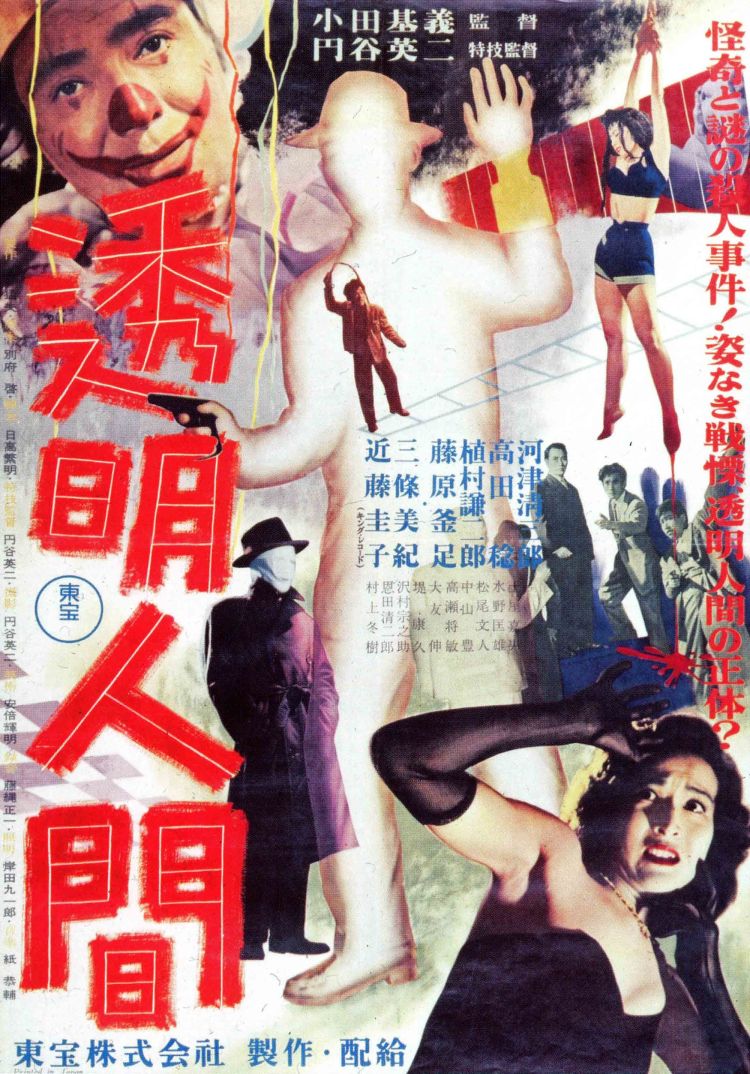
Invisible Man (透明人間, Motoyoshi Oda, 1954)

invisible man 1954 posterThe Invisible Man is a frightening presence precisely because he isn’t there. The living manifestation of the fear of the unknown, he stalks and spies, lurking in our imaginations instilling terror of evil deeds we are powerless to stop. Daiei made Japan’s first Invisible Man movie back in 1949 – a fun crime romp with the underlying message that scientific research is important but not as important as ensuring knowledge is placed in the right hands. Toho brought Eiji Tsuburaya back for another go at the same material in 1954 as part of their burgeoning tokusaku industry fathered by Godzilla. The 1954 Invisible Man (透明人間, Toumei Ningen), directed by Motoyoshi Oda, is once again a criticism of Japan’s wartime past but also perhaps of its future. This Invisible Man is an invisible hero but one whose heroism is only recognised once the mask is removed.

Opening in grand style, the film gets off to a mysterious start when a speeding car hits “something” in the road. The “something” turns out to be a previously invisible man whose appearance is returned to him as blood leaks out from under the now stopped car. In his pocket, the man has a suicide note explaining that living life invisible is just too depressing and he can’t go on. Seeing as the note is addressed to a “friend” who is also apparently an Invisible Man that means there are more out there. Despite there being no real threat involved in any of this, the newscasters are alarmed and the public frightened.

This is quite useful for some – a shady gang quickly starts putting on Invisible Man suits including wrapping their heads in bandages just like in the movies, and robbing banks. Admittedly this makes no practical sense but adds to the ongoing fear of an “invisible” threat. An intrepid reporter, Komatsu (Yoshio Tsuchiya), links the crimes to a nightclub where the head of the gang is also trying to pressure the headline star, Michiyo (Miki Sanjo), into a career as a drug mule. Besides violence, their leverage is the little girl who lives across from Michiyo and is blind – the money they would be paying her could also be used to pay for the girl’s eye surgery. Mariko is waiting patiently for her grandfather to make the money, unaware that he has also fallen under the spell of the criminal gang.

The real “Invisible Man” is doing a good job of hiding in plain sight by proudly standing out in a traditional clown outfit complete with makeup and a fluffy nose. Nanjo (Seizaburo Kawazu) works as a promoter for the club and is also good friends with little Mariko who is unable to see him either with or without his clown suit. Unlike other Invisible Men, Nanjo is good and kind – the curse of his condition has not ruined soul.

He is, however, afraid of being exposed. Aside from social ostracism (perhaps someone who wears a clown suit 24/7 isn’t particularly bothered about that), Nanjo fears what his government would do to him if they discovered he was still alive. Like his friend who later committed suicide, Nanjo was a member of an experimental army squad recruited towards the end of the war as Japan sought to create the ultimate warriors to turn the tide in the battle against the Americans. The Invisible Men were born but the war lost, and it was assumed that they had all fallen. Nanjo, surviving, has been abandoned by the land that he fought for. His existence is a secret, an embarrassing relic of Japan’s attempt at scientific warfare, and something which no one wants to deal with. Nando’s friend could no longer cope with his non-existence. Unable to return home, unable to work, unable to marry, there was no “visible” future which presented itself to him.

In this sense, Nanjo represents a point of view many might have identified with in 1954. These men fought and risked their lives for a god they now say is only a man, to come home to a land ruled by the “enemy” in which they can neither criticise the occupation or the former authorities. These men may well feel “invisible” in the new post-war order in which the younger generation are beginning to break free while they suffer the continuing effects of their wartime service even if not quite as literally as Nanjo.

Yet there’s a kind of internalised resentment within Nanjo who describes himself as a “monster created by militarism”. Disguising himself as a clown he attempts to live a “normal” life though one segregated from mainstream society. A half-hearted romance with club girl Michiyo and a well meaning paternalism for the orphaned little blind girl point to Nanjo’s altruistic heroism but also to a reluctance to fully engage with either of them due to a lingering sense of guilt and shame.

The Invisible Man is the hero here while the bad guys subvert and misuse his name to do their evil deeds, terrorising women and threatening to burn the city down rather than surrender to authority. Even more than others in Toho’s expanding universe of tokusatsu heroes, Invisible Man is a defence of the other as not only valid but morally good even in the face of extreme prejudice and violence. It is, however, also one of their less well considered efforts and Tsuburaya’s effects remain few and far between, rarely moving beyond his work on Daiei’s Invisible Man five years previously. Bulked out with musical numbers and dance sequences, Toho’s Invisible Man is a less satisfying affair than Daei’s puply sci-fi adventure but is nevertheless interesting in its defence of the sad clown who all alone has decided to shoulder the burdens of his world.
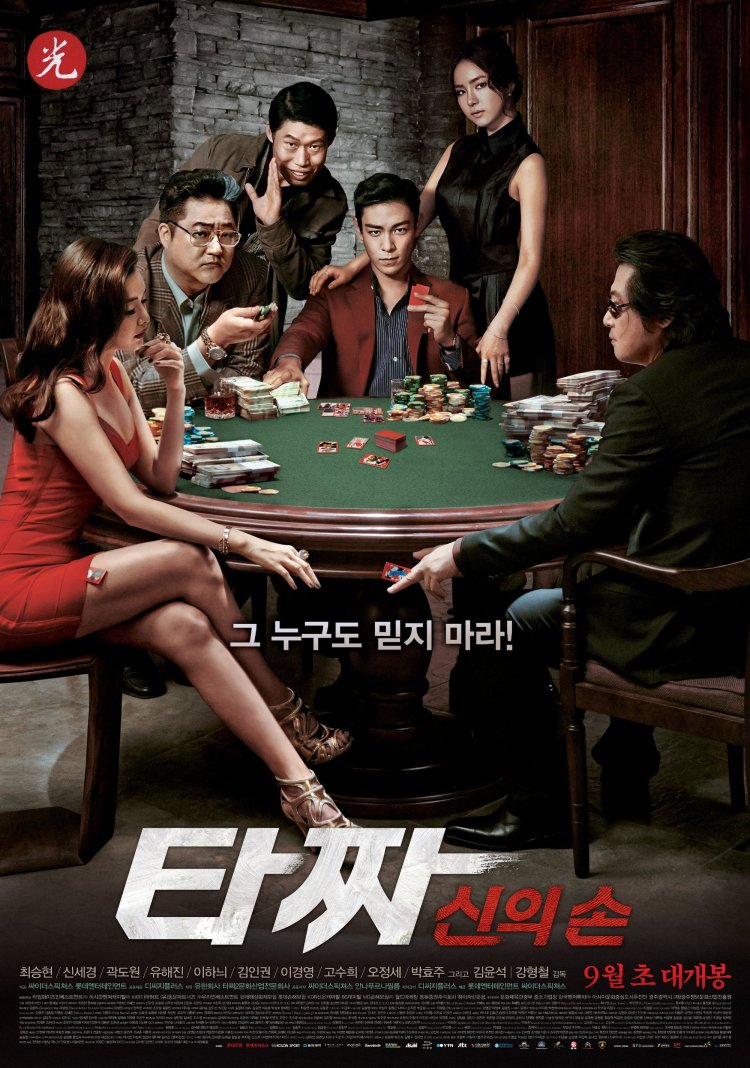


Tazza: The Hidden Card (타짜-신의 손, Kang Hyung-Chul, 2014)

tazza posterYou gotta know how to hold ‘em, know when to fold ‘em, know when to walk away and know when to run. Apparently these rules of the table are just as important in the cutthroat world of the Korean card game Hwatu as they are in the rootinest tootinest saloon bar. Like most card games, having the winning hand is less important than the ability to play your opponent and so it’s more a question of who can cheat the best (without actually breaking the rules, or at least being caught doing so) than it is of skill or luck. A second generation sequel to 2006’s Tazza: The High Rollers, The Hidden Card (타짜-신의 손, Tajja: Shinui Son) is a slick, if overlong, journey into the dark, underground world of gambling addicted card players which turns out to be much more shady than the shiny suits and cheesy grins would suggest.

Wisecracking kid Dae-gil (T.O.P) comes into contact with the first film’s fast talking hustler Go (Yu Hae-Jin) and realises he has a talent for trickery. As a young man he gets himself into trouble trying to save a family member from a gangster whom he winds up stabbing meaning he has to go on the run and leave the girl he’s fallen head over heels for, Mina (Shin Se-Kyung), far behind him with only the promise to come back for her when he’s made something of himself. With nothing to fall back on Dae-gil ends up working for cardsharping gangsters in what is really a series of high level con operations. His first problem occurs when he temporarily forsakes the memory of Mina for the attentions of the alluring Mrs. Woo (Lee Honey) who becomes both his secret girlfriend and the gang’s latest mark.

Things do not go to plan and Dae-gil is left carrying the can for the gang’s heavy losses. Getting into trouble with another mark who turns out to be a high level gangster himself, Dae-gil finds out Mina has been sold into prostitution as payment for a family debt but also winds up losing a kidney as recompense for his mounting gambling debts. Now Dae-gil is out for revenge against pretty much everyone, hoping to rescue Mina and win her heart in the process but his adversaries are old hands at this sort of thing and it’s going to take more than a rigged deck to beat them at their own game.

Taking over from the first film’s Choi Dong-hoon, Kang Hyung-chul opts for a slick and charming Oceans 11 inspired aesthetic full of quirky humour and tricky slight of hand photography. With retro musical choices from a smooth cover of Spooky to the ‘80s synth pop kicking in for an exciting car chase, Kang piles on the nostalgia as Dae-gil rides high as a wisecracking conflicted member of this underhanded outfit. Taking inspiration from its manwha roots, The Hidden Card maintains its breezy tone even whilst the atmosphere darkens as Dae-gil taps out with this gangster credit, beaten up, drugged and waking up in a filthy room with a bandaged hand and a crude scar across his abdomen where his kidney used to be. Apparently making a quick recovery from serious surgery, Dae-gil’s discovery of Mina’s fate is likewise another addition to his quest narrative rather than more evidence of the savagery of this trick or be tricked world.

The Hidden Card’s biggest problem is an unavoidable one given its genre – the sheer structural repetitiveness of moving from one card game to another. Lack of familiarity with Hwatu itself is not exactly a problem even if mildly frustrating, but the nature of the way the game is played means that a great deal of screen time is occupied with watching people watching each other, moodily, only to be left unsure of what’s going on or who’s won at the end of it. This is all the more true of the film’s final showdown which brings back a major player from the first instalment in which the stakes have been raised supposedly to “prevent” cheating, but only really aim to make it more “challenging”. Still, away from the gaming table there are enough high octane fist fights and a lengthy car chase to break up the more cerebral thrills.

Undeniably slick and filled with a host of likeable characters offering snappy dialogue and silly humour, Tazza: The Hidden Card is far too long at two and a half hours. Uneven pacing does not help the feeling of scale and a similarly unbalanced plot structure produces a misleading sense of progression. Still, keeping one step ahead of the card sharks is fun in itself and even if the action drags here and there, there is enough character driven drama and ironic comedy to keep things moving right up until the consciously cool finale.


International trailer (English subtitles)

Japan Foundation London’s Summer Explorers 3 to Serve up a Selection of Food Themed Treats

there is no lid on the sea stillJapan Foundation London is back with another early summer series of free film screenings and this time the focus is very much on food! Summer Explorers 3 takes place over two Saturdays – 15th and 22nd July, 2017, at the Prince Charles Cinema and BAFTA respectively. Tickets are free but you can only reserve seats at one film on each day (if you apply for more than one film you’ll be placed on the waiting list for your second choice). Full details on how to apply can be found on the Japan Foundation’s website.

The lineup for Saturday 15th includes:

KAKI_B5_SHIRO_CS5Kazuhiro Soda’s documentary The Oyster Factory which examines a local oyster fishing community as it welcomes two workers from China.


Akanezora - Beyond the Crimson Sky posterCo-written by Masahiro Shinoda, Masaki Hamamoto’s Akanezora – Beyond the Crimson Sky stars Masaaki Uchino as a tofu maker who travels from Kyoto to Edo, sets up a shop and marries a local girl.


Moving on to 22nd:

silver spoonInspired by Hiromu Arakawa’s popular manga, Silver Spoon is the story of city boy Yugo who enrols in an agricultural college in Hokkaido to get away from his overbearing parents.



There is no lid on the sea poster

Adapted from the novel by Banana Yoshimoto, There is no Lid on the Sea follows a young woman who decides to return to her hometown to sell shaved ice after growing bored with her life in Tokyo.


Drop of the Grapevine posterYukiko Mishima’s Drop of the Grapevine is the second in the director’s Hokkaido series and stars Yo Oizumi and Shota Sometani as two farming brothers one of whom operates a vineyard while the other grows wheat to make bread.


The screenings on 15th July take place at The Prince Charles Cinema near Leicester Square while those on 22nd July take place at BATFA on Piccadilly. At BAFTA on 22nd there will also be a selection of food themed language activities taking place between the films. You can find full details for all the films as well as screening times and information regarding reservations via the official website, and you can all keep up with the all the latest Japan Foundation London news via the official Twitter account and Facebook page.

The Liar and His Lover (カノジョは嘘を愛しすぎてる, Norihiro Koizumi, 2013)

liar and his lover posterDespite the potential raciness of the title, The Liar and his Lover (カノジョは嘘を愛しすぎてる, Kanojo wa Uso wo Aishisugiteru) is another innocent tale of youthful romance adapted from a shojo manga by Kotomi Aoki. As is customary in the genre, the heroine is cute yet earnest, emotionally honest and fiercely clear cut whereas the hero is a broken hearted artist much in the need of the love of a good woman. Innocent and chaste as it all is, Liar also imports the worst aspects of shojo in its unseemly age gap romance between a 25 year old musician and the 16 year old high school girl he picks up on a whim and then apparently falls for precisely because of her uncomplicated goodness.
Aki (Takeru Satoh) introduces himself through a film noir-style voice over in which he details his ongoing malaise. Now a ghost member of the band Crude Play, Aki feels conflicted over his artistic legacy as his carefully crafted tunes are repurposed as disposable idol pop and performed by the friends who were once his high school bandmates. His idol girlfriend, Mari (Saki Aibu), has also been seeing the band’s manager in an effort to get ahead leaving Aki feeling betrayed and devoid of purpose.

Soon after, Aki runs into grocer’s daughter Riko (Sakurako Ohara) who is captivated by the song he’s been humming whilst staring aimlessly out to sea. Aki, feeling mischievous, picks Riko up on a whim. He goes to great pains to remind us that he had no real feelings for her and was only in it for the kicks but a later meeting sets the pair off on a complicated romance.

Aki becomes the “liar” of the title when he gives Riko a false name – Shinya, the name of the bassist who has replaced him in his own band. Despite the supposed purity of music as a means of communication, it is, in many ways, another lie. When Aki and his bandmates were offered a contract straight after high school they were overjoyed but it was short lived. Listening to their demo tape, Aki spots the problem right away – it’s not them playing, they’ve been replaced by polished studio session musicians. Saddened, Aki quits the band and is replaced by a ringer but continues to write songs both for Crude Play and other artists while the band’s manager gets the credit.

Music conveys and complicates the romance as it brings the two together but also threatens to keep them apart. Riko, a Crude Play fan, does not know Aki’s true identity and is disappointed when he says he hates girls who sing because she herself is in a high school band. Sure enough, the band get scouted by odious producer Takagi (Takashi Sorimachi) and handed to the villainous Shinya (Masataka Kubota) who threatens to do the same thing to them as they did to Crude Play. Riko, like Aki, is a musical purist but also wants to make her rock star dreams come true.

Like many a shojo heroine, Riko is convinced only she sees the “real” Aki, pushing past his angry, distant persona to a deeper layer of sensitive vulnerability. This being shojo she is more or less right, as Aki tells us in his voice over detailing just how irritating it seems to be for him that he’s falling for this unusually perceptive young woman. Despite realising that almost everything Aki has told her has been a lie (intentional or otherwise), Riko ignores his duplicity precisely because she thinks she already knows the “real” Aki through the “truth” of his music.

Takagi, the band’s unscrupulous manager, prattles on about music not mattering if it doesn’t sell, avowing that it’s all a matter or marketing anyway. Aki’s central concern is the misuse of his artistic legacy, that his art form has been stripped of its meaning and repackaged for mass market consumption. The band is “fake”, a manufactured image based on the ruins of the truth. Aki believes himself to be the same – an empty vessel, devoid of meaning or purpose. His love of music is only reawakened by Riko’s innocent enthusiasm and her surprising promise of “protection”.

The conflict is one of essential truth betrayed by music in all senses of the word as it is used and misused by the various forces in play. Unlike most shojo adaptations, Aki leads the way with Riko a vaguer figure ready to absorb the projected personalities of the target audience but the central dynamic is still one of goodhearted girl and broody boy. The unseemly age gap issue is entirely ignored, as the troubling undercurrent of Riko’s most attractive quality being her all encompassing pureness, undermining the otherwise charming, wistful comedy of the innocent musical romance.


Original trailer (English subtitles)

Illusion of Blood (四谷怪談, AKA Yotsuya Kaidan, Shiro Toyoda, 1965)

vlcsnap-2017-07-01-00h50m36s347Shiro Toyoda, despite being among the most successful directors of Japan’s golden age, is also among the most neglected when it comes to overseas exposure. Best known for literary adaptations, Toyoda’s laid back lensing and elegant restraint have perhaps attracted less attention than some of his flashier contemporaries but he was often at his best in allowing his material to take centre stage. Though his trademark style might not necessarily lend itself well to horror, Toyoda had made other successful forays into the genre before being tasked with directing yet another take on the classic ghost story Yotsuya Kaidan (四谷怪談) but, hampered by poor production values and an overly simplistic script, Toyoda never succeeds in capturing the deep-seated dread which defines the tale of maddening ambition followed by ruinous guilt.

As usual, Iemon (Tatsuya Nakadai) is a disenfranchised samurai contemplating selling his sword due to his extreme poverty. Iemon had been married to a woman he loved, Oiwa (Mariko Okada), whose father called her home when Iemon lost his lord and therefore his income. Oiwa’s father is also in financial difficulty and Iemon has now discovered that he has been prostituting Oiwa’s sister, Osode (Junko Ikeuchi), and plans a similar fate for Oiwa.

Still in love with his wife, Iemon decides that his precious sword is not just for show and determines to take what he wants by force. Murdering Oiwa’s father, Iemon teams up with another reprobate, Naosuke (Kanzaburo Nakamura), who is in love with Osode and means to kill her estranged fiancee. Framing Osode’s lover Yoshimichi (Mikijiro Hira) as the killer, Iemon resumes his life with Oiwa who subsequently bears their child but as his poverty and lowly status continue Iemon remains frustrated. When a better offer arrives to marry into a wealthier family, Iemon makes a drastic decision in the name of living well.

The themes are those familiar to the classic tale as Iemon’s all consuming need to restore himself to his rightful position ruins everything positive in his life. Tatsuya Nakadai’s Iemon is among the less kind interpretations as even his original claims of romantic distress over the loss of his wife ring more of wounded pride and a desire for possession rather than a broken heart. Selling one’s sword is the final step for a samurai – it is literally selling one’s soul. Iemon’s ultimate decision not to is both an indicator of his inability to let go of his samurai past and his violent intentions as the fury of rebellion is already burning within him.

Iemon defines his quest as a desire to find “place worth living in”, but he is incapable of attuning himself to the world around him, constantly working against himself as he tries to forge a way forward. Oiwa’s desires are left largely unexplored despite the valiant efforts of Mariko Okada saddled with an underwritten part, but hers is an existence largely defined by love and duty, pulled between a husband and a father. Unaware that Iemon was responsible for her father’s death, Oiwa is happy to be reunited with him and expects that he will honour her father by enacting vengeance. Only too late does she begin to wonder what her changeable husband’s intentions really are.

An amoral man in an amoral world, Iemon’s machinations buy him nothing. Haunted by the vengeful spirit of the wife he betrayed, Iemon cannot enjoy the life he’d always wanted after purchasing it with blood, fear, and treachery. Despite the odd presence of disturbing imagery from hands in water butts to ghostly presences, Toyoda never quite achieves the level of claustrophobic inevitability on which the tale is founded. Hampered by poor production values, shooting on obvious stage sets with dull costuming and a run of the mill script, Illusion of Blood has a depressingly unambitious atmosphere content to simply retell the classic tale with the minimum of fuss. Only the final scenes offer any of Toyoda’s formal beauty as Okada appears under the cherry blossoms to offer the gloomy message that there is no true happiness and her husband’s quest has been a vain one. Achieving her vengeance even whilst Iemon affirms his intention to keep fighting right until the end, Oiwa leaves like the melancholy ghost of eternal regret but it’s all too little too late to make Illusion of Blood anything more than a middling adaptation of the classic ghost story.


Jung Byung-gil’s The Villainess Makes UK Premiere at FrightFest 2017

the villainess posterFresh from its Cannes premiere, Jung Byung-gil’s action thriller The Villainess will get its first UK screening at FrightFest 2017. The horror-centric film festival takes place at Cineworld Leicester Square and the Prince Charles Cinema in Central London across the August bank holiday from 24th to 28th August, 2017.
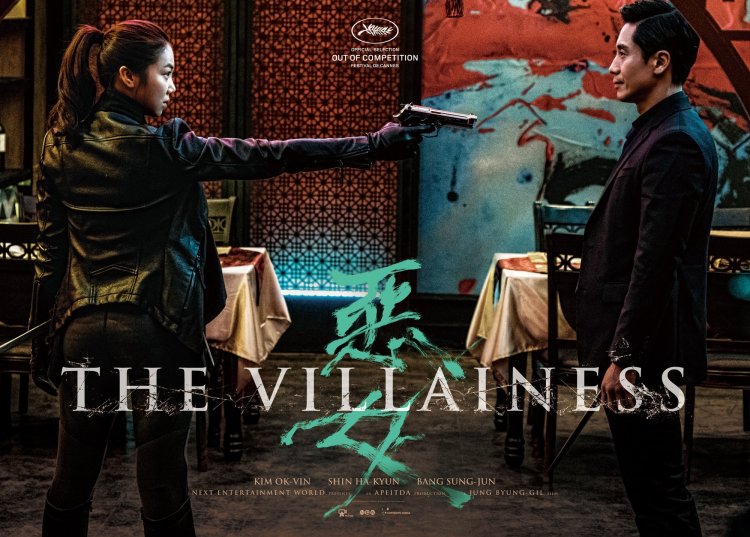

the villainess horizontal postThe Villainess stars Kim Ok-bin as a young woman trained as an assassin from an early age and living a double life as a theatre actress and hit woman. Her existence is threatened by the reappearance of two very different men from her past.


crow's blood horizontal posterOther East Asian offerings include a preview of the Japan produced TV series which originally ran on streaming service Hulu, Crow’s Blood. The series focuses on a “mysterious transfer student” whose touch proves deadly! Episodes one and two will be shown back to back.
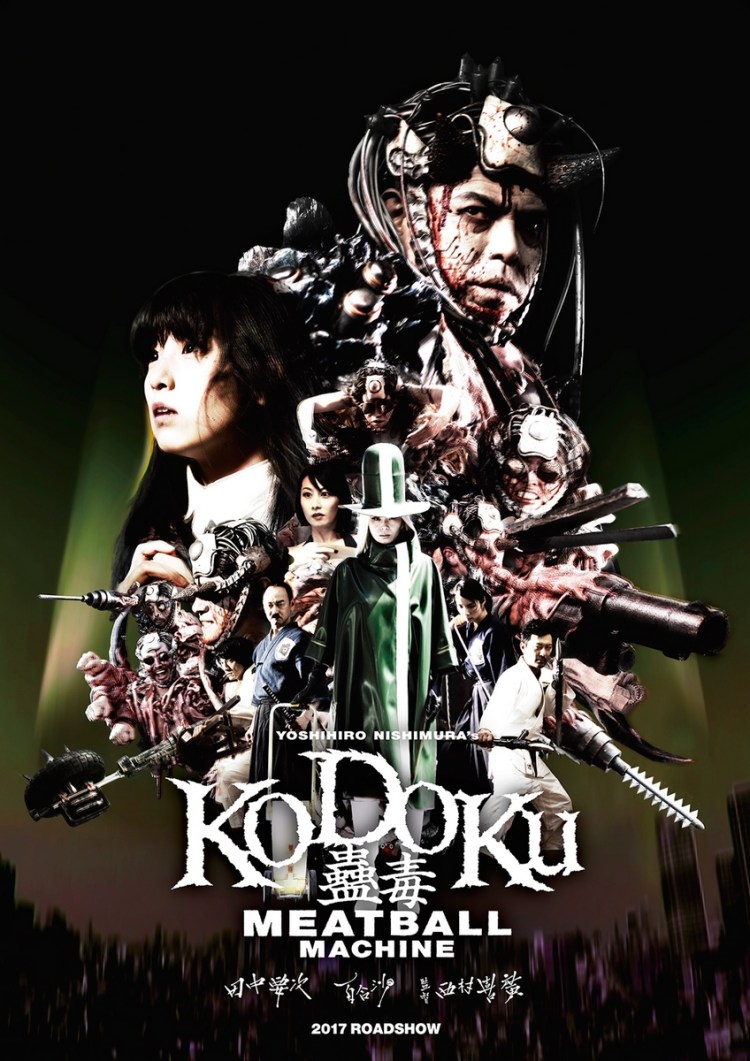

MEATBALL MACHINE KODOKU posterThe final film on offer, Meatball Machine Kodoku is the latest from splatter director Yoshihiro Nishimura and a sequel to the original Meatball Machine. A terminally ill debt collector finds he has an unexpected advantage when the world is taken over by necroborgs!


FrightFest takes place in Central London from 24th – 28th August, 2017 at Cineworld Leicester Sq and the Prince Charles Cinema. Festival and Day Passes will be available from 12pm on 1st July with single tickets for individual films available from 9am on 29th July. You can find full details for all the films included in this year’s programme on the official website, and you can keep up with all the latest news via the official Twitter account, Facebook page, Instagram and YouTube channels.

The Shonen Merikensack (少年メリケンサック, Kankuro Kudo, 2009)

The Shonen Merikensack posterWhen you spent your youth screaming phrases like “no future” and “fumigate the human race”, how are you supposed to go about being 50-something? A&R girl Kanna is about to find out in Kankuro Kudo’s generation gap comedy The Shonen Merikensack (少年メリケンサック) as she accidentally finds herself needing to sign a gang of ageing never were rockers. A nostalgia trip in more ways than one, Kudo is on a journey to find the true spirit of punk in a still conservative world.
25 year old Kanna (Aoi Miyazaki) is an unsuccessful scout at a major Japanese label which mainly deals with commercial bands and folk guitar outfits. As she’s about to quit any way, Kanna makes a last minute pitch for a punk band she’s found on YouTube, fully expecting to be shown the door for the last time. However, what she didn’t know is that her boss, Tokita (Yusuke Santamaria), is a former punk rocker still dreaming of his glory days of youthful rebellion. With her leaving do mere hours away, Kanna’s contract is extended so that she can bring in these new internet stars whose retro punk style looks set to capture the charts.

Unfortunately, the reason Tokita was so impressed with the band’s authentically ‘80s style is because the video was shot in 1983. The Brass Knuckle Boys hit their heyday 25 years ago and are now middle aged men who’ve done different kinds of inconsequential things with their lives since their musical careers ended. Kanna needs to get the band back together, but she may end up wishing she’d never bothered.

Mixing documentary-style talking heads footage with the contemporary narrative, Kudo points towards an examination of tempestuous youth and rueful middle age as he slips back and fore between the early days of the Brass Knuckle Boys and their attempts to patch up old differences and make an improbable comeback. Kanna, only 25, can’t quite understand all of this shared history but becomes responsible for trying to help them all put it behind them. Her job is complicated by the fact that estranged brothers Akio (Koichi Sato) and Haruo (Yuichi Kimura) made their on stage fighting a part of the act until a stupid accident left the band’s vocalist, Jimmy (Tomorowo Taguchi), in wheelchair.

The spirit of punk burns within them, even if their contemporaries are apt to point and laugh. The Brass Knuckle Boys, when it comes down to it, were successful bandwagon jumpers on the punk gravy train. Craving fame, the guys started out marketing themselves as a very early kind of boy band complete with silly outfits and cute personal branding full of jumpsuits, rainbows, and coordinated dance routines. Yet if the punk movement attracted them merely as the next cool thing, it also caught on to some of their youthful anger and teenage resentment. In the end unrestrained passion destroyed what they had as the ongoing war between the brothers escalated from petty sibling bickering to something less kind.

Twenty-five years later the wounds have not yet healed. Akio is a lousy drunk with a bad attitude, Haruo is an angry cow farmer, drummer Young has a range of health problems, and Jimmy’s barely present. Tokita has become a corporate suit, a symbol of everything he once fought against and his former bandmate is his biggest selling artist – eccentric, glam, and very high concept.

The men are looking back (even those of them who aren’t even really that old), whereas Kanna can only look forwards. Before the Brass Knuckle Boys, she was about to be kicked out of her A&R job and planned to go home with her tail between her legs to help her confused father with his very unsuccessful conveyor belt sushi restaurant. Apparently in a solid relationship with a coffee shop guitarist who keeps urging her to put in a good word for him at the record label with his sappy demo tapes, Kanna’s life is the definition of middle of the road. Neither she not her boyfriend could be any less “punk” if they tried but if they truly want to follow their dreams they will have to find it somewhere within themselves.

At over two hours The Shonen Merikensack is pushing the limit for a comedy and does not quite manage to maintain momentum even as its ending is, appropriately enough, an unexpected anticlimax. Kudo’s generally absurd sense of humour occasionally takes a backseat to a more juvenile kind which is much less satisfying than the madcap action of his previous films but still provides enough off beat laughs to compensate for an otherwise inconsequential narrative.


Original trailer (English subtitles)

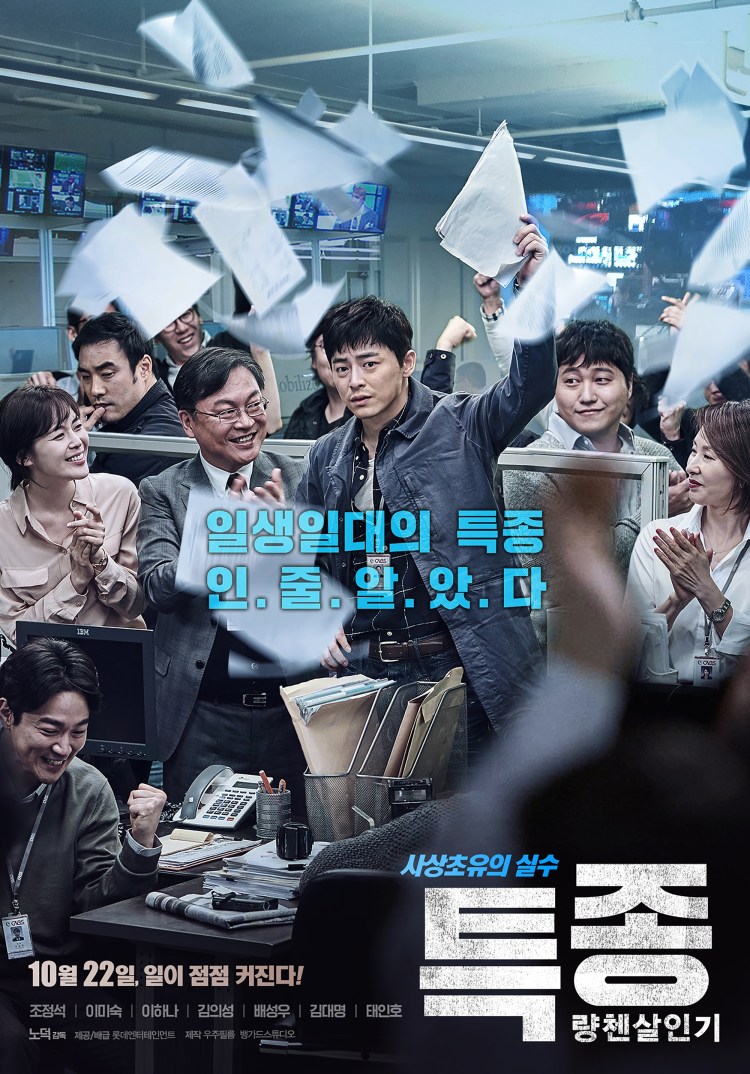
The Exclusive: Beat The Devil’s Tattoo (특종: 량첸살인기, Roh Deok, 2015)

The Exclusive Beat the DevilSome people just can’t keep themselves out of trouble. The down on his luck reporter at the centre of Roh Deok’s The Exclusive: Beat the Devil’s Tattoo (특종: 량첸살인기, Teukjong: Ryangchensalingi) is something of a trouble magnet as he makes mistake after mistake, requiring lie after lie to try and put him back on the straight and narrow. Unfortunately for him the deeper he gets the closer he turns out to be to the “real” truth. Only by that stage everyone has lost interest in “the truth” anyway – who cares about little things like facts against the overwhelming power of a constructed narrative.

Lazy, self obsessed reporter Heo (Cho Jung-Seok) is about to be fired from his job as a TV news reporter after publishing some inaccurate material that causes problems for the station’s sponsors. He also has a bigger problem at home in that his heavily pregnant wife has thrown him out and seems intent on a divorce. When he gets a shady sounding tip from a dubious source regarding a series of murders, Heo decides to check it out alone. Coming to the conclusion that he really has caught a killer, Heo rips a strange handwritten note down from the walls and takes it straight to his boss in the hopes of getting back in her good books. The note goes viral and Heo finds himself reading it out on prime time news but he has a real problem on his hands when he realises the guy from the basement is an actor in a play and has nothing to do with the killings at all.

Attempting to kill the story, Heo forges a second note designed to deflect press attention but it has the opposite effect and only creates more hysteria surrounding the case. Trying to play both sides by exposing the real killer whilst keeping his own involvement a secret, Heo is in way over his head and risks losing far more than just his career if he can’t find a way to smooth all of this out.

The problem here is, everything’s a PR hook. With one eye on the ratings, every reporter is a marketeer, spinning every string of facts into an easily sellable ball of fluff intended to draw in viewers who only read the headline anyway. Heo was never the kind of crusading journalist who has a serious dedication to the craft or an attachment to idealistic notions of holding the nation to account, but even so his self-serving actions begin to create a conflict in his heart as the true nature of his profession is thrown into stark relief. Even whilst lying through his teeth in attempt to save his own skin, Heo is astonished by the cold and cynical actions of his boss who simply does not care if the information is accurate so long as it sells. Far from getting him fired, Heo’s web of duplicity gets him a series of promotions and a not inconsiderable pay bump which is quite something considering a minor mistake was about to end his journalistic career before all of this started.

While all of this is going on, Heo is also busy with the problem of his failing marriage. Fairly dense when it comes to matters of the heart, Heo thinks he can win his wife back now that he’s sort of famous and doing really well at work, which is ignoring the fact that his wife seems to have left him because of his self obsessed and controlling behaviour. Drunk and lurking outside of their previously shared home, Heo doesn’t do himself any favours by jealously attacking an artist his wife had been working with at the gallery she has now opened with a friend (and which Heo had tried to prevent, apparently uncomfortable with the idea of a working wife). His wife’s relationship with her artist will also have an unexpected effect on the serial killer case as it leads her to make a dangerous decision trying to work out what exactly her husband is up to (worried in case he’s secretly been investigating her, but no, Heo is still too self focussed to have even thought about worrying over his wife’s “affairs”).

Roh adopts a quirky, satirical tone backed up by the goofy comedy music which often seems at odds with the grizzly serial killer goings on, but then that’s sort of the point. No one, not even the police who are painted as incompetent idiots both ignorant of and completely dependent on the media, really cares very much about the seven people who have already died or the countless others that might be at risk if the killer is not caught. The only thing that matters is the spin, so long as everything can be massaged into a believable narrative the case will have been solved, facts be hanged (literally). When it comes down to it, Heo solves the case by accident and then can’t say anything about it for fear of incriminating himself, allowing the killer to look like a hero with the frightened public led to believe the threat is still out there. Heo then faces a choice between exposing a truth which might destroy him or continuing to live with the heavy burden of a painful secret but in the end the choice is not even his. No one is listening. The only choices left are raving like a mad man in the face of indifference, or accepting his boss’ aphorism that truth is a relative construct and that “the truth” is whatever you choose to believe. The path of blissful ignorance suddenly seems much more attractive.


International trailer (English subtitles)

Aizen Katsura (愛染かつら, AKA The Tree of Love/Yearning Laurel, Hiromasa Nomura, 1938)

aizen katsura posterJapan’s political climate had become difficult by 1938 with militarism in full swing. Young men were disappearing from their villages and being shipped off to war, and growing economic strife also saw young women sold into prostitution by their families. Cinema needed to be escapist and aspirational but it also needed to reflect the values of the ruling regime. Adapted from a novel by Katsutaro Kawaguchi, Aizen Katsura (愛染かつら) is an attempt to marry both of these aims whilst staying within the realm of the traditional romantic melodrama. The values are modern and even progressive, to a point, but most importantly they imply that there is always room for hope and that happy endings are always possible.
The heroine, Katsue (Kinuyo Tanaka), has found herself in a difficult position for a woman of 1938. Married off at a young age in payment of a family debt yet rejected by her husband’s family, Katsue’s fortunes fall still further when her husband passes away suddenly leaving her alone and eight months pregnant. Her daughter, Toshi (Kazuko Kojima), is now five years old and Katsue has a good job as a nurse at a local hospital. The job allows her to support herself, her daughter, and her older sister but the problem is that the hospital has a strict policy of not employing married women. Katsue isn’t married anymore, she’s a widow, but the fact that she has a daughter she is raising alone makes her familial status a grey area. She’s been hiding her daughter’s existence from her colleagues in case it costs her the job she needs to survive, but a chance encounter in a park threatens to ruin everything.

Thankfully, Katsue’s colleagues at the hospital turn out to be nice, reasonable people who respond sympathetically on hearing Katsue’s explanation about why she’d avoided telling them the truth about her daughter (and that, crucially, she had been married and the child was conceived legitimately). Her next problem occurs when the son of the hospital’s chief doctor, Kozo (Ken Uehara), returns after graduating university and the pair strike up a friendship which eventually blossoms into romance. Kozo’s father, however, is intent on arranging his marriage to a girl from another medical family – a long held tradition and, in an odd mirror of Katsue’s situation, the marriage is a way of getting additional investment for the rapidly failing clinic. Kozo asks Katsue to run away with him to Kyoto but she still hasn’t told him about Toshi or her previous marriage out of fear of losing not only her new love but her position at the hospital if he rejects her. Just as Katsue is about to go to meet Kozo at the station, Toshi falls ill.

Despite the austerity and conservatism of the times, Aizen Katsura is a very “modern” story in which Katsue’s pragmatic solution to her difficulties is praised and even encouraged. Her life has been an unhappy one in many ways – sold into an arranged marriage at 18, forced out of her hometown after rejection by her husband’s family, and finally widowed in the city, Katsue has been let down at each and every juncture. Alone with a baby, her choices were few and her only support seems to come from her older sister who has no husband of her own (at least, not one that is present), and takes care of Toshi while Katsue has to go out and earn the money to support the family.

Society does not quite know what to do with an anomaly like Katsue who cannot rely on extended family. She needs to support herself and her child but many jobs still have a marriage bar which extends to widows with children. The only options for women who can’t find a solution as elegant as Katsue’s aren’t pleasant, the hospital is a dream come true as it both pays well and is a respectable profession, but if the management found out about Toshi, Katsue could be left out in the cold with little prospect of finding more work despite her nursing qualifications.

The times may be harsh, but the world Katsue inhabits places her on the fringes of the middle classes. Kozo, as young doctor and heir to the clinic (Japanese hospitals are often family businesses) is far above her but is, in some ways, equally constrained. Whilst recognising a duty to his father, Kozo is resolute in refusing the idea of an arranged marriage conducted for financial purposes. He determines to set his own course rather than be railroaded into something which is for his father’s benefit and not his own. Deeply hurt by Katsue’s actions but not attempting to find out why she acted as she did, Kozo enters a depressive spell, sitting around resentfully and not doing much of anything. Luckily for him, the woman his father has picked out, Michiko (Michiko Kuwano), is a thoroughly good person who, once she finds out about Katsue, becomes determined to see that true love wins rather than being shackled to a moody young man and spending the rest of her life in a one sided relationship with someone still pining for a first love.

Katsue’s dreams come true only once she begins to give up on them. Leaving the hospital and returning to her home town with no firm plans, Katsue gets herself a career through luck and talent when a song she enters in a competition is picked up by a leading record label. Music rewards her financially but also gives her a sense of confidence and a purpose which puts her on more of an even footing with Kozo even if he sits in the stalls while her colleagues fill the balcony. Her salvation is both self made and something of a deus ex machina, but the broadly happy ending is intended to give hope to a hopeless age, that miracles can happen and second chances appear once two meet each other openly with full understanding and forgiving hearts.


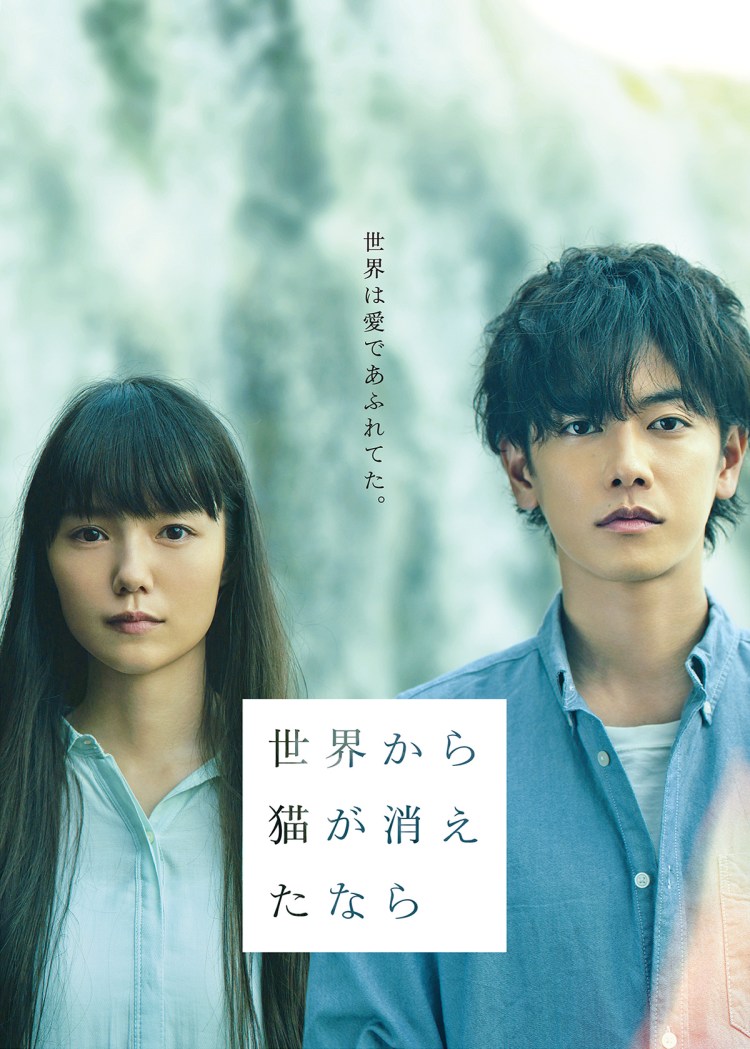
If Cats Disappeared From the World (世界から猫が消えたなら, Akira Nagai, 2016)

If Cats Disappeared from the worldWhat would you give to live another day? What did you give to live this day? What did you take? Adapting the novel by Genki Kawamura, Akira Nagai takes a step back from the broad comedy of Judge for an Iwai-inflected tale of life thrown into sharp relief by impending death. Less a maudlin meditation on the will to life, If Cats Disappeared from the World (世界から猫が消えたなら, Sekai kara Neko ga Kieta nara) is an existential journey into the mind of a man who believed himself an irrelevance, beloved by no one and living an unfulfilling existence, only to rediscover his essential place in the world at the moment he’s about to vacate it.

An unnamed 30 year old postman (Takeru Satoh) has a freak bicycle accident and is subsequently informed that he has an aggressive brain tumour which may take his life at any moment. Following this traumatic news, the postman returns home to discover his own doppelgänger there, waiting for him. The doppelgänger tells him that he will die tomorrow, unless the postman accepts the offer the doppelgänger is about to make him. There are too many unnecessary and irritating things in the modern world, in return for postponing the postman’s death sentence, the doppelgänger will erase one thing from human society – if only the postman will agree.

As in many similarly themed films of recent times, memories are stored not on hard drives or even in notebooks but in seemingly irrelevant objects with unexpected sentimental value. Quite literally “material culture”, it is the objects which provide the path back to the past and their destruction represents not only the severing of a connection but a kind of erasure of the past itself.

The doppelgänger sets about deleting various items at will which might previously have seemed irrelevant to the postman but turn out to have fundamental connections to the most important aspects of his life. The first item to go is phones (all phones, not just mobiles) which reminds him of his first love (Aoi Miyazaki) whom he met after she dialled a wrong number and recognised the score to Fritz Lang’s Metropolis which he happened to be watching at the time. Phones and movies – the second item on the doppelgänger’s hit list, brought the two together but it couldn’t have happened without the cinephile best friend (Gaku Hamada) the postman met at university who has been his movie mule ever since.  Delete the phone and the movies and the postman loses his first love and best friend to win the right to live on alone for just one day. Cats turn out to have an even more essential role in the postman’s life, one which is painful for him to consider but impossible to ignore.

The protagonist’s occupation, which becomes his name and defining feature, is an ironic one. A mere conveyor of items charged with other people’s memories. he feels like an empty vessel, trapped in an existence devoid of meaning. Yet his strange doppelgänger pushes him to reconsider his place in the world, re-entering a sphere he had long absented himself from. Remembering long forgotten yet life changing holidays with the love of his life or finally coming to understand the silent signs of devotion in his emotionally distant father (Eiji Okuda), the postman finally writes his own letter, the first and last of his life, answering the questions he never wanted to ask.

Finally learning to accept his fate, the postman rediscovers the meaning of life. He may leave with regrets and dreams never to be fulfilled, but wants to believe his life has made a difference, meant something at least. Only as he’s about to leave it does the postman feel himself connected to the world, finally noticing the beauty all around him.

On learning of his condition, the postman’s first thoughts turn to all the movies he’ll never see and the books he’ll never read. The doppelgänger’s determination to delete the movies provokes a quietly passionate defence of the arts but, apparently, they are not worth dying for. Nagai films with a low-key dreaminess as magical realism mixes with wistful nostalgia in the melancholy world of a man who has no future finally falling in love with the past. A celebration of the interconnectedness of all things in a world of increasing isolation, If Cats Disappeared from the World advises you make the most of your time, making the difference only you can make before it’s too late.


Hong Kong trailer (English subtitles)