 Written by
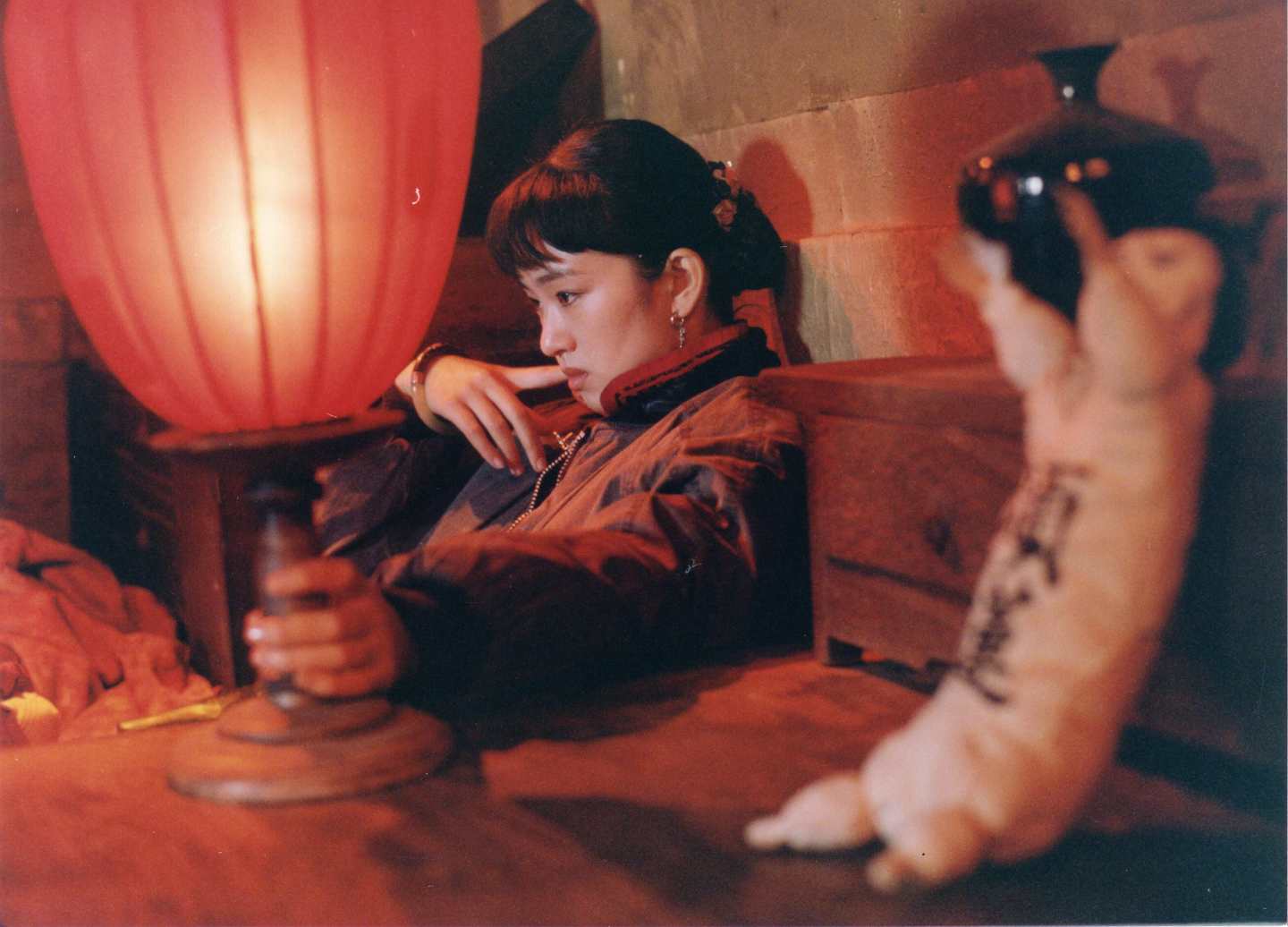
“Isn’t that a woman’s fate?” 19-year-old Songlian (Gong Li) tearfully asks on defiantly agreeing to drop out of university and become the “fourth mistress” of a wealthy man (Ma Jingwu) in Zhang Yimou’s seminal 1920s-set drama Raise the Red Lantern (大红灯笼高高挂, Dà Hóng Dēnglong Gāogāo Guà). It’s as if she wants to make clear that she has chosen this fate for herself even if, in reality, she has little other choice. She had, in any case, been dependent on her father who has now died. Her step-mother either cannot afford or does not wish to continue paying for her university education, welding her own newfound power and cutting off Songlian’s only possibility of independence.
Even so, it’s clear that she made this decision in temper and has no real idea of what kind of life she has committed herself to. She continues in defiance, declining the palanquin and walking into the master’s house carrying her own suitcase. Encountering the sullen servant girl Yan’er (Kong Lin), she owns her new position as the Fourth Mistress and in someways bends herself to this system by insisting on her superiority, demanding that Yan’er be the one to carry her suitcase into her new home. But it’s after this that she loses all delusion of power. Songlian is encircled by female servants who swarm around her performing various tasks they assure her are “family traditions” which she must now learn to obey.
As the new mistress, and a very beautiful young woman, she enjoys an unusual level of privilege but currently lacks the experience to realise that this holiday period will be short-lived and in reality she has very little currency to bargain with. Introduced to the other mistresses, Songlian begins sizing them up as if she meant to hang on to this crown, but soon realises that they are much more experienced in plotting than she is, and that she has crucially misunderstood the ways in which this world, ruled by arbitrary “tradition”, may work. First Mistress (Jin Shuyuan), an older woman and the mother of the master’s grown up son Feipu (Chu Xiao), is polite but distant, resigned to the fact she can no longer attract the master’s attention but with little to occupy her time. Songlian had thought her major rival to be Third Mistress (He Saifei), a formerly a famous opera singer who tries to leverage her power by interrupting their wedding night claiming that she is ill and calling for the master, little realising that Second Mistress’ (Cao Cuifen) kindness is all strategy and masks a devious heart.
In this way, the master’s compound plays out as an allegory for the wider society. The master himself is never seen clearly and acts merely as a distant authority. With no power of their own, the only currency the women have lies in their proximity to men. These “traditions” pit them against each other to win the master’s favour. Only the chosen mistress has lanterns lit for her in this gloomy environment, receives a foot massage, and gets to decide the menu for the day. But even within this largely female world, there are other divisions in play. Songlian comes to learn that the reason Yan’er took against her, was that she has become sexually involved with the master and hoped that he would make her his official mistress instead. Her hope was an unrealistic as Songlian’s that she would be able to exert control over her life in this environment. The master will never marry a servant girl, and after all he has no need to when she is already sexually available to him, which is the only interest that he has in any of these women outside of their absolute obedience. Wandering around on the upper floors Songlian finds a locked shed ominously referred to as the “death room” where she is told women of past generations hanged themselves, only later coming to understand its grim significance as a symbol of the authoritarian power she now lives under.
In fact, Songlian’s naivety and childish defiance lead to unforeseen consequences including the death of other women trying to navigate this system just as she is. With his trademark use of colour, Zhang opens in the honeymoon period of the summer in which Songlian’s world is illuminated by the warm glow of the red lanterns, only to transition towards autumn and winter in which their light becomes increasingly hellish. White is a colour that has a strong association with death in Chinese culture, and the arrival of the snow enveloping the compound only serves to reinforce the idea of Songlian’s spiritual demise as she comes to realise that there is no escape from this world nor any freedom within it. The fate of the First Mistress presents the very best that she could hope for, leading the dull life of a discarded toy devoid of possibility or emotional fulfilment while otherwise enjoying a fairly basic level of material comfort in return for compliance with the many “traditions” of this world.
The Third Mistress had found a kind of freedom in music, but even Songlian’s flute is taken from her by the jealous master. Eventually she is replaced when the inevitable fifth mistress arrives. The only way in which she can continue to exist in this world is to go mad, wandering the prison-like environment in ghostly fashion wearing the clothes she arrived in and having reverted to a hairstyle only worn by children and very young, unmarried women. In this way the master’s estate becomes a metaphor for the patriarchal superstructure and authoritarianism of the contemporary Chinese society in which there is no such thing as solidarity, only those scrabbling over each other to survive and others so broken they have simply stopped trying.
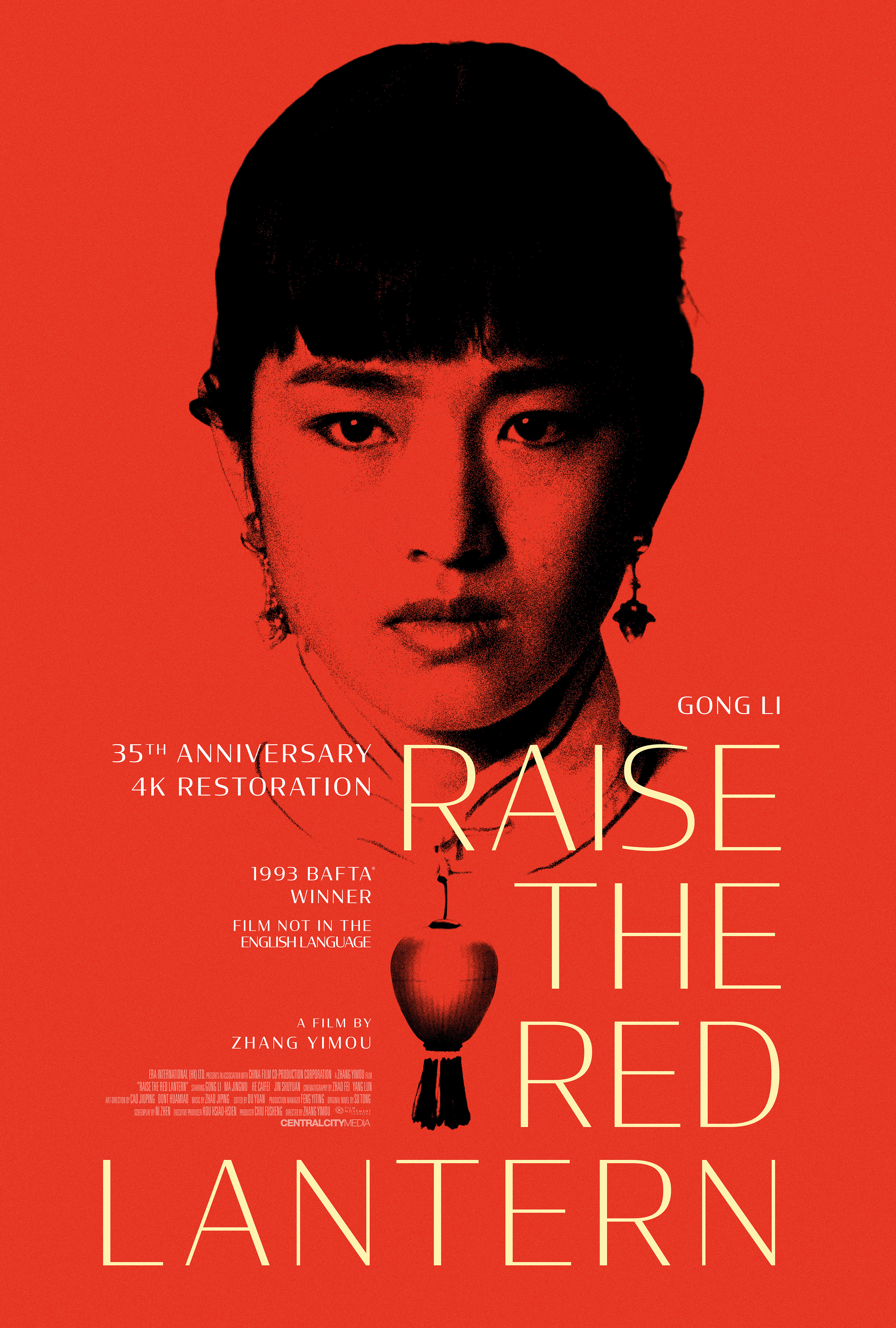
The 4K restoration of Raise the Red Lantern opens 6th November in UK cinemas courtesy of Central City Media.
Rerelease trailer (English subtitles)

