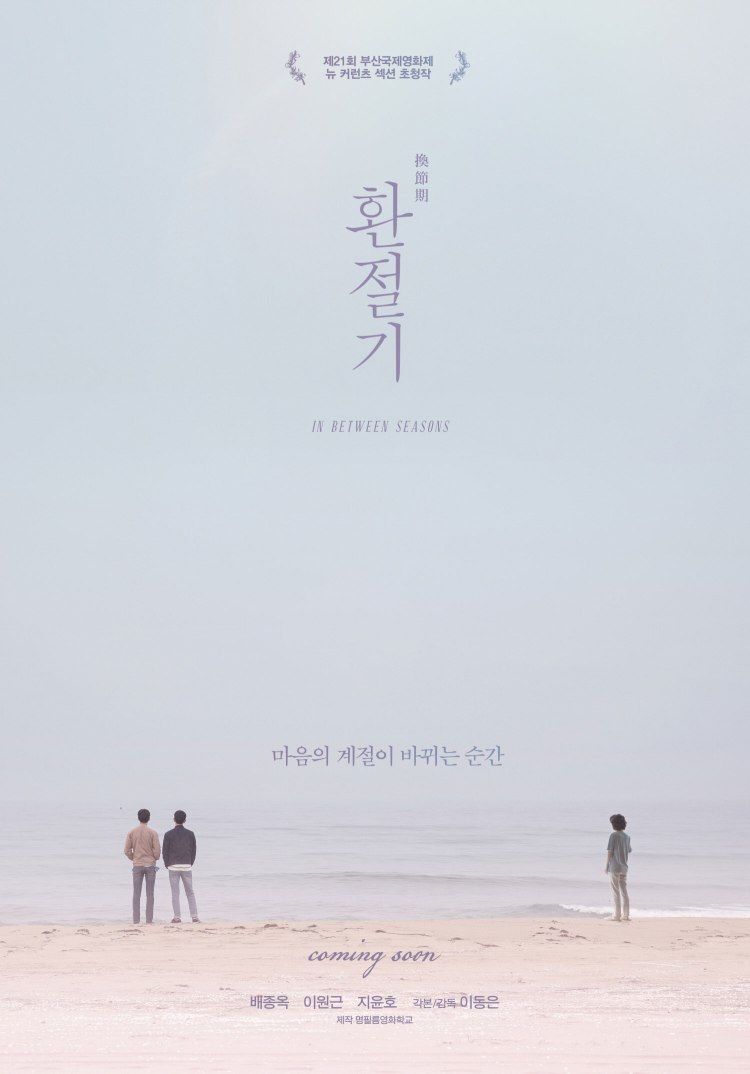
 It’s a strange thing to say, but no two people can ever know the same person in the same way. We’re all, in a sense, in between each other, only holding some of the pieces in the puzzle of other people’s lives. Lee Dong-eun’s debut feature, In Between Seasons (환절기, Hwanjeolgi), is the story of three people who love each other deeply but find that love tested by secrets, resentments, cultural taboos and a kind of unwilling selfishness.
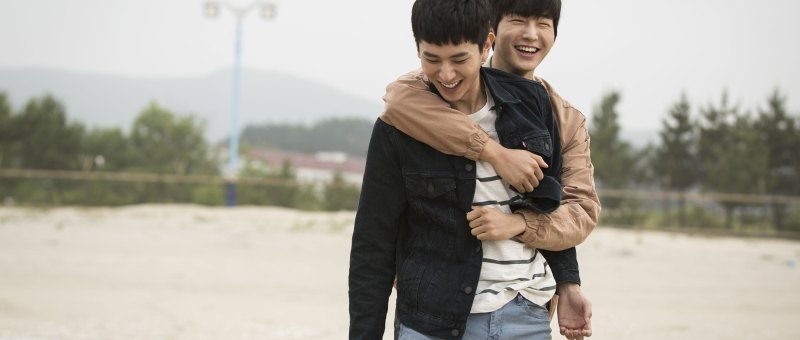
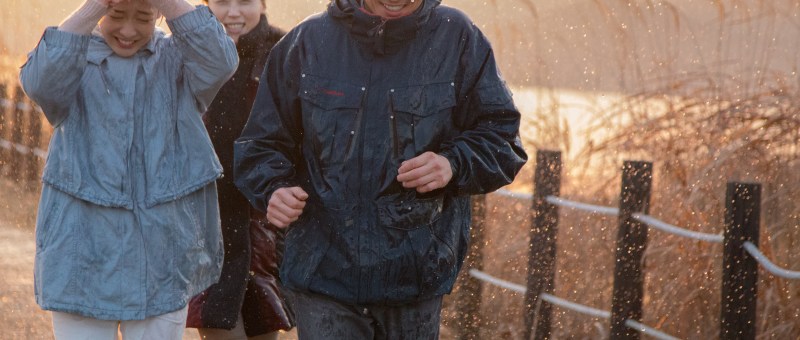
Beginning at the mid-point with a violent car crash, Lee then flashes back four years perviously as Soo-hyun (Ji Yun-ho) introduces his new friend, Yong-joon (Lee Won-gun), to his mother, Mi-keyong (Bae Jong-ok). Soo-hyun’s father has been living abroad in the Philippines for some time and so it’s just the two of them, while Yong-joon’s uneasy sadness is easily explained away on learning that his mother recently committed suicide. Thankful that her son has finally made a friend and feeling sorry for Yong-joon, Mi-kyeong practically adopts him, welcoming him into their home where he becomes a more or less permanent fixture until the boys leave high school.
Four years later, Soo-hyun and Yong-joon are both involved in the car crash which opened the film. Yong-joon has only minor injuries, but Soo-hyun is in a deep coma with possibly irreversible brain damage. It’s at this point that Mi-kyeong finally realises the true nature of the relationship between her son and his friend – that they had been close, inseparable lovers, and that she had never known about it.
When Mi-kyeong receives the phone call to tell her that her son has been in an accident, her friends are joking about their own terrible boys. As one puts it, there are three things a son should never tell his mother – the first being that he’s going to become a monk, the second that he’s going to buy a motorcycle, and the third is something so terrible they can’t even say it out loud. Mi-kyeong’s reaction to discovering her son is gay is predictably negative. Despite having cared for Yong-joon as a mother all these years, she can no longer bear to look at him and tells him on no uncertain terms not come visiting again. Yet for all that her reaction is only half informed by prevailing cultural norms, it’s not so much shame or disgust that she feels as resentment. Here is a man who loves her son, only differently than she does, and therefore knows things about him she never will or could hope to. She is forced to realise that the image she had of Soo-hyun is largely self created and the realisation leaves her feeling betrayed, let down, and rejected.
Both Mi-kyeong and Yong-joon ask the question “What have I done wrong?” at several points in the film – Yong-joon most notably when he’s rejected by Mi-kyeong without explanation, and Mi-kyeong when she’s considering why she’s not been included in the wedding plans for a friend’s daughter. Both Mi-kyeong and Yong-joon are made to feel excluded because they make people “uncomfortable” – Yong-joon because of his sexuality (which he continues to keep secret from his colleagues at work), and Mi-kyeong because of her grief-stricken purgatory. No one quite knows what to say to her, or wants to think about the pain and suffering she must be experiencing. They may claim they don’t want to upset her with something as joyous as a wedding but really it’s more that they don’t want her sadness to cast a shadow over the occasion.
Gradually the ice begins to thaw as Mi-kyeong allows Yong-joon back into her life again even if she can’t quite come to terms with his feelings for her son, describing him as a “friend” and embarrassed by his presence in front of her sister and other visitors. Soo-hyun’s illness and subsequent dependency ironically enough push Mi-kyeong towards the kind of independence she had always rejected – finally learning to drive, sorting out her difficult marital circumstances, and starting to live for herself as well as for her son. Yong-joon remains stubborn and in love, refusing to be shut out of Soo-hyun’s life even whilst considering the best way to live his own. Beautifully composed in all senses of the word, Lee’s frames are filled with anxious longing and inexpressible sadness tempered with occasional joy. Too astute to opt for a crowd pleasing victory, Lee ends on a more realistic note of hopeful ambiguity with anxiety seemingly exorcised and replaced with tranquil, easy sleep.
Screened at the London Korean Film Festival 2017. In Between Seasons will also be screened at the Broadway Cinema in Nottingham on 11th November.
Trailer/behind the scenes EPK (no subtitles)
Interview with director Lee Dong-eun conducted during the film’s screening at the Busan International Film Festival in 2016.



 The latest in a series of events marking the 20th anniversary of the Hong Kong handover,
 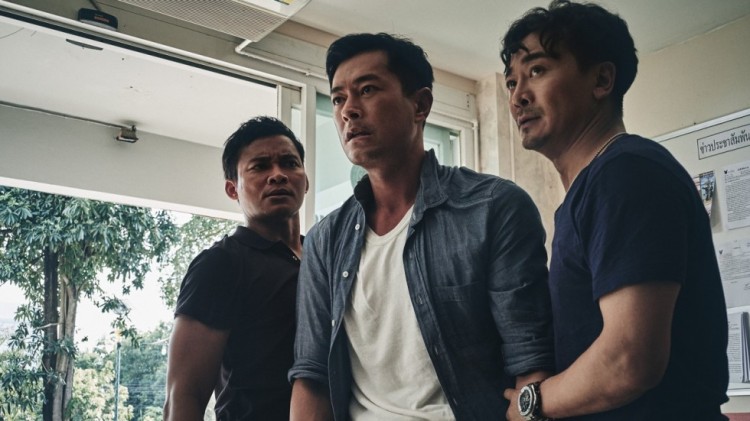 The latest instalment in Wilson Yip’s SPL series stars Louis Koo as a Hong Kong cop on a mission to rescue his daughter from Thai kidnappers. Co-star Gordon Lam will be in attendance to present the film’s UK premiere.
 Ann Hui’s 1999 drama documents the struggle of a group of idealists fighting for the rights of boat people and their mainland wives.
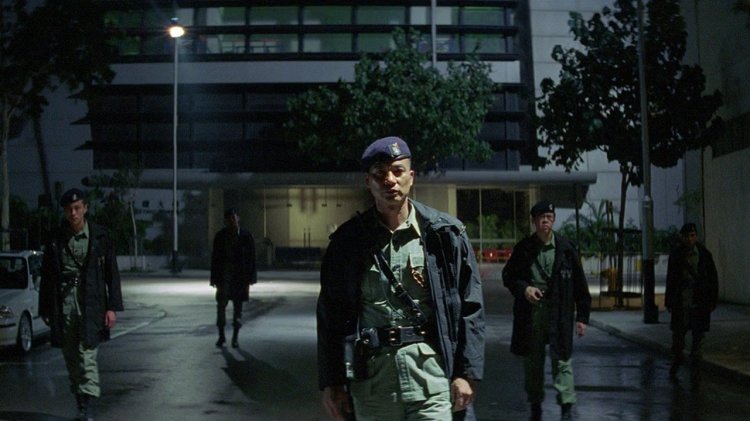 Simon Yam and Lam Suet star in Johnnie To’s missing gun thriller.
 Eric Tsang plays the estranged father of a young man (Shawn Yue) recently released from psychiatric care in Wong Chun’s powerful debut. UK Premiere.
 A tribute to the kung-fu classics of the ’60s and ’70s, 2010’s Gallants follows two martial artists patiently waiting for their master to wake up from the coma he’s been in for the last 30 years. Co-star Gordon Lam will be in attendance.
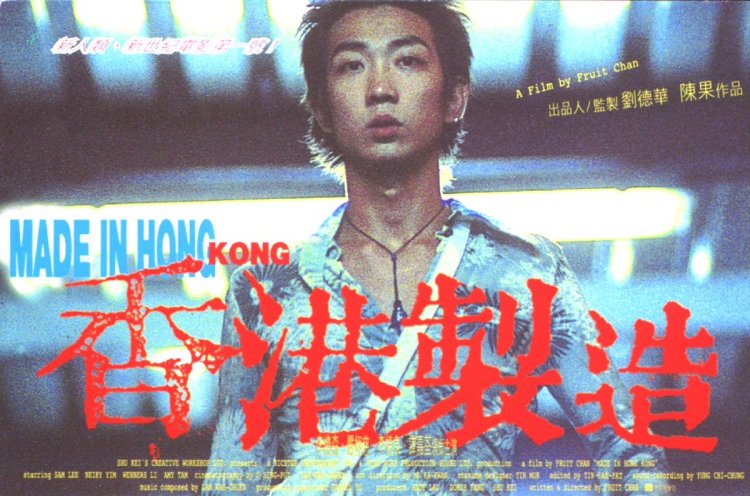 Fruit Chan’s 1997 story of tragic youth in its 2017 restoration which premiered at the Udine Far East Film Festival.
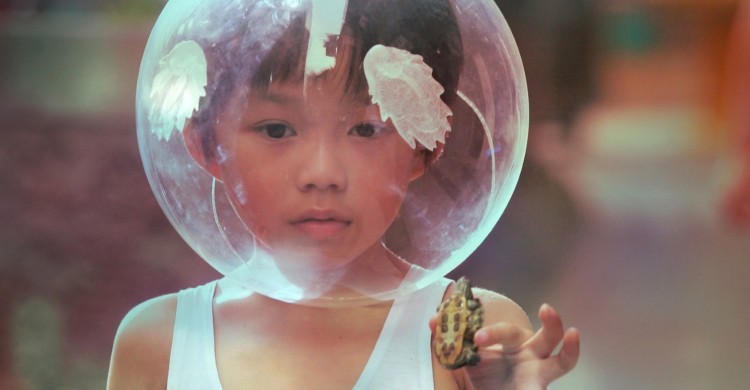 Director Alex Law paints an autobiographical tale of growing up in a working class family in late ’60s Hong Kong.
 Three infamous criminals smuggle themselves into Hong Kong for the biggest heist ever in a crime thriller produced by Johnnie To and directed by three proteges from his Fresh Wave short film programme.
 A grizzled cop chases a gold smuggling fisherman through storms literal and metaphorical in Jonathan Li’s feature debut. UK premiere – Co-star Gordon Lam will be in attendance.