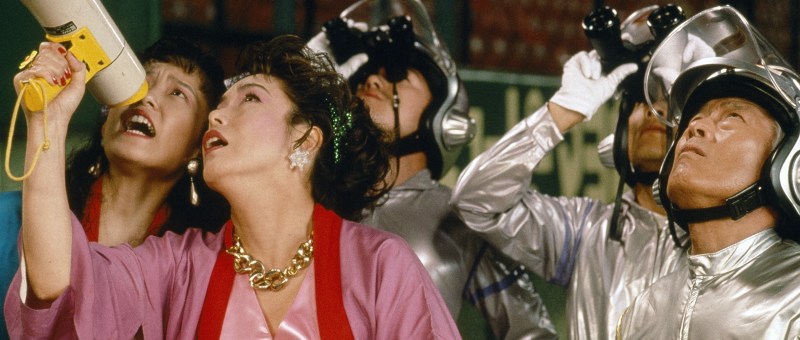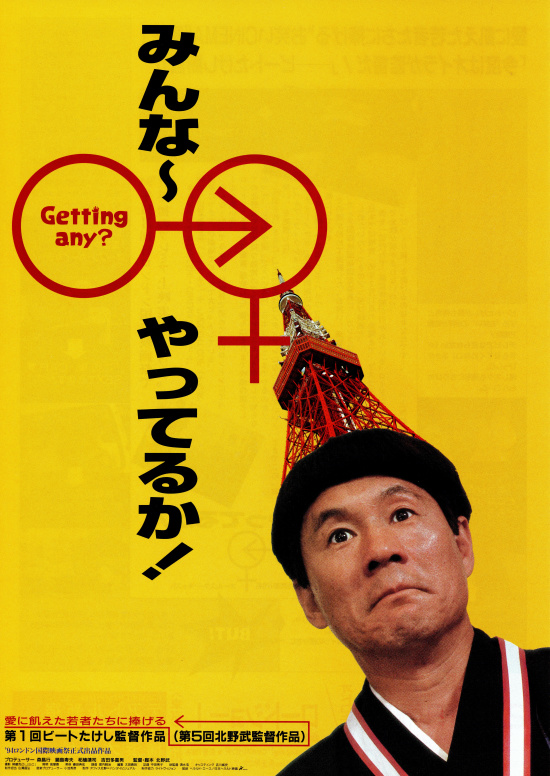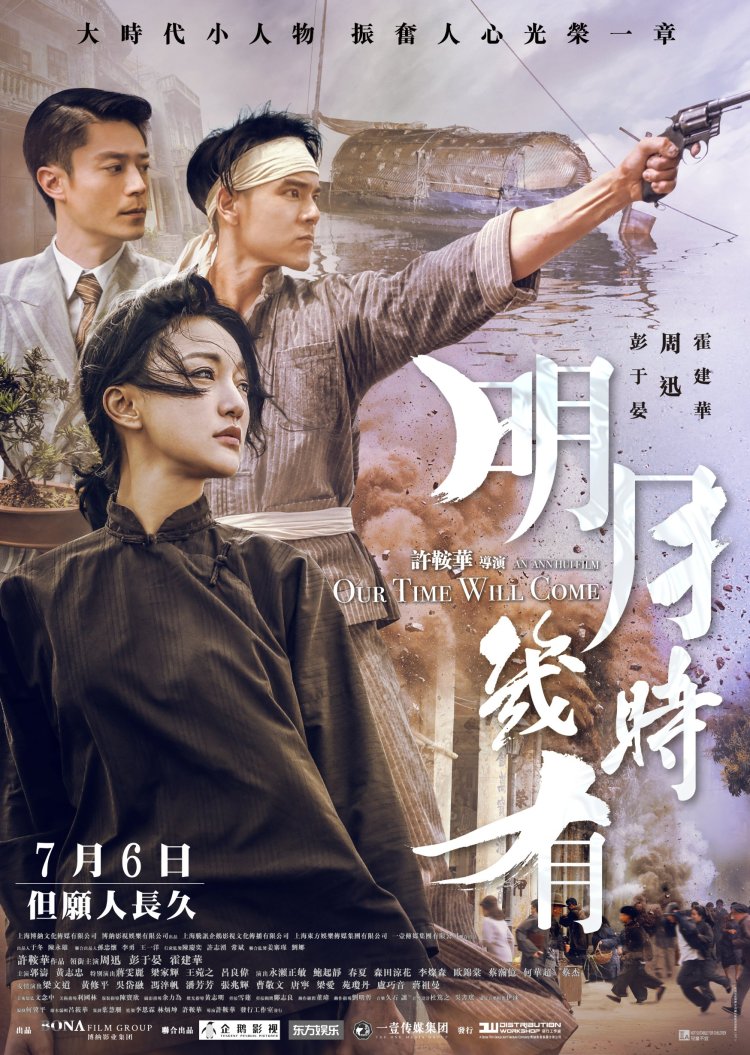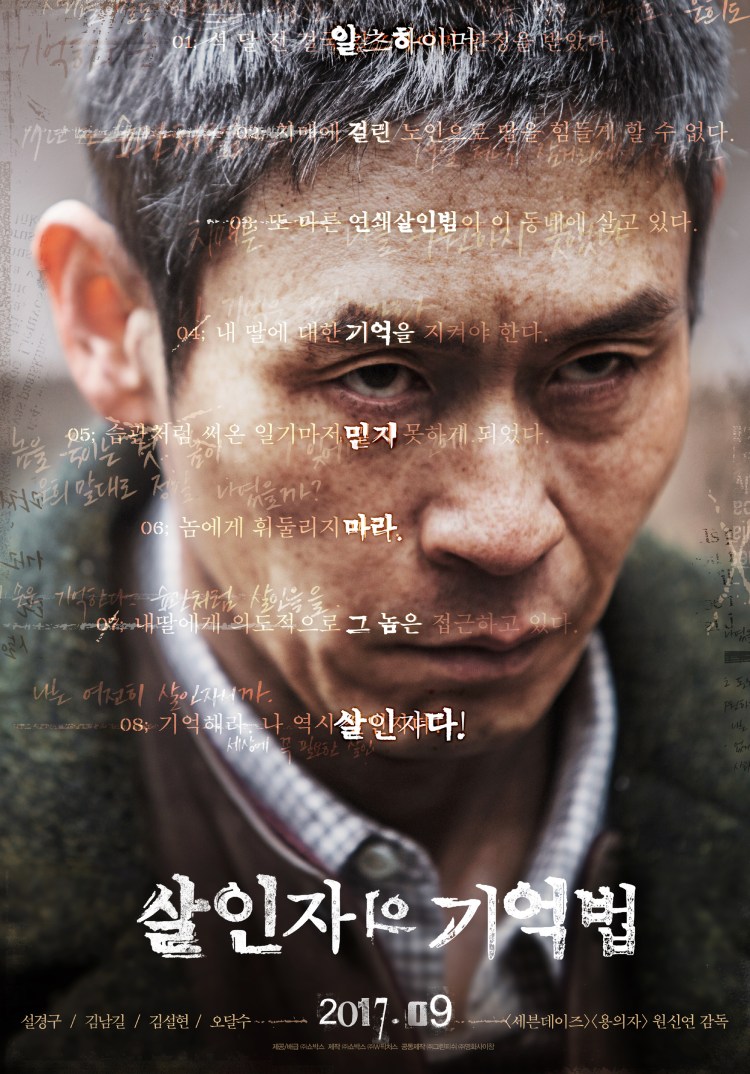

Sion Sono has been especially prolific of late, though much of his recent output has leant towards the populist rather than the art house. Having garnered a reputation for vulgar excess over the last twenty years or so, Sono returns to his Tarkovskian roots with The Whispering Star (ひそひそ星, Hiso Hiso Boshi) – a contemplative exercise in stillness which has more in common with The Room or Keiko Desu Kedo than the ironic outrageousness of Love & Peace. Yet, in an odd way love and peace are what it’s all about as a lonely android delivers long love letters from the distant past to a dying world in which humanity itself will soon be little more than a memory.
Yoko Suzuki (Megumi Kagurazaka), machine no. 772 , is an employee of Space Parcel Services, delivering packages the old-fashioned way from one human to another all across the universe. Following a series of natural disasters and other errors, humanity is no longer the dominant force amid the stars but makes up only 20% of the population. The other 80% belongs to humanity’s children – the androids or other AI based lifeforms who will soon eclipse their forebears given that humans do not generally live for more than 100 years whereas robots are forever “young”.
Yoko’s only companion aboard her homely spaceship is the dashboard computer, 6-7 M.I.M.E. who seems to have gone quite mad with boredom. Eventually Yoko realises that the problem is that M.I.M.E has descended into literal introspection – all its sensors are pointed inside not out and it’s hopelessly distracted by equally literal “bugs” trapped in the ceiling light. Living out her dull days, Yoko records her thoughts on a reel-to-reel tape hoping to entertain the next “Yoko” who rents this ship (or perhaps she is the next Yoko, listening and continuing the project) while travelling between planets delivering one of the remaining 82 parcels on her docket.
More human than human, Yoko is oddly fascinated by her human customers. An accidental anthropophile, Yoko states that she chose this ship because of its “convenient” features which include a kitchen and a host of other home comforts. Only they’re home comforts an android does not need. Dressing in elegant feminine fashions, Yoko’s other main hobby is housework – dusting the control deck, scrubbing the floors, putting up with the leaking tap, and the ship itself is more like a dainty flying cottage than your average utilitarian space vessel with a pretty porch and tiled roof.
Yoko’s “nostalgia” is for a world she never knew and believes she cannot understand. Space exploration has long since ended, and with it, she tells us, went humanity’s centuries old romance with the outer limits. Teleportation has been mainstream technology for quite some time so why do humans spend vast amounts of money on sending parcels to each other which may take years to arrive when they could just press a button for next second delivery? Yoko doesn’t know, she thinks it must be among the things an android cannot understand and that these things themselves must be the very thing which defines her creators.
Stopping off at various planets, Yoko begins to learn more about humans and the world that they destroyed or was destroyed for them. Shooting once again in the wasteland surrounding Fukushima, Sono explores the ruined landscape, eerily timeless with its broken signs and still stocked stores. Using displaced locals as his extras he has Yoko deliver packages to old ladies still manning tobacco stands on silent beaches, elderly store owners, fathers and sons, or even gum chewing little boys armed with real film cameras sitting on disused station platforms to receive something that was probably dispatched before they were even born. Yoko does not begin to look inside the packages for quite some time but observes that they each seem to provoke a profound emotional reaction in the recipients.
From her first encounter with an eccentric man who invites her out for a drink and tries to stop her space ship leaving by spray painting the window, urging her to come back soon because she may have forever but he will soon be gone, Yoko begins to understand the strange transience of human existence. The old man extols the virtues of bicycles and walks with a tin can stuck to the bottom of his shoe because he likes the sound it makes in this maddeningly silent world. Yoko stores her memories in a more absolute way but for humans the objects are the path to the past. The parcels she delivers have weight because the journey was so arduous. Teleportation may be efficient, but something that takes no time has no meaning.
Absurdly, Yoko’s days are divided by title cards bearing the names of the days of the week. Another human affectation or strange hangover from an obsolete world, this decidedly old-fashioned way of dividing time, something now rendered irrelevant to “immortal” machines who (supposedly) feel no boredom or melancholy, is one of many strange anachronisms from the AA batteries which are Yoko’s main source of power to the cheerful dashboard companion shaped liked a classic 1930s wireless and unused manual control wheel which might have been ripped from a small pirate ship. This timeless world is filled with longing for a forgotten, half made-up past inherited from another, unknowable age.
Yet Yoko does begin to learn what it is to be human, even if the knowledge may bring nothing but the additional burden of melancholy. Humanity destroys itself and leaves nothing to its children other than an inescapable sense of loss for a world they never knew. It sounds oddly familiar, like the echoes of an age-old tragedy but there is a kind of hopefulness in Sono’s black and white wasteland for the things which endure even when everything else has been washed away.
Original trailer (English subtitles)
Ah, youth. It explains so many things though, sadly, only long after it’s passed. For the young men who had the misfortune to come of age in the 1930s, their glory days are filled with bittersweet memories as their personal development occurred against a backdrop of increasing political division. Seijun Suzuki was not exactly apolitical in his filmmaking despite his reputation for “nonsense”, but in Fighting Elegy (けんかえれじい, Kenka Elegy) he turns a wry eye back to his contemporaries for a rueful exploration of militarism’s appeal to the angry young man. When emotion must be sublimated and desire repressed, all that youthful energy has to go somewhere and so the unresolved tensions of the young men of Japan brought about an unwelcome revolution in a misguided attempt at mastery over the self.
Absolute power corrupts absolutely, but such power is often a matter more of faith than actuality. Coming at an interesting point in time, Han Jae-rim’s The King (더 킹) charts twenty years of Korean history, stopping just short of its present in which a president was deposed by peaceful, democratic means following accusations of corruption. The legal system, as depicted in Korean cinema, is rarely fair or just but The King seems to hint at a broader root cause which transcends personal greed or ambition in an essential brotherhood of dishonour between men, bound by shared treacheries but forever divided by looming betrayal.
The family drama went through something of a transformation at the beginning of the 1980s. Gone are the picturesque, sometimes melancholy evocations of the transience of family life, these families are fake, dysfunctional, or unreliable even if trying their best. Morita’s
Now in its 11th year, Japan Cuts returns to Japan Society New York from 13th to 23rd July bringing some of the best in recent Japanese cinema with it as well as a host of special guests and events. The festival will open with Yoshihiro Nakamura’s ninja drama, Mumon: The Land on Stealth on 13th July while award-winning animation In This Corner of the World will close the proceedings on July 23. The full lineup is as follows:
Yoshihiro Nakamura’s ninja epic
Kyoko Miyake’s documentary
Taking inspiration from the poetry of Tahi Saihate,
Kenichi Matsuyama stars in a moving biopic of the real life shoji star who gave it all for the game in
The latest film from Okinawan filmmaker Go Takamine,
Yosuke Kubozuka plays a depressed boxer who finds friendship in the
Megumi Sasaki’s documentary
Tetsuya Fujiwara and Hideaki Ito star in
Based on the hit smartphone game
Tai Kato’s underseen documentary
Shingo Matsumura’s gentle
Kenji Yamauchi adapts his own stage play skewering the middle classes as a boring dinner party gets progressively out of hand exposing each of their flaws, weaknesses, and well hidden secrets in
Produced by Shinji Aoyama and Takenori Sento, Sora Hokimoto’s debut feature
Kei Shichiri revisits Before the Day Breaks ten years on and adds all-new sound and imaging. Based on the manga by Naoki Yamamoto,
The first film made outside of Japan for veteran filmmaker Kiyoshi Kurosawa,
Konrad Aderer’s documentary
Theatre director Junko Emoto makes her film debut with
The third in a series of films adapted from the works of Hakodate native novelist Yasushi Sato, Nobuhiro Yamashita’s
Joe Odagiri stars as the artist Léonard Tsuguharu
Elite public school boy Teiichi dreams of becoming Prime Minister in Akira Nagai’s manga adaptation,
An adaptation of Keigo Higashino’s 2013 novel, 
An Iranian student and depressed bartender face a series of romantic and cross cultural confusions in Takuro Nakamura’s
Depressed teenager Sakura (Hanae Kan) has a complicated relationship with Americanisation thanks to growing up near Japan’s biggest mainland American military base but an encounter with the half-American daughter of her mother’s boyfriend prompts a reconsideration of her life goals in Daisuke Miyazaki’s
Sion Sono’s entry into Nikkatsu’s Roman Porno Reboot Project,
The latest film from Yuki Tanada, 
The first in the Taisho Trilogy,
Sunao Katabuchi’s award-winning animation
Some people are odd, and that’s OK. Then there are the people who are odd, but definitely not OK. Hime-anole (ヒメアノ~ル) introduces us to both of these kinds of outsiders, attempting to draw a line between the merely awkward and the actively dangerous but ultimately finding that there is no line and perhaps simple acts of kindness offered at the right time could have prevented a mind snapping or a person descending into spiralling homicidal delusion. To go any further is to say too much, but Hime-anole revels in its reversals, switching rapidly between quirky romantic comedy, gritty Japanese indie, and finally grim social horror. Yet it plants its seeds early with two young men struggling to express their true emotions, trapped and lonely, leading unfulfilling lives. Their dissatisfaction is ordinary, but these same repressed emotions taken to an extreme can produce much more harmful results than two guys eating stale donuts everyday just to ask a pretty girl for the bill.
It’s tough when parents don’t approve of their children’s romantic partners, but fortunately most realise there’s nothing they can do about it so the best thing is to feign civility (and avoid saying I told you so when it all goes wrong). Unfortunately the older generation of Kim Jin-young’s Enemies In-Law (위험한 상견례 2,
Cops vs Thugs – a battle fraught with friendly fire. Arising from additional research conducted for the first
You know what they call women over 25 in China? “Christmas cake” – no one wants you after the 25th, so you’re condemned to sit on the shelf for all eternity like a piece of overproduced seasonal confectionary (a silly analogy because Christmas cakes, at least English ones, may outlive us all). Christy Lam lives in Hong Kong, not mainland China, and so her worries are a little less intense but still the dreaded 30 is causing its own share of panic and confusion in her otherwise orderly, tightly controlled life. In 29+1 Kearen Pang adapts her own enormously successful 2005 stage play about the intertwined lives of two very different women who happen to share a birthday and are each approaching the end of their 20s in very different ways. By turns melancholy and hopeful, 29+1 finds both women at a natural crossroads but rather than casting them into a bottomless pit of despair, allows each of them to rediscover themselves through a kind of second adolescence in which they finally figure out what it is they want out of life.
Marxist countries and horror movies often do not mix. Laos has only a fledgling cinema industry and Mattie Do, returning with her second film Dearest Sister (ນ້ອງຮັກ, Nong hak), is its only female filmmaker even if she finds herself a member of an extremely small group. Set in Laos it may be, but Dearest Sister also has something of the European gothic in its instantly recognisable tale of a good country girl fetching up in the city only to be treated like a poor relation and eventually corrupted by its dubious charms. Dearest Sister is a horror movie but one which places very real fears, albeit ones imbued with superstition, at the forefront of its tragedy.