Brutal Tales of Chivalry (昭和残侠伝, Kiyoshi Saeki, 1965)

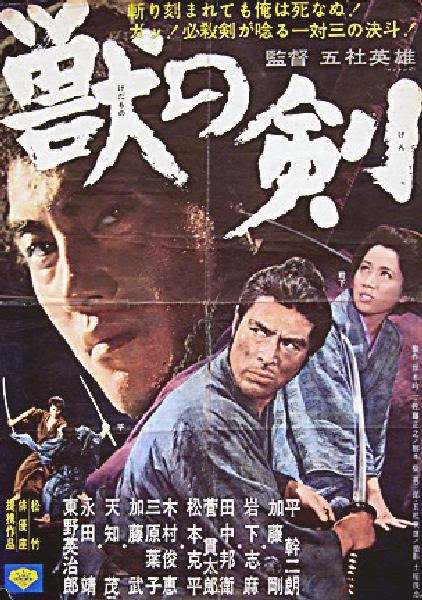
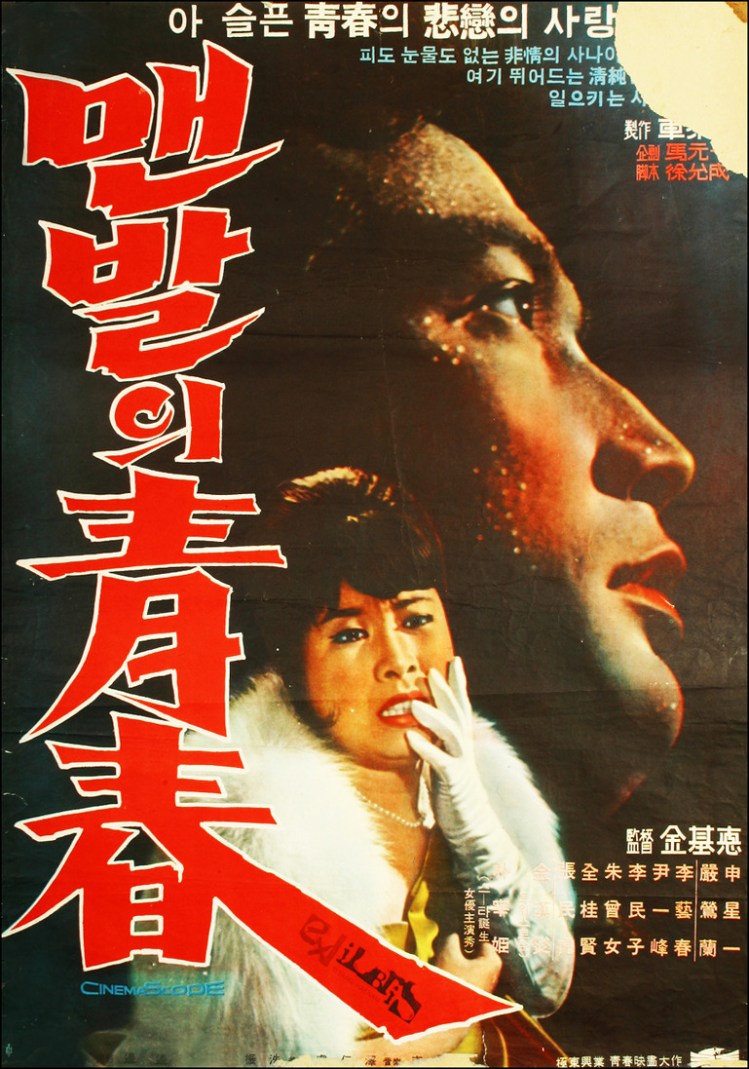
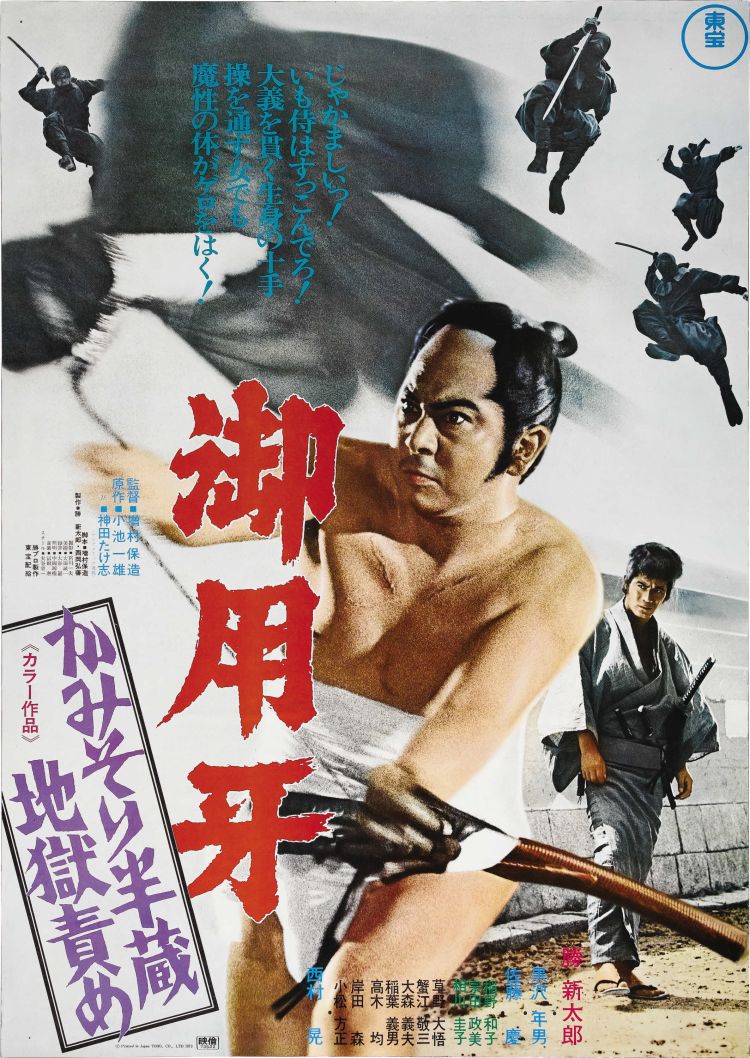
brutal tales of chivalry posterBrutal Tales of Chivalry (昭和残侠伝, Showa Zankyo-den) – a title which neatly sums up the “ninkyo eiga”. These old school gangsters still feel their traditional responsibilities deeply, acting as the protectors of ordinary people, obeying all of their arcane rules and abiding by the law of honour (if not the laws of the state the authority of which they refuse to fully recognise). Yet in the desperation of the post-war world, the old ways are losing ground to unscrupulous upstarts, prepared to jettison their long-held honour in favour of a dog eat dog mentality. This is the central battleground of Kiyoshi Saeki’s 1965 film which looks back at the immediate post-war period from a distance of only 15 years to ask the question where now? The city is in ruins, the people are starving, women are being forced into prostitution, but what is going to be done about it – should the good people of Asakusa accept the rule of violent punks in return for the possibility of investment in infrastructure, or continue to struggle through slowly with the old-fashioned patronage of “good yakuza” like the Kozu Family?

Here is where we find ourselves in the 21st year of the Showa Era (1947) – the small marketplace in Asakusa is rife with black marketeers and illegal goods, but it’s still the only mechanism by which people are able to survive. The market is overseen by the elderly patriarch of the Kozu Family, Gennosuke (Tomosaburo Ii), who does his best to ensure a kind of “fairness” in its operation, at least in as far as yakuza rules extend. His territory is currently under threat from a rival gang – the Shinsei (literally “new truth”) who obey no such rules and are growing ever more ruthless in their quest to control the local area. Their big idea is to build an entirely new marketplace with a roof to make it a permanent and pleasant place for traders to do business – they will finance this through a kind of crowdfunding paid for by the merchants themselves who will also be paying protection money and kickbacks to the Shinsei. Everyone approves of the covered market project, even the Kozu, but if it means letting the Shinsei assume control is it a price worth paying?

This is a question which faces prodigal son Seiji (Ken Takakura) who returns from the war to find his city in ruins, Gennosuke murdered by the Shinsei, that he is now the new head of the Kozu, and that the woman he loved has been given away in a dynastic marriage to man from another minor clan. Before he died, Gennosuke was able to dictate two important instructions – that Seiji was to take over, and that the gang should proceed on a note of peace, avoiding violence or aggression where possible, leading by example rather than attempting to crush their new rivals. Seiji, having just returned from one battlefield is intent on following Gennosuke’s orders but how far can he really survive on the moral high ground when his opponents are content to fight dirty from down below?

The “Showa” era spanned some 60 years of turbulent Japanese history but in 1965 it was just under 40 years old and already beginning to generate the complicated feelings of nostalgia which are still attached to it today. Showa is right there in the Japanese title as if it were an age already passed but it’s clear in 1965 that something has shifted, one age has or is beginning to give way to another. The desperation of the post-war world with its empty, rubble strewn vistas and population filled with hunger and despair has ebbed away now that Japan is back on the world stage following the 1964 Olympics and the economy has as last begun to pick up. The young no longer fixate on the rights and wrongs of empire building, war and surrender but have begun to turn their attention towards the American occupation, social justice, and foreign conflicts. The young of 1947 were middle-aged in 1965, no one would begrudge them romanticising their youth, and so even if the world of Brutal Tales of Chivalry is a bleak one it still contains a kind of nostalgia for the kind of honourable gangster inhabited by Takakura who embodies traditional values some may feel are under represented in modern society.

Yet, for all that, there’s something subtly subversive in the film’s eventual suggestion that pacifism will only go so far and that one side or another must be banished from the battlefield through violence if peace is ever to prosper. Still, the struggle is a noble one in which honour is defined by strength of character and the selfless desire to ensure the well-being of others as much as it is to a blind observation of arcane rules and obsolete, meaningless ritual. The first in a long running series, Brutal Tales of Chivalry helped established Takakura’s iconic presence which eventually became synonymous with the “ninkyo eiga” as a personification of idealised Japanese masculinity, tough but caring even if passion is often repressed or redirected into violence. Remnants may be all that’s left of “chivalry” in the new Showa era, but there’s a degree of beauty in this brutality that refuses to die even as its era passes.


Now available on Region A blu-ray from Twilight Time (limited to 3000 copies only)

Original trailer (no subtitles)

Soul Mate (七月与安生, Derek Tsang, 2016)

soulmateLike the rest of the world, China, or a given generation at least, may be finding itself at something of a crossroads. The past few years have seen a flurry of coming of age dramas in which the melancholy and middle-aged revisit lost love from their youth but Derek Tsang’s Soul Mate (七月与安生, Qīyuè yǔ Anshēng) seems to be speaking to an older kind of melodrama in its examination of passionate friendship pulled apart by time, tragedy, and unspoken emotion. The story is an old one, but Tsang tells it well as its twin heroines maintain their intense, elemental connection even whilst cruelly separated.

Qiyue (Sandra Ma Sichun) and Ansheng (Zhou Dongyu) met at 13 years old and quickly became inseparable. Ansheng, a free-spirited and energetic young girl, came to the aid of the shy and bookish Qiyue but was herself in need a kind of rescue thanks her unusual family circumstances. The child of a busy single mother, Ansheng was often left to fend for herself but Qiyue’s parents are goodhearted people and keen to take on the additional responsibility of caring for their daughter’s only friend. However, the usual cause of tension arrives when 18-year-old Qiyue falls for the handsome Jiaming (Toby Lee). Ansheng, feeling a little jealous and left out, has complicated feelings towards her friend’s boyfriend who seems to be attracted to her further complicating the already intense relationship between the three. Not wanting to break her friend’s heart, Ansheng decides it’s time for her to embrace her free-spirited nature and hit the road even if it takes her away from the most important person in her life.

Years later, Ansheng is a respectable office worker. Jiaming, now a city boy himself, is stunned to spot her on a train even if his attempts to thrust a business card into her hand are met with less than enthusiastic reception. No longer in touch with Qiyue, Jiaming like much of the country has been fascinated by an ongoing web novel, Qiyue and Ansheng, which Qiyue has apparently been writing and is hoping Ansheng knows how to get in touch with her. Sadly, she does not. The three friends appear scattered but how could such intense relationships have ended so abruptly and finally?

Necessarily close in their youth, the two girls are a classic case of opposites attracting as the quiet and thoughtful Qiyue idolises her impulsive, extroverted friend. Their initial separation comes at cost as it pushes each into their opposing sides – Qiyue pursuing her education whilst planning an early marriage, and Ansheng living life on the road hooking up with shady guys and cadging meals by out drinking louts. A disastrous trip brings the differences home as the shared awkwardness regarding their relationships with Jiaming frustrates their essential intimacy and threatens to throw up an unscalable wall between the two women.

Jiaming does his best to get in the way, vacillating between the two girls and ultimately making what is probably the best decision but in the most cowardly and selfish of ways. The two eventually find themselves out of sync, just as Ansheng is thinking of settling down, Qiyue finds the strength to spread her wings but somehow or other they are perpetually kept apart. The film goes to great lengths to emphasise the platonic nature of the two women’s relationship despite the obvious tension between them but it’s difficult not to read Ansheng’s ongoing struggles as a tragic case of a woman in love with her oblivious best friend. Later on the film presents the interesting idea of a nontraditional family in the two women raising a child which is almost their own thanks to the extremely tight triangular relationship of their teenage years, yet it quickly undercuts it with a perfectly executed dramatic twist.

Drawing beautifully nuanced performances from his lead actresses, Tsang crafts an affecting tale of the power of female friendship which transcends all obstacles in its essential unbreakable quality which brings both joy and pain to each of the women even in their inevitable separation. Drawing inspiration from acclaimed Japanese filmmaker Shunji Iwai who is also thanked in the end credits, Tsang moves beyond Hana and Alice for a deeper kind of sadness found in a shot echoing Iwai’s thematically similar Love Letter suggesting the essential melancholy of an enduring yet severed connection.


Soul Mate was screened at the 19th Udine Far East Film Festival

Original trailer (English subtitles)

Wolf Guy (ウルフガイ 燃えよ狼男, Kazuhiko Yamaguchi, 1975)

Wolf Guy posterUniversal’s Monster series might have a lot to answer for in creating a cinematic canon of ambiguous “heroes” who are by turns both worthy of pity and the embodiment of somehow unnatural evil. Despite the enduring popularity of Dracula, Frankenstein (dropping his “monster” monicker and acceding to his master’s name even if not quite his identity), and even The Mummy, the Wolf Man has, appropriately enough, remained a shadowy figure relegated to a substratum of second-rate classics. Kazuhiko Yamaguchi’s Wolf Guy (ウルフガイ 燃えよ狼男, Wolf Guy: Moero Okami Otoko, AKA Wolfguy: Enraged Lycanthrope) is no exception to this rule and in any case pays little more than lip service to werewolf lore. An adaptation of a popular manga, Wolf Guy is one among dozens of disposable B-movies starring action hero Sonny Chiba which have languished in obscurity save for the attentions of dedicated superfans, but sure as a full moon its time has come again.

Chiba plays Inugami (literally “dog god”, in Japanese folklore an Inugami is a vengeful dog spirit which can possess people in times of emotional extremity), a melancholy reporter with a reputation for getting himself into trouble who comes across a strange scene in the street in which a white suited man begins raving about a tiger before being gored to death by invisible forces. The police, dragging in Inugami for questioning, can’t come up with anything better than demons to explain such strange events but Inugami’s interest is piqued – more so when he runs into a shady paparazzo who tips him off to similar crimes all targeting a rock band run by a prominent talent agency.

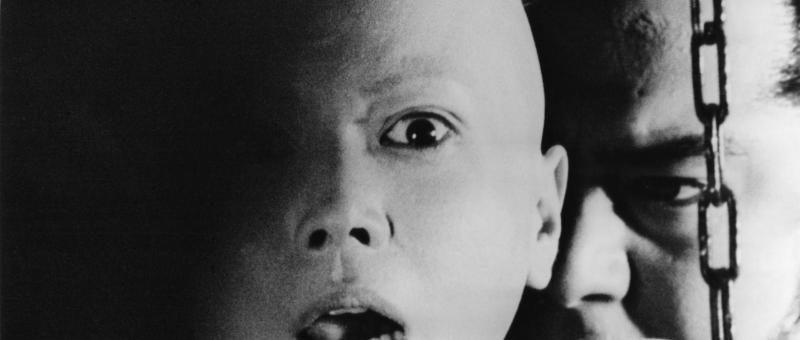
Wolf Guy is not the most coherent of films, it explains itself piecemeal as it goes along and mostly through Inugami’s own world-weary voiceover. Despite this immediate access to Inugami’s psyche, he remains aloof, brooding, and distant. Literally a lone wolf, Inugami is the last of his kind – the little boy saved from a massacre in the black and white still frames of the opening sequence. Yamaguchi chooses not to engage with this theme on much more than a surface level though he maintains a low-level anger towards corrupt authority and those who attempt to wield power from the shadows, targeting the different or the weak.

Through this deeply held feeling of alienated otherness, Inugami comes to feel an intense kinship with the wronged woman at the centre of the curse. Miki (Etsuko Nami) is even more a victim of this intense authoritarianism than Inugami himself. A working class nightclub singer in love with a politician’s son, Miki becomes a problem for her potential father-in-law, one which he solves with gang rape and infection with syphilis. Dumped, alone, infected, and also hooked on drugs, Miki’s mental state is understandably volatile but her troubles are not yet over. The mysterious tiger and Inugami’s wolf man attributes bring the pair to the attentions of a shady group intent on harnessing these unique supernatural powers for themselves with no regard for the “human” cost involved.

Inugami sympathises with Miki out of a shared hatred for “humans” who can treat each other in such inhumane ways. Humans massacred his family and when he tries to go home, the sons of the men who did it seem to know who he is and want to finish the job. Lonely and afraid, Inugami starts to wonder if humans and his own kind will ever be able to live together in harmony. Though he does begin to form brief romantic relationships, none of them end well. It’s almost a running joke that he’s irresistible to every woman in the film, but as much as they run to him they run to death – his love is toxic and even the invulnerability conferred by the moon is unable to save the women in his life from the violence of mortal men. Yet for all his sadness and internalised rage, the Wolf Guy is a hippy hero, the kind who throws away his gun and chooses to retreat in peace rather than fight on in a pointless and internecine quest for vengeance.

Rather than a story of humanity overturned by overwhelming, irrational emotional forces, Wolf Guy presents a hero perfectly in tune with his emotional life even if imbued with Chiba’s iconic coolness. This is not a “werewolf” story, Chiba never transforms nor does he lose himself at the sight of a full moon – rather it strengthens, sustains, and protects him. This almost new age idea gels well with the generally psychedelic approach filled with groovy ‘70s guitar, whip pans, zooms and crazy action though the film certainly goes to some dark places including an extremely unsettling surgery scene followed by an equally disturbing one of healing body horror in which exposed intestines rearrange themselves neatly inside the stomach cavity which then begins to knit itself together again. An eccentric, essentially disposable offering, Wolf Guy makes no real attempt at coherence but is willing to embrace just about every kind of madcap idea which presents itself. Strange, absurd, and all the better for it Wolf Guy is one wild ride but also has its heart in the right place as its melancholy hero heads out into the mountains, a self-exile from a cruel and unforgiving world.


Wolf Guy is released on Dual Format DVD & Blu-ray in the US and UK on 22nd/23rd May 2017 courtesy of Arrow Video.

Arrow release EPK video


The Prison (프리즌, Na Hyun, 2017)

prison poster bigPrison can be a paradise if you’re doing it right, at least if you’re a top gangster in the movies. Na Hyun’s The Prison (프리즌) paints an interesting picture of incarceration and the way it links into his nation’s infinitely corrupt power structures. When investigators wonder why a crime spree suddenly came to an end, one of the frequently offered explanations is that the perpetrator was most likely arrested for another crime but what if you could turn this obviously solid alibi to your advantage and get those already behind bars to do your dirty work for you?

Disgraced policeman Song Yoo-gun (Kim Rae-Won) has wound up imprisoned alongside several of the men he himself helped put away. Like many cops who suddenly find themselves on the other side of the bars, Yoo-gun’s life is not easy. Badly beaten, tortured, and threatened with amputation Yoo-gun eventually starts fighting back and seizes the most likely path to prison survival – allying himself with the inside’s big guy, Jung Ik-ho (Han Suk-Kyu). Ik-ho, a notorious gangster famous for eating the eyeballs of his enemies, is the one who’s really in charge around here, not least because he’s the one running the gang of prison based hitmen trotted out to take care of the bad guys’ hit list.

What starts out as an intriguing idea quickly descends into predictability as Yoo-gun and Ik-ho face off against each other, finding common ground and camaraderie but ultimately existing on the plains of good and evil. Yoo-gun has his own reasons for landing himself in prison but his policeman’s heart still loves truth and justice even if he’s forced to become a prisoner whilst in prison. While he goes along with Ik-ho’s crimes, joining in the violence and intimidation he practices, he also wants to take Ik-ho down even if it means becoming him in the process.

While the interplay between the two men forms the central axis of the film as they develop an odd kind of grudging friendship which may still end on the point of a knife at any moment, Na tries his best to recreate the world of the grim ‘80s action thriller. Technically speaking, The Prison is set in the ‘90s (not that viewers outside of Korea would notice aside from the external lack of mobile phones, computers, internet etc) but wants to be the kind of tough, bruisy, fight heavy action movie they don’t make any more in which a righteous hero defeats a large-scale conspiracy by jump kicking hoodlums. He almost succeeds in this aim, but never quite manages to anchor the ongoing background conspiracy elements with the intense pugilism of the prison environment.

Yoo-gun and Ik-ho are obviously a special case but aside from their efforts, prison life in Korea is not too bad – the guards are OK, the warden is ineffectual, and the inmates are running the show. Nevertheless the prison is the centre of the conspiracy as elite bad guys take advantage of put upon poor ones who’ve found themselves thrown inside thanks to ongoing social inequality, trading cushy conditions to guys who’re never getting out in return for committing state sponsored crimes. Needless to say, someone is trying to expose the conspiracy which would be very bad news for everyone but rubbing them out might prove counter productive in the extreme.

Na lets the in-house shenanigans drag on far too long, pitching fight after fight but failing to make any of his punches land with the satisfaction they seem to expect. Flirting with the interplay between Yoo-gun and Ik-ho in wondering how far Yoo-gun is prepared to go or whether he is destined to become his criminal mentor rather than destroy him, Na never fully engages with the central idea preferring to focus on the action at the expense of character, psychology, or the corruption which underlines the rest of the film. Nevertheless The Prison does have the requisite levels of high-octane fights and impressive set pieces including the fiery if predictable prison riot finale. Life behind bars isn’t all it’s cracked up to be after all, the corrupt elites of Korea will have to actually pay people to off their enemies. Predictable and poorly paced, The Prison is best when it sticks to throwing punches but might be more fun if it placed them a little better.


The Prison was screened at the 19th Udine Far East Film Festival.

International trailer (English subtitles)

Nippon Connection 2017 – Nippon Animation Preview

silent-voiceNippon Connection aims to showcase all sides of Japanese cinema from the mainstream to arthouse and documentary and this, of course, includes animation.

silent voice still 1A hit at festivals around the world, A Silent Voice is a poignant tale about guilt, redemption, and attitudes to disability.


in this corner of the world horizontalMai Mai Miracle’s Sunao Katabuchi returns with the multi-awardwinning In This Corner of the World – a coming of age story set in Hiroshima before and after the atomic bomb.


There is also a selection of animated movies aimed at younger audiences which will be shown in their original languages but with both English subtitles and German live voice over.

ちえりとチェリー stillChieri and Cherry is a charming puppet animation in which Chieri, who has recently lost her father, develops an intense bond with her stuffed toy, Cherry. Travelling to her grandmother’s house for her father’s funeral, Chieri experiences a fantastic adventure which helps her to cope with grief and fear of the future.


rudolf the black cat stillRudolf the Black Cat stars titular black cat Rudolf from Gifu who ends up accidentally homeless in Tokyo!


Shorts

POETIC LANDSCAPES – RECENT GEMS IN JAPANESE INDIE ANIMATIONPoetic Landscapes – Recent Gems in Japanese Animation is a selection of some of the best in recent short animated films curated by Catherine Munroe Hotes.


TOKYO UNIVERSITY OF THE ARTS- ANIMATIONTokyo University of the Arts: Animation – a selection of animated graduation films from Tokyo University of the Arts.


Nippon Connection 2017 takes place from May 23 – 28, 2017 in Frankfurt, Germany. You can find the full details for all the films, screening times and ticket links on the festival’s official website and you can also keep up with all the latest news via the Nippon Connection Facebook Page, Twitter account, Instagram channel and blog.

Tampopo (タンポポ, Juzo Itami, 1985)

tampopo posterSome people love ramen so much that the idea of a “bad” bowl hardly occurs to them – all ramen is, at least, ramen. Then again, some love ramen so much that it’s almost a religious experience, bound up with ritual and the need to do things properly. A brief vignette at the beginning of Juzo Itami’s Tampopo (タンポポ) introduces us to one such ramen expert who runs through the proper way of enjoying a bowl of noodle soup which involves a lot of talking to your food whilst caressing it gently before finally consuming it with the utmost respect. Ramen is serious business, but for widowed mother Tampopo it’s a case of the watched pot never boiling. Thanks to a cowboy loner and a few other waifs and strays who eventually become friends and allies, Tampopo is about to get some schooling in the quest for the perfect noodle whilst the world goes on around her. Food becomes something used and misused but remains, ultimately, the source of all life and the thing which unites all living things.

Goro (Tsutomu Yamazaki), a middle-aged man with a fancy hat, and his truck mate Gun (Ken Watanabe), younger, tight white jeans and colourful neckerchief, have become ramen experts thanks to their road bound life. Taking a break during a heavy rain storm, the pair run into a little boy being beaten up by three others and, after scaring the assailants off, escort him into the ramen restaurant where he lives with his widowed mother, Tampopo. Goro and Gun get the stranger in town treatment, but decide to sit down and order a bowl each anyway before a getting into a fight with another diner. Despite her skills as a home cook, Tampopo’s ramen is distinctly second-rate which explains why her business isn’t taking off. Goro and Gun spend some time helping her figure out where she’s going wrong leading Tampopo to beg them to stay, or at least come back when they have time, and teach her what it takes to make the perfect bowl.

Essentially a hybrid between a western and a sports movie, Tampopo has its fair share of training montages as the titular heroine tries to improve her stamina by taking intensive runs, carrying heavy pots of water from one place to another, and constantly trying get her cooking time down to three minutes. The lone woman on the “ranch” that is her restaurant, Tampopo may not be contending with boisterous cattle, threatening neighbours, or disapproving townsfolk but she is being mentored to become her own master as much as anything else. Goro is her strong and silent teacher, but, like Shane, he’s a man not meant to be tied down and is essentially teaching her how to survive alone however painful it may be for him to leave.

This is a fairly radical idea in and of itself. Tampopo’s goal is not another marriage and a man to mind the ranch, but the creation of a successful business which will support both herself and her son built on genuine skills and a lot of hard work. Goro, a ramen aficionado, takes charge but ropes in a few other “experts” to help him including a ramen loving former doctor now living on the streets, the private chef of a wealthy man the gang saved when he almost choked on mochi, and the guy Goro fought with in the beginning who also happens to be a childhood friend of Tampopo nursing a lifelong crush on her.  From each of these men, as well as friendly (or not) rivalry with local competitors, Tampopo learns everything she needs to succeed including the confidence in herself to carry it through.

Whilst Tampopo and co. are busy figuring out the zen of ramen, Itami wanders off for a series of strange vignettes examining more general attitudes to food beginning with Koji Yakusho’s white suited, cinephile gangster who vows bloody murder on anyone daring to eat noisy snacks during the movie. The gangster and his moll eventually retreat to a hotel room where they find new and actually quite strange ways of using food to enhance their pleasure but their story leads us to others in the hotel from a young man stuck in a business meeting who shows up his less cultured colleagues with his culinary knowledge and either doesn’t know or doesn’t care that you’re supposed to order the same as your boss lest you be implying his choice of dish is “wrong”, to a group of young women taking a class in the proper way to eat spaghetti. The instructor (played by veteran actress Mariko Okada), goes to great lengths to explain that it’s considered very uncouth to make any kind of noise whilst eating pasta, only for a westerner of undisclosed nationality to loudly slurp his noodles half way across the room.

While these two episodes showcase the ridiculousness of food etiquette, others take a more surreal direction such as in the strange episode of an old lady who likes to sneak into the local supermarket and torment the clerk by squeezing the fruits, cheeses, and pastries while he chases her round the shop. Here appetites are to be indulged, even if they’re strange, rather than suppressed in favour of someone else’s idea of the proper way to behave. Yet that doesn’t mean that food is something throwaway, to be consumed without thought – in fact, it’s the opposite as Goro’s tutelage of Tampopo shows. Skills alone are not enough, achieving the zen of cookery is a matter of touch and sensitivity, of shared efforts and interconnected strife. Like a dandelion blowing in the wind, Tampopo’s ramen shop gives as it receives, generously and without pretension.


Available now in the UK/US courtesy of Criterion Collection!

Original 1985 trailer (English subtitles)

Nippon Connection Blog Up and Running for 2017 Festival

emperor in August stillNippon Connection returns for 2017 in just under a week’s time and to whet your appetite for all the amazing films about to shown in Frankfurt from May 23 – 28, the festival has re-launched its very own blog. The best way to keep up with Nippon Connection 2017 as it happens, the blog will be updated throughout the festival with diary entries, reviews, essays, and interviews so it’s the next best thing to actually being there! The very first entry is dedicated to the recipient of the 2017 Nippon Honour Award, Koji Yakusho, whose The Emperor in August and Tampopo will both be screened during the festival.

Nippon Connection 2017 takes place in Frankfurt from May 23 – 28, 2017.  Ahead of the opening on Tuesday, you can check out our previews of the Nippon Cinema and Nippon Visions strands as well as previews for the animation on offer and the Roman Porno retrospective (which includes a lecture with film scholar Jasper Sharp) arriving later in the week.

Be sure to follow the blog for all the latest during the event, and you can also keep up with the festival via the official website, Facebook page, and Twitter account.

2017 Festival trailer

I am Not Madame Bovary (我不是潘金莲, Feng Xiaogang, 2017)

I-Am-Not-Madame-Bovary-posterFeng Xiaogang, often likened to the “Chinese Spielberg”, has spent much of his career creating giant box office hits and crowd pleasing pop culture phenomenons from World Without Thieves to Cell Phone and You Are the One. Looking at his later career which includes such “patriotic” fare as Aftershock, Assembly, and Back to 1942 it would be easy to think that he’s in the pocket of the censors board. Nevertheless, there’s a thin strain of resistance ever-present in his work which is fully brought out in the biting satire, I am not Madame Bovary (我不是潘金莲, Wǒ Búshì Pān Jīnlián).

Truth be told, the adopted Western title is mostly unhelpful as the film’s heroine, Liu Xuelian (Fan Bingbing), is no romantic girl chasing a lovelorn dream to escape from the stultifying boredom of provincial bourgeois society, but a wronged peasant woman intent on reclaiming her dignity from a world expressly set up to keep people like her in their place. Feng begins the movie with a brief narrative voice over to set the scene in which he shows us a traditional Chinese painting depicting the famous “Pan Jinlian” whose name has become synonymous with romantic betrayal. More Thérèse Raquin than Madame Bovary, Pan Jinlian conspired with her lover to kill her husband rather than becoming consumed by an eternal stream of romantic betrayals.

Xuelian has, however, been betrayed. She and her husband faked a divorce so that he could get a fancy apartment the government gives to separated people where they could live together after remarrying sometime later. Only, Xuelian’s husband tricked her – the divorce was real and he married someone else instead. Not only that, he’s publicly damaged her reputation by branding her a “Pan Jinlian” and suggesting she’s a fallen woman who was not a virgin when they married. Understandably upset, Xuelian wants the law to answer for her by cancelling her husband’s duplicitous divorce and clearing her name of any wrongdoing.

Xuelian’s case is thrown out of the local courts, but she doesn’t stop there, she musters all of her resources and takes her complaint all the way to Beijing. Rightfully angry, her rage carries her far beyond the realms a peasant woman of limited education would expect to roam always in search of someone who will listen to her grievances. When no one will, Xuelian resorts to extreme yet peaceful measures, making a spectacle of herself by holding up large signs and stopping petty officials in their fancy government cars. Eventually Liu Xuelian becomes an embarrassment to her governmental protectors, a symbol of wrongs they have no time to right. These men in suits aren’t interested in her suffering, but she makes them look bad and puts a stain on their impressive political careers. Thus they need to solve the Liu Xuelian problem one way or another – something which involves more personal manipulation than well-meaning compromise.

Bureaucratic corruption is an ongoing theme in Chinese cinema, albeit a subtle one when the censors get their way, but the ongoing frustration of needing, on the one hand, to work within a system which actively embraces its corruption, and on the other that of necessarily being seen to disapprove of it can prove a challenging task. Xuelian’s struggles may lean towards pettiness and her original attempt to subvert the law for personal gain is never something which thought worthy of remark, but her personal outrage at being treated so unfairly and then so easily ignored is likely to strike a chord with many finding themselves in a similar situation with local institutions who consistently place their own gain above their duty to protect the good men and women of China.

A low-key feminist tale, Xuelian’s quest also highlights the plight of the lone woman in Chinese society. Tricked by unscrupulous men, she’s left to fend for herself with the full expectation that she will fail and be forced to throw herself on male mercy. Xuelian does not fail. What she wants is recognition of her right to a dignified life. The purpose of getting her divorce cancelled is not getting her husband back but for the right to divorce him properly and refute his allegations of adultery once and for all. Xuelian wants her good name back, and then she wants to make a life for herself freed from all of this finagling. She’s done the unthinkable – a petty peasant woman has rattled Beijing and threatened the state entire. Making oneself ridiculous has become a powerful political weapon. All of this self-assertion and refusal to backdown with one’s tail between one’s legs might just be catching.

Adding to his slightly absurdist air, Feng frames the tale through the old-fashioned device of an iris. Intended to recall the traditional scroll paintings which opened the film, the iris also implies a kind of stagnation in Xuelian’s surroundings. Her movements are impeded, her world is small, and she’s always caught within a literal circle of gossip and awkward, embarrassing scenes. Moving into the city, Feng switches to a square instead – this world is ordered and straightened but it’s still one of enforced rigidity, offering more physical movement but demanding adherence to its strict political rules. Only approaching the end does something more like widescreen with its expansive vistas appear, suggesting either that a degree of freedom has been found or the need to comply with the forces at be rejected but Xuelian’s “satisfaction” or lack of it is perhaps not worth the ten years of strife spent as a petty thorn in the government’s side. Perhaps this is Feng’s most subversive piece of advice, that true freedom is found only in refusing to play their game. They can call you Pan Jinlian all they please, but you don’t need to answer them.


I am not Madame Bovary was screened as part of the 19th Udine Far East Film Festival.

Original trailer (English subtitles)

Someone to Talk to (一句頂一萬句, Liu Yulin, 2016)

someone to talk to illustrated posterYouth looks ahead to age with eyes full of hope and expectation, but age looks back with pity and disappointment. Adapting her father’s novel, Liu Yulin joins the recent movement of disillusionment epics coming out of China with Someone to Talk to (一句頂一萬句, Yī Jù Dǐng Yīwàn Jù). Arriving at the same time as another adaptation of a Liu Zhenyun novel, I am Not Madame Bovary, Someone to Talk to takes a less comical look at the modern Chinese marriage with all of its attendant sorrows and ironies, a necessity and yet the force which both defines and ruins lives. Communism believes love is a bourgeois distraction and the enemy of the common good (it may have a point), but each of these lonely souls craves romantic fulfilment, a soulmate with whom they might not need to talk. The desire for someone they can connect with an elemental level becomes the one thing they cannot live without.

In the prologue, Aiguo (Mao Hai) is a young and dashing military officer about to marry the glowing Lina (Li Qian). The pair are blissfully happy and just so in love it might not be bearable. They can tell each other everything and they talk for hours. About to hand over their application to register a marriage, shaking with excitement, the new couple are interrupted by two extremely unhappy people there for the opposite reason – divorce. They’re in the wrong place, but someone asks them why they want to separate only for the woman to tersely reply that they don’t talk anymore. Aiguo and Lina look at them askance, they can’t envisage anything like that ever happening to them.

Flash forward a few years and Aiguo has left the military (along with its fancy uniform) far behind him to become a lowly cobbler in a rundown village. The marriage has obviously gone cold. Aiguo and Lina have a little daughter, Baihui (Li Nuonuo), but barely exchange a few words with each other and the ones there are are usually hot and angry. It seems to be an open secret in the village but eventually someone tips Aiguo off that Lina is spending too much time with a handsome local wedding planner, Jiang (Yu Entai). Not wanting to believe it, Aiguo brushes the rumour aside but then again it makes sense. Forcibly exposing his wife and her lover, Aiguo delivers an ultimatum but fails to repair the broken connection. When Lina leaves, he vows revenge, threatening to kill one or both of the illicit lovers but, unable to find her, is forced to address his ambivalent emotions in a more contemplative way.

Despite all of the hopes and expectations of Aiguo and Lina’s early romance, their life together has run its course, frustrated by a series of issues no one wants to talk about. No longer in the military, Aiguo’s economic status is low and unlikely to improve. Lina, perhaps, wants more than Aiguo can give her and the atmosphere in the house is tense and cold. Their daughter, Baihui, wants the latest toy car that her wealthier friends have but Aiguo, even if he could perhaps find the money, does not want to buy it for her, offering the excuse that it will distract her from her studies.

Told from Aiguo’s point of view the film is less kind to Lina who has found herself trapped in a marriage to a man she no longer loves. Her choice is not one of economic escape, though her equally married lover is clearly wealthier and better educated than Aiguo, but motivated by the simple desire to find “someone to talk to”. Jiang is married to a local baker whom Aiguo eventually tries to recruit into his revenge plot, cruelly ruining her happiness in enlightening her to the truth. In a much worse position than Aiguo, Xinting (Qi Xi) considers suicide not only out of the humiliation of being a betrayed spouse (turning violence on herself where Aiguo plans to turn it on others) but of the knowledge of the position that an abandoned wife finds herself in. Aiguo’s 39 year old unmarried sister Aixiang (Liu Bei) knows this pain well enough and has experienced a life of suffering and loneliness after herself attempting suicide following an unhappy love affair. Once married or not, prospects for women past the common age of marriage are not good and whatever anyone might have said about women holding up half the sky, it almost impossible to survive alone.

Everyone tells Aiguo to let Lina go but he stubbornly holds on to his anger and the pain of betrayal. After a while he decides to just forget about it but custom dictates he take some kind of revenge hence he plans to take a kind of vacation pretending to look for her. On his travels he finds more misery and heartbreak by re-encountering an old school friend whose marriage has also collapsed but she has learned to be much more stoical about it than Aiguo and gives him some valuable advice. Yes, everyone should talk more – especially about the things which are hard to discuss within the context of a marriage but equally the fact that Aiguo and Lina no longer talked was merely the manifestation of the unbridgeable gulf that had developed between them. There are no happy marriages in Someone to Talk to, perhaps love really is an unhelpful bourgeois distraction, but Aiguo at least still seems to believe in its potency even if it has betrayed him, finally realising he ought to be thinking about the future rather than living in the past. Perhaps no one is able to escape this particular kind of culturally enforced loneliness, but no one will ever find out by continuing to suffer needlessly trapped inside their own delusions.


Someone to Talk to was screened at the 19th Udine Far East Film Festival

International trailer (English subtitles)

Fabricated City (조작된 도시, Park Kwang-hyun, 2017)

fabricated cityThe real and the unreal. In the era of fake news, it’s become ever harder to draw a clear line between the two but when you live online, the borders are even more permeable. Twelve years after the wartime comedy Welcome to Dongmakgol, director Park Kwang-hyun finally makes a return to the director’s chair with an action packed cyberpunk thriller which joins the ranks of recent Korean films bemoaning the country’s hardwired tendency to social inequality where the rich and powerful are free to run roughshod over the merely ordinary. Fabricated City (조작된 도시, Jojakdwen Doshi) refers to more than just the literally manufactured online world, but to the social reality in which unseen forces govern and define the lives of others, operating in secret behind a government backed curtain.

Kwon Yoo (Ji Chang-wook) was once a national athlete – a rising star of the Korean Taekwondo team. Starting fights when he wasn’t supposed to put paid to that dream and now Kwon Yoo is an aimless wastrel. Too sad and ashamed to have anything more to do with Taekwondo, Kwon Yoo spends all his time in gaming cafes, living a more successful life online. In his favourite game he’s known as the Captain, and the dashingly heroic leader of his party known as Resurrection.

One evening someone leaves their phone behind. It rings and Kwon Yoo answers it. Irritated, he’s about to hang up on the frantic sounding woman who wants him to bring the phone to her but her offer of money changes his mind. Kwon Yoo delivers the phone but the whole thing seems weird especially as the door was open and the woman in the shower when he arrived. Next thing he knows, Kwon Yoo is arrested for a brutal rape and murder. The police have a lot of evidence against him, and so Kwon Yoo winds up in jail where he’s branded a sex offender. Luckily a crazed serial killer realises this kid is no killer and helps him get out whereupon his loyal Resurrectionists valiantly come to the aid of their Captain in the real world, exposing the impressive fit up job that got him put away in the first place.

The deeper Kwon Yoo and his team dive the more corruption they discover. Kwon Yoo is not the only innocent sacrificed for someone else’s grand plan, there are others and the pattern is disturbing. Like Kwon Yoo, the other victims are usually people living on the margins – ones that no one would miss or the uncharitable might say were “unnecessary”, lives that can be exchanged for those of the rich and famous finding themselves in a fix. Kwon Yoo’s fate becomes an extreme version of that meted out to the young men and women of Korea unlucky enough to have been born without wealth, connections, or familial status – expendable and condemned to live without hope.

The fabricated city, in its more literal sense is the online world Kwon Yoo and his team have chosen and in part created for themselves in an attempt to escape the aspects of their lives and personalities which most disappoint them. Kwon Yoo, kicked off the Taekwondo team, has made a warrior hero of himself online, backed by a similarly escapist squad he doesn’t really know. His saviour turns out to be a shy computer genius who can only bear to talk via telephone even when in the same room yet has broken out of her self imposed isolation in order to save the life of her online friend. Other members of the team follow suit bearing similar backstories, attempting to live up to their fantasy selves for real with varying levels of success. Yet the fantasy world was all they had, locked out of all means of escape or advancement by the rigid social codes which make their present predicament possible, even if the fact remains that Kwon Yoo was doing a pretty good job of wasting his life all on his own.

Fabricated City’s biggest selling point is in its unusually well developed production design which takes its cues from the video game world with fantastical images from a prison carved into a mountain to the relatively more familiar cyberpunk influenced technological hybridity as floors become giant computer screens and everything really does exist online. Jumping genres from the classic wrong man to prison drama and eventually techno thriller, Fabricated City bites off more than it can chew but its well choreographed action and typically Korean sense of subtly ironic humour help to smooth over some of the film’s more outlandish moments.


Fabricated City was screened at the 19th Udine Far East Film Festival.

International trailer (English subtitles)