
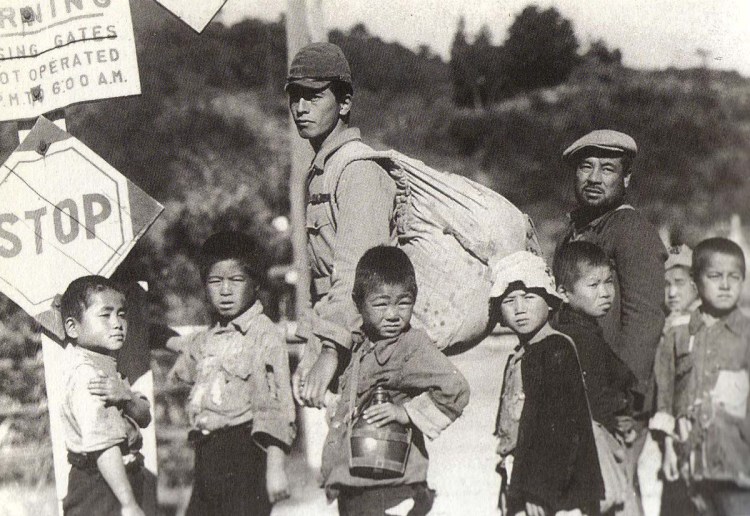
 Hiroshi Shimizu is often remembered for his talent as a director of children, something which he brings to the fore with his melancholy meditation on the immediate post-war world in Children of the Beehive (蜂の巣の子供たち, Hachi no Su no Kodmotachi). This is a destroyed society, but one trying to make the best of things, surviving in any way possible. It’s fairly clear from Shimizu’s pre-war work that he did not entirely approve of the way his country was heading. Children of the Beehive seeks not to apportion blame, but merely to make plain that no one can get along alone here, in the post-war world there are only orphans and ruined cities but that itself is an opportunity to rebuild better and kinder than before.
The scene begins with a few street urchin kids plying their trade by pickpocketing at a railway station. A bewildered soldier lingers on the platform, uncertain of what to do next but decides not to board a train after all. Like these children, he himself is an orphan and has no real place to go back to, no family waiting to greet him. The children work for a Fagin-like street thief with one leg and no scruples who has them doing all sorts of not quite legit enterprises but after all he’s just trying to survive too. Outside, the gang run into another lady who’s been trying to get a telegram through to a distant friend but isn’t having much luck. Eventually the soldier decides to travel with the boys, leading them to the only place he has left to think of as “home”, an orphanage far out in the country.
Like many of Shimizu’s films, Children of the Beehive adopts a loose road trip format as he takes us along bumpy narrow roads and mountain passes. Occasionally we hit the cities though in a matter of fact way. Hiroshima crosses our eyes as a vista of devastation, a crater where a city used to be though this is just how it is there, no sadness or repudiation, just a resignation to the way the world now looks. The children rough and tumble their way through, quickly taking to the new “paternal” figure of the kindly soldier who, despite the obvious hardships he must have faced himself, is determined to teach them to be softer in a world which only wants to make them hard.
A poignant moment occurs when the children come across a school and one of them sits underneath an open window, wishing he could go to class like the other kids. The soldier doesn’t have much education himself but also laments that boys aren’t in school. At least one of them can read and write (to the level appropriate for his age) so presumably they received some kind of education during the war but have obviously not been receiving any tuition since being orphaned. The soldier does what he can but his lessons are generally more of the life variety as he teaches the children the importance of honest labour, working together and treating others with respect. When the children encounter another group of boys who run away from them, one boy gets upset and calls them “mean” but the soldier explains that it’s not their fault, they’re just afraid so the boys need to be extra nice to show them there’s no need to feel scared.
Similarly, when they meet other orphaned street kids who seem to be nervously hanging around, partly afraid but also wanting to make contact with a large group of other children, the soldier allows them to join the gang (so long as they’re prepared to earn their keep and work alongside everyone else). There is sadness here, and darkness lurking around the edges but Shimizu refuses to judge. The soldier accepts everyone as they are but tries to teach them by example. When the ragtag bag of displaced persons finally reaches its destination no one is left behind. Everyone is invited into this new family built out of the ruins of a defeated society.
Shimizu made good on his progressive ideals. The kids in the movie aren’t actors but actual war orphans whom Shimizu did indeed take in and educate later even going so far as to open an orphanage. Shimizu believes in the essential goodness of ordinary people and that small gestures of personal kindness elevate the world around them, provoking kindness in others and ultimately making the world a more bearable place even if they create no great social change. When the group finally arrives at the children’s home, the boys’ (and they do all seem to be boys, no word on what happens to female war orphans) voices throng like a swarm of busy bees, an apt metaphor because this is a place of intense industry where gentle flowers are pollinated with the simple power of love in the hope of growing a better, kinder society built on mutual support and acceptance.
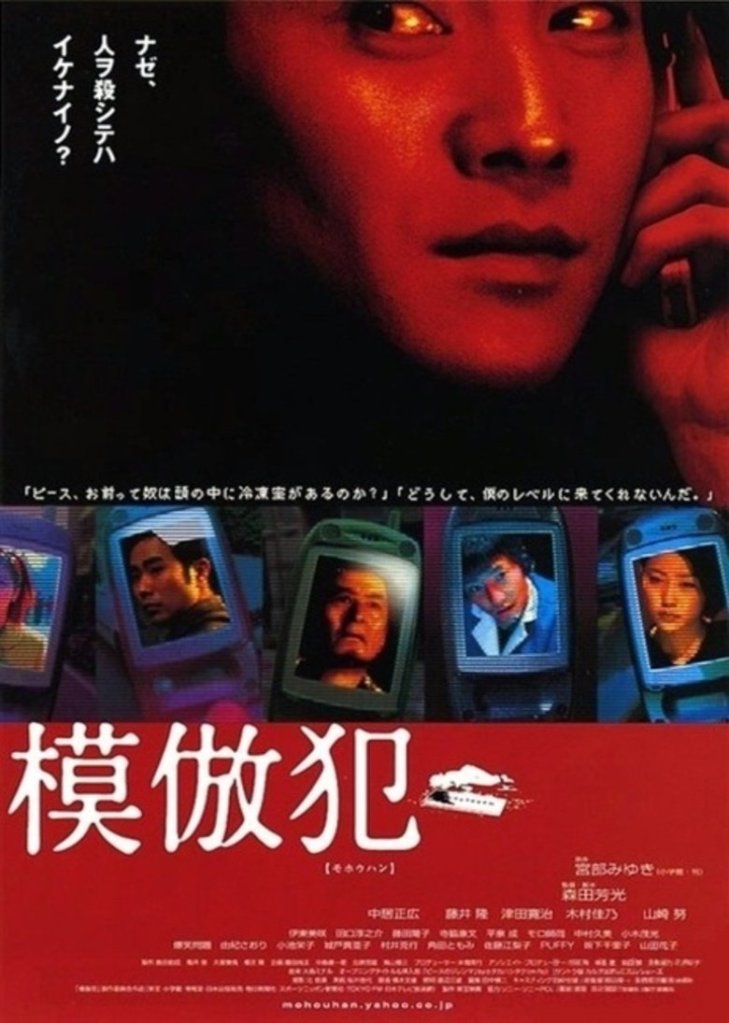 Yoshimitsu Morita had a long standing commitment to creating “populist” mainstream cinema but, perversely, he liked to spice it with a layer of arthouse inspired style. 2002’s Copycat Killer(模倣犯, Mohouhan) finds him back in the realm of literary adaptations with a crime thriller inspired by Miyuki Miyabe’s book in which the media becomes an accessory in the crazed culprit’s elaborate bid for eternal fame through fear driven notoriety.
 1973 is the year the ninkyo eiga died. Or that is to say, staggered off into an alleyway clutching its stomach and vowing revenge whilst simultaneously seeking forgiveness from its beloved oyabun after being cruelly betrayed by the changing times! You might think it was Kinji Fukasaku who turned traitor and hammered the final nail into the coffin of Toei’s most popular genre, but Sadao Nakajima helped ram it home with the riotous explosion of proto-punk youth movie and jitsuroku-style naturalistic look at the pettiness and squalor inherent in the yakuza life – Aesthetics of a Bullet (鉄砲玉の美学, Teppodama no Bigaku). This tale of a small time loser playing the supercool big shot with no clue that he’s a sacrificial pawn in a much larger power struggle is one that has universal resonance despite the unpleasantness of its “hero”.
 Yusuke Iseya is a rather unusual presence in the Japanese movie scene. After studying filmmaking in New York and finishing a Master’s in Fine Arts in Tokyo, he first worked as model before breaking into the acting world with several high profile roles for internationally renowned auteur Hirokazu Koreeda. Since then he’s gone on to work with many of Japan’s most prominent directors before making his own directorial debut with 2002’s Kakuto. Fish on Land (セイジ -陸の魚-, Seiji – Riku no Sakana), his second feature, is a more wistful effort which belongs to the cinema of memory as an older man looks back on a youthful summer which he claimed to have forgotten yet obviously left quite a deep mark on his still adolescent soul.
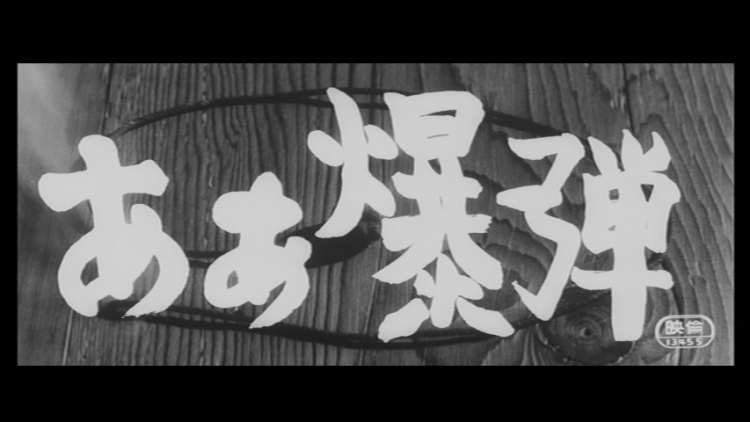 Being stood up is a painful experience at the best of times, but when you’ve been in prison for three whole years and no one comes to meet you, it is more than usually upsetting. Sixth generation Oyabun of the Ona clan, Daisaku, has made a new friend whilst inside – Taro is a younger man, slightly geeky and obsessed with bombs. Actually, he’s a bit wimpy and was in for public urination (he also threw a firecracker at the policeman who took issue with his call of nature) but will do as a henchman in a pinch. Daisaku wanted him to see all of his yakuza guys showering him with praise but only his son actually turns up and even that might have been an accident.
 The somewhat salaciously titled Black Kiss (ブラックキス) comes appropriately steeped in giallo-esque nastiness but its ambitions lean towards the classic Hollywood crime thriller as much as they do to gothic European horror. Directed by the son of the legendary father of manga Osamu Tezuka (not immune to a little strange violence of his own) Macoto Tezuka, Black Kiss is a noir inspired tale of Tokyo after dark where a series of bizarre staged murders are continuing to puzzle the police.
 Poor old Hyuk-jin is about to have the worst “holiday” of his life in Noh Young-seok’s ultra low budget debut, Daytime Drinking (낮술, Natsul). Currently heartbroken and lovesick as his girlfriend has just broken up with him, Hyuk-jin is trying to cheer himself up with an evening out drinking with old university friends. Truth be told, they aren’t terribly sympathetic to his pain though one of them suddenly suggests they all take a trip together just like they did when they were students. Hyuk-jin plays the party pooper by saying he can’t go because he’s meant to be looking after the family dog but after some gentle ribbing he relents and says he’ll come if he can get someone to look in on the puppy for him while he’s gone. He will regret this.
 Hiroshi Shimizu is well known as one of the best directors of children in the history of Japanese cinema, equalled only by the contemporary director Hirokazu Koreeda. The Shiinomi School (しいのみ学園, Shiinomi Gakuen) is one of the primary examples of his genius as it takes on the controversial themes of the place of the disabled in society and especially how children and their parents can come to terms with the many difficulties they now face.
 No names, no strings. That’s the idea at the centre of Daisuke Miura’s adaptation of his own stage play, Love’s Whirlpool (愛の渦, Koi no Uzu). Love is an odd word here as it’s the one thing that isn’t allowed to exist in this purpose built safe space where like minded people can come together to experience the one thing they all crave – anonymous sex. From midnight to 5am this group of four guys and four girls have total freedom to indulge themselves with total discretion guaranteed.
