Prison Circle (プリズン・サークル, Kaori Sakagami, 2019)

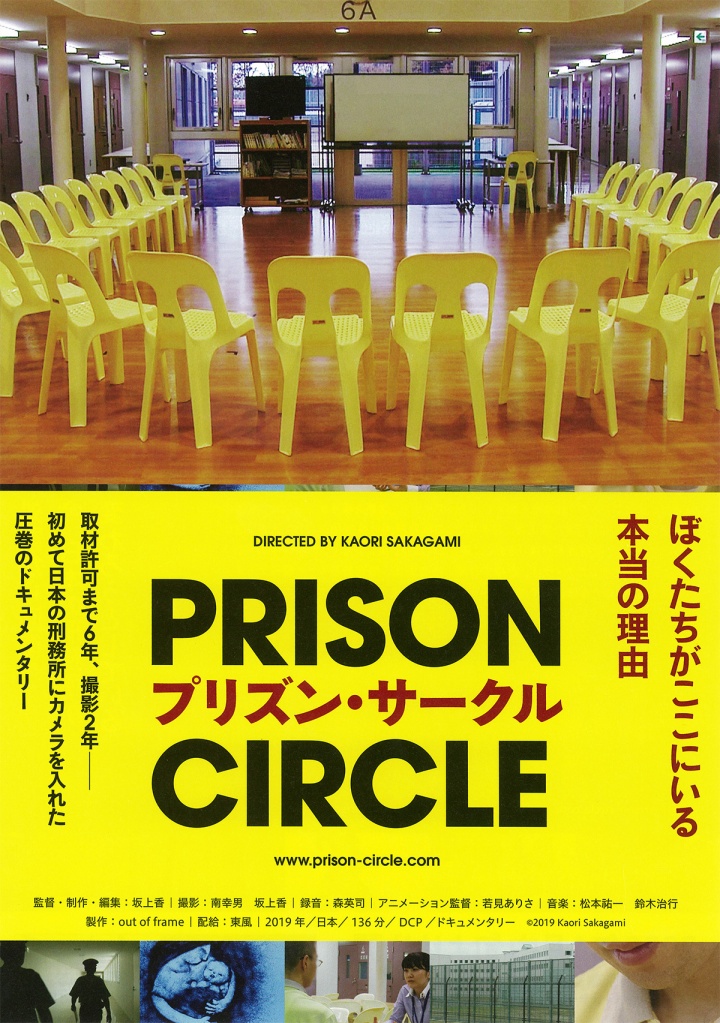
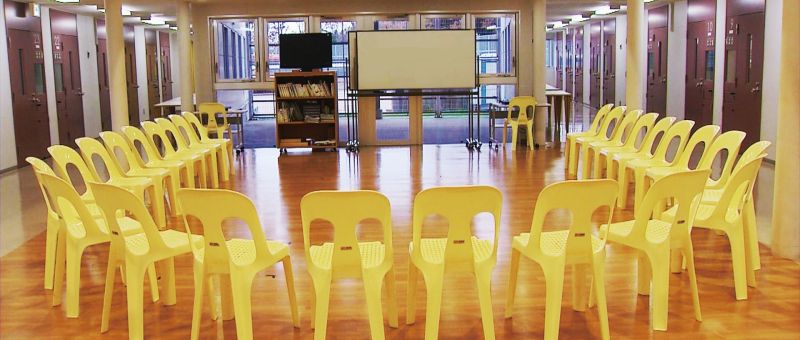
“A scar may recover but trauma never goes away” according to one of the inmates in Kaori Sakagami’s heartfelt documentary Prison Circle (プリズン・サークル). Neatly encapsulating the doc’s themes, the title refers both to the circle of chairs which represents the open group therapy sessions at the centre of the experimental rehabilitation programme on which the film is focussed, and the cycle of violence to which it alludes. Long interested in justice issues, Sakagami follows her two previous documentaries dealing with the US penal system with that of Japan, but concerns herself less with life in prison than the wider social issues which led to these men being convicted of crimes along with their future possibilities for reintegration into mainstream society. 

Sakagami apparently spent six years trying to acquire permission to shoot inside a Japanese prison before coming to an agreement with Shimane Asahi Rehabilitation Program Center which nevertheless has its limitations in that the faces of all the inmates are understandably blurred, she is always accompanied by two guards, and is not permitted to interact with prisoners or anyone working in the prison outside of a few direct interview sessions. Apparently inspired by Sakagami’s US documentary Lifers: Reaching for Life Beyond the Walls, the Shimane programme is the first and only of its kind in Japan shifting the focus away from punishment towards rehabilitation supporting around 40 men through a therapeutic treatment centre (TC) which attempts to help the prisoners understand the reasons for their crimes, empathise with their victims, and eventually return to mainstream society. According to the closing text the programme has been successful in reducing the rate of recidivism among its graduates in comparison with those released from a regular prison. 

In order to qualify, inmates must have the will to change, have no underlying mental health conditions, and be serving at least six months. The prisoners are also described as low risk though many of those we meet have been convicted of violent crimes including those which involved a death. Operating as a small bubble within a larger facility, the TC shares many of the rules and regulations with the wider population in that inmates are expected to raise their hand to ask permission of the guards any time they want to do something, but unlike other blocks are permitted to walk around unsupervised and sleep in “rooms” rather than “cells”. Prisoners engaging in the programme are also partially exempted from mandatory labour requirements while required to participate in the group sessions that are at the core of the TC. 

Following four men over two years, Sakagami finds a fatalistic similarity among their stories despite the differences in their offences, painting their crimes as a cry for help and direct result of childhood trauma. Each of the men who are now in their 20s comes from a difficult family background and experienced abuse, neglect, and bullying which is, the film seems to suggest, the root cause of their lawbreaking. The first of the men, Taku, was abandoned by his abusive father into a children’s home and thereafter left without support as a young man leaving care with nothing to fall back on. Encouraged to be open, he relates his embarrassment in revealing that even as a grown man he often longs to be hugged he feels because his parents never held him when he was a child. The other prisoner reveals he feels something similar, and other of the men admit they fell into crime in part because they wanted to stay connected to something even if it was delinquent kids in place of a family that had already failed them. The last of the men, Ken, also explains that he ended up getting into debt in part because he was buying expensive presents for his mother and girlfriend because he feared they’d abandon him and he didn’t know how else to keep them. 

Yet the prisoners also admit to feeling little remorse, seeing themselves as victims rather than perpetrators and struggling to draw the lines between their trauma and the crimes they have committed along with the hurt they’ve caused to those around them. Through therapy and role play sessions, the prisoners learn to empathise with each other as well as themselves as they begin to process their trauma in an essentially safe space. Sakagami shifts into gentle, storybook-style sand animation in order to dramatise their often horrific childhood memories linking back directly to a fairy tale written by one of the men about a boy who cried wolf because of a mysterious curse which forced him to lie, insisting that he was fine even in his loneliness as he pushed away those who had not rejected him. The boy in the fairy tale is eventually given the power to free himself after being approached by a benevolent god who gives him permission to speak his truth, emerging from his darkness into the light. Though limited by the conditions of filming and over reliant on onscreen text, Sakagami’s compassion for these men and faith in the project is never is doubt as the closing dedication “For everyone who wishes to stop the cycle of violence” makes plain. 


Prison Circle streamed as part of this year’s online Nippon Connection Film Festival. Viewers in the US will also be able to catch it streaming as part of this year’s Japan Cuts!

International trailer (English subtitles)

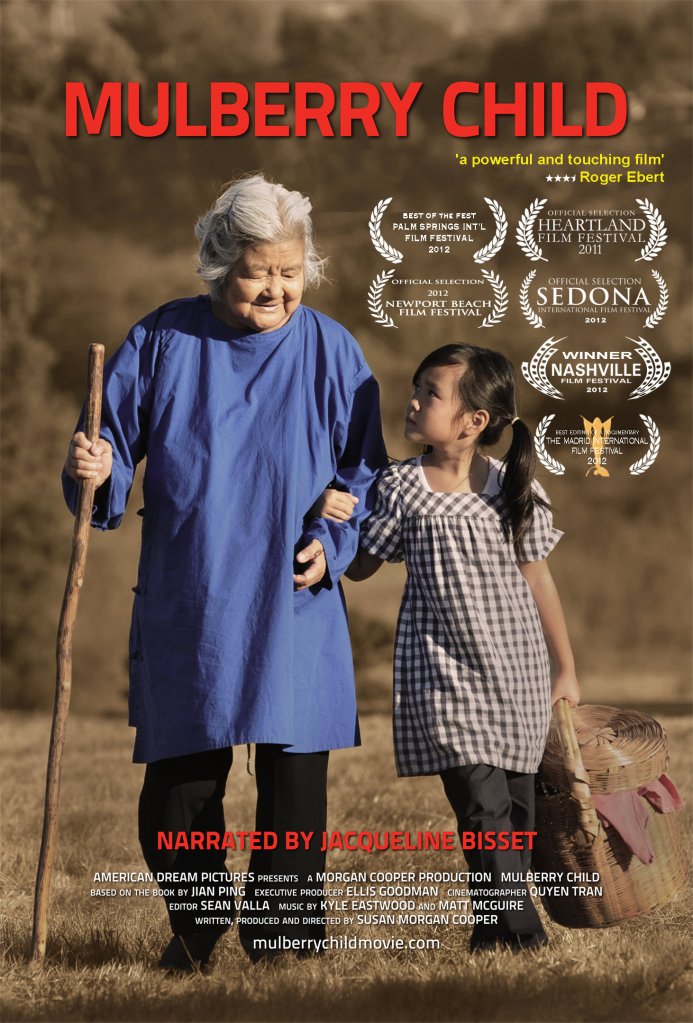
Mulberry Child (Susan Morgan Cooper, 2011)

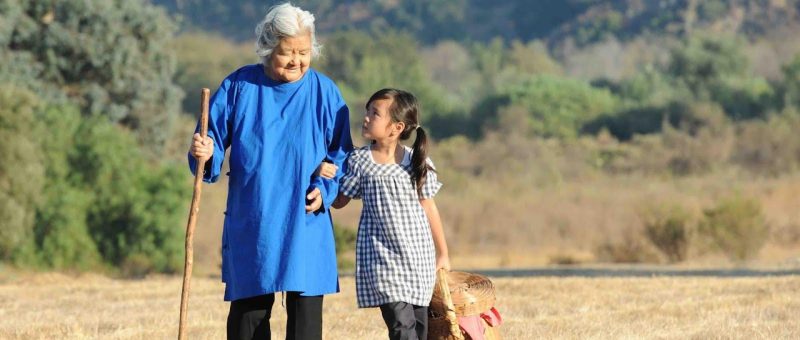
Unavoidably, it can be difficult for parents and children to understand each other. They come from different times and places, and the relationship will always be strained by the weight of conflicting expectations. All these things are true no matter where each of you were born or raised, but they are perhaps exacerbated by a degree of cultural dislocation. Author Jian Ping, the subject of Susan Morgan Cooper’s documentary/drama hybrid inspired by Ping’s memoir Mulberry Child, attributes the distance between herself and her Westernised daughter Lisa to just this fact, worried that in bringing her to America for a better life she may have made a mistake. At once silently proud of everything she has achieved, she also fears that Lisa takes her easy life for granted and has “forgotten” the hardships her family once faced during China’s Cultural Revolution. 

It’s telling in some ways that Jian asks Lisa to read her book rather talking to her directly, hoping that by learning about the brutalisation of the Mao years and the echo of its affects in her family alone might help to explain something to her about why she is the way she is. There’s no getting away from the fact the relationship between the two women is strained beyond the normal degree, Lisa keen to defend her Americanised way of life and apparently unable to understand her mother’s attitude to money which she sees merely as a means to an end rather than something to be accumulated for its own sake. That might in part be less culture than class, in that Lisa at least appears to have enjoyed a high standard of life and it’s difficult to appreciate the powerful desire for material security if you’ve never been without it, but also leads back to a conflict between the two women’s ideals of a “good” life and the disconnect in the their essential ideals. 

Born in China but living in America since she was 4 1/2, Lisa claims not to feel resentful towards her mother for having temporarily left her behind in China with her grandparents while studying abroad. Nevertheless, she is very frank in voicing hostility, devastatingly stating that she feels like a guest in her mother’s home while later recalling a solitary childhood, leaving at 15 for boarding school. She feels as if she was raised to be self-sufficient and finds her mother’s “sudden” desire for closeness odd, declaring the 1.5 mile journey to her mother’s apartment too inconvenient to make with any regularity. Lisa also feels very little connection to her family in China whom she views as quasi-strangers, while Jian perhaps feels that the fact they are family is enough to bind them no matter what. 

What Lisa comes to understand through her journey to China is less a grasp of cultural history than that there are different ways of showing love and some of them are easier to understand than others. Jian too wrestles with the same thing, recalling her childhood with her own mother whom she regarded as cold and distant, preferring her warm and kindly grandmother whose feet were bound, knowing that her grandmother too was shaped by the times in which she lived in that she was raised to be loving and affectionate but mainly in order to serve men. Jian’s mother came of age during turbulent times and saw freedom in Mao’s promises of an end to feudalism which also included an end to cruel traditions such as foot binding and the promise at least of sexual equality. But the Party demanded total loyalty, and in times such as these emotion was a liability. Jian internalised the lessons of her mother and grandmother and learned to bear her sorrow in silence with grace and fortitude. Her grandmother told her to be strong like the mulberry tree so as never to break, emotional repression as a tactic for survival. She made sacrifices for a better life for her daughter, but her daughter resents her for a perceived emotional absence and for always expecting “better” in her maternal pride which, ironically, only fuels her sense of inadequacy. 

The film closes with an emotive moment of mother and daughter bonding over shared enthusiasm for the 2008 Beijing Olympic Games with Lisa suddenly declaring that China is the future as she begins to embrace her dual heritage, but does not stop to ponder how Jian’s parents, apparently also excited about the Games, felt about the modern China as those who had been among the more fervent supporters of a now abandoned Maoism. Nevertheless, Mulberry Child proves that greater intimacy can be forged only through a process of mutual understanding. Still sounding unconvinced, Lisa closes with the affirmation that they are at least “starting the process” as mother and daughter reflect on the legacies of trauma national, historical, and personal.


Mulberry Child is available to stream via Amazon Prime in the US and UK.

Trailer

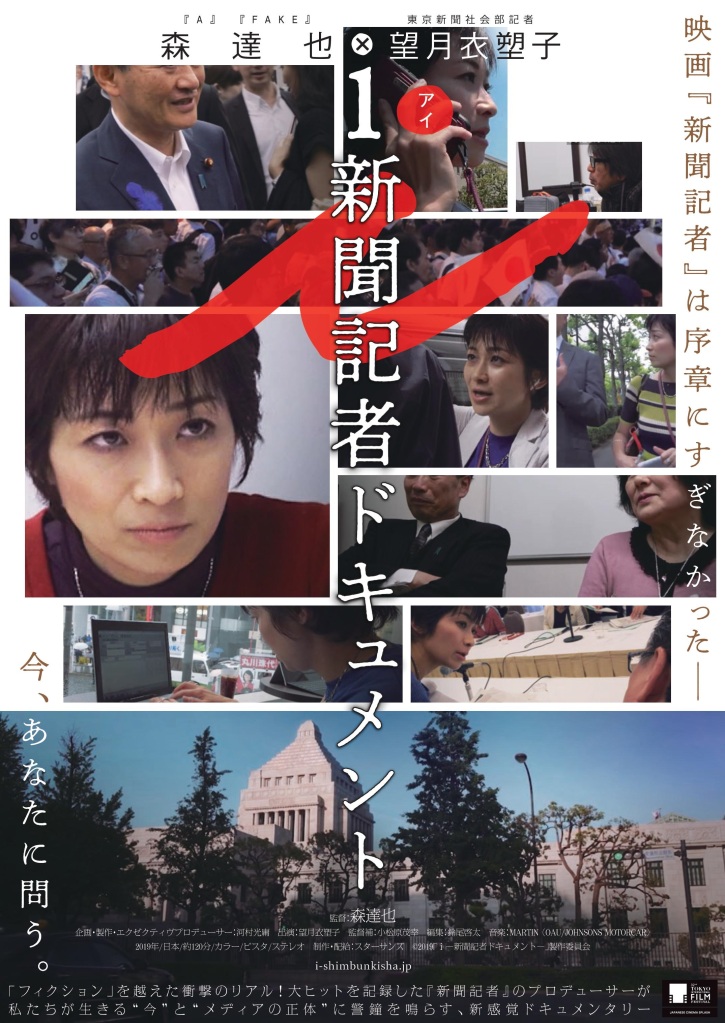
i -Documentary of the Journalist- (i-新聞記者ドキュメント-, Tatsuya Mori, 2019)

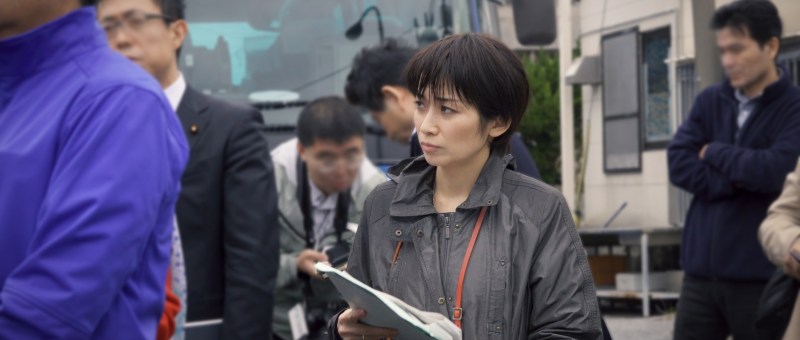
“I’m not obliged to answer you” Chief Cabinet Secretary Yoshihide Suga irritably tells a journalist part way through a press briefing. It begs the question, if you’re not willing to be interrogated then what are the briefings really for? Something which unflappable reporter Isoko Mochizuki, subject of Tatsuya Mori’s documentary i -Documentary of the Journalist- (i-新聞記者ドキュメント-, i -Shimbun Kisha Document-) makes a point of asking but of course receives no reply. Reporting for Tokyo Shimbun, Mochizuki has earned a reputation for being “troublesome”, refusing to let politicians off the hook without getting a proper answer. This is of course what a reporter is supposed to do, she’s only doing her job in holding those in power to account in the name of the people, but Japanese politicians are used to deference from journalists who pull in their punches in fear of losing access. She is also the author of the book which inspired last year’s box office smash political thriller The Journalist in which a dogged reporter finds herself an unlikely ally of a conflicted bureaucrat who is minded to blow the whistle on a governmental land scandal. 

As we see, Mochizuki’s everyday life is nowhere near as glamorous or sensational. In fact, Mori struggles to keep up with her as she finds herself constantly on the move dragging a small suitcase and large tote bag all around town while displaying an ironic tendency to get lost trying to exit official buildings. Meanwhile, none of the people she attempts to visit for comment on the relocation of an SDF facility in Okinawa is in when she calls and, again, she has trouble gaining access to the building in order to leave them a note. 

Access, as we soon realise, is the pressing issue. Mochizuki is a well known reporter for a major paper so it would not be politically expedient to have her removed from the room, but even so the powers that be do their best to obstruct her ability to gain answers, firstly by having an usher loudly instruct her to get to the question while she patiently tries to make her point. It amounts to a kind of game. Mochizuki knows Suga will issue a non-reply, insist that the government is acting in accordance with regulations while refusing further comment, and so is using the question to raise awareness of the issue which necessarily takes time in providing context. They then introduce an unofficial policy restricting Mochizuki, but no other reporter, to two questions only to prevent her pressing her point, before escalating matters by crudely issuing an open directive to journalists to avoid basing their comments on “fake” information, attempting to invalidate her line of questioning by implying it is partisan and offered in bad faith. 

The problem is partly that, as Mori is keen to suggest, the system is rigged because of press complicity with government. We learn that the Abe administration, which has long been beset by scandal, has been keeping a stranglehold on the official press club since it took office in 2012. Mori himself tries to get access to briefings to film Mochizuki but is told that it is almost impossible for freelance journalists to gain approval, while a visit to the Foreign Correspondents’ Club reveals that it is no easier for international journalists who may gain access but are not generally given the opportunity to ask questions nor can they speak directly to members of government whom, it is said, are not terribly interested in Japan’s overseas reputation. Papers afraid of losing their spot in the room avoid directly criticising the government, while the rightwing press is content to do the government’s bidding such as in its vilification of the Kagoikes, the couple at the centre of the Moritomo Gakuen scandal in which Prime Minister Abe’s wife was herself implicated, or its attempt to smear a whistleblower on a possibly corrupt sale of land for a veterinary school to an old friend of Abe’s. 

For those reasons while other journalists and politicians may be sympathetic to Mochizuki’s cause in private she receives little support in the room. An increased profile and persistent harassment campaign also brings out the cranks including a death threat from a man who uses a word many would regard as a racial slur to brand her a North Korean spy. The people, however, approve organising a demo in support outside the Diet building insisting on press freedom and government accountability. The title may take things too far in its emphatic “I”, the reporter is not the story, but advocates for an end to the conformist culture of deference to power in which journalists willing to ask difficult questions will no longer be a “troublesome” aberration but the welcomed norm. 


i -Documentary of the Journalist- streamed as part of this year’s Udine Far East Film Festival. Viewers in America will also have the opportunity to catch the film when it streams as part of this year’s Japan Cuts.

Original trailer (no subtitles)

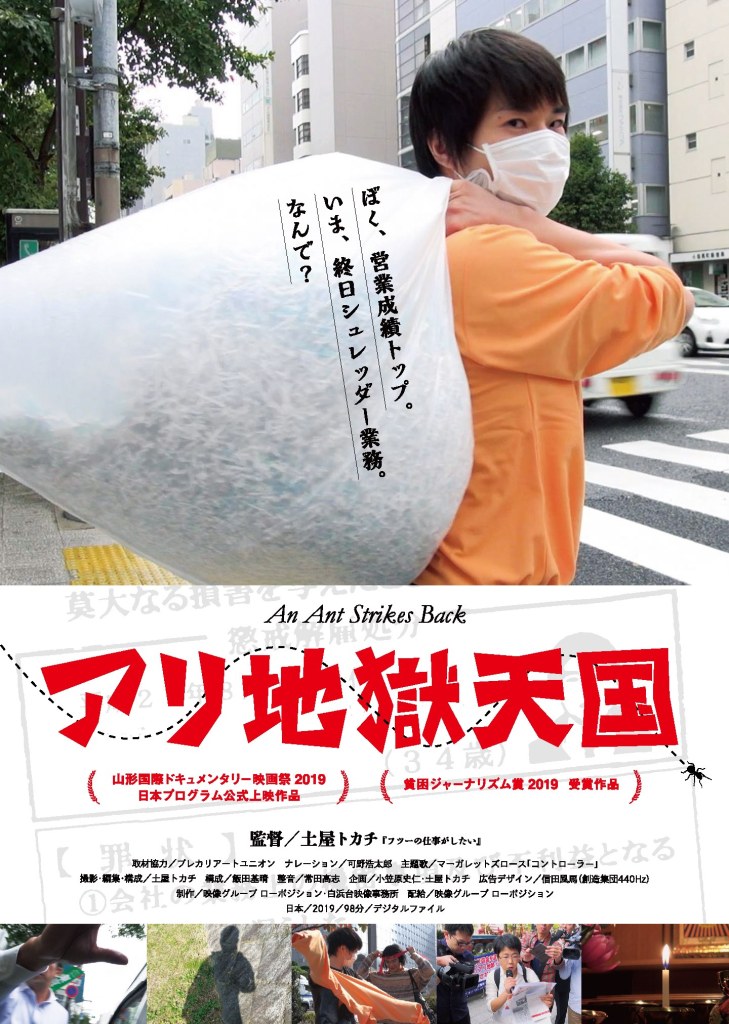
An Ant Strikes Back (アリ地獄天国, Tokachi Tsuchiya, 2019)

During Japan’s post-war economic miracle, death from overwork became such a prevalent phenomenon that it generated its own grim buzzword, “karoshi”. Sadly, karoshi is still with us today as evidenced by the death of a young woman back in 2015 which hit the headlines when it was revealed that she had taken her own life after being forced to log over 100 hours of overtime at top advertising firm Dentsu in the months before she died. Despite comparatively advanced labour law, a culture of shame and entrenched corporate loyalty often prevent employees from speaking out about exploitative workplace practices, allowing unscrupulous bosses to flout the rules with impunity. So-called “Black Companies” bully and manipulate employees into accepting poor pay and conditions rather than risk dismissal or defacto blacklisting. 

Following the suicide of a close friend who took his own life because of workplace bullying, director Tokachi Tsuchiya documents the case of another young man who decided to fight back after being awakened to the fact that the practices at his company were not fair, normal, or acceptable but cynical and exploitative. Nishimura, known for the moment under an alias, left a job as a systems engineer to work at one of Japan’s best known moving companies because it promised a good, stable salary and he wanted to get married. What he discovered, however, was that the advertising was somewhat disingenuous. After working hard and getting a promotion to the sales department and subsequently into management, he was expected to work 19-hour days. His relationship with his wife suffered to the degree that she eventually left him. They later reconciled, but it became clear that his working life was not healthy or sustainable. He took a demotion back to sales and remained a top employee. 

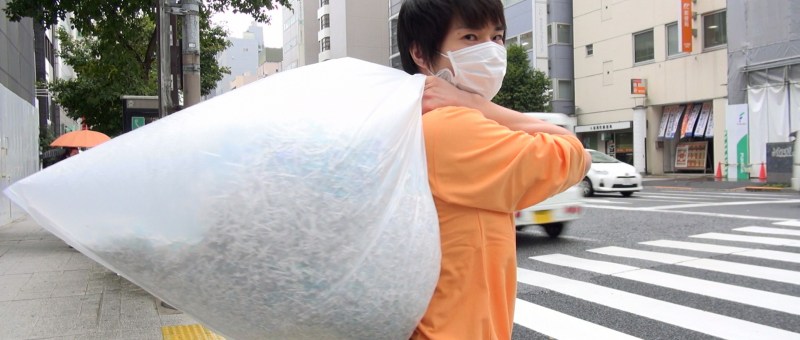
Disaster struck, however, when he was involved in a fatigue-induced traffic accident while driving a company car. The moving company, like many other corporate entities, is run like a shady cult with its own idiosyncratic corporate policies that are often in contravention of standard employment law. After damaging the company car, Nishimura is liable for paying compensation with a significant sum of money due to be docked from his pay. Thoroughly brainwashed, he signed for the debt without thinking, only questioning his liability when his wife handed him an article about another employee in much the same position who’d turned to an external union for help. Hearing the patient explanations from the union advisors who tell him he doesn’t need to pay, Nishimura is suddenly awakened to the fact he’s been exploited and decides to stand his ground. The company, however, fight fire with fire. After finding out he’s involved with the union, they demote him to another department with a far lower salary before going further and forcing him to shred documents all day long while wearing an orange polo shirt that marks him out as a special employee. 

This kind of treatment is a common method of constructive dismissal practiced by Japanese companies in which they force “difficult” employees to perform boring, menial, or degrading tasks while separating them from the group in the hope that they will eventually quit of their own accord so the company won’t be liable for any severance benefits they would otherwise be entitled to. Nishimura, however, does not quit. He throws himself into union activities and views sticking it out as a way of sticking it to the man. What he wants is his sales job back, but he also wants to prove to other employees that the way they’re being treated isn’t normal and that they can resist by joining a union and presenting a united front against exploitative employers. 

Looking back on his recruitment process, Nishimura notices several red flags he did not pick up on at the time.The kinds of people the company never hire include those who are familiar with labour law, people who’ve run businesses, people who’ve worked in law enforcement, and “communist” lawyers. Along with that, they apparently don’t hire “third country nationals” which seems to be a euphemism for Zainichi Koreans, illegal discrimination from a managerial team former employees describe as being vehemently racist as well as prejudiced against burakumin and other groups considered undesirable under a decidedly outdated idea of feudal social hierarchy. Nishimura feels his demotion was not so much to do with the accident, but with his decision to join the union in another breach of conventional employment law. 

The managers attempt to silence the female union negotiator by screaming misogynistic slurs, caught on camera harassing a union rep handing out fliers while using a loudspeaker outside the building. They add Nishimura’s photo to a newsletter as an example not to be followed and even go so far as to send threatening letters to his family members while he is on leave to attend his mother’s funeral. Yet Nishimura bravely refuses to give up, doggedly doing his shredding job as an act of resistance while holding their feet to the fire in the courts. Nishimura’s wife had described him as “brainwashed” in his early devotion to the company which he had earnestly served, wanting to get on and be successful, forcing other employees to pay the onerous fines that he eventually refused to pay because it never occurred to him to question the company line. That questioning is precisely why he continues to resist, so that others will know that collective action really works and that they don’t have to be complicit in their own exploitation. One tiny worker ant said no and the company trembled, think what a thousand tiny worker ants could do together.


An Ant Strikes Back is available to stream worldwide until June 14 as part of this year’s online Nippon Connection Film Festival.

International trailer (English subtitles)

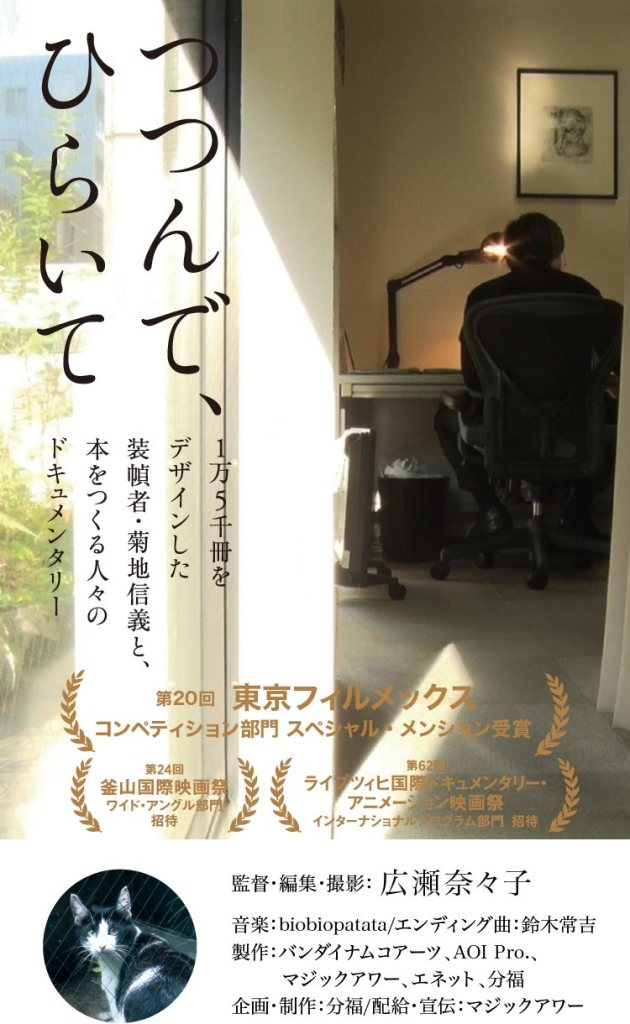
Book-Paper-Scissors (つつんで、ひらいて, Nanako Hirose, 2019)

Particularly at the present moment, it’s near impossible to ignore the fact that we live in an increasingly digital world. We value speed and convenience, and perhaps we’ve begun to lose a sense of aesthetic pleasure in the objects which we consume and then all too often discard. When we think of a book, then we think of the words and words do not necessarily have to be attached to any one thing to have meaning. But a book is also an object, it can have weight and import entirely separate from the words which it contains and, indeed, perhaps some of us are guilty buying them especially for their aesthetic qualities with little to no intention of ever opening the covers. 

The subject of Nanako Hirose’s documentary Book-Paper-Scissors (つつんで、ひらいて, Tsutsunde, Hiraite), Nobuyoshi Kikuchi, is now in his 70s and over the last 40 years been one of Japan’s premier book designers. You could say that his is a dying art, at least we’re always hearing that traditional bookshops are struggling and e-books are on the rise (though the trend seems to have reversed in the last few years), but Kikuchi finds himself still very much in demand working with some of Japan’s biggest publishing houses as well as smaller indie endeavours producing more esoteric affairs such as poetry, philosophy, and religion. 

An old soul, Kikuchi frequents the same Showa-era kissaten he’s patronised for most of his working life the advent of which coincided with its opening, joking that he treats it almost as an extention of his office. He favours pour over coffee even at home where he pays close attention to the quality of the cup to enahance the flavour while playing records on a vintage windup gramophone. Which is all to say, he values the totality of experience above that of the essence. For him, words are living things which exist outside of human beings and the book is their physical body. 

His approach is as much tactile as it is visual. He describes the feeling of the book in the hand, reminding us that this is an object intended to be held and read and that the design must contribute to the experience. In this case and others, the intention is sensual, Kikuchi wants the cover to mimic the texture of human skin. He selects his paper with the utmost care not only for its quality but its effect. When technology limits his first choice he finds another, but we are reminded once again that this is a dying medium in the need to conserve materials because this kind of paper is about to be discontinued by its manufacturer. 

Kikuchi offers the fact that he has no successor as one reason he has no intention of retiring, but there are those coming up behind him such as a young man, Mitobe, who was inspired by one of Kikuchi’s books to become a book designer himself. Kikuchi’s own editor on a collected edition of his writings for magazines suggests that his aestheticism is in itself a kind of reaction to the death of print, whereas Mitobe suggests his generation is also operating in opposition. Design should be simple he admits, but his generation favours the elaborate. To contradict himself, he pulls out a book which has no jacket at all, its design is fused to the endpapers, prompting Hirose to ask from behind the camera what the point of the jacket is at all. And as for that, what about the ubiquitous obi which is attached to every book. Isn’t the band there for the soulless purposes of advertising and marketing? Does it too serve an aesthetic purpose or will the reader simply dispose of it as part of the wrapping?  

Even after so much success and a decades-long career, Kikuchi claims he has no real sense of accomplishment. He thought of literature as a tool for nurturing the mind but after so many books is more aware than ever of a sense of emptiness. In any case, he prefers to think of himself not as a “creator”, but as someone who “prepares” because his is an art which necessitates interraction. His design is for others, not for himself. He has no desire to retire, but is preparing to simply fade away, feeling a responsibility to create a space for the next generation while insisting that his is a connected existence, that it’s all about the people rather than the art. Will books survive? Who can say, but they are more than just words on a page and have their own vitality thanks in no short order to Kikuchi and his expansive artistry.


Book-Paper-Scissors is available to stream in Europe until June 14 as part of this year’s online Nippon Connection Film Festival.

Original trailer (English subtitles)

Mao Mao Cool (猫猫果考试记, Zhang Yang, 2019)

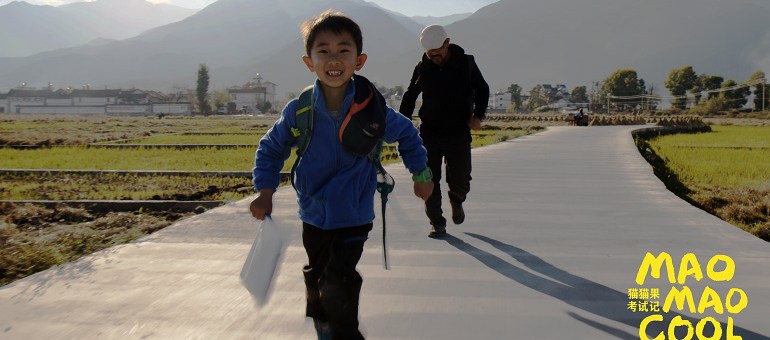
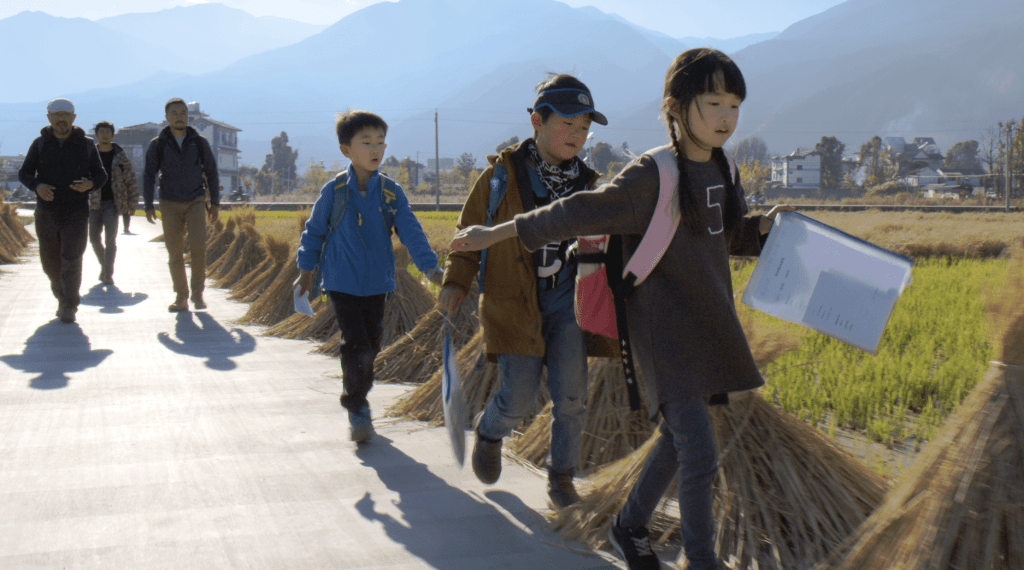
Having turned his attention to Dali in China’s Yunnan province, Zhang Yang’s third in a series of documentaries exploring the area Mao Mao Cool (猫猫果考试记, Māo Māo Guǒ Kǎoshì Jì) takes a micro view of the modern society through the trials and tribulations of one little boy, Qu Hongrui, as he tries to pass the eccentric “exam” to graduate from Mao Mao primary school which takes the form of a daylong scavenger hunt leading to an overnight camp at a picturesque river. Perhaps a look at changing educational methods in a system which is often criticised for an over reliance on rote learning and test scores, Zhang’s documentary is also a gentle exploration of the art of growing up as Hongrui finds himself at loss for a way forward when he discovers that he cannot simply insist on having his own way. 

When we first meet Hongrui, he’s on the first of his tasks which involves a trip to the local market where he is charged with shopping for the various vegetables on his list to be used later in the day. Though he is accompanied by an “observer” to make sure he’s never in any immediate danger or causing trouble to others, the purpose of the test is to force Hongrui to act independently, teaching him how to interact with shopkeepers, manage his money, and shop for himself. When he’s got everything on his list, he’s supposed to go to the next checkpoint and have his “passport” stamped so he can proceed to the next stage. 

That’s when his problems begin. The next stage is a rock climbing challenge in which the children are supposed to venture up a climbing wall and retrieve a flag with the letter they’ve been assigned. Hongrui, however, seems to be more afraid than most of the other kids and finds the wall a confusing challenge despite frequent instructions and words of support from below. Eventually he bursts into tears and begins screaming to be let down but eventually composes himself enough to be able to complete the task successfully. That’s something of a pattern which will be repeated. It seems that Hongrui isn’t very popular with his peers and is regarded as a crybaby, one girl eventually asking him “why do you like to cry so much?” after getting fed up with one of his angry episodes. 

The same thing happens again during the next challenge when he’s placed in a group with four girls and asked to blend the juices of the vegetables he collected to create new colours and make a group painting. Some of the kids want to make a blue colour and the others pink. After a quick look around the room shows them most of the other groups have gone with blue the girls lean towards pink, which upsets Hongrui to the extent that he runs back out to the examiner complaining “We’ve got a massive schism over colours”. Every time Hongrui encounters a problem, he tries to run to the grownups to sort it out, but the examiners like the observers aren’t permitted to get involved. These exercises are about socialisation and harmonious living. They’re supposed to teach the kids how to compromise and work out their differences peacefully so they can work as a team, but Hongrui still has fairly underdeveloped interpersonal skills and makes frequent mistakes when it comes to negotiating with his teammates. When he comes back from speaking with the examiner, the girls have already found a solution on their own, making a pretty purple colour that suits everyone equally. 

Hongrui’s rage and frustration lead him to make unwise decisions, telling the teacher he wants to leave the group because the girls wouldn’t listen to him even if it means he won’t get a badge for this task, only relenting when the examiner explains the entire group will fail if he leaves so his friends won’t get their lunch either. He runs into a similar problem when he’s supposed to put a puzzle together as a clue to the next checkpoint but discovers that he’s lost a piece and concludes that another girl who has far more pieces than she needs must have picked it up. The girl insists the piece was in her pack to begin with and is therefore “hers” so she won’t help him, which proves very challenging to Hongrui who feels he’s been unfairly treated. He tries to appeal to the examiners again but they aren’t allowed to help, his observer explaining that he needs to learn to negotiate with others on his own. Sadly, though it appears not to benefit her in any way to hold on the puzzle piece, the girl continues to refuse to surrender it, perhaps irritated by Hongrui’s “accusation” that she took it from him, and eventually leaves him stranded, unable to move on the next task. 

This however a primary school exam so happily Hongrui is able to continue on his journey though it might be debatable how much he’s actually learnt. Crying hot, rage-fuelled tears in the car apparently unashamed to be so emotional in front of another girl in the same position who is increasingly exasperated by his “childishness”, Hongrui is reminded that he needs to learn to control his emotions as he grows up, but does at least seem to calm down enough to cheerfully make his way towards the finish line. The kids are, by and large, alright as they learn how to live in the world and with each other, overcoming their problems together and having fun along the way.


Mao Mao Cool is represented by Fortissimo Films.

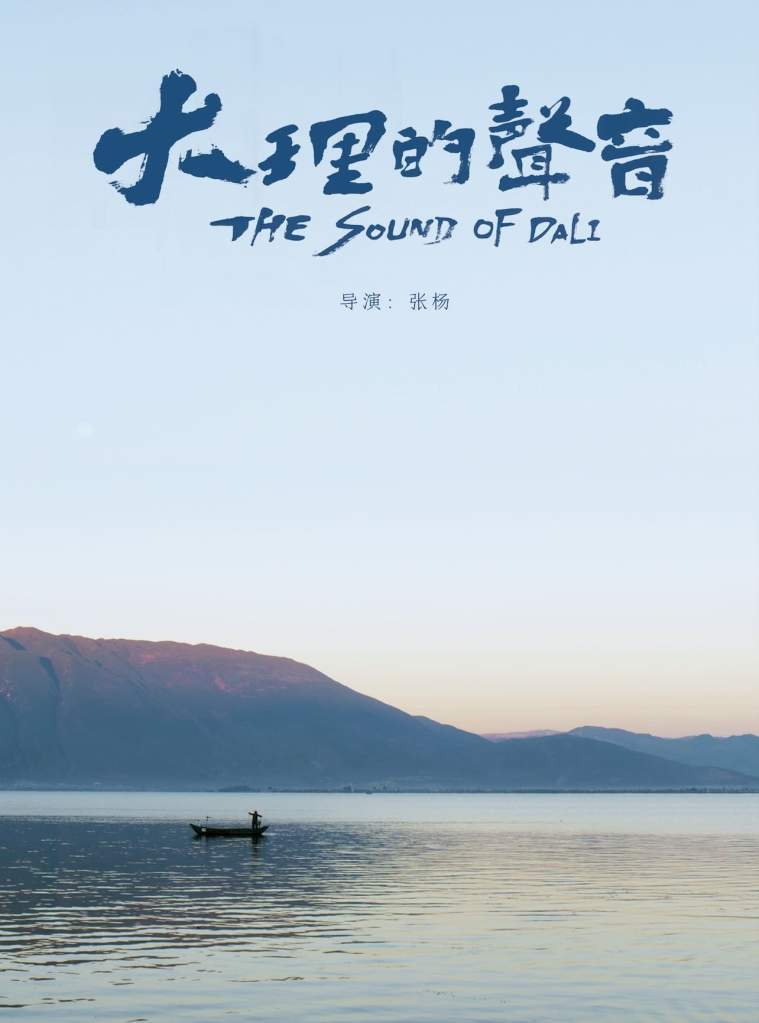
The Sound of Dali (大理的声音, Zhang Yang, 2019)

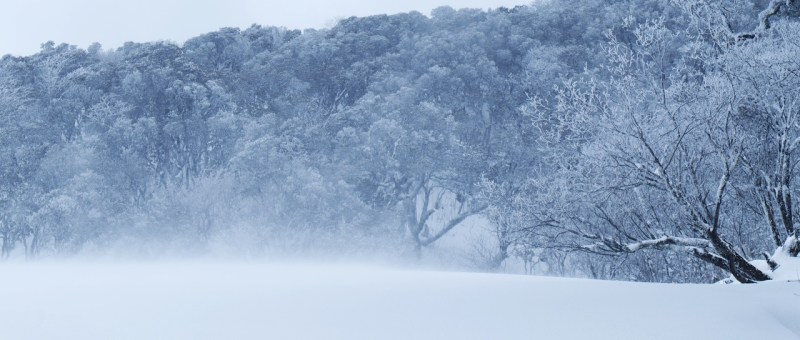
Following his portrait of an artist Up the Mountain, Zhang Yang returns to Dali for the second in a trilogy of films celebrating this small area provincial China which has become known for its beautifully preserved traditional buildings and picturesque views. As such, it has already become a draw for tourists, but Zhang’s documentaries aim to explore the area from a more local perspective. The Sound of Dali (大理的声音, Dàlǐ de Shēngyīn), as the title suggests, captures the unique soundscape of the small city through four seasons as man and nature create their own symphonies. 

With more a straightforwardly observational approach than either of the other documentaries in the series, Zhang resists narrative but shows us scenes of Dali from unexpected angles beginning with the beauty of stormy skies filled with the perhaps ominous sound of rushing wind which soon gives way to snow. Ducks flap and fly, crash landing on water, while chickens strut and bees hum. Sheep and cows graze in the fields while oxen pull carts for the farmers labouring on the land. Women plant rice and later harvest it, shaking the sheaves to release the grain and making a music all of their own. 

Zhang cuts the sound of industry into an accidental symphony as a blacksmith bends and hammers metal, builders hammer wood, and engineers pummel the ground. Old women play their looms like lyres, and master carvers scrape wood into intricate designs with tiny, expert motions. 

Meanwhile, there is music of the more obvious kind in the singing of hymns in a Christian church, worship at a mosque, and rituals conducted by the farmers to ensure a good harvest. Others attend the local temple to make Buddhist offerings for perhaps much the same reason. Traditional opera takes place in the streets while buskers too add to the joyful sound of man-made music.

Zhang is keen to show us the sound of human industry in concert rather than conflict with nature. The seasons change, the skies darken, and sometimes the sound is frightening rather than harmonious, but there is life here at a nexus of the traditional and the modern. Colourful festivals fill the streets with processions of the old gods, farming is done the traditional way, and perhaps at times the sound of human voices drowns out the birds and rustle of the trees but does not destroy them. Meanwhile, a young man sets up a stand selling artisanal coffee and people dance and sing at the local markets enjoying family life as children play happily both amid the greenery and in the pleasant city streets. The young go to discos, and couples have their wedding photos taken against the backdrop of the beautiful local scenery. 

Perhaps cheating a little, Zhang cuts from an eagle soaring majestically above the landscape to drone footage giving us a birds’ eye view as we, for a moment, become “nature” too, observing the tremendous beauty of the land in all of its luscious greenery as the waterfalls tumble almost silently below. The Sound of Dali is one of harmony and happiness as human voices and the natural world blend as one in a great symphony of life in all its glorious cacophony.


The Sound of Dali is represented by Fortissimo Films.

Mama Rainbow (彩虹伴我心, Fan Popo, 2012)

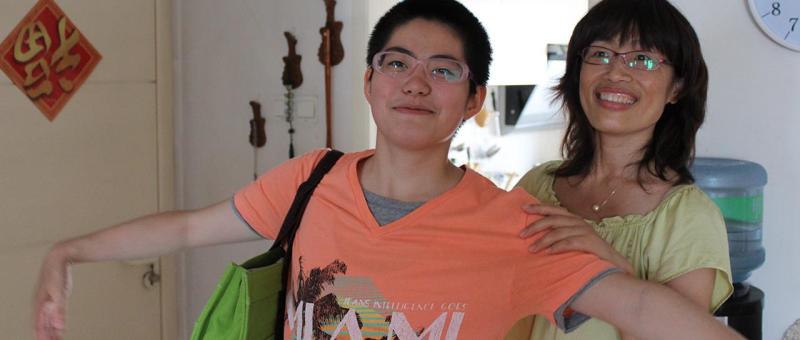
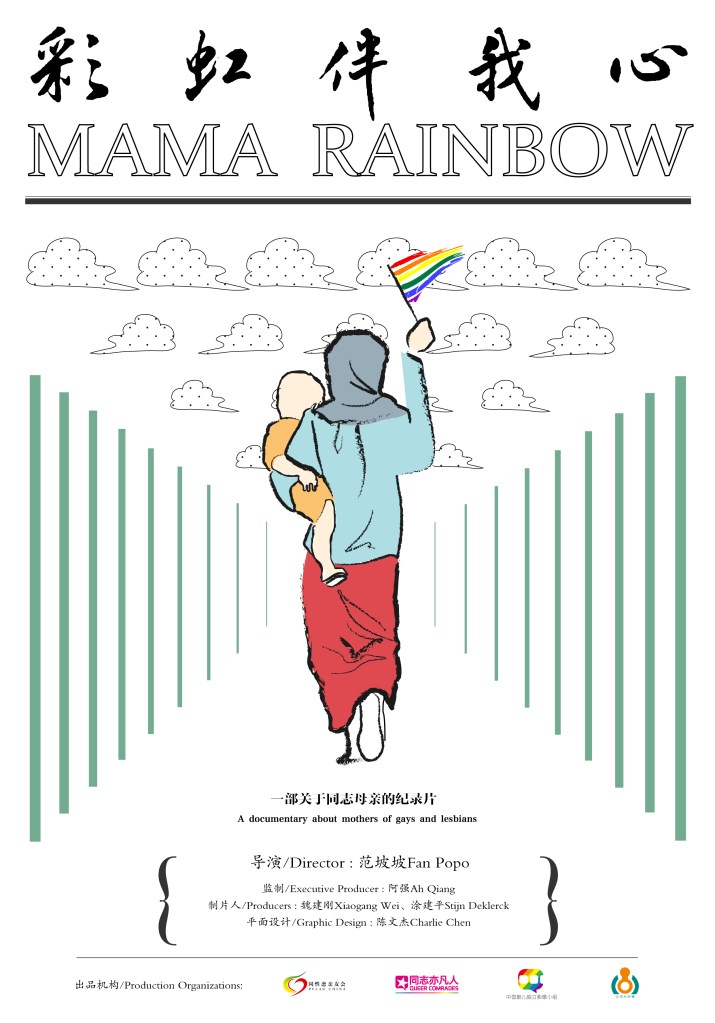
Though homosexuality is not illegal in contemporary China, it is perhaps still taboo. The notoriously strict censorship board is particularly averse to content which features LGBTQ+ themes, though many mainstream filmmakers have been able to get around the regulations with subversive allusions to same sex relationships. Times are perhaps changing. Rather than a gloomy exploration of the issues many young gay men and women face, Fan Popo’s Mama Rainbow (彩虹伴我心, Cǎihóng Bàn Wǒ Xīn) spins a tale of mass acceptance in following six mothers of gay children who, though not always so immediately supportive, have embraced their kids’ sexuality and in fact become activists themselves. 

Fan opens with a vox pop session asking members of the public about their views on homosexuality. The first few answers are predictably depressing with even young people looking embarrassed and either walking off or replying that they find the idea “disgusting”, “very bad”, “abnormal”, or “unacceptable”. Later, a few are found who think the question itself is unnecessary because they have no problem with gay people, but then asked how they’d feel if their child told them they were gay, most immediately say they wouldn’t like it though some concede there’s nothing they could do about it anyway so they’d have to just go with it while others say they’d simply “guide” them back towards the “right” direction so that they’d make “good choices”. 

One of the mothers, Mama Zhao, admits she originally thought the same way. Her son had agreed to marry a girl, but after reading book by another influential Mama decided that he couldn’t, committing himself to living an authentic life as an openly gay man. She tearfully admits that though she has accepted it herself, she is still ashamed to explain to other people, brushing off questions about why her son is still single with dull platitudes rather than simply telling them that he is gay. 

After attending talks by the woman who wrote the book that so affected her son, Mama Wu, Mama Zhao began to understand a little better, realising that the most important thing is that her son is happy which he certainly wouldn’t be if he forced himself to marry a woman to fulfil a social ideal. Education seems to be the key. Meiyi didn’t know much about homosexuality and thought it was something that was popular abroad that people did because it was trendy. When her daughter became close with a high school friend who ended up moving in with them, she began to see things differently and got to know a few other gay kids who she thought were all fantastic. She jokes that her daughter’s girlfriend “brainwashed” her by taking her to LGTBQ+ events, while the other girl’s own mother is also very supportive, actively empathising with her daughter’s choices right down to appreciating her taste in other women. 

Sister Mei and her son, meanwhile, are a cheerful and exuberant double act. She moved into the city to live with him in fear that he might need help locating other gay men (a move which seems like it should be counter productive but probably isn’t given the open nature of their relationship) and has now thrown herself into activism as a member of China’s PFLAG, becoming a surrogate Mama for all those who’ve been rejected by their families or just need to hear a supportive voice. Likewise, Mama Jasmine was as cool as could be when her daughter, after years of bringing female “classmates” over to dinner, finally came out and was supportive in a lowkey way until approached by Ah Qiang, the founder of PFLAG in China, to become a local organiser. 

Mama Wu, the woman who wrote the book that changed the mindset of Mama Zhao’s son and convinced her that his happiness was all that really mattered, speaks to another young man who reveals he hasn’t come out to his mother (assuming she doesn’t see the documentary) because she is in poor health and he worries that she just won’t be able to take the shock. Mama Xuan, who suspected her son was gay but hoped he’d grow out of it, tearfully takes to the stage to reveal that he has suffered violence and discrimination because of his sexuality, beaten up at school but too afraid to get help in case his parents find out why he was attacked, and subsequently blacklisted and expelled leaving him with a blemish on his record when the kids who attacked him had their views reinforced by the tacit approval of the school authorities. There is obviously work still to be done, but there are plenty of people willing to do it, because at the end of the day all they want is for their kids to be safe and happy and enjoying exactly the same rights as everyone else while surrounded by love and acceptance. 


Mama Rainbow is currently available to stream via Vimeo as part of Queer East’s online edition with all proceeds going to support independent cinemas.

Original trailer (English subtitles)
Yellow Ribbon (당신의 사월, Ju Hyun-sook, 2019)

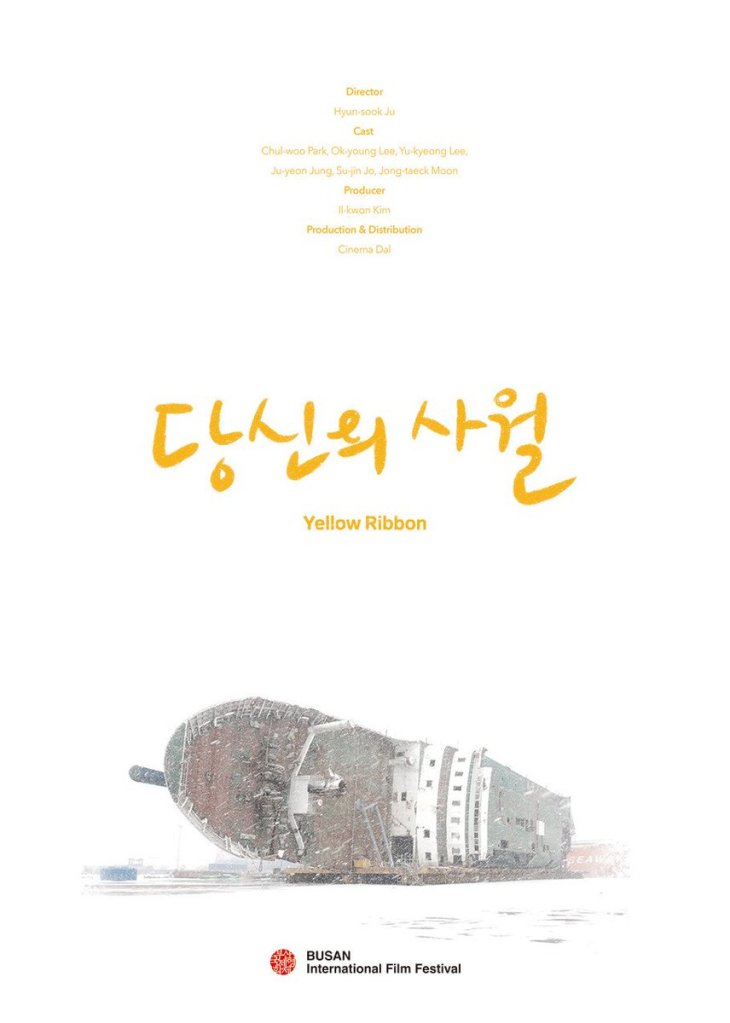
On 16th April, 2014, a ferry en route from Incheon to Jeju Island sank taking the lives of 304 passengers many of whom were high school students on a school trip. The Sewol Ferry Disaster went on to have wide-scale political ramifications, eventually feeding into the discontent with the government of Park Geun-hye who, it was discovered, had been uncontactable for seven hours during the height of the crisis, later refusing to account for her whereabouts. Ju Hyun-sook’s documentary Yellow Ribbon (당신의 사월, Dangsin-eui Sawol) is, in some senses, usual in that it follows not those directly bereaved by the tragedy but those caught on its edges, ordinary men and women who find themselves haunted by national trauma. 

What each so clearly recalls is the sense of helplessness that they felt as bystanders watching from the shore. All of them believed the passengers would be rescued, no one envisioned a tragedy unfolding, and so they were lulled into a false sense of security by the media’s mistaken reports that everyone had been saved. Fisherman Lee Ok-young was among the first to realise that the information being given out by the media was incorrect when he sailed out towards the ferry and saw the shadows of those trapped inside. In fact, many of those who were rescued from the wreck were saved by good samaritan boats who came to help, Korea’s coastguard didn’t show up until 40 minutes later. Ok-young is, however, among the most directly affected, later finding the body of one of the students caught on a rope he was using for seaweed farming. 

Ever present in the background, usually taking photos, is the young woman’s father – a constant reminder of the scale of the tragedy. It was dignity of the families which first struck Park Cheol-woo, the owner of a coffee shop in Korea’s political centre near the presidential residence of the Blue House. Hearing that the families were due to make a visit, he felt very strongly that they must be protected. Jung Ju-yeon, a woman in her 50s working in human rights education, felt something much the same and decided to participate in the protests alongside the bereaved parents in a show of solidarity. 

The government, meanwhile, continued to pursue its authoritarian line allowing pundits to brush off the disaster as no different from a traffic accident while trying the shame the protestors into silence. Hoping to blacken his name, the conservative press discredited a hunger striking father by bringing up the fact he was divorced, as if lying the tragedy at his own feet in an attempt to deflect the government’s responsibility for the failure to protect the children. The sense of abnegated responsibility is something which continues to weigh on teacher Jo Su-jin who finds herself meditating on the selfless teachers who sacrificed their lives trying to save their students. She wonders what she would have done in their position, reflecting on the choices which must have passed through their minds knowing that they too had family waiting for them.  

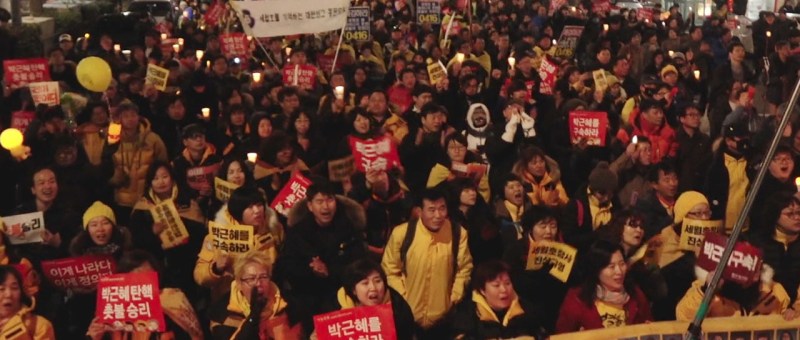
Park Cheol-woo wishes he could forget, but is haunted by the spectre of the tragedy, as is the husband of Jung Ju-yeon who was hired to create a series of illustrations and forced to relive the pain and suffering of all who were involved. The weight of indignation eventually fed into the Candlelight Protests which ultimately brought down the government of Park Geun-hye but the feelings of helplessness have not dissipated because justice has not been served and too many unanswered questions remain. There are no explanations for the confluence of circumstances which allowed the tragedy to happen, nor for the failure of authority which proved itself incapable of protecting its citizens.

Yet there are signs of hope. Lee Yu-kyeong was a high school student herself when the tragedy occurred, watching helplessly on a TV screen as hundreds of other kids just like her lost their lives. They trusted the authorities to protect them and they did as they were told, but the authorities let them down. Lee Yu-kyeong is now an archival studies student, hoping to contribute by honouring their memories, making sure they are never forgotten so that nothing like this ever happens again. Yellow Ribbon is a document of national trauma, but also perhaps of healing as those touched by tragedy attempt to look forward by building a safer society founded on a sense of mutual protection. 


Yellow Ribbon screens in Amsterdam on March 6/8 as part of this year’s CinemAsia Film Festival.

Trailer (English subtitles)
Introduction by director Ju Hyun-sook from the Busan International Film Festival (activate English subtitles by pressing subtitle button)

The River in Me (大河唱, Ke Yongquan, Yang Zhichun, He Yuan, 2019)

Can the old arts survive in the modern world or are they destined to fade away with the passing of time? Folk singer Su Yang is determined to preserve them, if only by assimilation, blending traditional folksong with Western rock to bring it into the modern era. While some complain that Su’s singing is inauthentic, he argues that authenticity, in that sense at least, isn’t the point. The only thing that matters is whether people like it and can feel something of themselves and of ages reflected in the ancient rhythms. 

Now a successful musician, Su is not originally from the country but moved to rural Yinchuan, Ningxia in Northwest China with his parents when he was seven. He later says it was the music of Yinchuan which touched him not because it is the greatest of cities but because it’s the one which most intersected with his life. Through his travels, Su meets up with a series of other practitioners of traditional arts mostly also from Ningxia and the surrounding area as he and they dwell on survival. 

Itinerant singer Liu Shikai makes a living playing the Sanxian, but fewer and fewer people are interested in listening while in private he feels himself lonely as a twice widowed father of three, especially as his youngest daughter has now married leaving him at home alone. Su laments something similar, reflecting that there’s no New Year for him. His festivities will consist of working and drinking, while his family can see him on TV from the comfort of their homes. Su’s brother complains endlessly about the annual Spring Gala (while watching it anyway), finding the show totally lacking in any kind of substance and becoming more boring by the year. His astute daughter, however, points out that his criticism is unfair or at least stating the obvious because the Spring Gala reflects “youth culture” which is perhaps flashy and superficial but equally is not intended to appeal to middle-aged men. Su appears on the program himself but might agree, seeing as it’s his mission statement to put a little soul back into the mainstream by bringing the rhythms of the Yellow River to contemporary society. 

Back in the country, meanwhile, folksongs are serving the same purpose they always have, expressing joy in the natural world and bringing communities together through choral solidarity. Then again, Hua’er singer Ma Fengshan, sometimes finds himself at odds with his. A member of the muslim minority, his house is filled with religious texts that he is unable to read because they are in Arabic which he doesn’t speak. Some have told him that he should spend more time on religious study, but all he wants to do is sing, while others actively oppose Hua’er for its “salacious” qualities, aware the songs can be used as a form of flirtation and convinced that they have the potential to cause marital breakdown and infidelity. In spite of everything, Ma keeps singing and is eventually joined by other members of his community wearing traditional dress to celebrate Hua’er music. 

For puppeteer Wei Zongfu, however, the future seems far less bright. Now ageing himself, he’s accepted that his descendants won’t want to succeed him and there are few people interested in learning shadowplay. The leather puppets crafted by his grandfather are so precious to Wei that he didn’t even want to take them to use in Su’s showcase of traditional arts in fear they might be damaged or stolen, opting for a safer paper play instead, but is now contemplating what’s best to do with them after he dies and if the art itself can survive when there is no one to perform it. 

That’s a problem also faced by Zhang Jinlai, the harangued head of a Qinqiang Opera troupe frequently at odds with his co-star wife who berates him for employing too many actors when they aren’t making any money. With economic factors to consider, he finds it hard to keep his troupe together and is pushed towards making “innovations” that might appeal to a younger audience but wishes to remain “authentic”. Su’s suggestion, by contrast, is that in the end you can only move forward, the old arts may have to adapt or die. Some may not approve of his modern take on the traditional, but in his own way he’s saving Hua’er song and helping to pass it on to future generations, in his own words extending the rhythms of the Yellow River to all corners of the world. 


The River in Me screens in Amsterdam on March 4/8 as part of this year’s CinemAsia Film Festival.

Original trailer (English subtitles)