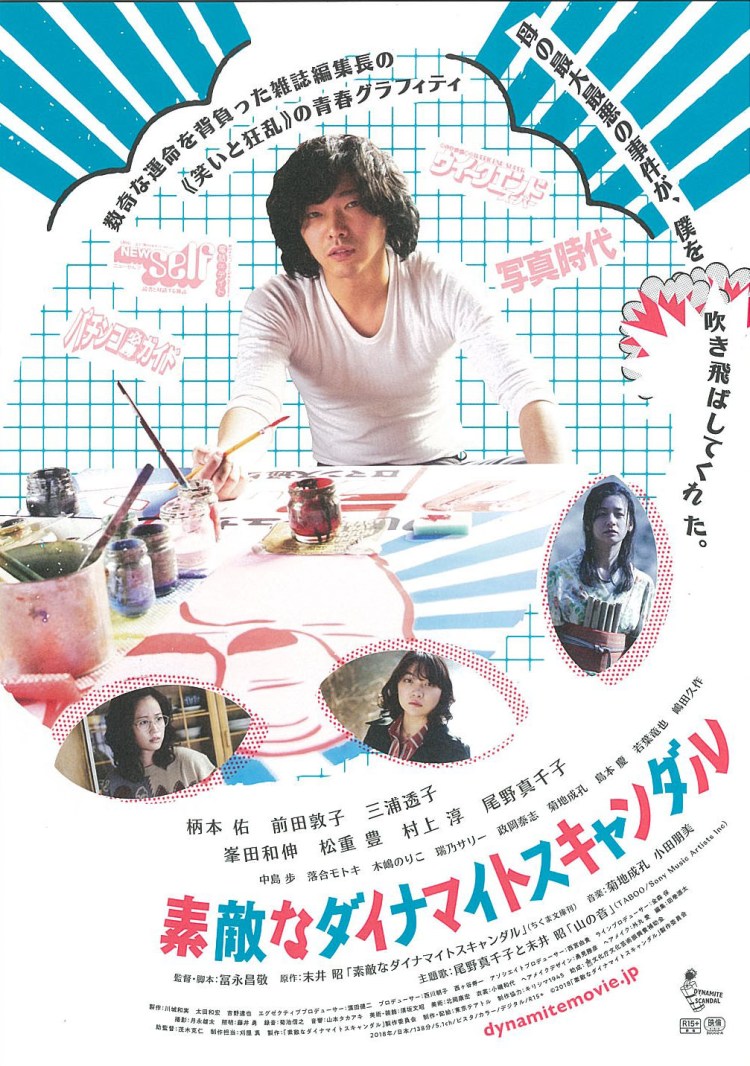
Dynamite Graffiti (素敵なダイナマイトスキャンダル, Masanori Tominaga, 2018)

Dynamite Graffiti posterThe division between “art” and “porn” is as fuzzy as the modesty fog which still occasionally finds itself masking “obscene” images in Japanese cinema, but for accidental king of the skin rag trade Akira Suei it’s question he finds himself increasingly unwilling to answer even while he employs it to his own benefit. Back in the heady pre-internet days of the 1980s, Suei was the public face behind a series of magazines along differing themes but which all included “artistic” images of underdressed women in provocative poses alongside more “serious” content provided by such esteemed figures as Daido Moriyama and Nobuyoshi Araki in addition to stories and essays penned by “legitimate” authors and the more scurrilous fare written by Suei himself. Inspired by one of Suei’s essays “Dynamite Graffiti” (素敵なダイナマイトスキャンダル, Sutekina Dynamite Scandal), Masanori Tominaga’s ramshackle biopic has the informal feel of a man telling his sad life story to a less than attentive bar girl as he takes us on a long, strange walk through the back alleys of ‘70s Japan.

The entirety of Suei’s (Tasuku Emoto) life is lived in the wake of a bizarre childhood incident in which his mother (Machiko Ono), suffering with TB and trapped in an unhappy marriage to a violent drunk, chose to commit double suicide with the young man from next door. Perhaps there’s nothing so strange about that in the straightened Japan of 1955, but Suei’s mother chose to end her life in the most explosive of ways – with dynamite stolen from the local mine. Carrying the legacy of abandonment as well as mild embarrassment as to the means of his mother’s dramatic exit, Suei finds himself a perpetual outsider drifting along without the need to feel bound by conventional social moralities as symbolised by the “ideal” family.

What he longs for, by contrast is freedom and independence. Bored by country life he dreamt of moving to the city to work in a factory, but the problem with factories is that they’re mechanical and turn their employees into mere tools with no possibility of personal expression or fulfilment. Spotting an advert for courses in “graphic design”, Suei’s world begins to open up as he embraces the bold new possibilities of art even as it wilfully intersects with commerce.

Taken with the new philosophy of design as the message, a means of “exposing” oneself and ultimately enabling true human connection, Suei remains frustrated by the limitations of his role as a draughtsman for local advertisers and, inspired by a friend’s beautiful poster, finds himself entering the relatively freer creative world of the “cabaret” scene as a crafter of signboards and flyers. The cabaret bars are little better than the factories, exploiting the labour of women who themselves are the product, but Suei’s distaste is soon worn down by constant exposure. From the clubs and cabarets it’s only a natural step towards erotic artwork, nudie photographs, and finally a vast magazine empire of “literary” pornography.

Suei’s accounts of his youth are filled with a lot of high talk about the possibilities of art, of his desire to remove the masks which keep us divided so that we might all know “true” human love. Whether his adventures in adult magazines can be said to do that is very much up for debate. They are, as he freely admits, expressions of male fantasy – exposing a perhaps unwelcome truth about the relationships between men and women even as they continue to exploit them. Yet Suei’s own desire to find something more than a potential for titillation in his work continues to dwindle as he finds himself engaged in increasingly complicated schemes to avoid censure from the police while simultaneously insisting that his magazines are both “artistic” and not.

His insistence that the photographs are “artistic” becomes his primary weapon in getting sometimes vulnerable young women to agree to take their clothes off. Abandoning his loftier aspirations, Suei sinks still further into the smutty morass whilst still maintaining the pretension that his magazines are not like the others. He neglects his wife (Atsuko Maeda) to chase fleeting affections with unsuitable or unstable women, one of whom eventually descends into a mental breakdown which provokes in him only the realisation that his desire for her was a romantic fantasy which her illness has now dissipated. Art is an explosion, Suei claims, but his mother was the explosive force in his life, blowing him off course and leaving him too wounded to embrace the reality he so desperately claims to crave but continues to reject in favour of the same kind of male fantasies his magazines peddle.

Everyone around Suei seems to be damaged. Nary a face in the red light district is without a bandage or bruise of some sort. These are people who’ve found themselves at the bottom of the ladder and are desperately trying to scrap their way up. Times change and Suei’s empire implodes. Porn is swapped for pachinko as the exploitable pleasure of choice paving the way for yet another reinvention which sees him throw on a kimono to rebrand himself as his own mother and self-styled pachinko expert. You couldn’t make it up. Still, perhaps there is something more honest in Suei’s pachinko persona than it might first appear even if his present “art” is unlikely to enlighten us to the true nature of love.


Dynamite Graffiti is screening as the opening night movie of this year’s New York Asian Film Festival.

Original trailer (no subtitles)

New York Asian Film Festival Confirms Complete 2018 Lineup

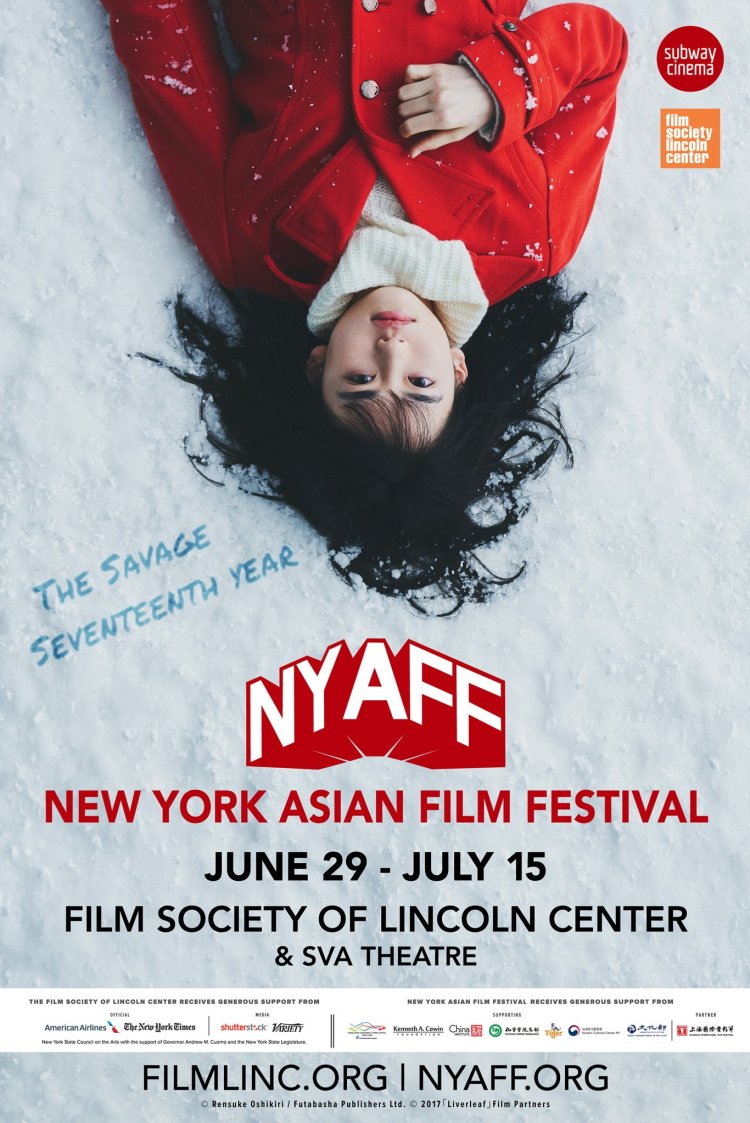
NYAFF 2018 posterThe New York Asian Film Festival returns for its 17th edition with a packed programme of recent hits from East Asia. This year’s festival will open with Masanori Tominaga’s Dynamite Graffiti and close with the World Premiere of Erik Matti’s BuyBust. Hong Kong’s Dante Lam will receive the Daniel A. Craft Award for Excellence in Action Cinema, while the Star Asia Lifetime Achievement Award goes to Japan’s Masato Harada and the Star Asia Awards will honour actors Kim Yun-seok and Jiang Wu.

The programme in full:

China 

wrath of silence horizontal

  • Dude’s Manual (Kevin Ko, 2018) – the first Mainland film from Taiwanese director Kevin Ko is a ribald sex comedy in which one student attempts to teach another a lesson in love. Q&A with director Kevin Ko
  • End of Summer (Zhou Quan, 2017) – coming of age football drama in which a little boy’s obsession with the world cup irritates his headmaster dad.
  • The Ex-Files 3: The Return of the Exes (Tian Yusheng, 2017) – final film the Ex-Files series.
  • Looking for Lucky (Jiang Jiachen, 2018) – a graduate student loses his professor’s dog and ropes in his dad to help him find it.  Director Jiang Jiachen in attendance.
  • The Looming Storm (Dong Yue, 2017) – a factory worker tries to solve a serial killing case in 1997. Q&A with director Dong Yue
  • Old Beast (Zhou Ziyang, 2017) – an old man spends his final years gambling and womanising.
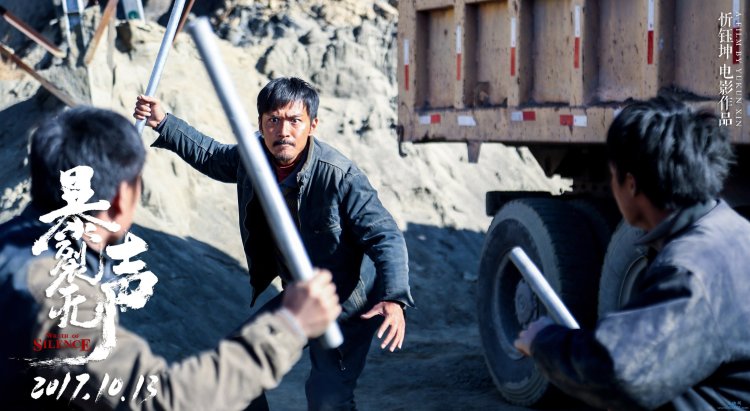
  • Wrath of Silence (Xin Yukun, 2017) – a mute minor searches for his missing son. ReviewQ&A with director Xin Yukun and actor Jiang Wu

Hong Kong Panorama

paradox still 1

  • Beast Stalker (Dante Lam, 2008) – Dante Lam’s 2008 thriller starring Nicholas Tse and Nick Cheung. Director Dante Lam will be in attendance
  • The Big Call (Oxide Pang, 2017) – noble policeman Ding goes in hard chasing villainous phone scammers in Oxide Pang’s high octane thriller.
  • The Brink (Jonathan Li, 2017) – Jonathan Li makes his feature debut with a metaphorical police procedural in the form of a salty sea shanty. Review.
  • The Empty Hands (Chapman To, 2018) – a young woman thinks she’s finally free of her father’s legacy only to realise he’s left half his dojo to a former pupil who says she can only have his share if she wins a fight. Q&A with actress Stephy Tang
  • House of the Rising Sons (Antony Chan, 2018) – musical biopic of ’70s Hong Kong band The Wynners directed by the band’s drummer Antony Chan. Preceded by a live performance. Q&A with director Antony Chan.
  • Men on the Dragon (Sunny Chan, 2018) – Francis Ng stars as the leader of a team of salarymen forced to join the company dragon boat team. Q&A with director Sunny Chan and actress Jennifer Yu
  • Operation Red Sea (Dante Lam, 2018) – a team of elite special forces soldiers handles the extraction of Chinese diplomatic staff caught up in a Middle Eastern coup in Lam’s Operation Mekong followup. ReviewQ&A with director Dante Lam and producer Candy Leung
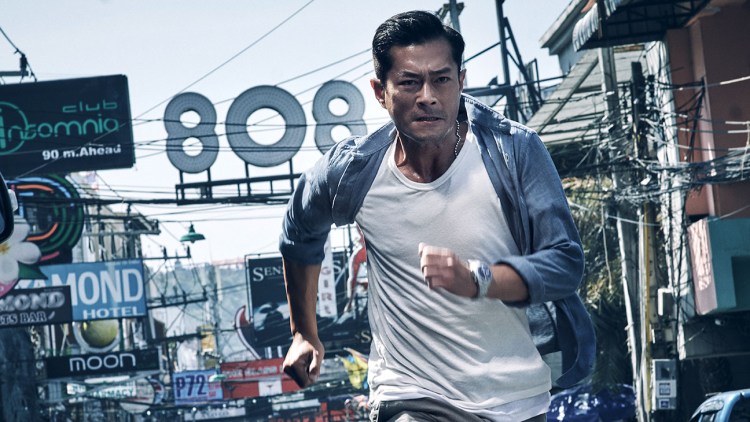
  • Paradox (Wilson Yip, 2017) – Louis Koo becomes embroiled in a conspiracy when his daughter goes missing in Thailand. Review.
  • Unbeatable (Dante Lam, 2003) – Nick Cheung stars as a down on his luck boxer starting over in Macau. Director Dante Lam will be in attendance

Indonesia

buffalo boys 2

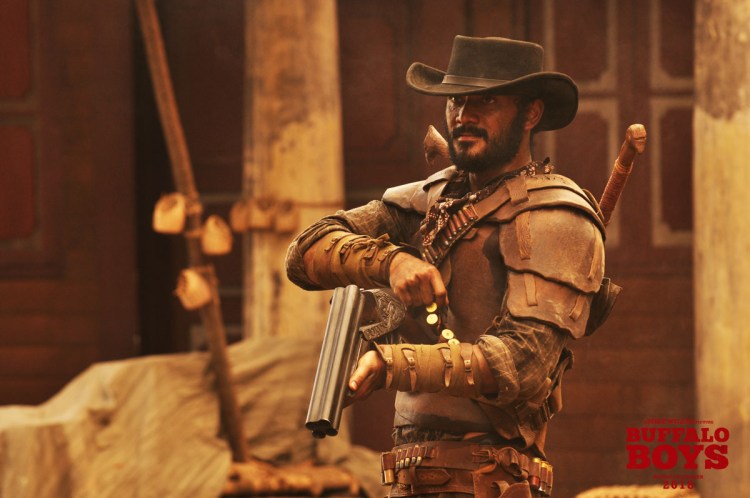
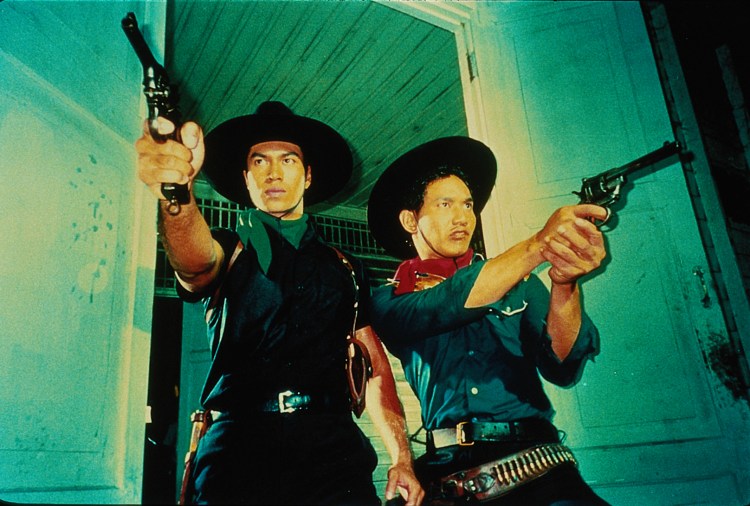
  • Buffalo Boys (Mike Wiluan, 2018) – Indonesian Western in which two brothers come back from California to avenge the death of their father. Q&A with director Mike Wiluan 

Japan

blood of wolves still 1

  • Blood of Wolves ( Kazuya Shiraishi, 2018) – Kazuya Shiraishi takes jitsuroku into the ’80s as Koji Yakusho’s rogue cop tries to keep the lid on a gang war. Review.
  • Dynamite Graffiti (Masanori Tominaga, 2018) – biopic of porn-mag mogul Akira Suei. Q&A with director Masanori Tominaga and actor Tasuku Emoto
  • The Hungry Lion (Takaomi Ogata, 2017) – a teenage girl is harassed when she is rumoured to be the girl in a sex tape featuring a high school teacher. Q&A with director Takaomi Ogata
  • Inuyashiki (Shinsuke Sato, 2018) – a mild mannered middle-aged man and an angry teen are given mysterious super powers and decide to use them in very different ways. Review.
  • Kakekomi (Masato Harada, 2015) – a small temple becomes an Edo era women’s refuge for those seeking escape from abusive marriages in Masato Harada’s light hearted drama. ReviewDirector Masato Harada will be in attendance
  • Kamikaze Taxi (Masato Harada, 1995) – Koji Yakusho plays a taxi driver taken hostage by a rage fuelled yakuza out for revenge on the politician who killed his girlfriend. Q&A with director Masato Harada
  • Liverleaf ( Eisuke Naito, 2018) – manga adaptation in which a teenage girl takes revenge on her bullies. Q&A with director Eisuke Naito
  • Midnight Bus (Masao Takeshita, 2017) – a bus driver’s second chance at life is ruined when his estranged ex-wife, salaryman son, and engaged daughter all come home. Director Masao Takeshita will be in attendance
  • One Cut of the Dead (Shinichiro Ueda, 2018) – real zombies suddenly invade a film set in Shinichiro Ueda’s hilarious madcap horror comedy. Review.
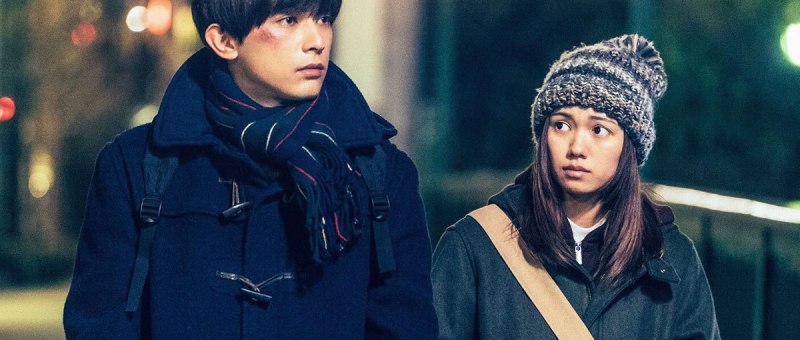
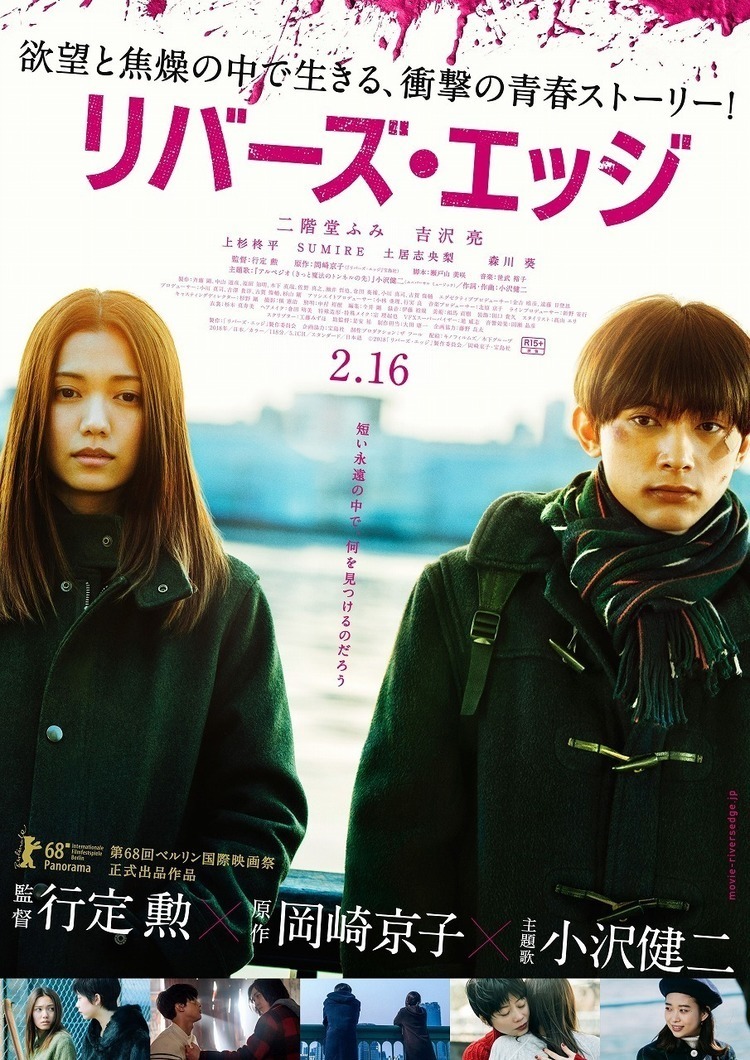
  • River’s Edge (Isao Yukisada, 2018) – disaffected teens fight ennui with a studied appreciation of death in Yukisada’s adaptation of the classic ’90s manga. Review.
  • The Scythian Lamb (Daihachi Yoshida, 2017) – a rural town opens itself up to a government backed scheme to repopulate through employing ex-cons in Daihachi Yoshida’s thoughtful drama. Review.
  • Sekigahara (Masato Harada, 2017) – historical epic starring Junichi Okada and Koji Yakusho dramatising events leading up to the famous battle. ReviewQ&A with director Masato Harada
  • Smokin’ on the Moon (Kanata Wolf, 2017) – indie slacker drama about two guys who work at a midnight bar and also deal marijuana. Q&A with director Kanata Wolf
  • The Third Murder (Hirokazu Koreeda, 2017) – Hirokazu Koreeda puts the law on trial. Review.

Malaysia 

one two jaga still 2

  • Crossroads: One Two Jaga (Nam Ron, 2018) – corruption drama in which a straight-laced rookie turns out to be the most dangerous destabilising element in a fracturing society. Review. Q&A with director Nam Ron and actor Ario Bayu.
  • Dukun (Dain Said, 2018) – shelved for over a decade, Dukun is the controversial tale of a nightclub singer suspected of murdering a politician seeking immortality through ritual sacrifice!

Philippines 

https://www.respetomovie.com/

  • BuyBust (Erik Matti, 2018) – high octane action thriller from Erik Matti in which a young rookie police officer gets caught up in a bust gone wrong. Q&A with director Erik Matti and actors Anne Curtis & Brandon Vera
  • Neomanila (Mikhail Red, 2017) – neo noir in which a young man becomes an apprentice to an older woman taking out drug dealers for the government.
  • On the Job (Erik Matti, 2013) – a conspiracy is uncovered when a drug dealer is murdered. Director Erik Matti will be in attendance
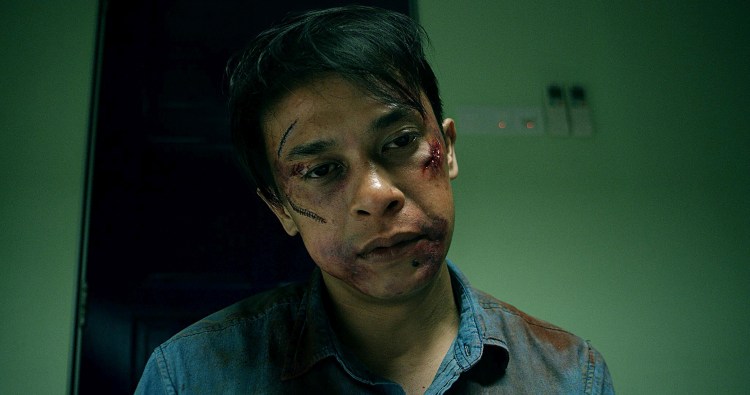
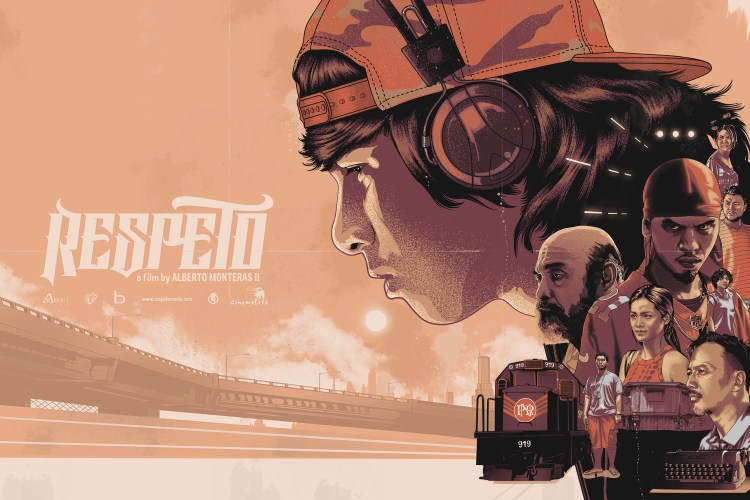
  • Respeto (Treb Monteras, 2017) – intergenerational hip hop drama in which a young rapper comes into conflict with a Marcos-era poet. ReviewDirector Treb Monteras, actor Abra, and producer Monster Jimenez will be in attendance
  • Sid & Aya: Not a Love Story (Irene Villamor, 2018) – rom-com in which an insomniac stock broker pays a waitress to talk through his troubles. Q&A with actress Anne Curtis
  • We Will Not Die Tonight (Richard Somes, 2018) – genre thrills as a former stuntwoman is forced to defend herself against hordes of bad guys.

South Korea

korean little forest 1

  • 1987: When the Day Comes (Jang Joon-hwan, 2017) – powerful democracy movement drama. ReviewQ&A with director Jang Joon-hwan and actor Kim Yoon-seok
  • After My Death (Kim Ui-seok, 2017) – a high school girl’s disappearance raises fears of suicide and also puts her best friend in the firing line.
  • The Age of Blood (Kim Hong-sun, 2017) – period drama in which a top swordsman is demoted to prison guard.
  • Counters (Lee Il-ha, 2017) – documentary centring on anti-racist protest in Japan.
  • Hit the Night (Jeong Ga-young, 2017) – Jeong Ga-young once again stars in her Bitch on the Beach followup as a young woman unafraid to ask “inappropriate” questions while researching a screenplay. Q&A with director/actress Jeong Ga-young
  • I Can Speak (Kim Hyeon-seok, 2017) – an old woman convinces a young man to teach her English and gives voice to a dark part of her nation’s history.
  • Little Forest (Yim Soon-rye, 2018) – gentle tale in which a wounded young woman retreats to her country home to figure things out. Review.
  • Microhabitat (Jeon Go-woon, 2017) – a young woman decides rent is an unnecessary expense and commits to couch surfing her way through life. Q&A with director Jeon Go-woon and actor Ahn Jae-hong
  • The Return (Malene Choi, 2018) – two Danish-Korean adoptees return to the country where they were born for the first time.
  • What a Man Wants (Lee Byeong-hun, 2018) – social satire in which an adulterous husband and his mild-mannered brother-in-law become involved with a sexy dance teacher.

Taiwan

On Happiness road banner

Thailand

tears of the black tiger

  • Premika (Siwakorn Jarupongpa, 2017) – horror comedy in which guests at a resort are terrorised by a karaoke obsessed ghost! Actress Gena Desouza will be in attendance
  • Sad Beauty (Bongkod Bencharongkul, 2018) – the friendship between two women is tested by a violent encounter. Q&A with director Bongkod Bencharongkul and producer Kongkiat Khomsiri
  • Tears of the Black Tiger (Wisit Sasanatieng, 2000) – cult classic Thai western!

The 17th New York Asian Film Festival runs from 29th June to 15th July. Full details for all the films are available via the official website where you can also find screening times and ticketing information. You can also keep up with all the latest festival news via the official Facebook Page and Twitter account.

River’s Edge (リバーズ・エッジ, Isao Yukisada, 2018)

River's Edge poster 2The ‘90s were a strange time to be a teenager, but then what age isn’t? Isao Yukisada, surprisingly making his first manga adaptation, brings Kyoko Okazaki’s cult hit River’s Edge (リバーズ・エッジ) to the big screen, recreating those days of nihilistic despair in which ordinary teens spiralled out of control in the wake the bubble bursting, watching all their possibilities disappear in a cloud of smoke. Set in 1994, River’s Edge is a post-bubble story but it also takes place in the period immediately before everything started to go wrong. In 1995 there was a devastating earthquake followed by terror in Tokyo and somehow it all seemed so dark – something the kids at the centre of River’s Edge already seem to see as they watch time flow, knowing all that awaits them is yet more emptiness.

Haruna (Fumi Nikaido), a spirited tomboy and latchkey kid living with her busy single-mother, is in a lazy relationship with violent popular boy Kannonzaki (Shuhei Uesugi) though in truth she doesn’t seem to like him very much. One of her major problems with Kannonzaki is that he keeps picking on one particular guy, Yamada (Ryo Yoshizawa), who is rumoured to be gay. Warned by one of Kannonzaki’s minions, Haruna races off to an abandoned storeroom where she finds Yamada trussed up and naked hidden inside a locker. The pair become friends and he offers to show her his “special treasure” which turns out to be a dead body hidden among the reeds near the edge of the river. Yamada, with another friend, Kozue (Sumire) – a model with an eating disorder, likes to come to the river to gaze at the body in an effort to feel alive.

The ‘90s were full of tales of cruel, emotionless youth torturing itself without mercy and there is something of the era’s insensitivity in the detachment of the central trio. Unable to feel alive, the teens of River’s Edge chase sensation and oblivion through indiscriminate sex, drugs, violence, and self harm but rarely find the kind of fulfilment they so desperately crave. Kannonzaki, the rowdy delinquent, blames his broken home for his lack of connection, making a fierce resentment of a perceived rejection his excuse for his dangerously violent proclivities which run not only to venting his rage on the figure of the gay outsider Yamada but also to drug fuelled rough sex with one of Haruna’s classmates, Rumi (Shiori Doi), who is also chasing agency through sexuality but eventually finds herself cornered in the most terrible of ways.

Yamada is indeed gay, but can hardly say so in the environment in which he lives and so has turned in on himself with a near sociopathic detachment. Having given up on the idea of romantic fulfilment he has resigned himself to loving the object of his affection from afar, happy enough that he exists in the world even if he can never declare himself let alone dare to hope his feelings may be returned. Yamada works as a rent boy in the evenings, going to hotels with middle-aged men for money, but has a fake girlfriend at school, Kanna (Aoi Morikawa), whom he uses as a beard. Kanna, seemingly sweet and oblivious, soon becomes jealous of her boyfriend’s friendship with Haruna and is driven into her own kind of despair by Yamada’s continued coldness.

There’s an especial irony in Yamada’s use of Kanna which is almost certainly not lost on him. These kids, like many before them, abhor the fakery of the adult world but are also unable to embrace their own painful truths. Yamada covers up his sexuality through misleading Kanna, while Kannonzaki is resentful towards his parents who put on a front of marital harmony even after his father ran off with his mistress only to come back a week later with his tail between his legs, and Kozue laments the superficiality of her industry in which everyone falls over themselves to declare something ugly beautiful in order to make themselves feel better. There are no responsible adults here, having ruined the future for their kids they no longer have any kind of moral authority that can offer guidance or support to a jaded generation.

Shooting in the classic 4:3 of a ‘90s TV, Yukisada recreates the narrowness of an era in which the kids struggle to see past themselves, blinkered by their own solipsistic perspective and trapped by the shallowness of their perceptions. Permanently dark, gloomy, and lonely their world is one nihilistic despair in which they feel themselves already dead, living in the half-dug grave of a moribund city giving off its last few puffs of toxic industrial smoke before the whole thing collapses in on itself. In one sense nothing changes, there are no answers or cures for adolescent malaise, but something does eventually seem to shift in the genuine connection formed between two detached outsiders standing on the brink, watching the decay of their era flow past them with melancholy resignation.


Screened at Nippon Connection 2018.

Original trailer (no subtitles)

On Happiness Road (幸福路上, Sung Hsin-yin, 2017)

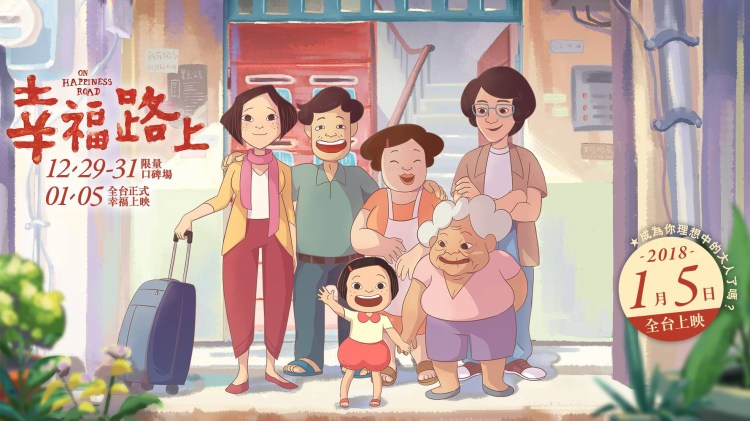
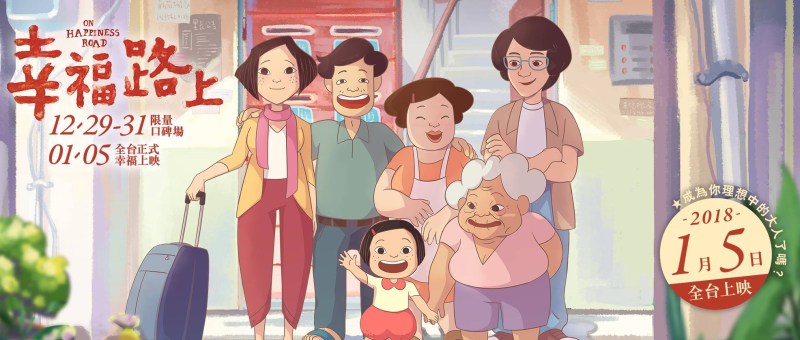
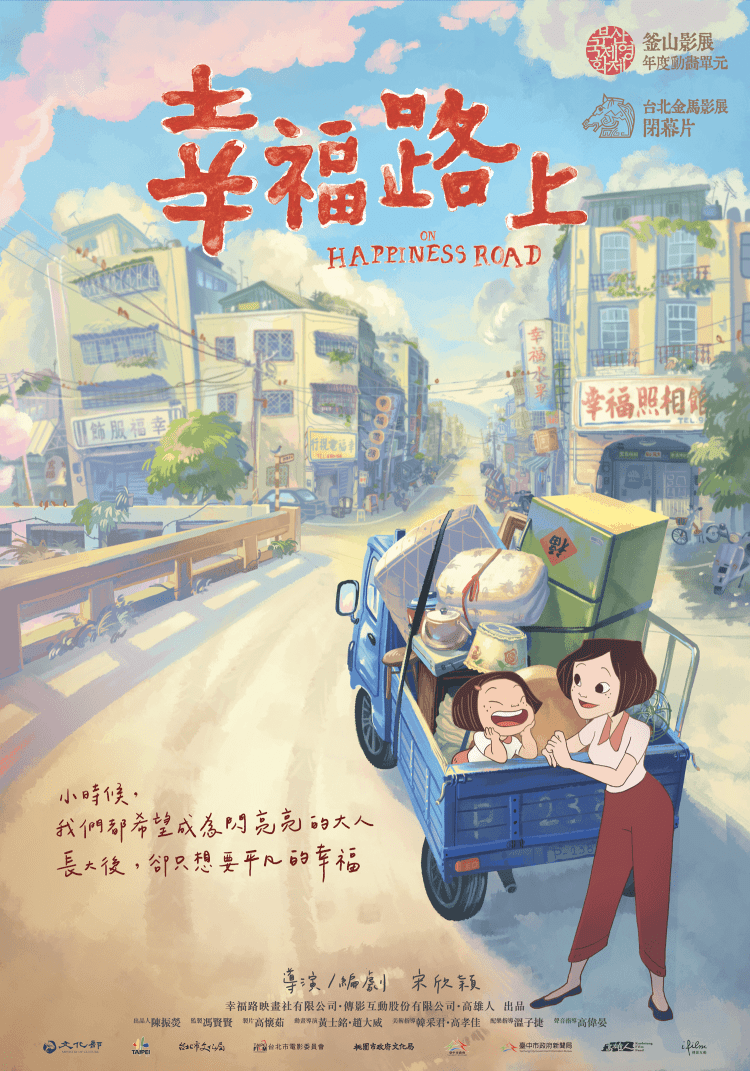
On happiness road posterSung Hsin-yin attempts a series of impossibles with her debut feature, On Happiness Road (幸福路上, Xìngfú Lùshang). In a bold move she has crafted what is possibly the last Taiwanese animated feature while attempting to pack 40 years of turbulent political history into the story of a lost middle-aged women ruminating on her cheerful, uncomplicated childhood on the distinctly humble Happiness Road. Battling the weight of parental expectation and the false promises of a better life overseas, her heroine, Chi, makes an enforced return to source on hearing that her beloved, part-aboriginal grandmother has passed away.

Chi (Gwei Lun-mei), an unhappy 30-something woman, receives the call in America where she has been living with her American husband. Unbeknownst to her family, Chi’s marriage is all but over and she finds herself at something of a crossroads, half wondering if it’s time to come home to Taiwan and half humiliated in being seen to have returned with her tail between her legs. She comes home, alone, to mourn her grandmother but finds herself wandering back through the streets of memory and fantasy recalling all the small details and minor incidents that brought her to his point in the hope of figuring out where it is she needs to go next.

Chi was born in 1975 on the very day that Chang Kai-shek died. Chang was by then a brutal dictator but the brainwashed little Chi who still sees his picture everywhere and has been taught to respect his many virtues idolises him all the same. Her family, uneducated ordinary working people, speak Taiwanese Hokkien at home but at school she has to speak Mandarin – the “official” language, all dialects are banned. Thus little Chi finds her parents’ language backward and embarrassing, their failure to adapt to “modernity” a hurdle in her own forward development.

As time moves on, Chi’s “Taiwaneseness” becomes something she feels she must sacrifice in order to purse the conventional success expected by her parents and the society at large. Little Chi, riding in the back of a pickup truck with her parents on the way to Happiness Road, asks them one of the biggest questions of all – what does “happiness” mean. Her parents, unable to answer, shush her, but her father (Chen Po-cheng) seems pleases his daughter has such big thoughts and wonders if she might become a philosopher one day. Oh no, replies her mother (Jane Liao). There’s no money in that – she’ll be a doctor! Her parents want for her all the material comforts of the settled middle classes, but her society tells her to attain them she must leave her nativeness behind – speak Mandarin, forget about granny’s ancient wisdom, and eventually go abroad leaving the “old fashioned” island far behind.

Chi has done everything she was supposed to do. She studied hard, got a good degree, got an OK job, and then ended up going to America almost on a whim. She reached the destination expected of her, but still she isn’t happy. Her marriage is failing as she and her American husband want very different things out of life and Chi wonders if she really belongs in this insincere culture which, at the end of the day, has never quite accepted her. In America she experienced mild forms of racism but then didn’t her half-American friend, Betty (Li Chia-hsiu) – blonde with blue eyes but speaking only Mandarin, experience exactly the same thing in Taiwan? Pregnant but seeking an escape from an unhappy marriage, Chi also worries what the future will be if she chooses to come home and raise her half-American child alone in a perhaps unforgiving society.

Yet reuniting with Betty she discovers that even if her life has not quite turned out the way she planned, she is blissfully happy as a single mother to two children, blonde like her but with brown eyes. Chatting with the ghost of her late grandmother who still has a few lessons to impart, Chi learns to see with the eyes of her heart and comes to realise that sometimes the road to happiness passes through a few uncertain turns but that that’s OK. Her parents, whom she feared would judge her for a failed marriage and a child born after divorce, are predictably enough only too happy at the prospect of their only daughter coming home for good and finally making them grandparents no matter the circumstances surrounding the origin of both those events. Chi may not have wanted the “road” her parents and her society had attempted to lay down before her, but discovers that departing from it is not failure and that “happiness” is a concept you are free to define for yourself. Beautifully animated and filled with whimsical flights of fancy, On Happiness Road is a sometimes melancholy but heartwarming tale of life in modern Taiwan as one lost woman finally discovers the road home and realises it has been waiting for her all along.


Screened at the 20th Udine Far East Film Festival.

International trailer (English subtitles)

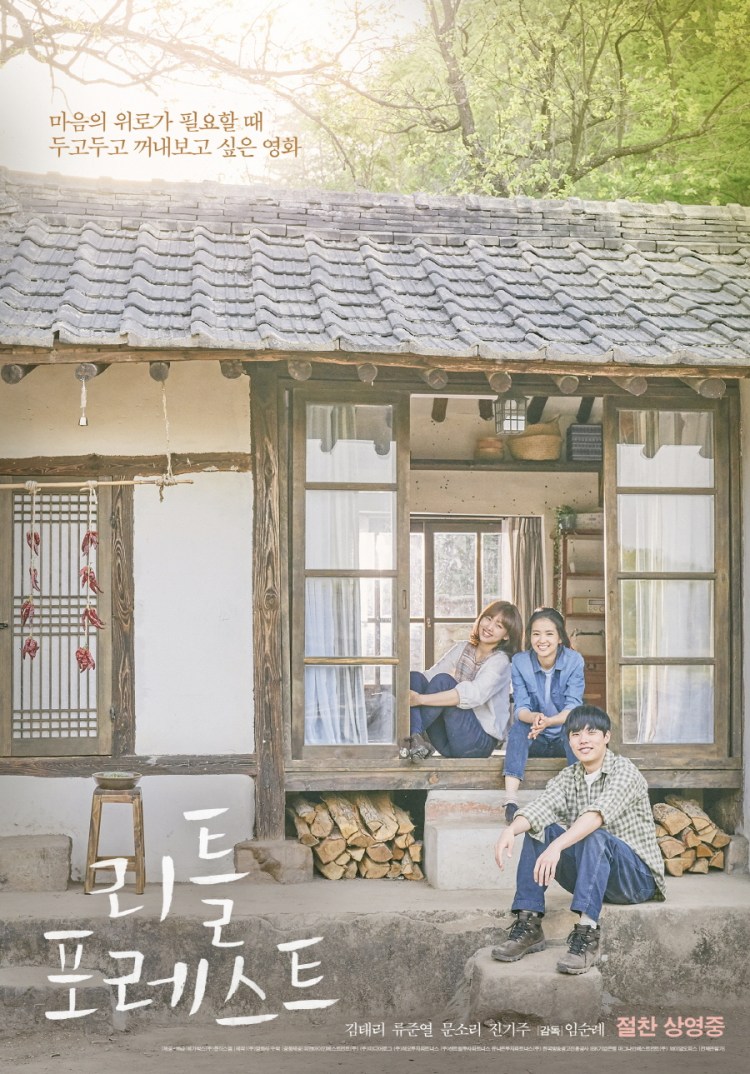
Little Forest (리틀 포레스트, Yim Soon-rye, 2018)

Little forest korean posterWhen you don’t know what to do, you go home. The logic seems sound and indeed the idea is common in many cultures, but the heroine of Little Forest (리틀 포레스트) has gone home to an empty, snow covered house with the intention of burying herself away rather than basking the unconditional support of the people who raised her. Yim Soon-rye, leading light of the Korean New Wave, takes the original manga by Daisuke Igurashi which was previously adapted as a two-part, four hour exploration of Japanese rural life by Junichi Mori, and relocates it to Korea finding that urban malaise and youthful indecision are from isolated phenomena.

Hye-won (Kim Tae-ri) has come home “for a few days”. What she wants is to be alone for a while, to take a time out from her life before trying to figure out what to do next. Accordingly, as she’s in hiding, she didn’t want anyone to know she’s here but perspicacious aunt Bok-soon has spotted smoke on the horizon and come running. Bok-soon thought that Hye-won’s long absent mother who abandoned her in the last year of high school might have been making a rare visit and is surprised to find her daughter instead, though perhaps not quite so much as you’d think. Nothing stays secret for long in a village, and Hye-won’s return is soon discovered first by the slightly unwelcome attention of the older village ladies and then by her treasured childhood friends, Eun-sook (Jin Ki-joo) and Jae-ha (Ryu Jun-yeol) who gives her a pet dog to look after in the hope that she will be eventually decide to stay for good.

Hye-Won faces many of the same problems as the heroine of Mori’s Japanese adaptation, but whereas Ichiko had come back in defeat and heartbreak, Hye-won’s flight is mostly pride mixed with fear and awkwardness. She admires Jae-ha who once lived in the city but eventually came home to be himself, rejecting the conformist salaryman life to be his own his boss, but knows deep down that her decision to retreat to the country is a cowardly attempt to delay dealing with the problems of adult life. After her mother left, Hye-won went to Seoul for university where she, along with her boyfriend, was studying for a teaching exam which only he passed. Wounded, Hye-Won has run away. Refusing her boyfriend’s calls and cocooning herself inside her childhood home she delays the inevitable breakup conversion along with the galling need to congratulate him on his exam success while silently nursing her own humiliating failure to match him.

Rather than the strained relationship Ichiko had with her long absent mother, Hye-won’s feelings run more towards a healthy competition – she wants to exceed her mother in all things but most especially as a cook. Unsatisfied with the tasteless pre-packaged nature of big city food, Hye-won came home because she was hungry, spiritually but also physically. Rejoicing in nature’s bounty, she finds new and exciting ways to cook the various fruits and vegetables grown by her own hand, living closely with the land and running with the rhythms of the seasons. In Seoul she ate cold food all alone, at home she shares her table with her two friends eager to see what she’s come up with to combat the latest glut while filling their souls with the warmth of friendship.

Despite her mild resentment and lingering anger towards her mother for disappearing so abruptly, Hye-won eventually comes to a kind of acceptance, realising that her mother’s “little forest” was raising her but seeing as she declared to her intention to repot herself somewhere else, her mother’s work was done and now it’s time for Hye-won to find her own little forest and set about tending to that. Still unsure if she’s in the country because that’s where she needs to be or is merely afraid to leave and risk failure, Hye-won eventually finds the strength move forward, breaking out of her extended period of hibernation to look for her answers wherever they may lie. Filled with the joy of home cooking and soulful down-home wisdom, Little Forest adapts itself well enough to the Korean climate, finding that life in the country, hard as is it may be, offers its own rewards in the simple pleasures of unconditional friendship and the natural freedom to enjoy all nature has to offer.


Screened at the 20th Udine Far East Film Festival.

International trailer (English subtitles)

The Scythian Lamb (羊の木, Daihachi Yoshida, 2017)

Scythian Lamb posterSometimes life hands you two parallel crises and allows one to become the solution to the other. So it is for the bureaucrats at the centre of Daihachi Yoshida’s The Scythian Lamb (羊の木, Hitsuji no Ki). The prisons are overcrowded while rural Japan faces extinction thanks to depopulation. Ergo, why not parole some of those “low risk” prisoners whose problems have perhaps been caused by urban living and lack of community support on the condition that they move to the country for a period of at least ten years and contribute to a traditional way of life. The prisoners get a fresh start where no one knows them or what they might have done in the past, and the town gets an influx of new, dynamic energy eager to make a real go of things. Of course, there might be some resistance if people knew their town was effectively importing criminality, but that’s a prejudice everyone has an interest in resisting so the project will operate in total secrecy.

Not even civil servant Tsukisue (Ryo Nishikido), who has been tasked with rounding up the new recruits, was aware of their previous place of residence until he started to wonder why they were all so unusual and evasive. Tsukisue likes to think of himself as an open-minded, kind and supportive person, and so is disappointed in himself to feel some resistance to the idea of suddenly welcoming six convicts into his quiet little town, especially on learning that despite being rated “low risk” they are each convicted murderers. Thus when a “murder” suddenly happens in the middle of town, Tsukisue can’t help drawing the “obvious” conclusion even if he hates himself for it afterwards when it is revealed the murder wasn’t a murder at all but a stupid drunken accident.

The ex-cons themselves are an eccentric collection of wounded people, changed both by their crimes and their experiences inside. Many inmates released from prison find it difficult to reintegrate into society, especially as most firms will not hire people with criminal records which is one of the many reasons no one is to know where the new residents came from. Yet, there are kind and understanding people who are willing to look past the unfortunate circumstances that led to someone finding themselves convicted of a crime such as the barber (Yuji Nakamura) who reveals his own difficult past and happiness in being able to help someone else, or the woman from the dry cleaners (Tamae Ando) who is upset by other people’s reaction to her new recruit who, it has to be said, looks like something out of Battles without Honour. Tsukisue doesn’t know anything about these people save for the fact they’ve killed and has, unavoidably, made a judgement based on that fact without the full details, little knowing that one, for example, killed her abusive boyfriend after years of torture or that another’s crime was more accident than design.

Tsukisue later becomes friends with one of the convicts, Miyakoshi (Ryuhei Matsuda), whose distant yet penetrating stare makes him a rather strange presence. Miyakoshi is the happiest to find himself living in the small coastal town, enjoying the lack of stimulation rather than resenting the boredom as some of the other new residents do. Despite his obvious inability to “read the air”, Miyakoshi is quite touched by Tsukisue’s kindness and by the way he treated him as a “normal” person despite his violent criminal past, excited to have made a real “friend” at last. Trouble begins to brew when Miyakoshi joins Tsukisue’s garage band and takes a liking to another of its members – Aya (Fumino Kimura), another returnee from Tokyo with a mysterious past though this time without a prison background. Tsukisue has had a long standing crush on Aya since high school but has always been too shy to say anything. He thought now was his chance and is stunned and irritated to realise Miyakoshi might have beaten him to it and, even worse, given him another opportunity to disappoint himself though doing something unforgivable in a moment of pique.

The bureaucrat in charge of the scheme wanted it kept secret in part because he was afraid the criminals might find each other and start some sort of secret murderer’s club (betraying another kind of prejudice) which actually turns out not to be so far fetched, though the main moral of the story is that kindness, understanding, and emotional support go a long way towards keeping the peace. Meanwhile, another of the convicts has taken to “planting” dead animals inspired by a plate she finds on a refuse site featuring a decoration of a “Scythian Lamb” – a plant that grows sheep which die when severed from their roots, and the evil fish god Nororo sits atop the cliffs in reminder of the perils of the sea. The Scythian Lamb is a poignant exploration of the right to start again no matter what might have gone before or how old you are. It might not always be possible to escape the past, and for some it may be more difficult than others, but the plant withers off the vine and there’s nothing like good roots for ensuring its survival.


Screened at the 20th Udine Far East Film Festival.

Original trailer (English subtitles)

Inuyashiki (いぬやしき, Shinsuke Sato, 2018)

inuyashiki_poster_B1_0206D_fin_ol_3Japanese cinema has long been preoccupied by the conflict between age and youth though it usually comes down on the side of the youngsters, even when rebuking them for their selfish immorality. Inuyashiki (いぬやしき), adapted from the manga by Hiroya Oku, is similarly understanding but makes a hero of its sad dad protagonist whose adult life has been a socially acceptable disaster, while finding sympathy for his villainous teenage counterpart who resents his lack of possibilities in an already unfair world.

Unsuccessful salaryman Inuyashiki (Noritake Kinashi) has just moved into a new house of which he is very proud but his wife (Mari Hamada) and children find small and old fashioned. He’s bought sushi to celebrate the occasion, but the other family members ignore him and head out for dinner on their own. Held in contempt at home, Inuyashiki’s working life is also something of a disaster in which he is publicly berated by his boss who threatens to fire him, leaving Inuyashiki kneeling in supplication just to be allowed to work until retirement so he can keep up the mortgage payments on that new house (which he bought for his family who all hate him).

To make matters worse, Inuyashiki has also just received the news that he is suffering from terminal cancer and has only a few months to live. His only ray of sunshine appears when he finds an abandoned dog, Hanako, and decides to adopt her but his wife orders him to throw the dog out in case it messes up the house (that she already hates). Sadly walking Hanako to the park with the intention of sending her on her way, Inuyashiki is struck by a mysterious blast and later wakes up to discover he has become an all powerful cyborg with booster rockets on his back and guns in his arms.

Inuyashiki’s first instinct is that he can use his new found powers to save people. Contemplating his mortality, Inuyashiki was made to feel that his life had been a failure; he’d never done anything of consequence and had never been able to protect anyone. Reviving a wounded bird in the street, he realises he has the power to heal along with super sensitive hearing which allows him to hear the cries of those in peril.

Meanwhile, the teenager caught in the same blast, Shishigami (Takeru Satoh), is heading in the opposite direction. Shishigami is also filled with resentment though mostly as regards his poverty and comparative lack of possibilities. He hates that his single-mother (Yuki Saito) has to work herself to the bone because his father (Kiyohiko Shibukawa) left the family for another woman with whom he has built another home and become extremely wealthy. He hates that his video game otaku friend (Kanata Hongo) is mercilessly bullied and has stopped coming to school altogether rather than fight back. Filled with a young man’s rage and a mild kind of psychopathy, Shishigami doesn’t see why it’s wrong to become a bully rather than fighting them. Frustrated beyond reason he declares war on an uncaring society and sentences everyone in Japan to death for their indifference to their fellow citizens.

The conflict between the angel and the devil concludes in predictably bombastic fashion as our two cyborgs go head to head in a climactic battle for the soul of Japan. Strangely enough both men are motivated by love even if one’s actions are darker than the other’s. Inuyashiki wants to protect, to be someone his family can respect and depend on – he flees the scenes of his miracles because he isn’t interested in being a “hero”, just in being of use. Shishigami, by contrast, is motivated by love for his mother whose continuing suffering proves too much for him to bear though his attempts to take revenge only end in more tragedy. Mustering all the technology of the age from smartphones to live broadcasts, Shishigami makes himself a familiar face on TV sets and LCD screens across the country to preach his message of hate as a declaration of war.

Shishigami proclaims that Inuyashiki’s sense of justice is no match for his hate, but there is a definite irony in the squaring off of two men from different generations trying to figure out their differences by pounding the living hell out of each other and destroying half of Tokyo in the process. Still, that is in many ways the point as these two “gods” actively choose the sides of light and darkness, vying for the right to rule the future as forces of destruction or salvation.


Screened at the 20th Udine Far East Film Festival.

Original trailer (English subtitles)

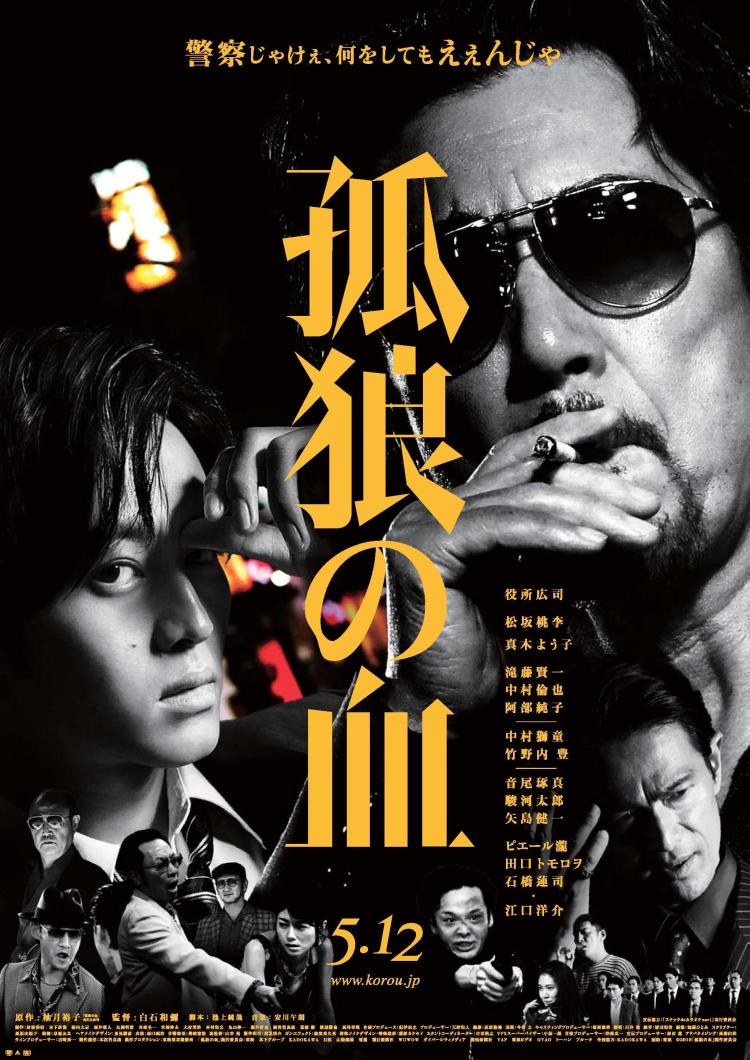
The Blood of Wolves (孤狼の血, Kazuya Shiraishi, 2018)

korou_honpos_0220_fin.aiJapanese cinema, like American cinema, is one of the few in which the hero cop is a recognisable trope. Though they may be bumbling, inefficient, obsessed with bureaucracy, or perhaps just lazy, police in Japanese cinema are rarely corrupt or actively engaged in criminality. Even within the realms of the “jitsuroku” gangster movie, the police maintain a fringe presence, permitting the existence of the underground crime world in order to contain it. “Jitsuroku” is, in a fashion, where we find ourselves with Kazuya Shiraishi’s throwback underworld police story, The Blood of Wolves (孤狼の血, Koro no Chi). Set in 1988, the end of the Showa Era which had seen the rebirth of post-war Japan and the ascendency of yakuza thuggery, The Blood of Wolves is based on a novel by Yuko Yuzuki rather than a “true account” of life on the frontlines of gangsterdom, but otherwise draws inspiration from the Battles Without Honour series in updating the story of nihilistic yakuza violence to the bubble era.

In 1988, a young accountant “goes missing” sending his sister to ask the police for help in locating him. The case gets passed to sleazy detective Ogami (Koji Yakusho) and his new rookie partner, Hioka (Tori Matsuzaka). Ogami leers disturbingly at the dame who just walked into his office before dismissing the newbie and extracting a sexual favour from the distressed relative of the missing man. Unfortunately, the accountant turns up dead and the bank he worked for turns out to be a yakuza front caught up in a burgeoning gang war between the Odani with whom Ogami has long standing connections and the gang from the next town over who are looking to increase their territory.

Ogami, a chain smoking, hard drinking, womanising detective of the old school, has one foot in the yakuza world and the other on the side of law enforcement. Hioka, a recent graduate from the local but also elite Hiroshima University (something of a rarity in his current occupation), is not quite sure what to make of his new boss and his decidedly “unorthodox” methods, becoming increasingly concerned about the way the police force operates in a town defined by organised crime. Deciding that Ogami has gone too far, he eventually makes the decision to go to IA with a list of complaints but there’s still so much he doesn’t know about Hiroshima and it is possible he may have picked the wrong side.

What he discovers is that the police force is so intrinsically rotten as to have become little more than a yakuza gang itself, only one with the legal right to carry guns and a more impressive uniform. Ogami, for all his faults, apparently has his heart in the right place. His “friendships” with gangsters are more means to an end than they are spiritual corruption, gaining leverage that will help him keep a lid on gang war – after all, no one wants a return to the turbulent days of the 1970s when the streets ran red with the blood of unlucky foot soldiers and that of the civilians who got in their way. Meanwhile Hioka, starting out as the straight-laced rookie, is himself “corrupted” by the corruption he uncovers, developing a complex mix of disgust and admiration for Ogami’s practiced methods of manipulation which, apparently, place public safety above all else.

Ogami, as he tells the conflicted Hioka, knows he walks a tightrope every day, neatly straddling the line between cop and yakuza, and the only way to stay alive is to keep on walking knowing one slip may lead to his doom. He may say cops can do whatever they like in pursuit of “justice” (and he does), but Ogami has his lines that cannot be crossed, unlike others in his organisation who care only for themselves and have long since given up any pretence of working for the public good.

Shiraishi channels classic Fukasaku from the noticeably retro Toei logo at the film’s opening to the voice over narration, garish red on screen text, and frequent use of freeze frames familiar from the Battles Without Honour series and associated “jitsuroku” gangster fare that followed in its wake. Moving the action up to 1988, the gangster world is once again in flux as it tries to corporatise itself to get in on the profits of bubble era prosperity which largely has no need for the thuggish gangster antics of the chaotic post-war years in which the yakuza could paint itself as a defender of the poor and oppressed no matter how ridiculous it might have been in reality. Ogami is a dying breed, a relic of the Showa era meeting its natural end, but perhaps you need to be a wolf to catch a wolf and guardian spirits can come in unexpected forms.


Screened at the 20th Udine Far East Film Festival.

Original trailer (English subtitles)

One Cut of the Dead (カメラを止めるな!, Shinichiro Ueda, 2017)

One Cut of the DeadYou know how it is – you turn up to make a low budget zombie movie in a disused water filtration plant apparently once used by the military for dodgy human experimentation and a load of real zombies suddenly turn up to join the fun. Then again, at least zombies don’t have over protective managers hovering on the sidelines or require catering services so in some ways they are the perfect extras. The debut feature from Shinichiro Ueda, One Cut of the Dead (カメラを止めるな!, Camera wo Tomeru na!) is a clever bait and switch, opening with a frenetic low budget zombie chase sequence before cutting to behind the scenes where just about everything is going hilariously wrong.

As the film opens, an actress is in the middle of the 42nd take of a scene in which she is attacked by her zombified boyfriend when the director yells “cut” and begins berating her for her non-existent acting skills before storming off in a huff. The actress, the boyfriend, and the makeup artist whose many hobbies include women’s self defence are enjoying a cup of coffee when a bunch of real zombies suddenly show up with murderous intent. All shot in one cut, the 40 minute chase sequence is a celebration of all things zombie with appendages flying off with gay abandon as blood soaks the screen and our plucky heroine ends up somehow in the middle of a pentagram painted on a rooftop.

Viewers who aren’t paying attention and attempt to leave after “credits” roll will be doing themselves a huge disservice – this high impact opening has been something of a ruse to take us into the real meat of the drama in the zany backstage antics in which just about everything is going just about as wrong as it could possibly go. It turns out “One Cut of the Dead” is a one camera one cut TV special made to launch a brand new zombie channel. Our director, Higurashi, who played “The Director” in One Cut, has found himself at the helm because no one else would take on such an outrageous proposal and, unlike his onscreen counterpart, is too kind and mild mannered to say no.

Higurashi’s career has perhaps become zombified in itself. The producers have chosen him for his ironic slogan – “Fast, cheap, but…average”, and he’s made his way in the minor TV film biz by keeping his head down and just getting on with the job even when it’s as “inconsequential” as a reconstruction sequence for cheesy TV news item. The chance to direct a drama is then an exciting one even if it’s for an equally cheesy TV horror show with a gimmick that’s doomed to fail.

Thus he finds himself on set with a pair of idols – she constantly worrying about what her agency will say to the various problems presented by being in a zombie movie, and he constantly rude and arrogant. Meanwhile, a previous acquaintance of Higurashi’s set to play the cameraman has a serious drink problem, the actor playing the boom operator has a series of digestive issues, and the woman playing the makeup artist is in a car accident with the man playing the director just a couple of hours before the camera rolls. Improvising wildly and making fantastic use of a set of cue cards, Higurashi manages to keep it all together despite the ensuing chaos.

The real genius of the film lies in the cleverness of the original bait and switch. The aesthetic of the zombie sequence is pure low budget horror with noticeably low grade camera quality and deliberately iffy special effects. On the first pass through there are several moments that look like shoddy direction – Higurashi talks to the cameraman who isn’t supposed to be there, the three actors witter on about nothing, the actress continues screaming for way too long etc but each of these mini moments loops back perfectly into the second half farce in which the crew is desperately trying to overcome several obstacles at once and keep the camera rolling to get through the 30-minute live broadcast without anyone noticing.

In the background, Higurashi is also facing some minor family drama with his grown up daughter who wants to direct but needs to work on her people skills. Her keen eye for detail and youthful ingenuity eventually helps the crew figure out a way to keep going, but in the end it’s teamwork that sees them through as they learn to overcome their differences and work together to get what they need. Hilarious, self aware, and filled with homages to classic horror, One Cut of the Dead is an oddly warmhearted comedy in which the zombies are the least of anyone’s worries.


One Cut of the Dead received its international premiere at the 20th Udine Far East Film Festival and will be released in the UK by Third Window Films later in the year.

Original trailer (English subtitles)

1987: When the Day Comes (1987, Jang Joon-hwan, 2017)

fullsizephoto931939The political history of Korea is long and complex and oftentimes sad. The events depicted in 1987: When the Day Comes (1987), pivotal as they were, occurred just 30 years ago. Yet the recent past has also been one marked by protest, public anger, and political scandal though this time around with far less fear or danger. The protests of 1987 were a different story. The rule of Chun Doo-hwan, a military dictator who had seized power following the assassination of the previous dictator, Park Chung-hee, was one of extreme oppression which had already seen a widespread massacre of peaceful protestors by the state in Gwangju in 1980. Chun’s term, under the constitution, was set at seven years after which many hoped for a path to modern democracy but those hopes were dashed when he announced an intention to appoint his successor rather than call a free and fair election.

In depicting the climactic events of that summer, Jang Joon-hwan begins with chaos as a doctor is summoned to a mysterious room where a young man lies unconscious in a pool of water. The police have gone too far, and boy has died during interrogation. Aware of the potential danger of the public finding out that the state has in effect murdered a suspect in an act of torture, the head of the ACIB, Park (Kim Yun-seok), orders the body to be quickly cremated. This, however, needs a certificate signed by a prosecutor and Prosecutor Choi (Ha Jung-woo) is fed up with the ACIB and unwilling to cooperate especially as he smells a rat with the cause of death for a healthy 22-year-old listed as a “heart attack”. Not wanting to be on the wrong side of it if it does get out, Choi refuses the cremation and orders an autopsy which in itself triggers a series of other events eventually bringing the government to its knees.

The state remains cruel and duplicitous. The death of Park Jong-chul (Yeo Jin-goo) would become a catalyst and a rallying call, not just for the injustice of it but for the injustice of covering it up. Park’s family are denied their basic rights, his mother and sister literally dragged away from the morgue screaming while his traumatised father looks on in silent agony. They say that Park was a communist, that he died of fear because he weak while claiming all along to have done no wrong. Only when the “truth” begins to emerge does the ACIB decide to hang a few of its guys out to dry, urging them to “patriotically” take one for the team and head to prison for a while with a hefty compensation package to help sweeten the deal.

The death in custody becomes just one event in a situation spiralling out of control. Paranoid in the extreme, the Chun regime is also working on bringing down a “North Korean Spy Network” controlled by a democracy activist on the run who, unbeknownst to them, is also working with the Catholic Church who will eventually prove pivotal in delivering the truth to the people. Meanwhile, the press has also decided to jump ship, ignoring the government’s carefully crafted guidelines in favour of running actual news. Chun’s iron grip is slipping.

Jang’s biggest takeaway is that corrupt regimes crumble when enough people find the strength to go on saying no. It begins with Choi refusing to stamp a certificate then travels to the reporter who won’t back down, passes on to the secret revolutionaries bravely carrying messages at great personal costs, the not so secret clergy who perhaps have more protection to speak their minds (up to a point) than most, and of course the students in the streets who risked their lives to build a better future. One of the few completely fictional characters, the niece (Kim Tae-ri) of a prison guard (Yu Hae-jin) charged with conveying messages to an activist in hiding, proves the most illuminating in her inward struggle towards the democratisation movement. Afraid of the consequences and preferring to remain politically apathetic, she is eventually radicalised through witnessing the brutality of the regime first hand and suffering personal loss because of it.

Playing out as a taut thriller, 1987: When the Day Comes has a lived in authenticity from the motif of being constantly deprived of one shoe by a cruel and absurd regime to the deadly serious ridiculousness of men like Park who hate “the enemy” enough to destroy the thing they claim to love in pursuit of it. Timely and filled with melancholy nostalgia, Jang’s depiction of the pivotal events of 30 years ago is also a rallying cry in itself and an important reminder that the fight for justice is never truly won.


Screened at the 20th Udine Far East Film Festival.

International trailer (English subtitles)