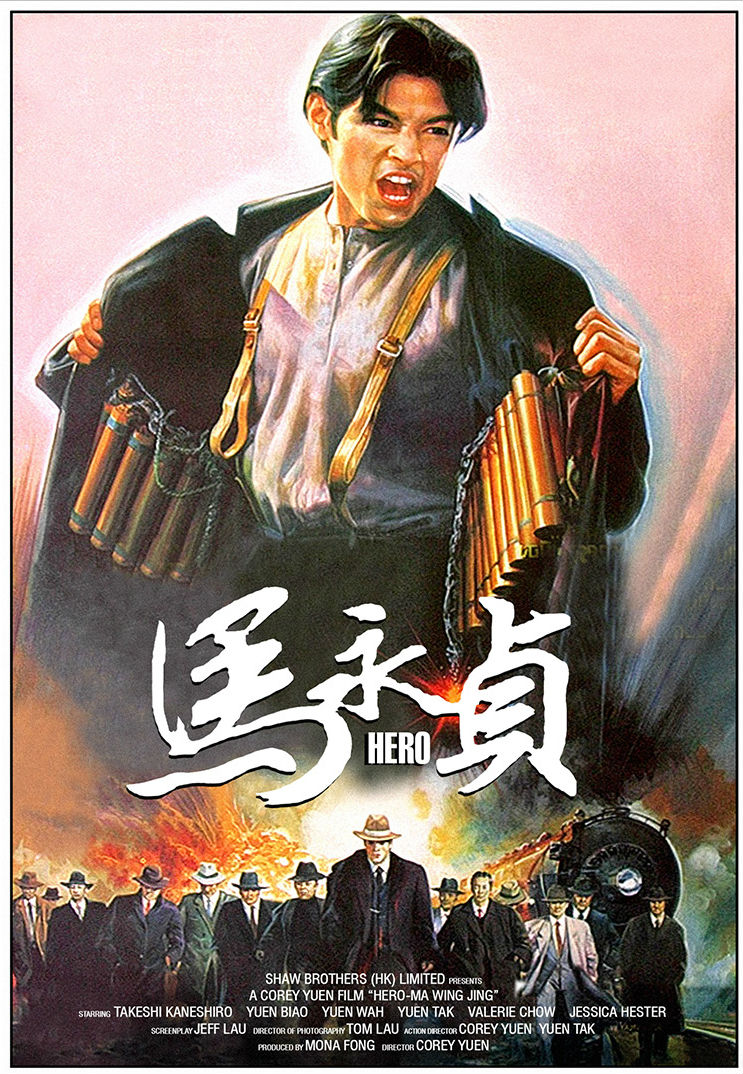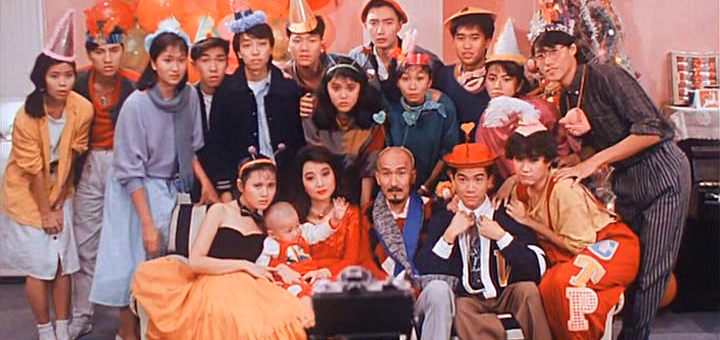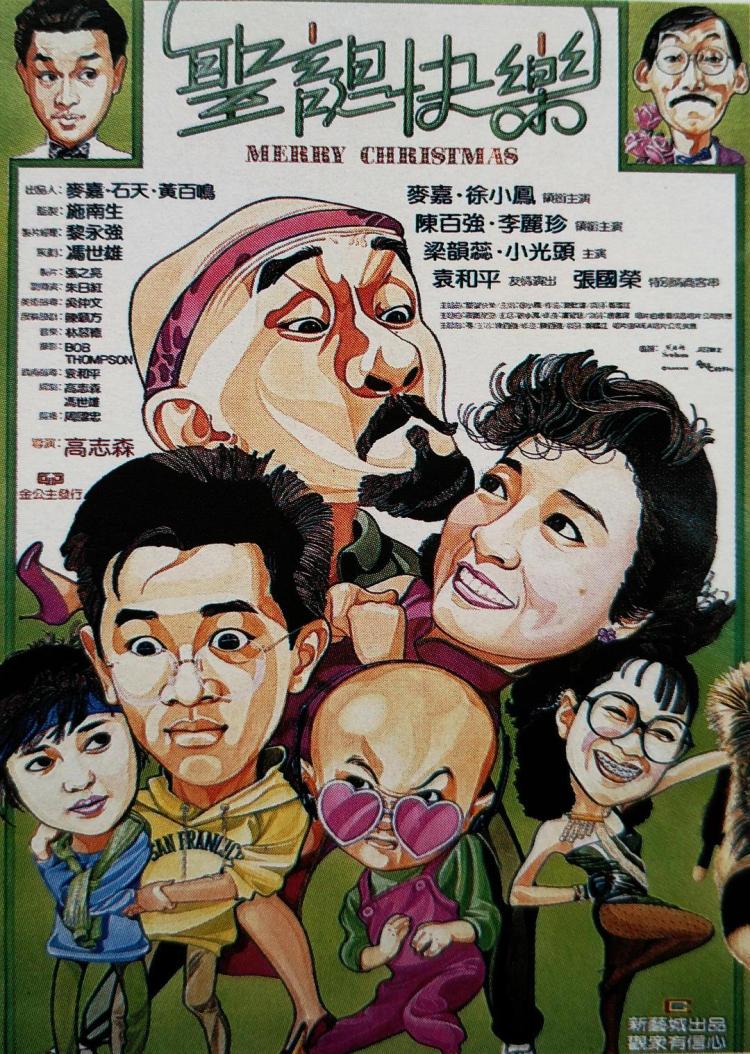
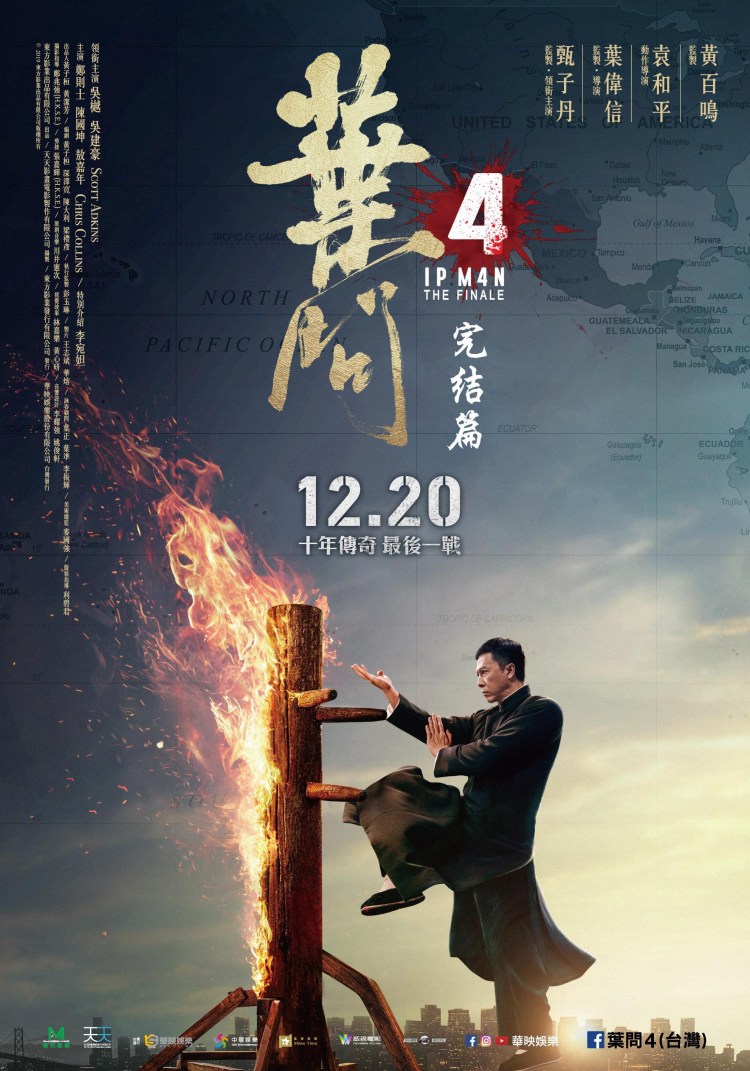
Merry Christmas (聖誕快樂, Clifton Ko Chi-Sum, 1984)

Merry Christmas poster 2The Lunar New Year movie solidified itself as a concept in the early ‘80s and is often an occasion for heartwarming silliness celebrating food and family. Arriving in 1984, Merry Christmas (聖誕快樂) shifts the zany action up to the Western festive season as a widowed Hong Kong dad struggles to express his feelings for the woman next-door who’s been looking after his young son while his two grown up kids contend with romantic troubles of their own in the rapidly developing city.

“Baldy” Mak (Karl Maka) is a newspaper editor who lost his wife some time ago. Though everyone else is getting into the holiday spirit, Baldy is celebrating his birthday which gives his goodnatured colleagues an excellent excuse to prank him and though it ends in him getting joke fired, it does eventually bring him a bonus and a new car. Meanwhile, he and the kids – earnest teenage son Danny (Danny Chan Bak-Keung) and aspiring model Jane (Rachel Lee Lai-Chun), are largely dependent on their neighbour, Aunty Paula (Paula Tsui Siu-Fung), for domestic assistance including looking after Baldy’s toddler son, Baldy Junior, while he’s out at work. Danny and Jane are hoping their dad will eventually ask Paula to marry him, but he remains diffident. Until, that is, she drops the bombshell that she might not be able to look after Junior anymore because she’s had a letter from her cousin in America (Yuen Wo-Ping) who wants to marry her and she’s thinking of emigrating to be with him.

Baldy, not a bad man but unafraid to resort to underhanded tactics, spends the rest of the picture avoiding telling Paula how he really feels in favour to trying to break up her possible romance with her cousin. An early joke sees him fighting for parking spaces in his beaten up car, something which eventually gets him into an argument with the good-looking yet similarly underhanded John (Leslie Cheung Kwok-Wing) who fakes a limp to get nearby bystanders to push Baldy’s car out of the way, causing Baldly to try and get his own back only for it to hilariously backfire. John, meanwhile, takes an instant liking to Baldy’s daughter Jane, which instantly gets Baldy on edge. A typically strict dad, he takes Danny aside to instruct him about how to get the best bang for his buck taking girls to the pictures, but is quick to warn Jane that no man can be trusted and she’s to be home by 10pm at the latest. Needless to say, it’s a moment of minor embarrassment for him when the guys at work are looking at tasteful glamour shots to include in the paper only to discover that Jane’s been earning a few extra pennies as a model.

The double standards only increase as Baldy and Danny hatch a plan to put Paula’s cousin off by convincing him she’s actually a sex worker and in debt to a sleazy pimp. Meanwhile, Baldy takes him out on the town to show him a few sights while setting up amusing tableaux that make him out to be a violent pervert, groping women, kissing men, and kicking little kids in the face. Paula, meanwhile, remains thoroughly fed up with Baldy’s antics, keeping her composure when he tries to make her jealous by dressing like a teenager and cosying up to Danny’s love interest “Jaws” (beautified by getting her braces taken off and wearing contacts), but asking her cousin to secretly record everything Baldy says to him on their weird “date” around Hong Kong.

Charming period details abound, like the “3D” adult movies Baldy rents (and inappropriately watches with Baldy Junior) which have to be watched with “sunglasses”, and Baldy’s constant inability to hail a cab coupled with his atrocious parking techniques and delightful pre-photoshop efforts to frame the cousin and then expose him with a slideshow lecture delivered solely for Paula’s benefit. Meanwhile, the festive spirit is ever present with the ubiquitous Christmas trees, Poinsettia forest outside Baldy’s door, and seasonal set piece at Paula’s nightclub. Delightfully silly, Merry Christmas is a zany holiday treat, a middle-aged rom-com in which a slightly ridiculous widower and a lonely nightclub singer discover the courage to fight for love thanks to a little Christmas magic and the fierce support of meddling family members.


Original trailer (no subtitles)

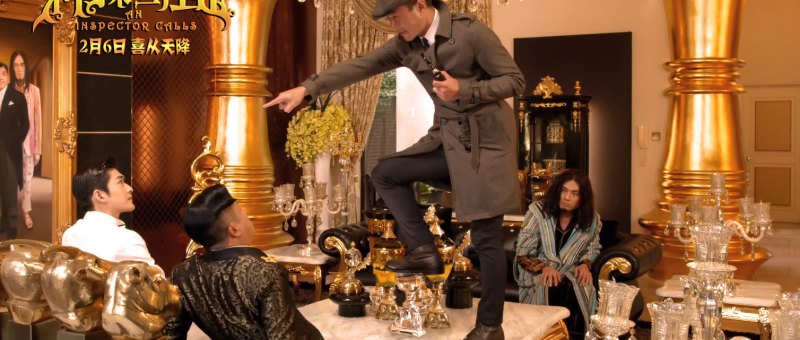
An Inspector Calls (浮華宴, Raymond Wong & Herman Yau, 2015)

Inspector Calls poster 1J.B. Priestley’s An Inspector Calls found itself out of favour until a phenomenally successful stage production brought it back into the national consciousness in the early ‘90s, but even if some decry its inherent melodrama as a relic of another era the play’s comments on the entrenched classism of British society sadly still ring true. An Inspector Calls is many things, but one thing it defiantly is not is funny – a series of concentric tales of betrayals and oppressions, Priestley’s drama lays bare the callousness with which the privileged bolster their position through the story of one faceless factory girl standing in for an entire social class whose lives are often at the mercy of those “above” them.

In adapting Priestley’s play as a Chinese New Year movie (a strange concept in itself), Herman Yau and Raymond Wong relocate to contemporary Hong Kong, re-conceiving it as a broad comedy of the kind one might expect for the festive period. The setup is however still the same. The Kau family will be receiving a visitation – this time from Inspector Karl (Louis Koo Tin-lok) who has some difficult news for each of them. Three hours previously, a young woman committed suicide in her apartment by drinking bleach, taking the child she was carrying with her. Inspector Karl views this as a double murder and, based on the diary they found at the crime scene, has brought the reckoning over to the Kaus’.

The Kaus, at the present time, are preparing an engagement party for daughter Sherry (Karena Ng) who will be marrying the handsome younger brother of a factory owner, Johnnie (Hans Zhang Han). What no one can know is that the family business is going under, the Kaus are broke, mum and dad don’t get on, and all of this finery is merely rented affectation. The only member of the family who still seems to have something like a social conscience – Tim (Gordon Lam Ka-tung), the 27-year-old younger son, is viewed by all as a feckless and naive hippy, hiding out in his childhood bedroom, still all fluffy cushions and toy soldiers.

As the Inspector explains, he holds Mr Kau (Eric Tsang Chi-wai) responsible because the woman once worked in his factory and he fired her for participating in a strike for better pay and conditions. Sherry got her fired too when she worked in an upscale fashion store. Johnnie knew her during an unfortunate period as a bar hostess, and Tim as a masseuse. Mrs Kau (Teresa Mo Shun-kwan), who heads up a woman’s charity and publicly espouses tolerance while privately judgmental, once turned her down for familial support seeing as the father of her child was still living. She advises holding him to account and if he won’t pay, forcing his family to take responsibility on his behalf. The irony being that the father is likely her own son and that if this poor woman had rocked up at the Kaus’ with a sad story and an infant in her arms, she would have been met with nothing more than contempt save perhaps some hush money to send her on her way.

The Kaus are merely a series of examples of the various ways the wealthy mistreat the poor, wielding their sense of entitlement like a weapon. Yau and Wong adopt an oddly Brechtian approach in their expressionist production design with the faceless masses identified only through titles – the word “labour” on the workers’ caps, “manager” in the fashion store, “secretary” at the foundation. None of these people are really worthy of names because they will always be “less” while the Kaus are “more” in more ways than one. Actions, however, have consequences. The family console themselves that this is all far too coincidental, that they couldn’t all have known the “same” woman in different guises, but that in many ways is the point – she isn’t one woman but all women, used, abused, and discarded not only by heartless men but by jealous and judgemental members of her own sex too. Better than her than me, they might say, but that’s no way to run a healthy society as the sensitive, slightly damaged Tim seems to see.

Like the Birlings, the Kaus attempt to brush the Inspector’s warning off, thinking it’s all been some elaborate prank that can they laugh about and then forget, but there will be a reckoning even if they attempt to gloss over the various revelations regarding their moral failings. Wong and Yau’s vague gesturing towards the outlandish greed of the hypocritical super wealthy is undercut by the ridiculous New Year slapstick of it all despite the Metropolis-like production design and expressionist trappings, giving in to an excess of its own in an extremely unexpected musical cameo from a martial arts star and the decision to end on a social realist photo of an innocent, pigtailed proletarian woman dressed in red. Nevertheless, strange as it all is the bizarre adaptation of Priestley’s play has its own peculiar charm even if it’s outrageousness rather than moral outrage which takes centre stage.


Currently available to stream online via Netflix in the UK and possibly other territories.

Original trailer (English / Traditional Chinese subtitles)

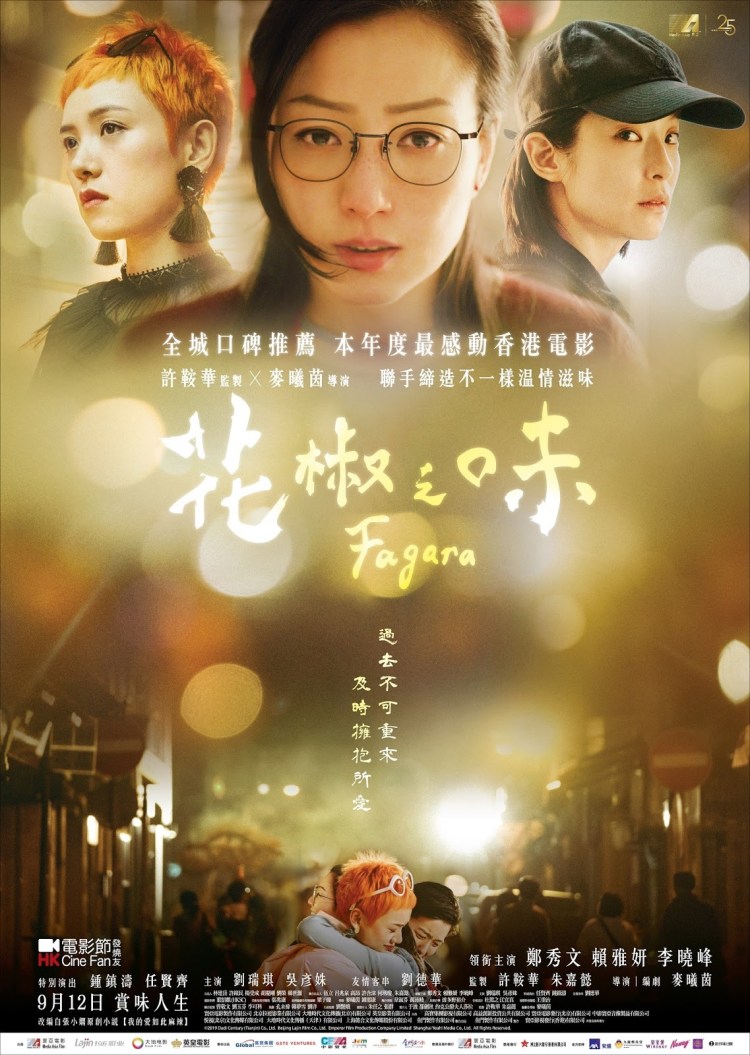
Fagara (花椒之味, Heiward Mak, 2019)

Fagara poster 2“We remember the bad and forget the good” a regretful mother laments, trying to find the right words to connect with her emotionally distant daughter. Heiward Mak’s adaptation of the Amy Cheung novel Fagara (花椒之味, Hjiāo zhī Wèi) melts a subtle One China narrative into a heartwarming meditation on unexpected connections and the modern family as three women from three cultures discover an instant and easy bond, meeting as sisters in adulthood united in a shared sense of hurt and disappointment but learning to find the good among the bad as they process the legacy of their late father and the pain he left behind.

Harried middle-aged travel agent Acacia (Sammi Cheng Sau-man) spends her days fending off junk calls and booking discreet getaways for executives going on “business trips” with their secretaries. So, when she gets a panicked message that her estranged father Ha Leung (Kenny Bee) is in hospital she naturally assumes it’s a scam, only it’s not – she needs to get across the Harbour to Victoria Hospital, but in a motif that will be repeated finds it difficult to get a cab willing to take her. By the time she arrives, it’s too late. Her dad has passed away. So little does she know about him that she has to double check what year he was born on his driving licence, passed to her by a young man working at her father’s “family” hotpot restaurant.

On charging his phone, Acacia is shocked to discover that he’s been exchanging text messages with two other young women, apparently his daughters from other relationships in Taiwan and on the Mainland. Thinking they ought to at least know, Acacia invites them to the funeral, which, embarrassingly enough, she has arranged as a Taoist ceremony because she was unaware her father was actually a Buddhist (something apparently known to some of the other guests only they were too polite to say). Meeting for the first time and setting aside their mutual resentments, the three women find an easy connection, uniting to save the restaurant by figuring out Ha Leung’s secret recipe for his famed Fagara soup.

Though Mak largely minimises the obvious political allegory in favour of the human story, it’s impossible to miss the message that these three women are all daughters of the One China, let down by a well meaning but flawed “father” who nevertheless loved them all if imperfectly. Given the current tensions, some might find the implications of that message trite at best, but you can’t argue with the positivities of finding common ground as children failed by distant paternity, or as Acacia puts us, “regardless of the choice he made, he hurt us all”.

Cherry (Li Xiaofeng), the daughter from the Mainland, counters that she was never “hurt” because she was never anyone’s “choice”. Abandoned twice over, Cherry has lived with her grandmother (Wu Yanshu) since her mother remarried in Canada, leaving her behind. A young woman of her times, she’s staked everything on Instagram fame, rejecting the idea of marriage in favour of perpetual independence but unselfishly. The most family oriented of the sisters, she is determined to take care of her grandmother even while she tries to push her away partly in vanity, afraid to let her see the vulnerability of ageing, and partly not wanting to feel as if she’s trapped her granddaughter in a life of servitude to an old woman that will leave her lonely in her own old age.

Acacia meanwhile also remains lukewarm on the idea of “family”, resentful towards her father and insecure in her relationships, breaking up with a meek but supportive fiancée (Andy Lau Tak-wah) because he was only ever bold enough to say he was “OK” with getting married. Striking up a friendship with a cheerful doctor (Richie Jen Hsien-chi) who knew her father, she meditates on her future while trying to sort out her complicated feelings about her father’s “family” hotpot shop.  What she discovers is that her father, while useless at the business of family, had a gift for the family business, turning the hotpot shop into a makeshift community offering second chances to those who couldn’t find them elsewhere.

Uncle Leung, as they called him, was also the only one to encourage Taiwanese daughter Branch (Megan Lai) to follow her dreams when everyone else told her to give up and settle down. Unlike Acacia and Cherry, Branch has a relationship, albeit a strained one, with her mother (Liu Juei-chi) who, as she reveals to Acacia, struggles to connect with her daughter, never quite knowing the right words to say, always striking on the ones sure to work the wound. Heavily coded as gay, Branch is aloof and closed off, literally shutting a devoted young woman out of her life, but begins to brighten on connecting with her sisters, shifting from silent but deeply felt sadness at the funeral to a cheerful solidarity helping to make the restaurant a success. Of course, it turns out that the secret ingredient in the soup was memories of everyone Ha Leung had loved, literally a “family hotpot”. Finally learning to remember the good as well as the bad, Acacia finds the strength to forgive her father, seizing her independence and driving off into a freer future full of possibility but with her sisters, in spirit at least, right alongside her.


Fagara was screened as part of the 2019 Five Flavours Film Festival.

Original trailer (English subtitles)

G Affairs (G殺, Lee Cheuk-pan, 2018)

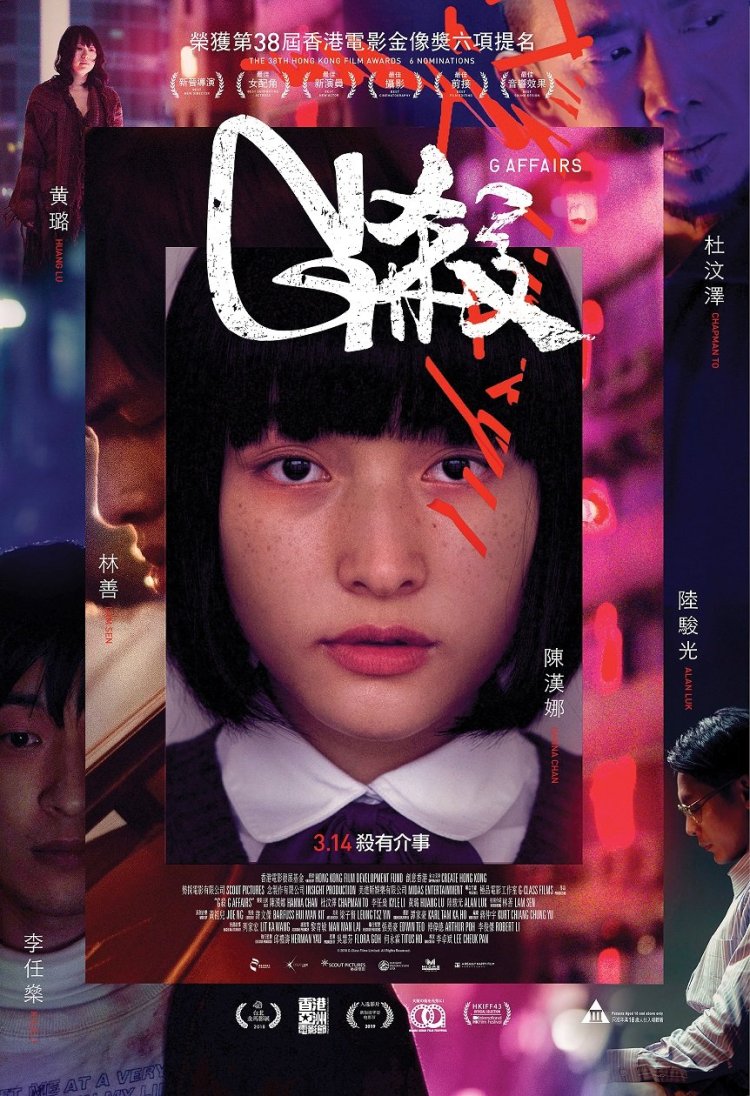
G Affairs poster 1“Many think Hong Kong is getting better, but I can tell you for sure Hong Kong is getting worse” says the dejected hero of Lee Cheuk-pan’s striking debut, G Affairs (G殺). Reminiscent of Fruit Chan’s landmark chronicle of handover malaise Made in Hong, G Affairs finds itself in a city once again in crisis where the young struggle to see a future, abandoned or misused by the older generation who think only of themselves in an increasingly nihilistic world of violence and transaction.

Lee opens with an arresting scene shot in 4:3 in which a teenage boy practices his cello while a scantily clad woman opens the door only to be dragged back to the couch by a burly policeman who proceeds to have his way with her until a severed head suddenly bounces in through the French doors. The story of how the head came to land there brings together a disparate collection of people from all walks of life – teenage cello player Tai (Lam Sen), his classmate Yuting (Hanna Chan), her autistic friend Don (Kyle Li), her corrupt cop dad “Master Lung” (Chapman To Man-chak), former sex worker stepmother Mei (Huang Lu), and high school teacher Markus (Alan Luk Chun-kwong) with whom Yuting has been experimenting with oral sex.

Today’s lesson is brought to us by the letter G – chosen by Don as his favourite letter in the Western alphabet connected as it is to many of his beloved computer words, but reminiscent to Yuting of a human skull with its jaw hanging open. Above it all, Yuting resents her fellow students at the elite high school, especially the immature boys who nickname her “G” behind her back for a number of reasons ranging from an unflattering comparison to a busty classmate and the fact that her stepmother was a sex worker the slang word for which sounds like G in Chinese. Tai, meanwhile, is not well liked either and also considers himself superior to his surroundings, proclaiming that only losers need friends and frequently dobbing in his classmates for their bullying behaviour. Don, a few years older, is associated with another G word – “gay” which people seem to assume him to be for unclear reasons, and is an outcast because of his autism.

The three seem to be more or less abandoned by their parents. Tai lives alone, a melancholy musician who believes that “things of value cannot be found in the world” only in music, literature and art, while his parents have long since departed in search of riches. “A family that’s never home is not a family” he explains to mainlander Mei who hoped to find a new life for herself in Hong Kong but even with her present “family” feels even more alone than she ever had before. Her stepdaughter Yuting intensely resents her, regarding her father’s affair with Mei as the primary cause of her mother’s gastric cancer and subsequent death. Yuting also resents her father, ashamed of his embarrassing gangster antics and tendency to spout high minded quotes to mask his essential superficiality. Neglecting his daughter, Lung positions himself as a kind of father figure to Don to whose parents own an internet cafe which facilitates some of Lung’s dirty work.

Dirty work is something of a Lung speciality but as Tai says, he’s not even that bad a man merely someone trying to make a fast buck in the burgeoning Hong Kong underworld. Calling himself “Master Lung”, he thinks of himself as maintaining his own kind of order – “one country, two systems” as Yuting later ironically describes her complicated home life, but may actually be on the “better” side of law enforcement as we witness the legitimate police waterboard a terrified Don who is largely unable to answer their questions in the way they insist on asking them, and physically abuse a guilty Markus while threatening to expose his illicit relationship with Yuting and, it turns out, her stepmother Mei. Another middle-aged hypocrite, Markus confesses only to introducing Mei and her sex worker sister to his church group in the belief that they “deserved salvation”.

That may not be a view commonly held by most as Mei finds out during an impassioned conversation with Yuting’s headmistress who berates her for her “shameless” past. Speaking as a mainlander, a trafficked woman, and a sex worker, Mei hits back by asking what right Hong Kong people have to look down on her and why it is her background in sex work is so problematic that everyone seems to be telling her it would be inappropriate for her to be a mother which is only what she’s trying to be to Yuting despite her animosity. Lung might have married Mei, but he wastes no time denigrating other mainland women trafficked to the Hong Kong underworld and cooly brushes off complaints after shooting a man with the justification that no one cares about another dead mainlander. Mei does her best to be “happy”, but learning that her own mother has been executed by the Chinese state for opposing its oppression leaves her adrift, longing to go “home” but knowing there is no home to go to and no safe land even in Hong Kong.

Children are the adults of tomorrow, Yuting explains, but the adults of today have robbed them of any possible future. Lee’s depiction of contemporary Hong Kong is one of increasing chaos, a hopeless place that has lost its way. The older generation think only of money while the young want something more but struggle to find anything of meaning in the soulless modern world which seems to be imploding all around them. Strangely hopeful, yet infinitely nihilistic, Lee ends on the single word “Go” as his troubled protagonists find their own kind of peace in the abyss of the modern city.


G Affairs was screened as part of the 2019 London East Asia Film Festival.

International trailer (English subtitles)

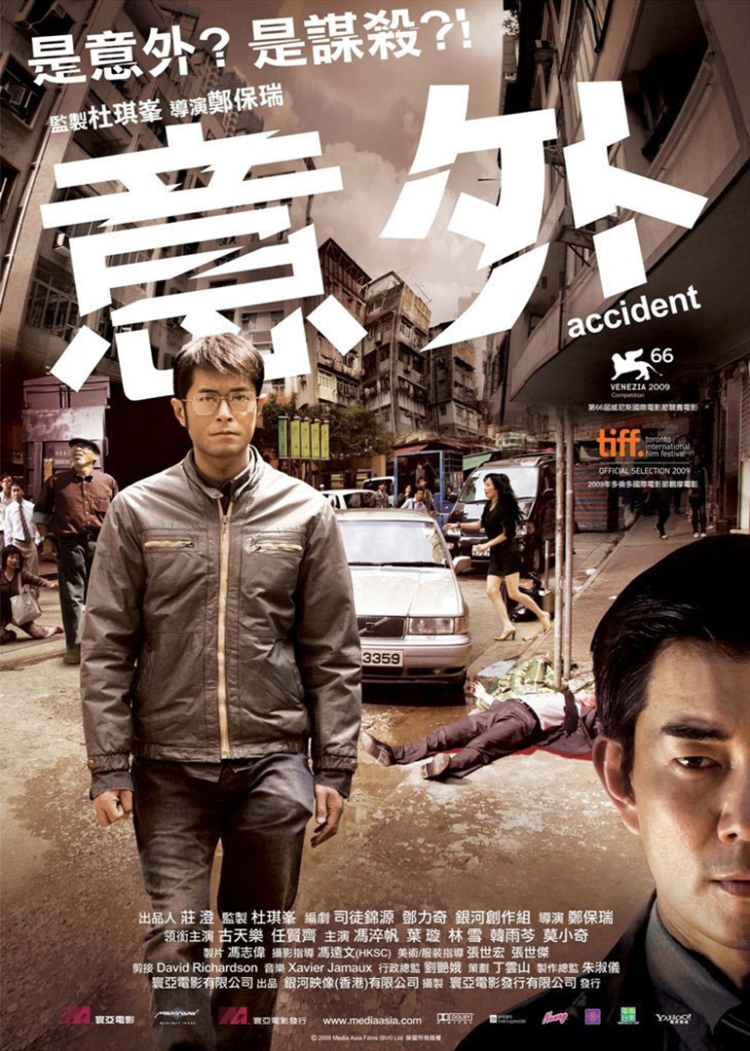
Accident (意外, Cheang Pou-Soi, 2009)

Accident poster 1Is an accident ever really just an accident? The cosmos may be conspiring against us, but one can’t rule out a man-made conspiracy in a world as venal and corrupt as ours has become. Riffing off The Conversation, Cheang Pou-Soi’s The Accident (意外) stops to ask if you really do reap what you sow or if you merely think you do as its increasingly paranoid hero attempts to manipulate fate for his own ends only to find himself encircled by a net of his own making.

The Brain (Louis Koo Tin-lok) is the head of a very particular gang. A hitman of sorts, he specialises in untraceable crimes, choreographing elaborate pathways to death that appear indistinguishable from accidents. He knows that he is not the only such orchestrator of endings and that he has likely made enemies and rivals as a result of his activities and so is extraordinarily careful when it comes to the execution of his work.

It is, therefore, a concern when a bug appears in a routine job. Uncle (Stanley Fung Shui-fan), the oldest member of the team, drops a cigarette butt. It might seem like a small thing, but it makes a mark and leaves a little piece of Uncle at the crime scene – a tiny fragment that could become a part of a larger whole exposing the entire enterprise. The Brain is so careful that he even uses a hankie to funnel change into the bus driver’s ticket box, but he’s known Uncle a long time and is loath to cut him loose for a “minor” infraction even if the buzzing in the back of his head reminds him that maybe Uncle’s lapse of judgement wasn’t mere sloppiness.

A man attempting to live with tragedy by imposing order on a chaotic world, The Brain’s sense of cosmic coherence begins to unravel after the next job goes horribly wrong. Someone is plotting against him and one (or more) of the team must be in on it. He tracks his mark to an insurance broker (Richie Jen Hsien-chi) who is his mirror image in every respect as another gambler against the random, spies on him, and almost becomes him in installing himself in the apartment beneath his and literally tracking his every move thanks to a madman’s map on the ceiling and some carefully placed bugs.

Yet, is his assumption right? This could all just be a series of coincidences ranging from an old man’s dementia, to inauspicious weather, and unforeseen tragedy. The Brain, however, needs to believe in his own primacy of agency, that there are no “coincidences” and everything that befalls him is a product of his own actions. He wants revenge – against the man he believes has deliberately punctured his carefully controlled world, but also against the universe itself and the various ways it has misused him.

Fate, however, has other ideas and history later repeats itself with relentless and horrifying cruelty. The Brain, perhaps himself wandering into an “accident” of his own making, chases death in his double who finds himself touched by The Brain’s curse – uncertain yet convinced that he has been the victim of more than circumstance and vowing revenge on the (presumed) orchestrator of his fate, becoming just as strung out and paranoid as The Brain himself.

Produced by Milky Way, Accident does indeed share something with To’s whimsical worldview in which it is the random, inexplicable acts of chance which govern our lives. Fate cannot be outrun or out-thought, there is an accident waiting for all of us (who are each products of the accident of birth). Free will is an illusion, and The Brain will pay a heavy price for the depth of his faith its efficacy and rebellion against a chaotic universe through his attempt to use its propensity for random chance against it and for his own ends. A heady mood piece filled with the intense anxiety of existential unease, Cheang Pou-Soi’s perfectly crafted chronicle of a fragmenting consciousness spinning ever deeper into an entropic well of self-destruction is as melancholy an encapsulation of the human condition as one may hope to see as its hero battles valiantly against the inevitable while secretly perhaps longing to lose, like a degenerate gambler betting against fate.


Currently streaming via Netflix in the UK (and possibly other territories).

Original trailer (Cantonese with Traditional Chinese & English subtitles)

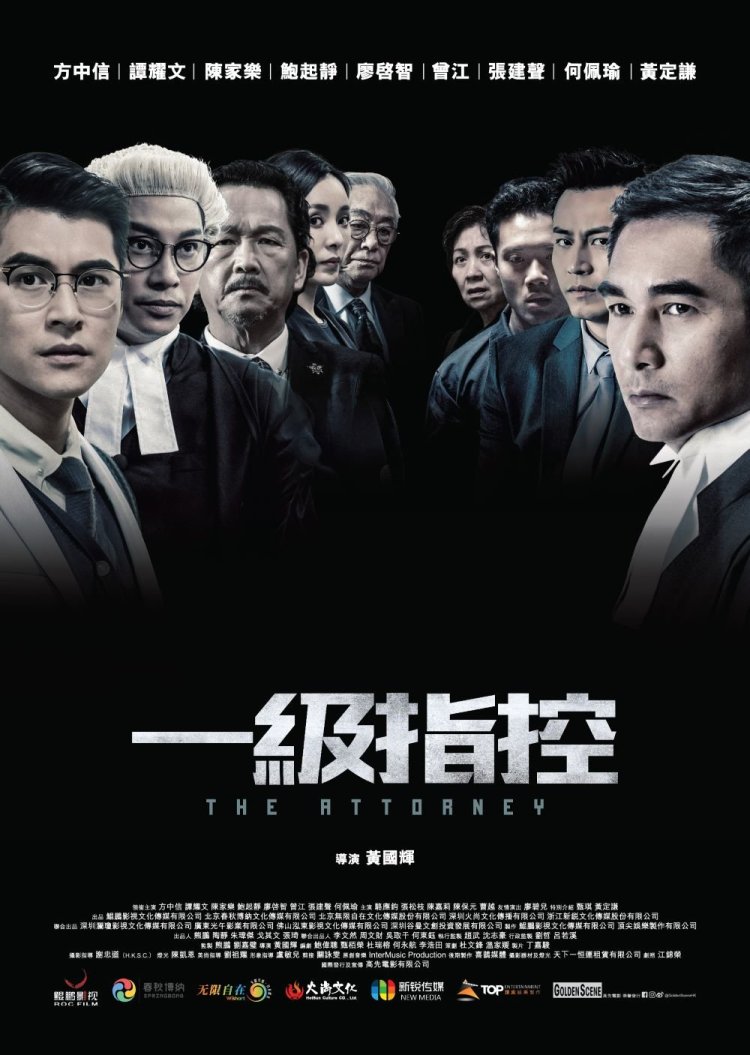
The Attorney (一级指控, Wong Kwok-fai, 2019)

The Attorney poster 1What price justice? Wong Kwok-fai’s legal thriller The Attorney (一级指控) puts an unequal society on trial but discovers that to beat shadiness you might need to get a little shady and a healthy bit of deviousness may serve you well if it’s offered in service of a noble ideal. Then again, it’s a slippery slope towards the abyss if even the proponents of law aren’t above a little judicial finagling to ensure that “justice” gets done in a society which continues to defer to those with the biggest pockets rather than protecting those of meagre means.

We meet our two attorney heroes in the middle of their respective cases. Jaded hot shot Lei You Hui (Alex Fong Chung-sun) is defending a journalist who broke an important story about corruption in the competition for places at prestigious schools from a defamation charge, while the idealist rookie Kelvin (Carlos Chan) is defending a frail old woman held up on a charge of operating without a proper business licence. Lei wins his case, and Kelvin loses. Lei mocks Kelvin’s lack of success, and Kelvin has only contempt for Lei’s cavalier attitude towards the upholding of justice.

The action begins when a 25-year-old man, Lee, is found lying in a pool of blood next to the dead body of a young woman, Ka-yee, who is later discovered to be the daughter of a billionaire businessman, Kwok (Liu Kai-chi). The case seems open and shut. Lee claims he passed out and found the body when he woke up but the circumstantial evidence against him is overwhelming. His grandmother, Chu (Nina Paw Hee-ching), of course believes that he is innocent and enlists the best lawyers she can get access to, leading her to a solicitor who introduces her to Kelvin who is determined to see that the young man gets a fair trial. Lei, meanwhile, has a personal interest in the case in that his late wife was killed in a shopping mall collapse 10 years previously which also took the lives of Lee’s parents. Lei prosecuted a class action law suit, but lost. The shopping mall was constructed by Kwok’s company, which gives him an additional reason to want to help aside from trying to make things up to Lee and Chu whom he feels he failed all those years ago. 

Wong wastes no time in demonstrating that “justice” is a nebulous concept when society is necessarily set up to benefit the rich. Ka-yee’s body was discovered in a building belonging to a property magnate, Tsai Chi-wai (Patrick Tam), who is currently running for political office on a platform of equality for all. Chi-wai is, however, a member of the super rich elite who believes he can do as he pleases because he is protected by his wealth and privilege. Lee, by contrast, is a poor boy delinquent who ordinarily wouldn’t have access to a fancy lawyer to clear his name and most likely would have been torn apart by the elite prosecutor those with vested interests have ensured is attached to the case even though it’s a simple enough affair. 

Yet, as Lei discovers, the roots of corruption lie in the understandable desire to protect one’s children even when they’ve made terrible mistakes. Meeting with Chi-wai’s smarmy father, he discovers a man who talks up his youthful high ideals of union activities and working for the workers but later emphasises his hard won cynicism in insisting that no one with a brain seriously believes in things like truth and justice, only self interest. Tsai wants to protect his son at all costs, if only to protect himself by getting his boy into high office. Meanwhile, Kwok is left with questions about his own responsibility for his daughter’s death. If having literally billions in the bank can’t keep your little girl alive, then what use are they?

Then again, having billions in the bank is pretty useful leverage for getting your own way even if you eventually have a change of heart about enabling societal corruption. Chi-wai snarls that you need to be smart to survive, but according to Kelvin saving lives is more important than winning. Lei, who had given up his lofty ideals after being unable to get “justice” for his wife’s death begins to regain his faith in the law thanks to Kelvin’s influence and the accidental coincidence of getting a kind of revenge on Kwok by showing him the error of his ways in illuminating the truth behind his daughter’s death. To do that, however, he’ll have to bend the law a little which leaves him a compromised figure if for the best of reasons as he wilfully demonstrates the flaws in a legal system which is in itself inherently corrupt in its avowal that everyone is equal before the law while ignoring the fact that not everyone has access to the same level of “justice”. Wong’s conclusion may be a little rosy as even the most jaded of legal minds finds himself minded to rebel against the system, but there’s no denying his purpose as Lei decides to protect his daughter by protecting his society from the forces which threaten to blacken her future.


The Attorney screens in Chicago on Oct. 10 as the closing night gala of the ninth season of Asian Pop-Up Cinema. Actor Kenneth Tsang Kong, scriptwriter Frances To, and xxecutive producer Cherrie Lau will be in attendance for an introduction and Q&A.

Original trailer (English subtitles)

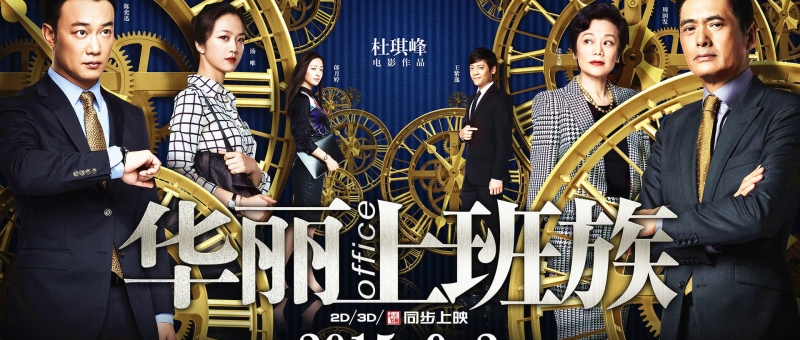
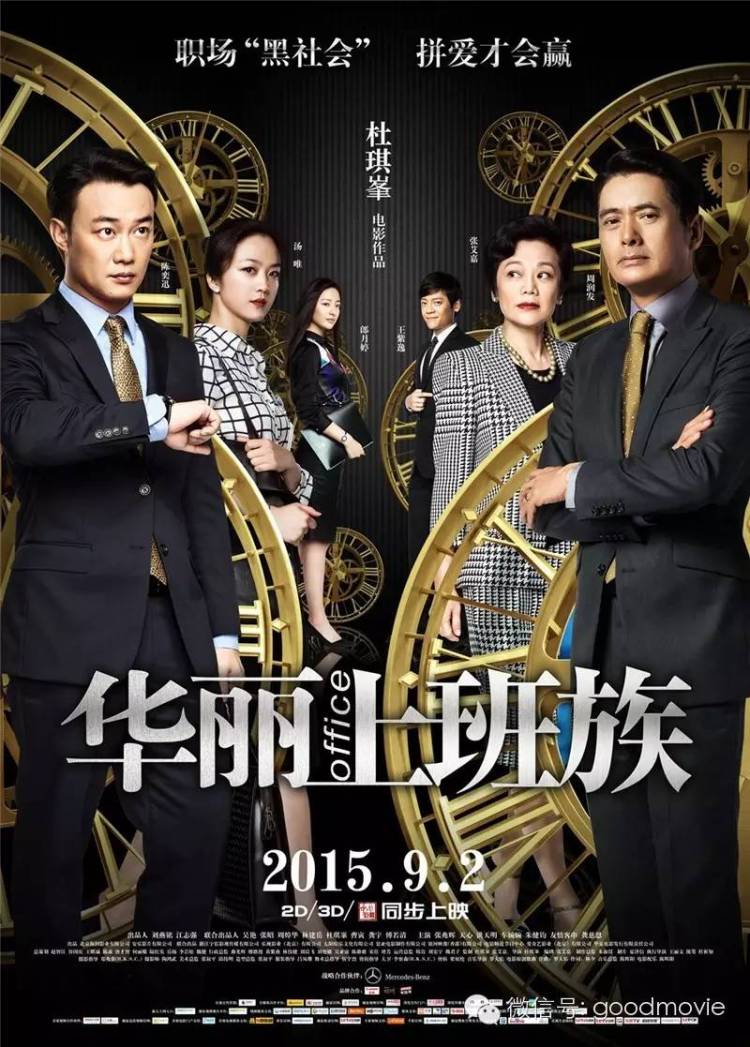
Office (華麗上班族, Johnnie To, 2015)

Johnnie To office poster 1Can love and capitalism walk hand in hand? Perhaps not, at least in Johnnie To’s beautifully choreographed musical exploration of high stakes finance and moral bankruptcy, Office (華麗上班族). Adapted from Sylvia Chang’s stage play, Office situates itself on the edge of an abyss as the 2008 financial crisis edges its way towards Hong Kong while enterprising businessmen try to figure out how to ride the waves even if that means standing on someone else’s shoulders as they sink deeper into the moral morass that is the modern economy.

Top Hong Kong trading company Jones & Sunn is about to go public. CEO Winnie Chang (Sylvia Chang) has long been running the show for her boss and lover, Chairman Ho (Chow Yun-fat), who has promised her a sizeable dividend once the floatation is complete. Meanwhile, two new interns have just joined the company, eager to make their marks in the corporate world and ensure they survive their three month probation. Bright-eyed and bushy-tailed Li Xiang (Wang Ziyi), “Lee like Ang Lee, Xiang like dream”, just wants to work hard and get rich so he can live a nice life, while his colleague Kat Ho (Lang Yueting) has just returned from studying economics at Harvard and appears to be slumming it in a lowly internship while (unconvincingly) pretending to be from a humble background. The funny thing is no one seems to pick up on the fact Kat has the same surname as the company’s owner, or they might have figured out she’s the boss’ daughter either forced to learn the trade from the ground up or working as a spy among the regular employees. In any case, Li Xiang is smitten.

Love, it seems, is the destabilising force at the centre of this great machine. CEO Chang, an all powerful woman in a male dominated industry, rules the office with a will of iron but allows herself to be manipulated by Ho with whom she has been having a longstanding affair. Ho has a wife in a coma, but neither of the pair object to the office gossip which brands Chang as “Mrs. Ho”, seeing it only as cutely romantic rather than a slight on Chang’s very real authority. Meanwhile, lonely in Ho’s lack of serious commitment, Chang has also been sleeping with her favourite underling, the feted David (Eason Chan), who in turn is getting fed up with feeling like a spare part who’s hit the peak of his career. Unbeknownst to Chang who may have taken her all-seeing eye off the ball, David has started playing with fire in gambling with company money and losing badly. As a counter measure, he’s begun romancing lovelorn accountant Sophie (Tang Wei), who unlike Chang, is still facing the work/home dilemma in that her fiancé back on the Mainland is pressuring her to give up work and settle down.

Li Xiang is very keen on following his “dreams” which in the beginning are charmingly naive – he wants a nice life for himself and the ability to pay off his friends’ debts (seemingly for entirely altruistic reasons, not as an excuse to show off). Slowly, however, his new world begins to corrupt him. He’s irritated that he’s not allowed to ride the executive elevator and badly wants in, but is still green enough to chivalrously cover up for Kat’s mistakes, while Kat is so clueless that she forgets turning up to work in designer outfits and in a chauffeur driven car is going to blow her cover. Li Xiang sees through her, but only to the nice part – it never really occurs to him she’s a mole or planning to betray Mrs. Chang who is kind of her step-mother. Chang isn’t blind to office politics. She sees Li Xiang take the blame for Kat and even likes him for it. She also likes his “originality” and plans to take him under her wing for her new expansionist plans but finds herself once again blindsided by all the difficult romantic drama bubbling under the surface of coldhearted capitalism.

David and Sophie decide they want to start a “love revolution”, but David has already gone to a dark place and his romantic confession is immediately followed by a manipulative request to get Sophie to help him with his nefarious plans. Meanwhile, Li Xiang’s gradual descent into corporatism begins to sour Kat who’d taken a liking to him because he wasn’t like everyone else. They didn’t mean to do it, but they’ve betrayed themselves and others in their relentless pursuit of conventional success. Drunken salarymen at a local bar ask themselves what all of this is for when their kids don’t recognise them and they barely recognise themselves, yet no one quite has the guts to get off the corporate train and go do something else.

In To’s elaborate set design, no one is ever truly able to leave the office. An elegant construction of neon and steel, the abstract theatricality of To’s artificial universe only underlines its essential meaninglessness – something the Office’s denizens eventually come to understand whether they choose to stay or not. As Chang quips, smart guys control money and stupid ones are controlled by it, but she herself is wise enough to know when the game is up and it’s time to move on. Did love destroy the system or did the system destroy love? Beautiful melodies telling us terrible things, To’s anti-capitalist musical crushes its earnest heroes under the wheel of progress while they dance blithely all the way over the edge.


Office screens in Chicago on Oct. 5 as part of Asian Pop-Up Cinema.

Original trailer (English subtitles)
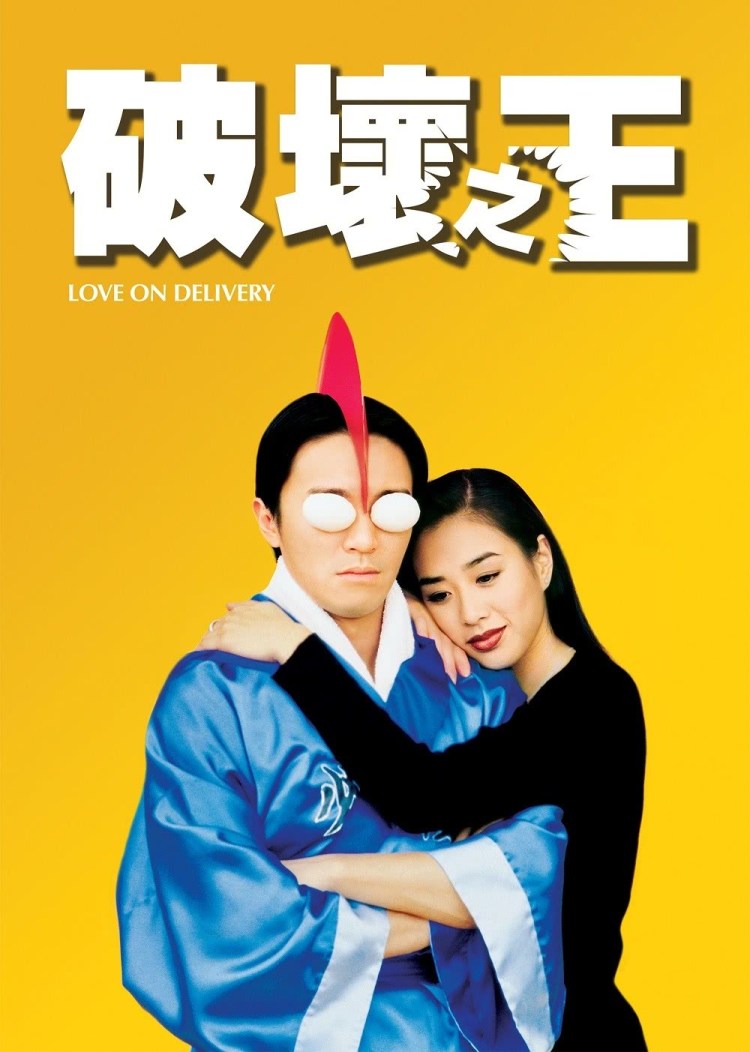
Love on Delivery (破壞之王, Stephen Chow & Lee Lik-Chi, 1994)

Love on Delivery posterBy the standards of ‘90s Hong Kong cinema, early Stephen Chow hit Love on Delivery (破壞之王) might seem refreshingly down to earth but make no mistake this under appreciated romantic comedy gem is as zany as you’d expect from the master of surrealist laugh a minute humour. A curious tale of cultural pollinations, Delivery once again stars Chow as an ineffectual loser trying to impress a girl but this time it’s a battle of wits he ends up winning when he unexpectedly finds himself standing up for “garbage” in the face of arrogant elitism.

The film opens not with its hero, but with judo champion Li (Christy Chung) who finds herself persistently sexually harassed by her slimy dojo leader who is apparently determined to win her because she’s the only woman capable of “throwing him over”. Seeing as his chat up lines are things like “my house is really big and my bed is really comfy come and see”, Li isn’t really interested which is why she ends up kissing in the right place at the right time delivery boy, He (not altogether against his will). He (Stephen Chow) is smitten, but Li has been looking for a “hero”, someone big, strong, and manly who can match her martial arts prowess but also respect her as a human being. Unfortunately, He is a weakling and a coward, as Li discovers when the boss of the dojo interrupts their first “date” and tries to thump He who activates his well honed coward skills and dodges the blow which lands squarely in the middle of Li’s face.

Fearing his romantic dreams have been well and truly shattered, He resolves to become stronger so he can fight back which is how he ends up meeting conman and stall owner “Devilish Muscle Man” (Ng Man Tat) who claims to be the last heir to “Ancient Chinese Boxing” as well as a close friend of Bruce Lee and Jackie Chan (only he doesn’t like to name drop). Devilish Muscle Man offers to “train” He in the ancient martial arts, for a “small” fee. Though all of Devilsh Muscle Man’s “training” is a sham, He starts to get quite good at it and eventually defeats the dojo boss whilst wearing a giant fluffy Garfield head. However, a new challenger soon enters the arena – a childhood friend of Li’s who went to Japan and has become an “elite” karate champion claims to be the mysterious Garfield head, stealing He’s thunder and Li’s heart along with it! 

Chow may be in a relatively restrained mood, but there are pop-culture references and in jokes galore which eventually culminate in a Hong-Kong vs Japan standoff in which Chow ends up inheriting Devilish Muscle Man’s kung fu persona which saw him fighting in a strange costume inspired by Ultraman (or possibly Chinese Ultraman rip off Inframan). Meanwhile, the big bad – Li’s ex Duan Shui Liu (Ben Lam Kwok-Bun), dresses in an old fashioned Japanese students’ uniform and rails about the “garbage” people of Hong Kong with their “garbage” kung fu which he plans to eradicate through affirming the primacy of karate as the best and only real martial art. He’s first problem is that he actually self identifies as “garbage” – he is only a poor delivery boy working for a tiny cafe which stoops to various scams to trick its customers out of their money and/or complaining and has no real prospects of being able to lift himself out of the gutter despite his new found fighting spirit and commitment to martial arts training. Nevertheless, He decides to own his “garbage” status to stand up for all the other “garbage” people resisting “Japanese imperialism” in the only way he knows how – by using his wits to trick Duan into allowing himself to be defeated.

He, a perpetually “nice guy” who gives away not only his entire wallet but all his clothes to a homeless father, eventually defeats the forces of “elitism” through an acknowledgement of his inferior fire power and an efficient use of the skills he does have to create a confusing atmosphere of chaos which ensures his final victory. A mildly subversive tale of fighting back against “the elite”, Love On Delivery is also a hilarious romantic comedy in which the nice guy gets the girl solely by demonstrating himself brave enough to face defeat with, well if not dignity, perhaps resolve.


Currently available to stream on Netflix in the UK (and possibly other territories)

Celestial Pictures trailer (Cantonese with English/Traditional Chinese subtitles)

Aberdeen (香港仔, Pang Ho-cheung, 2014)

Aberdeen posterFamilies, eh? Too much history, not enough past. In Aberdeen (香港仔), Pang Ho-cheung applies his cheeky magic to the family drama, taking a long hard look at an ordinary collection of “close” relatives each with individual secrets, lies, and hidden insecurities which could destroy the whole at any given second. Fishermen driven ashore by the tyranny of “progress”, these troubled souls will need to decide in which direction to swim – “home” towards sometimes uncertain comforts, or away towards who knows what.

Grandpa Dong (Ng Man-tat), a Taoist priest, lost grandma a long time ago and is now in a relationship with Ta (Carrie Ng), a night club hostess. Dong’s son Tao (Louis Koo Tin-lok), a celebrity motivational speaker, does not entirely approve, feeling that the slightly taboo nature of Ta’s profession tarnishes his own veneer of glamour and may eventually cause him a public image crisis. Meanwhile, Tao’s wife Ceci’s (Gigi Leung Wing-kei) showbiz career is floundering now that she’s no longer as young as she was and she finds herself slipping into the seedier aspects of the business as her manager encourages her to “entertain” wealthy men to secure roles while her friend keeps inviting her to paid “parties”. Dong’s daughter, Wai-ching (Miriam Yeung), is married to a doctor, Yau (Eric Tsang Chi-wai), who unbeknownst to her is involved (unlikely as it seems) in a passionate affair with his nurse (Dada Chan) which she seems to think is more serious than it is.

Dong laments that his family can’t seem to stand being in the same room for more than a few seconds before someone ruins the whole thing with a stupid argument which might be a fairly common phenomenon in many families, but he worries that it’s all down to the fact that his ancestors were fishermen and now they’re paying for the bad karma of having killed all those fish. In fact, bad karma was one of the reasons his dad got him apprenticed to a relative who trained him up to be a Taoist priest so he could atone for generations of sin but it seems like the well ran far too deep.

Each of our protagonists is individually insecure, lacking the confidence that their family members truly accept them. Tao, vain and deeply cynical, doubts his daughter Chloe (Lee Man-kwai), whom he insists on calling “Piggy”, is really his because he thinks she isn’t very pretty and doesn’t fit with his slick, celebrity image. Nevertheless, he does love her deeply and worries that she will suffer in the long term through her lack of looks though this too is partly a self-centred projection stemming from long buried guilt over having bullied another “plain” girl while they were at school. He is also blind to the effect his constant references to Chloe’s supposed plainness are having on his wife, Ceci, who is carrying the scars of longterm insecurity regarding her appearance on top of the difficulties she is facing in her career.

Wai-ching’s problems run a little deeper in that she is convinced her mother stopped loving her after a slightly embarrassing childhood incident. The past literally returns to haunt her in the form of some paper offerings she made to her mother’s spirit which have been mysteriously sent back “return to sender” by the Hong Kong Post Office. Wai-ching’s mental instability seems to be a worry to her husband, but not so much so that he can’t just forget about it when his nurse comes calling with one of her cute little notes announcing that she’s in the mood.

Dong and Yau are in similar positions, each identifying with the figure of a beached whale – all washed up with nowhere else to go. As Dong puts it, as soon as you’re beached a part of you at least has died. Each of the older men has to accept that a choice has already been made and the energy needed to change it is no longer available. Pang allows each of the family members to find some kind of individual resolution, the family seemingly repaired as they chow down on generic fast food without making too much of a fuss, but then their solutions to their issues are paper thin and perhaps the family itself is merely the ribbon that flimsily binds an imperfectly wrapped gift that everyone has to pretend to like to avoid creating a scene. Still, sometimes the wrapping is the best part and it doesn’t do to go peeking inside lest you get a disappointing surprise.


Original trailer (English subtitles)

Doubles Cause Troubles (神勇雙妹嘜, Wong Jing, 1989)

Doubles cause troubleWould you be willing to live with someone you hate for a whole year just to get a share in an apartment? According to the sheer prevalence of this plot device in comedies throughout the ages, the chances are most people would, especially in a city like Hong Kong where competition is fierce. In any case the duelling cousins at the centre of Wong Jing’s disappointingly normal farce Doubles Cause Troubles (神勇雙妹嘜) find themselves doing just that, only the situation turns out to be much more complicated than one might imagine.

When self-centred nurse Liang Shanbo (Carol “Do Do” Cheng Yu-Ling) receives a visit from a lawyer informing her that her grandmother has passed away she’s a little put out because the old lady owed her money. She’s comforted with the news that she’s been left an apartment, but less so when she learns there’s a catch. Shanbo’s grandma really wanted her to patch things up with her cousin, actress Zhu Yingtai (Maggie Cheung Man-Yuk), and has left the apartment to both of them with the caveat that they have to live there together for a period of one year after which they can sell it and inherit 50% of the proceeds each or else it’ll all go to charity. Neither Yingtai or Shanbo is very happy about the idea but it’s too good an opportunity to pass up and after all, it’s only for a year. When they arrive, however, they discover there’s another tenant – Ben (Poon Chun-Wai), a suave businessman who leaves them both smitten. Ben, it turns out, is not quite what he seems and staggers home on the first night to die in Yingtai’s arms after muttering something about a code.

Unlike most Hong Kong comedies of the era, Wong plays things disappointingly straight while remaining as broad as it’s possible to be. Odd couple Shanbo and Yingtai bicker and trade childish insults while throwing themselves first at the handsome Ben and then at his equally good-looking “brother” Sam (Wilson Lam Jun-Yin) without really giving too much thought to anything else that’s going on until they find themselves well and truly embroiled in a conspiracy. It turns out that Ben had been involved in a smuggling operation in which he betrayed his team and made off with a priceless Taiwanese “national treasure” that the rest of the gang would like to recover which is why Shanbo and Yingtai are being followed around by a “flamboyant” rollerskating henchman and a butch female foot-soldier.

The political realities of 1989 were perhaps very different, but there is an unavoidable subtext in the fact that the dodgy gangsters are all from the Mainland and are desperate to get their hands on a precious Taiwanese national treasure (which they intend to sell for a significant amount of money). The girls find themselves with ever shifting loyalties as they reassess Ben, come to doubt Sam, and fall under the influence of mysterious “inspector” Xu (Kwan Ming-Yuk) whose warrant card is “in the wash”. Completely clueless, they are helped/hindered by useless petty gangster Handsome (Nat Chan Pak-Cheung) and his henchman Fly (Charlie Cho Cha-Lee) who’ve been chasing Shanbo all along while Yingtai falls victim to Wong himself in one of his characteristically sleazy cameos as a lecherous businessman who has toilets instead of furniture in his living room and a boxes full of date rape drugs behind the bar (poor taste even for a Wong Jing movie).

Of course the real message is that blood ties and immediate proximity to danger can do wonders for a “difficult” friendship and so granny gets her wish after all even if not quite in the way she might have planned. Then again, why was Ben staying in her luxury apartment in the first place? Who can say. Setting a low bar it may be, but Doubles Cause Troubles is not even among Wong Jing’s funniest comedies though it does have its moments mostly born of sheer absurdity and enlivened by the presence of a young Maggie Cheung alongside a defiantly committed cast desperately trying to make the best of the often “risible” material.


Currently streaming via Netflix in the UK and possibly other territories too.

Celestial pictures trailer (English/traditional Chinese subtitles)