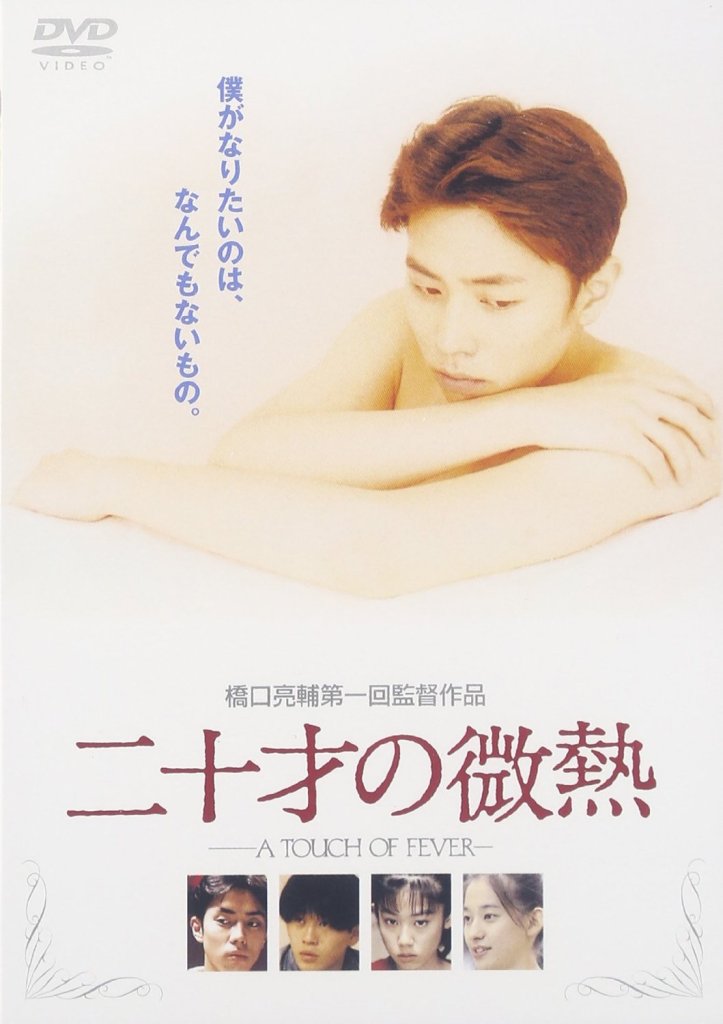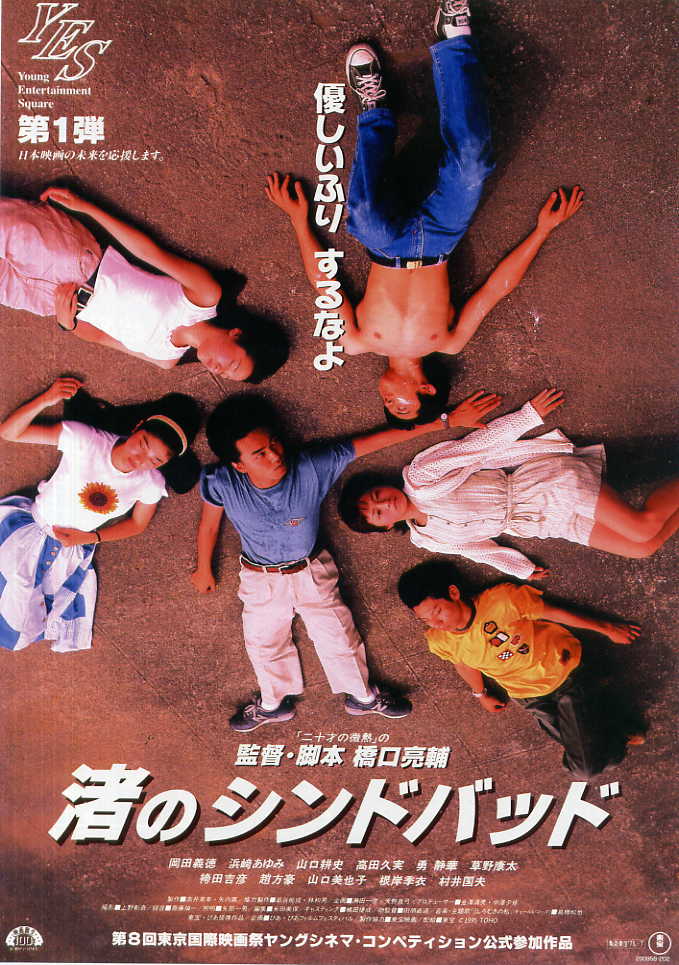
A Touch of Fever (二十才の微熱, Ryosuke Hashiguchi, 1993)

Touch of FeverRyosuke Hashiguchi’s debut feature A Touch of Fever (二十才の微熱, Hatachi no Binetsu) proved a surprise box office hit in Japan and is also credited for helping to bring male homosexuality into the mainstream. A no-budget movie shot on 16mm, A Touch of Fever is the story of two ordinary boys each going about their everyday lives whilst also beginning to understand themselves in terms of their sexualities, mirroring each other perfectly in their inner confusion.

Tatsuru is a college student by day, but he spends his nights working at Pinocchio’s where he entertains male customers looking for some no strings action with a disinterested young man. Among the other youngish guys working at the club is Shin who is actually still in high school. Shin is out to his parents, but they haven’t taken it well so he’s couch surfing, leading to him to ask Tatsuru if he could temporarily move in with him. Along with all of the practical problems this may raise, Shin has something of a crush on his older colleague, but Tatsuru is filled with doubts about many things and his apartment is in no way big enough to contain this particular elephant in the room.

Tatsuru is about as detached as they come. He claims that he can separate love and sex and that for him his work is just a mechanical action that he happens to be pretty good at. The first client we see him with interrogates him about his non-compensatory love life, assuming that he must have a girlfriend. Tatsuru gives a non-committal answer about whether he also sleeps with women which offers the first indication of his slight resistance to the idea of being gay even if he has no problem earning a living through sleeping with men. Throughout the film he also conducts a parallel (platonic, if fliratious) relationship with an older female student, though when he decides to try and take things further she more or less shuts him down explaining that she’s confused about her feelings for him – she wants him in her life, but probably not in a romantic way. As if to underline the point, an attendant begins to spray cleaning fluid over the passenger side window of the car Tatsuru is sitting in, effectively painting him out of the picture.

Shin, on the other hand, is very clear about his sexuality but less so about the idea of selling it for money. Uncomfortable with the atmosphere at the club, Shin has decided he only wants to do it with people he likes, as impractical as that may turn out to be. What Shin wants is romance, but that’s exactly what Tatsuru is currently unable to acknowledge. When taken to task by one of Shin’s female friends, Tatsuru offers a series of justifications about different kinds of love but remains rational and closed down. At the moment it appears something may happen between the pair, it’s Shin who ultimately can’t follow through. Whether due to “chickening out” as his friend accuses, a lack of belief in his object of affection, or simple vulnerability, Shin is not quite ready to acknowledge his true feelings either.

Both boys have also become estranged from their families and particularly with their fathers. Tatsuru’s father leaves gruff answerphone messages and then when he finally gets through, suggests that his son is a drain on his resources that he could well do without. Having left Tatsuru’s mother for another woman, dad is now cash strapped – so much so that his new partner has had to have an abortion because of all the loans he’s taken out for Tatsuru’s fees. The final parting blow is to say that (contrary to the suggestion of a complete divorce between father and son) Tatsuru is now the sole heir of the Shinomori name which is yet another burden for guy who may be gay and therefore may not necessarily be looking to pass that name on. Shin’s father had something of an apoplexy when he found out his son was gay and threatened to have him sent away to the self defence force for some “toughening” up, going so far to trample all over Shin’s dreams of becoming a fashion designer and leading him to leave home at such a young age.

Hashiguchi’s first feature is his most melancholy but also oddly innocent. A theme which recurs throughout his career – that love is sad and ultimately impossible, rears its head during the film’s final scene in which Hashiguchi himself plays a sinister customer. This uncomfortably long sequence which breaks with the formalist camera movements of the the earlier part in favour of destabilising, unbroken handheld, acts as the climax of the film as the pair are once again symmetrically opposed. Tatsuru likes things impersonal but this guy wants to talk, whereas Shin craves connection but finds the customer unpleasant in his wheedling, direct and almost forceful approach. “You wouldn’t know the pain of being unable to speak out about how you really feel”, says the customer, oblivious to the obvious subtext. This long, strange, and uncomfortable encounter does at least lead both boys into the centre ground, making each clearer both about themselves independently and about whatever it is that exists between them.

Contrary to the customer’s assertion about the impossibility of true connection, the film ends on a note of hope as the boys walk home together with a little more lightness in their steps. When Shin enquires how much Tatsuru was paid for something that he previously disapproved of but seems to have got over now, he tells him he’s underselling himself and ought to value himself more. Tatsuru says he’ll bear that in mind – that has, after all, been the problem all along. In one sense, the “fever” has broken – a weight has been lifted, leaving both boys freer to go about their lives with more clarity and less angst. Perhaps it isn’t all so sad and impossible after all.


Original trailer (no subtitles)

Harmony (ハーモニー, Michael Arias & Takashi Nakamura, 2015)

Harmony PosterHarmony – the word itself sounds peaceful. A coalescence of sympathetic sounds, the feeling of wholeness and happiness. However, if given the choice, would you like to live in a world of peace and plenty in which your body is almost government property and your personal freedom is limited in favour of ensuring the survival of the species, or would you rather take your chances with the world as it is complete with its violence, sadness and pain if it meant you could be free to live in which ever way you see fit? Michael Arias’ adaptation of the Project Itoh novel addresses just this question in all its complexity as utopia turns out to have a heavy entrance fee.
Fifty years after a devastating nuclear war humanity has recovered itself and the elite now live in spotlessly clean, futuristic cities. A healthcare monitoring system administered through nanotechnology ensures proper adherence to health guidelines including sending alerts about unhealthy food and heart rate fluctuations making it almost impossible to cheat the system even if you wanted to. Everyone also has “augmentations” including a heads up display in the eyes which flags all the aforementioned info as well as a break down on your fellow humans which also includes their “social aptitude quotient” based on how well they treat others and how good they are at following the rules.

For some, all of this nannying is nothing other than an infringement on their personal freedom. After all, shouldn’t you have the right to eat what you want, drink, smoke, take risks, if that is your personal choice? Camus said that the only way to deal with an unfree world is to become so absolutely free that your very existence becomes an act of rebellion. Our heroine, Tuan, has opted for a similar solution as she finds herself working for enemy as a Helix Inspector allowed to life on the margins of society where the the rules are more easily breached. She flaunts the regulations and cares little for anything or anyone. Once, long ago, she cared deeply for a girl in high school who was so opposed to the constant invasions of the modern world that she chose the only way out that was available to her – suicide. The pair intended to die together but Tuan alone survived.

Tuan is then recalled to Tokyo following an incident of mass suicides only for another high school friend to kill herself in a violent and bloody way right in front of her. Tuan is about to discover that she herself is at the centre a complicated conspiracy which intends either to save or to destroy humanity depending on your point of view.

Harmony is an extremely complex dissection of the human need for self protection from threats real or imagined. Following a large scale humanitarian disaster, fear rules the day and humans must be protected from their bad decisions by gentle reinforcement but isn’t the right to slowly destroy yourself, should you choose to do so, exactly what wars are fought for? Is it worth surrendering such basic rights to live in a world without disease or hunger (for the wealthy nations, at least) or does this level of being looked after rob humanity of the thing that defines it? The “Harmony” of the title is a medical treatment designed to spread peace and love throughout the land, yet it eventually robs the patient of a self-aware soul leaving them without the individual desires and emotions which cause human conflict. What should the future look like – cold, sterile but long and peaceful or shorter but filled with all the richness of human passions?

Arias had been working on a live action adaptation of Harmony which apparently fell though and though asked to helm Genocidal Organ managed to get them to allow him to switch back to the anime version instead. Here he’s billed as a co-director along side Takashi Nakamura and it seems there was more than a little conflict involved in the process. In any case, the finished product is vastly different in approach from Arias’ original concept though sticks fairly close to Itoh’s novel.

Made on a very tight budget and in an extremely short time, Harmony makes the best of its difficult production circumstances with a complex mix of CG and hand drawn animation styles. The production design is prescient and interesting as it presents its utopic city as a serene place of muted colours and stress free round buildings. Even the monolith presented in the framing sequence looks exactly like what a traditional Japanese tombstone would look like if it was designed by Apple. However, the natural pops right out of the screen with its vibrant colours such as in an early scene where a field of sunflowers looks almost like stop motion in its highly textured 3D CGI. Though occasionally falling back on static conversations, the composition and directing style is also interesting with unsettling circular shots, frequent dissolves and montages, and even a light jazzy soundtrack which definitely lends to the Lynchian atmosphere.

Harmony is certainly a complex film and arguably succeeds much more because of its nuanced source material than the production itself, yet like the best sci-fi it does offer an in-depth philosophical discussion along side exciting acting scenes and moving character drama. Unfortunately, the film does fall into the trap of ponderous monologuing at times and is sometimes guilty of stilted, expository dialogue but largely manages to maintain goodwill even as it does so. In many ways imperfect, Harmony is an undoubtedly ambitious project and one of the better science fiction themed anime movies to emerge in recent years.


Reviewed as part of the “biennial” Anime Weekend at BFI Southbank. Harmony has also been licensed for UK distribution by All the Anime (and Funimation in the US). Project Itoh’s original Harmony novel is also available in English translation (by Alexander O. Smith) published by Haikasoru.

Unsubbed trailer:

Yokohama BJ Blues (ヨコハマBJブルース, Eiichi Kudo, 1981)

Yokohama bj bluesYusaku Matsuda may have been the coolest action star of the ‘70s but by the end of the decade he was getting bored with his tough guy persona and looked to diversify his range a little further than his recent vehicles had allowed him. Matsuda had already embarked on a singing career some years before but in Eiichi Kudo’s Yokohama BJ Blues (ヨコハマBJブルース), he was finally allowed to display some of his musical talents on screen as a blues singer and ex-cop who makes ends meet through his work as a detective for hire.
After his set at a rundown jazz bar, BJ’s first job is tracking down a missing son. When he finds the guy, Akira, he seems to have become the employee (and possible sex slave?) of a gay gangster. Akira says he’s fine with his new life and wants his mother to leave him alone so BJ gets the hell out of there to give her the message but the unpleasantness of the situation lingers with him a little.

Shortly after, BJ receives a telephone call from an old police buddy, Ryo, who needs his help. Ryo got in too deep with the same gang BJ just came up against and is thinking of quitting the force in a bid to make the “Family” lose interest in him. However, Ryo is gunned down in broad daylight leaving his partner, Beniya, convinced that BJ is somehow responsible. BJ now doubly has it in for Family and starts working on his own behalf to try and find some answers and possibly a little vengeance too.

You see, back when Ryo and BJ were partners, they both liked the same girl, Tamiko, who eventually married Ryo. Beniya thinks BJ killed his friend to steal his wife and is much more interested in giving BJ a good kicking rather than investigating this very strange gang set up which seems to have some kind of drug smuggling gig going with the triads in Hong Kong.

BJ forms an odd sort of friendship with Akira in the hopes of tracking down the four gay, leather clad punk henchmen of Ali who probably gunned down his friend. However, the conspiracy only deepens and BJ finds himself suspecting even his closest of friends.

With its jazz soundtrack and melancholy tone, Yokohama BJ Blues is channelling hard boiled in a big way though does so in a distinctly modern fashion. BJ sings the blues whilst walking around this strange noir world which seems to endlessly disappoint him. Unfortunately for him, BJ is quite a good detective and quickly gets himself in way over his head only to end up finding out a few things it might be better not to know.

One of the film’s most notable components is its use of homoerotic themes with its gangs of gay gangsters, rent boys and punks. Indeed, though the wife of his former partner is floated as a possible motive, the love interest angle is never fully explored and all of BJ’s significant interactions in the film are with other men. Firstly his relationship with his former police partner Ryo which kick starts the entire adventure and then his strange almost date-like experience with Akira about half way through. BJ remains otherwise alone, a solo voice seeking justice for his fallen friends.

Of course, the film’s selling point is Matsuda’s singing so he’s allowed to play his own chorus in a sense by narrating the events from the stage in the form of the blues. Not quite “The Singing Detective”, but almost – BJ tries to bring some kind of order to his world by turning it into a song. In addition to adding to the noir tone, the bluesy soundtrack even allows for a New Orleans-esque musical funeral which oddly fits right in with the film’s weird, macabre atmosphere.

A surreal, noir inspired crime drama with musical elements, Yokohama BJ Blues is quite a hard film to categorise. Unusual for its homosexual milieu and overt homoerotic plotting the film occupies something of a unique place given its obvious marketing potential and star’s profile coupled with its decidedly murky noir tone. Difficult, yet interesting, Yokohama BJ Blues ultimately succeeds both as an intriguing crime drama and as a star vehicle for its versatile leading man.


This is a really, deeply, strange film.

Unsubtitled trailer:

I actually quite like Matsuda’s foray into the world of jazz, the title song from Yokohama BJ Blues which is heard in the trailer is called Brother’s Song and is included on Matsuda’s 1981 album Hardest Day. Here he is on a talk show singing Yokohama Honky Tonk Blues:

Manji (卍, Yasuzo Masumura, 1964)

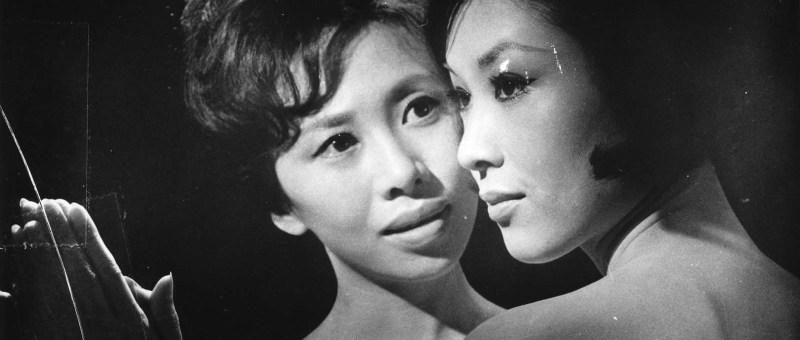
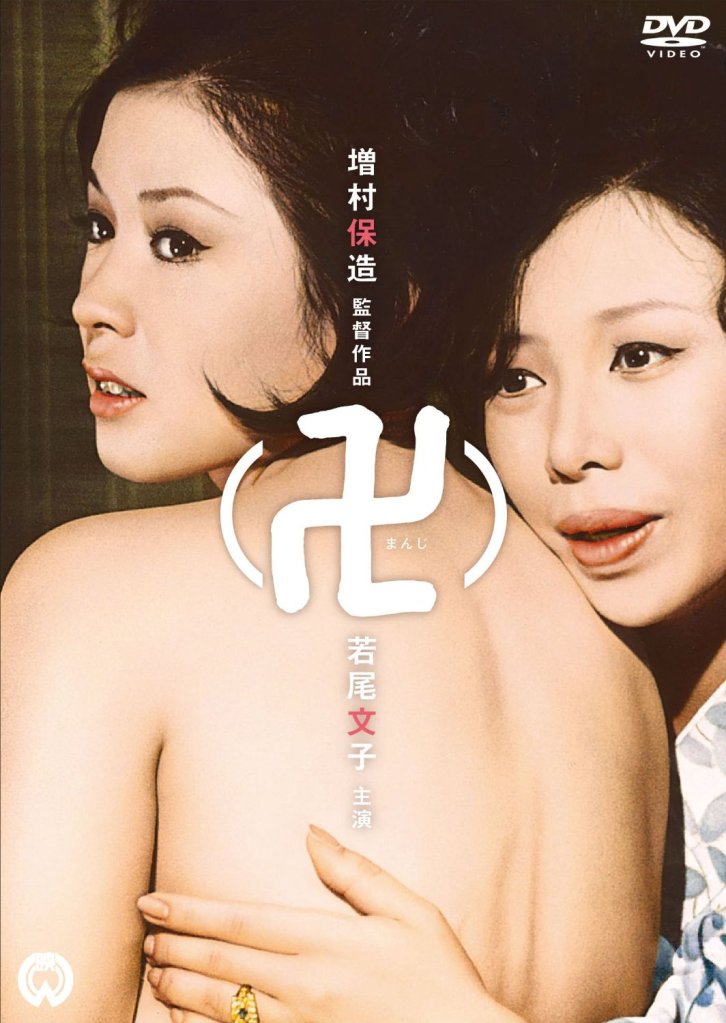
8127Ur2xnXL._SL1500_For arguably his most famous film, 1964’s Manji (卍), Masumura returns to the themes of destructive sexual obsession which recur throughout his career but this time from the slightly more unusual angle of a same sex “romance”. However, this is less a tale of lesbian true love frustrated by social mores than it is a critique of all romantic entanglements which are shown to be intensely selfish and easily manipulated. Based on Tanizaki’s 1930s novel Quicksand, Manji is the tale of four would be lovers who each vie to be sun in this complicated, desire filled galaxy.

The story begins with a framing sequence in which Sonoko sits down with a male mentor to recount her sorry tale from some later vantage point. As she would have it, she was an unfilled, unhappy housewife taking a series of art classes when the principal of the college noticed that the face in her sketch of the Goddess of Mercy doesn’t look much like the model. Her technique is good though so he asks her why she gave her drawing a different face and who it might belong to. She tells him it’s merely an ideal and isn’t based on any real person. However, it does look quite like another, very beautiful, pupil at the school – Mitsuko, and a rumour quickly starts that the two women are lovers. Though barely knowing each other before, the pair laugh it off and decide to become friends anyway. Gradually, something more than friendship begins to grow but not everyone is being honest with each other and the added complication of the men in their lives is set to make the road even harder for Sonoko and Mitsuko’s love affair than it might otherwise be.

Sonoko narrates things from her perspective, though you get the feeling she may not be a completely reliable narrator. She seems shy, innocent, wounded though she speaks of her great tragedy with ease and a surprising frankness considering its sensitivity. The object of her obsession, Mitsuko, by contrast plays the innocent but also seems to know perfectly well what she’s doing. Manipulative in the extreme she plays each of the other three lovers off against each other in an attempt to become the centrifugal force in each of their lives. All things to all people, Mitsuko doesn’t seem to know what she wants, other than to be adored by anyone that’s around to adore her.

At the beginning of the film Mitsuko reveals that she’d been involved in marriage negotiations with a young man from a high profile family and she believes the rumours at the art school were started deliberately to try and disrupt her matrimonial ambitions. Sure enough that liaison falls through but she neglected to mention that she also has another fiancee, the slimy Watanuki, that she longs to be rid of but can’t seem to shake off. After Sonoko finds out about Watanuki, Mitsuko feigns not only a pregnancy but a bloody miscarriage to get her female lover to return to her. However, Watanuki fights back by trying to form a bilateral alliance with Sonoko to ensure Mitsuko doesn’t suddenly take up with a third party – he even gets her to sign a contract saying that she’ll help get Mitsuko to marry him and in return he won’t interfere with the two women’s relationship even once they’re married.

Sonoko’s husband completes the quartet, becoming increasingly frustrated by his wife’s infatuation with another woman, her coldness towards him and her growing boldness. Sonoko labels Kotaro cold and passionless and claims never to have enjoyed any of their married life together. She’s also been taking illegal birth control medication to avoid having children with him. Trying to be an understanding husband, Kotaro ends up tangled in a web of desire after being seduced by Mitsuko. For a time, the three form an unlikely romantic trio (with Watanuki hanging around disdainfully on the edges) though even between the three of them petty jealousies sap their strength and keep them all guessing as to the exact motives of the other pair.

Just like the four pronged arms of the manji itself, our four lovers lie in a tangled and twisted crisscross of desire, each trying to eclipse the other in the eyes of the radiant Mitsuko. Anything but merciful herself, Mitsuko adeptly plays on the insecurities of the others to keep them all dancing along to her tune. This is not a story of true love, but of misused desires, almost of the inverse of love where lust becomes a weapon of control and self satisfaction. Even at the end, Sonoko can’t decide if she’s been saved or betrayed and if what happened to her was love or a kind of madness. Whatever it was, each has paid a high price for their selfish pursuit of romance or dominance or whatever Mitsuko really represents for them (clearly not the reincarnation of the Goddess of Mercy after all). Years ahead of its time and still just as dark and fascinating as it always was, Manji is a sadly universal tale of the destructive power of love that plays almost like a ghost like story and is likely to haunt the memory long after the screen falls dark.


Manji is available with English subtitles on R2 UK DVD from Yume Pictures.

Original trailer (no subtitles)