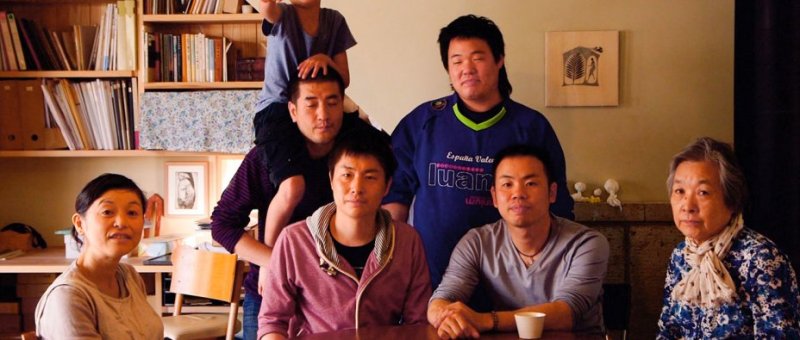
 In Japan the nail which sticks out is hammered down. Conformist societies promise mutual support, but all too often only when it suits the collective – those not deemed part of the club are wilfully left to fend for themselves with the dangled promise of readmission if one promises to reform and abide by the rules. We first met the couple at the centre of Hikaru Toda’s Of Love & Law in her previous documentary, Love Hotel, which documented their struggles with discrimination in frequently being turned away by establishments who did not wish to rent a room to two men. A same sex married couple in Japan’s second city of Osaka, Kazu and Fumi run their own law firm and operate under the mission statement of representing those who often find themselves without a voice in a culture which favours silence.
Opening at a local Pride event, the camera attempts to capture some talking heads but no one will bite. Asked for comments, the visitors each refuse to show their faces, revealing that they aren’t fully out, fearing that it might cause problems for them at work, or just embarrassed to go on the record about something so taboo. Though the law practice is not limited to representing LGBT issues, they are clearly a key concern to Fumi and Kazu who spend their “free” time engaging in outreach projects trying to foster a little more education and understanding of sexual minorities. Kazu brings this home when he tells his own coming out story in which his stunned mother exclaimed that she’d never heard of anything like this and therefore could not understand it. The problem wasn’t prejudice, it was ignorance mixed with fear.
Ignorance mixed with fear could equally well describe most of the cases brought against Kazu and Fumi’s clients. The protagonist of the second strand – artist and mangaka Rokudenashiko whose legal troubles even made the foreign press, attributes many of these issues to an inability to “read the air” or aquedately understand the unspoken rules of society and then silently abide by them. The law firm makes a point of defending those who have chosen to fly in the face of social convention, flying a flag for the freedom of choice in a society which often deliberately suppresses it.
The freedom of choice is certainly a key issue for the teacher suing the Osakan school that fired her for refusing to stand for the national anthem. Arguing that standing when one is forced to stand is hardly a declaration of patriotism and fearing the lurch to the right which has made even implicit indifference to the Imperial family a hot button issue, the teacher puts her foot down but finds that few will listen. Similarly, Rokudenashiko finds herself arrested for obscenity regarding her vagina themed artwork while the court undermines its own argument by accidentally proving that her work has socio-political merit.
Yet Rokudenashiko and the teacher have each, in a sense, made a firm decision to challenge the intransigence of their society, hoping to prevent a further decline even if not overly hopeful of improvement. Other clients on the roster include a fair few who are accidentally undocumented through no fault of their own thanks to Japan’s arcane and idiosyncratic legal system which makes it difficult to register births of children born out of wedlock or in difficult family circumstances meaning that youngsters sometimes grow up without the proper papers leading to problems with accessing education, employment, healthcare and welfare provisions. Getting someone a birth certificate who doesn’t currently “exist” can prove a taxing ordeal, especially as government officials often regard children born to “immoral” women as “unworthy” of care or attention.
Getting a call from the mother of a victim, Fumi is shocked when she makes a point of enquiring about the nationality of the perpetrator. He is unsurprised but disappointed in witnessing the various ways one oppressed person (both the victim and plaintiff are from impoverished, single parent backgrounds) can turn their oppression back on others as an odd kind of social revenge. Luckily, however, there are good people everywhere such as the fine young man Fumi and Kazu end up temporarily fostering after his care home is unexpectedly closed down. Kazuma accepts their relationship without a second thought, enjoys learning to cook from Fumi and blends right into Kazu’s extended family who each seem as warm and accepting as the couple themselves. Family is not about a register, it’s having a place to go where they’ll always take you in. Fumi doesn’t trust society because society shirks its responsibilities, but thankfully there are those who know better and continue on in hope tempered with patience.
Screened at BFI Flare 2018.
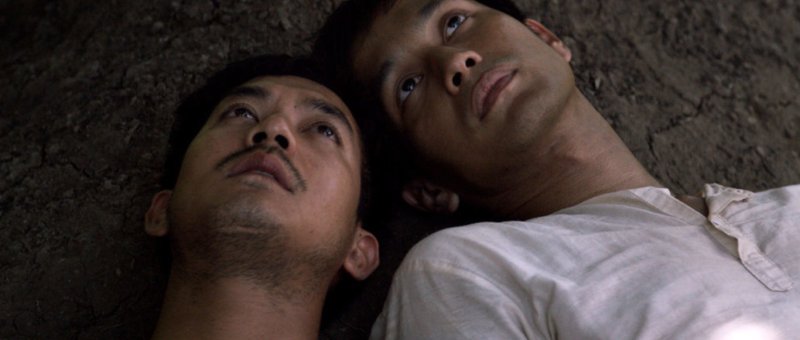
 Some situations are destined to end in tears. Kaze Shindo’s Love Juice adopts the popular theme of unrequited love but complicates it with the peculiar circumstances of Tokyo at the turn of the century which requires two young women to be not just housemates but bedmates and workmates too. One is straight, one is gay and in love with her friend who seems to get off on manipulating her emotions and is overly dependent on her more responsible approach to life, but both are trapped in a low rent world of grungy nightclubs and sleazy hostess bars.
 In
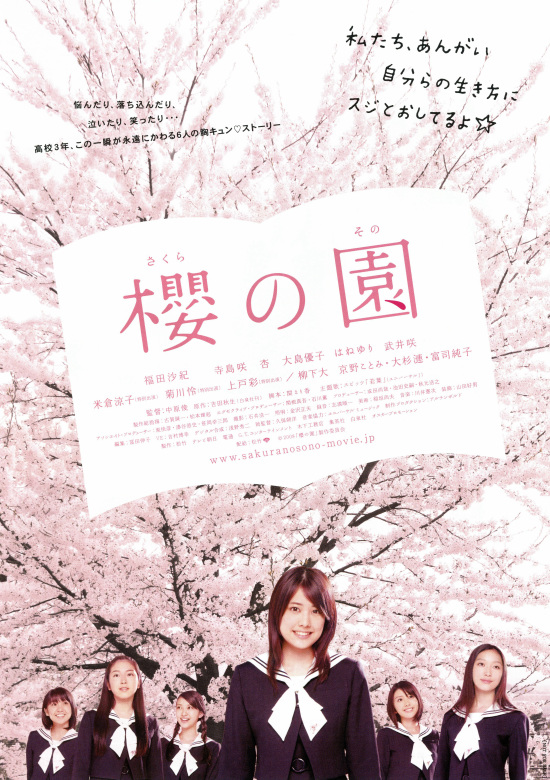
In  Chekhov’s The Cherry Orchard is more about the passing of an era and the fates of those who fail to swim the tides of history than it is about transience and the ever-present tragedy of the death of every moment, but still there is a commonality in the symbolism. Shun Nakahara’s The Cherry Orchard (櫻の園, Sakura no Sono) is not an adaptation of Chekhov’s play but of Akimi Yoshida’s popular 1980s shojo manga which centres on a drama group at an all girls high school. Alarm bells may be ringing, but Nakahara sidesteps the usual teen angst drama for a sensitively done coming of age tale as the girls face up to their liminal status and prepare to step forward into their own new era.
 Every keen dramatist knows the most exciting things which happen at a party are always those which occur away from the main action. Lonely cigarette breaks and kitchen conversations give rise to the most unexpected of events as those desperately trying to escape the party atmosphere accidentally let their guard down in their sudden relief. Adapting his own stage play titled Trois Grotesque, Kenji Yamauchi takes this idea to its natural conclusion in At the Terrace (テラスにて, Terrace Nite) setting the entirety of the action on the rear terraced area of an elegant European-style villa shortly after the majority of guests have departed following a business themed dinner party. This farcical comedy of manners neatly sends up the various layers of propriety and the difficulty of maintaining strict social codes amongst a group of intimate strangers, lending a Japanese twist to a well honed European tradition.
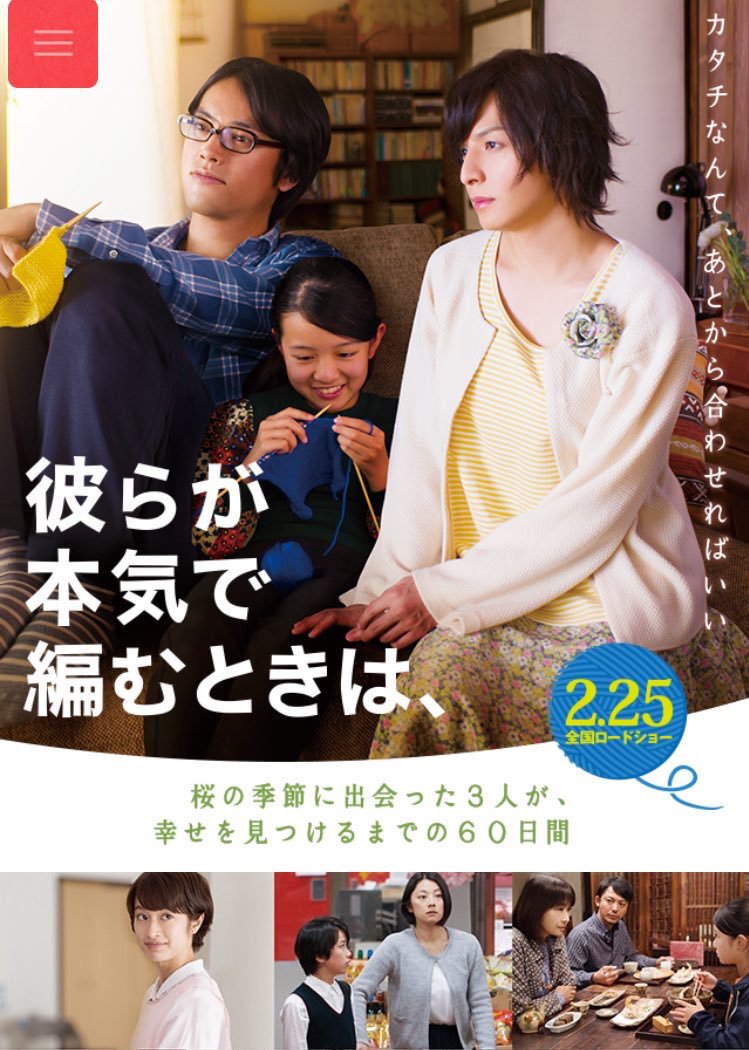 While studying in the US, director Naoko Ogigami encountered people from all walks of life but on her return to Japan was immediately struck by the invisibility of the LGBT community and particularly that of transgender people. Close-Knit (彼らが本気で編むときは, Karera ga Honki de Amu Toki wa) is her response to a still prevalent social conservatism which sometimes gives rise to fear, discrimination and prejudice. Moving away from the quirkier sides of her previous work, Ogigami nevertheless opts for a gentle, warm approach to this potentially heavy subject matter, preferring to focus on positivity rather than dwell on suffering.

 Windows on Worlds