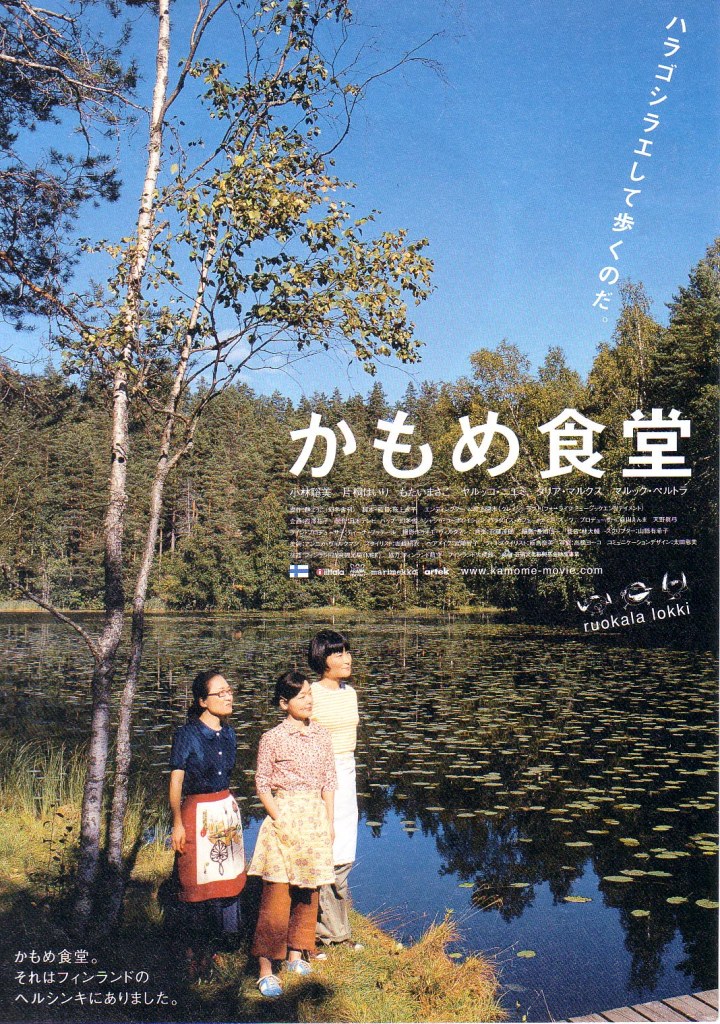
 Finland, Finland, Finland. That’s the country for me! Where better could there possibly be to open up a small Japanese cafe than in Helsinki? On second thoughts, don’t answer that but moving to Finland and opening her own diner all alone is exactly what the leading lady, Sachie, has done in this warm hearted comedy drama from Naoko Ogigami, Kamome Diner (かもめ食堂, Kamome Shokudou). As in most of her films, Ogigami has assembled an eclectic cast of eccentric characters who each find themselves turning up at Sachie’s restaurant largely by chance but this time there’s a little added cross cultural pollination too.
Sachie (Satomi Kobayashi) has learned fluent Finnish and put together a welcoming space serving coffee and sweet goods as well as full meals in a fairly central location though she’s yet to receive a single customer through her doors. Three middle aged women often stop outside and stare making some sort of derogatory comment before scuttling off when Sachie spots them. Then, one day a teenage boy comes in and unexpectedly tries out some of his Japanese. He turns out to be a bit of a Japanophile and asks Sachie to teach him all the words to the Gatachman theme tune though she can’t remember past the opening. The tune gets stuck in her head and starts to drive her so mad that when she spots another Japanese woman in a bookshop cafe she marches up to ask her if she can remember the whole thing and luckily she can. Sachie then offers to let the woman, Midori (Hairi Katagiri), stay at her place in return and the two become friends. Later another Japanese lady, Masako (Masako Motai), turns up after her luggage goes missing and together the three start to make a success of Sachie’s diner.
Why Sachie chose Finland remains a mystery, though she has taken the time to learn Finnish to a near native level and also seems to know quite a lot about the various local legends. She doesn’t seem particularly rushed though and is fairly content to wait around for the customers to come of their own accord rather than trying to chase them down herself. In fact she gives her very first customer, the Japanese pop culture enthusiast Tommi, free coffee for life which doesn’t seem like the best business decision.
Likewise, we learn how Midori came to choose Finland as a holiday destination but she seems a little sad and the fact that her stay is open ended perhaps hints at having run away from something though once again we aren’t told much about her backstory. Not that that matters very much, quite the contrary in fact. Masako proves the most eccentric of the three though we actually learn quite a bit about what brought her to Finland.
Other than Tommi who seems most interested in the stereotypical aspects of Japanese culture (to the slight consternation of Midori) with his T-shirts bearing non sensical slogans and illustrations of geisha, the restaurant does start to attract a few Finns albeit mostly ones who are in some sort of trouble. One man teaches Sachie how to make better coffee, a middle aged woman simply stares angrily at them from outside until she comes in one day and downs a few of the local spirit before collapsing, and then there are the other three gossips who turn out to be won over with something as simple as sweet smelling pastries.
Simply put, warmth, kindness and patience eventually break down all barriers. The Kamome Diner becomes a refuge for all the lonely misfits from home and abroad watched over by Sachie & co always ready to pour some delicious smelling coffee for the next needy customer through the door. Wonderfully low-key and filled with absurd yet oddly plausible situations, Kamome Diner blends the dual eccentricities of these two stereotypically “wacky” countries beautifully and just goes to prove there’s nowt so queer as folk wherever you land.
The Japanese region A blu-ray release of Kamome Diner includes English subtitles!
Short (unsubtitled) scene from near the beginning of the film:
 When considering their next holiday destination, many people like to peruse some brochures, have a read of trip advisor or head to a well known tourist spot that is likely to impress the guests at their next soirée but then there are always others who just simply show up somewhere and hope for the best. The central character of Megane, Taeko (Satomi Kobayashi), perhaps wishes she’d done a little research before heading out to a very strange inn on a very strange island but the longer she stays, the more the ways of the laid-back islanders seem to make sense to her.
 Just look at at that title for a second, would you? Crying Out Love, in the Center of the World, you’d be hard pressed to find a more poetically titled film even given Japan’s fairly abstract titling system. All the pain and rage and sorrow of youth seem to be penned up inside it waiting to burst forth. As you might expect, the film is part of the “Jun ai” or pure love genre and focusses on the doomed love story between an ordinary teenage boy and a dying girl. Their tragic romance may actually only occupy a few weeks, from early summer to late autumn, but its intensity casts a shadow across the rest of the boy’s life.
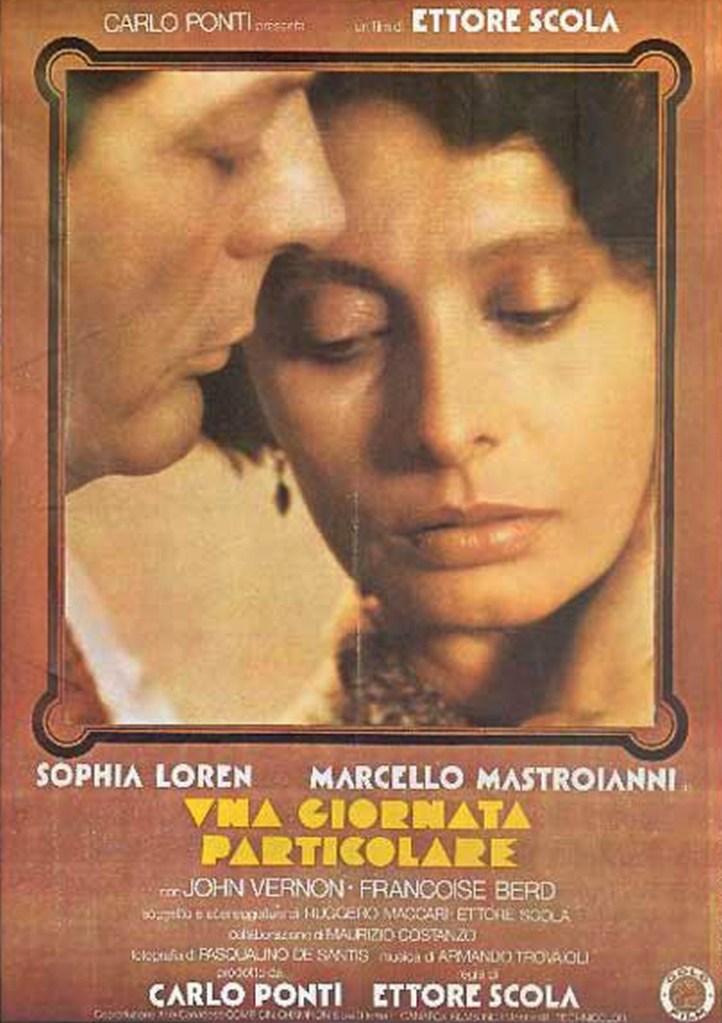 Ettore Scola, one of the most celebrated filmmakers of Italian cinema in the late 20th century, returned to one of the country’s darkest moments for the film which is often regarded as his masterpiece – A Special Day (Una Giornata Particolare). Set on one particular day in 1938 when Mussolini rolled out the red carpet for his fascist brother in arms, Adolf Hitler, it focusses less on this “historic” meeting of “likeminded” leaders of state than it does on two small figures each lonely and excluded from the festivities for very different reasons.
 For 1970’s If You We’re Young: Rage (君が若者なら, Kimi ga Wakamono Nara), Fukasaku returns to his most prominent theme – disaffected youth and the lack of opportunities afforded to disadvantaged youngsters during the otherwise booming post-war era. Like the more realistic gangster epics that were to come, Fukasaku laments the generation who’ve been sold an unattainable dream – come to the city, work hard, make a decent life for yourself. Only what the young men find here is overwork, exploitation and a considerably decreased likelihood of being able to achieve all they’ve been promised.
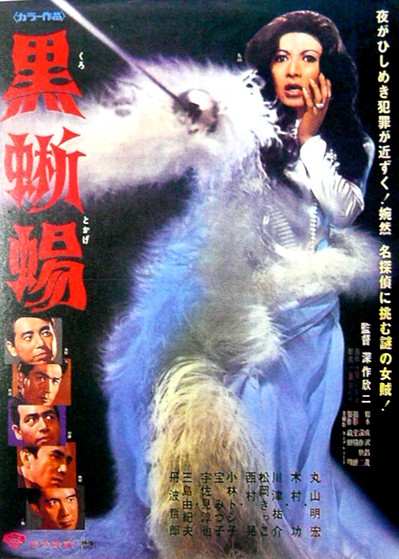 Those who only know Kinji Fukasaku for his gangster epics are in for quite a shock when they sit down to watch Black Rose Mansion (黒薔薇の館, Kuro Bara no Yakata). A European inflected, camp noir gothic melodrama, Black Rose Mansion couldn’t be further from the director’s later worlds of lowlife crime and post-war inequality. This time the basis for the story is provided by Yukio Mishima, a conflicted Japanese novelist, artist and activist who may now be remembered more for the way he died than the work he created, which goes someway to explaining the film’s Art Nouveau decadence. Strange, camp and oddly fascinating Black Rose Mansion proves an enjoyably unpredictable effort from its versatile director.
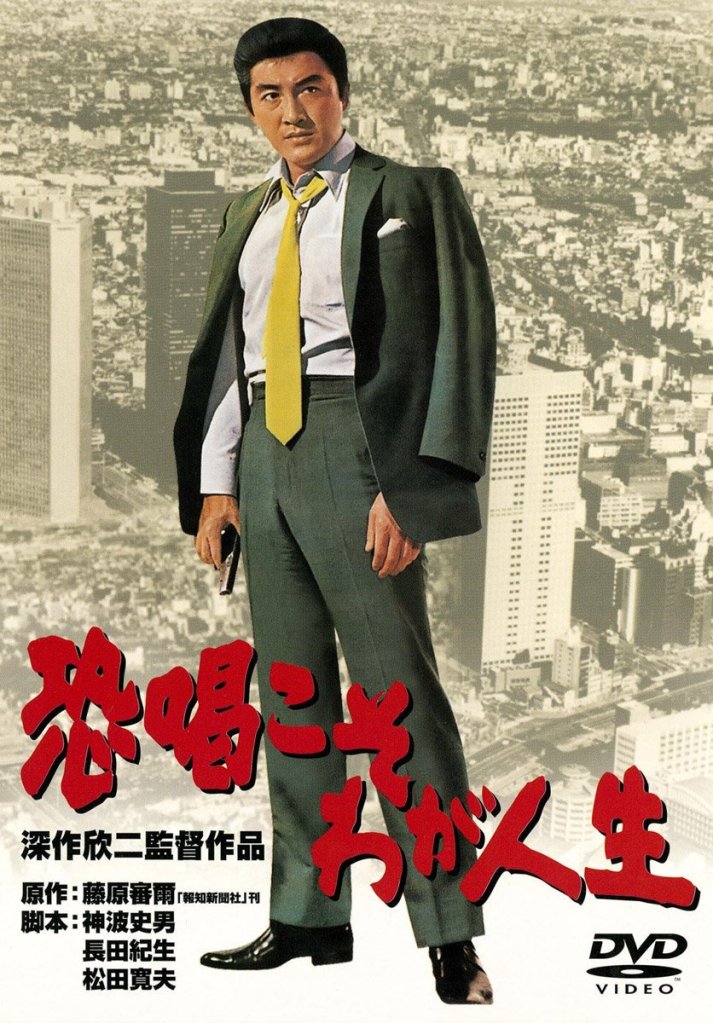 Suffice to say, if someone innocently asks you about your hobbies and you exclaim in an excited manner “blackmail is my life!”, things might not be going well for you. Kinji Fukasaku is mostly closely associated with his hard hitting yakuza epics which aim for a more realistic look at the gangster life such as in the
  These days we think of Sion Sono as the recently prolific, slightly mellowed former enfant terrible of the Japanese indie cinema scene. Hitting the big time with his four hour tale of religion and rebellion Love Exposure before more recently making a case for ruined youth in the aftermath of a disaster in Himizu or lamenting the state of his nation in Land of Hope what we expect of him is an energetic, sometimes ironic assault on contemporary culture. However, his beginnings were equally as varied as his modern output and his first feature length film, Bicycle Sighs (自転車吐息, Jidensha Toiki), owes much more to new wave malaise than to post-punk rage.
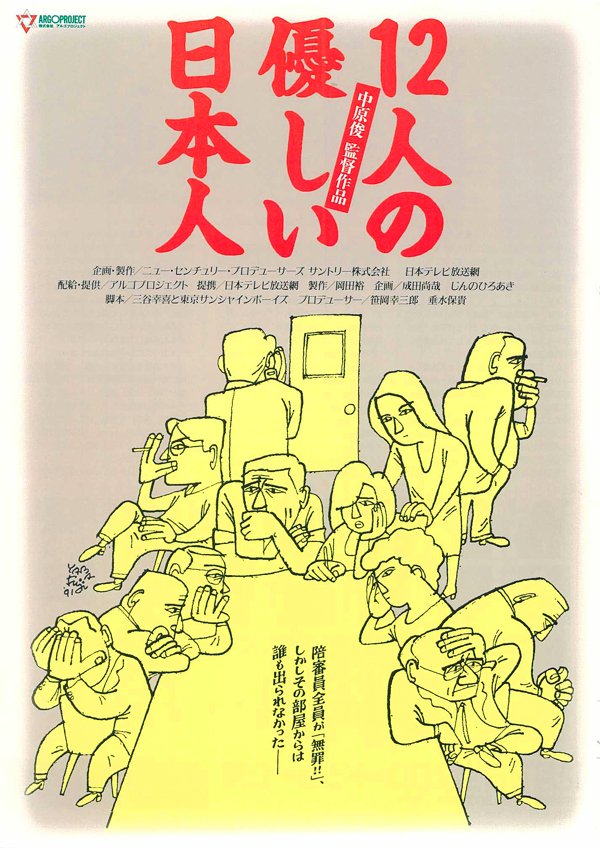 As you might be able to tell from its title, Gentle 12 (12人の優しい日本人, Juninin no Yasashii Nihonjin) is a loose Japanese parody of the stage play 12 Angry Men notably filmed by Sidney Lumet back in 1957. The Japanese title literally translates as “12 Kindly Japanese Guys” and the film takes the same premise of twelve jurors debating the verdict in a murder case which was previously thought fairly straightforward. This time our jury is a little more balanced as it’s not just guys in the room and even the men are of a more diverse background.
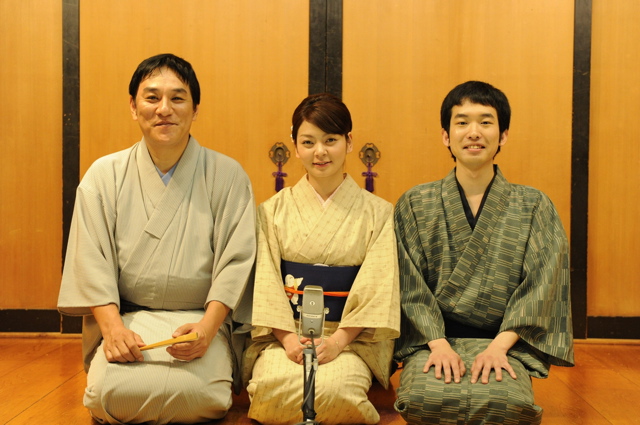 When it comes to the classic Japanese art forms, kabuki, noh and maybe even bunraku are not so uncommon overseas. Rakugo, however, has not been as lucky. Famously impenetrable for non-native speakers even if their language skills are otherwise top notch, rakugo is the art of traditional comic story telling in which the “rakugo-ka” recites a standard monologue with the aim of mining it for laughs in their own individual fashion. These stories date back to the Edo-era and rely heavily on classic Japanese puns, stock characters and cultural assumptions, consequently, their appeal has been on the wane in Japan for sometime. That’s not to say the art form is quite dead yet though, as real life rakugo-ka Shinpei Hayashiya’s Rakugo Monogatari attempts to prove.
 Windows on Worlds