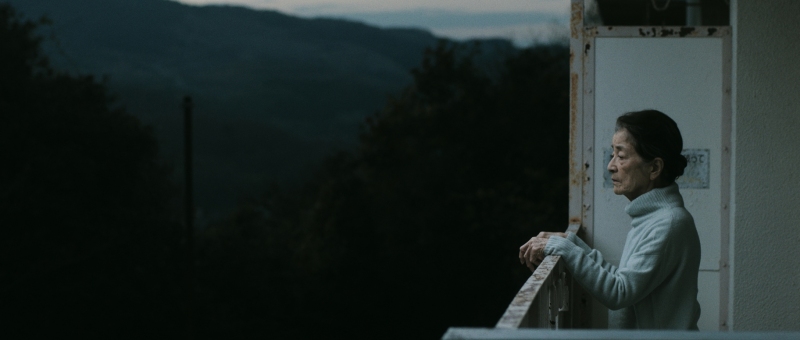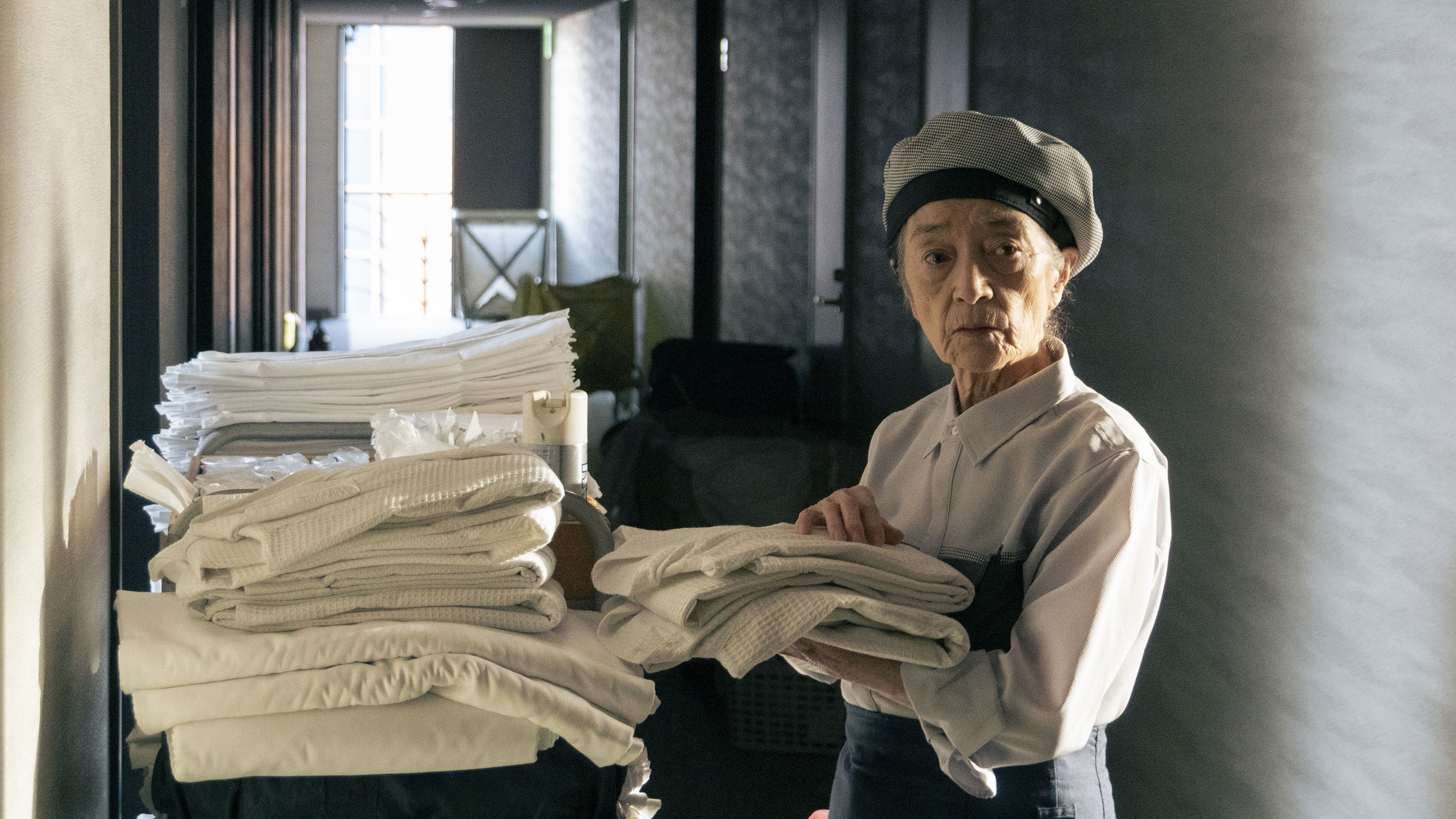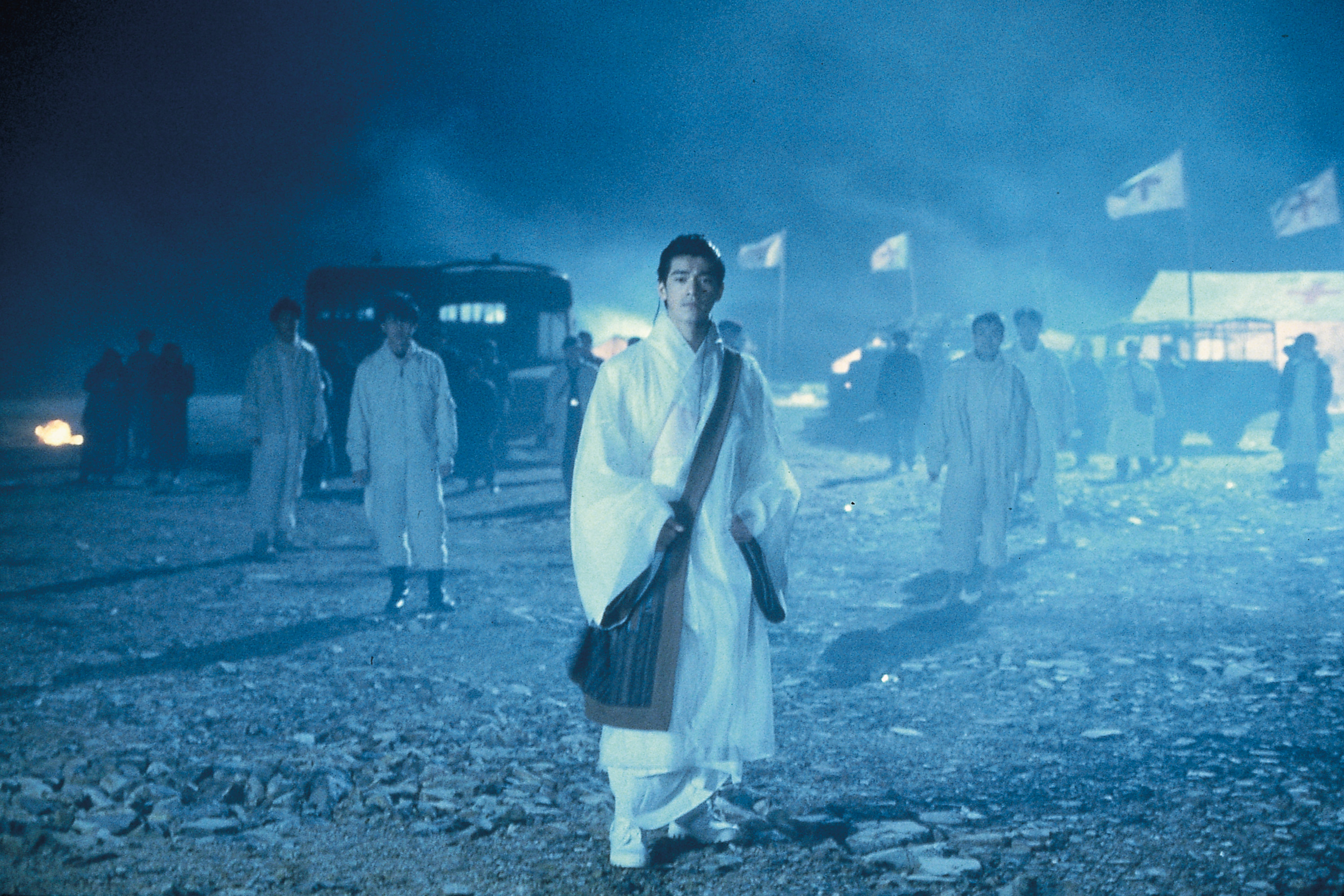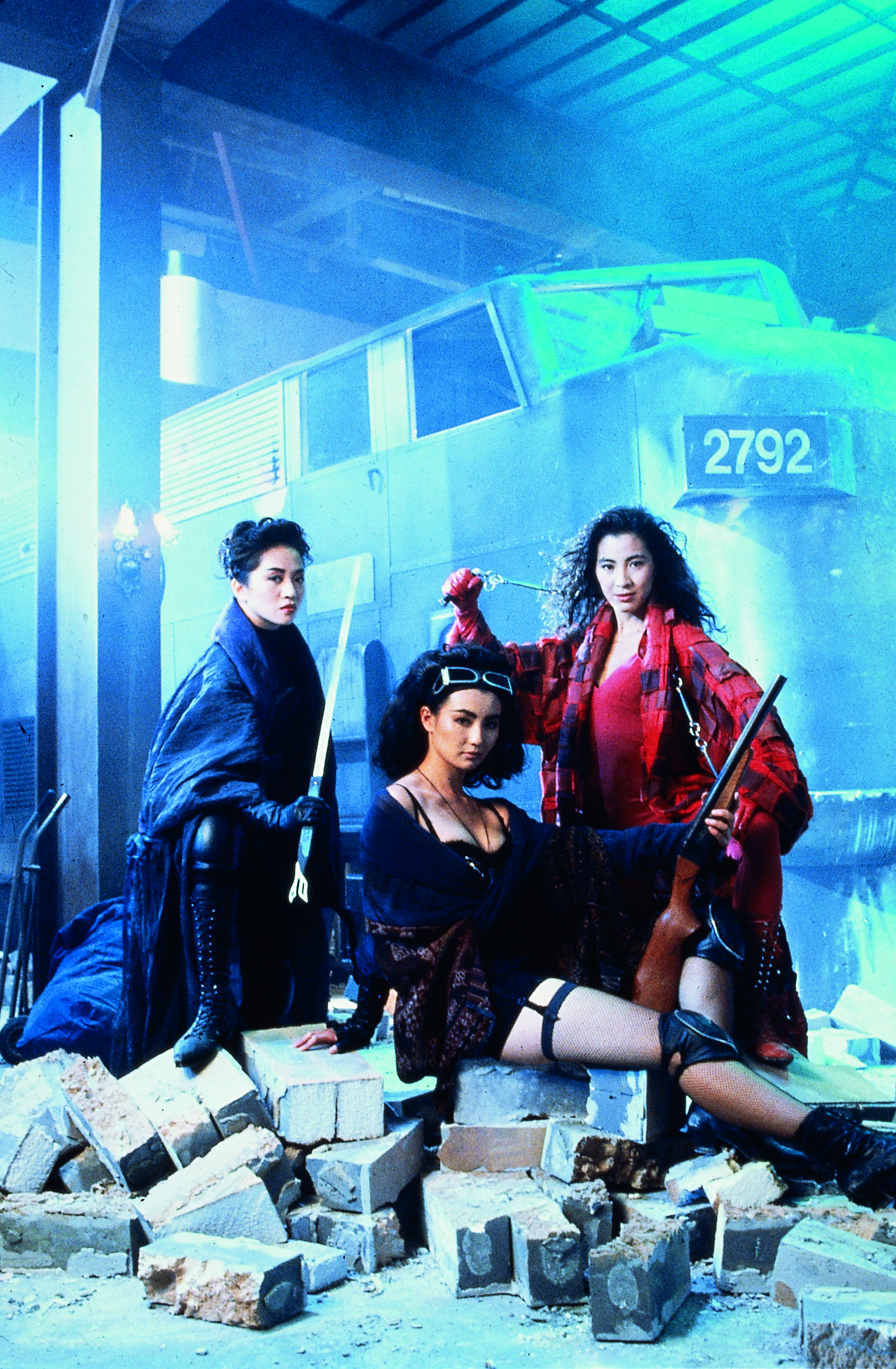
The Hunter’s Diary (猟人日記, Ko Nakahira, 1964)

Ko Nakahira is most closely associated with the seminal Nikkatsu Sun Tribe film Crazed Fruit which sent Yujiro Ishihara to stardom though he began his career at Shochiku in 1948 alongside Seijun Suzuki who like Nakahira would transfer to the newly re-established Nikkatsu when it resumed production in 1954. Suzuki was rather famously let go in 1968 due to creative differences with Nakahira also leaving the studio that year in similar circumstances having decamped to Shaw Brothers in Hong Kong in 1967 where he remade some of his previous hits including 1964’s Hunter’s Diary (猟人日記, Ryojin Nikki). 

Based on a mystery novel by Masako Togawa who in fact stars in her only film role as the hero’s little seen wife, Hunter’s Diary is one of a string of films in the mid-1960s critical of the functioning of the legal system in the post-war society. Nakahira opens with a lengthy sequence introducing new forensic technologies which anticipate the use of DNA as an investigative tool in the use of blood type analysis to place a suspect at a crime scene. This science will however be undercut by the sympathetic lawyer Hatanaka (Kazuo Kitamura) who reminds us that the presence of such evidence is not proof in and of itself in much the same way that DNA has since become the new smoking gun and is as susceptible to misuse as any other kind of forensic technique. 

It’s a problem for the hero, Honda (Noboru Nakaya), because his blood type is incredibly rare. In fact he was once in the paper for saving a baby by coming to the rescue with a donation just in time which as we later discover is ironic because much of his behaviour is shaped by the loss of his own child who was born with osteogenesis imperfecta and did not survive. The traumatic circumstances of the birth left his wife, Taneko, with a fear of pregnancy that eventually destroyed their marriage. The couple now live largely apart, she in her family’s country mansion painting disturbing pictures and he in the city “hunting” women for one night stands adopting the persona of a man who is foreign or part-Japanese. There is something of the fear of foreignness seen in other similarly themed films of the era in the fact that Honda’s child is born in Mexico while the couple had met and married in the US, Taneko convinced that had they returned to Japan earlier her baby may have survived while Honda claims that “intellectual” women are drawn to foreign men as he assumes his rather creepy “Monsieur Soubra” alter-ego complete with a funny accent and slightly broken Japanese. 

He positions his “hunting” as a way of dealing with the collapse of his marriage and his guilt over the death of his child overcoming his sense of impotence through transgressive sexuality though many of the women Hatanaka later interviews describe him as disappointingly vanilla and as we discover his games might have begun long before. Meanwhile the women are themselves judged for their sexuality, the discovery of a male muscle magazine in the home of a mousy spinster somewhat amusing to Honda while the unintended darkness of his sport is brought home by the film’s opening sequence in which a 19-year-old woman who became pregnant after he seduced and abandoned her takes her own life in shame and desperation only to be branded an “idiot” by her grieving sister for having slept with a man she had only just met. When a previous conquest of his is murdered in her apartment, Honda is momentarily worried but assumes it’s a grim coincidence. When her death is followed by that of a woman who could have provided him with an alibi he comes to the conclusion that someone is trying to frame him. 

Hatanaka’s conviction is that “the law is everything in court” and that Honda should not be judged on his moral character for his sleazy philandering only on the basis of the evidence presented which he believes may have been deliberately planted to incriminate him. His investigations take him to unlikely places discovering the potentially unethical practices of blood donation programs along with the illegal sale of blood and other bodily fluids such as semen while seeing the tables turned on visiting a gay bar where a male sex worker reports a weird encounter with a suspicious client, and salesman continues to frequent a Turkish bath hoping to run into a woman who seduced him but may only have been interested in his blood type. Honda soon forgets the name of the woman who took her own life, but is haunted by the visions of the women he has harmed while simultaneously rejecting the labels placed on him as a pervert or a predator and believing that his child’s death is punishment for his “abnormal sexuality” as some may brand it. 

This sense of guilt is also reflected in his worry that he is a “spreader of death”, as if though he did not kill them directly he were the carrier of a disease or else some kind of grim reaper beckoning these women towards their demise though he evidently thinks little of them outside of their status as trophies and does not stop to consider the consequences of his actions on others. Above his bed in his city hideout (officially he lives in a hotel) there is a picture of a fox hunt making plain that his satisfaction lies in the chase rather than its conclusion yet otherwise his motives are rather banal. He cannot leave his wife because he married into her prominent family and his social standing depends on his connection to them, likewise he decides against alerting the police or the building’s caretaker on discovering one of the women’s bodies because his reputation would be ruined if were to become involved in a murder and his secret life exposed. Ironically his salvation comes precisely because of this social standing when his wealthy father-in-law hires Hatanaka to handle his appeal and save him from the death penalty. 

Hatanaka had resigned from a previous position in opposition to the system, disappointed on meeting the lawyer who defended Honda at trial and realising they did not attempt to mount a defence nor investigate his case simply try to mitigate it in the hope of working it down to a custodial sentence. He instructs his naive young assistant who wonders if Honda is the sort of man they should be saving that she should approach every case on its merits as if the defendant is innocent without bringing in external moral judgements on his character. As he tells him, Honda may be legally vindicated but his moral judgement would depend on how he lives his life from then on later offering him a kind of absolution in telling him that one of his conquests, who does not want to be identified, gave birth to a son who is healthy and happy signalling that his is not an original sin and he does not bear that kind of responsibility for the death of his child. Veering towards the avant-garde Nakahira makes frequent use of superimposition and dissolves to reflect Honda’s fracturing mental state along with the persistence of his guilt while shifting into the purely documentarian in his lengthy explanation of forensic techniques and the science behind blood types but always returns to the Hitchcockian interplay of sex, death, and remorse which is true source of Honda’s trial. 


DVD remaster trailer (no subtitles)

Love Life (Koji Fukada, 2022)

Emotional distance and the contradictions of the modern family conspire against a grief-stricken newlywed couple in Koji Fukada’s moving social drama inspired by the 1991 Akiko Yano hit, Love Life. Interrogating love in all its forms along with its limitations, Fukada seems to asks if love is ever enough to overcome a sense of loneliness or if the space between people can really be bridged by communication alone while the couple find themselves pulled back towards the unfulfilled potential of failed romance in contemplating the possibilities of different if not necessary better futures. 

The fracture points in the recent marriage of Jiro (Kento Nagayama) and Taeko (Fumino Kimura) are thrown into relief during a double celebration as the couple host what is superficially a party for Taeko’s six-year-old son Keita (Tetsuta Shimada) winning an Othello competition but in reality a surprise do for father-in-law Makoto’s (Tomorowo Taguchi) 64th birthday. The elephant in the room is that Makoto does not approve of the marriage, making a rather unkind remark about second hand goods in irritation that his son has chosen to marry a woman who already had a son. Though Jiro’s mother Akie (Misuzu Kanno) is in general kind and keen to defend her new daughter-in-law even she tactlessly adds that she hopes the couple provide them with their “own” grandchild as soon as they can. The remark appears to cut to the quick of the already wounded Taeko, a look of dumbfounded confusion on her face in this sudden moment of accidental rejection. 

During the party, Keita is killed in a tragic domestic accident of the kind for which no one is to blame and could easily strike any family. Police questioning further emphasises the couple’s disconnection as a policewoman probes why Jiro had not legally adopted Keita as his son when they married only to discover that he did not want to do so until he’d received his father’s permission to add him to their family register. Though only married for a little under a year, Jiro had felt himself to be Keita’s father and loved him as a son yet is awkward in his grief, wanting to cry alongside his wife but feeling as if he had no right to do so. The feeling is compounded when Keita’s estranged father, Park Shinji (Atom Sunada), suddenly arrives at the funeral, soaking wet and in inappropriate clothes, to first breakdown over the coffin and then roundly strike his former wife across the face before being escorted away by security. 

In a mirrored scene, Taeko had asked her husband shortly before the party about another woman, Yamazaki (Hirona Yamazaki), sensing that there may have been something between them and feeling an anxiety in the precarity of their married life. Jiro is then left anxious by the resurfacing of Shinji yet trying to act against it, later advising Taeko that she should feel free to help him seeing as it seems he has fallen on hard times and has no one else to turn to as he is deaf and communicates in Korean sign language which few around him know. Taeko had previously used sign language to slip into a different world with her son when Jiro had asked why he never wants to play Othello with him only for Keita to reply in silence that it’s only because he’s not very good at it. There is a palpable pain on his face observing the closeness that exists between Taeko and Shinji as they communicate in a private language while, as Yamazaki later describes it, he is a man never quite able to look anyone in the eye. 

While he is drawn back to his unfinished business with Yamazaki, Taeko finds herself filling the void in her life by trying to rescue Shinji. Treating him almost as a child, she comes to believe that he cannot survive without her yet later realises that the intimacy she felt between them was only an illusion, Shinji had never really been emotionally honest with her and there are in fact plenty of other people with whom he can communicate if only he chose to do so. Just as she had been isolated at the party, marooned in the kitchen on her own, she is abandoned once again yet perhaps coming to a final acceptance of her son’s death along with a clearer understanding of her love and life even if it all it means is walking in parallel with no clear direction. A melancholy mediation on grief, Love Life suggests you don’t so much move on from the past as take it with you even as the pair of conflicted lovers determine to look to the future rather than the past as a path to salvation.


Love Life screens 8th/9th/14th October as part of this year’s BFI London Film Festival.

Original trailer (Japan subtitles only)

Small, Slow But Steady (ケイコ 目を澄ませて, Sho Miyake, 2022)

Part way through Sho Miyake’s empathetic character study Small, Slow But Steady (ケイコ 目を澄ませて, Keiko, Me wo Sumasete), an older man visits a doctor and is told that though he may think there is nothing really to worry about at the moment, a tiny drop of water falling steadily can soon make its mark in stone. It’s in one sense the small, slow, but steady stresses of everyday life that have eaten away at the soul of Keiko (Yukino Kishii), an aspiring boxer who is fast losing the will the fight. Yet it is also a small, slow, but steady process that allows her to begin moving again, climbing a new hill towards the next bout no longer so afraid of leaving the safety of the familiar. 

Deaf since birth, Keiko became a professional boxer two years previously and makes ends meet with a part-time job in housekeeping at an upscale hotel. Miyake often positions her as in a way free of the frenetic nature of the noisy city, unaffected by the shouts of rude passersby and unlike the men at her boxing gym never subjected to angry rants from her coaches. Yet it’s also at times as if she feels a kind of loneliness in the minor rejections of an indifferent society which often fails to cater to her difference. Few people are able to sign, even those at her gym haven’t learned, while others are sometimes impatient in her attempts to communicate. The restrictions of the coronavirus pandemic meanwhile only make things worse for her given that constant masking means she can no longer rely on lipreading nor can she hear the public health messages being blasted out in public spaces reminding citizens that there is a state of emergency in place and they should restrict their journeys to the barest of essentials. 

Then again, in the gym, she obviously cannot sign because the gloves her impede her ability to communicate. Nor can she hear the session bell or words of encouragement and advice from her coaches and the crowd. The chairman of the boxing club (Tomokazu Miura) admits in an interview that deafness is potentially fatal for a boxer, but that what Keiko may crave is a kind of internal peace in the surrender to the purely physical which allows her to empty her mind of everyday troubles. She may have taken up boxing as some say after being bullied as a child because of her disability, quite literally fighting back against a conformist society she refuses to beaten by, but has also found something reassuring in its slow and steady rhythms that allows her to reorient herself blow after blow. 

The chairman also says, however, that it’s not a matter of having a preternatural talent so much as a steady work ethic and above all a big a heart, describing her finally as simply “a really nice person”. “Why don’t you have your guard up properly?” another of her coaches asks her, while her brother having noticed there is obviously something bothering her tries to get her to talk, only for her to point out that “talking doesn’t doesn’t make a person any less alone”. With rumours the pandemic, along with the boss’ failing health, will finally take the boxing gym too, Keiko fears losing this final safe space but finds herself unable to stand up and fight for it. Though she had struggled to find a gym who would accommodate her disability, she is ambivalent when a new solution is found in an empathetic female coach (Makiko Watanabe) running a modern training facility who is learning sign language and keen to empower her in her own decision making rather than patronise or railroad her. Afraid of getting hurt, she takes a step back unwilling leave the security of the past for the possibility of the future. 

As Keiko reminds herself in her diary, self-control is the most important thing and the force she struggles with, suddenly losing her concentration in the middle of a match because the thoughtless referee keeps telling her to listen to him when he calls stop. In the end, it’s something quite trivial that sets her back on the path, a kind yet seemingly meaningless moment of acknowledgement from an unexpected source. Shot in a richly textured 16mm, Miyake captures Keiko’s isolated everyday with stunning clarity finding her alone amid the noisy city staring into space and looking for direction. Using intertitles to translate sign language his composition mimics that of a silent movie and lends an almost elegiac quality to the moribund boxing gym as it becomes an accidental victim of its times but ends on a note of quite resilience in the small, slow, but steady rhythms of gentle forward motion. 


Small, Slow But Steady screened as part of this year’s BFI London Film Festival.

Original trailer (no subtitles)

Ringu (リング, Hideo Nakata, 1998)

As the investigative duo at the centre of Hideo Nakata’s eerie supernatural horror Ringu (リング) begin to unlock the mystery of Sadako, we’re told that a strange woman who may have had some kind of psychic powers was loathed by those around her in part because of her habit of sitting and staring at the sea. Nakata opens the film with waves and often returns to them as if suggesting in this millennial horror that what we fear is a transmission we cannot see. In the end there may not be so much difference between the magic of an analogue TV broadcast and a message from another plane. 

In any case, perhaps the central message is that one should pay more attention to the words of those whose warnings are often dismissed on the grounds of their age and gender. Journalist Reiko (Nanako Matsushima), for example, doesn’t seem too invested in a video she’s making about a cursed video related by a trio of high school girls in a cafe who explain that they don’t personally know anyone who’s died after watching it but have been reliably informed by friends of friends who apparently do. As will later be discovered, the girls actually give Reiko crucial information but for whatever reason she does not remember it until coming to the same conclusion herself. In any case, it’s not until her own niece, Tomoko (Yuko Takeuchi), dies in mysterious circumstances that Reiko starts to wonder if this is more than a spooky story elevating the chain letter to new technological heights.

According to the urban legend, if you watch the cursed tape you’ll immediately get a phone call telling you you’ll die in seven days. The supernatural entity now synonymous with the film, Sadako, is manipulating these still analogue waves for herself. Sending her messages via television and telephone she is a literal ghost of the airwaves and as Reiko’s ex-husband Ryuji later puts it radiating her sense of rage in her own mistreatment, insisting that her story be known and that those who refuse to acknowledge it should not be allowed to survive. Just as Reiko should have listened to the high school girls, someone should have listened to Sadako and because they didn’t others now have no choice. 

In a sense Sadako represents this nascent fear of technological advancement. When Reiko answers her flip phone, it’s a reminder that there’s no escape from unwanted communication even if you can in theory try to switch it off. The girl with Tomoko when she died was driven out of her mind and now won’t venture anywhere near a television, as if you could escape Sadako’s wrath by merely keeping your distance from the portal. The two teenagers who died around the same time as Tomoko were in a car in the middle of nowhere, but cars have radios which receive radio waves. Sadako travels through the air, invisible until she chooses not to be. She may only have a direct line, but it is in one sense a call for help she’s issuing only in the very inefficient manner of a vengeful ghost whose rage has become indiscriminate or at least directed towards the society that wronged her and everyone in it rather than a single guilty party. 

In a certain sense, you can cure the curse only by spreading it. If everyone everywhere suddenly understood, learned Sadako’s painful history, then the curse would wither and die with no new hosts to go to which is perhaps what Sadako wants. Yet it leaves Reiko with a dilemma, knowing that to save the lives of those closest to her she may have to ask someone else to risk their life or even expose them without their consent. Throughout the film she’s been depicted as an imperfect mother, divorced and often leaving her small son Yoichi to fend for himself at home while the boy at one point walks past his own father in the street and does not seem to recognise him so absent had he been in his life. Through their shared quest to undo the curse, the pair in a sense reclaim their parental roles and repair their familial ties in working together to save their son’s life in contrast to the parental figures surrounding Sadako who may have done the reverse. Sadako frightens us because of her transgressive qualities, quite literally transgressing the barriers between ourselves and the stories we tell by crawling out of them and finding us here, on the other side of the screen, where we thought we were safe to remind us not to look away and to listen to those whose voices are all too often ignored. 


Ringu screens at Japan Society New York on Oct. 7 as part of the Monthly Classics series.

20th anniversary trailer (English subtitles)

The Woman in the White Car (하얀 차를 탄 여자, Christine Ko, 2022)

A small-town policewoman unfairly held back by a traumatic past is embroiled in a complicated case of distorted realities in Christine Ko’s twisty, B-movie thriller, The Woman in the White Car (하얀 차를 탄 여자, Hayan Chaleul Tan Yeoja). Alluding to a novel which is mentioned in the film and both clue and red herring simultaneously, the title may actually be a minor spoiler but is also neatly allusive in its sense of mystery which at the same time proves mildly reductive even as we ask ourselves who such a woman may be. 

The film opens, however, with a silver car which has a large dent to its front bumper arriving at speed at a hospital where the driver, Do-kyung (Jung Ryeo-won), pulls another woman she calls sister out of the passenger seat while trying to get the attention of medical staff explaining that the woman has been stabbed by an abusive partner, Jung-man. All of that is obviously very distressing but when policewoman Hyun-ju (Lee Jung-eun) arrives on the scene she is immediately alerted to what seem to be inconsistencies in Do-kyung’s story some of which could possibly be chalked up to shock along with the revelation that Do-kyung has been diagnosed with schizophrenia and her recollections of events may be unreliable. 

Then again as Hyun-ju says, just because Do-kyung has schizophrenia it does not mean there is no truth in her testimony, just as it does not mean that anyone else with no such condition is necessarily telling the truth. Identifying with her on some level, Hyun-ju tries to tease out the hidden meaning behind Do-kyung’s words to unlock an objective reality but is also mindful of the possibility that Do-kyung may actually be completely lucid and playing them all for fools. The plot thickens when it is realised that the woman in the silver car is not Do-kyung’s sister Min-kyung as she had claimed, but an otherwise unidentified passenger whose origins they do not know further casting doubt on Do-kyung’s version of events along with the existence or not of prime suspect Jung-man. 

As she had received the call about the incident, Hyun-ju had been having a meal with her naive assistant Young-jae who had complained how boring their lives were as small-town police officers while Hyun-ju had even insisted on finishing her dinner before leaving for the hospital believing it couldn’t really be that urgent. On witnessing her talent for investigating, he asks her why she didn’t leave to pursue a more fulfilling career elsewhere only for her to explain that she stayed to look after a father we later learn to be abusive whose cutting criticism eroded her confidence in seeking a better life. All the women are in fact similarly constrained, but eventually fighting back against those who are preventing them from taking full control over their lives and in some cases creating a narrative that allows them to do so while claiming their freedom. 

Ko piles twist onto twist through a series of unreliable narrators each giving contradictory versions of events but each in their own small way hinting at greater truths which eventually present themselves to Hyun-ju leaving her with a dilemma in solving a mystery but wondering if it’s better to let it rest and each of the women, herself included, go free. Switching aspect ratios and colour grading to present different versions of reality through flashback and thought experiment, Ko places material clues in each of the stories to act as tiny anchors while setting the tale at a creepy mountain lodge in the middle of nowhere filled with gothic uncertainty and almost chilling loneliness. Accompanied by an overtly B-movie score, the film certainly indulges, with pleasure, in a series of genre cliches from mental illness to unreliable narrators, blood in the snow, and dangerous mountain curves but is finally anchored in a more certain reality unlocked by a detective’s unexpected empathy even if that same empathy leaves her vulnerable to a more literal kind of deceit. “I was just saving myself” one of the women admits, speaking for all taking their destiny into their own hands and reclaiming their freedom in the knowledge that only they can do so.


The Woman in the White Car screens 7th/8th October as part of this year’s BFI London Film Festival.

Original trailer (English subtitles)

Unlock Your Heart (ひらいて, Rin Shuto, 2021)

A straight-A student and popular girl enters a self-destructive tailspin on discovering her longterm crush has a secret girlfriend in Rin Shuto’s adaptation of the novel by Risa Wataya, Unlock Your Heart (ひらいて, Hirate). Wataya also penned the source material for Akiko Ohku’s Tremble All You Want and Hold Me Back, and while Shuto may shift away from Ohku’s quirky style she maintains and intensifies an underlying sense of unease in what has the potential to develop into an incredibly messy situation. 

As the film opens, popular girl Ai (Anna Yamada) walks away from a dance rehearsal and discovers fellow student Miyuki (Haruka Imo) collapsed by a tree next to a pouch containing her insulin. Barely conscious, Miyuki asks her for something sweet and Ai soon returns with some sugary juice. Unable to find to an efficient way of getting her to drink it, Ai passes the liquid from her own mouth in a literal kiss of life that seems have an unexpected effect on her. Meanwhile, after sneaking into the school late at night with some friends halfheartedly joking about stealing the exam papers, Ai raids the locker of her crush, Tatoe (Ryuto Sakuma), and discovers a series of love letters which turn out to be from Miyuki. 

For some reason this revelation turns Ai’s life upside-down even though she later reveals that she had been enduring the silent crush on Tatoe for some years without ever acting on it. It may partly be that Ai is popular and attractive and so the idea that someone may not find her desirable is destabilising, cutting to the quick of her teenage insecurity while pulling the rug out from under her if she had indeed thought of Tatoe as a kind of comfortable backstop or easy plan B. Enraged, she befriends Miyuki yet for unclear reasons, perhaps hoping to get some insider info on Tatoe, find out what it is Miyuki has and she doesn’t, or somehow break them up, but finally settles on seduction unexpectedly kissing her again in an echo of their awkward meet cute.  

At heart, Ai does not understand herself and is operating with no real plan. Each escalation seems to come as a surprise even to herself leaving her with moments of internal conflict gazing into a mirror wondering what it is she’s doing. On separate occasions, both Miyuki and Tatoe accuse her of lying and indeed she is, most particularly to herself in a wholesale denial of her own desires which fuels her impulsive and self-destructive behaviour. Others accuse her of being selfish and self-absorbed, unable to look beyond herself and indifferent to the feelings of others which is also in its way a reflection of the degree to which she is consumed by internal confusion, driven slowly out of her mind while taking out her frustration on those around her not least in her increasingly dark manipulation of Miyuki and Tatoe. In the end, as Tatoe points out, she’s little different from his abusive father in her need to possess and control but it’s the extreme control that she’s trying to exercise over herself and the desires she can not accept that is causing her self-destructive behaviour. 

Only Miyuki seems to be able to see through her, at least to an extent, yet it’s not entirely clear at first if she responds to Ai’s advances willingly or simply goes along with them because she has no other friends and is afraid Ai will reject her if she refuses. Ostracised by the students because of her diabetes which is of course a very visible condition in that it requires her to inject herself while at school, Miyuki is shy and lonely while required to keep her relationship with Tatoe a secret because of his abusive father. But as Miyuki later puts it in her letter, Ai isn’t quite as aloof as she’d like to pretend and acts with an unexpected tenderness and consideration, even a kind of vulnerability, in moments of intimacy that betray the true self otherwise stifled by anxiety and internalised shame. With a persistent air of danger and unease spurred by Ai’s impulsive and chaotic nature, Shuto’s intense drama reaches its climax in its deliberately abrupt conclusion perfectly capturing the heroine’s moment of realisation imbued with all of her idiosyncratic messiness. 


Unlock Your Heart screened as part of this year’s Camera Japan.

International trailer (English subtitles)

The Midnight Maiden War (真夜中乙女戦争, Ken Ninomiya, 2022)

An apathetic college student is pulled between nihilistic destruction and the desire for life in Ken Ninomiya’s adaptation of the novel by F, Midnight Maiden War (真夜中乙女戦争, Mayonaka Otome Senso). “Do those who struggle for life deserve to be defeated as evil?” is a question that is put to him while he asks himself if there’s something wrong in his yearning for a “boring”, conventional existence with a good job, house in the suburbs and people to share it. Then again as the forces of darkness point out, those who long for normality usually cannot attain it which only fuels their sense of resentment towards a “rotten” society. 

The unnamed protagonist (Ren Nagase) has come to Tokyo from Kobe to attend university and as his family are not wealthy is supposed to be studying for a scholarship exam while supporting himself with part-time jobs. Only as he’s abruptly let go from his side gig, he finds himself unfulfilled by his studies and wondering what the point is in wasting his youth just to lead a dull life of drudgery. In an intense act of self-sabotage which later goes viral, he tells his English professor (Makiko Watanabe) to her face that her classes are pointless while calculating exactly how much they cost per hour which turns out to be the equivalent to three hours of labour for his mother, the price of a new text book, or three months’ Netflix subscription which oddly becomes a kind of currency benchmark. He can’t see that anything he’s learning will be of much use to him in the further course of his life when the only prize is conventionality even if that conventionality might also provide basic comfort. 

After joining a mysterious “hide and seek” club and becoming distracted by a series of minor bombings of public bins on campus, the hero is pulled between a woman only known as “Sempai” (Elaiza Ikeda), and a man only known as “The Man in the Black Suit” (Tasuku Emoto) who sell him conflicting visions of hope and darkness. While Sempai thinks it’s wrong to belittle those who want to live their lives and are genuinely content with the conventional, The Man in the Black Suit quite literally wants to burn it all to the ground. What begins as an awkward friendship between two awkward men, soon develops into a cult-like organisation of, as the hero puts it, “social outcasts”, drawn to the Man in the Black Suit’s desire to destroy the rotten society which has rejected them through blowing up Tokyo on Christmas Day. 

Positing Tokyo Tower as the “root of unhappiness”, the hero claims he wants only to destroy, and most particularly himself along with everything else. Experiencing extreme ennui, he struggles to find meaning in his life yet is also conflicted in the breadth of the The Man in Black’s goals being fairly indifferent to the existence of others and unconvinced that those merely complicit in the system should also be targets of his social revenge. If not quite dragged towards the light, he realises that he must kill the nihilist within himself and in a sense be reborn, as the Man in Black puts it, as the god of a new world. “You’re alive, that’s good enough for me” Sempai echoes as the hero does at least in a sense embrace life even amid so much destruction. 

Ken Ninomiya has become closely identified with a singular style heavily inspired by music video and often taking place in Tokyo clubland. Midnight Maiden War is in many ways a much more conventional film mimicking the aesthetic of other similarly themed manga and light novel adaptations featuring only one real party scene and no extended musical sequences while routing itself in a more recognisably ordinary reality albeit one secretly ruled by a lonely tech genius. It does however feature his characteristic neon-leaning colour palate, focus pulls, and striking composition such as the revolving upside down shot which opens the film and hints at the unnamed protagonist’s sense of dislocation. Quite literally a tale of darkness and light, the film finds its dejected hero struggling to find meaning in a stultifying existence but perhaps finally discovering what it is to live if only at the end of the world. 


The Midnight Maiden War screened as part of this year’s Camera Japan.

Original trailer (English subtitles)

It’s All My Fault (ぜんぶ、ボクのせい, Yusaku Matsumoto, 2022)

A young boy and a homeless drifter attempt to overcome the legacy of parental rejection in Yusaku Matsumoto’s sensitive coming-of-age drama, It’s all My Fault (ぜんぶ、ボクのせい, Zenbu, Boku no Sei). “It’s all my fault” is something many children think about circumstances which are well beyond their control, but it’s also something they’re encouraged to believe by an abusive or neglectful parent who tells them that they are to blame for the treatment they receive. Nevertheless, Yuta (Haruto Shiratori) comes to think that all the bad things happening in the world are in some way his fault, which might on one level be easier to believe than trying to accept that the world is sometimes a relentlessly unkind place. 

A sad and sullen boy, Yuta is viewed with some suspicion by the staff at the care home where lives due to his brooding nature and refusal to speak. The cause of his anger is that he was told by a previous caretaker that he’d be able to see his estranged mother, Rika (Marika Matsumoto), when he entered middle school and is resentful that he has still had no contact with her. The sad fact is, however, that Rika stopped taking their calls a long time ago and seemingly has no further intention of maintaining contact with her son. 

After the orphanage is rocked by a literal earthquake, Yuta sets off to find his mother but though she is moved to see him it quickly becomes clear that she is not really prepared to play a maternal role. When her drunken boyfriend returns home, she tells him that Yuta is a relative’s child she agreed to watch for a short time and appears otherwise conflicted, solicitously making sure he has enough to eat but more or less forgetting he’s even there whenever the boyfriend is around. Eventually she rings the care home to come and take him back, forever ruining Yuta’s faith in genuine human connection. 

Managing to run away, Yuta is later taken in by eccentric drifter Sakamoto (Joe Odagiri) who strongly identifies with the boy in having grown up with an abusive mother whose legacy he has been unable to escape. Shiori (Ririka Kawashima), a teenage girl with issues of her own who also befriends Sakamoto, is envious of his untethered lifestyle viewing him as free and bound by no one. But in truth he too is trapped as symbolised by the broken van which prevents him from leaving to travel to Nagoya and confront his mother as he often says he intends to do. Sakamoto describes his trauma as a like a rock in the heart that tortures him as he continues to resent his mother for the abuse she dealt him while simultaneously suggesting that she has dementia and may not even remember that she has a son. Yuta by contrast insists that his mother is not a bad woman and continues to yearn for her, treasuring the friendship bracelet she made for him only for it to be broken by thuggish teens who get their kicks bullying those they perceive to be weaker than themselves.

Sakamoto becomes an awkward paternal figure, teaching Yuta how to survive in his way of life by hatching scams on wealthy passers by and fetching junk to sell to a local scrap merchant but is equally arrested, unable to come to terms with the traumatic past and therefore unable to move on. Shiori envies what she sees as his freedom in part because she has little of her own. Secretly blaming her authoritarian father for her mother’s death which she has come to doubt was really from an illness as she was told, Shiori has an internalised sense of shame and inadequacy knowing that she cannot be the person her father wants her to be and longs to escape him. Yuta continues to dream of a family, inviting Shiori to come with them to Nagoya when the truck is fixed, but is met only with despair as the world conspires against his happiness and encourages him to blame himself for his all his misfortune. Shot with an unsentimental if empathetic eye, Matsumoto’s hard-hitting drama examines the legacies of parental abuse, neglect, or absence persisting long into adulthood while his young hero struggles with himself in his conflicting emotions towards the woman who abandoned him with only an impossible future. 


It’s All My Fault screened as part of this year’s Camera Japan.

Original trailer (no subtitles)

Record of a Woman Doctor (女医の記録, Hiroshi Shimizu, 1941)

By 1941 it was becoming harder to make films which were strictly apolitical, though many directors were able to circumvent the constraints of a tightening censorship regime in focusing on the kinds of messages they could get behind. Hiroshi Shimizu’s 1941 drama Record of a Woman Doctor (女医の記録, Joi no Kiroku) is in essence a public information film hoping to foster better hygiene practices in rural areas while encouraging those who might have felt mistrust towards modern medical professionals that they need have no fear of doctors, but in its own way presents a challenge to the militarist line in implying that the humanist teacher and female doctor of the title are in a sense “re-educated” though their exposure to the rural poor. 

As the film opens, a collection of medical students from Tokyo Women’s Medical University is sent to a small rural village as part of a pop-up free clinic in an area which otherwise has little access to professional healthcare. As the school teacher, Kamiya (Shin Saburi), who is their liaison explains, the the major health problems faced by the villagers are largely those of poverty, i.e. malnutrition, while infant mortality remains high. Each of these is compounded by the contemporary economic and social realities in that the young often leave to work in cities and then bring back with them urban diseases such as tuberculosis to which the locals are especially vulnerable while in the absence of a professional doctor medical emergencies such as appendicitis or complications with childbirth which might be easily treated are often fatal. 

Even so, the villagers are not initially grateful for the doctors’ arrival for various interconnecting reasons. The first is obviously their poverty, not realising that the clinic is free and assuming they cannot afford to take advantage of it. Secondly, they have experience of being ripped off by duplicitous conmen calling themselves doctors and fear that they will simply incur a large debt to be paid at a later date, wary that though the consultation may be free the treatment may not be, the doctor suddenly discovering they are actually incredibly ill and must part with a lot of money in order to redeem their health. The third reason, meanwhile, is older still in the intense stigma surrounding sickness and particularly any respiratory condition. 

These are all the attitudes the doctors and the film intend to challenge in insisting that modern medicine is both safe and responsible, interested only in helping prevent the onset of sickness rather needlessly meddling in their way of life. All from the city, the conditions in this small mountain village necessarily shock the doctors noting that the villagers have no culture of regular bathing, often wear the same clothes day and night for indefinite amounts of time with no washing, never air their futons, and live in dark and poorly ventilated homes. The authorities have often recommended felling a thick circle of trees which surrounds the village to let more light in and allow the breeze to travel through though the villagers have always refused. 

The felling of the trees takes on a symbolic association of freeing the village from primitive superstition, literally enlightening it, as they shift closer towards modernity in learning the importance of proper sanitation. In a sense these ordinary rural people are being patronised, even sympathetic teacher Kamiya describing them as “culturally deprived” while later implying that he himself has been reformed by their simple way of life. Kamiya’s life is certainly not easy, effectively acting as something like a village headman called in to deal with any sort of local problem while often providing childcare to the infants brought in by his pupils who are supposed to be minding their siblings while the parents work in the fields but are not always completely responsible. Earnest doctor Natsuki (Kinuyo Tanaka) is later much the same, touched by the plight of a local girl suffering with TB kept like a secret in the back room by her mother after being sent back from her factory job. The mother is intent on sending the younger sister in her place even though she too is in poor health because the family is without a male earner and unable to support itself. 

The fact that the doctors are all female may in itself be somewhat progressive but also speaks of the times, the male medical students presumably diverted to the military ironically reinforcing the idea that “domestic” concerns are women’s concerns, something echoed in the film’s concluding scenes which see Natsuki, a qualified doctor, operating a daycare centre taking care of local infants while Kamiya runs a callisthenics session behind her. Conversely, it’s also implied that Natsuki must give up her womanhood or any sense of personal desire in order to dedicate herself to the village making it quite clear that there is no possibility of a romantic connection with Kamiya. Even so, the secondary message seems to be that the key to inspiring confidence lies in a process of mutual understanding, Natsuki belatedly realising she’s accidentally alienated some of the local children by usurping their position as caregivers to Kamiya, less relieving them of a burden than firing them from a job they were proud to do while the only real way to gain the villagers’ trust is to listen to their concerns and show them they really do care about their welfare. The subtext may be that their health is important because healthy bodies are needed to fuel the war effort, but even so you can’t argue with the humanist message even as Shimizu’s subversive implication that one can learn alot from the simple way of life cuts against the militarist grain. 


My Perfect Roommate (룸 쉐어링, Lee Soon-sung, 2022)

In recent years, an ingenious idea has seen older people living alone paired with youngsters struggling to find affordable housing in the hope of combating loneliness and isolation among the elderly to allow them to continue living independently in their own homes for longer. Some more cynically minded people might say it’s merely the government attempting to shift its own responsibilities onto the community, but it can’t be denied that it’s an interesting solution to the problems of an ageing society that, if it works out, can be enriching for both parties though as the grumpy granny and kindhearted student at the centre of Lee Soon-sung’s My Perfect Roommate (룸 쉐어링, Room Sharing) discover it’s always going to be a difficult adjustment. 

That’s in part because Gum Bun (Na Moon-hee) is an elderly lady very set in her ways who appears to be not entirely happy with the idea of having a young man come to live with her in the first place. Before Ji Woong (Choi Woo-sung), a student on a tight budget, arrives she patterns her home with duct tape to mark out which areas he’s allowed to go into and even goes so far as to forbid him from using her bathroom to do a number two because she just can’t bear the thought of sharing her toilet with a man after all these years living alone. For his part, Ji Woong doesn’t complain and does his best to abide by Gum Bun’s wishes even though at times the arrangement seems exploitative as she makes a point of ordering him to do her housework and even begins cooking him meals so she can charge him for them. 

Yet as Ji Woong’s boss at his part time job clearing houses after someone has died points out, loneliness can come at any age and both Gum Bun and Ji Woong are lonely each in a sense excluded from mainstream society because they do not have families of their own. Gum Bun never married and has only one friend (Choi Sun-ja), a neighbour of the same age who married and had children but feels disconnected from her son who rarely calls or visits. She has also elected to take part in the home sharing programme and enjoys spending time with the young student who lives with her as if he were really her grandson. But Gum Bun struggles to bond with Ji Woong in part because she has had disappointment in her life that has left her embittered and resentful while he is also reserved as he is afraid to disclose that he has no family because of a societal stigma towards orphans.

For these reasons there are trust issues on each side, but also an eventual common ground that allows the pair to generate a kind of familial bond and Gum Bun to open herself up to the world again no longer so afraid of abandonment. As Ji Woong had said about a little dog he agreed to look after for a few days much to Gum Bun’s consternation, if you give something love it will eventually come back to you. “We must help each other in this society” Ji Woong had earnestly said only for Gum Bun to counter that helping other people only leaves you miserable, but even she learns to remember her community spirit helping local children living in poverty while collecting prescriptions for other elderly people along with offering a little medical advice as a former nurse. 

Lee’s warmhearted drama directly tackles a series of societal problems from the ageing population to the difficulties young people face trying to get their start in life, but is also clear that prejudice often contributes to the crushing loneliness that can make life seem not worth living. Gum Bun is written off as a “grumpy granny”, excluded from mainstream society because she never married, while Ji Woong is constantly faced with a degree of suspicion solely because he has no family, embarrassed when friends asks what his father does or when a job application unnecessarily asks for his parents’ names. Ji Woong is over the age of majority, but he’s still pressed by a policeman to call his mum and dad while the guy he got into a fight with protecting Gum Bun calls him an “orphan punk” and gestures to the policeman that he is obviously in the wrong assuming the policeman will immediately agree with him. Both he and Gum Bun are in a sense orphans, left alone to fend for themselves in an often hostile society but eventually discovering an unexpected solidarity and sense of familial warmth that allow them to begin moving forward with their lives.


My Perfect Roommate screens in Chicago on Oct. 1 as part of the 15th season of Asian Pop-Up Cinema.

International trailer (English subtitles)