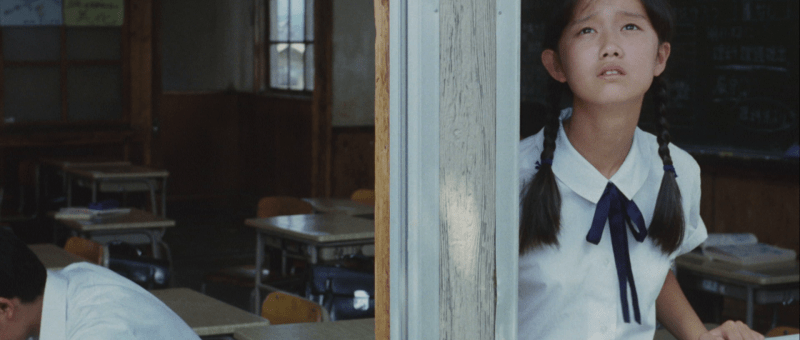
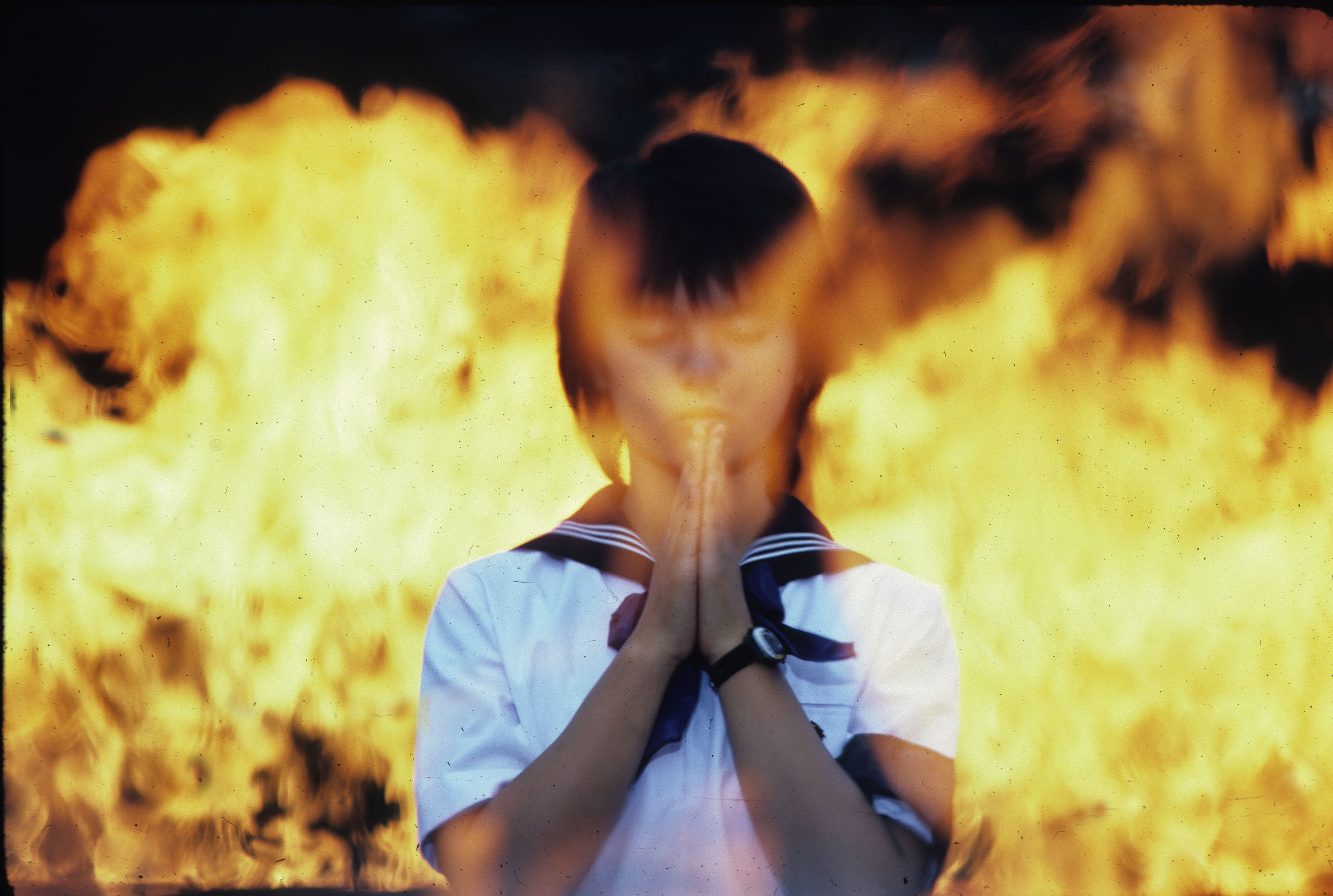
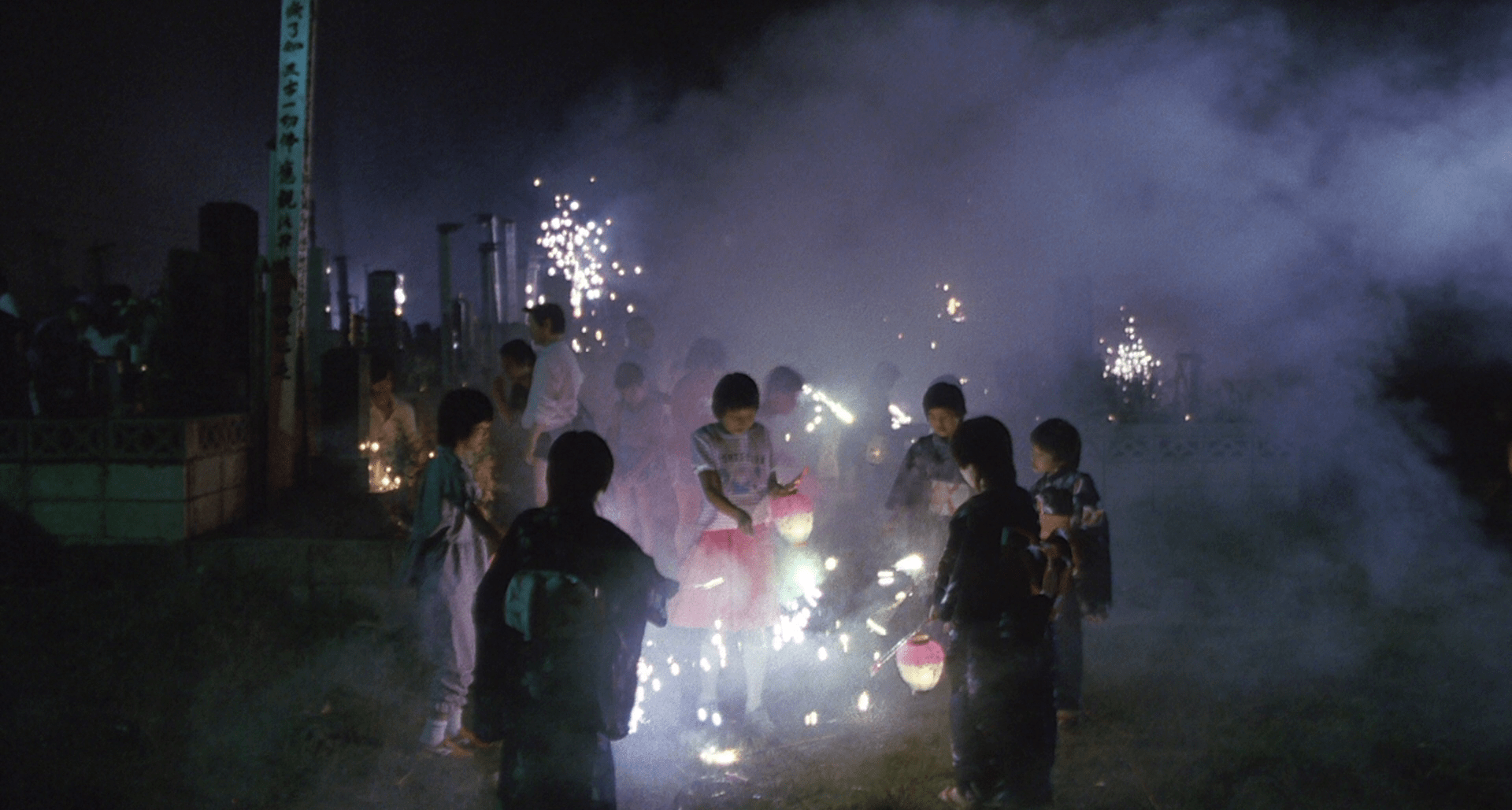
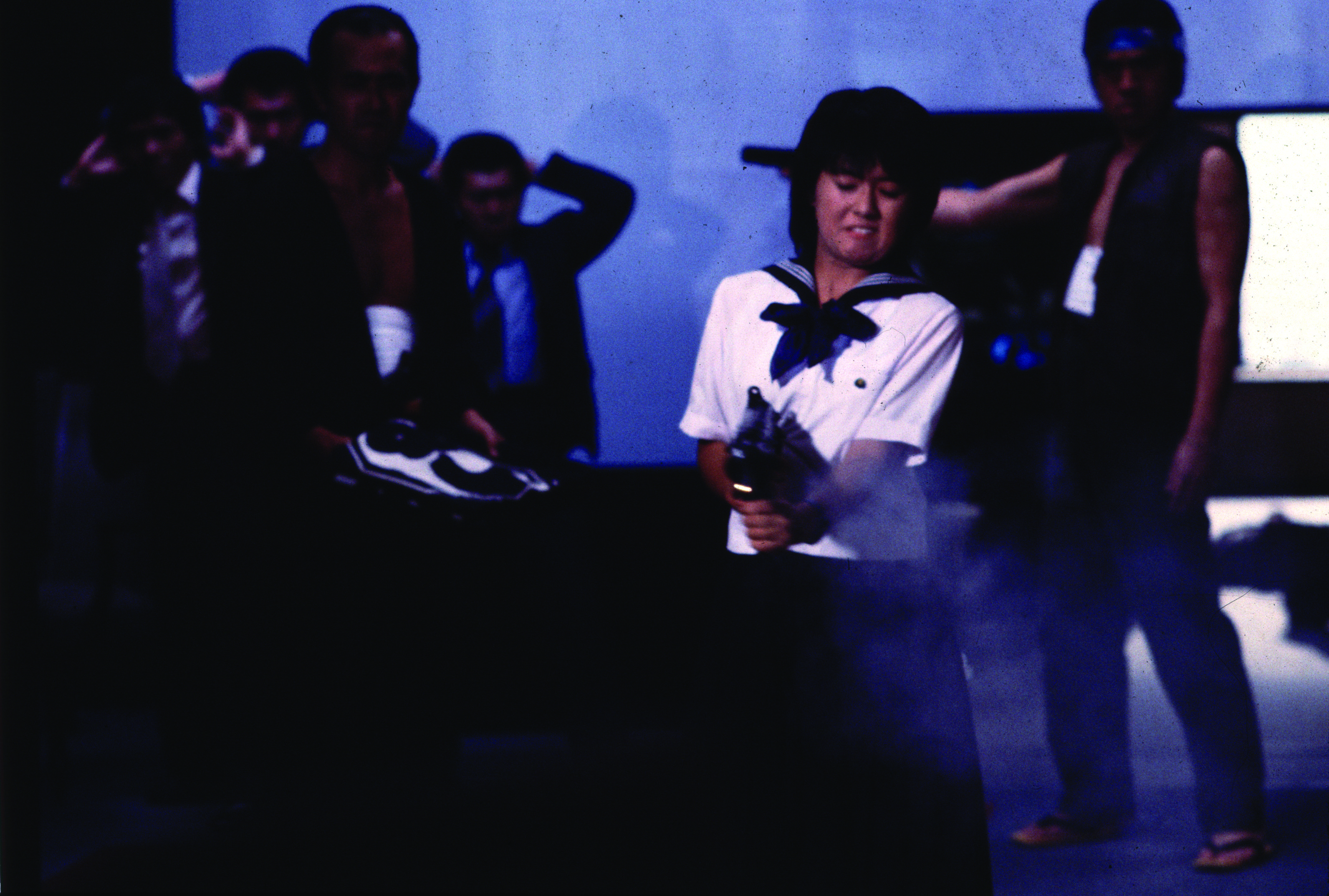
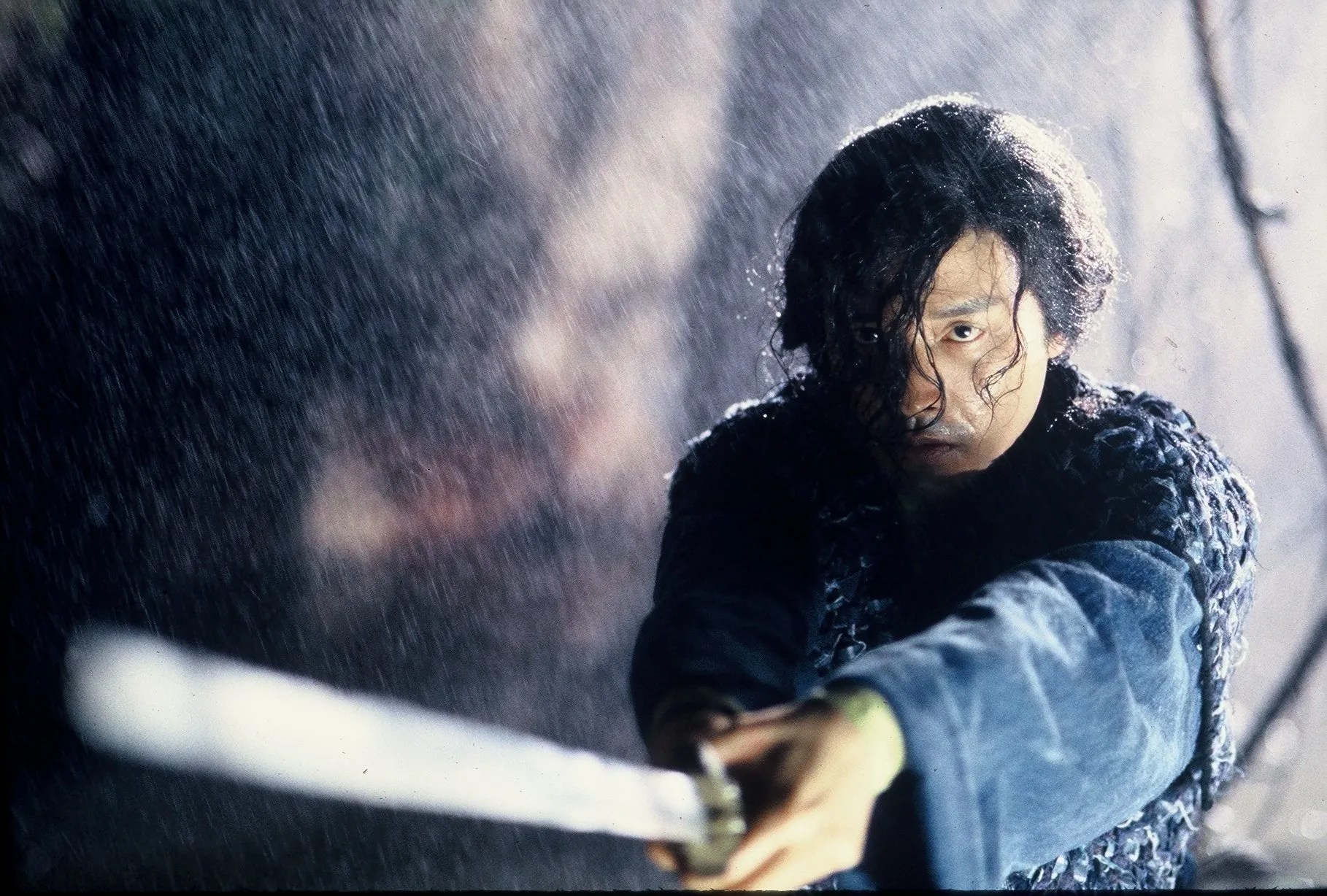
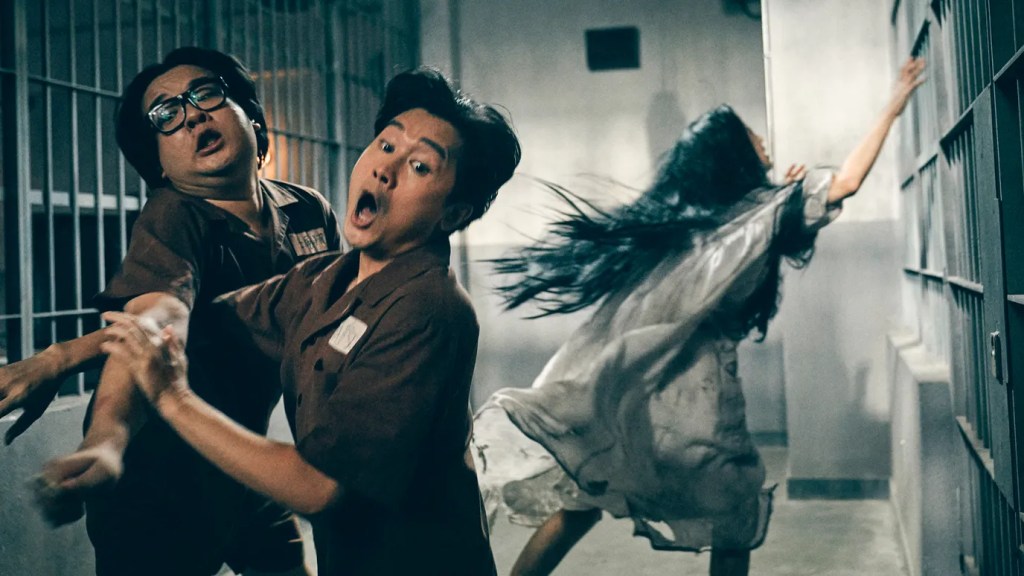
A collection of frustrated teens find themselves trapped within a literal storm of adolescence in Shinji Somai’s seminal youth drama Typhoon Club (台風クラブ, Taifu Club). “You’ve been acting weird lately” one character says to another, but he’s been “acting weird” too and so has everyone else as they attempt to reconcile themselves with an oncoming world of phoney adulthood, impending mortality, and the advent of desires they either are unable or afraid to understand, or perhaps understand all too well but worry they will not be understood.
Most of the teens seem to look to the pensive Mikami (Yuichi Mikami) as a mentor figure. It’s Mikami they call when some of the girls end up half drowning male classmate Akira (Toshiyuki Matsunaga) after some “fun” in the pool gets out of hand. Luckily, Akira is not too badly affected either physically or emotionally, but presents something of a mirror to Mikami’s introspection. Slightly dim and etherial, he entertains his friends by seeing how many pencils he can stick up his nose at the same time, but he’s also as he later says the first to see the rain once it eventually arrives. Notably he leaves before it traps several of the others inside the school without adult supervision and otherwise misses out on the climactic events inside. Even so, Rie (Yuki Kudo), who also misses out by virtue of randomly stealing off to Tokyo for the day, later remarks that he too seems like he’s grown though her words may also be a kind of self projection.
Mikami’s kind of girlfriend, perpetual spoon-bender Rie, finds herself at a literal crossroads after waking up late because her mother evidently did not return home the night before. Eventually she sets off for class running all the way, but then reaches a fork in the road and changes her mind heading to Tokyo instead. Mikami has been accepted into a prestigious high school there, and perhaps a part of her wanted to go too or at least to get closer to him through familiarity with an unfamiliar environment. Unfortunately she soon encounters a firearms enthusiast (Toshinori Omi) who buys her new clothes and takes her back to his flat which she thankfully manages to escape even if she’s stuck in the city because of a landslide caused by the typhoon.
Mikami, however, continues to worry about her unable to understand why he’s the only one seemingly bothered about her whereabouts believing she’s “gone crazy”. Trapped in the school, the kids try to ring their teacher Umemiya (Tomokazu Miura) for help but he’s already drunk and can’t really be bothered. In any case he has problems of his own in that his girlfriend’s mother suddenly turned up during class to berate him for stringing her daughter along and also having borrowed a large amount of money which obviously ought to have some strings attached, only as it turns out Junko leant the money to another guy she was seeing though it’s not exactly clear whether she and Umemiya actually broke up or not. “In 15 years you’ll be exactly like me” Umemiya bitterly intones into the phone when Mikami directly states that he no longer respects him deepening Mikami’s adolescent sense of nihilistic despair.
Of all the teens, he does seem to be the most preoccupied with death. “As long as she’s an egg, the hen can’t fly” he and his brother reflect on discussing if it’s possible for an individual to transcend its species and if it’s possible to transcend it though death all of which lends his eventual decision a note of poignant irony even if its absurd grimness seems to be a strange homage to The Inugami Family. As he points out to his somewhat disturbed friend Ken (Shigeru Benibayashi), “I am not like you” and indeed Ken isn’t quite like the other teens. Obsessed with fellow student Michiko (Yuka Ohnishi) but unable to articulate his feelings, Ken pours acid down her back and watches her squirm as it eats into her flesh. Repeating pleasantries to himself as a mantra, he later attempts to rape her after violently kicking in the dividing walls of the school only to be stopped in his tracks on noticing the scar again and being reminded that he is hurting her.
The storm seems to provoke a kind of madness, the teens embracing an elusive freedom entirely at odds with the rigid educational environment. The other three girls trapped in the school are a lesbian couple who’d been hiding out in the drama department and their third wheel friend who might otherwise have been keen to hide their relationship from prying eyes having previously been caught out by a bemused and seemingly all seeing Akira. But in this temporary space of constraint and liberation, the teens are each free for a moment at least to be who they are with even Ken and Michiko seemingly setting aside what had just happened between them. They co-opt the stage for a dance party and then take it outside, throwing off their clothes to dance (almost) naked in the rain while a fully clothed Rie does something similar on the streets of the capital. In some ways, in that moment at least they begin to transcend themselves crossing a line into adulthood in a symbolic rebirth. In any case, Somai’s characteristically long takes add to the etherial atmosphere as do his occasional forays into the strange such as Rie’s encounter with a pair of ocarina-playing performance artists in an empty arcade. “We want to go home, but we can’t move” Mikami says looking for guidance his teacher is unwilling to give him neatly underlining the adolescent condition as the teens begin realise they’ll have to find their own way out of this particular storm.
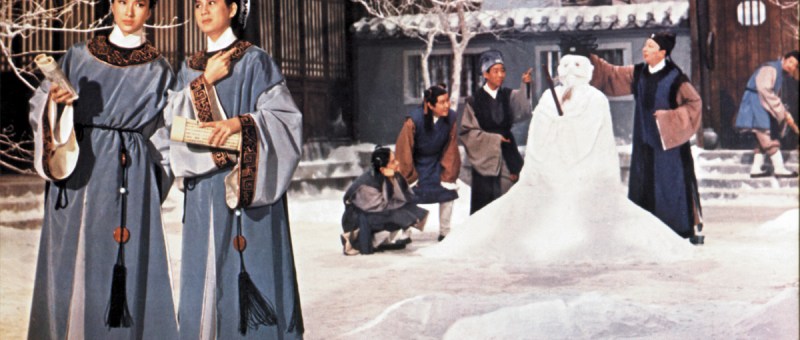
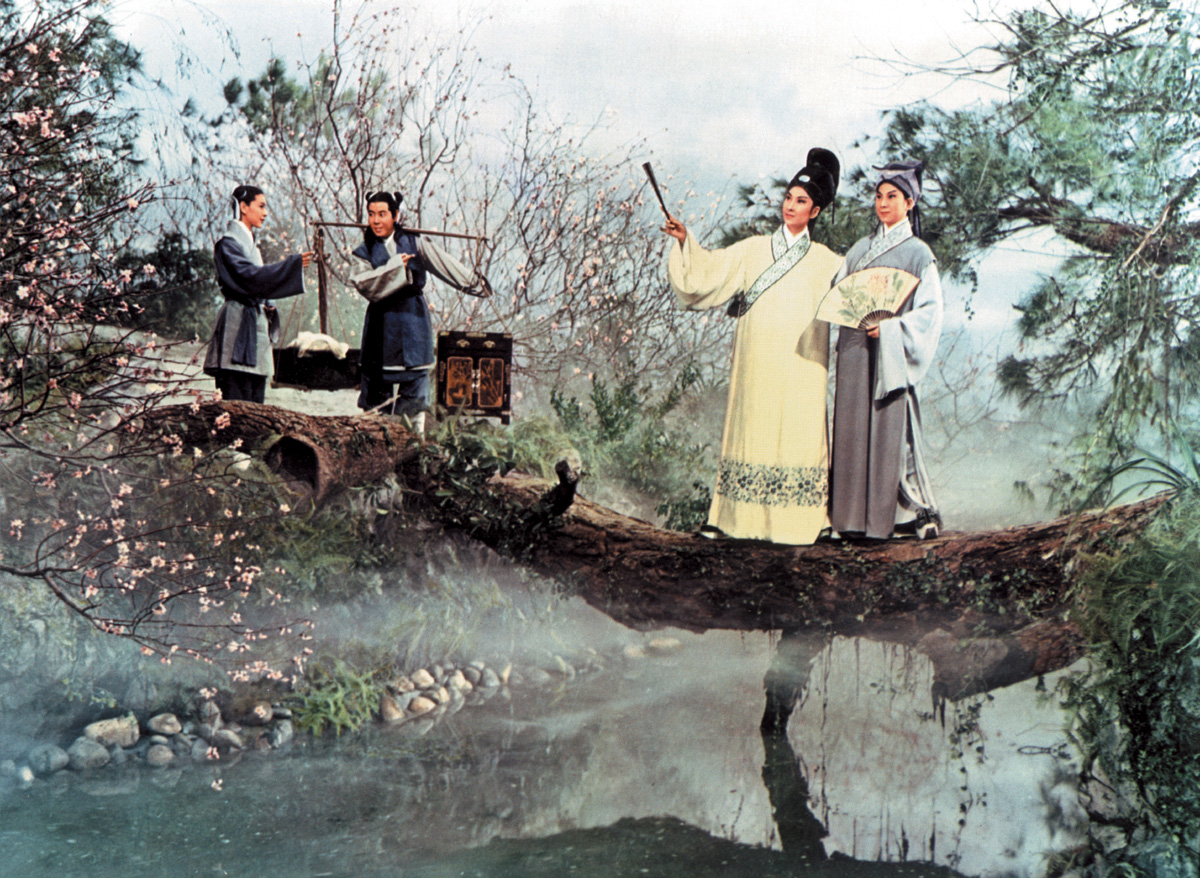
“We two have chosen ourselves. Others don’t recognise it.” “Even though others don’t recognise it, I still want to live and die with you.” This exchange occurs fairly late into Li Han-Hsiang’s retelling of the classic legend of the butterfly lovers, The Love Eterne (梁山伯與祝英台, Liáng Shānbóyǔ Zhù Yīngtái). One of several Huangmei opera films Li made at Shaw Brothers, where he was regarded as a pioneer and master of the genre, the film is despite its seeming traditionalism defiantly progressive not just in the undeniably queer undertones of its central love story but in its all but total rejection of patriarchal Confucianist thinking.
Nowhere does Li make this more clear than in a brief cutaway in which birdcage hangs on a wall next to a tattered orange poster bearing the “double happiness” Chinese character synonymous with marriage. Marriage is the cage the heroine cannot escape. Her father tells her that she must marry and the choice not to do so does not belong to her, but neither does she have the right to choose a husband for herself for to do so would be to contravene the codes of filiality. Finally she is unable to go against her father’s wishes and agrees to sacrifice her pure love for a poor scholar to save her father’s reputation by marrying the son of a wealthy and influential family who is otherwise known to be a “playboy” unlikely to treat her well.
The forces that separate noblewomen Ying-tai (Betty Loh Ti) and lowly student Shan-bo (Ivy Ling Po) are those of class and patriarchy, but the film invites another reading in their yearning to have their impossible love accepted by the world around them. In contrast to other tellings of the tragedy of the butterfly lovers, Li casts actresses in each of the leading roles one playing a woman who dresses as a man to acquire knowledge otherwise denied her because of her gender, and the other simply a woman playing a man. The romance between them is played with ironic coyness and good humour that deepens the tragedy that is to come in the incredible denseness of Shan-bo who takes none of the hints Ying-tai attempts to give him that she is really a woman but otherwise develops what occurs to him to be a deep yet platonic and brotherly love he only later comes to recognise as romantic on learning the truth.
Nevertheless, it is impossible not to read their doomed romance as an attack on social conservatism and an advocation for romantic freedom. Though the final symbolism of flowers blossoming under a rainbow bridge is not one which would have occurred to a contemporary audience, the love between Ying-tai and Shan-bo is most transgressive because they have dared to choose it for themselves in the face of social hostility and if they cannot have it they will have death because to live without it is all but the same. Ying-tai’s response is to turn her wedding into a funeral and to marry in death, but the film does not present this as an inevitable tragedy of a love that cannot be but its reverse. The Heavens open and take pity on the lovers, condemning the world that would not allow them happiness in life by granting it in eternity.
Rather than “women” as he would have it, the film places the blame firmly and directly on Confucianist thinking with the disguised Ying-tai directly challenging the teachings of the university where she is asked to recite the tenets that women are “insolent and ungrateful” while “charming girls make good companions”. It is Ying-tai’s father (Ching Miao) who is the true villain in caring little for his daughter’s feelings, firstly nearly letting her die in a hunger strike over not being allowed to go to school, and then refusing to listen to her rejection of his chosen suitor preferring to trade her for the social kudos of having married his daughter off to the most eligible of bachelors content to use her as a tool for his own advancement while indifferent to her prospects for future happiness. Li begins with his heroine “worried and confused” and captures something of the sense of constraint even within the sumptuous environment of her gilded cage before granting her freedom in the expanse of the natural world which thinks nothing of the “absurd rules of man”.
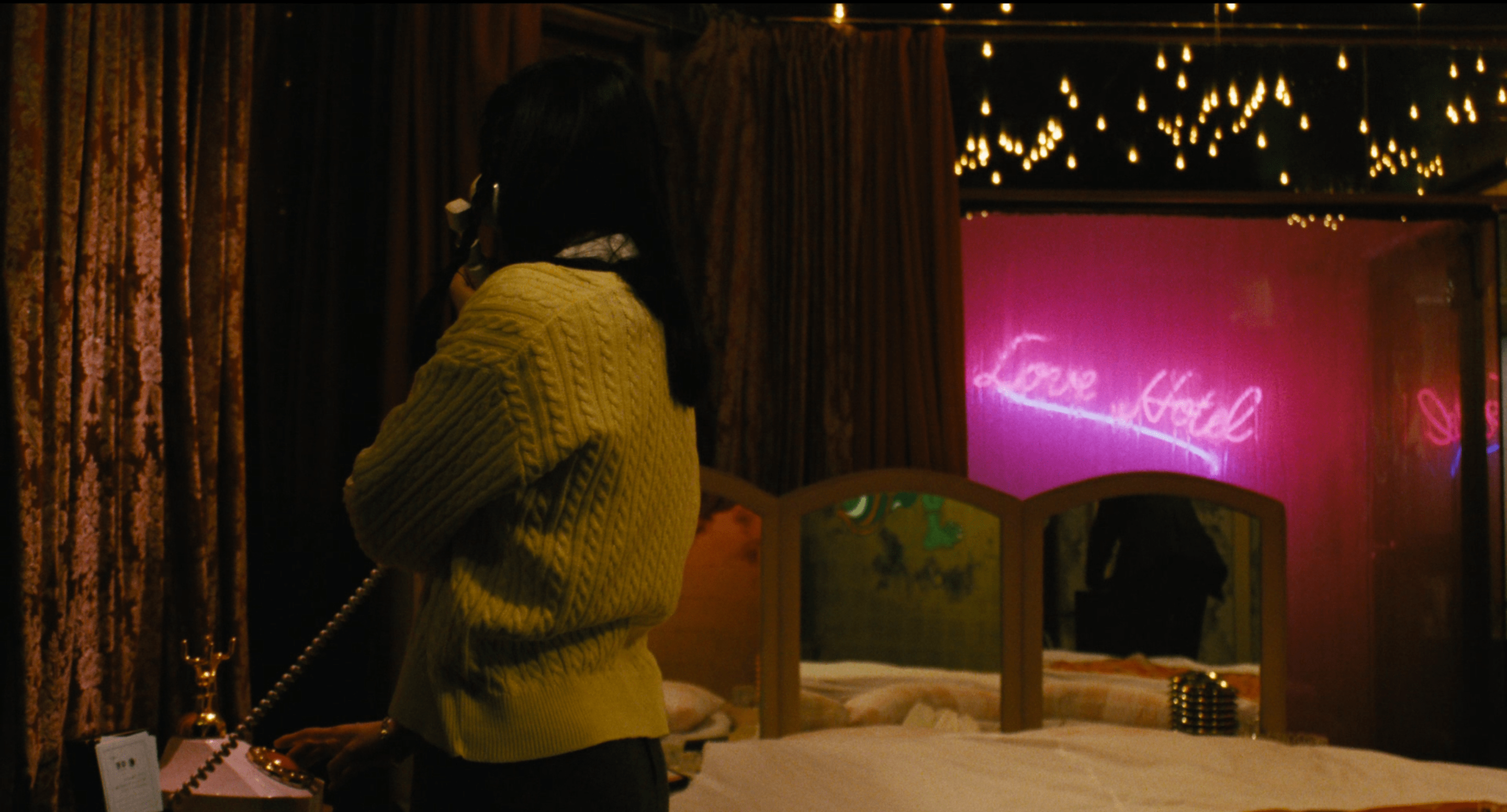
Japan Society New York will celebrate the work of late director Shinji Somai who remains criminally neglected outside of his home nation with the first North American retrospective running April 28 to May 13. Featuring seven of the director’s features, the series showcases both the teen idol movies with which he may be most closely associated internationally, and gritty adult dramas such as The Catch and Love Hotel.
Shinji Somai’s 1983 opus of fishermen at home on the waves and at sea on land is a complex examination of masculinity but also of fatherhood in a rapidly declining world filled with arcane ritual and ancient thought. Review.
Melancholy drama following the turbulent romantic relationship between a failed businessman pursued by yakuza and the former sex worker with whom he shared a traumatic night some years previously. Review.
Friday, May 5 at 8:30 PM / Saturday, May 13 at 2:00 PM
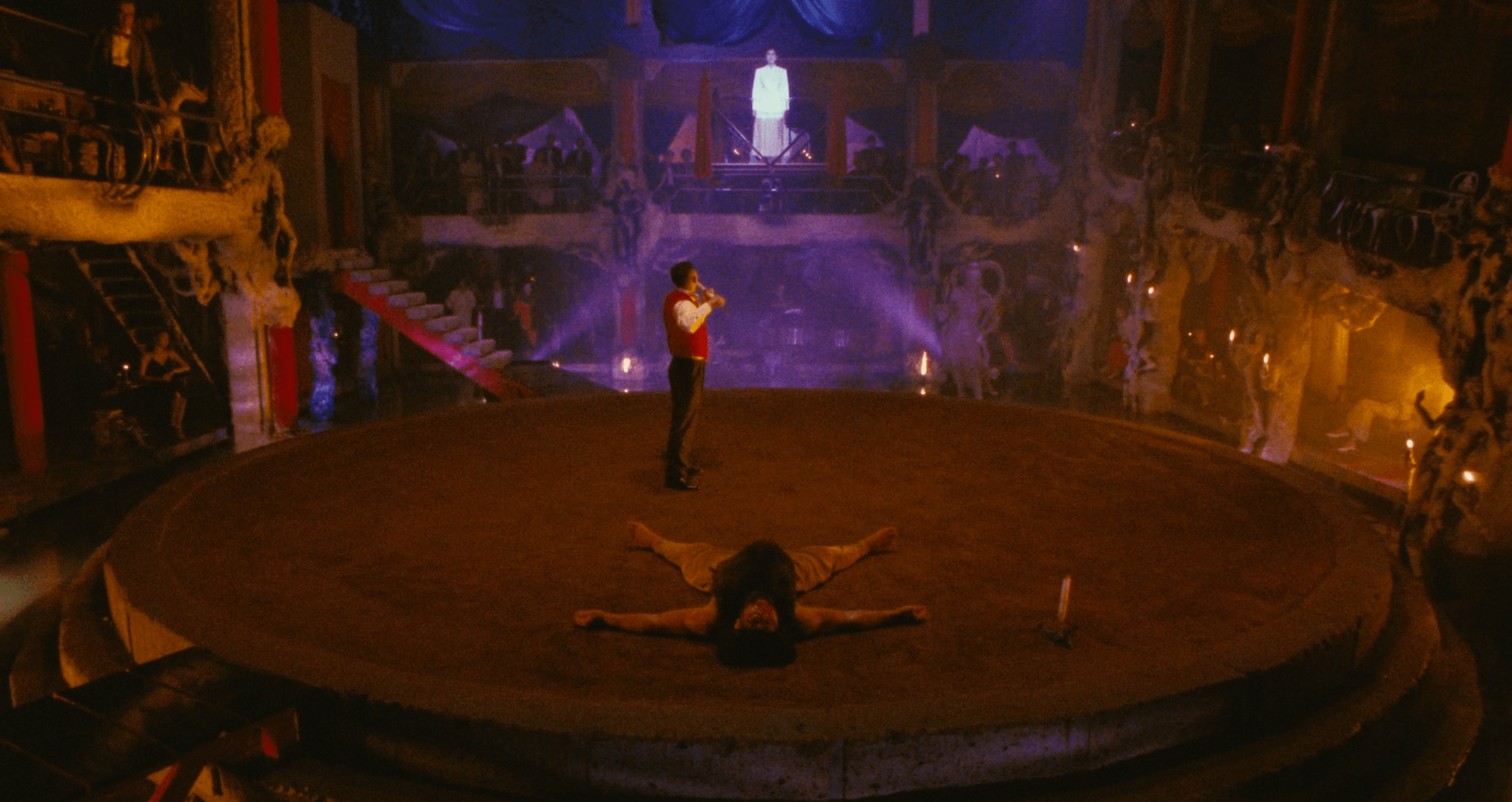
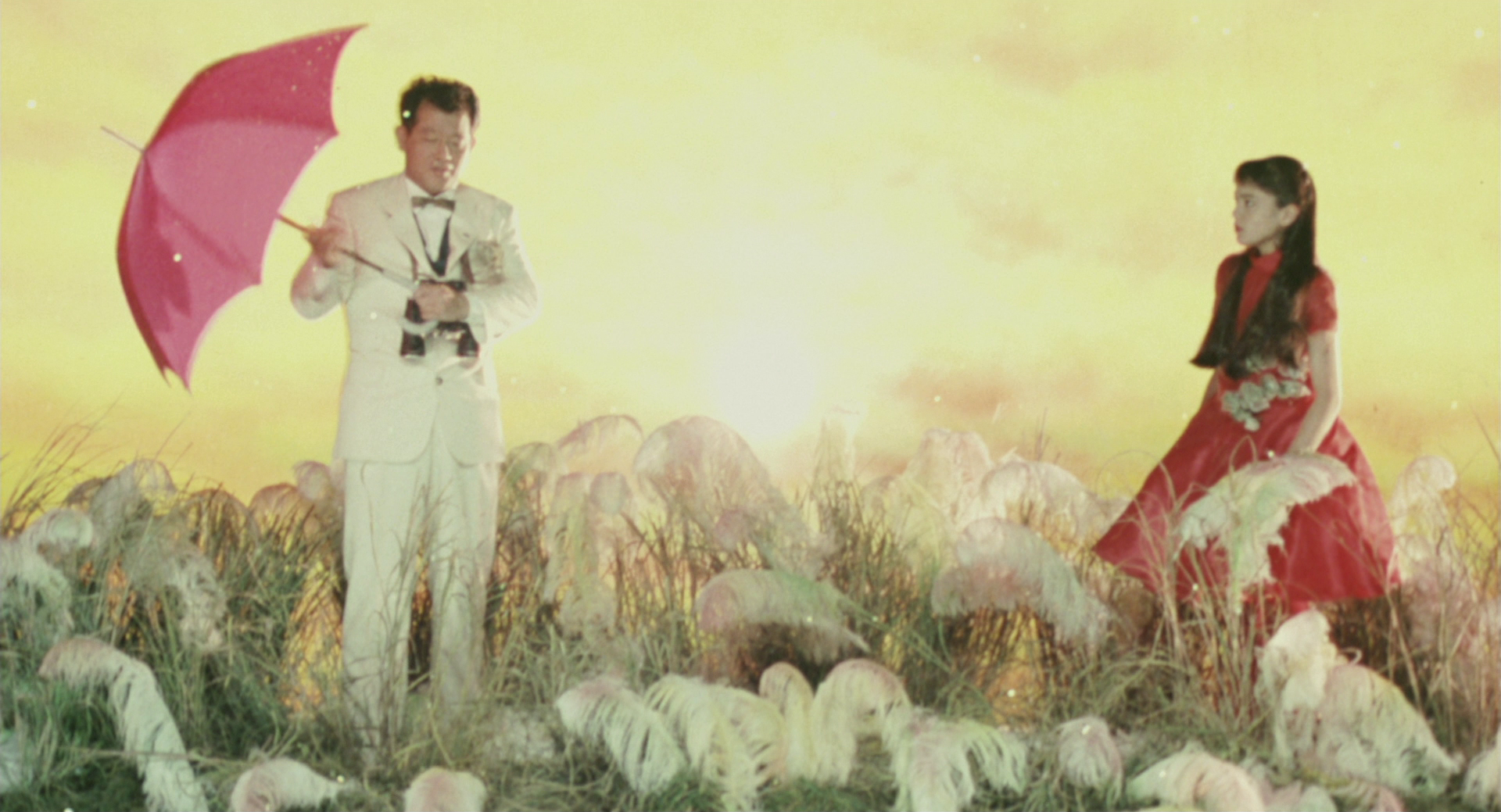
Fable-like tale of a mountain man who comes to the city in search of the girlfriend who never came home after leaving to study accounting. Sucked into a bizarre underworld of gladiatorial floorshows and voiceless opera singers, he quickly finds himself lost in the soulless metropolis of Bubble-era Tokyo.
Saturday, April 29 at 2:00 PM / Saturday, May 13 at 5:00 PM
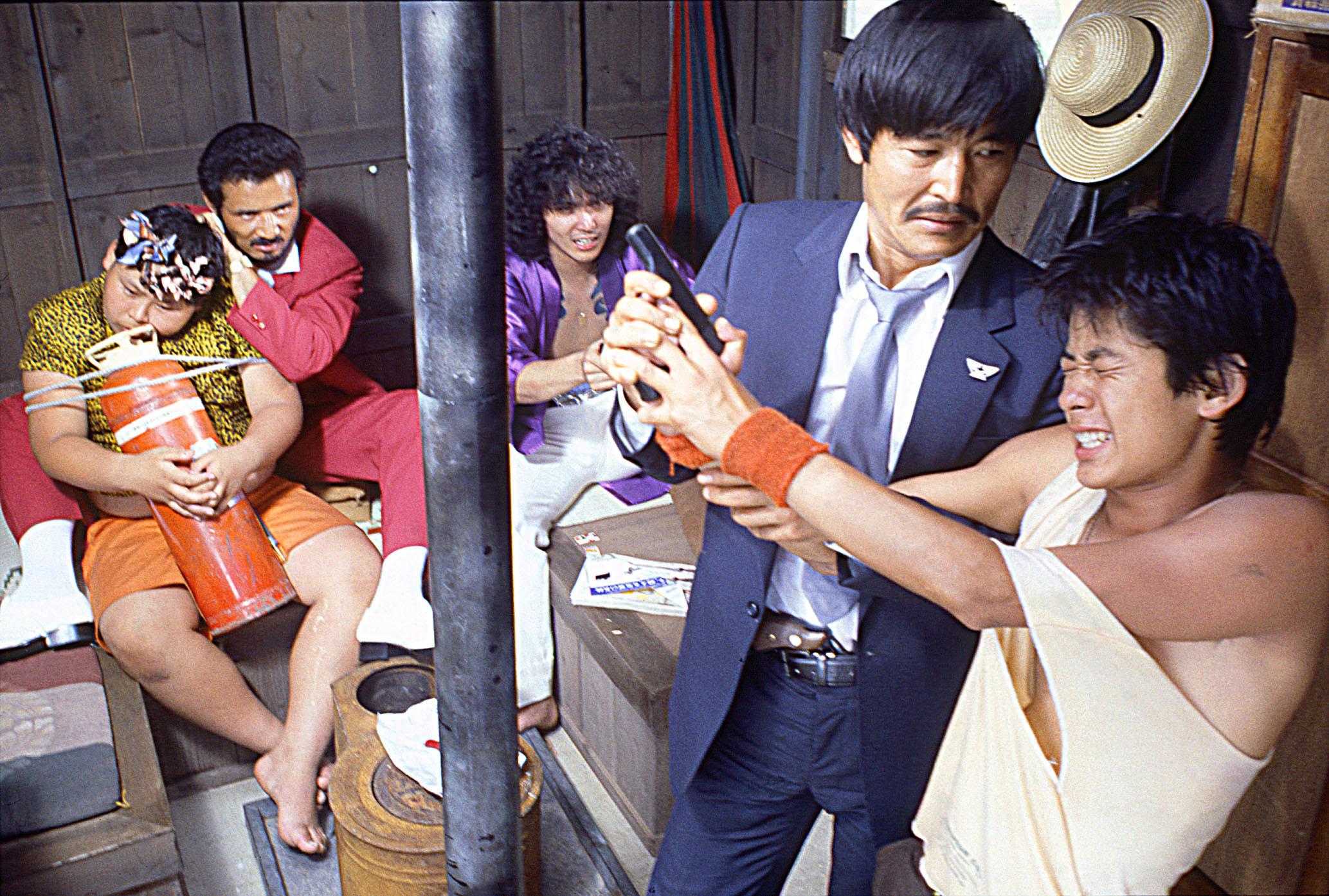
Classic teen movie in which a trio of school friends set off to rescue their school bully after he’s kidnapped by yakuza. Starring a young Masatoshi Nagase in his film debut. Review.
Iconic teen drama starring Hiroko Yakushimaru as a high school girl who unexpectedly inherits a yakuza clan when her father dies suddenly and finds herself trying to contend with adolescent angst and underworld intrigue. Review.
Somai’s Bubble-era exploration of idol exploitation has an almost prescient quality in its otherwise fantasy-driven tale of an aspiring model killed after diving out of a car to escape a lascivious exec but then given a second chance to live a “normal” life. Review.
Seminal teen drama in which a collection of high school students experience a literal storm of adolescence while trapped in their school thanks to a severe typhoon.
Rites of Passage: The Films of Shinji Somai runs at Japan Society New York April 28 to May 13. Tickets priced at $15 / $12 students & seniors, and $10 Japan Society Members (Typhoon Club+Opening Night Party: $18/$15/$14) are on sale now via the official website while you can also keep up with all the year-round events by following Japan Society Film on Facebook, Instagram, and Twitter.
“Is it a crime to be old?” a middle-aged woman asks after finding herself the centre of scandal in Jeong Ji-hye’s timely drama, Jeong-sun (정순). Surrounded by an ageist and misogynistic society, Jeong-sun has always bided her time and played by the rules but is acutely aware of her predicament as an older woman knowing that if she loses her factory job no one else will hire her and therefore submits herself to all the petty microaggressions of life on the margins.
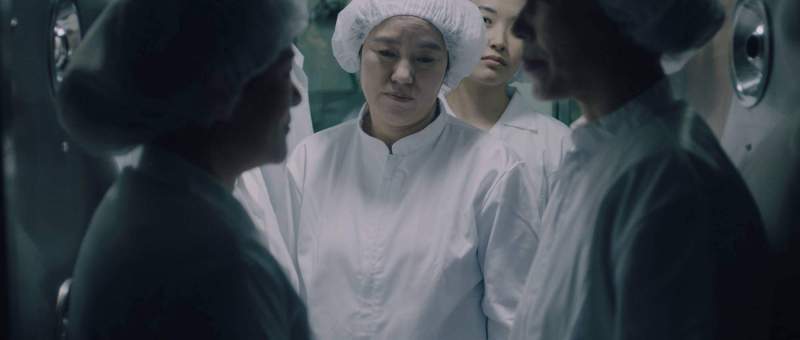
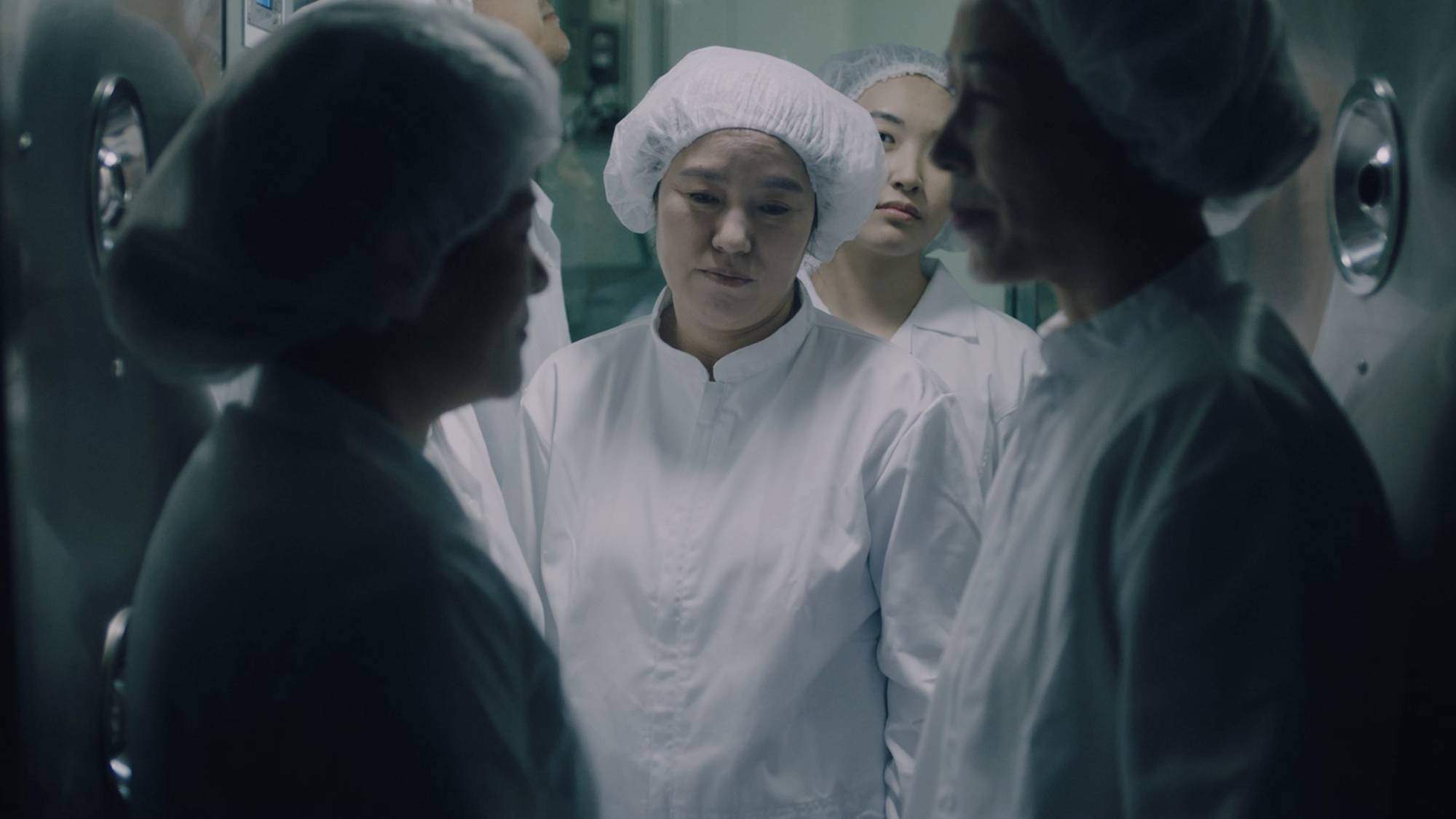
Chief among them would be her obnoxious floor manager Do-yun, little more than a teenager with a clipboard and an inflated sense of his own importance. She and the other women gossip about Do-yun’s dubious love life which partially relies on abusing his authority to date factory girls whom he gives preferential treatment and then discards once he’s bored. There’s also a rumour going around that the managers plan to fire some of the older workers like Jeong-sun after hiring permanent employees while a generational divide is developing between the full timers and the college students who turn up for the summer and secretly think they’re better than this. Jeong-sun accidentally offends one of them by playfully making fun of her putting on makeup in the changing room given that they’re all about to put on identical white uniforms and go through decontamination to head to the factory floor.
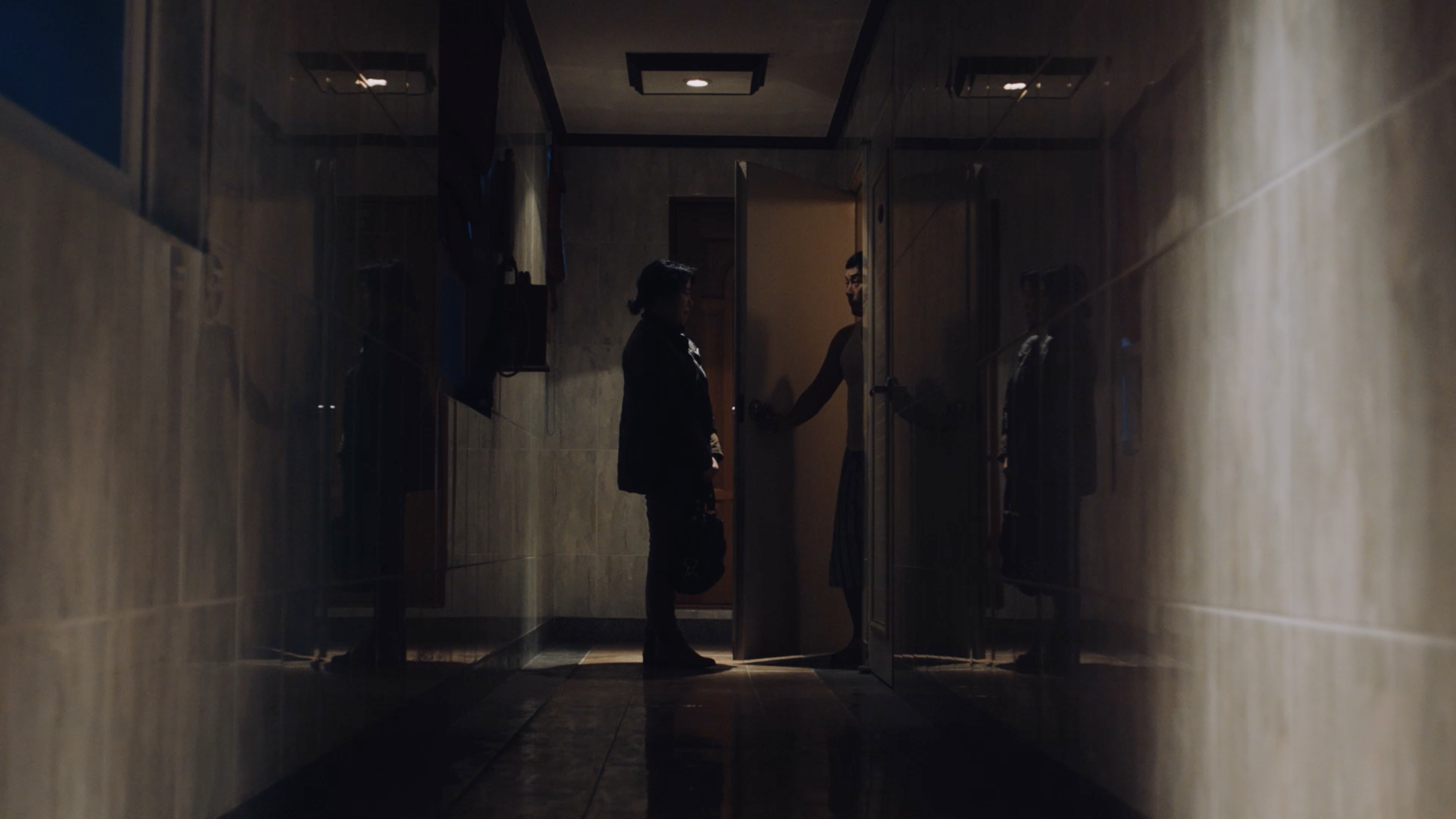
The irony is that she begins to bond with new employee Yeong-su out of their shared sense of alienation as marginalised middle-aged people. Around her age, Yeong-su previously worked casual jobs in construction but has switched to the factory because of knee damage caused by years of manual labour. His physical injury has further damaged his sense of masculinity leaving him deeply insecure and desperate for approval from other men including that from the continually obnoxious Do-yun. When Do-yun asks him if he has a girlfriend, Yeong-su sheepishly replies that he’s too old for all that only for Do-yun to insultingly add that he doubts he has the time or money considering he just works on the shop floor. When Jeong-su’s daughter Yu-jin (Yoon Geumseona) and her fiancé ask her if she might have a boyfriend, Jeong-sun gives a similar reply seemingly feeling a degree of shame about being an older woman daring to date. She tells Yeong-su that they should slow down because she’s embarrassed to hear the other workers gossiping about them, but Yeong-su takes it the wrong away assuming that she too looks down on him for being a penniless factory worker with not much to his name.
It’s this combination of ageism and sexism that gradually destroys their relationship. Mocked by Do-yun who calls him a “naive” man, Yeong-su shows him a video Jeong-sun had allowed him to take of her singing in her underwear in a moment of empowerment. Soon, it’s leaked online and Jeong-sun becomes the talk of the town, a figure of fun just for being a middle-aged woman embracing her sexuality. While the younger women laugh at her, Jeong-sun’s daughter and friends are universally sympathetic as is the policeman Yu-jin reports the incident to, but she later finds that not even the police really take the case seriously despite Jeong-sun’s increasingly precarious mental state. “I’m sorry to say this, but younger females are usually the victim” the policeman adds as they push Jeong-sun to settle, implying that no one’s all that interested in Jeong-su’s video and the taboo incident is somewhat embarrassing even to him. Yeong-su meanwhile offers a pleading “apology” before trying to convince Jeong-sun not to press charges because he’ll never work again with bad knees and a criminal record.
Yeong-su said he’d move away and that it would all blow over, but Jeong-sun later catches sight of him laughing and joking with Do-yun and the other guys from the factory very much one of the boys. Her life has been ruined, but they’ve got off scot free. “Why should I stay put?” Jeong-sun finally asks in directly standing up to Do-yun who is after all a cowardly boy who bullies other men to bolster his fragile sense of masculinity. He responds by calling her a “crazy bitch” while she destroys his false authority and plays him at his own game, somehow taking something back if only in a moment of self-destruction. Where she finds herself is literally in the driving seat of her own life, seizing the opportunity for freedom and independence that comes with age but also the breaking of a spell that had been designed to keep her in her place.
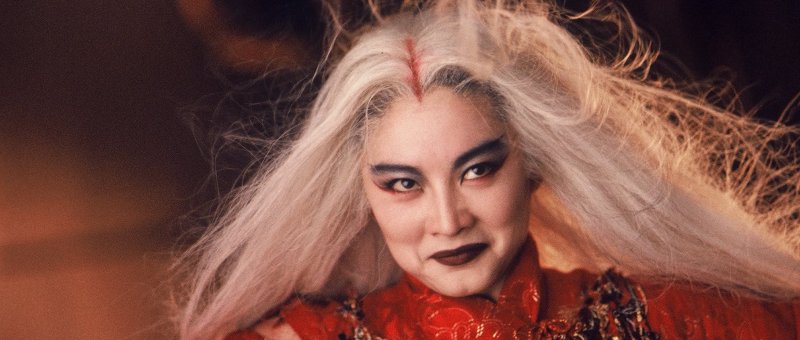
“This is the so-called underworld rule. You have no choice.” the hero of Ronny Yu’s gothic fairytale The Bride White Hair (白髮魔女傳) is told, only to reflect “Yes, I do.” though the world will eventually prove him wrong. Tinged with handover anxiety, the film finds its star-crossed lovers longing to exercise their choice of exile, to be allowed to live quietly outside of the political turbulence that surrounds them. But in the end their love is not strong enough to overcome their difference and doubt becomes the ultimate act of emotional betrayal.
This is a tale that signals its tragedy from its inception. The Ching emperor is deathly ill and only a flower growing on a distant mountain that blossoms only once every 20 years can save him. “This flower is not for you” the emissaries are told by man who appears to be frozen in more ways than one, relating that he has waited 10 years for a woman who may have forgotten him. As a young man, Yi-hang (Leslie Cheung) was the roguish heir to the Wu Tang clan whose recklessness sometimes caused him to behave in unorthodox ways in the name of justice. The eight clans of Chung Yuan are beset on both sides, caught between the conflict of Ching and Ming while fearful of an “Evil Cult” that otherwise destabilises their icy grip over the local area.
It’s becoming clear to Yi-hang that he may not be on the right side. The people are oppressed and starving but their attempt to procure a little sustenance for themselves leads to a bloody raid with clan soldiers cutting down peasants until a mysterious woman in white (Brigitte Lin) arrives wielding a whip that can cut people in half. Interrupted by a tragic scene while napping in the forest, Yi-hang is immediately smitten with the female assassin whom he later realises is the same girl he saw as a child who saved him from wolves with the song of her flute.
The woman is an orphan taken in by the cult and trained up as an assassin. She has only a surname, Lien, and is then symbolically “reborn” when Yi-hang gives her her name, Ni-chang. Having fallen in love, the pair vow to leave the underworld together and live in the pastoral paradise of the watering hole where they first made love. “This underworld doesn’t belong to us, let them fight for it” Yi-hang insists, attempting to exercise his choice to escape a system he sees as corrupt before it strains his integrity but as he’ll discover he’s not as much choice as he thought.
In the shadow of the Handover, it might be tempting to read Lien and Yi-hang as ordinary people who just want to live quietly and resent the intrusion of politics into their lives, though they remain caught between two opposing powers with no neutral space for them to occupy. The same could be said of the cult’s leaders, a pair of crazed conjoined twins, one male one female, who are fused at the back in a potent symbol of duality. The twins were once members of the Wu Tang clan but were betrayed and exiled, driven mad by their banishment. At the film’s conclusion, Yi-hang symbolically frees the twins by splitting them apart but their separation leads only to their deaths. In the end, Yi-hang betrays his love because the underworld does not permit it to exist. He doubts Lien’s word and his rejection of her sparks her metamorphosis into the title’s Bride with White Hair, a vengeful spirit of hurt and rage now condemned to eternal wandering just as Yi-hang is condemned to life a waiting only to watch a flower wither and die knowing that he has damned himself.
Yu’s world of melancholy romanticism is typical of that of early ‘90s wuxia though carries a touch of the gothic not least in the Bride’s cobweb-like hair which eventually becomes her finest weapon. The pervading sense of longing seems to hint at a future act of imperfect union, tinged with volatile ambivalence but perhaps finally suggesting that this romance is doomed to failure because the corruption of the world into which Yi-hang, the authority, was born is simply too great to be conquered by the innocence of his love.
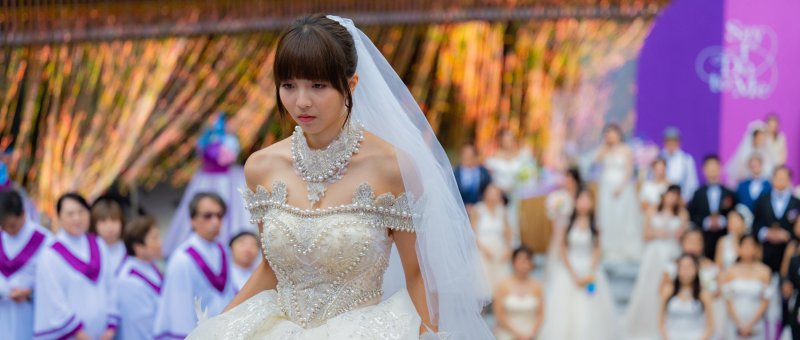
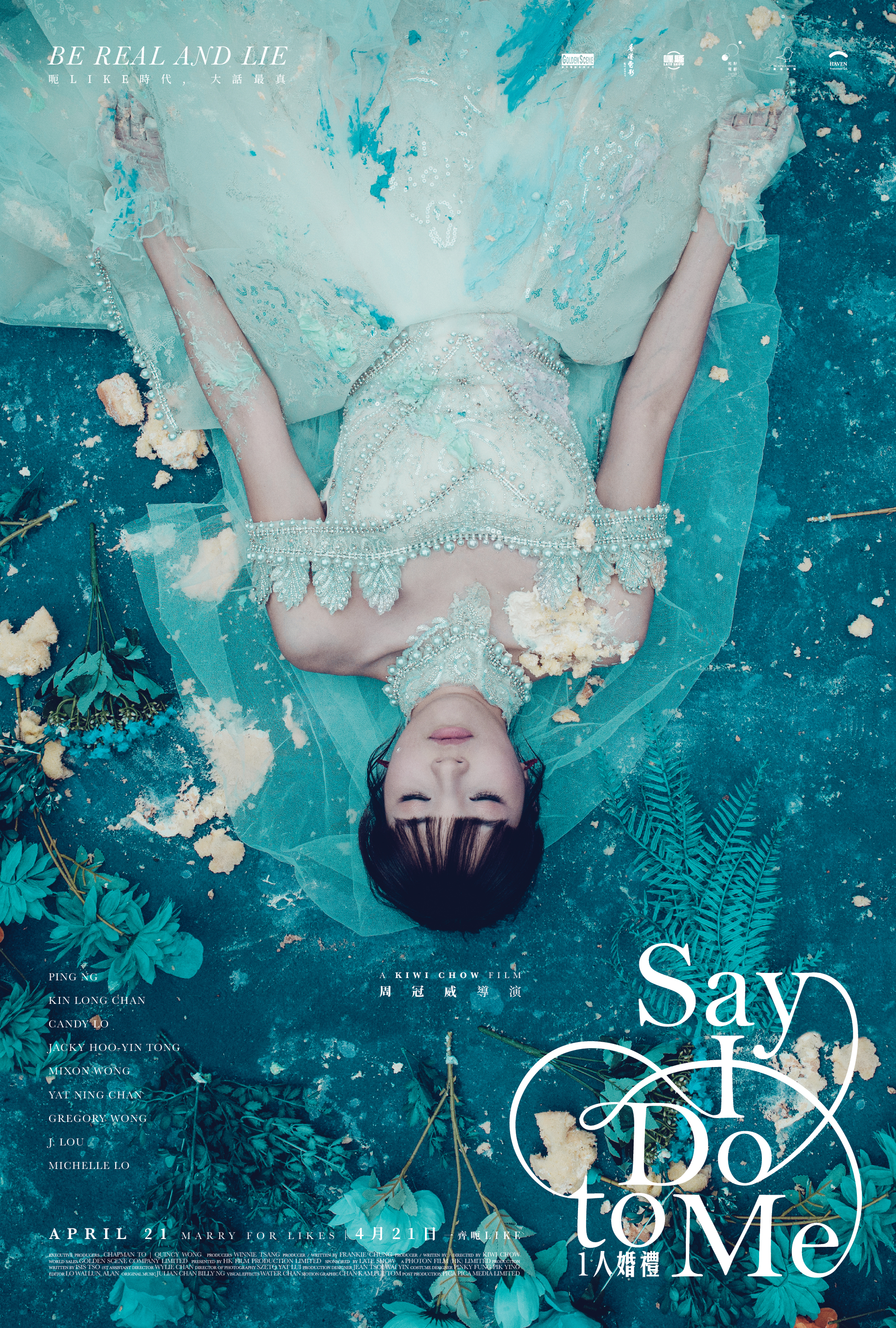
A struggling influencer’s bid for internet fame through marrying herself soon goes dangerously awry in Kiwi Chow’s anarchic take on contemporary social media mores and the need for authenticity, Say I Do to Me (人婚禮). Ping (real life YouTuber Sabrina Ng Ping) swears that she’s done with changing herself for others and is determined to enjoy life on her own terms, but the irony is she’s anything but honest with herself as she attempts to bury her abandonment issues and ambivalence towards marriage beneath her friendly clown persona.
Despite telling all her followers that she sees no need to wait around for someone else to make her happy so she’s going to marry herself, Ping is in a longterm relationship with middle-school sweetheart Dickson (Hand Rolled Cigarette director Chan Kin-long) who handles the tech side of their YouTube channel. When their clown-themed videos failed to win an audience or pay the bills they started looking for something edgier, shifting their focus to their own relationship. When that too failed to set netizen’s hearts aflame, they started engineering fake romantic drama including a “real fake” wedding and Dickson cheating scandal. To get themselves out of the hole they’d dug, Ping comes up with the idea of “sologamy” in which she’ll get back at “cheating” Dickson with a solo wedding on the day they would have got married, while Dickson mounts a counter campaign wearing a giant monkey head to promote his “solo funeral” movement railing against fake affirmation of Ping’s embrace of “authenticity”.
Of course, authenticity is the one thing Ping isn’t selling. She’s telling everyone else they should be true to themselves, but has based the whole thing on a lie in still being in a relationship with Dickson while adopting a fake influencer persona of a woman who has herself together and is fully ready for commitment. The duplicity begins to eat away at her as she witnesses its effects on others including a middle-aged woman (Candy Lo Hau-Yam) she’d assumed to be in a perfect marriage who suddenly reveals she’s been unhappy for decades because she couldn’t accept her sexuality. Thanks to Ping, she’s decided to divorce her husband and live a more authentic life all of which leaves Ping with very mixed feelings. Meanwhile, she’s relentlessly pursued by a devoutly religious man who seems to be in love with her on spiritual level, and also comes to the attention of “Hong Kong’s last Prince Charming” who has hidden anxieties of his own.
The film seems to ask if it really matters if Ping was “lying” when her example has made a “positive” difference in people’s lives in enabling to them to accept themselves and find true happiness even if in doing so they might necessarily hurt someone close to them. Dickson seems certain that the internet isn’t really real and you really don’t need to be “authentic” in your online persona, but is all too quickly addicted to the false affirmation of likes and shares and willing to compromise himself morally to get them, all while justifying his actions in insisting he’s only doing it to make Ping’s dreams come true. In the end, he is also playing a role for Ping but as she says coopting her dreams as his own just as her other suitors do. “No one here cares how I feel” she declares, realising her “fake” persona has become a kind of prop for others to hang their unfulfilled desires on.
The problem is only compounded by the reckless actions of the solo funeral crew who quickly escape from Dickson’s control demonstrating the dark side of internet tribalism and accidental radicalisation. But Ping’s own worst enemy is herself, afraid to really look in the mirror and face her insecurity while simultaneously peddling the message that everyone’s lives will improve as long as they make a superficial gesture of self-love. What she discovers during a surprisingly violent cake fight, is that she’s not the only one battling internal insecurity to become her authentic self and there might be something in “sologamy” after all if it forces to you to confront the parts of yourself you don’t like and accept them too. Part absurdist treatise on the corrupting qualities of online validation and part surreal rom-com, Chow’s quirky comedy nevertheless comes around to its heartwarming message in allowing its heroine to make peace with herself and the world around her.
Two terminally ill women slowly fall in love while circling the spectre of death in Na Gyi’s poignant queer romance, What Happened to the Wolf?. Homosexual activity is currently illegal in Myanmar and carries a 20-year prison term. The situation has only declined since the military coup which occurred in 2021. Director Na Gyi has since gone into exile along with his wife, actress Paing Phyo Thu, while her co-star Eaindra Kyaw Zin was herself arrested for protesting against the junta.
Given these conditions, the film may seem in a way coy or perhaps oblique but is also filled with a sense of melancholy longing that culminates in a well earned moment of emotional serenity. As the husband of heroine later suggests, they’ve been unhappy for a long time and only now that she’s been diagnosed with terminal lung cancer and been given only a year at most to live does Myint Myat (Eaindra Kyaw Zin) begin to reflect on her life and regret its missed opportunities. The film opens with her attempting to take her own life, explaining that she did not want to be waiting around to die though has a few “things to take care of” that made her reconsider her decision.
It’s in the hospital that she first encounters Way Way (Paing Phyo Thu), a rebellious young woman born with a hole in her heart who has had quite a tragic life but seems to Myint Myat to have come to an accommodation with the proximity of death. As she later begins to realise, Way Way’s vivacity is also an act of self-delusion to mask her fear of mortality but nevertheless her lust for life begins to reawaken something in Mying Myat who is beginning to wonder what her life which has largely been defined by ideas of conventional success has really been for.
When she laments that she was raised with a “proper system”, it reads both as a mild rebuke against an authoritarian culture and a frustration directed at her own internalised repression. Na Gyi’s camera often shoots with lingering desire, a close up on Way Way’s neck pregnant with longing as a conflicted Mying Myat considers reaching out but cannot bring herself to do so. As she reveals to Way Way, she never saw the point in dancing only for the younger woman to try to teach her how which is really a way of trying to show her how to live.
But Way Way also has her own troubles which have led her to push people away so they wouldn’t miss her when she’s gone, though most of all what she fears is being left behind alone. She rejects her brother out of a mix of guilt and love in feeling unworthy that he gave up his artistic desires of becoming a photographer to become a doctor in order to cure her disease. She takes pictures with his old-fashioned film camera and listens to cassette tapes on a classic walkman as if longing for a long lost past. With her retro sensibility it might seem as if the (slightly) older Myint Myat is falling for the embodiment of her own frustrated youth and she does indeed seem to meditate on the things she lost along the way much as her architect husband gave up painting to work for the father she resents while she poured everything into her business.
The film’s title takes itself from a shadow play Way Way acts out while the pair are holed up in a “haunted” house hoping to see a ghost. A wolf comes across a peacock and is jealous of its beautiful feathers. The wolf pounces, but the peacock flies away unfurling its beautiful plumage as it goes. Myint Myat wonders what happened to the wolf after that, but Way Way doesn’t have an answer for her. In some ways it’s difficult to define which of them might be the wolf and the other peacock for each of them begins to rediscover a sense of beauty in their unexpected connection even while the spectre of death hangs over them both. The film might in a sense answer the question of its title though only in the most melancholy of senses even as the two women transcend themselves as they make their way towards a place beyond the clouds.
Vienna’s Red Lotus Asian Film Festival returns for its second edition 20th to 23rd April with another handpicked selection of recent hits from across the region. Here’s a rundown of the East Asian features screening in this year’s programme:
China
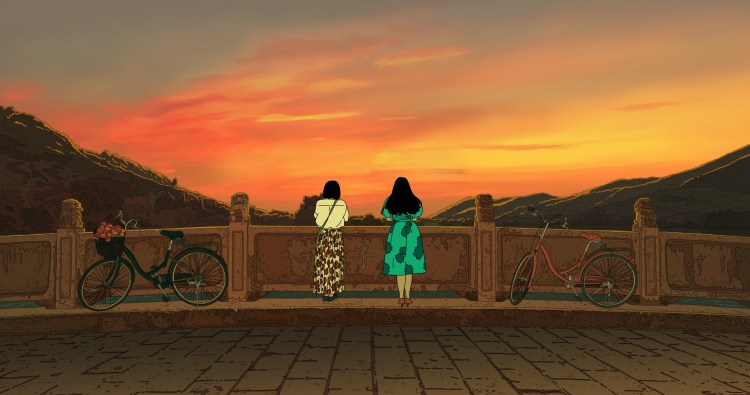
Art College 1994 – animated feature from Have a Nice Day’s Liu Jian revolving around a collection of art students in the rapidly changing society of mid-90s China.
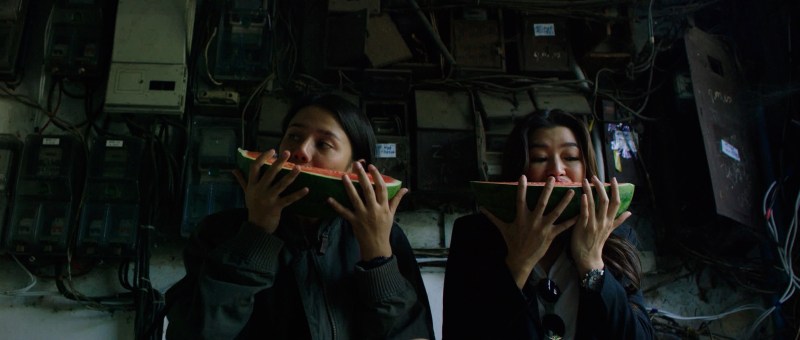
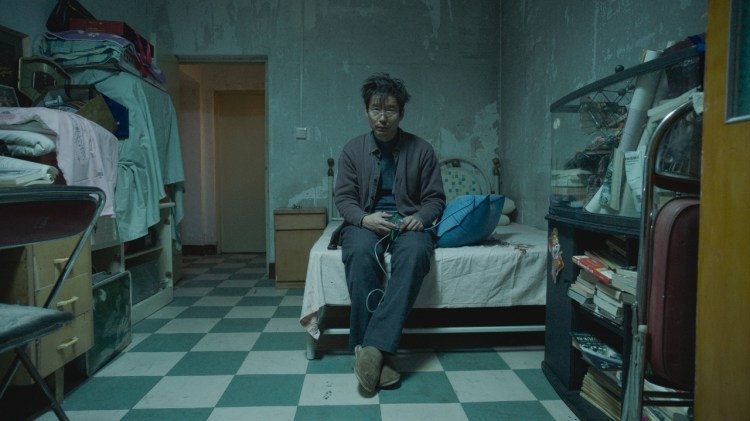
Journey to the West– a UFO obsessive journeys west in search of the meaning of life in Kong Dashan’s hilariously deadpan, absurdist epic. Review.
Hong Kong
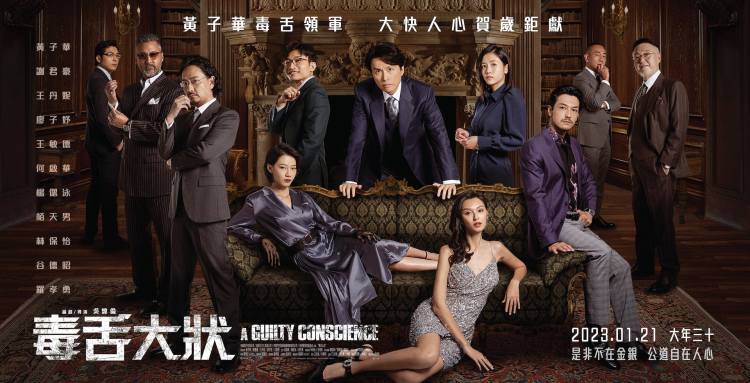
A Guilty Conscience– a previously cynical lawyer puts the law on trial while correcting a miscarriage of justice in Jack Ng Wai-Lun’s screwball courtroom dramedy. Review.
Let It Ghost – indie horror anthology from first time director Wong Hoi.
Indonesia
Like & Share – two young women seeking escape from a repressive social culture find themselves betrayed by the hypocrisies of the online society in an infinitely empathetic drama from Two Blue Stripes’ Gina S. Noer. Review.
Japan
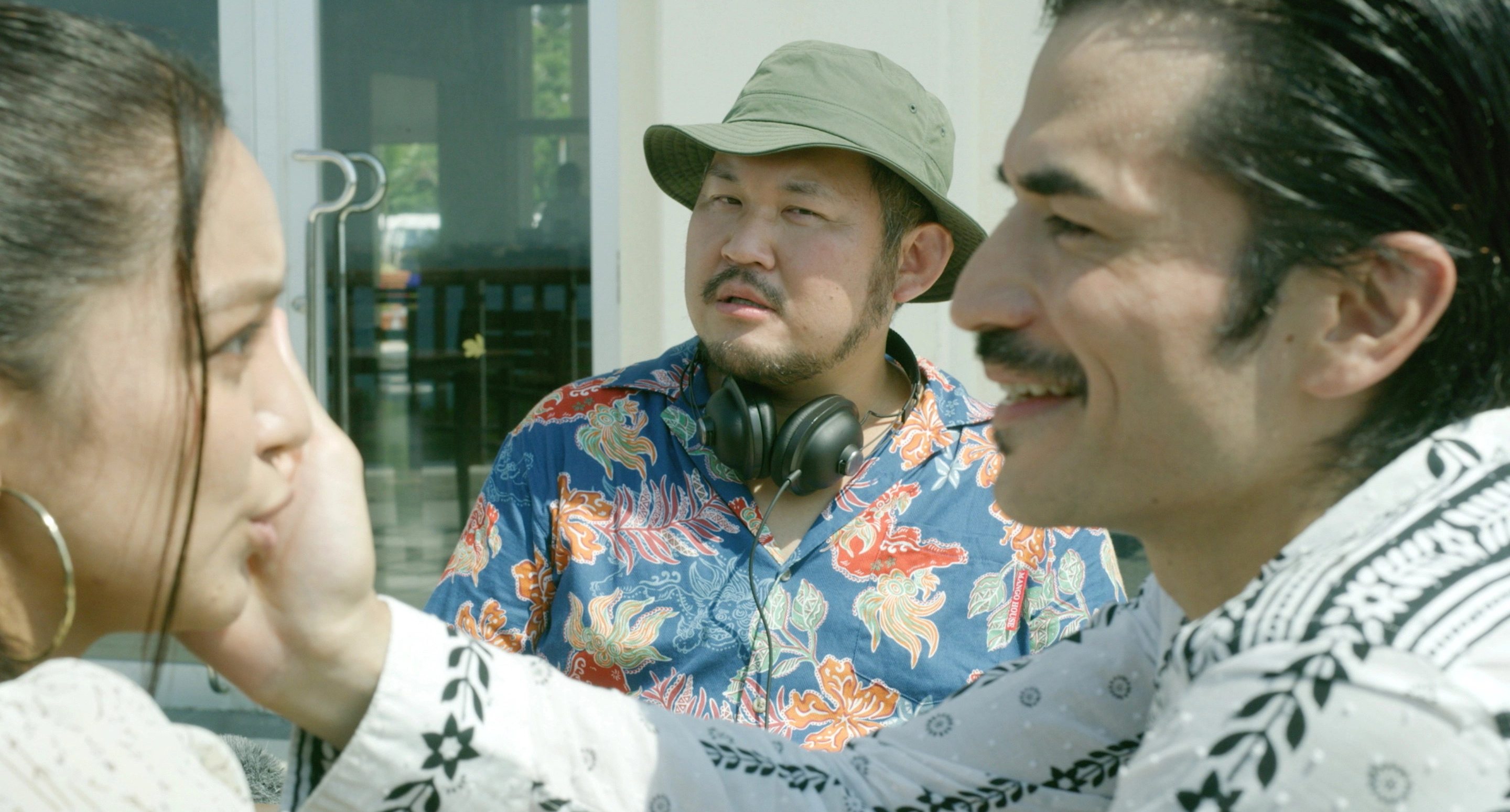
Your Lovely Smile– film director Hirobumi Watanabe stars as a version of himself in Malaysian director Lim Kah Wa’s comic paean for indie filmmakers and the microcinema landscape in the wake of the Covid-19 pandemic.
Mongolia
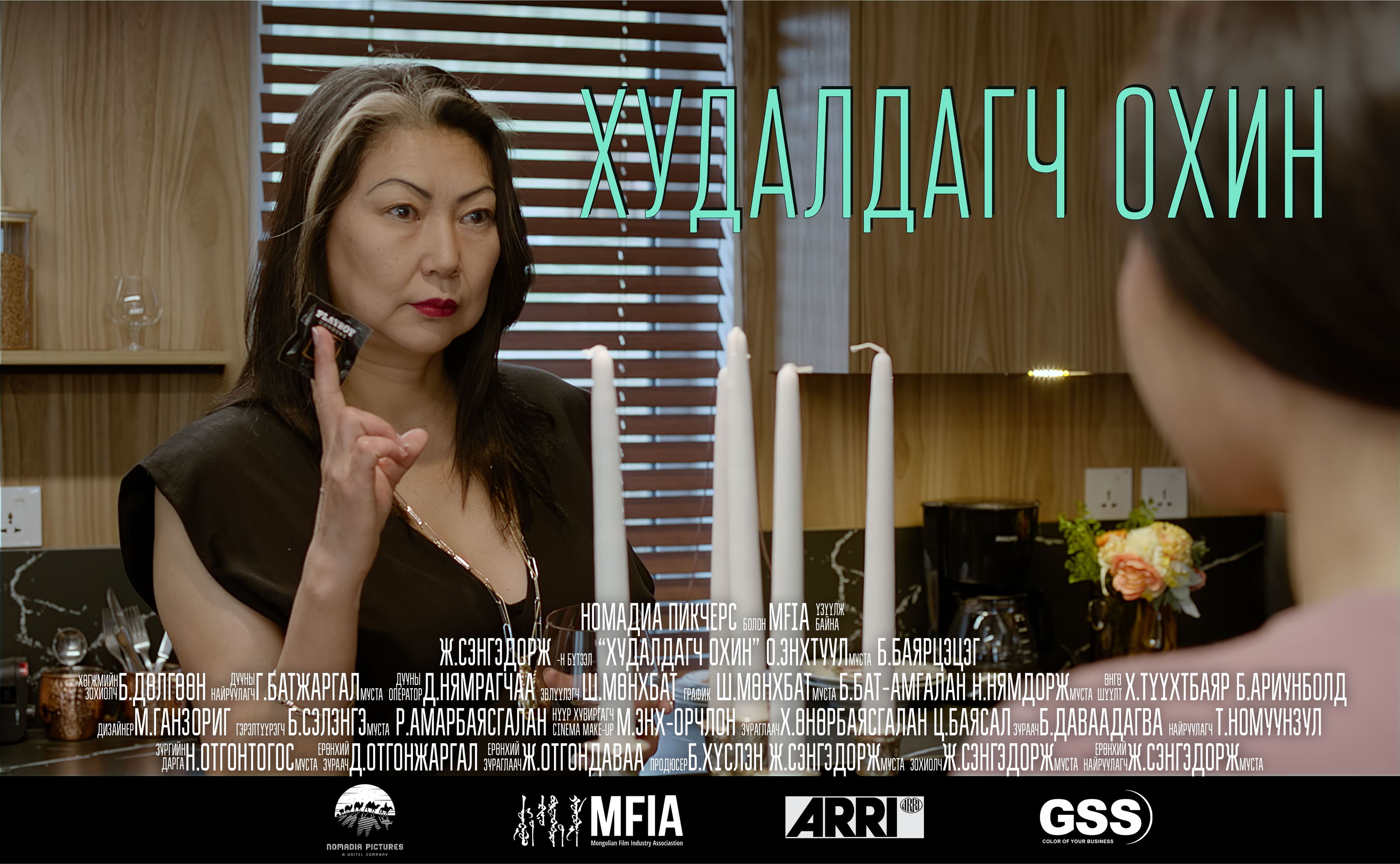
The Sales Girl– a diffident student begins to open up after befriending an eccentric middle-aged woman who runs a sex shop in Janchivdorj Sengedorj’s quirky comedy. Review.
The Philippines
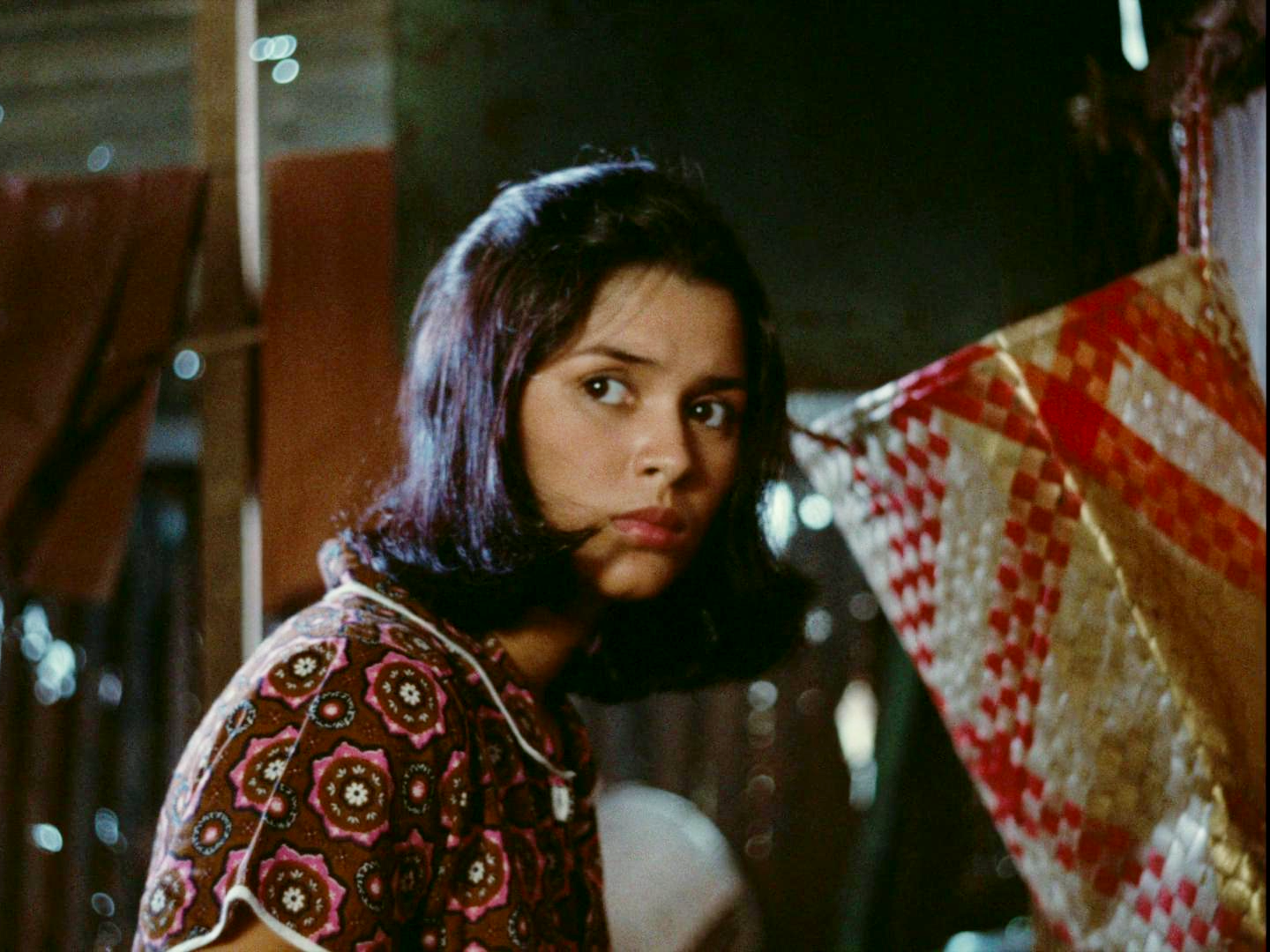
Insiang– Lino Brocka’s 1976 classic in which a young woman living in the slums of Manila decides to take revenge against her abusive mother and the step-father who raped her.
South Korea
Jeong-sun– a factory worker’s life is disrupted when a video of a sexual encounter with a colleague is leaked on the internet.
The Red Lotus Asian Film Festival runs in Vienna, Austria 20th to 23rd April. The full programme including films from India, Pakistan, and Iran is available on the official website along with ticketing links. All films screen in their original language with English subtitles. You can keep up with all the latest news by following the festival on Facebook, Twitter, and Instagram.
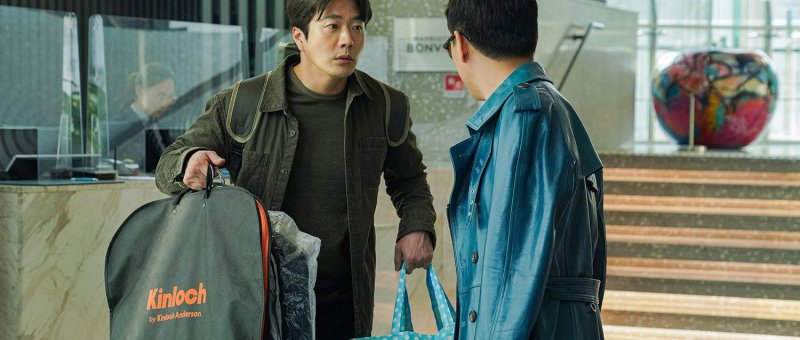
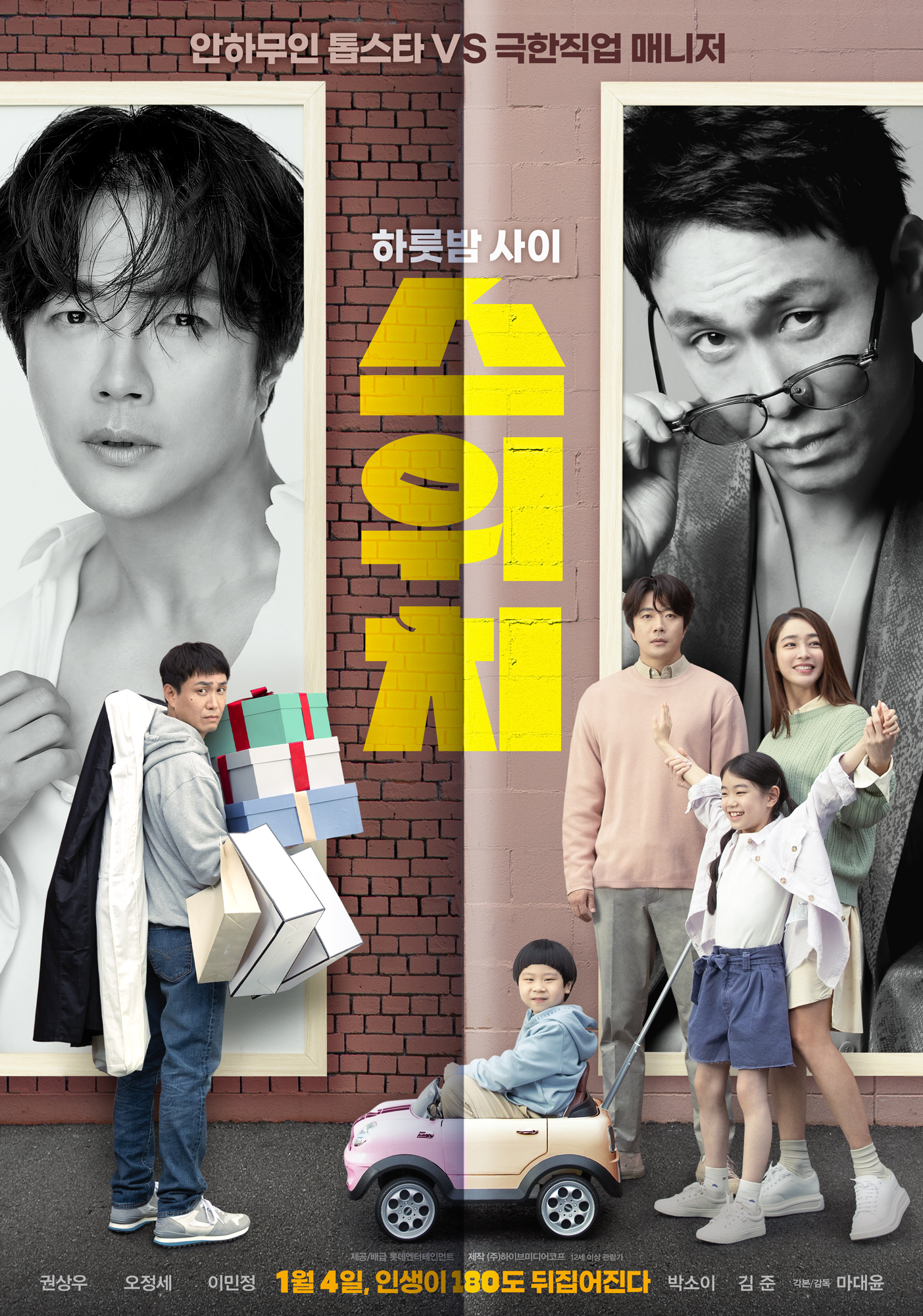
An egotistical actor is given an unexpected lesson in what it is that makes life worth living when he’s suddenly transported to a parallel world in Ma Dae-yun’s charming Christmas dramedy, Switch (스위치). Rather than the body swap comedy the title might suggest, Ma’s warmhearted morality tale is a more a meditation on what might have been and may be again while contemplating the emptiness of a life of fame and riches when there’s no one to share it with.
“What matters more than money?” top star Park Kang (Kwon Sang-Woo) chuckles after telling his manager he’ll accept a job he just described in quite insulting terms after being informed it comes with a hefty paycheque. Kang is currently riding high. He’s become enormously successful and even a recent sex scandal involving his co-star in a TV drama has only boosted his profile. Yet he tells his analyst that he can’t sleep and attributes it to “depression and anxiety”. He treats those around him poorly and most particularly his long suffering best friend from his fringe theatre days, Joe Yoon (Oh Jung-Se) who now works as his manager, while struggling to accept his loneliness and meditating on lost love in the memory of the woman he broke up with in order to chase stardom.
After getting into a weird taxi one Christmas Eve, he’s suddenly granted the “wish” of getting to find out what would have happened if he’d made a different choice. After waking up in an unfamiliar house he discovers that he’s married with two children and slumming it fringe theatre while Joe Yoon is now the superstar having aced the audition Kang ran out on to chase Soo-hyun (Lee Min-Jung) to the airport and convince her not to leave. Of course, Kang is originally quite unhappy about all of this. He doesn’t understand why no one recognises him anymore and resents that he’s suddenly subject to the rules of “ordinary” people again after a decade as a pampered star. In his acceptance speech after winning an award, he’d stated his intention to “forget” his roots as a humble actor and embrace his new role as a member of the showbiz elite fully demonstrating his sense of alienation and insecurity along with his intense loneliness. As the taxi driver had said, Kang has “everything”. He’s achieved his dreams and lives the high life he’d always dreamed of, yet he’s deeply unhappy.
But his “new” life immediately challenges his sense of masculinity in realising that he has little power without money and is in fact financially dependent on Soo-hyun whom he may also have robbed of a bright future by preventing her from studying abroad and achieving success as an artist. Meanwhile he looks down on himself for continuing to follow his artistic dreams in fringe theatre when his plays attract few audiences members and make little money. Just as Joe Yoon had become his manager, so he ends up getting a taste of what it’s like trying to manage a “star” while coming to appreciate that Joe Yoon may be feeling just as lonely and unfulfilled as he once had.
Yet even as Kang settles into his new life as a husband and father while slowly rebuilding his acting career though a combination of talent, supportive friendship, and good luck, he fails to learn the right lessons continuing to yearn for external validation through material success. He spends money on fancy dinners and tries to move the family into a swanky apartment in Seoul without realising that he’s already got a “home” in the quaint little provincial house he and Soo-hyun set up together filled with memories (that admittedly he doesn’t actually have) of the children when they were small. Slowly, he begins to look beyond himself while developing a new sense of security that means he doesn’t need to chase status-based affirmation in empty materialism but now has a new sense of what’s really important. A charming season morality tale with a little more than a hint of A Christmas Carol, Ma’s gentle drama never suggests that success itself is wrong or that Kang must give up his movie star persona to become a happy everyman but only insists that true happiness is brokered by treating others well and being treated well in return much more than it is by consumerist success.
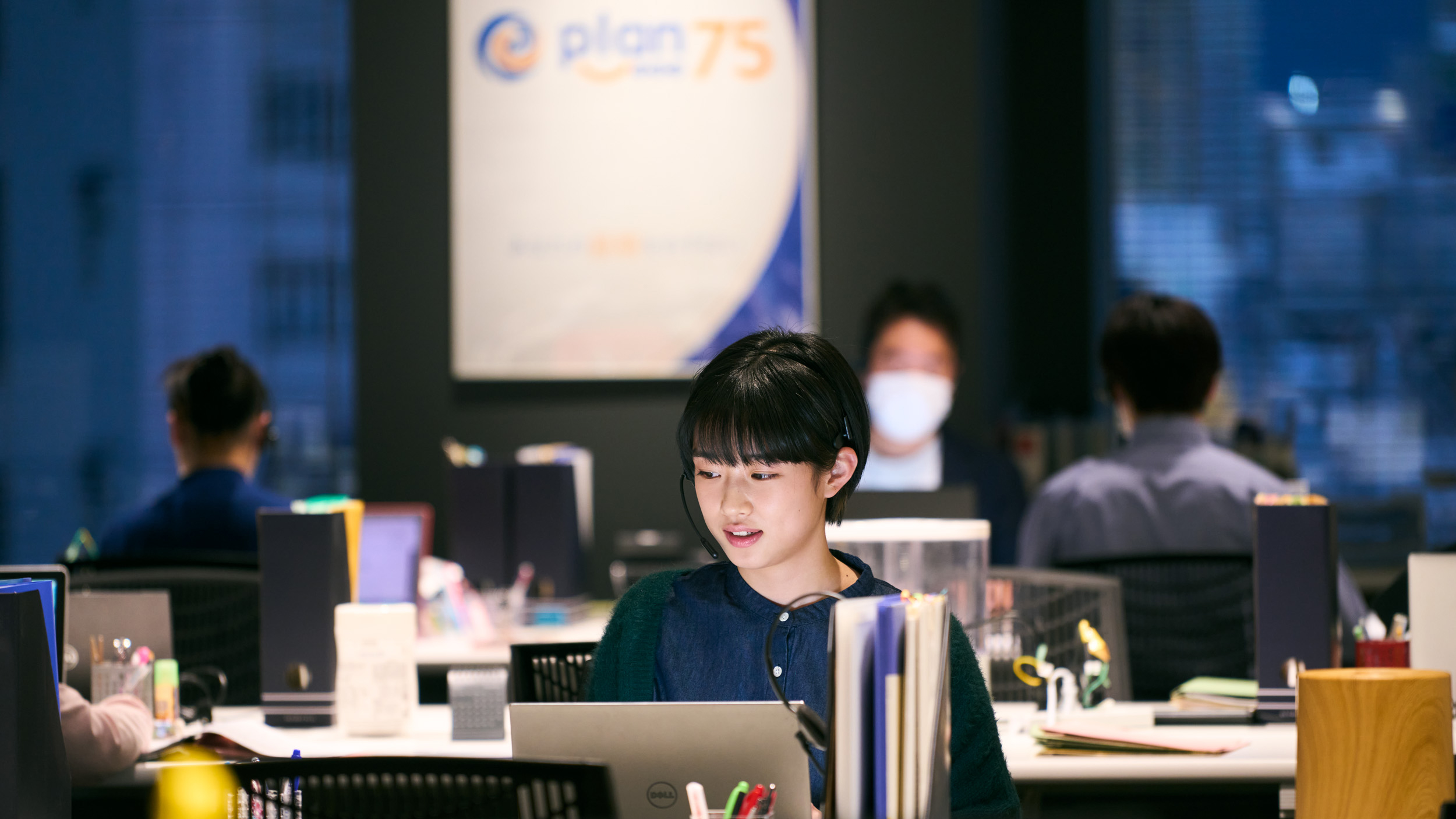
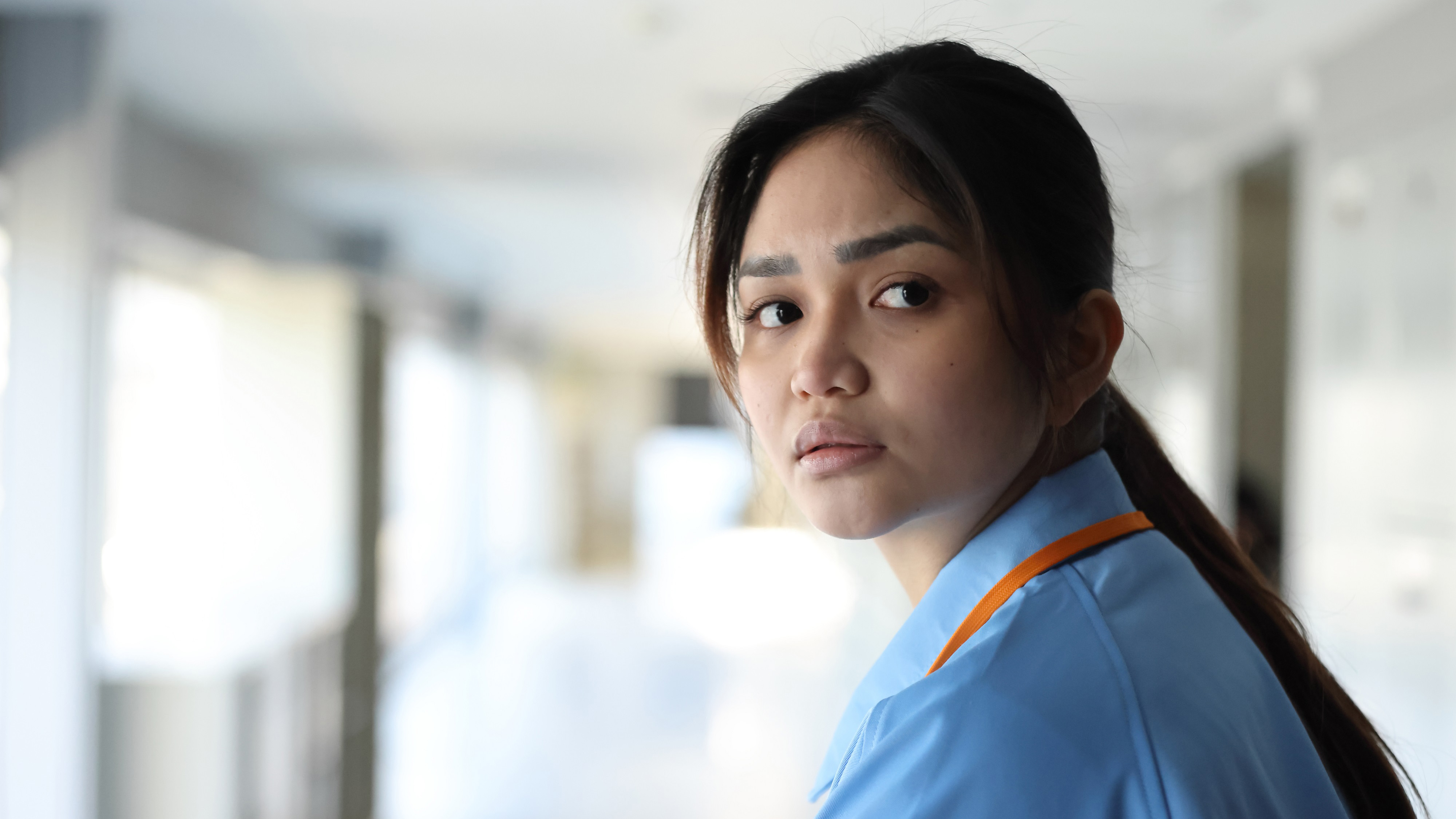
With Plan 75 about to open in US cinemas, we sat down with director Chie Hayakawa to discuss her thoughts on the implications of her dystopian festival hit.
So I thought maybe we could start with talking a little about your path into filmmaking?
Chie Hayakawa: I studied photography in New York in art college. And then I was thinking about studying filmmaking in Japan or working as an assistant director on set after graduating college in New York but then I found out that I was pregnant so I had to change my life plan although I really wanted to get into the film industry. Becoming a film director was my lifelong dream since I was 13 years old, but I couldn’t really spend time on it in my 20s and early 30s. After giving birth to two kids and raising them in New York I came back to Japan and started working at a broadcasting company but I still wanted to make a film so I went to film school at night for a year while still doing my full-time job. My thesis film got into Cinéfondation in Cannes in 2014. That opened up doors for me to get into the film industry. Then I got to work on one of the segments of Ten Years Japan in 2018. I quit my job and became a full-time director.
So you got the job on Ten Years Japan through the short film that got into Cannes?
Yes. It was a student film called Niagra that got into the student section in Cannes. Until then I didn’t know anyone in the film industry but after going to Cannes I started meeting producers and taking part in filmmakers workshops so gradually I got to know people and I met this producer who was working for Ten Years Japan. She asked me if I wanted to apply for a closed competition for young directors to come up with a story for the anthology. At the time I already had the concept of Plan 75 as a feature film, but I thought it fit the concept of Ten Years Japan because it’s a story about the future of Japan after 10 years so I decided to make a shorter version first as a kind of pilot.
One I thing I noticed is that the short and feature end in quite similar ways with the civil servant who’s been working for Plan 75 but is conflicted stands with his family looking out at the plot where his house will be while all this bright sunshine is coming towards him, and at the end of Plan 75 Michi also has bright sunshine coming towards her, but the kinds of “hope” they’re finding are very different. Was that something you reflected on when you were making the film?
Yes, in the short version it’s not really a “hopeful” ending because he knows his guilt. His family looks happy from the outside but both of them know what they’ve done to the mother so have to live with the guilt for the rest of their lives. It’s kind of a dark ending because they’re the only ones who know what they’ve done. The emptiness of the place is a kind of symbol or a trace of the people who left there, maybe they went to Plan75 to make space for the younger people to take over. So the ending of the short version is very dark.
But in the feature film with Michi looking at the sunrise it’s not exactly a “happy” ending because Plan75 will keep existing. One small hope is the fact that Michi chose to live by herself, she made the choice. That’s the kind of hope that I wanted to convey. She found the beauty of life by watching the sunrise and decided to continue to live. It’s not because she was scared of being dead, but she’s upset about the inhuman way people have to die in that facility because she witnessed the old man dying alone without dignity. She got really upset watching it and realised this isn’t the right thing for people to do. So that kind of anger made her change her mind. She’s strong willed and decides what she wants based on what she wants to do . That’s a big change for her because before she only thought about others, she didn’t want to be a burden to anyone. She changes her attitude at the end so the ending is more hopeful than in the shorter version.
When you were in the process of expanding the short into a feature, what led you to switch the main focus from a young man to an elderly woman?
Actually I had five main characters when I first thought about the film. But when I had to make the short version first I thought five was too much, so I focussed on one person, the salesman. Then when I expanded to feature I narrowed down to three main characters. Michi was already in my mind when I first made the short version.
Obviously Chieko Baisho is a fantastically famous actress in Japan and very much loved, did you always have her in mind for the role? What was it like working with her, how did she come to be involved with the project?
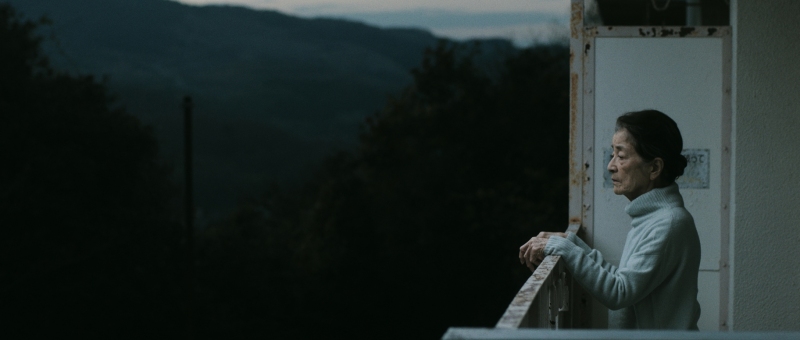
The protagonist’s experience is so harsh and the story is very dark but I didn’t want her to look miserable. I wanted her to seem strong in her spirit even though she is in a difficult situation so the audience would feel more compassion for her. They will naturally feel that they don’t want her to die so I wanted someone who could make this role believable as an old lady who still has a job at the age of 78. A lot of the actresses in that age group in Japan look beautiful, like movie stars, but Chieko Baisho is an actress who can play ordinary people. She can play believable characters so I immediately thought of her as someone who could play this role but she’s a legendary actress in Japan and I’m a first time director. It’s not all that likely that such a well-known actress will star in an indie film for a new director, but she read the script and said she wanted to meet the director before deciding whether to accept the role or not. We had a meeting and I explained to her the concept and why I wanted to make this film along with who Michi is. We had a really nice conversation. She said it’s also good for me as a director to know about her current physical condition and that’s why she wanted us to meet. She’s very professional and she knows what’s best for the film. I was really amazed by how she is still so professionally generous. Then a few days later she accepted the role so that’s how she became involved with the project.
I thought that was something that was very interesting, that you deliberately chose someone who absolutely wasn’t the kind of person that Plan 75 was targeting. When Michi’s let go from the hotel she loses not only a means of supporting herself but her social outlet as well. I wondered if you could talk a little about the contradictory ways in which older people viewed, on the one hand regarded as a “drain on resources” but on the other people don’t like to see them employed at such a late stage of their lives?
Yes it’s contradictory. The attitude is changing compared to when I was a child. Back then we showed more respect towards the elderly and people thought living long was a good thing. But these days many people including the elderly themselves feel that being old could be a burden to society so it’s more difficult emotionally for the elderly to live. They’re really afraid of becoming a burden to others or to their family. In the old days it was natural that everyone take care of the elderly so they still have a degree of mixed feelings. That’s why some people say that the elderly shouldn’t work at that age but in this film I wanted to put that element in a sarcastic way. People may say that they feel compassion to the elderly, they feel sorry them that they have to work, but there’s some people that cannot stop working because they don’t have enough pension or any family so need to support themselves. So what I wanted to show is that many people lack the imagination to understand other people’s situation.
When you think of it that way, something like Plan 75 seems like an inevitable conclusion in a society in which social worth is only defined by “productivity” where people who aren’t seen as “contributing” are excluded from the system entirely, either just abandoned or actively eliminated. We see Hiromu trying out devices to keep homeless people from sleeping on park benches and there’s a poster later on that says you don’t even need a fixed address to apply for Plan 75. Do you think we’re already moving more quickly towards the sort of world where something like Plan75becomes a possibility than most people would like to think?
I think so. The things Hiromu was trying out on the public bench have been in use in Japan for more than 20 years. When I came back from the States, I was so surprised when I noticed them. It was so obvious that they wanted to get rid of the homeless people. What scared me is the people actually making things like that don’t feel guilty about what they’re doing. They’re doing it because it’s their job. That kind of insensitivity and lack of imagination are likely to create a system like Plan 75. That kind of atmosphere already exists in Japanese society.
The film opened with a reference to a real life event in which a young man went on a mass killing spree against disabled people and said that it was for the “social good” because he thought they were a “drain on society”, but obviously when that happened in reality it was rightly condemned straight away. I just wondered why in the film the government decides to listen to the killer and introduce legislation that’s in line with what he was asking for?
It’s not so much that the government listens to what he says, they use the incident to make people understand and accept this kind of system. The government would say that this kind of incident or violent act should be prevented by having a system like this. What the killer does and Plan 75 look very different, in general, but when you look carefully what they said under this concept it’s exactly the same. But people tend to forget, or cannot see the truth or realise what’s going on. So the government uses that situation and says we should prevent such violence towards the elderly by creating this kind of system. It could solve the situation. That’s what they will say.
It’s quite interesting too that the the man who commits the crime channels all of his resentment towards “the elderly” without challenging the government or the social system. Could you talk a little about why you think that might be?
Yes it actually happened in real life. There’s a growing hatred towards the elderly from the other generations because they think they are paying more money for tax to support the great amount of elderly and also the media and television fuel the anxiety of people about being old. So somehow the hatred, anger, and anxiety towards the social system is directed towards the elderly not to the government. That’s a very strange phenomena, I feel. Young people’s anger tends to go directly to the elderly in real life.
Plan 75 must be very expensive to run. The government has all these resources geared towards helping people to die but they aren’t really prepared to use them to help people live. There’s a particularly irony there in the case of Hiromu’s uncle who couldn’t really have a family life of his own because he was living this very nomadic lifestyle travelling all over Japan working on various construction projects in the post-war era, but he feels abandoned by the society that he helped rebuild and enrols in Plan 75 on his 75th birthday. Hiromu’s boss thinks that’s a very “noble” thing for him to have done, but I was wondering how you see it?
Especially the older generation have the strong mind for contribution to the country and people died for the nation during the war. Devoting their lives to the emperor and the country was a virtue. Hiromu’s uncle was a close generation to these people so he naturally feels that he wants to contribute to society, that’s why he’s been giving blood donations and he’s very proud of having helped to rebuild the country by working in construction. He has a lot of pride in his contribution and in being beneficial to the country. For him using Plan 75 is another form of contribution. So that’s why I wanted to have that particular character.
Plan 75 has quite an insidious quality in that it’s framed as a voluntary programme but there’s a huge amount of social pressure to participate. The money they give the applicants is not a large enough amount to act as an enticement, but taking it makes it much harder psychologically to change your mind, while the call centre system leverages a sense of loneliness among the older generation but the call centre staff are told not to get too close in case the elderly person begins to feel more connected to life and decides to drop out. How do the elderly people themselves react, do a lot of them feel the same as Hiromu’s uncle that its good and noble to sacrifice themselves for the younger generation or are there some like the old man who angrily shuts the the television showing the Plan 75 ad down who might feel privately resentful?
There are several kinds of people. Maybe some will feel very upset about Plan 75 and being treated like a burden on society although they are the generation who built the Japanese economy, and also the people who recognise how inhuman the system is. And on the other hand there is a certain group of people who are willing to sacrifice themselves for the younger generation and the society. They want to feel useful and be nice people for them. And then there’s another group of people who think about themselves. When they think about being old, they are very scared about being in trouble if they get sick, or they get dementia or become a burden to their family or don’t have enough money to live, if they live alone in an apartment who is going to find them if they die? They have a lot of anxiety so they like the idea of Plan 75 to have that option for their own security. it doesn’t mean that they want to get rid of elderly people, they just want to have that option for themselves. So there are many layers of people who feel differently about this system, that’s why it’s so complicated.
In some ways Hiromu’s just doing his job and it doesn’t occur to him what the implications are, and the same for the call centre assistant Yoko. They don’t give it a lot more thought than that until they interact with someone more personally. Do you think something like Plan 75 is only really a possibility because society has already become very disconnected?
Yes, it’s one of the reasons that a system like Plan 75 is easily accepted and a lot of people demand to have it. One of the problems here is the lack of compassion for others. If Hiromu or Yoko could imagine what would happen to these old people after they step out from the office they wouldn’t be able to keep doing their jobs. And also the people, not only the people working in the system, but also the people who accept it including me and the audience, they are just too ignorant or too insensitive or too apathetic to what’s happening in the society and what the government is trying do. We have to be more keen to what’s going on in society.
There’s quite a strong contrast there as well with the Filipina careworker who even after she’s come to Japan has a very warm community around her who are very willing to help, but at the same time because she’s living overseas she isn’t able to care for her own family and with so many healthcare workers travelling abroad where the wages are higher it means there are fewer resources available in the Philippines. I was wondering if you could talk a little about the contrast between the two cultures?
Yes, the reason I wanted to have Maria’s character as a Filipina is because I think Filipino people have a strong bond between the community and family. I heard that they don’t really have old people’s homes in the Philippines because it’s common that the family take care of the elderly. If someone needs help, everyone like family and friends tries to help them without any hesitation. But in Japan we tend to hesitate to ask for help because we don’t want to be a burden to others. There’s a very strong pressure or psychological characteristic of Japanese people and we’re losing a community bond. More and more people are becoming apathetic to others so I wanted to make that contrast between Japanese people and Filipino people. Filipino people in Japan even though they’re living in a foreign country they have a strong bond and make a community, they go to church and they try to help each other even though they’re not family. So that’s why I wanted to have Maria’s character, and also Maria is the only person in this film who acts based on what she believes. Other Japanese characters act based on the rules and what others will think. They try to read the atmosphere and cannot act based on their will. So that’s a big contrast between Filipino and Japanese culture in this film.
The film has been very successful on the festival circuit and has been shown in many different countries, I wondered if you noticed a different reaction in Japan and elsewhere and particularly in the Philippines?
I found a difference in the Philippines compared to other countries. The Philippines is the only place where people said Plan 75 will not happen in our country. That’s what they said, it would never happen. But other countries they said could happen, so I was surprised and happy to hear the Philippine people say that. That was very interesting.
You touched on this a little bit before that you wanted the feature film to have a more hopeful ending, even though obviously Plan 75 still exists and the society itself hasn’t changed. Will society walk back from Plan 75 or will it continue on the same path to Plan65, Plan55 and so on?
Maybe instead of going down in age to 65 or 60, the government will try to open the gate wider to include disabled people or sick people, the poor in that kind of way. That’s why I made the 75 in the title logo blurred, I wonder if you noticed it? In the opening scene the number in the Plan 75 logo is blurred, it means that it could expand to include other people the government or society feels are “useless”, or “unproductive”.
It looks like we’re getting to the end of our time so I’ll just ask one final question. Are you working on something else right now, what are you up to next?
Yes I’m working on my next film. Because Plan 75 is kind of an issue-driven film I wanted to make something really different next. So I’m working on the story of a teenage girl. It’s a kind of coming of age story based on my personal childhood experiences about a girl who makes a promise to her dying father.
Plan 75 opens in New York on April 21 with director Chie Hayakawa in attendance for a series of post-screening Q&As at IFC Center April 21 – 23. The film will also open in LA on May 5 with a wider US release to follow courtesy of KimStim.