
#LookAtMe (Ken Kwek, 2022)

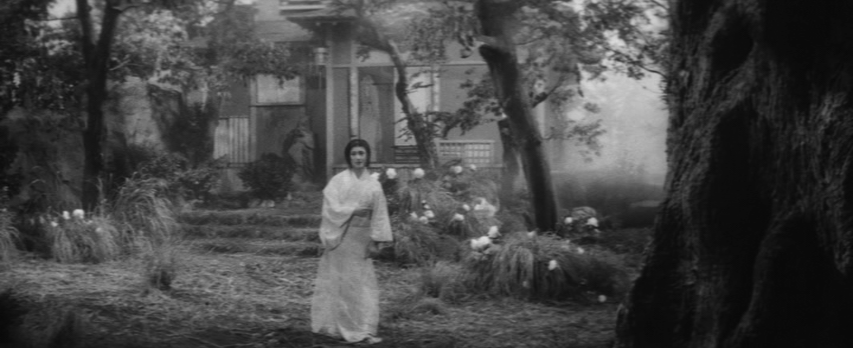
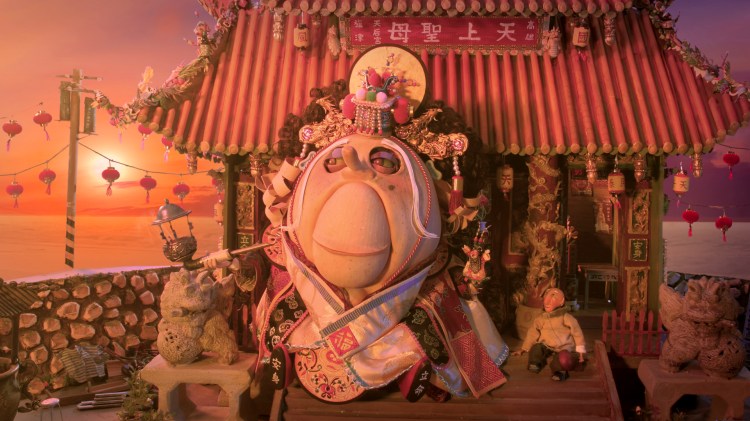
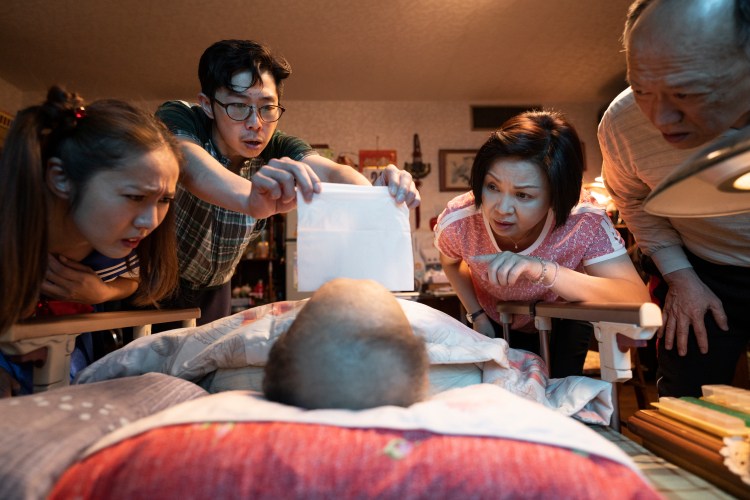
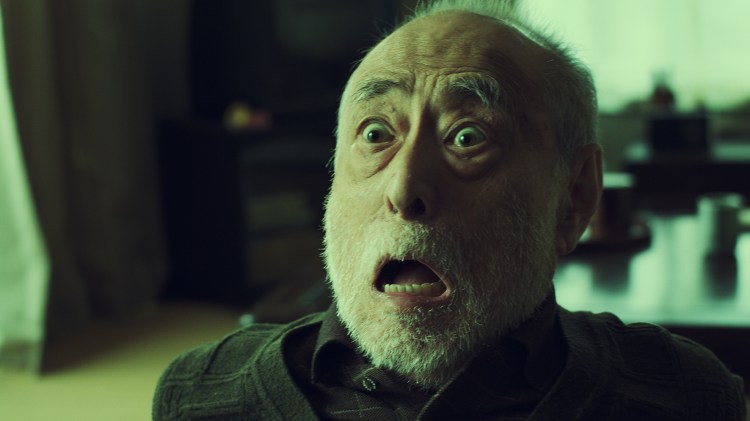
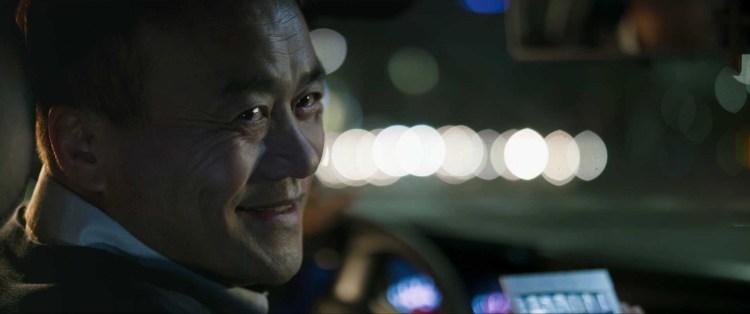
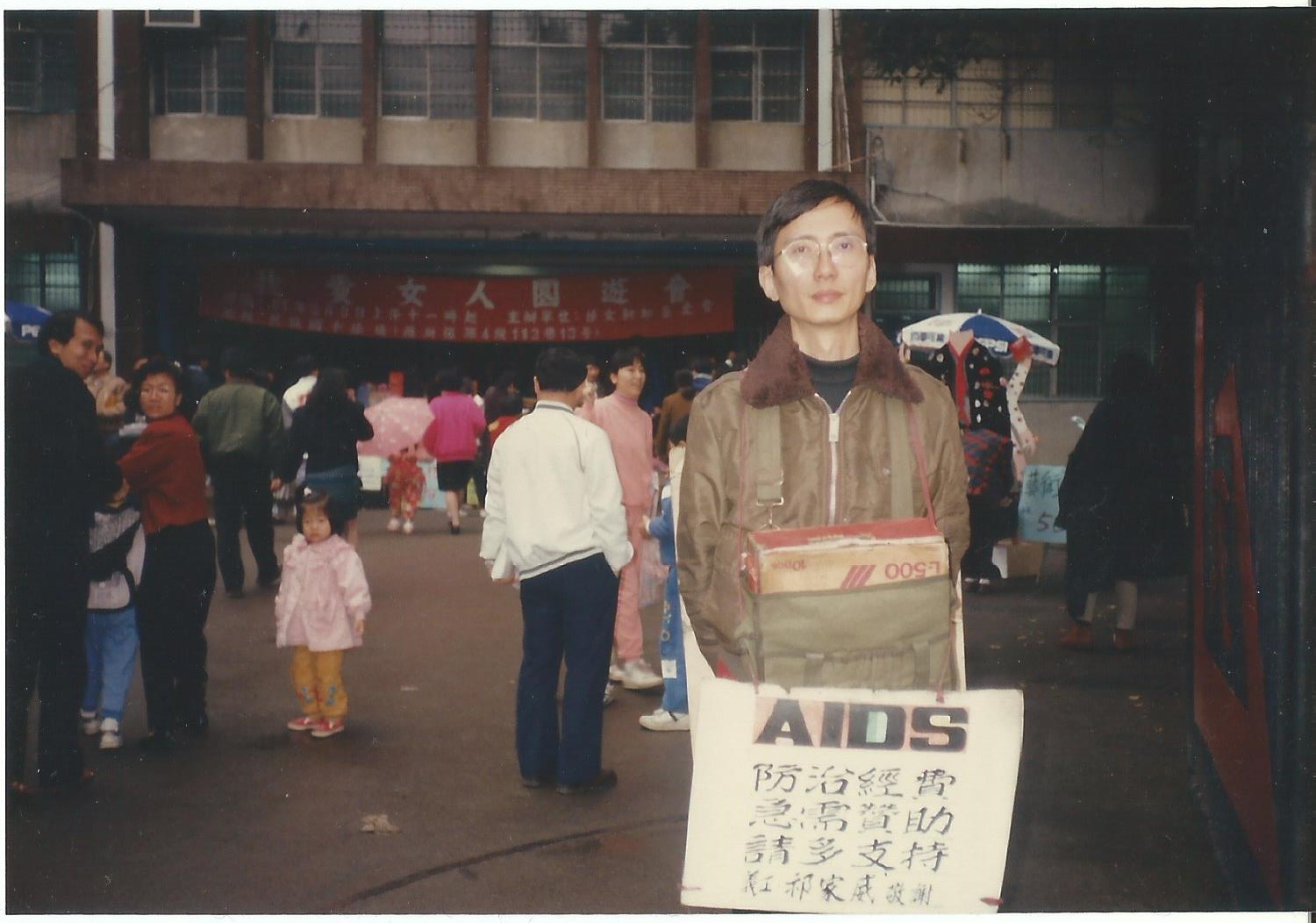
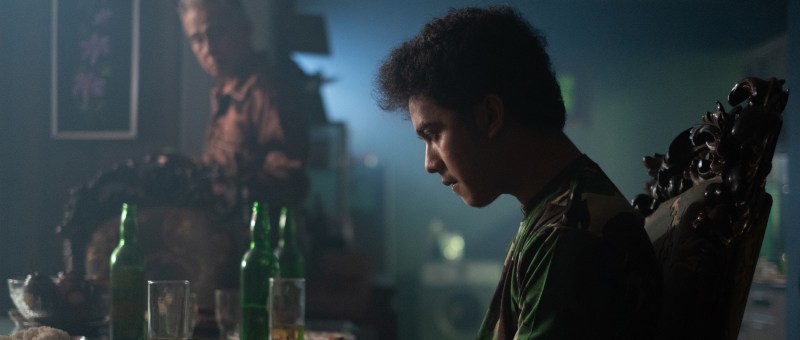
The unequal authoritarianism of contemporary Singapore conspires against an aspiring YouTuber in Ken Kwek’s surreal drama #LookatMe. Opening with a title card explaining that 2015 prominent activists have jailed for breaking arbitrary laws relating to obscenity and illegal assembly, the film throws its progressive hero into a kafkaesque quest for justice after he’s arrested for publishing a video mocking a homophobic religious figure simultaneously asking why it’s alright for a pastor to spout hate speech but illegal to challenge him and pitting the hero’s desire for fame against that for genuine social change. 

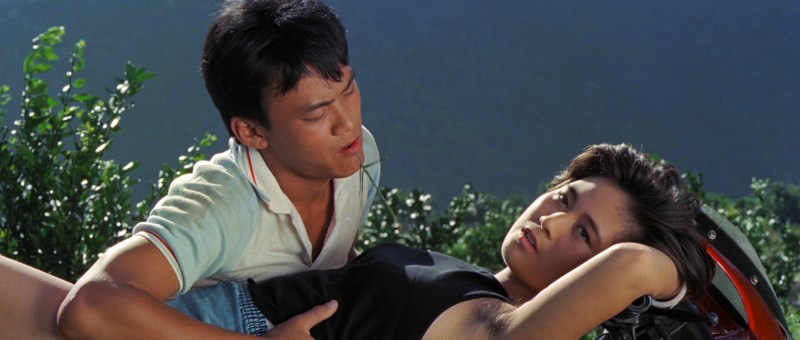
Sean (Yao) does indeed want fame, running an unsuccessful YouTube channel while alternating between mocking more successful stars and emulating them by playing cruel pranks on his understanding mother in the hope of going viral. His life changes when his girlfriend Mia (Shu Yi Ching), whose parents are religious, invites him, and his gay twin brother Ricky (also Yao), to attend an evening service at her church in an attempt to curry favour. The church turns out to be of the evangelical variety, opening with a Christian rock performance before showman pastor Josiah (Adrian Pang) arrives on stage and embarks on a homophobic rant insisting that he has no problem with gay people but is dead against them overturning Singapore’s colonial era law criminalising homosexual sex. Ricky is obviously upset, unsure why Mia whom he assumed to be progressive would have invited him to such an event, and leaves abruptly upsetting Mia’s father in the process. 

Sean is so outraged by the whole thing that after noticing that Josiah gets a lot more hits than he does with his hate speech, he makes a video mocking his messaging and satirically accusing him of bestiality which eventually goes viral but also gets him arrested after the church’s many followers ring the local police en masse. Sean can’t understand why he’s in trouble with the law for publicly insulting a religious leader while Pastor Josiah is seemingly free to spread dangerous and hateful ideas with no fear of challenge or dissent. Banned from social media, he’s picked up again for making an apology video and is then eventually sent to prison for 18 months while facing a defamation trial in his absence. 

Even his new cellmates can’t quite believe he’s been put away for something as ridiculous as a YouTube video yet his plight exemplifies the authoritarianism of the contemporary society in which there is no guarantee of free speech nor safe path to protesting injustice. Ricky is later arrested too for “illegal assembly” when he and three friends hold up a banner protesting the case because four people outside together is apparently prohibited by law. As he points out, how are you supposed to hold up a giant banner with only three people? Sean tried to stand up for Ricky, and Ricky does the same for Sean deciding to come completely out of the closet as an LGBTQ+ activist with the support of their mother Nancy (Pam Oei) as they fight for justice but then faces random violence on the streets from homophobic vigilantes while she is later fired from the primary school where she works after refusing to sign an apology or renounce her political views. 

The film takes aim at social hypocrisy as Sean is sexually abused by the prison warden while inside, and the pastor seeks to preserve his business interests calmly telling Nancy that he bears her no grudge but won’t drop his defamation suit because he has to protect the Church from similar forms of attack. He says this while lounging around on his yacht while servants bring him drinks, clearly incredibly wealthy from the proceeds of his religious life which whichever way you look at it is not a good look. In any case the film’s ironic conclusion which vindicates Sean and the place of video in social protest cannot but seem a little flippant in its implications which reduce the pastor to the position of hypocritical villain while Ricky’s conversion to Christianity feels like too much of a concession even if making clear that it is not religiosity that is being demonised only those like Josiah who would seek to profit from hate and repression. Nevertheless, Kwek presents an alternately heartwarming and harrowing vision of a close family torn apart by outdated and irrational laws and in the end left only with violence as a potential motivator for change. 


#LookAtMe screened as part of this year’s New York Asian Film Festival.

NYAFF trailer (English subtitles)

Next Door (옆집사람, Yeom Ji-ho, 2021) [Fantasia 2022]

How much do you know about what’s going on with your neighbours? Chan-woo (Oh Dong-min) thinks he knows quite a bit because they never seem to stop arguing and the walls in this building are surprisingly thin, but as it turns out he didn’t really know very much at all nor to be honest did he really care. Yeom Ji-ho’s graduate film Next Door (옆집사람, Yeop Jib Salam) is a tense mystery farce in which an aspiring detective tries to investigate his way out of trouble and somehow ends up coming out on top almost despite himself.

Chan-woo has been unsuccessfully studying for the police exam for the last five years and hopes that his run of miserable failure is about to come to an end, that is as long as he can get himself together to submit the application by 6pm the following day. One of the many problems with that is that Chan-woo has a cashflow problem and there’s not enough in his account to pay the fee so he has to ring a friend who agrees to lend him money but only if he comes out for a drink. Reluctantly agreeing, Chan-woo fails to correct his friends when they assume he’s already passed the test and become a policeman only to get blackout drunk and create some kind of disturbance before waking up in an unfamiliar environment next to what seems to be a corpse surrounded by blood. After a few moments of confusion, Chan-woo realises he must have crawled in next-door in a drunken stupor and returns to his own apartment but discovers that he’s left his phone behind which is inconvenient in itself but especially as it’s now evidence that he was present at a crime scene which won’t look good on his police application form. 

To be honest, Chan-woo is not the sharpest knife in the drawer and it’s not until he’s been in the apartment, where he is trapped because the hallway is currently full of religious proselytisers, for some time that he remembers about fingerprints and DNA while deciding to do some investigating to figure out what might have been going on the previous evening. His friend’s messages suggest he has a history of becoming violent and aggressive while drunk and may have gotten into some kind of altercation all of which has him worried that he actually might have been involved in the corpse’s demise. 

Meanwhile all he ever did was complain about the noisy woman in 404 who was frequently heard arguing with a man. As an aspiring policeman perhaps he should have checked in on her to make sure she hadn’t become a victim of domestic violence rather than blaming his neighbours for his poor performance. To begin with, he assumes the body must be that of the woman’s boyfriend, but also makes a series of sexist assumptions while looking around the apartment and finding evidence that the person who lived there was a tech wiz immediately assuming that all the computer equipment must belong to the boyfriend. Similarly he decides the girl is probably an airhead after finding photos of her on the corpse’s phone because she is pretty and fashionable. When she finally turns up with bin bags and cleaning supplies, Hyun-min (Choi Hee-jin) first challenges Chan-woo on discovering him hiding in her closet but then changes her tune to appeal to Chan-woo’s vanity playing the helpless young woman looking to him for protection and in effect welding his sexism against him. 

His desire to play the hero may be behind his intention to become a police officer but then he’s not exactly a paragon of virtue himself. On discovering the body, we see him raid a piggy bank and pocket a note from the corpse’s wallet to solve his financial problems before thinking better of it and putting everything back where it belongs. He agrees to help Hyun-min deal with the body partly to protect her and partly to protect himself from his proximity to the crime all while trying to make sure he gets back to his own apartment to send the application form before the deadline. Even the landlady eventually offers him a discount on his rent in return for keeping quiet so the murder in the building won’t affect her business. “They were terrible people” he tells her when she repeats a rumour that Hyun-min got into a fight with a jealous boyfriend over money which might not be completely unfair even though he knows the rumour isn’t true and is not entirely blameless himself. A masterclass in blocking and production design, Yeom’s deliciously dark farce suggests it might be worth keeping a better eye on your neighbours in all senses of the term. 


Next Door screened as part of this year’s Fantasia International Film Festival.

International trailer (English subtitles)
Kill! (斬る, Kihachi Okamoto, 1968)

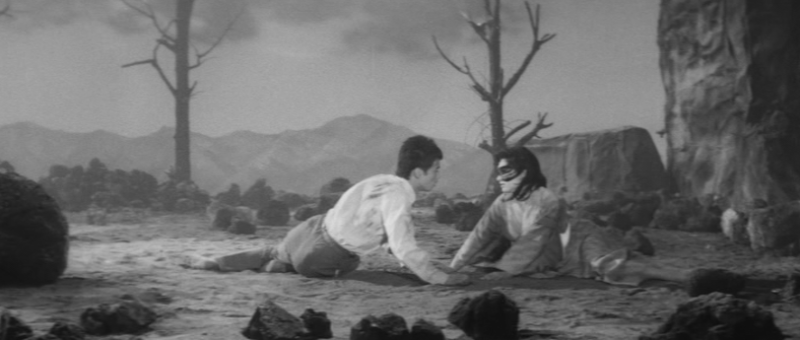
“Samurai aren’t as great as you might think” according to a jaded retainer in Kihachi Okamoto’s Kill! (斬る, Kiru) but it’s a message that the ambitious farmer at the film’s centre struggles to take in. Having been a victim of samurai violence he resolves to become a samurai while a former samurai turned yakuza drifter attempts to show him the hypocritical realities of the samurai life as they find themselves swept into local intrigue when a band of young revolutionaries arrive to cut down a corrupt and oppressive lord. 

Corrupt and oppressive is perhaps the defining image of the samurai in post-war cinema, but like the film’s title that cuts both ways. Farmer Tabata (Etsushi Takahashi) sold his lands to buy a sword after witnessing peasants cut down during an uprising but he’s decided the best way out of oppression is to become an oppressor and is dead set on achieving samurai glory through the time-honoured method of distinguishing himself in battle. That may prove a little difficult given that his new boss, Ayuzawa (Shigeru Koyama), immediately mocks him for swinging his sword as if it were a scythe. Then again as former samurai Genta (Tatsuya Nakadai) explains to him, if you don’t know what you’re doing you can always just stab people which at the end of the day does rather undermine the idea of samurai elegance in the art of killing. 

Genta keeps trying to tell Tabata that “samurai are no good” but Tabata still wants to be one anyway even after learning that Ayuzawa means to double cross them, hiring ronin to take out the young samurai whose sense of honour he manipulated to eliminate the admittedly corrupt (but aren’t they all?) lord for his own political gain while planning to send in his retainers to finish off the job to ensure there are no witnesses. Genta gave up his samurai status because he was “disgusted” by just this sort of duplicity along with the meaningless codes of loyalty that govern samurai society and caused him to betray a friend who was acting only in the interests of justice. Leader of the ronin Jurota (Shin Kishida) did something similar though in his case for love when his fiancée’s father was condemned on false charges and she and her mother exiled. He wants not land or status but only money in order to redeem the woman he loves from a geisha house and like Genta is under no illusions about the nature of samurai life having figured out most of what’s going on but hoping to emerge with the means to liberate both himself and his wife from samurai oppression. 

Even the elderly chamberlain later rescued by Genta tries to warn Tabata that the samurai life isn’t all it’s cracked up to be, hinting at the ways they are also oppressed by their own code while clearly gleeful to have had the opportunity of stepping into a teahouse for the first time responding to Genta’s request to stay put that if he could he’d like to stay put for the rest of his days. Both former samurai, neither Genta nor Jurota are minded to draw their swords knowing that whatever the outcome it would be unhappy while the young who thought it was their duty to change the world by removing one who brought shame on their names are faced with the realisation that they have been used and their resistance will count for nothing. Even their bond as brothers banding together to achieve a common goal is eventually disrupted by alcohol and petty jealousy.

Genta acts as a kind of chorus, touched by the naivety of the seven samurai holed up in a mountain lodge because they believed in justice, while knowing that the society itself is innately unjust and already beyond redemption. Tabata eventually comes to a similar conclusion having gained samurai status but found it quite literally uncomfortable deciding to shake off his newfound nobility and rejoin Genta as a cynical yet pure hearted wanderer because the only way to escape samurai oppression is to actively live outside it. The final irony is that it’s the elderly chamberlain who eventually sets him, and all they women trapped in indentured servitude at the geisha house, free using samurai gold to enable them to escape a system he himself cannot escape but does not exactly support while Genta enlists the help of local peasants to hold a festival of rebellion to cover the final assault. Marked by Okamoto’s characteristically absurd humour and cartoonish composition along with the eerily gothic emptiness of the deserted ghost town where not even yakuza can survive the film takes on a quasi-spiritual dimension in which Genta and the gang eventually walk out of hell if only into a purgatorial freedom. 


Kill! screens at Japan Society New York on Sept. 2 as part of the Monthly Classics series.

Original trailer (no subtitles)

My Best Friend’s Breakfast (我吃了那男孩一整年的早餐, Du Zheng Zhe, 2022)

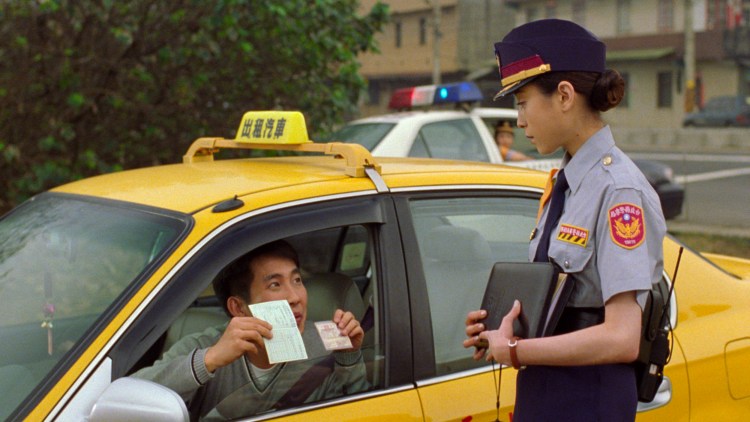
Teenage romance is always complicated, but it seems wilfully so for the couple at the centre of Du Zheng Zhe’s high school rom-com, My Best Friend’s Breakfast (我吃了那男孩一整年的早餐, wǒ chī le nà nánhái yī zhěng nián de zǎocān). Du’s adaptation of the popular novel by Misa lacks the quirky post-modernism with which Taiwanese romantic comedies have come to be associated save a few fantasy sequences and the heroine’s dialogues with possible versions of her future self, opting instead for a more much more conventional tale of miscommunication and the potential costs of failing to speak one’s true feelings at the right time. 

High schooler Wei-xin (Moon Lee) is in any case sceptical of romance as her parents have recently divorced after years of arguing about money and their conflicting views on success and happiness. Her classmate Yuan-shou (Edison Song Bai-wai), who has an obvious crush on her, convinces Wei-xin to take part in the school concert in exchange for receiving a milk tea every day, while she also makes a habit of eating the breakfasts sent to her best friend, popular girl Qi-ran (Jean Ho), by her various suitors. She then runs into top swimmer You-quan (Eric Chou) who chips in when she’s sort on her pineapple bread snack and starts hanging out with him after witnessing his awkward breakup with an unfaithful girlfriend. 

A brief note of social commentary is introduced as the pair bond over their stigmatised familial circumstances, Wei-xin fearing You-quan will look down on her when she explains her parents are divorced while he reveals he feared the same because his father has passed away and his mother is working in the US while he lives in one of the school dorms. The problem is, however, the central miscommunication in their by-proxy courtship in which You-quan starts sending breakfasts to Qi-ran which are obviously intended for Wei-xin though she remains oblivious both of You-quan’s feelings and those of Yuan-shuo. Assuming that You-quan is interested in Qi-ran she keeps quiet, as does he and everyone else giving rise to a lot of totally unnnecessary emotional suffering for all involved. 

Then again Wei-xin’s romantic predicament pushes her into an intense contemplation of her future, engaging in conversation with possible versions of herself in 15 years’ time firstly as a lonely, overweight woman who lives only to eat, and then as a cool and super-confident musician, each of them helping her figure out her feelings and what to do about them. Meanwhile, her youthful romance is contrasted with her parents’ failed relationship which apparently began when they were both carefree teens with no responsibilities and eventually broke down when faced with the realities of supporting each other as a family. While Wei-xin’s musician father has continued to follow his dreams even if they never payoff, her mother has become an unhappy workaholic desperate to work herself out of debt but also perhaps resentful in having given up on love for the illusion of financial security. 

What Wei-xin learns is that it’s better to be bold and have no regrets than risk becoming the version of her future self who is embittered and resentful that she never told her teenage crush how she felt. These teens do at least seem to have a fairly mature attitude to romantic disappointment, taking rejection with good grace and resolving not to let the awkwardness of a failed romantic confession ruin a friendship. One unexpectedly compassionate teen receives a declaration of love from a same sex crush in the midst of wailing about their own romantic heartbreak and though they do not return their feelings immediately embraces them in empathising with their emotional pain while another reflects on a bad breakup and traumatic incident to work on themselves and gain inner confidence before winning back their former love. 

Given all that the idealism of the film’s conclusion may sit a little oddly if perfectly positioned to appeal to a teen audience with an archetypal romantic moment, but is to a degree earned in teen’s path towards emotional honesty and the necessity of being brave enough to accept the risk of heartbreak in chasing their romantic destiny. Perhaps free breakfast delivered to your best friend by proxy is as a good a way to say I love you as any other. 


My Best Friend’s Breakfast screened as part of this year’s New York Asian Film Festival.

Original trailer (Traditional Chinese / English subtitles)

Images: © 2022, SKY FILMS Entertainment Co., Ltd., all rights reserved.

Fast & Feel Love (เร็วโหด..เหมือนโกรธเธอ, Nawapol Thamrongrattanarit, 2022) [Fantasia 2022]

A 30-something couple find themselves pulled in different directions by their conflicting desires in Nawapol Thamrongrattanarit’s post-modern comedy, Fast & Feel Love (เร็วโหด..เหมือนโกรธเธอ). As the title implies, the self-involved hero is eventually forced to accept that his success is founded on the support of those around him while belatedly stepping in to adulthood in undergoing a baptism of fire learning basic life skills along with the confidence to look after himself in a new world of grownup responsibilities. 

Jay (Urassaya Sperbund) and Kao (Nat Kitcharit) met as outsiders in high school, she excelling in English but not much else aside from her love of plants, and Kao obsessed with the art of sport stacking and dreaming of becoming a champion. 10 years later the pair are still a couple, kind of, living in a well-appointed home which they technically co-own though its clear Jay is shouldering the mortgage along with all the other domestic responsibilities. Kao is technically arrested in childhood, spending all of his time shut up in his room practicing sport stacking oblivious that others in his life have sacrificed themselves on his behalf. Jay used to think that it was all worth it as long as Kao achieved his sport stacking dreams but now she’s reached a crisis point realising that for everything she’s done for Kao she’s got very little back and if she waits much longer her own small dream of becoming a mother and having a conventional family life may pass her by. 

There is something of an irony in the fact that all of Kao’s major challengers are young children though as he points out sport stacking is an egalitarian sport in which things like age, gender, and nationality are irrelevant. Having successfully broken a record, Kao begins receiving creepy phone calls from a new rival, Edward, a little boy in Colombia who complains to his mother asking why people can’t go on stacking forever only for her to point out that adults have other things in their lives they have to attend to though Edward simply doesn’t understand. To begin with, Kao doesn’t either because he’s been lucky enough to be surrounded by people who supported his dream and went out of their way to make it easy for him by relieving him of basic tasks so that he could devote himself entirely to sport stacking. Because it had always been this way, it never really occurred to Kao that he needed to grow up and begin taking some responsibility for himself or at least acknowledge the sacrifices others were making on his behalf. 

When Jay eventually leaves him fearful that she’s wasted too much time and he’s never going to change, Kao is suddenly confronted by the frightening world of adulthood in which he must finally learn to look after himself while simultaneously accepting that it’s alright to ask for and receive help while helping others in return. What appealed to him about sport stacking was that it could be done alone, yet he failed to use the sport to block out everything else but was perpetually bothered by the intrusions of ordinary life his concentration ruined by the slightest noise. What he learns is that he cannot, and does not want to, win alone but only thanks to the support he receives from those around him while accepting that perhaps it’s time to move on from competitive sport stacking. 

Nawapol Thamrongrattanarit throws in plenty of meta references as Kao breaks the fourth wall or laments that he thought this was supposed to be an action movie but he’s hardly done any stacking at all and people might be disappointed. An extended running gag directly references Bong Joon-ho’s Parasite, while one of the kids Kao teaches at the sport stacking club talks like a gangster because she’s apparently watched too much John Wick. Even so, the relationship between Jay and Kao is drawn with a poignant naturalism rather than rom-com superficiality that allows Kao to accept that it’s time for them both to do what makes them happy even if that means they may not be able to stay together while little Edward seems to come to the same conclusion, ahead of the game in realising that a prize you don’t really want may not be worth winning. 


Fast & Feel Love screened as part of this year’s Fantasia International Film Festival.

International trailer (English subtitles)
Images: ©2022 GDH 559 Co., Ltd.

The End of Summer (小早川家の秋, Yasujiro Ozu, 1961)

Fathers in Ozu are usually sentimental and doting, sometimes insensitive or austere, but by and large responsible. The crises the family faces are generally emotional more than they are practical, few Ozu fathers fail in a duty of care towards their wives and children. And then, there’s Manbei (Ganjiro Nakamura). The hero of Ozu’s penultimate film, The End of Summer (小早川家の秋, Kohayagawa-ke no Aki), is quite the opposite. He does as he pleases and enjoys his life to the fullest without really noticing the effect his behaviour has those around him. But then, as his sister later puts it, he was a very happy man which is rare thing in this society so perhaps he had something right after all. 

Produced for Toho and set in Osaka rather than the usual Shochiku and Tokyo, the film opens not with Manbei but with his brother-in-law Kitagawa (Daisuke Kato) trying to set up Manbei’s widowed daughter-in-law Akiko (Setsuko Hara) with a widowed industrialist obsessed with cows. Meanwhile, the family is also trying to find a match for his youngest daughter, Noriko (Yoko Tsukasa), who is put off by the whole idea of an arranged marriage and worried that Manbei and her older sister Fumiko (Michiyo Aratama) may try to pressure her into accepting because their family sake brewery is trouble. Fumiko’s husband Hisao (Keiju Kobayashi) is technically running the brewery and favours a merger to save the business but Manbei is resistant. Manbei himself is largely absent and his increasing habit of skipping out during the day is beginning to worry the family, especially when they discover he’s been visiting an old mistress with a 21-year-old daughter he thinks is his. 

Followed to a cafe, Manbei exclaims that summer refuses to end in an accidental metaphor for his life. For him everything is sunshine and rainbows, scuttling away from the family home like a little boy sneaking out after dark while the now grownup kids are left behind to clean up his messes. Manbei is a widower, and aside from the financial dimension, perhaps it’s not a huge problem if he wants to go and hang out with an old flame, but Fumiko in particular is scandalised remembering the various humiliations he put her late mother through when she was just a child. Hisao advises her that perhaps it’s best not to bring it up. Manbei isn’t going to change his behaviour and it’s only going to create more drama whereas it might be more manageable if they all pretend not know. Fumiko, however, can’t stay silent even if she knows her father isn’t going to listen to her and in fact lies quite baldly about what he’s been doing in Kyoto. 

Fumiko is on the side of marrying Noriko off, but unlike her husband, father, and uncle, is keen to emphasise that they should move slowly and be sure to take her feelings into account. Rather than her sister, Noriko turns to Akiko for support. Originally in favour of meeting the prospective husband, after all you can always turn it down if you don’t like him, she cautions Noriko that the most important thing is character rather than behaviour and that it’s essential to marry without regret. Noriko feels as if she’s obliged to do as everyone says, but is secretly in love with a young man she met on a skiing holiday who has just been transferred to Sapporo. Akiko, meanwhile, was not altogether taken with the cow-loving widower, but in any case would prefer to maintain her present way of life as a single mother even while others pressure her to remarry. 

The conclusion Noriko comes to is, perhaps strangely, inspired by her carefree father in that she decides it’s best to do what will make her the most happy rather than simply going along with what everyone else wants her to do which may or may not be in her best interest. Fumiko grudgingly admits that though her father was often exasperating perhaps he was the only thing holding the family together. Ozu broadly lends the irresponsible but never malicious Manbei tacit approval in celebrating the fact that he lived the life he wanted to live and he was at least defiantly happy in his own eternal summer, but then ends on an uncharacteristically morbid note as two farmers wash vegetables in the river opposite a crematorium remarking on the increasing number of crows while resigning themselves to the cycle of life. Smoke and crows await us all, perhaps Manbei had it right and the thing is to be happy while you can without taking much notice of what others might have to say about it. 


Alienoid (외계+인 1부, Choi Dong-hoon, 2022)

According to the strangely warmhearted AI robot at the centre of Choi Dong-hoon’s Alienoid (외계+인 1부), the universe is already finished, destined only to tear itself apart in destructive instability. According to him, his society evolved, became compassionate and forgiving, yet like many others sought to avoid a problem it did not want to deal with in exiling its most dangerous prisoners to the minds of oblivious Earthlings who apparently rarely realise they’re sharing body and soul with an alien killing machine until that is one decides to escape. 

Thunder (Kim Dae-myung), an AI unit accompanying the sullen Guard (Kim Woo-bin) who is also a kind of guardian, paints the aliens as dangerous mutants who live only for violence yet it might be worth considering that their rebellion may be justified as members of an oppressed minority apparently considered harmful to mainstream society were it not for the fact their plan involves poisoning the Earth’s atmosphere to free their brethren while suffocating humanity in the process. Guard is fond of saying that he cares nothing for humans and does not involve himself in human affairs, yet it’s obvious that as much as his duty is to ensure the aliens stay captive he feels a responsibility to protect humanity, coming to care for an infant child Thunder spirited away in compassion after its mother died when the alien hosted inside her tried to escape. 

There is something a little curious in the fact these alien beings have chosen to live in what is our present day when according to them time is not linear but happening all at once and they appear to have the ability to travel through it at will, even stashing mutant criminals back in the 14th century where a Taoist dosa magician, “The Marvellous Muruk” (Ryu Jun-yeol) is on the hunt for the Divine Blade and a young woman who “shoots thunder” (Kim Tae-ri). Alien technology may seem like magic even if rooted in “science”, but feudal Korea is a place of majestic fantasy in which wizardry is apparently very real to the extent that a pair of powerful sorcerers tour the land hawking magical supplies such as random sutra stickers and mirrors that enlarge whatever passes through them to mysteriously masked warrior monks. Yet as we can see the girl who shoots thunder is merely welding a pistol, a kind of halfway house of technology which seems like strange magic to the people of Goryeo but nothing more than a child’s toy to the laser-wielding robotic aliens. 

In any case, Choi eventually connects these two worlds bridged by temporal conspiracy as if implying that the future’s salvation lies only in the past. Guard is forced to reflect that their strange act of colonial imperialism in secretly implanting alien prisoners in human minds may have been misguided when challenged by his plucky little girl (Choi Yu-ri) who has already realised there’s something a little different about her distant dad while the fact she’s effectively being raised by two men passes as incidental detail even as the Guard is stalked by her best friend’s apparently smitten aunt (Lee Honey). 

This being the first instalment in a two part film, there is a notable lack of resolution in its closing moments though Choi excels in world building running from hard sci-fi to feudalistic fantasy imbued with the strange magic of technology and underpinned by an interrogation humanity as the heroes battle through time looking for a way to repair an “unstable” world ruled by greed and violence and largely find it in each other. While the chief thrill may come from the incongruity of a young woman firing a pistol in the age of the crossbow (not to mention blasting her way out of a coffin), Choi packs in a series of innovative action sequences shot with a knowing irony as Muruk faces off against the masked monks in the past while the Guard and Thunder try their best to keep the aliens at bay with their high tech weaponry, shooting electric pulses from their palms and dodging lasers but still making a last ditch attempt by leaping at the enemy spaceship and trying to stab it in the heart. Whether this disordered world can be stabilised through a moment of cosmic connection will have to wait for part two, but this opening instalment at least is quite literally a charming affair.


Alienoid is in US cinemas from Aug. 26 courtesy of Well Go USA.

US trailer (English subtitles)
One and Four (一个和四个, Jigme Trinley, 2021)

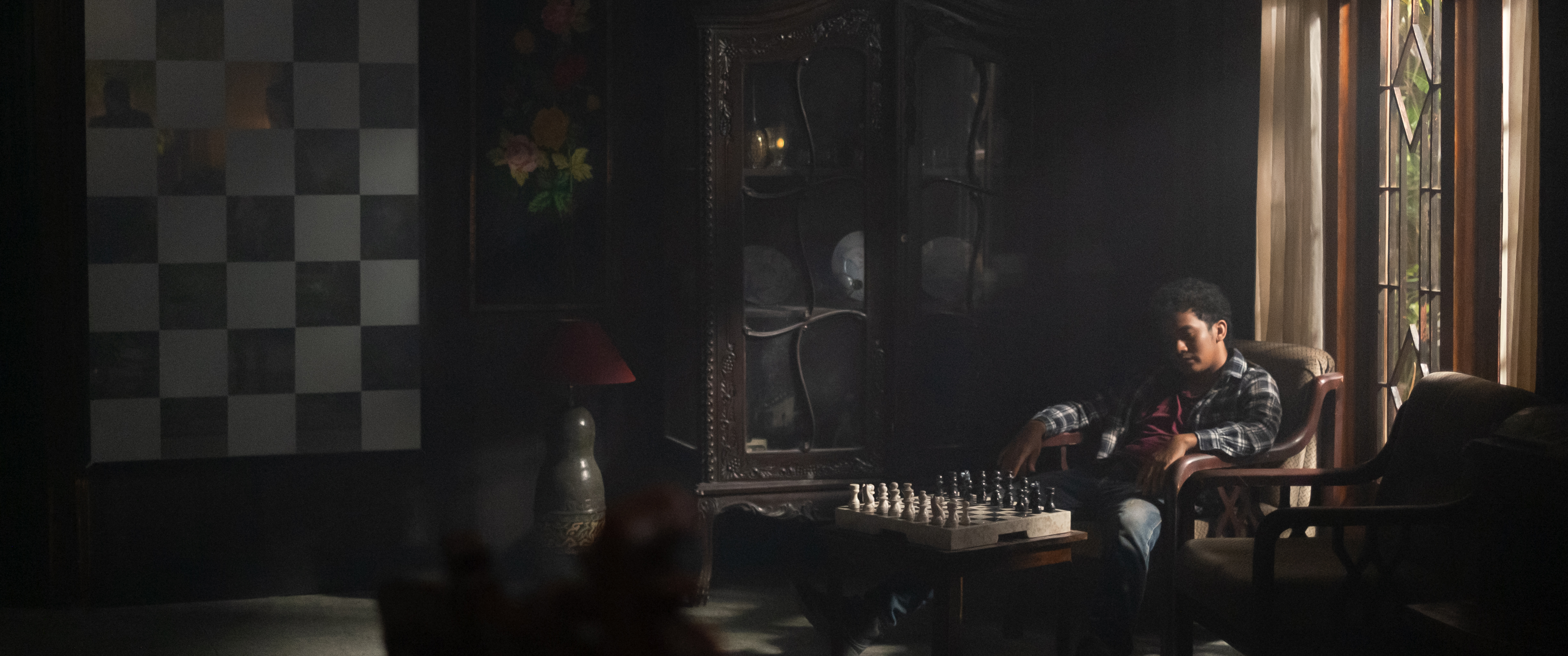
A lonely forest ranger nursing a broken heart and an incredible hangover finds himself the accidental arbiter of truth in Jigme Trinley’s frosty psychological drama, One and Four (一个和四个, yī gè hé sì gè). One and four is what each of these men are, individuals pitted one against the other. The atmosphere is one of danger and mistrust coupled with almost supernatural dread in the constant warning of an approaching blizzard with a ruthless maniac on the loose while it’s true enough that the only neutral party may have been quietly going stir crazy for quite some time aside from his recent troubles. 

Troubles do indeed descend on Sanggye in threes with each of his various visitors only complicating an already dangerous situation. As the film opens he’s clearly hungover, grumpy, and tense, going about his quotidian tasks and chopping wood while apparently out of food resorting to sucking old bread and bones. He writes in his diary that he wishes the events of the previous night had been a dream and introduces a note of mistrust regarding village man Kunbo who visited him Sanggye had assumed to borrow money but may have had a different purpose in mind. He’s later startled by another knock at the door from a wounded man carrying a rifle who claims to be a policeman chasing a dangerous poacher but looks to Sanggye like he could well be the poacher himself. 

Then again, Sanggye isn’t entirely honest with him either telling the man that he has no alcohol because forest rangers aren’t supposed to drink yet we’ve already seen bottles littering the cabin and it seems clear he woke with a hangover. “I didn’t know you why should I tell you the truth” he later tells his guest not unreasonably having concealed Kunbo’s visit the night before but now finding himself dragged into a wider drama involving a high speed crash which seems to have caused the death of at least one policeman with the poacher supposedly on the run. Sanggye looks for clues most particularly in the policeman’s badge number though we might wonder if it’s reasonable to assume someone driving a police car or wearing a jacket with a number on it is necessarily a policeman, or if on the other hand someone carrying a hunter’s rifle in the manner of a poacher must be a poacher. He looks for objective facts occasionally asking for verifiable detail such as the name of the man who runs the forest commission and his place of birth but once both Kunbo and another man also claiming to be a policeman turns up the situation only becomes more confusing.

Did Kunbo set him up, drop by deliberately to upset him so he’d be less likely to catch him committing crimes or is he simply in the middle of a bad situation? Are both these men policemen or neither, could they both be poachers after the same kill with Kunbo caught in the middle or is the whole thing some kind of bizarre cosmic coincidence ironically occurring on the “day for heroes to gather” as it says today to be on Sanggye’s wall calendar. As Sanggye points out, if one of these men is a poacher most likely he’d be dead by now but then maybe he’s only waiting to retrieve his missing hoard of antlers cut from a bemused deer left bleeding in the snow. 

“Preventing forest fires is everyone’s responsibility” according to Sanggye’s mug, though it seems unlikely anyone’s going to be able to stamp out this conflagration very speedily. Aligned with nature, Sanggye first refuses to accept a gun perhaps because he does not trust the man who gives it to him fearing that he intends to lull him into a false sense of security but is eventually forced to wield one in a four-way stand off uncertain who to believe in this increasingly complicated piece of game theory thought experiment. Sanggye probably wishes this had all been a dream too though one supposes he’s reason to believe the bad news he received the previous evening may not be true. In any case another cosmic coincidence eventually makes his decision for him as the clock rounds out the day. Tense, frosty, and full of questioning angles, Jigme Trinley’s well designed forest fable suggests the most dangerous beast in the forest is your fellow man though a deer may repay a kindness if you’re mindful enough to show them one. 


One and Four screened as part of this year’s New York Asian Film Festival.

Original trailer (English subtitles)

Images: © Mani Stone Pictures/Tsemdo

Japan Society Monthly Classics & Anime Fall 2022

Japan Society New York has announced the lineup for its upcoming autumn programme of classic films and anime kicking off on Sept. 2 with a 35mm screening of Kihachi Okamoto’s satirical chambara Kill! and closing on Nov. 14 with the much loved Studio Ghibli classic My Neighbor Totoro.

Sept. 2, 7pm: Kill!

Screening on 35mm.

Inspired by the same source material as Akira Kurosawa’s Sanjuro, Kihachi Okamoto’s absurdist jidaigeki finds a naive farmer and jaded samurai turned yakuza swept into local conspiracy when seven samurai arrive intent on removing a corrupt lord little knowing they too are merely pawns in a much grander game.

Sept. 16, 7pm: Tekkonkinkreet

Landmark adaptation of the Taiyo Matsumoto manga directed by Michael Arias and following two street kids in a futuristic city who survive through pickpocketing only to have their territory contested by invading yakuza intent on building an amusement park.

Oct. 7, 7pm: Ringu

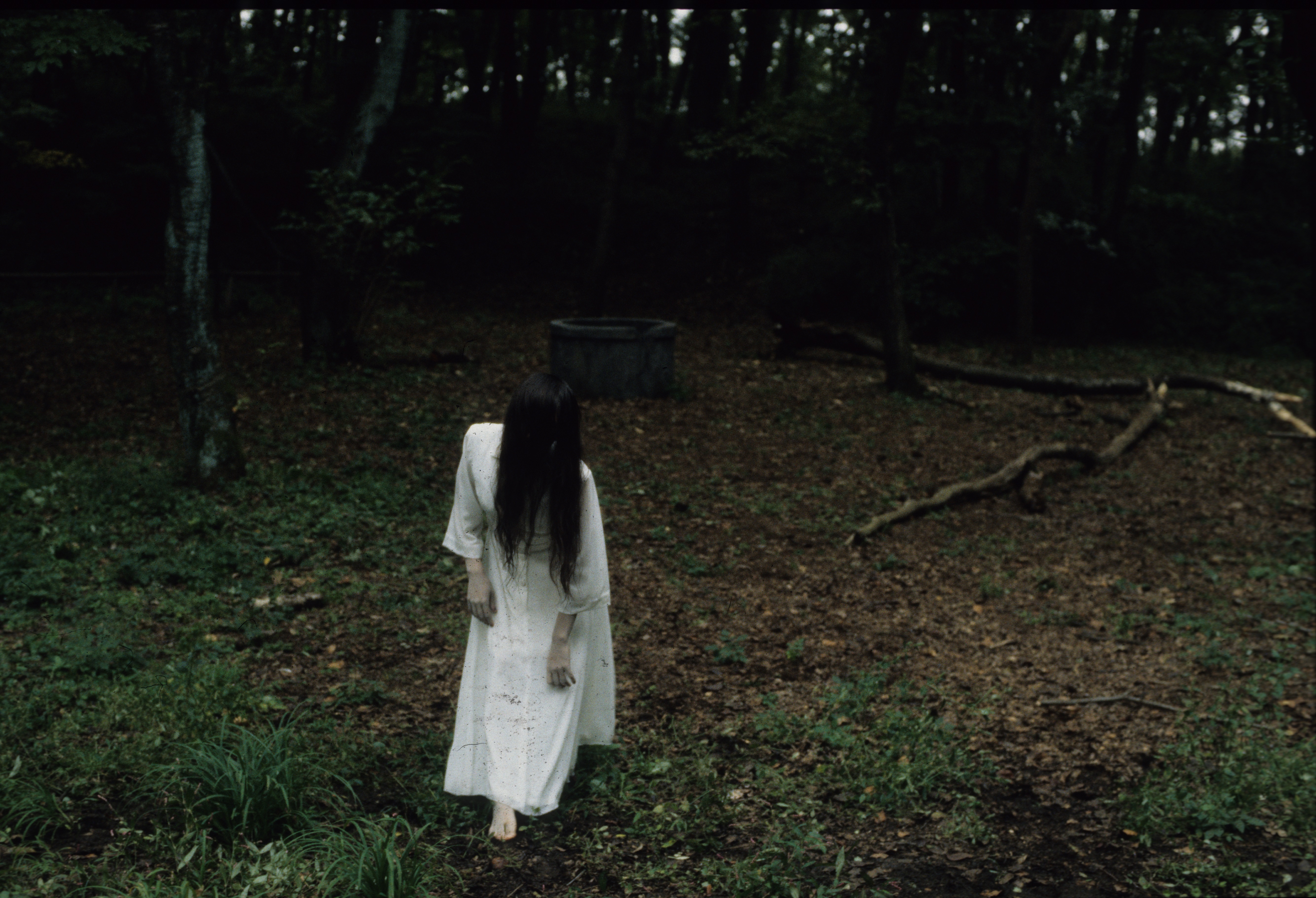
Classic J-horror from 1998 directed by Hideo Nakata and adapted from the novel by Koji Suzuki in which a journalist with a young son begins investigating a series of unexplained deaths among teens who had each watched a mysterious videotape.

Oct. 14, 7pm: Angel’s Egg

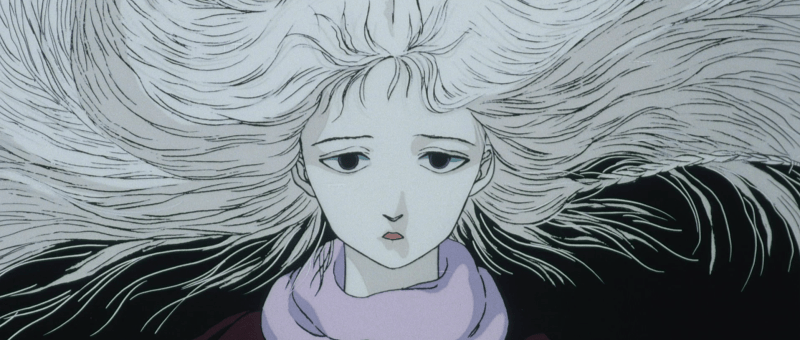
Experimental anime from Mamoru Oshii in which a young girl patiently nurturing a mysterious egg encounters a faithless man in a ruined world.

Nov. 4, 7pm: My Neighbor Totoro

Screening on 35mm.

© 1988 Studio Ghibli

The much loved Studio Ghibli classic in which two little girls discover a new world of wonders after moving to the countryside while their mother is ill in hospital.

The fall season runs Sept. 2 to Nov. 4 at Japan Society New York. Tickets priced at $15 / $12 students & seniors, and $5 Japan Society Members are on sale now via the official website and you can also keep up with all the year-round events by following Japan Society Film on FacebookInstagram, and Twitter.

Goodbye, Don Glees! (グッバイ、ドン・グリーズ!, Atsuko Ishizuka, 2021) [Fantasia 2022]

A diffident high schooler finds a new sense of confidence after a poignant summer adventure in Atsuko Ishizuka’s heartfelt coming-of-age anime, Goodbye, Don Glees! (グッバイ、ドン・グリーズ!). In many ways about finding direction in life, learning to live with grief, and making the moment count, the film is also a paean to male friendship as the trio at its centre develop new senses of security through mutual support while beginning to figure out what treasure it is they’re seeking in the further course of their lives. 

For Roma (Natsuki Hanae), a farm boy largely rejected by the other kids in the village, this summer is a little different. Not only is it his first as a high schooler, it’s also the first since his best and only friend Toto (Yuki Kaji) moved to Tokyo for high school and despite their previously close relationship it’s clear there’s a minor awkwardness in the distance that’s arisen between them since they’ve been apart while Roma has also added a third boy, Drop (Ayumu Murase), to their secret Don Glees friendship group. Now that he’s been living in the city, Toto finds the whole Don Glees thing childish and decidedly uncool while Roma is obviously keen to hang on to their shared history and childhood friendship. 

Their dilemmas may seem opposed but are in actuality very similar. Toto resents Roma for not having the courage to come with him to study in Tokyo where there are more academic high schools, choosing instead the safe option of attending a vocational school with a focus on agricultural education implying that he plans to stay in his hometown and take over the family farm. It isn’t immediately clear if it’s because this is what he wants to do with his life or if he is simply too afraid to strike out and try something different. Roma does indeed seem to lack confidence often remarking that he feels he’s not enough in some way or doesn’t have the right to chase after the things he wants. Unable to face his inability to tell his middle school crush Tivoli, who has since travelled to Ireland to study abroad, how he feels he ends up deleting his Instagram account to avoid being confronted with pictures of her exciting international life. Toto meanwhile is stressed out by his cram school lifestyle and newly uncertain in his decision making realising that he’s just been following the path his parents set out for him and wondering if he really wants to become a doctor after all. 

The mysterious Drop makes constant suggestions that he can’t really afford to think about the future and is living intensely in the moment. He is insistent on finding some kind of treasure, afraid of ending his life without resolving this one mystery and keen to ask both boys what it is they’d regret if the world were to end tomorrow. The quest takes on literal dimensions when the boys are accused (falsely) of starting a forest fire and set out in search of a drone they were using, technically illegally, to capture a local fireworks display hoping it will contain footage to verify their innocence but getting lost along the way and eventually sharing their fears and anxieties alone together under the night sky. It seems this new friendship is destined to end in unexpected tragedy, but as Drop is fond of saying sometimes all it takes is a little courage to make a jump and see things from a different perspective allowing Roma to gain the confidence in himself he’d been lacking to chase the things he really wants. 

A teen summer adventure movie, Goodbye, Don Glees! features lush animation of the Japanese countryside along with some enhanced CGI of nature in bloom captured forever via photograph which as Tivoli points out is like a freeze-frame in time trapping both the image and its accompanying emotions. That is perhaps what Roma learns, to make memories he can treasure when the moment ends while saying goodbye to something doesn’t mean it’s gone forever, it just exists in a different form. A warm and heartfelt tale of teenage male friendship and summer’s end, Goodbye, Don Glees! discovers a sense of the serene in the face of life’s futility through connections both momentary and eternal. 


Goodbye, Don Glees! screened as part of this year’s Fantasia International Film Festival and is in US cinemas from Sept. 14 courtesy of GKIDS.

US release trailer (Japanese with English subtitles)