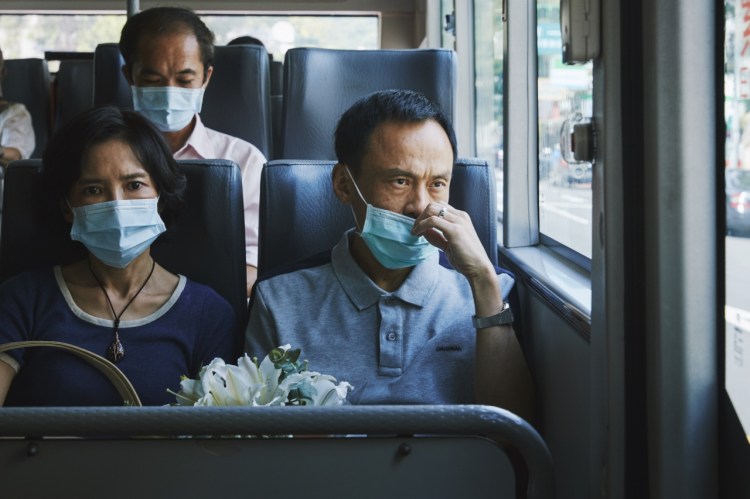
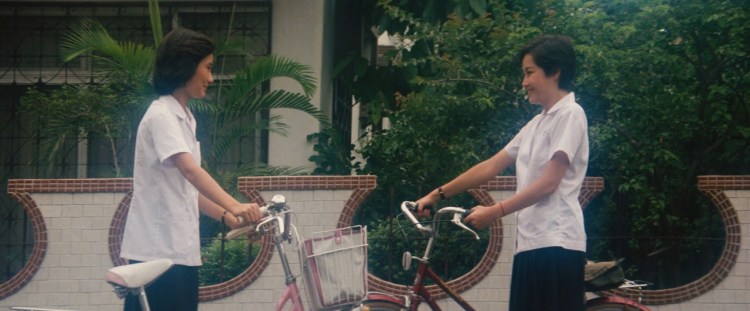
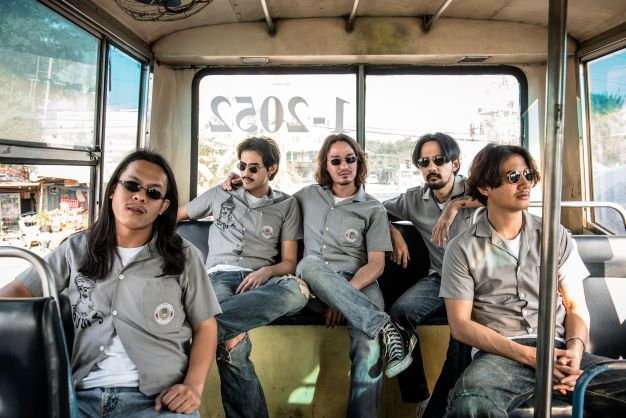
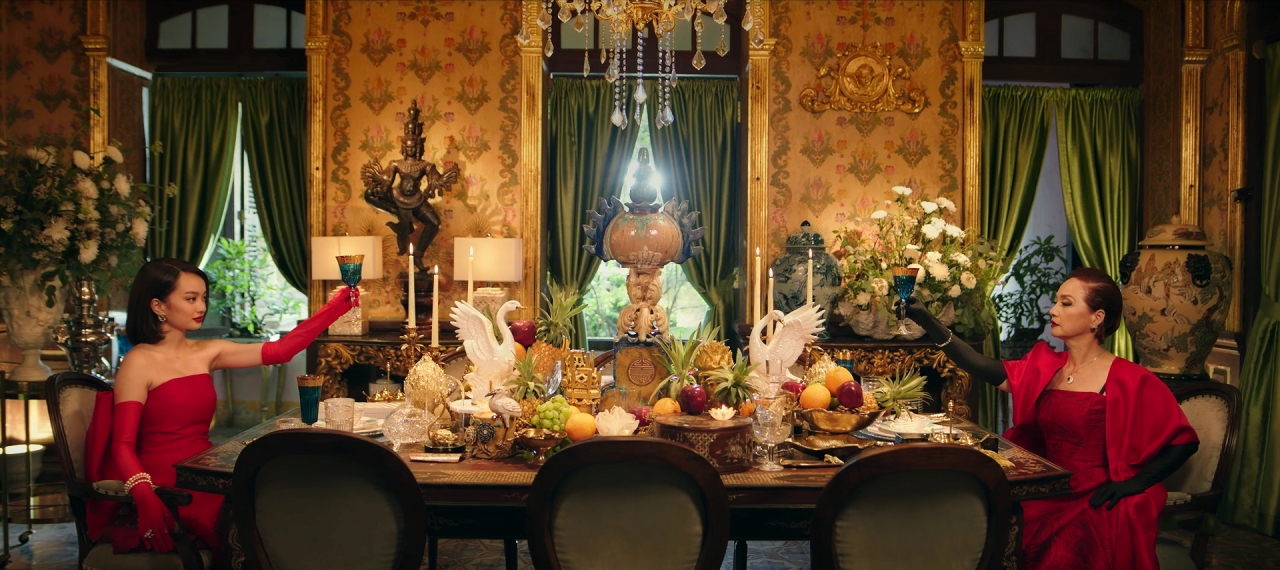
All U Need Is Love (總是有愛在隔離, Vincent Kok Tak-chiu, 2021)

All things considered, there are worse places to quarantine than a five star hotel especially if it’s free but then again forced proximity with those you love, or those you don’t, can prove emotionally difficult. An old school ensemble comedy, Vincent Kok’s All U Need Is Love (總是有愛在隔離) features a host of A-list stars each providing their talent for free in order to support the struggling Hong Kong film industry in the wake of the COVID-19 pandemic but as its name suggests eventually offers a small ray of hope that the enforced period of reflection may have fostered a spirit of mutual solidarity and personal growth. 

Kok opens, however, with a tense chase sequence as a shifty looking man runs from the authorities at the airport only to be picked up by the PPE-clad Epidemic Task Force who whisk him away to a secret location where he’s placed inside a weird bubble and interrogated by Louis Koo. Several more top HK stars including Gordon Lam fetch up in the bubble each implicating the Grande Hotel as the centre of of a coronavirus cluster at which point an order is given to place it under total lockdown requiring everyone inside to remain for a 14-day quarantine. 

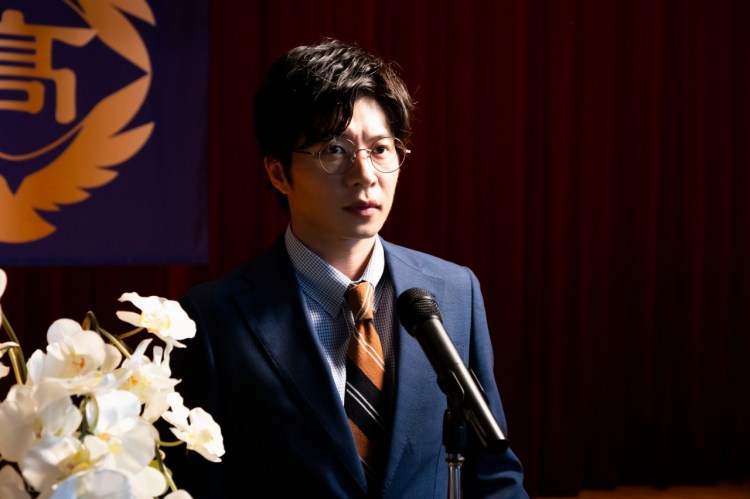
Essentially a series of intersecting skits, Kok’s ramshackle drama nevertheless has its moments of satire as the hotel chief takes to the stairs for an inspirational speech in which he frequently slips into English and bizarrely likens himself to the captain of the Titanic because we all know how well that went. He spends the rest of the picture trying to escape without anyone noticing while his dejected security guard/brother tries to bump him off. Meanwhile, two gangsters develop a homoerotic bromance while plotting how best to profiteer off the pandemic through smuggling anti-COVID paraphernalia just as panic buying takes hold on the outside. 

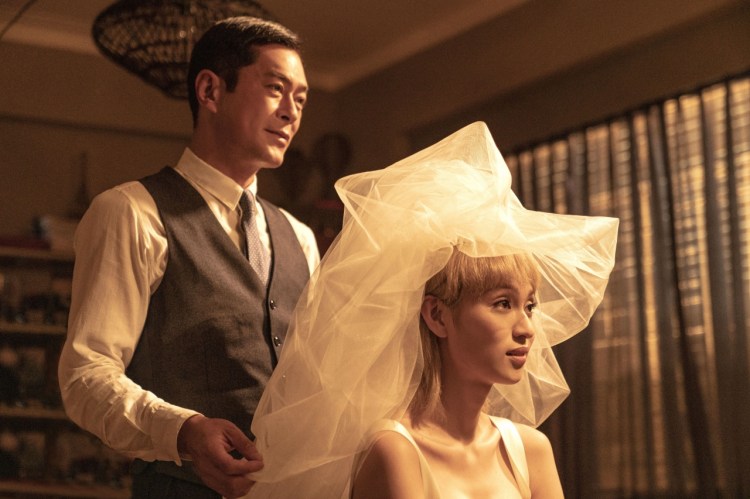
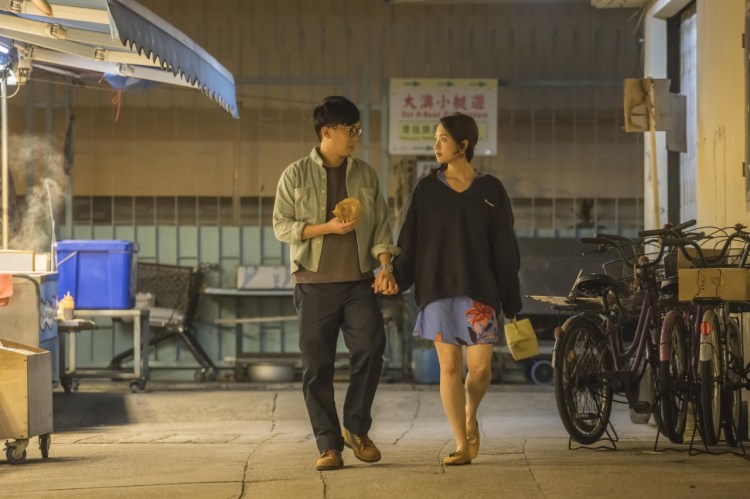
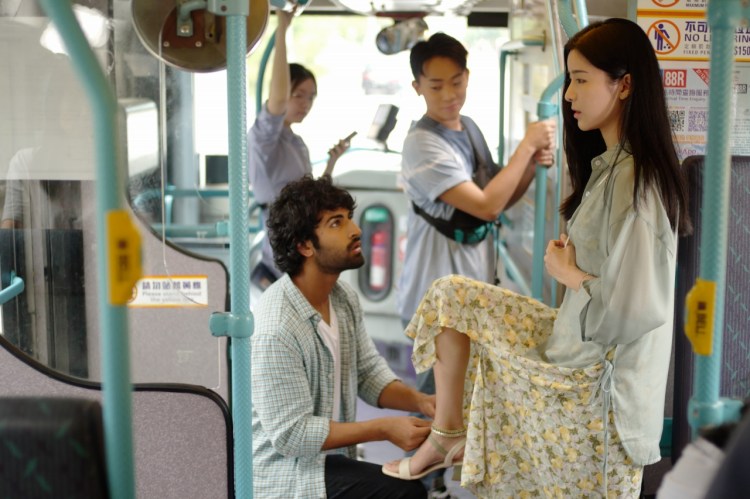
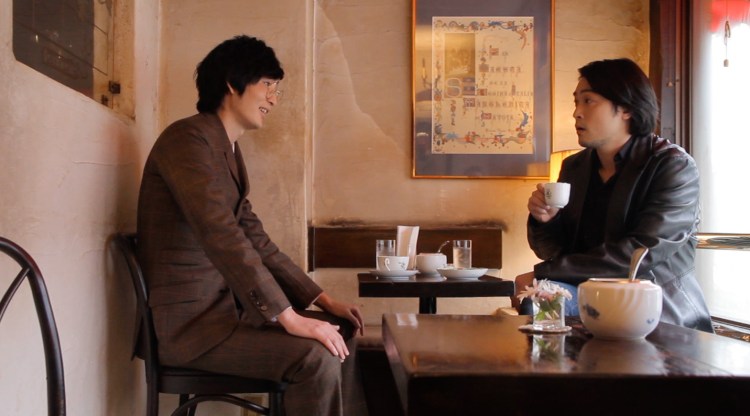
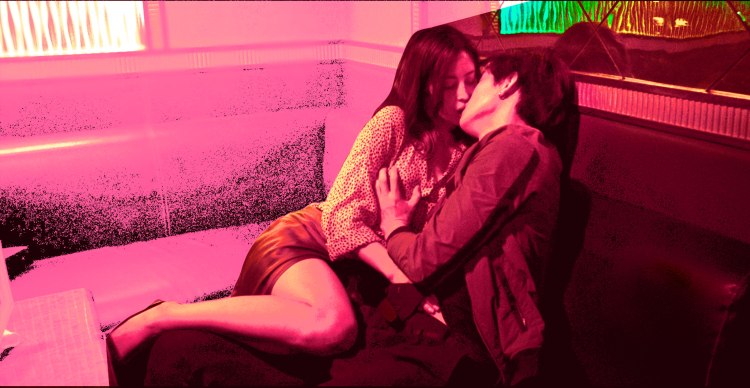
Nevertheless, it can’t be denied that All U Need Is Love is also guilty of some rather old fashioned, sexist humour particularly in the antics of a pair of old men (Tony Leung Ka-Fai and Eric Tsang reprising their roles from Men Suddenly in Black) and their minions who misled their wives in order to embark on a sexual odyssey only to have their plans both improved and then ruined by the quarantine order. Meanwhile, a young couple who were in the hotel preparing for their wedding banquet ironically scheduled for the last day of the quarantine find themselves at loggerheads as the man gets cold feet over his fiancée’s bridezilla micromanaging, and her father undergoes a total makeover while continuously watching Japanese pornography in his room. 

Watching it all, a little girl, Cici, becomes the moral voice of the pandemic innocently hoping that nature will continue to heal itself even after the sickness ends. It’s she who shows the gangsters the error of their ways in pointing out that if they steal all the anti-COVID equipment then they will end up being more at risk because no one else is protected, while she also softens the heart of the hotel’s cynical manager to the point that he too makes a lengthy speech about becoming a better person thanks to his experiences during in the pandemic. 

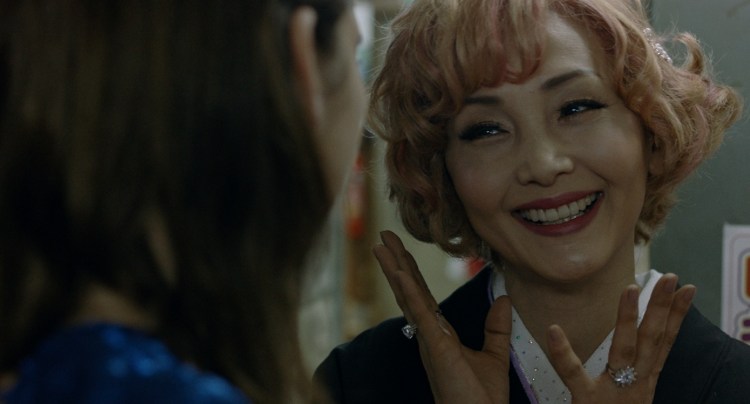
During their enforced proximity friends and strangers have indeed needed to rediscover their love for their fellow man as they band together in mutual solidarity waiting for their freedom. Culminating in an oddly uplifting wedding decked out with balloons and messages from friends and family played via iPad, Kok’s anarchic ensemble farce does its best to discover a silver lining among the fear and anxiety of the pandemic as it ironically brings people together through driving them apart. Along with his A-list cast, Kok throws in a series of movie parodies and pop culture references from an impromptu rendition of Baby Shark to a surprise appearance from the Landlady from Kung Fu Hustle as well as a suitably random cameo from Jackie Chan. Repurposing the traditional Lunar New Year movie, All U Need is Love is a classic nonsense comedy designed to lighten the mood in these trying times while celebrating the essence of Hong Kong cinema through, arguably, its most idiosyncratic of genres. 


All U Need Is Love streamed as part of this year’s New York Asian Film Festival.

Original trailer (Traditional Chinese/English subtitles)

Sun Above, Death Below (狙撃, Hiromichi Horikawa, 1968)

“Fighting is the only way I have to live my life” according to a hitman battling existential ennui in Hiromichi Horikawa’s Toho action B-movie, Sun Above, Death Below (狙撃, Sogeki). A starrier affair than the studio’s other forays into moody crime, Horikawa’s psychedelic exploration of a killer drawn to death nevertheless situates itself very much in the world of 1968 in which the hero’s attempt to escape his sense of emptiness through killing is directly linked to an increasing economic prosperity and its concurrent costs in the nation’s current geopolitical positioning. 

As if to signal this sense of societal anxiety, the first target Matsushita (Yuzo Kayama) knocks off is sitting in the back row of the last carriage on the Shinkansen out of Tokyo. His next job, however, will apparently be more complicated. A criminal gang want him to take out “five or six” targets at a specific location in order to intercept a fortune in gold smuggled by, as later becomes clear, an international Chinese gangster, though the men at the waterside greet each other in Arabic. The hit does not go entirely to plan but Matsushita is later able to bring the situation under control allowing the gang to get their hands on the gold. The smugglers, meanwhile, are obviously unhappy with this turn of events and send in their best hitman (Masayuki Mori), who permanently travels with a blonde companion, to take back what’s theirs. 

Matsushita is a killer for hire so he doesn’t really care very much about the gold and is even annoyed when the gang try to pay him with it, correctly surmising they didn’t really expect him to succeed so haven’t bothered bringing any cash. As he explains to love interest Shoko (Ruriko Asaoka), he doesn’t really care about anything. He simply shoots at the best target, man, with his favourite gun. He kills to feel alive, explaining that the intense concentration in which he becomes one with the gun as if it were an extension of his own body allows him to overcome his sense of existential dread which is why he’s so ice cool all the time. 

A fashion model obsessed with rare butterflies and the paradise to be found New Guinea Shoko dreams of a time in which they can become one under the sun, envisioning a future in which Matsushita has become friends with all the creatures of the forest. Yet as Matsushita tells an old friend, Fukazawa (Shin Kishida), running a secondhand gun shop near a US army base as a front for his revolutionary activities, he has no dream or ideal and knows nothing other than killing. Whereas as his friend is apparently working for some kind of never quite explained but seemingly left-wing/anarchist cause, Matsushita simply lives out his days of emptiness on some level knowing he’ll probably never make it to Shoko’s New Guinean utopia. 

Fukazawa nevertheless hints at the political instability all around them, firstly agreeing to pawn a gun for a pair of Americans after beer money, and then by handing Matsushita an AK47 apparently smuggled back from Vietnam via the American base. Matsushita’s sense of ennui is born of this growing unease with empty capitalistic consumerism and a concurrent sense of powerless in Japan’s ongoing complicity with American foreign policy in Asia. Displaying a sense of Sinophobia familiar from many similar films of this era, the big boss turns out to be Chinese while many that surround him are also from outside of Japan even if Matsushita’s rival is just a slightly older, crueller version of himself. 

One of Toho’s more serious crime dramas, Horikawa often veers into experimental territory with his psychedelic butterfly imagery Matsushita apparently having some kind of vision while experiencing carnal ecstasy that equates climax with literal gunshot, while his usage of stock footage featuring the New Guinean indigenous community along with an out of place blackface tribal dance performed in a hotel room clearly display some outdated attitudes otherwise unacceptable and potentially offensive in the present day. Nevertheless, Sun Above, Death Below largely lives up to its hardboiled title, the Japanese “Sniping” perhaps also hinting at the various ways Matsushita eventually strays into the crosshairs of his own inevitable destiny. 


Original trailer (no subtitles)

Choji Snack Bar (居酒屋兆治, Yasuo Furuhata, 1983)

Beginning his career at Toei, Yasuo Furuhata is most closely associated with tough guy action films forging a strong and enduring relationship with the genre’s key star Ken Takakura through their work on the New Abashiri Prison series. From the late ‘70s however he began to transition further towards the realms of manly melodrama with a series of films which often starred Takakura as a man struggling to adapt to life in modern Japan such as the guilt-ridden policeman of Station or the conflicted former yakuza of Yasha. Arriving between the two and adapted from a novel by Hitomi Yamaguchi, Choji Snack Bar (居酒屋兆治, Izakaya Choji) is in someways much the same casting a typically stoic Takakura as an intensely noble man whose values are increasingly at odds with the world in which he lives while shifting away from the realms of manly action towards a more somber contemplation of the broken dreams of post-war youth. 

Eiji (Ken Takakura), known to all as “Choji”, is a happily married father of two who gave up his job in shipping to open a bar selling small eats in a Hakodate. He and his wife Shigeko (Tokiko Kato) have been planning to expand the business by opening a larger location near the docks but Eiji is dragging his feet largely it seems because the place found for him by childhood friend Kawahara (Juzo Itami) is too close to another bar run by an old man who helped him when he first started out so he’s loathe to risk infringing on his livelihood. Meanwhile, the central drama in town in the mysterious disappearance of Choji’s childhood sweetheart, Sayo (Reiko Ohara), who married a wealthy ranch owner but has long been trapped in an unhappy marriage she has several times failed to escape. Sayo’s disappearance coincided with a fire at the ranch which is suspected to have been started deliberately the assumption being that Sayo is responsible. 

The ironic disappearance of Sayo forces Choji into a reconsideration of his life choices, something his middle-aged friends also find themselves experiencing if for various different reasons. Choji was once a high school baseball star dreaming of turning pro but his hopes were dashed after an injury forced him to leave the sport thereafter working in an office at the docks but later resigning rather than accept a promotion that would mean he’d suddenly be the boss to his former friends. The bar is his way of being his own man, no one’s boss but his own, though his decision was not universally respected among his friends and in fact came as something of a shock to Shigeko who consented to an arranged marriage partly in search of the typical salaryman life. Most of the other men in town, however, struggle to keep their youthful dreams alive or to find accommodation with the way their lives are now. Inoue (Eiji Misato), for example, is obsessed with cabaret singing, spending all his time in karaoke bars often wearing elaborate costumes and makeup. Childhood friend Iwashita (Kunie Tanaka) even wonders if he’s gone “mad” after taking him to task for neglecting his family on discovering that he’s converted a docked boat into a tiny private cabaret space complete with a sound system and lighting as well as a small seating area for spectators who presumably have not yet materialised. 

This is perhaps in a way a symbol in itself of Japan’s new economic prosperity, later thrown into stark contrast by Choji’s explanation that he and Sayo broke up because of their mutual poverty he nobly pushing her to marry a wealthy man so at least one of them could be happy. Happy is however something Sayo has never been, later paying a short visit to Choji during which she blames him for his “cowardice” suggesting that he is largely responsible for the misery of her life in failing to fight for their love, giving up too easily on a distant happiness which is something he later cautions a young baseball player not to do. The police meanwhile accuse him of complicity, implying the pair knew Sayo’s husband had TB and thought he’d die soon enough after which they’d inherit his money and stay together, consequently assuming the “arson” was an attempted murder. 

The irony is that Choji is far too noble to have ever considered such a thing, something demonstrated by his continuing righteousness in refusing to take up Kawahara’s offer of cheap and lucrative new premises because it would mean betraying his former mentor, refusing to condemn his former teacher’s shock marriage to a woman 30 years his junior, and eventually taking Kawahara to task for his callous comments over the death of friend’s wife. Rival cabbie Akimoto (Masao Komatsu) was forever joking that his wife would die before him and sleazily flirting with young women, but went into debt in order to buy her an elaborate funeral altar and is completely devastated by her loss while living with his three children in a noticeably rundown apartment. As Choji puts it, Kawahara’s broken dream is in no longer being the big boss among the boys as he was in their high school days, fuelling his sense of middle-aged male frustration into embittered drunken violence. Yet everyone is always telling Choji he is being unnecessarily “good”, that he should stop thinking about doing the right thing and put himself first by accepting the offer to relocate the bar because business is business. 

Sayo too is trapped in the past unable to accommodate herself with the way her life turned out, an ironic casualty of Choji’s goodness clinging to her broken dream of youth. These now middle-aged teens of the post-war era are in a sense victims of their age, denied the sense of possibility the youth of today might enjoy but equally unable to step fully into the contemporary era of economic prosperity which some feel has become increasingly amoral and unkind. Nevertheless, as Shigeko puts it “no one can take away what a person carries in their heart”, Choji manfully retaining his nobility while literally burning the image of the past but perhaps carrying it with him as the other men carry the shards of their broken dreams some with more nobility than others.  


Original trailer (no subtitles)

Ten Months (십개월의 미래, Sun Namkoong, 2020)

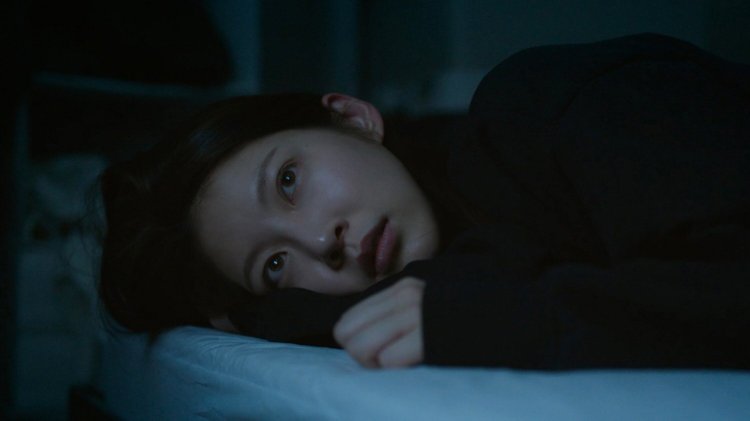
“I’m still the same person, exactly the same one as a few months ago, and everyone’s suddenly mad at me like something’s wrong” the heroine of Sun Namkoong’s Ten Months (십개월의 미래, Sib Gaewolui Milae) complains as an unexpected pregnancy sees fit to cause untold “chaos” in her personal and professional lives. Mirae’s (Choi Sung-eun) predicament exposes a host of double standards in a still conservative, patriarchal society in which both giving birth and not is somehow “selfish” while a pregnant woman, especially an unmarried one, is almost a taboo expected to hide herself away until she emerges from her chrysalis as a “mother” having entirely shed her old identity. 

The reason Mirae’s pregnancy comes as such a surprise to her is that, presumably in part in order to avoid exactly this sort of situation, she can’t remember having been intimate with her diffident boyfriend Yoonho (Seo Young-joo) for the past few months. After a little thinking he realises it probably happened during a drunken fumble after a friend’s birthday party Mirae had clean forgotten. In any case, Mirae is not the sort of woman who’d ever harboured an intense desire to become a mother, it just wasn’t something particularly on her radar, and in many ways it couldn’t have come at worse time. While Yoonho is unexpectedly excited by the news of his impending fatherhood and immediately proposes, Mirae isn’t so sure. 

The problem is, in the Korea of 2018, she doesn’t have a lot of options. In shock at the doctor’s office she asks about an abortion but is reminded it’s illegal outside of a few mitigating circumstances such as rape or incest (abortion was finally decriminalised only in 2021), and while there are apparently “safe” places where it’s possible to have the procedure done illicitly they are extortionately expensive not to mention carrying a hefty fine if you get caught. Mirae is unconvinced she wants to keep the baby, but she’s not the sort of person who finds it easy to contemplate breaking the law and continues to vacillate even while reminded that even the illegal clinics have a cut off point at which it would become unethical to perform a termination. 

Meanwhile, she’s also worrying what effect her pregnancy may have on her career. Her father, who somewhat stereotypically opened a friend chicken shop after retiring, didn’t approve of her decision to leave a well-paying job at a major company to join a start up even if Mirae believes they’re “going to change the world”. It doesn’t help that Yoonho is technically unemployed as an aspiring entrepreneur trying to sell his prototype handsfree smartphone accessory in the shape of a cute dragon meaning her income is all they have to live on. When she’s told the company is relocating to Shanghai it throws her dilemma into stark relief while also exposing Yoonho’s latent conservatism as he reacts with extreme negativity to the idea of going with her, pathetically attacking Mirae for not supporting his project while eventually reminding her she’s about to be a “mother” as if implying she no longer has the right to make such subjective decisions. By the look on his face he knows he’s gone too far and said the wrong thing, but it’s too late. 

When she tells her boss that she’d like to take the job but also needs him to be aware she’s pregnant, he too becomes indignant. Firstly confused because Mirae is not married, her boss then withdraws the offer and declares himself hurt, “betrayed”, seemingly annoyed that Mirae doesn’t even seem “sorry” for all the inconvenience she’s causing him. When she calls him on his sexism, he blames her for making him out to be the bad guy when he’s doing nothing illegal because shockingly it’s not illegal in Korea to fire someone for being pregnant even if he seems to know it’s not a good look. She begins to feel foolish that she invested so much emotionally in what she saw as a shared endeavour only to be pushed out as if she’s being punished for some kind of transgression just for the audacity of having a child sending a clear signal that motherhood is still deemed incompatible with the workplace.  

Yoonho’s overbearing father seems to be of much the same opinion, her soon-to-be mother-in-law unironically gifting her a frumpy apron while the conservative couple begin to pressure her to move in with them at their pig farm where they’ve already managed to pressgang the largely emasculated and previously vegetarian Yoonho into working. Unsure about the baby, Mirae was even less convinced by the necessity of a shotgun marriage especially as the emotionally immature Yoonho for all of his latching on to the idea of fatherhood to escape the reach of his own father grows ever more resentful towards his overbearing parents while entirely unable to stand up to them. 

And then, there’s all the other stuff that no one really wants to talk about like the possibility of dying in childbirth which is not so much a thing of the past as most people assume even if much less likely, while Mirae’s previously 100% together friend seems to be displaying the signs of post-natal depression or at least infinite exhaustion with her husband apparently having skipped town on a business trip leaving her all alone with their newborn baby. Mirae couldn’t see why some people were so desperate to have children, but gradually comes round to the idea transgressively choosing to raise her child alone no matter the “chaos” the unplanned pregnancy has caused to her life as she knew it. She may have feared being “erased”, instructed by Yoonho’s father that her life is no longer her own and she now exists solely in service of her child, but chooses to see the birth as a new beginning not least for herself as she embarks on this new phase of her life very much on her own terms and of her own free will. 


Ten Months screened as part of this year’s New York Asian Film Festival.

Original trailer (no subtitles)

Harmful Insect (害虫, Akihiko Shiota, 2001)

“We’re only in seventh grade, why does Sachi have to suffer so much?” a well-meaning friend eventually asks as she comforts the heroine of Akihiko Shiota’s Harmful Insect (害虫, Gaichu), even as her mother turns away from her too fragile herself to be of much use. Sachiko (Aoi Miyazaki) does indeed suffer, continually victimised by the world in which she lives and having that victimisation used against her, rejected by her peers and almost blamed for the misfortunes which befall her as if she were the one at fault simply for existing. 

Shortly after the opening scene in which 13-year-old Sachiko’s mother (Ryo) attempts to take her own life, we see the girls at school gossiping about her while she’s still in earshot not entirely sympathetic as they remark on the fact her father left the family while implying that her mother is some kind of broken-hearted love fool driven to suicide over the loss of a man. Sachiko quickly becomes the woman of rumour, but in a motif which will be repeated the teens talk but never listen swapping stories between themselves and embellishing them as they go. It’s uncertain how much truth there is in the legend of Sachiko but it’s clear that they disapprove of her, adopting a puritanical moralising mindset in which they simply shun her for being something other. Only Natsuko (Yu Aoi) tries to stop them, reaching out to Sachiko even as Sachiko rejects her but is ultimately able to offer little help when even Sachiko’s mother is ill-equipped to protect her. 

The truth is that Sachiko is never safe anywhere. Everywhere she goes, she becomes a target for predatory men of all ages. A schoolboy on a bike harasses her by asking childish questions about her period, while sleazy salarymen repeatedly proposition her for sex, and even her mother’s new boyfriend in a doubly destructive act of betrayal cannot be trusted. She says little and keeps to herself, her silence and her isolation a kind of defiance and defence mechanism. After dropping out of school, she starts hanging around with a drop out 20-something (Tetsu Sawaki) and his homeless friend (Koji Ishikawa) who seems to have learning difficulties, discovering that they support themselves through staging accidents for compensation money. She considers doing the same thing, not for the money but craving the thrill of a near death experience only to find herself unable to go through with it. 

Meanwhile, she continues a letter-based correspondence with her former teacher with whom she is rumoured to have had an affair. Mr. Ogata (Seiichi Tanabe) later resigned for obvious reasons and now has a low-grade job at a nuclear plant. He answers her letters when he can, mostly offering paternalistic platitudes but like her absent parents is unable to provide her with the guidance she is seeking. What she seems to be looking for is the kind of parental input that would allow her to feel protected, safe, but no one is really there for her. She resents her mother’s emotional dependency and tendency to involve herself with unsuitable men, but worries she’s becoming the same striking out for an early independence but discovering only danger and futility. 

She asks herself if vice is the essence of human existence, then is goodness only the quality of not being entirely bad? Her view of the world already coloured with nihilistic despair. The men who misuse her feel they have no real need to justify their actions, but simultaneously blame her for tempting them though she does nothing other than exist remaining silent in order to avoid attracting attention. Then again even she doesn’t quite understand, asking her teacher why it is he can’t forgive himself simultaneously accepting that what happened between them, whatever that was, was wrong enough to warrant forgiveness but unable to grasp why he cannot let go of his guilt, continuing with this half-hearted correspondence unable to grant her the care that she is seeking. Wandering between flashbacks and brief vignettes of her life, Shiota captures Sachiko’s sense of total aloneness as even her sole source of sanctuary is taken from her leading to an explosive act of partially self-destructive violence that sends her forever on the run. The choice she makes at the film’s conclusion, be it in submission or defiance, is hers alone but in its own way a tragedy dragging her deeper into dangerous despair with escape an ever distant possibility.


Harmful Insect streams in the US until Dec. 23 as part of Japan Society New York’s Flash Forward series.

Original trailer (no subtitles)

Images: ©2002 NIKKATSU / TBS / SONY PCL

The Demon (鬼畜, Yoshitaro Nomura, 1978)

By the late 1970s Japan had achieved its economic miracle, but it had yet perhaps to deal with the traumas of the immediate post-war era. Once again adapted from a story by Seicho Matsumoto, Yoshitaro Nomura’s shocking social drama The Demon (鬼畜, Kichiku) explores the radiating effects of orphanhood and economic privation on the family unit producing as a rather judgemental policeman eventually puts it a generation of parents who don’t know how to raise children and may even lack the inclination to do so even if thankfully not to the extent of the couple at the film’s centre.

Nomura opens with one of his trademark lengthy train sequences following a harried mother and her three children travelling in the sweltering heat from the countryside to the city as she makes a last, desperate attempt to remind the father, Sokichi Takeshita (Ken Ogata), of his responsibilities. Once a successful businessman, Sokichi has become financially ruined after a fire destroyed his print shop and no longer has the means to maintain a second household for his mistress and children at a discrete distance from the home he shares with his wife, Oume (Shima Iwashita). As Kikuyo (Mayumi Ogawa) points out to him, she is unable to support herself economically while caring for the children but he has little answer for her especially once the previously oblivious Oume overhears their conversation. After a series of heated arguments, Kikuyo makes the radical decision to simply abandon the children with their father and thereafter disappears having vacated her previous home and left no forwarding address. 

A part of the problem in the Takeshitas’ marriage had been that they have no children of their own, Sokichi remarking to Kikuyo, whom he met while she was working in a traditional teahouse where he used to take clients, that he had always wanted a child. Conventional gender roles have in a sense been reversed, Oume angrily insisting that her husband would never have made any money had not been for her while it appears that she is more or less in charge of their business affairs and he is the one largely looking after the children to the extent that they are “looked after”. To Oume, the siblings are partly a reminder that her husband betrayed her with another woman but also an attack on her femininity in reminding her that she was unable to become a mother while someone else has given birth to Sokichi’s children. For all of these reasons they are to her children which cannot continue to exist. She undermines Sokichi’s attachment to them by frequently questioning their paternity pointing out that they share little physical resemblance while reminding him that he met Kikuyo through her occupation on the fringes of the sex trade. 

Her mistreatment begins as neglect, refusing to feed or bathe “a stranger’s” child and then graduates to physical violence stuffing food into the mouth of Sokichi’s infant son Shoji after catching him playing with the dinner bowls. Yet when Sokichi finds her endangering the baby while moving heavy papers from a shelf he does nothing, suspecting his wife has become a threat to the children’s safety but also as she later implies wanting to be rid of them himself. The couple could, of course, have simply surrendered the children to an orphanage (it remains unclear how exactly their existence has been registered), but ultimately choose not to as if they wanted to obliterate the idea of them as if they had never been born. 

It may be tempting to view Sokichi as a helpless victim casting Oume as terrifying Lady Macbeth intimidating him into destroying the evidence of his indiscretion, but even if it was Sokichi “looking after” the children, it is finally he who must also “take care” of them. During his abandonment of his second child, 3-year-old daughter Yoshiko (Miyuki Yoshizawa), he takes her into a toy store where a group of boys are playing with remote control cars demonstrating that this is no longer an age of economic privation and that in the end the reason for the children’s second abandonment is not primarily financial even if Sokichi has been in a sense humbled, deluded into a false sense of security in his business success only to be robbed of the era’s increasing prosperity through a freak accident. “Everybody’s struggling” he eventually reflects as his assistant (Keizo Kanie) informs him that he is leaving, ironically to take better care of his ageing parents and small children presumably in a less toxic environment.

Yet as we discover the reasons for Sokichi’s sense of displacement stem back to his own post-war childhood, apparently born out of wedlock never knowing his father and then abandoned by his mother, bounced around between relatives all of them poor who viewed him as nothing more than a burden until effectively indentured to a print shop at ten years old by an uncle who stole his advance pay and once again abandoned him. These kinds of familial disruptions whether caused by a literal orphanhood or the economic constraints of the immediate post-war period have produced according to the moralising policeman at the film’s conclusion a generation of people who do not know how to parent because they were not effectively parented themselves many of whom go on to have children perhaps accidentally but have no idea how to relate to them, frightened of the responsibility or resentful of the “burden” as Sokichi eventually seems to have become. 

Nevertheless, Nomura ends on a note of ambiguity, the goodness in eldest son Riichi (Hiroki Iwase) emphasised as he refuses to name his father or reveal his abuse, an action interpreted by the police as an attempt to protect Sokichi but could equally be a trauma response owing to have been returned to him by the police once before. In any case the film asks if in being rescued from his toxic family circumstances, effectively orphaned, Riichi will simply end up continuing the cycle of displacement, another man unable to become a “father”. But then again, what of Kikuyo who branded Sokichi “inhuman” yet left her children with him and disappeared, perhaps as a neighbour implies with another man? A sympathetic policewoman (Shinobu Otake) reassures Riichi they’ll look for his mother, but as she too abandoned him would that actually help? The jury seems to be out on whether this sense of displacement, in essence the integrity of the traditional family, can ever effectively be repaired even as an increasingly consumerist society continues to erode its foundations. 


The Demon screens at the BFI on 12/19 December as part of BFI Japan. It is also available to stream in the US via Criterion Channel.

Original trailer (no subtitles)

My Atomic Aunt (波の向こう, Kyoko Miyake, 2013)

“I can’t let TEPCO ruin my life” the heroine of Kyoko Miyake’s personal documentary My Atomic Aunt (波の向こう, Nami no Mukou) eventually asserts, explaining that when you have no more tears to cry then you become defiant. Having lived in London for 10 years prior to filming the documentary, a lack of defiance was something that had initially interested Miyake, wondering if she’d simply been away too long no longer understanding why everyone in her family’s hometown of Namie in Fukushima continued to refer to the Tokyo Electric Power Company in such affectionate terms. Then again, as her aunt Kuniko points out before losing her patience, “anger won’t get us anywhere”.

Returning to Japan soon after the 2011 earthquake and tsunami, Miyake details her own relationship with Namie, rendered uninhabitable after the Fukushima nuclear disaster, during her opening voiceover describing it as a warm and nostalgic place marked by a sense of rural tranquility. Nevertheless through making the documentary she comes to question both herself and the town, wondering why it was that people were so keen to have the plant come when the prevailing wisdom of her own generation was anti-nuclear and wary of duplicitous heavy industry. As her aunt and her friends reveal, however, post-war Namie was a poor village where farmers often had to leave for city jobs over the winter to make ends meet. Some grew envious of other local towns which had become economically prosperous thanks to corporate investment while others remained sceptical. Those who refused to sell their land for the development of another nuclear plant were harassed into submission by those convinced of its benefits, while TEPCO was keen to invite the local community to inspect existing plants to prove that they were safe. 

An awkward and in fact incredibly sexist propaganda video targeted at local wives and mothers demonstrates that safety was still an issue as late as the ‘90s, a company representative ominously claiming that the plant has been designed to withstand a tsunami before adding “we will never betray your trust”. Many residents still want to believe in TEPCO’s promises, sure that they will somehow fix what is broken even while many of them are trapped in temporary housing with no idea when or if they’ll be allowed to return home. Aunt Kuniko tries to stay cheerful, bored with trying to kill time having previously devoted herself entirely to work. Miyake describes her aunt as a feminist pioneer who showed her how to be glamorous and successful while also having a rich family life. Ironically enough, Kuniko ran both a wedding parlour and a funeral home right next to each other with a bakery in-between. She wanted her children to take the businesses over, but her three sons have already moved on, one buying an apartment and starting a business of his own far away without saying anything at all about it to her. 

The tsunami disaster has deepened a generational divide with the young leaving the area to make new lives elsewhere while as one old lady puts it the elderly are left behind with nothing to do but laugh. These people haven’t just lost their homes, they’ve lost their hometown, in a sense orphaned and free floating in a Japan struggling to find space for them as the heartrending echoes of plaintive folksong Furusato make clear. Forced to accept they may never be able to return, Kuniko looks for new premises but only for her funeral home conceding that there’s not much future in the wedding business, with all of the youngsters gone there’s no one left to get married. “There’s no such thing as absolute safety” she laments, regretting having been duped by TEPCO and the dubious promises they sold even as they positioned themselves as the driving force of the post-war economic miracle. The town felt proud by proxy that the energy they generated went into rebuilding the country, but as Miyake admits as long as the lights stay on in Tokyo no one cares about Fukushima or about the people still living in temporary accommodation caught in a never-ending limbo waiting for someone to tell them what they’re supposed to do now that everything they’ve ever worked for or built is lost in an instant. 

While her husband remains somewhat sympathetic to TEPCO, arguing that the problem isn’t nuclear power but safety, Kuniko begins to lose her patience taking part in protest marches against the plant while trying to salvage what she can from her old life. Miyake bookends the film with images of post-Fukushima Namie now an eerie ghost town, pastries still sitting in Kuniko’s bakery the area’s timelessness ironically mirroring Miyake’s description of it in her childhood memories as a kind of time-warp to post-war Japan from bubble-era Tokyo. An elegy for a community erased, Miyake’s quietly angry documentary takes aim at indifferent government and corporate greed, but finds also a stoical sense of endurance as Kuniko waters her abandoned flowers and prepares to start again. 


My Atomic Aunt streams in the US until Dec. 23 as part of Japan Society New York’s Flash Forward series.

Muddy River (泥の河, Kohei Oguri, 1981)

The post-war era refuses to die in Kohei Oguri’s heartbreaking exploration of childhood friendship and the costs of experience, Muddy River (泥の河, Doro no Kawa). Adapted from the novel by Teru Miyamoto and situating itself in the Osaka of 1956, Oguri’s realist drama takes place at a moment of transition not only in the life of the young hero but also of the nation which was at long last beginning to leave post-war privation behind thanks to increasing economic prosperity. Yet for men like young Nobuo’s father Shinpei (Takahiro Tamura), the traumas not only of the war itself but its aftermath will not be so easy to escape. 

A shy child who often wets the bed, 9-year-old Nobuo (Nobutaka Asahara) lives with his parents Shinpei and Sadako (Yumiko Fujita) above a small riverside noodle bar mainly frequented by sailors and workmen such as Shioda (Gannosuke Ashiya), a regular who pulls a horse and cart for a living. Nobuo can’t stop staring at Shioda’s ruined ear, presumably a battlefield injury though the avuncular gentleman tries to raise his spirits with false cheerfulness explaining that he’s seen the writing on the wall and the days of cart pullers are coming to an end. He jokes about giving his horse to Nobuo as a pet though obviously he has no need for or ability to keep a horse, explaining that he’s going to buy a second-hand truck so he won’t be left behind in the race for modernity. Unfortunately, however, as Nobuo follows him out Shioda’s cart gets stuck in the mud. Somewhat bluntly he violently beats the horse to make him free it, but the cart ends up blocking the bridge and the horse is spooked by oncoming traffic. Crushed by his falling load, Shioda is pulled under the wheels and killed, his hopes for the future dashed while his wife and child are left without economic support. 

Emulating the visual imagery of silent cinema, Oguri frames this sequence perfectly with an inescapable anxiety that captures the inevitability of the moment. This is Nobuo’s first glimpse of death, running confused back to his father to tell him that the cart man’s dead, Shinpei at first not quite comprehending but later reflecting that he was like him another casualty of the post-war era as if his death were merely delayed remembering that he’d once said the war had already killed him and so he’d never die again. On an awkward train journey Shinpei opens a newspaper and reads that “the post-war period is over”, but of course for him it isn’t and perhaps never will be. Reflecting on the last 10 years of his life, he wonders if it was worth it, there must be many people who think it would have been better to die in the war than suffer as they did afterwards. Young Nobuo, born to him in his 40s, is his only achievement. Sadako meanwhile harbours her own guilt in feeling as if she wronged another woman with whom Shinpei had previously been involved after the war by stealing him away and building this life together in burned out Osaka which, while far from perfect, is comfortable enough and happier than most. 

That Nobuo learns for himself when he befriends another boy staring at the abandoned cart. 9-year-old Kiichi (Minoru Sakurai) and his sister Ginko (Makiko Shibata) live on a houseboat recently moored opposite, something which Nobuo finds unusual and mysterious but not itself bad. Still innocent and too young to have incorporated moral judgement, Nobuo simply befriends the other boy bonding over a strange tale of a monstrous carp in the river though perhaps also feeling sorry for him on noticing his ragged clothes and the holes in his shoes. On visiting their houseboat, he only hears only the voice of Kiichi’s mother Shoko (Mariko Kaga) a mysterious disembodied presence who lives in a separate area of the boat accessible only via a different entrance. When she instructs Kiichi to give him some raw sugar and tell him not to come back too often, he takes it that he’s unwanted later confused when his father tells him that it’s fine for his new friends to visit but he shouldn’t go near the boat after dark. 

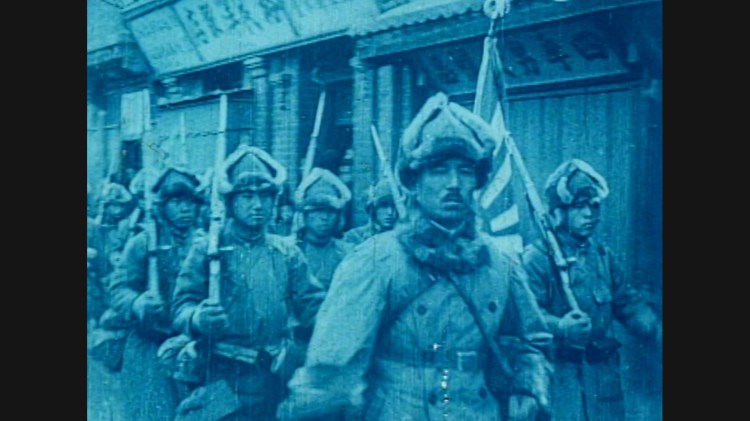
Understanding people, neither Shinpei or Sadako, instantly grasping the situation, reject the family because of the stigma of sex work realising that people do what they have to to survive and in any case it isn’t the children’s fault or responsibility. On hearing Kiichi enthusiastically singing an old imperial song about losing friends in Manchuria, Shinpei begins to feel a kinship with his late father as another old soldier claimed by the muddy river of the post-war society. Like the cart man, and an old fisherman Nobuo witnessed “disappear” from his boat never to be seen again, he was simply a casualty of the times one of many unable to enter the new society promised by rising economic prosperity. Shinpei fears he may also be one of these men, left behind unable to break free of wartime survivor’s guilt and the traumas of what came afterwards. He also disappears from his son’s life abruptly and without warning if only temporarily, but accidentally deserts him at the time he needs him most allowing his fragile new friendship to fracture as the two boys fatefully return to the boat after dark and Nobuo encounters a loss of innocence on several levels Kiichi realising that something is now broken between them. 

Something is perhaps broken in the times, the end of Nobuo’s childhood coinciding with the the dawning of a new era free of post-war privation but one that also threatens to leave those who can’t catch up to it behind Kiichi’s boat bound for further down the river while Nobuo remains firmly on land his own foundation perhaps more secure now that his father has exorcised some of guilt over the recent past. Shot with a nostalgic realism in black and white and in academy ratio, Oguri’s quietly devastating drama sets one boy’s loss of innocence against the lingering affects of another as the adults all around him struggle to acclimatise themselves to a changing society but all he sees is the muddy river flowing past him taking his friend away because he saw something he shouldn’t have leaving him with nothing but sorrow and loneliness on the other side of an unbreachable divide. 


Muddy River screens at the BFI on 12/23 December as part of BFI Japan.

Opening sequence

Vision (ビジョン, Naomi Kawase, 2018)

In her most recent work, Naomi Kawase has been moving further towards the mainstream, shooting in a more conventional arthouse register and mainly casting established professional actors in contrast to the amateurs who often took centre stage in her earlier career. Vision (ビジョン) however returns her to her familiar Nara Prefecture with its verdant forests and rolling mists and to more obscure realms of poetic ambiguity and new age philosophy.

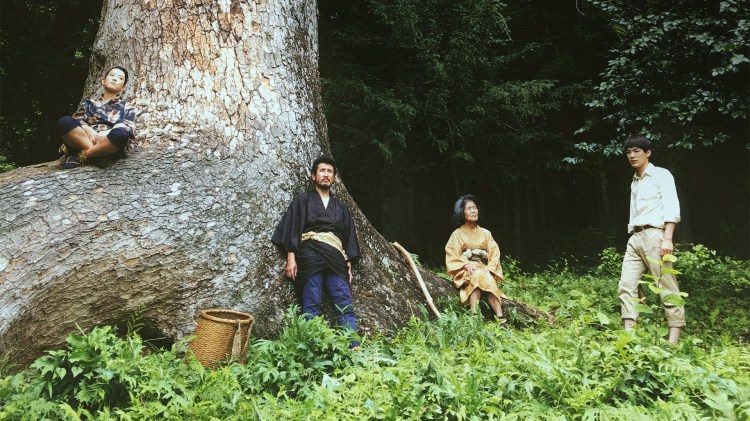
French scientist/travel writer Jeanne (Juliette Binoche) has come to Japan in search of a herb so rare it apparently only spores once a millennium but has the capability to “dispel human weakness, agony, and pain”. Tomo (Masatoshi Nagase), a mountain man she ends up lodging with along with her interpreter Hana (Minami), answers only that “happiness exists in each of our hearts”, a somewhat hollow and ironic reply given his general grumpiness and stern expression. He tells them that he’s only lived in the cabin for 20 years having moved to the country because he was “tired” and that his purpose is to save the mountain. Despite his seeming reluctance, he eventually introduces the pair to a blind shamaness who claims to be 1000 years old and was born when the last plant (or as she points out fungus) spored. 

Lost in the beauty of nature, Jeanne begins to wonder if she is really in the present, losing the certainty of the moment. We get occasional snippets of what seems to be memory bathed in a golden light and presented as flashback which might hint at the “pain” Jeanne is trying to cure through finding the “vision” herb even as she engages in a halfhearted though apparently passionate affair with the indifferent Tomo. She sees him as “starving” for something, not knowing what it is he’s longing for, though her friend describes him as “happy” as if silent like the mountain he claims to be saving though all we see him do is destroy it by carving up trees even if he does point again to the transience of things in explaining that the lumber he produces is the work of several generations who planted and grew so he could cut down, perhaps hinting back at Jeanne’s claim that when life develops too far it begins to destroy itself. 

Tomo doesn’t quite seem to buy her new age philosophies, explaining only that “you see, and hear, touch, you feel, that is everything”, rooting his sense of reality firmly within the realms of the sensual. “Sometimes because we have language we can’t understand each other” Jeanne later says, echoing him though perhaps accidentally while expounding on the human condition to a mysterious young man, Rin (Takanori Iwata), discovered injured in the forest. Aki (Mari Natsuki), the shamaness, advances that there are changes in the forest, that it has become unbalanced, and that it will soon be time for the “vision” to present itself though it seems to take a while for Jeanne to understand what form that may take. Aki dances furiously amid the trees as if bending them to her will, her ritualistic dance later echoed in the climatic final sequence that sets a fire in the mountain but causes Tomo to suddenly declare that it is after all alive. 

Jeanne finds her “vision” in an alignment of past and future, a familial, generational reunion which allows her ease her pain just as it was said vision would do. All moments are perhaps one moment. On the train Hana had described a feeling of long forgetten happiness that Jeanne’s travel essay had provoked in her as akin to “nostalgia”, instantly amusing Jeanne who is overcome by the incongruity of this young woman already romanticising a sense of nostalgia for an unlived past. Tomo had declared that it was enough simply to remember that he too was a part of this world, but is suddenly reminded that he is not alone. Literally setting fire to the past they buy themselves the possibility of being reborn, making space for new growth in the knowledge that the mountain is “alive” as indeed are they. Tomo has saved the mountain, and Jeanne has perhaps saved herself. “Isn’t it beautiful?” she exclaims embracing a new vision of a bright and shining future no longer burdened by pain or despair.


Vision streams in the US until Dec. 23 alongside Naomi Kawase’s 1997 debut Suzaku as part of Japan Society New York’s Flash Forward series.

Trailer (English subtitles)
Suzaku (萌の朱雀, Naomi Kawase, 1997)
Changing times and economic malaise slowly encroach upon the lives of an ordinary rural family in Naomi Kawase’s Caméra d’Or winning feature debut, Suzaku (萌の朱雀, Moe no Suzaku). Previously known for her experimental 8mm documentaries, Kawase maintains a trademark naturalism in capturing both the beauty of the natural world and the incidental details of everyday life as the family finds itself at odds with its environment, facing a moment of extreme transience as they recognise the existential threat to their way of life that is caused by, perhaps ironically, a failure of modernity. 

The action opens in the early 70s as an ordinary family take breakfast in a remote rural cabin with a picturesque view of a verdant local mountain. Patriarch Kozo (Jun Kunimura) lives with his wife Yasuyo (Yasuyo Kamimura), mother Sachiko (Sachiko Izumi), daughter Michiru (Machiko Ono), and Eisuke (Kotaro Shibata), the son of his estranged sister whose continued absence already seems to hint at cracks in the family unit. Meanwhile, the village has been badly hit by an economic downturn causing many of the younger people to leave and seek their fortunes in the city. Hopes have been pinned on a controversial rail line with Kozo one of its foremost proponents, hoping that with greater infrastructure provision the town will be reinvigorated. Kawase then flashes forward 15 years during which a now grown Eisuke has become the family’s breadwinner with a job at an inn outside of the village while Kozo appears depressed and Yasuyo seems to be suffering from some kind of illness. The long delayed rail project is finally cancelled, much to the consternation of the local community who now seem to have universally come round to the idea. They fear that cut off as they are, the village will dwindle, they will find it harder to find spouses, and their children will have far fewer possibilities. 

The smallness of the community is both a strength and a weakness as Kawase plays with the less palatable sides of isolation in the awkward adolescent infatuation of Michiru for her cousin who has been raised more or less as her brother while he appears to have a not altogether maternal appreciation for his aunt who is nearing the end of her tether with stultifying rural life and her husband’s emotional absence, her mysterious illness perhaps a manifestation of her existential unease. She takes a part time job at the inn, moving further away from the family home, out of the village and towards the town while Kozo walks in the other direction, retreating into nature unable to step into the present let alone the future. 

Kozo’s camera reels may not contain any great secret but perhaps have their own profound truths, mimicking Kawase’s documentary practice as he captures the smiling faces of local farmers amid the natural greenery. It is precisely this, it’s implied, that he wanted to save, the traditional way of life with its tightly bound communities and local festivals, a life lived in concert with the natural world in all its glorious greenery. He watches the old couple next-door prepare to leave the village because their children have decided to put them in a nursing a home and the sight breaks his heart. He can’t bear to go on living in such a declining world. Pinning all his hopes on modernity he throws himself into the rail project, but in a slightly overworked metaphor the tunnel stops right in the middle. He cannot cross to the other side, and neither can Eisuke, permanently trapped by a painful sense of nostalgia but exiled from his natural habitat. 

Eisuke himself is already displaced as a foster child whose mother has abandoned him, apparently in the city but out of contact with her family. Michiru faces a similar dilemma when her mother finally decides it’s time to leave and return to her hometown. Grandma Sachiko sings a folksong sitting on her front porch which quickly gives way to the voices of children echoing those we heard in the opening sequence of 15 years previously in which the local kids played together happily making the most of a warm summer’s day. The family is scattered, divided along its natural fault-lines and trapped between tradition and unrealised modernity with only the melancholy comfort of transience to sustain them.


Suzaku streams in the US until Dec. 23 series alongside Naomi Kawase’s 2018 drama Vision as part of Japan Society New York’s Flash Forward series.