
A Killer’s Key (ある殺し屋の鍵, Kazuo Mori, 1967)

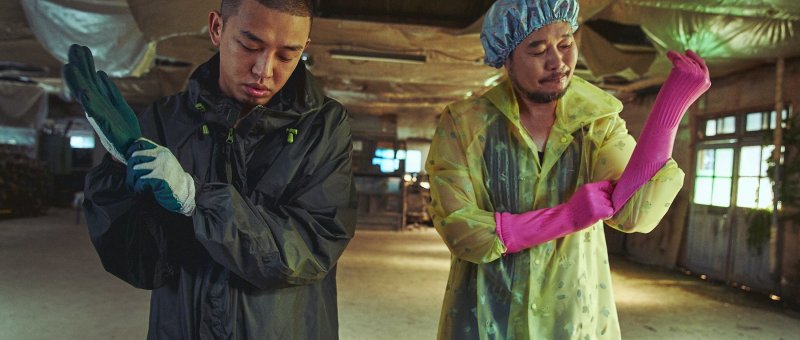
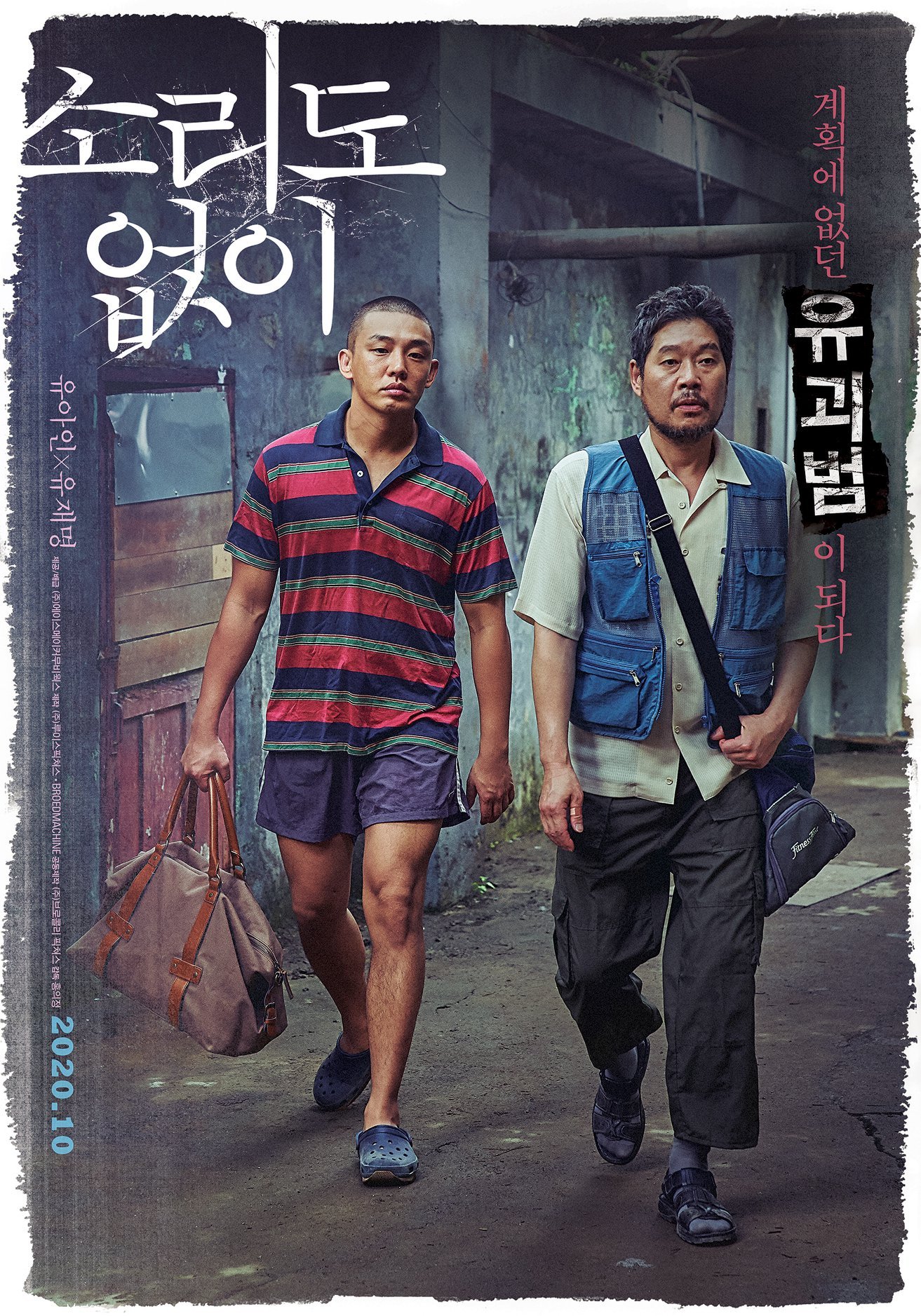
Raizo Ichikawa returns as the jaded ace assassin only this time a little less serious. Set some time after the events of A Certain Killer, A Killer’s Key (ある殺し屋の鍵, Aru Koroshiya no Kagi) finds Shiozawa (Raizo Ichikawa) having left the restaurant business to teach traditional dance under the name Fujigawa while known as killer for hire Nitta in the underworld. Like the previous film, however, he thinks of himself as a justifiable good, standing up against contemporary corruption while still burdened by his traumatic past as a former tokkotai pilot. 

Nitta’s troubles begin when a corruption scandal kicks off with a prominent businessman, or less generously loan shark, arrested for tax evasion. Asakura (Asao Uchida) knows too much and political kingpin Hojo (Isao Yamagata) is worried because he knows Asakura has hard evidence about a land scandal and might be persuaded to spill the beans, exposing a circle of corrupt elitists for their shady goings on. He wants Asakura knocked off on the quiet, as he heavily implies but does not explicitly state to his underling Endo (Ko Nishimura) who gets in touch with their yakuza support who in turn decide that Nitta is the only man for the job.

Petty yakuza Araki (Yoshio Kanauchi) sells the job to Nitta as a public service, pointing out how unfair it is that Asakura has been cheating on his taxes when other people have taken their own lives in shame because they weren’t able to pay. Conveniently, he doesn’t mention anything about petty vendettas or that he’s essentially being hired to silence a potential witness before he can talk so Nitta is minded to agree, for a fee of course (which, we can assume, he won’t be entering on his tax form). Unfortunately things get more complicated for everyone when the gangsters try to tie up loose ends by engineering an “accident” for Nitta which sends him on a path of revenge not only taking out the gangsters but the ones who hired them too. 

Nitta’s revenge is personal in focus, but also a reflection of his antipathy to modern society as a man himself corrupted by wartime folly who should have died but has survived only to become a nihilistic contract killer. He perhaps thinks that the world is better off without men like Asakura, the dim yakuza, spineless underling Endo, and corrupt elitist Hojo but only halfheartedly. His potential love interest, Hideko (Tomomi Sato), a geisha learning traditional dance, has fallen for him, she says because she can see he’s not a cold man though continually preoccupied and there is indeed something in his aloofness which suggests that he believes in a kind of justice or at least the idea of moral good in respect of the men that died fighting for a mistaken ideal. 

As Hideko puts it, Asakura made his money off the suffering of others, so perhaps it’s not surprising that he met a nasty end. She herself is a fairly cynical figure, aware as a geisha that she is in need of a sponsor and that it’s better to get the one with the most money though she too has her code and will be loyal to whoever’s paying the bills. Or so she claims, eventually willing to sell out Endo to protect Nitta but disappointed in his continued lack of reciprocation for her feelings. Echoing his parting words at the close of the first film but perhaps signalling a new conservatism he coldly tells Hideko that he doesn’t need a woman who stays with anyone who pays refusing to include her in the remainder of his mission.

Nitta is perhaps a man out of his times as a strange scene of him looking completely lost in a hip nightclub makes clear. He tries to play a circular game, stockpiling his winnings in different suitcases stored in a coin locker, but eventually finds that all his efforts have been pointless save perhaps taking out one particular strain of corruption in putting an end to Hojo’s nefarious schemes. More straightforwardly linear in execution than A Certain Killer, Killer’s Key is a less serious affair, resting squarely on an anticorruption message and easing back on the hero’s wartime trauma while allowing his needle-based hits to veer towards the ridiculous rather than the expertly planned assassination of the earlier film, but does perhaps spin an unusual crime doesn’t pay message in Nitta’s unexpected and ironic failure to secure the loot proving that sometimes not even top hit men can dodge cosmic bad luck. 


Update, 13th February 2025: now available to stream via Arrow Player.

Original trailer (no subtitles)

A Certain Killer (ある殺し屋, Kazuo Mori, 1967)

A nihilistic hitman safeguards the post-war future in Kazuo Mori’s chivalrous B-movie noir, A Certain Killer (ある殺し屋, Aru Koroshiya). Set against the backdrop of the Vietnam War with US airplanes flying constantly overhead, Mori’s crime thriller situates itself in the barren wasteland of a rehabilitated city in which betrayal, exploitation and duplicity have become the norm while a former tokkotai pilot turned killer for hire takes his revenge on social hypocrisy as a product of his society, a man who did not die but knows only killing. 

Shiozawa (Raizo Ichikawa) runs a stylish restaurant by day and supplements his income by night as a killer for hire, apparently highly regarded by the local underworld. As such, he’s approached by a yakuza underling, Maeda (Mikio Narita), on behalf of the Kimura gang who want him to off another gangster, Oowada (Tatsuo Matsushita), who double crossed them in contravention of the yakuza codes of honour. Shiozawa is resolutely uninterested in yakuza drama and so turns the job down but changes his mind when he’s paid a visit by boss Kimura (Asao Koike) himself who sells him a different kind of mission. Kimura characterises Oowada as a “bad” yakuza, one has subverted the traditional gangster nobility by dealing in the “dirty” sides of organised crime, corrupting the modern society by trafficking in illegal prostitution, drugs, and extortion, where as he is a “good” yakuza mostly running construction scams and therefore building the post-war future. His crime is, literally, constructive, where Oowada’s is not. 

Shiozawa doesn’t quite buy his justifications, but men like Oowada represent everything he hates. “They’re not worthy of this world. They’re nothing but cockroaches” he laments, recalling the young men who served with him and gave their lives because they believed in a country which betrayed them. He agrees to take the job in rebellion against post-war venality, but only at a price, asking for four times the original fee. Kimura is willing to pay, because his true aim is profit more than revenge. He plans to take over Oowada’s remaining business concerns. 

Fully aware of this, Shiozawa seems almost uninterested in the money despite having asked for so much of it. He runs his shop as a front for his side business and otherwise lives a quiet, unostentatious life keeping mostly to himself. He is not, it would seem, a cold blooded killer, often making a point of leaving those who get in his way incapacitated but alive. Targeted by a street punk for supposedly messing with his girl he cooly disarms him and walks away, only for the girl to follow attracted partly by his icy manliness and partly by the thickness of his wallet as glimpsed when he made the fatal decision to offer to pay for her meal in order to save the chef from embarrassment over her attempts to pay with things other than money. Unable to get by on her own, Keiko (Yumiko Nogawa) attaches herself to various capable men beginning with the pimp, transferring her affections to Shiozawa whom she petitions to marry her, and then to Maeda, eventually vowing to find a new partner and make lots of money. 

Both Maeda and Keiko chase Shiozawa and are rebuffed. Impressed by his cool handling of the Oowada affair, not to mention the amount of money he now realises you can make in his line of business, Maeda asks to become his pupil in order to become a “real man”. Shiozawa doesn’t regard his work as something “real men” do, and in any case prefers to work to alone. Maeda repeatedly asks to be allowed to accompany him even after plotting betrayal, only to be rejected once again as Shiozawa tells him that he doesn’t like people who don’t know the difference between the job and romance, flagging up the homoerotic subtext for those not paying attention. Maeda parrots his words back to Keiko with whom he had begun a halfhearted affair as joint revenge against Shiozawa’s indifference. 

Following the successful offing of the mob boss, Shiozawa finds himself coopted into another job robbing a drug handoff between Oowada’s former associates, the illicit narcotics ironically packaged inside cartons intended for baby powder. Shiozawa apparently doesn’t object to profiting off the drug trade himself, but later abandons the loot in protest while the remainder is lost or squandered during the final battle with the remaining gang members, Shiozawa’s cartons left sitting ironically on top of a gravestone taken by no one. Cool as ice, Shiozawa places himself above petty criminality, always one step ahead, trusting no one and looking out for himself but reacting as a man created by his times, forged by a war he was a not intended to survive while looking on at another cruel and senseless conflict across the sea. Adapting the hardboiled novel by Shunji Fujiwara, Yasuzo Masumura’s jagged, non-linear script (co-written with Yoshihiro Ishimatsu) is imbued with his characteristic irony but also coloured with nihilistic despair for the post-Olympics society and its wholesale descent into soulless capitalistic consumerism.


Update, 13th February 2025: now available to stream via Arrow Player.

Original trailer (no subtitles)

Love and Death in Montmartre (蒙馬特之愛與死, Evans Chan, 2019)

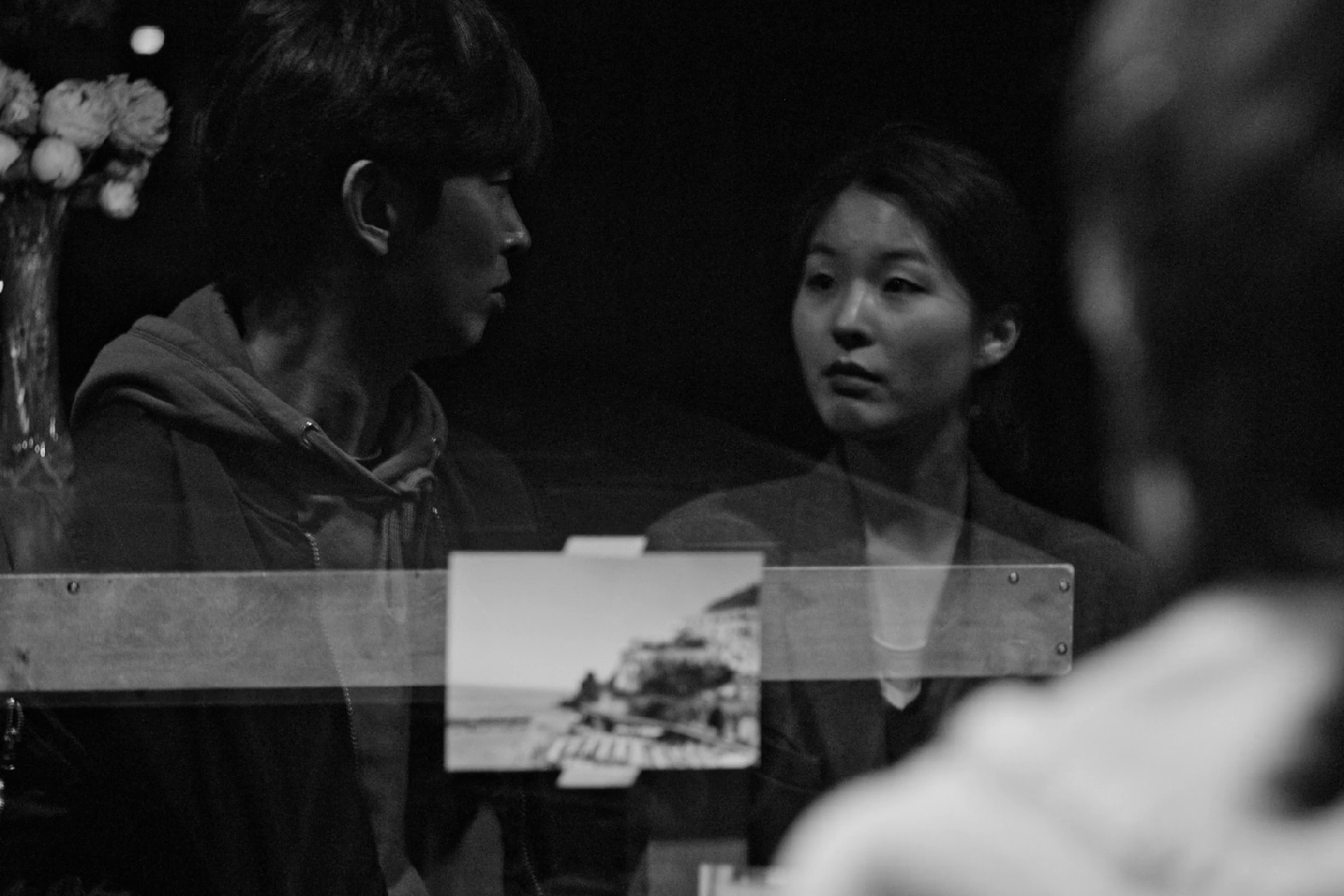
It’s difficult to believe, in some ways, that the world could have changed so much in just a couple of decades. Qiu Miaojin gained a cult following and widespread acclaim as an openly gay defiantly lesbian writer in the early ‘90s, but sadly took her own life in Paris at the age of 26 in 1995. Hong Kong director Evans Chan’s Love and Death in Montmartre (蒙馬特之愛與死) expands his 2017 documentary which aired as part of TV series celebrating Sinophone writers and though he claimed not to have been much interested in Qiu as a personality, explores her life, love, and legacy from the perspective of a Taiwan which has now become the first Asian nation to legalise same sex marriage. 

The film’s title is inspired by Qiu’s final novel completed shortly before her death in exile in Paris. Though she became well known as an out lesbian writer publishing under her own name as a woman who loved women, Qiu, the documentary implies, never actually came out to her family and eventually fled a Taiwan which had recently entered into democratic freedom but was nevertheless still conservative and socially oppressive. In Paris she looked for freedom artistic and personal, but continued to struggle with herself in her internal contradictions which were also in a sense provoked by a hostile society. 

Interviewed 25 years later, many of Qiu’s friends and contemporaries point out that she preceded rather than participated in the burgeoning LGBTQ+ movement which only began to gain ground after her death, but that her work nevertheless helped to raise visibility and acceptance of lesbianism in Taiwan and beyond. Lacking a language to describe herself, her slightly ironic adoption of the term “Lazi” for lesbian was adopted by women who love women in Taiwan, in turn inspiring the Mainland’s “Lala”. As another interviewee suggests, Qiu’s work was also ahead of its time in giving voice to the author’s anxiety in the impossibility of defining gender, at times longing to be made entirely male or entirely female while evidently feeling neither term entirely fitted only later claiming to have discovered an integrated self in the depths of her heartbreak. 

An actor Qiu met university who subsequently starred in one of her short films excerpts of which are included in the documentary recalls her anxiety that repressed emotions once unleashed have the capacity to consume, and in her case at least this may have been the truth. Close friends recall the self harm scars on her arms where she burned herself with cigarettes following the end of a relationship, consumed by her own need for all encompassing passion yet also filled with self-loathing. Perhaps tellingly and presumably for reasons of privacy, her lover at the time of her death does not appear in the documentary which goes out of its way to avoid naming her beyond the “Xu” which appears in her letters, Qiu attributing their breakup to her “intensity” which had unfortunately turned violent further contributing to her sense of shame and instability. 

Yet the translator of Last Words from Montmartre advances that Qiu’s suicide was also in a sense a literary act, the culmination of an artistic life in the tradition of tragic authors she had admired such as Osamu Dazai or Yukio Mishima. Another friend wonders if she might have been suffering from bipolar disorder, while her former professor reflects on her decision to adopt the name “Zoe” while in Paris, a name which itself means “life”. In Taiwan Qiu had worked for a suicide hotline, yet eventually took the decision to die. Qiu’s work cannot indeed be divorced from the manner of her death, but nor can its legacy be denied in contributing to the birth of a movement that she sadly did not live to see.

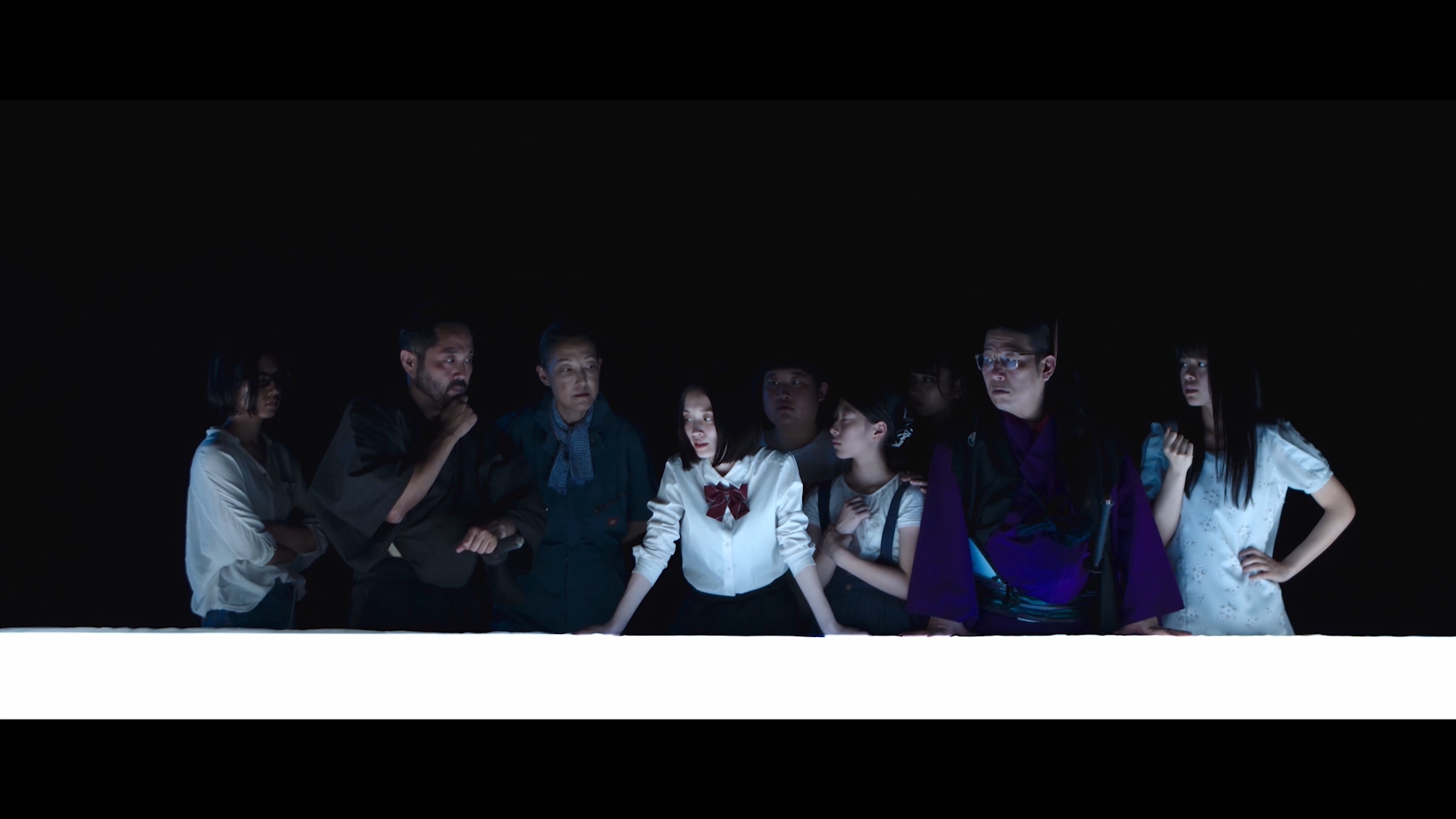
Including clips from Qiu’s short films and excepts from a short inspired by Qiu’s life directed by bisexual Shanghainese filmmaker Lotte Yue, as well as reenactments featuring Qiu dressed alternately as a crocodile as in her famous novel or as a veiled ghost, Chan charts her artistic legacy through Asia and beyond with recent translations of her novels into French and English, but also juxtaposes the oppressive society she struggled to escape with the comparatively more liberal world of today which she perhaps even in the tragedy of her life and death helped to bring about. 


Love and Death in Montmartre streamed as part of this year’s San Diego Asian Film Festival.

Original trailer (English subtitles)

Battle of Roses (薔薇合戦, Mikio Naruse, 1950)

Mikio Naruse was famously unhappy with most of his ’40s work, believing that his career did not begin to revive until the release of Ginza Cosmetics in 1951. The late ‘40s were indeed a difficult time in terms of the industry as Naruse’s home studio, Toho, became entrenched in a series of labour disputes which eventually led to the creation of new studio “Shin Toho” (lit. “new Toho”). Naruse meanwhile though sympathetic to the cause kept a low profile working in theatre and thereafter with other studios such as Shochiku which is where he made 1950’s Battle of Roses (薔薇合戦, Bara Kassen) .

Perhaps because of its turbulent production genesis, Battle of Roses is a distinctly unpolished and surprisingly reactionary take on female liberation adapted from a newspaper serial following the lives of three sisters pursuing different paths in the complicated post-war society. The action opens with the death of the husband of the eldest sister, Masago (Kuniko Miyake), who had been the head of cosmetics studio White Lily but is currently under-investigation for large-scale embezzlement of which it appears he is almost certainly guilty. After he dies, Masago inherits the company but is pursued by massive debts to the film’s villain, Mogi (Toru Abe), who is also after the most pure hearted of the sisters, Hinako (Setsuko Wakayama). Masago makes some kind of shady arrangement with her husband’s former associate Kasahara (Eitaro Shindo), pays off the debt, and starts her own rival company Nigera where she is the CEO. Youngest sister Chisuzu (Yoko Katsuragi), meanwhile, also works at Nigera but is a fully modern woman who wants “to be free and know everything about life”, resentful of her sister’s authority and planning to move out into her own apartment where she later begins a “trial” marriage with Ejima (Shiro Osaka), a journalist from Fashion and Films magazine who turns out to be no good at all.

The sisters are each, in a sense, punished for a perceived naivety in the way they pursue their goals, the implication being that they are mere women thrown unprepared into a male world they lack the skills to navigate. This is most obviously true of Masago who is shown to be a surprisingly astute business woman but a bad judge of character while also criticised for wielding her femininity by leveraging her business affairs through Kasahara who nevertheless declares that he wants to keep their business and personal relationships separate which is why the original loan comes with interest. Masago then gives an accountancy job to her inexperienced boyfriend who proves up to it, but also creates tension in the office seeing as she is unwilling to go public about their relationship even after they agree to marry while he remains resentful of Kasahara.

After spotting her with Mogi who continues to pursue her despite her obvious dislike of him, Masago contrives to have Hinako marry a trusted assistant, Hinatsu (Mitsuo Nagata), pushing her into a marriage against her will to prove her sisterly loyalty while Hinako herself has taken a liking to divorced advertising executive Sonoike (Koji Tsuruta) who is the film’s only real “good” man. Hinatsu, however, turns out to be less reliable than Masago thought, resentful that his marriage to Hinako while guaranteeing continued employment has actually adversely affected his career prospects with Masago unwilling to promote him for fear of claims of nepotism. To avoid “ending up like Hinako”, Chisuzu agrees to a weird quasi-marriage with Ejima in which she insists that they live separately so that he won’t “meddle” in her life because “men only want to stay in a superior position”.

Chisuzu is later taken to task for attempting a take a “male” role in terms of her sexual agency, Ejima’s wife (Noriko Sengoku) suddenly turning up with a child on her back to refer to her husband as a “male mistress” and demand money from Chisuzu who has already been guilted into handing over vast sums to Ejima to prove her love. Ejima later threatens to blackmail the whole family with a tell all book detailing what he’s learned about the “immoral” lives of the three sisters behind Nigera cosmetics. Meanwhile, Hinako’s marriage has also gone south the extent that Hinatsu eventually tries to steam her to death by locking her in the bathroom and stoking up the fire only to think better of it in the nick of time, causing her a miscarriage and landing her in the hospital for three months during which Sonoike continues to send her flowers while Hinatsu struggles to understand why she might not want to accompany him on the job transfer he is forced to accept after he’s discovered to have committed fraud while having an affair with a woman from sales.

Hinako is punished, essentially, for excessive womanliness in trying to make everyone happy by suppressing her own feelings, rejecting her agency in deference to her sister who is punished for being too “manly” in business while Chisuzu is punished for being sexually liberated and behaving “like a man” in terms of her desire to maintain romantic independence. Sonoike’s ex-wife is seemingly punished for the same thing, desperately trying to win her husband back after cheating on him but is rejected for her transgression in her foolishness at being taken in by a faithless man. The sisters are forced to acknowledge the mistakes they’ve made, making a fresh start with more humble ambitions pushed back towards the feminine norms, e.g. a “small shop” for Masago rather than a big company while Chisuzu returns “home”. Only Hinako is given the possibility of a more positive future in seizing her own agency to follow her heart’s desire, ending her marriage to the adulterous Hinatsu and perhaps finally entering a romance with the patient Sonoike. Somewhat different in style from typical Naruse with its shorter scenes echoing fast paced city life, inelegant cuts and abrupt scene transitions, Battle of Roses lands less as a condemnation of male manipulation and duplicity than a subtle implication that women aren’t equipped for independence and are best defended by “good” men, Sonoike on hand to sort out each of the women’s problems with rational calm, even while offering the sisters the possibility of starting over once the storm has passed.


Wild Swords (无名狂, Li Yunbo, 2019)

Indie and wuxia might not be words that neatly fit together in the minds of many who perhaps associate the genre with lavish costumes and elaborate sets, but it is in essence one which values simplicity and innovation. Produced by Feng Xiaogang and financed through crowdfunding, Li Yunbo’s Wild Swords (无名狂, Wúmíng Kuáng) is a classic jianghu tale of warring sects, intrigue, and moral ambiguity that makes the most of its shoestring budget through striking cinematography and beautifully choreographed action sequences while spinning a complex tale of misdirected vengeance and fractured identity. 

Told largely through a series of Rashomon-esque conflicting flashbacks, the bulk of the action follows bandit Wang Yidao (Zhang Jian) who is made an offer he can’t refuse to escort a valuable prisoner, Kuo Chang-sheng (Zhang Xiao-chen), to an unnamed destination. Yidao didn’t want to take the job because he thinks it’s more trouble than it’s worth, and events will prove him right. The reason Chang-sheng is a wanted man is that he’s connected to the legendary Chang Wei-ren (Shang Bai) whom just about everyone wants to find, not least for his involvement in the death of the heir to the Tang-Men, the rival clan he holds responsible for the destruction by poison of his own Nameless sect. Eventually Yidao becomes aware that his mysterious client is Bai Xiaotian (Sui Yongliang), another former member of the Nameless who is looking for Wei-ren for purposes of revenge.

The Tang-Men are well known as master poisoners, a plot device frequently employed and eventually wreaking psychological havoc on the central three as Xiaotian reveals that the greatest Tang-Men technique allows the user to change their appearance leading him to believe that any one of them, including perhaps himself, could actually be Wei-ren in “disguise”. Meanwhile, he outlines his time among the Nameless, resentful of Wei-ren who rivalled him in swordsmanship and it seems love. Chang-sheng, however, has quite a different version of events apparently relayed to him by Wei-ren whom he now believes to be dead. Yidao knows not who if anyone to believe, but has little time to think about it after becoming swept up in the Tang-Men’s quest to chase down Wei-ren. 

Perhaps slightly subversive, Wei-ren’s version has him both becoming weary of the heartless philosophy of the Nameless while simultaneously painting them as the good guys who refused to lackey for an authoritarian government which ironically requested their assistance in getting rid of “evil factions”. Xiaotian sees his rival as a lazy goofball, his lack of application only fuelling Xiaotian’s resentment towards him, yet Wei-ren sees himself as a sensitive loner who looked to the sect for a family only to find merciless ruthlessness in which all are disposable aside from the chosen one. As he tells Xiaotian, when you climb to the summit of martial arts, all you see is the abyss waiting below and no matter how fast you think you are, there is always someone faster. The ones who die are the ones who hold back.  

Wringing genuine intrigue out of its complex, conspiracy-laden narrative, Wild Swords is careful to make space for the genre essential fight in a teahouse which also introduces us to the pretty boy villain of the Tang-Men, Wuque (Eric Hsiao), as he relentlessly stalks his prey in order to gain revenge for the murder of the Tang heir. Caught up in their identity drama, the three men begin to realise the futility and meaninglessness inherent in the world of jianghu in which there is only the “bitterness of life”. They are each one and the same, sole survivors of a vanquished clan carrying the weight of those they failed to protect. Beautifully lensed and set against the majestic natural scenery, Li Yunbo’s slightly revisionist take on the classic wuxia finds its conflicted heroes at war with themselves pursuing misdirected vengeance against those they blame for their loss while wilfully misunderstanding the cause of all their suffering as they pursue their jianghu destiny to its natural conclusion. 


Wild Swords streamed as part of this year’s San Diego Asian Film Festival.

Teaser trailer (dialogue free)

Our Marriage (私たちの結婚, Masahiro Shinoda, 1962)

Like many directors of his age, Masahiro Shinoda had to serve his apprenticeship at Shochiku contributing to the studio’s particular brand of light and cheerful melodramas though 1962’s Our Marriage (私たちの結婚, Watashitachi no Kekkon) did perhaps allow him to explore some of his persistent themes in its ultimately empathetic exploration of the romantic and existential dilemmas of two sisters who ultimately find themselves taking different paths in the complicated post-war society. Co-scripted by Zenzo Matsuyama, Our Marriage is essentially a chronicle of changing times and the crises of modernity, but it’s also surprisingly even-handed in its refusal to judge or indeed to sugarcoat the “romance” of a working class life. 

Keiko (Noriko Maki) and her younger sister Saeko (Chieko Baisho) both have jobs in the local factory with Keiko working in the accounts department which is where she first meets the brooding and self-righteous Komakura (Shinichiro Mikami) when he marches straight into the office to complain that he’s been shorted on his pay-packet to the tune of 10 yen. The ladies are non-plussed, it’s only 10 yen after all so perhaps there’s no need to be so unpleasant about it, but Komakura insists on having it looked into even after they give him the single coin in an effort to make him go away. Getting so upset about 10 yen is perhaps disproportionate, but then it is Komakura’s 10 yen and he has a point that if a mistake has been made it needs to be acknowledged and corrected especially when you’re dealing with people’s livelihoods to ensure that everyone is being paid fairly. On the other hand, marching in and shouting at people is unlikely to help the situation. 

It just so happens that Komakura is a good friend of Saeko’s who perhaps reads more into the mild embarrassment he and her sister each experience on meeting in another context to assume that they are romantically involved, immediately swinging into action to get them together. Meanwhile, another potential suitor has turned up at home in the form of Matsumoto (Isao Kimura), apparently an old friend dropping in on their parents out of courtesy. Matsumoto is very good looking and apparently now has a well paying job in the textiles trade, but despite their politeness to him the parents later have their doubts because it turns out that he was their blackmarket dealer during the dark days of the immediate post-war era. 

The Hibino family make their living as seaweed farmers and live in a small two-story home in a fishing village. Times are hard because the sea is dying. Increased industrial pollution, land reclamation, and the new airport have reduced the harvest to almost nothing and the girls’ father (Eijiro Tono) can no longer make ends meet. The union hasn’t paid him and he can’t ask about it because he’s still in debt from a previous loan, which is why Keiko’s mother (Sadako Sawamura) is always asking her for extra money to help with household expenses. Keiko intensely resents this, especially as her father’s irresponsible drinking habits continue to adversely affect the family’s finances. They haven’t really been thinking about her marriage perhaps partly because they need her salary but are now forced to because of all the sudden and unexpected interest. On top of Matsumoto and Komakura, it seems that the union leader’s widowed son is also interested which would, admittedly, be quite beneficial to the family. 

Keiko, however, is insistent that her husband must have a decent salary and that her married home must have a refrigerator and a washing machine. Quite the consumerist, Keiko has had enough of poverty and of feckless men like her authoritarian father who waste all their money on drink while relying on female labour to keep them out of trouble. When Matsumoto writes a formal letter proposing marriage, the parents decide to push the union leader’s son instead hoping to avoid embarrassment all round. Keiko immediately assumes the worst, that her father is trying to sell her to the union leader in exchange for the cancelation of his debts. She insists that she will decide her own future, leading Saeko to make a disastrous intervention revealing Keiko’s relationship with Komakura which only has the effect of enraging her father who brands her an ungrateful “whore” while shouting that a mere workman is not good enough for his daughter despite having previously stated that the union leader’s son was really “too good” and they were only in the running because it’s a second marriage. 

Both women still implicitly feel that marriage will define their futures, they do not have an expectation of living independently. Nevertheless, marriage itself may not be an answer. Everyone keeps talking about how happy Miyoko (Fumiko Hirayama) is with her new husband and she herself is forever extolling the joys of married life even in poverty, insisting to Saeko that “a woman’s happiness lies in marrying and having babies”. It’s a cruel irony then that we later see her arguing with her husband who is trying to force her to have an abortion against her will because they cannot afford to raise a child. Keiko has had enough of poverty, she wants to be more than comfortable, enjoying the new consumerist age. Re-encountering an old schoolfriend who has become a glamorous social butterfly she is mildly scandalised when she tells her that she obtained all her treasures through a complex network of compensated dating arrangements with foreigners, but later decides to check it out for herself when directly faced with the hopelessness of her situation. 

The fact remains, however, that no matter the initial attraction and her sister’s earnest attempts to make it work, Keiko and Komakura are fundamentally unsuited. They have entirely different ways of thinking about the world and want completely different things. Komakura is an angry young man but committed to his working class roots. He isn’t trying to get on, he’s happy with working in the factory for the rest of his life and just wants a quiet, honest existence. Keiko wants more, she thinks that people who say they’re poor but happy have merely given up on life. Revealing himself, Matsumoto says that he was struck by Keiko’s harsh words to him when she was a child, her calling him a blackmarketeer to his face apparently showing him what he was. He claims to have reformed and now fears the various ways that poverty can corrupt, something Keiko feels herself after her brief brush with the shady world of compensated dating. They are very much on the same page, both intent on seizing the benefits of the consumerist age but hoping they won’t have to stoop too low to get them. 

Saeko meanwhile is a little younger, still naive, and unlike her sister completely resistant to the corruptions of consumerism. Part of that might be because Keiko has shielded her from some of the harsh consequences of the way their family lives such as the financial burden of her father’s drinking, leaving her with a rosier view of poor but honest life which has her taking notes from Miyoko on how it’s easy to be happy even when you don’t have enough to eat. She and Komakura are in fact perfectly suited and perhaps she is already in love with him but either afraid of her feelings or unable to recognise them, pushing him towards her “prettier” sister instead. Then again, is there anything to say that Komakura will not turn into another man like her father, embittered and old, trying to drown his disappointment in sake? There’s no guarantee Keiko will be happy with Matsumoto, or perhaps with anyone, but they are at least moving forward in the same direction, as are Saeko and Komakura even as they blend back in with a hundred other cheerful youngsters making their way towards the factory. Our Marriage offers no judgment on its heroines’ choices, merely stating that people make their own paths in life pursuing their particular ideal of happiness and it happens that those paths might necessarily diverge but the people are still the same ones they always were and perhaps you don’t need to reject them for choosing differently than you might have done. Isn’t that what post-war freedom is all about after all?


Ohong Village (蚵豐村, Lim Lung-yin, 2019)

Familial legacy and frustrated dreams conspire against father and son in Lim Lung-yin’s striking 16mm debut, Ohong Village (蚵豐村) . Set in a small oyster farming community on the southern shore of Taiwan, Lim’s anti-urban panorama is an ambivalent contemplation of small-town existence as its trio of frustrated male protagonists find themselves caught in an existential riptide torn between a nostalgia for a simpler life and the lure of the new and the modern far away in the cities. 

30-year-old Sheng (Lin Yui-Hsu) left the village seven years previously and has rarely visited during his time away but has now come home for his sister’s wedding where he boasts of his vast success, his claims of earning millions daily ringing somewhat hollow. As it seems, things have not gone entirely well in Taipei and Sheng most likely is not intending to return. His old friend Kun (Chen Hsin-Tai) who stayed in the village, similarly boasting of the vast sums he too earns as a top oyster shucker, has a business proposition for him, hoping to capitalise on the recent tourism craze by renovating the raft his father left him and turning it into a tourist boat selling the oyster farmer experience to people from the cities. Meanwhile, the oyster business seems to be on its last legs, Sheng’s embittered father Ming (King Jie-wen) unceremoniously dumped by a business contact who flatly tells him that his oysters are no longer plump enough and he’ll be going across town to source his catch in future. 

Ming’s sense of hopeless disappointment is additionally acute because, as we’re told, his father was a big man on the island whose catch extended far and wide. Grandma (Wu Mei-he) laments that in the old days the community were happy working together on the salt flats but now the fields are flooded and those who were wealthy left the village never to return. Angry with himself for his perceived failure to live up to his father’s legacy, Ming is also resentful of his son whom he sent to the city to make a better life for himself only to see him return with nothing other than disappointment and a sense of internalised inadequacy. Frustrated by his hollow self aggrandising he snaps at Sheng to cut the “bullshit”, but otherwise pushes him away, discouraging his friendship with Kun who he sees as everything he wanted Sheng not to be, and pouring scorn on the boys’ newfound dream of tourist boat entrepreneurship. 

For his part, Sheng begins to reconnect with his grandfather’s legacy perhaps literally given direction by the old compass he finds among his possessions which leads him to a distant shore on which sits a giant and mysterious statue. Wearing a T-shirt emblazoned with the word “faith”, Sheng had been otherwise sceptical of traditional thinking, snapping at Ming for talking to a tree in communicating with his late father and unconvinced by Kun’s divinatory claims asking who it is who’s making his decisions him or God. Nevertheless, a drunken voyage through the neon-lit streets provokes in him visions of the upcoming festival, while he too later finds himself taking refuge in ritual and risking all to protect a lonely tree from an oncoming storm. 

Kun asks his friend why he didn’t ask him to come when he left, and Sheng gives him the unconvincing excuse that Kun is a man who loves his freedom and wouldn’t have taken well to the city where there are rules which must be followed. Kun agrees that there’s freedom in the village, but he doesn’t know what to do with it. While Sheng begins to find his direction, accepting his legacy and his place, Kun travels in the other direction doing something stupid and chasing the dreams Sheng has now abandoned though there’s no real way to know if his own claims of vast riches are yet more “bullshit” or an ironic boon that mirrors Sheng’s progress towards inner peace. 

Shot on grainy 16mm and scored with a mix of traditional folk instrumentation, synths, and retro pop, Ohong Village is imbued with a sense of melancholy nostalgia for a way of life that has in a sense already disappeared but also with frustration and youthful ennui as the two young men search for hope and possibility while Ming is left only with lonely middle-aged disappointment and an ambivalent desire for his son both to go and to stay. Reimagining the village as a space of both purgatorial ruination and possible salvation, Lim’s etherial drama finds little other than despair and emptiness in its flooded vistas but offers perhaps also a strange sense of melancholy warmth if only in the intensity of its longing. 


Ohong Village streamed as part of the 14th Five Flavours Film Festival.

Original trailer (English subtitles)

The Three Undelivered Letters (配達されない三通の手紙, Yoshitaro Nomura, 1979)

The ensemble crime drama was at its zenith in the 1970s which saw a series of starry mysteries dominate the box office for most of the decade. Director Yoshitaro Nomura had long associated himself with the noirish thriller, frequently adapting the work of Seicho Matsumoto and perhaps skewing a little darker than your average drawing room mystery would usually dare. Scripted by Kaneto Shindo, 1979’s Three Undelivered Letters (配達されない三通の手紙, Haitatsu Sarenai Santsu no Tegami), meanwhile, is adapted not from Matsumoto but from a novel by American crime powerhouse Ellery Queen, Calamity Town, and as such avoids the central topic of wartime corruption which is at the centre of many similarly themed crime dramas. Nevertheless, it paints a complex picture of Japan in the increasingly prosperous late ‘70s in which class distinctions, it seems, prove hard to kill. 

Nomura begins, as he so often does, with a lengthy train journey this time undertaken by the quasi-protagonist, Japanese-American student Bob (Ryo Hikime) who has come to Japan on a research trip for his East Asian studies degree and is travelling from Tokyo where he stayed with a friend to provincial Hagi where he’s to stay with distant relatives, the Karasawas. As we begin to realise, the Karasawas are fabulously wealthy, members of an entrenched upperclass living out in the country. Grumpy patriarch Mitsumasa (Shin Saburi) is the CEO of a bank, and actually not all that welcoming of his visitor though they agree to put him up in an entirely separate house they had built for the impending marriage of daughter Noriko (Komaki Kurihara). Unfortunately, three years previously once the house had been built and the marriage agreed, Noriko’s fiancé Toshiyuki (Takao Kataoka) simply vanished without trace. Heartbroken, Noriko suffered a breakdown and has been living in a depressive state ever since. 

The trouble begins when already disowned oldest daughter Reiko (Mayumi Ogawa) rings her sister to let her know that Toshiyuki has resurfaced, apparently having been living quietly as a fisherman in Hokkaido. Perhaps surprisingly, their reconciliation is speedy. Noriko brings Toshiyuki home, explains the reason for the breakup was that Toshiyuki was uncomfortable with the constraints of her upperclass life, and states that the wedding is back on. Mitsumasa is understandably irate, but agrees to the marriage on the same terms as before. Toshiyuki must join his bank and they have to live in the house he built for them. Despite his earlier aversion, Toshiyuki agrees and the pair are married but on moving his belongings into the house Noriko discovers three disturbing letters hidden in a book each bearing a future date and addressed to Toshiyuki’s younger sister, the first explaining that his wife has been taken ill, the second that her condition continues to deteriorate, and the third that she has passed away. 

All things considered, it is odd that the marriage was agreed so quickly, the family perhaps feeling that Toshiyuki has had a humbling and is willing to submit himself to the feudalistic, patriarchal world of the upper classes in order to escape hardship while knowing that refusing may be the most dangerous thing for Noriko’s precarious mental health. Entirely absent are the usual background checks such families usually run on a prospective son-in-law, and no one seems keen to ask for much detail as to Toshiyuki’s life over the past three years. The class conflicts are however brought to the fore when a brassy young woman turns up and claims to be Toshiyuki’s previously unseen younger sister who for mysterious reasons did not attend the wedding ceremony and has never been introduced to the family. The contrast between the two women could not be more plain, Noriko often appearing in kimono or elegantly attired in the latest fashions, while Tomoko (Keiko Matsuzaka) is a full on modern girl who finds the house stuffy and the company dull but shows no signs of leaving. 

As so often in Japanese mysteries the focus is very much on the how, or in this case the “if”, rather than the who or the why which are in themselves fairly predictable at least to those familiar with the genre. Bob and middle sister Keiko (Ai Kanzaki) who is being pressured into an arranged marriage with a public prosecutor she doesn’t seem to even like but also has not rejected, are perturbed enough by the letters to start investigating but their biggest obstacle it seems is Noriko herself who is at great pains to exonerate her husband from suspicion believing the letters are some kind of dark joke rather than genuine evidence of an imminent attempt on her life even as Toshiyuki’s behaviour becomes ever more erratic and suspicious. 

“Everyone should live the way they like” Bob avows in laughing off a request for life advice, apparently wisdom handed down from his Japanese grandma. That sense of restricted freedoms does indeed seem to be at the heart of the issue, hinting at the changing nature of Japanese society even as it struggles to free itself from the feudal past. Keiko resents being pushed towards the prosector but only ever comes up with excuses, never actively resisting her parents’ attempt to marry her off. Oldest daughter Reiko, meanwhile, was kicked out of the family after eloping with an actor who eventually left her flat and now runs a bar. Keiko may feel she has only these two choices, a marriage such as Noriko’s on her father’s terms only, or a dubious independence which might not suit her in the same way as her infinitely competent sister. Toshiyuki resented placing himself under the patriarchal authority of his father-in-law, a job in his bank, living in a house he built on the property he owns, with no real control over his life. Reiko may well have a point when she eventually tells Mitsumasa that this is all his own fault, a consequence his rigid authoritarianism that insisted on maintaining an outdated ideal of patriarchal control. 

For his part, Mitsumasa is forever keen to emphasise that there are no crimes in his house, resolutely refusing to admit that there are problems within the Karasawa family even while perhaps knowing where the fault may lie. The one mystery which is never solved is why exactly so many women are so in love with Toshiyuki who all things considered is no great catch, a coward who makes a point of disappearing on people rather than deal with unpleasantness only to resent it when his moral cowardice returns to haunt him. He resents the emasculation of being a wealthy man’s son-in-law with its concurrent loss of personal autonomy, but simultaneously refuses to take responsibility for his actions or reject a life of comfort as someone assured both of continued financial security and of a certain place in society. Love destabilises the social order, but seemingly cannot change it leaving only the lovers bruised by their attempts to free themselves from the latent feudalism of the post-war world which continues to promise more than it has to offer. 


Boiling Water Lama (開水喇嘛, Lu Adiong, 2019)

A lone monk provides spiritual healing in a decaying world in Lu Adiong’s enigmatic documentary Boiling Water Lama (開水喇嘛, Kāishuǐ Lǎma). Living in wooden house built by his followers high up in the small village of Xiongtuo on the Tibetan plateau, the Lama provides both pastoral care and traditional medicine to residents of the region many of whom have travelled over the mountains to visit him in hope of gaining his wisdom. 

Lu opens however with a lengthy shot of the desolate landscape, frosty and seemingly devoid of human presence home only to mud, smoke, and rubble. Later he will cut to a series of similar shots featuring a family of wild boar encroaching into the village, seemingly free to roam as if nature is already reclaiming this crumbling settlement. The Lama meanwhile remains hidden to us, crammed in as we are with a tightly packed group of followers awaiting his advice in a darkened room alight only with the warm yellow glow of the surrounding walls. The problems they bring him are many and varied, often related to the process of death and dying wanting to know which sutras they should read for a late relative, or intensely curious to know when and where their deceased loved one might have been reborn. Perhaps because of the obvious demands on his time, the Lama’s replies are often curt, imbued with unexpected efficiency as he simply consults his charts and recommends an appropriate sutra. He does not appear to recognise his visitors even when they remind him that he himself oversaw a ritual for them sometime previously, though he is always patient and kind, pausing to give a small boy receiving medical treatment some pocket money to buy sweets on the way home. 

Meanwhile, he also treats the sick attaching suction cups to the affected area to suck out the “bad blood” while explaining to another complainant that his problem is he is like a car engine with not enough oil and too much petrol. Cauterising the wound with incense sticks, he completes his treatment by spitting boiling water over the broken skin, handing over some paperwork to the husband which he apparently does not need to return in person. Other callers meanwhile are burdened with emotional dilemmas, a man wanting advice about the marriage of two village youngsters who’ve fallen in love but the girl’s parents aren’t keen and in any case would prefer that she and her new husband live independently rather than with his family as the in-laws wish. The Lama does not give the man the answer he was perhaps hoping for nor does he have a very favourable prognosis for another who visits wanting to know if it’s in the cards for him to patch things up with the wife who’s apparently left to return to her parents though as he tells it not because there was anything wrong in their relationship. 

True to his name, the Lama keeps the kettle boiling while a collection of visitors gather outside his home waiting for the climactic purification ritual in which men and women remove their shirts and endure the scalding water on their bodies, some directing it to the site of their ailments, baring their knees or ankles. Others have brought their children who scream in pain and terror, the water clearly far too hot for them to bear while the Lama spits out the last of the boiling liquid into the eyes of those there afflicted. In contrast to the traditional setting, many of the villagers can be seen photographing or filming the event on their smartphones to record the occasion. As if to refute the final image, however, of the Lama overseeing the landscape as the villagers return home, Lu breaks the intense Japanese folksong playing over the end credits with a whimsical, snow covered scene in which a cow eventually appears and fixes its gaze directly into the camera lens. An enigmatic exploration of a disappearing way of life in all of its various contradictions, Boiling Water Lama finds no answers to its central questions leaving only the Lama as he metes out his judgements to all who come seeking his advice. 


Boiling Water Lama screens on 12th December at London’s Rio Cinema as part of Taiwan Film Festival UK 2020.

Original trailer (English subtitles)

Rock Me to the Moon (一首搖滾上月球, Huang Chia-chun, 2013)

“Finally, I understand to be strong is to be gentle” sings the lead vocalist of Sleepy Dads, a rock band comprised entirely of middle-aged men who are each fathers of children with rare medical conditions. Documentarian Huang Chia-Chun first encountered the men while working as a volunteer with Taiwan Foundation for Rare Disorders where he was struck by their intense love for their children continuing to give all for their families while also obviously facing their own difficulties as they try to balance economic support with the emotional. Charting the Sleepy Dads’ quest to play at a high profile rock festival, Rock Me to the Moon (一首搖滾上月球, Yī Shǒu Yáogǔn Shàng Yuèqiú) is not only an exploration of living with disability but also a quiet re-evaluation of notions of masculinity as the fathers find themselves members of a minority when it comes to their children’s care. 

That was in fact one of the motivations which led to the founding of the band, one of the dads remarking that as they looked around at various support groups it was almost all mothers with very few men, lamenting that unfortunately many fathers either reject their children or abandon their families entirely. A news report later in the film, meanwhile, relates the tragic story of a single-father who was pushed towards suicide because of the difficulties of caring for his daughter alone which left him unable to earn the money to support them both and eventually overburdened with debt. Though one of the Sleepy Dads is a school teacher with a steady job, many of the others are in precarious freelance employment struggling to balance the need to earn money with the physical need to be there for their children each of whom has differing needs especially as some of them have more than one child suffering with longterm illness. 

The band provides a place where the men can come together to relax with others in a similar position, finding mutual support and solidarity while investing themselves in mastering a new skill. Guided by Spark, the lead singer of top rock band Quarterback, who offers them the opportunity to open at one of their concerts, the Sleepy Dads do their best to perfect their skills with the hope of eventually playing at a top festival despite their comparatively advanced age and lack of experience. Training hard to achieve their goal, it’s less the end point that matters than the process as they work through their difficulties together with good humour and determination. 

As another of the fathers puts it, however, Taiwanese men are raised to be brave and strong but he’s also under an intense amount of pressure. Poignantly his wife, preparing to undergo medical treatment herself, expresses that she’d just like her husband to give her a hug but he says he doesn’t know how because he wasn’t brought up to show emotion in that way. She also worries that he sometimes doesn’t see that she’s under a lot of pressure too and prefers to think of her as a kind of superwoman with an innate ability to cope with anything life throws at her. Nevertheless, the Sleepy Dads have fierce love for their children and are never afraid to show it, doing everything they can to care for them while knowing in some cases that their kids may not survive them and so their time together is even more precious. As the song says, they’ve learned that true strength lies in being gentle. 

While one of the mothers laments that she feels isolated even within her own family because her in-laws will not accept the children, asking her not to bring them to a family gathering, the Sleepy Dads have formed an extended family of their own coming together to celebrate one of the dad’s moves into a new home he’s had designed to better meet his family’s needs with all the kids playing together happily. They don’t pretend that their lives are easy, but they share their joys and sorrows equally and work out their frustrations through the medium of song. A warm and empathetic tribute to these selfless men and their infinite love for their children, Rock Me to the Moon is also a celebration of friendship and solidarity not to mention the power of music to overcome all hardships. 


Rock Me to the Moon streams in the US Dec. 11 – 13 as part of Asian Pop-Up Cinema & TACCGC’s @Home with Taiwan Cinema: Love & Hope.

Original trailer (English subtitles)