The Unrighteous (원정빌라, Kim Seon-kuk, 2024)

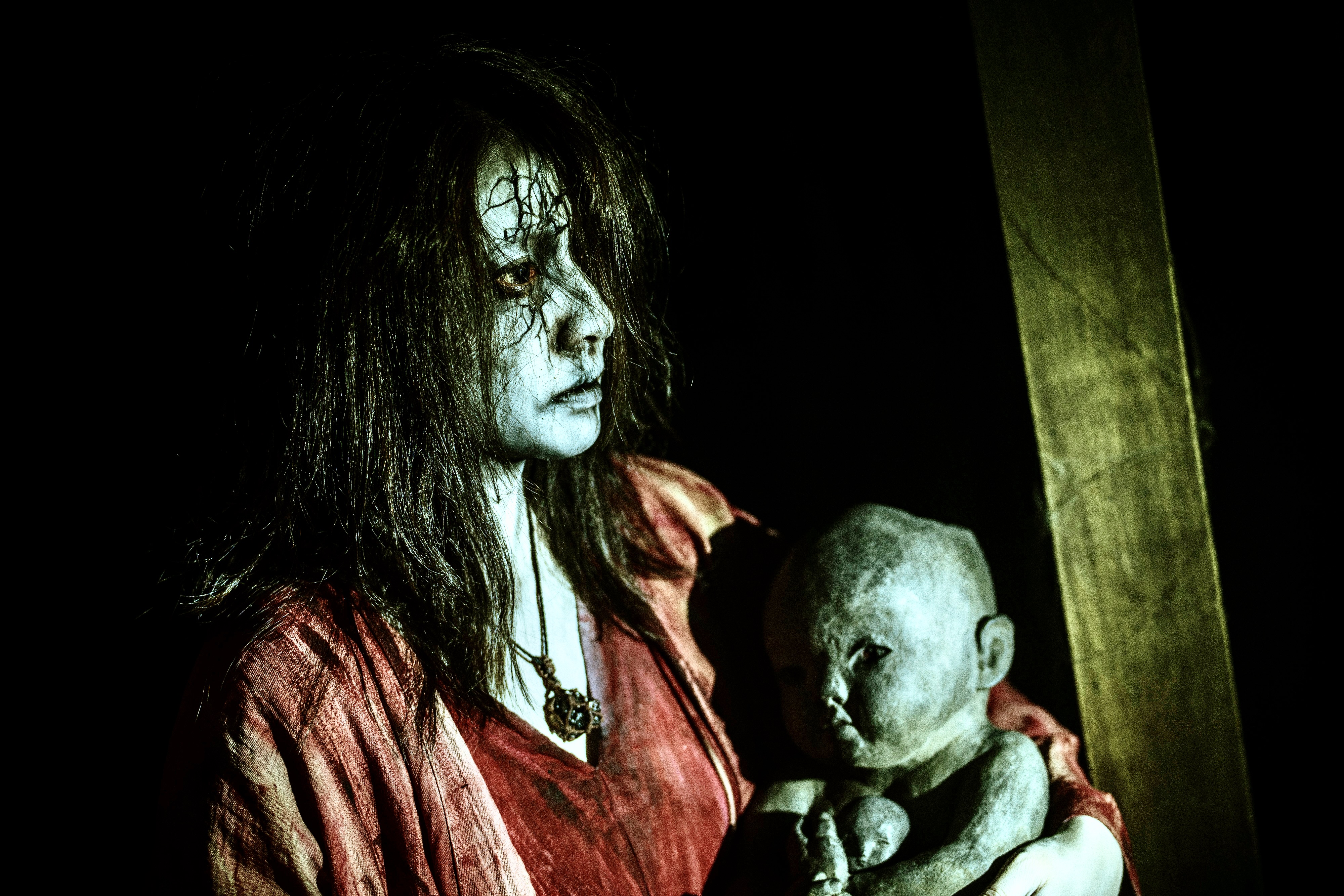
After discovering that all of his neighbours have become members of a religious cult, one young man tries to hold fast to his independence but finds himself confronted by the forces of conformity and mass hysteria in Kim Seon-kuk’s paranoid horror thriller, The Unrighteous (원정빌라, Wonjeong Villa). The film’s English title maybe somewhat misleading, though if anyone is unrighteous, it is the cult themselves rather than non-believer Ju-hyun (Lee Hyun-woo), while it’s also true that he lives in an unrighteous society obsessed with property values and social status.

It begins, however, with apartment complex horror as Ju-hyun gets into a vendetta with his upstairs neighbour Shin-hye (Moon Jeong-Hee) who first tries to bully him out of parking in “her” parking space which she is trying to hold for her husband who “always” parks there. Hearing strange sounds from above, Ju-hyun tries to complain about the noise, but Shin-hye ignores him and ironically insists that “neighbours should be more understanding” as if suggesting that Ju-hyun is being selfish and unreasonable and should rather make allowances for her son who is suffering from a serious illness. Ju-hyun had asked for quiet because his mother is recovering from recent surgery. 

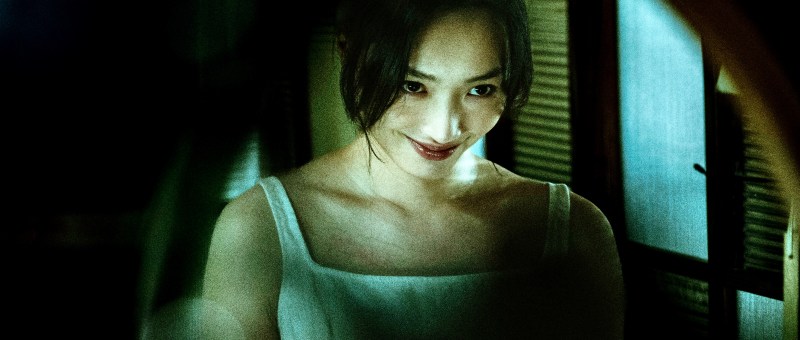
The real problems start shortly after when it becomes apparent that Shin-hye has got religion after joining a Christian-leaning organisation that Ju-hyun has been warned is a cult that targets people with bogus surveys in order to recruit them. Though she had looked tired and took little interest in her appearance, Shin-hye is now nicely turned out with stereotypically middle-class housewife outfits, styled hair, and makeup. Grinning eerily, she seems to be intent on converting her neighbours. Ju-yhyun immediately earns her ire once again when he complains about her inviting the pastor to their residents committee meeting without prior notice. He’s not the only one who objects to being subjected to a religious lecture without his consent, though Shin-hye homes in on the neighbours’ various anxieties from job precarity to loneliness to win them over to her cause.

There seems to be a direct correlation between the literal cult Shin-hye is propagating and that of property ownership in that she often repeats that they are now all “homeowners” as opposed to tenants and “true owners of this land”. Ju-hyun is a property owner too, having paid off his mortgage at a comparatively young age, and himself hopes that the redevelopment project takes place so that he can move to a nicer apartment and have a better quality of life. Everyone is obsessed with how much more profit they might be able to make if the house prices rise in the area which is something the cult is also promising them happen. Ju-hyun isn’t disinterested in that, but also wants to see the town come back to life again and is heartened that so many people are moving to the area to take advantage of the currently lower than average prices.

Studying to become an estate agent, he seems to have an interest in finding people happy homes which might on some level be because of his own disordered familial background. Vague allusions are made to Ju-hyun’s long lost father being in some way abusive to the extent that Ju-hyun can’t forget the look in his eyes and is reluctant to let him back into their lives after he contact his mother to say he wants to apologise and make amends. It’s no surprise that he too has joined the cult, though the way that Ju-hyun reacts makes him something of a complicated hero and unrighteous in his actions. He justifies himself that he’s trying to keep his family safe and ensure the home he’s worked so hard to provide for them won’d be taken away, but his mother also has a point in resenting his bossiness and condescension as he repeatedly instructs her not to  have anything to do with the cult or open the door to strangers. When he has an opportunity to save his neighbours, he wonders whether he should bother given how mean to him they’ve all been through this whole ordeal.

In a sinister manner, the cult begins to encircle him as his employer and the leader of the redevelopment project turn out to be cult members. He’s fired from his job for refusing to join the cult, while the police seem to be in on it too and react to his attempts to explain with exasperation as if he were just a delusional conspiracy theorist. Only the local pharmacist with a side line in investigating cults is willing to help to help him. Nevertheless, the escalating darkness from trance-like religious mania to human sacrifice is quite steep even intended as satire that people would willingly sacrifice the lives of others in the name of house prices, even if they’re tricked into handing over the deeds to their properties to the cult become “the true owners of land”. Ju-hyun, however, resolutely refuses to drink the cool aid, in some ways quite literally, looking on with disdain as his neighbours dance in the street on receiving the news that the long awaited redevelopment project will indeed be happening as if it were a miracle fallen to them from some higher powers.


Trailer (English subtitles)
The Phantom Lover (夜半歌聲, Ronny Yu, 1995)

For his last film in Hong Kong before decamping to Hollywood, Ronny Yu looked back to a lost classic in loosely remaking 1937’s Song at Midnight, itself loosely based on Gaston Leroux’s The Phantom of the Opera. A Hong Kong/Singapore co-production, the film was, perhaps surprisingly, shot entirely in Beijing where Yu constructed an opulent set including a full-scale replica of the theatre which he then burnt down for real during the legendary climax of the classic story. 

Set in 1936 (one year before the release of A Song at Midnight and the intensification of the Sino-Japanese war), the film opens with a gothic scene of carriages racing through the fog. A troupe of left-wing actors has come to make use of a ruined theatre to put on their revolutionary play. On arrival, the troupe’s leading man Wei Qing (Lei Huang), who is in a relationship with leading lady Landie (Liu Lin) but claims he is too poor to marry so they will have to wait until he’s famous, is captivated by the auditorium, convinced he can hear strange sounds of a woman singing. The strangeness of the surroundings continues to bother him until he finally decides to ask creepy caretaker Uncle Ma (Cheung Ching-Yuen)to disclose what he knows of the fire which destroyed the theatre 10 years previously. 

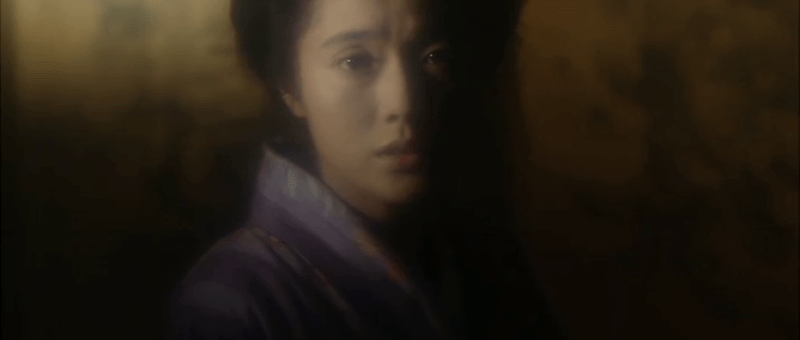
Counter-intuitively, Yu shoots the ‘30s sequence in a washed-out sepia with occasional flashes of colour almost like hand-tinted photographs. As Ma spins his story, we transition into a sumptuous world of reds and golds in the old opera house designed, as we’re told, by the famous actor Song Danping (Leslie Cheung Kwok-Wing) who is said to have perished along with it in the fire. Danping, to whom Wei Qing is constantly likened, was the greatest actor of the age famous for his performances in Western theatre, such as the Mandarin musical adaptation of Romeo and Juliet in which he was performing immediately before his death. In a case of life imitating art, Danping had fallen in love with the daughter of a wealthy family, Yuyan (Geng Xiao-Lin), and wished to marry her, but actors belong to an undesirable underclass and in any case, Yuyan’s father had already arranged her marriage to the idiot son of a powerful politician, Zhao (Bao Fang), in exchange for smoothing the path for his new factory enterprise. 

In a direct reversal of the 1937 film, it is Wei Qing who is the left-wing revolutionary proudly singing communist songs about the “national humiliation” which, it seems, partly accounts for their low audience numbers, while Danping is the reactionary libertine performing in “decadent” Western theatre which seemingly has no political import other than its capacity to cause annoyance to the conservative older generation extremely concerned about Danping’s effect on the local young women. With that in mind, it seems strange that Wei Qing is so quick to accept Danping’s offer once he finally reveals himself and drops the playbook for Romeo and Juliet into his hands. Nevertheless he is content to accept the older man’s tutelage, hoping that the increased revenue will save the troupe and, as implied earlier, he doesn’t actually seem to be very invested in the idea of revolution so much becoming famous. 

Nevertheless, it turns out that he does indeed have integrity. To gain additional funding, the troupe’s leaders end up schmoozing with none other than Zhao, the man who eventually married Yuyan after the fire but quickly discarded her on learning she was not a virgin. Now apparently having risen in politics in Shanghai, Zhao is a misogynistic bully carrying a grudge towards women because of his humiliation by Yuyan. In the scene in which we re-meet him, no longer quite so moronic but definitely nastier, he forces his dining companion to eat 60 meat buns because she had the temerity to declare herself full and try to leave the table. When Wei Qing snaps at him he takes a liking to Landie who is more or less pimped out by the impresario in the same way that Yuyan was sold by her father to the Zhaos in order to further his business interests. On discovering Yuyan, who has since descended into madness, wandering the streets, he stops his carriage to give her a public whipping, ranting about how he had her 10 years preciously but she turned out to be a “slut” who’d already slept with the famous actor Song Danping which seems like a curious thing to announce in the public square. 

Then again, these fascist stooges have an odd approach to public humiliation, stopping Danping’s play mid-performance to call out Yuyan which seems like a counter-intuitive and extremely embarrassing move when they could simply have dragged her out of her box. Danping strikes a minor victory for art when he get the goons ejected from the theatre by the irate audience who, he points out, have had their evening spoiled by officials misusing their authority for a spot of personal pettiness. The intervention is mirrored in the film’s conclusion with the “villains” effectively put on trial in the theatre, as theatre, with an appeal made to law enforcement which is eventually successful as the police commander affirms his intention to act for the public good (though in this case is also serving his own while ironically giving justification to mob rule). 

Despite all of that, however, the major stumbling block to the tragic romance turns out to narcissistic vanity on the part of former matinee idol Danping who has been hiding himself away even though he knows Yuyan has gone mad in love for him simply because his face was ruined when Zhao’s goons threw acid at it and then locked him in the burning theatre. He contents himself with singing on nights when the moon is full knowing that hearing his voice on such occasions is the only thing keeping her going. On learning of his mentor’s true purpose to make Yuyan think he, the handsome young actor, is the Danping of old, Wei Qing is extremely conflicted, unable to understand why the now ghoulish Danping would put Yuyan through so much grief when he could simply have revealed himself a decade ago. Nevertheless, realising the intensity of the romantic suffering all around him perhaps pushes him towards ”forgiving” Landie for having schmoozed with Zhao. 

Full on gothic melodrama, Yu’s adaptation of the classic story is all fog and cobwebs, situating itself in a world which is already falling apart. In photographing the 30s in washed-out greys, he perhaps suggests that something has already faded, or at least become numb, in comparison with the life and colour of mid-20s Shanghai in all its art deco glory. Yet even in giving us a superficially happy ending in which justice, moral and romantic, appears to have been served Yu denies us the resolution we may be seeking with a melancholy title card reminding us that happiness in the China of 1936 may be a short-lived prospect.


Woods Are Wet (女地獄 森は濡れた, Tatsumi Kumashiro, 1973)

As long as people live honest lives, eventually good things will happen to them, according to the sinister mistress at the centre of Takumi Kumashiro’s Roman Porno Woods Are Wet (女地獄 森は濡れた, Onna Jigoku: Mori wa Nureta). Perversely, she may actually believe this to be true but only in the most ironic of senses as she and her “cruel” husband enjoy incredibly happy lives together having decided to “honestly” embrace their true desires, which include things like rape, murder, and eating grapes off the corpses of their victims.

Inspired by the Marquis de Sade’s Justine and set in the Taisho era, the film begins in true gothic style as Sachiko (Hiroko Isayama), a runaway maid in flight from an accusation of having murdered her mistress, encounters Yoko (Rie Nakagawa), an upper-class lady who unexpectedly comes to her rescue in a small town. Yoko takes her back to the Western-style mansion she shares with her husband Ryunosuke (Hatsuo Yamaya) whom she describes as being incredibly cruel. Explaining that she’s been desperately lonely since her marriage at 19, Yoko begs Sachiko to stay but as her companion rather than a servant, which is another act of class transgression for which there will presumably be a price. 

In any case, the atmosphere changes when Ryunosuke arrives and reveals he knows all about Sachiko’s predicament and blackmails her into helping with his schemes to rape and murder guests at the hotel he runs. He explains that he’s very wealthy and does this for kicks not out of financial necessity but nevertheless uses her to spice up his game by directly telling her to warn the guests that their lives are in danger. If she manages to get them to escape, he’ll let her go too, but of course it’s not as easy as she’d assumed it would be, especially as the first two guests she’s sent to brutally rape her. Even so, she vows to escape with them, only they are not quite clever enough to beat Ryunosuke’s game.

Out in the middle of nowhere, the mansion is a true gothic fantasy lit by candle light due to an absence of electricity because of the Depression. Ryunosuke has adapted it so that it contains a series of prison-like doors with iron bars and locks that allow him to trap Sachiko and others exactly where he wants them. He is vile and depraved, as is Yoko, though they later brand themselves as simply liberated and living “honestly” having embraced their true desires. Ryunosuke paints himself as a quiet revolutionary, asking why he should conform with rules and laws dictated by a distant authority to which he himself does not subscribe. He describes commonly held visions of morality as nothing more than a tool of social coercion designed to control the common man (which he is not), in which he may have a valid point despite the depravity of his apparently honest nature. 

This aspect of Ryunosuke as an anti-social force was apparently something very much intended by Kumashiro, who was himself rebelling against a moral panic which had seen Nikkatsu’s Roman Porno line condemned under public obscenity laws. To make a point, he inserts large black blocks and lines throughout the film to mimic those sometimes demanded by the censors, though enlarged to an absurd degree and often not actually covering what they would presumably be intended to or actually drawing attention to it. In any case, what the censors objected to in this case was not apparently the sex itself but the violence which accompanies it, notably in the scenes in which blood-soaked sex continues after Yoko has shot one of the male victims she effectively raped at gunpoint. 

The central part of the film is a lengthy orgy scene in which Ryunosuke has his maids whip the victims while he anally rapes them while they are forced to have sex with Yoko and Sachiko on the pretext of saving their lives. It only gets grimmer from there, though there’s a censoriousness about Sachiko’s insistence that happiness should come from correctness to counter the “happiness” that Yoko and Ryunosuke exude in their embrace of their baser desires that undercuts her role as the innocent heroine standing up to their depraved inhumanity amid the absurd interruption of a radio taiso broadcast signalling the arrival of the next unhappy guests to rock up for a less than pleasant stay at this decidedly unluxurious hotel.


The 7 Grandmasters (虎豹龍蛇鷹, Joseph Kuo, 1977)

“The way of kung fu, no one is invincible. A fighter shouldn’t be arrogant and bully others,” according to one of the mini lessons given by the ageing champion at the centre of Joseph Kuo’s 7 Grandmasters (虎豹龍蛇鷹), though it has to be said there is a fair amount of cockiness in play while bullying does seem to be a part of his training programme. Arrogance is in fact what he has himself been accused of at the ceremony at which he has been honoured by the emperor and after which he planned to retire if he had not received a rude note telling him he is not a real champion and shouldn’t lay claim to the title until he’s defeated all of the other regional champions in each of their signature fighting styles. 

A 30-year veteran of the local martial arts scene, Zhang Shenguang (Jack Long) is tired and ready to pass his school on to the next generation but feels he cannot retire until he’s proved once and for all that he is the greatest kung fu master. Setting out with his daughter and three pupils, he roams around the land easily defeating his rivals and teaching them a lesson to boot. Unfortunately, however, his first target, Sha (Wong Fei-lung), ends up dying while he’s also being followed around by an over-earnest boy, Shao Ying (Li Yi Min), who insists on becoming his pupil, though Zhang is unwilling to take him on because his own master was betrayed by a bad faith student who stole the final three pages of the book he’d been given to safeguard outlining the 12 Bai Mei strikes.

Zhang is definitely all about righteousness, constantly reminding everyone about the responsibilities that come with kung fu but his own students are fairly merciless to Shao Ying firstly mocking him as he trails along behind them like a stray puppy and then continuing to bully him until he finally surpasses their own abilities. They are all also supremely confident and often resort to cocky banter during fights which it has to be admitted they usually win. The film is structured around Zhang’s quest abruptly shifting from one expertly choreographed fight sequence to another, each showing off a different style and the ways in which Zhang can overcome it while some of his opponents accept defeat gracefully and others not. In one town they are ambushed by goons working for the local master who wanted to avoid potentially losing his title by underhandedly taking Zhang out first but as Zhang puts it losing his good name instead. The final challenger meanwhile refuses to Zhang directly because he can see Zhang is already ill and it wouldn’t be fair so has their students square off instead. 

Nevertheless, Zhang is not permitted to exit the world of kung fu until dealing with the left over baggage of the three missing strikes of Bai Mei, Shao Ying eventually becoming its inheritor after a twist of fate connects him with Zhang’s past while causing him a paradoxical dilemma in temporarily becoming Zhang’s enemy in order to avenge the death of his father as his code dictates. Like Zhang however he is perhaps only trying to make a point, never intending to harm his former mentor, at least physically, but only to close the cycle through symbolic revenge, later returning to Zhang’s side on realising he’s been used and deceived. 

Featuring top choreography from Hong Kong’s Yuen Kwai and Yuen Cheung Yan, Kuo’s low budget indie kung fu drama is pure fight fest less interested in the emotional conflicts between the men than the physical which might explain its incredibly abrupt conclusion which largely implodes the moment of catharsis achieved in the villain’s defeat. Even so, it succeeds in showcasing a series of fighting styles as Zhang continues with his quest to prove himself the ultimate grandmaster so he can finally retire while throwing in some comic relief thanks to Shao Ying’s dogged determination to become one of the gang before finally proving himself the most talented of all the students, not least because of his perseverance and willingness to learn. Shooting mainly in the open air to avoid the expense of sets, Kuo’s approach is unfussy but to the point of removing all distractions in order to showcase the immense abilities of his performers in an otherwise generic tale of rivalry and revenge. 


Undercurrent (夜の河, Kozaburo Yoshimura, 1956)

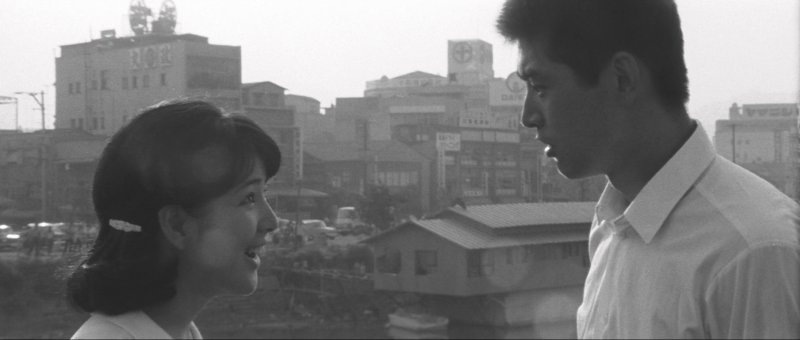
Is it possible to be both married and personally and artistically fulfilled? Marriage hangs over Kiwa (Fujiko Yamamoto) like a looming cage in Kozaburo Yoshimura’s sensuous melodrama Undercurrent (夜の河, Yoru no Kawa, AKA Night River). Scripted not by his regular writer Kaneto Shindo but frequent Mikio Naruse collaborator Sumie Tanaka adapting a novel by Hisao Sawano, the film finds its heroine caught between tradition and modernity while struggling to maintain her position as an independent woman and rightful heir to her father’s kimono dyeing business.

Everyone also keeps telling her that kimono itself is dying out, a relic of a bygone past now that everyone wears Western dress. Even Kiwa’s younger sister Miyoko (Michiko Ono) dresses exclusively in Western fashions and moves to Tokyo on her marriage. An ancient capital, Kyoto is the centre of historical elegance and the last bastion of these “outdated ideals”, yet several shops in their area have closed recently and people do things differently now. A wealthy woman comes to the shop with some fabric directly, cutting out the middlemen and haggling for a discount while cheerfully asking for her cab fare to be covered when Kiwa refuses the job. The young man they’ve taken in as an apprentice, Toshio, leaves to work in an electric factory complaining that “master” and “apprentice” are outdated concepts and that it’s against the Labour Law to force him to work overtime. Kiwa’s father Yujiro (Eijiro Tono), meanwhile, thinks this is just an expression of Toshio’s lack of commitment and that it’s only right that an apprentice should be applying himself to learning his craft every waking moment of the day. 

He was after all once an apprentice himself, but is both proud that his daughter has surpassed him in skill and guilty, fearful that Kiwa has sacrificed her own life and happiness to devote herself to kimono dyeing which is why she has never married. On one level, he’s happy if she’s happy and willing to leave marriage up to her, but also wary of the social censure of the neighbours including his kimono dyeing mentor who gives him a telling-off for his failure as a father to find a match for his daughter. When rumours arise that Kiwa has entered an affair with a married professor, the lady who helped Yujiro get started in business more or less tells him he should get her married to keep her in line. If hadn’t been for the war, she says, Kiwa would have been safely married off long ago and would probably have a gaggle of children to look after which would obviously prevent her from pursuing her art as a kimono dyer though the lady herself has obviously gone on working. 

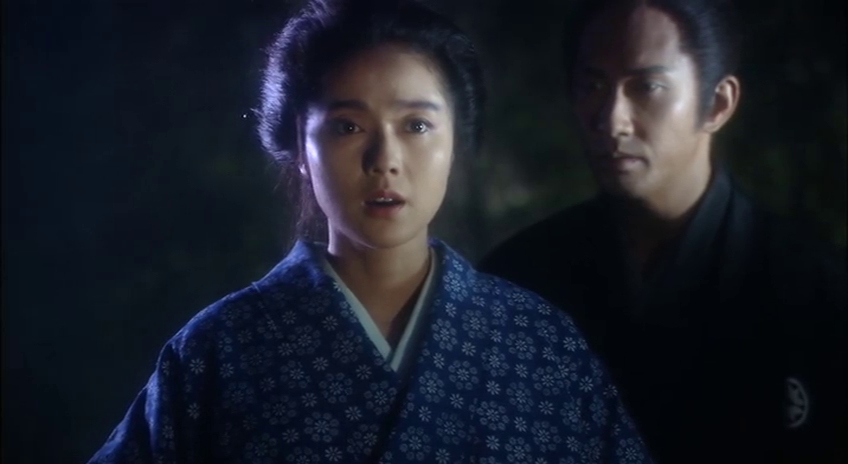
Kiwa is drawn Takemura (Ken Uehara ) firstly because he’s wearing a tie that features one of her signature dyes which implies some kind of affinity between them. That the fact that he was touring a Nara temple alone with his daughter may have suggested he was a widower, though in truth Kiwa always knew he was married and that may have been a key part of what attracted her to him. She is after all, as Yujiro’s mentor said, a woman and experiences romantic desire even if the mentor is wrong to say that Kiwa sublimates her loneliness through art when in reality the reverse is true. After meeting Takemura even Yujiro remarks that she seems more like a woman, implying that her industry and forthrightness lend her a masculine quality as does her determination to get on in business. She first strikes up a business relationship with the sleazy Omiya (Eitaro Ozawa) whose wife is always watching him like a hawk though she manages to rebuff his attentions while establishing herself as business woman and in demand kimono designer. In pursuit of Takemura she is the one bringing him gifts and inviting him out for walks while Takemura remains somewhat conflicted and pulled along her wake.

Yet for all that, none of her family members really question the fact that she’s been carrying on with a married man and rather seem slightly relieved that she’s discovered an interest in romance or perhaps just anything outside of kimono dyeing. Even Takemura’s daughter suspects they’re romantically involved and doesn’t seem to mind. Yujiro remarks on Kiwa suddenly using the colour red which she never previously liked and it does seem to echo her reawakening passion. Takemura is also researching red fruit flies, which is less romantic, but also hints his barely suppressed longing. The film seems to align him with yellow flowers and Kiwa with pink. When they’re caught in a rainstorm and refuge in an inn owned by Kiwa’s childhood friend, the entire room in bathed in the glow of the Daimonji fire festival as their passions finally, and perhaps unwisely, overtake them as Takemura announces he’s thinking of moving far away perhaps to avoid this forbidden romance or otherwise for the health of his ailing wife who has been a Kyoto hospital for the last two years.

It’s finding out about Mrs Takemura’s likely terminal illness that seems to implode Kiwa’s romantic fantasy. After they’d made love for the first time, she had told Takemura that if she became pregnant she’d raise the child alone without intruding on his family life, which is to say she wasn’t really envisaging one with him. Her horror is on one level framed as guilt, that she now sees she’s committed an act of betrayal and resents Takemura when he tells her “it won’t be much longer” as if he were counting down the days until his wife passed away. Or worse, that he or others suspected that Kiwa willed her dead. But in reality the reverse is true. Mrs Takemura’s death is an existential threat to Kiwa’s independence. She doesn’t want to get married, even if loves Takemura, because if she did she wouldn’t be able to maintain her independence or career as a kimono dyer. She really does mean it when she says that likes it best when it’s just she and her father in their “cramped” old-fashioned dyeing shop without even an apprentice. 

A tortured art student who seems to pine for her tells her as much, disappointed in her for her relationship with Takemura not out of moral censure but because he fears she’s betraying her art. Okamoto is much younger than her and she’s not interested in him romantically even if he’s painting slightly lewd interpretations of his mental image of her. At one point he appears with a bandage around his neck that implies he may have tried to take his own life and eventually announces he’s leaving Kyoto because he can’t secure his identity there. Ironically he’s happy that Kiwa and Takemura are now free to love each other when the opposite is now true. Now that he’s no longer a married man, Kiwa can no longer love him and is denied the possibility of having both romantic and artistic fulfilment. She is perhaps free in another way, backed by a deep red cloth hanging up to dry as she watches the May Day parade pass by with all of its waving red flags having embarked on a life that is defiantly of her choosing and fulfilled by the passion of art.


Trailer (no subtitles)

Big Deal (소주전쟁, Choi Yun-jin, 2025)

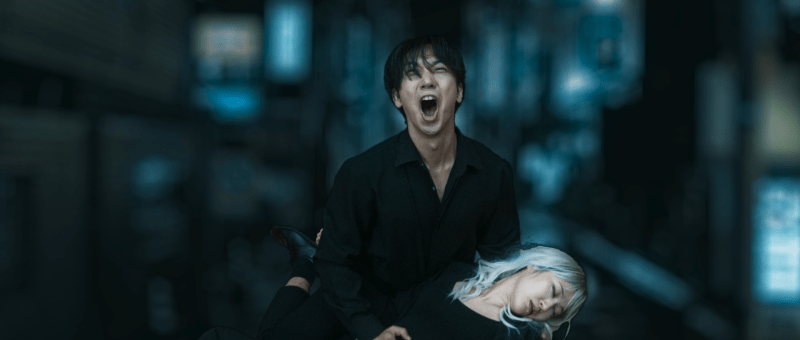
When Korea’s biggest Soju conglomerate, Gukbo, is on the verge of bankruptcy in the wake of the Asian financial crisis and the CEO’s mismanagement, it provokes a national outcry but also the attention of a hundred foreign firms all swarming over Korea like vultures eager to get a piece of the pie. Loosely based on a real life incident, Choi Yun-jin’s Big Deal (소주전쟁, Soju Jeonjaeng) is more evenhanded than one might expect at once decrying the amoral business practices of American corporate imperialism while pointing out that maybe things aren’t perfect in Korea either with its dynastic approach to company management and workaholic lifestyle that comes at the cost of familial bonds.

In fact it sort of implies that In-beom’s (Lee Je-hoon) desire to send Gukbo into bankruptcy so they can take it over and flip it is a kind of revenge against his own workaholic father who passed away 10 years previously, his death presumably hastened by stress and overwork though what In-beom resents more than anything else is that he was never really much of a father to him. That might be why Gukbo’s earnest financial officer Pyo (Yoo Hae-jin) comes to fill that role. In-beom complains that Pyo is stupid and naive, knowing nothing of how the world works, but also that his stupidity makes him feel like an arsehole because it forces him to realise that he’s doing something wrong. 

Caught between In-beom whose firm, Solquin, are pretending to consult on the administration process but in reality feeding into to their subsidiary to buy up shares, and the CEO, Pyo is the only one thinking about what’s going to happen to all their employees when the place goes bust. Like In-beom’s father, Pyo is also a workaholic whose wife and daughter left him because he was never there. He remains dedicated to Gukbo, but not to the extent of breaking the rules, even if he eventually goes along with it when the CEO suggests a dodgy plan to undercut Solquin and maintain control of the company his father founded. What becomes apparent is that Seok (Son Hyun-joo) is out of his depth and that the only qualification he has is being the boss’ son. It’s his fault the company got into trouble because of his reckless expansion plans while he tries to cover up his failings through cronyism, playing golf with the great and the good while leaving Pyo to clean up the mess he’s made.

Nevertheless, for good or ill, Gukbo comes to represent a Korea preyed upon by venal foreign influence. When the plan is exposed, Pyo is sure that the creditors won’t agree to bankruptcy because they won’t be able to stand such a typically Korean business being placed into foreign hands. In-beom thinks that’s ridiculous and no one has that kind of patriotic attachment to a company, but it turns out he’s right and Solquin have an uphill battle in front of them. Yet even In-beom begins to tire of his colleagues’ underhandedness. Though there are a handful of women working at the American investment firm, the culture is extremely macho and misogynistic with liberal and frankly unprofessional use of the F-word as In-beom’s male colleagues make obnoxious jokes about who is getting their dick sucked by whom. Pyo and his team may drink too much, but at least they’re collegiate rather than adversarial.

The question is really whether as In-beom says making money is just that and can’t be either sleazy or noble, while Pyo definitely thinks there are right ways and wrong ways to earn. Solquin is definitely wrong, while Gukbo isn’t entirely right either. In-beom may have a point when he challenges his old-fashioned salaryman mentality of putting the company first every time, but the conclusion Pyo seems to come to is to let all go and just be yourself. That doesn’t mean you have to stoop to their dishonest ways of doing business, but equally it doesn’t mean you have to let them walk all over you either. Capitalism is an inherently corrupt system, but there’s not a lot either of them can do about that even if eventually meeting somewhere in the middle as Pyo loses his faith in chaebol culture and In-beom realises he’s just as disposable when his American bosses chew up him and spit him out as soon as he’s served his usefulness. A closing title reminds us we’re still dealing with a lot of these problems 20 years later with companies that are too big to fail and inadequate regulation though Pyo at least seems to have found a happy medium doing what he loves on his own terms.


Trailer (English subtitles)
Choi Yun-jin directed this film, but her name was later removed from the credits after being fired by the production company who accused her of misappropriating the script.

Useless (无用, Jia Zhangke, 2007)

Perhaps in no other medium does the relationship of art and utility present itself quite so much as in fashion. As the primary subject of Jia Zhang-ke’s Useless (无用, wúyòng), second in a trilogy of films examining Chinese artists, points out China is the world’s largest manufacturer of textiles. Yet until she took it upon herself to found one, it had no fashion label to call its own. Travelling from the garment factories of Guangdong, to the artisan studio of Ma Ke, and bright lights of Paris Fashion Week, before arriving firmly back in Jia’s hometown of Fenyang with its independent tailors and the miners who frequent them for repairs and alterations, Jia zooms in to the modern China probing the divides of art and industry in an increasingly consumerist society. 

Jia begins with a lengthy pan across a strangely silent factory floor, seemingly a relic of a previous era. The workers dine in a quiet cafeteria they have to squeeze through a gate which remains locked to enter, and have access to an on-site doctor. They get on with their work quietly without overseers breathing down their necks and do not seem unhappy, oppressed, or exploited, at least as far as the camera is permitted to see. The camera hovers over the label of a just-completed garment which belongs to Exception, the fashion store launched Ma Ke in the mid-90s, ironically she says as a reaction against mass-produced, disposable fashion. 

Nevertheless, as she points out, you can’t be free to experiment when you’re a recognisable brand with a clear place in the market, which is why she started an artisan side label, “Wu Yong” meaning “useless”, hinting at her desire to find a purer artistic expression within the realms of fashion design. For the camera at least, Ma Ke casts an eye over her atelier like a factory foreman, though her studio space is a million miles away from the Guangdong factory, though borrowing the aesthetics of the early industrial revolution. Her employees weave by hand using antique looms, Ma Ke reflecting on the differing relationships we might have to something made by hand which necessarily carries with it the thoughts and emotions of the maker, and that made “anonymously” in a factory. Yet these designs are crafted with concerns other than the practical in mind, Ma Ke travelling to Paris to exhibit them in a living art exhibition that, in some senses, repackages the concept of Chinese industry for a Western palate. 

It’s Ma Ke, however, who guides Jia back towards Fenyang, explaining that she likes to travel to forgotten, small-town China where she describes familiarising herself with these other ways of life as akin to regaining a memory. In the dusty mining town he follows a man taking a pair of trousers to a tailor to be repaired, perhaps something unthinkable in the consumerist culture of the cities where clothing is a disposable commodity to be discarded and replaced once damaged. Jia spends the majority of the sequence in the shop of a pregnant seamstress who loses her temper with her feckless, drunken husband while seemingly supporting herself with this intensely practical art. Yet it’s in her shop that he encounters another woman also after alterations who explains to him that her husband was once also a tailor but found his business unviable and subsequently became a miner instead. Like Ma Ke he laments the effect of mass production on the market, knowing that a lone tailor cannot hope to compete with off-the-peg for cost and convenience. As we watch the miners shower, washing the soot from their flesh, we cannot help but recall Ma Ke’s avant-garde installation with its faceless, blackened figures, nor perhaps the workers at the factory visiting the doctor with their various industrial illnesses. 

Objects carry memories according to Ma Ke, they have and are history. The clothes tell a story, every stitch a new line, but they also speak of the contradictions of the modern China in the push and pull between labour and exploitation, art and industry, tradition and modernity, value and consumerism. Yet Jia leaves us with the figure of the artisan, patiently pursuing his small, functional art even as they threaten to demolish his studio around him. 


Sanshiro Sugata Part Two (續 姿三四郎, Akira Kurosawa, 1945)

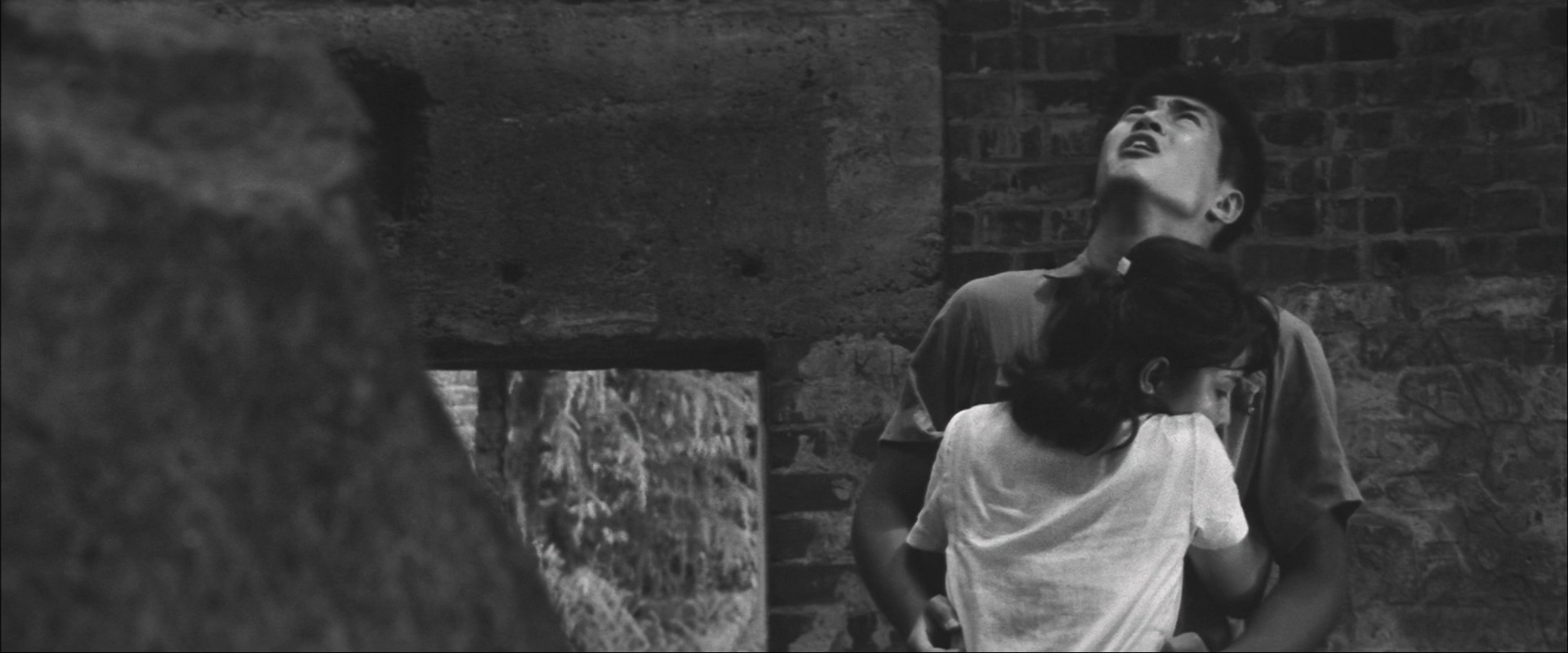
Sanshiro Sugata had not especially pleased the censors who took a scalpel to it, excising a few elements they found problematic, but the film proved popular enough with audiences for the government to commission a sequel. Apparently somewhat reluctantly, Akira Kurosawa returned to the world of Sanshiro Sugata picking up almost in real time two years later with a conflicted Sanshiro (Susumu Fujita) still wandering around Yokohama avoiding the woman he loves whose father may have died due to injuries inflicted on him during his fight with Sanshiro. Yet where the first film had essentially presented a spiritual odyssey through the medium of judo, part two is a much more nakedly propagandistic affair. 

It some ways it’s a little ironic that Sanshiro has almost become a folk hero who stands up for the oppressed Japanese against the looming threat of Western imperialism as mediated through the contest between Japanese martial arts and American boxing. The film opens with a drunken American sailor berating the teenage boy pulling his rickshaw and eventually attacking him only to run into Sanshiro and get a swift hiding. The thankful boy recognises his name and decides that he wants to learn judo too so he can defend himself against external threat, but Sanshiro isn’t sure he should be teaching anyone because he still has a lot to learn and is otherwise unable to escape his guilt over having contributed to the deaths of others through the practice of his art. His internalised shame is only deepened when he’s asked to participate in a spectacle match against a top American boxer and declines only to be told off by the guy who decided to accept. He used to be a jiujitsu champ, but ever since Sanshiro brought about the judo revolution no one cares about jiujitsu anymore and it’s ruined his livelihood. 

There is it seems a degree of shame in fighting for money, but more so in fighting for the entertainment of others. When Sanshiro visits the boxing ring, the sport is depicted as vulgar and primitive. The baying crowd are there largely for blood, riled up by the violent spectacle and eager to see a man in the extremities of a bodily struggle. For Sanshiro, it’s a depressing and offensive sight and to participate in it is to bring shame on Japanese martial arts. Meanwhile, the judo school is also threatened by two thuggish brothers keen to prove the superiority of karate over judo by defeating Sanshiro. They are also brothers of the first film’s villain Higaki who was reformed after his fight with Sanshiro but has since apparently fallen into ill health and listlessness, but so certain that Sanshiro is the only man who can save Japanese martial arts that he gives him the secrets of his brothers’ techniques. 

The final battle mimics that of the first film save taking place amid heavy snow and howling wind. Sanshiro once wins over his opponents through his kindness, taking them into the warm and looking after them until they begin to recover. One of the brothers briefly picks up a meat cleaver before thinking better of it as the two of them grin and admit defeat. Yet Sanshiro’s real battle is indeed against the American imperialists, wilfully breaking Yano’s cardinal rules by deciding to agree to the spectacle fight and easily defeating the American boxer who ends up just passing out from the force of Sanshiro’s aura. The jiujitsu practitioner who seemed to resent him before breaks down in tears and offers his sincere thanks to Sanshiro for standing up for Japan against the Americans.

The contemporary context is clear, this time around judo is much less about spirituality than it is about victory as much as Sanshiro likes to say that it isn’t winning and losing that’s important. Sanshiro becomes the saviour of Japanese martial arts, now endangered by the rising popularity of Western boxing, but also indirectly of the Japanese people in standing up against an encroaching external threat in direct contrast to the slimy Fubiki (Ichiro Sugai), a dandyish interpreter to the Americans forever dressed in foppish suits and seemingly content to do their bidding. “You haven’t changed at all,” Yano scoffs of Sanshiro’s two years of fruitless travelling and it’s clear he still has a lot to learn, putting his romance with the long-suffering Sayo once again “on the back burner”, while remaining true to himself even if not quite the monster the children sing of, a relentlessly honest man and seemingly the lone defender giving hope to an increasingly anxious Japan.


Sanshiro Sugata (姿三四郎, Akira Kurosawa, 1943)

It might seem curious in some ways to make a film about the importance of humanity in martial arts during a time of war, but Akira Kurosawa’s debut feature Sanshiro Sugata (姿三四郎, Sugata Sanshiro) does just this in depicting the hero’s coming of age as a gradual progress towards awakening as he learns to attain control over body and mind through the modern discipline of judo. Based on a novel by Tsuneo Tomita, the film is in many ways a typical martial arts drama in which a young hopeful seeks a master and must eventually face a rival, but lends a note of poetry to the tale which is in other ways perhaps out of keeping with its times. 

The times of the film, however, are late Meiji as demonstrated in the lively opening sequence which ventures into a town in transition where policemen in Western-style uniforms walk the streets alongside townspeople dressed largely in kimono as is the hero, Sanshiro Sugata (Susumu Fujita), who’s come looking for a famous jiujitsu master. Taken on as a pupil, he overhears the master, Momma (Yoshio Kosugi), disparaging a rival, Yano (Denjiro Okochi), who has come up with a new martial art he calls judo which is fast gaining both respect and popularity. Momma thinks it’s all just a branding exercise and Yano’s “judo” is just repackaged jiujitsu, irritated that he seems primed to take a prestigious position as a trainer to the police force which runs its own martial arts contest. Sanshiro goes with them when they attempt to ambush Yano and teach him a lesson only to be easily defeated and humiliatingly thrown in the local river. Sanshiro immediately switches his allegiance, discarding his geta to give Yano a ride home in his rickshaw.

As Yano repeatedly tries to teach Sanshiro, judo is more than a martial arts discipline and places humanity at the centre of everything. This is a difficult lesson for the hot-headed Sanshiro to learn, quickly falling foul of his new master after brawling in the red light district and dramatically throwing himself into the pond. Clinging to a pole, he refuses to get out until Yano forgives him, but in true master fashion Yano merely says that getting out of the pond or not is entirely up to him. It’s while he’s in there, and after a few words from a Buddhist monk, that he witnesses a lotus flower slowing unfolding and achieves a kind of enlightenment that allows him to realise he’s been childish and petulant, finally getting out of the water to submit himself to the rigorous discipline of the martial arts life. 

The flower motif recurs several times, not least being its subversion when antagonist Higaki (Ryunosuke Tsukigata) sprinkles the ash of his cigarette over it. Making his first appearance in dandyish Western dress, Higaki is described as a snake-like villain, his evilness emphasised by his non-Japanese attire in contrast to pretty much everyone else who continues to dress in kimono. Higaki vows that his fight with Sanshiro must be to the death, in part a fight between the nascent art of judo originating in the post-feudal society and the traditional art of jiujitsu, but echoing Sanshiro’s first fight with former master Momma which resulted in his death and plunged the hero into spiritual conflict. He then experiences something similar when realising that he has inadvertently fallen in love with Sayo (Yukiko Todoroki) the pure-hearted daughter of another rival, Murai (Takashi Shimura), who also desires to fight him but as it turns out only in his desire to face a worthy opponent. Sanshiro wants to back away, afraid that he may humiliate or even kill the father of the woman he loves but is brought back to himself by more words from the monk who tells him that he must be as innocent as she is and engage in the fight in a sportsmanlike fashion as a spiritual as well as physical contest. 

This is also to some degree true of his final confrontation with Higaki which too is a confrontation with the evils of the age if less comfortably also satisfying the censors by allowing Higaki to stand in for foreignness in general. Higaki is indeed often accompanied by the sound of the wind which echoes his modernity, the fight taking place in a large windswept field below roiling clouds as the two men grapple despite the advice of their intermediary to call it off before one of them really dies. Higaki does in a sense die a sort of death in that we’re told after the fight he reformed and also managed to find a similar kind of enlightenment to Sanshiro who is then bashful and romantic while heading off on another journey from which he assures Sayo he will soon return. It’s true enough that there doesn’t seem to be much that would appeal to the censors of 1943 save the implied defeat of Western powers and celebration of Japanese martial arts given that humanity is repeatedly emphasised as the core component of judo and that Sanshiro achieves an individual enlightenment rather than finding peace as a member of a team or community, but they did otherwise decide to cut a substantial amount of the film said to contain a love scene and references to alcoholism that they deemed improper. Nevertheless, there are shades of Kurosawa’s later greatness even here in his dramatic composition and expressionistic use of nature to detail one boy’s journey into manhood through the spiritual rather than physical gymnastics of the philosophy of judo. 


Pee Mak (พี่มาก..พระโขนง, Banjong Pisanthanakun, 2013)

If you suddenly discover your spouse is a member of the undead, do you really have to break up with them or is it alright to go on living with a ghost? The conventional wisdom in Banjong Pisanthanakun’s horror comedy take on the classic folktale Mae Nak Phra Khanong, Pee Mak (พี่มาก..พระโขนง), is that the dead cannot live with the living, but perhaps love really is strong enough to overcome death itself and living without the person who means most to you really might be more frightening than living with an all-powerful supernatural entity.

In any case, much of the comedy revolves around the desperate attempts of Pee Mak’s friendship group to make him realise that wife, Nak (Davika Hoorne), is a ghost. The men had all been away at the war and have now returned but the village seems different and the villagers are all avoiding Pee Mak. Gradually, it dawns on them that Nak actually died due to complications from a miscarriage after going into labour alone at home given Pee Mak’s absence. But Pee Mak himself remains unaware of this fact, or so it seems, and refuses to listen to his friend’s attempts to convince him which are also frustrated by their fear of Nak and the worry that she might curse them if they reveal her secret.

The four friends are each played by the same actors and have the same character names as those in the shorts Banjong Pisanthanakun directed for 4Bia and Phobia 2, and as in those two films there is a degree of confusion about who is and isn’t a ghost. On their return, the men are passed by a ferryman who is returning the bodies of dead soldiers to their families explaining that the graveyards are all full. This of course hints at the destructive costs of the war and haunted quality of the depleted village to which not all men have returned, but also leaves the door open to wondering if the five of them are not already dead themselves and have returned home only in spirit without realising. Pee Mak, after all, sustains a serious injury from which he miraculously recovers driven only love and the intense desire to return home to his wife and the baby he’s never met who must by now have been born. 

Meanwhile, Nak tells Pee Mak that the rumours of her death are greatly exaggerated and mostly put about by a local man, Ping, who had been harassing her while Pee Mak was away at the war and was upset by her rejection. Ping then later also accuses Nak of killing his mother after she drunkenly told Pee Mak about Nak being a ghost, but in general the villagers only avoid Nak until one rather late intervention rather than try to exorcise her spirit. Nevertheless ghost or not, it does not actually appear that Nak is particularly dangerous. She does not drain Pee Mak’s life force nor randomly attack other people and at most only seems to glare intensely at his friends who might just be annoying in far more ordinary ways especially as one of them seems have developed a crush her.

Which is all to say, is it really so wrong for Pee Mak to enjoy a happy family life with his ghost wife who may have developed a set of really useful skills such as super-stretchy arms and the ability to hang upside down? Banjong Pisanthanakun constantly wrong-foots us, suggesting that perhaps everyone’s already dead, or maybe no one is, while eventually coming down on the side of the power of love to overcome death itself. Despite the film’s setting in the distant past, he throws in a constant stream of anachronistic pop culture references that might suggest this is all taking place in some kind of universal time bubble but also lends to the sense of absurdity in what is really a kind of existential farce as the gang attempt to figure out who’s alive and who’s a ghost before eventually realising that it might not really matter. Dead or alive, it seems like life is about just being silly with your friends free from the folly of war, which is surely a message many can firmly get behind.


Trailer (English subtitles)