Amoeba (Siyou Tan, 2025)

Choo (Ranice Tay) wonders what it’s like to be the Merlion. Being made to stand there while everyone makes up stories about you, like you’re trapped in an aquarium and can only look out on the world. In an odd way, it reflects her own experience as an “ungovernable” young woman contending with an authoritarian culture led by entrenched patriarchy as mediated through her overly strict elite girls high school which is intent on producing “respectful daughters and students of virtue”.

The fact that Choo doesn’t quite it in here is signalled on her very first day in which she’s humiliatingly forced to drag her own desk from one classroom to another as a result of some sort of clerical error. A stern-looking teacher measures the diameter of the face on her wristwatch, decides it’s too large and, therefore, too masculine, and takes it away from her. They measure the length of her skirt above her knee and say it’s too short, while her hair is too long. Or rather, the style is wrong and she should make sure it doesn’t touch her collar by the following Monday. The teacher even pulls at her shirt as if she were about to tear it off to confirm the colour of her bra, though it is in no way visible and therefore presumably makes no real difference anyway.

Above the whiteboard in their classroom, there’s a sign reading “purity, moral uprightness, diligence, and filial piety,” all qualities Choo derides during her speech having been entered as a candidate to become class monitor against her will. She ends up ironically being made “Good Citizen” representative instead by her teacher, Mrs Lim, who takes an instant dislike to her and seems to regard Choo as a potential source of resistance. On the one level, the girls are all being encouraged to become proper young women and as Choo says despite her very feminine name, it doesn’t really suit her. Later, she becomes friends with another group of girls who ironically describe themselves as a “gang”, having realised the great figures they learn about in school and have streets named after them made their money peddling opium, only to be accused of actively participating in organised crime when their teacher finds a video of them dancing around to a street music video featuring a guy with tattoos and having fun in one of the girl’s bedrooms.

Choo and her friend Nessa (Nicole Lee Wen) had been worried about the video for another reason, that even though as Choo says they “technically didn’t actually do anything,” the video she shot of them messing around while trying to catch the ghost in her room could cause each of them a lot of trouble in the extremely conservative country where homosexuality was only decriminalised in 2022. In any case, the teacher doesn’t seem to pay any attention to that part of the video, which comes as a relief to both of them even if it’s made them guarded and awkward in the way they interact with each other. Nessa wants to quit swimming and try football instead, but doesn’t necessarily feel she has the freedom to make that decision and is fearful of its implications. “Can’t sleep, cannot eat, cannot freaking pee, can’t do anything,” another of the girls laments. “We can’t even study what we want.”

But having banded together over their shared sense of alienation, Choo’s friends are also separated by their socio-economic disparities. They mainly hang out at the house of the richest girl, Sofia (Lim Shi-An), whose father is a construction magnate. After deciding they all want to go to the same junior college, they struggle to agree on a destination as Sofia has her sights set on an elite institution the other girls think is out of their league given their current academic performance. Though she agrees to go to a less prestigious school with them, in reality Sofia can’t let go of her privilege or the expectation that goes with it and has secretly applied to the other school while trying to cajole the other girls to apply there too. Later it transpires that she’s already been given the answers to the exam questions by the tutor her wealthy mother hired, so there was never any doubt of her getting in because her money will always open doors. She shares the answers with the other girls to parrot back during in their oral which involves describing a picture of the iconic seafront to which the only “correct” answers are that the Merlion represents prosperity and national identity. Choo gives this answer too, but only to subvert it in asking what the point of this test is if they’re just supposed to give the “correct” answer while making it clear that she won’t go along with this charade even if it might be advantageous for her to do so.

The girls had taken refuge in a cave on the land being developed by Sofia’s father and created their own secret den, but when it’s taken down, erasing their history in the name of progress, it’s like they’re losing their last safe space where they can embrace these subversive thoughts and express their sense of frustration with the authoritarian culture around them as corporate forces seek to bury and obfuscate the past. Choo wonders how they can escape this “aquarium” and see a future for themselves when their history is constantly being revised and repackaged to reflect a certain ideology and they’re given so little freedom to think for themselves or to be who they really are in the culture where conformity is king. Yet though her camera and friendships, Choo does seem to have discovered a way to go on seeing, and speaking, the truth even if everyone else is content to ignore it.


Amoeba had its world premiere as part of this year’s Toronto International Film Festival.

Trailer (English subtitles)

The Great Chase (華麗なる追跡, Norifumi Suzuki, 1975)

What about if you rebooted the Bannai Tarao series, but the hero was a female spy who is also a champion race driver and martial artist? Norifumi Suzuki did actually make a Bannai Tarao move in 1978 starring Akira Kobayashi, but the heroine of The Great Chase (華麗なる追跡, Karei-naru Tsuiseki) certainly loves a disguise or two and like the famous man of a thousand faces seems to have no trouble pulling them off as she infiltrates a gang of evil traffickers led by a furry which has come up with an ace new plan of packing heroin into coffins and having them shipped to nuns!

Oh, and the gang were also behind the death of her father who “committed suicide” in prison after being framed for drug smuggling. The Great Chase takes place in a world of pure pulp which somehow maintains its sense of cartoonish innocence even after Shinobu (Etsuko Shihomi) has infiltrated the heart of darkness and seen most of her associates killed by sadistic gang boss Inomata (Bin Amatsu). But at the same time, it delves into a deep sense of ‘70s paranoia as it becomes clear that the authority figures are all corrupt. Inomata has become a politician, while Shinobu’s father’s murder was orchestrated by the prison warden who was working with him in return for financial gain. The man who framed her father was a friend of his, implying that no one can really be trusted when there’s money to be made.

In a roundabout way,as this sense of anxiety is only reinforced by Shinobu’s role as some sort of secret agent working for the spy ring run by her uncle which is currently hot on the trail of the drug dealers even if they haven’t yet figured out who their boss is. Conversely, her home life is as wholesome as it could be with her two adopted siblings who run a florist’s along with Shinobu’s fan club. Her status as a kind of race car idol lends Shinobu a particular kind of ‘70s cool and turns her into some sort of superhuman figure capable of triumphing over any kind of adversity like a superhero worthy of any kid’s lunchbox. The siblings, Nagi (Fujika Omori) and Shinpei (Naoyuki Sugano), were taken in as orphans by her father which once again signals his goodness in contrast to the greed and selfishness of the gang that had him killed to cover up their crimes. 

That they peddle in drugs marks them out as a force of social disruption, but they’re also actively heretical in hiding behind the shield of the church. Suzuki frequently uses religious imagery in his films and here again echoes the romanticism of School of the Holy Beast with the use of red roses to decorate the coffin of the unfortunate young woman who has been turned into a vessel for smuggling drugs and has for some reason been laid out otherwise entirely naked. When it comes to retrieving the merchandise, we can see that many of the habits are being worn by men while Inomata himself masquerades as a priest. Then again, perhaps he is merely indulging his love of costume play seeing as he also has a hobby of wearing a furry bear suit to attack and rape women in his living room. 

Inomata’s claws then seem to represent something else, a rapacious, grasping sense of patriarchy in which he also uses drugs to bind women to him. Shinobu’s childhood friend Yukiko (Hisako Tanaka) has apparently fallen victim and laments that she is possessed by him body and soul to the point that the old Yukiko is dead which is why she hasn’t been able to step in and help Shinobu and is doing so now fearing that it may cost her her life. Suddenly, it’s all quite grim with the basement sex cult, whipping and torture, but Shinobu maintains her plucky spirit and is somehow able to lure Inomata towards a cable-car-based showdown. With a cameo from real life wrestler / singer Mach Fumiake, the film enters a kind of meta commentary on a real-life Shinobu (though she was not, as far as anyone knows, one of Japan’s top spies), but otherwise remains within the realms of pulp in which the heroine is able to pull off her difficult mission with the help of her talent for disguises before dramatically unmasking herself as the woman who’s going to take them all down. Camp to the max and incredibly surreal, the film never drops its sense of silliness even as the grim events enveloping Shinobu lead to tragic consequences that she barely has time to deal with before barrelling straight into the next duel with the forces of corruption.


*Norifumi Suzuki’s name is actually “Noribumi” but he has become known as “Norifumi” to English-speaking audiences.

Hidden Face (히든페이스, Kim Dae-woo, 2024)

The obvious irony in the title of Kim Dae-woo’s erotic thriller Hidden Face (히든페이스), is that it refers both to the heroine, Su-yeon (Cho Yeo-jeong), who conceals herself within a secret bunker in her home to spy on her indifferent social climber boyfriend Sung-jin (Song Seung-heon), and to the sides of themselves that people choose not to reveal to others. As Su-yeon’s mother (Cha Mi-kyung) says, it’s what people see that matters, but the hidden corridors of Su-yeon’s home symbolise the ways in which she has imprisoned her true self or at least has locked a part of herself away from prying eyes while continuing to pry into the secret lives of others.

It’s in this forbidden space, apparently added to the house by the previous father’s owner who was a member of notorious Japanese Unit 731 during the war and feared exposure, that Su-yeon first kissed fellow student Mi-ju (Park Ji-hyun) with whom she’s been in a long-term, but apparently secret, relationship. While Mi-ju is patiently renovating the house she thinks they’ve bought together, Su-yeon has decided that she wants a “real life that people recognise”, which she evidently doesn’t believe a same-sex relationship can be. The forbidden space of “cold room” is then where she’s locked her queerness, and a manifestation of her fears of the consequences of exposure. The problem is that she doesn’t even like Sung-jin and the points of attraction he seems to hold for her are that he doesn’t like her either and is otherwise easy to manipulate because of the vast class difference between them. 

Part of the reason that Sung-jin keeps Su-yeon at arms’ length is that he resents the power that she holds over him. He resents both her and himself in knowing that he’s really only with her for material reasons, while simultaneously aware that his current success has nothing to do with his own talent and everything to do with Su-yeon’s privilege. Su-yeon’s mother congratulates him on working hard to build an image of himself, while otherwise needling him about his working-class background in which his mother ran a small restaurant and really knows nothing of this elite world of classical music, mansions, and honeymoons to resorts that charge some people’s annual wage for a single night’s stay. But the facade can’t really cover up Sung-jin’s insecurity and the fear that he couldn’t make it on his own though he so desperately wants to be a part of this world and to feel himself worthy of it. He feels emasculated and humiliated in assuming that other people can see that he’s just a puppet while Su-yeon, her mother, and their advisor discuss policy decisions he’s technically responsible for out in the open, he assumes to deliberately embarrass him and keep him under control. 

Yet the truth is that these kinds of hierarchal power structures of class and gender are less relevant when it comes to desire than otherwise might be assumed. Su-yeon refers to Mi-ju as her slave or underling and adopts a dominant role in the relationship yet eventually has the tables turned on her when Mi-ju decides to rebel. The power dynamic of desire is a push and pull between the desire and the desired mediated by the depth of yearning. It may seem to Su-yeon that she is in control, but equally Mi-ju derives power from her willing submission and can overturn the dynamic at any time she chooses upending Su-yeon’s delusion that Mi-ju is a mere plaything, or “tool”, she can take out and put away at will. 

Nevertheless, the question is whether anyone could be content with this shadow life or if Su-yeon, vain, psychopathic, and probably incapable of understanding other people’s feelings, is content to imprison herself within the hidden corridors of her home which come to stand in for the need to conform to the heteronormative, patriarchal, class-based social codes other people see as “real” and “normal”. Sung-jin is apparently all too willing, considering just leaving Su-yeon trapped behind their walls to continue enjoying this life of privilege with a little more freedom without considering that without Su-yeon he has no entitlement to it as her mother later suggests after becoming worried on realising that Su-yeon hasn’t used her credit in days which is extremely uncharacteristic behaviour.

Sung-jin would trade his pride as a man, his sense of self-worth, and even betray his moral code to appear wealthy and successful and deny his working-class origins. Su-yeon would also, it seems, rather be in a conventional marriage to a man for whom she feels only contempt and resents for not liking her, than live an authentic life as a lesbian and face her internalised homophobia along with that of the wider society. Thus she confines Mi-ju to a forbidden space of her mind in an attempt to have her cake and eat it too, while Mi-ju seemingly fulfils herself in wilfully becoming a prisoner of love, even if it may only be in Su-yeon’s fantasy. Perhaps they get what they wanted all along, affirming the primacy of privilege, but only at the cost of their authentic selves and trapped inside the prison of their own self-loathing.


Hidden Face is released Digitally in the US on September 16 courtesy of Well Go USA.

Trailer (English subtitles)

Laugh, Everyone! (みんな笑え, Taichi Suzuki, 2025)

A down of his luck second generation rakugo storyteller begins to discover a new way of life after meeting an aspiring female comedian in Taichi Suzuki’s lighthearted dramedy, Laugh, Everyone! (みんな笑え, Minna Waremashit). The title is taken from a moment of madness in which a resurgent Tamon pleads for everyone to just laugh rather than being at each other’s throats or feeling like they want to die, but that’s something he himself may not be able to do until he’s truly made peace with his demons.

Chief among them would be his father, Kenzo, a rakugo master who’s tormented and bullied him his whole life. In general, rakugo storytellers recite a canon of classical tales that have been passed down since the Edo era, but despite having inherited his father’s stage name, Tamon avoids performing the classical repertoire and sticks to original material. His acts don’t seem to please the audience, and it’s clear that his father’s other disciple, Kannosuke, resents that it was Tamon who became the official heir despite having no talent when he was the rightful successor. Unfortunately, Kanzo failed to plan for his retirement and now has dementia, meaning that he can no longer perform. Unable to make money through rakugo, Tamon has a part-time job in a warehouse to try to make ends meet all while being berated by Kanzo for bing a useless failure.

There are some touching moments later on in which Kanzo bonds with the son of his carer and plays with him as if he were Tamon, hinting that he might have liked to have been a different kind of father and have a different kind of life if it were not for the pressure of passing on his rakugo name. For his part, Tamon has become timid in the extreme and has been running away from anything challenging or unpleasant his whole life. In fear of not living up to his father’s legacy, Tamon avoids the old stories and sticks to telling the same original tale he’s been doing for the last 30 years. 

But if his problem is that he can’t master the classics, Kiko’s is that she can’t innovate and all her original material is pinched from somewhere else. She and her comedy double act partner Chi-chan have been trying to break into television, but can’t catch a break with their largely improvised act. While auditioning, they encounter entrenched sexism as the male panellist tells them that women aren’t funny and don’t take comedy seriously. Kiko’s mother Yoko experiences something similar at her bar where her sleazy backer is all over a younger hostess with whom he eventually hopes to replace her, while Chi-chan has also fallen prey to a predatory man working at a host club. She has been financially supporting Joe to help him achieve his dream while he forces her into sex work to make him more money, pushing her to quit comedy and work for him full-time. This kind of exploitation has regrettably become so common that a specific law was passed in 2025 to prevent young male “hosts”, who work in bars where they charm women into buying drinks and gifts, forcing their patrons into debt and then sexual exploitation. 

Nevertheless, Kiko strikes gold when she hears Tamon’s baseball-themed routine and realises it’s the same one her mother used to listen to on cassette tape. Reworking it as a manzai routine, she sees a way through her creative block even if it’s sort of plagiarism. After getting his permission to use his material, Kiko begins to think of Tamon as a mentor while he almost thinks the same of her as they encourage each other through their comedic failures even while working in opposite directions. A kind of rapport emerges between them as they were actually an accidental manzai double act along with a more positive paternal relationship than that seen between Kanzo and Tamon which is fuelled by a fear of obsolescence, ego, and resentment. Through his friendship with Kiko and rekindling that with her mother, Tamon eventually gains the courage to stop running away and face himself in classic rakugo both making peace with the complicated relationship he had with his father and carving out a new identity for himself in emerging from his father’s shadow. Sparrows fleeing the cage, both he and Kiko rediscover the healing power of laughter and with it the courage to face their troubles head on rather than continuing to run away in fear of failure and miss out on the joy the craft can bring to those around them.


Laugh, Everyone! is available to stream until 14th September 2025 courtesy of Chicago Japan Film Collective.

Trailer (English subtitles)
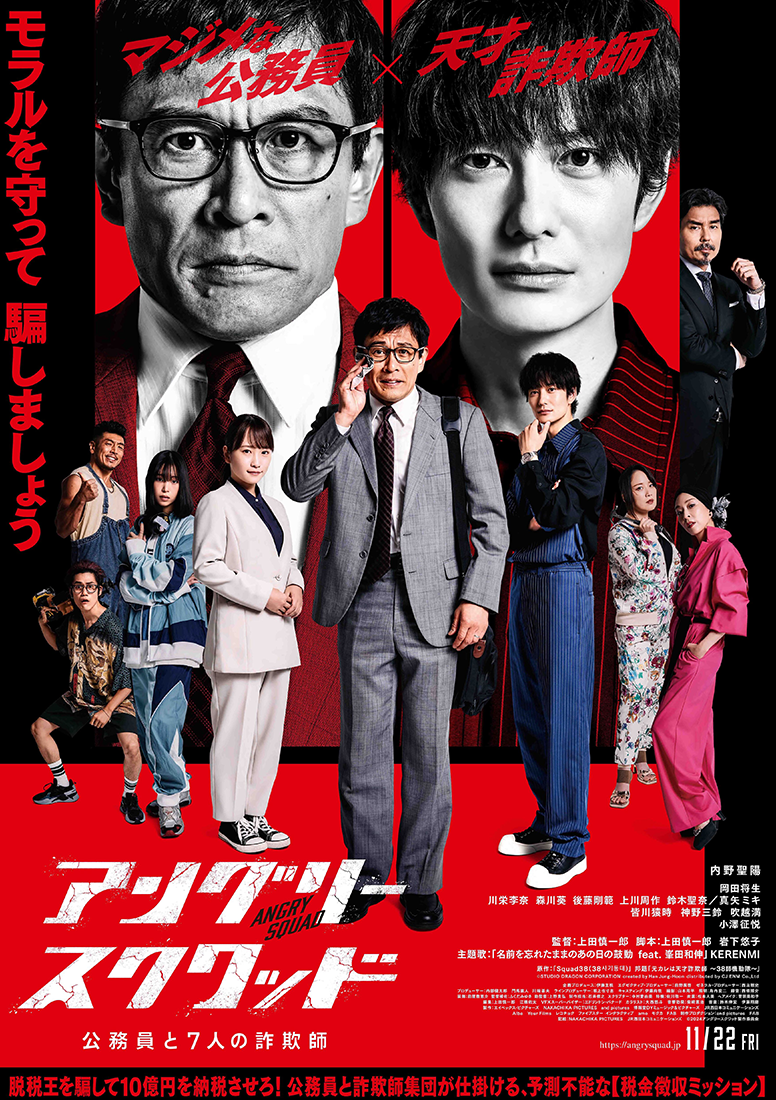
Design of Death (杀生, Guan Hu, 2012)

A doctor (Simon Yam Tat-wah) dispatched to put an end to a “mysterious disease” finds himself embroiled in mystery after discovering the barely breathing body of an unpopular villager in Guan Hu’s darkly comic drama, Design of Death (杀生, Shāshēng). Adapted from a 1998 novella by Chen Tiejun, the film’s Chinese title translates as “to kill a living thing”, the first act forbidden under Buddhism. Yet this particular village has decided it has no other choice if it is to maintain order along with its famed “longevity”.

The son of an itinerant pedlar reluctantly taken in by the village’s ruling Niu clan, Niu Jieshi (Huang Bo) is a general nuisance and agent of chaos. For the first part of the film, we see him act in ways which are rude and vulgar, cruel, violent, and morally repugnant. In short, we can well understand why pretty much everyone wanted him dead and any one of them might have killed him. Yet as the film goes on, we come to sympathise with Jieshi. We see him more as a loveable rogue who was never fully accepted by the village because he was not of it by birth. His foreignness is the reason to which the other villagers attribute to his inability to conform with their rules and traditions, and though, in retrospect, most of his pranks are just silly, his presence destabilises the sense of order which has enabled this place to earn the name Long Life Village. In any case, living past 120 might not be much fun when you’re constrained by so many rules and social mores while many are concerned more with the village’s reputation than the lives or happiness of the villagers.

But the village’s reputation does seem to be important to the powers that be, which is why the doctor is eventually sent there. They want him to find out the cause of this “mysterious disease” and stop it spreading so the Long Life Village doesn’t lose its USP. When he arrives, however, it seems like the “mysterious disease” is actually cancer, which obviously doesn’t spread from person to person. The only other symptom is a minor eye infection, though the real disease running through the village is enmity with the determination to put a stop to Jieshi’s chaotic antics. Jieshi proves oddly unkillable, resurrecting himself after his first encounter with the doctor having been thrown off a cliff in a sack. His defiance only spurs on the villager elders, who then bring back another doctor, Niu (Alec Su You-peng), who had been away studying Western medicine in the cities after being kicked out of the village for another infraction some years previously.

There’s something disconcertingly modern about Niu that makes his presence in the village somehow threatening, as if he were the harbinger of a more authoritarian era. Despite being a doctor, he is cold-hearted and rational and is determined not only to kill Jieshi but his unborn child. The unnamed doctor is, by contrast, a master of Chinese medicine though also educated in the Western style and suspicious of Niu. All he wants to is to understand why Jieshi died, which is also in its way to cure the sickness in the village to which Niu is an obstacle. What he gradually realises is that most of the other people in the village are pretty awful and what they succeeded in doing was creating the circumstances for Jieshi’s death by making the village uninhabitable for him. 

But it may also be true that there’s something cosmically dangerous about killing such an elemental spirit and that the village cannot in fact survive in the absence of chaos. Jieshi is then the individual hammered into submission by implacable authoritarianism while the village is a microcosm of a corrupt authoritarian society ruled over by a petty elite obsessed with rules and tradition. That the doctor dresses in modern style and uses a mix of traditional and modern equipment suggests, as does the pregnant finale, that in all things there must be balance. The ultramodernism of Niu with its fascist undertones won’t work, nor will the hardline traditionalism of the village. Had they only made more of an attempt to understand and accept Jieshi rather than forcing him into submission, they too might have survived and evolved but in fact were only ever headed towards destruction in their obsession with a long life lived in misery.


New Female Prisoner Scorpion: Special Cellblock X (新・女囚さそり 特殊房X, Yutaka Kohira, 1977)

After Meiko Kaji declined to appear in further Female Prisoner Scorpion movies, Toei attempted to reboot the franchise under the “New Female Prisoner Scorpion” banner much as they did with some of their other franchises such as New Battles without Honour and Humanity. This second, and in fact final, instalment Special Cellblock X (新・女囚さそり 特殊房X, Shin Joshu Sasori: Tokushu-bo X) is not a sequel to New Female Prisoner Scorpion but itself another reboot that like its predecessor takes place amid a backdrop of paranoia and political corruption. 

Arriving back at the prison after a failed escape attempt, this Nami (Yoko Natsuki) has an all new backstory as an idealistic nurse whose doctor boyfriend was given shock therapy that destroyed his mind and left him in a vegetative state after threatening to blow the whistle on his hospital’s decision to let the man at the centre of a growing political scandal quietly pass away. These facts are first communicated to us through a surreal fever dream Nami has presumably caused by an infected wound on her leg. She first dreams herself frolicking cheerfully with the doctor before frightening figures of darkness pull him back into an abyss while terrifying clowns leer over and then rape her. She’s only saved from her life-threatening medical condition by the intervention of Kiyomi (Kaori Ono), a fellow prisoner who feels indebted to her because of a blood transfusion she received three years earlier before everything in Nami’s life went wrong. 

But otherwise Nami enjoys little respite in the prison as the other inmates take out their frustrations on her in regards to the reprisals enacted on them following her escape attempt. Like most other prisons in the franchise, this one employs a tactic of divide and rule encouraging the prisons to turn on Nami rather than the guards for their treatment of them. But things are changing in the prison. Chief guard Kajiki (Takeo Chii) had ruled supreme, but the warden has different ideas and objects to Kajiki’s tactic of appeasement by allowing things like cigarettes and chocolate to circulate in the prison to keep the inmates happy. He brings in a super tough security enforcer from the face male Abashiri prison which means Kajiki’s career is definitely on the decline and leaving him increasingly siding with the prisoners over the cruel treatment they’re exposed to by the warden who is too busy courting the justice minister in the hope of a government position to consider things like prison regulations or the welfare of the prisoners. 

Of course, it’s also the justice minister against whom Nami wants revenge. This Sasori is even more silent than most, glaring angrily at those around her but saying little other than stopping to advise Kiyomi not to get involved with her because it won’t end well in a prediction that turns to be accurate. When she eventually assumes her Sasori persona, it’s a little different from that of her predecessors as she dresses all in white (perhaps apt for a former nurse) with a long black over coat. Her black hat has a wide, stiff brim and a feather tucked in the side. She kills with a scalpel, as if she were literally excising the corruption in society and is prepared to play a little bit dirty. The justice minister had asked the warden to kill her and pass it off as an illness. She threatens to blackmail him though it’s obvious she’s not after money and executes the warden when he delivers the pay off on a cheerful fairground ride. 

Though it may lack the striking cinematography found in Ito’s trilogy, the film nevertheless skews surreal with its strange fever dream that turns out not to be so far from the reality as you’d assume along with weird gags like Nami and Kojiki stealing the clothes of a young couple after escaping together who happened to be dressed in identical outfits. Nami teaming up with a former guard is also something of a surprise and though she fights with him and rejects his romantic advances, she seems to have genuine pity when he gives up his life to save her. In any case, they each have something in common as those who now resist the system as Kajiki became a victim of a more authoritarian regime that doesn’t like his lax approach to rule keeping and Nami pursues her desire for justice in an unjust society at all costs. Dropping a bloody scalpel behind her, she disappears into the night, justice done, but presumably onto some other kind of vengeance against a corrupt authority that equally will stop at nothing to hang on to its power.


New Female Prisoner Scorpion (新・女囚さそり 701号, Yutaka Kohira, 1976)

After the fourth film in the Female Prisoner Scorpion series, star Meiko Kaji decided to move on but Toei had other ideas and opted for a reboot as signalled by the addition “shin” or “new” to the otherwise identical title to the very first film. New Female Prisoner Scorpion #701 (新・女囚さそり 701号, Shin Joshu Sasori: 701-go) moves in a slightly different direction spinning a tale of a less straightforward revenge coloured by conspiracy cinema and a series of real life high-profile corruption cases including the Lockheed Scandal, itself name checked in the film. Just a few months earlier, Roman Porno actor and fervent nationalist Mitsuyasu Maeno had lost his life in a suicide attack on the home of underworld figure and right-wing fixer Yoshio Kodama who had been instrumental in “convincing” Japanese airlines to buy Lockheed planes over McDonnell Douglas.

In any case, this Nami Matsushima (Yumi Takigawa) is an ordinary young woman who becomes concerned about her sister Taeko (Bunjaku Han) when she uncharacteristically drops out of contact after behaving strangely. Taeko is a political secretary to assemblyman Miura (Ichiro Nakatani) who is currently the vice-minister for justice and at the centre of a burgeoning corruption scandal. After Nami and her fiancée Toshihiko (Yusuke Natsu) manage to meet up with Taeko, she is suddenly kidnapped from the hotel car park while the man who was with her, Sugino (Nenji Kobayashi), is gunned down. Sugino is found to be carrying his passport and two airline tickets to Paris which, along with Taeko’s strange behaviour, imply they were planning to flee the country together. Looking more closely at the wedding presents her sister had given her, Nami realises she’s left her a cassette tape with the instruction to leak its contents to the press should anything untoward happen to her. 

Nami uses the tape as leverage with Miura to try and rescue her sister but ends up learning some unpleasant truths before being framed for Taeko’s murder and sentenced to 15 years in prison. Toshihiko, who had originally been supportive, betrays her, testifying at her trial that she may have been resentful that Taeko was against their marriage only to later marry Miura’s daughter and go into politics apparently siding with the bad guys. Toshihiko may have seemed like a nice guy, but it’s also true that he tried to pressure her into premarital sex that she didn’t want by insisting that he couldn’t wait for marriage, suggesting they blow off her sister and go to a hot springs in Hakone instead. Most of the men in the film are equally spineless and duplicitous not least the guards who with the exception of one are all corrupt and/or abusing the inmates. 

Not content with sending her to prison, Miura tries to have Nami offed with the assistance of the warden who puts her in a cell with the prison’s most notorious offender. Fusae (Mitsuyo Asaka) orders her minions to beat and torture Nami, at one point gang raping her while the only way she can think of to save her life is by claiming there’s another tape so if they kill her they’ll never know where it is and run the risk of the contents leaking. 

Meanwhile, she’s approached by a group of anarchists who tell her they need a leader which seems a little contradictory but nevertheless enables a jailbreak even as Nami develops a rivalry with the feisty prisoner number 804. Though she obviously didn’t commit the murder for which she was imprisoned, Nami is no pushover and in fact burns one of her tormentors alive not to mention stabbing another in the eye with a pencil and cunningly splitting a pair of scissors to gain twin knives. Rather than the classic scorpion look, she appears almost batlike, spreading her arms in her cape as she prepares to make her final act of revenge right outside the Diet building itself as if she were making a point about cleaning up politics aside from avenging her sister’s death and her own mistreatment. Director Kohira lends her a supernatural quality in her eerie silhouette as if she’s already become something else, a force of nature transformed by her righteous anger towards a corrupt society largely ruled by venal men willing to kill and use women for their own benefit or pleasure. Even Nami is forced to admit her complicity having learned her sister may have paid for her education through allowing herself to be traded by Miura as a political bargaining chip. She is not, however, willing to let it stand, resisting a controlling a patriarchal society with all of the resources available to her.


Linda Linda Linda (リンダ リンダ リンダ, Nobuhiro Yamashita, 2005)

“We’ve only got a little more time to be the real us,” according to a young woman making a promo video for the upcoming school festival, but who really is the “real us”? Now celebrating its 20th anniversary, Nobuhiro Yamashita’s wistful high school dramedy Linda, Linda, Linda (リンダ リンダ リンダ) is in many ways about the process of coming into being along with the anxieties of what comes next. “We won’t end here,” the girl later adds, “We won’t let our high school days become a memory,” yet they already are in a kind of contemporaneous nostalgia and elegy for idealised youth.

Or at least, there’s already a kind of reaching back taking place as the tracks the girls pick for a replacement act are by The Blue Hearts, a 1980s punk band that has become a kind of cultural touchstone echoing a sense of youthful alienation and rebellion. “Linda Linda” is the kind of song everyone knows, and even if for some reason they don’t or don’t even speak Japanese, can at least join in with the riotous chorus. It’s this sense of universality that eventually gives it its power as torrential rain brings the entire school inside just in time to see the girls’ belated act and find themselves captivated by its infectious energy and an identification with their own sense of insecure anxiety.

It’s also the serendipitous rain that allows lonely songstress Takako an opportunity to perform having previously declined to do because it’s no fun playing on your own and all her former bandmates graduated the previous year. Moe, the girl who broke her fingers playing basketball in PE leaving the original band members unable to take the to the stage, also gets an opportunity to sing having otherwise been denied a moment of closure in being prevented from taking part in her final school festival. While Moe feels intensely guilty about rendering all their time spent rehearsing somewhat pointless, it’s really the drama between founding members Kei and Rinko that leads to the band’s demise in Rinko’s conviction that it’s “meaningless” to continue while the others decide to go ahead anyway asking Korean exchange student Son (Bae Doona) to be their vocalist because she just happened to come down the stairs at the right moment and said yes because she didn’t really understand what they were saying.

Prior to her involvement with the band, Son had been a rather isolated figure trapped in the “Japan-Korea Culture Exchange Exhibit” which seems to have been more her teacher’s idea than her own and in any case gets no actual visitors. Her Japanese is a bit limited and most of her interactions are with a little girl who lends her manga to help her learn quickly, but becoming part of the band allows her to find her voice both literally and figuratively in taking the lead as the vocalist. A boy who claims to have fallen in love with her (Kenichi Matsuyama) goes to the trouble of learning a long speech in Korean to convey his feelings, yet a bemused Son replies to him in Japanese that she’s pretty indifferent to his existence before switching to Korean to explain that she’s leaving because she’d rather be hanging out with her friends with an expression that implies she’s only just realised that’s what they are. By contrast, she has a bilingual conversation with guitarist Kei (Yu Kashii) in which they seem to understand each other perfectly and each express how glad they are that they got to be in the band together. 

Similarly, it’s the concert itself that seems to heal rifts with a simple “Are you alright?” from Rinko (Takayo Mimura) to Kei whose friendship might, as someone says, essentially be too close for them to really get along. Drummer Kyoko (Aki Maeda) decides to declare her feelings for a longstanding crush before the concert. In the end she doesn’t manage it, but it doesn’t quite matter somehow because their performance is itself a kind of coming into being in which “the real us” comes into focus if also in a moment that itself becomes romanticised or idealised as an encapsulation of youth. Yamashita travels through the school festival as if it were a passage from one state of being to another, from the noodle stalls and crepe stands to haunted houses and the boy creating his own moment through encapsulating them on film, before ending with an unending song “so we can laugh tomorrow,” and the “real us” lives on.


Linda Linda Linda opens in US cinemas 5th September courtesy of GKIDS.

Trailer (English subtitles)
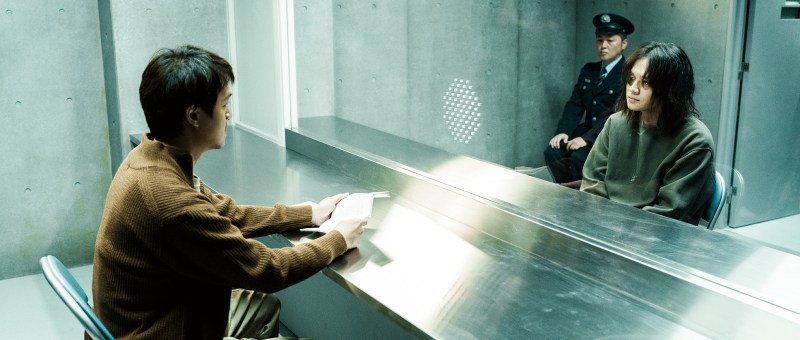
Lost Land (Harà Watan, Akio Fujimoto, 2025)

The world’s largest group of stateless people, the Rohingya have been persecuted under several authoritarian regimes in Myanmar and forced continually on the move throughout the region. Having previously explored the lives of Burmese migrants in Japan, and those of Vietnamese workers caught in exploitative training contracts, in Lost Land (Harà Watan), Fujimoto follows a community of Rohingya refugees as they embark on a perilous journey across South East Asia to reach Malaysia.

Somira and her brother Shafi don’t know much about this. They’ve been told that they have an uncle living there, but they don’t know his name or his phone number. Shafi keeps asking when they’re going “home”, but in reality they don’t quite have one. Their mother tells them stories about her childhood in Myanmar and a large mango tree that to her seems to embody the idea, but it’s an abstract concept that occupies a space of fairytale or mythical origin story. Later, Shafi will tell a kind young man looking after him that his uncle lives near a big mango tree, mixing up the stories he’s been told in his internal search for a home. He wanders off and finds a tall tree for himself in the middle of the city, looking up at it plaintively and playing hide and seek on his own knowing that no one’s coming to look for him. 

The siblings continue to play like children, but their games take on a darker quality when they become separated from their community and must try to look after themselves. They steal sugarcane to suck on, and beg local women for water, while planning to walk to Malaysia on their own despite not knowing the way. Eventually, they’re taken in by another fleeing Rohingya community who find themselves conflicted about what they should do with them. Though they may want to help these lone children for humanitarian reasons, they also know that they make their own passage more difficult and that the brokers will demand extra money they don’t have when they get to the next check point. 

By this time, it’s already been a couple of weeks since the children left their previous “home”. Their journey began by walking through the night to a dinghy that took them to a small ship where they encountered a storm, blew off course, and began to run out of food. One of their community died in the liminal space of the boat and was buried at sea. They frequently have to leave people behind because they couldn’t keep up or the authorities got them. This community too walk in the through the night clipping metal fences and then are forced to run for their lives. A horrifying moment finality demonstrates what it costs to look back or to try to help others while bullets fly indiscriminately in the darkness. 

Then again, there are moments of joy as a mother is reunited with her son after ten years even if he tells her that his workplace was raided and many of his friends were arrested. He was spared because he wasn’t working that day but ended up losing his job and will now struggle to find a new one while making sure to not blow his cover or be caught by the authorities. His mother’s faith remains strong as she insists that God wouldn’t let him suffer and is sure to find him a new job, despite all the fear and horror she’s been through on her journey towards him. She and her son are good people who look after Shafi even though they don’t have to because it’s the right thing to do. Though the siblings encounter good people like the Thai man who wanted to help them because he saw once Rohingya being taken away but couldn’t do anything about it, the world is otherwise heartless traffickers who’ll kill those who talk back to them or aren’t able to pay the extra money they’re sure to ask for. Wherever they go, the children aren’t welcome but are pushed on somewhere else, forced on more perilous journeys towards a distant homeland in an endless game of hide-and-seek. The first film ever produced in the Rohingya language, Fujimoto’s hard-hitting drama is a quiet plea for a little more compassion for those who are only in search of a home.


Los Land had its World Premiere at the 2025 Venice International Film Festival in the Orrizonti Section.

Virus (바이러스, Kang Yi-kwan, 2025)

Falling in love is like catching a virus, according to lonely scientist Gyun (Kim Yoon-seok), but how can you know if your feelings are “real” or just part of a crazy fever dream you won’t even remember as soon as the infection leaves your system? “There are no fake feelings,” lovelorn translator Taek-seon (Bae Doona) counters, which is true, but sometimes people do things they don’t recognise or later understand because they weren’t in their right mind, whether because of the sickness called love or a more literal kind of contagion. 

Anyway, this particular virus makes people incredibly happy for the short period time before they die and was developed as part of a project to create an anti-depressant with no side effects. Taek-Seon gets infected after a disastrous date her sister forces her to go on with socially awkward scientist Su-pil (Son Suk-ku). Su-pil is overly attached to the mice in his lab and is still mourning the death of Masako who appeared to him in a dream and told him to make sure her death wasn’t in vain. In retrospect, perhaps these are symptoms of the infection bubbling away in his body as much as they are of his loneliness, but it’s understandable that Taek-seon wasn’t really considering seeing him again only she’s forced into it when her mother and sister invite Taek-seon over to her apartment as a kind of enforced date. The mother and sister’s insistence on Taek-seon meeting someone and getting married is itself a reflection of a patriarchal society in which being unattached is taboo, while Taek-seon’s sister snaps back that translators won’t be needed soon because of AI implying she should find a husband to support her financially.

But then again, though she might claim to be, it does seem that Taek-Seon isn’t all that happy with her life and later confesses to being “always depressed”. She rarely leaves her apartment and lives a dull and unstimulating existence. Infected with the virus, she suddenly becomes sunnier, more confident, and independent, while chasing romance by approaching a childhood crush she seemingly never had the courage to pursue before. Yeon-u (Chang Kiha) is now a car salesman, and Taek-seon now suddenly has the urge to buy a Mini though she’s never actually driven outside the test centre despite having a license. In one sense, yes, it’s Yeon-u she’s after but the car also represents her latent desires for freedom and a more active life. 

Nevertheless, the corrupting aspects of the virus are all too present as Taek-seon begins to act in ways she may be embarrassed by if she could remember them once she’s better. Her memories seem to have remade themselves more to her liking. She’s forgotten that Yeon-u wasn’t quite the hero she thought he was in her overly idealised vision of the innocent childhood sweetheart that she never had the courage to pursue. On the run from “evil” scientists from the lab where Su-pil worked, she starts to fall for Gyun, the expert that’s helping her, but who’s to say whether her feelings are just a product of the virus, an attachment born of their relationship as doctor and patient, or something deeper. 

For his part, Gyun starts to fall in love with her seemingly before he himself is infected while knowing that she likely won’t remember any of this once she’s been cured. He too is still dealing with the romantic fallout of an improperly ended relationship in which he apparently stepped back because one of his friends liked his girlfriend more. The now-divorced girlfriend seems resentful that he didn’t put up more of a fight for her, and perhaps it’s true that he’s just a romantic coward and it’s a combination of the virus, a sense of responsibility, and the fact that Taek-seon’s natural immunity could hold the key to unlocking his own research that pushes him to try so hard to find a cure for her.

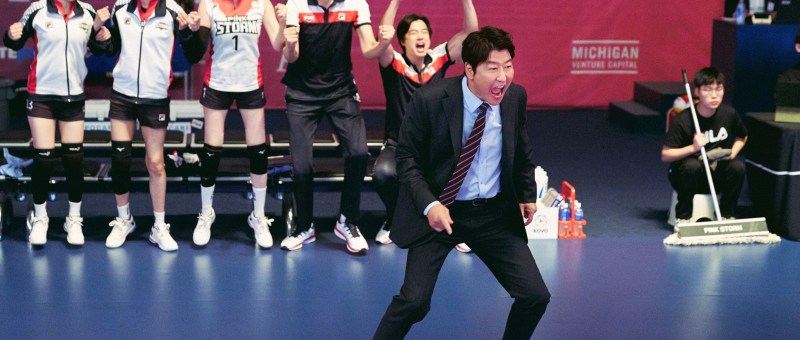
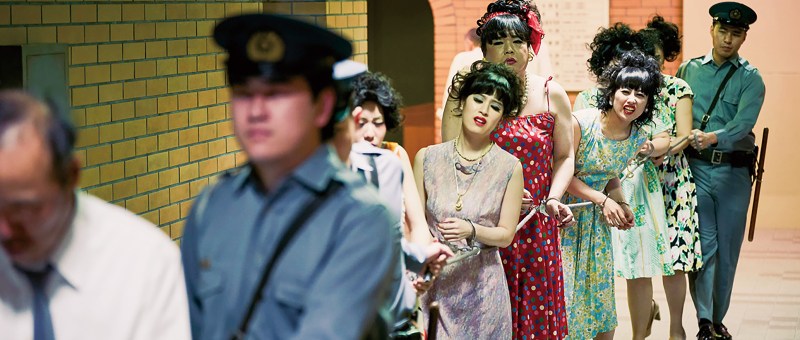
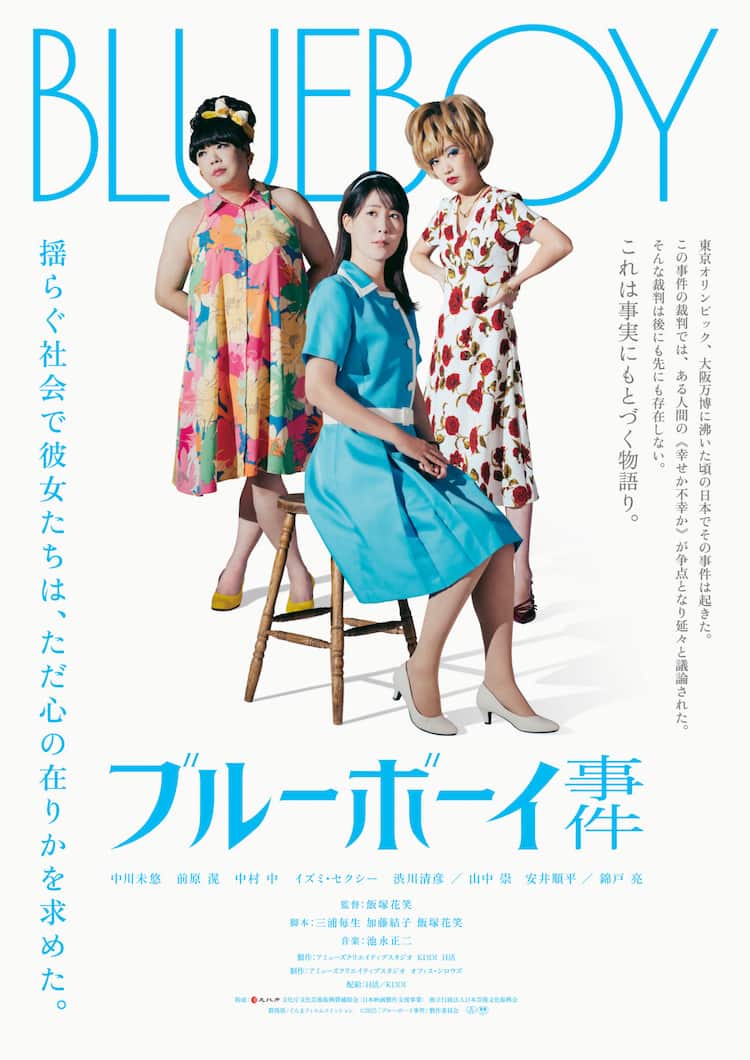
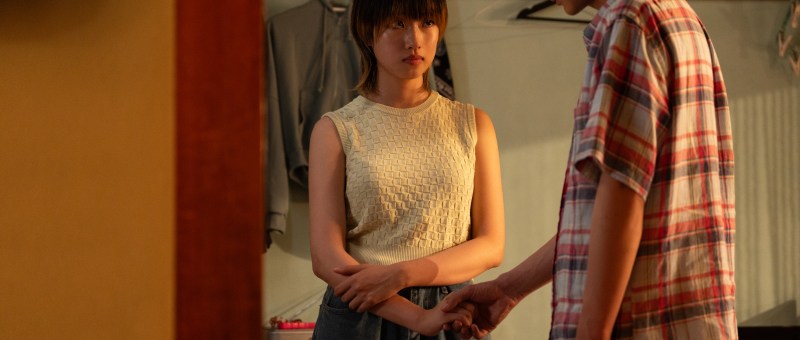
But his research goals are at least altruistic in his desire to find a depression cure without side effects to help people like his brother who took his own life. Dr Seong’s (Moon Sung-keun) lab, however, is entirely focussed on profit and protecting its own reputation. They’re mostly interested in Taek-seon because of her usefulness to them and are prepared to endanger her life if necessary. Even Gyun admits he acted unethically in agreeing to bypass animal testing but otherwise draws the line at anything that puts lives additionally at risk. Taek-seon, meanwhile, later signs over her antibodies so they can be used for free worldwide for the good of all. Even after the fever has cooled, the virus does seem to have made her a happier, more outgoing person who has the courage to pursue her dreams rather than living in lonely defeat. Whether her feelings were ”real” or merely part of her “sickness” and if the distinction really matters either way is up for debate, but that’s not to say she might not catch the love bug again from a less compromised position and actively in the driving seat of her own life.


Trailer (Korean subtitles only)