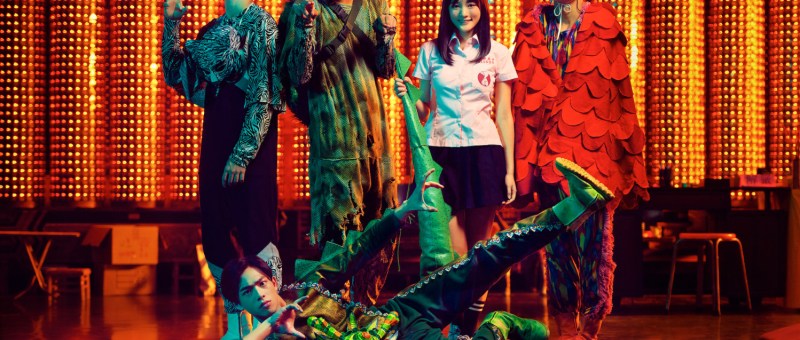
We Are (青の帰り道, Michihito Fujii, 2018)

We Are horizontalThe youth movie perhaps hit its peak in the immediate post-war period, but poignant coming of age tales have always held a special place in Japanese cinema. We Are (青の帰り道, Ao no Kaerimichi) has a fairly troubled history of its own – the shoot was disrupted when one of its stars was arrested leading to the role being recast, requiring substantial reshoots which took place over a year later. Yet like its protagonists, We Are was finally able to rediscover itself and create something beautiful from admittedly difficult circumstances. Broken hearts, broken dreams, and broken futures conspire to scatter a once close group of high school friends as they each pursue individual dreams with individual success whilst looking alternately for a path both forward and back.

Spanning from 2008 to 2018, We Are follows seven ordinary small town teens from their high school graduation through to a more settled adulthood ten years later. In 2008, Kana (Erina Mano) and Tatsuo (Yuki Morinaga) have musical dreams which she is going to Tokyo to pursue while he is staying behind to study for medical school entrance exams in an attempt to fulfil his doctor father’s wishes. Kana’s best friend, Kiri (Kurumi Shimizu), is going with her, partly out of a want of anything else to do. She has dreams of becoming a photographer but her family are not supportive of her art and she has always struggled through feeling at odds with them. Loud mouth delinquent Ryo (Ryusei Yokohama) doesn’t really have a plan, save bumming around until something turns up and any plans Ko (Junki Tozuka) might have had would have been derailed seeing as he’s got his girlfriend (Mika Akizuki) pregnant and has decided on a shotgun wedding. Only Yuki (Keisuke Tomita) is following a more conventional path in going to Tokyo for university and then planning on finding a regular salaryman job.

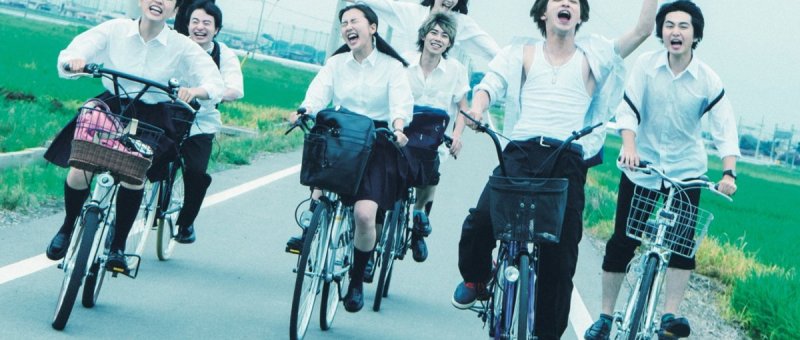
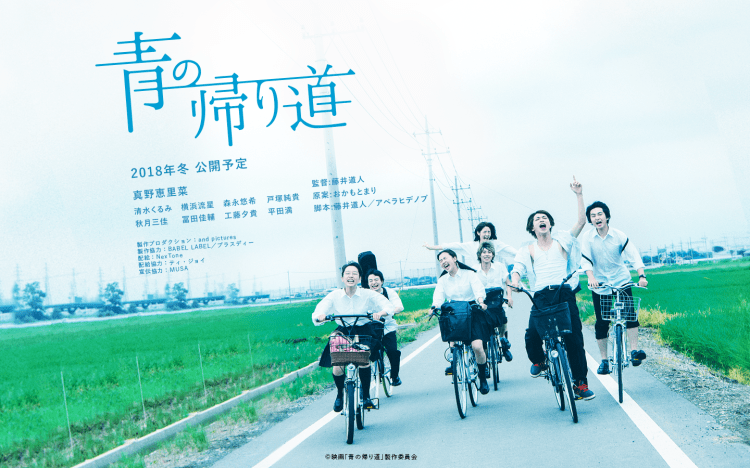
The film opens with a scene of joy and freedom as the kids ride their bikes along an otherwise empty stretch of road between the fields, swearing to make the most of the last summer vacation. The road itself becomes a recurrent motif, stretching out into the distance seemingly full of promise but also strangely empty. The kids do indeed make some memories, but for some of them the hope proves too much to bear, soon turning to despair as their lives begin to spiral out of control, their dreams warped and ruined by the muddiness of the adult world.

Kana’s musical career is quickly derailed by an amoral producer who doesn’t believe in the artistic merit of music, only in its commercial capability. Kiri, dropping out of college, gives up on her dreams of photography to make Kana’s a success through acting as her manager but the two naive country girls are no match for the canny executive and Kiri is soon working for the company learning how to market soulless pap to a public desperate only for empty cuteness. While Kana struggles with accidentally becoming the poster girl for a brand of vegetable juice, Kiri embarks on her first love affair but is ill equipped to recognise the potential warning signs in her new boyfriend owing to a lack of emotional awareness brought about by her dysfunctional upbringing.

While Kana and Kiri struggle in the city, Ko has married, settled down and begun building a home for himself back in the country. An ordinary dream, but an achievable one if you’re willing to make it work and Ko takes to fatherhood with natural ease. Sadly, his friends are not so lucky. As their dreams fade, alcoholism, domestic abuse, crime, and finally suicide conspire to ruin their hopes, leaving each with a profound sense of guilt and defeat in finally finding themselves on the road home with not much to show for their travels besides a few fresh scars. Yet somehow, despite the myriad unforgivable things and a shared sadness in a collective failure to save each other, friendship endures, forgiveness is possible and though the days of youth will never return, there is a “way back” for those who’ve learned that there’s nothing wrong in wanting to start over. You can never go “home” again, but some things don’t change even when you do and if you’re very lucky the most important of them will still be there waiting for you no matter how long you’ve stayed away.


Screened at Nippon Connection 2018.
Bamy (バーミー, Jun Tanaka, 2017)

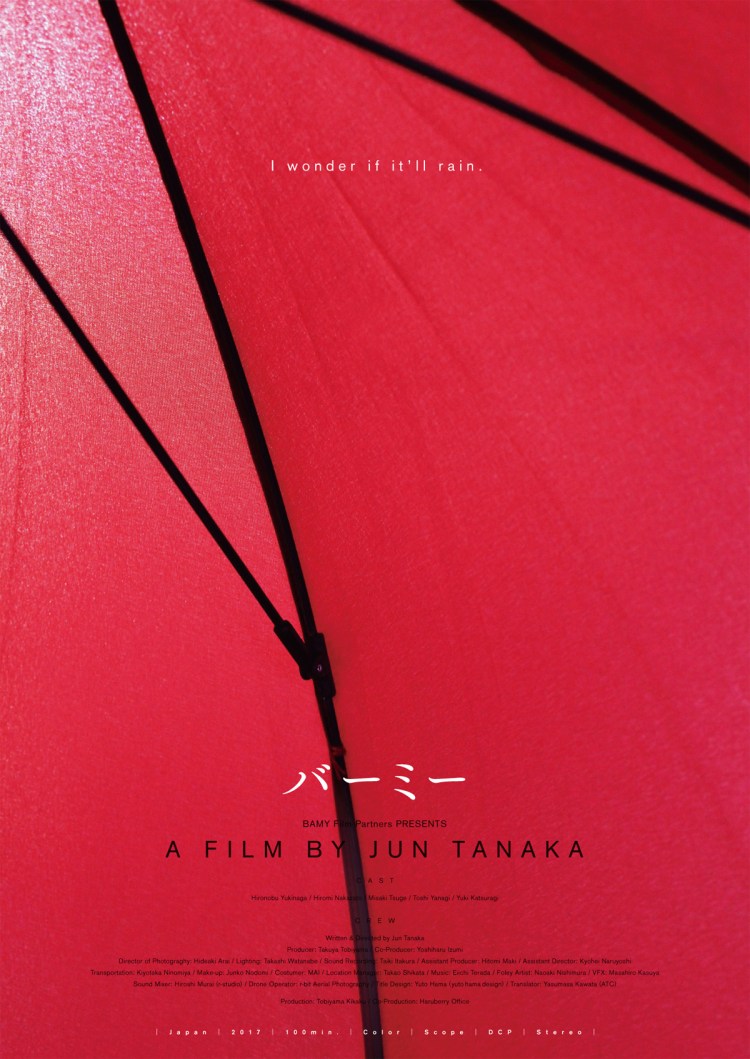
Bamy posterCan you be so haunted that you eventually become a ghost? The protagonist of Jun Tanaka’s Bamy (バーミー) sees lonely spirits everywhere but they don’t frighten him, in the expected sense at least, so much as act as supernatural jailers lurking just out of sight ready to remind you that there is no escape from their all seeing eyes. Which is to say, he begins to find them irritating especially as he feels himself pulled along by the unstoppable forces of “the expected” without being entirely sure “the expected” is what he really wants. Perhaps Ryota (Hironobu Yukinaga) is just another commitment-phobe getting cold feet before a wedding and looking for an excuse to find out if the grass is greener with someone else, but then again perhaps there are forces operating beyond our understanding, be they good or ill.

Our pair of lovers are brought together by the sudden and unexpected arrival of a bright red umbrella falling impossibly from on high. As their eyes meet across the incongruous sight, Fumiko (Hiromi Nakazato) recognises the man on the opposite side as Ryota – an old friend from her university days. Fast forward one year from this atypical meet cute and Fumiko and Ryota are moving in together with a wedding date already in place. The red umbrella hangs proudly on their balcony as a romantic tribute to their love but at odd times it seems to glow ominously, as if emanating a sense of inescapable unease. The couple’s happiness is ruptured when Ryota spots the first of his ghosts lurking in the bedroom. Before long he’s seeing them at work, in the streets, everywhere. He’s seen them all his life and though they do not frighten him, he is sick of their constant presence. Gradually the ghosts place a wedge between himself and Fumiko as he begins to neglect the wedding preparations before running into another woman, Sae (Misaki Tsuge), experiencing the same problem who might be better placed to understand what he’s going through.

The ability to see ghosts, it has to be said, is not an especially good excuse for neglecting one’s fiancée. Ryota, who seems to have forgotten there are many other words in the Japanese language besides the one which means “sorry”, does not appear to be a very good communicator and never thinks of confiding in Fumiko about what it is that is bothering him, nor does he ever try to communicate with the ghosts who perhaps are just looking for attention. In fact, Ryota never seems to take much of an active role in anything and almost “haunts” his own life, remaining isolated on the fringes, drifting along aimlessly like a man without a soul.

Existing to one side of the world around him, Ryota eventually makes ghosts of both his women. Sitting alone before a table on which lies a lovingly prepared meal, Ryota cannot see Fumiko as she lurks behind him, her form distorted and indistinct as filtered through the frosted glass which acts as divider to their living area. Later her face appears again through a frosted door as she grows ever more distant towards him, no longer “Fumiko” but a strange, unknowable being. Her hand on his face once grounded him, brought him back to the real but since the umbrella disappeared all that has changed. Meanwhile, Ryota wonders if the ghost seeing Sae is his real soulmate only to see her pale before him, her fingers dark and cold as she too becomes little more than something that will bind him to a fate he isn’t sure he wants.

The umbrellas at least seem to want Ryota to be with Fumiko, whatever he (or she) may think about it. An echo of the “red strings of fate”, the umbrellas bind the lovers on a cosmic level which can never be severed – Ryota’s “rebellion” is perhaps towards fate itself, towards having his life dictated to him (by an umbrella) with his personal agency all but removed. Then again, maybe “the umbrellas” know best and what they’ve given Ryota is a gift, only the pleasure of a gift begins to dissipate when it is made clear that it cannot be declined. The cosmos seems determined on railroading him and perhaps the only way to “escape” its harbingers is to accept its judgement and submit, turning a given fate into a chosen one through a conscious act of will. Echoing Kiyoshi Kurosawa in his conflicted romanticism and David Lynch in his eerie sense of the everyday surreal, Tanaka conjures an atmosphere of inescapable supernatural dread as his hero begins to realise his only source of salvation may lie in willing submission. 


Screened at Nippon Connection 2018.

TFF trailer (English subtitles)

Love and Wolbachia (恋とボルバキア, Sayaka Ono, 2017)

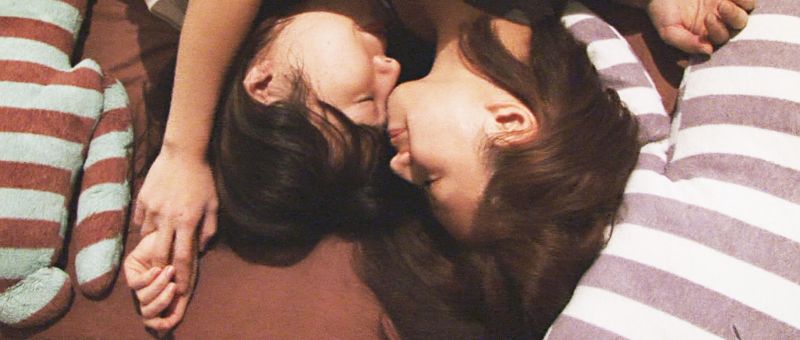
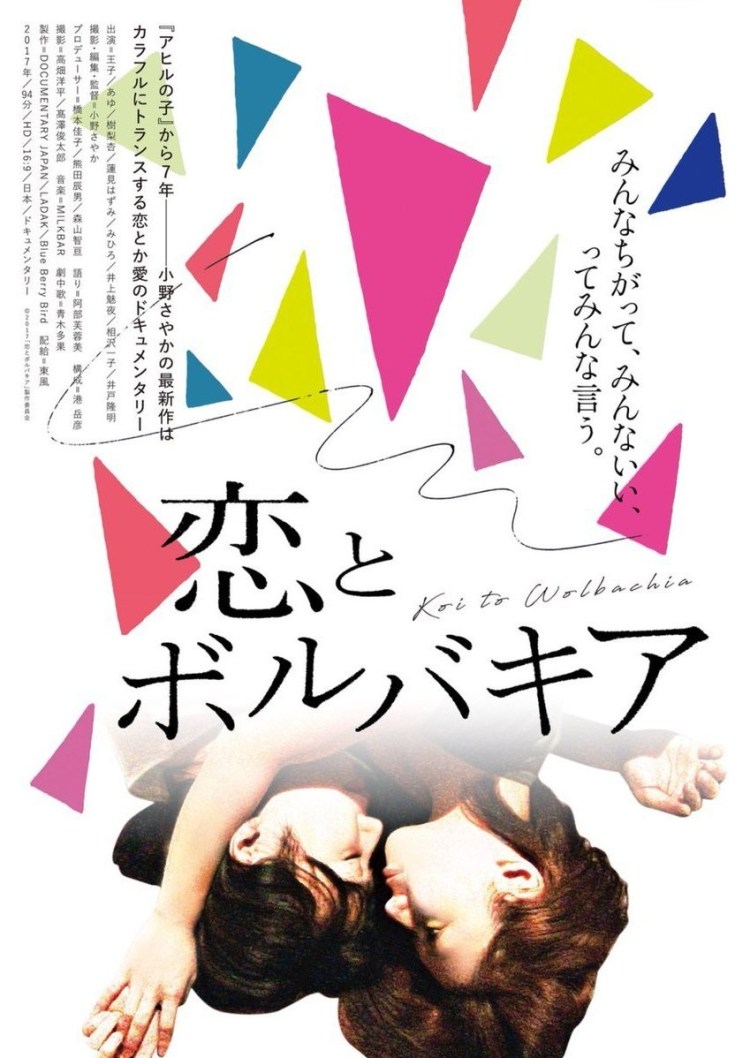
love-and-walbachia-poster-2-e1527641922439.jpgDocumentarian Sayaka Ono turned the camera on herself and her family seven years ago with her graduation project/debut feature The Duckling. Returning with her second feature after spending the intervening years in TV documentary, Ono tackles a subject perhaps more distant from her personal experience in exploring the lives of sexual minorities and particularly of transgender women in generally conformist Japan. Love and Wolbachia (恋とボルバキア, Koi to Wolbachia) takes its name from that of a parasitic bacteria which can cause its host to change sex. Love may very well be a kind of virus, but Ono seems more interested in answering the question of why someone might decide to live as a woman in a society so often hostile to them.

The first two protagonists Ono introduces us two were born intersex. Despite their personal feelings, each was encouraged to take hormones to conform more closely to their external appearance. Forced to make a perhaps false binary choice, or in essence being deprived of the right to make it for themselves, each has attempted to live in the way which bests suits their authentic selves though they often encounter discrimination and/or hostility from those around them.

The question of gender in and of itself appears more important to some than others. Another of our protagonists, Miya, refers to herself as a “makeup man” and runs a bar which acts as a kind of community space and refuge for other transgender and non-binary people who often have nowhere else to turn. Nevertheless, Miya struggles with her partner’s decision to undergo gender confirmation surgery and finds it difficult to understand why someone would be willing to put themselves through so much pain and suffering for something she sees as an external concern. For Miya the question of “gender” seems moot, not quite something requires only an individual identification but which scarcely requires one at all. It is she feels, in essence, something culturally defined which an individual is free to accept or reject in claiming their own personal identity as distinct from from social codes dictated by society.

Yet Miya also finds herself a victim of these social codes in a desire to provide protection to those who need it only to find herself ill equipped to cope with the intense responsibility of accidentally becoming a community leader if one without a particular political agenda save wanting to make other people’s lives easier. The question of gender roles becomes a more obvious problem in the relationship between lesbian Julian and her transgender partner Hazumi. Criticised by some of her friends for dating a transwoman, Julian also struggles with a perceived expectation to adopt a “masculine” role within the relationship, that Hazumi expects her to provide protection while also becoming the dominant partner which she seems to feel does not fit her personality. Conversely, Julian also longs for a conventional home and family as a married couple with children yet Hazumi wants to transition fully and, having left a marriage and a child to live a more authentic life, worries that starting another family with Julian may prevent her from achieving her dream.

A conventional family life also seems to have prevented 50-year-old Ichiko from pursuing her desire to live as a woman, having lived in a time when few knew such things were possible. A father with three children, most of her resources are given over to their care but she still finds time to enjoy a more authentic life and participate in the community. Like Ichiko, Mihiro began wearing women’s clothing after admiring her wife’s outfits only she later decided to leave her marriage and retains a male personality only for work. Having fallen in love with a man who himself feels uncomfortable with the culturally defined notions of “masculinity”, Mihiro is heartbroken to realise he already has a live-in girlfriend and worries his impression of their relationship may not match her own. This rings eerily true given a solo interview in which he jokingly laments Mihiro’s purehearted approach to romance which he believes leaves her open to male manipulation.

Ono does not particularly explore the lives of transmen, perhaps an anomaly seeing as Japan is one of few nations to have elected a transman to office (Japan also elected its first transgender female politician back in 2003), preferring to explore the place of trans and gay women in a society which can be deeply misogynistic and relentlessly conformist. Mihiro’s supportive mother, watching her carefully applying her makeup, remarks on how much time men must save in not needing to bother. Mihiro partially corrects her – wearing makeup is a choice which is open to women but not perhaps to men and choice, it seems, is the main thing or not so much “choice” but freedom to live in the way you choose rather than the way which is chosen for you by your society. 


Screened at Nippon Connection 2018.
Original trailer (no subtitles)

A Mummy’s Love (木乃伊の恋, Seijun Suzuki, 1973)

vlcsnap-2018-05-28-23h20m55s542After getting fired from Nikkatsu for making films which made no sense and no money, Seijun Suzuki cemented his place as a thorn in the side of the establishment by suing them for breach of contract. The “dispute” dragged on, eventually seeing him blacklisted by the other major studios and unable to make a feature film for ten years. This did not mean however that Suzuki was entirely idle between the releases of Branded to Kill and his 1977 “comeback” movie A Tale of Sorrow and Sadness. Like many other directors who found themselves adrift in the changing film industry, Suzuki busied himself with short projects for television, both commercials and stand alone episodes of anthology series including one for Eiji Tsuburaya’s Twilight Zone-esque Horror Theater Unbalance.

Horror Theater Unbalance, produced by Tsuburaya Pro, was in keeping with the studio’s other similarly themed horror and science fiction SFX series but took the form of 13 one off one hour dramas. Although production began in earnest in 1969, filming didn’t finish until 1972 and the series eventually aired in 1973. Many of the episodes were inspired by well known mystery stories and each also featured a framing sequence in which author/actor/TV personality (and later politician) Yukio Aoshima introduced and then wrapped up the tale à la Alfred Hitchcock, Rod Serling, or perhaps Cookie Monster whilst sitting in a creepy mansion filled with weird skeletal objet d’art. Tsuburaya Pro was able to mop up some prime Nikkatsu talent which was gradually seeping out of the studio as it crept towards its eventual rebirth as the producer of Nikkatsu Roman Porno. This included not only Suzuki but also Yasuharu Hasebe and Toshiya Fujita among others, as well as outlying figures from the independent world such as Kazuo Kuroki.

The first to be broadcast, Suzuki’s episode was adapted from a short story by Fumiko Enchi whose recurrent themes share much with those of the director in her frequent use of fantasy and eroticism. A Mummy’s Love (木乃伊の恋, Miira no Koi) is technically a triple tale as it contains an internal framing sequence in addition to the broader one common to the series. The lead is actually Shoko (Misako Watanabe) – a widowed middle-aged editor working with her now elderly professor on a new version of a classic tale from Japanese literature. Her memory is sparked when she catches sight of an oddly vacant-looking monk in the back of a car – eerily like the one in the story which revolves around the discovery of a monk who was buried alive as way of achieving enlightenment but has recently (or perhaps not) begun ringing his bell to alert those above to his conscious presence.

One of the villagers, Shoji, becomes fascinated with the idea of the unsleeping monk. When they dig up the corpse it’s a stiff, strangely robust skeleton which some of the villagers end up using for a game of punt the monk, but little by little his flesh returns. He is not, however, as enlightened as one might hope. To begin with he’s a gibbering wreck, and then finally something more like a crazed sex pest whose pent up amorous energy eventually wears out his new “wife” in a matter of days when she suddenly gives “birth” to a small army of mini dust buddhas. Shoji is sick of the monk and wants to get rid of him, but when he takes his own wife sometime later all he can hear is the sound of a little tinkling bell and suddenly he can’t bear to touch her.

The theme seems to be that unquenched desire will drive you insane with the ambiguous addition that desire itself is best overcome rather than satisfied. Having recounted to us the story of the monk, Shoko finds his tale echoing in her own life. A war widow she lost her husband young and has experienced near constant sexual harassment from her former professor, now bedridden and defeated. Unbeknownst to her, the professor has been keeping her engagement photo in his study for the last decade. He claims that it’s not impossible for an ordinary many to resurrect himself solely through the power of enduring sexual desire, rightly (but somewhat inappropriately) implying that Shoko too harbours lingering desires which have gone unsatisfied since her husband’s passing.

The story culminates with Shoko’s pleading hope for a resurrection as she unwittingly arrives at the place of her husband’s death where she encounters a strange man who might or might not be her late spouse. Making either real or hallucinatory love atop a grave with either a resurrected corpse, a ghost, a phantom of memory, out of body spirit, or just a random rough man talking shelter from the rain, Shoko is a prisoner of her desires but the source of her visitation remains difficult to discern.

Working within a TV budget, Suzuki reins himself in but lends his idiosyncratic sense of ironic fun to an otherwise gloomy, dread-laden tale as the villagers gleefully kick around the dried corpse of the old monk as if he were a long buried football and then seem to meet an unquiet knowingness in his ever hungry eyes. Peppered with surrealist touches, Suzuki’s contribution to Horror Theater Unbalance is a heady affair but one imbued with his characteristic twinned sense of irony and wistful melancholy in a tale of those undone by unresolved longing.


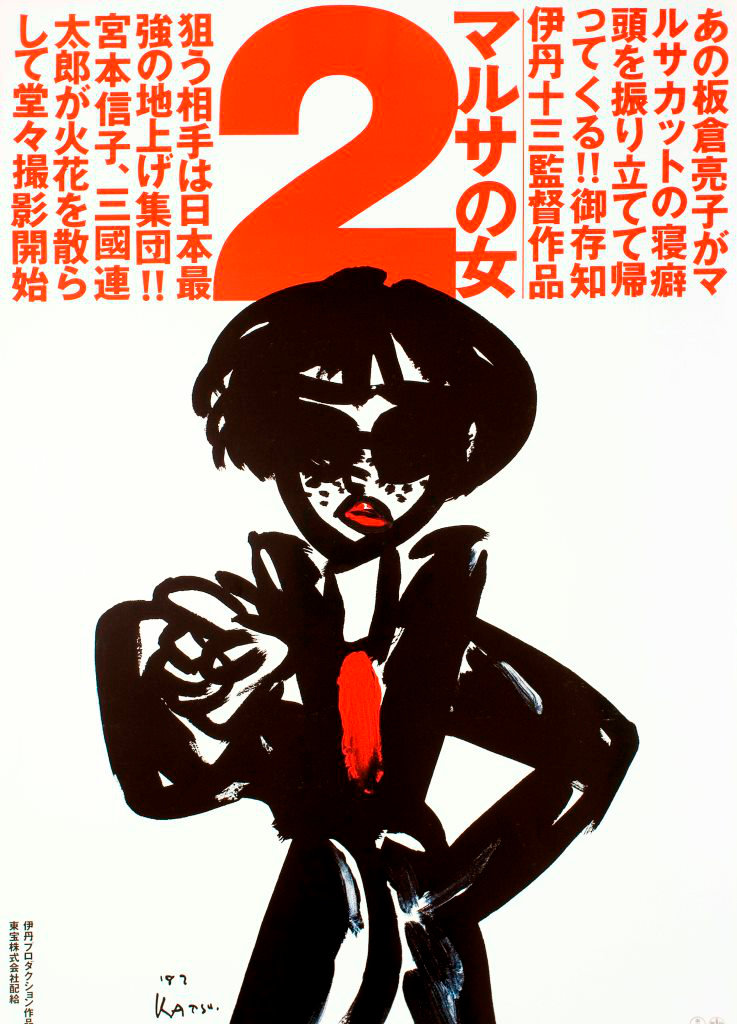
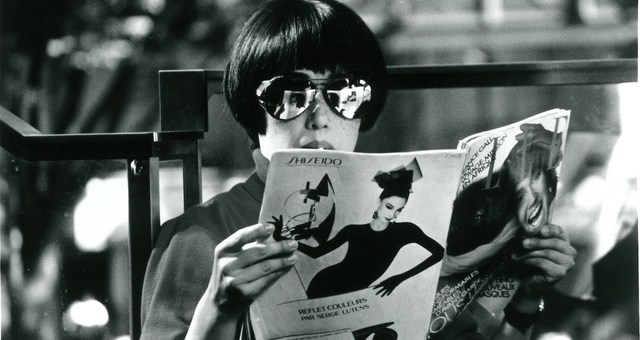
A Taxing Woman’s Return (マルサの女2, Juzo Itami, 1988)

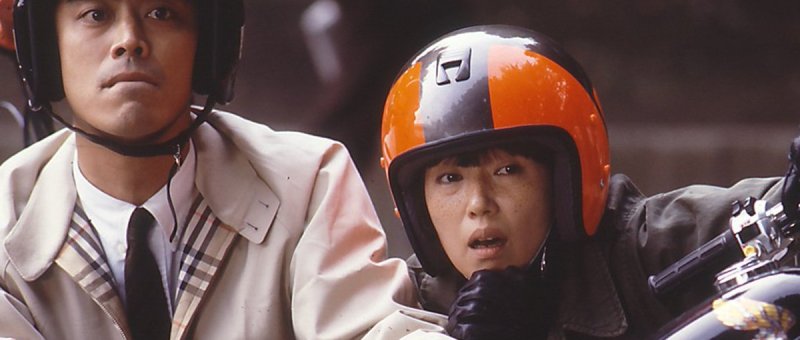
Taxing Woman 2 posterA Taxing Woman introduced us to Ryoko Itakura (Nobuko Miyamoto) – an oddball detective working as an insurance inspector who met her Irene Adler in a tax dodging corporate gangster with a limp. A year later she’s back, still the only woman working with the tax inspectorate and apparently still a dogged pursuer of those who would seek to defraud the Japanese government of its rightful earnings. Ryoko may have been a stickler for the rules who applied the same dog with a bone approach to a mom and pop store chowing down on its own supplies as to a dodgy yakuza led conspiracy, but she also believed in justice – something which stands her in good stead when she rubs up against a dodgy cult which, again, is a yakuza front but adds insult to injury by deliberately manipulating the vulnerable.

The action opens with some kids poking at the dead body of a “landshark” floating in a pond before flashing to a meeting of officials sucking crab meat from the shell and wondering what they’re going to do about this land they need cleared now their heavy is out of the picture. The corrupt politician from the first film, Urushibara (Takeya Nakamura), is apparently still involved in semi-legal land deals but palms the assignment off on a colleague. The big wigs need to empty a dated housing complex on some valuable land so they can build a vanity skyscraper – office space apparently being scarce in mid bubble Tokyo.

To do this they enlist the services of dodgy cult leader Onizawa (Rentaro Mikuni) and his troop of yakuza goons. Most of the tenants have already signed but they have three key holdouts – a diner owner clinging on to the family legacy, a stubborn paparazzo, and an intellectual professor who heads up the housing association. Unlike the yakuza of Taxing Woman, these guys have not reformed – they are the new/old style of lawless thugs who are perfectly prepared to threaten women and children to get their own way. Making it impossible for the tenants to stay through intimidation and noise torture, they stoop to blackmail to seal the deal.

Despite arriving only a year after A Taxing Woman, Taxing Woman’s Return (マルサの女2, Marusa no Onna 2) takes place in a much darker, though more obviously comedic, world. Whereas the earlier film adopted a noticeably ambivalent attitude to the tax inspectors and the enterprising gangsters, the villains of A Taxing Woman’s Return are so heinous and morally bankrupt as to be entirely indefensible even if the inspectorate takes a turn for the bumbling to compensate. The “cult” is, of course, merely a convenient money laundering front and tax dodge for the yakuza – religious organisations are exempt from taxation in the vast majority of cases which may be why the local tax office records hundreds of registered “religious bodies” in its jurisdiction alone. That doesn’t mean it doesn’t have its loyal followers, often vulnerable people looking for spiritual fulfilment but being bled dry by the money hungry cultists while the leader’s wife swans around in sables costing more than the average annual salary. A desperate devotee in need of a loan puts his own teenage daughter up as collateral only to see her raped by Onizawa, eventually becoming pregnant by him at only 16 years of age and thereafter becoming his devoted concubine in a bizarre instance of Stockholm Syndrome.

Yet for all the background darkness of weird cultists and nasty yakuza backed up by corrupt and venial politicians, Itami ups the cartoonish sense of the absurd with our hero Ryoko clambering over rooftops to listen in to the bad guys while her boss throws himself down flights of stairs and has to battle piercing sirens to get into the villains’ secret vault. It is however a dark humour as the opening makes plain with its troupe of little children staring at the strange shape floating in the water – a motif later repeated when a yakuza is gunned down in the street only for another group of children to pour over him as he expires, a single tear rolling down his cheek. The original spongy white body gives way to the businessmen sucking spongy white crab out its shell while insensitively discussing the late land shark, and the yakuza are unafraid to deploy a maggot infested severed hand (thankfully a fake picked up from a friend who makes horror movies) to convince the tenants they mean business.

At the end of A Taxing Woman, the gangster and the inspector reached something of a truce but one which came down, broadly, on the side of right. This time things aren’t quite so simple. The conspiracy is bigger and deeper, stretching all the way into the Diet and about more than just office space in still developing Tokyo. Onizawa, regarding himself as public servant, tries to say he did it all for his country, that if someone didn’t get their hands dirty Tokyo would be eclipsed by Hong Kong or Seoul. A post-war justification for a bubble era problem, but one that takes us straight back to the first film in Onizawa’s second proposition that only through money does he truly feel “immortal”. He may be a liar and a cheat, but he’s only a symptom of rapidly spreading infection, one which Ryoko and her team are powerless to cure, trapped on the wrong side of the fence while the bad guys build monuments to economic hubris, indulging in vanity in an era of bad faith which is about to be brought to a rather abrupt close.


Currently available to stream in the US/UK via FilmStruck.

Original trailer (no subtitles)

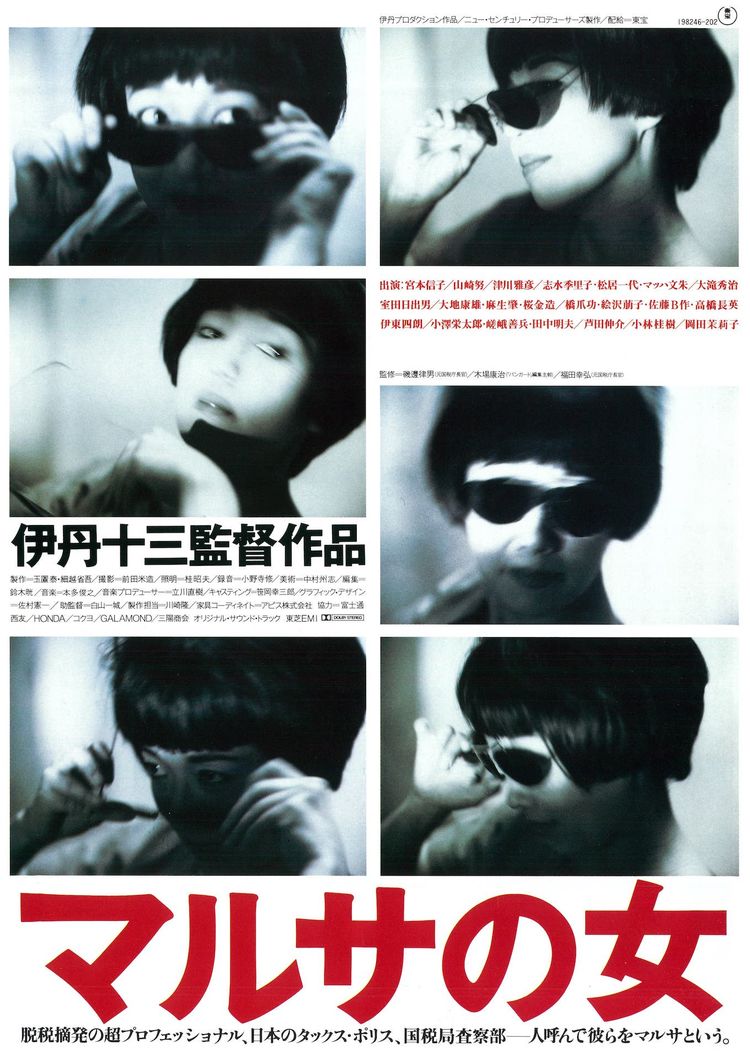
A Taxing Woman (マルサの女, Juzo Itami, 1987)

A Taxing Woman posterIn bubble era Japan where the champagne flows and the neon lights sparkle all night long, even the yakuza are incorporating. Having skewered complicated social mores in The Funeral and then poked fun at his nation’s obsession with food in Tampopo, Juzo Itami turns his attention to the twin concerns of money and collective responsibility in the taxation themed procedural A Taxing Woman (マルサの女, Marusa no Onna). Once again starring the director’s wife Nobuko Miyamoto, A Taxing Woman is an accidental chronicle of its age as Japanese society nears the end of a period of intense social change in which acquisition has divorced mergers, and individualism has replaced the post-war spirit of mutual cooperation.

Ryoko Itakura (Nobuko Miyamoto), a single mother and assistant in the tax office, has a keen eye for scammers. She demonstrates this on a stakeout with a younger female colleague in which she keeps a shrewd eye on the till at her local cafe and comes to the conclusion that they’ve been running a system where they don’t declare all of their cheques. Running her eyes over the accounts of a mom and pop grocery store, she notices some irregularities in the figures and figures out the elderly couple feed themselves from the supplies for the shop but don’t “pay” themselves for their own upkeep. That might seem “perfectly reasonable” to most people, but it’s technically a small form of “embezzlement” and Ryoko doesn’t like figures which don’t add up. Seeing as the couple probably didn’t realise what they were doing was “wrong” she lets them off, this time, as long as they go by the book in the future. A more complicated investigation of a pachinko parlour finds a more concrete form of misappropriation, but Ryoko is fooled by the owner’s sudden collapse into inconsolable grief after being caught out and leaves him in the capable hands of his confused accountant.

Nevertheless, Ryoko may have met her match in sleezy corporate yakuza Hideki Gondo (Tsutomu Yamazaki). Dressing in a series of sharp suits, Gondo walks with a pronounced limp that hints at a more violent past but as his rival from the Nakagawa gang points out, violence is a relic of a bygone era – these days gangsters go to jail for “tax evasion” as means of furthering their “business opportunities” and facilitating ongoing political corruption. Gondo’s business empire is wide ranging but mainly centres on hotels, which is how he arouses Ryoko’s interest. She looks at the numbers, does a few quick calculations, and realises either the business isn’t viable or the correct figures aren’t being reported. Ryoko doesn’t like it when the books don’t balance and so she sets her sights on the seedy Gondo, but quickly discovers she has quite a lot in common with her quarry.

Itami was apparently inspired to make A Taxing Woman after the success of Tampopo shoved him into a higher tax bracket. Given Japanese taxes (at the time) were extremely high, getting around them had become something of a national obsession even if, in contrast to the preceding 30 years or so, there was plenty of money around to begin with. More than the unexpected tendency towards civil disobedience the times seemed to cultivate, Itami homes in on the increasingly absurd desire for senseless acquisition the bubble era was engendering. Thus Gondo who owns a large family home well stocked with symbols of his rising social status, also occupies a bachelor pad where he keeps a mistress which reflects the gaudy excess of the age right down to its random stuffed hyena. Nevertheless when one of the tax clerks asks for some advice as to how to have it all, Gondo replies that that’s easy – to save money, you simply avoid spending it. Gondo lets his glass run over and delights in licking the edges. It’s all about delayed gratification, apparently, and having a secret room full of gold bars to gaze at in order to relieve some of that anxiety for the future.

Gondo, like many of his ilk, has “diversified” – yakuza are no longer thuggish gangsters but incorporated organisations operating “legitimate” businesses through “illegitimate” means. Thus we first find him using a nurse who allows herself to be molested by an elderly, terminally ill client whose identity they will steal to found a company they can quickly dissolve when he dies to shift their assets around and avoid the tax man. Later he pulls another real estate scam by pressing a desperate family but his real focus is the love hotels, whose slightly embarrassing existence ensures that not many come poking around. Ryoko, however, is unlikely to let such a large scam slide and delights as much in closing loopholes as Gondo does in finding them. Noticing a kindred spirit, Gondo quite openly asks his new tax inspector “friend” what she’d think if he married his mistress, gave her all his money, and divorced her – divorce proceeds are after all tax free. Sounds great, she tells him, as long as you trust your wife not to skip town with all the doe.

Ryoko, a modern woman of the bubble era, single and career driven, is a slightly odd figure with her officious approach to her job and unforgiving rigour. Unlike her colleague who dresses in the glamorous and gaudy fashions of the times, Ryoko wears dowdy suits and her mentor boss is always reminding her about her “bed hair”, meanwhile she stays late at the office and offers instructions to her five year old son over the phone as to how to microwave his dinner. Though there is another woman working with her at the tax office, when she’s finally promoted to full tax inspector status she finds herself in a room full of guys who apparently hardly ever go home. On her first job she’s only really brought along because she’s a woman and they want to threaten a mob boss’ mistress with a strip search to find a missing key for a safety deposit box. The mistress, however, tries to throw them off the sent by publicly stripping off and encouraging them to check her “cavity” if they’re so keen to find this key, only for Ryoko to find it under the sink while all the guys are busy being shocked. Ryoko’s methods are occasionally as underhanded as Gondo’s and, like his schemes, built on gaming the system but she’s certainly a force to be reckoned with for those considering defrauding the Japanese government.

Gondo’s schemes excel because they aren’t entirely illegal, only clever ways of manipulating the system, but they’re also a symptom of a large conspiracy which encompasses improprieties right up the chain as banks, corporations, and politicians are all part of the same dark economy managed by a corporatising yakuza. Gondo takes frequent calls from a local representative who often “helps him out”. Later the same representative tries to put pressure on the tax office to back off, but Ryoko’s boss points out that he doesn’t need to because the press are already on the story so he should probably get started on his damage control rather than bothering public servants. Gondo and Ryoko, perhaps as bad as each other, lock horns in a battle wills but discover a strange degree of respect arising between them in having discovered a worthy adversary. There’s something undeniably absurd in Ryoko’s firm determination to catch out struggling businesses and the confused elderly with the same tenacity as taking on a yakuza fronted conspiracy, and there’s something undeniably amusing in Gondo’s attempts to beat the man by playing him at his own game, but the overall winner is Itami who once again succeeds in skewering his nation’s often contradictory social codes with gentle humour and a dispassionate, forgiving eye.


Currently available to stream in the US/UK via FilmStruck.

Original trailer (no subtitles)

All Because of Love (痴情男子漢, Lien Yi-Chi, 2017)

All Because of Love PosterGrowing up is hard is to do – that is, unless you’re the hero of a teen movie, in which case growing up is merely “difficult” and everything is sure to be alright once the bullies have been vanquished and the last dance danced. Designed to appeal to its target audience, the world of the teen movie is usually black and white, free from the chaos and confusion which most experience during adolescence. All Because of Love (痴情男子漢, Cqíng Nánhàn) is, however, refreshingly honest in its fierce love of a messy situation, forcing its hero into a series of “difficult” circumstances while he plays the noble fool holding fast to an obviously unrequited love in the hope that his niceness will somehow capture his true love’s heart.

When we first meet Erkan (Kent Tsai), he’s a nerd and the member of an oppressed minority at his school, constantly targeted by the tough guys. He is hopelessly in love with popular girl Mandy (Gingle Wang), who is actually dating one of the bullies and doesn’t even really know who Erkan is. Despite his declaration to love her for a thousand years, Erkan’s attempts to woo Mandy end in spectacular and humiliating failure but still he does not give up. Shortly after graduating high school, Mandy abruptly rings him for “a date”. Erkan, still smitten, is excited but Mandy has an ulterior motive – she is pregnant with her jock boyfriend’s child and, abandoned by her own one true love, reckons Erkan might like to try out life as a baby daddy. She is correct in her assumption and Erkan would be buying a ring if he had any money but as it is they’ll have to make do with the gentle guidance of Erkan’s elopement expert grandad (Hsu Hsiao-shun) who takes them back to his seaside home town where they can hide out from Mandy’s overbearing (and very wealthy) family.

As the title implies, the rest of the film becomes a treatise on love – requited or not, familial and romantic, permitted or illicit. Erkan is thrilled, on one level, to have got it together with Mandy but on the other hand Mandy won’t let him near her and it’s clear she is only using him and taking advantage of his noble character to get her out of a fix. Meanwhile, staying at inn, Erkan gets to know another girl, Sing (Dara Hanfman), who is in a permanently gloomy mood thanks to her devastating ability to read minds, and hasn’t left her room in years. Sing, thanks to her ability, has fallen half in love with Erkan’s goofy goodheartedness but also knows he’s still hung up on Mandy, and that Mandy is still hung up on her ex-boyfriend. She is then in a difficult position but manages to strike up enough of a friendship with the lovelorn young man to spur her on to exploring the outside world once again.

Meanwhile, Erkan is also confronted by the eerie similarities between his present predicament and the circumstances of his birth. Having always lived with his granddad, Erkan assumed his parents had passed on but discovers there may be more to the story only he’ll have to go to Japan to find out. Erkan’s granddad kicked off the cycle by eloping with Erkan’s grandmother, leaving their hometown far behind to live a life of love far away, though his son and grandson do not seem to have had so much luck when it comes to romance and Erkan’s romantic answers perhaps lie in exploring his family history rather than re-examining his high school days and refusing to let go of his idealised teenage crush.

A heart to heart with Sing provokes a more grown up meditation of unrequited love even if Erkan is entirely oblivious to Sing’s delicately concealed feelings. Purehearted, Erkan insists that love does not need to be requited, merely loving without being loved is good enough for him (so he says, or perhaps he just doesn’t expect anything more). Sing tells him he’s wrong, that it takes two to love and that a one sided affection is nothing more than intense loneliness. Erkan agrees, missing Sing’s hidden meaning, but maturely admitting that it would be wrong to hold someone’s hand just because you’re lonely when your heart is elsewhere.

Erkan’s idealised love for Mandy is gradually revealed as an adolescent affectation while she is left battling various kinds of familial expectation and manipulation before discovering her former boyfriend is not perhaps the heel that everyone had assumed him to be. Meanwhile, Sing is doing something similar in trying to lay to rest the ghost of a friend who left long ago and Erkan is left trying to reclaim his identity though figuring out who he really is before learning to look at what’s right in front of him rather than indulging in a romantic fantasy. Lien Yi-chi sends Erkan on some very bizarre adventures, swapping genres at a moment’s notice from westerns to classic melodrama and musicals and then settling on something in the middle which feels oddly authentic and lived in despite its strangeness. Often absurd if not quite surreal, Lien’s warmhearted silliness is almost impossible to resist as is the cheerful innocence of the effortlessly romantic conclusion.


Screened at the 20th Udine Far East Film Festival.

Original trailer (English subtitles)

Edinburgh International Film Festival 2018 to Screen An Elephant Sitting Still, Radiance

radianceThe Edinburgh International Film Festival returns for 2018 bringing with it an impressive selection of recent East Asian cinema:

China

elephant sitting still still 1

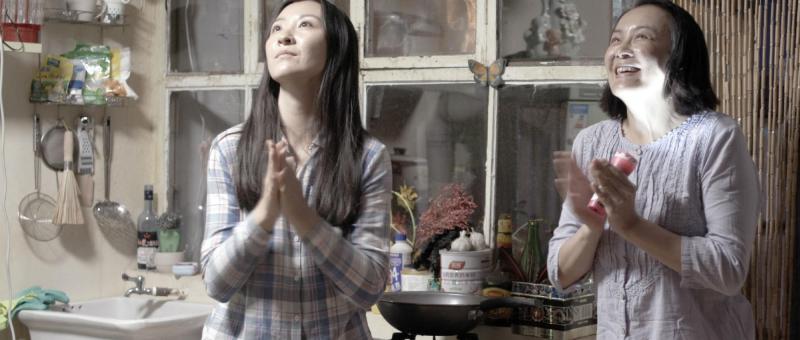
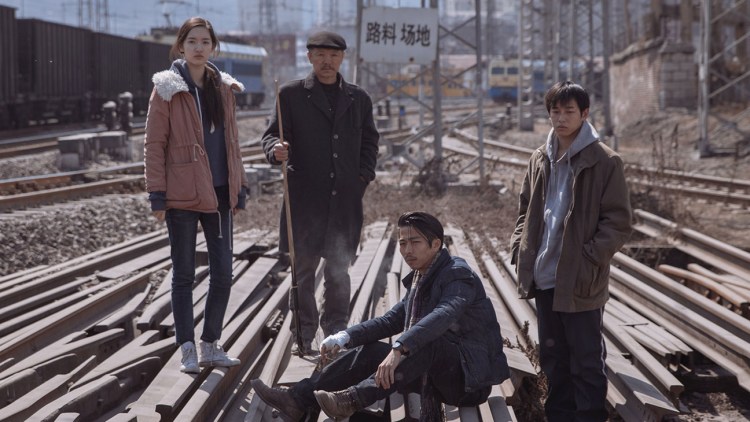
  • An Elephant Sitting Still – The first and only feature film from the late Hu Bo, An Elephant Sitting Still is a story of stagnation and the dream of escape.
  • Girls Always Happy – A mother and daughter lead frustratingly interdependent lives in Yang Mingming’s drama.

Hong Kong

40329002115_828cf63303_o

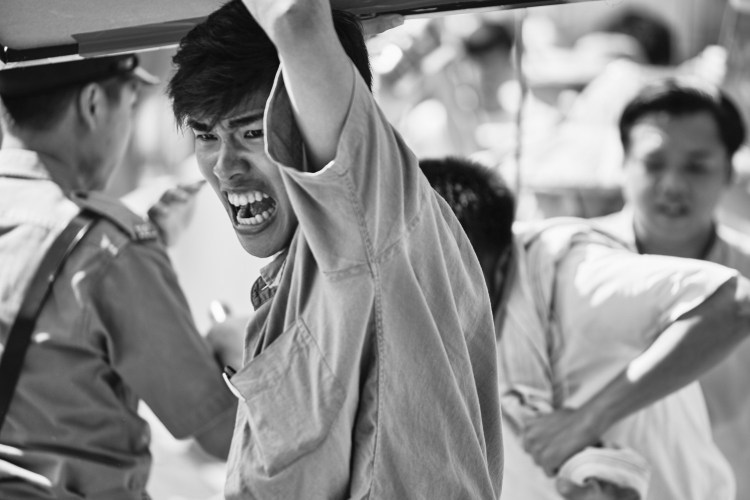
  • No. 1 Chung Ying Street – drama contrasting 1967 pro-China demonstrations against the British Government, and the Umbrella democratisation movement in present day Hong Kong.

Japan

Party 'Round the Glboe still 1

  • Party ‘Round the Globe – Hirobumi Watanabe returns with another deadpan classic in which he stars as a lonely man on a roadtrip with a neighbour.
  • Radiance – The latest from Naomi Kawase, Radiance stars Masatoshi Nagase as a photographer slowly losing his sight.

Taiwan

great buddha still 1

  • The Great Buddha+ – an extension to director Huang Hsin-Yao’s 2014 short, The Great Buddha+ follows two security guards as they spy on their womanising boss for kicks but find out something they were not supposed to know.

The Edinburgh International Film Festival runs from 20th June to 1st July. You can find the complete details for all the films, as well as screening times and ticketing information on the official website and you can also keep up with all the latest festival news via the official Twitter account, Facebook page, Instagram, and YouTube channels.

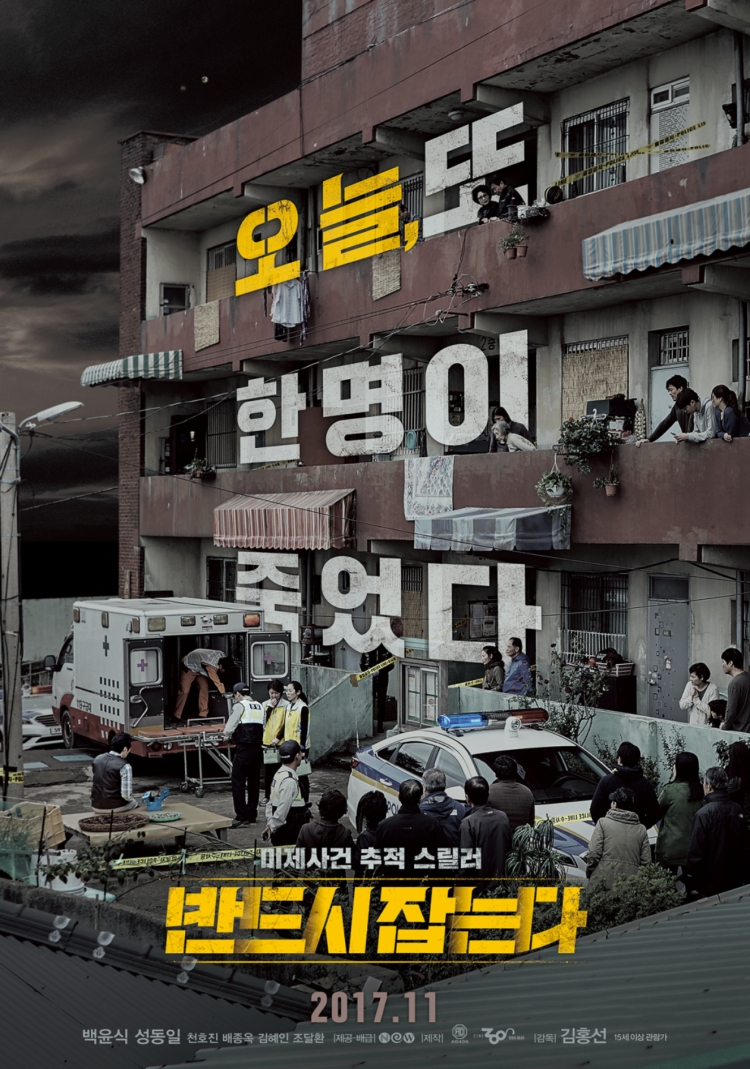
The Chase (반드시 잡는다, Kim Hong-sun, 2017)

The Chase posterKorea may not quite be facing such an ageing population crisis as neighbouring nations, but old age has become a persistent cinematic preoccupation. We’ve seen old women still engaging in acts of prostitution to support themselves in the absence of family (and indeed the state), serial killers becoming dangerously confused, and ageing grandmother’s attempt to see the beauty in a world that seems to be descending into chaos. What The Chase (반드시 잡는다 Bandeusi Jabneunda) shows us is that the elderly do at least have time on their hands that could well be used for fighting crime and protecting the vulnerable.

If you were appointing elderly street guardians, you probably wouldn’t pick Deok-soo (Baek Yoon-sik). A curmudgeonly landlord with a conviction that everyone is out to diddle him on their rent, Deok-soo complains loudly when a body is found in a nearby area because it’s going to damage property prices. People who are supposed to die should just die, he exclaims, that’s patriotism! You can bet your bottom dollar Deok-soo voted for Park Geun-hye, but despite his grumpy exterior he has a soft heart as one of his young charges reveals when she reminds him that he’s never thrown anyone out just because they didn’t pay up. Deok-soo has taken quite a (paternal) liking to Ji-eun (Kim Hye-in), a young woman living alone away from family in one of his horrible little apartments. Aside from her rent arrears and tendency to let her mixed up friend stay over so often that she virtually lives there, Ji-eun is one of Deok-soo’s favourite tenants.

Which is perhaps why he gets himself so involved when she suddenly goes missing after a shock discovery is made in her flat. Other than the first body which got Deok-soo so worked up, a few other elderly people have been passing away in lonely deaths which, sadly, isn’t particularly suspicious save that the pattern matches that from an unsolved serial murder case from 30 years ago which began with the killing of old people and then progressed to sexually aggravated murder of young women with long dark hair – just like Ji-eun.

Aside from the ongoing serial killer plot, director Kim Hong-sun makes space for depicting the various problems faced by the elderly in contemporary Korea. The first problems are loneliness and dislocation caused by separation from family members – many of the older people Deok-soo is familiar with have children overseas whom they have all but lost touch with. The second problem is economic – Deok-soo’s flats are dirt cheap for a reason and mostly inhabited by the very young and the very old, i.e. people without a lot of “disposable” income. Being elderly, they often can’t find jobs and don’t have access to a proper pension leading many to take to the streets protesting for rights for the aged including that to work or to be given state support. Deok-soo is lucky with income from renting the apartments, but he also works as a locksmith which brings in a few extra pennies. Being Deok-soo he isn’t particularly worried about other people less lucky than himself, so he rolls his eyes at the protests but is worried enough by the lonely deaths to ask one of his tenants to look in on him every now and then to avoid becoming one.

Meanwhile, Deok-soo has become “friends” with a retired police detective who’s convinced the serial killer he failed to catch 30 years ago is back. Worried that Ji-eun may end up among his victims, Deok-soo begins investigating, unwittingly getting himself mixed up in a dark and confusing world of old school hardboiled only Pyeong-dal (Sung Dong-il) is not quite as worthy a guide as he seemed. Walking around like a maverick cop from a violent ‘70s action movie, Pyeong-dal is convinced he knows who the killer is but he is old and unsteady and his mind is not perhaps reliable.

Then again a persistent subplot seems to argue that the young have no respect for age, are selfish and corrupt, thinking only of short term pleasures and forgetting that they too will one day be old with no one around to look after them. No one takes Deok-soo and Pyeong-dal seriously, they are after all just grumpy old men that everyone wants to get rid of as quickly as possible. They do, however, (paradoxically) have time to indulge in “silly” ideas that the young do not have and are, therefore, perfectly positioned to take down a serial killer who preys on the weak and vulnerable including old men like them and pretty young girls like Ji-eun. Old guys have still got it, at least according to The Chase, though they might have got there faster if only they’d cut the young whippersnappers some slack.


Screened at the 20th Udine Far East Film Festival.

Also available to stream on Netflix.

International trailer (English subtitles)

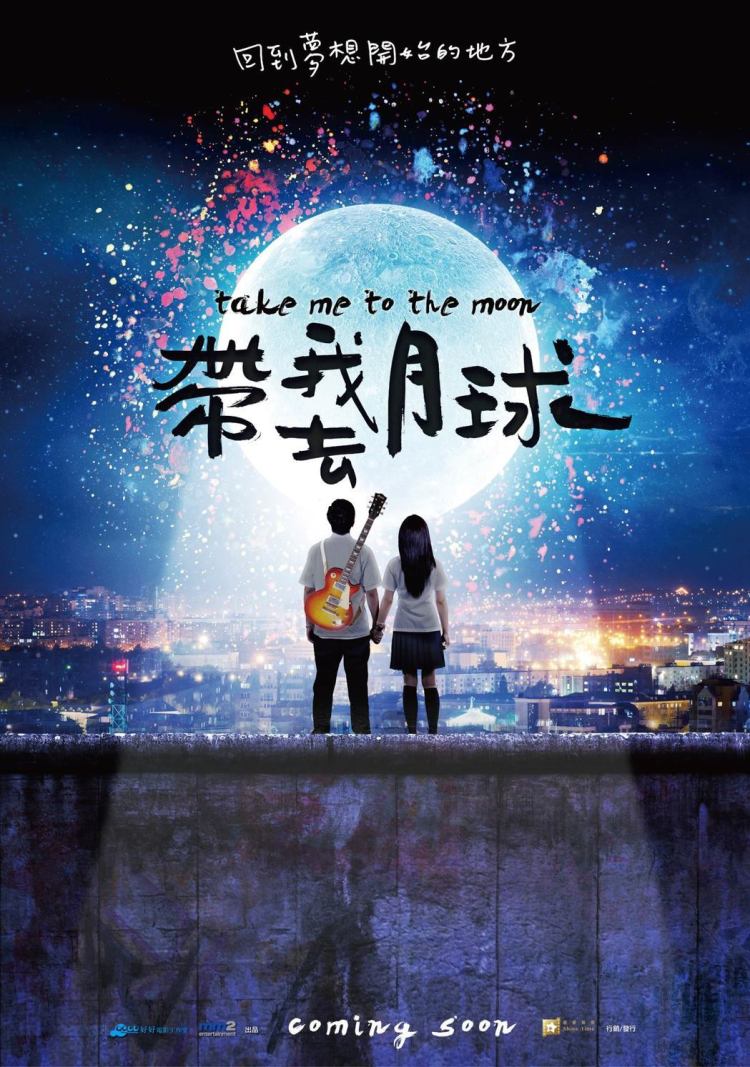
Take Me to the Moon (帶我去月球, Hsieh Chun-Yi, 2017)

take me to the moon posterShould you continue pursuing your dreams even after you know they won’t come true or just give in and live a dull but comfortable life of conformity? These are questions most young people face at one time or another, but for the hero of Hsieh Chun-Yi’s Take me to the Moon (帶我去月球, Dài Wǒ Qù Yuèqiú), they take on an extra dimension when he is suddenly thrown back into the past with an opportunity to “save” the life of a friend if only he can convince her to abandon her dreams of stardom and stay home instead. A melancholy nostalgia fest for late ‘90s Taiwan (and the late ‘90s in general), Take me to the Moon is an ode to lost opportunities, words unsaid, and the immutability of the past which nevertheless makes room for the odd miracle or two as its hero realises perhaps he’s not grown up as much as he thought.

Three years prior to the main action, 30-something Wang (Jasper Liu) takes a business trip to Tokyo where he reconnects with high school friend Emma (Vivian Sung) who won a prestigious competition to go to Japan and train with a big idol producer. Sadly, Emma’s dreams have not panned out and she’s embarrassed to let her old friend see just how badly things have been going for her. Fast-forward three years to the present and Emma has unfortunately passed away at only 38 after years of hard drinking in hostess bars, poor nutrition, and overwork finally caught up with her. The once tight group of high school bandmates, two of whom have become a married couple, argue over their collective failure to save their friend at which point Wang walks out, meets a weird old woman who gives him some strange flowers, and is knocked over by a car only to wake up back in 1997. Desperate to save Emma, Wang thinks his best bet lies in ruining her chance to go to Japan so that she will never experience the failure of her hopes and dreams and will stay home to live a simpler, safer life.

Filled with a youthful nostalgia and feeling of authenticity, Take me to the Moon makes the most of its ‘90s setting, recreating the late 20th century city through impressive CGI. Wang reacquaints himself with his teenage self, retrieving his well hidden box of tame pornography and enjoying another few bowls of his mother’s delicious fish soup, but his main goal is essentially to ruin the dreams of his friend – an act of betrayal which might be in her interest, but then again it isn’t Wang’s choice to make and perhaps Emma would rather follow her heart even if it means it’s going to get broken.

What Wang eventually realises, as one of the Tom Chang tracks which pepper the narrative points out, is that what he should have been treasuring was the extra time spent with friends rather than worrying about the future. Back in his teenage years Wang was too shy to confess his lifelong crush on Emma and then went on to be plagued by classic bad timing in adulthood until finally it was too late. His attempts to “save” Emma by ruining her life are in part selfish but also cowardly in taking the place of simply saying the things he needed to say at the right time. Finally figuring this out, Wang realises that he can’t “save” Emma like the hero of a time travel movie by manipulating the past, but he has been given a second chance to let her know how he felt. This, in the end, is what may finally, really “save” his friend – simply letting her know that he is there supporting her, that she’s fine as she is and doesn’t need to be “perfect” to be loved as her overbearing parents have led her to believe.

Though Wang awakens to a more positive change than he might have expected, the general idea is that you can’t rehash the past and should make sure that you’re happy with your present to avoid the desire to try. Having given up on his youthful dreams for a lonely corporate existence, middle-aged Wang regains a little of his essential self and decides to fight for a more authentic way of life even if it doesn’t really go anywhere. Warm and fuzzy yet also strangely melancholy, Take me to the Moon is another in a long line of Taiwanese high school nostalgia movies but proves a fitting tribute both to its era and the singer songwriter featured throughout who himself died young in a tragic car accident in 1997 aged just 31.


Screened at the 20th Udine Far East Film Festival.

Original trailer (English subtitles)

Original 1997 music video for Tom Chang’s Take Me to the Moon