Knife in the Clear Water (清水里的刀子, Wang Xuebo, 2016)

knife-in-the-clear-waterTharlo producer Wang Xuebo looks north in this rare cinematic showcase for China’s Hui people, a largely Muslim ethnic group concentrated in the rural North West. Using a cast of non-professional actors, Knife in the Clear Water (清水里的刀子, Qingshui Li De Daozi) marries a neorealist aesthetic with a Tarkovskian poetry as a widowed man faces the coming end of his own life largely through his self identification with his faithful bull, about to be sacrificed in the name of dead for the pleasure of the living. Setting religion to one side, this tale of rural poverty and people eclipsed by a landscape that’s as unforgiving as it is beautiful has an infinitely timeless quality even if this traditional way of life is just as moribund as the bull which drives it.

The family matriarch has died. Mild mannered paterfamilias Ma Zishan (Yang Shengcang) is now alone, bereft of both family and purpose. His wife may not long be dead, but there is the 40 day anniversary memorial to think of. Even if old Ma is not in the mood, Ma’s son, Yakub (Yang Shengcang – different actor, same name), is eager to make sure his mother has a fitting send off to mark her long years of sacrifice and toil. They could kill a chicken or perhaps a lamb, but with all the extended family coming in it might not be enough. Why not, he suggests, slaughter the family bull? They can’t afford to buy a new one, but the bull is already old and slow and no longer makes a good return on the resources needed to maintain it. Ma does not want this, but is powerless to refuse given all the financial and cultural concerns bound up in his son’s request.

All things considered, Ma had few pressing concerns in his life. He was not wealthy but he did not starve and does not seem to be unhappy in his lot other than his growing existential worries. Poverty is the normal way of things, but given the extreme need all around him, can Ma really conscience his son’s intention to spend lavish sums on a funeral feast which is intended to celebrate the dead – his own wife whom he would like honour, when his younger brother approaches him for rice in desperation at the thought of not being able to feed his pregnant wife? Touchingly, Ma visits a relative who relates a story of having met his wife in the marketplace not so long ago and lent her some money to buy a pair of shoes she’d been admiring. The woman meant to tease her by suggesting she ought to be able to buy anything she liked with her son’s fancy job in the city but could see Ma’s wife was upset as she sadly confessed that her son had his own family to think of and so she couldn’t bring herself to ask him for money.

Ma would have liked his son to return and farm the land as he, and generations before him, had done but Yakub tells him the life is so much better in the city – work is plentiful and much easier than tilling the soil in this inhospitable terrain. A scene of the family quickly whipping out the buckets and basins to harvest water during a sudden storm may reinforce the reasons he wouldn’t want to return but there is something serene about Ma’s simple life of prayer and farming which neatly contrasts with his son’s comparatively frenetic and nervous approach to life, caring more about the spectacle and less about the meaning.

This is perhaps why he acts so insensitively regarding the bull despite his father’s unusually sentimental attachment to it. Aside from being a long standing companion, as silent and pliant as Ma himself as they plough the fields and walk the mountain roads together, the bull serves to remind Ma of his own impending fate – an unwilling sacrifice to an unforgiving landscape. Ma, about to be put out to pasture himself, can see a kindred spirit in this weary beast, chained and cajoled, cruelly discarded now he’s outlived his usefulness. The bull, like Ma seems to be aware of his fate leading its master to wonder if, like the old story, it has seen the reflection of a knife in clear water warning of what is to come. No longer eating or drinking, the bull may not last until the fateful ceremony but whether its abstinence is a kind of self purification or a symptom of total despair, Ma is unable to say.

When the time comes, Ma turns away, wandering through the snowy, grave filled landscape alone until he finally becomes lost to us. The land swallows him, his chain may have been severed but he’s anything but free. Wang’s 4:3 framing is apparently inspired by Tarkovsky, as well as the painters Andrew Wyeth and Jean-Francois Millet, and his images do often have a classically inspired beauty reliant on static camera and noticeably contrived composition which may be at odds with the otherwise naturalistic approach. A sad tale of an old man and a bull contemplating the end of their world, Knife in the Clear Water is a familiar journey into the dying of the light but one no less well expressed for all of its subtlety and emotional weight.


Available to stream online from Festival Scope until 20th February 2017 in conjunction with International Film Festival Rotterdam.

Short clip from near the beginning of the film (English subtitles)
Suffering of Ninko (仁光の受難, Norihiro Niwatsukino, 2016)

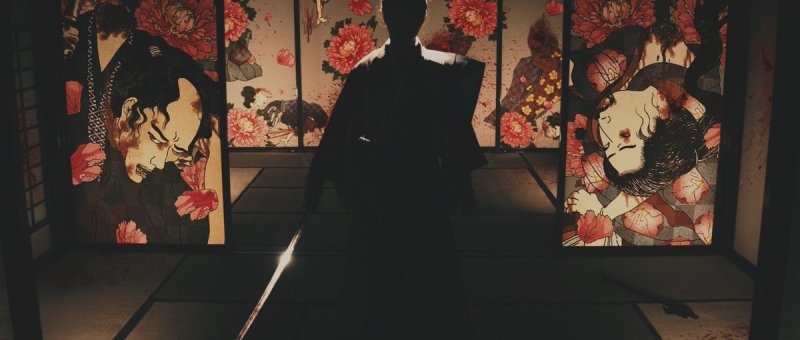
suffering-of-ninkoAll life is suffering, and all suffering is caused by desire. Ninko, the titular monk at the centre of this entertaining oddity from Norihiro Niwatsukino, seems to have taken this to heart and is suffering more than most in his attempts to reach Nirvana. Suffering of Ninko (仁光の受難, Ninko no Junan) takes its cues from the Hyaku-monogatari classical Japanese tales of ghosts and the supernatural as its seemingly comic story of a pretty monk and his ironic talent for attracting the wrong kind of attention gradually darkens until its unexpectedly strange finale. Visually striking if a little rough around the edges, Suffering of Ninko has a pleasantly organic quality as if its narrator were really making it up as she goes along only to tire of it a little by the end and give us a suitably spooky conclusion to send us on our way.

Ninko (Masato Tsujioka) is the most assiduous monk at his temple. His desire for asceticism knows no bounds as he spends his days cleaning, polishing the artefacts, reciting sutras and meditating. The problem is, Ninko is just too damn pretty. Every time he ventures into town the womenfolk go crazy, even getting upset if they discover he isn’t among the monks despatched on the daily alms harvesting mission. In fact, Ninko has also attracted the attention of the two gay monks at the temple which he seems to find a little irritating but unlike some of the others this is a very real problem for him as he’s decided to keep his mind and body pure though total celibacy. This unfortunate and quite ironic talent of his which makes him some sort of magnet for the repressed sexual desires of just about everyone actually makes him feel quite bad, arousing all this lust but ultimately unable to satisfy it.

After a strange encounter in the woods provokes a kind of spiritual crisis in the earnest Ninko, filling his world with bared breasts and erotic visions, the chief monk sends him off on a pilgrimage, reminding him that a denial of his baser emotions is not the same the same as facing them and will only result in additional suffering. Whilst on the road, Ninko meets up with violent ronin Kanzo (Hideta Iwahashi), and gets pulled into the strange goings on in a mountain village where the men have been gradually going missing. The locals have laid these disappearances at the feet of Yama-onna (Miho Wakabayashi) – a ghostly forest bound presence who seduces wayward men only to feast on their vitality.

Beginning almost like a rakugo tale, the central joke of Ninko’s ongoing, largely self imposed, suffering is in his ironic talent for arousing sexual desire in places which he does not want it (which is to say everywhere). More than just good looks, Ninko seems to have some kind of magnetic power which sends almost everyone he meets wild with insatiable lust which is quite the problem seeing as he’s committed to remaining celibate. He may think that he does not feel desire but as Kanzo later tells him, this denial is a kind of self deception masking the fact that he feels it all too much. The strange and mystical encounter with a noh mask wearing woman (?) in the forest leads to a bizarre sequence of beautifully choreographed visions of erotic ecstasy accompanied by Ravel’s Bolero after which Ninko has some kind of breakdown resulting from sexual frustration.

This first encounter with the supernatural leaves him with a burnt hand and a burning mind but also with the lingering suspicion that his curse may not be of entirely mortal origins. Thus he originally declines to accompany Kanzo on his quest to end Yama-onna’s days of wild abandon in the woods to enter a period of introspective questioning in wondering if he and Yama-onna are of a piece in their mirrored need for and denial of sexual pleasure. When he finally meets her he gets a kind of answer to his question which relegates the monkish Ninko to the realms of the forgotten as the newly born legend of Ninko-bo assumes his form.

Inspired by the classical nature of the tale, Niwatsukino makes striking use of animation inspired by scroll paintings, ukiyo-e prints, and shunga all accompanied by the gentle voice of the narrator to add to the mythic atmosphere. In keeping with its inspiration, the narrative has a suitably throw away quality as if it were all being made up on the spot which of course means that it drags here and there and ends somewhat abruptly but then that is the nature of the tale. A psychedelic oddity which revels in a sense of playfulness undercut by dark spirituality and existential dread, Suffering of Ninko is a story for a stormy night, strange and a little bit scary but with its tongue tucked firmly in its cheek.


Available to stream online from Festival Scope until 20th February 2017 in conjunction with International Film Festival Rotterdam.

Original trailer (English subtitles)

Manila in the Claws of Light (Maynila, sa mga Kuko ng Liwanag, Lino Brocka, 1975)

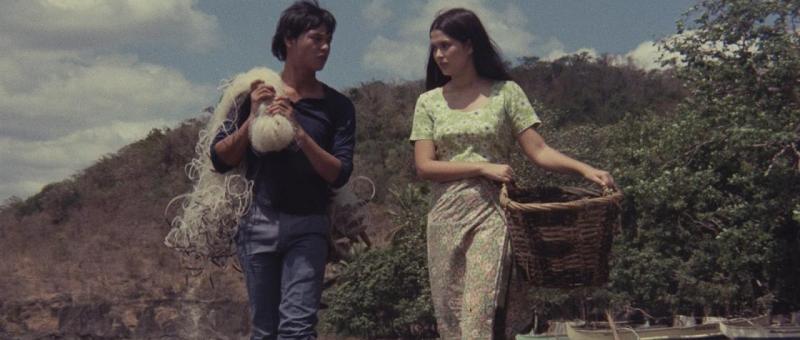
manila-large-900About half way through Lino Brocka’s masterpiece of Philippine cinema Manila in the Claws of Light (Maynila, sa mga Kuko ng Liwanag), the hero, Julio (Bembol Roco), sits watching the window where he thinks the woman he loves may be being held prisoner as a trio of guitar players strums out The Impossible Dream, unwittingly narrating his entire story. Julio is no Don Quixote but he has his own Dulcinea and, as the song says, without question or pause he is ready to march into hell for the heavenly cause of rescuing her from clutches of this cruel city. Not quite content to love pure and chaste from afar, Julio plays Orpheus descending into the underworld, plunged into a strange odyssey through a harsh and indifferent world driven by mutual exploitation and the expectation of violence.
Orphaned fisherman Julio has been in Manila for some months in search of his girlfriend, Ligaya (Hilda Koronel), lured away from her hometown by the false promises of the elegant Mrs. Cruz (Juling Bagabaldo) who claimed there were good factory jobs waiting for pretty girls in the city which also provide the opportunity to study. After she abruptly stopped writing home, Julio left to find her but months of searching have left him with few leads other than tracking Mrs. Cruz to a Chinese grocers where he sometimes thinks he sees a familiar silhouette in an upper window.

The first of Julio’s falls brings him into the world of the casual day labourer, reliant on the transience of ongoing construction and at the mercy of corrupt foremen. Having been mugged and deprived of all of his savings, Julio is completely broke and lucky to have found this job for which he will be paid 2.50 pesos per day, which is 0.5 pesos less than the wage he was getting on his last job. Later he finds out that his payslip says 4 pesos, but whether that extra 1.50 is imaginary or finding its way into the pockets of the foreman is anyone’s guess. In any case, the money is rarely paid in full but offered under the system of “taiwan” in which the company effectively refuses to pay the current wages but offers an advance on future ones for a small fee. Should an employee complain, he will simply be fired. Conditions are poor with no safety provisions and fatal accidents are not uncommon. When the project nears completion, workers will be unceremoniously laid off with no warning or additional pay, overtime is available but is paid at the basic rate.

Julio is a single man and is only ever thinking of his quest and so he is prepared to suffer. The labourers he meets are all good men and friendly, quick to help him find his feet in this often harsh terrain. Sleeping in the communal dorm, Julio makes friends with some of the other workers who each have their own dreams from studying at night school for a corporate job to becoming a famous singer but his closest ally becomes a kind man trying to support his paralysed father – shot in the back by police after refusing to leave the family’s ancestral farm illegally grabbed by a Spanish millionaire, and his younger sister all now living in a fetid slum.

Julio’s second fall occurs after he loses his job at the construction site and finds himself roaming around the city, ending up in a dodgy part of town apparently very popular for cruising. Picked up by a friendly local, Julio gets himself another place to stay but soon finds out the main idea is to recruit him as a rent boy for an exclusive gay club. Talked into it and persuaded by the possibility of earning ten times what he’d get in construction, Julio tries prostitution on for size but is not interested in sex with other men and finds it impossible to adapt to the kind of showmanship the role requires. His experiences do, at least, provide a kind of mirror for what he fears has befallen his lady love though the gay club is a much more open environment in which the staff is free to leave at any time, turn clients down, and generally take in the atmosphere whilst waiting around.

The city is a willing collaborator in Julio’s fate. Naivety has no place here where the only route out of oppression is to become an oppressor. Early on Julio mentions going to the police to get help for Ligaya but is cautioned against it. Impotent and hopeless, Julio’s rage only grows as he watches friends die in cruel, ridiculous and unnecessary ways to the point at which he almost kills a purse snatcher in a kind of vengeance against an unkind society. Brocka breaks the contemporary action with frequent flashbacks as Julio remembers happier times with Ligaya some lasting mere seconds and others minutes reflecting Julio’s growing madness and unresolved rage. To try to live here is to dream the impossible dream, but for Julio there can only be one way out and it lies in violence, loss and defeat. Laying bare the futility of life under a dictatorial regime with all of its fear and emptiness, Manila in The Claws of Light is quietly angry, filled with a young man’s fire as he finds the world denied him, his dreams impossible, and his hope already in ashes.


Restoration trailer (no subtitles)

Out There (Takehiro Ito, 2016)

out-thereWe don’t move forward in this dance, comments the lady currently being waltzed by a charming lost soul. Don’t worry, he says, that’s not a bad thing. Indeed, Out There, the first independent feature film from director Takehiro Ito exists in a fixed yet liminal space, here and not there as its protagonist finds himself without the proper place to be. Conceived as a way of salvaging some of the material collated for a documentary on the late Taiwanese director Edward Yang, Out There takes more of its cues from Tsai Ming-liang or even Lav Diaz in its preoccupation with the intersection between time, existence, and place. If that all sounds to weighty, there’s a little whimsy in here too, but the intent is a serious one as nationhood (or the lack of it), drifting cultures, love and history all conspire to confuse and distract the course of a young man in search of an identity which is entirely his own.
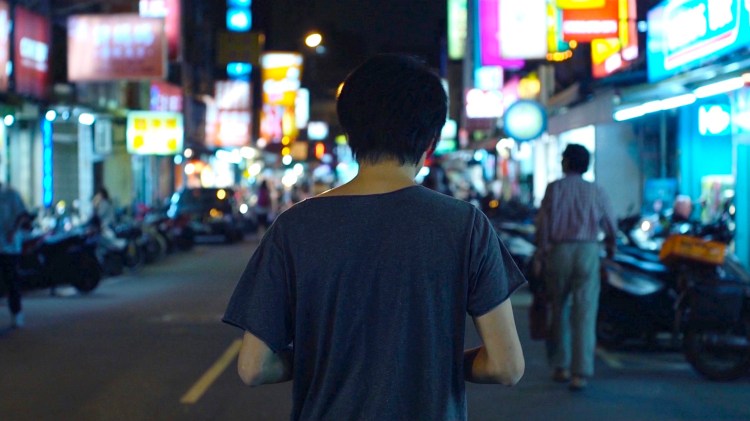
Beginning with an interview or perhaps an audition, the onscreen director questions the man who will be our star, Ma, about his motivations for applying – only, characteristically, he doesn’t quite know. From what he tells us, it seems his interests are largely introspective, unable to find a place to exist, perhaps he can carve one out for himself inside the fictional world of a film. Ito returns to this interview (or series of interviews?) throughout the action as Ma shows an apt desire to dissect himself on camera. The director is a minor player as Ma takes over, but like Ito he is trying to recover something from the ashes of a lost project, his producer sitting to the side, neatly picking apart the director’s somewhat thin proposal for a film about a cross cultural couple in which “everything happens by chance”.

The historical relationship between Tokyo and Taipei is perhaps a complicated one (though significantly less complicated than with many of its other neighbours), but there is a third party in this difficult romance in the spectre of America. Returning to Taiwan in the second segment, notably titled Land of Shadows, Ma talks to his parents about their views on global culture as Green Card holding Taiwanese who never made the move. In his original interview, Ma explained that one of the reasons he came to Japan was that he always felt like an outsider in Taiwan, unable to express himself fully. Having spent some time in the US as a child, Ma has a feeling America is “not for him”, but has also found that Japan is probably not the place he’s supposed to be either, and unlike his family he does not feel as if he can simply live out his days in his native Taiwan.

In a final discussion with Ayako – the actress in the film which never quite happens (in a sense, outside of the way it’s happening for us), Ma talks about the importance of memory which prompts Ayako to remark that it’s as if everything is already in the past for him. As if to symbolise Ma’s lack of forward progress, everything which happens in Tokyo bar a single flash of colour at the end of the interview sequence is cast in sharp black and white. Taiwan, by contrast, is shot in verdant colour though allowing for 16mm and 4:3 framing adding to the sense of nostalgia and homesickness which seem to invade Ma’s mind. This Taiwan is a place of backstreets and ruins, faded grandeur and unseen histories. Empty cinemas and abandoned film eventually give up their ghosts, but it’s Ma himself who seems to join them as he fades into the frame, here and not here as he repeatedly doubts the matter of his own existence.

There’s a slight irony in the way America has been idealised as a place of possibility given its (until extremely recently) severing of diplomatic ties with the island nation of Taiwan. Seeking a home in a place which refuses to acknowledge the land in which you were born exists may make one feel like a ghost, but Ma’s sense of existential dislocation runs deeper. A kind of hiraeth, a longing for a home which doesn’t quite exist, becomes a force which propels and halts in equal measure. Skating around Tokyo on his roller blades, Ma has no particular destination in mind except perhaps to escape himself. He takes photos of places because he doesn’t want to point his camera at people, refusing human connections which will have to be broken in his ongoing quest for a sense of belonging. As the director puts it, there are many endings but as long as he remains fixed on the concept of “there”, Ma risks losing the idea of “here” which remains in a state of perpetual future past, outside of this liminal space in which nothing moves or changes.

Ito’s drifting, experimental approach moving between documentary, narrative and fantasy with the borders between each as unclear as the hero’s sense of identity is one which defies categorisation, as much about the idea of place as the characterisation of the two cities at hand and the ever unseen spectre of the hovering America. Poetic, wistful, and imbued with a sense of loss, Out There is a poignant exploration of cultural dysphoria and existential confusion in an ever widening world in which past, present and future become indistinct in an endless journey onward to place or no place at all.


Currently available to stream worldwide via Festival Scope in connection with the International Film Festival Rotterdam.

Short scene from the end of the film:

The Fossil (化石, Masaki Kobayashi, 1975)

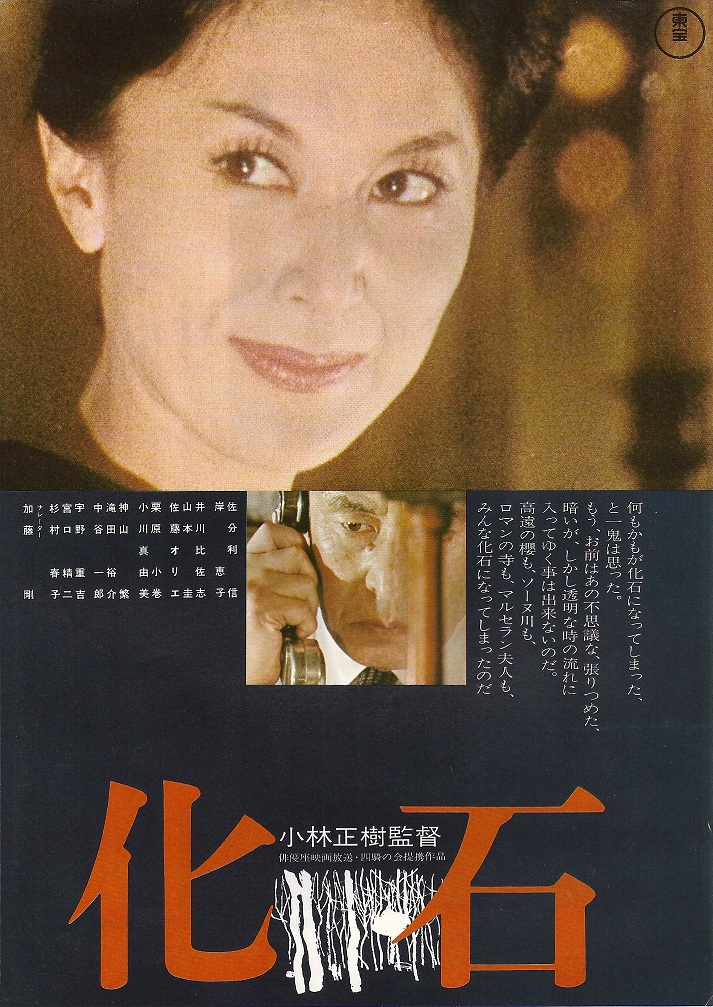
fossilThroughout Masaki Kobayashi’s relatively short career, his overriding concern was the place of the conscientious individual within a corrupt society. Perhaps most clearly seen in his magnum opus, The Human Condition, Kobayashi’s humanist ethos was one of rigid integrity in which society’s faults must be spoken and addressed in service of creating a better, fairer world. As might be expected, his often raw, angry social critiques were not always what studios were looking for, especially heading into the “difficult” 1970s which saw mainstream production houses turning on the sleaze to increase potential box office. Reluctantly, Kobayashi headed to TV on the condition he could retain some of his footage for a feature film. Adapted from the 1965 novel by Yasushi Inoue, The Fossil (化石, Kaseki) revisits many of Kobayashi’s recurrent themes only in a quieter, more contemplative way as an apparently successful man prepares to enter the final stages of his life, wondering if this is all there really is.
Itsuki (Shin Saburi), a selfmade man who hit it big in Japan’s post-war boom town by founding his own construction firm which currently employs over 1000 people, is about to catch a plane to Europe for a trip that’s pleasure disguised as business. As he leaves, his younger daughter informs him he may be about to become a grandfather for the second time after the birth of her niece, though she is worried and is not sure she wanted a child at this precise moment. Brushing aside her nervousness with an odd kind of fatherly warmth, Itsuki seems pleased and states that he hopes it’s a boy this time. Nevertheless he leaves abruptly to catch his plane. During the flight he begins to become depressed, reflecting that since his wife has died and both of his daughters have married and have (or are about to have) children of their own he is now totally alone. Never before has he faced a sensation of such complete existential loneliness, and his arrival in Paris proves far less invigorating than he had originally hoped.

Wandering around with his secretary, Funazu (Hisashi Igawa), who has accompanied him on this “business” trip, Itsuki catches sight of an elegant Japanese woman in a local park and is instantly captivated. Improbably spotting the same woman several times during his stay, Itsuki later discovers that she is the wife of a local dignitary though not universally liked in the Japanese ex-pat community. At this same work dinner where he discusses the merits of Madame Marcelin (Keiko Kishi), Itsuki experiences a severe pain in his abdomen which makes it difficult for him to stand. Feeling no better back at the hotel, Funazu arranges a doctor’s visit for him. The doctors seem to think he should head straight home which Itsuki is not prepared to do but when he masquerades as Funazu on the phone to get the full verdict, he finds out it’s most likely inoperable intestinal cancer and he may only have a year or so to live.

This unexpected – or, perhaps half sensed, news sends him into a numbing cycle of panic and confusion. At this point Itsuki begins his ongoing dialogue with the mysterious woman, arriving in the guise of Madame Marcelin only dressed in the traditional black kimono of mourning. Telling no one, Itsuki embarks on a contemplative journey in preparation for a union with his dark lady in waiting which takes him from the Romanesque churches of the picturesque French countryside back to Japan and the emptiness, or otherwise, of his settled, professionally successful life.

Like the hero of Kurosawa’s similarly themed Ikiru, Itsuki’s profound discovery is that his overwhelming need for personal validation through work has led him to neglect human relationships and may ultimately have been misplaced. On his return to Japan, Itsuki makes the extremely unusual decision to take a day off only to receive a phone call regarding an old friend and former colleague who, coincidentally, has aggressive cancer and has been asking to see him. Not wanting to mention his own illness, Itsuki parts with his friend feeling it may be for the last time but eventually returns for a deeper conversation in which he probes him for his views about his life so far and what he would do if he had, say, another year to live. His friend has come to the same conclusion, that his working life has largely been a waste of time. What he’d do differently he couldn’t rightly say, things are as they are, but if he had more time he’d want to do “good” in the world, make a positive change and live for something greater than himself.

Itsuki isn’t quite as taken with the idea of “goodness” as a life principle, though he does begin to re-examine himself and the way he has treated the people in his life from apologising to the stepmother he failed to bond with as a child to reconnecting with an old army buddy who maybe the closest thing he’s ever had to a “true friendship” – something which the mysterious woman reminded him he’d been missing for a very long time. Meeting Teppei again, Itsuki is introduced to his walls of fossilised coral and all of their millions of years of history frozen into one indivisible moment. Feeling both infinite and infinitesimal, Itsuki is reminded of his immediate post-war moment of survivor’s guilt in which he and his friend agreed that they’ve each been living on borrowed time ever since.

Given a sudden and unexpected chance of reprieve, Itsuki is even more confounded than before. Having made a friend of death, he may now have to learn to live again, even if his mysterious lady reminds him that she will always be with him, even if he can no longer see her. Though he’d wanted nothing more than to live to see the cherry blossoms in the company of the living Madame Marcelin whose vision it was that so captivated him, his old life is one he cannot return to and must be preserved in amber, frozen and perfect like Teppei’s fossilised coral.

Tonally European, perhaps taking inspiration from Death in Venice, and bringing in a Christianising moral viewpoint pitting the values of honest hard work against genuine human feeling, The Fossil is the story of a man realising he has been sentenced to death, as we all have, and makes his peace with it only to learn that perhaps his sentence will be suspended. Yet for a time death was his friend and her absence is a void which cannot be filled. This life, this new life so unexpectedly delivered, must be lived and lived to the full. Itsuki, who had prepared himself to die must now learn to live and to do so in a way which fulfils his own soul. Originally filmed as a 13 part TV series now reduced to three hours and twenty minutes, The Fossil’s only consolation to its medium is in its 4:3 frame which Kobayashi’s unobtrusive style fully embraces with its ominous distance shots, slow zooms and eerie pans backed up by Toru Takemitsu’s sombre score. Kobayashi, who’d given us a career dedicated to railing against the injustices of the system, suddenly gives us the ultimate rebellion – against death itself as a man who’d prepared himself to die must judge the way he’s lived on his own terms, and, finding himself wanting, learn to live in a way which better fits his personal integrity.


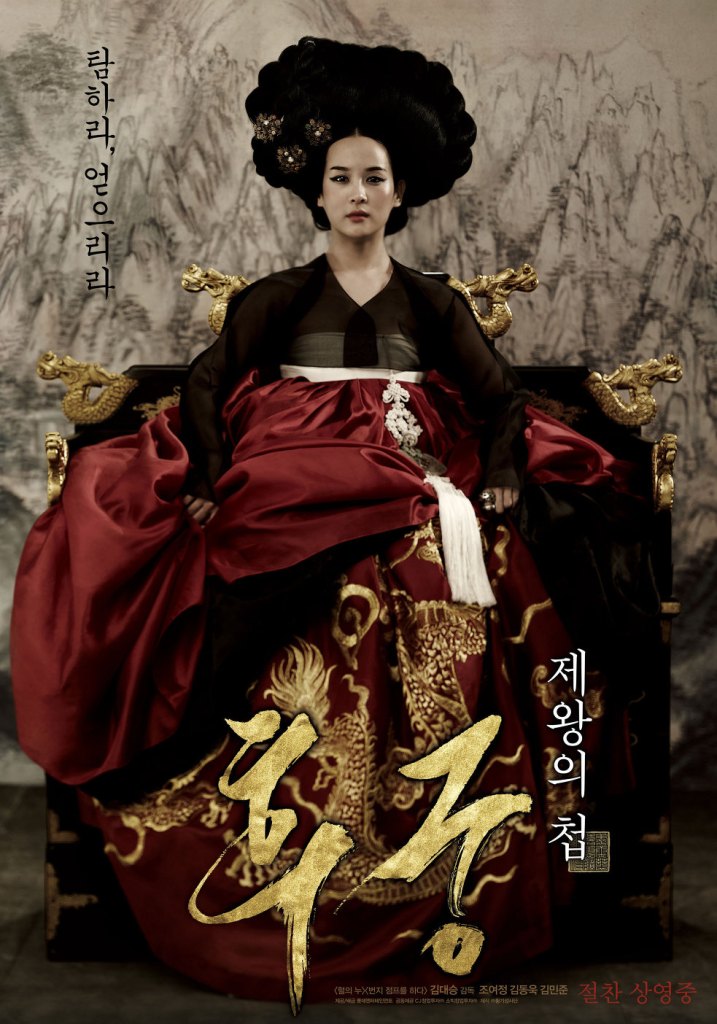
The Concubine (후궁: 제왕의 첩, Kim Dae-seung, 2012)

the-concubineYou can become the King of all Korea and your mum still won’t be happy. So it is for poor Prince Sungwon (Kim Dong-wook) who becomes accidental Iago in this Joseon tale of betrayal, cruelty, and love turning to hate in the toxic environment of the imperial court – Kim Dae-seung’s The Concubine (후궁: 제왕의 첩, Hugoong: Jewangui Chub). Power and impotence corrupt equally as the battlefield shifts to the bedroom and sex becomes weapon and currency in a complex political struggle.

Prince Sungwon first catches sight of official’s daughter Hwa-yeon (Cho Yeo-jeong) after a hunting party and develops a dangerous attraction to her. His possessive parent, the Queen Mother (Park Ji-young), finds this worrying and manoeuvres to take Hwa-yeon out of the picture by having her brought to court as a concubine of the king. Hwa-yeon, however, has a love of her own in the roguish hanger-on Kwon-yoo (Kim Min-jun) and is willing to risk her life by defying the imperial orders and running away with him. The pair consummate their union but are discovered at first light whereupon Hwa-yeon agrees to go to court on the condition Kwon-yoo’s life is spared.

Some years later, Hwa-yeon is the reigning queen as the mother of the sickly king’s only son but her life becomes considerably more complicated when the king dies in mysterious circumstances. Power passes back to the Queen Mother who puts her son, Sungwon, on the throne, making Hwa-yeon and the young prince direct threats to her power base. Sungwon is still in love with Hwa-yeon but his mother forbids him from pursuing her. Forbidding is something his mother does quite a lot of, and it’s not long before Sungwon becomes frustrated with his lack of real power. Matters come to a head when Kwon-yoo also resurfaces as a eunuch at the imperial court.

The imperial court is a golden prison and a world in itself. Once entered, it cannot be escaped. Everyone is vying for power but no one really has any. The king’s ill health and lack of a direct heir has left him dangerously vulnerable and the Queen Mother in a position of unusual strength. If one thing is clear, it’s that she has had to play a long game to get here, done terrible things in the name of power or self preservation, and will stop at nothing to make sure she remains on top.

The Queen Mother’s ascendency is contrasted with Hwa-yeon’s fall as she finds herself forced into the court against her will. Realising her total lack of agency as the court ladies are instructed to obey protocol in undressing her for the bath rather than allowing her to undress herself, Hwa-yeon exclaims that she has no right to her own body. Hwa-yeon’s body is, now, imperial property to be used and abused by the king for his pleasure and his alone. However, the Queen Mother may have met her match in the steely and intelligent politician’s daughter who seems just as well equipped to play the game as she is.

Much has been made of the sexual content of The Concubine which was largely sold on its titillating qualities. However, even if the adult content is frank it is far from erotic as sex becomes a tool of control and manipulation – one of the few available to the subjugated women of the court environment. Aside from the first love scene between Hwa-yeon and her true love, Kwon-yoo (which is perhaps the least direct), none of the subsequent scenes is fully consensual, each a part of a wider scheme or courtly ritual. Rather than an expression of love or intimacy, sex is an act of mutual conquest in which each side, essentially, loses.

Sungwon finds himself powerless both politically and romantically, unable to wrest power away from his controlling mother or win the heart of the already brutalised Hwa-yeon. A prisoner of his own circumstances, Sungwon’s increasing feelings of impotence manifest in violence and erratic behaviour as his obsession with Hwa-yeon borders on madness. Far from a liberation, Sungwon’s sex life is, in a sense literally, dictated as his ritualised consummation of marriage is conducted in front of an audience shouting out commands from behind screen doors who eventually criticise him for his lack of stamina. Kwon-yoo has been robbed of his ability to engage in this game and his desire for revenge is intense yet he will have to take it from the shadows by stealth if at all.

Director Kim Dae-seung manages the intrigue well in crafting the intensely claustrophobic environment of the oppressive court whilst ensuring motivations and desires remain crystal clear. There are no winners here even if there is a reigning champion claiming the throne. The cycle of violence and manipulation seems set to continue as even those who entered as innocents leave with blood on their hands, having become the very thing they fought so hard against. Often beautifully shot with opulent production values, The Concubine is an ice cold thriller in which desire competes with reason but rarely, if ever, with love.


Original trailer (no subtitles)

April Fools (エイプリルフールズ, Junichi Ishikawa, 2015)

april-foolsIn this brand new, post truth world where spin rules all, it’s important to look on the bright side and recognise the enormous positive power of the lie. 2015’s April Fools (エイプリルフールズ) is suddenly seeming just as prophetic as the machinations of the weird old woman buried at its centre seeing as its central message is “who cares about the truth so long as everyone (pretends) to be happy in the end?”. A dangerous message to be sure though perhaps there is something to be said about forgiving those who’ve misled you after understanding their reasoning. Or, then again, maybe not.
Juggling seven stories April Fools is never as successful at weaving them into a coherent whole as other similarly structured efforts but begins with an intriguing Star Wars style scroll regarding alien sleeper agents who can apparently go home now because they’ve accomplished everything they came for. Changing track, pregnant snack addict Ayumi (Erika Toda) decides to ring the still unknowing father of her child after witnessing an improbable reunion on TV only he’s in bed with someone else and assumes her call is a weird practical joke. Overhearing that he’s just arrived at a restaurant for a lunch date, Ayumi takes matters into her own hands and marches over there, eventually taking the entire place hostage. Meanwhile an older couple are having a harmless holiday pretending to be royalty and a grizzled gangster has “kidnapped” a teenage girl only to give her a nice day out at the fun fair. Oh, and the hikkikomori from the beginning who’s fallen for the whole alien thing has made a total fool of himself at school by taking out his bully, kissing his crush goodbye and racing up to the roof to try and hitch a lift from the mothership.

Importing this weird European tradition to Japan, the creative team have only incorporated parts of it in that they don’t call time on jokes at noon and it’s less about practical shenanigans and elaborate set ups than it is about wholesale lying which is frustrated by this famous non-holiday apparently created in celebration of it. All of the protagonists are lying about something quite fundamental and usually to themselves more than anyone else but at least their April Fools adventures will help them to realise these basic inner truths.

Then again some of these revelations backfire, such as in the slightly misjudged minor segment concerning two college friends who are repeatedly kicked out of restaurants before they can get anything to eat. One decides to “prank” his friend with an April Fools confession of love, only to find that his friend really is gay and is in love with him. Awkward is not the word, but then an April Fools declaration of love is about the worst kind of cruel there is and is never funny anyway, nor is the casual homophobia involved in this entire skit but that’s another story.

In fact, most of the other people are aware they’re being lied to, but are going along with it for various reasons, some hoping that the liars will spontaneously reform and apologise or explain their actions. Ayumi, who is shy and isolated by nature, always knew her handsome doctor suitor was probably not all he seemed to be but is still disappointed to be proved right, only be perhaps be proved wrong again in the end. Convinced to take a chance on an unwise romance by an older colleague who explains to her that many miracles begin with lies, Ayumi is angry with herself as much as with her lying Casanova of a baby daddy, and also feels guilty about an incredibly sight deception of her own. As in many of the other stories, now that everyone has figured out the real, important, truths about themselves and about the situation, they can excuse all of the lying. Sensible or not? The choice is yours.

Despite coming from the team who created some very funny TV dramas including Legal High, the comedy of April Fools never quite hits its stride. Weak jokes backed up with slapstick humour giving way to sentimentality as the “good reasons” for the avoidance of truth are revealed don’t exactly whip up the farcical frenzy which the premiss implies. The point may very well be that we’re the April Fools going along with this, but even so its difficult to admire a film which pushes the “lying is good” mantra right to the end rather than neatly undercutting it. Still, there is enough zany humour to make April Fools not a complete waste of time, even if it doesn’t make as much of its original inspiration as might be hoped.


Original trailer (English subtitles)

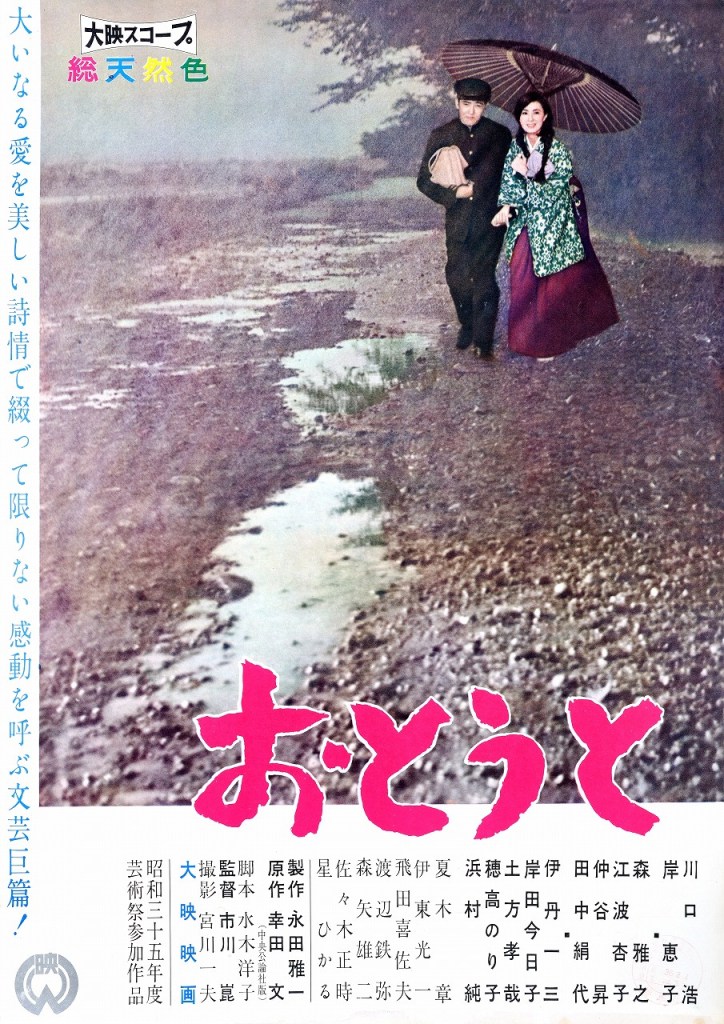
Her Brother (おとうと, Kon Ichikawa, 1960)

ototoPerhaps oddly for a director of his generation, Kon Ichikawa is not particularly known for family drama yet his 1960 effort, Her Brother (おとうと, Ototo), draws strongly on this genre albeit with Ichikawa’s trademark irony. A Taisho era tale based on an autobiographically inspired novel by Aya Koda, Her Brother is the story of a sister’s unconditional love but also of a woman who is, in some ways, forced to sacrifice herself for her family precisely because of their ongoing emotional neglect.
Oldest daughter Gen (Keiko Kishi) is still in school though she’s more or less running the household seeing as her invalid step-mother (Kinuyo Tanaka) spends most of her time bedridden with rheumatism and the rest of it pontificating about religion and listening to her poisonous friend (Kyoko Kishida) who likes to stir up trouble in this already difficult family environment. Gen’s father (Masayuki Mori) is a well known writer who needs a lot of quiet time for his work. As fathers go he’s very laid back and content to think his kids will be OK because they’re his kids, which isn’t to say he doesn’t care but he’s not exactly present most of the time. It’s no surprise then that care of the family’s youngest, Hekiro (Hiroshi Kawaguchi), has largely fallen to his sister. Where Gen is naturally responsible and practically minded, Hekiro is reckless and always in search of adventure. Eventually this lands him in trouble when he gets involved with a bad crowd but whatever his family might have been feeling towards him, everything changes once they discover that he’s facing a serious illness.

Because of the family’s odd arrangement, Gen has become almost a maternal figure towards Hekiro despite only being a couple of years older than he is. In fact, the pair have an almost comically childish physical fight at one point which is quite undignified considering their ages, especially when it involves staining their tatami mat floor with a puddle of bright red ink. Gen does her best but like her father she more often than not lets Hekiro off the hook by bailing him out, much of the time with her own rather than her father’s money. Not having the kind of authority a parent, uncle, or aunt might have all she can really do is ask him to think about behaving better, but Hekiro constantly pushes the boundaries to get a more concrete form of attention than his sister’s well meaning attempts to help are able to provide.

Hekiro’s stunts  eventually threaten to pull his sister into his darkening world, especially when a man claiming to be a detective starts more or less stalking Gen before pulling her into a shrine on the pretext of talking about her brother’s case before trying to have his wicked way with her. Luckily Gen is saved by a flock of geese cunningly released by some of her brother’s friends which gives her enough time to escape and finally get rid of the odious little man.

Similarly, Hekiro deliberately introduces his sister to the local pool hall. Though Gen seems to enjoy the game and is even good at it, she quickly realises she’s been brought as a sort of guarantor for her brother’s mounting debts. Add in other expensive and dangerous hobbies like his boat habit (he can’t swim) and it’s not surprising everyone’s had enough of Hekiro before he’s even left school. When he has an accident which results in the death of a horse (again, very expensive), it does at least lead him to reflect on the negative effect his actions can have on those around him, even if all he wanted and continues to want is an escape from his boring and miserable family life.

Even Hekiro’s illness fails to arouse very much in the way of concern from his well meaning father and grumpy step-mother who is hellbent on marrying Gen off against her wishes. Gen is, again, the only one to nurse Hekiro in hospital, managing the household as well as looking after her brother on his sickbed. When the illness becomes more serious it provides a last opportunity for the family members to bond and make amends for the various ways they’ve failed each other. The step-mother’s visit is not as altruistic as it seems when it transpires she’s only really come to “convert” Hekiro to her religion, but she begins to feel something more for him on believing that Jesus has already saved him thanks to his outwardly calm and polite manner. The final irony is that the idealised family is only born as it is destroyed, Gen puts her pinny back on and takes the reins from her stepmother who is presumably headed straight back to bed.

Gen’s devotion can’t save her brother either from himself or his fate and it may even be the end of her too. Vowing never to marry and rising from her own sickbed stopping only to instruct her stepmother to rest, she’s very clearly chosen her path even if Ichikawa’s camera and musical cues seem to find the ironic comedy of the situation rather than the sadness of her possibly tragic plight. Ichikawa and his cinematographer invented a whole new technique for this picture – the bleach bypass, which appropriately robs the environment of its vibrancy, dulling even bright colours with a sort of heavy leaded effect perfectly reflecting Hekiro’s increasingly depressed mindset as he reflects on being someone who has no firm anchor or place to feel at home. A strange, comically melancholic piece, Her Brother is a characteristically sideways swipe at the family drama from the master of irony though one which does not altogether escape his taste for the sentimental.


Original trailer (not subtitles)

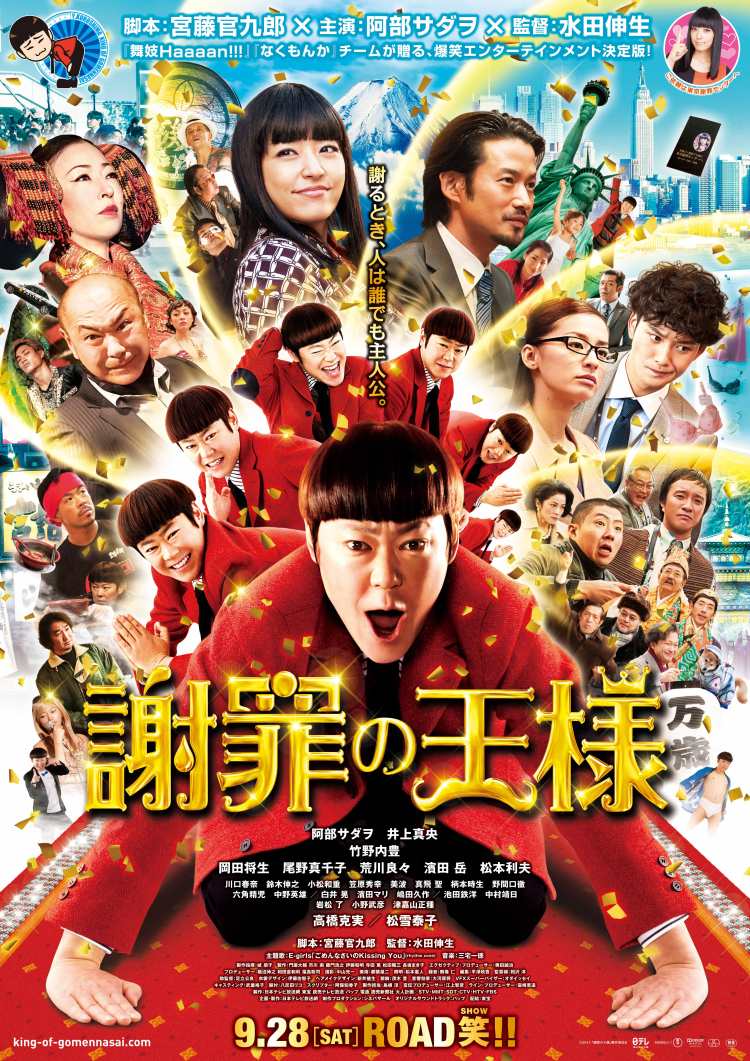
The Apology King (謝罪の王様, Nobuo Mizuta, 2013)

The Apology King.jpgThere are few things in life which cannot at least be improved by a full and frank apology. Sometimes that apology will need to go beyond a simple, if heart felt, “I’m Sorry” to truly make amends but as long as there’s a genuine desire to make things right, it can be done. Some people do, however, need help in navigating this complex series of culturally defined rituals which is where the enterprising hero of Nobuo Mizuta’s The Apology King (謝罪の王様, Shazai no Ousama), Ryoro Kurojima (Sadao Abe), comes in. As head of the Tokyo Apology Centre, Kurojima is on hand to save the needy who find themselves requiring extrication from all kinds of sticky situations such as accidentally getting sold into prostitution by the yakuza or causing small diplomatic incidents with a tiny yet very angry foreign country.
Kurojima promises to know an even more powerful form of apology than the classic Japanese “dogeza” (falling to your knees and placing your head on the ground with hands either side, or OTL in internet lingo), but if you do everything he tells you to, you shouldn’t need it. His first case brings him into contact with Noriko (Mao Inoue) whose awful driving has brought her into contact with the yakuza. Not really paying attention, Noriko has signed an arcane contract in which she’s pledged herself to pay off the extreme debts they’ve placed on her by entering their “employment” at a facility in Osaka. Luckily, she’s turned to Kurojima to help her sort out this mess, which he does by an elaborate process of sucking up to the top brass guys until they forget all about Noriko and the money she owes them in damages. Impressed, Noriko ends up becoming Kurojima’s assistant in all of his subsequent cases, helping people like her settle their disputes amicably rather allowing the situation to spiral out of control.

Mizuta begins with a neat meta segment in which Kurojima appears in a cinema ad outlining various situations in which you might need to apologise including allowing your phone to go off during the movie, or attempting to illegally film inside the auditorium etc ending with a catchy jingle and dance routine pointing towards the contact details for his apology school. Kurojima’s instructions are also offered throughout the film in a series of video essays in which he outlines the basic procedures for de-escalating a conflict and eventually getting the outcome you’re looking for.

Of course, all of this might sound a little manipulative, which it is to a degree, but the important thing to Kurojima lies in mutual understanding more than “winning” or “losing” the argument. The second case which comes to him concerns a young man who has some very outdated ideas and has, therefore, been accused of sexual harassment. Unfortunately, Numata (Masaki Okada) is a classic sexist who only makes the situation worse for himself and completely fails to understand why he was at fault in the first place. Even following Kurojima’s expertly crafted instructions, Numata further insults his female boss whilst attempting to apologise meaning Kurojima has to come up with an even more elaborate plan to smooth the situation which involves pretending to be the ghost of a man who threw himself under a train after being accused of harassing a young woman at work who did not return his affections. This seems to do the trick and the relationship between Numata and his boss appears to have improved even if Numata still has a long way to go in the person stakes, though it does perhaps make light of a serious workplace problem.

Numata follows all of Kurojima’s instructions but still gets everything wrong because he refuses to understand all of the various social rules he’s broken and therefore why and how the apology process is intended to make amends for them. Understanding and sincerity are the keys to Kurojima’s ideology but Numata, after a quick fix, fails to appreciate either of these central tenets and so is unable to work things out for himself. Similarly, in another case the parents of an actor are required to make a public apology when their son is captured on CCTV getting into a street fight. Only, being actors, they find genuine sincerity hard to pull off on the public stage either resorting to chewing the scenery or overdoing the dignified act, not to mention plugging their latest appearances at the end of the speech. The public apology is an important part of the Japanese entertainment industry though it might seem odd that the famous parents of a “disgraced” celebrity would be expected to apologise to the nation as a whole, but as it turns out all that was needed to settle the matter was a quick chat between the people involved, fully explaining the situation and reaching a degree of mutual understanding.

The innovative structure of Apology King neatly weaves each of the cases together as they occur in slightly overlapping timeframes but each contribute to the final set piece in which Kurojima becomes an advisor during a diplomatic incident caused when a film director unwittingly offends the small nation of Mutan by accidentally turning their crown prince into an extra in his film. Mutan is a nation with many arcane rules including a prohibition on filming royalty as well as on drinking and eating skewered meat, all of which the crown prince is seen doing in the movie. Matters only get worse when the film crew travel to Mutan to apologise but make even more faux pas, especially when it turns out that Japanese dogeza is actually incredibly rude in Mutanese culture. Revisiting elements from each of the previous cases, Kurojima is only able to engineer a peaceful solution by convincing the Japanese authorities to utter a set phrase in Mutanese which means something quite different and very embarrassing in their own language. Apologies are, of course, always a little humiliating, but then that is a part of the process in itself – placing oneself on a lower level to those who’ve been wronged, as symbolised in the dogeza.

Full of zany, madcap humour and culminating in a gloriously unexpected pop video complete with dancing idols of both genders exhorting the benefits of a perfectly constructed (and sincere) apology, The Apology King is a warm and innocent tribute to the importance of mutual understanding and its power to ease even the deepest of wounds and most difficult of situations. Hilarious but also heartfelt, The Apology King is a timely reminder that unresolved conflicts only snowball when left to their own devices, the only path to forgiveness lies in recognising your own faults and learning to see things from another perspective. Kurojima’s powers could be misused by the unscrupulous, but the most important ingredient is sincerity – empty words win no respect.


Original trailer (no subtitles)

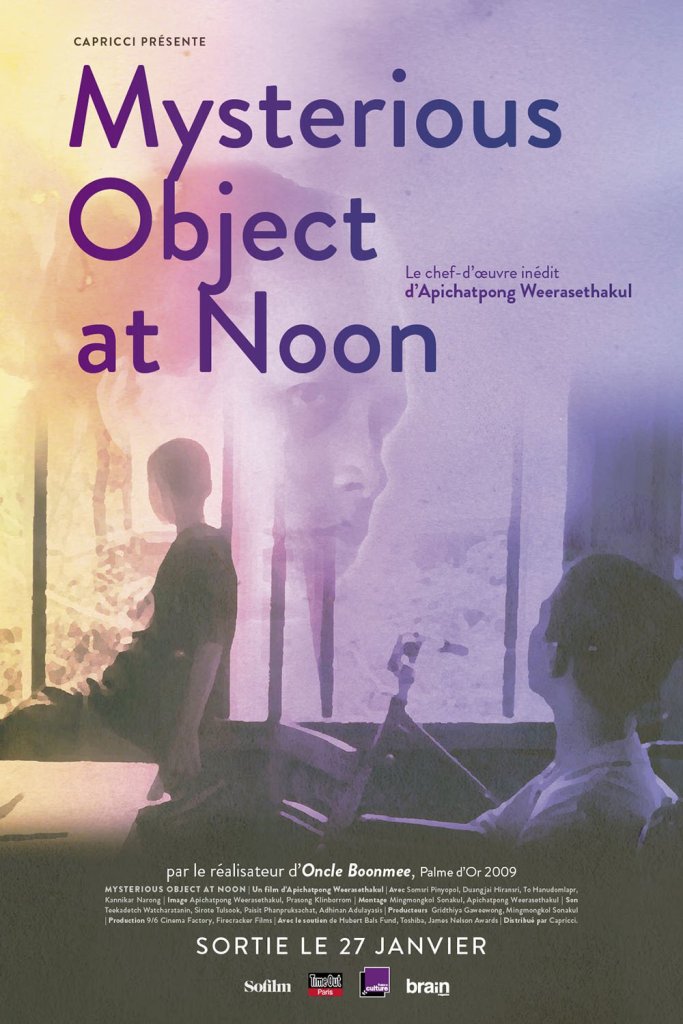
Mysterious Object at Noon (ดอกฟ้าในมือมาร, Apichatpong Weerasethakul, 2000)

mysterious-object-at-noonApichatpong Weerasethakul started as he meant to go on with his debut feature, straddling the borders between art film and surrealist exercise. A cinematic riff on the classic “exquisite corpse” game, Mysterious Object at Noon (ดอกฟ้าในมือมาร, Dokfa Nai Meuman) is equal parts neorealist odyssey and commentary on the human need for constructed narrative (something which the film itself consistently rejects). Shot in a grainy black and white, Apitchatpong’s first effort was filmed over three years travelling the length of the country from North to South inviting everyone from all walks of life to contribute something to the ongoing and increasingly strange brand new oral history.

Beginning with a travelling shot from inside a van peddling fish sauce, Apitchatpong fills the air with naturalistic background noise including our very first story – a sappy sounding radio drama called “I’ll Love You Tomorrow” about a guy who loses touch with the love of his life only to find her engaged to another man. The genesis for the ongoing narrative comes from the woman working on the truck who first recounts her own true story of having been sold by her father for nothing more than the money for his train fare home. She then tells us about a disabled boy and his home teacher who will become the central players in the background tale.

The boy and his teacher get on well and are very close, but one day he finds her collapsed with a strange sphere rolling out from underneath her skirt. This “mysterious object” then transforms into a boy who hides the teacher’s body in a cupboard before taking on her form when he realises the first boy misses her. The odd story grows and develops as each person brings something new to it, reflecting their own lives and histories as a kind of brand new myth making occurs in which ordinary people try to make sense of extraordinary events. Consequently, we have everything from kidnapping to hostess bars and aliens suddenly creeping into this magical realist exercise.

Beginning in the city and ending in the country, Apichatpong talks to anyone and everyone, getting old grannies drunk and letting children run riot. Nearing the end of the journey, he recreates the constructed narrative as a travelling show complete with singing and dancing though his country players are quick to criticise the lack of proper script and random nature of the story. Realising they’ll need some kind of explanation as to why the disabled boy is in a wheelchair, the in movie director decides to film an insert sequence along the lines of an archive news segment. More archive footage follows before Apichatpong takes things in the opposite direction by letting the camera roll on with his cast for the invented story as the second boy becomes keen to remind everyone he was promised some KFC on the way home and Apitchatpong himself steps in front of the camera to fix a lighting setup.

Stories are the way we define our worlds, though given enough leeway the ones we imagine for ourselves are much stranger than conventional logic would allow. The real world is, however, ever present in the sappy radio adverts, political posters, elephants and boxing rings which give way to the darker elements of child abductions and human trafficking. Real life is here, but its deeper layer is here too in the stories which we tell to make sense of it. Using narrative devices from intertitles to sign language, Mysterious Object at Noon embraces all kinds of storytelling from the dramatic to the literary, but its heart is always with the people and the random craziness that emerges when attempting to explain the inexplicable. A necessarily disparate and strange experience, Mysterious Object at Noon neatly heralds the direction of Apichatpong’s ongoing career in its effortless playfulness and sympathetic exploration of this most basic of human needs.


French release trailer (subtitles/captions in French only)