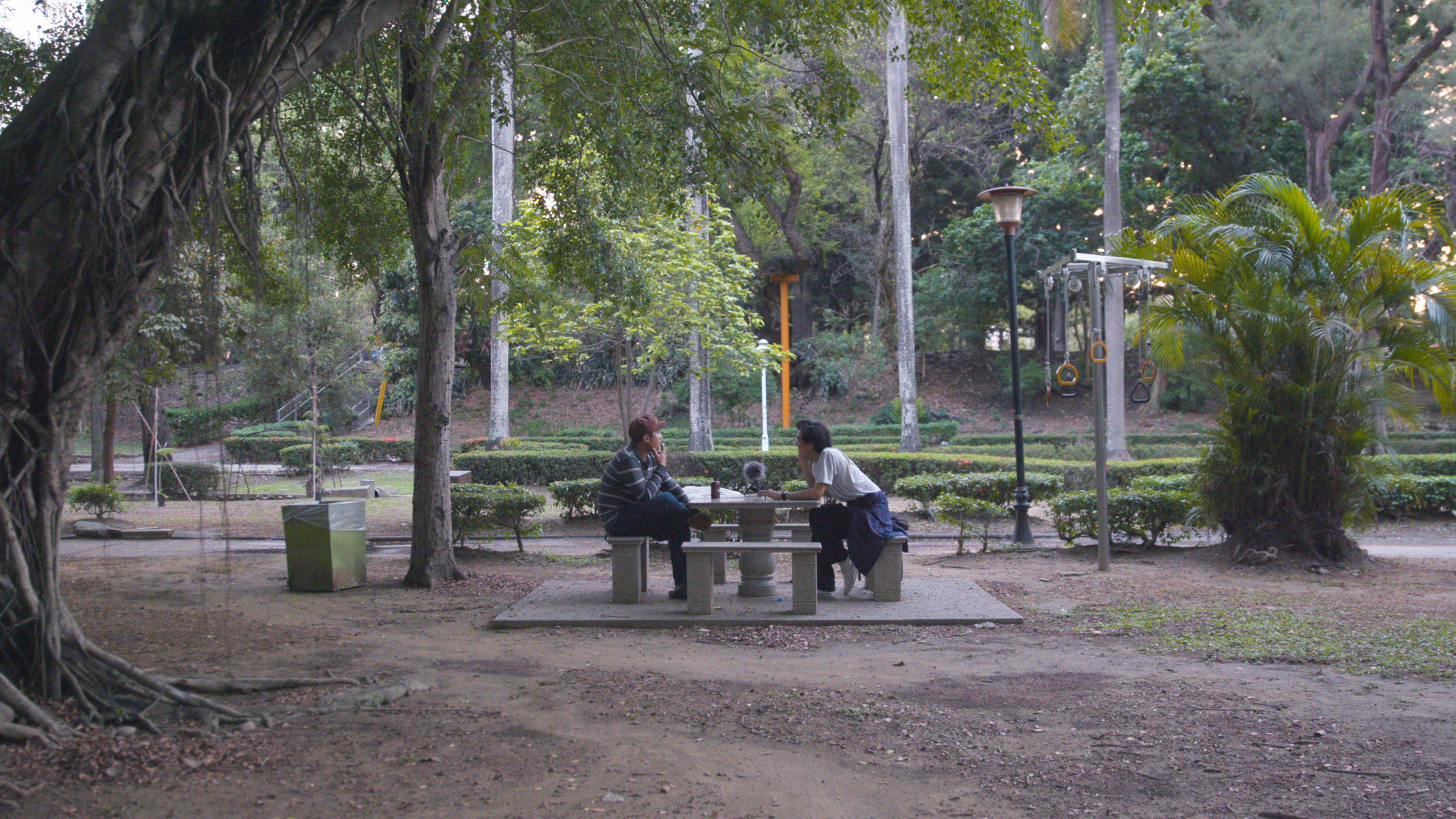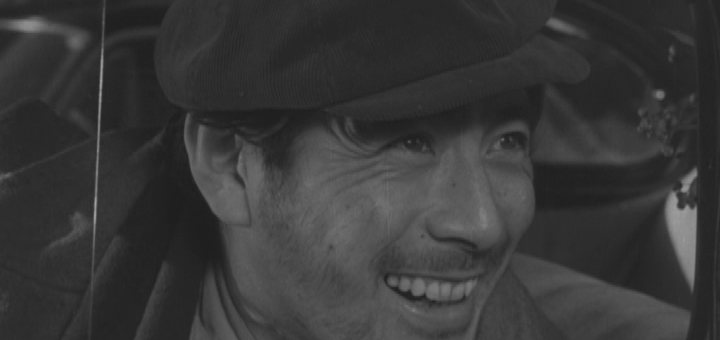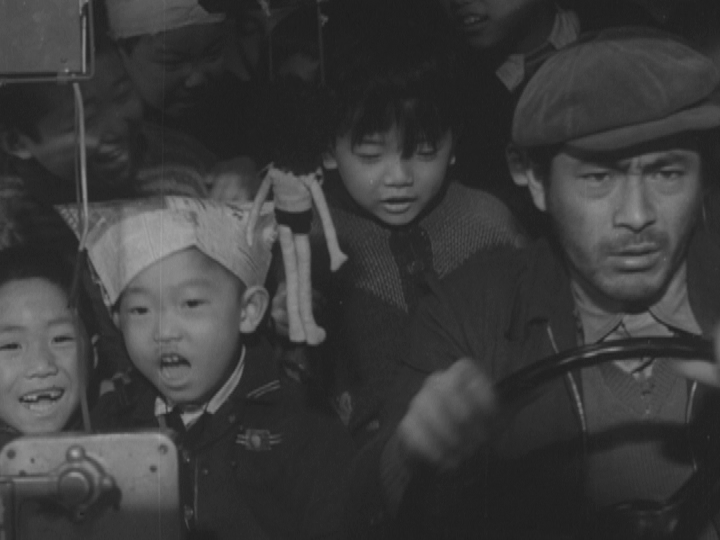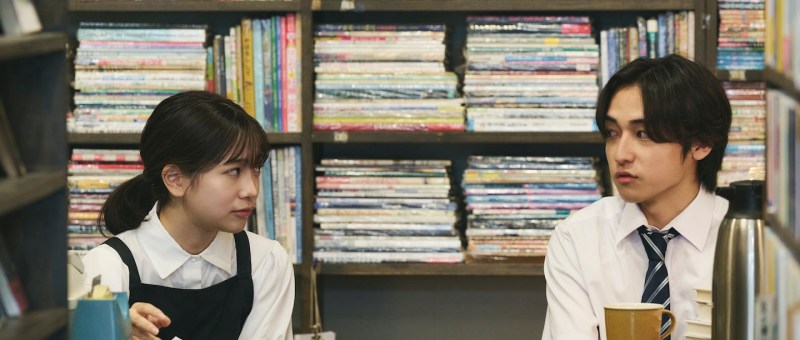
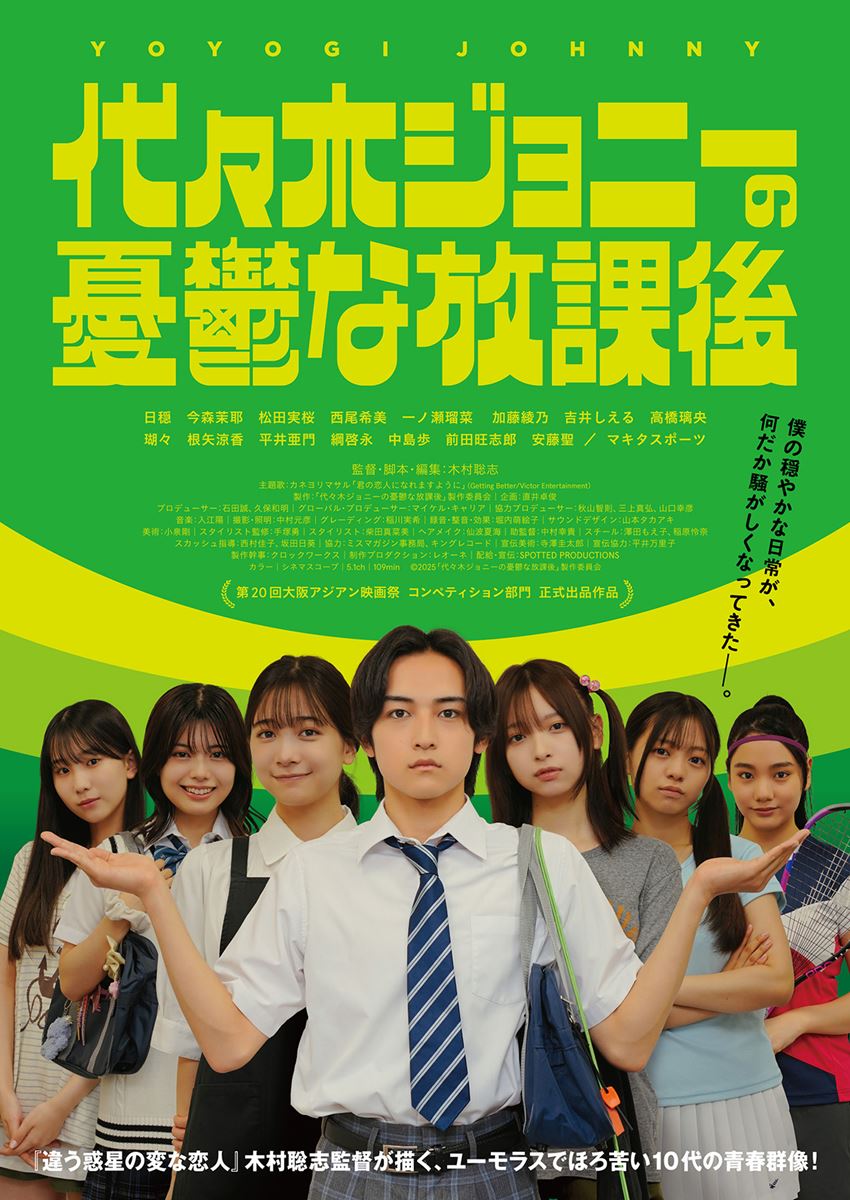
The Noisy Mansion (백수아파트, Lee Lu-da, 2024)

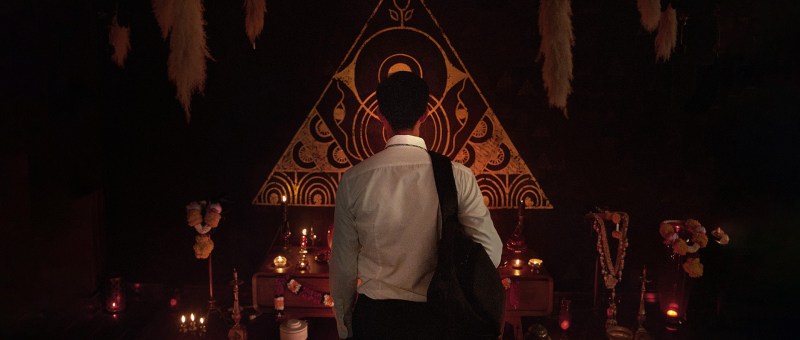
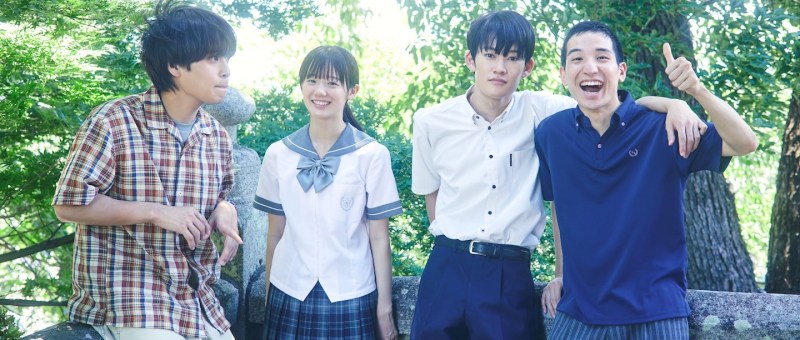
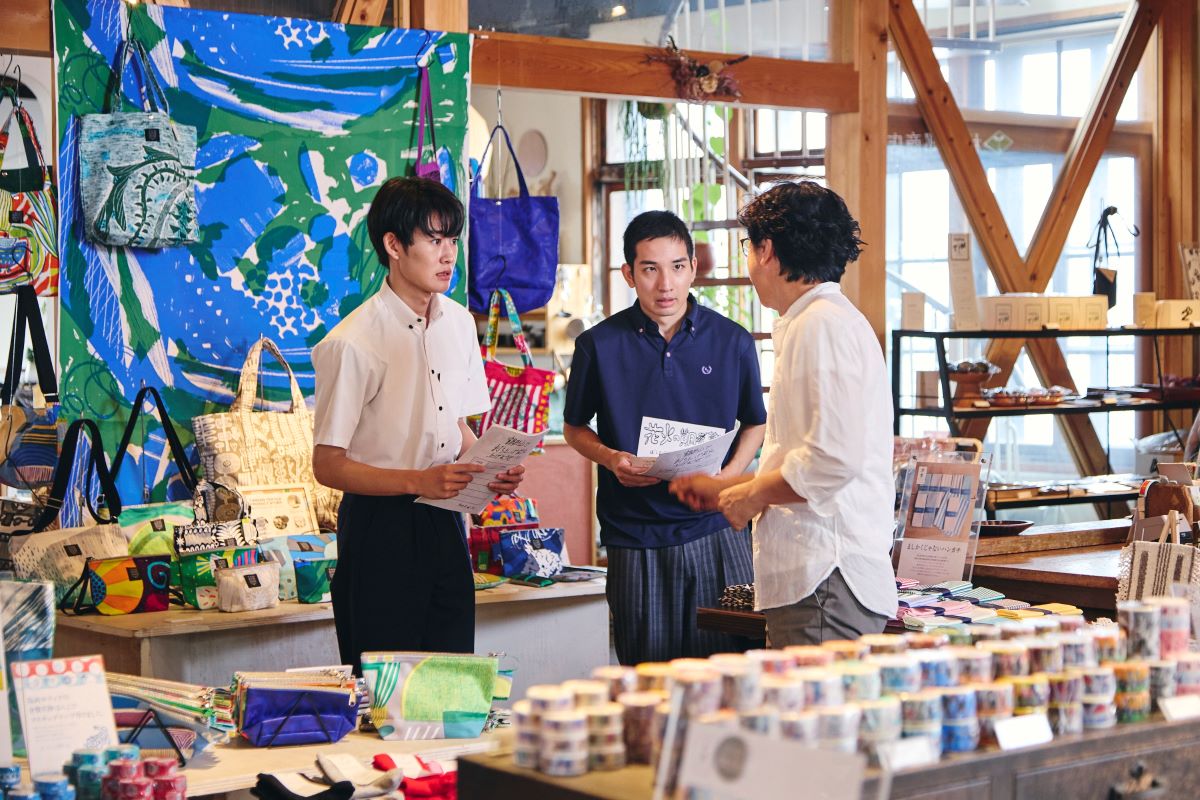
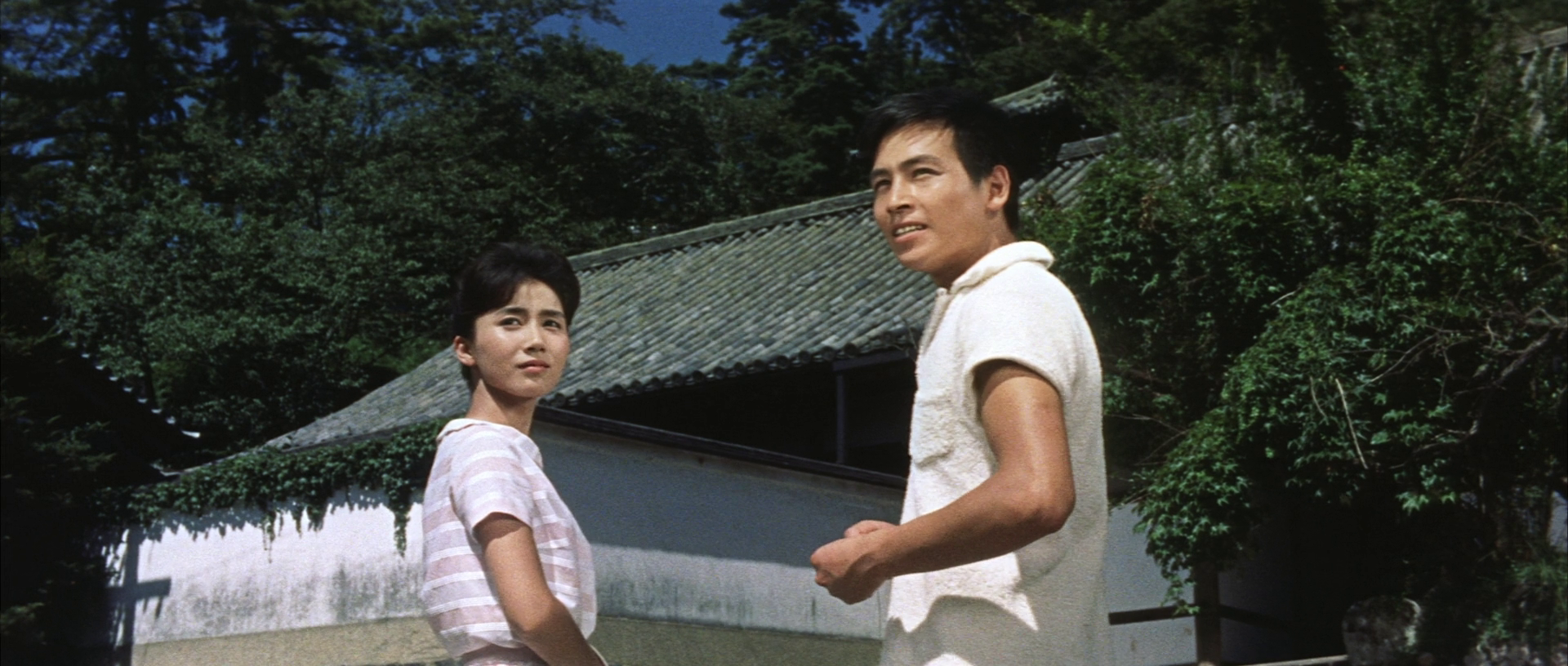
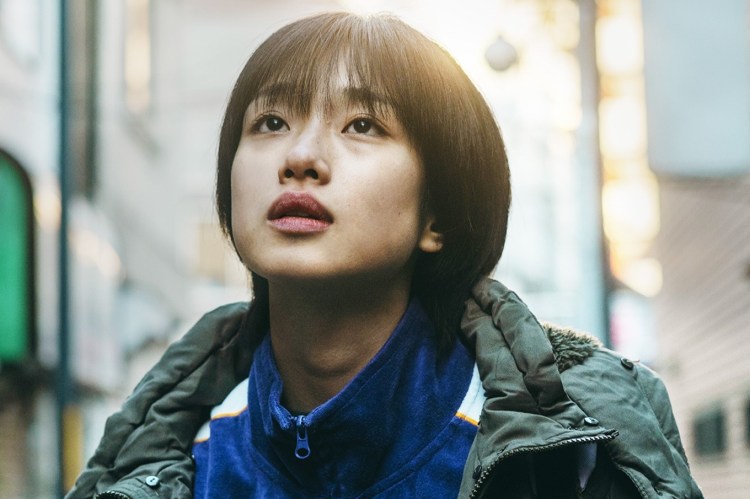
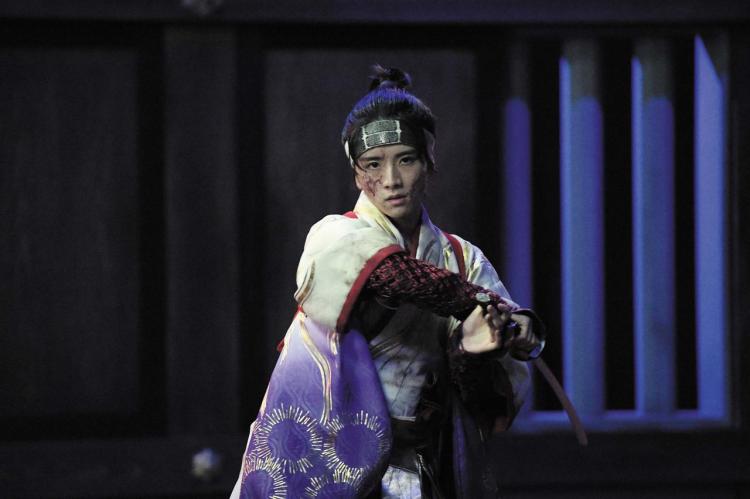
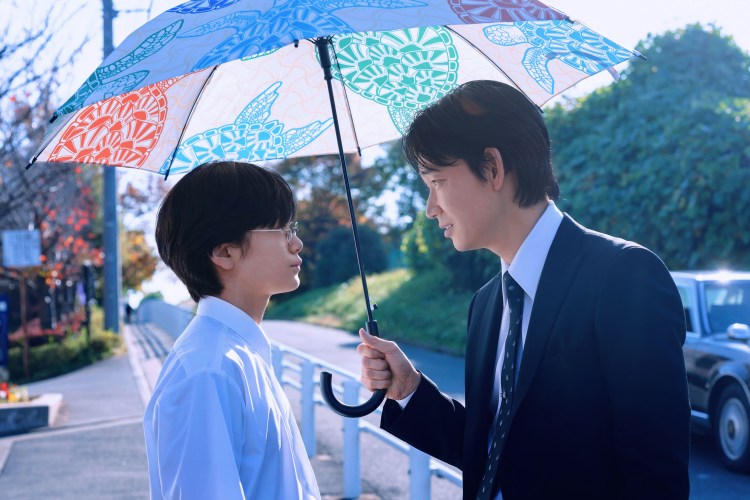
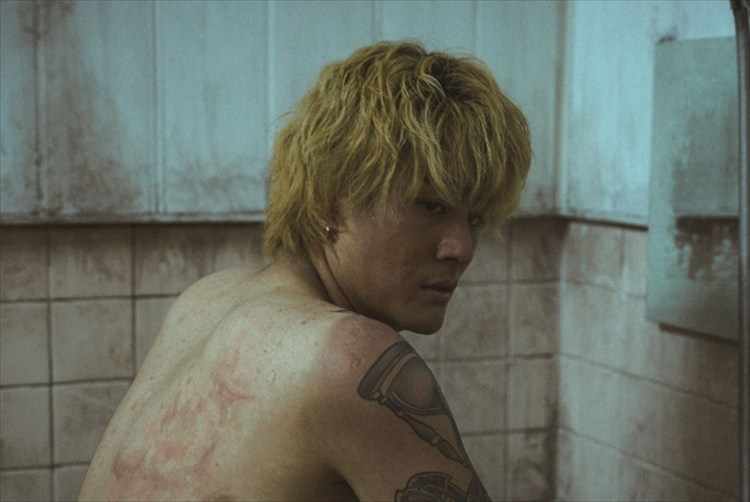
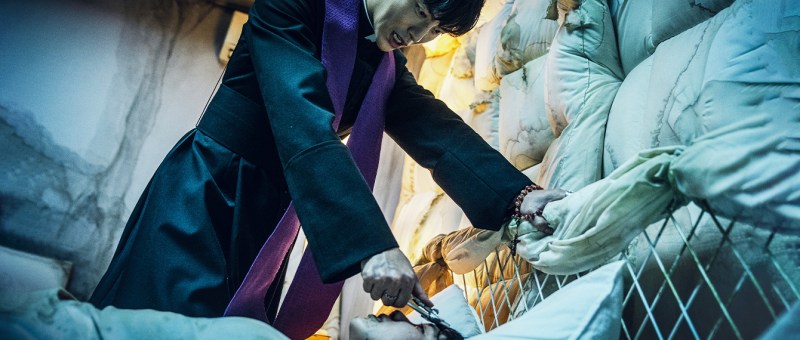
Could the neighbourhood busybody actually be a force for good? The Noisy Mansion (백수아파트, Baeksu Apateu) at the centre of Lee Lu-da’s goodhearted comedy is a metaphor for the nation itself and also a kind of purgatorial space inhabited by the heroine as she attempts to repair herself by enforcing justice and improving the lives of others though it brings her no other real benefits. Some may brand her an inconvenient troublemaker, a nosy parker poking her nose where it doesn’t belong, but Geo-ul is really trying to do good if in an unconventional way.

It’s this tendency to rock the boat that’s finally started to annoy her brother Duon who fears her problematic do-gooding is going to have an adverse effect on his children while he is also fed up with fending off animosity from the neighbours regarding Geo-ul’s frequent attempts to police them. In many ways, this is a society in which minding your own business is considered a virtue and speaking up is a breach of social etiquette but then if nobody says anything, then nothing will ever change and those who abuse their power will be able to go on doing so unchallanged. 

Of course, Geo-ul’s determination to enforce justice it also her way of overcoming her sense of guilt and resentment towards a world in which a small mistake, the overlooking of something that should have been important, can have tragic consequences. She is quite literally haunted by what she feels was a lapse of responsibility, something she will never allow to happen again. Yet the apartment complex she moves into after her brother kicks her out assuming it will only be a matter of days before he asks her back is also a haunted space inhabited by lonely souls like herself who are being driven slowly mad by ominous banging noises at 4am. Geo-ul becomes determined to discover the culprit behind the maddening noise if only to vindicate herself in the eyes of her brother that she really can accomplish something through her busy-bodying.

But she finds herself at the nexus of the nation’s problematic capitalism as it becomes clear the banging is likely a tactic employed by gangsters trying to get people to move out so the building can be demolished. In fact, most of the units are empty and the building itself is in a possibly wilful state of disrepair which is why Geo-ul was able to move in so easily despite the discouragement of the estate agent who introduced her to it. The people she meets there are also all struggling with their own problems aside from those exacerbated by their exhaustion and while previous attempts to unite to oppose the plans for redevelopment had largely failed, her quest to unmask the noisy neighbour does indeed provoke a sense of solidarity in the community and the conviction that they really could change their circumstances if they work together.

As some say, the most dangerous person is one with too much time on their hands. What some might call nosy, Geo-ul might term taking an interest in her community. Though some may originally be irritated by her desire to root out injustice, they later come to respect her when she starts getting results. Aside from a sense of vindication, her actions have a positive effect on the community liberating the apartment block from the oppressive shadows haunting it which in this case would be corruption, organised crime, violence, and ultimately hopelessness. Above all else, Geo-ul’s dedication proves that it is possible to change the world, to restore peace, order and self-respect by exorcising the evil spirits of contemporary capitalism. The residents even get over Geo-ul’s status as a “renter” who has no place in their struggle as homeowners and affectionally refer to her as “captain” as she leads their accidental revolution. Filled with a cast zany characters and undercut with a sense of tragic melancholy, the film is an advocation for the power of community but also for the concerned citizen standing up for fairness and justice even when it has no real relevance or benefit to them personally and may actually do them harm but less so than living in an unfair society which allows tragedy to occur simply through indifference.


The Noisy Mansion screened as part of this year’s London Korean Film Festival.

It’s Okay! (괜찮아 괜찮아 괜찮아!, Kim Hye-young, 2023)

The ironic thing about the title of Kim Hye-young’s debut feature It’s Okay (괜찮아 괜찮아 괜찮아!, Gwaenchanh-a Gwaenchanh-a Gwaenchanh-a!) is that for the most part it really isn’t but the ever cheerful heroine In-young (Lee Re) manages to face her hardship and loneliness with down-to earth-practicality and good grace. It’s her infectious happiness that begins to improve the lives of those around her, many of whom have their own issues often stemming from entrenched patriarchy, classism, and a conformist culture that railroads the young into futures they may not want and will not make them happy.

At least that’s how it is for Na-ri (Chung Su-bin), the star of Il-young’s traditional dance troupe who has developed bulimia partly to adhere to contemporary codes of feminine perfection but also as a means of asserting control over her life which is otherwise micromanaged by her mother, once a dancer herself but now a wealthy housewife who uses her privilege to ensure her daughter is always centrestage. For these reasons she crassly remarks that she envies Il-young whose mother was killed in a car accident leaving her orphaned and entirely alone but in Na-ri’s eyes free and independent. 

It’s Na-ri’s mother who later refers to Il-young as a “worthless” person who does not deserve and will not have the opportunity to steal Na-ri’s spotlight even if she were good enough to seize it. The other girls in the troupe resent Il-young because her fees are paid by a scheme set up to help children of single-parent families, though technically she isn’t one anymore. They think it’s unfair she doesn’t have to pay when they do and also look down on her for being poor and an orphan when the rest of them come from wealthy backgrounds and are serious enough about traditional dance to consider going on to study it at university. Il-young isn’t a particularly good dancer nor does she put a lot of effort into it, but unlike Na-ri whose dancing is technically proficient but cold Il-young dances with a palpable sense of joy.

That might be why she catches the attention of otherwise stern choreographer Seol-ah (Jin Seo-yeon) who harbours resentment towards Na-ri’s snooty mother but lives a life that seems very repressed, tightly controlled and devoid of the kind of exuberance that comes naturally to Il-young. Her palatial apartment is cold, neutrally decorated, and spotlessly clean while, contrary to Na-ri, she forgoes the pleasures of eating subsisting entirely on green health drinks. Her decision to take in Il-young after finding her secretly living at the studio after her landlord evicted her from the home her mother had rented, may also reflect her own desire for a less constrained life and the familial warmth which seems otherwise lacking in her overly ordered existence. Gradually nibbling at the fried spam Il-young has a habit of cooking in the morning, she begins to open herself to the idea of a less regimented, happier life.

The same is true for Na-ri who is fed up with being forced to live out her mother’s vicarious dreams, literally letting her hair down and abandoning her need for control and dominance to embrace more genuine friendships with the other girls including Il-young. The lesson seems to be that there’s too much pressure placed on these young women in a society that dictates to them who and what they should be while shunning those like Il-young who are defiantly who they are and all the more cheerful for it even in the face of their hidden loneliness. Yet as Seol-ah eventually tells her, you’re the centre of wherever you are and Il-young’s life is her own to live in the way she chooses.

What emerges is a sense of female solidarity in the various ways Il-young is also parenting Seol-ah as she at first perhaps grudgingly offers her support and acceptance while taking on a maternal role that allows her to break free of the rigidity which had left her so unhappy. Told with a true sense of warmth that belies an inner melancholia, the film advocates for laughing through the tears and meeting with the world with an openhearted goodness that in itself allows others to break free of their own grief and pain and discover a happiness of their own bolstered by a sense of friendship and community rather than live their lives isolated and alone to conform to someone else’s ideal.


It’s Okay! screened as part of this year’s London Korean Film Festival.

Trailer (English subtitles)

An Inn in Tokyo (東京の宿, Yasujiro Ozu, 1935)

Yasujiro Ozu was perhaps most at home in the genial world of the shomingeki in which everyone is comfortable enough and the problems, such as they are, are emotional rather than practical. He was also, however, an exacting chronicler of his times and unafraid, even in the tightening world of 1935, to explore life on the margins of a society on the brink of crisis. A proto-neorealist take on depression-era fatherhood, An Inn in Tokyo (東京の宿, Tokyo no Yado) finds that there are good people everywhere, but also that people can be good and make bad decisions even in their goodness. 

Kihachi (Takeshi Sakamoto), a widowed father of two boys, is unemployed and looking for work. He tells the guard at a factory that he is a skilled lathe operator, but the man doesn’t even look up from his paper as he unsympathetically tells him to be on his way. Remaining polite, Kihachi thanks him for his time and returns to his sons who are obviously disappointed and mildly irritated by the “mean” guard. The boys look on sadly as other children go off to school and tell their dad they aren’t hungry because they know he has no money for food and do not want to depress him further after being turned down for yet another job. 

We don’t know exactly what landed Kihachi in the circumstances he’s currently in, what happened to his wife, or why he lost his last job but we can probably guess the economic depression is to blame for most of it. The guard at the factory ignores him because he has no work to give and perhaps Kihachi isn’t the first to ask. The small family has been lodging at the titular “inn”, sleeping in a communal room while their resources dwindle. After losing all their possessions, they face the choice of whether to go for dinner and sleep in a field or go hungry and return to the inn. They opt for food, only for the heavens to open, but on this occasion rain is perhaps their salvation because it enables them to run into an old friend, Tsune (Choko Iida), who is able to put them up for a while and help Kihachi find work. 

Meanwhile, on the road the family bumps into a widow and her daughter who are in much the same situation only, as must be obvious, hers is much more serious because if Kihachi cannot find honest work then it may be near impossible for a woman with a child. Mrs. Otaka (Yoshiko Okada) and her daughter Kimiko are staying in the same inn and the children quickly become friends. “Childhood is the best time of life” Kihachi wistfully laments as they watch the kids play, “Children are lovely”. Mrs. Otaka agrees that it’s difficult with a little girl, but that she also keeps her going. The boys too are resilient and positive, the oldest Zenko cheerfully insisting that everything will be alright tomorrow while his father’s attempt to comfort Mrs. Otaka with the claim that things work out in the end cannot help but ring hollow. 

Zenko is quite literally burdened by his father’s failure in that it is he who is expected to carry the small parcel which contains all of their worldly possessions. Later he tries to delegate the responsibility to his younger brother, an act which backfires causing the bundle to be lost. They try to help out by catching stray dogs they can turn in to the police for 40 yen as part of an anti-rabies drive, but they are also children and want what other children have which is why Zenko makes an irresponsible decision to spend the money from catching a dog on a fancy cap he took a liking to after seeing another boy at the inn wearing one. Kihachi is obviously displeased, catching a dog means they can eat and they don’t have money for frivolous things like caps but we hear from his old friend Tsune that he has his irresponsible sides too as evidenced by his longing for sake while the boys long only for wholesome meals rather than sweet treats.

Nevertheless Kichachi is a good man, as Mrs. Otaka later says. He takes a liking to the widow which might be somewhat insensitive to Tsune who has by this point taken him in and started to help him put his life back on track while taking care of the kids, but his desire to help her also has an unpleasantly conservative streak. On learning she’s taken a job at a bar he rants at her in disappointment, exclaiming that he didn’t think she was that sort of woman and wondering why she suffered so long only to finally give in to sex work. Her tearful justifications that her daughter is ill fail to move him. He tells her to quit the bar and get money some other way, which seems unrealistic and even more so in the absence of a good friend like Tsune, who seems to have made a decent life for herself as an independent woman, to miraculously sort everything out. He tries asking Tsune for money, but she worries he’s up to no good and doesn’t want to enable him messing up his life just as he’s getting himself sorted, and so he makes a terrible and frankly irresponsible decision which places his own children in jeopardy solely to “save” Mrs. Otaka from becoming a fallen woman. Leaving the women behind to pick up the pieces and take care of the children, he trudges off alone, a fugitive father exiled from his family and at the mercy of an increasingly indifferent society. 


Güle-Güle (귤레귤레, Ko Bong-soo, 2024)

A man and woman saddled with problematic companions find themselves pushed into a space of introspection while on an inescapable Turkish holiday in Ko Bong-soo’s sophisticated comedy, Güle-Güle (귤레귤레). Each of them is perhaps burdened with regrets and wistful for what might have been but for opposing reasons, he facing the realisation that he often runs away from his problems and she that despite her sharp tongue and haughty attitude she lacks the courage to break with a situation that obviously isn’t working and become fully independent.

Dae-sik is there with his bumbling middle-manger boss Won-chang, a nepotism hire who repeatedly calls him a moron and blames him for his mistakes. Jung-hwa, meanwhile, is with her (ex?) husband Byung-sun who continually embarrasses her with his crass attempts to haggle the price down for anything and everything as means of asserting his masculinity through winning a price war. Byung-sun’s drinking and the problematic behaviour that arises from it had evidently strained their relationship with Byung-sun pledging to abstain from alcohol only to immediately break that promise claiming that he assumed drinking with Jung-hwa wouldn’t count. The issues Dae-sik and Jung-hwa face are in some ways the same in dealing with partners that attempt to dominate and overrule them without ever considering what they might actually want. Dae-sik hadn’t even planned on taking a holiday but assumed they’d be heading back to Korea right after closing the deal only to be browbeaten by Won-chang into extending their stay.

Jung-hwa isn’t sure why they’re in Turkey either, while the middle-aged woman and her daughters who are also on their tour drink in all the drama alternately fascinated and irritated that Byung-sun in particular is messing up their holiday. From the way he skirts around her, it seems that Dae-sik and Jung-hwa may have met before or have some unspoken history with each other. They are each dealing with past regrets and the frustrated dreams of the youth even if in differing ways. Dae-sik once had a promising future as a champion snowboarder but gave it up because he needed a paying job to contribute to his father’s medical fees. After a heart-to-heart with Jung-hwa he’s forced to ask himself if in reality he gave up in fear of it not working out and his father’s illness was just a convenient excuse not to have to risk failure. 

Jung-hwa, meanwhile, is irritated to learn that in college her fellow students nicknamed her “the viper” because of her sharp tongue and poisonous looks. She admits that she often says things thoughtlessly and hurts people by accident, pushing them away when she doesn’t mean to though this doesn’t seem to be the case with Byung-sun who she otherwise seems incapable of shaking off despite his treatment of her and repeated broken promises. Unlike Dae-sik who admits that he suppresses everything and approaches life with a fear of failure, Jung-hwa charged ahead doing what she thought she wanted and ended up divorced though with a husband that won’t leave her alone.

The holiday with its myriad challenges both interpersonal and physical, along with their impromptu meeting, affords each of them a new perspective and the clarity they each may be looking for to move on from their dissatisfying circumstances in search of greater personal happiness. Meanwhile, the other guests seem to carry on obliviously, Won-chang otherwise continuing to railroad Dae-sik into dangerous situations he feels unable to resist though perhaps he too is only reacting against his own sense of inadequacy as a nepotism hire promoted well beyond his abilities. Byung-sun’s problems seem less easy to solve and his selfish obnoxiousness is annoying not only to Jung-hwa who may finally be losing patience with him, but the entire group.

Like many similarly themed films from Korea, Ko structures the drama around a series of conversations many of which take place on a rooftop bar or walking through the streets of the city which as Dae-sik remarks become brighter and less intimidating thanks to his interactions with Jung-hwa as if his horizons were literally expanding. Yet what each of them is here to do is in a sense to say “gule gule” or goodbye to their old selves and old lives by gaining the courage to risk failure in breaking with the dissatisfying present for a hopefully more fulfilling future.


Güle-Güle screened as part of this year’s San Diego Asian Film Festival.

Trailer (English subtitles)

Following (그녀가 죽었다, Kim Se-hwi, 2024)

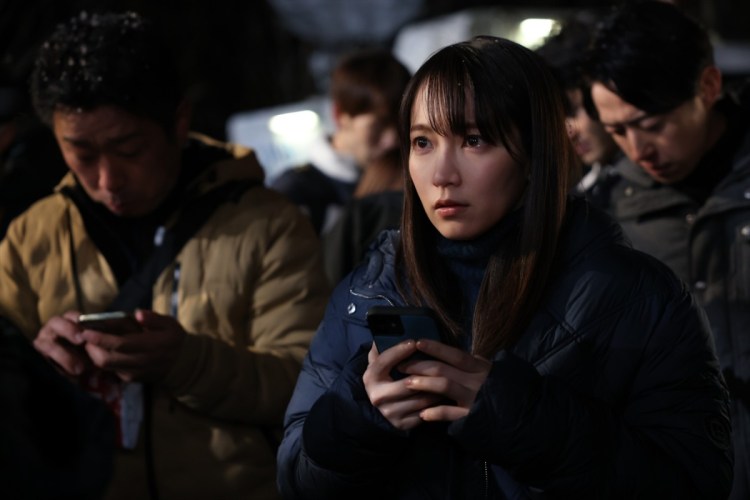
“None of this would have happened if you didn’t follow me,” the hero of Following (그녀가 죽었다, Geunyeoga jug-eossda) is told by his opposite number though he himself doesn’t see anything untoward about his voyeuristic hobby and justifies his habit of “peeping” into the lives of others on the grounds that it does no harm. Of course, he’s not very well placed to make that decision and too narcissistic to consider that while he watches someone may be watching him. 

In any case, what Jung-tae (Byun Yo-han) claims to want to see is “the real you” rather than the persona created for public consumption which is why he’s drawn to duplicitous influencer Sora (Shin Hye-sun) whom he spots simultaneously munching on a sausage and posting about eating a vegan salad. Of course, as an influencer “followers” are what most she most craves though not of the kind Jung-tae becomes nor does she want this particular kind of attention not least because it threatens the facade she’s created for herself as a “good person” posting about her altruistic deeds such as rescuing dogs and cats for which her followers send her monetary gifts and donations for various funds and charities. 

As for himself, Jung-tae thinks he remains a fairly anonymous person. As an estate agent, he projects an image of himself as being kind and trustworthy, while he runs a popular online blog under a pseudonym. He gives little of himself away and later acknowledges that part of the thrill of his voyeurism is a sense of superiority, that he is privy to privileged information about strangers that others do not have. Misusing his position, he sneaks into people’s houses and takes something insignificant as a trophy while also performing small household tasks in recompense. Perhaps it should have seemed like a red flag to him that Sora suddenly wanted to sell her apartment (on her landlord’s behalf), let alone that she didn’t make any attempt to tidy up before giving him a key, but he is so assured of himself that the possibility he has been discovered doesn’t really occur to him until he sneaks into Sora’s place and finds her dead, covered in blood on her living room sofa. Predictably, he does not call the police because he’d have to admit he let himself into her apartment when he shouldn’t have. 

Receiving a threatening letter, Jung-tae then becomes a classic wrong man in the firing line for Sora’s murder and in his mind unfairly persecuted for his “harmless” hobby. The irony is that the person who’s targeting him is doing so because they had something they did not wish others to see and fear Jung-tae may have done so which would give him power over them, while what Jung-tae wants to keep hidden is his own voyeurism. “It’s all about reputation,” he explains and his would be ruined if his clients knew he’d been misusing the keys they entrusted to him for professional purposes let alone the embarrassment of being exposed as a peeping tom even if in this case his peeping isn’t sexual but intimate on another level. 

The power dynamics between the seer and the seen are always shifting, not least because Jung-tae believed himself invisible and in fact continues to think that he is the victim as does the person targeting him. He later comes to realise that what he did was wrong and that he invaded these people’s privacy, but continues to centre himself and despite the glasses he now wears at the film’s conclusion he may not see anything any more clearly than before. What unites him with his own stalker is a sense of frustrated loneliness and longing for connection if also a kind of acceptance even if mediated through a “fake” persona to paper over the cracks in their identity. Yet ironically, even the killer’s words that none of this would have happened if he hadn’t been following them further bolsters his narcissistic sense of importance as much as it reflects the words of an abuser deflecting responsibility for their own actions. Jung-tae has met his mirror image and may not like what he sees (or perhaps does not see at all) while they equally struggle to understand why others cannot see that they are the victim. Told with a touch of humour and a degree of B-movie silliness, Kim Se-hwi’s taut psychological thriller nevertheless suggests that even as we obsess over the image we project to others and that they project to us, we remain largely blind to ourselves and all too keen to justify our actions to maintain a carefully constructed self-hood that is otherwise unlikely to stand up to scrutiny.


Following screened as part of this year’s London Korean Film Festival.

Original trailer (no subtitles)
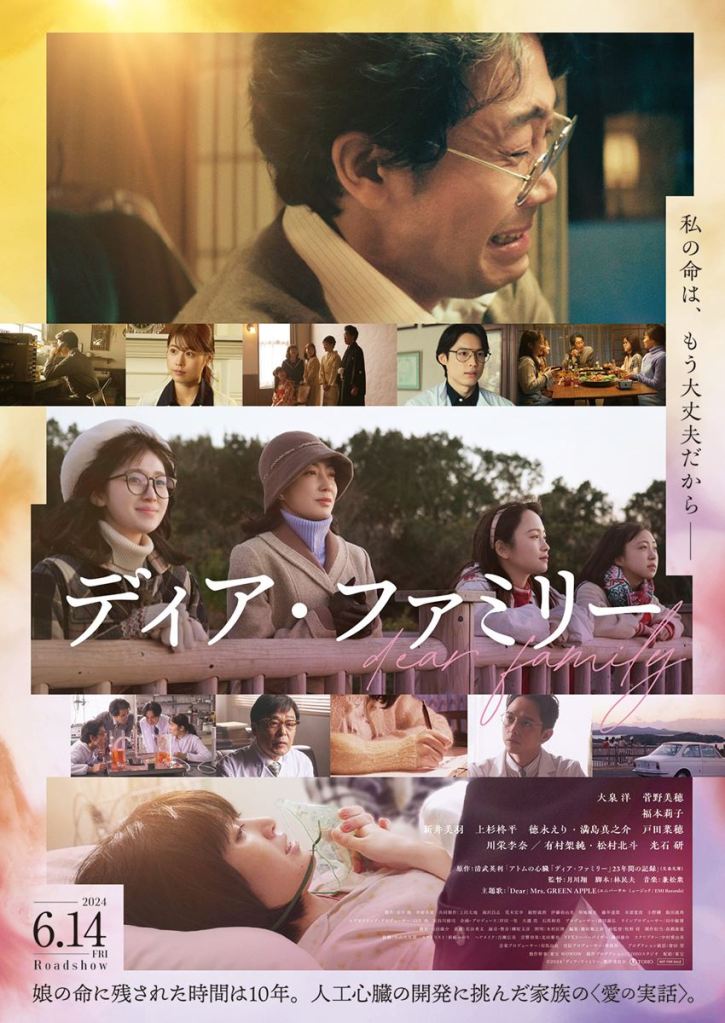
The Tai Chi Master (张三丰, Lin Zhenzhao & Cheng Siyu, 2022)

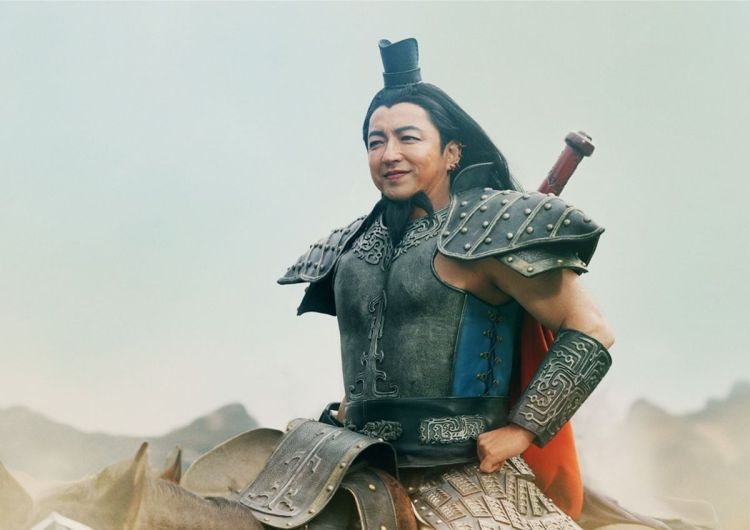
The funny thing is that, in contrast to contemporary Chinese cinema, Lin Zhenzhao & Cheng Siyu’s The Tai Chi Master casts those who stand up to corruption as the villains. Of course, their insurrection threatens the social order and their subsequent to overthrow the Song Dynasty may be too revolutionary to find much a approval but it’s surprising all the same even if the film also finds fault with officials too focused on the “big picture” rather than the citizens in the townships they’re supposed to be overseeing.

In any case, though it should not be confused with the Jet Li film from 1993 with which it shares both English and Chinese titles, this Tai Chi Master is once again an origin story for the renowned Taoist scholar Zhang Sanfeng which is the name the hero takes at the film’s conclusion having achieved a degree of enlightenment through experiencing near death and tragedy at the hands of the Netherworld Cult. For the most part, he goes by his courtesy name Junbao and is something of a libertine, spending most of his time enjoying fine liquor and trying to craft immortality pills as a member of the Wuji Sect. 12 years previously when the Imperial Court increased taxes to a unreasonable degree, the Netherworld Cult slaughtered the corrupt officials but were condemned by the rest of society for their actions. Junbao has a habit of drinking with Kui Tianxing, the former head of the Netherworld Cult who has been imprisoned in the Wuji’s Sect’s gloomy basement for the last 12 years and in fact transgressively learns from him “evil” techniques claiming that there is no good or bad in martial arts for all depends on the righteous heart of the practitioner.

But there is unrest brewing and it seems some can no longer bear the corruption and indifference of the noblemen supposedly managing their interests on behalf of the court. After taking a liking to a mysterious forest woman who rides a giant silkworm she charms with a flute, Junbao is taken to task for his solipsistic hedonism. She asks him how he can ignore suffering in the world and continue to remain apart from it, but he doesn’t truly gain the desire to oppose injustice until the Wuji Sect is targeted and his master is killed. Even then, his opposition is awkwardly positioned given that the new Netherworld Cult is also motivated by the desire to throw off the authority of corrupt officials, which means in a sense that Junbao is defending that same corrupt social order which he does not otherwise challenge.

In keeping with the teachings of the real Sanfeng, he instead preaches righteousness and harmony but otherwise removes himself from the martial arts and wider worlds, while his brief romance with the mysterious silkworm woman seems to fall by the wayside in his ongoing quest for spiritual enlightenment. Meanwhile, it has to be said that his relationship with the little girl who seems to be in his care is a little uncomfortable at times. In what is presumably supposed to be a sweet and innocent piece of childish banter, she frequently flirts with him, makes statements about becoming his girlfriend, and expresses jealousy towards the silkworm woman all of which seems very inappropriate for a child of no more than 11 or 12.

Nevertheless, the fight choreography is often interesting if sometimes marred by imperfect CGI and mid-level production values for a streaming film. The injection of fantasy-style lore with its demons and underground, cave-like bases gives the film’s internal universe a degree of consistency in reflecting the yin/yang philosophy espoused by the Netherworld Cult in the white-clad, surface-living Wuji Clan and the dark, anarchic world of the often masked rebels. The mysterious silkworm and the flute-playing woman meanwhile seem to occupy a liminal space caught between each world and whatever she says like Junbao not really a part of either until pulled into the final battle. Perhaps troubling or at times contradictory in some of its implications, the film does at least have a degree of charm in its likeable characters and fleshed-out backstories that hint at the possibilities of an ongoing franchise.


The Tai Chi Master is available digitally in the US courtesy of Well Go USA.

Trailer

Bona (Lino Brocka, 1980)

Towards the end of Lino Brocka’s Bona (Nora Aunor), the heroine recounts a dream she had in which she tries to escape a fire but finds herself met only by more flames. The inferno she attempts to outrun is that of the oppressive patriarchy of a fiercely Catholic society in which men can do as they please, but women are held to a different standard and in the end have little freedom or independence. 

Brocka opens with a lengthy sequence of a religious festival in which the suffering Mary is carried through the streets on the shoulders of men. Teenager Bona looks on but worships at a different altar, that of Gardo (Phillip Salvador), a struggling bit-player trying to make it in the Philippine film industry. What becomes apparent is that her fascination with Gardo is borne of her desire to escape her family home and the tyrannical reign of her authoritarian father (Venchito Galvez) who berates her for not helping her mother out enough with her business and later whips her with his belt because she stayed out too late. 

Though her family is quite middle class, Bona instals herself in Gardo’s home in the slums in search of greater freedom but ends up becoming his skivvy or perhaps even a kind of maternal figure patiently taking care of him while he continues to bring other women home and even charges her with taking another teenage girl he’s got pregnant to the doctor (who charges him “the same as before”) for an abortion. It’s possible that in Gardo she sees a different kind of masculinity, a performance of manliness, but gradually comes to realise he’s nothing more than an opportunistic lothario with no emotional interest in women let alone her. 

But by then, it’s too late. She’s stuck in a kind of limbo barred from returning home to her family because of her status as a fallen woman who has shamed them by living with a man she is not married to. Even once her father dies, her mother warns her to avoid her brother because his rage is indescribable and he does indeed drag her out of the funeral by her hair while issuing threats of violence. Perhaps what she was looking for was greater independence or an accelerated adulthood with the illusion of freedom, but she can only find it by relying on Gardo rather than attempting to chart her future alone. We can see that other women in the slum are in much the same position, loudly arguing with their husbands who cheat, laze around drinking, and permit them little possibility for any kind of individual fulfilment. 

Yet there is a moment where Bona seems free, ironically dancing at the wedding of a young man, Nilo (Nanding Josef), who she’d turned down but now perhaps regrets it comparing the conventional married life she might have had with him to the prison she’s designed for herself in her life with Gardo. Nilo may be the film’s nicest man, but at the same time he’s still a part of the system that Bona can’t escape. In fact, the only woman fully in charge of herself is a wealthy widow who later buys Gardo’s, not exactly affections, but perhaps loyalty. “She’ll do,” he less than romantically explains after admitting to marrying her for the convenience of her money oblivious of the effect the news may have on the by now thoroughly humiliated Bona whose rage is just about to boil over. 

Unable to free herself from this fanatical devotion or to find possibility outside it, Bona is trapped by her desires and marooned in a kind of no man’s land in which she cannot exist as an independent person but only as servant to a man. “I’ll just serve you,” she explains on moving in and thereafter slavishly catering to all of Gardo’s whims while he largely ignores her. She hasn’t so much escaped her father’s house, but built a prison for herself from which she cannot escape despite her oncoming displacement. A creeping character study, the film finds the titular heroine searching for a way out of the fire only to find herself engulfed by flames with no real prospect of salvation amid the ingrained misogyny of a fiercely patriarchal society.


Bona screens Nov. 14 as part of this year’s San Diego Asian Film Festival.

Trailer (English subtitles)

The Homeless (無宿 やどなし, Koichi Saito, 1974)

Two men are released from prison on the same day. One, dressed in a 1920s-style white suit and straw hat, tries to befriend the other, in black kimono and geta, but he ignores him. Soon, they arrive at a fork in the road. The man in the kimono walks down a well worn grass path cut between the fields while the man in white, looking back and a little disappointed, continues along the modern roadway making his way towards civilisation.

In some ways, the heroes of Koichi Saito’s The Homeless (無宿 やどなし, Yadonashi) are embodiments of past and future. Jokichi (Ken Takakura), the kimonoed man in black, chooses the path of vengeance. On his release from prison, he learns that his gang leader older brother has been killed while his sister was sold to a brothel. He goes there to find her, but is told that she is already dead. The madam says she died of a chronic illness and that she did for her what she could but treating such a cruel disease is only throwing good money after bad. Sakie (Meiko Kaji), a sex worker who appears to have a childlike quality and possibly impaired mental state, tells a different story claiming the madam had Jokichi’s sister killed for reasons she doesn’t explain but may have more to do with the drama going on with Jokichi’s gang than a desire to cut costs and her losses. 

Gen (Shintaro Katsu), meanwhile, seemingly chooses the path of prosperity. He returns to his wife, Ume (Murasaki Fujima), who is a member of a moribund theatrical troupe, and asks her to return to him what he believes is a treasure map marking the location where his father saw a ship sink during the Russo-Japanese war that may be filled with gold. On finding out Jokichi used to be a diver, Gen becomes determined to bring him onto his mission but Jokichi is set on revenge firstly on a man called Senzo (Noboru Ando) he thinks killed his sister and then on whoever ordered the hit on his brother. This bad news for Gen who realises that if he achieves his vengeance, Jokichi won’t be available to help retrieve the gold because he’ll be in prison so he starts by warning Senzo that his past’s about to catch up with him. 

But it’s also Gen that helps Jokichi escape from the rival gang by suggesting he help rescue Sakie from her indentured servitude as sex worker. Childlike and ethereal, Sakie claims not to remember where she was from and has a simple desire to see the sea which represents to her a kind of freedom while for each of the men it may in fact form a kind of border they will eventually be backed up against and unable to escape. Though Sakie develops a fondness for Jokichi, and then begins to love Gen after he ends up taking care of her along the road, the three form a relationship that seems more fraternal or perhaps even forged on the homoerotic tension between the two men who light their cigarettes one from the other and finally find a home on an idyllic beach where they devote themselves to the search for buried treasure.

Sakie may say that the real treasure is her new life of freedom and warmth, but the hint of riches the two men find is itself rooted in warfare and imperialism which are the same forces by which they were each displaced amid the rising militarism of the 1930s. The three of them remain homeless in this environment, unable to fit into the changing society and by degrees exiled from it. An early title of the film was apparently Jingi no Okite (仁義の掟) which means “the law of honour and humanity” and that is in a way what Jokichi is bound by in his desire for vengeance, while Gen is clearly an anarchistic force unable to submit himself to authority and lusting after a more prosperous modernity. Sakie meanwhile is powerless as a woman with few rights, sold into sex work and technically a fugitive from the gang-backed brothel that owned her contract.

As beautiful as the beach is, we have the feeling that in some senses the three of them are already dead and living in their temporary paradise. Indeed, the past eventually catches up with them as if these three homeless fugitives cannot be allowed to survive in resistance to an authoritarian culture. Their existence is elegised by the beautifully composed cinematography along with the childlike rapport between the two men and the sense of domesticity which arises between the trio before reality bites and even their beachside idyll is invaded by the forces of darkness.


Original trailer (no subtitles)

Shanghai Blues (上海之夜, Tsui Hark, 1984)
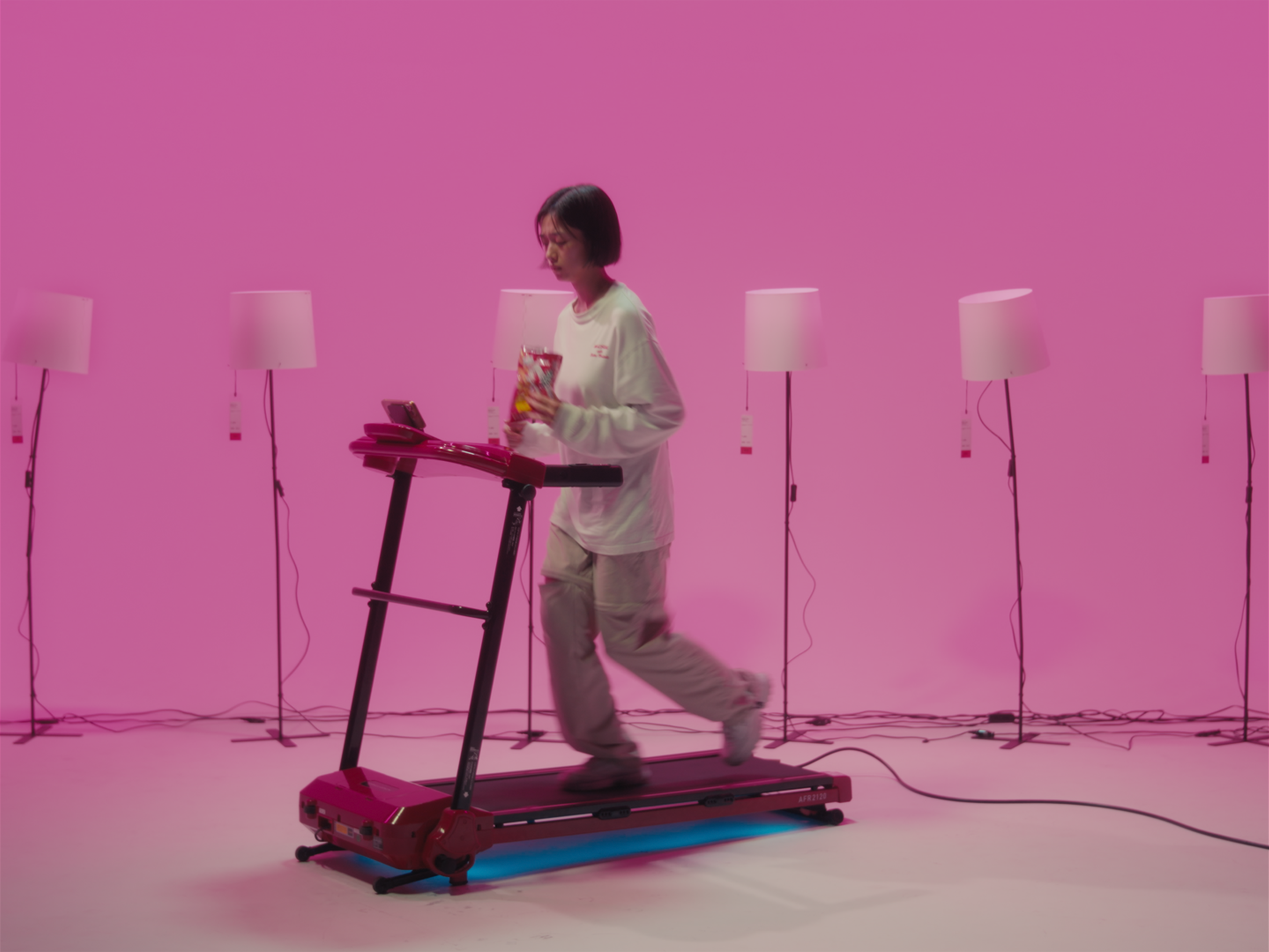
There’s a strange kind of melancholy optimism born of false courage and desperation that colours Tsui Hark’s Shanghai Blues (上海之夜). A clown soon to become a soldier tells a woman he meets in the dark under a bridge as the city burns and Shanghai falls to the Japanese to remember that they will win. 10 years later the wounded of that same war reassure each other that their time will come, they didn’t survive just to die here now seemingly cast out by the society they risked their lives to save.

The Shanghai Stool (Sally Yeh Chian-Wen) arrives in is in a moment of euphoric liberation caught between cataclysmic revolutions with the civil war and eventual coming of the communists hovering on the horizon. A wide-eyed country girl, she’s almost lost amid the hustle and bustle of the city in which the motion never stops. Like many, she is immediately displaced on her arrival, discovering that the relatives with whom she hoped to stay are no longer at their address and she is therefore homeless and alone. The clown, Do-re-mi (Kenny Bee), now a member of a marching band unable to play his instrument, thinks she’s the girl from the bridge in part because she’s wearing the same outfit but mainly because she has the same short hair cut and so he follows but loses her. Meanwhile, she has a kind of meet cute with Shushu (Sylvia Chang Ai-Chia), now a jaded nightclub showgirl still pining for the clown, in which they each believe the other is trying to take their own life but end up becoming best friends and roommates unwittingly living directly below Do-re-mi. 

In this 30s-style screwball world, identities are always uncertain and often obscured by darkness or else the continual march of the crowd. Yet there’s a kind of romanticism in this act of seeing and not seeing. Only in darkness do Shushu and Do-re-mi finally recognise each other and when their romantic moment is interrupted by the end of a power cut, they smash the neon lights opposite to reclaim it as if to reject the intrusion of this glaring modernity. To that extent, the implication may be that this innocent kind of romantic connection can’t survive the bright lights of the big city or that light blinds as much as it illuminates. In several sequences, the characters inhabit the same space but cannot see each other while a nefarious thief lurks on the edges of the frame unseen by all. On realising that Do-re-mi is the clown/soldier for whom she’s been waiting for the last 10 years, Shushu knows that she will have to break her friend’s heart or her own and that Stool’s dream of a family of three is unrealisable amid the constant rootlessness of this transient city. 

To that extent, Stool is an echo of herself as the innocent young woman she was on meeting Do-re-mi under the bridge rather than the more cynical figure she’s become due to her experiences in the wartime city. In the film’s closing moments, Stool meets another version of herself in the form of a wide-eyed young woman in a plain dress who asks her if this is Shanghai but the only reply she can give is that she wishes her luck because for her Shanghai is now a city of heartbreak just it has been one of sadness and futility for Shushu. “I have one hope, if I give it to you I won’t have any,” Shushu tells her lovelorn boss as an expression of the despair that colours her existence in which the distant possibility of romantic fulfilment is all she has to live for. 

The fact that the lovers later flee Shanghai for Hong Kong seems to take on additional import as those in Hong Kong consider a similar trajectory with their own revolution looming while adding to the sense of continual displacement, disrupted communities, and worlds on the brink of eclipse. This Shanghai is a bleak place too with its lecherous gangsters and seedy businessmen but has a sense of warmth even amid its constant motion in its serendipitous meetings and friendships born of the desire for comfort and company in the face of so much hopelessness. In the end, perhaps romanticism is the only cure for futility just as the only thing to do in a world of chaos is to become a clown.


Shanghai Blues screens Nov. 13 as part of this year’s San Diego Asian Film Festival.

The Last Dance (破·地獄, Anselm Chan, 2024)

When serving the living doesn’t pay, why not make money from the dead? That’s the advice that’s given to former wedding-planner Dominic (Dayo Wong) in Anselm Chan’s touching spiritual drama The Last Dance (破·地獄), but after pivoting towards organising death rituals it’s the living he continues to serve. In many ways, Dominic stands at the borders of life and death, but he’s also an onlooker in a wider debate about tradition and modernity, what we inherit and what we choose to pass on, along with the departing soul of an older Hong Kong as the young flee abroad leaving those who stay behind to carry what may seem to them a burden too heavy to bear alone.

The irony is that though Dominic had been a wedding planner until the economic effects of the coronavirus pandemic killed his business, he is not in fact himself married and according to his long-term girlfriend Jade (Catherine Chau) did not see the point in a marriage certificate. One might infer that if he thought weddings were essentially meaningless exercises in vanity then he might feel the same way about funerals and his initial behaviour after taking over the funeral parlour run by Jade’s ageing Uncle Ming (Paul Chun) might confirm that suspicion. Not only does he start selling tacky trinkets as some kind of funeral favours, but makes a huge faux pas with an ostentatious stunt at his first funeral that causes upset and offence to the family. At the very least, it would have been useful to confirm how the deceased passed away before trawling their instagram account in an attempt to reconstruct their personality.

It’s this kind of insensitivity that irritates intensely grumpy Taoist priest “Hello” Man (Michael Hui) who brands Dominic an “amateur” believing that he’s only obsessed with money and intent on exploiting the grief of bereaved families. But on the other hand, Man is only really interested in the sanctity of ritual and doesn’t get involved with the living nor is he very sensitive to the emotional needs of those in the process of sending off a loved one. His entire life has been in service of the ancestors to the point that it’s soured his relationships with his two children. He has no faith in his son Ben (Chu Pak Hong) to inherit his position as a Taoist priest, while Ben resents being forced to inherit a burden he has no desire to carry. Daughter Yuet (Michelle Wai), perhaps ironically a paramedic, would have happily have carried it, but has endured years of being told that “women are filthy” and is prevented from inheriting these traditions because there is a taboo against women undertaking the role of a Taoist priest. The continual sense of rejection has left her with huge resentment towards her father and resulting low self-esteem that sees her engage in a no strings relationship with a married doctor.

Ultimately the film suggests that these traditions themselves are too large to bear, at least in their entirety, and do nothing more than crush and oppress the young. In part, they embody the spirit of an older Hong Kong which is itself in danger of fading away as seen in Dominic’s innovative new bespoke funeral planning services which to traditionalists might seem like they play fast and loose with ancient ritual, but the resolution that each Dominic and Man come to is that funerals are for those who remain behind and while Man liberates the souls of the dead Dominic does the same for the living in taking a more compassionate approach to dealing with those grieving a loss. Not only does his acceptance of the strange requests of a heartbroken mother (Rosa Maria Velasco) branded a “nutcase” and rejected by the local area bring her a degree of comfort, but his decision to allow what seems to be the same sex partner (Rachel Leung) barred from a funeral service the right to say goodbye albeit in secret demonstrates the necessity of doing right by both the living and dead.

As Man later says, in some ways he’s shown him how to do funerals and awakened him to the ways his oppressiveness in his adherence to tradition has prevented him from being a better father. His decision to wear a western suit for his own funeral might indicate a desire not to take this rigidity into the next world while hoping to liberate his children from the burden of tradition and show them that they were each loved and accepted even if it did not always seem that way. Which is not to say that the tradition should not be saved or that this is itself a funeral for the soul of an older Hong Kong, but only that if you let some of it, such as its inherent sexism, go it will be easier to carry when everyone carries it together. “Living can be hell,” Dominic admits and the funeral is a liberation both for the living and the dead. A touching yet surprisingly lighthearted meditation on life and death, what it comes down to really is that death is coming to us all but there’s no point spending your life worrying about it when you should just try to enjoy the dance until the music stops.


The Last Dance is in UK cinemas from 15th November courtesy of CineAsia.

UK trailer (Traditional Chinese / English subtitles)