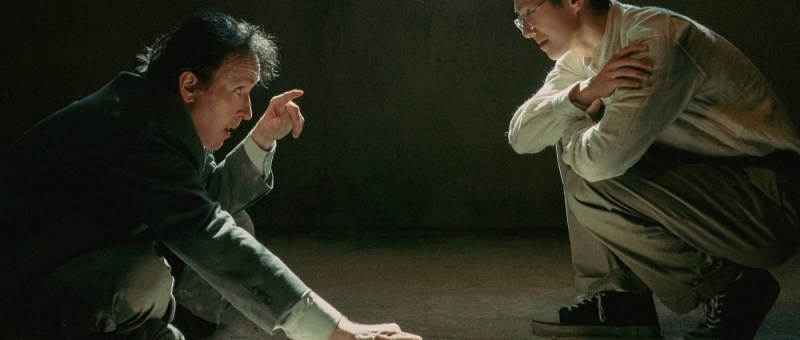
Successor (抓娃娃, Yan Fei & Peng Damo, 2024)

Embodying the contradictions of the modern China, Successor (抓娃娃, zhuā wáwa), the latest from the FunAge team sees a billionaire father recreate a utopian vision of crushing poverty amid the socialist values of China pre the 90s reforms but only so that his son can develop a desire to become a capitalist fat cat. For all that, however, it’s also a reaction against micromanaging parents, life under oppressive state control, and a high pressure, conformist society obsessed with very narrowly defined visions of success that are increasingly at odds with what a younger generation might want.

The surprising thing is how easily the young boy, Jiye, is able to straddle these two worlds while only gradually beginning to realise that it’s odd his neighbours keep asking him complex maths questions and he’s always running into foreigners who conveniently want to know the way to the local post office. Ostensibly, the Ma family live in an old-fashioned courtyard that according to the sign over the front entrance was constructed in 1958. As the film opens, Jiye’s teacher has brought a wealthy man to their home, in fact the father of one of Jiye’s classmates, who offers to sponsor his education while each of them look mystified around the flat which seems to exist in a kind of time warp. Jiye’s father, Chenggang (Shen Teng), sends them the packing explaining that they live exactly as they want to and don’t need anyone’s help. 

Yet Jiye is fascinated by his friend’s iPad and aware of the world outside works even as his parents try live like it’s the 1960s, sitting round reading good socialist literature which is also recommend to Jiye by the man who owns the bookshop downstairs and is actually one of Changgang’s many hidden “teachers”. But unbeknownst to him, there’s a lift behind his parents’ closet door that leads to a huge control centre where his every move is being monitored. Chenggang is actually a fantastically wealthy businessman who wants Jiye to develop good character so that he can take over his business after getting into a prestigious university.

In a very high tech and invasive way, it’s a reflection of the confused ideology being forced on Jiye by unseen external forces. Once he’s a little older and able to see that his world is definitely not normal, he begins to feel as if some mysterious force is indeed controlling his life but attributes it to vague notions of fate or cosmos rather than wider authoritarianism or parental manipulation. Chenggang is convinced this is the proper way to educate his son, to give him both old-fashioned socialist values and a heathy desire to overcome his poverty and live in a fancy mansion. He feels this way in part due to his dissatisfaction with a grown-up son from a previous relationship who failed his exams and was sent to America in disgrace. Somewhat uncomfortably, one of the reasons Chenggang is so disappointed in Dajun (Zhang Zidong) who continues to crave his approval is that he’s gay and in a committed relationship with an American man who probably should have given more thought to his Chinese name. 

In order to keep up the pretence, Chenggang never tells Jiye that he has a half-brother though he does allow him to see his maternal grandparents on occasion though they, evidently very wealthy themselves, do not approve of Chenngang’s parenting and resent being unable to spoil their grandson in the way they’d like. Chenngang may have a point here, though his chief objection being that the little Jiye was already quite chubby from being relentlessly pampered lands in the realms of fat shaming rather than a serious questioning of indulgent parenting in the wake of the One Child Policy.. He didn’t want him to grow up to be selfish and entitled or to have a distorted sense of the value of money but also seems to have a conviction that the boy will just laugh and say thank you when he finds out his entire life has been a lie and his parents made him suffer needlessly when they were in reality vastly wealthy. 

But what Jiye emerges with is, perhaps surprisingly, a more wholesome sense of rebellion, stepping out from the cosseted false reality his parents had given him and prepared to chart his own course. In an undercutting of the apparent homophobia which surrounds Dajun, the film also refreshingly, and perhaps subversively given the usual treatment of LGBTQ+ themes in mainstream Chinese cinema, suggests that he has done the same and was right to do so validating his relationship with Peter while a kind of solidarity emerges between the brothers in the shared defiance of the path their parents had set down for them. Often hilarious in its surreal humour and penetrating in its satire, the film echoes a sense of dissatisfaction amid contemporary youth no longer so hung up on outdated ideology and craving more individual freedom in a society in which lives can ultimately feel oppressively micromanaged by shady, unseen forces.


International trailer (Simplified Chinese / English subtitles)

Tokyo Lullaby (東京夜曲, Jun Ichikawa, 1997)

A meditation on lost love and middle-aged regret, Jun Ichikawa’s Tokyo Lullaby (東京夜曲, Tokyo Yakyoku) weaves a melancholy path through a lonely city but finds in it a sense of comfort or perhaps serenity in the gentle rhythms of ordinary lives that somehow become something greater. A diffident translator in love with an unhappily married middle-aged woman slowly uncovers a deep well of unresolved longing largely thanks to those around him who will remember for those who do not wish to speak. 

Ichikawa signals his intentions early on, transitioning from a nighttime shot of the city to a small cafe where a woman is sitting in the foreground looking forlorn while customers behind her discuss the reappearance of Koichi (Kyozo Nagatsuka), the son of the man who owns the electronics store opposite, who had walked out on his family several years previously but has abruptly returned. From this short scene, we can perhaps infer that there is some connection between Koichi and the woman, Tami (Kaori Momoi), though we aren’t quite sure what it is. In any case, the cafe, which bears the name of her late husband Osawa, becomes a kind of nexus uniting the lives of the various community members who each come there to play go and discuss the past. 

Like Tami, Koichi is reticent and melancholy. He says nothing of where he’s been and his wife, Hisako (Mitsuko Baisho), asks him no questions. She later tells the writer, Tei, whose affections she does not return, that she doesn’t really care about how Koichi is living his life because she is busy living her own and likes to do as she pleases. His sister asks him if he plans to stay this time, but Koichi can’t answer her seemingly uncomfortable in himself and unable either to stay or to go. Walking on crutches his injured foot seems to symbolise his emotional unsteadiness literally unable to find sure footing or move forward with his life. 

Piecing the tale together, Tei figures out that Koichi and Tami were once together but she suddenly married someone else who had a terminal illness and passed away shortly afterwards around the time that Koichi first went walkabout. Hisako, meanwhile, had been in love with Osawa though he loved Tami who did not love him. Somehow it’s all very complicated and incredibly simple, the way they’ve sabotaged their own lives and happiness though it couldn’t have been any other way. Tei watches something similar play out in the neighbourhood. One of the young men who works at the electronics shop had been dating a girl who worked at the record store, but he abruptly begins pursuing Ng, a Chinese woman who works at the cafe, and eventually marries her leaving the record store girl heartbroken. 

Things change and they stay the same. Ng takes over the cafe, Koichi’s foot heals while he also manages to resurrect the family business by turning it into a shop that video games as if taking a symbolic step into modernity that suggests this time he’ll stay just as Tami decides it’s time for her to leave. Paths cross endlessly, Ichikawa frequently cutting away to tiny vignettes of other cafe goers as their stories weave through each other, each one note in the great symphony of the city without which life would be impossible. Yet what’s more important is what is not said, the silences that exist between people and perhaps within them too. Things that are understood, and those which are not. 

Tami explains that she looked for answers but all she found was junk until the relief of boredom became her only frame of happiness. Only by escaping the city does it seem that she’ll be happy while Koichi seems as if he’s getting itchy feet and Tei, joining the cycle, decides to move on rather than remain in painful proximity to Hisako who as she said has her own life and does not seem to want to share it with anyone much less him. The pain of the past cannot fully be healed, only borne amid the cheerful scenes of city life, children playing, people doing business, the sun shining and elderly couples meeting in cafes. Pain and loneliness seem to be the natural conditions of urbanity, but Ichikawa paints them with a kind of rosiness, merely the sadness that unpins the lullaby of a city which is always changing yet remains the same in its unwalled alleyways and those that exist only in the deepest recesses of memory. 


Original trailer (no subtitles)
Black Dog (狗阵, Guan Hu, 2024)

When a dusty sign pops up in Guan Hu’s Black Dog (狗阵, gǒu zhèn) advertising the upcoming 2008 Beijing Olympics, you’d be forgiven for thinking it’s a relic of a long forgotten past. On the edge of the Gobi desert, Chixa has a post-apocalyptic aesthetic, a kind of reverse frontier town for a society in retreat. It takes on an almost purgatorial quality for prodigal son Lang (Edward Peng Yu-Yan) who returns after spending nearly a decade in prison for an incident that seems like may not have been entirely his fault but for which he continues to face enmity and a petty vendetta from a local gangster/snake farmer Butcher Hu.

Lang himself is aligned with the stray dogs who have begun to reclaim the town which has long since been abandoned by industry. The moribund zoo where his father has taken to living is testament to the prosperity the area may once have had though now it’s a ghost town of China’s industrialising past strewn with the disused factories of Socialist era dealt a deathblow by the economic reforms of the ‘90s. Yet we’re also told that the reason the stray dogs must be expelled is so the town can be redeveloped and new factories take the place of the old which does not seem to hold the kind of promise for the townspeople one might expect. 

Constant references to the Olympics and its slogan “Live the Dream” only emphasise the irony. Geographically distant from Beijing, Chixa exists in an entirely different space from the Chinese capital and appears as if it were about to collapse in on itself. Half the town is plastered with demolition signs and in the end it’s the people who are displaced as much the dogs. Guan often rests on ominous visions of the strays standing on a small hilltop and then recalls the image in the film’s closing scenes as the dogs are replaced by townspeople watching a once in a generation total eclipse on the eve of the opening of the games.

With nothing much else to do, Lang, a former rockstar and motorcycle stuntman in the town’s more prosperous days which themselves even seem to echo the 1950s more than the late ‘90s, joins the campaign to beat the canines into retreat at the behest of local gangster Yao (played by director Jia Zhangke) but begins to identify and sympathise with them especially once it becomes obvious that the new regulations are exploiting dog owners by forcing them to pay to have their animals registered. Those who can’t or won’t have their pets confiscated, Lang silently rescuing one girl’s little’s pet pooch while her grandmother tries to argue with the dog catchers before they take them all to what is effectively a concentration camp for dogs. The film’s Chinese title is in fact “Dog Camp,” and it becomes clear that it’s Lang who’s stuck there, trapped by his past and the dismal realities of the socioeconomic conditions of late 2000s China.

Hoping to earn a little extra cash he decides to try catching a wanted fugitive, the Black Dog of the title who is mistakenly believed to have rabies only to end up bonding and identifying with it. At several points, Lang echoes the movements of the dog such as placing his head on the chest of his dying father as the crowd below his hospital room prepare to welcome the opening the Olympics via a large screen in the town square. His relationship with the dog begins to restore his sense of compassion and humanity while a tentative connection with a young woman equally trapped by her transient existence and toxic relationship with a fellow circus performer opens his eyes to new possibilities of a life of freedom on the open road no longer bound by the constraints of a society in flux. Elegantly lensed grainy photography and the occasional use of synth scores lend the film an elegiac, retro quality that recalls the cinema of the fifth generation while casting a subversive eye over the compromises of the modern China itself trapped by its past and trading on former glory from which stray dogs like Lang can find escape only by running from the pack. 


Black Dog is in UK cinemas from 30th August courtesy of CineAsia.

UK trailer (English subtitles)

Between the Knees (무릎과 무릎 사이, Lee Jang-ho, 1984)

“We are all suffering from this Westernised lifestyle and way of thinking. They are not really meant for us,” according to a sympathetic doctor, played by the director himself, at the end of Lee Jang-ho’s erotic melodrama, Between the Knees (무릎과 무릎 사이, Muleupgwa muleupsai). The heroine does indeed find herself trapped between the Korea of the past and the modern society, but the film often seems confused in its central messages in its own use of the woman’s body as metaphor for that of the nation despoiled by foreign influence. 

This is most obviously the implication of Ja-young’s (Lee Bo-hee) flashbacks in which she is quite clearly molested by her flute teacher who is a bearded white man. When her mother walks in on the abuse, she blames Ja-young beating her and shouting what we would assume to be unpleasant words branding her as a seductress though she is a clearly a child. As is later explained, Ja-young’s mother is carrying her own baggage in that her own mother was the mistress of a married man and fearful of the same fate befalling her daughter, she has brought her up with problematic notions of bodily purity that have caused Ja-young to develop a complex surrounding her sexuality in which she is unable to process her desires as a young woman. 

She later says that through her “immoral behaviour and desire to sin” she has found “freedom” as if sexuality was her way of rebelling not only against her mother’s tyranny but social conservatism in general. However, she also characterises it as the extreme opposite, blaming her mother in insisting that her treatment of her has left her with no control at all over her sexuality. In the film’s problematic framing, she essentially allows herself to be raped by a series of men partly as an act of self-harm, partly as rebellion, and partly because she has no other way of permitting herself to satisfy her sexual desires. This is of course dangerous, portraying a woman who says no as one who is really saying yes but resisting out of shame, but there is also a completely paradoxical criticism of Korean men all of whom are rapists except for Ja-young’s sort of boyfriend Jo-bin (Ahn Sung-ki) who is so obsessed with traditional Korean culture that he has earned the nickname “antique”.

Jo-bin lives in a Korean-style home and spends his time playing the flute, training in traditional martial arts, and watching pansori in comparison to the pursuits of other young people such as Ja-young’s brother Ji-cheol who mimics Michael Jackson and spends all his time in discos. Towards the beginning of the film is seems that Ja-young will be torn between Jo-bin to whom she originally says “if you’re so old-fashioned I may have to run away with you” and an incredibly unpleasant fellow student who refuses to take no for an answer and in fact eventually rapes her during an expressionist rainstorm that violently awakens her sexuality. The battle then really becomes whether or not Ja-young will be able to accept it, despite the realisation that she is “no longer the kind of virtuous bride that Korean men expect.”

This hints at the pernicious double standard of the contemporary society in which men largely behave like animals, treating women like trophies to be conquered and then discarded while insisting on a “pure woman” for a wife. The discord in Ja-young’s home stems from patriarchal failure, not only that of the man that made her grandmother a mistress and not a wife, but her father’s in having fathered a child with a 17-year-old Korean War orphan he took into his home. Resentment over his betrayal has further embittered Ja-young’s mother and caused her to double down on her sexual conservatism while fiercely resenting her husband’s other daughter. Yet in the film’s final stretches, a degree of female solidarity arises between the women that largely excludes the father with Ja-young’s mother accepting Bo-young as another daughter and inviting her to live in their home now her still young mother has remarried. 

Violent male sexuality also rears its head in a subplot in which a mute man who had developed feelings for Bo-young’s mother while they were being raised in the same orphanage attacks Ja-young’s father for ruining her life, as he undoubtedly did even if he tried to take at least some responsibility for his transgression. Bo-young later says that her mother hated the mute man and did not want to be in a relationship with him anyway, though he too it seems could not take no for an answer. In any case, it is only the traditionalist, Jo-bin, who is willing to accept Ja-young for who she is. He knows all of her ordeal and does not reject her for her sexually active past, rather scoffing when she had described sex as being a sin with the perhaps mistaken implication that such things were not regarded as taboo in the Korea of the past even as, paradoxically, it appears that Jo-bin is drawn to Ja-young’s old-fashioned modernity in rejecting his mother’s constant attempts to set him up with an arranged marriage. 

Of course, all of this is also very much informed by the climate of contemporary Korean cinema which had descended into an era of softcore pornography deliberately supported by the Chun regime as part of a bread and circuses social policy designed to distract the people from their democratic desires. Lee opens with sexually charged closeup of Ja-young’s lips on her flute, a phallic symbol also present in Ja-young’s forbidden fantasises as she idly fondles it after hearing heavy breathing on the telephone and experiences another moment of sexual crisis. Perhaps that’s paradoxical itself in that it’s learning to play this Western instrument that has led to her corruption in an allegory for a nation’s pollution by Western culture. In any case, Lee seems to imply that sexuality can be an act of resistance towards oppressive social codes but is otherwise unsure if that represents liberation or merely another form of oppressing one’s self.


Retake (リテイク, Kota Nakano, 2023)

What if life were like a movie and you could simply go for another take when things didn’t turn out like you planned? That’s the way it works out for the hero of Kota Nakano’s Retake (リテイク), a young man editing in realtime in an attempt to fix his mistakes and engineer a happier outcome while preparing to meet the end of his youth. Part summer holiday movie, part meta take on storytelling and the movies, the film is most of all about moving on whether things work out or not.

To that extent it’s telling that the film the teens are making is about a couple who attempt to go to a place where time does not flow. For the flighty Yu, the film’s architect, the desire seems to reflect her own anxiety about growing up and entering a new world of adulthood. “I wish this time would go on forever,” she sighs while discussing with her cameraman Kei how the film should end. Nakano plays with this scene, repeating it several times as if it itself were a land where time does not flow and Kei were playing out a memory in his head envisaging how something should have gone rather than how it did. Eventually the conclusion that they come to is that they should continue their journey instead of staying here, trapped in an eternal loop of dead time with no past or future. 

But moving forward is scary, after all it means leaving the past behind. Kei snaps images of the world around him as if he were trying to steal a moment, freeze it and take it with him. The hero of the film, played by his friend Jiro, is an artist who similarly tries to capture motion through the medium of sketching and constantly finds himself frustrated. He likes to sit still and concentrate, but he meets a girl who likes dance and move in the free flow of time. Kei is much the same, a natural observer yet sometimes blind to circumstance as in his decision to invite Allie, a girl they meet by chance while raiding the school broadcasting club for equipment, oblivious to the awkwardness that seems to exist between herself and Yu. 

The film teases the conflict, eventually settling on a disagreement if not exactly over a boy than surrounding him though for the rest of the runtime seems as if it may more have been more about the tension between the girls themselves. Nevertheless, Kei quickly fixes on the idea of repairing their friendship to prevent the film collapsing when his own attempt to confess his feelings is seemingly the straw that breaks the camel’s back prompting Yu into a petulant conviction that no one cares about her film and there are only ulterior motives among her crew. But paradoxically, what Kei learns is the importance of speaking up in the moment, shaking off his diffidence to support Allie when her suggestion is treated with callous indifference by Yu and thereby building bridges.

Though those same bridges may ironically leave him feeling left out and isolated as a peripheral figure on the team while the others all seem to pair off leaving him alone. He tries different approaches, and retakes his mistakes looking for the perfect ending while otherwise buoyed by the warmth of the summer and company of his new friends wishing like Yu and the protagonists of the film that this moment would never end, symbolically repeating and reliving it as if himself trapped in the land where time doesn’t flow. Nakano signals the unreality of his environment by allowing Kei to approach the unseen camera and turn it off, announcing a new take with a clapperboard and then editing in real time in search of perfect answers. In some senses, it’s the operation of nostalgia but also an adolescent desire to find the right path forward along with the courage to take it. But what the teens discover is that in the end you just have to go, frustrated by the boredom of being trapped in an external limbo of stagnant time and eager to see what the next scene will bring in a continual flow of isolated moments that somehow constitute a life.


Retake screened as part of this year’s JAPAN CUTS.

August in the Water (水の中の八月, Sogo Ishii, 1995)

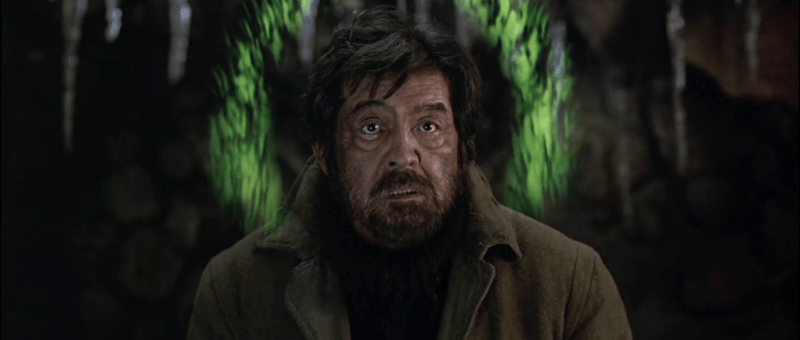
How does the world, or perhaps the cosmos, attempt to communicate with us? As Douglas Adams once did, August in the Water (水の中の八月, Mizu no naka no Hachigatsu) suggests it maybe through the dolphins who here at least seem to be quasi-mystical beings existing in what is really the lifeblood of humanity. In the film’s opening scenes, we’re told that the hero, Mao (Shinsuke Aoki) whose name means “true fish” and his friend Ukiya (Masaaki Takarai) have taken part-time jobs at a marine part to learn how to communicate with dolphins, but it’s the heroine Izumi, whose name means “spring” who eventually claims to have learned to do so. 

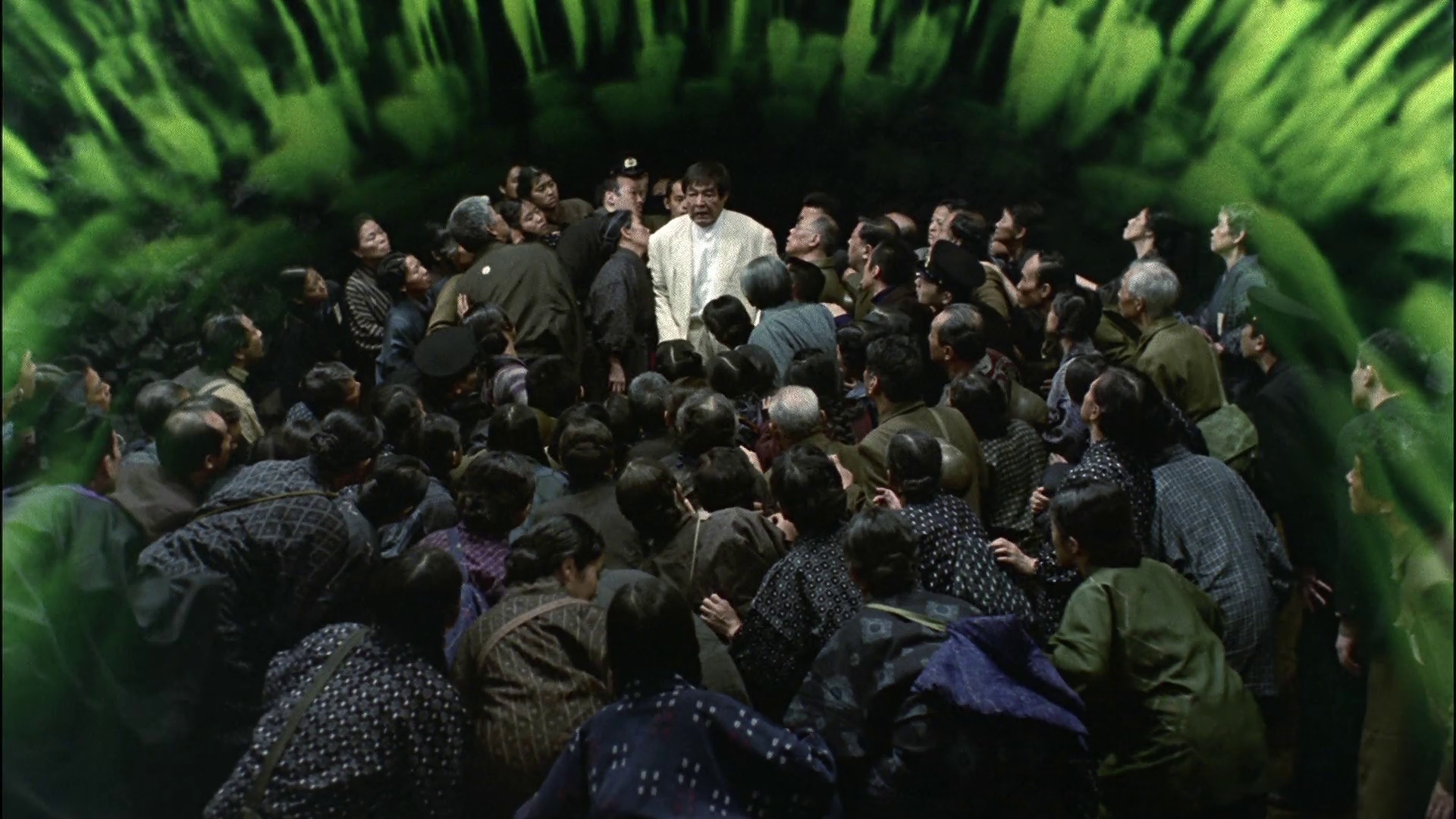
At least, her final words are that the dolphins have taught her “the perfect balance” which has allowed her to open the floodgates both literal and metaphorical to return water to an arid land. We’re repeatedly told that there’s been a lengthy drought and a water shortage leading to rationing and locked pipes though the marine park remains open and the local festival goes ahead  hinting at the ways in which we do and don’t value our natural resources. Izumi’s science teacher tells the kids that humans don’t contribute to the Earth and waste the resources that it gives us which might help to explain the gradual ossification of the planet including a mysterious condition known as the Stone Disease which causes people to collapse in the street as their organs harden. 

Izumi’s sister Yo later remarks that she thinks humanity came from a distant planet long ago and yearns to go home but to do so we must become stone because water is a substance that exists only here on Earth. Turning to stone is however seen as quite a bad thing and also echoes a millennial distrust in increasing technology with TV pundits positing that if human brains were replaced with computer chips we wouldn’t need to worry about water shortages anymore. In Yo’s dream, after people’s brains have become computer chips they become connected to the universe and can transport their minds to the moon enabling them to communicate with anyone anywhere at any time. 

But then despite the potential for communication that computers were only just beginning to offer in the mid-90s, Izumi warns her sister to stay away from them as they leave you vulnerable to the Stone Disease. The boys’ ultramodern friend, Miki (Reiko Matsuo), is a computer addict and it’s she who eventually manages to unlock parts of the mystery but paradoxically as if she were some kind of seer correctly predicting that an accident will befall Izumi on 23rd August and discovering a prophecy that in the year humanity neglects the water god two meteorites will fall in close proximity and drought will follow. Only a ritual conducted by the chosen one under a full moon will be able to cure it. Two child-like old men also warn that nothing’s been the same since they moved the old shinto shrine over which there have also been sightings of UFOs.

After the diving accident in which Izumi plunges meteor-like into the pool, she herself feels as if she’s been split in two almost like the world itself which is divided between these ancient beliefs and modern advancements that have perhaps blocked the flow that once allowed us to communicate with each other and with the universe. A psychiatrist suggests that Izumi may be suffering with sudden onset schizophrenia as a result of her accident and that all of her talk about secret messages from dolphins and mysterious aliens who want to turn the world to stone is nothing but confused delusion though in the film’s closing scenes she herself takes on a supernatural quality as a kind of etherial saviour figure who realises that she may have been dead ever since the accident and is now something different, different and distant as her sister puts it, charged with the mission of rejuvenating a human spirit long since dulled by mechanisation.

In contrast to Ishii’s earlier films which brimmed with punkish energy, August in the Water unfolds at a leisurely pace with eerie yet nostalgic mood music and a new age sensibility speaking to millennial youth with a sense of turn of the century anxiety and human remorse that perhaps we’ve already poisoned our futures. Nevertheless, despite his youthful heartbreak, what Izumi bequeaths to Mao and humanity itself is seemingly the ability to live in the abundant fullness of existence until that existence is done and we return once again to water and the comforting embrace of the Earth.


August in the Water screened as part of this year’s JAPAN CUTS.

Mermaid Legend (人魚伝説, Toshiharu Ikeda, 1984)

“Even if someone kills you, you wouldn’t die,” a drunken husband somewhat sarcastically replies having pledged to come back and haunt his wife if he died and she married a man who didn’t drink. His words take on a prophetic quality given that the heroine of Toshiharu Ikeda’s Mermaid Legend (人魚伝説, Ningyo Densetsu) takes on a quasi-supernatural quality as an embodiment of nature’s revenge after someone tries, and fails, to kill her having already killed her husband for witnessing their murder of another man who’d tried to resist their plans of buying up half the town to build a nuclear plant. 

By the mid-1980s, Japan’s economy had fully recovered from post-war privation and was heading into an era of unprecedented prosperity which is to say that the coming of a power plant was not welcomed with the same degree of hope and excitement as it may have been in the 1950s when it was sold not only as a new source of employment for moribund small towns but an engine that would fuel the new post-war society. Several industrial scandals such as the Minamata disease had indeed left those in rural areas fearful of the consequences of entering a faustian pact with big business, which is one reason why the guys from Kinki Electric Power sell it as an amusement park project though even this has the locals wary not just of the disruption it will bring to their lives and potential ruin of their livelihoods which are dependent on the protection of the natural environment but that what is promised simply won’t be delivered. Fisherman Keisuke (Jun Eto) says as much when lamenting a previous aquaculture programme which didn’t pan out and caused lasting damage to marine life. 

In any case, as others say there’s no money in going out to sea anymore and its clear that the old-fashioned, traditional way of life practiced by Keisuke and his newlywed wife Migiwa (Mari Shirato) is no longer sustainable. Migiwa is an abalone diver working without modern equipment but using heavy weights to dive deep enough to reach the shells. As such she’s dependent on her husband to pull her back up to the boat when she tugs the rope. She must put her life entirely in his hands though in truth, he does not seem to take his responsibility all that seriously. The couple bicker relentlessly and not even she really believes him when he says he witnessed a murder which might be understandable given the extent of his drinking. All of which is further evidence against her when she manages to escape from the assassination plot and runs straight to the nearest policeman who thanks her for turning herself in implying he believes she is responsible for Keisuke’s death. 

The possible collusion of the policeman hints as a further sense of distrust in authority which has become far too close to corporate interests. Shady industrialist Miyamoto (Yoshiro Aoki) ropes in both the mayor and the head of the fishing association in his talks with Kinki Electric Power along with Shimogawa from the local tourist board who evidently opposes the plans as he is the man Keisuke witnesses being murdered. As Miyamoto says “sometimes your hands get a little dirty” though he never “directly” involves himself matters such as these. The situation is complicated by an unresolved love triangle between Miyamoto’s spineless son Shohei (Kentaro Shimizu), a sometime photographer, who is resentful of Keisuke and in love with Migiwa complaining that Keisuke always outdrinks him and gets the girl too hinting at his sense of wounded masculinity. Isolated by his class difference, he appears not to approve of his father’s actions but later does little to stop them and eventually sides with corporate interest over his feelings for Migiwa who in any case seems to have become more attached to Keisuke following his death which she vows to avenge. 

There is there is something quite strange in the prophetical quality of Keisuke’s words also predicting the “black sweat” of the Jizo on the beach and the mystical storm which does eventually sweep everything clean destroying the signs for the new nuclear power plant already installed on the beach. In this way, Migiwa becomes a vengeful force of nature taking up arms against those who wilfully ravage and pollute the natural environment while damaging the lives of those who lived on its shores such as herself and Keisuke. She takes revenge not only for the murder of her husband by corrupt capitalists but against that corruption itself even as she laments that “no matter how many I kill, they just keep coming.” “Don’t worry, maybe all this was just a dream,” Keisuke once again prophetically intones though it’s difficult to know if it’s defeating the capitalist order that is a fantasy or the maintenance of the idealised rural life to which Migiwa seemingly finds her way back swimming into an unpolluted sea surrounded by the floating barrels of ama divers and clear blue skies, a creature of nature once again.


Mermaid Legend screened as part of this year’s JAPAN CUTS.

Snow in Midsummer (五月雪, Chong Keat-Aun, 2023)

How should you deal with the traumatic past? In Chong Keat-Aun’s Snow in Midsummer (五月雪) it becomes clear that this past has not been dealt with and that its heroine has been living in a kind of limbo unable to move fully forward with her life in the constant search to discover what happened to her father and brother during the 513 Incident in 1969. The first act devotes itself to the slowly unfolding horror of the massacre which erupted shortly after a general election during which a number of smaller parties affiliated with the Chinese community had begun to gain ground from the Malay-dominated Alliance Party. 

Bullied by her classmates as a Chinese student in a Malay school, Ah Eng spends the night of the massacre hiding in the backstage area of a Cantonese opera troupe as if in a literal act of taking refuge in fantasy. The film’s title alludes to the famous Cantonese opera Snow in Midsummer, actually “Snow in June” here retitled as “Snow in May”. The play’s theme is injustice as its heroine is condemned to die for a crime she didn’t commit, someone remarking that the gods must be outraged to provoke such an aberration of the natural order as snow in the height of summer. The ageing leader of the opera troupe ventures out during the incident in search her friends and relatives who had gone to the local cinema. Unable to open the door, she climbs onto the roof and sings a lament decrying the bloodshed and her own cruel fate as she watches the city burn beneath her. 

A similar lament is sung 49 years later in a graveyard we’re told is set to be “redeveloped”. The opera troupe had performed here for the dead during the intervening years, but in an event echoing that of 1969 are challenged by authorities asking if they have permits. That was in the past, they’re told, this is now and their performance causes a disturbance to a mosque which has recently been built close to the site. In a touch of irony, the taxi driver who brings the middle-aged Ah Eng to the cemetery asks her if she’s going to the leprosy hospital remarking that the Chinese community usually refuse to go anywhere near it. Each of the headstones, many of which read simply “unknown Chinese”, is marked “courtesy of the Malaysian government”, but it’s clear that this site was chosen because of its remoteness for similar reasons to the leper colony because they did not really want to address what had happened in any meaningful way.

That Ah Eng returns 49 years later hints at spiritual echoes of cycles of rebirth, but Ah Eng has lives her whole life in limbo haunted by the impossibility of discovering the resting place of her father and brother. Her father had refused to take her to the cinema, leaving her and her mother to watch the opera alone in echoes of the patriarchal oppression she continues to face as a middle-aged woman whose husband reacts with violence and anger simply because he suspects she intends to return to Kuala Lumpur to mourn her loss. Her sister-in-law gives her a lift to the station, but insists on being called by her Chinese name revealing that’s divorced her Muslim husband and intends to move to Australia with her child. On her arrival in the city, Ah Eng passes by the former sit of the Majestic Theatre which is now a fancy hotel with the same name in a very changed city. Her former Malay school is now Chinese but has a stand outside it selling Islamic food where the Cantonese opera troupe discuss their visit to the cemetery. 

“The past is dream,” the old woman sings to the grave echoing the surreality that runs through Chong Keat-Aun’s vision of the past as a man rides his elephant through the streets and lives the tale of a king forced to drink the Sultan’s foot water as a symbol of his subjugation, while others at the theatre are sold of a tale of a king with a quite literal bloodlust sustaining himself on the suffering of his subjects. A melancholy contemplation on lingering trauma, loss, and memory Chong Keat-Aun ends with a poignant image of comfort and catharsis but one is which is forever haunted by an intangible past and the wandering, unseen ghosts of buried injustice. 


Snow in Midsummer screens as part of this year’s Taiwan Film Festival in Australia.

Trailer (Traditional Chinese / English subtitles)

Motion Picture: Choke (映画(窒息), Gen Nagao, 2023)

Humans place themselves above animals precisely because of their ability to communicate and work together to create complex plans that allow them to overcome their circumstances. Robbed of our speech, would we still say the same? Gen Nagao’s dialogue-free drama Choke (映画(窒息), Eiga Chissoku) takes place in a world in which language appears to have disappeared. Humans communicate only through gesture and are therefore prevented from explaining themselves fully, able to rely only on the vagueness of feeling to convey their thoughts and intentions. 

Yet we might not quite grasp this at first, because the heroine (Misa Wada) lives a solitary life in which she rarely needs to talk to anyone anyway. Shot in a crisp black and white, this appears to be some kind of near future, post-apocalyptic world in which even ancient technologies have largely been forgotten. The woman lives in a concrete structure, presumably a disused factory which is dotted with broken machinery that the woman largely ignores as she lives her simple and repetitive life of waking, fetching water, hunting, cooking and eating. We have no reason to think that she is unhappy for besides the occasional sigh, she simply gets on with her daily tasks and then goes to sleep seemingly unafraid of external threats.

But it is indeed male violence that punctures her world when she’s set upon by three men, seemingly an older man and his grown-up sons one of whom holds her still while the middle-aged man rapes her after breaking the magnifying glass she’d bought off a cheerful pedlar enraptured by the wonder of instant fire (well, while the sun shines at least). Her world becomes darker and she finds herself haunted by a shadowy figure that hovers over her as she sleeps. But then, her trap catches a young man (Daiki Hiba) whom she at first seems as if she’s going to kill and eat but later reconsiders and lets him go presumably calculating he poses no threat to her. The young man has a goofy grin and cheerful disposition, returning to bring the woman gifts and follow her around doing odd jobs before the pair develop a relationship and start living as a couple. The young man even devises a system of bamboo pipes to bring water from the brook so the woman won’t need to carry buckets back and forth anymore in a seeming rediscovery of technology born of his desire to make her life easier.

This more nurturing, protective kind of masculinity brings a new a dimension to her life but their harmonious days do not last long before male violence intrudes once again and proves a corrupting influence for the young man who seemingly becomes cruel and vengeful, though not toward the woman even as she begins to reconsider her relationship with him and if this kind of inhumanity is something she can tolerate in the idyll she’d crafted for herself before he arrived. Then again, in trying to deal with it is there something that becomes cruel or violent in herself in that wasn’t that way before even if doing so also makes her sad and leaves her lonely?

Until then she’d found only wonder in the natural world, repurposing the disused, man-made structures of the factory to make music in the rain and more problematically filled with childish glee when something wanders into her trap. But nature holds its dangers too even if there don’t appear to be any predators here besides man in the form of poisonous mushrooms easily mistaken for the edible kind. Even so, it’s violence that finally poisons her world. A senseless kind of violence that doesn’t seem to be about competition for resources, but only an animal lust and craving for dominance. If only they could communicate in a more concrete way perhaps it could be avoided, but then that doesn’t seem to have worked out that way for us who face such threats every day with words often ignored. 

In any case, Nagao finally heads into a more abstract space as the woman seems to react to the abrupt halt of the film’s soundtrack followed by the removal not only of speech but sound from her world as is if she had lost her hearing. Her reality fractures and we can’t be sure she hasn’t just imagined anything that went before or that she has been targeted by some unseen supernatural or spiritual force for her transgressions leading to her exile from a disintegrating paradise. Obscure and haunting, the film nevertheless has a kind of cheerfulness in its innate absurdity captured in the lunking physicality of the actors who move with a cartoonish strangeness and exaggerate their facial expressions in a strenuous attempt to communicate in the absence of words. The message seems to be that in the end we ruin things for ourselves, either through violence or simply doing what we think is right but in the end may really be no different nor any better.


Motion Picture: Choke screened as part of this year’s JAPAN CUTS.

Original trailer (dialogue free)

Brave: Gunjo Senki (ブレイブ -群青戦記-, Katsuyuki Motohiro, 2021)

A young man with a total lack of confidence in himself begins discover his inner strength after being sent back to the Sengoku era in Katsuyuki Motohiro’s timeslip drama adapted from the manga by Masaki Kasahara, Brave: Gunjo Senki (ブレイブ -群青戦記-). Fighting a battle for the future, the kids finds themselves at a moment of historical change and caught between the titanic forces of clashing armies but paradoxically discover that they want the same thing, something the kids have always taken for granted, an age of peace in which all are free to live together happily. 

For all those reasons it’s a just as well that Aoi (Mackenyu), a diffident member of the archery club, is a keen history buff even if he declares himself uninterested in winning competitions or becoming a champion. When warriors in 16th century armour begin assaulting the school, he’s well placed to guess what might be going on inferring from some of the names involved that they must have been thrown back to the year 1560 which was something of a turning point in Japanese history marked by the battle of Okehazama in which the outnumbered forces of Oda Nobunaga (Kenichi Matsuyama) scored a significant victory against those of Imagawa Yoshimoto setting Nobunaga on a path towards the unification of Japan. 

Though armed with foreknowledge, the kids are obviously ill-equipped to cope with the demands of life in the Sengoku era having no combat experience yet this institution happens to be one of the most prominent sporting schools in the nation boasting a host of national champions all of whom discover that their athletic skills can easily be repurposed for warfare from the archers and kendo enthusiasts to the baseball and American football players while those in the various science clubs set about investigating how they got here and how they might get back. 

Despite being thrust into a leadership role after impressing warlord Motoyasu (Haruma Miura) who will one day become Tokugawa Ieyasu and oust Nobunaga as ruler of a unified Japan, Aoi remains diffident and fearful unable to fire his bow often walking away from the fight despite his friends’ encouragement. His problem, as is repeatedly pointed out, is that he has no self-confidence and cannot believe in himself sufficiently to act when the occasion calls. Yet through his gentle mentoring at the hands of Motoyasu, he begins to come into his own as a Sengoku era strategist realising that he has something to spur him on in the desire to protect those close to him.

This is not, however, a wholly positive thing. Despite introducing Aoi’s childhood friend Haruka (Hirona Yamazaki) as a talented archer who is much more willing to step up to the fight, the film quickly relegates her to the role of damsel in distress as it does the majority of female students many of whom are also top athletes with useful skills while the assault squad venturing to rescue students taken hostage by evil retainer Yanada Matsuna is, aside from Haruka, exclusively male. Conversely, the guys are given an opportunity to express their fear and sadness each thinking of their mothers as they prepare to risk their lives to save their friends. 

For Aoi, his friends become the light that show him the way while he remains preoccupied with history realising that nefarious forces are trying to manipulate it so that their age of peace will never arrive and Japan will exist in a state of darkness for all eternity. Though often depicted as cruel dictator this Nobunaga seems to want end the darkness by bringing about an age of peace through the unification of Japan taking solace in the idea that these strange people in their weird castle wearing bizarre clothes are from an age in which war is a distant memory meaning at least that his dream came to pass. At heart, it’s a battle between an emo teen who wants to paint the world with the darkness inside him, and a diffident young man turning away from hate and violence while finding strength in the presence and support of his friends. Boasting some impressive effects and high octane battle sequences imbued with a quirky humour as the kids use their sport skills, kicking footballs armed with bombs or throwing fiery baseballs at the confused retainers, Brave: Gunjo Senki sees its diffident hero not only taking charge of his personal destiny but the national in believing that the best way to support his friends is to make sure the world of peace they’ve always enjoyed will again come to pass. 


Original trailer (no subtitles)