 These days, cats may have almost become a cute character cliche in Japanese pop culture, but back in the olden days they weren’t always so well regarded. An often overlooked subset of the classic Japanese horror movie is the ghost cat film in which a demonic, shapeshifting cat spirit takes a beautiful female form to wreak havoc on the weak and venal human race. The most well known example is Kaneto Shindo’s Kuroneko though the genre runs through everything from ridiculous schlock to high grade art film.
Daiei’s 1969 genre effort The Haunted Castle (秘録怪猫伝, Hiroku Kaibyoden) sits towards the high art end but remains firmly within the realm of entertainment. Displaying the high production values the studio was known for, the film paints its 18th century tale with a plush opulence and makes fantastic use of the nighttime gloom to evoke a gothic, supernatural atmosphere which is at least extremely unsettling even if it stops short of actual terror.
As for the story, it’s another take on the classic Japanese supernatural tale The Vampire Cat of Nabeshima. Events are set in motion when blind monk Mataichirou and his sister Sayo run into their lord whilst out walking one day. Lord Tangonokami Nabeshima takes a liking to Sayo and wants to add her to his collection of concubines. He despatches an underling to ask Mataichirou about it, but Mataichirou understandably refuses, offering the excuse that Sayo is “too awkward” and the the lord wouldn’t find her very good company anyway. Nabeshima is angry at this affront to his authority and summons Mataichirou for their regular round of Go where Mataichirou once more resolutely refuses to surrender his sister. When Mataichirou realises Nabeshima and his aid are cheating, the pair argue and Nabeshima loses his temper and kills him.
This is a big problem for several reasons so they pretend not to know anything about it and dump the body in a well. Fearing discovery, they also banish the sister, Sayo, but she opts to commit harakiri and begs the weird cat that had been attached to her brother to drink her blood and become a demon to enact their revenge! Soon enough, two maids are dead in the Nabeshima household and the lord’s favourite mistress is refusing to take baths and has developed a liking for fish which she previously could not stand….
Ghost cats mostly come at night (mostly) so the majority of the film takes place in the intense darkness of the pre-electric world. The cat begins to stalk its prey quietly with only the tinkling of its ghostly bell and then tiny, bloody paw prints left as evidence of a supernatural killing. Tanaka opts for a floating, dreamlike shooting style weaving a degree of hypnotic confusion into the proceedings which also manage to keep up a high level of tension as the demonic cat spirit goes about its bloody business.
Of course, the moral of the tale is to live your life in a more altruistic manner – stop trying to take things which aren’t yours, respect the views of others, and don’t lose your temper and rashly kill people for no reason at all. All good advice there. The “hero” of the story is the more sympathetic vassal, Komori, who is trying to broker a satisfactory outcome of this complex situation right from the start, but finds himself frustrated as the servant of an unreasonable lord whose will cannot be restrained. Komori can’t avoid the supernatural retribution but manages to ride the waves well enough to ensure a morally satisfying ending where corruption is exposed and the land returned to its rightful owners rather than remaining in the hands of a lascivious usurper. It’s an old story, but a good one, and is presented with such a degree of sophistication to make The Haunted Castle one of the better horror offerings of the late ‘60s.
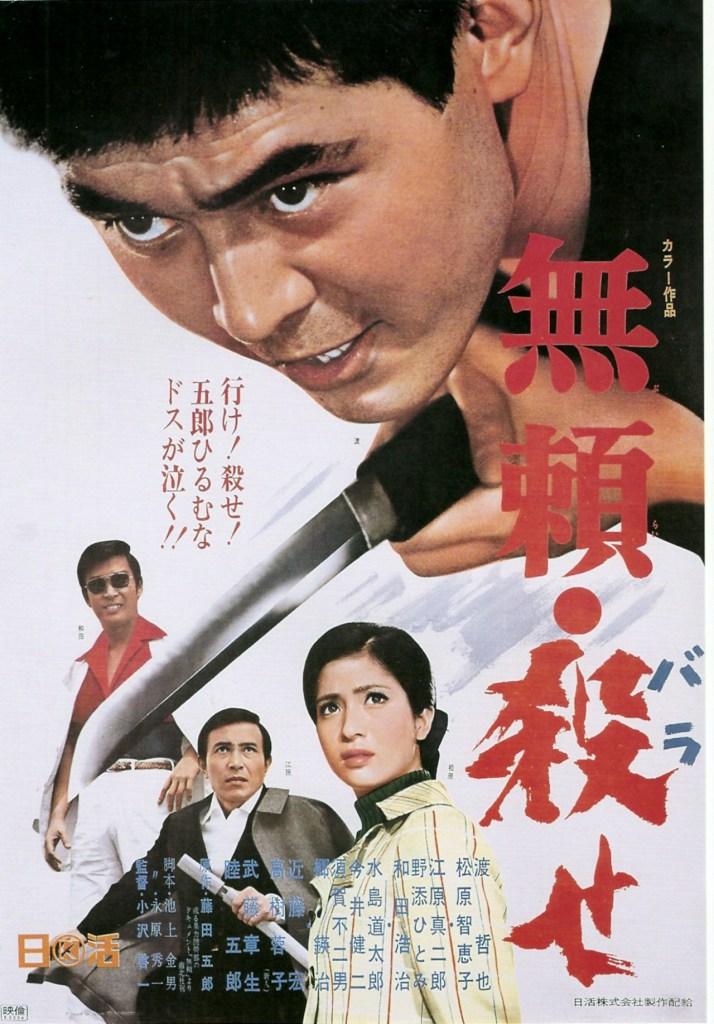 Goro, Goro, Goro – will you never learn? Maybe he will because this is the last film in the series! Appropriately titled Outlaw: Kill! (無頼 殺せ, Burai Barase), this sixth and final film in the Outlaw series sees Goro once again moving to a new town and trying to lead a more honest life but unfortunately he’s wandered in at just the wrong time because a local gang boss has just been sent to prison after defeating a group of assassins leaving a dangerous vacuum and leading, therefore, to the outbreak of a turf war.
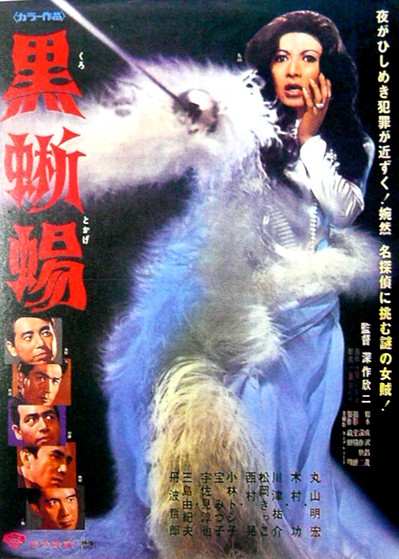 Those who only know Kinji Fukasaku for his gangster epics are in for quite a shock when they sit down to watch Black Rose Mansion (黒薔薇の館, Kuro Bara no Yakata). A European inflected, camp noir gothic melodrama, Black Rose Mansion couldn’t be further from the director’s later worlds of lowlife crime and post-war inequality. This time the basis for the story is provided by Yukio Mishima, a conflicted Japanese novelist, artist and activist who may now be remembered more for the way he died than the work he created, which goes someway to explaining the film’s Art Nouveau decadence. Strange, camp and oddly fascinating Black Rose Mansion proves an enjoyably unpredictable effort from its versatile director.
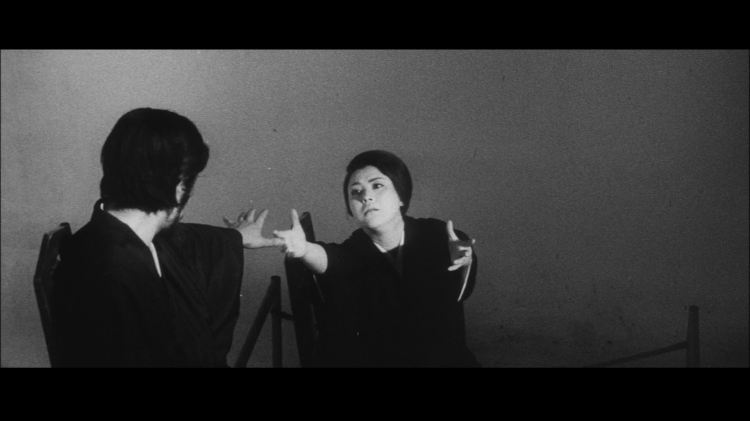 One of the foremost avant-garde filmmakers of the New Wave era (though he detested this term which, in fairness, is a retrospective and often arbitrary label), Kiju (Yoshishige) Yoshida has remained largely unseen in the West. Some of this is his own fault – fiercely independent, Yoshida nevertheless found himself working with ATG after leaving Shochiku but the relationship was an unusual one and often far from easy. All but the latest film in Arrow’s Kiju Yoshida boxset,
