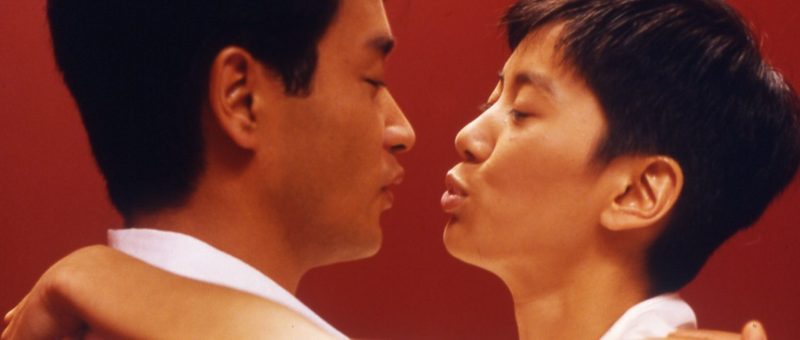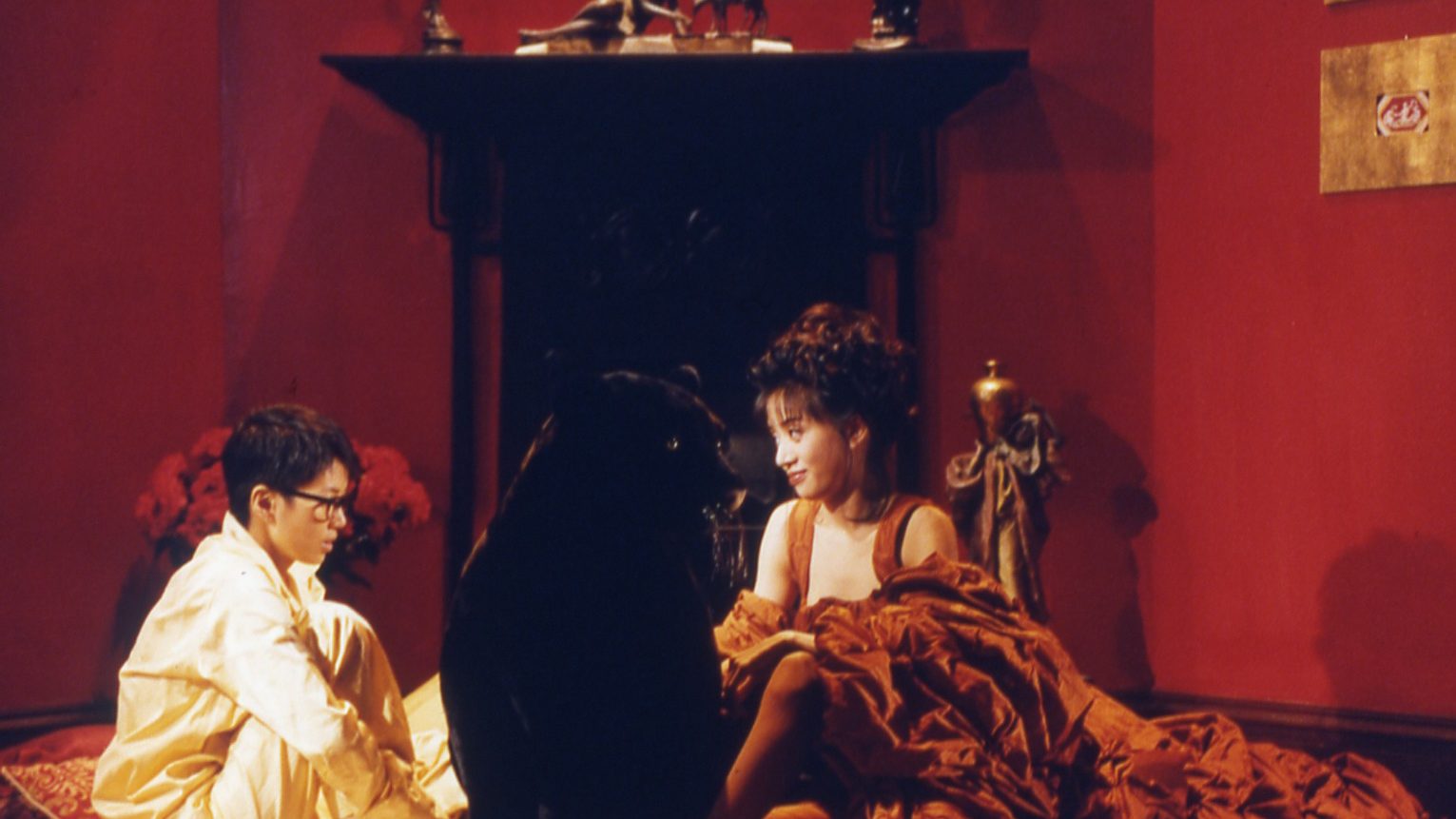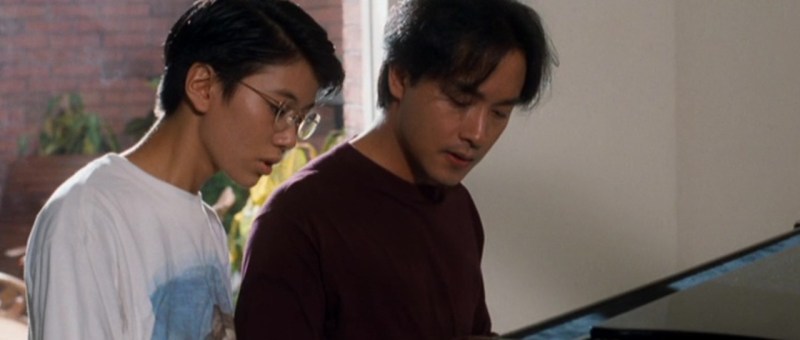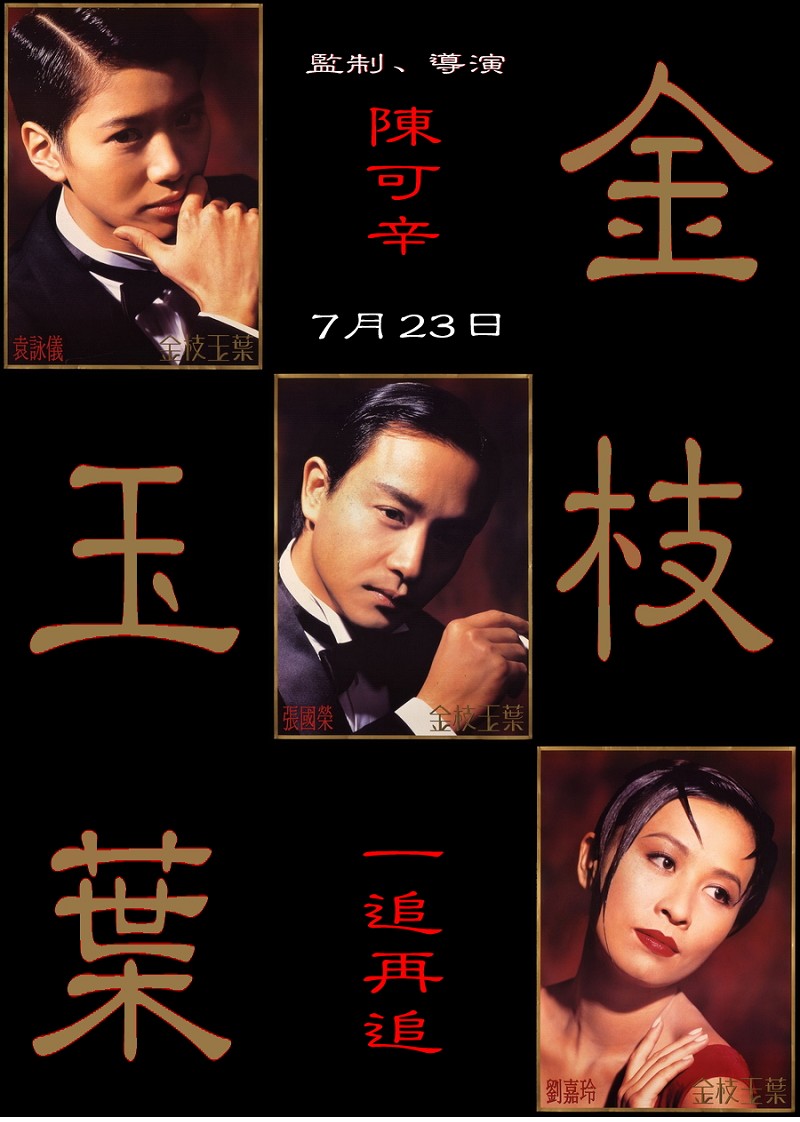
Who’s the Woman, Who’s the Man? (金枝玉葉 2, Peter Chan, 1996)

“I don’t care if you’re a man or a woman, all I know is that I love you,” the hero had finally accepted after the heroine’s madcap dash across town in the closing scenes of Peter Chan’s 1994 rom-com, He’s a Woman, She’s a Man. But as it turns out, it isn’t quite that simple. Inverting the structure of the first film, sequel Who’s the Man, Who’s the Woman? finds the heroine romantically confused as her “masculine” persona increasingly interferes in her relationship with the still conflicted Sam (Leslie Cheung).

It certainly hasn’t been plain sailing for anyone as Wing (Anita Yuen) agrees to move in to Sam’s luxury flat but refuses to live downstairs as Rose (Carina Lau) had done, instead insisting on sharing his life and his bed in their entirety. For his part, Sam’s reluctance to share his space is reflective of his fears of intimacy while he resents Wing’s immediate attempts to install herself by remodelling the apartment to her own taste. Meanwhile, the old problem has resurfaced in that now he’s got Wing he’s not all that interested in her and hasn’t written any songs in months. In an attempt to manage her interference in his life, Sam suggests resurrecting Wing’s pop career as a male idol but proves a victim of his own success as she quickly begins earning much more money than him and gains the upper hand in the relationship. 

Wing’s increasing masculinity leaves Sam feeling somewhat emasculated while forced into the “feminine” role previously occupied by Rose. Suddenly successful, Wing is offering to pay large sums of money to help Sam fulfil his dreams which only deepens his sense of shame in his inability to earn money for himself. Wing had insisted on living together in the main apartment, but now that she’s so busy suggests moving into Rose’s old flat downstairs so that they can, after all, have their own space. Sam had wanted it that way before, but now that it’s Wing who suggests it, he’s romantically anxious while simultaneously conflicted because he cannot acknowledge their relationship publicly as he is still uncomfortable with people assuming he is “gay”.

All of which is doubly confusing for Wing who is under increasing strain trying to straddle a gender binary. Not only is she trying to deal with Sam’s contradictory behaviour and resentment of his emasculation, but in growing into her masculine role finds herself questioning her sexuality in experiencing unexpected attraction towards other women and in particular the captivating Fan Fan (Anita Mui), a mysterious former pop star who has moved into the downstairs flat after spending many years abroad. Just as Sam had in the previous film, Wing struggles to accept her desires unable to reconcile falling in love with Fan Fan with her love for Sam while Fan Fan in turn falls for her mainly in her femininity in claiming that she has been looking for something kind and innocent that she no longer believed existed in the world. 

“Love can’t be explained,” Sam admits when talking to his decorators, a gay couple who ironically tell him how much it means to them to see a same-sex couple in the public eye, though Sam still refuses to acknowledge the relationship because he doesn’t want to be seen as “gay” and Wing is in any case a woman. Mirroring Sam’s relationship with the openly gay Auntie (Eric Tsang), Fan Fan’s assistant O (Theresa Lee) is a lesbian who is relentlessly courted by Fish (Jordan Chan) despite her constant rejections of him. He tries to present himself as female by shaving his legs and later crossdressing in order to win her heart, only to end up reaffirming O’s avowed homosexuality. For Wing, however, she has only a dilemma in being faced with a choice between her love for Fan Fan and that for Sam which seems as if it may have run its course just Sam’s love for Rose once did. 

Sam only really begins to understand his himself after a more mature discussion with Rose regarding the realities of their relationship, while Fan Fan effectively plays a similar role in sacrificing her own desire believing that Wing belongs with Sam but taking the new hope their love has given her back out into the world. Neatly inverting the first film’s conclusion, it’s Sam who has to make an active choice about what it is he wants though the ironic ending may suggest he doesn’t have much control over his destination either even if discovering he already has what he was looking for.


He’s a Woman, She’s a Man (金枝玉葉, Peter Chan, 1994)

A frustrated composer in a moribund relationship with his former muse experiences a moment of existential confusion on feeling an unexpected attraction to his latest prospect whom he assumes to be male in Peter Chan’s hilarious meta comedy, He’s a Woman She’s a Man (金枝玉葉). Broadly progressive in its views of gender and sexuality, the film also takes aim at a growing obsession with celebrity in an increasingly consumerist culture. 

The heroine, Wing (Anita Yuen), is a case in point. She’s completely obsessed with the singer May Rose (Carina Lau) to the point that she almost lives her life vicariously through her. Rose’s successes are her successes, while she earns a few extra pennies peddling celebrity tat like Aaron Kwok’s used tissues. Rose meanwhile is riding high professionally by winning yet another reward, but her relationship with songwriter/manager Sam (Leslie Cheung) has clearly run its course. He’s become bored with the “celebrity” lifestyle and hasn’t written anything new in some time while unwilling to admit that he’s fallen out of love with Rose, refusing to take on new proteges because of his habit of falling in love with them.

That’s one reason he finally agrees to take on a male star, assuming there will be no danger of romantic conflict and intending to kick back against celebrity culture if ironically by creating an “everyman” sensation. But unbeknownst to him, Wing has had a male makeover and decided to enter the auditions in the hope of meeting her idols. Unexpectedly picked up for a recording contract during a spat between Rose and Sam, Wing finds herself having to keep up the act but is conflicted on fearing her presence is only deepening the rift between the “perfect couple” whose wedding it is her life goal to witness. 

Even before her makeover, Wing makes repeated references to her atypical gender presentation in lamenting her flat chest, especially in contrast with a rival celebrity hunter she nicknames “big boobs”. She takes lessons in performative masculinity from her roommate and best friend since primary school Yuri (Jordan Chan), who appears to have no romantic interest in her, and stuffs glow sticks down her trousers to make herself feel more “complete”. Yet despite all that, she is always forced to deny her seeming femininity with several people directly asking her if she is “gay” which is a more complicated question than it seems given that she’s a straight woman but currently living as a man. To find out for sure, Rose tries to seduce her in an attempt which is admittedly predatory and ends in a chase around the bed with Wing desperately trying to avoid being accidentally “outed” in an amorous moment. 

Nevertheless, there is a degree of romantic attraction in Wing’s obsession with Rose which is also a reflection of her internalised sense of shame in her atypical femininity as seen in her wide-eyed observation of Rose’s shadow dance as she slips into something more comfortable along with her admission that she always wanted to know what it felt like to touch a breast (because she feels she has none of her own). Even so, she begins to fall for Sam who is slowly being driven out of his mind with romantic confusion in being unable to reconcile his attraction to Wing with his heterosexuality. One of Wing’s closest associates whom he refers to as “Auntie” (Eric Tsang) is an openly gay man who asks him the all important question of whether of what’s really bothering him isn’t Wing’s ambiguous sexuality but his own. The question takes on a meta dimension in the knowledge that Cheung was himself bisexual but at that point not openly. Much as Sam explains, he might personally not have a problem with it but some people in the industry are very “sensitive about this kind of thing”.

Sam doesn’t know that Wing is “really” a woman, which might neatly explain his inexplicable attraction to her, but cannot begin to reconcile himself until he accepts that it “doesn’t matter what you are” because the fact remains that he loves her. Wing might make her final dash in more stereotypically female attire, but she does so in a voluminous white dress which, aside from its matrimonial connotations, further emphasises her lack of conventional femininity in her literal inability to manage it as she attempts to run while trying not to trip over herself. “Too much reality can really get up your nose,” Rose had complained in trying to keep her fantasy of a fairytale romance alive while internally accepting she can no longer be the “ordinary” girl Sam is looking for in a world of celebrity miasma and consumerist aspiration, finally reaching her own moment of self-acceptance just as Wing decides to shoot her shot right into Sam’s tender heart.

Trailer

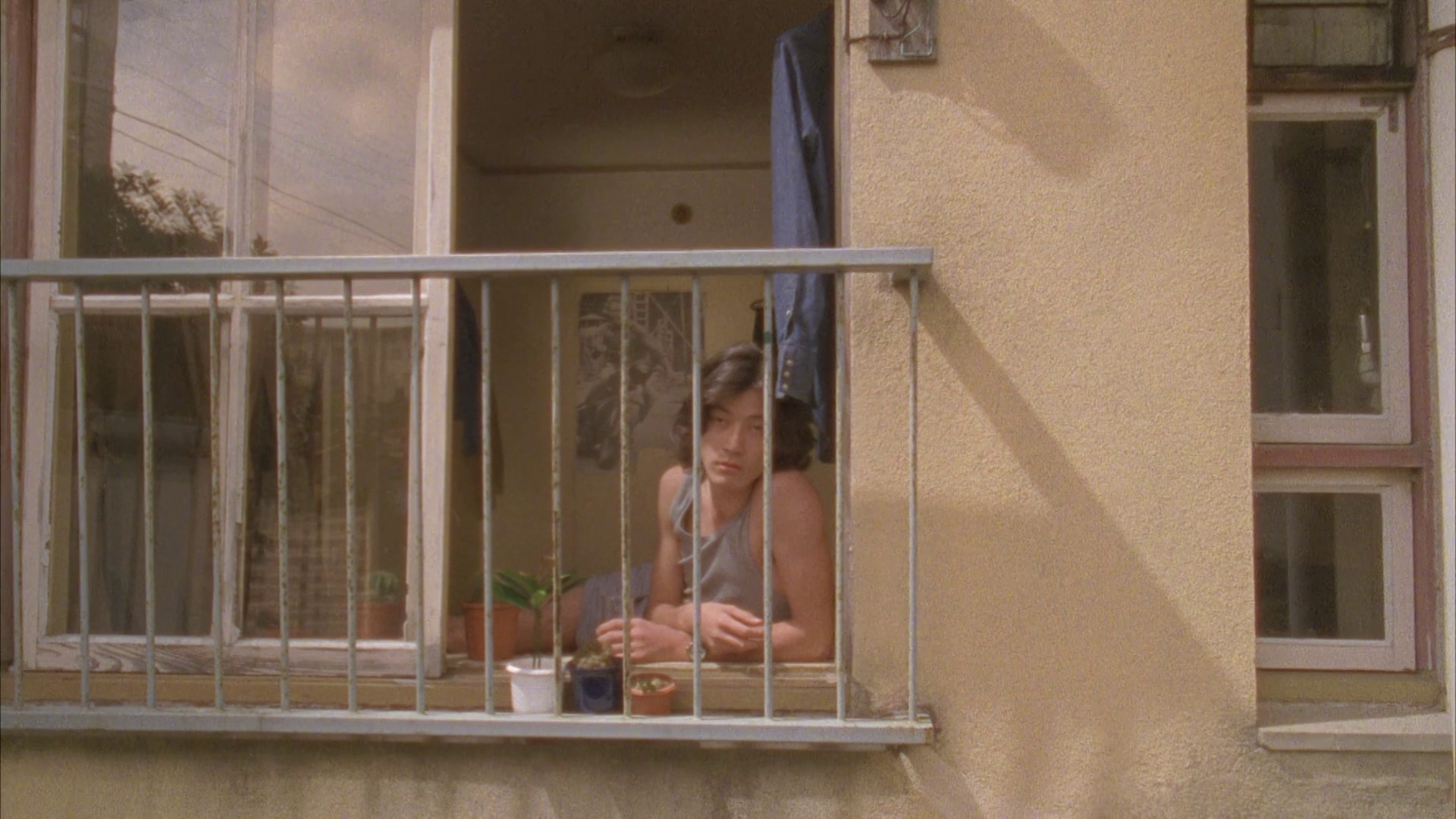
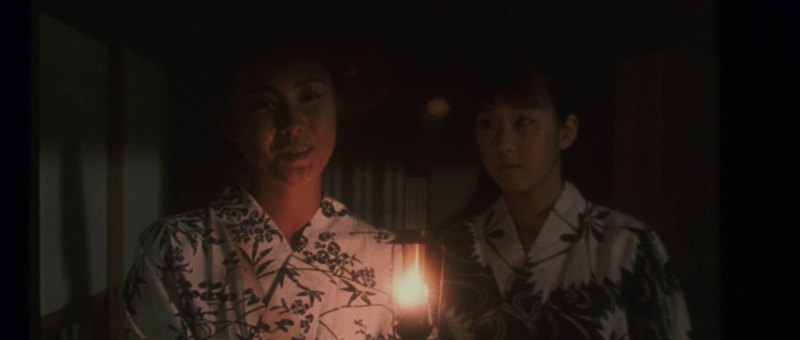
Helpless (ヘルプレス, Shinji Aoyama, 1996)

A title card close to the beginning of Shinji Aoyama’s debut film Helpless (ヘルプレス) lets us know that this drama which spans a single day takes place on Sept. 10, 1989. It is indeed late summer for most of the protagonists, refugees from the Showa era living on borrowed time in Heisei and intensely resentful towards the contemporary society which appears to have no place for them while the glamour of the Bubble economy does not appear to have trickled down to their peaceful provincial existence. 

Yakuza, for example, are very much associated with the post-war past and one-armed foot soldier Yasuo (Ken Mitsuishi) is an old-school street thug who can’t accept that his former boss literally is as dead as the institution itself. He’s met at a train station by two former associates, but it’s clear the older at least is awkward around him finally telling Yasuo not to call “too often”. “It’s nice to be normal,” Yasuo sneers, realising his former comrade has gone straight and lives an ordinary life as a regular businessman which is why he really wants nothing to do with his yakuza past. Yasuo takes his as more than just a personal betrayal and shoots him dead with his own gun.

He is quite literally helpless, there’s no place for him in the contemporary society and his only hope is killing his old boss, who is already dead, so he can go back to prison. The only sticking point his younger sister Yuri (Kaori Tsuji) who has learning difficulties and had been living in residential care. Another of Yasuo’s former associates now longer a yakuza, Kenji (Tadanobu Asano), is similarly caring for his father who is in hospital for serious medical treatment. Kenji’s father hums the Internationale to himself and seems to have been consumed by the failure of his personal revolution muttering about blast furnaces while at home Kenji looks out on the now rusty aspirations of another “new era” in a moribund steel plant. He lies to his father that he has a received a job offer from there. 

The two men seem destined to collide, Kenji’s numbed resignation and Yasuo’s irrational rage, though it’s Kenji who later snaps after learning that his father has hanged himself while he was busy taking care of Yasuo’s sister. Even an old classmate he runs into is filled with resentment, talking about taking his “revenge” at the class reunion by poisoning the punch. He says he “forgives” Kenji because he once helped him find his PE kit, though Kenji claims he did it mostly for selfish reasons.The chef at the roadside diner where they wait for Yasuo also seems to be henpecked by his wife who calls him “weaker than a woman.” Kenji later says that he killed them because they ridiculed him, tipped over the edge by his own insecurity and sense of futility. 

Yasuo discovers something similar after being stopped at a roadblock, a policeman expressing sympathy that “they forgot about a punk like you.” Yasuo points the gun at his own head, discovering one last bullet, but it’s not quite clear what happens after that. Yasuo was a wandering ghost anyway, a man of the Showa era haunting the streets of Heisei with a mission to kill a man like himself already dead. On the severed arm Kenji later discovers in his bag, there’s a tattoo of a skull and the motto “help me” which might speak for them all desperately looking for some kind of way out but finding little support. 

But then again, Kenji proves unexpectedly kind caring for Yuri even while Yasuo selfishly considers a double suicide. Dressed in white though also in a T-shirt featuring the cover for Nirvana’s Nevermind which was released in 1991, Kenji is the light and Yasuo the dark despite their mutual violence one bound by nihilism and the other a strange positivity blithely searching for an escaped rabbit just as helpless as he himself may be. Filled with ironic whimsy the film takes place in a purgatorial space inhabited by those displaced by the Bubble who no longer have anything to pin their hopes on while living on borrowed time in a late summer rapidly drawing to a close. 


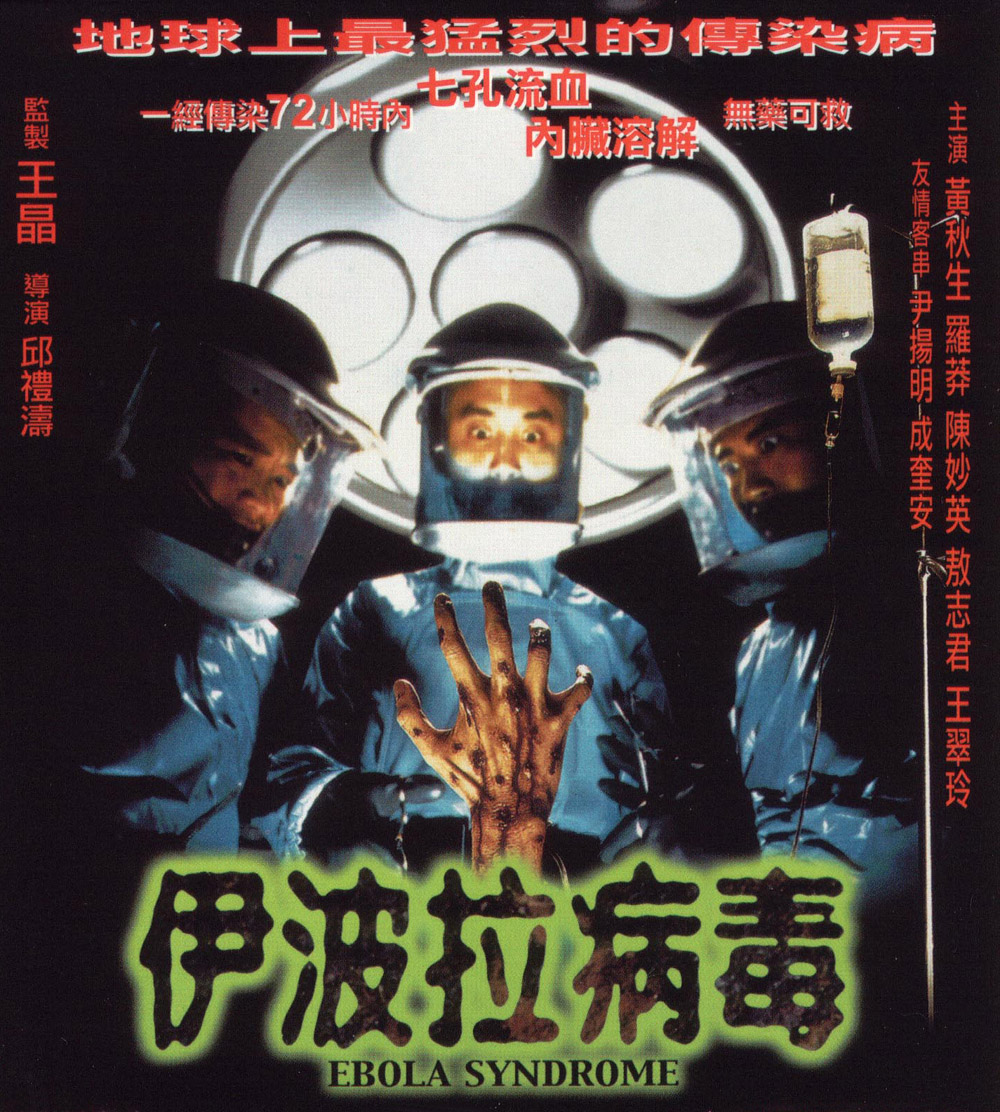
Ebola Syndrome (伊波拉病毒, Herman Yau, 1996)

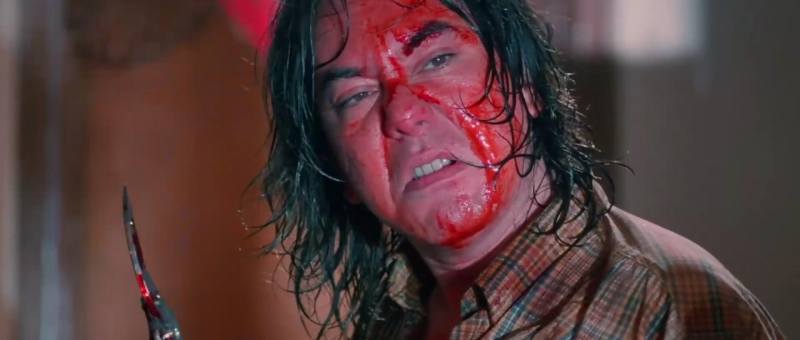
“I’ll fuck up whoever busts my balls!” snarls the protagonist of Herman Yau’s notorious 1996 Cat III exploitation film Ebola Syndrome (伊波拉病毒), seemingly filled with internalised rage in a sense of oppression as a little guy continually at the mercy of bosses who exploit and belittle him. Then again, Kai (Anthony Wong Chau-Sang) is not a nice guy and his various crimes are less those of an emasculated man towards an unfair society than a sociopathic disregard for conventional human morality. 

Even so, his first act of violence is a result of his attempt at petty class rebellion by sleeping with a mob boss’ wife only for the boss to come home and ritually humiliate him by ordering his wife to pee all over his treacherous underling before threatening to cut his bits off with a pair of secateurs. Kai, however, goes crazy and uses the shears to take out the boss, the associate, and the wife, pausing as he leaves to douse their terrified little girl in petrol in an ironic piece of foreshadowing only to be interrupted before he can light a flame. 10 years later in 1996, Kai is on the run working in a Chinese restaurant in Johannesburg where he is once again oppressed and belittled by the Taiwanese manager and his wife not to mention further displaced by the complicated racial politics of mid-90s South Africa. 

A minor comment on colonial corruptions in the anxiety surrounding Hong Kong’s imminent transition, Kai and his boss Kei (Lo Meng) find themselves in a difficult position in facing discrimination from all sides. Needing meat for their restaurant, they decide to strike a deal with the local indigenous community after being insulted by a white butcher but on their arrival walk into some kind of ritual conducted over the bodies of numerous locals who each have bloody welts all over their skin. On meeting with the leader, the pair immediately rip him off while he plays a grim joke on them as they discover two human bodies in place of the pig carcasses they’d intended to buy before he returns to set them straight.

This early moment of foreshadowing has its own dark irony as Kai will eventually end up once again murdering three people he accuses of busting his balls before mincing them up and turning them into “African Char-sui Bao” hamburgers. By this point Kai is already a “super spreader” having unknowingly contracted the ebola virus after raping a near comatose indigenous woman at the waterside who vomited white liquid in his face as he climaxed. In another instance of cruel cosmic irony, Kai turns out to be one of small amount of people effectively immune recovering quickly from what seems like flu but almost certainly having infected Kei and his wife and through them anyone who ate the African Char-sui Bao which is how ebola winds up in the city and eventually travels all the way to Hong Kong after Kai cuts his losses and goes home to live the high life on Kei’s savings. 

Yau does not hold back on the gore nor on the very real terror of the ravages of ebola as a doctor gruesomely dissects a human body remarking on the disintegration of its internal organs. At this point, Kai doesn’t know ebola’s what he has or that he’s passing it on but it’s unlikely he’d care. When the truth is finally revealed he runs anarchically through the streets with a meat cleaver shouting “ebola for everyone” and spitting at passersby as if taking his revenge against humanity itself. Yet he’s ultimately a wild animal trapped in civilised society caring for nothing other than the satisfaction of his immediate needs aside from his desperation to affirm his masculinity, not to be looked down on or bullied. We see him impassively chop up live frogs and witness the heads being torn off live chickens for others to drink their blood seeing him for what he is, an urban predator with no sense of conventional human value systems. 

Even so, the film seems to suggest this breed of malicious selfishness and amorality cannot be exorcised from the contemporary society while the infection continues to spread exponentially, the film’s bleak conclusion implying that the innocent will continue to suffer while the systemic causes of the disease go unexamined. Then again, Yau approaches his material with absurdly dark humour that implies that this really is some sort of cosmic joke in which all you can really do is laugh at life’s immense cruelties. 


Trailer (no subtitles)

Comrades, Almost a Love Story (甜蜜蜜, Peter Chan, 1996)

“Fate brings people together, no matter how far” according to a wise old chef in early ‘90s New York. He’s not wrong though Peter Chan’s seminal 1996 tale of fated romance Comrades, Almost a Love Story (甜蜜蜜) is in its own way also about partings, about the failure of dreams and the importance of timing in the way time seems to have of spinning on itself in a great shell game of interpersonal connection. But then, it seems to say, you get there in the end even if there wasn’t quite where you thought you were going. 

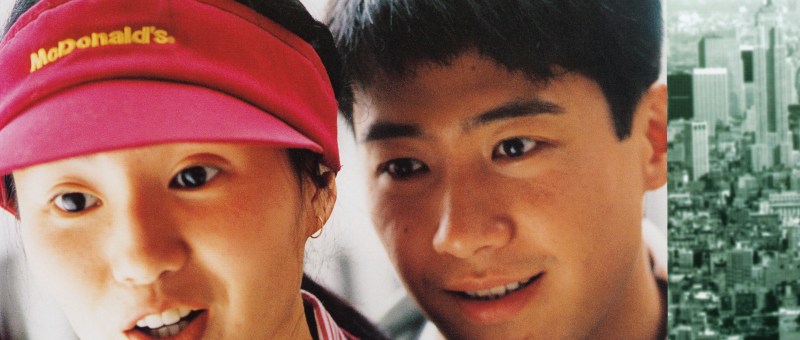
As the film opens, simple village boy from Northern China Xiaojun (Leon Lai Ming) arrives in Hong Kong in search of a more comfortable life intending to bring his hometown girlfriend Xiaoting (Kristy Yeung Kung-Yu) to join him once he establishes himself. His first impressions of the city are not however all that positive. In a letter home, he describes the local Cantonese speakers as loud and rude, and while there are lots of people and cars there are lots of pickpockets too. It’s in venturing into a McDonald’s, that beacon of capitalist success, that he first meets Qiao (Maggie Cheung Man-Yuk), a cynical young woman hellbent on getting rich who nevertheless decides to help him by whispering in Mandarin realising he doesn’t understand the menu. Hailing from Guangdong, Qiao can speak fluent Cantonese along with some English and thus has much better prospects of succeeding in Hong Kong but takes Xiaojun under wing mostly out of loneliness though accepting a kickback to get him into an English language school where she piggybacks on lessons while working as a cleaner. Bonding through the music of Teresa Teng, they become friends, and then lovers, but Xiaojun still has his hometown girlfriend and Qiao still wants to get rich. 

As we later learn in one of the film’s many coincidences, Xiaojun and Qiao arrived on the same train if facing in different directions. Hong Kong changes each of them. When Xiaojun eventually manages to bring Xiaoting across the border, he’s no longer the simple village boy he was when he arrived while Qiao struggles with herself in her buried feelings for Xiaojun unwilling to risk the vulnerability of affection but visibly pained when confronted by Xiaojun’s responsibility to Xiaoting. She finds her mirror in tattooed gangster Pao (Eric Tsang Chi-Wai) who, like her, shrinks from love and is forever telling her to find another guy but is obviously hoping she won’t as afraid of settling as she is. 

For each of them this rootlessness is born of searching for something better yet the irony is as Xiaojun says that Hong Kong is a dream for Mainlanders, but the Mainland is not a dream for most in Hong Kong who with the Handover looming are mainly looking to leave for the Anglophone West. Qiao’s early business venture selling knock off Teresa Teng tapes fails because only Mainlanders like Teresa Teng so no-one wants to buy one and accidentally out themselves in a city often hostile to Mandarin speakers as Xiaojun has found it to be. What they chased was a taste of capitalist comforts, Qiao literally working in a McDonald’s and forever dressed in Mickey Mouse clothing which Pao ironically imitates by getting a little Mickey tattooed on his back right next to the dragon’s mouth. But when they eventually end up in the capitalist homeland of New York, a driver chows down on a greasy, disgustingly floppy hamburger while Qiao finds herself giving tours of the Statue of Liberty to Mainland tourists in town to buy Gucchi bags who tell her she made a mistake to leave for there are plenty of opportunities to make money in the new China. 

Ironically enough it’s hometown innocence that brings them back together. The ring of Xiaojun’s bicycle bell catches Qiao’s attention though she’d thought of it as a corny and bumpkinish when he’d given her rides on it in their early days in Hong Kong. Xiaojun had in fact disposed of it entirely when Xiaoting arrived partly for the same reason and partly because it reminded him of Qiao. The pair are reunited by the death of Teresa Teng which in its own way is the death of a dream and of an era but also a symbol of their shared connection, Mainlanders meeting again in this strange place neither China nor Hong Kong, comrades, almost lovers now perhaps finally in the right place at the right time to start again. Peter Chan’s aching romance my suggest that the future exists in this third space, rejecting the rampant consumerist desire which defined Qiao’s life along with the wholesome naivety of Xiaojun’s country boy innocence, but finally finds solid ground in the mutual solidarity of lonely migrants finding each other again in another new place in search of another new future. 


Comrades, Almost a Love Story screens at Soho Hotel, London on 9th July as part of Focus Hong Kong’s Making Waves – Navigators of Hong Kong Cinema.

Short clip (English subtitles)

Teresa Teng – Tian Mi Mi

East Palace, West Palace (东宫西宫, Zhang Yuan, 1996)

“The convict loves her executioner, the thief loves her jailer. We love you. We have no other choice.” the hero of Zhang Yuan’s beguiling, transgressive drama East Palace, West Palace (东宫西宫, dōng gōng xī gōng), whispers to his no longer sleeping guard. “I love you”, he later adds, “why don’t you love me?” turning the tables on an implacable authority and demonstrating that he too wields power. Considered the first Mainland film to deal directly with homosexuality, Zhang’s theatrical chamber piece is as much about the co-dependency of the oppressor and the oppressed as it is about gay life in post-Tiananmen Beijing while suggesting that in a sense submission too can be a weapon. 

Gay travel writer A-Lan (Si Han) is first challenged by a uniformed policeman in a public toilet. Staring at him intently, he stops A-Lan for no real reason, asking for his ID followed by a series of other personal questions with seemingly no law enforcement import before double checking if the bike outside is his and that he has a proper permit for it. These acts of hostility begin a cat and mouse game between the A-Lan and law enforcement, another policeman, Shi Xiaohua (Hu Jun), almost desperate to come up with a reason to arrest him on raiding the park, a popular spot for cruising, after dark. But as he leads him away, A-Lan suddenly plants a kiss on the policeman’s cheek and taking advantage of his momentary shock makes his escape. 

During in the arrest, meanwhile, Shi and the other policemen had a made a point of insulting each of the men who have not actually done anything illegal under the Chinese law of the time, beating them or forcing them to beat themselves, ordering them to squat on the ground, and even threatening to call one frequent offender’s place of work. As Shi often will, the police refer to the men as “despicable” and the “dregs of soceity”, yet A-Lan is in a sense empowered by his submission in allowing himself to be arrested before subsequently escaping having planted the seeds of his seduction. He flirts with danger in mailing Shi a book with the inscription “To my love, A-Lan” and thereafter deliberately gets himself arrested, later running away from Shi only in the desire to be chased by him.  

Hugely reminiscent of Kiss of the Spider Woman, the majority of the film takes place within the confines of the park’s police hut occupied only by A-Lan and Shi, a prisoner and a guard. Yet as in the Peking opera story A-Lan repeatedly quotes, elegantly recreated in Zhang’s theatrical shifts into fantasy, the two roles are to an extent interchangeable. Shi thinks he’s the guard, that he exercises authority over A-Lan, but A-Lan is also manipulating him, trapping Shi within this space and drawing him towards a recognition of his own latent desires, the same desires that were aroused when he hassled him in the public toilet. While Shi, the guard though no longer in uniform, is constrained by authority, A-Lan, the prisoner, is free in embracing his essential self and weaponising the essence of his power in the choice to submit as reflected in his masochistic desires. “It is not despicable. It is love” he insists on being challenged by Shi after detailing his BDSM encounter with a wealthy man, echoing his previous reminders that “What I write might be trash. But I am not”, refusing to allow Shi to degrade him even while taking pleasure in submitting to authority. 

Even so, he declares himself conflicted in having married a woman presumably for appearances’ sake something of which many in his community do not approve and leaves him both guilty in his treatment of his wife and disappointed in himself. When Shi barks “explain yourself” he details his life as a gay man from his first sexual experience in which he pretended to be a woman to being assaulted by thugs after sleeping with a factory boss adding only that “this kind of experience makes life with living”. “We all march to a different tune” he tries to explain to Shi, individual but also identical. He mentions another regular to the park he describes as a transvestite but in the language of today might better be thought of as transgender, A-Lan explaining that she enjoys wearing women’s clothes but is different from the men in the park. She does not make love to them, and they do not bother with her, A-Lan insisting that she too has her own beat to which to march as does Shi even in his increasing confusion. 

Shi wields his handcuffs, the relationship between the pair mediated through them just as that between the guard and beautiful prisoner in his story is mediated through chains, but eventually places the cuffs on each of their hands locking them together in an intense embrace. The guard cannot exist without the prisoner, nor the prisoner without the guard. “He will no longer escape from his love for her” A-Lan ends his story, the guard releasing his beautiful charge while she decides to return to him each of them knowing they are trapped in melancholy waltz of love and hate. Highly theatrical and scored with a persistent note of dread, Zhang’s beguiling drama hints at the sadomasochistic interplay between authoritarian power and a subjugated populace while allowing its hero to mount his resistance only through deriving pleasure from submission. 


East Palace, West Palace screens at the BFI on 27th May as part of this year’s Queer East. It is also available to stream in many territories via GagaOOLala.

Shall We Dance? (Shall we ダンス?, Masayuki Suo, 1996)

If your life has gone pretty well and you’ve more or less achieved conventional success but you’re still somehow unhappy then what is it that you’re supposed to do? Sugiyama (Koji Yakusho), the hero of Masayuki Suo’s charming ballroom dancing dramedy Shall We Dance? (Shall we ダンス?) is beginning to wonder, after all he’s a “serious” man as his wife repeatedly describes him but is it really acceptable for a middle-aged husband and father to chase emotional fulfilment or would he be cheating on the salaryman dream in daring to nourish his soul?

As he later says, Sugiyama has followed a conventional path in life. He has a respectable job as an accountant, married at 28 and had a child at 30. By 40 he was able to buy a family home, but also acknowledges that he sold his soul to the company to do so seeing as with the mortgage hanging over his head he is now fully locked in to the corporate system and couldn’t leave even if he wanted to. Yet he’s not quite like his co-workers, an early scene sees the roles somewhat reversed as he, the boss, declines the invitations of a drunken subordinate to stay out longer after an effectively compulsory after work drinking session to return to his family home at only 9pm but going straight to bed when he gets there. He and his wife Masako (Hideko Hara) share a room but sleep in separate beds presumably so he doesn’t wake her when he gets up early to go to the office making his own breakfast before he leaves. 

“It’s not a matter of like or dislike, it’s work” Sugiyama tells his co-worker as she complains that the more glamorous sales department gets all the best perks and she’s sick of working in accounts, hinting at his inner malaise in his relentlessly corporate life. That’s one reason he’s captivated by the sight of a beautiful yet sad woman gazing out of a window from a building above on his train journey home. When he gets off the train to look for her, he in one sense leaves the salaryman rails breaking with the conventions that he is expected to fulfil in search of something more. Mai (Tamiyo Kusakari), a former ballroom dancer taking a temporary sabbatical from competitive sport teaching at her father’s studio, is just as unhappy as he is but for contrary reasons. She has lost the joy of dance, for her it has become as soulless a job as Sugiyama’s accountancy and she too struggles with the image she has of a dancer and what that means for her in terms of personal fulfilment. 

Yet as Sugiyama explains in his opening voiceover, ballroom dancing is viewed as something of a naff hobby mostly associated with sleazy old men only there for the opportunity of physical contact with women of varying ages. When he spots his co-worker Aoki (Naoto Takenaka) at the dance class it’s embarrassing for both of them, each promising not to say anything to anyone at work, the floor later erupting in laughter when someone finds a picture of Aoki taken at a competition in the newspaper. Developing an interest in the sport, Sugiyama buys a ballroom dancing magazine but interrupted by his daughter quickly hides it as if he had been looking at pornography or some other material he feels to be shameful. 

The irony is that Masako had wished Sugiyama would go out more, realising that he’s selflessly dedicated himself to the salaryman dream in order to provide for their family, but then becomes suspicious and resentful as he leaves her alone to pursue his new hobby which he cannot disclose to her out of embarrassment. She in turn sniffing perfume on his shirts fears he’s having an affair, but is unable to ask him about it directly preferring to hire a private detective (Akira Emoto) instead. Leaving aside that each of them ends up secretly spending money when they’re supposed to be saving for the mortgage, the oppressive social conformity of the salaryman existence is beginning to erode their relationship. Forced into the role of the conventional housewife, Masako too is lonely expected to find fulfilment only in home and family while preparing to re-enter the world of work now her daughter is old enough to care for herself because of the financial burden of the mortgage rather than her own desire to fulfil herself. Sugiyama isn’t having an affair, but still she feels betrayed because he left her behind to chase emotional liberation on his own rather than taking her with him never really noticing her loneliness. 

Yet as Sugiyama is repeatedly told, dancing, unlike the salaryman game, is about more than learning the steps, it’s about feeling the music and finding joy in movement. That’s something Mai has also lost sight of, finally realising that she too was a selfish dancer who’d been dancing alone all along unable to fully trust her partner rediscovering her joy in dance as she coaches not only Sugiyama but his classmates towards their own liberation. Sugiyama remains conflicted because the excessively corporatised society leads him to believe that it’s taboo to devote oneself to anything other than work or in essence to experience joy that is not directly related to productivity, that he should be wholly “salaryman” and nothing else, just his wife should be nothing more than that. It’s this oppressive conformity that undermines their conventional marriage rather than Sugiyama’s transgressive decision to get off the salaryman train, put down his briefcase, and embrace his desire for personal fulfilment. Only through this act of mutual emotional authenticity can they restore familial harmony. A minor meditation on the emptiness of the increasingly elusive salaryman dream in the economically stagnant ’90s, Suo’s charming drama insists on joy as a basic human need in a society which often trivialises personal happiness.


Shall We Dance? screens at the BFI on 21/30 December as part of BFI Japan.

Original trailer (no subtitles)

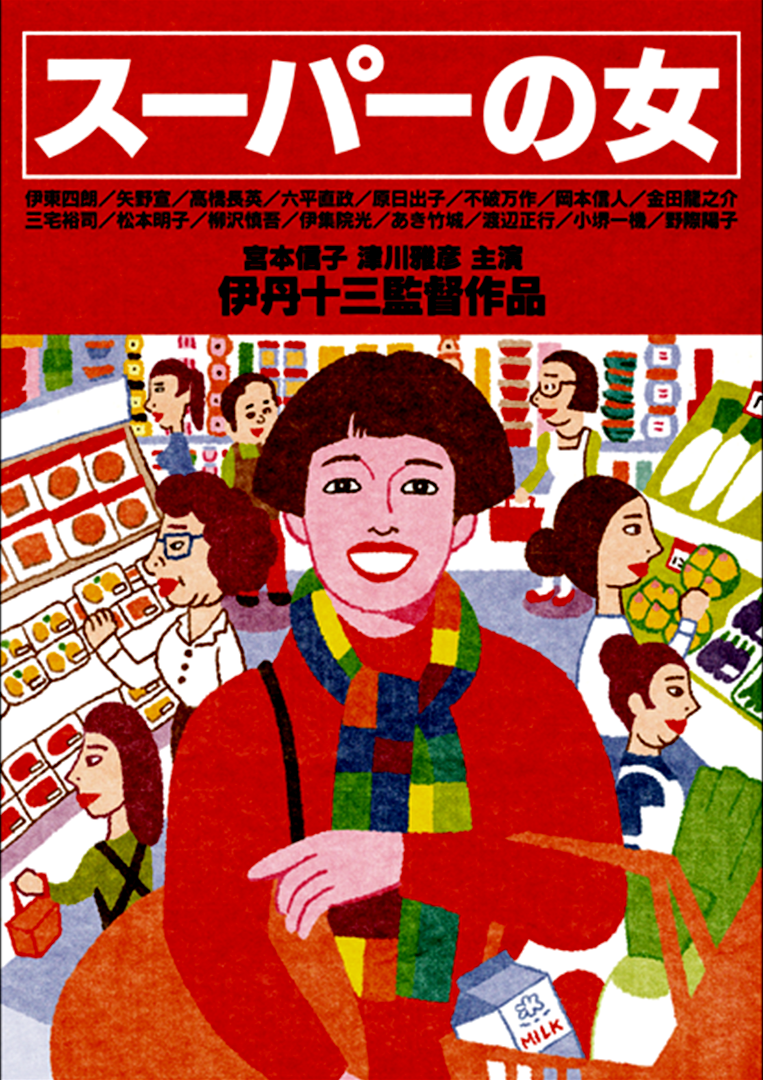
Supermarket Woman (スーパーの女, Juzo Itami, 1996)

By 1996 Japan had entered an extended period of economic stagnation which signalled the end of post-war aspiration but for many at least the false promises of the Bubble era proved hard to dispel. In what would be his penultimate film, Supermarket Woman (スーパーの女, Supa no Onna), Juzo Itami turns his attentions to the insular world of the nation’s family-held, independent supermarkets to ask a few questions about integrity in business which cut straight to the heart of what kind of society post-Bubble Japan intended to be given yet another opportunity to make itself anew. 

As the opening text crawl explains, this is a story not about giant supermarket chains but your friendly indie local. “Honest Mart” is a family-owned, mid-range supermarket in a declining industrial area nominally run by absentee CEO Goro (Masahiko Tsugawa) who was bequeathed the place by his father but is a melancholy drunkard delegating responsibility to his manager. The store has a huge problem in that a rival has recently re-opened under the new name “Discount Demon” and seems primed to steal all their business. On a stakeout of the new place, Goro runs into a childhood friend, Hanako (Nobuko Miyamoto), who is now a widow returning to the area. With her lifelong experience as a veteran housewife, Hanako knows a few things about supermarkets and she’s not very impressed with Discount Demon, doing a few quick calculations to realise the supposed discounts aren’t as enticing as they seem while common gimmicks like the all pervasive red glow that makes their meat look fresher than it really is only irritate her. Goro asks her for a “professional” opinion on Honest Mart without telling her who he is, only to discover she’s even less impressed with them, certain that his place is on the way out thanks to its dated decor, uninviting atmosphere, and low quality produce. 

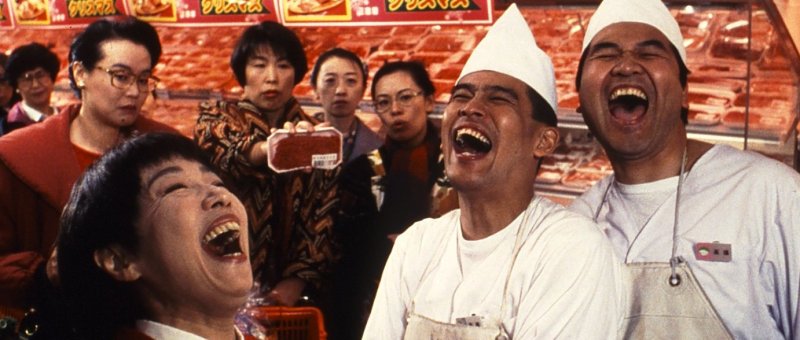
The irony is Honest Mart is not much better than Discount Demon, both stores are subject to the same industry standards in which a certain degree of obfuscation is permissible. “In business honesty doesn’t pay” Hanako is told by the onsite butcher after she questions his tendency to mix meats to pass them off as more expensive cuts, while she later discovers that the store engages in the practice of repackaging unsold meat and fish with new expiration dates and is not very particular about its suppliers when it comes to buying in ready-made products. Brought on board to save the store, Hanako breezes in with a new mission to win the hearts and minds of her customers, and she can’t do that if she can’t have confidence in her stock. In any case, her the customer is always right policy quickly brings her into conflict with the store manager, an older more conservative man who actively resists innovation and resents having his authority undercut by an interloping woman. 

Meanwhile, we can also see that customer attitudes have changed. There’s a problem with availability of trolleys because, perhaps unusually for Japan, customers are just abandoning them willy-nilly in the carpark instead of retuning them to the trolley point like responsible shoppers. One man is even for some reason intent on stealing a large number of shopping baskets, caught by Hanako loading them into his car. Everybody wants cheap, which is understandable especially given the economic situation, and they might even be a little underhanded when it comes to getting it, but they also expect a reasonable level of quality and to be able to trust that the food they’re buying is safe to feed their families. Hanako is most alarmed that the ladies who work in the kitchen area, who are obviously wives and mothers themselves, do not shop at Honest Mart because they know what goes on at the store and they don’t trust it. 

“A housewife knows” Hanako is fond is saying. Her revolution is in essence a vindication of “the housewife”, perhaps the most maligned and dismissed figure of the mid-90s society, putting to good use all of her veteran experience both of running a home and of working a series of part-time jobs including those in supermarkets which she claims to love. Approaching the problem from the point of view of a consumer, she attempts to help Goro achieve his dream of making Honest Mart number one in Japan not through making it the most financially successful but the most loved by listening to women like her in the form of a focus group of local aunties some of whom had previously been serial complainers. 

Then again, some of her decisions are in a sense contradictory as she attempts to streamline the business along classically capitalistic lines in suggesting that the store doesn’t really need its overqualified butcher and fishmonger because the part-timers could be trained to do a “good enough” job. “Good enough” is in a sense her business philosophy, only not in the sense that somewhere like Discount Demon which falsely advertises regular steak as discount Wagyu means it, rather that her customers are after an everyday level of produce and so it’s not surprising that premium meats don’t sell. She wants to get rid of the butcher, who turns out to be on the fiddle, and the melancholy fishmonger disappointed no one wants his top quality seafood, because their “artistic temperament” is disruptive to the flow of the store and their presence is perhaps emblematic of the bloated, pretentious management style which is holding it back. 

Positioning the “housewife’s choice” as the ultimate seal of approval, Supermarket Woman advocates for a return to wholesome, small-town values, prioritising a sense of integrity as Honest Mart projects itself as a corporate force their customers can trust, perhaps anticipating a trend in dedicating itself to providing good quality fresh produce at fair prices in direct opposition to Discount Demon and its underhanded trickery. “Honest Mart keeps its word” Goro assures, pledging to honour a mistaken ad which promised eggs at prices so good it caused minor riot. In the end, it’s all about trust and integrity. If you don’t have that, you don’t have anything and the housewives of post-Bubble Japan will it seems vote with their feet. 


Currently available to stream in the US via Criterion Channel.

Original trailer (no subtitles)

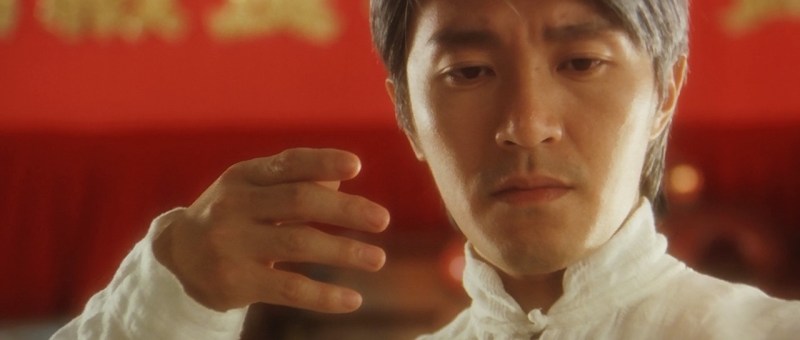
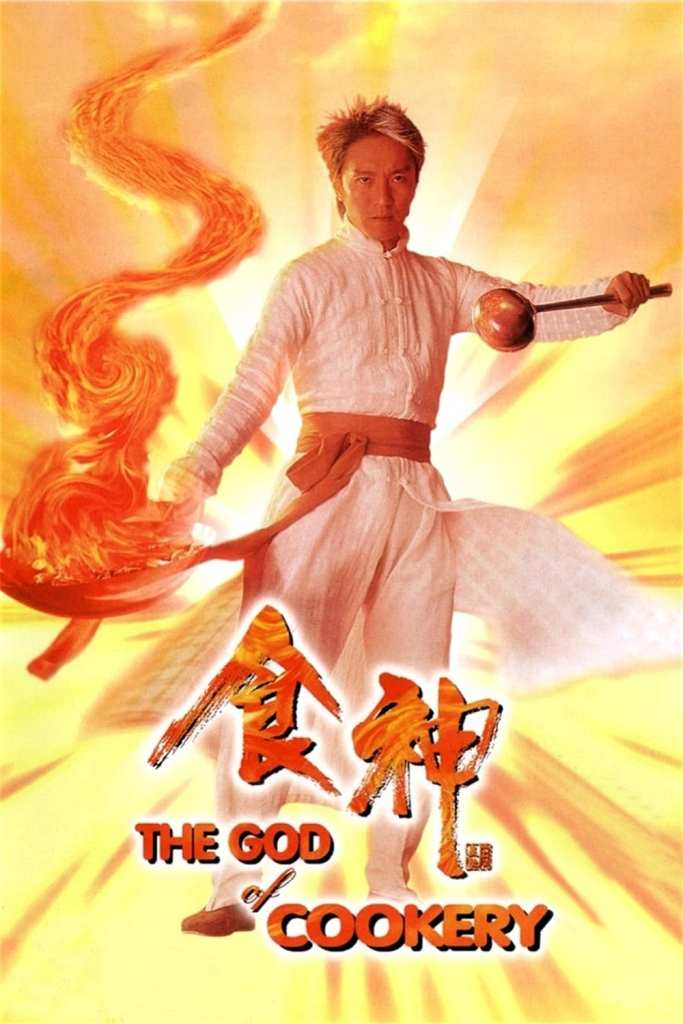
The God of Cookery (食神, Stephen Chow, 1996)

Thing about cooking is, you gotta have heart. At least, that’s the main takeaway from Stephen Chow’s 1996 culinary comedy God of Cookery (食神) in which he once again stars as a man who’s become rich and successful exploiting the talents of others but gets a major humbling when his duplicity is exposed by an even more duplicitous, though apparently talented, rival. Only by living among the people and rediscovering the simple joy of ordinary food cooked with love can he regain his true identity as the “God of Cooking”. 

Stephen Chow (Stephen Chow playing a character of the same name but written with different characters) has built up a successful food empire built around himself as a celebrity chef known as the “God of Cooking”. As a popular TV judge on a cooking competition, he makes a point of giving each of the contestants zero points, starting off with words of praise but eventually finding fault with “basic” techniques and even at one point complaining that it doesn’t matter how tasty the dish is because the chef is so ugly it’s made him lose his appetite. Chow treats his employees with total disdain, going so far as making a prospective hire defecate in public in front of a lift in return for a job, while schmoozing with Triads to expand his empire. The Triads, however, are getting fed up with him and have installed a mole in his organisation. Bull Tong (Vincent Kok Tak-chiu) is a talented chef who claims to have trained at the Chinese Culinary School on the mainland. He makes a point of causing public embarrassment to Chow by tearing apart one of his signature dishes at the press launch for the 50th branch of his branded restaurant chain. Chow is exposed as a talentless fraud and thanks to his haughty attitude, his friends abandon him. 

Penniless and destitute, he rocks up at a noodle stall run by Sister “Twin Daggers” Turkey (Karen Mok), critiquing her noodles in the same way Bull had torn apart his. Turkey takes pity on him after he’s beaten up by thugs and accepts him into her mini street gang. It’s Chow who finds an innovate solution to to her turf war with a rival stall holder in inventing the not entirely appetising “Pissing Beef Balls” which prove an instant hit with all who try them, even helping to cure those suffering with anorexia (apparently a widespread problem of the time, at least according to onscreen newspapers). Chow has not, however, lost his cynical streak and wants to get back to the top by opening a nationwide chain of Pissing Beef Ball restaurants, while Bull and the Triads begin to panic about his seemingly unstoppable success. 

Parodying both Tsui Hark’s Chinese Feast from the previous year, and Wong Jing hit God of Gamblers, Chow brings even more of his now familiar slapstick style, turning cookery into a kind of martial art, and even including a brief sequence in which he gets trapped inside the Shaolin Temple and ends up learning some of their patented culinary techniques. As the cynical top chef, Chow stands in for the evils of the age, puffed up on empty capitalism, openly telling his staff to pull dirty restaurant tricks like making the seats small and uncomfortable to increase turnover and filling the drinks with giant ice cubes to keep costs down and encourage guests to order more. Bull Tong, however, goes even further, beating the staff and suggesting they serve greasy, salt-laden dishes like French fries so kids order more soda, ignoring complaints from the chefs that it’s unethical to serve such obviously unhealthy food to children. 

Sister Turkey’s cuisine, by contrast, might not exactly be top table stuff but it makes no pretence of being anything other than it is. Her rival prides himself on using high quality ingredients, even making sure his oil is changed daily, making it plain that your average market hawker (whether he’s telling the truth or not) at least appears to have more concern for his customers than giant restaurant chains do. Turkey’s ordinary barbecue pork and rice dish with a side of egg is the best Chow’s ever tasted because it was made with kindness. He may have been fond of saying that you have to have heart to cook, but it was just one of his soulless catchphrases until he realised it was true. Good food, companionship, love, and a Christmas miracle slowly work their magic until the “God of Cookery” is finally restored thanks to a little celestial intervention, showing the Bull Tongs of the world exactly what they’re missing.


The God of Cookery screens in New York on Feb. 15 as part of this year’s New York Asian Film Festival Winter Showcase.

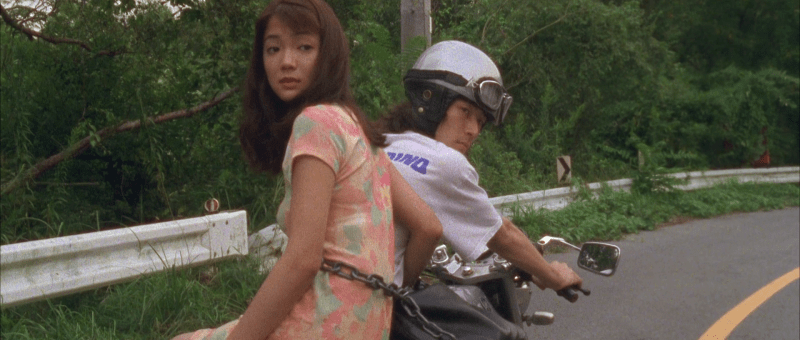
Dangan Runner (弾丸ランナー, SABU, 1996)

Dangan Runner posterIt’s not difficult to see what might send three young men running like stray bullets from a random gun in the Japan of the mid-90s, but each of the various protagonists of SABU’s debut feature Dangan Runner (弾丸ランナー, AKA Non-Stop) is reaching for a different target. Like much of the director’s later work, Dangan Runner pivots on random circumstance which somehow conspires to bring our three runners together as if bound by cosmic thread while they too are chased by an oncoming storm in the form of vengeful yakuza and the bumbling cops hot on their trail.

Kickstarting the whole affair, lowly restaurant worker Yasuda (Tomorowo Taguchi), fed up with the petty humiliations of his life, decides to rob a bank. He has everything planned, even rehearsed and choreographed down to the second, but when the time comes he makes a mistake. Having left his mask at home, he decides to buy one from a local combini but panics and accidentally shoplifts instead, attracting the attentions of bullet two – Aizawa (Diamond Yukai), who is wounded in the arm by Yasuda’s nervous shot when his gun accidentally goes off. A drug addict and former rockstar, Aizawa, intent on revenge for the disrespect he’s just been paid, retrieves the gun dropped by Yasuda and chases him through the streets of Tokyo. Aizawa in turn continues the chain reaction when he bumps into a yakuza, Takeda (Shinichi Tsutsumi), who is “triggered” by a deep seated trauma into chasing off after Aizawa, knife in hand. Meanwhile, a rival yakuza clan is also after Takeda because of gangland politics while they too are being monitored by the police who have gotten wind of a gang war in the offing.

Though SABU’s film is not in the least political, it is like much of his work a mild satire even if its sympathy lies firmly with its three central heroes each desperately trying and failing to outrun themselves. Yasuda, a small man with a slight frame, is the lowest of the low. He has a terrible job as a kitchen assistant in a small restaurant where he is constantly bullied by the head chef and belittled by the other kitchen staff who are all much taller and stronger than he is. It’s not difficult to see why he might bristle so much when one calls him “good for nothing”, yet he’s not the type to offer more than an angry stare in return. To make matters worse, he runs into an old girlfriend who appears to have moved on and up. Walking arm in arm with a wealthy salaryman, she has apparently jettisoned the “common” name of “Midori” for the relatively more sophisticated one of “Yasuko”, presumably hoping to hook someone who is indeed the polar opposite of a “loser” like Yasuda.

Aizawa also has his share of woman troubles though his are of an opposing dimension. A failed musician with a drug problem, Aizawa alienated his loving girlfriend while hoping his addiction would save him from his unattainable dreams. Of course, it’s an entirely different “shot in the arm” that starts him running, but like Yasuda in the end all he can think of is the girl and how he did everything wrong. Takeda, by contrast, is a yakuza through and through. His regrets are bound up with homosocial bonding and male loyalty, mourning the death of the trusted superior he failed to save in dodging the blows of a random assassin. Yet as his superior tells him, all living beings run towards the same thing. A yakuza cannot control his death but he can control his life and the effect he has on others. He urges Takeda to run and find life in the process, but perhaps Takeda’s destination is the run itself rather than where it will eventually take him.

Indeed, Yasuda, accidentally landing up in the middle of the yakuza gang war, affirms that he never felt so alive as when he was running for his life. All three men, running fast from failure, finally achieve the freedom they’d dreamed of through the intense exertion of their flight which later literally becomes orgasmic as all three fantasise about a pretty woman seen on the side of the road. Like bullets fired from a gun powered by social impossibility, each is destined to explode on reaching its chosen target. Like many of SABU’s later protagonists, these are men brought low by life and circumstance, driven slowly mad by a conspiracy of cosmic coincidence, mere playthings of fate without power or agency. Angry young men are a powder keg waiting to ignite, but in SABU’s whimsically surreal universe they usually sort things out amongst themselves. For the Dangan Runners, they only need to look in the mirror to figure out where it is they need to go.


Dangan Runner is available on dual format DVD & blu-ray from Third Window Films. On disc extras include a video essay on the history of V Cinema from film scholar Tom Mes, and an expansive audio commentary by Jasper Sharp providing detailed background on SABU’s career and the Japanese cinema landscape of the mid-90s.

Original trailer (English subtitles)