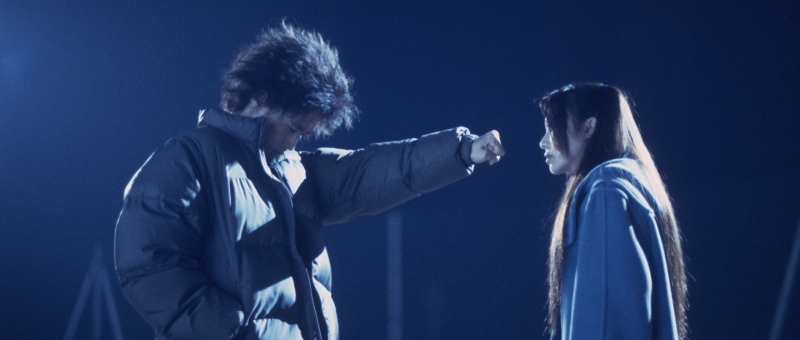
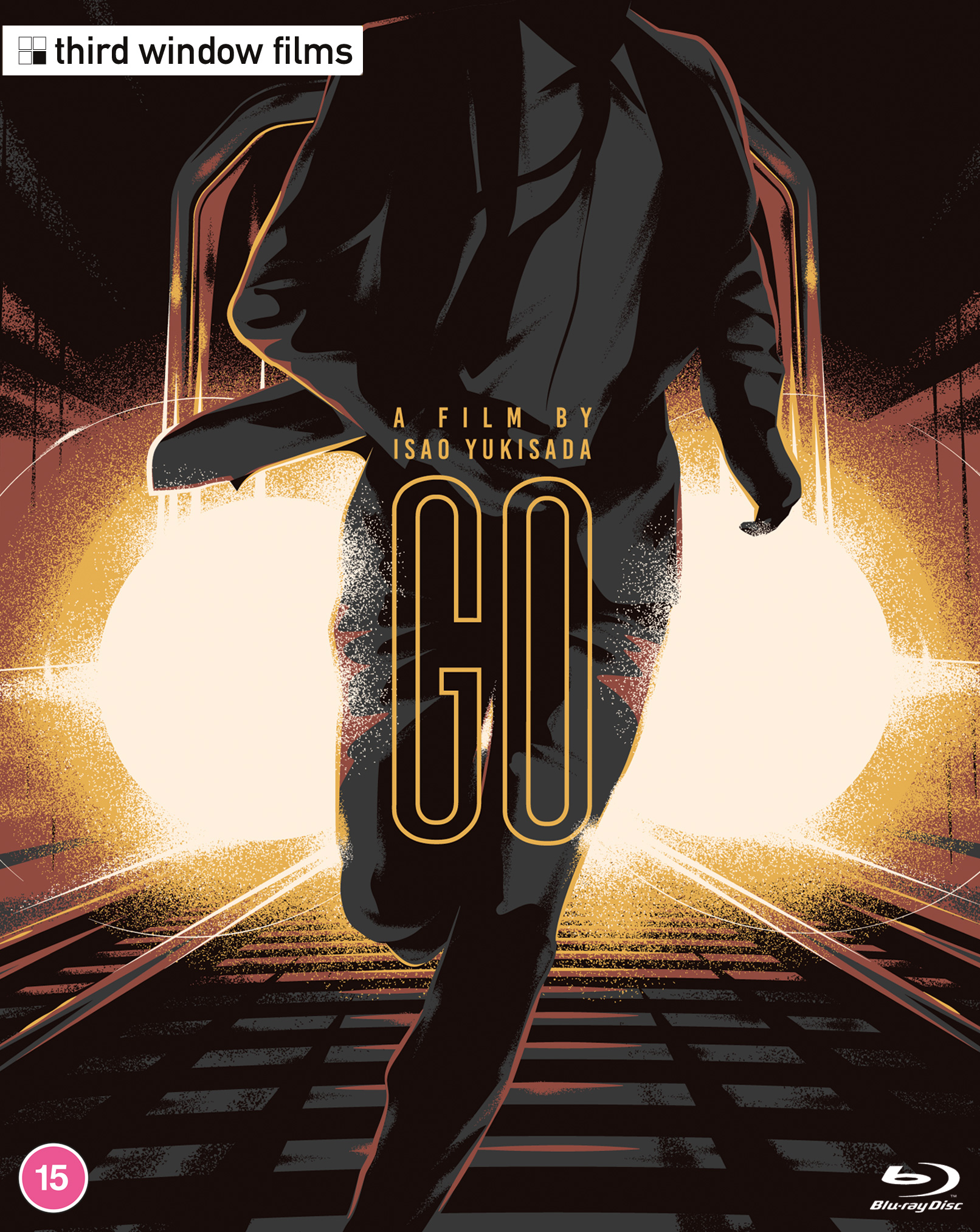
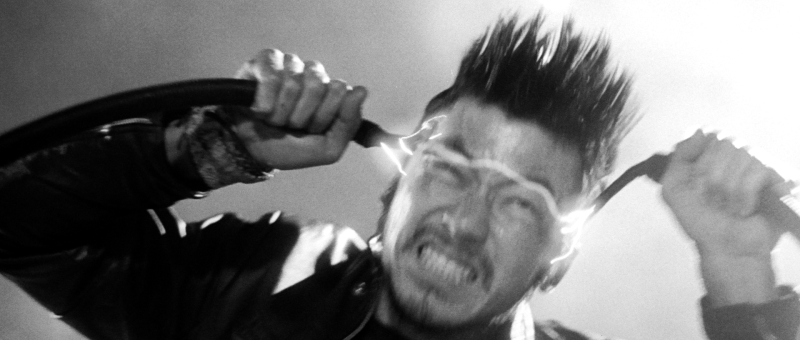
Electric Dragon 80000v (エレクトリック·ドラゴン 80000V, Sogo Ishii, 2001)

“How do we repress the animal instinct to explode?” asks a narratorial voice (Masakatsu Funaki) in Sogo Ishii’s 50-minute cyberpunk fever dream Electric Dragon 80000v (エレクトリック·ドラゴン 80000V). The supercharged hero is indeed filled with a kind of rage, not least because society seems intent on trying to “regulate” him while he later comes into contact with an opposing force whose job it is to control the electric flow though in a curious way the two men perhaps free each other from their mutual oppression and regain the right to run on their own current. 

“Dragon Eye” Morrison (Tadanobu Asano), as he comes to be called, got zapped by a pylon when he was a child which altered his brain, awakening the dragon within by “damaging” the part of our neurology unchanged from our reptile ancestors that controls emotion and acts of desire. Doctors seem intent on “correcting” this “fault” in his circuitry through electro-shock therapy to force him to conform to mainstream society while he does admittedly seem to have some problems with violence and impulse control. He self-regulates by chaining himself to a table and “recharging” overnight while easing his frustrations through playing electric guitar, boxing, and hanging out with his calming lizard friends 

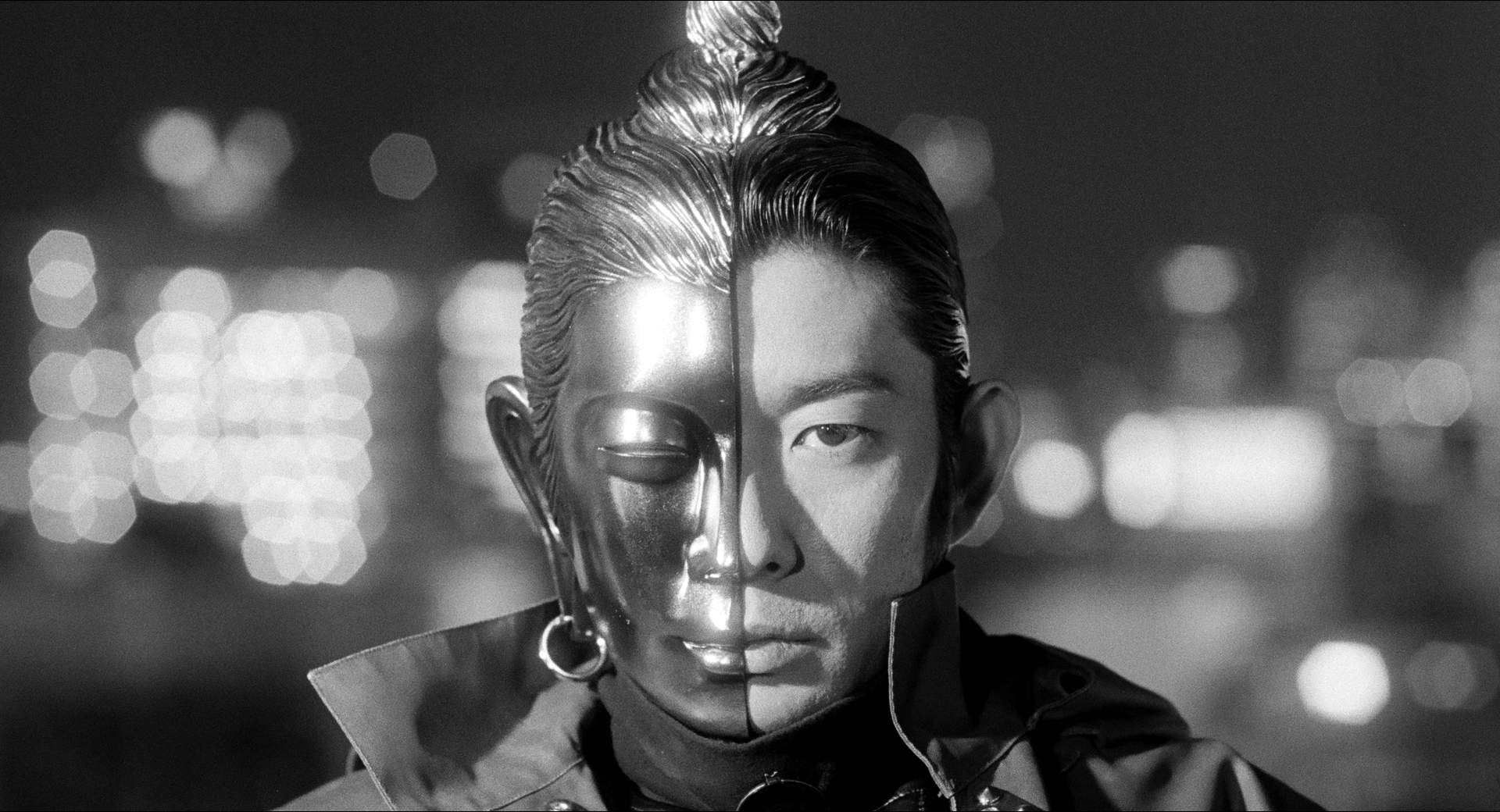
Meanwhile, Thunderbolt Buddha (Masatoshi Nagase) is literally divided in two, one half of his face covered in a metallic Buddha mask hinting at the inner duality which at times literally leaves him at war with himself while wandering around with an electric metre trying to control not just his own flow but everyone’s. “He’s the electricity man! All its wavelengths are his!” the narrator explains, while Thunderbolt Buddha turns his head to the Buddha side and an old lady prays to him in his infinite calmness. Not so long before, he’d been acting as a vigilante thief, like Dragon Eye in the ring only darkly exorcising his frustration through violence attacking the corrupting forces of the contemporary society. Perhaps jealous, or just seeking an escape, Thunderbolt Buddha gradually dismantles all of Dragon’s Eye’s means of self-regulation, disappearing lizards and chopping his electric guitar into a series of uniform triangles. Dragon Eye tries to put it back together, but the guitar doesn’t play the right tune anymore, now echoing Thunderbolt Buddha’s eerie discordance. “I just wanted to see you angry” Thunderbolt Buddha admits, trying to engineer a battle that will decide each of their fates. 

Dragon Eye’s power is in one sense manmade, he got he got it from a pylon which is after all an attempt to regulate natural energy into something useful to a modern society, whereas Thunderbolt Buddha was as his name suggests was struck by lightning and imbued with 20,000v of naturally generated pure electric charge. As the two men square off against each other on a Tokyo rooftop, Dragon Eye once again marshals the power of modernity, ripping open the electric power supply and using it to supercharge himself before turning it on Thunderbolt Buddha who has no such recourse to a greater power. In the end, they are perhaps both freed. Thunderbolt Buddha’s mask falls to the ground while a calmed Dragon Eye retrieves his lizard and returns home no longer locking himself into his electric table but freed of its restraints. 

Shooting in a crisp black and white, Ishii returns to the punk sensibilities of his earlier career in a tale of a free spirit seeking escape from a conformist society and rebelling against the forces quite literally intent on regulating his brain. Echoing the avant-garde cinema of the 1960s, Ishii uses anarchic title cards with strangely drawn, elongated figures accompanying the voiceover narration and aggressive guitar music as the two men spark in conflict each threatening to explode, already overloaded with the alternating currents of contemporary civility. “Let’s send them to hell, your demons and mine” Thunderbolt Buddha insists, ironically echoing Shinya Tsukamoto’s Tetsuo the Iron Man as the pair bend the electric city to their will and finally find release in a mutual explosion that catapults each of them free of the magnetic pull of social conformity towards a world of freedom in self-regulation and independent flow.


Electric Dragon 80000v is released on blu-ray in the UK on 6th March courtesy of Third Window Films.

Original trailer (English subtitles)
Doing Time (刑務所の中, Yoichi Sai, 2002)

Who ever thought that life in prison could be so…peaceful? Adapted from the autobiographical manga by Kazuichi Hanawa, Yoichi Sai’s 2002 drama Doing Time (刑務所の中, Keimusho no Naka) is a slice of life dramedy somewhat typical of the early 2000s save its unexpected setting in a state penitentiary. Unlike the average prison movie, the main thing that Hanawa discovers is that life inside is incredibly dull, yet he approaches his brief sojourn in this other world with anthropological precision observing and mimicking the behaviour of his fellow prisoners while making the most of this hopefully once in a lifetime experience reflecting that he’ll likely never have the opportunity to wear such worn out undergarments ever again. 

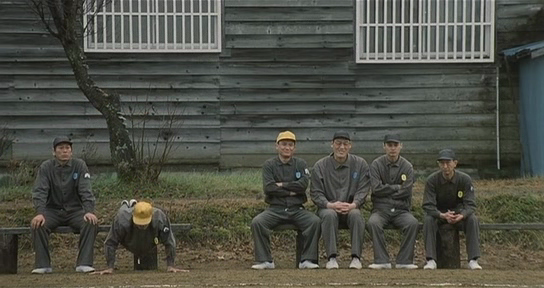
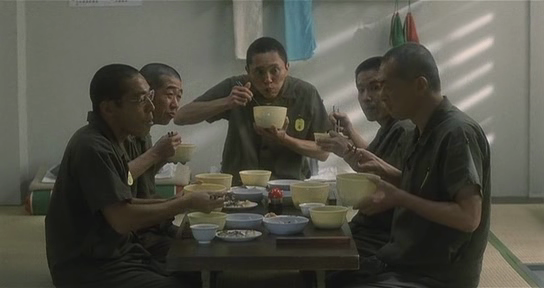
A quiet man already in middle age, Hanawa (Tsutomu Yamazaki) is no dangerous criminal merely a firearms enthusiast who liked to fire modified pistols into bottles of water. He’s got three years for illegal possession of weaponry and explosives, which seems to be quite a harsh penalty considering another man is doing seven for murder after shooting a man he says waved an axe at him when he went to collect a debt. There are clearly men who have committed violent crimes in Hanawa’s immediate vicinity, yet this is not a traditional tale of prison gangs and factional infighting, the only violence we witness concerns one prisoner who appears to have broken the rules accidentally in thoughtlessness or ignorance rather than direct rebellion. Rather it is, ironically enough, almost like a summer camp in which Hanawa and his four cellmates attempt to amuse themselves during the little free time they are offered for contemplation and relaxation. 

Even so, every inch of the prisoners’ lives is micromanaged by the guards from the way they walk to when they are allowed to move or speak. So entirely stripped of their dignity are they, that they must ask for permission even to use the toilet in their own cell while in solitary confinement and dutifully report back once they’ve finished. The communal squat toilets at the back of the workshop where Hanawa works crafting wooden tissue boxes are entirely open with only knee-height doors on each stall for privacy. The prisoners’ days are tightly ordered, early to bed and early to rise with work in-between and only the promise of rest to look forward to on weekends and holidays. 

Ostensibly a shy man, Hanawa dislikes having to ask permission all the time though not so much as an affront to his autonomy as simply bothersome. Surprisingly he begins to warm to the rhythms and routines of prison life discovering in them a kind of liberation, finding his time in solitary for “unauthorised communication” the most enjoyable of his sentence free as it is of the necessity of interacting with other people. Like the bug collector in Woman of the Dunes, he finds freedom in simplicity appreciating the mindlessness of his absurd new job folding paper bags for medical prescriptions. He can abandon any sense of responsibility for his life, submitting himself entirely to the guards’ authority and surrendering the need for control, happy to allow his existence to be managed for him without needing to decide on anything for himself. 

That aside, it’s difficult to see what other purpose prison could serve for a man like Hanawa who merely had an unusual if potentially dangerous hobby save providing him with a unique life experience he seems to be treating as a kind of adventure. He may at times look down on his cellmates who have their own routines, but otherwise appears grateful for their input and advice regarding prison life often listening to their explanations for behaviour he regards as strange such as removing one’s trousers before entering the bathroom and then deciding to do as they do. With so little stimulation the mundane becomes exciting, each meal a culinary adventure listening to a cellmate recount his group treat of a film screening (Takeshi Kitano’s Kid’s Return) as if he had returned from exotic land relishing his description of the chocolate biscuits and cola he was given to snack on. Time is what Hanawa is doing, but he does at least gain the opportunity of experiencing life in slow motion learning to appreciate the beauty of a single dandelion while observing the absurdity of the world all around him which is perhaps no more absurd than that which exists outside. 


Torso (トルソ, Yutaka Yamazaki, 2009)

A traumatised woman overcomes her sense of loneliness by sharing her life with a limbless inflatable doll in the aptly named Torso (トルソ). More than a treatise on urban disconnection, the directorial debut from Yutaka Yamazaki is both an exploration of the lingering effects of childhood trauma and a contemplation of contemporary womanhood, the changing relationship dynamics between men and women, and the extent of bodily autonomy in an often conformist society while ending on a note of ambiguity which may represent either liberation or resignation. 

34-year-old Hiroko (Makiko Watanabe) works at an apparel studio where she is among the older of the employees and somewhat aloof with her colleagues, declining invitations to hang out after work or attend the singles mixers one of the other girls is forever organising. She is indeed the sort of person who likes to keep her distance, ostensibly preferring her own company spending her time working on a patchwork quilt but secretly cuddling up at night with a slightly smaller than life-size inflatable male torso which is anatomically correct yet has no head, arms, or legs and into which she must herself breathe life only to let it out again later. Her only other real connection is with her younger half-sister Mina (Sakura Ando) who is her polar opposite in terms of personality, a bubbly, energetic woman who seems to crave the kind of contact her sister is largely unable to give her. 

Even so despite claiming to hate having other people in her space, Hiroko is indulgent of Mina always giving in and allowing her to stay at her apartment at one point for an extended period of time even if not entirely happy about it. While Hiroko has eschewed male contact for the 100% controllable union with the torso pillow, Mina is trapped in an abusive relationship with a man, the otherwise unseen Jiro, whom we later learn to have been a long term boyfriend of Hiroko. Theirs is a relationship frustrated and defined by unresolved resentments, Hiroko complaining that Mina always takes everything she treasures beginning it seems with her mother’s love. A colleague of Hiroko’s around her own age laments that at their age weddings and funerals are the only occasions that they visit their hometowns, but Hiroko is reluctant to visit for reasons other than the usual awkwardness between grownup children and their parents, dressing up and catching a train to attend the funeral of the stepfather we gather must have abused her while her mother (Miyako Yamaguchi) turned a blind eye but finally unable to go through with it. 

For Hiroko’s mother, Hiroko is the embodiment of her resentment towards her first husband who left her, later on another visit snapping back that she must have got her “unpleasant personality” from him while otherwise praising Mina who admittedly has bad taste in men but a generous heart. Hiroko meanwhile projects her own resentment onto her mother who failed to protect her from abuse she wonders possibly because of the resentment she feels towards her while she also projects her feelings of jealous inadequacy onto Mina who may also in a sense resent her for being unable to return the sisterly affection she desires. As she replies, she took Hiroko’s things because she only wanted her love even if vicariously through the otherwise abusive relationship with Jiro whose child she is also carrying. 

In many ways it’s Mina’s pregnancy which forces Hiroko to reassess her life, not least in the accusation that she had wanted to carry Jiro’s child herself. At 34 Hiroko is perhaps at a moment of crisis, her frosty mother coldly telling her she’ll soon have to “give in” and abandon her solitary life for a conventional marriage (despite her recent widowhood her mother has already started another affair with the guy from the funeral parlour). On the other hand, are men actually very necessary anymore or has true independence become not only viable but a respected choice? Despite the constant mixers, some of the younger women at the office have decided not to wait for marriage and have already put a foot on the property ladder getting a good deal on a mortgage by starting young to own their own place and achieve financial independence. “You can’t rely on men these days” one of others agrees while recognising that choosing this kind of independence does not necessarily mean a rejection of romance or long term relationships. 

For her part, Hiroko is wary of men who do in the main seem to be sleazy and predatory, visibly flinching as an over-friendly clerk at the car rental office repeatedly attempts to lean across her while she’s sitting in the driving seat. Aside from its obvious insentience, the torso is symbolically unable to harm her in having no arms to strike, no legs to kick, and no head to hurt while preserving the part she most craves buried in its empty chest which she cradles constantly like a child with a favourite toy. Her attachment to it is not purely physical but emotional, taking it on a mini holiday to the beach dressed in a pair of tiny speedos as they frolic in the sea together alone on a private beach. Yet even this body as empty as she feels her own to be can also betray and be betrayed, another treasure to be stolen if only in the breaking of a spell on realising that Mina has discovered her secret. 

Mina’s final decision is both old-fashioned and ultra-contemporary, vowing to go back to the country and raise the child alone while in a symbolic sense becoming her mother in intending to take over her old part-time job at a nursing home. Hiroko meanwhile is preoccupied with the idea that she’s sacrificing her dreams and aspirations because of something that’s essentially Jiro’s fault, in part stripping her of her own agency in making her decisions and imposing on her the view that struggling in the city even if it doesn’t really suit you is inherently better than making a simple life at home. A brassy gravure model (Sora Aoi) who makes a point of the fact her body is business similarly looks down on Mina, suggesting that she’s simply weak and if she really wanted to pursue her dreams she’d have an abortion without a second thought. Yet does it really need to be an either or? The decision that Hiroko finally comes to may suggest that it might, or then again perhaps she’s merely freeing herself of her long held trauma and looking to lead a more emotionally fulfilling life. “We’re just starting out” Mina shouts back from from across the ticket barriers as she leaves hinting at new beginnings for each of the sisters having each at least laid something to rest. 


Original trailer (no subtitles)

Millennium Mambo (千禧曼波, Hou Hsiao-hsien, 2001)

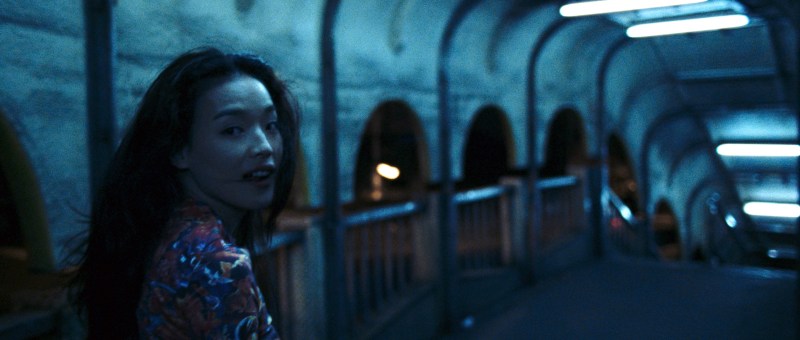
In the iconic opening sequence of Hou Hsiao-Hsien’s Millennium Mambo (千禧曼波, Qiānxī Mànbō), a young woman bounces enigmatically along a walkway, filled with joy and abandon and seemingly exultant in her freedom. Occasionally she glances back as if someone were actually filming her but then we start to wonder if this isn’t just her looking back at herself as she narrates her story in the third person, as if it happened to someone else because in a sense it did. “This happened 10 years ago,” she explains from the vantage point of 2011 looking back on the coming millennium and her own slow dance towards a new world. 

Then again, as she admits Vicky (Shu Qi) always seems to be drawn back into the orbit of Hao (Tuan Chun-hao), her no good, abusive boyfriend who is so controlling that he deliberately prevented her from taking her high school exams out of fear that she’d “move on”. Circling around Vicky’s memories, Hou often cuts to Hao in exactly the same position as he was before while Vicky has indeed moved on if not always in the direction she might have chosen such as the abrupt transition to her naked behind as a dancer at a nightclub where she is forced to work because Hao refuses to earn a living. When we first see her arrive at their apartment, Hao is sitting in the dark and we don’t even notice him until he gets up after Vicky enters the bathroom. Where her bedroom is colourful and cosy, bathed in soft light and demonstrating her ability to find small comforts in an otherwise harsh existence, Hao’s space is gloomy and ominous in its austerity. 

While Vicky tries to move into a more responsible adulthood, Hao extends Taipei clubland into their home frequently hanging out with friends while djing on the rig in his room. He takes drugs to keep his weight down to evade military service and gets into trouble with the law after pinching and pawning an expensive watch from his dad rather than trying to get job. He is the force which seems to keep Vicky trapped in a disappointing existence. By her own admission she finds herself returning to him as if she were in a kind a kind of trance, unable to escape though at times clearly despising him and perhaps herself too. Even Hao is fond of saying that they’re from different worlds, stuck on parallel orbits and otherwise incompatible. Even their apartment seems to be divided into night and day. 

Yet it’s also Taipei clubland that offers Vicky an escape route through the community she finds surrounding her amid the pulsing beats of millennial techno. A kindhearted gangster, Jack (Jack Kao), comes to her aid though he is later brought low by the recklessness of youth as his naive underlings bring their world crashing down around them. Jack takes her in and protects her with paternal affection, eventually inviting her to go on the run with him in Japan but immediately disappearing, just like the snowman she later describes Hao to have been in a moment imprinted on her memory. She carries Jack’s phone around with her unable to let go of him while recalling the scent of his abandoned jacket as she tries to make a decision in a snowy Tokyo just as she’d sworn to herself she’d leave Hao when she ran through her savings. 

Hou and cinematographer Mark Lee Ping-bing shoot all of this through the breeziness memory, following emotional logic rather than the literal as Vicki narrates to us events which are at odds with those occurring on screen and zig zags through the story of her youth before arriving at what seems to be a genuine moment of warmth amid heavy snow, perhaps finally “moving on” from the dissatisfying past to a future of her own choosing. Then again, her fleeting recollections amount to a constructed narrative, the story of the girl on the walkway who finally reaches the other side and disappears into the night either progressing into the new millennium or remaining trapped in a thousand year mambo of memory reliving the key moments of her life in a gentle oscillation, “as if under a spell or hypnotised” , unable to escape from the dangerous allure of nostalgia. 


Millennium Mambo is screening now at New York’s Metrograph and available to stream in the US via Metrograph at Home courtesy of Metrograph Pictures.

Trailer (English subtitles)

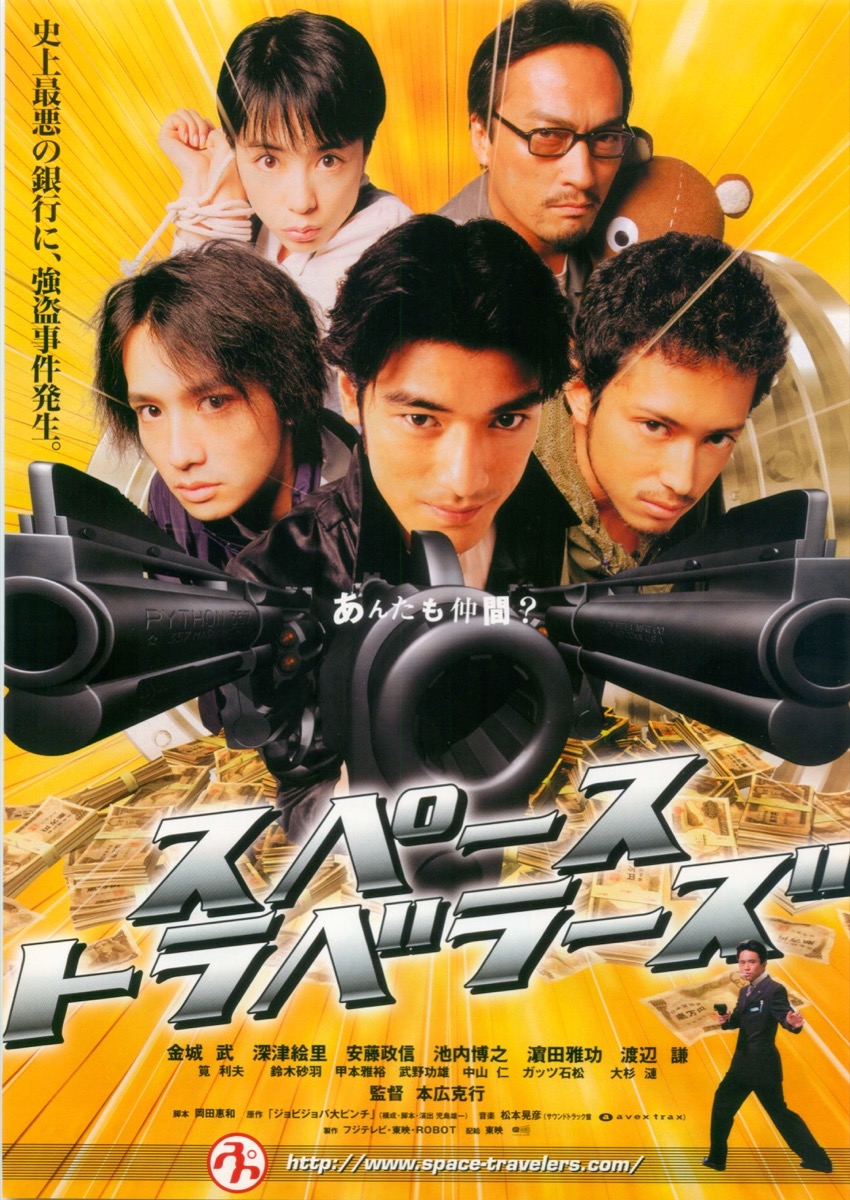
Space Travelers (スペーストラベラーズ, Katsuyuki Motohiro, 2000)

“What are you doing now?” asks a very zeitgeisty set of onscreen titles at the beginning of Katsuyuki Motohiro’s millennial heist comedy, Space Travelers (スペーストラベラーズ). Both hopeful and not, Motoyuki’s cosmic farce takes the sense of anxiety and despair which colour other similarly themed turn of the century movies and turns them into a source of possibility while simultaneously implying that for some paradise may always be out of reach or else relegated to a state of mind. After all, “reality is different from animation”.

The idea of a far off paradise is what drives a trio of orphans (Takeshi Kaneshiro, Masanobu Ando, and Hiroyuki Ikeuchi) to consider armed robbery, planning the slick kind of heist they’ve seen in the movies in which they run into off into the sunset with a bag full of cash after holding a bank to ransom. Of course, it doesn’t quite go to plan leaving the three essentially good-hearted guys with a problem because they weren’t really prepared to harm anyone (two of their three weapons are duds) and they don’t have a plan B. What happens then is somewhat unexpected as a degree of camaraderie begins to arise between the would-be-thieves and the small number of customers and employees trapped in the foyer who then become something of an artificial team trying to overcome the rapidly escalating situation as the police surround the building in the incorrect assumption that the robbery is connected to terrorist action. 

What soon becomes apparent is that for the trio the heist is part wish fulfilment fantasy and a last ditch attempt to catapult themselves out of a sense of impossible despair. As they are all orphans, they feel a deeper sense of disconnection from a society which has in itself abandoned them, partly as it turns out hoping to find their long-lost parents in a tropical island paradise known to them only from a faded postcard. For the customers and employees, the robbery is the most exciting thing to happen to them in their entire lives and the proximity to mortal danger soon forces them to wrestle with their personal dissatisfaction. Before the heist took place, bank clerk Midori (Eri Fukatsu) had been planning to attend a party to celebrate her engagement to another employee branded a sleazy creep by most of the other female members of staff with whom he had apparently tried it on on previous occasions. She had agreed to marry him despite her reservations because he had sworn to lay down his life for her if she were ever in danger only to spot him trying to escape on his own via the air conditioning ducts. Being caught up in this bizarre situation forces her to accept she had been leading a “conveyor belt life” out of fear, always picking the safe option rather than take a risk chasing personal happiness even picking a husband solely because he promised her protection. 

In the Japan of the 2000s, chasing personal happiness might have seemed like a fools errand trapped in a stagnant economy with no prospect of improvement and only increased risk if you fall from one particular rung on the ladder. Yet the conclusion Midori seems to come to is that the only way of rebelling against this sense of nihilistic frustration is to take the risk and look for the paradise that is waiting for her rather than settle for a disappointing status quo. She learns this partly through her connection with one of the bank robbers who casts each of the hostages as members of his favourite, now cancelled, anime “Space Travelers” created according to an onscreen interview to offer a sense of something tangible to an increasingly disconnected youth that would allow them to experience a full range of emotions (the animated sequences created for the film were later spun off into an OVA of their own). Through their accidental role playing, the hostages each discover the sides of themselves they’d been missing to claim their true identities, Midori learning that she can protect herself, nerdy clerk Shimizu (Masahiro Komoto) overcoming his crippling shyness, a middle-aged electrician flummoxed by modern technology proving that his skills aren’t obsolete, and a feuding couple on the brink of divorce reflecting that they actually do work well as a team. 

Even so, not everyone comes out of the situation with new hope for the future with the implication being that some gambles are simply too big or that for some paradise will always lie just out of reach even if Midori remains committed to seeking it out on her own whether she eventually finds it or not. Meanwhile, Motohiro takes potshots at the media reality of the day as a cynical boyband publicity stunt to announce their breakup tour to rake in more cash before announcing a comeback is derailed by the press tripping over themselves to get to the unfolding bank hostage crisis with the police also doing their bit to hog the media spotlight while mistakenly believing a suspicious-looking man who actually is a fugitive terrorist is responsible for the heist. With the world as messed up as it clearly is, the film seems to say, chasing paradise is the least risky thing of all. 


Trailers (no subtitles)

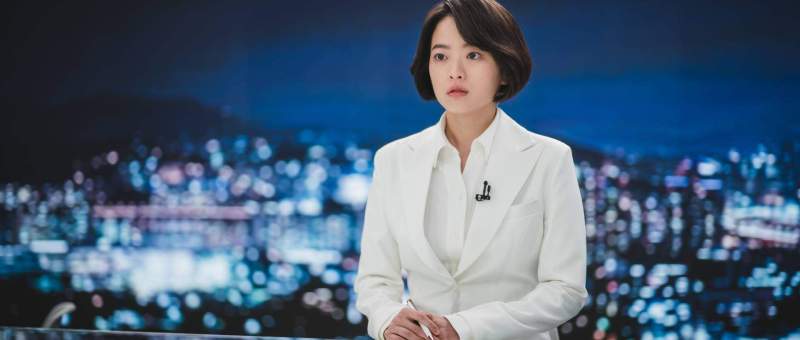
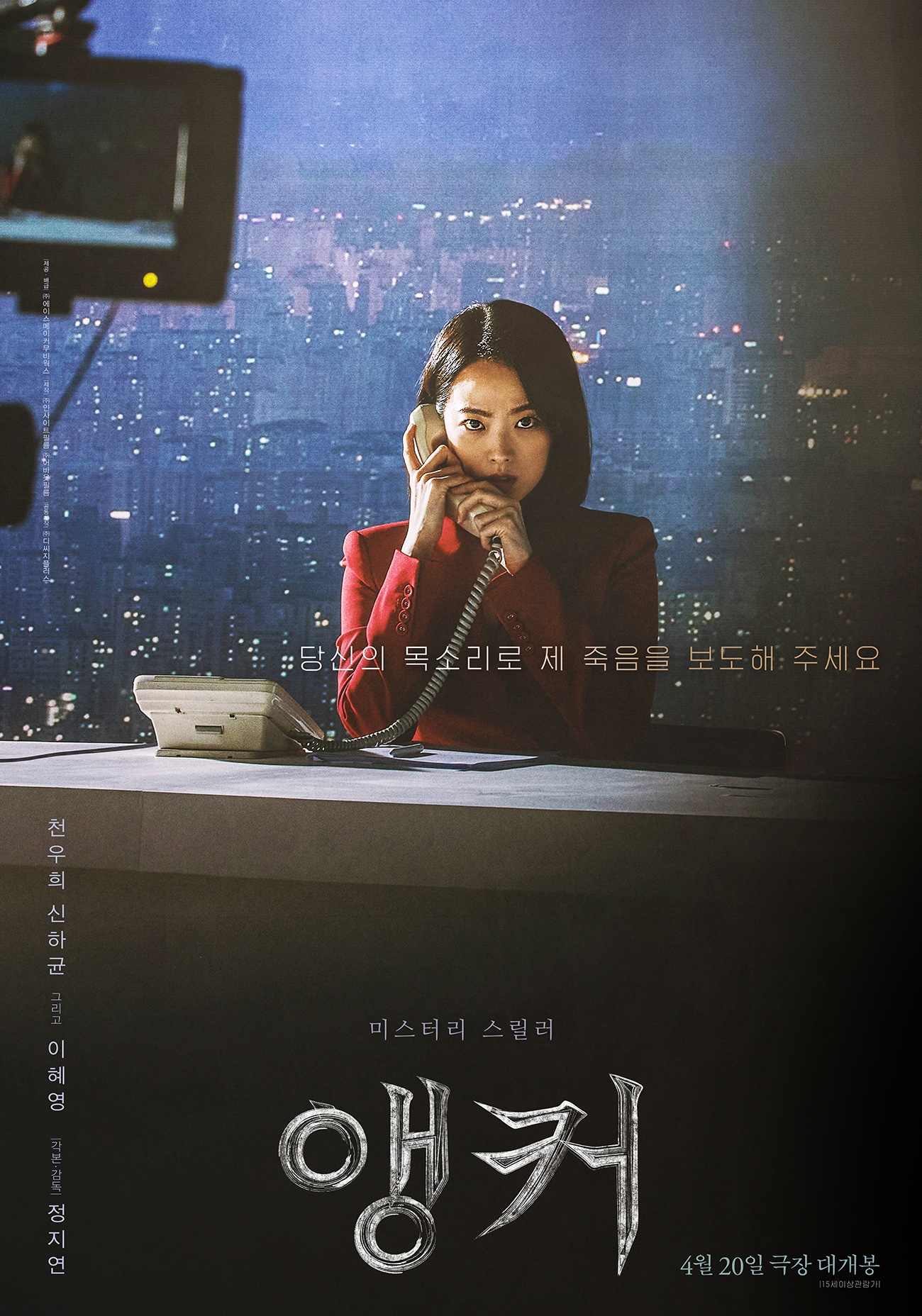
The Anchor (앵커, Jeong Ji-yeon, 2022)

A successful newsreader’s sense of reality begins to fracture when she ends up becoming part of the story in Jeong Ji-yeon’s twisty B-movie psychological thriller, The Anchor (앵커, Anchor). As much about mothers and maternal anxiety as it is about a patriarchal and conservative society, Jeong’s eerie journey through the psyche of a traumatised woman is also a quest for identity and a search for the self as the heroine rails against her role as a mere conduit for the thoughts and will of others. 

In her mid-30s, Sera (Chun Woo-hee) is a popular anchor helming the most important news report of the day. Yet she’s facing a challenge from a younger rival who is not a trained presenter but a respected reporter who can bring a degree of editorial authority to the desk which her polished delivery cannot. As one of her bosses puts it, it’s the way that things are going which Sera seems to know seeing as he also remarks that she’s been trying to gain experience as a reporter so that she can be a “real anchor”. As it stands, her job is mostly to look presentable and support the male lead reading out words other people have written presented to her by autocue. Her mother (Lee Hye-young) is always needling her, insisting that she can’t afford to let her guard down even for a moment if she wants to keep her spot while further fuelling her sense of futility in suggesting that even becoming a news anchor may not have been her decision in the first place so much as in service to her mother’s desire for vicarious success. 

When a strange woman, Mi-so (Park Se-hyeo), calls in to the station one day insisting on speaking with Sera directly it seems like the perfect opportunity to prove her credentials as an investigative reporter but her male colleague immediately shuts the conversation down writing off the woman’s claims that she’s being harassed by an unknown aggressor as a prank call from a crazed fan. Sera follows his lead and in any case has to read the news, but something about the woman’s story disturbed her so she decides to check out her address and is shocked to discover the woman’s daughter dead in the bath and the woman herself hanging in her closet with her phone still in her hand. Perhaps echoing her own fragile mental state, Sera is haunted by the image of the woman hanging but does not seem to feel particularly guilty or responsible for her death in not following up immediately in case she and her daughter could have been saved so much as determined to turn the case into her personal crusade to decrease the likelihood of them kicking her off the desk.

The desire to investigate the case herself is in part a desire to assert her own identity as distinct from that projected onto her by her overbearing mother and chauvinistic husband who insists that her mother is controlling her but in reality just wants to control her himself. Min (Cha Rae-hyung) keeps badgering her about starting family but seems oblivious to her wishes though the couple appear to have been separated for some time only keeping up appearances to avoid the possible fallout from the scandal of divorce. Becoming a mother is in a way to lose one’s own identity especially in a society such as a Korea’s in which women who bear children stop hearing their own name, addressed only as so and so’s mum rather in their own right. It may partly be this sense of erasure which drives the resentment which exists between mother and child along with a persistent social stigma against women raising children alone especially if born out of wedlock. The idea of a woman seeking fulfilment outside of the home is still to some taboo with a strong social pressure for women to abandon their own hopes and desires and devote themselves entirely to the role of “mother”. 

On trying to decide how to frame the case, the editorial board is torn between viewing Mi-so as a victim of unjust societal pressures and condemning her as an evil woman who murdered her daughter and then herself, the police having decided that there was no third party involved despite Mi-so’s claims of an intruder. Even with a more compassionate framing, the message is pity rather than a drive for social change in which women like Mi-so who appears to be incredibly young, little more than a child herself, could get the help they need. Sera becomes convinced that a creepy psychiatrist (Shin Ha-kyun) specialising in hypnotism is somehow responsible though he frames the mysterious intruder as a kind of phantom, a manifestation of buried trauma ratting the doors trying to get in or else a convenient “entity” that allows the hauntee to deny their responsibility or reality. In any case, Sera’s investigations take her to a dark place but eventually arrive in a kind of psychological wombscape in which she must finally kill the image of the mother in herself in order to escape her mother’s house in a symbolic vision of birthing a new self having reclaimed her individual identity. Elegantly lensed and filled with visions of refracting mirrors reflecting Sera’s identity crisis Jeong’s eerie psychodrama eventually allows its heroine to find her own way out of unresolved trauma if only ironically.


The Anchor screened as part of this year’s London Korean Film Festival.

Original trailer (English subtitles)
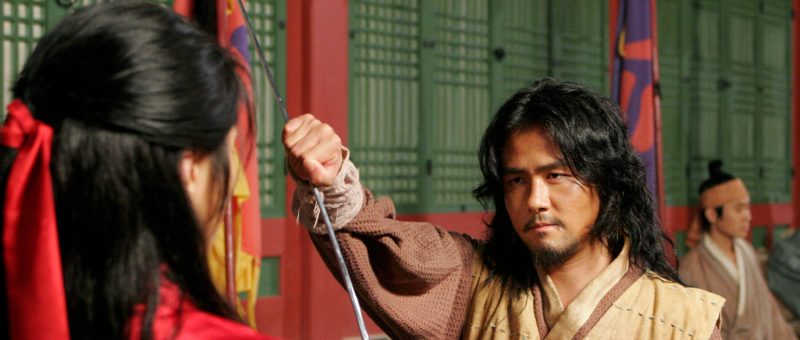
Adrift in Tokyo (転々, Satoshi Miki, 2007)

An aimless young man finds unexpected direction while walking the streets of the city with an unlikely father figure in Satoshi Miki’s meandering dramedy Adrift in Tokyo (転々, Tenten). These two men are indeed adrift in more ways than the literal, each without connections and seeking a concrete role in life while attempting to make peace with the past. But like any father and son there comes a time when they must part and their journey does indeed have a destination, one which it seems cannot be altered however much they might wish to delay it.

That Fumiya (Joe Odagiri) is aimless might be assumed from his unruly hair and the fact that he thinks tricolour toothpaste might be enough to jolt him out of his sense of despair but is confirmed by his matter of fact statement that he’s in his eighth year of university where nominally at least he’s studying law. His problem is that he’s amassed massive debts to a loanshark, Fukuhara (Tomokazu Miura), who breaks into his apartment and threatens him by shoving a sock in his mouth before leaving with his ID and driving licence. Fukuhara, however, later decides to make him another offer that he will cancel the debt and even give Fumiya even more money if only he will agree to wander around Tokyo with him for an unspecified time until they reach Kasumigaseki where he intends to hand himself in at police headquarters claiming to have recently murdered his wife. 

Like many things that Fukuhara says, it’s not clear whether or not he has indeed killed his wife though Miki frequently switches back to a scene of a woman who seems to have passed away and has been laid out in bed though she shows no signs of having died violently. Her zany co-workers keep thinking they should check on her seeing as she hasn’t shown up in days but something always distracts them and they end up forgetting about her entirely. The body appears to have been treated with love, hinting that if what Fukuhara says is true and this woman was his wife whom he killed in a fit of passion he has quite clearly thought through his plan of action rather than attempting to flee the scene and is perhaps only delaying the inevitable while walking out some other trauma in the company of Fumiya a surrogate son mirroring the description he gives of taking walks in the company first of his father and then of his wife. 

Fumiya deflects every question and agrees that he hates memories having burned his photo albums before leaving for university. He claims that he has no parents, describing the people who raised him as just that, as his mother and father both abandoned him as a child leaving him in a perpetual state of arrest which is one reason he’s still a student four years after most people have graduated. He never went to the zoo or rode a rollercoaster or called a man dad and seems to think of himself as nothing much of anything at all. Yet the fake can sometimes be more real than the real as he eventually discovers becoming part of an awkward family unit with Fukuhara’s “fake” wife (Kyoko Koizumi) he used to accompany to weddings as a paid guest, just beginning to enjoy being someone’s son when Fukuhara decides he’s reached the end of his road. 

There is a sense that everyone is chasing the ghost of someone else or perhaps even themselves, Fumiya finding shades of the father who abandoned him in career criminal Fukuhara who tells someone else that he once had a son who died in infancy, and seeing something of his mother in fake wife Makiko discovering transitory roots in an unlived imaginary childhood. But then there are also occasions of cosmic irony such as a coin locker bag being full not of money but of bright red daruma dolls and tengu noses, or a rebellious street musician meekly bowing to the police. A repeated gag says you’ll have good luck if you spot iconic actor Ittoku Kishibe out and about in the streets, and perhaps in a way Fumiya does in learning to make peace with his childhood self walking with Fukuhara who also comes to accept his failures as a man, a husband, and perhaps a father too. Filled with zany humour and a warmth underlying its melancholy, Adrift in Tokyo is a meandering journey towards a home in the self and a sense of rootedness in the middle of a sprawling metropolis filled with infinite possibility. 


Adrift in Tokyo is released on blu-ray in the UK on 12th December courtesy of Third Window Films.

Original trailer (English subtitles)

All About Lily Chou-Chou (リリイ・シュシュのすべて, Shunji Iwai, 2001)

“For us the natural world is a playground. But for the things that live in it, it might be hell on earth.” a middle-aged stranger explains to a confused teenage boy elaborating on a metaphor about a strangler tree that wraps itself around its brethren and suffocates them to death. The contemporary society is indeed a hell on earth to the alienated turn of the century teens in Shunji Iwai’s plaintive youth drama All About Lily Chou-Chou (リリイ・シュシュのすべて, Lily Chou-Chou no Subete) who have found solace in “The Ether”, “a place of eternal peace” as discovered in the music of a zeitgeisty pop singer inspired by the ethereality of Mandopop star Faye Wong. 

Filled with millennial anxiety, The Ether as mediated through message board chat is the only place the teens can be their authentic selves. “For me only the Ether is proof that I’m alive” one messenger types using an otherwise anonymous online handle unconnected with their real life identity. Iwai often cuts to the teens standing alone listening to music on their Discmans while surrounded by verdant green and wide open space with a bluer than blue sky above, but also at times finding that same space barren and discoloured, drained of life in, as Yuichi (Hayato Ichihara) puts it, an age of grey much like a field in winter. For Yuichi the world ended on the first day of school in September 1999 when his torment began at the hands of a previously bullied boy who decided to turn the tables after, of all things, getting hit in the head by a flying fish in Okinawa and almost drowning.  

Purchased with money stolen from some other bullies who had just stolen it from a well-off middle-aged man they were harassing in a carpark, the trip to Okinawa captured in grainy ‘90s holiday video style later subverted by the same use of contemporary technology to film a gang rape of a fellow student, is the event that finally reduces Yuichi’s world to ashes. Like the other teens he is also carrying a sense of alienation as his mother prepares to remarry while carrying his soon-to-be stepfather’s child which also dictates that Yuichi will have to change his surname lending a further degree of instability to his already shaky sense of identity. For Hoshino (Shugo Oshinari), his sometime friend, the instability seems to run a little deeper. “Nobody understands me” he tells Yuichi with broody intensity, irritated by the image others have of him as a top swat chosen to give a speech at the school’s opening ceremony and widely believed to have placed first in the exams. In truth he only placed seventh and is most annoyed that whoever really did come top probably thinks he pathetically lied about it for clout. 

We can see that Hoshino’s family appears to be wealthy, at least much more than Yuichi’s, though as we also discover they once owned a factory which has since gone bust amid the economic malaise of the ‘90s leading to the disintegration of his family unit. Like Yuichi he feels himself adrift, evidently bullied in middle school for being studious and introverted while rejected by the girls in his class who again attack him because of his model student image. Hoshino seems to have a crush on a girl who is herself bullied, Kuno (Ayumi Ito), apparently resented by the popular set for being popular with boys. “It’s amazing how women can ostracise someone like that” band leader Sasaki (Takahito Hosoyamada) reflects, one of the few willing to call her treatment what it is but finding no support from their indifferent teacher Miss Osanai (Mayuko Yoshioka), while entirely oblivious to the fact that the boys are just the same in Hoshino’s eventual reign of terror as a nihilistic bully drunk on his own illusionary power. 

Shiori (Yu Aoi), blackmailed into having sex with middle-aged men for money, questions why she and Yuichi essentially allow themselves to be manipulated by Hoshino and are unable to stand up to him even when they know they are being asked to do things that they find morally repugnant such as Yuichi’s complicity when tasked with setting Kuno up for gang rape by Hoshino’s minions with a view to videoing it for blackmail purposes. Whether or not he did in fact have a romantic crush on her, Hoshino’s orchestration of the rape signals his total transformation, forever killing the last vestiges of his humanity and innocence but for Yuichi, who can only stand by and cry, it signals the failure of his resistance that if he went along with this there is no line beyond which he will not go if Hoshino asks it. Yuichi asks Shiori why she didn’t agree to date the kindhearted Sasaki who would have been able to shield her from Hoshino but she knows it’s too late for that while suggesting Yuichi is in a sense protecting her though his inability to do so only further erodes his wounded sense of masculinity. 

Only online can the teens find the elusive Ether they dream of, ironically connected via a message board that Yuichi runs under the name Philia where the only rule is that you have to love Lily yet unknown to each other thanks to the alienating effect of their online handles. Someone has a point when they suggest all this talk of polluting the Ether sounds a bit like a cult, but does at least give the teens their safe space where they can share their pain free of judgement and find solidarity in adolescent angst. In any case all of this shame, repression, and loneliness is later channeled into nihilistic violence and cruelty provoked by millennial despair. The only way Yuichi can free himself is by killing the part of himself that hurts in an effort to quell the “noise” in his head. Broken by title cards accompanied by the reverberating sound of typing in emptiness, Iwai’s characteristic soft focus lends a trace of nostalgic melancholy to this often harrowing tale but also neatly encapsulates turn of the century teenage angst with the infinite sympathies of age. 


All About Lily Chou-Chou screens at Japan Society New York on Dec. 10 as part of Love Letters: Four Films by Shunji Iwai

Original trailer (English subtitles)
The Cabbie (運転手之戀, Chen Yi-wen & Chang Hwa-kun, 2000)

The crazy freewheeling life of a lovestruck taxi driver eventually takes a turn for the contemplative in Chen Yi-wen & Chang Hwa-kun’s infinitely charming comedy, The Cabbie (運転手之戀, yùn zhuǎn shǒu zhī liàn). Despite the film’s sunny atmosphere, darkness does indeed hang around the edges in the frequent references to car accidents and dismemberment yet it seems to be something that the affable hero can live with as he narrates a series of strange incidents from his ordinary life while meditating on his zany family when faced with mortal anxiety. 

As taxi driver Quan (Chu Chung-heng) points out, life can be pretty strange. His taxi can sometimes act as an unofficial confessional as his fares take the opportunity to unburden themselves to a complete stranger in a confined space, confessing the embarrassing details of their lives and even at one point seemingly confessing to a murder. Quan takes it in his stride, feeling as if he is one with his cab, Ah Di, and duty-bound to deliver his charges to their rightful destinations physical and emotional. Yet in an odd way it’s almost as if we’ve become the driver in this story and Quan is our fare, breaking the the fourth wall to speak to us directly of his strange life and the circumstances which led to this present turn of events. 

Quan is however unusual in that he tells his mother and father quite directly that he has no intention of marrying, giving a fairly logical reasoning based on the fact he believes women do not like him and he is not apparently much interested in them. This is of course a source of anxiety for his parents, his taxi driver father also turning fare in ranting at an old lady at the convenience store about his wayward son before trying to awaken something within him by gifting him porn. His mother meanwhile, the local coroner, decides to give up on him while ordering Quan to freeze his sperm so she can have a grandchild with or without his direct involvement at some point down the line. 

In any case, Quan changes his mind on falling in love at first sight with grumpy policewoman Jingwen (Japanese actress Rie Miyazawa, dubbed into Mandarin). Taking his mother’s advice about making an impression (not necessarily a good one) to heart, Quan decides the best way to woo his crush is to get fined by her as many times as possible. Even so there’s an undeniable Romeo and Juliet vibe to their relationship given the natural animosity between taxi drivers and traffic cops, along with a sense of cosmic irony that feeds directly back into the film’s darker themes. So much of life for Quan is coincidence, an act of cosmic collision not unlike the car crashes that occur so frequently outside the taxi depot. Quan encounters Jingwen by chance and then continues to push his luck by meeting her again in similar circumstances until she gives in to his unusual ardour. Yet not all of these accidents end well. One of Quan’s neighbours earns extra cash turning up at crash sites and making sure that the family gets all of the deceased’s body parts, reaching under twisted metal to retrieve pieces of severed flesh while his mother is indeed a coroner with a severed head in a jar sitting proudly in her office. 

In the end it might be that Quan is a mere passenger of fate, relating his life to us as it flashes before his eyes while threatened by a weird fare. What begins as absurd nonsense comedy as Quan tells us about his crazy family and the strangers who climb into his cab eventually takes an unexpected, poignant turn for the existential even as Quan continues to closely identify himself with Ah Di which might beg the question of who is driving who. Madcap and anarchic, there is something genuinely cheerful in Quan’s often simple existence governed both by chance and the rules of the road lending a fatalistic pall to all of his otherwise freewheeling adventures. Things don’t always always go right for him, but even when they go wrong it’s generally in the right way. Fast-forwarding though the “boring bits”, Quan races us through his life in the cab before taking us where we need to go keeping it cheerful while preparing for the inevitable collision with cosmic irony. 


The Cabbie screens 20th October as part of this year’s Taiwan Film Festival Edinburgh.

Original trailer (Traditional Chinese / English subtitles)

Tekkonkinkreet (鉄コン筋クリート, Michael Arias, 2006)

A pair of orphaned street kids attempt to defend backstreet life from the ravages of progress in Michael Arias’ adaptation of the manga by Taiyo Matsumoto, Tekkonkinkreet (鉄コン筋クリート). Though the manga was first published in the early ‘90s which is to say at the beginning of the post-Bubble era, the film looks back to a scrappy post-war Japan embodied by the moribund Treasure Town, once a lively city filled with the promise its name implies but now according to some a lawless slum ruled over by the “Cats” and contested by yakuza determined to turn it into another “Kids Kastle” theme park. 

There is something particularly ironic in the desire to turn Treasure Town, a literal playground for orphans Black (Kazunari Ninomiya) and White (Yu Aoi) collectively known as the Cats, into a walled city taking something that should be free and charging for it while displacing the street kids who live there so that those whose parents can pay can be given a temporary illusion of freedom. To Black, this is his city and he will defend it along with protecting White who has an otherworldly simplicity and makes radio calls to the universe reporting that he has preserved peace on Earth for another day. In a way he has because it becomes clear that the two boys are a two halves of one whole maintaining balance and keeping each other in check. Innocent and naive beyond his years White cannot survive alone, but without White, Black would have nothing to live for. His inner darkness would become all consuming and present a threat to all those who cross his path. 

In a piece of poignant symbolism, White attempts to grow an apple tree by planting a seed in the junk yard where they live but is disappointed that it does not seem to sprout little realising that it cannot grow where it is planted because the conditions are adverse to its development. The same might be said of he and Black who have been abandoned by their society and are cared for only by a wise old man who gives them occasional advice. Their only desire to is protect their town in a bid to avoid yet another displacement this time at the hands of corporatised yakuza who see Treasure Town only as a relic of a previous era sitting on valuable land which must be seized and monetised. Only old school gangster Rat ironically enough agrees with the Cats, confused by the desire to erase community and history riding roughshod over the feelings of all those who have ever called Treasure Town home. 

Rat’s battleground is located in the soul of his protege, Kimura (Yusuke Iseya), who first says that he doesn’t believe in anything only for Rat to tell him that he should at least believe in love. Seduced by the consumerist promises of the duplicitous Snake (Masahiro Motoki) and his giant alien minions, Kimura nevertheless comes around to Rat’s way of thinking on learning that he will soon be a father. Like Black and White, he dreams of escaping Treasure Town for a house by the sea where he could live a peaceful life with his child but is trapped by contrary codes of gangsterdom if even if eventually realising that the two things he believes in are truth and love neither of which are very important to Mr. Snake. Black meanwhile is torn between his inner darkness and his belief in White, caught between nihilistic violence and the desire to plant a seed and watch it grow even on shaky ground. 

Designed by Shinji Kimura, the backstreets of Treasure Town are a Showa-era paradise perhaps stuck in the past in the view from early Heisei but embodying a scrappy sense of possibility. It has an uncanny reality as an organic space built and lived in by human hands that is at an odds with the slick uniformity of the gangster developers who want to turn it into a children’s theme park, the very embodiment of a constructed paradise that will halt the natural growth that Rat describes in reminding Black that Treasure Town will never be what it was but will continue on with or without them. Bringing this place fully to life, Arias’ surprising, inventive direction gives full vent to the anarchy of the source material but is in the end about the heart of a place along with the bond between its two protectors keeping the peace through complementary balance.


Tekkonkinkreet screens at Japan Society New York on Sept. 16 as part of the Monthly Anime series.

Original trailer (no subtitles)