Poor old Hyuk-jin is about to have the worst “holiday” of his life in Noh Young-seok’s ultra low budget debut, Daytime Drinking (낮술, Natsul). Currently heartbroken and lovesick as his girlfriend has just broken up with him, Hyuk-jin is trying to cheer himself up with an evening out drinking with old university friends. Truth be told, they aren’t terribly sympathetic to his pain though one of them suddenly suggests they all take a trip together just like they did when they were students. Hyuk-jin plays the party pooper by saying he can’t go because he’s meant to be looking after the family dog but after some gentle ribbing he relents and says he’ll come if he can get someone to look in on the puppy for him while he’s gone. He will regret this.
Sure enough, Hyuk-jin arrives at the bus terminal in the town where his friend supposedly knows someone with a cosy inn where they do delicious barbecues only it’s freezing cold and his friends are nowhere to be seen. That’s right – his ultra flaky friends have forgotten all about it and stood him up. Already quite annoyed, Hyuk-jin argues with his “friend” but later accepts his offer to stay over at the inn on his own at his friend’s expense and wait for him to join him there in a couple of days. However, firstly, Hyuk-jin somehow ends up at the wrong inn which seems to be run by a madman where he also meets a female solo traveller who’s apparently fond of a drink. Everywhere he goes, everyone keeps offering Hyuk-jin a drink in a way which makes it very hard for him to say no, though there’s almost nothing else to do around here anyway. Pretty girls and drink are about to land Hyuk-jin in a series of embarrassing incidents that are most likely only bearable because of the residual booze cloud Hyuk-jin is currently residing under.
Following a loose road trip structure, Daytime Drinking follows Hyuk-jin on his strange and accidental odyssey where just about everything conspires against him. Hyuk-jin is not entirely blameless in his fate – he’s far too taken by pretty faces and gets himself into trouble by behaving rudely towards a not so pretty older woman as she bores him with endless prattle, completely failing to take the hint that he’s finding her constant conversation a little too much to bear. Hyuk-jin’s distress continues to grow as his friend keeps delaying his trip, and his troubles only increase until he is deprived of both his phone and his wallet (not to mention his trousers!), leaving him entirely dependent on the kindness of strangers. Unfortunately, though some strangers may seem kind they often have ulterior motives whether they just want someone else to pay for the drinks or they’ve only booked one bed and are planning to creep into the shower just as you’re lathering up…
Daytime Drinking is the first feature from Noh Young-seok in which he acts as scriptwriter, cinematographer and editor so it’s a real indie production. Made on a true shoestring budget of only $9000, production values are surprisingly high even if obviously filmed on low grade equipment. Noh sticks to straightforward composition with Hong Sang-soo style static camera and zooms though he manages to effortlessly bring out the sympathetic humour inherent in Hyuk-jin’s very disappointing mountain holiday. Hyuk-jin himself is never a figure of fun and though hapless is clearly an ordinary person with ordinary failings such as his weakness for pretty girls and booze or his polite way of being impolite in trying to evade the attentions of a boring fellow traveller when he’s already tired and fed up himself.
Noh’s world view seems quite a bleak one but is also undoubtedly very funny. When things get as bad as this perhaps there’s nothing left to do but laugh. You’d think a trip as disastrous as this one would have Hyuk-jin vowing never to leave the house again, but then there’s yet another pretty face at the train station so perhaps a holiday to get over one’s holiday is order? Don’t do it Hyuk-jin! Some people never learn….
US release trailer:
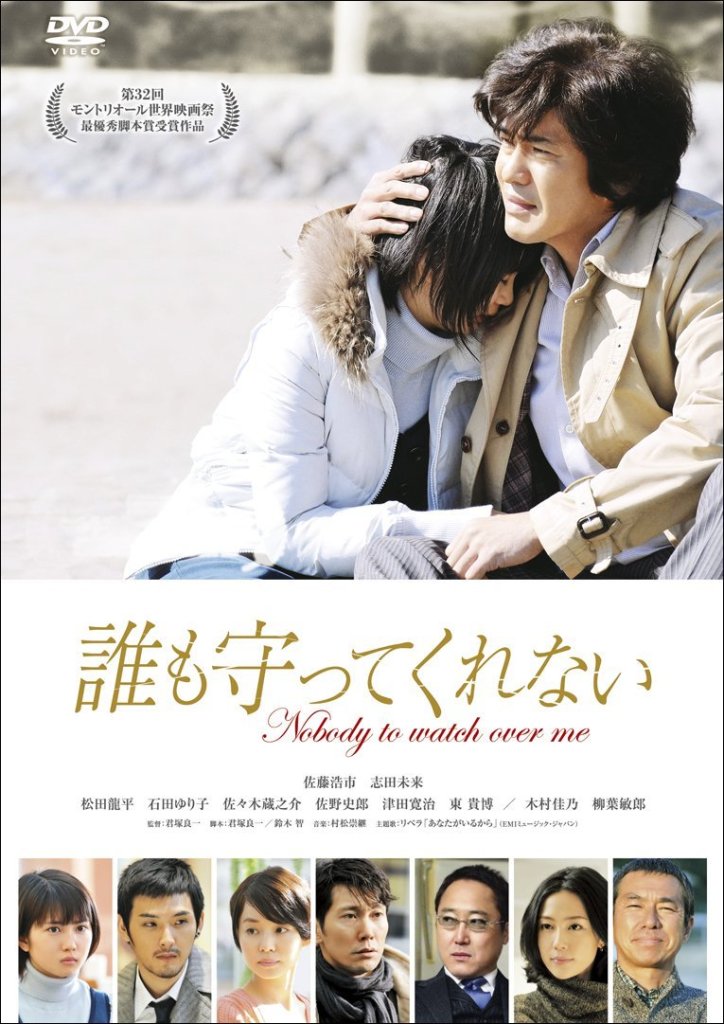 When a crime has been committed, it’s important to remember that there may be secondary victims whose lives will be destroyed even if they themselves had no direct involvement in the case itself. This is even more true in the tragic case that person who is responsible is themselves a child with parents and siblings still intent on looking forward to a life that their son or daughter will now never lead. This isn’t to place them on the same level as bereaved relatives, but simply to point out the killer’s family have also lost a child who they have every right to grieve for, though their grief will also be tinged with guilt and shame.
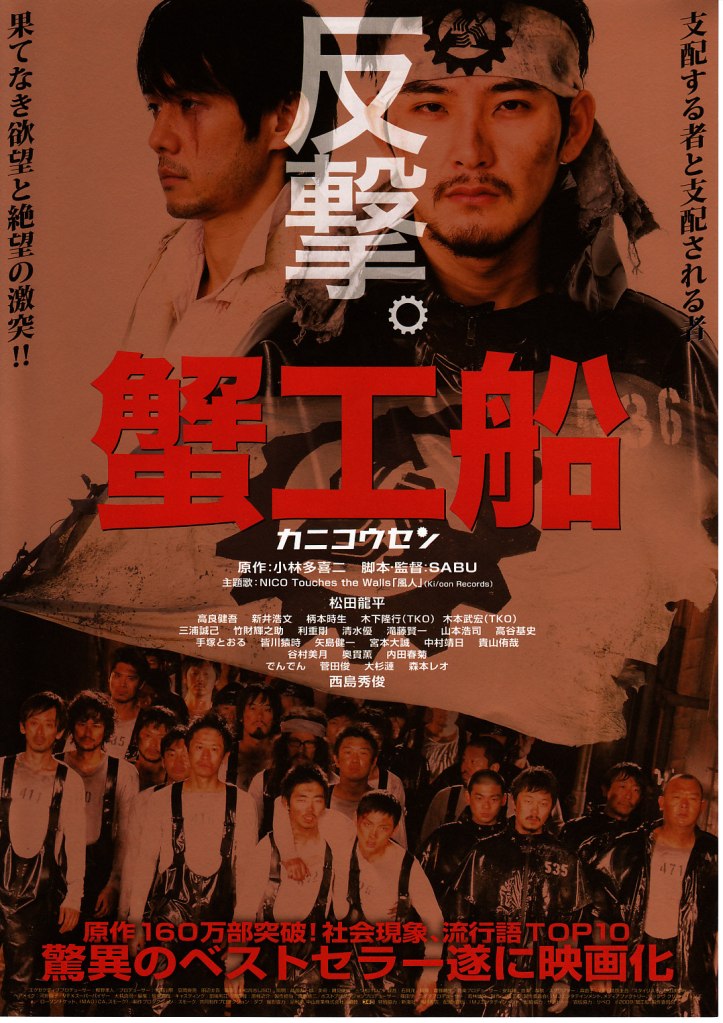 Back in 2008 as the financial crisis took hold, a left leaning early Showa novel from Takiji Kobayashi, Kanikosen (蟹工船), became a surprise best seller following an advertising campaign which linked the struggles of its historical proletarian workers with the put upon working classes of the day. The book had previously been adapted for the screen in 1953 in a version directed by So Yamamura but bolstered by its unexpected resurgence, another adaptation directed by SABU arrived in 2009.
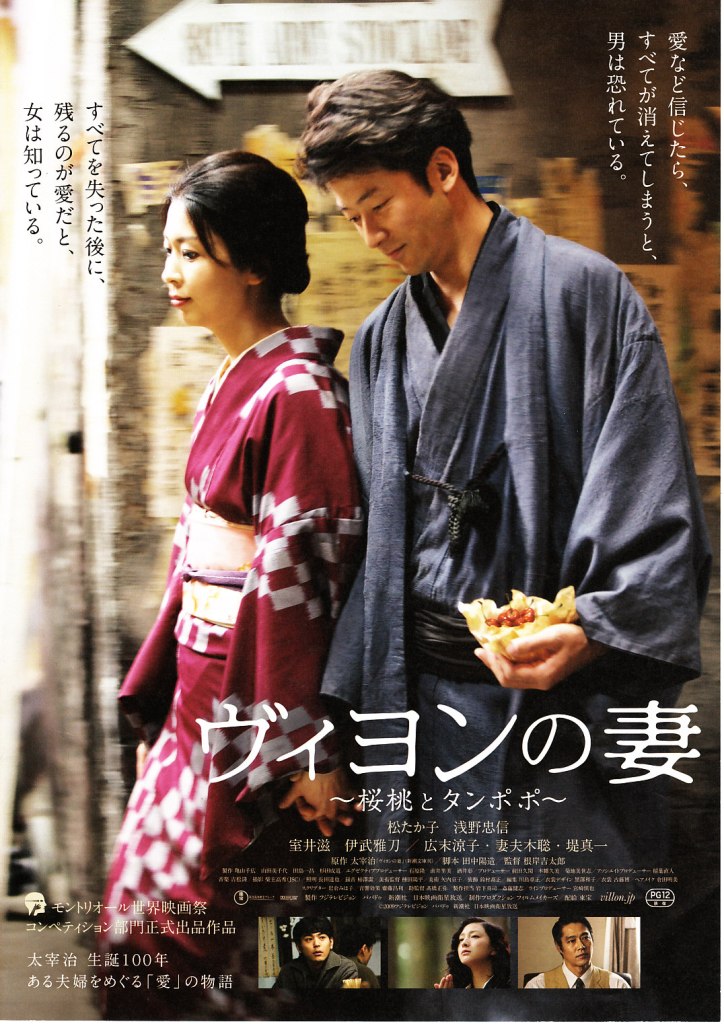 2009 marked the centenary year of Osamu Dazai, a hugely important figure in the history of Japanese literature who is known for his melancholic stories of depressed, suicidal and drunken young men in contemporary post-war Japan. Villon’s Wife (ヴィヨンの妻 〜桜桃とタンポポ, Villon no Tsuma: Oto to Tampopo) is a semi-autobiographical look at a wife’s devotion to her husband who causes her nothing but suffering thanks to his intense insecurity and seeming desire for death coupled with an inability to successfully commit suicide.
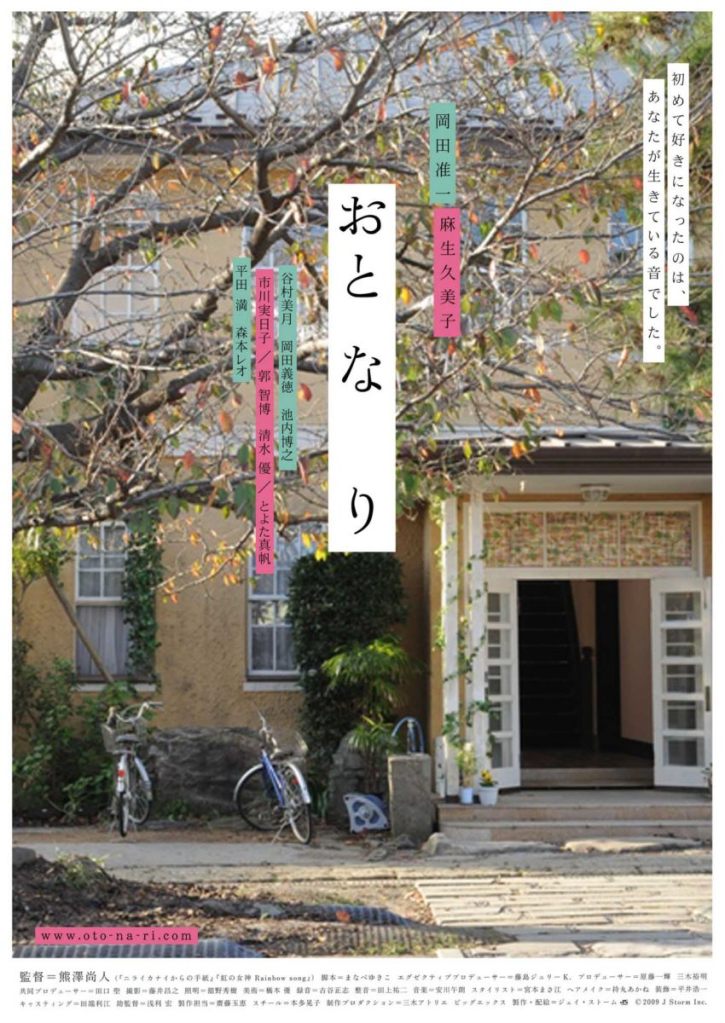 Sometimes when you live in the city it’s difficult to build meaningful connections with other people. You might find yourself a little lost, caught between the rat race and what it was that brought you to the city in the first place, but if you just close your eyes and listen, you can hear that you’re not alone. Romantic Prelude (おと・な・り, Oto-na-ri) is the story of two such people who build up a strange connection even though they’ve never really met.
 It used to be that movies about marital discord typically ended in a tearful reconciliation and the promise of greater love and understanding between two people who’ve taken a vow to spend their lives together. These endings reinforce the importance of the traditional family which is, after all, what a lot of Japanese cinema is based on. However, times have changed and now there’s more room for different narratives – stories of women who’ve had enough with their useless, deadbeat man children and decide to make a go of things on their own.