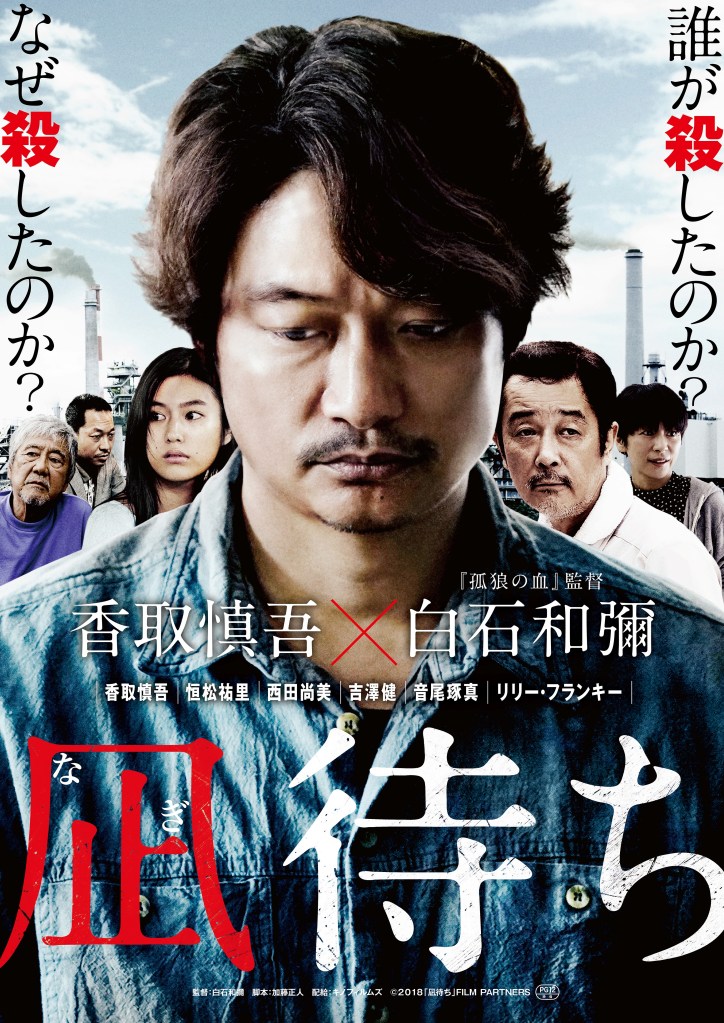
Sea of Revival (凪待ち, Kazuya Shiraishi, 2019)

“One bad thing leads to another” according to overprotective mother Ayumi (Naomi Nishida) in Kazuya Shirashi’s Sea of Revival (凪待ち, Nagi Machi). She’s not wrong, but breaking the chain proves harder than expected, especially as trouble has a way of following people around and the one thing you can never outrun is yourself. Yet, what might save you in the end is not so much self acceptance as that of others and finding your place along with a sense of belonging as member of a family in the knowledge they have chosen you as one of their own. 

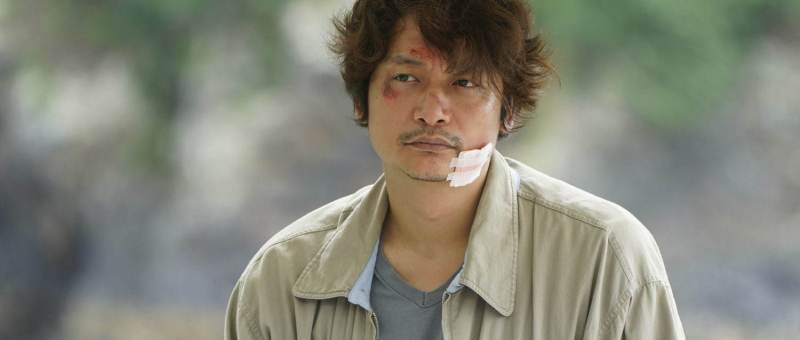
Ikuo (Shingo Katori), the hero, certainly has plenty of demons he’s looking to leave behind. A devotee of the bicycle races, he’s just been laid off from his factory job and is preparing to move to his girlfriend Ayumi’s hometown where she plans to open a hairdressers and care for her ageing father Katsumi (Ken Yoshizawa) who has just been diagnosed with stage four cancer. Ayumi left rural Miyagi with her daughter, Minami (Yuri Tsunematsu) whose name is written with the characters for beautiful waves, after the tsunami which devastated the area and took her mother’s life. She hopes that it can be a new start for their family and that Ikuo will finally be able to shape up, knock his gambling habit on the head and ease back on the drinking. 

Things get off to a bad start, however, when Ikuo fails to bond with Katsumi who largely ignores him, while he discovers that Ishinomaki is much more conservative than Kawasaki and not everyone seems to approve of his liminal status in the Konno household. The fact remains that Ayumi and Ikuo, though they’ve been living together for five years, are not legally married and therefore in the eyes of some not a proper family, and more to the point Ikuo is an outsider with relatively little to recommend him. He does however try to make good on his promise, impressing the boss at a printshop where an overly helpful family friend, Onodera (Lily Franky), has found him a job, but quickly succumbs to old habits when a pair of ne’er-do-well colleagues introduce him to an illegal bicycle racing betting club run by local yakuza. 

Matters come to a head when Minami gets fed up with her mother’s overprotective conservatism and decides to pay her back by staying out late with new friends Ayumi doesn’t approve of. Flagging up their differing parenting styles, Ikuo tells Ayumi that she’s overreacting and should be happy for her daughter who is finally living something like a normal teenage life rather than shutting herself up in her room playing games like she did in Kawasaki where the other kids made her life a misery, calling her a “radioactive” transfer student from Fukushima. Ayumi fires back that Ikuo obviously isn’t very invested in Minami because, after all, he’s not her real dad and has no idea what family is. An extraordinarily hurtful thing to say in any circumstances, Ayumi’s words strike a nerve as Ikuo struggles to claim his place as a non-husband who has nevertheless become a father figure but is not recognised as a legitimate member of the family. 

Claim his place he does however when tragedy strikes, rushing into a police cordon shouting “I’m family” but being held back by the forces of social order while Minami cleverly evades them to see something no one should ever have to see. Old Katsumi meanwhile, apparently much like Ikuo in his youth, a fiery scrapper with a self-destructive streak, struggles to accept his failure either to save his wife or die by her side. Recognising something of himself in the younger man, he finally warms up to Ikuo, literally “redeeming” him from vengeful yakuza, offering only the explanation that he does so because “he’s my son”. 

Others such as the weirdly ever present Onodera may think it proper that Ikuo leave the Konno household because he has no more reason to be there, that his presence is now even more inappropriate than it was before. Minami is advised to move in with her birth father (Takuma Otoo) despite the fact Ayumi described him as abusive and that he has remarried and is currently expecting another child. Ikuo’s five years as her father count for nothing, because he was not married to her mother. During the car journey to their new home, Minami had playfully suggested to Ikuo that he should propose but he claimed he had no right to do so as an irresponsible man unable to contribute meaningfully to the household. Ayumi dreamed of the sea and of beautiful Caribbean islands to which Ikuo had promised but failed to take her. She ironically hoped to rebuild their lives in the ruined landscape of Ishinomaki where they’ve put up walls so tall you can no longer see the sea, still beautiful despite all its terrible ferocity. 

“A good wife makes a decent man” Ayumi’s ex bitterly fires back at her though others have found it to be true, Katsumi not least among them, but Ikuo’s problem is an internalised sense of masculine failure which keeps him on the edges of a family which is otherwise his by right. In a strange way, a piece of paper can make all the difference and no difference at all, both legitimate and not, in making it plain who is and is not accepted as “family”. Accepted by others, Ikuo learns to accept himself, still burdened by guilt and regret but also bound by it as he joins his chosen family on new a journey powered by those same beautiful yet destructive forces which have engendered so much grief and hope.


Screened as part of the Japan Foundation Touring Film Programme 2020.

Original trailer (English subtitles)
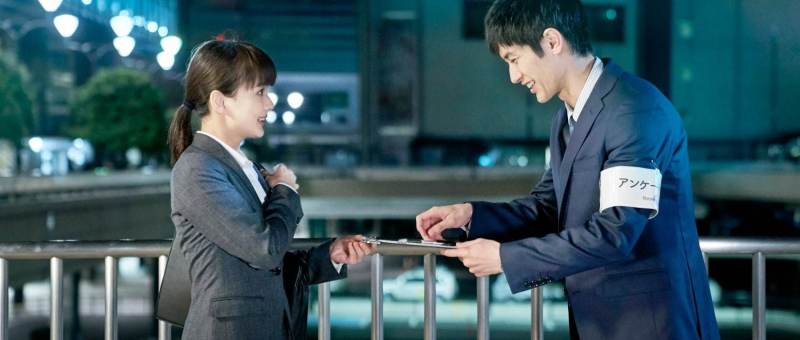
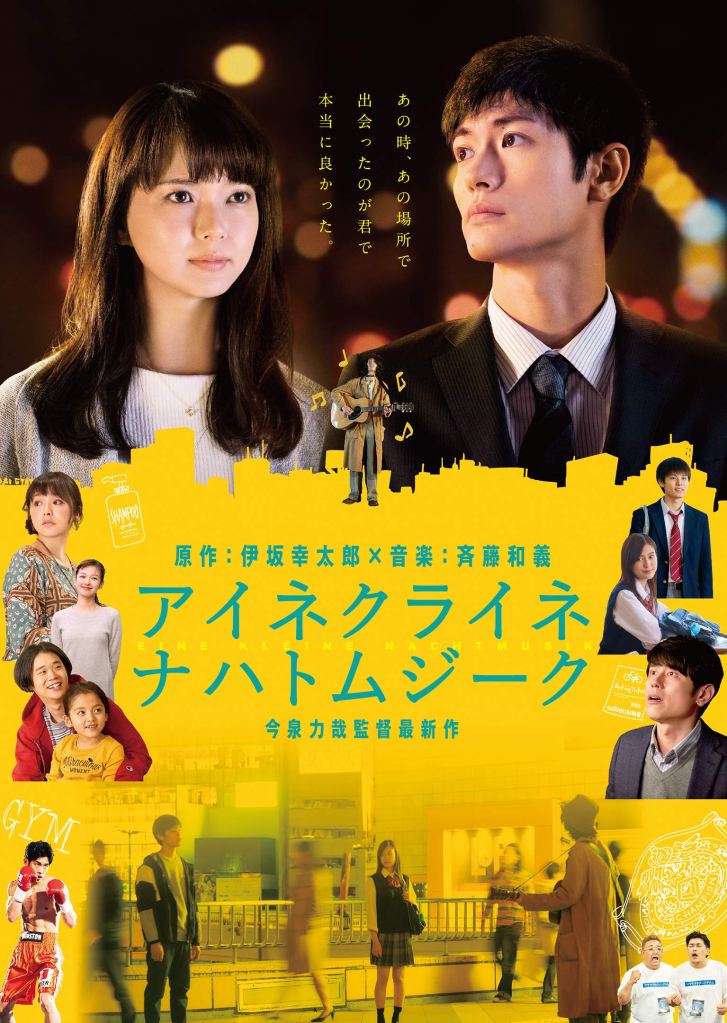
Little Nights, Little Love (アイネクライネナハトムジーク, Rikiya Imaizumi, 2019)

What is love? Is it an accident, cosmic destiny, or something that finally you have to choose? The romantically inclined hero of Little Nights, Little Love (アイネクライネナハトムジーク, Eine Kleine Nachtmusik) is convinced that romance is something that happens to you at an unexpected moment, but his friends worry that he’s letting life pass him by because of his bashful passivity. While the city is gripped by the upcoming world heavyweight boxing championship which might finally result in a Japanese underdog raising the belt, its citizens gain the courage to fight for love, but discover that love is less victory than mutual concession. 

Sato (Haruma Miura), a hopelessly romantic salaryman, is forced to stand outside the station in the centre of Sendai conducting public surveys to make up the data that was lost when he accidentally spilt coffee on his colleague’s computer. Naturally shy, he’s not an ideal fit for the job but serendipitously bonds with a young woman, Saki (Mikako Tabe), when they are both captivated by the soulful song of a street musician. She agrees to fill in his form, and he notices she has “shampoo” written on her hand. He thinks it might be a sign, but she’s gone before he can do much about it. 

Sato’s college buddies Yumi (Erika Mori) and Kazuma (Yuma Yamoto), married young in a shotgun wedding but seemingly blissfully happy and parents to two adorable children, are quick to tell him that his romantic desire for serendipitous love is just thinly veiled cowardice and his essential passivity, refusing to put himself out there, is the reason he’ll end up alone. Meanwhile, Yumi is also trying to support her longterm single sister, Minako (Shihori Kanjiya), who is in a strange “relationship” with the younger brother of a client at her hairdressing salon. Despite talking regularly on the phone, he seems reluctant to meet because his job keeps him very busy which leaves her feeling confused and suspicious. 

Yumi and Kazuma think they ended up together out of necessity, but that necessity was in its own way chance. Secretly, Kazuma might wonder what might have happened if he’d been careless with some other girl, but has come to the conclusion that he’s glad it was Yumi and not someone else. Sato’s colleague Fujima (Taizo Harada), meanwhile, thought he had a cheerily romantic origin story for his relationship – a classic dropped wallet meet cute of the kind Kazuma insisted only happens in the movies, but now nearing 40 his wife has left him and the failure of his marriage has provoked a nervous breakdown. Sato asks him if he’s still glad it was his wife who dropped her wallet and not someone else, and if she’s glad that it was him who picked it up. Not only can he not quite answer, he doesn’t quite want to know. 

Meanwhile, Minako discovers that her diffident lover has decided to stake his romantic future on the championship match, that if the Japanese challenger wins he’ll finally have the courage to speak his heart. Minako is angry and disappointed, infuriated that he has so little courage that he has to vicariously channel the power of someone else to confess his feelings, but is as glued to the match as everyone else. 10 years on, the same thing happens again. Yumi and Kazuma’s daughter, Mio (Yuri Tsunematsu), is now a rebellious teen fed up with her father’s perpetually easygoing attitude and infuriated by a school friend, Kurume (Riku Hagiwara), who also pins his romantic hopes on the boxing match while inwardly resenting his overly spineless father (Yurei Yanagi) for becoming a mere cog in the great machine of capitalism. His refreshingly honest mother (Mari Hamada), however, reminds him that everyone thinks that when they’re 17 but really there’s no life without compromise and cogs at least have their place in keeping the wheels turning. Kurume finds this out by chance when his dad is able to save him from a sticky situation using classically meek, salaryman-style strategy. 

Perhaps what Kurume resents is the sense of impending powerlessness that comes of being a teenager squaring off against the salaryman straightjacket even if he’s still too diffident to put up much resistance. Meanwhile, the reverse is also true. The youngsters bond while staking out a bicycle parking garage to look for a thief who stole Mio’s 60 yen parking sticker and put it on his own bike, leaving her with the fine. They discover it’s an old man who wastes no time in yelling at the young whippersnappers while kicking off against his sense of impotence by gaming the system over a measly 60 yen he could have easily paid. The same thing happens again at Mio’s part-time job where a horrible old man decides to take out his frustrations with his place in the world on an innocent teenage girl. 

10 years earlier, Sato had saved a boy with hearing problems from being beaten up by bullying classmates, giving him new strength by introducing him to Japan’s boxing champ. The inevitable, however, happens, and even champion boxers have feet of clay. Things don’t always go to plan, or perhaps they do but that only makes you wonder if you’re really on the right path or merely settling for that of least resistance. The street singer’s song asks if you’re happy where you’ve ended up or if you still want more than ordinary happiness. Sato, still diffident, has to admit that perhaps he isn’t sure, while Saki does something much the same in wondering if they’re only still together out of habit and a misplaced belief in the narrative destiny of their serendipitous meeting. Another championship match sees them all ready for the fight once again, encouraged by the embattled boxer’s refusal to give-up on his fighting dreams, but perhaps still waiting for a “sign”. What Sato learns, however, is that they don’t always arrive quite as serendipitously as one might might think. “It builds up” Fujima warns him, waking up to the fact that his wife likely left him after years of small microagressions that killed their love through taking it for granted. But love can build up too, if only you build up the courage to fight for it with a willingness to be honest with your feelings, and what’s life if not lots of little nights filled with lots of little love, no grand romance but maybe not so bad after all. 


Screened as part of the Japan Foundation Touring Film Programme 2020.

International trailer (English subtitles)
The song – Chiisana Yoru by Kazuyoshi Saito

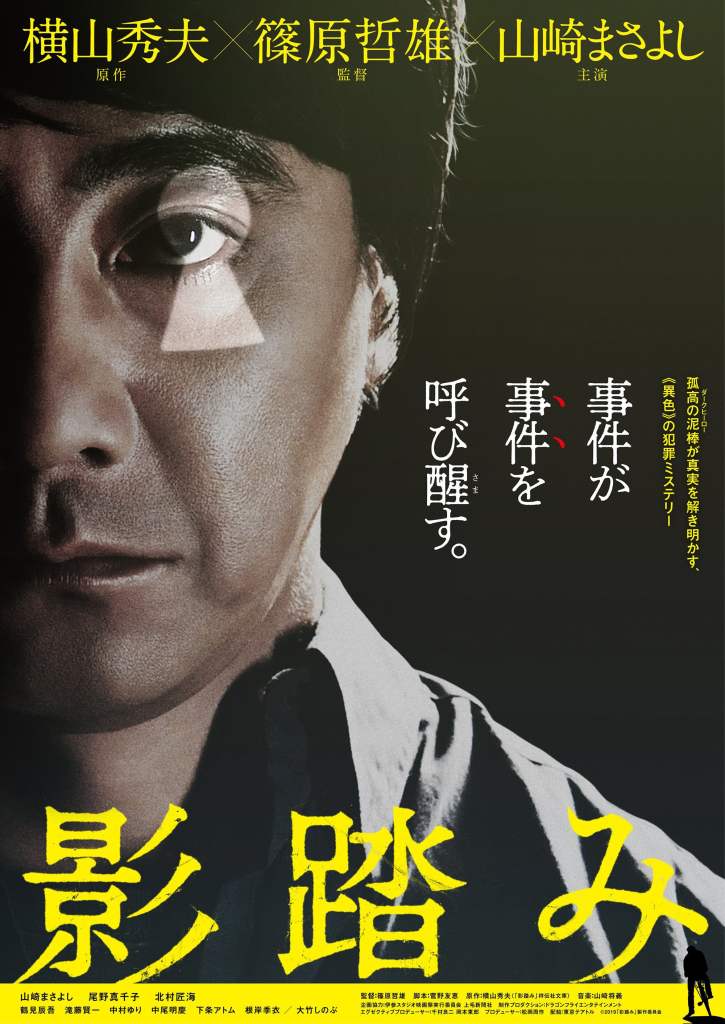
Shadowfall (影踏み, Tetsuo Shinohara, 2019)

Cinema has an odd preoccupation with twins. The uncanniness of seeing more than one person with the same face in the same frame injects a note of inescapable unease, not least because of the oddness of the techniques required to make one actor appear to be in two places at once. Shadowfall (影踏み, Kagefumi) adapted from the mystery novel by 64’s Hideo Yokoyama, places the “evil twin” motif at its heart but, perhaps a little uncomfortably, uses it as a metaphor for the shadow self as the conflicted hero attempts to find closure with past trauma and family legacy in order to reintegrate his two selves into one complete whole capable of living a life both spiritually and emotionally honest. 

As the film opens, ace cat burgler Shuichi (Masayoshi Yamazaki) is in the process of breaking into the home of a local politician. Whilst there, however, he discovers petrol pooled on the hall floor and the politician’s wife, Yoko (Yuri Nakamura), nervously grasping a cigarette lighter. He manages to snap the lighter shut before she can use it, saving her life (as well as that of the husband she was about to kill), but is then caught by a policeman, Sosuke (Pistol Takehara), who happened to be “just passing by” and is also, coincidentally, a childhood friend. Shuichi gets two years, and is met on his release by a young man, Keiji (Takumi Kitamura), dressed in incongruously old-fashioned, gangster-style clothes and adressing him as “Shuichi-ni” or “big brother Shuichi”. Together, the pair form a small crime fighting team determined to find out what became of Yoko while poking their noses into some conspiratorial corruption which links her with yakuza, police, and the judiciary. The situation is further complicated when Sosuke is found dead after a visit to Yoko’s bar, leaving Shuichi implicated in the possible murder of his old friend. 

Reflecting on the case, police detective Mabuchi (Shingo Tsurumi), who also knew Shuichi in his youth, remarks that twins are tied to each other like heaven is to hell. One will necessarily drag the other down. Later, he corrects himself, that if is that is true then the reverse must also be and one should be able to raise the other up. What we see, however, is largely the former. We discover that Shuichi had an identical twin who was “no good”, a petty teenage hoodlum always in trouble with the police where he was a top student preparing to study the law and become a prosector. Their mother (Shinobu Otake), a teacher, found herself a victim of social stigma as the mother of a criminal, asked to resign from her job because a woman who can’t raise her own son to be a law abiding citizen is not fit to educate those of others. Hisako (Machiko Ono), who had been friends with both the boys and is still carrying a smouldering torch for the “good” Shuichi, experiences something of the same when she’s targeted by a creepy stalker (Kenichi Takito) who leaks her “criminal associations” on the message board of the nursery school where she too teaches. 

Having waited for him all these years, Hisako is praying for the restoration of the Shuichi she once knew who was good where his brother was “bad”. Despite her deep and abiding love for him, she claims to have chosen Shuichi, rather than his brother, because loving the good is the safer, more responsible choice. Shuichi, meanwhile, describes himself as walking in his brother’s shadow, a darkened space into which Hisako wishes to be admitted but is wilfully denied. He tells himself he does this to keep her safe, but is in reality unable to step into that space himself and occupy it as a full and complete person. He claims that his criminality is an act of revenge when it is actually a kind of self-harm that ensures his two selves, the shadow self that is his departed brother, and the ghost self which is the cat burglar, will remain forever separate. 

Talking with another twin whose mirroring of his brother had even darker results, Shuichi confesses that to share a soul with another human being is a terrible curse and one he secretly longed to be released from. It’s this latent sense of guilt which haunts him, cleaving his soul in two. Only by dealing with the traumatic past, the memories inflamed by Yoko whose burden is a fear of an excessive “niceness” she too must learn to let go, can he reintegrate his two selves into one complete whole with only a single shadow. A noirish tale of haunting grief and unresolved regret, Shadowfall finds hope in the simple act of acceptance and the promised restoration of the imperfect whole. 


Screened as part of the Japan Foundation Touring Film Programme 2020.

International trailer (English subtitles)
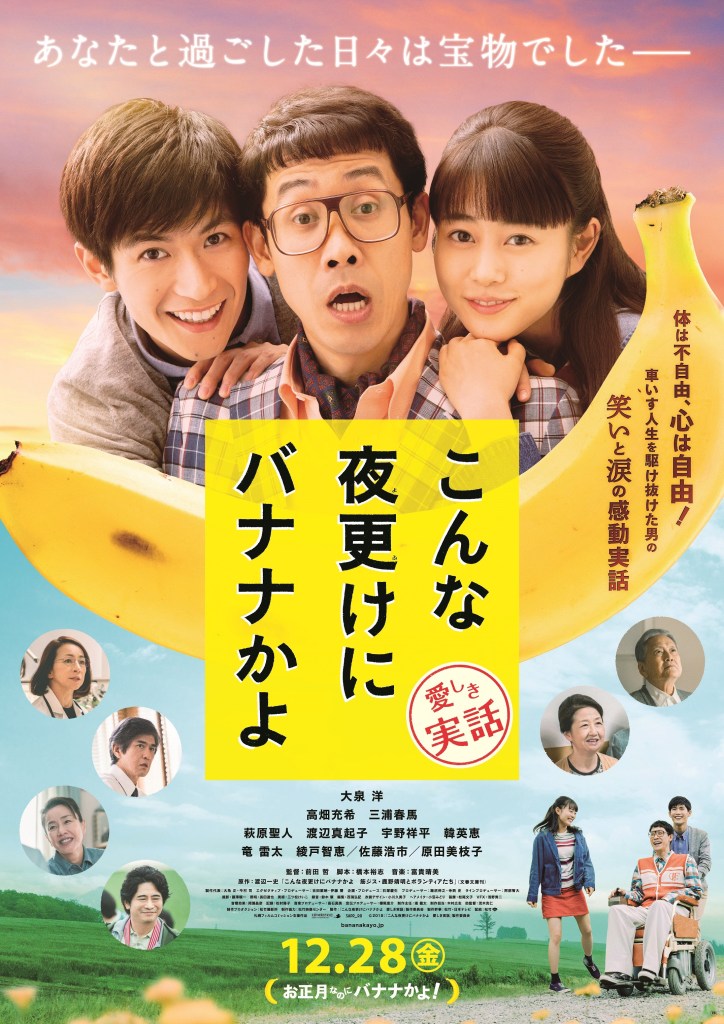
A Banana? At This Time of Night? (こんな夜更けにバナナかよ 愛しき実話, Tetsu Maeda, 2018)

Many people will tell you that if you’re having trouble sleeping, a banana is just the thing though if you’ve failed to properly prepare and have left it until 2.30am to try and buy one you might be out of luck. The hero of Tetsu Maeda’s A Banana? At This Time of Night? (こんな夜更けにバナナかよ 愛しき実話, Konna Yofuke ni Banana kayo: Itoshiki jitsuwa) is not proposing to go out and find one himself, but using his sudden desire for the potassium rich fruit as an excuse to dispatch one of his helpers in the hope of being left alone with the pretty young girl who’s just joined the team. Unbeknownst to him, the girl, Misaki (Mitsuki Takahata), is actually the girlfriend of the aspiring doctor, Tanaka (Haruma Miura), he was trying to get rid of, but the plan backfires when she takes the opportunity to go get one herself in order to escape an increasingly awkward situation. 

Inspired by Kazufumi Watanabe’s non-fiction book, A Banana? At This Time of Night? is the latest in a series of recent Japanese films dealing with the issue of disability in a society which often struggles to accommodate difference. The hero, Yasuaki Shikano (Yo Oizumi), has suffered with muscular dystrophy since the age of 12 and has survived to the age of 34 despite being told that he would likely never see 20. Determined to live an “independent” life, he relies on a small team of volunteers who assist him with day to day tasks he can no longer manage, and works as an activist for the rights of disabled people. 

Yasuaki is, however, by his own admission not always an easy person to get along with. He is often selfish and cruel to the volunteers who have given their time to help him out of nothing more than human kindness while deliberately sending them out on random errands to buy burgers  (or bananas) but finding fault when they return. Yet, he largely gets away with it because of his cheeky personality and the fact he is so robustly “honest” about his own behaviour. One of the major tenets of his activism is destigmatising the idea of asking for help so that younger disabled people in particular who might feel awkward about asking others to assist them so they can lead independent lives know that there is nothing wrong in being upfront about their needs. 

Of course, despite his “honesty”, there’s an essential contradiction in Yasuaki’s definition of independence in that he freely admits that he can only live an “independent” life because of the support he receives from the volunteers. Without them, his life would be impossible. In a further contradiction, we eventually realise that he’s only so mean to his mother (Chie Ayado) because he doesn’t want her to sacrifice the entirety of her life to look after him and wants his parents to be able to live their own lives while he lives his. Misaki, only originally volunteering to check up on her boyfriend, is horrified by Yasuaki’s attitude and vows never to return, only to be coaxed back by Tanaka awkwardly forced to take dictation of an apology/declaration of love when Yasuaki finds himself smitten by her boldness in defiantly standing up to him. 

Slightly embarrassed, Tanaka never explains that Misaki is his girlfriend, perhaps a little patronisingly allowing Yasuaki to play at romance he feels is impossible so that his feelings won’t be hurt. The central problem is, however, that both Misaki and Tanaka have their own failures of honesty which place their relationship at risk. Tanaka was under the impression that Misaki was studying to become a teacher, but her friends just said that to get her into a party with med students and she never bothered to correct him. When the relationship gets more serious, she comes clean, but he takes it badly, half-convinced she just wanted to meet a doctor and the whole relationship has been a lie. Meanwhile, he’s only studying medicine because his authoritarian father wants him to take over the family hospital and he’s beginning to wonder if it’s really what he wants to do with his life. Unlike either of them Yasuaki knows exactly what he wants – to go America and meet his idol which is why he’s been working hard learning English. 

Through their shared friendship with Yasuaki, both of the lost youngsters begin to find direction and the courage to follow it. Despite the many setbacks and difficulties he faces, Yasuaki never gives up on his dreams and boldly insists on the right to pursue them while living his life to the fullest. Which isn’t to say that his own story is merely inspirational fodder for his friends, but it does make the case for a better, more inclusive society built on mutual support in which all are free to live the way they choose spreading love and joy wherever they go. 


Screened as part of the Japan Foundation Touring Film Programme 2020.

International trailer (English subtitles)

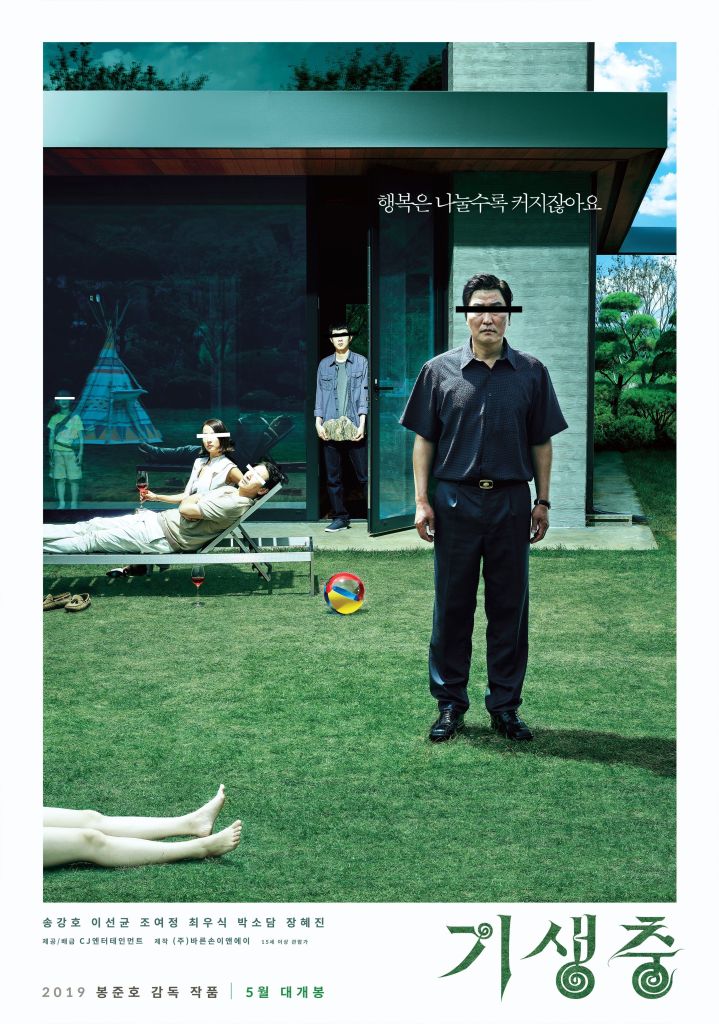
Parasite (기생충, Bong Joon-ho, 2019)

“So metaphorical!” the ambitious son at the centre of Bong Joon-ho’s class war melodrama Parasite (기생충, gisaengchung) is fond of saying, and he’s right – it really is. “Hell Joseon” rears its ugly head again, only it’s not just the young who can’t climb out but mum and dad too. Sticking together all the way, this enterprising family have realised that the only way they’re going to enjoy the fruits of the modern society is by becoming hangers on, feeding off someone else’s perhaps unfairly gotten success, and if that means stomping on a few others just like them to get there then so be it. There’s no room for love or fairness in a class war. 

The Kims – mum Chung-sook (Chang Hyae-jin), dad Ki-taek (Song Kang-ho), and grown up kids Ki-woo (Choi Woo-shik) and Ki-jung (Park So-dam), all live together in a tiny semi-basement apartment in a rundown slum. Unable to find steady jobs, the family make ends meet with casual jobs like folding pizza boxes while cadging wi-fi to look for better opportunities. Better opportunities only arise, however, thanks to Ki-woo’s upper middle-class college kid friend Min (Park Seo-joon) who brings them a special gift from his dad of a stone said to attract wealth, and a hookup for Ki-woo with a possible job coaching the pampered daughter of a superrich tech entrepreneur. After faking his credentials, Ki-woo gets the job, and wastes no time at all bringing in his sister as an “art tutor” for the couple’s apparently “troubled” young son. Together, they conspire to get the chauffeur fired so dad can take over, and then plot to do the same to the housekeeper so mum can come too, colonising the house and living alongside the wealthy Parks with a view to someday ousting them. 

The house, a fabulously modern take on the traditional designed by a famous architect who sold it to the Parks when he moved to France, is a kind of “host” in itself. We might not all admit it, but there are few of us who would not want to live in a house like this, especially if we feel it has been deliberately placed out of our reach. The Kims are envious, yes, but not perhaps malicious. They simply want a kinder life, one free of the anxiety of always having nothing and then getting that taken away from you too. In a running gag, a drunk keeps peeing right in front of the Kims’ window, and later they literally find themselves drowning in a river of shit when torrential rain causes the local sewer system to backup and flood their fetid, low-lying slum forcing everyone into a makeshift “evacuation” centre where insincere public servants try to make excuses about not being bothered enough to make sure those with no money don’t drown just because it rained. 

The Kims aren’t bad people, but their desperation means they can’t afford to be kind. The true “villains” of Parasite aren’t the Parks or the Kims themselves, but the system which forces one set of oppressed people to oppress another. The Kims know they’re responsible for displacing people just like them – getting the driver fired, going after the housekeeper, etc, but they can’t afford to think about it, pausing only to wonder if maybe they found other jobs once they themselves start to feel comfortable. “She’s rich but still nice” Ki-taek says of Mrs. Park (Cho Yeo-jeong), only for his wife to counter no, “she’s nice because she’s rich”. Mrs. Park can afford to be nice because she has plenty. She has no need to worry about taking things from others, and is secure enough not to have to worry about people taking things from her. That makes her easy pickings for a family like the Kims, but it also hints that “niceness” is the natural condition of being human, the way we’re supposed to behave to each other in an ideal world where none of us are hungry or afraid. 

Then again, the Parks are not wholly “nice” even if they are polite in a superficial, wholesome sort of way. Mr. Park (Lee Sun-kyun) in particular has a curiously feudal outlook in which he is perpetually preoccupied with the idea of his servants “crossing the line”, making it plain that there is a clearly defined border between those who rule and those who serve. The Parks’ young son is the first to notice that the Kims all smell the same even if he does so innocently, they all obviously use the same soap and detergent after all. Mr. Park, however, later takes it further, complaining about the way Ki-taek stinks up his car, resenting the smell of “poverty”, the mustiness born of living with damp and mould. To him, the Kims are not so much different from stink bugs, squatting in his home, members of “the great unwashed” unfit for his society. 

He does, however, need them. The Parks are as dependent on the Kims as the Kims are on the Parks, and they all need the house. Unfortunately, peaceful coexistence seems to be a distant possibility in a world of such fierce inequality as to encourage the most casual of cruelties. “All you have to do is walk up the stairs” Ki-woo later tells his father, but that’s easier said than done, especially when everything is telling you that you’ll always belong in the basement. 


Parasite is released in UK cinemas on 7th February.

UK release trailer (English subtitles)

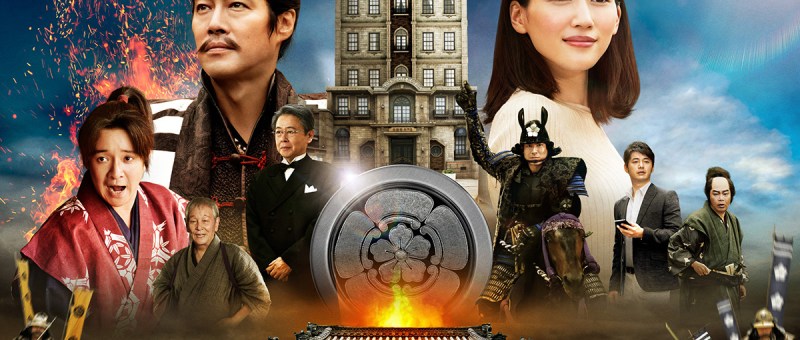
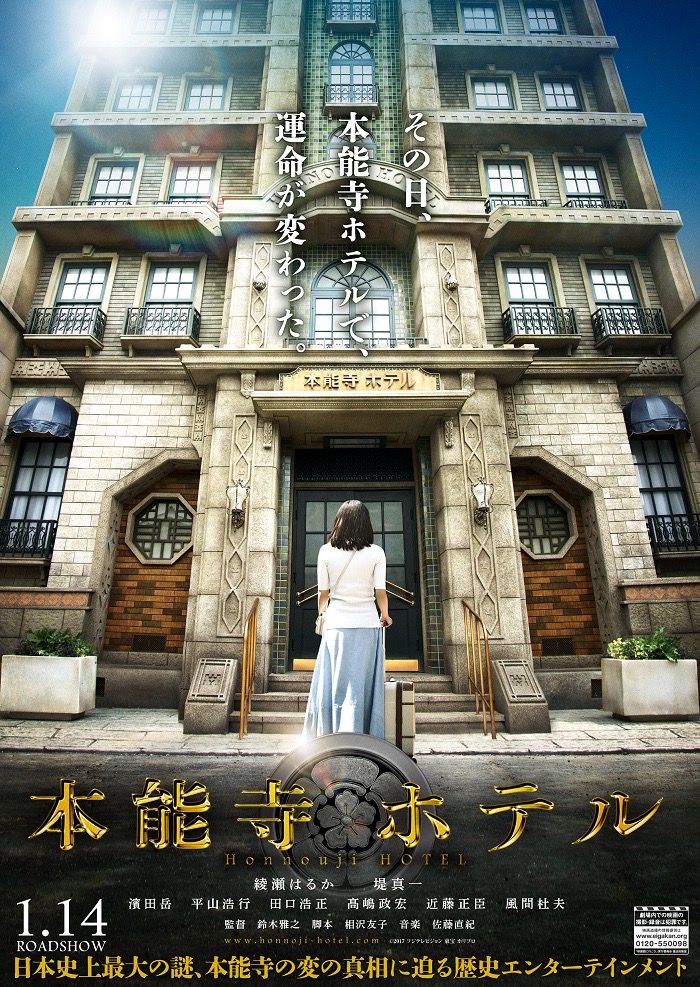
Honnouji Hotel (本能寺ホテル, Masayuki Suzuki, 2017)

According to the opening quote from Otto von Bismark, fools learn from experience and the wise man from history, but in truth you’ll need a little of the former to correctly interpret the latter. The heroine of Honnoji Hotel (本能寺ホテル) is not exactly lacking in life experience, but hers has been of the passive variety. She’s blithely gone along with the path her society laid out for her, but now she’s hit an unexpected bump in the road it’s prompted her into a reconsideration of where it was she was going. Most people wouldn’t meet such a crisis by asking “what would Nobunaga do?”, but that’s where our heroine finds herself after accidentally exiting a hotel lift right into the middle of the Sengoku era. 

20-something Mayuko (Haruka Ayase) is in Kyoto for a short holiday and to meet up with her fiancé to be formally introduced to his family. The problem begins when it transpires that owing to an administrative error, her hotel reservation has been made for the following month and everything is currently fully booked seeing as the city is such a tourist hotspot. After wandering around a while, she stumbles across a dated, slightly musty establishment named the “Honnouji Hotel” which, she realises even given her shaky grasp of history, is a fairly inauspicious name. Everyone knows that 16th century general and noted tyrant Oda Nobunaga committed seppuku at the Honno temple after he was betrayed by one of his retainers who rose against him. Nobunaga had been primed to bring peace to Japan after more than a century of destructive warfare, paving the way for unification under the Tokugawa Shogunate, but is a somewhat ambiguous figure known for his extreme volatility and tendency towards cruel authoritarianism. 

That vision of Nobunaga is indeed the one Mayuko first encounters when she finds herself accidentally thrown back into the Sengoku era after exiting the lift in her hotel. The first person that she meets turns out to be Mori Ranmaru (Gaku Hamada) with whom she bonds over a shared sense of anxiety, she over meeting her boyfriend’s family, and he over an important tea ceremony with life or death consequences. She gives him some modern-day stomach medicine while he warns her that his lord is “cruel and demonic”. Still not quite grasping that things work differently (to a point at least) in the feudal world, she advises him to quit rather than allow himself to be exploited to the point that it’s ruining his health but he exasperatedly reminds her that you can’t simply drop out of samurai society. Mayuko gets another cruel awakening when observing the tea ceremony and witnessing a man, whom she later realises to be Nobunaga (Shinichi Tsutsumi), extorting a tea caddy from a distressed master who tries to protest that he’d only been informed that the caddy would be displayed and is unwilling to give it away. Nobunaga reminds him that the nation will soon be unified under his banner, at which point he will be in control of business affairs, threatening him with economic consequences backed up with the possibility of immediate violence. 

Despite her essential passivity, Mayuko cannot bear injustice and immediately springs into action, handing the caddy back to its original owner and instructing him that he shouldn’t allow himself to be intimidated into giving up his prized possessions. In her own life, however, she’s nowhere near as certain. We find out that she’s only known her fiancé for six months, and is still ambivalent about the idea of marriage. When the company she’d been working for suddenly went bust, she found herself at a loss, told that the teacher’s certificate she’d taken as a backup is largely useless because even teaching is oversaturated in today’s difficult job market. Now, it’s not feudal times anymore, but many people in Japan still expect a woman to give up her career to get married, which is what most of her friends advise her to do especially seeing as she had no particular ambitions or goals in life. Kyoichi’s (Hiroyuki Hirayama) proposal comes at an opportune moment, but she finds herself asking opportune for whom and if this is really what she wants or if she’s just allowing herself to be railroaded into conventional “success” without really thinking it through. 

It might be going too far to read too much in to a similarity between Nobunaga’s dictatorial dynamism and Kyoichi’s domineering manliness, but that’s largely where Mayuko seems to be. Beginning to realise his mistakes, Kyoichi confesses that he cynically took advantage of the situation to manipulate Mayuko into marrying him, believing that she was “insecure and unreliable”, “unable to do anything alone” and in need of his protection. Talking with Kyoichi’s father and beginning to assert herself in opposition to Nobunaga’s injustices, she begins to realise that she can take charge of her own destiny and has a duty to find what it is she wants to do, and do that as best she can.

The lesson is, however, somewhat problematically learned in her realisation both that she can’t change “history” and that she can because history is a consequence of our collective choices. This Nobunaga, apparently wanted a peaceful society for all, one in which class divisions had been eradicated and equality ruled. He sees our world and deems it good enough to sacrifice his life for, but Mayuko by turns becomes enamoured of the past, finding her vocation as a teacher of history in a move which is both progressive in seeing her reject a marriage of “convenience” to strike out under her own steam, but also backward looking in its reevaluation of Nobunaga and his unfinished revolution as if there is no real need for change “now”. Granted, Honnouji Hotel is partly concerned with selling the charms of Kyoto as an unchanging historical centre, but it’s difficult to escape the slightly sour note of conservatism as Mayuko finds her forward path only by embracing the samurai past. 


Original trailer (no subtitles)

Little Q (小Q, Law Wing-Cheong, 2019)

little q poster 4You might think, in this day and age, that guide dogs are a fairly uncontroversial subject, but it might interest you to know that Hong Kong apparently has a vast guide dog deficit with fewer than 40 working in the city as of 2016 which is around one for every 4,300 visually impaired people. That might be part of the reason that Little Q (小Q, Xiǎo Q), adapted from a Japanese photobook by Ryohei Akimoto & Kengo Ishiguro, largely plays out as a feature length advert for the Hong Kong Guide Dogs Association, which is one of only two organisations training guide dogs and was set up in 2011 ending a 26-year absence of any such body.

The film charts the entire life cycle of the titular Little Q, whom we first meet literally falling into the arms of grumpy pastry chef Po-ting (Simon Yam Tat-wah). Rewinding a little, we realise that Po-ting’s sister and her vet husband are involved with the raising of guide dogs, sending Little Q off to live with his “foster family” which, perhaps irresponsibly, is in the home of plucky little girl Tsz-kiu (Jessica Liu Chutian). For those who don’t know, and as the film perhaps hopes to illuminate, guide dogs are trained in a family home by ordinary people who’ve agreed to look after them for the first 18 months of their lives, after which the dogs are given a final aptitude test and then placed with a blind person for a probationary period to assess their compatibility. Of course, agreeing to foster a dog knowing that you’ll eventually have to give it up can be emotionally difficult even for an adult, so placing that responsibility on a child is only going to lead to tears, of which there are plenty as Tsz-kiu is finally forced to accept that Little Q can’t stay with her forever because she has a greater calling.

Simon (Him Law Chung-him), the trainer/co-ordinator, promises Tsz-kiu that he’ll make sure Little Q has a lovely life with a person who truly appreciates her and that he’ll be sure to bring Little Q right back if she’s ever hurt or mistreated, but in part he knows he’s being disingenuous because they’ve already decided she’ll be going to Po-ting. Po-ting does not want a guide dog and is only getting one because of his sister’s connection to the programme. The problem is that Po-ting was always a “difficult” person. A well known TV pastry chef, he made a name for himself being mean in the way only a celebrity chef can. He has no respect for his service animal in part because he has no respect for other people, and because he was good at what he did people let him get away with it. Po-ting once cut down a contestant on the TV show by insisting that a chef must use all five senses, so he feels particularly trolled by the universe to have lost his sight and is struggling to accept his blindness. Feeling a sense of internalised shame because of his disability in addition to the fear and anxiety involved with adjusting to his new life has made him even more unpleasant and resentful than he was before. Angrily insisting he needs no additional help, he rejects and mistreats Little Q, even violently throwing her out of his well appointed home in the pouring rain.

As this is Little Q’s story, however, we only get a back seat view to Po-ting’s gradual softening as he begins to let her into his life, engineering not only a warmer relationship with his sister/partner in the pastry shop (Gigi Leung Wing-kei) but also with his apprentices, while he begins to see that the loss of his sight is only a change and not a tragedy. Through it all, Little Q is at his side, steadfastly loyal even when he tries to push her away, which is perhaps not quite the best message to be sending though it does emphasise the intense attachment that necessarily develops between a guide dog and its owner.

Law hints at an ethical dilemma in pointing out the toll taken on the dogs in the course of their work, but heads it off in reminding us that they get to “retire” and live out their final days as pampered pets while demonstrating that the reformed Po-ting breaks all the rules by playing ball with Little Q like a regular family dog. The paradox is difficult to bear as owners must act in symbiosis with their dogs, but are reminded that they’re service animals belonging to the organisation not personal pets and should something happen to them, will be shuffled on to others in need or returned to their foster families. Nevertheless, Little Q gets the best of both worlds, bonding fiercely with the grumpy Po-ting as he figures out how to live and love by following her lead.


Screened in association with Chinese Visual Festival.

Trailer (Cantonese with English subtitles)

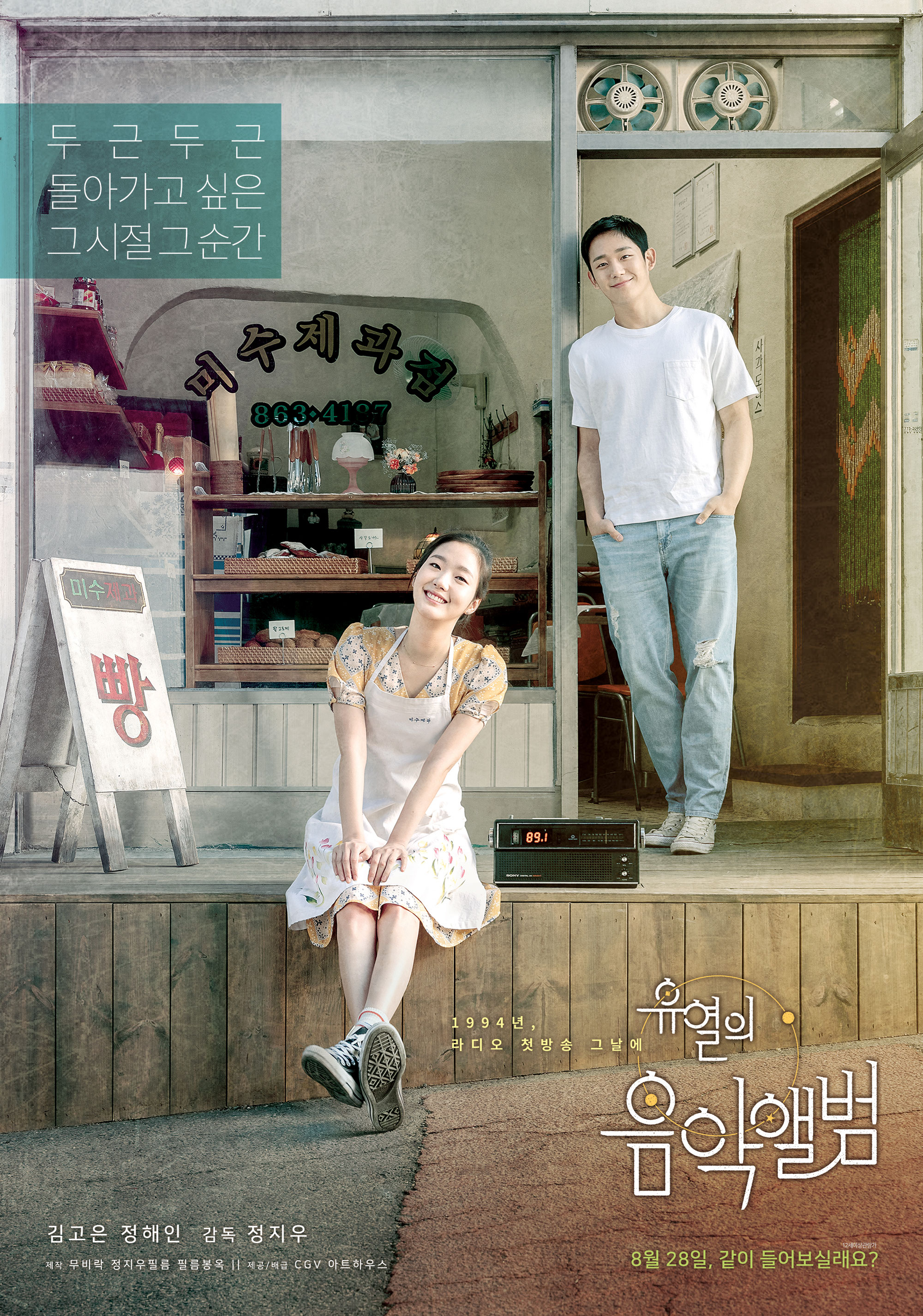
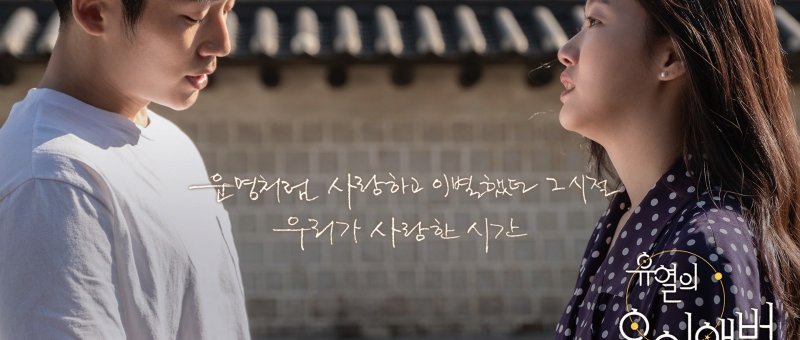
Tune in for Love (유열의 음악앨범, Jung Ji-woo, 2019)

Tune in for love poster 2The course of true love never did run smooth. Another in the recent series of nostalgic ‘90s romances, Tune in for Love (유열의 음악앨범, Yooyeolui Eumakaelbum) takes a pair of nervous youngsters and charts the course of their love story over a decade which, though not quite turbulent, saw its share of difficulties and a host of technological changes. “Miracles are nothing special” the heroine tells us, but when it comes to love miracles are all there is and in the end you’ll just have to learn to trust them.

On Oct. 1, 1994 Hyeon-u (Jung Hae-in) walks into Mi-su’s (Kim Go-eun) bakery looking for something with tofu in it. While inside, he hears the first broadcast of Yoo Yeol’s Music Album, a new morning program which seems to signal the beginning of a new era. Though Mi-su is quick to realise that the only reason someone would be desperately looking for plain tofu early in the morning is because they’ve just been released from prison, she decides to offer him a part-time job in the bakery where he becomes a member of the family alongside her “aunt” Eun-ja (Kim Guk-Hee) who’s taken care of her since her mother died. His past, however, refuses to let him go however much he tries to move away from it. Tracked down by his delinquent friends, Hyeon-u is unable to return to the bakery and will spend the next decade trying to do just that.

Fate parts the youngsters repeatedly, but always brings them back together again seemingly by chance. Military service, changes of address, miscommunication and changing technology all conspire to keep them apart but like any good rom-com the problems aren’t so much circumstantial as personal. A deeply wounded young man, Hyeon-u is taken with the familial atmosphere at the bakery because he feels a sense of acceptance he hasn’t anywhere else, but deep down he still doubts he deserves the “normal life” he so deeply craves. His friends doubt it too, always turning up unexpectedly to remind him of their shared trauma and the debt of guilt he can’t repay. His insecurity prevents him from sharing the source of his pain with Mi-su, keeping her somehow outside the bubble of his shame as the only one capable of knowing the “real” him. She meanwhile is frustrated in realising that he’s holding something back, hurt he doesn’t trust her enough to let him in, and worrying he’ll never truly be ready for full commitment. 

Nevertheless, though often apart they remain painfully in sync, until that is fate brings them back together. As young man with a checkered past and no safety net, Hyeon-u has to fight twice as hard to get ahead, eventually graduating high school and getting into college while supporting himself with part-time jobs. Mi-su, meanwhile, is burdened by the knowledge that she’s lost her mother’s bakery and is desperate to get it back. Dreaming of being a writer, she turns down an internship at the all important radio show to go for a steady job she’s told is at a publisher’s but is actually somewhere more like a print shop where she’s stuck doing incredibly boring admin work. Hyeon-u is unable to get back in touch with her after miraculously reappearing because he’s ashamed to admit that he ended up getting in trouble again thanks to his awful friends even though it really wasn’t his fault. She meanwhile confesses that a part of her was relieved not to hear from him because she too is unhappy in herself, feeling lost and confused, disappointed not to be living the kind of life she could be proud of. 

Times change, but their one constant is the radio show broadcasting every morning and providing additional though indirect methods of communication when they are otherwise unable to make contact. Pay phones give way to email and then to mobiles all the way into the early days of the smartphone era, but face to face conversation remains the most difficult. Mi-su gives up on Hyeon-u while he, ironically, probably does sort something out by having a good old fashioned punch up with his generally unhelpful friend. She wonders if she’s better off to make the “smart” choice rather than waiting on love. Hyeon-u is hurt that in the end she didn’t trust him, but is eventually made realise that the problem was that he didn’t trust himself. Then again, you can’t fight the power of true connection or the pain of its absence, all you need to do is a little fine tuning to make sure the signal comes through loud and clear.


Currently available to stream online via Netflix in the UK (and possibly other territories)

Netflix trailer (English subtitles)
Code Blue: The Movie (劇場版コード・ブルー –ドクターヘリ緊急救命–, Masaki Nishiura, 2018)

Code Blue posterThe common complaint plaguing popular Japanese cinema is that it’s increasingly dependent on existing source material, not in only the prevalence of manga adaptations, but the continuing influence of TV drama. Ever since the massive success of the Bayside Shakedown franchise, big screen outings for popular series have been a mainstay of the Japanese film industry, the problem of course being, from a certain point of view, that their nature as an extension of an already existing narrative universe makes them not only impossible for export but also a potential audience turn off to those not already invested.

Code Blue is itself comparatively unusual in being one of the few Japanese TV dramas to head into multiple series. That being so, a movie was something of an inevitability, but like many medical shows which generally adopt a case of the week formula, Code Blue thrives on finely crafted characterisation. Rather than jump this obvious hurdle, director Masaki Nishiura opts for the time-honoured solution of a brief flashback highlighting the key events of the previous three seasons and otherwise tries to avoid too many references to past events. It remains true however that viewers already acquainted with the Doctor Heli team will be best placed to navigate the complex interpersonal relationships informing the rest of the action.

Those would be, chiefly, the unexpected return of aloof doctor Aizawa (Tomohisa Yamashita) who is about to take up a research position in Toronto, while Dr. Hiyama (Erika Toda) is also preparing to follow her dream by moving on to head up the perinatal department at a nearby hospital. As is stressed in the opening sequence for those who might not be aware, the Doctor Heli program does not airlift passengers by helicopter but drops doctors into emergency situations where they are most urgently needed. Aizawa’s arrival coincides with the forced return of a flight originally heading to Vietnam which experienced heavy turbulence with multiple casualties needing evacuation from the plane or treatment on the ground. One such patient turns out to be an especially difficult case seeing as she has not only sustained serious injuries, but is also suffering from stage 4 stomach cancer and was trying to take a last vacation in her final days.

The Doctor Heli team are deeply touched by Tomizawa’s (Kasumi Yamaya) plight, knowing that though her injuries would otherwise not be regarded as serious, she may well end up spending her remaining time in their ICU rather than doing the things she wanted while she could. A talk with her parents reveals a painful breakup and canceled wedding, neatly echoing a conflicted nurse desperately trying to get out of the, in her view unnecessary, wedding ceremony her fiancé has organised. Tomizawa’s former boyfriend (Mackenyu) eventually returns and apologises, hoping to make up for lost time, but she isn’t sure she should let him, not only because he let her down by running away, but because she fears that if she does she might prevent him moving on with his life after the inevitable occurs.

Despite being skilled at fixing the human body, the doctors confess they are often at a loss when it comes to the human heart. They struggle to communicate their true feelings to each other, keeping their minds on the job with well practiced practicality, but are all too aware of the precariousness of being alive. What they all advise is that it’s best to let the people you love know your true feelings because you never really know if there will be another opportunity. Dependable leader Shiraishi (Yui Aragaki) can’t quite find the words to express her feelings for her soon to be departed best friend Hiyama, while she struggles with her essential “awkwardness” yet has a knack for the good kind of “direct”, always knowing the right words to help people feel better.

Aizawa, who had no family of his own, is stoical and patient with those of others, comforting a young man who’s gotten into a car accident with the abusive father he’d tried to reconnect with, letting him know that there was nothing wrong in his rage or resentment but also nothing wrong in his desire to tell him that he has become a fine man on his own and that his father’s violence has not destroyed him. Likewise, a young nurse, Futaba (Fumika Baba), gets an unexpected shock when her older sister brings their alcoholic mother (Rino Katase), from whom she’d become wilfully estranged, into the hospital after she fell and got a kitchen knife stuck in her head. Aizawa tells her that she did what she needed to do and shouldn’t feel guilty about “abandoning” her mother, but also gives her the space to reconnect with her as she begins to understand a little of her mother’s suffering.

You can’t deny that Code Blue: The Movie (劇場版コード・ブルー –ドクターヘリ緊急救命–, Gekijoban Code Blue Doctor Heli Kinkyu Kyumei) is basically a two hour TV special, shot exactly like the TV series with seemingly no increase in budget or production values, but it topped the Japanese box office and obviously provided fans with exactly what they were looking for. A little less melodramatic than might be feared, the series’ big screen finale (?) is unabashedly emotional but celebrates as much the close bonds between the Doctor Heli team as those with their patients as they face the unthinkable time and again but get through it together.


Teaser trailer (no subtitles)

Adoring (宠爱, Larry Yang, 2019)

Adoring poster 1Pets can often be a point of contention in your average romance. As often as they bring people together, they can also drive them apart which is perhaps why the tug of war over an unexpectedly orphaned dog has become such a trope in bitter divorce narratives. Cheerful New Year movie Adoring (宠爱, chǒngài), however, is 100% pet positive, showing us that shared love for an adorable little critter only brings people closer even if it takes a little while to get there.

Each of our animal loving heroes is connected through a network of friendship or simply by using the same, very cheerful, vet’s. Teenager Nan (Zhang Zifeng) uses her pet golden retriever Zha as an aid while looking after her best friend, Leyun (Leo Wu Lei), who has recently lost his sight through illness. Illustrator An Ying (Kan Qingzi) has a crush on a handsome reporter who lives in her building but is both extremely shy and incredibly germaphobic which poses a small problem for her when he suggests co-parenting a little kitten they rescue from under a car. An Ying’s boss Zhao Le (William Chan Wai-ting) has just married beautiful air hostess Fang Xin (Zhong Chuxi), but her beloved dog Seven is both extremely jealous and aggressively territorial making the start of their married life somewhat stressful. Fang Xin’s friend Fay (Yang Zishan) has been dating smartly turned out fund manager Li Xiang (Wallace Chung Hon-leung), but is concerned that they always meet in hotels. Fearing he has another woman at home, she barges into his swanky townhouse but is surprised to discover that his big secret is a pampered pretty pink pig called Bell that occupies his basement in the height of luxury. Meanwhile, divorced dad Gao Ming (Yu Hewei) has become overly attached to the family cat and fears his daughter Mengmeng (Li Landi) will take it back to the US with her, and rookie delivery driver Ah De (Guo Qilin) bonds with a stray dog who helps him navigate a complex housing estate.

Much as everyone loves their pets, the animals are in some way also conduits for love between people. Leyun has been struggling to accept the loss of his sight and the feeling that the world he’s always known is slipping away from him, which is why he takes it so badly hearing that Nan’s parents are thinking of moving to be closer to her new high school. Nan wants to help him, and chooses to do so by training Zha to be a guide dog, but Leyun only sees the ways in which his friend is trying to fob him off with a dog rather than embrace the warmth that was meant by her gesture. Likewise, Gao Ming, has become so attached to the cat, Hulu, because he sees it as the last remnant of his family, his wife having left him and taken their teenage daughter to the US. Mengmeng Skypes him to talk to the cat, and he worries about losing touch with her if she no longer needs to, but misses the fact that perhaps she merely lets him use the cat as an excuse because she knows he’s an awkward man who doesn’t know how to talk to her. Zhan Le, meanwhile, is understandably irritated by Seven’s jealously, but does his best to make friends with him because he loves his wife and she loves her dog. An Ying too begins to become less afraid of human contact thanks to unexpectedly bonding with the kitten, allowing her to grow closer to her crush.

Bell, however, continues to be a problem for Fay who can’t get her head around why her handsome, stylish boyfriend keeps a “dirty” farmyard animal in the basement, let alone why he lavishes so much luxury on her. Jealous of the pig, she misses all the ways that Bell is actually rooting her human’s love story and just trying to make friends with her while protecting the household like any good pet should, leading her to make a potentially disastrous decision only to realise her mistake just in the nick of time. Darkness also invades the tale of delivery driver Ah De who finds out his new friend is under threat from vicious gangs who apparently round up stray dogs and sell them to restaurants (!). Somewhat uncomfortably, the “gangsters” following Ah De have Korean names, but ultimately turn out to be the good guys and part of the rescue team when all the pet lovers come together to save the independent pup and convince him that it’s OK to love again. As Ah De said, people think they take care of their pets, but sometimes it’s them taking care of you.


Currently on limited release in UK/US/Canadian/Australian/New Zealand cinemas courtesy of CMC Pictures.

International trailer (English subtitles)