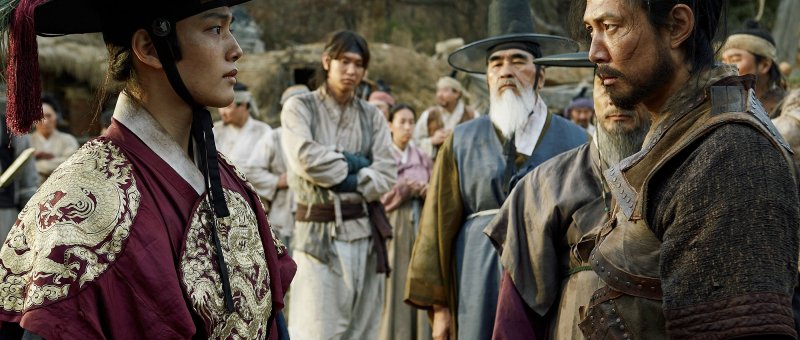
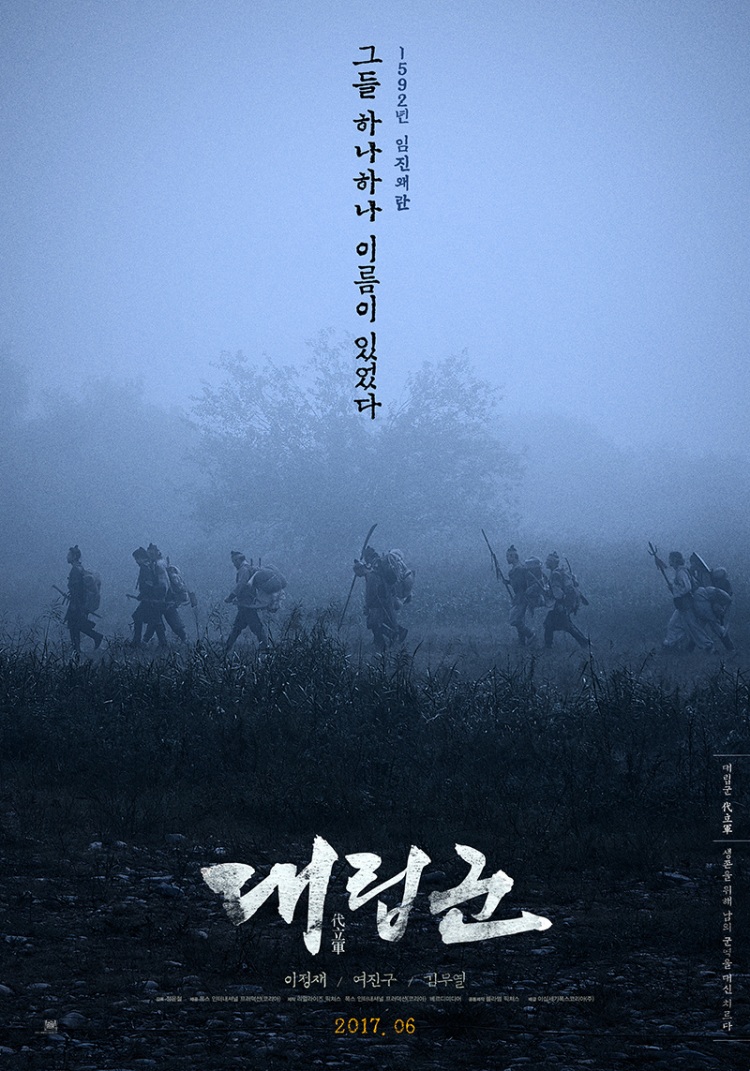
Warriors of the Dawn (대립군, Jeong Yoon-chul, 2017)

Warriors of the Dawn posterSome might say a king is the slave of his people, but then again he is a very well kept slave even if he is no more free than a serf at the mercy of a feudal lord. Warriors of the Dawn (대립군, Daeribgoon), set in 1592 during the short-lived Japanese invasion, takes this idea to its heart in playing up the inherent similarities between the oppressed poor who are forced to impersonate the sons of wealthy men too grand for the battlefield, and the Crown Prince unwillingly forced to impersonate the King who has abandoned his people and run away to China to save his own skin. Though the Prince is young and afraid, with the help of his resentful mercenary brethren he begins to find the majesty buried inside himself all along but crucially never forgets what is like to feel oppressed so that he might rule nobly and fairly, unlike his more selfish father.

The tale begins with Tow (Lee Jung-Jae) – a “Proxy Soldier”, one of many from the Northern borderlands where the living is hard. Sons of feudal lords need not risk their lives on the battlefields while there is money to spend and so they buy the service of young men from poor families to stand in for them. The men take the name of the man they’re supposed to be but if they die, their family must send a replacement to serve out the remaining time or pay back the money that was given to them. At this point Tow’s main problem is the Jurchen rebels who’ve decided to live life their own way outside of the system of class hierarchy currently in place in feudal Korea.

The Japanese, however, are pressing on and making gains towards the capital. The King decides to flee, hoping to reach China where the Ming Emperor may be minded to help them. He cannot, however, simply abandon ship and decides to divide the court with the left behind contingent headed by his son, Crown Prince Gwang-hae (Yeo Jin-goo). Gwang-hae is young and inexperienced. Not having had a good relationship with his father, he’s mystified as to why he’s suddenly been given this “honour” but together with a selection of advisors he’s sent on a journey to found a second court at Gonggye, picking up scattered forces along the way. This brings him into contact with Tow and his contingent who become his main defenders.

Having lived a life inside the palace walls, Gwang-hae knows nothing of war or fighting and has brought a selection of books with him hoping to learn on the job. His ineptitude is likened to that of a young recruit to the band of Proxy Soldiers who has been forced to join on the death of his father but has no training and is too squeamish to kill, requiring Tow to come to his rescue as he later does for Gwang-hae. Tow is a born soldier yet reluctant, fully aware that he no longer exists and should he die another man with no name will step into his place with nary a pause. He continues to fight because he has no choice but he also feels an intense bond of brotherhood to his fellow men, something which later extends to Gwang-hae once his latent nobility begins to emerge.

Gwang-hae’s central conflict is between his advisors who council him towards austerity, and his deeper feelings which encourage him to sympathise with the ordinary people he meets along the way whose lives are being ruined thanks to the government’s failure to protect them. As it turns out, Gwang-hae is also low-born, in a sense, and therefore has inherited something of the common touch which separates him from the aloofness of his father. Though he is constantly told to make the “rational” choice he refuses – ordering troops to stop when they attempt to extort food from starving peasants, insisting on evacuating a village to safer ground, and then finally becoming a warrior himself in order to defend his people when no one else would.

Gwang-hae is, perhaps, a warrior for a new dawn and a flag that men like Tow can follow in the quest for a better world in which each man can keep his own name and fight for his own cause rather than that laid down for them by men with money or power. Despite the potential for a more urgent argument, Jeong mostly falls back on standard period aesthetics with overly familiar narrative beats heavily signposted by a subpar script. Warriors of the Dawn cannot decide whether it’s a film about catching the conscience of a king or the noble sacrifice of would be revolutionaries, failing to lend the essential weight to its duel arcs of rebirth and coming of age all of which makes for a long, hard march towards an inevitable conclusion.


Screened at the London Korean Film Festival 2017.

International trilogy (English subtitles)
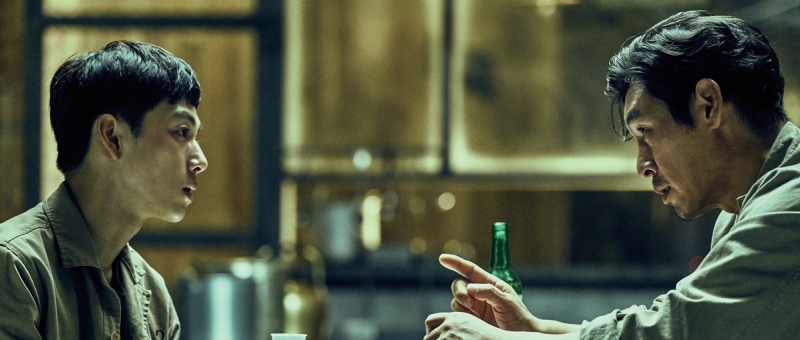
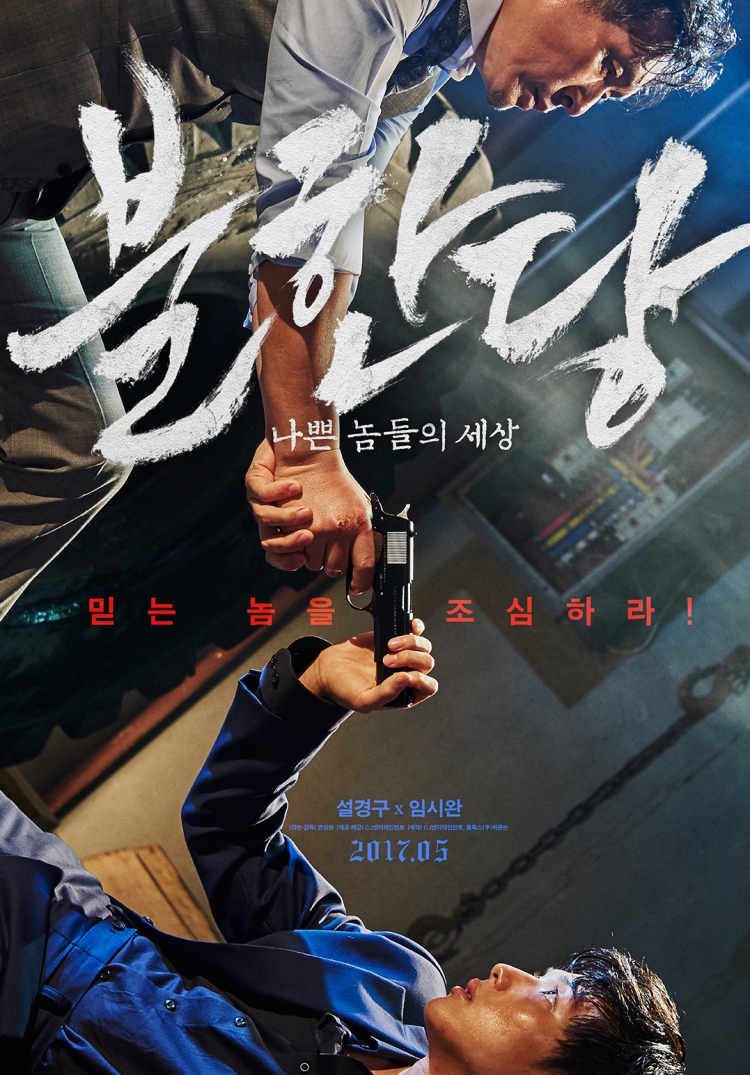
The Merciless (불한당: 나쁜 놈들의 세상, Byun Sung-hyun, 2017)

merciless posterHeroic bloodshed is alive and well and living in Korea. The strange love child of Na Hyun’s The Prison, and Park Hoon-jung’s New World, the first gangster action drama from Byun Sung-hyun (previously known for light comedies), The Merciless (불한당: 나쁜 놈들의 세상, Boolhandang: Nabbeun Nomdeului Sesang) more than lives up to its name in its noirish depiction of genuine connection undercut by the inevitability of betrayal. Inspired as much by ‘80s Hong Kong cinema with its ambitious, posturing tough guys and dodgy cops as by the more immediate influence of the seminal Infernal Affairs, Byun’s brutal tale of chivalry is, as he freely admits, an exercise in style, but its aesthetics do, at least, help to elevate the otherwise generic narrative.

That would be – the complicated relationship between young rookie Hyun-su (Im Siwan) and grizzled veteran Jae-ho (Sol Kyung-gu). Hyun-su proves himself in prison by besting current champions bringing him to the attention of Jae-ho – the de facto prison king. Sharing similar aspirations, the pair form a tight, brotherly bond as they hatch a not so secret plan to take out Jae-ho’s boss, Ko (Lee Kyoung-young), leaving Jae-ho a clear path to the top spot of a gang engaged in a lucrative smuggling operation run in co-operation with the Russian mob and using the area’s fishing industry as an unlikely cover.

We’re first introduced to Jae-ho through reputation in the film’s darkly comic opening scene in which Ko’s resentful, cowardly nephew Byung-gab (Kim Hee-won), has a strange conversation with a soon to be eliminated colleague. Byung-gab says he finds it hard to eat fish with their tiny eyes staring back at you in judgement. He admires Jae-ho for his ice cold approach to killing, meeting his targets’ gaze and pulling the trigger without a second thought.

Jae-ho is, indeed, merciless, and willing to stop at nothing to ensure his own rise through the criminal underworld. He will, however, not find it so easy to pull that trigger when he’s staring into the eyes of sometime partner Hyun-su. Neither of the two men has been entirely honest with the other, each playing a different angle than it might at first seem but then caught by a genuine feeling of brotherhood and trapped in storm of existential confusion when it comes to their individual end goals. Offering some fatherly advice to Hyun-su, Jae-ho recites a traumatic childhood story and cautions him to trust not the man but the circumstances. Yet there is “trust” of a kind existing between the two men even if it’s only trust in the fact they will surely be betrayed.

Byun rejoices in the abundance of reversals and backstabbings, piling flashbacks on flashbacks to reveal deeper layers and hidden details offering a series of clues as to where Jae-ho and Hyun-su’s difficult path may take them. Truth be told, some of these minor twists are overly signposted and disappointingly obvious given the way they are eventually revealed, but perhaps when the central narrative is so fiendishly convoluted a degree of predictability is necessary.

The Merciless has no real political intentions, but does offer a minor comment on political necessity in its bizarre obsession with the fishing industry. The police know the Russians are involved in drug smuggling and using the local fishing harbour as a front, but as fishing rights are important and the economy of primary importance they’d rather not risk causing a diplomatic incident by rocking the boat, so to speak. The sole female presence in the film (aside from Hyun-su’s sickly mother), determined yet compromised police chief Cheon (Jeon Hye-jin), is the only one not willing to bow to political concerns but her methods are anything other than clean as she plants seemingly vast numbers of undercover cops in Jae-ho’s outfit, only to find herself at the “mercy” of vacillating loyalties.

Heavily stylised, Byun’s action debut does not quite achieve the level of pathos it strives for in an underwhelming emotional finale but still manages to draw out the painful connection between the two anti-heroes as they each experience a final epiphany. An atmosphere of mistrust pervades, as it does in all good film noir, but the central tragedy is not in trust misplaced but trust manifesting as a kind of love between two men engulfed by a web of confusion, betrayal, and corrupted identities.


Screening as part of the London Korean Film Festival 2017 at Regent Street Cinema on 3rd November, 6.30pm. The Merciless will also screen at:

and will be released by StudioCanal on 13th November.

International trailer (English subtitles)


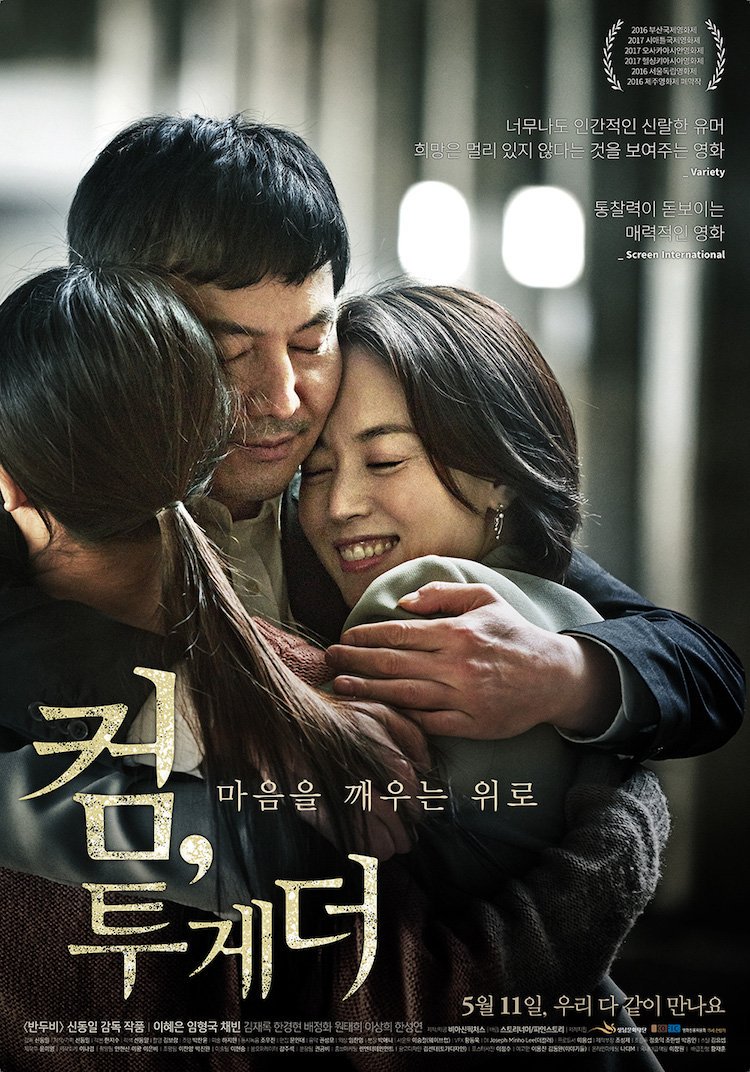
Come, Together (컴, 투게더, Shin Dong-il, 2017)

come, together posterToo fast, too loud, too bright. The pressure cooker society threatens to explode in Shin Dong-il’s sympathetic portrayal of one family’s period of crisis in Come, Together (컴, 투게더). When sorrows come they come not single spies but in battalions – redundancy (of several kinds), betrayal, anxieties academic and financial, the Parks have more than their fare share to deal with but the cumulative effect of their individual troubles quickly overwhelms their ordinary, middle-class existence, exposing the tiny fractures in its foundation hitherto papered over by chasing the dream of materialism.

From the outside the Parks are just like any typical middle-class family. They live in a nice apartment with a greenhouse balcony and plenty of space for three. Dad Beom-goo (Lim Hyung-guk) is a moderately successful salaryman, but his world collapses when he’s abruptly let go in the most insensitive of ways by his slimy boss. Mum Mi-yeong (Lee Hye-eun) is a credit card saleswoman who earns by commission and is well used to the hard sell. Teenage daughter Han-na (Chae Bin) has taken a year out to retake her university entrance exams but is now in limbo after not doing well enough to be accepted but having been ranked 18th on the waiting list, anxiously waiting to find out if enough people decide to decline the place she is so desperate to win.

Beom-goo losing his job of 18 years is not just humiliating and embarrassing, but as the family are already in huge debt it is also extremely worrying. As a middle-aged man, it’s unlikely Beom-goo is going to be able to find a comparable position in Korea’s competitive labour market where switching companies is still not the norm and most employees are hired right out of college. Having spent the last 18 years debasing himself to flatter his bosses, it’s galling in the least to realise he’s simply been replaced with a younger, cheaper employee he himself helped learn the ropes. Deprived of his breadwinner status, Beom-goo is supposed to be doing the housework but the boredom quickly gets to him and he spends most days lounging around in his pants lamenting his sorry state. That is until he meets the man from upstairs (Kim Jae-rok) who happens to be in a similar position and begins to lead Beom-goo astray before hinting at a much darker course for himself than the one he’s set Beom-goo on.

Mi-yeong is now the sole provider but her work is extremely stressful – not just the high pressure world of sales, but the bitchy, backstabbing atmosphere in the mostly female office. The job is to get people to sign up for credit cards they don’t really need and probably can’t afford, adding to the pressures of the consumerist society which have already landed the Parks in financial difficulty themselves. Mi-yeong is good at her job, she knows how to get people to sign on the dotted line but she’s also desperate enough to risk breaking the rules. When she’s undercut by a colleague whose situation she has misread, Mi-yeong takes it extremely personally, vowing revenge not just on the colleague but on the boss who refused to back her up and the client who betrayed her.

Mi-yeong’s rage and resentment are to have tragic, unforeseen consequences, threatening to deliver everything she’d dreamed of but at a terrible price. Han-na faces a similar dilemma as she finds herself staring at the list of 17 people in the queue in front of her and silently hoping some of them get hit by busses. The tense atmosphere at home only adds to Han-na’s stress levels as Beom-goo’s increasing impotence finds him playing father of the house like never before and deliberately undermining her sense of self esteem by repeatedly bringing up her failure to get into college. Unlike either of her parents, Han-na does at least have a positive influence in her life in the form of friend Yoo-gyeong (Lee Sang-hee), whom both her parents disapprove of because of her deliberate choice to live outside the mainstream.

Yoo-gyeong, though only in her early ‘20s, owns her own store selling leather bracelets and uses the proceeds to fund her free spirited lifestyle of taking off backpacking across whichever land takes her fancy. When Han-na says she wishes she could live like Yoo-gyeong, Yoo-gyeong bristles, insisting that she’d support whichever decision Han-na makes but that she ought to live her own life the way she wants rather than emulating someone else. Also, by way of an aside, she points out that people seem to assume she does exactly as she pleases but that’s not quite the case. In fact, it may be that Yoo-gyeong is, in a sense, forced to live a life outside of the mainstream simply by virtue of who she is and that her frequent flights to pastures new are a kind of escape or of running away from various social pressures at home.

Irrespective of whether or not they get what they thought it was they wanted, each is forced to reassess their way of living, realising that their relentless pursuit of material gain and the socially accepted definition of success has only made them miserable. Rather than continuing down the road to ruin, the Parks decide to choose happiness by simply dropping out, resetting their lives with the intention of doing what it is they want to do rather than what it is they think they’re supposed to. Waking up from a conformist delusion reawakens the freedom to embrace individual desires but it also restores the family to its previously happy state, released from the strain of modern life in favour of simpler, more essential pleasures.


Screened at the London Korean Film Festival 2017.

Original trailer (select English subtitles from captions menu)

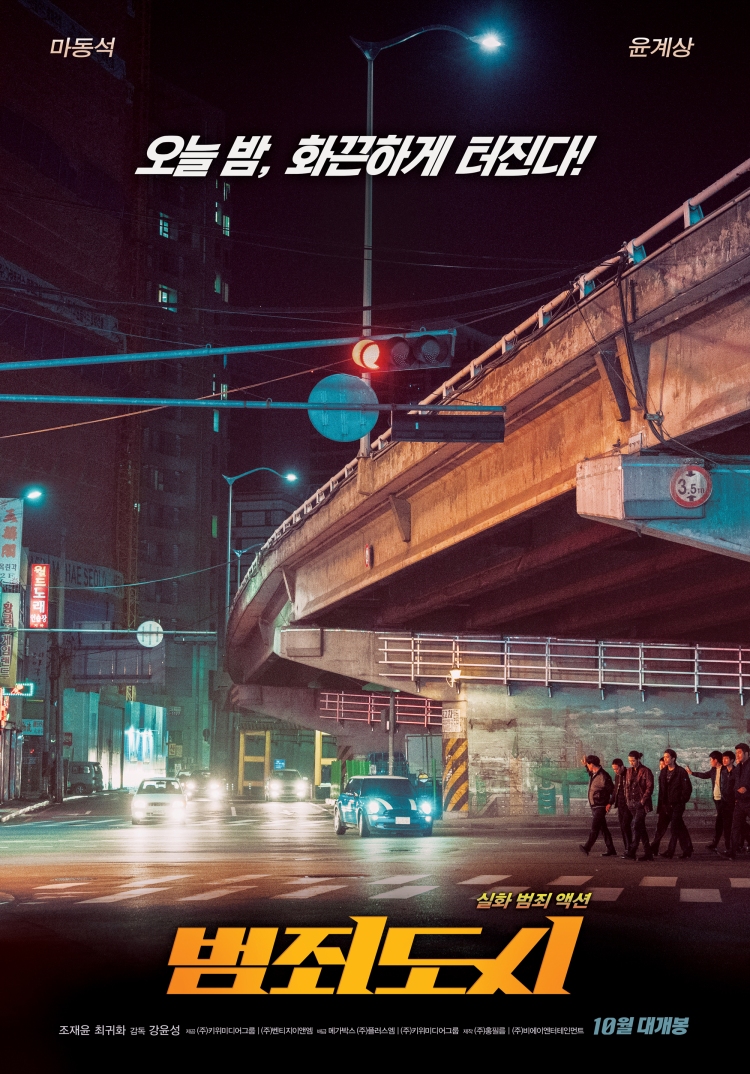
The Outlaws (범죄도시, Kang Yoon-sung, 2017)

The outlaws posterBack in 2004, a hero cop made the headlines by cleaning up Chinatown when he took into custody 32 known gang members in Seoul’s Garibong district. Based on the real life case, The Outlaws (범죄도시, BumJoedoshi, AKA Crime City), is the debut feature from Kang Yoon-sung in which Ma Dong-seok adds goodhearted yet compromised policeman to his list of increasingly impressive leading performances. Truth be told the role does little to stretch his current range but fits comfortably into Ma’s well worn persona of noble bruiser as he plays fatherly commander to his fiercely loyal team and avuncular mentor to a brave boy in the district who wants to help free the area from the dangerous gang violence which leaves not just businesses but lives under threat.

Ma Seok-do (Ma Dong-seok) is the only force stopping Garibong from descending into a hellish war zone of gang violence and destruction. A local resident, Ma is well respected in the area and knows the territory well enough to navigate its various challenges. Rather than take on the gangs wholesale he attempts to placate them, brokering an uneasy equilibrium which keeps the violence contained and helps to protect ordinary people from its effects. All of that goes out the window when a new threat arrives in the form of vicious gangster Jang Chen (Yoon Kye-sang) and his two minions whose methods are unsubtle in the extreme, ending with rival gang bosses chopped up and placed inside suitcases over nothing more than a trifling gambling debt.

Jang is a new and terrifying threat because he sees no need to play by the “rules”. A peace cannot be brokered with him and he cannot be reasoned with. Ma knows the time has come for action but even with police resources behind him is ill equipped to become, in effect, Garibong’s latest gang leader. To this end he makes a surprising decision – asking the residents for help. The residents, however, remain terrified. How can he ask them to inform on gangsters to whom they’re still paying protection money? Ma’s promise is a big one – to do what no one thought could be done in neutralising the organised crime threat by conducting a mass arrest of foot soldiers from across the gangland spectrum.

Ma Dong-seok makes fantastic use of his trademark sarcasm as the regular neighbourhood guy who also happens to be a top cop. Kang mixes a fair amount of humour into an otherwise dark and violent tale such as the recurrent presence of two lowly pamphleteers who are eventually pressed into more serious service for Ma, his trickery and manipulation of a suspect (which is also a way to save him from a death sentence on being sent back to China), and Ma’s love of drunken karaoke and lamb skewers with the boys. Ma thinks nothing of arming a gangster with a stab vest, setting up another in a public bath, or playing gangland politics for all they’re worth, but when it really counts he’s as straight as they come, protecting the residents of Garibong like the lone sheriff of some outpost town, equal parts officer of the law and disappointed dad.

The incongruously comical tone harks back to the ‘70s maverick cop golden age in which the lines between law breaker and law enforcer were always blurred but you knew who the good guys were because they had all the best lines. If Kang is aiming for this branded mix of grit and humour he doesn’t quite find it and the comedy sometimes undercuts his more serious intentions but it is undeniably good fun all the same. Ma Dong-seok’s warmhearted maverick is quite rightly the star of the show, but his rivalry with Yoon Kye-chang’s Jang Chen fails to ignite with Chen never quite seeming as menacing as intended. Nevertheless even if Kang’s gangland action comedy has little to add to an already crowded arena, it does at least provide a fitting showcase for Ma’s talents in its sarcastic, world weary policeman who may have one foot on the wrong side of the law but always acts in the name of justice.


Screened at the London Korean Film Festival 2017.

Original trailer (English subtitles)


The Day After (그 후, Hong Sang-soo, 2017)

The day after posterHong Sang-soo, perpetually introspective, is having an especially reflective 2017. Releasing three films in quick succession, each of which star new muse Kim Min-hee, Hong seems unusually keen to turn the camera directly on himself and not least in his choice of star. In On the Beach at Night Alone, Kim played an actress in flight from the fallout of a destructive affair with a married director (a stand-in for Hong who never appears on screen), but in The Day After (그 후, Geu Hu), she plays an aspiring writer and free spirited bystander to an equally messy affair between a married publisher and his younger female assistant. Like many of Hong’s heroes (which often seem to be stand-ins for himself), Bongwan (Kwon Hae-hyo) is a cowardly, deluded womaniser who refuses to face his self-involved disaffection in favour of burying himself in youth and prettiness.

Bongwan has developed a habit of getting up early and leaving the house as soon as possible. His wife (Jo Yoon-hee) finds this odd after a couple of decades of married life and decides to ask him about it over a hurried breakfast. She is patient and half playful, but Bongwan is anxious and embarrassed. He refuses to answer, laughing the questioning off until his wife later texts him to apologise for her “overreaction.” Overreacting is something she will get to later, but for now Bongwan is about to have an informal meeting with a potential new assistant. His wife was not wrong after all, Bongwan had been having an affair with a girl from work, Chang-sook (Kim Sae-byuk), who has now left in order to move on with her life after realising Bongwan is too spineless to ever leave his family.

New girl Areum (Kim Min-hee) is an aspiring writer with good credentials who comes highly recommended by a Professor Bongwan has huge respect for but that’s not why he hires her. He hires her because she fits neatly in the space vacated by absent lover Changsook, is quite pretty, and strokes his vanity by expressing her admiration for his writing even though he mainly does criticism rather than “real” writing these days. Bongwan’s lascivious ways are immediately obvious in his first conversation with Areum which shifts from relaxed interview to personal chit-chat in which he asks her slightly insensitive questions about her family history, grasps her hand without warning and then later stops to remark on just how lovely he thinks her hands are. They change registers from the formal to the informal right away as Bongwan instructs Areum not to refer to him as the president but as a boss (they’re equals, but he’s in charge). He buys her dinner, pushes her to drink, and flirts with her, but Areum is ahead of him and neatly deflects his growing interest.

Areum moves the conversation to a higher level by asking Bong-wan exactly why it is he’s alive. Bongwan, not as much of the contemplative sort as he seems, waffles on for a bit but doesn’t really know, he was born after all and then…. “And then” is the English title of the Japanese novel, Sorekara by Natsume Soseki (adapted into a fine film by Yoshimitsu Morita in 1985), from which the film draws its Korean title. The hero of Soseki’s novel, Daisuke, is the son of a wealthy family whose ennui is so deep that he finds himself needing to place a hand on his chest to check that his heart is still beating. Daisuke had been in love in his youth but never said anything, telling himself it was out of a sense of chivalry towards a friend in love with the same girl. Years later he realises his notions of “chivalry” were all affectation, a deluded way of papering over his cowardice and fear of rejection. That Bongwan eventually decides to give this particular book to Areum is quite telling in his obvious identification with Daisuke who also failed to speak his heart and faced a difficult decision in considering whether to abandon the life of comfort he had always known to strike out on his own in the name of love.

Bongwan wheedles and defers, squirming like a child caught with chocolate round his mouth yet claiming to know nothing about the missing biscuits. His long suffering wife, finding evidence of a possible attachment to another woman, “overreacts” in grand style by physically abusing Areum, assuming her to be the missing Changsook. Hong plays his usual game with timelines, keeping the present uncertain as Changsook repeatedly reappears in life or in memory. It’s clear that for Bongwan these three women are almost interchangeable, no matter what he might say as regards his grand romance with his much younger female assistant who quite rightly points out his extreme moral cowardice in an emotional outburst over an awkward dinner. In a typically Hong-ian touch of meta-comedy, Bongwan may even have forgotten the entirety of the strange day he spent with Areum who later echoes his wife’s words to the effect that his “face looks different”. Areum, however, like most of the characters Kim has played for Hong, eventually wins out in her free spirited sunniness, taking her great belief in the world’s beauty with her, leaving Bongwan to enjoy his black-bean noodles of misery inside in the prison of his own making.


Screened as the opening night gala of the London Korean Film Festival 2017.

Original trailer (English subtitles)

Reset (逆时营救, Chang, 2017)

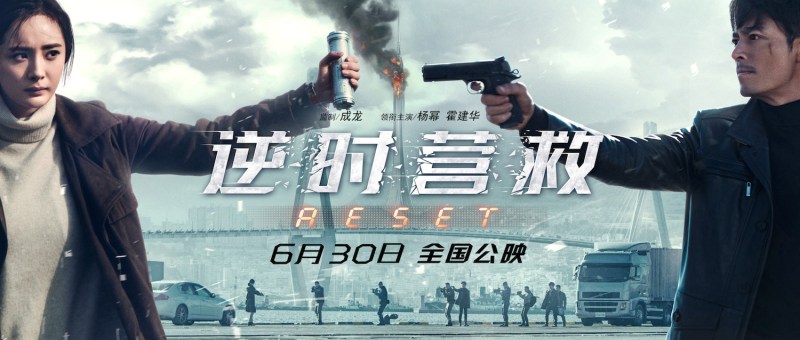
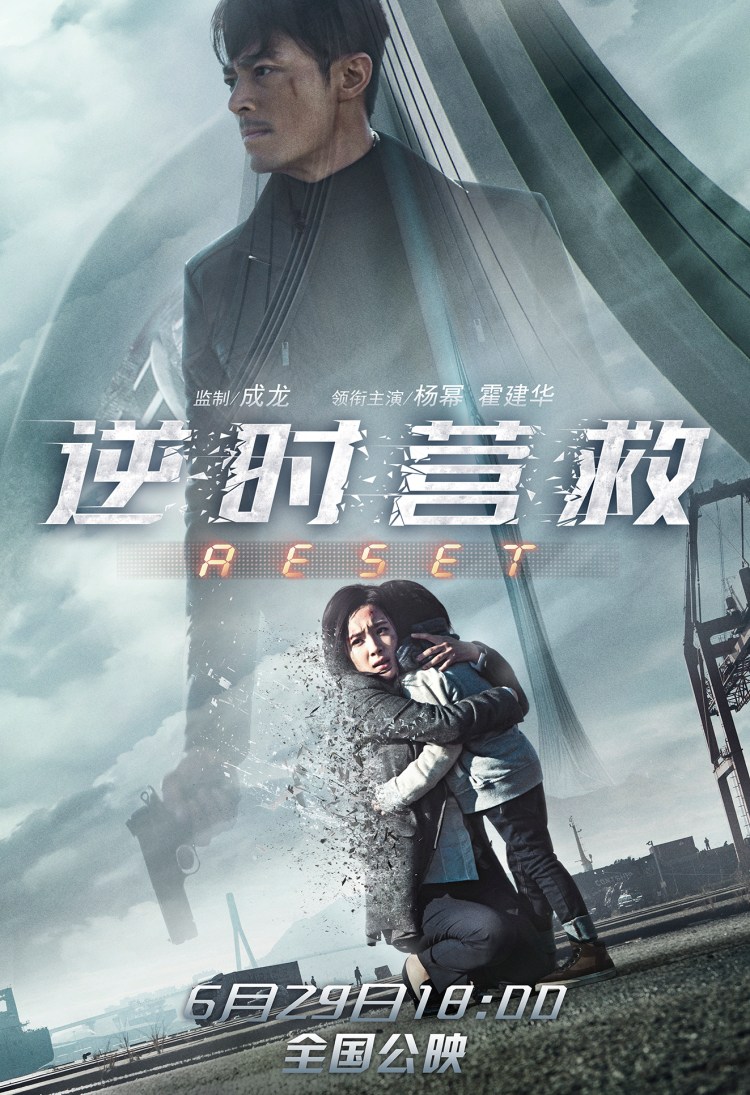
reset posterTime travel – the solution to all one’s problems. Or is it? Chinese thriller Reset (逆时营救, Nì shí yíngjiù) is helmed by Korean director Chang (AKA Yoon Hong-seung) but it’s also produced by Jackie Chan and is very much in the vein of his recent projects in its non-sensical sci-fi setup and troubling conservative messages. Reset casts a female scientist as its heroine but uses the crisis to explore her ongoing guilt as a single mother with an intense workload who has chosen to dedicate herself to both her work and her son without remarrying. Despite the action packed drama in which Xia Tian plots, shoots, and stabs her way back to her son, the message which is ultimately delivered is that you can’t go back in time and mothers should just give up everything to be with their kids 24/7.

In the near future, the existence of parallel worlds has been confirmed but early research into time travel has been derailed after test subjects transported between universes descended into mindless violence destroying each other and valuable data. Xia Tian (Yang Mi) works for one of the big companies still investigating parallel world theory and has just made a major breakthrough in “projecting” test subjects into the recent past. In order to steal her research for a rival company, Xia Tian’s young son Doudou is kidnapped by mysterious men who give her a limited amount of time to hand over the top secret documents. Xia Tian’s first attempt to rescue her son fails, leading her to make personal use of her findings and travel into the past to change the future.

Reset starts as it means to go on with Xia Tian having a heart to heart with her boss and mentor (King Shih-Chieh) who reminds her that it’s been ages since she broke up with Doudou’s dad and its high time she find someone new. Xia Tian, embarrassed, says she’s dedicating herself entirely to Doudou and doesn’t need anyone else. The bond between mother and son is the focus of the film (though Xia Tian’s clinginess may become an ongoing problem as Doudou grows up) as Xia Tian travels through time to ensure the survival of her little boy no matter how morally compromised she may eventually become.

Use of the time machine apparently has certain side effects, as the first experimenters discovered. The original Xia Tian was a sweet, innocent woman way out of her depth with these fearsome, amoral gangsters but Xia Tian 2 is much more savvy, chloroforming the “nice” version of herself and taking over with the power of hindsight to help her get out of the building before all hell breaks loose. Xia Tian 3, however, has taken things too far, acting without any kind of concession to morality and suddenly becoming some kind of major action star with special forces training for no given reason. There might be a clever point about Xia Tian’s various conflicting roles but Reset doesn’t want to make it so much as have Xia Tian help/hinder herself in a selfish tug of love to save little Doudou who just wants to go home to his mum.

Non-sensical as it is, Reset picks up when it hits its action heavy final third in which Yang Mi, more often seen in sweetly romantic roles, acquits herself well enough as a fiery action star filled with maternal rage. The various layers of the resets generally hang together as the three Xia Tians cross each other’s paths to get Doudou to safety, only to belatedly realise that only one of them can really stay with him forever.

Maternal love is the machine which drives the story forward but it’s also the most problematic element in its partial insistence than Doudou’s fate is somehow Xia Tian’s fault for daring to use her finely tuned brain for the common good rather than just staying home and reading comics with her little boy like a mother should. It’s difficult to escape the conclusion that the lesson is women shouldn’t work, rather than corporations are inherently untrustworthy and that time travel creates problems for everyone (not least editors and scriptwriters) and should generally be avoided. Despite high production values, interesting production design, and an impressive (or is that three impressive) performance(s) from Yang Mi, Reset’s strong action credentials cannot compensate for its unpalatable conservative message and non-sensical science fiction narrative.


Screened at the London East Asia Film Festival 2017.

International trailer (English subtitles)

V.I.P. (브이아이피, Park Hoon-jung, 2017)

V.I.P. posterIn New World, Park Hoon-jung provided a bleak overview of creeping corruption with the absolute certainty that the forces of darkness will always win over those of the light, but with V.I.P. (브이아이피) he turns his attentions away from South Korea’s hellish gangland society to examine the effect of geopolitical concerns on the lives of ordinary citizens. He does this by positioning South Korea’s two biggest international concerns – America and The North, as twin manipulators with his home nation caught in the middle, trapped between the need to preserve allies and defend against enemies. The “enemy” here is a sociopathic serial killer allowed to get away with his crimes at home because of his elite status and then again abroad as a key informant of the American intelligence services.

Beginning at the end with a weary man accepting a gun and striding into a rundown building in Hong Kong, Park jumps back a few years to North Korea where an innocent schoolgirl is grabbed by a gang of three boys on a peaceful country road. Not only do they brutally rape and kill the girl, but they even go so far as to massacre her entire family. Police Chief Lee (Park Hee-Soon) identifies the killer as Kim Gwang-il (Lee Jong-Suk), son of a high ranking official. His boss closes the case; Gwang-il is untouchable. Lee is demoted and sent to a fertiliser plant.

A couple of years later similar crimes begin occurring in the South and maverick policeman Chae (Kim Myung-min), temporarily reinstated after being suspended for his violent ways, is handed the case after his superior apparently “commits suicide”. Like Lee, who eventually makes contact with Chae having followed his quarry to the South, Chae identifies Gwang-il and is prevented from arresting him but this time by South Korean intelligence services who were partly responsible for Gwang-il’s defection working closely with America’s CIA and the very greasy Agent Gray (Peter Stormare).

Like many Korean films of recent times the central point of concern is in the ability of the rich and powerful to do whatever they please and get away with it because their special status makes them untouchable. Park scores a double a whammy when he casts his villain both as an elitist and as a North Korean though he draws no connection between life in a brutalising regime and the desire to inflict violence.

This is a violent tale and the violence on show is sickening, often needlessly so. After showing us the aftermath of what happened to the innocent teenage girl in the prologue and then to her entire family including a five year old brother, there was really no need to go into detail but Park eventually includes a horrifying scene of Gwang-il garrotting his victim in an elegant drawing room right underneath the portraits of the Kims hanging proudly on the wall. The scene is problematic for several reasons but the biggest of them is in the depiction of the naked female body covered in blood and bruises while Park’s minions stand naked around her, pale and unstained by her blood, each of the actors carefully hiding their genitals from the camera. The victim, who has no lines other than a final plea not to kill her, is the only real female presence in the film save for one female police officer who is seen briefly and only appears to become another potential victim for Gwang-il.

The real ire is saved not for Gwang-il but for the intelligence services who lack the backbone to stop him. The Americans, or more precisely a need to placate them, are the major motivator – a fact which takes on additional irony considering Gwang-il is the North Korean threat the US is supposed to be helping to mitigate. It remains unclear why the CIA would be allowing Gwang-il free reign to live as a regular citizen given that he supposedly has important information regarding North Korean finances which is the reason the Americans are helping him defect, rather than keeping him safely contained and preventing him from committing heinous crimes all over the world which, apart from anything else, threaten to cause huge embarrassment to everyone involved. Still, Agent Gray lives up to his name in his general sleaziness and the intense implication that he is playing his own long game which may have nothing to do with country or protocol.

Park’s decision to structure the film in several chapters each with a different title card often works against him, taking the momentum of his procedural and occasionally proving confusing. Loosely, Park ties the stories of three men together – the idealistic North Korean officer who wants to see justice done, the grizzled cop with a noble heart, and the conflicted NIS officer realising the unforeseen consequences of his attempts to play politics for career advancement, but he fails to weave their fates into anything more than an extremely pessimistic exploration of hidden geopolitical oppression. Final shootout aside, V.I.P. is a grimy, politically questionable thriller which irritates in its narrative sluggishness and leaves a sour taste in the mouth in its own indifference to its villains’ crimes in favour of his V.I.P. status as the representative of an entirely different existential threat.


Screened at the London East Asia Film Festival 2017.

Original trailer (no subtitles)

Before We Vanish (散歩する侵略者, Kiyoshi Kurosawa, 2017)

©2017 BEFORE WE VANISH FILM PARTNERS

before we vanish posterKiyoshi Kurosawa is getting sentimental in his old age. In Journey to the Shore and Real, brokenhearted, left behind spouses went on long and difficult journeys of grief and salvation. In Before We Vanish (散歩する侵略者, Sanpo Suru Shinryakusha) we receive a visitation that presages our doom but wishes to know us before we go. An alien invasion movie which takes its cues from Invasion of the Body Snatchers and They Live, Kurosawa’s quirky drama is less about the enemy within than the hidden existential threat of a failure to understand oneself. As the Japanese title suggests, these invaders are merely out for a stroll, making time to smell the flowers before the big lawnmower arrives to cut them all down.

Strange events are afoot in Tokyo. A high school girl wanders home with a pair of goldfish in a plastic bag before brutally murdering her entire family, gazing at the scene of carnage with a beatific smile. Meanwhile, the estranged wife of Shinji Kase (Ryuhei Matsuda), Narumi (Masami Nagasawa), has been sent for to claim her presumably amnesiac husband from a medical facility. Shinji was brought in after wandering the streets cluelessly and seems to have lost certain sections of his memory. The doctor’s diagnosis is uncertain but leans towards some kind of temporary psychotic break or early onset Alzheimer’s. In any case, he is now Narumi’s responsibility, much to her consternation. Across town a down on his luck journalist (Hiroki Hasegawa) covering the brutal family murder finds himself the designated “guide” to another strange young man, Amano (Mahiro Takasugi), who seems to have done something very untoward to his parents.

These three “strangers” are really invaders from outer space – something which they freely confess to anyone who will listen, only everyone assumes they are joking. Exactly why they want to destroy the Earth is never revealed, nor is the the reason for the strange mission undertaken by the three researchers acting as the vanguard for the upcoming invasion. These three have been tasked with a thorough investigation of “humanity” in which they must learn and acquire certain “concepts”. They do this by requiring the subject to visualise their thinking behind a word or phrase and then tapping the head to pinch it causing that concept to be removed from the person’s interior cosmology.

The aliens learn as much from the effect of removing the concept as they do from its explanation. This being Japan, it’s not surprising that the first concept Shinji removes is that of “family” which he takes from Narumi’s younger sister, Asumi (Atsuko Maeda). Asumi had decamped to Narumi’s after an argument with her parents over their railroading her into a mainstream life she doesn’t really want. The removal of the concept of family means Asumi no longer needs to be bound by hollow obligation but her sudden coldness towards her sister immediately invites a series of other questions as to the true nature of their relationship. Similarly, Shinji removes a concept of “possession” from a young man. The young man does not immediately lose understanding of the word, but the concept ceases to be important to him. He is, in a sense, freed from the burden of materialism. Paying an unexpected visit to Narumi’s workplace and meeting her boss who, it seems, has just belittled her work on an important project after she rebuffed his attempt at sexual harassment, Shinji removes his concept of “work” leading him to play aeroplanes all around the office like an overexcited child.

There are positive effects of losing some of these centrally held ideas even if their loss seems tragic or painful on the surface. They are, however, what make us human whether that be attachment to family or an irrational desire to devote all to work and ceaseless acquisition. The final, most elusive concept is that of love – something alien and fascinating to the visitors which they find impossible to harvest due its essentially nebulous nature. Despite being part of a uniform hive mind, the invaders have each developed unique personality traits as a consequence of their “human” lives – the schoolgirl craves violence and destruction, Amano fatherly friendship, and Shinji something close to love with his own “guide” in the form of Narumi whose love for her husband apparently endured despite his betrayal.

Far from the gloomy nihilism of Pulse in which death is eternal loneliness, Before We Vanish suggests that what will survive of us is love. Salvation does, however, require a sacrifice which provokes the film’s romantic conclusion in which the absence of love becomes the “eternal loneliness” promised by Pulse but is tempered by patience and devotion. A gleefully absurdist exploration of the human soul, Before We Vanish finds Kurosawa at his most optimistic affirming the power of the human spirit at its most indestructible.


Screened at the London East Asia Film Festival 2017.

International trailer (English subtitles)

Anarchist from Colony (박열, Lee Joon-ik, 2017)

anarchist from colony posterLee Joon-ik follows his poetical mediation on the Korean independence movement, Dong-ju, with an equally philosophical, if not quite as rigorous, tale of rebellion and tragedy inspired by real life revolutionary anarchist, Park Yeol. Where Dong-ju was a tale of a world in in black and white, Anarchist from Colony (박열, Park Yeol) is one of glorious colour and the strange joy of pithily rejecting an oppressor’s authority. The oppressor’s authority is, however, infinite and no amount of anarchy will be enough to evade it even if there may be long term advantages in losing a battle in grand style.

Park Yeol (Lee Je-hoon) is a Korean left wing agitator living in Tokyo and earning a living as a rickshaw driver. He is also a hero to local Koreans and has gained a lot of fans (many of them female) thanks to his poetry including his latest entitled “Damn Dog” which laments his lowly status as an oppressed Korean man. One of his many fans, Fumiko Kaneko (Choi Hee-seo) – a Japanese woman who spent some time in Korea as a child, manages to work her way into his heart and becomes both a lover and an integral part of his revolutionary movement known as The Revolt.

In 1923, The Great Kanto Earthquake caused wide scale destruction and general chaos in the capital. Martial law was instituted, but a rumour soon spread that Korean insurrectionists were using the confusion to fuel their revolutionary ambitions, poisoning wells, committing arson, and plotting to assassinate the Emperor and his son. Of course, the rumours were baseless but led to a citywide pogrom in which around 6000 Koreans are thought to have been murdered both by ordinary people and by the army. Hoping to avoid the violence, Park decides he might be better off turning himself in to the police, but even police cells are not free of vigilante justice.

Unlike many recent films set during the colonial period, Anarchist from Colony is not particularly interested in demonising the Japanese. Generally speaking, the Japanese government are depicted as a collection of buffoons ill equipped to deal with the unexpected disaster of the earthquake and obsessed with rules, protocol, and Emperor worship. The major antagonist is a moustache twirling idiot and committed racist nursing a grudge against Koreans over a career setback to do with the suppression of the March 1, 1919  protest which kickstarted the Korean Independence Movement. The other officials mostly regard Mizuno (Kim In-woo) as an embarrassment, calling him out on his obvious racism and attempting to circumvent his machinations but more often than not failing to successfully outmanoeuvre him.

Having been partly responsible for the massacre in failing to stop the racist rantings of Mizuno and co, the government are eager to suppress all knowledge of it and distance themselves from anything that could make them look bad on the international stage. In this Mizuno makes a serious miscalculation when he decides to fit up the most popular Korean political activist he can get his hands on as a “traitor” and have him tried and executed as an example to the others. Park is wise to this scheme right away and decides to play along even if he knows it may eventually cost him his life. In fact, he almost hopes it will because not only will he lend weight to the cause of independence through his own martyrdom, but it will be much harder for the government to suppress news of the massacre with him on trial for his supposed terrorist activities which are being touted as its cause.

Yet the tale is framed not so much as suppressed revolution but ill fated love in the tragic romance of Park and Kaneko. The mini band of anarchists are a surprisingly cheerful bunch for hardline leftists, and Park and Kanenko’s intense bond is one of both political solidarity and true affection. Being anarchists through and through, they do not believe in marriage but agree to live together after signing a contract of cohabitation in which they mutually affirm their loyalty to each other and their cause. When Park is arrested, Kaneko turns herself in and follows him despite his pleas with her not to. The couple remain fiercely together to the end presenting a united front delighting in mocking their joint show trial even knowing they may soon be heading for the gallows.

This strange kind of lightness and dada-esque surrealism is an odd fit for the grim tale at hand. Lee mostly glosses over the wider implications of the massacre aside from minor references to longstanding prejudices such as Park’s beating by a customer who has short changed him and the vigilante gang’s repeated use of a particular phrase to flag up Korean accents. The overriding sense of flippancy undercuts the seriousness of Park’s plight and ultimately robs it of its power as his struggle is played for broad comedy rather than subtle satire. Perhaps overly ambitious, Lee’s reframing of of Park’s story as surrealist vaudeville romance never quite takes off, sacrificing passion for laughs but finding that they ring hollow surrounded by so much suppressed terror.


Screened at the London East Asia Film Festival 2017.

International trailer (English subtitles)

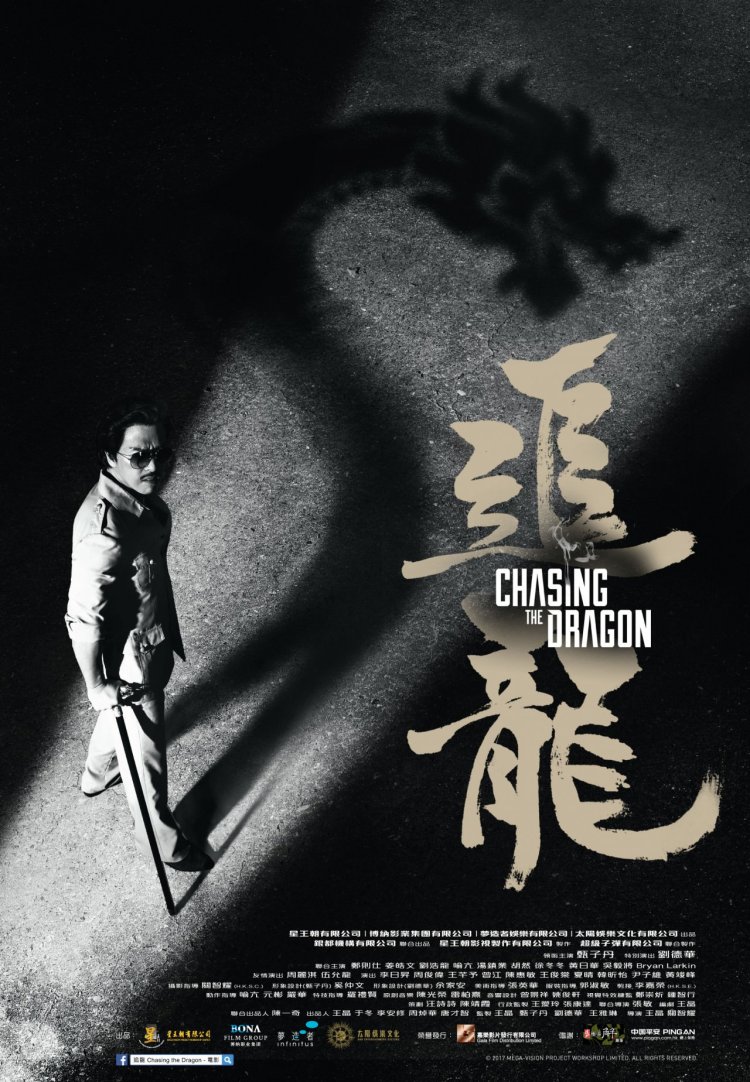
Chasing the Dragon (追龍, Jason Kwan & Wong Jing, 2017)

chasing the dragon posterWhen it comes to Mainland China anything goes so long as you set your movie before 1949. In Hong Kong it seems the same thing is true only the cut off date is 1997. Wong Jing and Jason Kwan’s surprisingly glossy Chasing the Dragon (追龍) follows two giants of 1960s Hong Kong in Crippled Ho whose life was previously brought the screen in 1991’s To Be Number One, and crooked (but only in a nice way) policeman Lee Rock who is played by Andy Lau – the very same part he inhabited in a series of films over 25 years ago. Marking a first time collaboration between martial arts superstar Donnie Yen and veteran leading man Lau, Chasing the Dragon firmly points its finger at the rotten roots of colonial corruption which, apparently, allowed such lawless times to endure in order to reap their copious rewards.

In 1963, Crippled Ho (Donnie Yen) smuggles himself into Hong Kong from the Mainland along with three of his friends and his little brother Peter. The boys find it hard to get honest work and are largely existing as hired muscle – or rather they’re supposed to get paid $30 to stand at the back make the local gangster’s gang look more impressive than it really is. One fateful day they get hired by Will, Grizzly Bear’s fixer, to hang around at a supposed confrontation with rival gangster Comic only this time the fight, which has been organised to put a damper on the birthday celebrations of crooked police chief Ngan, breaks out for real. Crippled Ho and the guys are skilled fighters who’d really rather avoid getting involved so they steal some police uniforms and try to escape by blending in but they’re caught by vicious British cop Hunter (Bryan Larkin) and nearly beaten to death before being rescued by the less corrupt Lee Rock (Andy Lau).

This first confrontation sets the tone for the remainder of the film as Crippled Ho, a vicious, ruthless, and ambitious gangster is repeatedly plagued by Hunter – the typically racist, corrupt, incompetent, greedy, and amoral sort which seems to define British officialdom across the Empire. Empire is the big enemy here (though it’s easy enough for one Empire to stand in for another) as pictures of the Queen reign supreme and men like Hunter think they can do whatever they like because colonial life is cheap. Lee Rock knows his place with the system and is content to play it. He warns Ho that pretty much anything goes, but the Brits are off limits because it’s the authorities that are bankrolling this illicit economy and any attempt to bite the hand that feeds threatens to bring the entire system crashing down.

As revealed in Ho’s opening voice over, ’70s Hong Kong was a haven of corruption in which the authorities collaborated with the Triads partly as a way of appeasing them but also as a way to make money. Unlike his incorruptible buddy, Lee Rock is as corrupt as they come – setting himself a target of $500 million and becoming actively involved in the drugs trade. He does, however, have his limits and makes sure to always play within the “rules”. The rules go awry when Rock decides to try deposing an unpredictable gang leader in favour of a more stable one and gets trapped inside Kowloon Walled City only for Ho to come to his rescue in answer of their debt of loyalty.

Despite their positions at opposite ends of the spectrum, Lee Rock and Crippled Ho generate a genuine brotherhood during the ten years which see their ascent to the top of the Hong Kong criminal tree. The launch of ICAC in 1974 which aims to eradicate corruption across the board threatens to bring the party to an end with its obvious desire for efficacy in refusing to hire the same old stooges who will do nothing, and actually arresting some of the most notorious abusers of power. Wong and Kwan end the film with a frankly ridiculous statement that thanks to ICAC and the retreat of the British, corruption has now been completely eradicated from Hong Kong along with colonial rule. Yet, in keeping with censorship guidelines, both Rock and Ho are allowed to appear in an epilogue sequence in which they have an emotional conversation revealing the ways crime has not paid for them in the way they hoped it might.

Dripping with period detail and thankfully reining in some of the more outlandish elements and unwise comedy Wong is often known for Chasing the Dragon is also a surprisingly bloody affair as ears are sliced off, severed heads appear in boxes, and the gang engage in a series of action packed set pieces many of them set in the famed Walled City. Yen and Lau play two sides of the same game while their intense bond is shaken by the need for revenge and a suspicion of betrayal. Wong Jing redeems himself with the assistance of the ever reliable Kwan in a star studded tale of corrupt yet noble criminals daring to rebel against oppression by embracing its amoral rules.


Currently on limited release in UK cinemas.

International trailer (dialogue free)