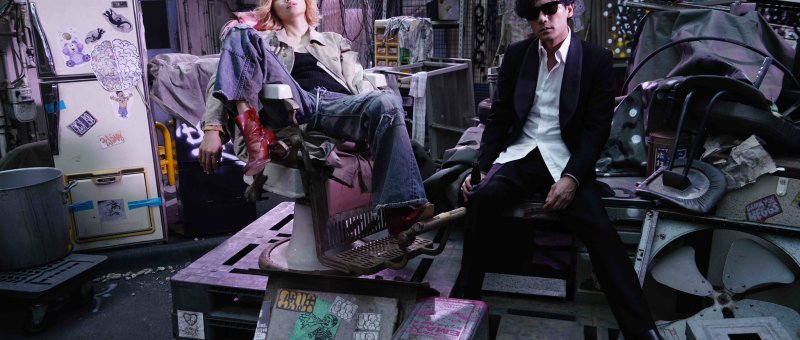

Tezuka’s Barbara (ばるぼら, Macoto Tezka, 2019)

The relationship between an artist and his muse (necessarily “his” in all but a few cases) is at the root of all drama, asking us if creation is necessarily a parasitical act of often unwilling transmutation. Osamu Tezuka’s Barbara (ばるぼら), brought to the screen by his son Macoto Tezka, takes this idea to its natural conclusion while painting the act of creation as a madness in itself. The hero, a blocked writer, describes art as a goddess far out of his reach, but also the cause of man’s downfall, framing his creative impotence in terms of sexual conquest that lend his ongoing crisis an increasingly troubling quality. 

Yousuke Mikura (Goro Inagaki) was once apparently a well regarded novelist but has hit a creative block. While his friends and contemporaries are winning awards and national acclaim, he’s become one of “those” writers busying himself with potboilers and eroticism to mask a creative decline. Passing a young woman collapsed drunk in a subway, something makes him stop and turn back. Surprisingly, she begins quoting romantic French poetry to him, and actually turns out to be, if not quite a “fan”, familiar with his work which she describes as too inoffensive for her taste. Mikura takes her home and invites her to have a shower, but later throws her out when she dares to criticise an embarrassingly bad sex scene he’s in the middle of writing. Nevertheless, he’s hooked. “Barbara” (Fumi Nikaido) becomes a fixture in his life, popping up whenever he needs a creative boost or perhaps saving from himself. 

Strangely, Barbara is in the habit of referring to herself using a first person pronoun almost exclusively used by men, which might invite us to think that perhaps she is just a manifestation of Mikura’s will to art and symbol of his destructive creative drive. He does indeed seem to be a walking cliché of the hardbitten writer, permanently sporting sunshades, drinking vintage whiskey, and listening to jazz while obsessing over the integrity of his art. We’re told that he’s a best-selling author and previously well regarded by the critics, but also that he has perhaps sold out, engaging in a casual relationship with a politician’s daughter and cosying up to a regime he may or may not actually support. He’s beginning to come to the conclusion that he’s a soulless hack and the sense of shame is driving him out of his mind. 

Mikura’s agent Kanako (Shizuka Ishibashi) certainly seems to think he’s having some kind of breakdown, though the jury’s out on whether her attentions towards him are professional, sisterly, or something more. There isn’t much we can be sure of in Mikura’s ever shifting reality, but it does seem a strange touch that even a rockstar writer of the kind he seems to think he is could inspire such popularity, recognised by giggling women wherever he goes yet seemingly sexually frustrated to quite an alarming degree. His world view is an inherently misogynistic one in which all women seem to want him, but he can’t have them. A weird encounter in a dress shop is a case in point, the assistant catching his eye from the window display turning out to be a devotee of his work because of its “mindlessness”, something which annoys Mikura but only causes him to pause as she abruptly strips off for a quickie in the fitting room. Tellingly, the woman turns out to be an inanimate mannequin, literally an empty vessel onto which Mikura can project his fears and desires, which is, perhaps, what all other women, including Barbara, are to him. 

Yet who, or what, is Barbara? Chasing his new “muse”, Mikura finds himself on a dark path through grungy subculture clubs right through to black magic cults, eventually arrested on suspicion of drug use. There is something essentially uncomfortable in his dependency, that he is both consuming and consumed by his creative impulses. Inside another delusion, he imagines himself bitten by potential love interest Shigako (Minami), as if she meant to suck him dry like some kind of vampire succubus, but finds himself doing something much the same to Barbara, stripping her bare, consuming her essence, and regurgitating it as “art”. Either an unwitting critique of the various ways in which women become mere fodder for a man’s creativity, or a meditation on art as madness, Barbara seems to suggest that true artistry is achieved only through masochistic laceration and the sublimation of desire culminating in a strange act of climax that stains the page with ink.  


Tezuka’s Barbara screens in Amsterdam on March 6/7 as part of this year’s CinemAsia Film Festival.

International trailer (English subtitles)

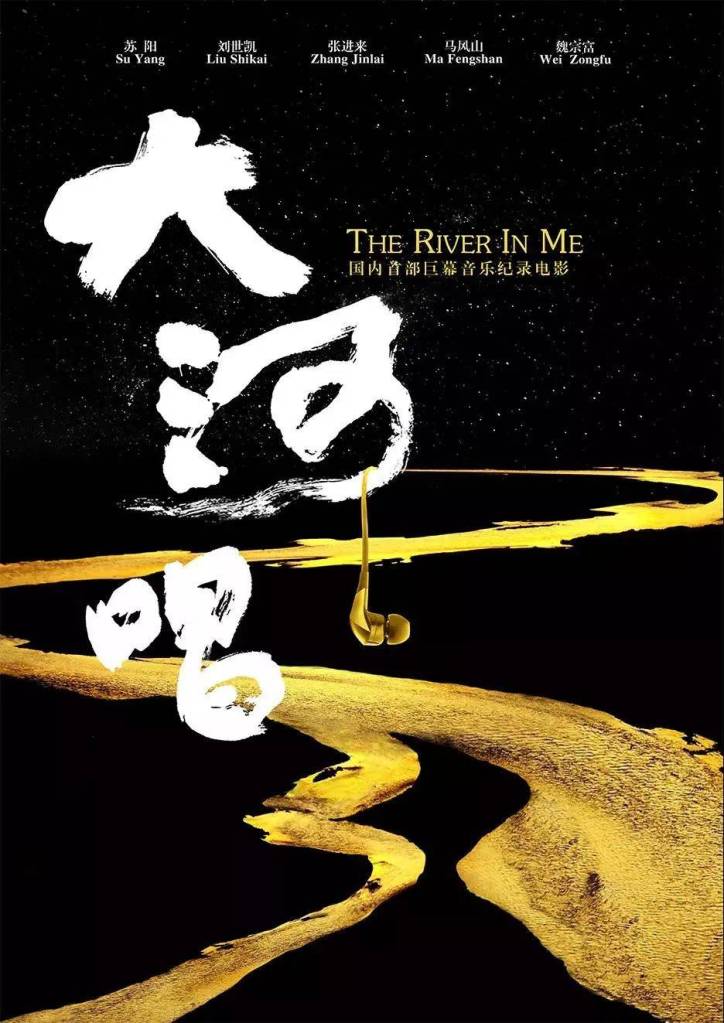
The River in Me (大河唱, Ke Yongquan, Yang Zhichun, He Yuan, 2019)

Can the old arts survive in the modern world or are they destined to fade away with the passing of time? Folk singer Su Yang is determined to preserve them, if only by assimilation, blending traditional folksong with Western rock to bring it into the modern era. While some complain that Su’s singing is inauthentic, he argues that authenticity, in that sense at least, isn’t the point. The only thing that matters is whether people like it and can feel something of themselves and of ages reflected in the ancient rhythms. 

Now a successful musician, Su is not originally from the country but moved to rural Yinchuan, Ningxia in Northwest China with his parents when he was seven. He later says it was the music of Yinchuan which touched him not because it is the greatest of cities but because it’s the one which most intersected with his life. Through his travels, Su meets up with a series of other practitioners of traditional arts mostly also from Ningxia and the surrounding area as he and they dwell on survival. 

Itinerant singer Liu Shikai makes a living playing the Sanxian, but fewer and fewer people are interested in listening while in private he feels himself lonely as a twice widowed father of three, especially as his youngest daughter has now married leaving him at home alone. Su laments something similar, reflecting that there’s no New Year for him. His festivities will consist of working and drinking, while his family can see him on TV from the comfort of their homes. Su’s brother complains endlessly about the annual Spring Gala (while watching it anyway), finding the show totally lacking in any kind of substance and becoming more boring by the year. His astute daughter, however, points out that his criticism is unfair or at least stating the obvious because the Spring Gala reflects “youth culture” which is perhaps flashy and superficial but equally is not intended to appeal to middle-aged men. Su appears on the program himself but might agree, seeing as it’s his mission statement to put a little soul back into the mainstream by bringing the rhythms of the Yellow River to contemporary society. 

Back in the country, meanwhile, folksongs are serving the same purpose they always have, expressing joy in the natural world and bringing communities together through choral solidarity. Then again, Hua’er singer Ma Fengshan, sometimes finds himself at odds with his. A member of the muslim minority, his house is filled with religious texts that he is unable to read because they are in Arabic which he doesn’t speak. Some have told him that he should spend more time on religious study, but all he wants to do is sing, while others actively oppose Hua’er for its “salacious” qualities, aware the songs can be used as a form of flirtation and convinced that they have the potential to cause marital breakdown and infidelity. In spite of everything, Ma keeps singing and is eventually joined by other members of his community wearing traditional dress to celebrate Hua’er music. 

For puppeteer Wei Zongfu, however, the future seems far less bright. Now ageing himself, he’s accepted that his descendants won’t want to succeed him and there are few people interested in learning shadowplay. The leather puppets crafted by his grandfather are so precious to Wei that he didn’t even want to take them to use in Su’s showcase of traditional arts in fear they might be damaged or stolen, opting for a safer paper play instead, but is now contemplating what’s best to do with them after he dies and if the art itself can survive when there is no one to perform it. 

That’s a problem also faced by Zhang Jinlai, the harangued head of a Qinqiang Opera troupe frequently at odds with his co-star wife who berates him for employing too many actors when they aren’t making any money. With economic factors to consider, he finds it hard to keep his troupe together and is pushed towards making “innovations” that might appeal to a younger audience but wishes to remain “authentic”. Su’s suggestion, by contrast, is that in the end you can only move forward, the old arts may have to adapt or die. Some may not approve of his modern take on the traditional, but in his own way he’s saving Hua’er song and helping to pass it on to future generations, in his own words extending the rhythms of the Yellow River to all corners of the world. 


The River in Me screens in Amsterdam on March 4/8 as part of this year’s CinemAsia Film Festival.

Original trailer (English subtitles)

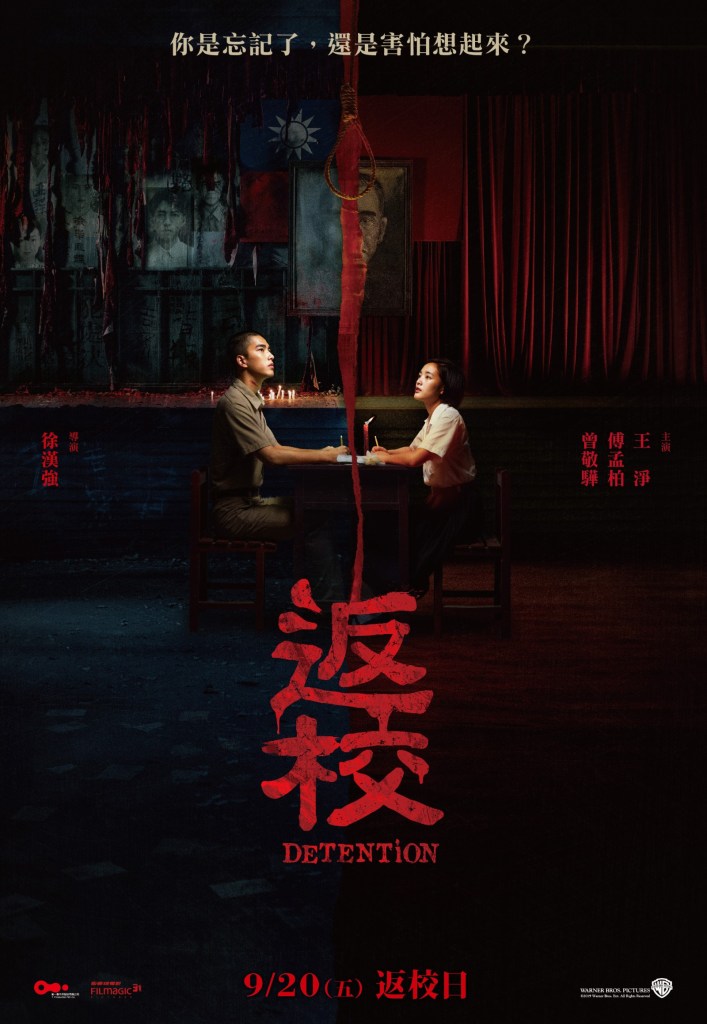
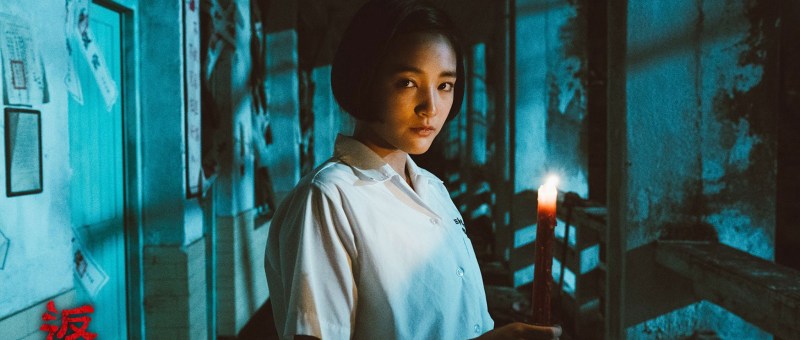
Detention (返校, John Hsu, 2019)

“Have you forgotten or are you scared of remembering?” a mysterious supernatural force seems to ask the heroine of John Hsu’s ironically named Detention (返校, Fǎn Xiào). In fact, the Chinese title means something close to “back to school”, hinting at its central message which uses the, it argues forgotten, tyranny of the “White Terror” to remind us that freedom is hard to win but harder still to keep. An unfortunately timely message given the assaults on democracy across the world but even more so given the recent protests in Hong Kong which have found support in Taiwan as it too looks back on its complicated history.

Based on a popular survival horror video game, Detention’s first hero is idealistic student Wei Zhong-ting (Tseng Ching-hua) who we quickly learn was picked up and tortured by the military police for reading books banned by the regime as part of an underground club run by two of his teachers – mild-mannered artist Zhang (Fu Meng-po) and stern musician Yin (Cecilia Choi Sze-wan). Set in 1962, the film finds itself at the height of the “White Terror”, a period of martial law which lasted for 38 years, during which any resistance real or perceived towards Chiang Kai-shek’s Kuomintang government was brutally suppressed with thousands tortured, imprisoned, or killed by the regime.

Wei finds himself in a lucid nightmare, trapped in his school building which has become derelict and seemingly abandoned while cut off by a raging flood. Gradually he starts to piece together memories of what must have happened, realising that his fellow club members seem to be absent and something must have happened with the military police. While in the school he runs into a fellow classmate, Fang Ray-shin (Gingle Wang Ching), though she doesn’t quite seem to remember him. Having apparently fallen asleep and woken up in this nightmare world, Fang seems even less clear about what’s going on than Wei but desperately wants to find their teacher, Zhang, with whom, we learn, she has fallen in love. 

Plagued by horrifying visions that maybe repressed memories or simple nightmares, the pair are chased by giant monsters dressed in KMT uniforms standing in for the terror of living under an authoritarian regime. Only, these particular nightmare soldiers are literally “faceless” in that their hollowed out skulls, which themselves sit on fetid, rotting corpses, are filled only by a mirror making plain that the faces of the “faceless” regime are our own. Fang and Wei become convinced that someone has betrayed them by giving one of the illicit books to arch militarist teacher Inspector Bai, but they can’t be sure who it was, finally doubting even themselves in their inability to remember the exact circumstances which brought them here. 

Flashing back to the “real” world, we discover that one sort of oppression cannot help but lead to others. Fang’s father is a respected soldier and supporter of the ruling regime, but he’s also abusive towards his wife, enforcing a rule of fear and violence even within his own home. Her mother has taken to religion in order resist him, regretting her marriage and furiously praying that he will soon be “gone for good”. “Gone for good” becomes a kind of mantra for others straining to free themselves from obstacles to their desires. Fang learns all the wrong lessons from her parents, allowing herself to be corrupted by their twin failures – her father’s in being a willing participant in the oppression of others, and her mother’s in subverting the world in which she lives in an attempt to free herself from violence. 

Yet, as Zhang later tells her, no one is really at fault because they are all victims of the oppressive rule of the KMT. The ruined schoolhouse becomes a kind of repository for the orphaned memories of a forgotten past. You can tear it down and build a fancy apartment complex over the top, but the ghost of authoritarianism is always lurking on the horizon, and capitalist success will not safeguard your freedom. Those left behind have to tell the story so  this never happens again because those who fail to learn from history are doomed to repeat it. Zhang imagined himself a narcissus, living in his own world without caring what other people thought and claiming that the solidarity of silent understanding is the best cure for loneliness, but he lived in times in which he had no freedom in which to live, sacrificing his own future to become the selfless roots of emancipation blooming only for those who will come later.


Detention screens in Amsterdam on March 5/7 as part of this year’s CinemAsia Film Festival. It will also screen in Chicago on March 26th as part of the 10th Season of Asian Pop-Up Cinema.

Original trailer (English subtitles)

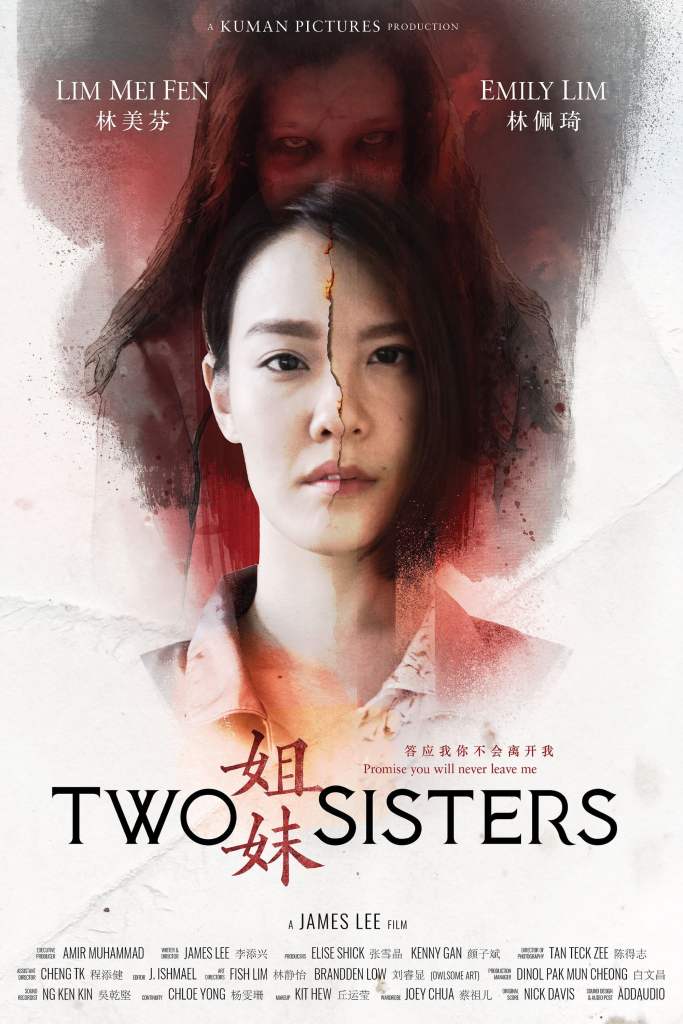
Two Sisters (姐妹, James Lee, 2019)

The family home is supposed to be a place of safety, but what can you do when it’s also a source of trauma? The young women at the centre of James Lee’s psychological horror Two Sisters (姐妹, Jiěmèi) are each trying to put their houses back in order but find that their pasts are full of locked doors, crying women, and things which go bump in the night. In the end the past is the one thing you can’t protect yourself from, but not knowing can also be its own kind of hell, an inescapable puzzle that forever corrupts the image of the self. 

Elegant and successful, Mei Xi (Emily Lim) has just published her first book – a horror novel about a woman with multiple personality disorder which is, she tells her fans at a reading, a metaphor for the dual lives many women are forced to lead because of the pressures of living under the patriarchy. Meanwhile, her home life appears to be chaotic. We see her swallow a selection of pills before a one night stand cheerfully leaves her well-appointed apartment, only for her manager, John, to interrogate her after she’s late for an appointment wondering what she was doing the night before which prevented her from answering any of his calls. She reminds him that that’s none of his business. They may have slept together once but it meant nothing to her and anyway he’s a married man. Xi hopes they can keep their relationship “professional” going forward, attempting damage control on a possibly self-destructive business move. 

The main issue, however, is that her father has recently died and she’d like to sell the family home but needs the consent of her younger sister, Yue (Lim Mei Fen), who has been in a mental institution for over a decade. The doctors tell her that Yue has made good progress and they think it might be time to discharge her from the hospital so that she can start trying to reintegrate into mainstream society. Xi agrees to take custody of her, but there is an understandable distance between the two women. Yue is uncertain that Xi will be there when she needs her, partly because she neglected to visit her in the hospital on her last birthday and had apparently seen her only infrequently, Xi claims because she was busy with her book. Meanwhile, Yue is still unable to recall any of her childhood and is determined to move back into their family home in the hope of finally finding the truth behind whatever it was that happened to her. 

As expected, not everything is quite as it seems. A locked door is never a good sign, especially when there are multiple locks to unpick, but as soon as the women try to open it their shared reality begins to crumble. “What’s the point in knowing the truth?” Yue eventually asks an increasingly confused Xi, “it’s too late to change anything now”. The two women are each haunted, literally and metaphorically, by the ghost of their mother who died when they were small in circumstances neither of them are able to remember. 

The real horror lies in the family home. Badly let down by parental betrayal, the sisters attempt to rescue each other from shared trauma but are each trapped by the inescapability of the house. “I’ll always be by your side” Xi offers as words of protection, but is entirely unable to protect herself from the traumatic past. Yet Lee ends on a note of discomfort which sees Xi apologise to her mother for something that is in no way her fault, as if she had in some way betrayed her when quite the reverse is true. Xi’s words at the book reading prove truer than she knew them to be. She herself has her dualities, as did her mother, as a victim of patriarchal oppression which in this case has a sadly literal quality. The women of the Mei household struggle to free themselves from male violence and are perhaps destroyed by its memory which manifests itself in the ominous spectre of the family home which, rather than a place of love and mutual support, is a kind of prison filled with locked doors and dark secrets. 


Two Sisters screens in Amsterdam on March 6/7 as part of this year’s CinemAsia Film Festival.

Original trailer (English subtitles)

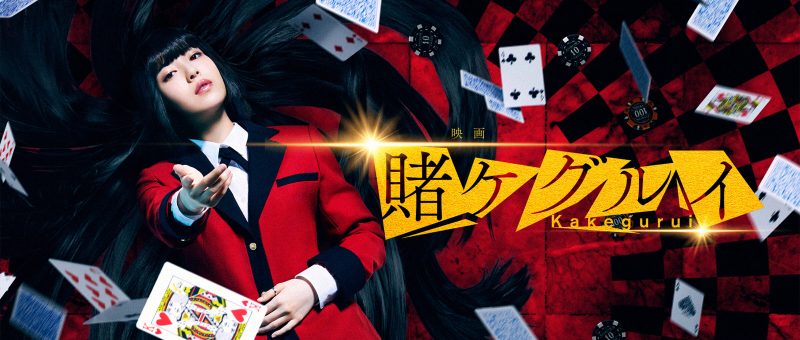
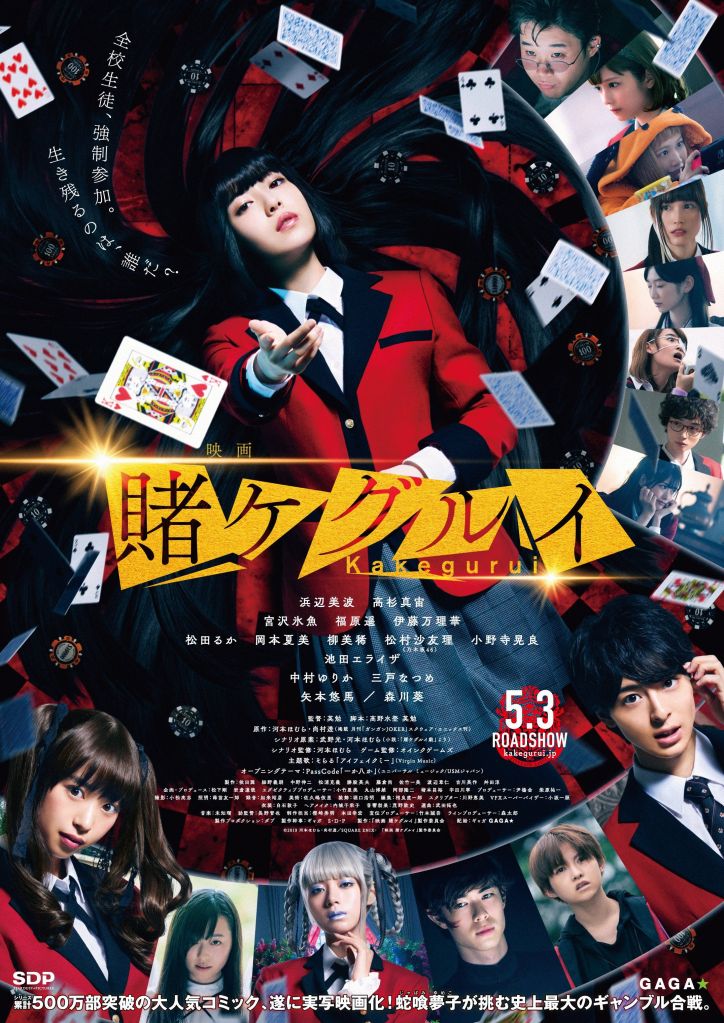
Kakegurui (映画 賭ケグルイ, Tsutomu Hanabusa, 2019)

Gambling, the ultimate act of faith or the height of anarchic genius? Based on the hit manga which has already been adapted as a popular TV anime, Kakegurui (映画 賭ケグルイ) is the sequel to two seasons of a live action TV drama set in a school where hierarchy is decided not by grades or by fists, but by prowess at the gaming tables. Those who lose so badly they bankrupt themselves become a kind of subhuman underclass, tied up like dogs and routinely humiliated, while the Student Council becomes a stand in for an oppressive social order ruling over all and enforcing the law with an iron hand. 

Into this high stress environment walks Yumeko Jabami (Minami Hamabe), a transfer student to the elite Hyakkaou Private Academy determined to bend its rules to her own advantage. Meanwhile, Student Council President Kirari Momobami (Elaiza Ikeda) is forced to deal with a new and unexpected threat – The Village, a small cult made up of students who have rejected the system, dropped out to live a hippy lifestyle in the grounds, and refuse to participate in “meaningless” games of chance. Their priest-like leader, Amane Murasame (Hio Miyazawa), once beat Kirari at cards becoming something like a god of gambling, but lost his zeal for the game after losing the only thing he ever cared about. 

Where he opposes the system passively yet pointedly, Yumeko rebels in her own, fiercely individualistic way by superficially conforming, becoming a top gambler, but only because she is exercising a free choice to do so. She plays for kicks alone, and generally wins because she isn’t stressed enough about losing to let it bother her. This individualist streak makes her a hidden threat against Kirari, but one that might in itself be an interesting gamble for the infinitely bored Student Council President. 

While Yumeko’s individualism threatens to unbalance the system, The Village presents a collectivist threat, agitating wholesale revolution and an end to the oppressive rule of the Student Council which renders losers inhuman. Yet there’s an essential irony in The Village’s creepy monotony that stands in stark contrast to Yumeko’s seeming conformity but insistence on her own freedom. Your life’s your own, she later explains, it’s annoying if people try to manipulate it. In this instance she’s talking not about the “life plans” handed out by the Student Council, but the egotistical desire to “save” the lives of others without considering if they want them saved or if you’re merely infringing on their personal freedom in attempting to make choices for them based entirely on your own value system. 

Murasame perhaps bet something he shouldn’t have and technically won, but ended up losing anyway which is what has made him turn against gambling. Yumeko, meanwhile, believes that the only way to be truly free to entrust yourself to luck and destiny. That is, however, somewhat disingenuous, because what Yumeko excels at is mind games, essentially manipulating those around her in order to win. Yumeko plays players, not cards, and is rarely played herself. Unlike Murasame’s righthand woman Arukibi (Haruka Fukuhara), she doesn’t care that much what people think. Arukibi, meanwhile, is desperate for approval and is playing her own game just to get someone’s attention which makes her a volatile, if easily manipulated, opponent.

Essentially, Murasame wants freedom outside of the system where Yumeko has found it within, but her philosophy is perhaps the more dangerous in that it proposes total freedom that has no regard for the systems of governance. Then again, maybe this is all a long con to get better cakes in the cafeteria, merely gaming the system rather than actively undermining it. Nevertheless, for Yumeko life is risk, rebelling against an oppressive social order through the anarchic individualism of living by “chance”. Living in a society as highly regimented as this is a high stakes game, but you can’t win if you don’t play, and you need to play smart. That’s the peculiar irony of life at Hyakkaou Private Academy where the Student Council literally owns your future but you can win it back by playing them at their own game. Bet your life, win your freedom Yumeko seems to say but she still makes sure to bring cake for everyone, not just the “winners” or the privileged few. 


Screened as part of the Japan Foundation Touring Film Programme 2020.

International trailer (English subtitles)
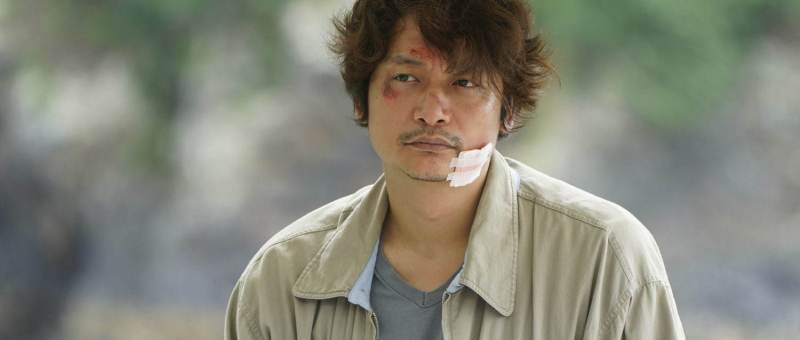
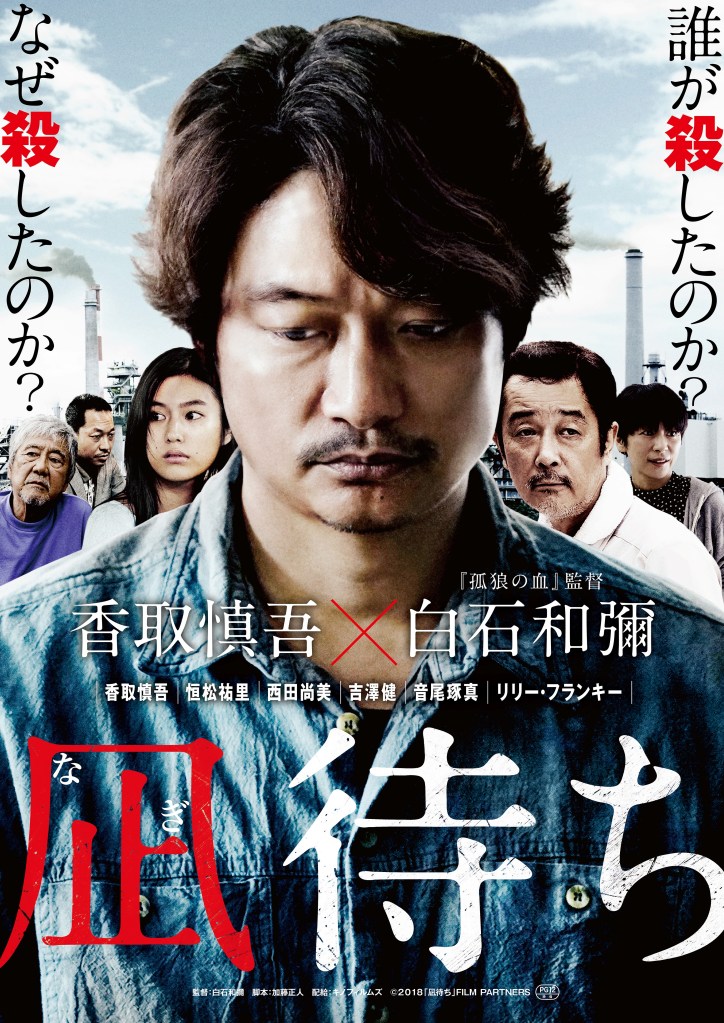
Sea of Revival (凪待ち, Kazuya Shiraishi, 2019)

“One bad thing leads to another” according to overprotective mother Ayumi (Naomi Nishida) in Kazuya Shirashi’s Sea of Revival (凪待ち, Nagi Machi). She’s not wrong, but breaking the chain proves harder than expected, especially as trouble has a way of following people around and the one thing you can never outrun is yourself. Yet, what might save you in the end is not so much self acceptance as that of others and finding your place along with a sense of belonging as member of a family in the knowledge they have chosen you as one of their own. 

Ikuo (Shingo Katori), the hero, certainly has plenty of demons he’s looking to leave behind. A devotee of the bicycle races, he’s just been laid off from his factory job and is preparing to move to his girlfriend Ayumi’s hometown where she plans to open a hairdressers and care for her ageing father Katsumi (Ken Yoshizawa) who has just been diagnosed with stage four cancer. Ayumi left rural Miyagi with her daughter, Minami (Yuri Tsunematsu) whose name is written with the characters for beautiful waves, after the tsunami which devastated the area and took her mother’s life. She hopes that it can be a new start for their family and that Ikuo will finally be able to shape up, knock his gambling habit on the head and ease back on the drinking. 

Things get off to a bad start, however, when Ikuo fails to bond with Katsumi who largely ignores him, while he discovers that Ishinomaki is much more conservative than Kawasaki and not everyone seems to approve of his liminal status in the Konno household. The fact remains that Ayumi and Ikuo, though they’ve been living together for five years, are not legally married and therefore in the eyes of some not a proper family, and more to the point Ikuo is an outsider with relatively little to recommend him. He does however try to make good on his promise, impressing the boss at a printshop where an overly helpful family friend, Onodera (Lily Franky), has found him a job, but quickly succumbs to old habits when a pair of ne’er-do-well colleagues introduce him to an illegal bicycle racing betting club run by local yakuza. 

Matters come to a head when Minami gets fed up with her mother’s overprotective conservatism and decides to pay her back by staying out late with new friends Ayumi doesn’t approve of. Flagging up their differing parenting styles, Ikuo tells Ayumi that she’s overreacting and should be happy for her daughter who is finally living something like a normal teenage life rather than shutting herself up in her room playing games like she did in Kawasaki where the other kids made her life a misery, calling her a “radioactive” transfer student from Fukushima. Ayumi fires back that Ikuo obviously isn’t very invested in Minami because, after all, he’s not her real dad and has no idea what family is. An extraordinarily hurtful thing to say in any circumstances, Ayumi’s words strike a nerve as Ikuo struggles to claim his place as a non-husband who has nevertheless become a father figure but is not recognised as a legitimate member of the family. 

Claim his place he does however when tragedy strikes, rushing into a police cordon shouting “I’m family” but being held back by the forces of social order while Minami cleverly evades them to see something no one should ever have to see. Old Katsumi meanwhile, apparently much like Ikuo in his youth, a fiery scrapper with a self-destructive streak, struggles to accept his failure either to save his wife or die by her side. Recognising something of himself in the younger man, he finally warms up to Ikuo, literally “redeeming” him from vengeful yakuza, offering only the explanation that he does so because “he’s my son”. 

Others such as the weirdly ever present Onodera may think it proper that Ikuo leave the Konno household because he has no more reason to be there, that his presence is now even more inappropriate than it was before. Minami is advised to move in with her birth father (Takuma Otoo) despite the fact Ayumi described him as abusive and that he has remarried and is currently expecting another child. Ikuo’s five years as her father count for nothing, because he was not married to her mother. During the car journey to their new home, Minami had playfully suggested to Ikuo that he should propose but he claimed he had no right to do so as an irresponsible man unable to contribute meaningfully to the household. Ayumi dreamed of the sea and of beautiful Caribbean islands to which Ikuo had promised but failed to take her. She ironically hoped to rebuild their lives in the ruined landscape of Ishinomaki where they’ve put up walls so tall you can no longer see the sea, still beautiful despite all its terrible ferocity. 

“A good wife makes a decent man” Ayumi’s ex bitterly fires back at her though others have found it to be true, Katsumi not least among them, but Ikuo’s problem is an internalised sense of masculine failure which keeps him on the edges of a family which is otherwise his by right. In a strange way, a piece of paper can make all the difference and no difference at all, both legitimate and not, in making it plain who is and is not accepted as “family”. Accepted by others, Ikuo learns to accept himself, still burdened by guilt and regret but also bound by it as he joins his chosen family on new a journey powered by those same beautiful yet destructive forces which have engendered so much grief and hope.


Screened as part of the Japan Foundation Touring Film Programme 2020.

Original trailer (English subtitles)

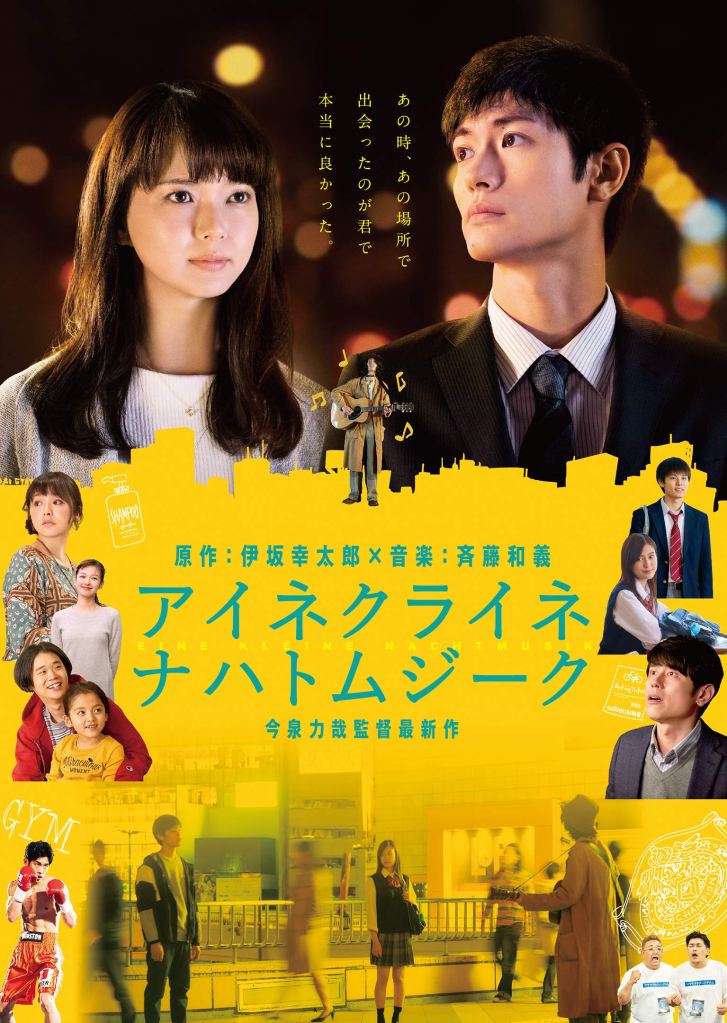
Little Nights, Little Love (アイネクライネナハトムジーク, Rikiya Imaizumi, 2019)

What is love? Is it an accident, cosmic destiny, or something that finally you have to choose? The romantically inclined hero of Little Nights, Little Love (アイネクライネナハトムジーク, Eine Kleine Nachtmusik) is convinced that romance is something that happens to you at an unexpected moment, but his friends worry that he’s letting life pass him by because of his bashful passivity. While the city is gripped by the upcoming world heavyweight boxing championship which might finally result in a Japanese underdog raising the belt, its citizens gain the courage to fight for love, but discover that love is less victory than mutual concession. 

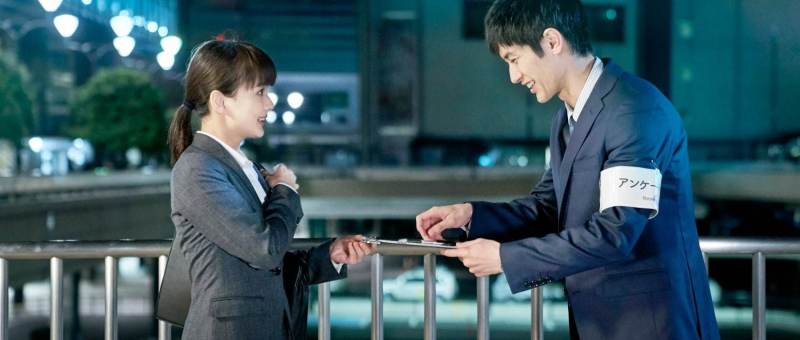
Sato (Haruma Miura), a hopelessly romantic salaryman, is forced to stand outside the station in the centre of Sendai conducting public surveys to make up the data that was lost when he accidentally spilt coffee on his colleague’s computer. Naturally shy, he’s not an ideal fit for the job but serendipitously bonds with a young woman, Saki (Mikako Tabe), when they are both captivated by the soulful song of a street musician. She agrees to fill in his form, and he notices she has “shampoo” written on her hand. He thinks it might be a sign, but she’s gone before he can do much about it. 

Sato’s college buddies Yumi (Erika Mori) and Kazuma (Yuma Yamoto), married young in a shotgun wedding but seemingly blissfully happy and parents to two adorable children, are quick to tell him that his romantic desire for serendipitous love is just thinly veiled cowardice and his essential passivity, refusing to put himself out there, is the reason he’ll end up alone. Meanwhile, Yumi is also trying to support her longterm single sister, Minako (Shihori Kanjiya), who is in a strange “relationship” with the younger brother of a client at her hairdressing salon. Despite talking regularly on the phone, he seems reluctant to meet because his job keeps him very busy which leaves her feeling confused and suspicious. 

Yumi and Kazuma think they ended up together out of necessity, but that necessity was in its own way chance. Secretly, Kazuma might wonder what might have happened if he’d been careless with some other girl, but has come to the conclusion that he’s glad it was Yumi and not someone else. Sato’s colleague Fujima (Taizo Harada), meanwhile, thought he had a cheerily romantic origin story for his relationship – a classic dropped wallet meet cute of the kind Kazuma insisted only happens in the movies, but now nearing 40 his wife has left him and the failure of his marriage has provoked a nervous breakdown. Sato asks him if he’s still glad it was his wife who dropped her wallet and not someone else, and if she’s glad that it was him who picked it up. Not only can he not quite answer, he doesn’t quite want to know. 

Meanwhile, Minako discovers that her diffident lover has decided to stake his romantic future on the championship match, that if the Japanese challenger wins he’ll finally have the courage to speak his heart. Minako is angry and disappointed, infuriated that he has so little courage that he has to vicariously channel the power of someone else to confess his feelings, but is as glued to the match as everyone else. 10 years on, the same thing happens again. Yumi and Kazuma’s daughter, Mio (Yuri Tsunematsu), is now a rebellious teen fed up with her father’s perpetually easygoing attitude and infuriated by a school friend, Kurume (Riku Hagiwara), who also pins his romantic hopes on the boxing match while inwardly resenting his overly spineless father (Yurei Yanagi) for becoming a mere cog in the great machine of capitalism. His refreshingly honest mother (Mari Hamada), however, reminds him that everyone thinks that when they’re 17 but really there’s no life without compromise and cogs at least have their place in keeping the wheels turning. Kurume finds this out by chance when his dad is able to save him from a sticky situation using classically meek, salaryman-style strategy. 

Perhaps what Kurume resents is the sense of impending powerlessness that comes of being a teenager squaring off against the salaryman straightjacket even if he’s still too diffident to put up much resistance. Meanwhile, the reverse is also true. The youngsters bond while staking out a bicycle parking garage to look for a thief who stole Mio’s 60 yen parking sticker and put it on his own bike, leaving her with the fine. They discover it’s an old man who wastes no time in yelling at the young whippersnappers while kicking off against his sense of impotence by gaming the system over a measly 60 yen he could have easily paid. The same thing happens again at Mio’s part-time job where a horrible old man decides to take out his frustrations with his place in the world on an innocent teenage girl. 

10 years earlier, Sato had saved a boy with hearing problems from being beaten up by bullying classmates, giving him new strength by introducing him to Japan’s boxing champ. The inevitable, however, happens, and even champion boxers have feet of clay. Things don’t always go to plan, or perhaps they do but that only makes you wonder if you’re really on the right path or merely settling for that of least resistance. The street singer’s song asks if you’re happy where you’ve ended up or if you still want more than ordinary happiness. Sato, still diffident, has to admit that perhaps he isn’t sure, while Saki does something much the same in wondering if they’re only still together out of habit and a misplaced belief in the narrative destiny of their serendipitous meeting. Another championship match sees them all ready for the fight once again, encouraged by the embattled boxer’s refusal to give-up on his fighting dreams, but perhaps still waiting for a “sign”. What Sato learns, however, is that they don’t always arrive quite as serendipitously as one might might think. “It builds up” Fujima warns him, waking up to the fact that his wife likely left him after years of small microagressions that killed their love through taking it for granted. But love can build up too, if only you build up the courage to fight for it with a willingness to be honest with your feelings, and what’s life if not lots of little nights filled with lots of little love, no grand romance but maybe not so bad after all. 


Screened as part of the Japan Foundation Touring Film Programme 2020.

International trailer (English subtitles)
The song – Chiisana Yoru by Kazuyoshi Saito

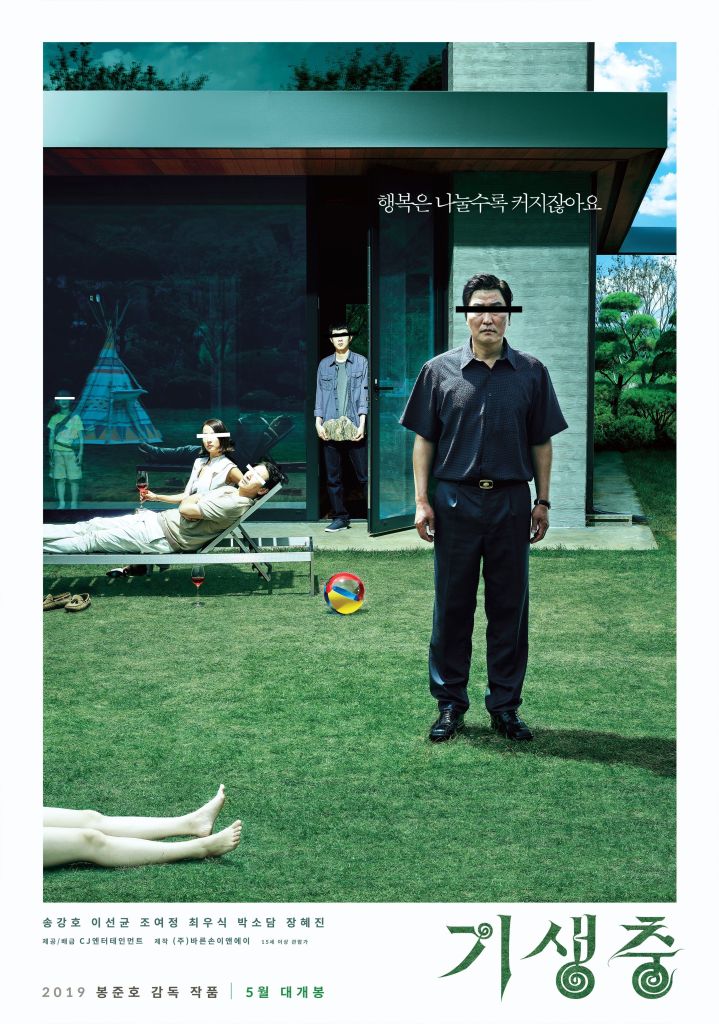
Parasite (기생충, Bong Joon-ho, 2019)

“So metaphorical!” the ambitious son at the centre of Bong Joon-ho’s class war melodrama Parasite (기생충, gisaengchung) is fond of saying, and he’s right – it really is. “Hell Joseon” rears its ugly head again, only it’s not just the young who can’t climb out but mum and dad too. Sticking together all the way, this enterprising family have realised that the only way they’re going to enjoy the fruits of the modern society is by becoming hangers on, feeding off someone else’s perhaps unfairly gotten success, and if that means stomping on a few others just like them to get there then so be it. There’s no room for love or fairness in a class war. 

The Kims – mum Chung-sook (Chang Hyae-jin), dad Ki-taek (Song Kang-ho), and grown up kids Ki-woo (Choi Woo-shik) and Ki-jung (Park So-dam), all live together in a tiny semi-basement apartment in a rundown slum. Unable to find steady jobs, the family make ends meet with casual jobs like folding pizza boxes while cadging wi-fi to look for better opportunities. Better opportunities only arise, however, thanks to Ki-woo’s upper middle-class college kid friend Min (Park Seo-joon) who brings them a special gift from his dad of a stone said to attract wealth, and a hookup for Ki-woo with a possible job coaching the pampered daughter of a superrich tech entrepreneur. After faking his credentials, Ki-woo gets the job, and wastes no time at all bringing in his sister as an “art tutor” for the couple’s apparently “troubled” young son. Together, they conspire to get the chauffeur fired so dad can take over, and then plot to do the same to the housekeeper so mum can come too, colonising the house and living alongside the wealthy Parks with a view to someday ousting them. 

The house, a fabulously modern take on the traditional designed by a famous architect who sold it to the Parks when he moved to France, is a kind of “host” in itself. We might not all admit it, but there are few of us who would not want to live in a house like this, especially if we feel it has been deliberately placed out of our reach. The Kims are envious, yes, but not perhaps malicious. They simply want a kinder life, one free of the anxiety of always having nothing and then getting that taken away from you too. In a running gag, a drunk keeps peeing right in front of the Kims’ window, and later they literally find themselves drowning in a river of shit when torrential rain causes the local sewer system to backup and flood their fetid, low-lying slum forcing everyone into a makeshift “evacuation” centre where insincere public servants try to make excuses about not being bothered enough to make sure those with no money don’t drown just because it rained. 

The Kims aren’t bad people, but their desperation means they can’t afford to be kind. The true “villains” of Parasite aren’t the Parks or the Kims themselves, but the system which forces one set of oppressed people to oppress another. The Kims know they’re responsible for displacing people just like them – getting the driver fired, going after the housekeeper, etc, but they can’t afford to think about it, pausing only to wonder if maybe they found other jobs once they themselves start to feel comfortable. “She’s rich but still nice” Ki-taek says of Mrs. Park (Cho Yeo-jeong), only for his wife to counter no, “she’s nice because she’s rich”. Mrs. Park can afford to be nice because she has plenty. She has no need to worry about taking things from others, and is secure enough not to have to worry about people taking things from her. That makes her easy pickings for a family like the Kims, but it also hints that “niceness” is the natural condition of being human, the way we’re supposed to behave to each other in an ideal world where none of us are hungry or afraid. 

Then again, the Parks are not wholly “nice” even if they are polite in a superficial, wholesome sort of way. Mr. Park (Lee Sun-kyun) in particular has a curiously feudal outlook in which he is perpetually preoccupied with the idea of his servants “crossing the line”, making it plain that there is a clearly defined border between those who rule and those who serve. The Parks’ young son is the first to notice that the Kims all smell the same even if he does so innocently, they all obviously use the same soap and detergent after all. Mr. Park, however, later takes it further, complaining about the way Ki-taek stinks up his car, resenting the smell of “poverty”, the mustiness born of living with damp and mould. To him, the Kims are not so much different from stink bugs, squatting in his home, members of “the great unwashed” unfit for his society. 

He does, however, need them. The Parks are as dependent on the Kims as the Kims are on the Parks, and they all need the house. Unfortunately, peaceful coexistence seems to be a distant possibility in a world of such fierce inequality as to encourage the most casual of cruelties. “All you have to do is walk up the stairs” Ki-woo later tells his father, but that’s easier said than done, especially when everything is telling you that you’ll always belong in the basement. 


Parasite is released in UK cinemas on 7th February.

UK release trailer (English subtitles)
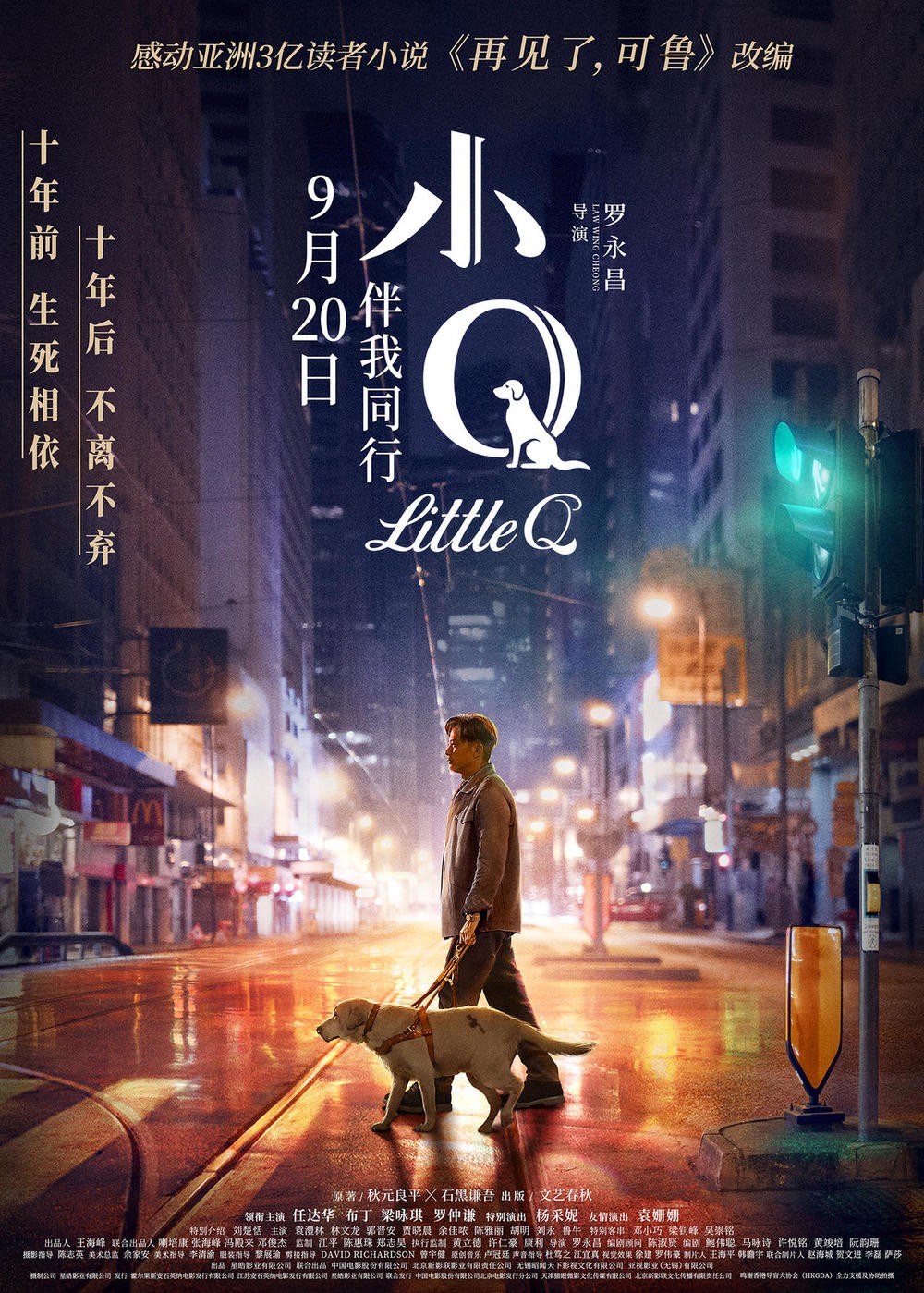
Little Q (小Q, Law Wing-Cheong, 2019)

little q poster 4You might think, in this day and age, that guide dogs are a fairly uncontroversial subject, but it might interest you to know that Hong Kong apparently has a vast guide dog deficit with fewer than 40 working in the city as of 2016 which is around one for every 4,300 visually impaired people. That might be part of the reason that Little Q (小Q, Xiǎo Q), adapted from a Japanese photobook by Ryohei Akimoto & Kengo Ishiguro, largely plays out as a feature length advert for the Hong Kong Guide Dogs Association, which is one of only two organisations training guide dogs and was set up in 2011 ending a 26-year absence of any such body.

The film charts the entire life cycle of the titular Little Q, whom we first meet literally falling into the arms of grumpy pastry chef Po-ting (Simon Yam Tat-wah). Rewinding a little, we realise that Po-ting’s sister and her vet husband are involved with the raising of guide dogs, sending Little Q off to live with his “foster family” which, perhaps irresponsibly, is in the home of plucky little girl Tsz-kiu (Jessica Liu Chutian). For those who don’t know, and as the film perhaps hopes to illuminate, guide dogs are trained in a family home by ordinary people who’ve agreed to look after them for the first 18 months of their lives, after which the dogs are given a final aptitude test and then placed with a blind person for a probationary period to assess their compatibility. Of course, agreeing to foster a dog knowing that you’ll eventually have to give it up can be emotionally difficult even for an adult, so placing that responsibility on a child is only going to lead to tears, of which there are plenty as Tsz-kiu is finally forced to accept that Little Q can’t stay with her forever because she has a greater calling.

Simon (Him Law Chung-him), the trainer/co-ordinator, promises Tsz-kiu that he’ll make sure Little Q has a lovely life with a person who truly appreciates her and that he’ll be sure to bring Little Q right back if she’s ever hurt or mistreated, but in part he knows he’s being disingenuous because they’ve already decided she’ll be going to Po-ting. Po-ting does not want a guide dog and is only getting one because of his sister’s connection to the programme. The problem is that Po-ting was always a “difficult” person. A well known TV pastry chef, he made a name for himself being mean in the way only a celebrity chef can. He has no respect for his service animal in part because he has no respect for other people, and because he was good at what he did people let him get away with it. Po-ting once cut down a contestant on the TV show by insisting that a chef must use all five senses, so he feels particularly trolled by the universe to have lost his sight and is struggling to accept his blindness. Feeling a sense of internalised shame because of his disability in addition to the fear and anxiety involved with adjusting to his new life has made him even more unpleasant and resentful than he was before. Angrily insisting he needs no additional help, he rejects and mistreats Little Q, even violently throwing her out of his well appointed home in the pouring rain.

As this is Little Q’s story, however, we only get a back seat view to Po-ting’s gradual softening as he begins to let her into his life, engineering not only a warmer relationship with his sister/partner in the pastry shop (Gigi Leung Wing-kei) but also with his apprentices, while he begins to see that the loss of his sight is only a change and not a tragedy. Through it all, Little Q is at his side, steadfastly loyal even when he tries to push her away, which is perhaps not quite the best message to be sending though it does emphasise the intense attachment that necessarily develops between a guide dog and its owner.

Law hints at an ethical dilemma in pointing out the toll taken on the dogs in the course of their work, but heads it off in reminding us that they get to “retire” and live out their final days as pampered pets while demonstrating that the reformed Po-ting breaks all the rules by playing ball with Little Q like a regular family dog. The paradox is difficult to bear as owners must act in symbiosis with their dogs, but are reminded that they’re service animals belonging to the organisation not personal pets and should something happen to them, will be shuffled on to others in need or returned to their foster families. Nevertheless, Little Q gets the best of both worlds, bonding fiercely with the grumpy Po-ting as he figures out how to live and love by following her lead.


Screened in association with Chinese Visual Festival.

Trailer (Cantonese with English subtitles)

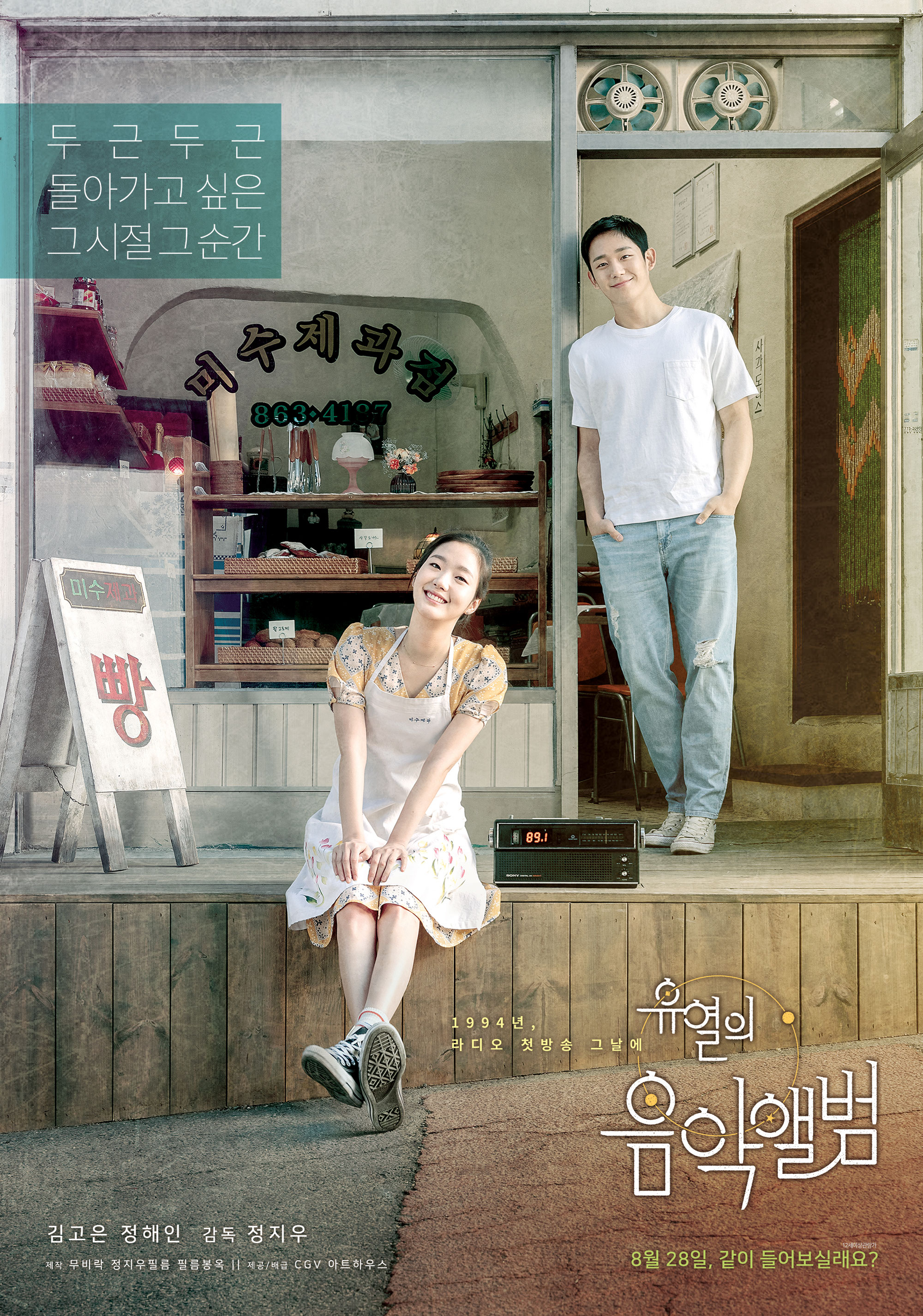
Tune in for Love (유열의 음악앨범, Jung Ji-woo, 2019)

Tune in for love poster 2The course of true love never did run smooth. Another in the recent series of nostalgic ‘90s romances, Tune in for Love (유열의 음악앨범, Yooyeolui Eumakaelbum) takes a pair of nervous youngsters and charts the course of their love story over a decade which, though not quite turbulent, saw its share of difficulties and a host of technological changes. “Miracles are nothing special” the heroine tells us, but when it comes to love miracles are all there is and in the end you’ll just have to learn to trust them.

On Oct. 1, 1994 Hyeon-u (Jung Hae-in) walks into Mi-su’s (Kim Go-eun) bakery looking for something with tofu in it. While inside, he hears the first broadcast of Yoo Yeol’s Music Album, a new morning program which seems to signal the beginning of a new era. Though Mi-su is quick to realise that the only reason someone would be desperately looking for plain tofu early in the morning is because they’ve just been released from prison, she decides to offer him a part-time job in the bakery where he becomes a member of the family alongside her “aunt” Eun-ja (Kim Guk-Hee) who’s taken care of her since her mother died. His past, however, refuses to let him go however much he tries to move away from it. Tracked down by his delinquent friends, Hyeon-u is unable to return to the bakery and will spend the next decade trying to do just that.

Fate parts the youngsters repeatedly, but always brings them back together again seemingly by chance. Military service, changes of address, miscommunication and changing technology all conspire to keep them apart but like any good rom-com the problems aren’t so much circumstantial as personal. A deeply wounded young man, Hyeon-u is taken with the familial atmosphere at the bakery because he feels a sense of acceptance he hasn’t anywhere else, but deep down he still doubts he deserves the “normal life” he so deeply craves. His friends doubt it too, always turning up unexpectedly to remind him of their shared trauma and the debt of guilt he can’t repay. His insecurity prevents him from sharing the source of his pain with Mi-su, keeping her somehow outside the bubble of his shame as the only one capable of knowing the “real” him. She meanwhile is frustrated in realising that he’s holding something back, hurt he doesn’t trust her enough to let him in, and worrying he’ll never truly be ready for full commitment. 

Nevertheless, though often apart they remain painfully in sync, until that is fate brings them back together. As young man with a checkered past and no safety net, Hyeon-u has to fight twice as hard to get ahead, eventually graduating high school and getting into college while supporting himself with part-time jobs. Mi-su, meanwhile, is burdened by the knowledge that she’s lost her mother’s bakery and is desperate to get it back. Dreaming of being a writer, she turns down an internship at the all important radio show to go for a steady job she’s told is at a publisher’s but is actually somewhere more like a print shop where she’s stuck doing incredibly boring admin work. Hyeon-u is unable to get back in touch with her after miraculously reappearing because he’s ashamed to admit that he ended up getting in trouble again thanks to his awful friends even though it really wasn’t his fault. She meanwhile confesses that a part of her was relieved not to hear from him because she too is unhappy in herself, feeling lost and confused, disappointed not to be living the kind of life she could be proud of. 

Times change, but their one constant is the radio show broadcasting every morning and providing additional though indirect methods of communication when they are otherwise unable to make contact. Pay phones give way to email and then to mobiles all the way into the early days of the smartphone era, but face to face conversation remains the most difficult. Mi-su gives up on Hyeon-u while he, ironically, probably does sort something out by having a good old fashioned punch up with his generally unhelpful friend. She wonders if she’s better off to make the “smart” choice rather than waiting on love. Hyeon-u is hurt that in the end she didn’t trust him, but is eventually made realise that the problem was that he didn’t trust himself. Then again, you can’t fight the power of true connection or the pain of its absence, all you need to do is a little fine tuning to make sure the signal comes through loud and clear.


Currently available to stream online via Netflix in the UK (and possibly other territories)

Netflix trailer (English subtitles)