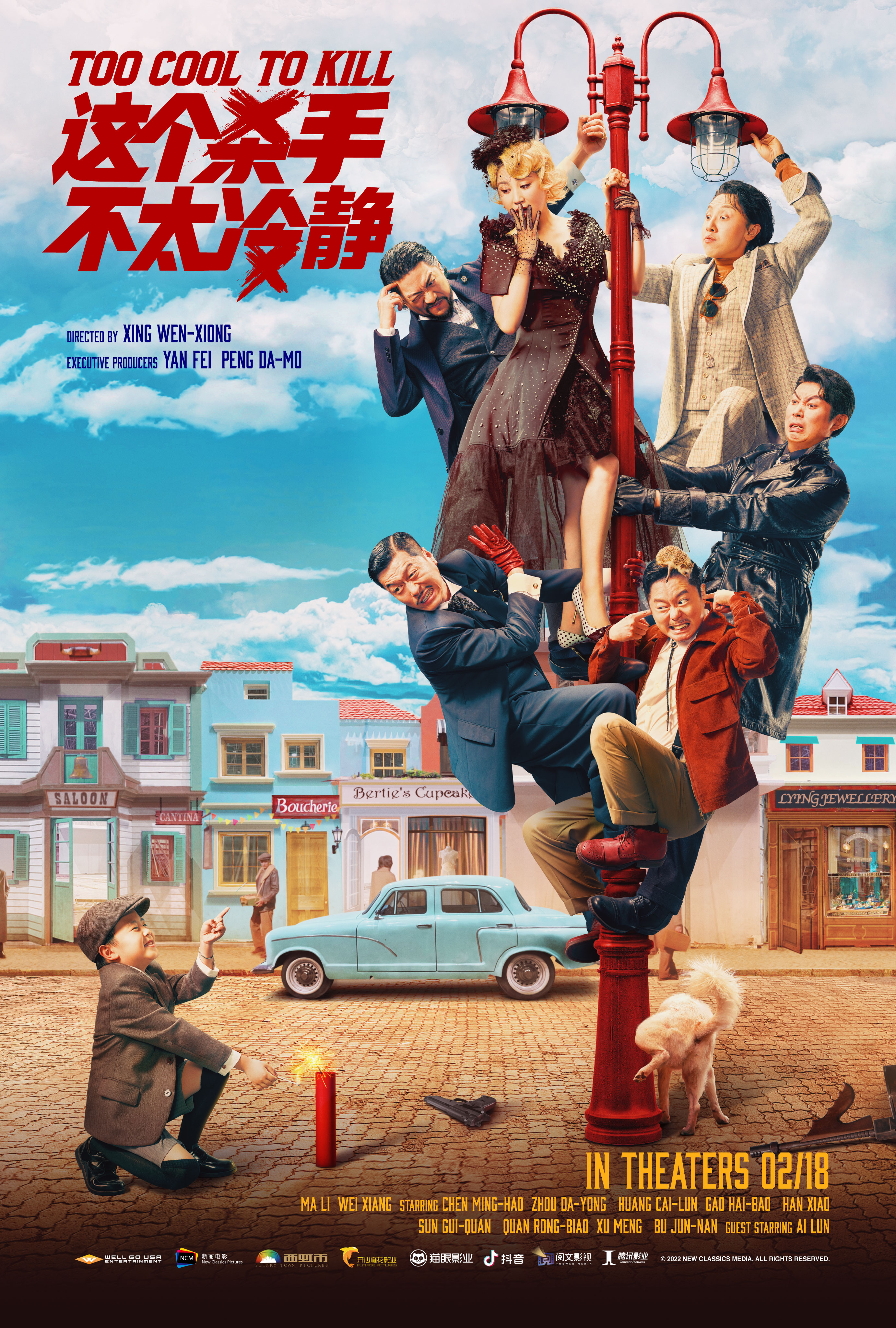
Too Cool to Kill (这个杀手不太冷静, Xing Wenxiong, 2022)

Fantasy and reality begin to blur for a jobbing actor suddenly offered a leading role in an experimental hitman movie in Xing Wenxiong’s meta take on Koki Mitani’s The Magic Hour, Too Cool to Kill (这个杀手不太冷静, Zhè ge Shāshǒu Bú Tài Lěngjìng). A veteran comic actor, Wei Xiang like his character is also playing his first leading role and tearfully thanks the crew for the opportunity in a moment of behind the scenes footage playing over the ending credits proving that there might be “method” in the madness as his utterly guileless hero continues to “act” in a drama that is all too real. 

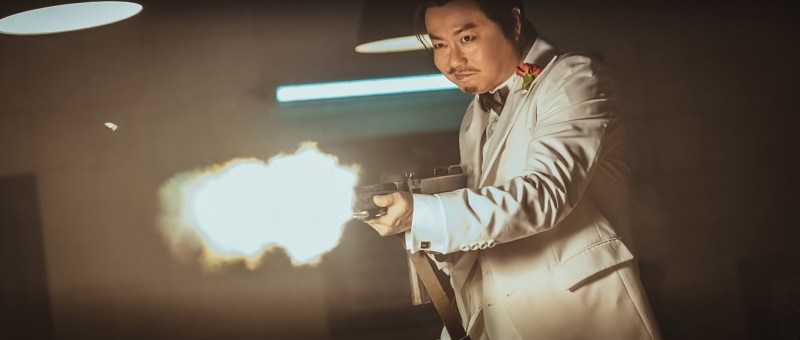
Big time gangster Harvey of the Magic Gang (Chen Minghao) is currently being targeted by rival outfit Movement. Top hitman Karl (Ai Lun) has been sent to assassinate him, but is ironically caught in the explosion at the quarry Harvey has just opened, his bullet merely grazing Harvey’s ear. Having no idea the injured worker was trying to kill him, Harvey plays the standup guy by visiting him in hospital and ironically swearing vengeance. Meanwhile, he’s also busy putting the squeeze on an actress he fancies, Milan (Ma Li), who has accepted his money to make a movie but has no intention of consenting to his terms. When Harvey threatens to fit Milan and her director brother Miller (Huang Cailun) with some concrete boots, she quickly counters that Karl is a personal friend of hers and she’ll certainly deliver him to Harvey if he gives her some time. But Milan was only bluffing and she doesn’t have enough time to flee the country before Harvey finds out, so she hatches on the idea of getting a random actor to play the part of “Karl the Killer” seeing as no one’s ever seen his face. 

The thing about Wei (Wei Xiang) is that he’s very earnest. He genuinely loves the craft of acting and is always trying to “improve” his performance such as cackling maniacally before he “dies” to show his utter contempt for death. All of this makes him quite irritating on set, but also the perfect fall guy for Milan and Miller who are, somewhat darkly, aware that Wei is not likely to survive his encounter with Harvey which will buy them some time to get away. What they didn’t bank on was Wei’s utter commitment to the role. Because he thinks it’s just a movie, he isn’t scared at all and doesn’t realise there’s a chance Harvey’s guys will actually kill him. Thus he pulls a bunch of ultra-cool, James Bond-style moves assuming he’s improvising an action drama in which he’s the hero so technically can’t “die” or at least not until the final scene. The plan begins to backfire when Harvey is so impressed that he actually offers Wei, well “Karl”, a job in his gang which only leads to further intrigue. 

It may just be that Wei’s behaviour is otherwise so odd that no one really notices, but his constant references to being in a film almost go unacknowledged. While negotiating with an Italian mob boss, he confesses he left the gun they were meant to be selling behind because it was too heavy but they can just fill it in with “special effects” later, while often asking to go for a second take because he’s not convinced the “invisible” cameras captured his best angle. On his first appearance, Wei shows up dressed like John Travolta in Pulp Fiction. Later he reenacts a scene from Desperado and even dances along to Singing in the Rain demonstrating his true love of the movies if somewhat anachronously to the movie’s ambiguous setting, 

Xing later does something similar in suddenly cutting the CGI backgrounds to show us the small island promenade surrounded blue tarp as if laying bare the “magic of the movies”. Echoing Mitan’is original he sets most of the action in a quaint Mediterranean backlot that is indeed a “fake” world to begin with where earnest actor Wei is the only one who’s “real”. Gradually, Milan starts to fall for his guileless goodness, especially on learning that he’s also been playing a role in real life that he’s committed to completely out of kindness and compassion all of which has made her regret her callous decision to feed him to the sharks so she could get out of town. A tribute to movie-loving pros, Too Cool to Kill celebrates the “unreality” of the silver screen but also the sincerity of a try hard actor who finally gains the role he was born to play.


Too Cool to Kill is available digitally in the USA courtesy of Well Go USA.

Trailer (Simplified Chinese / English subtitles)
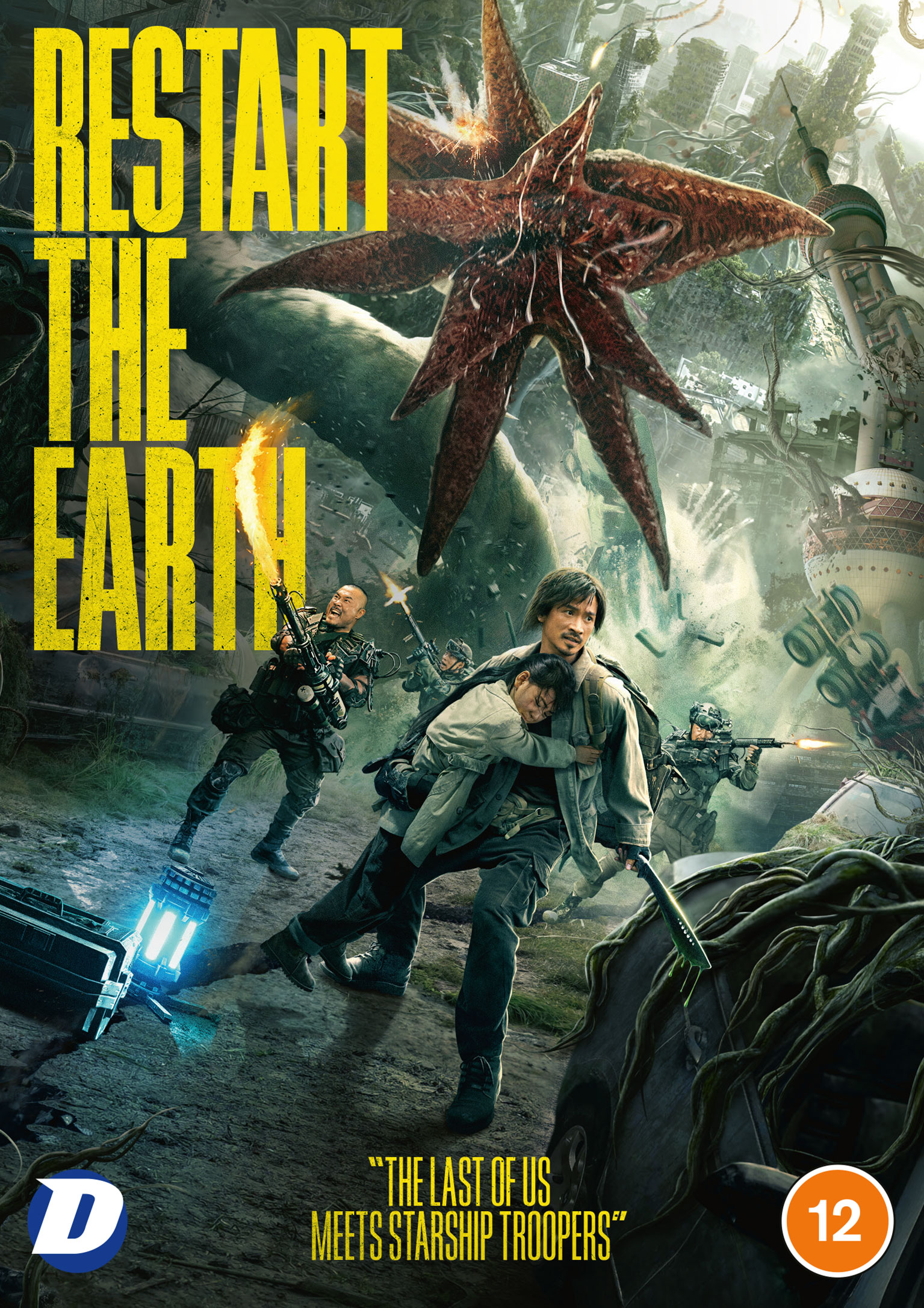
Restart the Earth (重启地球, Lin Zhenzhao, 2021)

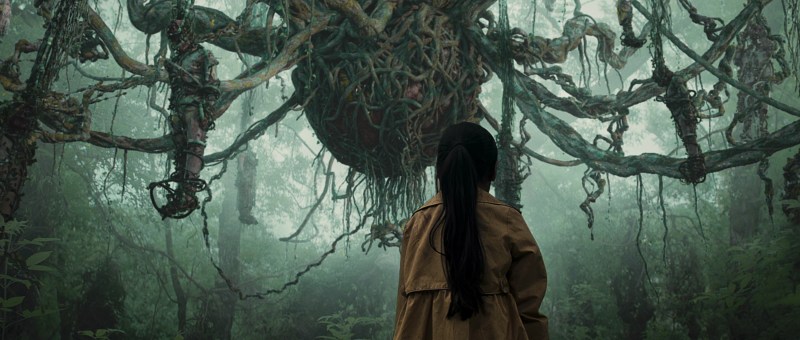
Maybe it’s only fair enough if the plants finally turn against us and reclaim the world from the effects of our industry. We haven’t taken very good care of this planet, after all. In Lin Zhenzhao’s well produced low budget streamer Restart the Earth (重启地球. chóngqǐ dìqiú), humanity ironically tries to use science to repair its scientific mistakes but predictably ends up making everything even worse when an experimental program designed to halt desertification suddenly causes plant life to become sentient and develop a craving for human flesh. 

Yang Hao (He Shengming) lost his wife, a botanist, during the original attack and has spent the last two years safeguarding his little girl Yuanyuan (Zhang Mingcan) from the same fate. He wants to find a shelter, but ends up running into a troop of soldiers after a plant attack who tell him that the plants are about to launch a new offensive and all human life will end in a matter of hours if they are not able to achieve their mission of injecting a neutralising element into the plants’ root base in the core of the Earth. Like any good post-apocalyptic dad, Hao has a choice to make. As he tells Yuanyuan he has no interest in saving the world and only wants to save her, but is shamed into joining the cause by Yuanyuan’s disapproval and decides to accompany the soldiers who are in dire need of his engineering skills. 

Personal sacrifice for the greater good is very much the theme of the film. Several of the soldiers actively sacrifice their own lives either to save Yuanyuan or to make sure the planet-saving serum makes its way to the next checkpoint while reminding us that they too have families who might be waiting for them at home. As Hao later affirms, he’s just an “ordinary Chinese citizen”, somehow convincing several world powers not to give up on saving the planet no matter how hopeless it seems simply by reminding them of the power of hope. But it’s precisely this “ordinary” heroism that later saves the world, sending a message that is both egalitarian and collectivist in insisting that everyone has a role to play in a well functioning society. 

Then again, the “catastrophe” as it’s called is very much manmade. It began with climate change which then led to the scientific experimentation which quite spectacularly backfired. In essence it’s all down to “bad” science (and some bad plants that were brought in from abroad by a foreign scientist). Man likes to think it can master its environment, as someone later puts it, but the environment decided to fight back. Even so the solution lies in more of the same as Hao has the bright idea of harnessing the power of nature to break through the plants’ firewall. 

The plants themselves take on the appearance of dragon-like monsters snaking through ruined buildings or else snapping up humans with claw-like tentacles. As the plant-based ring of terror encircles the Earth, giant hand-like branches seem to sprout from the ground ready to smash and grab. Post-apocalyptic production design conjures a land of ruin half-reclaimed by nature, while Lin pays frequent homage to other similarly themed franchises. The soldiers’ uniforms have more than a touch of Attack on Titan, while he also seems to directly reference Aliens as well as a series of other post-apolypytic dramas in which a tightly bound team of survivors must band together to face off against an insidious enemy. 

The idea is essentially to reboot the Earth, but in another sense perhaps that’s what the plants were also trying to do. Maybe we shouldn’t really be rooting for a human victory though it’s also possible that the supercharged plants would soon consume the planet anyway. In any case, the messages about the dangers of climate change and importance of responsible science are secondary to those of the heroism of personal sacrifice for the greater good along with the determination to keep hope alive when it seems all is lost. Noticeably well put together for a low budget streamer Lin’s post-apocalyptic action drama suggests the end of the world might not be that far away but can at least be held at bay if only by the power of human selflessness.


Restart the Earth is released in the UK on blu-ray, DVD, and Download to Own on 22nd May courtesy of Dazzler Media.

Trailer (English subtitles)

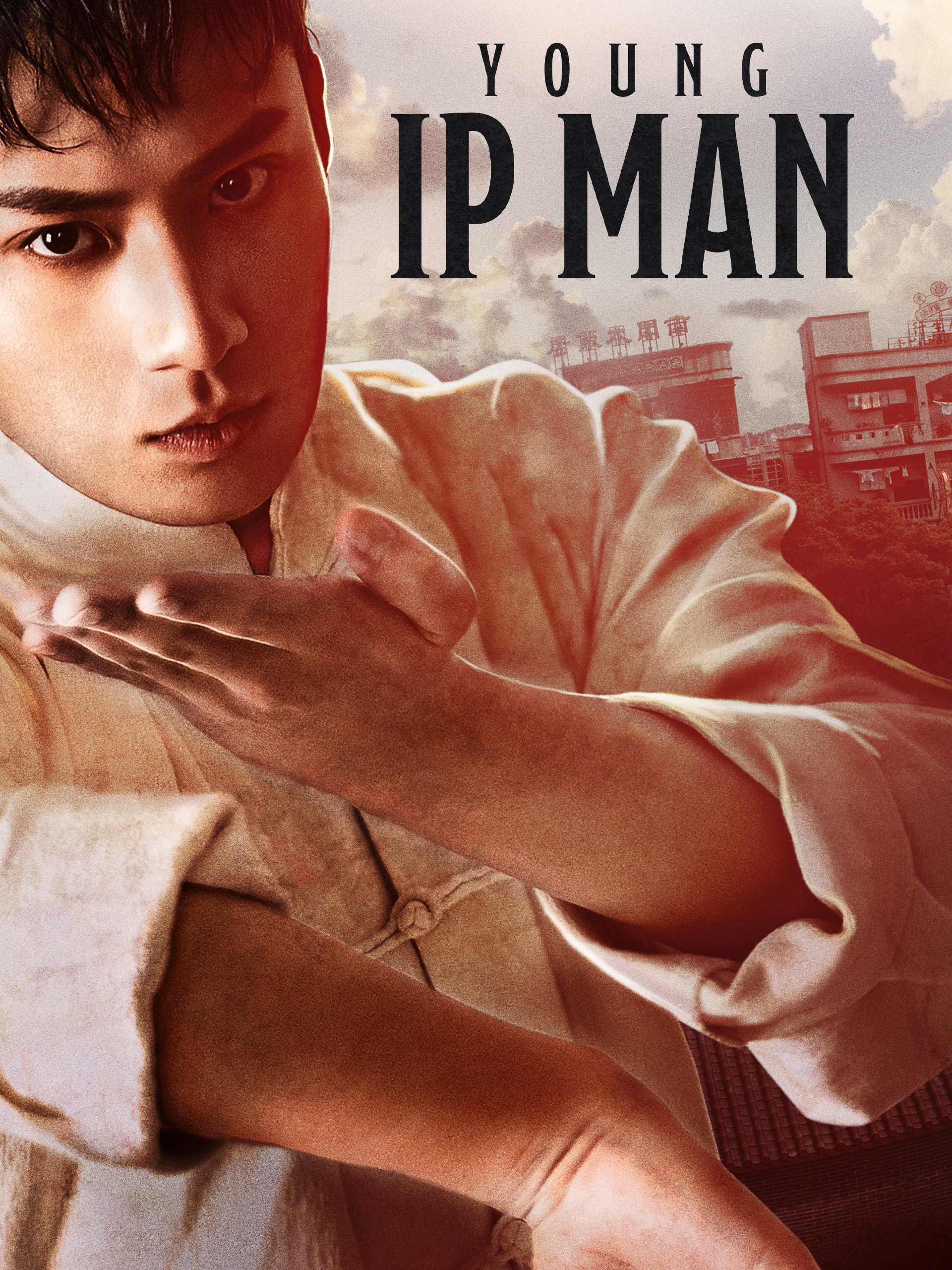
Young Ip Man (少年叶问之危机时刻, Li Liming, 2020)

In another branch of the sprawling Ip Man tree, Li Liming’s Young Ip Man (少年叶问之危机时刻, shàonián Yè Wèn zhī wēijī shíkè) aims to kickstart a new strand of streaming action drama in following the titular hero in his days as a student in Hong Kong. Li never misses an opportunity to remind us that this is all taking place in the colonial past, a large British flag flying over the prison in which the film opens. Yet perhaps surprisingly, the betrayals that Ip Man (Zhao Wenhao) faces are local and personal in which the corruption of British rule is felt only distantly and in the priggish figure of a bullying police commissioner who as it turns out is really just an unimportant middleman. 

The most literal villain is, however, arch criminal Ma Long (Mu Fengbin) who is sprung from prison by his gang in the film’s high impact opening sequence. Determined to get revenge on corrupt police chief Stewart (Jonathan Kos-Read), Ma somewhat bizarrely decides to kidnap a bunch of rich kids at school for an English speech competition hoping to get his hands on Stewart’s son Jack. The funny thing is he has a connection to Ip Man’s past and later suggests he may have known that he would be involved all of which seems to be quite a flaw in his plan. In the company of his friend Ya Yun, the daughter of the head of the Axe gang, Ip Man defiantly decides to use his martial arts skills to save his fellow students while squaring off against the corrupt figure of Ma.  

Then again, as we discover Ma only became the arch villain he is because of judicial corruption. When someone close to him was killed, he sought justice but was denied because the perpetrators were influential people, the implication being that they were members of the colonial elite which Stewart was propping up. Filled with grief and rage, he’s hellbent on ruining Stewart’s life and doesn’t really care all that much about what he might have to do to do it. As Ip Man points out, he once tried to teach him about the importance of knowing right from wrong, but Ma now believes that the distinction is one made only by the weak for the strong care only about winning. 

The secondary part of Ip Man’s mission is dedicated to saving his old friend Xuehu from becoming another Ma after becoming frustrated that he was prevented from marrying the woman he loved because of his poverty and the class difference between them. He too vacillates, uncertain if he will actually betray his friend to get the money to get married while remaining complicit in kidnap and murder. As usual, the situation gives Ip Man a lot of opportunities to remind others of the martial arts philosophy and the importance of humanity even if others try to convince him that “feelings are worth nothing in this world”.

Still, the battle plays out like a chess game as Ip Man tries to outsmart Ma and win the students’ freedom while inexplicably still believing in his good sportsmanship certain that Ma will honour his word and let the hostages go if only he manages to beat his arbitrary challenges. Ip Man fights off the bad guys, dashing over balconies and leaping from windows to save his friends, while experiencing an internal conflict as he finds himself at odds with men he previously respected hoping he can still redeem them even as they seem intent on his death. In any case, the most surprising element of the film maybe that in the end the corruption goes largely unpunished with the true winner the duplicitous policeman with a habit of selectively enforcing the law. 

Even Ma seems to recognise the hollowness of his revenge in coming to an understanding of his role and position in otherwise corrupt society while Ip Man appears to win the esteem of Ya Yun’s gangster father who despite his overprotective parenting does nothing at all to try to save her other than raising money and waiting patiently outside the school. Despite its low budget, the film packs in a fair few impressive action sequences beginning with daring prison break and culminating in the schoolhouse siege as the young Ip Man gets the chance to show off his skills while fighting for justice in old Hong Kong.


Young Ip Man is available to stream in the US via Hi-YAH! and released on DVD & Blu-ray May 16 courtesy of Well Go USA.

Trailer (English subtitles)

A Light Never Goes Out (燈火闌珊, Anastasia Tsang, 2022)

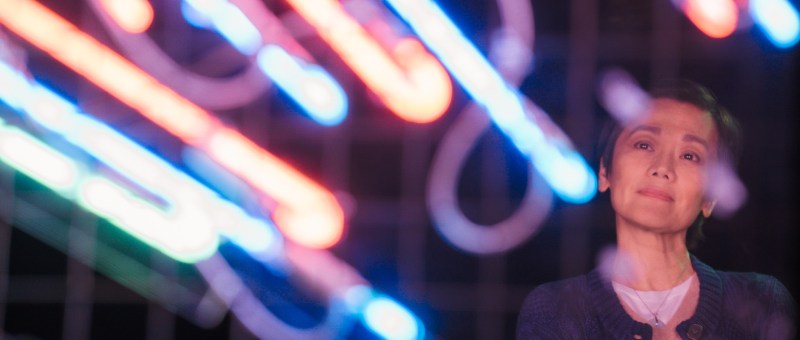
A mother and a daughter take very different paths in trying to come to terms with grief in Anastasia Tsang’s poignant drama, A Light Never Goes Out (燈火闌珊). A tale of loss in more ways than one, the film is also a deeply felt lament for the old Hong Kong which finds itself slowly erased as symbolised by the movement to remove the “dangerous” neon signage which was once such a part of the city’s identity. 

Heung’s (Sylvia Chang Ai-Chia) late husband Bill (Simon Yam Tat-Wah) had been a master craftsman of just such signs though as far as Heung knew had retired a decade previously as the industry continued to decline. Where once the city was full of neon, modern businesses prefer cheaper LED signage. Now that Bill is gone, Heung struggles to find direction in her life. She continues cooking for three even though they’re only two and sadly reflects on how dark and sad the streets now feel as she witnesses the signs that Bill spent so much of his life crafting unceremoniously dismantled. While all she wants to do is hang on to the past, her daughter Prism (Cecilia Choi Si-Wan) takes the opposite path insensitively getting rid of her father’s things without her mother’s knowledge while secretly planning to move to Australia with her fiancé Roy. 

In some ways the two women represent a set of opposing views with the mother standing in for those who decide to stay and fight for the soul of Hong Kong, and the daughter those who decide their future lies abroad in her case in Australia where she believes there is “more creative freedom”. When Heung tells some construction workers that “your new laws are illegal”, it sounds as if she’s talking about more than just building ordinances while exasperated by the idea that something which seemed very ordinary just a short time ago is deemed against the law because of a sudden and arbitrary introduction of additional legislation. 

It might be assumed that the neon lights fade because young people do not care for them, but Heung’s greatest allies are the young apprentice, Leo (Henick Chou), she belatedly discovers Bill had taken on before he died and a young woman who fiercely protects the neon sign that hangs above her bar. It’s she who also points out that Bill supported her during the SARS crisis when her family’s business was suffering, bearing out his humanity in helping those in need while suggesting that it is spirit of the neon lights that has kept Hong Kong going during its darkest days. Bill had been a bit of a dreamer, fond of encouraging those around him to wish upon a star while insisting that nothing’s predetermined and if you wan’t something you can make it happen all of which sounds like a subtly subversive advocation for the fight for Hong Kong. 

As he later says, his signs may have been torn down but they can be built again while Heung and her daughter eventually find a way to reconcile in their grief and she gains a surrogate son in the earnest Leo who encountered rejection all his life until discovering a calling in the art of neon signage. Leo’s commitment suggests that something of the neon lights can be preserved and brought into a new era while there is a genuine poignancy in the significance of the sign reading “myriad lights” which eventually guides each of the heroes towards their resolution in attempting to fulfil Bill’s dying wish of recreating a sign which had long since disappeared but held a memory for another couple that another one long departed had held for he and Heung. 

Tsang often cuts back to stock footage of a neon-lit Hong Kong in the 60s and 70s before contrasting it with the comparatively empty streets of today which appear almost soulless in their slick modernity. It is in a sense nostalgia, a yearning for another Hong Kong which is fast disappearing or perhaps being deliberately erased as symbolised in the final, post-credits shot of the famous floating restaurant with its vibrant exterior and giant green “Jumbo” sign which capsized in June 2022 after being towed out of Hong Kong for storage in Cambodia. A poignant tale of grief and healing, Tsang’s moving drama nevertheless suggests a flame still burns in the flickering lights of the old Hong Kong which continue to illuminate the night sky in defiance of those who might seek to extinguish them. 


A Light Never Goes Out opens in UK cinemas on 12th May courtesy of CineAsia.

UK trailer (Traditional Chinese / English subtitles)
Finding Her Beat (Dawn Mikkelson & Keri Pickett, 2022)

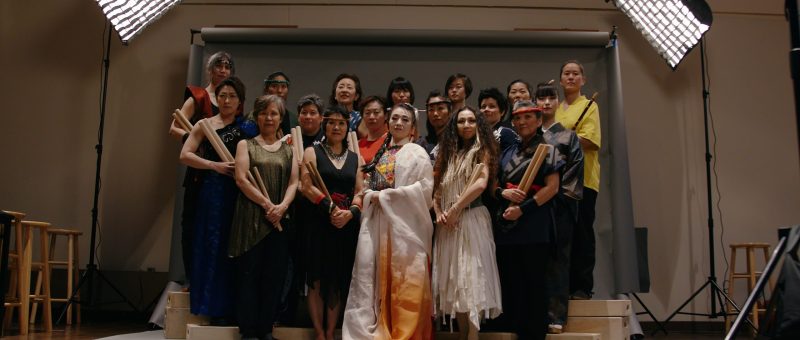
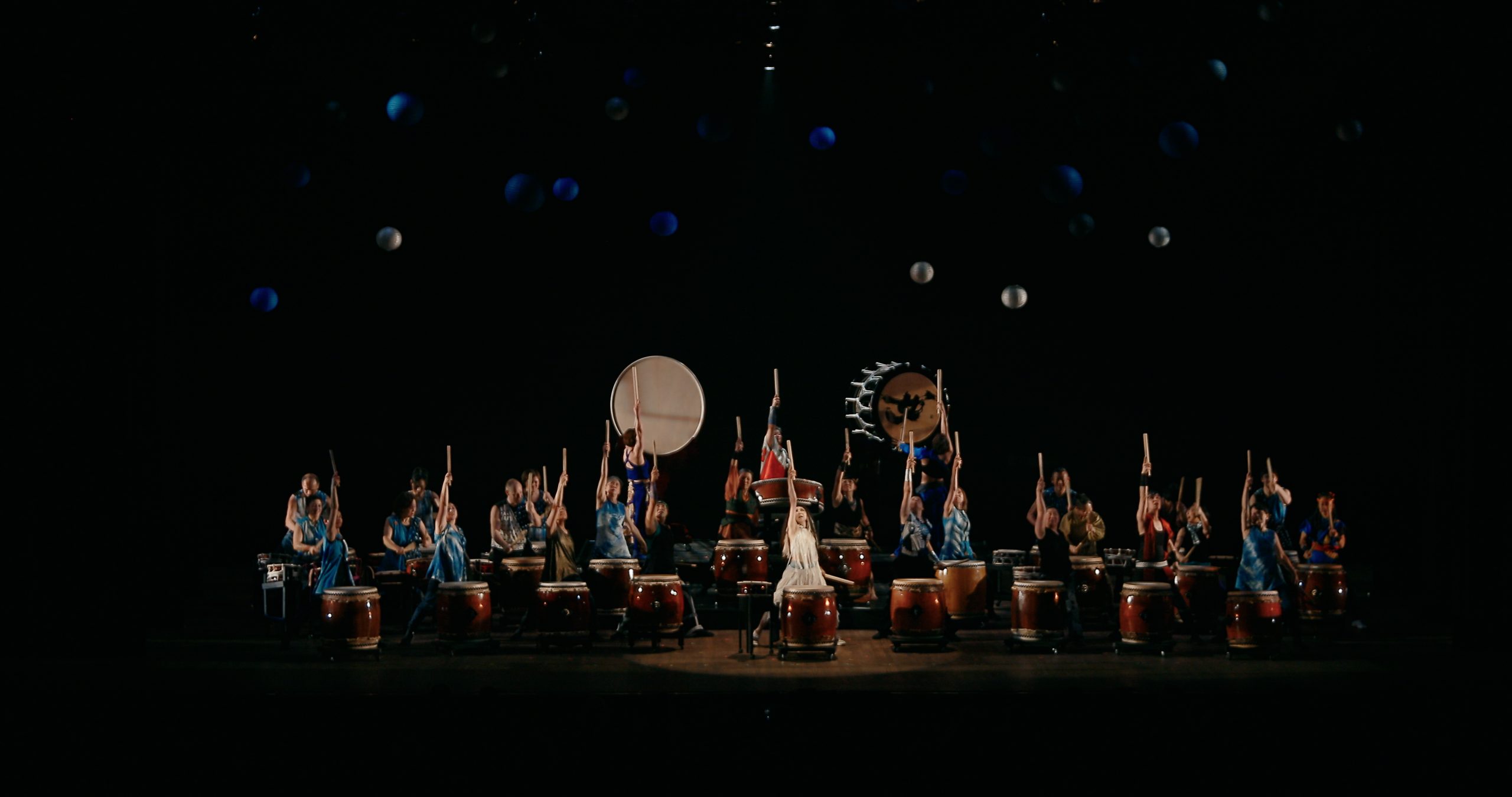
“We belong here, we deserve this.” It might sound like a redundant statement, but there are many reasons why the subjects of Dawn Mikkelson & Keri Pickett’s mostly observational documentary Finding Her Beat might have come to doubt their right to practice their art if not that simply to be who they are. As the opening text relates, taiko drumming has long been a male preserve and even if women were not expressly forbidden from playing conventional notions of femininity often forbad them. 

That’s in part the reason that Jennifer Weir, director of TaikoArts Midwest, embarked on the HERbeat project aiming to bring together female taiko players from the US, Japan, and around the world for a collaborative performance in Minneapolis. As Jennifer reveals, she is a Korean-American adoptee and had no particular reason to embrace taiko but like many of the other women who come to participate in the event, she has found a new home and community as a taiko drummer. The same is true for her wife, Megan, who once lived with a taiko drumming group in Japan before returning to the US and starting a family. 

Conversely, Chieko Kojima who is a founding member of the prominent taiko group Kodo on Sado Island explains that taiko gained a resurgence in the post-war era as young Japanese people looked for a way to rediscover traditional Japanese culture as a rejection of growing American cultural influence. Chieko herself had wanted to drum, but women were not really welcome to do so and so she became a dancer. Kaoly Asano’s practice at Gocoo is conversely rooted in post-war avant-garde performance art and incorporates other elements of traditional Shinto dance along with more modern influences such as trance and tecnho music. 

In a sense, their involvement with taiko is also a means of recovering a traditional culture that has often been mediated through a fiercely patriarchal society. Though there is no direct prohibition on women playing the taiko drums as there might be for entering a sumo ring, it has often been associated with masculinity as a celebration of physical strength and endurance. Socially enforced notions of gender therefore made it difficult for women to participate lest they be thought unfeminine and therefore unmarriageable particularly in ages in which marriage was the only secure path to a comfortable life for a woman. 

Many of the taiko players also mention that they have felt displaced within their societies, sometimes because those societies too did not accept their gender presentation or sexuality. They have all, however, found a source of solidarity as members of a taiko drumming group which is after all about togetherness and harmony. “In a way, taiko gave me a family” echoes Koaly Asano, “by meeting you, Tiffany, I finally felt I was not alone.” she affirms while talking to US-based taiko master Tiffany Tamaribuchi. For Asano, taiko is also a force that connect us with a place and the rhythms of the Earth. “What’s important is your sound, to transform your life into sounds” she adds as a kind of manifesto for her taiko. 

In a way it’s this sound translation that allows the women to come together, overcoming language barriers to find a common voice. Nevertheless, they are faced with a series of additional challenges including the looming coronavirus pandemic with the concert scheduled for February 2020. The show turns out to be the second to last staged in its venue for the almost two years of pandemic-related restrictions, while many of the drummers have already had future gigs cancelled in their home countries. All of which lends the concert an additional an additional weight and poignancy as the drummers prepare to claim a space only to have it taken away yet again. Nevertheless, the project does allow them to rediscover an international sense of solidarity along with individual pride in the practice of their art. Fittingly enough, the concert ends with a routine titled “Eijanaika?” which is both a reference to a carnivalesque protest movement during the Meiji Restoration, and a phrase which might be translated as “so what, what’s wrong with that?” neatly echoing the celebratory sense of defiance at the heart of HERbeat.


Finding Her Beat screened as part of this year’s San Diego Asian Film Festival Spring Showcase.

Trailer

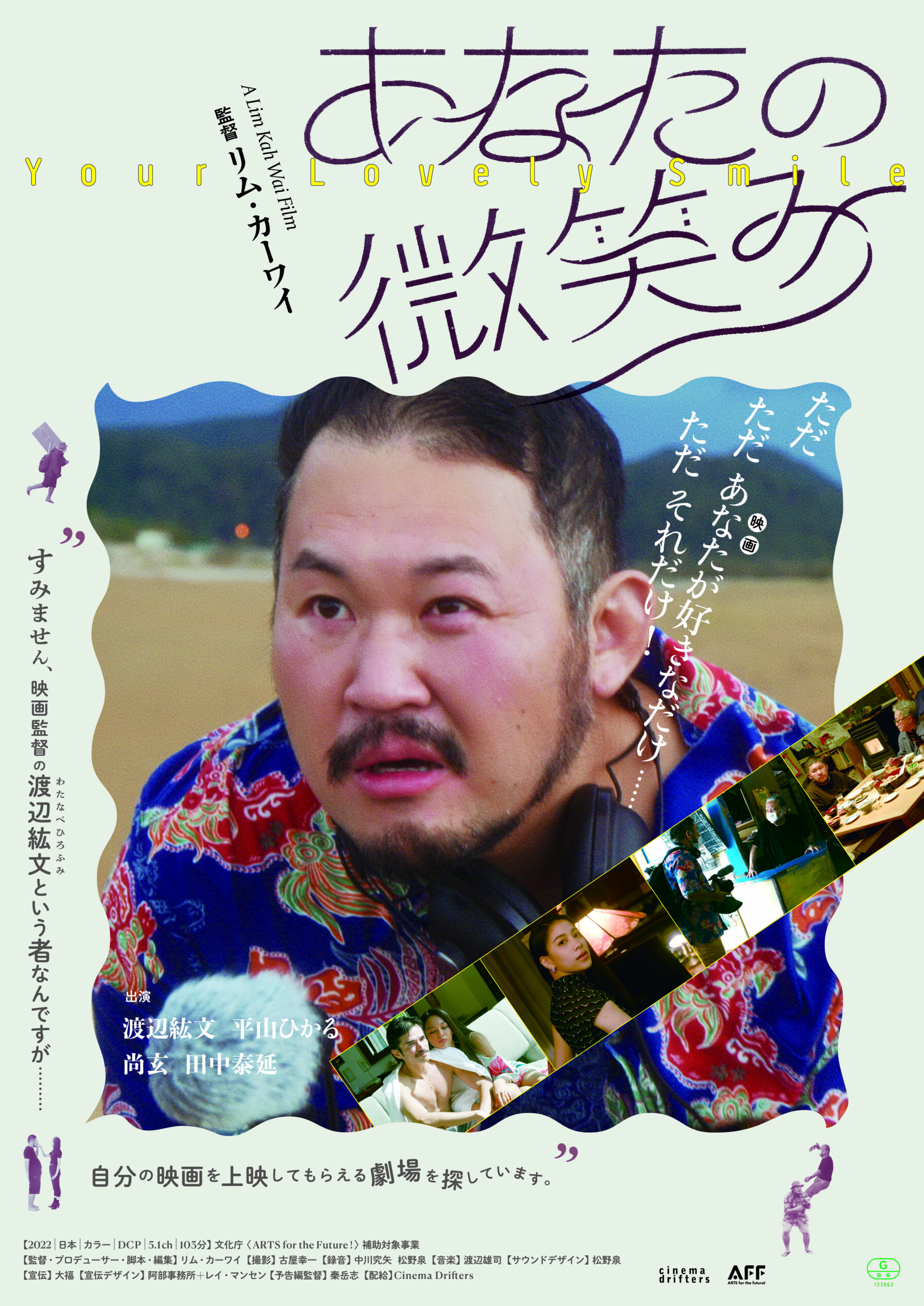
Your Lovely Smile (あなたの微笑み, Lim Kah-Wai, 2022)

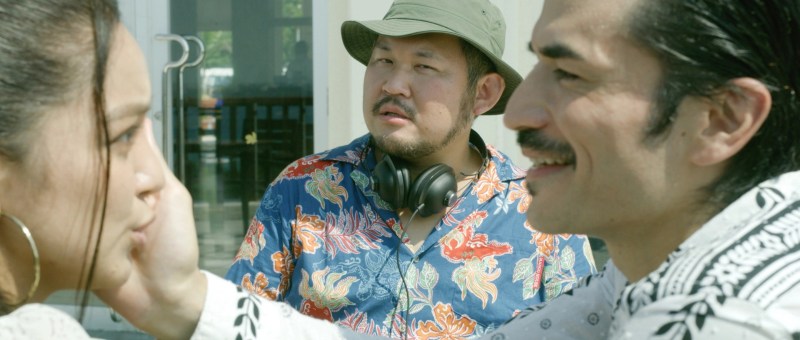
Indie director Hirobumi Watanabe has previously appeared as a version of himself in his own films, playing a self-involved and childish indie filmmaker railing against the world’s failure to recognise his genius in 2018’s Life Finds Away. For Malaysian director Lim Kah-Wai in Your Lovely Smile (あなたの微笑み, Anata no Hohoemi) he takes a rare leading role in someone else’s film doing much the same only with a little less self-laceration as he attempts to reorient himself amid personal and professional anxieties of the pandemic-era industry. 

Once again living out his ordinary days in Tochigi, Hirobumi sighs sadly as he reflects that no matter how many awards he gets his work will never equal that of New Wave masters such as Shohei Imamura and Kaneto Shindo. He’s having trouble completing a script and has no other work coming in. His brother is mainly supporting him through piano lessons, while Hirobumi keeps trying to reassure himself that a big offer from Netflix or Amazon is sure to turn up soon. He may be a “world famous director” but that doesn’t really help him pay the bills and only adds to his sense of anxiety. 

The irony is that in Life Finds A Way Hirobumi had received some harsh feedback from a woman who advised he consider making “good films” like Koreeda rather than the stuff he normally makes, but this time he gets a break, from Toho no less, who hire him for a shoot in Okinawa because Koreeda is too busy filming in Korea. What he experiences there is further humiliation at the hands of a deranged male star (Shogen) who orders him to write script in under a day and has his bodyguards follow him around to make sure he’s applying himself. But of course, the kind of film he wants (not that he really knows) isn’t the sort of film Hirobumi usually makes, or at least gangster romance hasn’t played much of a role in his filmmaking so far. Then again, when the actor asks about winning best actress awards, he might have a point that his films have rather tended to be male-centric save for the cheerfully absurd I’m Really Good which starred his young niece. 

While searching for artistic fulfilment, Hirobumi is often struck by visions of himself walking in the desert where he comes across a woman whom he subsequently encounters in “real life”. The humiliating experience in Okinawa sends him on a more literal journey travelling the length of the Japanese archipelago visiting indie cinemas in the hope that one of them will agree to screen his films. Even within this more friendly, environment, however, he discovers little support. Troubled by the economic conditions of the pandemic era, even microcinemas have to consider the bottom line and are reluctant to play anything other than established classics. Even when one rural cinema invites him for a mini retrospective, it turns out to be run by a man and his daughter who enlist him to hand out fliers and sell tickets in person to the less than enthusiastic locals only a handful of whom eventually show up. The closer he draws to the far the north, the more hopeless he begins to feel about the realities of indie filmmaking in the contemporary society. 

There is a poignant quality in Hirobumi’s obvious loneliness and desire for artistic approval, along with the sense of hopelessness he finds mirrored in some of the cinema owners who struggle to see a future for themselves in an age of streaming and changing taste in entertainment. All of the venues Lim visits in the film are genuine provincial theatres, their owners giving small interviews over the closing credits explaining the difficulties they find themselves in along with their intention to keep going as long as they can. The owner of Bluebird Theater is 92 years old and still running front of house, while the fourth generation owner of the only cinema left in his town wonders if he’ll have to shut up shop if his daughter decides she doesn’t want to inherit the business. The onscreen Hirobumi finds himself reevaluating his relationship with cinema, and even with his beloved Tochigi, as he travels as far as it’s possible to go in the depths of a Hokkaido winter trying to keep something at least alive. Lim’s aesthetic is warmer than Watanabe’s and less deadpan if equally melancholy, but evidently in tune with his sensibility as the two filmmakers come together in shared frustration with the indie life.


Your Lovely Smile screened as part of this year’s Red Lotus Asian Film Festival.

Original trailer (English subtitles)

Home Ground (홈그라운드, Kwon Aram, 2022)

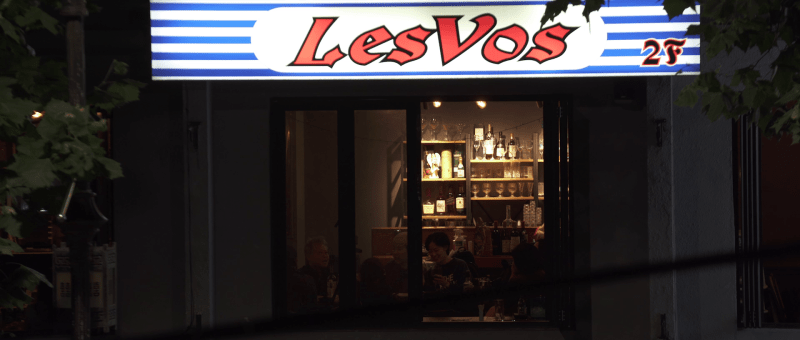
The ageing proprietor of an endangered lesbian bar reflects on the changing nature of queer culture in Korea over the last five decades in Kwon Aram’s contemplative documentary Home Ground (홈그라운드). “Home ground” is what many have come to regard spaces such as LesVos, but with changing times and the effects of the coronavirus pandemic maintaining them is becoming ever harder leaving the community with the few places to gather where they can come together in safety and solidarity. 

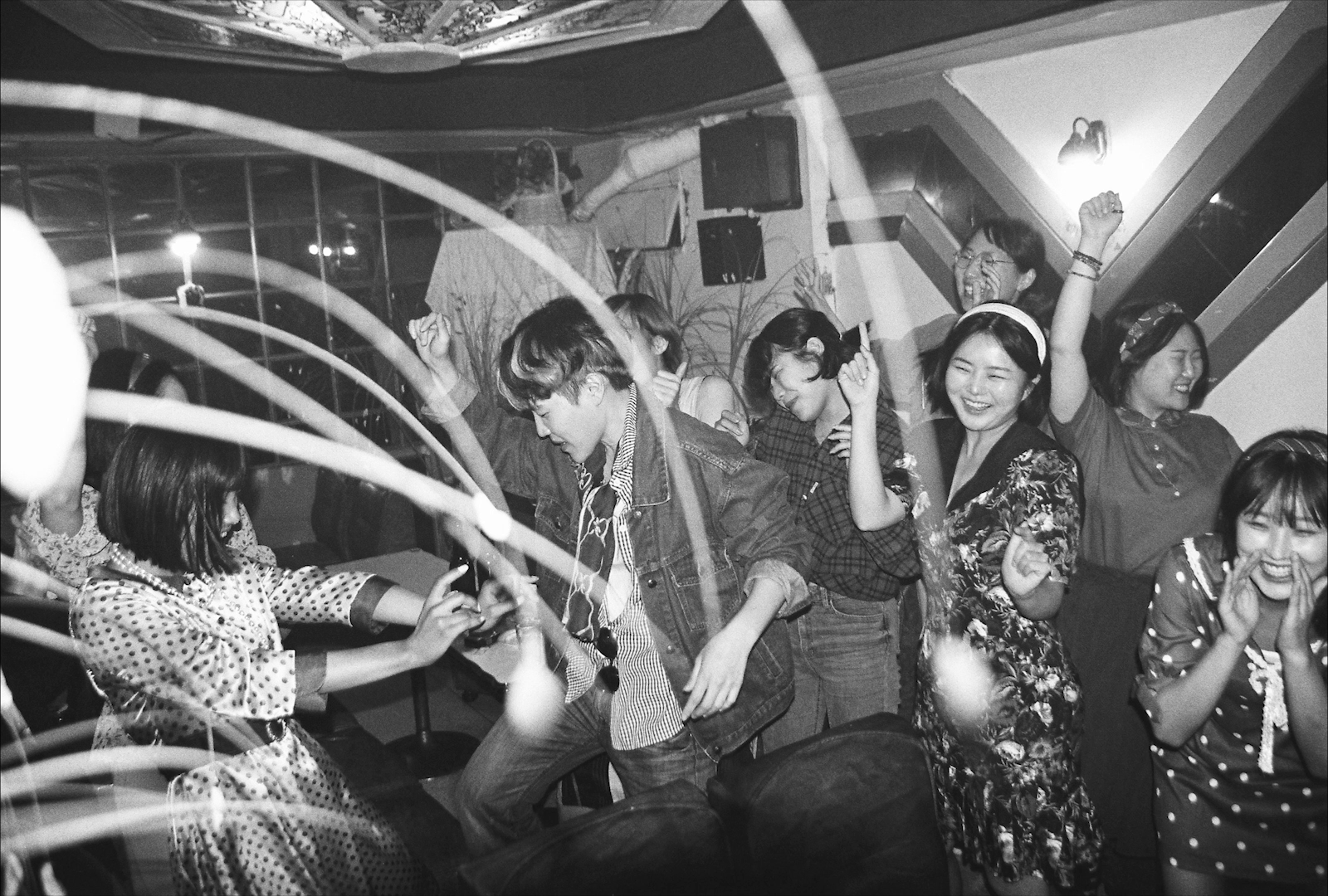
Though it has moved location, the documentary’s primary subject, Myong-woo, has run bar LesVos since in the late ‘90s. The first openly lesbian bar in Korea, it has provided a friendly and welcoming space for the LGBTQ+ community for almost 30 years though as Myong-woo relates times have certainly changed as they look back to the queer bars of Myeong-dong in 1970s including the legendary Chanel Tearoom which was raided by police in 1974 on the grounds of its scandalous “Decadence”. Kwon uses a mixture of stock footage and re-enactments to recreate the atmosphere of bygone eras as Myong-woo’s oldest friend Kkokji recalls the atmosphere at Chanel which had a strict no long hair rule and expected its patrons to dress smartly in suits. 

Like Myong-woo, Kkokji identifies himself as a transman and prefers to be address as “hyung” (older brother) though the pair are often mistakenly addressed as “auntie”. Myong-woo recalls breaking the heart of a boy in middle school whom he “dated” to fit in, knowing that he had to hide his sexuality though he seems to have been well accepted now in reuniting with a collection of school friends at LesVos. Kkokji meanwhile laments his difficulties finding employment because of his appearance and gender presentation while recalling a violent past as a street brawler and recruiter of women for bars in the ’70s and ’80s. 

LesVos by comparison seems to have been a more wholesome place, Myong-woo recalling that in the old days cherry coke and ice cream sundaes were firm favourites of the clientele. Before the bar existed, queer teens used to hang out in Shinchon Park where they found a sense of community along with an opportunity to meet new people in a comparatively safe place where they could be themselves. After checking with the licensing authorities who told him it was fine as long as he didn’t sell cigarettes or alcohol, Myong-Woo opened the bar to teens so they’d have a place to go that was safer than hanging out in the streets. 

Another former patron has created a safe space of her own in a queer-friendly dance studio where as she puts it they make life more fun and less lonely. Yet in the face of the pandemic, the community lost the ability to come together while faced with additional prejudice after the coronavirus cluster in an Itaewon club. As one interviewee relates, people began to blame LGBTQ+ people as if they were uniquely irresponsible without thinking about the reasons why the community feels the need to come together. Another adds that queer people were already “social distancing” before the pandemic, and that without queer spaces are often forced to hide who they are in a society which can often be hostile. 

Faced with the economic realities of the pandemic, Myong-woo worries he will have to close the bar while countless similar spaces have pasted closing notices on their doors. Myong-Woo himself is also ageing, a trip to the doctors revealing the toll standing for hours every day has taken on his feet while he’s also taken on another part-time job working in a kimbap shop with no money coming in through the bar. Even so he reveals how much he’s learning from his younger customers about how the community has changed while society largely refuses to. He reflects that he thought the young people of today had it better, but realises he is mistaken on attending a rally protesting the death of a transgender soldier who took their own life after being discharged from the army because of their transition. Myong-woo keeps the bar open to provide a place of refuge for those who may not have anywhere else to go, opening their doors on holidays for those who have only their queer family to rely on. “You can’t do it alone,” he reflects doing his best to preserve a small space of safety and solidarity amid a sometimes hostile atmosphere.


Home Ground screens at The Barbican 30th April as part of this year’s Queer East .

Art College 1994 (艺术学院, Liu Jian, 2023)

In the opening title sequence of Liu Jian’s animated dramedy Art College 1994 (艺术学院, yìshùxuéyuàn), a beetle tries to climb a decaying wall but repeatedly fails until it falls on its back and flails wildly trying to right itself. It might in a way stand in for Liu’s protagonists, each of whom are floundering in various ways amid the contradictions of the rapid social changes of mid-90s China. A potent sense of place lends weight to what is obviously an autobiographically inspired tale of youth’s end coloured by rueful nostalgia. 

The rebellious Xiaojun clashes with his tutors who think he’s overly influenced by Western art movements and lacks the maturity to understand that there is also truth in traditionalism, while his best friend Rabbit begins to worry about more practical matters and their future in a changing society. The boys eventually develop a friendship with music students Lili and Hong who find themselves similarly at odds. Brash and brimming with false confidence, Hong dreams of becoming a famous opera singer and resents the patriarchal social mores of a still conservative China. “Sooner or later we all have to marry someone.” Lili sighs as if feeling the walls closing in on her, only for Hong to ask why no one ever realises they’re “someone” too. 

They have grand conversations about the nature of art, beauty, tradition and modernity, conservatism and social change, belying their naivety but still filled with a sense of freedom and curiosity that is only beginning to be coloured by a concurrent anxiety. “I thought I knew everything. The truth is I know nothing.” Hong finally concedes after a failed romance, arguing with Lili with whom she may always have been on a different page. Shy and bespectacled, Lili is a realist amid a group of dreamers. She nurses a nascent crush on Xiaojun but is courted by a condescending bore who comes with her mother’s approval. Perhaps she’s merely afraid of the risks involved when real feeling is in play, but for all her talk of “freedom” makes her choices intellectually and leans towards the pragmatic. Xiaojun is a penniless painter, but her suitor is a wealthy man who can take her to Paris to study. Amid the contradictions of mid-90s China, who could really blame her for making a “sensible” choice even it means the sacrifice of her emotional fulfilment? 

Xiaojun lets his chance slip away from him, failing to say anything meaningful before revealing he’s going away on a study trip for an extended period of time. But like Lili he meditates on art and the soul while romanticising a poverty he may never really have experienced. The boys hang out with eccentric drifter Youcai who repeatedly failed the entrance exams but hangs around on campus anyway soaking up the atmosphere while prone to sudden attacks of performance art. After a stint living in the artist community in Beijing he returns in the company of crooks and conmen, working as a sign painter to get by while lamenting his own lack of talent. He says he makes money in order to make art, while Xiaojun disapproves of his moral duplicity insisting that it’s right for an artist to be starving because suffering fosters art.

Youcai asks him how you can make art if you can’t eat while insisting that art is one big business, just like everything else it too is suspect because it is dependent on money. Xiaojun disagrees, claiming that that art is the only escape from reality that can bring people spiritual satisfaction. Ironically enough, he says this while sitting directly underneath a billboard advertising Michael Jackson’s Bad, while we’ve already seen him ride his bicycle past a conspicuous piece of graffiti featuring the characters for CocaCola in Chinese. When Lili’s suitor says he’ll buy them dinner, Liu ironically cuts to the two girls sitting outside a McDonald’s eating ice cream. This does seem to be a very dubious sense of “modernity”, mediated through Western consumerism that in contrast to the values Xiaojun places in “art” is spiritually empty. 

Even so his disapproving teacher reminds him that great art is born of sincerity, hinting at a degree of affectation in his insistence that art should change with the times when not all truths need to be revolutionary. In any case, each of the students learns a few hard lessons about life and disappointment as they too succumb to unavoidable realities and accustom themselves to an uncertain society. Liu ends the film with a series of title cards that feel very much like those often added to placate the censors, usually detailing that wrongdoers were caught and punished for their crimes but this time conjuring more wholesome futures for the students that undercut the sense of the frosty melancholy in the closing scenes which leave Xiaojun all alone as he takes up brush and ink. Yet in Liu’s achingly potent sense of place, there is both a poignant nostalgia and an inescapable sense of loss and regret for the missed opportunities of youth. 


Art College 1994 screened as part of this year’s Red Lotus Asian Film Festival.

Trailer (English subtitles)

Jeong-sun (정순, Jeong Ji-hye, 2022)

“Is it a crime to be old?” a middle-aged woman asks after finding herself the centre of scandal in Jeong Ji-hye’s timely drama, Jeong-sun (정순). Surrounded by an ageist and misogynistic society, Jeong-sun has always bided her time and played by the rules but is acutely aware of her predicament as an older woman knowing that if she loses her factory job no one else will hire her and therefore submits herself to all the petty microaggressions of life on the margins. 

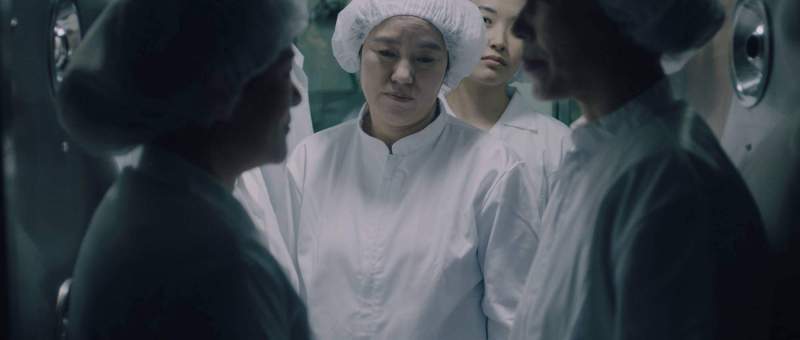
Chief among them would be her obnoxious floor manager Do-yun, little more than a teenager with a clipboard and an inflated sense of his own importance. She and the other women gossip about Do-yun’s dubious love life which partially relies on abusing his authority to date factory girls whom he gives preferential treatment and then discards once he’s bored. There’s also a rumour going around that the managers plan to fire some of the older workers like Jeong-sun after hiring permanent employees while a generational divide is developing between the full timers and the college students who turn up for the summer and secretly think they’re better than this. Jeong-sun accidentally offends one of them by playfully making fun of her putting on makeup in the changing room given that they’re all about to put on identical white uniforms and go through decontamination to head to the factory floor. 

The irony is that she begins to bond with new employee Yeong-su out of their shared sense of alienation as marginalised middle-aged people. Around her age, Yeong-su previously worked casual jobs in construction but has switched to the factory because of knee damage caused by years of manual labour. His physical injury has further damaged his sense of masculinity leaving him deeply insecure and desperate for approval from other men including that from the continually obnoxious Do-yun. When Do-yun asks him if he has a girlfriend, Yeong-su sheepishly replies that he’s too old for all that only for Do-yun to insultingly add that he doubts he has the time or money considering he just works on the shop floor. When Jeong-su’s daughter Yu-jin (Yoon Geumseona) and her fiancé ask her if she might have a boyfriend, Jeong-sun gives a similar reply seemingly feeling a degree of shame about being an older woman daring to date. She tells Yeong-su that they should slow down because she’s embarrassed to hear the other workers gossiping about them, but Yeong-su takes it the wrong away assuming that she too looks down on him for being a penniless factory worker with not much to his name.  

It’s this combination of ageism and sexism that gradually destroys their relationship. Mocked by Do-yun who calls him a “naive” man, Yeong-su shows him a video Jeong-sun had allowed him to take of her singing in her underwear in a moment of empowerment. Soon, it’s leaked online and Jeong-sun becomes the talk of the town, a figure of fun just for being a middle-aged woman embracing her sexuality. While the younger women laugh at her, Jeong-sun’s daughter and friends are universally sympathetic as is the policeman Yu-jin reports the incident to, but she later finds that not even the police really take the case seriously despite Jeong-sun’s increasingly precarious mental state. “I’m sorry to say this, but younger females are usually the victim” the policeman adds as they push Jeong-sun to settle, implying that no one’s all that interested in Jeong-su’s video and the taboo incident is somewhat embarrassing even to him. Yeong-su meanwhile offers a pleading “apology” before trying to convince Jeong-sun not to press charges because he’ll never work again with bad knees and a criminal record. 

Yeong-su said he’d move away and that it would all blow over, but Jeong-sun later catches sight of him laughing and joking with Do-yun and the other guys from the factory very much one of the boys. Her life has been ruined, but they’ve got off scot free. “Why should I stay put?” Jeong-sun finally asks in directly standing up to Do-yun who is after all a cowardly boy who bullies other men to bolster his fragile sense of masculinity. He responds by calling her a “crazy bitch” while she destroys his false authority and plays him at his own game, somehow taking something back if only in a moment of self-destruction. Where she finds herself is literally in the driving seat of her own life, seizing the opportunity for freedom and independence that comes with age but also the breaking of a spell that had been designed to keep her in her place. 


Jeong-sun screened as part of this year’s Red Lotus Asian Film Festival.

International trailer (English subtitles)

Say I Do to Me (1人婚禮, Kiwi Chow, 2023)

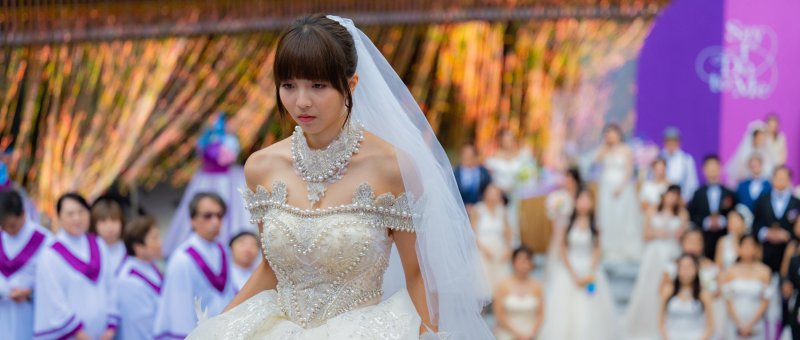
A struggling influencer’s bid for internet fame through marrying herself soon goes dangerously awry in Kiwi Chow’s anarchic take on contemporary social media mores and the need for authenticity, Say I Do to Me (人婚禮). Ping (real life YouTuber Sabrina Ng Ping) swears that she’s done with changing herself for others and is determined to enjoy life on her own terms, but the irony is she’s anything but honest with herself as she attempts to bury her abandonment issues and ambivalence towards marriage beneath her friendly clown persona. 

Despite telling all her followers that she sees no need to wait around for someone else to make her happy so she’s going to marry herself, Ping is in a longterm relationship with middle-school sweetheart Dickson (Hand Rolled Cigarette director Chan Kin-long) who handles the tech side of their YouTube channel. When their clown-themed videos failed to win an audience or pay the bills they started looking for something edgier, shifting their focus to their own relationship. When that too failed to set netizen’s hearts aflame, they started engineering fake romantic drama including a “real fake” wedding and Dickson cheating scandal. To get themselves out of the hole they’d dug, Ping comes up with the idea of “sologamy” in which she’ll get back at “cheating” Dickson with a solo wedding on the day they would have got married, while Dickson mounts a counter campaign wearing a giant monkey head to promote his “solo funeral” movement railing against fake affirmation of Ping’s embrace of “authenticity”.

Of course, authenticity is the one thing Ping isn’t selling. She’s telling everyone else they should be true to themselves, but has based the whole thing on a lie in still being in a relationship with Dickson while adopting a fake influencer persona of a woman who has herself together and is fully ready for commitment. The duplicity begins to eat away at her as she witnesses its effects on others including a middle-aged woman (Candy Lo Hau-Yam) she’d assumed to be in a perfect marriage who suddenly reveals she’s been unhappy for decades because she couldn’t accept her sexuality. Thanks to Ping, she’s decided to divorce her husband and live a more authentic life all of which leaves Ping with very mixed feelings. Meanwhile, she’s relentlessly pursued by a devoutly religious man who seems to be in love with her on spiritual level, and also comes to the attention of “Hong Kong’s last Prince Charming” who has hidden anxieties of his own. 

The film seems to ask if it really matters if Ping was “lying” when her example has made a “positive” difference in people’s lives in enabling to them to accept themselves and find true happiness even if in doing so they might necessarily hurt someone close to them. Dickson seems certain that the internet isn’t really real and you really don’t need to be “authentic” in your online persona, but is all too quickly addicted to the false affirmation of likes and shares and willing to compromise himself morally to get them, all while justifying his actions in insisting he’s only doing it to make Ping’s dreams come true. In the end, he is also playing a role for Ping but as she says coopting her dreams as his own just as her other suitors do. “No one here cares how I feel” she declares, realising her “fake” persona has become a kind of prop for others to hang their unfulfilled desires on. 

The problem is only compounded by the reckless actions of the solo funeral crew who quickly escape from Dickson’s control demonstrating the dark side of internet tribalism and accidental radicalisation. But Ping’s own worst enemy is herself, afraid to really look in the mirror and face her insecurity while simultaneously peddling the message that everyone’s lives will improve as long as they make a superficial gesture of self-love. What she discovers during a surprisingly violent cake fight, is that she’s not the only one battling internal insecurity to become her authentic self and there might be something in “sologamy” after all if it forces to you to confront the parts of yourself you don’t like and accept them too. Part absurdist treatise on the corrupting qualities of online validation and part surreal rom-com, Chow’s quirky comedy nevertheless comes around to its heartwarming message in allowing its heroine to make peace with herself and the world around her.


Say I Do to Me is in UK cinemas now courtesy of Haven Productions.

Original trailer (Traditional Chinese / English subtitles)