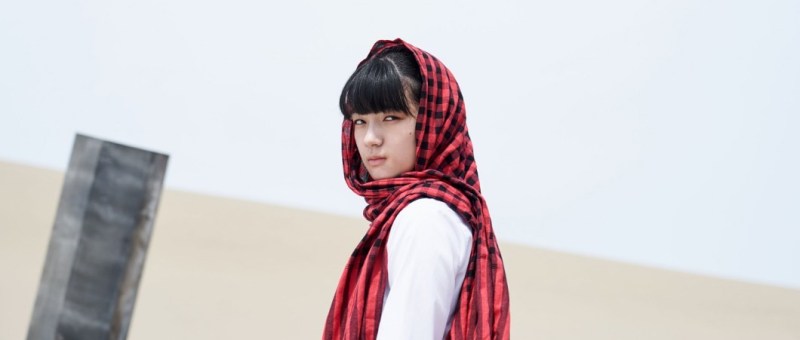
Just Remembering (ちょっと思い出しただけ, Daigo Matsui, 2021) [Fantasia 2022]

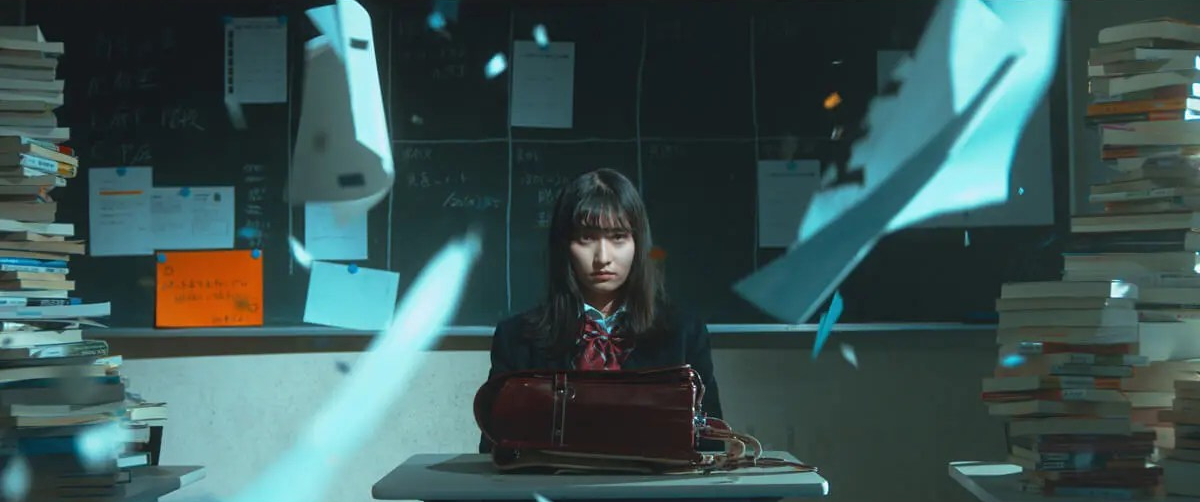
A communication breakdown gradually erodes the love of a young couple in Daigo Matsui’s melancholy romantic drama, Just Remembering (ちょっと思い出しただけ, Chotto Omoidashita Dake). Inspired by Jim Jarmusch’s Night on Earth, Matsui’s city vistas are drenched in loneliness and regret made all the deeper by the enforced isolation of the coronavirus pandemic while echoing the sense of rueful nostalgia that draws the fated lovers back together but unites them only in their shared sadness. 

Told in a non-linear fashion, the film follows taxi driver Yo (Sairi Ito) and lighting technician Teruo (Sosuke Ikematsu) through the course of five year relationship picking up on each of Teruo’s July 26th birthdays as time ticks by with a weary fatalism expressed by an ever present wall clock. As the film opens, a lonely Teruo celebrates a birthday alone watching Night on Earth which we later learn to be his favourite film, a poster adorning the wall above his bed, and something of a touchstone in his relationship with Yo who is like Winona Ryder in the movie a woman who drives a taxi. Echoing the film’s title, each of them repeatedly encounters reminders of their time together from forgotten hair clips to outdated profile pictures that hint at the unresolved nature of their failed romance. In a park that leads to Teruo’s apartment, a man (Masatoshi Nagase) is often seen sitting by a tree waiting for his wife to arrive he says from the future. The man and his wife may perhaps represent an older version of Teruo and Yo though in contrast to his absolute faith and willingness to wait it’s uncertainty and an inability to reckon with intangible feeling that eventually disrupt their connection. 

Awkward and anxious, Yo struggles to express herself in words yet is unable to understand the world without them whereas Teruo communicates through dance and feels words to be largely unimportant unable to fully convey thoughts and emotions. The pair are indeed the most connected when they’re dancing, the otherwise shy and subdued Yo captivated by Teruo’s movement and dropping her guard to dance spontaneously in a quiet back alley while the street guitarist who forever connects them plays quietly behind. When Teruo injures himself and is left unable to dance, it destroys his ability to communicate and places an unbearable strain on the relationship as he retreats to lick his wounds unwilling to bother Yo with his mental and physical pain while she resents the distance he places between them and reads his reluctance to burden her as a fault line in their romance. She tells him that however he may change her feelings won’t, which only sounds to him as if she only loves an abstract idea rather than the reality while he too fears that she won’t like the him that that isn’t a dancer because not even he really knows who that Teruo may turn out to be. 

It’s telling in a way that the central love confession occurs in a taxi that’s being driven by someone else, a bemused older man who encourages the pair that it’s best to say what you want to say while you can and literally stops time for them by pausing the meter as twinkle twinkle little star echoes ironically in the background. Yo says she likes her taxi job because she has a desire to travel but not the ability to choose a destination and driving the taxi allows her to feel as if she’s on the way to something though she’s only following her passengers’ instructions. Her essential trait is passivity, feeling lost and aimless in her life and often allowing others to make her choices for her save when she follows the advice of a lovelorn barman (Jun Kunimura) who tells her that sometimes you have to chase after what you want only to later be disappointed when the wounded Teruo fails to chase after her. The barman tells her that she doesn’t understand love, and perhaps she doesn’t unwilling to trust her romantic destiny while perhaps neither does Teruo, always somehow waiting while gazing at visions of love on ordinary street, high school girls gossiping about boys, an elderly couple helping each other down the stairs, and a mother carrying her infant son. 

It’s tempting to view their romance as doomed because they speak different languages while their continual role reversal suits neither of them very well, Yo quite literally in the driving seat but by her own admission having no idea where they’re going while Teruo struggles to communicate with her in terms she can understand. Yet they also share moments of true connection and vulnerability in which they are each understood by the other in a way they may never be again that leaves each of them with a lingering loneliness and regret for their failed romance. Love is an escape route, according to the wise old barman, but it’s one that continually eludes the two lovers who like the like man at the park are trapped in a state of perpetual waiting for a far off resolution. 


Just Remembering screened as part of this year’s Fantasia International Film Festival.

Trailer (English subtitles)

Preman: Silent Fury (Randolph Zaini, 2021)

“Sooner or later, you gotta do the right thing” the girlfriend of a complicit policeman tries to explain while he rationalises that in reality there’s little difference between a policeman and a gangster and even he’s too afraid to stand up to a dictatorial local thug deeply tied to an ambitious politician. Like many recent films from Indonesia, Randolph Zaini’s Preman: Silent Fury is a tale of toxic masculinity, societal prejudice, and a bullying culture but also one of fear and complicity in which a marginalised man must face his childhood trauma in order to save his son from suffering the same fate. 

Sandi (Khiva Iskak), who lost his hearing in childhood, is a member of a vigilante preman gang, Perkasa. The preman view themselves as defenders of justice, but in reality are feared and despised by the world around them for their intimidating and violent behaviour. Sandi’s gang was once ruled by the wise Haji (Egi Fedly) who had lofty ideals of defending his local community from an oppressive authority but he’s recently been ousted by the authoritarian Guru (Kiki Narendra) who is no better than a thug willing to do the dirty work of a city politician in return for power and influence. His first job is clearing a local slum by force, insisting its residents leave but offering them no safe place to go. When Haji tries to resist, Sandi’s young son Pandan (Muzakki Ramdhan) witnesses his murder and thereby places a target on his back and that of his father as they try to figure out how to survive Guru’s increasing ruthlessness. 

Dressed in a military outfit, Guru is an allegory for lingering authoritarianism visually recalling historical dictators and is introduced while giving a bombastic speech which Sandi is obviously unable to hear yet goes along with anyway. Sandi’s deafness is in one sense aligned with his complicity in that he is literally unable to hear the reality of world around him but is also linked back to the childhood trauma which robbed him of his voice. An early failure to do the right thing, siding with the bullies out of fear rather than standing up for his friend who was being taunted with homophobic slurs, set him on a life long path of complicity too afraid of the gang and of preman culture to ever be able to leave it. 

Yet his disability also leaves him marginalised with few other directions in which to turn considering that disabled people struggle to find work in a society that has little accommodation for difference. Hairdresser/assassin Ramon (Revaldo) who refers to himself exclusively in the third person and peppers his speech with French, points out that everyone viewed Medusa as the villain but the real villains were Poseidon who raped her, Athena who cursed her, and Perseus who killed her rather than Medusa herself. Ramon is also on the end of a series of homophobic slurs from one of the Perkasa thugs who’d been trying to talk to one of his colleagues, who wants to be a musical theatre star, about erectile disfunction but struggled to get his point across while using a series of broad euphemisms out of embarrassment hinting at the hidden costs of societal repression. “Ramon is a mirror reflecting the ugliness of the world” the assassin explains, wielding his scissors of vengeance on behalf of a corrupt authority. 

As the policeman’s girlfriend points out, the reason the policeman has ended up in trouble is that he didn’t help Sandi when he asked him, just like Sandi didn’t help his friend, because he was too afraid to stand up to a thuggish bully. At some point you have to do the right thing, she reminds him, and only by refusing to be intimidated by Guru can they hope to escape his violence along with the threat he presents which allows him to dominate their society. Impressively shot given its low budget origins, Zaini’s playful drama features a series of well choreographed action sequences culminating in a striking avant-garde conclusion in which Sandi faces off against fox-suited villains, spraying psychedelic neon paint and exorcising the pain of his childhood trauma while freeing his son not just literally but mentally from an oppressive and bullying society. 


Preman: Silent Fury screens at Asia Society 23rd July as part of this year’s New York Asian Film Festival. It will also be released in the US later in the year courtesy of Well Go USA.

Original trailer (English subtitles)
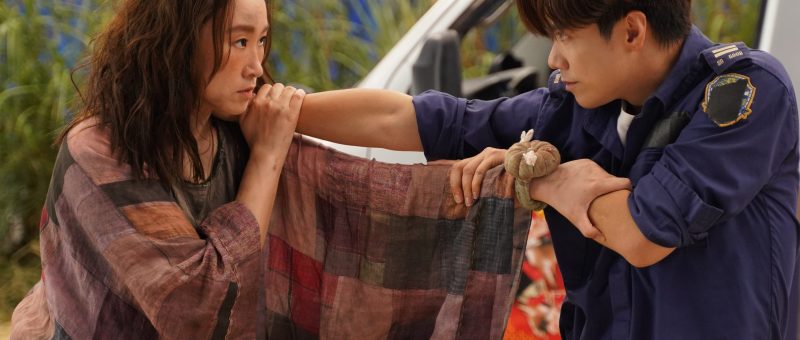
Images: Courtesy of Well Go USA Entertainment

Chorokbam (초록밤, Yoon Seo-jin, 2021) [Fantasia 2022]

A small family contends with the persistent unfairness of contemporary Korean society in Yoon Seo-jin’s slow burn indie drama, Chorokbam (초록밤). Translated literally, the title means “green night”, the family often bathed in a neon green that seems to reflect their sense of despair and anguish unable to envisage much of a future for themselves in a world ruled by greed and envy which leaves them little option other than to become insensitive to the joy and pain of others. 

As the film opens, the nightwatchman patriarch is busy giving out parking tickets when he suddenly spots a cat hanging from from a children’s climbing frame. Shocked and feeling pity for the small creature, he cuts it down and buries it by the green light of the moon but finds little sympathy when relating his traumatic discovery to his wife. The nightwatchman’s wife is preoccupied with more practical affairs, irritated by her husband’s annoying habits such as leaving the bathroom door open and not washing his hands after finishing his business, while their grown-up son Won-hyung wants to get married but can’t afford a place to live on his salary as a care worker. When it comes to that, they’re soon to be turfed out themselves because their landlord wants to tear the building down. 

Matters come to a head when the grandfather passes away, the nightwatchman’s sisters getting into an actual physical altercation at the wake while loudly complaining about who did or didn’t pay for the funeral. Totting up the condolence money they accuse supposedly cheapskate guests of freeloading, implying they only turned up for a free meal that they have in a sense stolen. Meanwhile, the sisters also want to ensure that their father’s house is sold quickly so they can divvy up the inheritance. What they realise, however, is that there were things about their father’s life they may not have known which raise questions about moral responsibility when it comes to dealing with the affairs of someone who has died. 

The nightwatchman comes to identify with the strangled cat, though the spectre of hanging seems to loom over the rest of the picture with even the nightwatchman’s wife eventually discovering the body of someone whose death she may unwittingly have contributed to. She complains about her husband’s fecklessness, that he, who barely talks at all, makes her deal with anything unpleasant including his hotheaded sisters. She tells him that she regrets marrying into his “horrible” family and is thoroughly sick of dealing with them only to be pursued by a wounded dog with whom she perhaps also identifies. The nightwatchman’s wife is often excluded from the frame, a disembodied voice from behind a wall as she is as she feeds her husband breakfast and again when he asks her to deal with an emotionally difficult situation in a cafe. The nightwatchman simply smokes by a widow as if physically removing himself from the scene. 

Won-hyung meanwhile becomes increasingly resentful with his friends’ wedding coming up, unable to escape the feeling of belittlement in being unable to marry or move forward with his life with little prospect that anything will change. Yoon frames the family’s dilemmas with a deadpan realism, bathing the everyday grimness of their lives in an putrescent green that suggests there may be no escape from this maddening society where all relationships are built on transaction. The family are doing their best but are also estranged from each other, the nightwatchman barely speaking while his wife is left to deal with the uncertainty of their lives alone. She even laments they’ll likely not see the sisters again until the next person dies because their familial connection is essentially hollow and valueless in a society ruled by money. 

The nightwatchman comes to think of himself as a strangled cat, finding himself facing a noose during a poetic dream sequence that encourages him to think of suicide as the only possible escape from his impossible situation. Bleak in the extreme, Kim’s slow burn drama paints an unflattering portrait of the contemporary society as one in which all hope has long been lost leaving only dread and despair in its wake. 


Chorokbam screened as part of this year’s Fantasia International Film Festival.

Original trailer (English subtitles)

Life For Sale (售命, Tom Teng, 2021)

A nihilistic insurance broker chases existential validation in Tom Teng’s darkly comic crime drama, Life for Sale (售命, shòu mìng). Drawing inspiration from the novel by Yukio Mishima by the same name, the film takes aim at the commodification of life under a relentlessly capitalist society while its hero gradually discovers liberation in reaching an accommodation with death that begins to give meaning to his existence. Sucked not only into local gangster intrigue but shady international conspiracy, he finds himself forming a tentative relationship with an equally depressed neighbour who has troubles of her own. 

Ironically enough, Liang (Fu Meng-po) is a life insurance broker which quite literally means it’s his job to figure out exactly how much a life is worth. As for himself, he’s convinced his life is worthless and is obsessed with the idea of suicide while seemingly reluctant to actually die. He looks up banal ways to end his life on the internet and discovers that almost everything including carrots, cinnamon, and chewing gum, becomes poison if you consume enough of it. When he’s called into his boss’ office shortly after punching an irritating colleague in the face, he’s given a good idea of what his own life is worth when she tells him that the company bought a year of it with his salary but he’s been a poor investment and has actually cost them money through this rubbish sales record. It’s at this point he decides to call the corporate life quits and, taking inspiration from a copy of Life for Sale he found on the bus, decides that he should try monetising his life by selling it on the internet. 

His first offer is from creepy gangster Wang who repeatedly claims there’s nothing in the world his money can’t buy. He wants to send Liang on a dangerous mission to retrieve his wife’s dog from a rival gangster who’s kidnapped it, while a mysterious woman is also trying to recruit him for some kind of experimental research programme. Perversely he continues to think of his life as his own even having sold it resenting those who now think they own him and contemplates suicide as an expression of his autonomy. He comes to realise that his life is the one thing he has while simultaneously accepting that having lost it he is effectively dead already and has nothing left to lose. The realisation is liberating, his nihilism intensified as he resolves to do whatever he can to survive in part so that he might save others. 

Having begun with a darkly humorous take on the dehumanising nature of modern capitalism in which there is a price tag on each and every life, the film slides towards existential contemplation as Liang finds himself caught in the crosshairs not only of internecine gangland drama between the sinister wang and flamboyant Liao mediated though a chaotic hit on a dodgy policeman, but of an international conspiracy which is intent on doing something not entirely ethical to his body. Despite his newfound ruthlessness he is effectively emasculated firstly by the mysterious woman who tells him that he is a coward who does not deserve to be called a man and then by his neighbour who having lost faith in him declares that she will have to save her son herself thereby defining the value of her own life. 

All the while, Liang is plagued by a little bug that follows him around and seems to lead to trouble while perhaps echoing his capacity to survive. When he asks someone why they continue to smoke despite knowing the risks, he is ironically told that everyone has a little bit of a death wish and continues to leverage his own in a determination to at least make his death if not his life mean something. Then again, even post transformation he can’t seem to escape from the world in which everything is for sale agreeing to sell his life but drawing the line at his soul. On the run though perhaps no longer from himself, Liang has at least gained a new appreciation of the value he places on his own life and those which define the lives of others if strangely unaffected by failure or tragedy. Quirky production design and comic book-esque absurdity hint at the underlying satire but also contribute to a kind of origin story for a superhero escapologist looking for agency in a continually exploitative existence. 


Life For Sale screens at Lincoln Center 24th July as part of this year’s New York Asian Film Festival.

Original trailer (Traditional Chinese / English subtitles)

Grown-ups (わたし達はおとな, Takuya Kato, 2022)

“You’re a grown-up. If something’s wrong you gotta handle it” the passive aggressively condescending hero of Takuya Kato’s Grown-ups (わたし達はおとな, Watashitachi wa Otona) chastises, but what even really is being “grown-up” when you find yourself in a situation which is emotionally difficult and will define the future course of your life. Shot in a claustrophobic 4:3 and told in a non-linear fashion, Kato’s intense drama lays bare the inequalities of a patriarchal society in which in a sense there are no real grown-ups because no one is ever comfortable enough with anyone else to be able to speak their real feelings honestly. 

This becomes a particular problem for college student Yumi (Mai Kiryu) who discovers that she is pregnant but is uncertain as to who the father might be having had a one night stand during the time her live-in boyfriend Naoya (Kisetsu Fujiwara) had broken up with her. Yumi immediately tells Naoya that there’s a chance the baby isn’t his, but remains otherwise reticent unwilling to talk about what might have happened while filled with an internal panic. Naoya thinks he’s being grown-up about the situation by deciding to accept responsibility given the probability that he is the father but despite pledging that he would accept the baby even if it turned out he wasn’t can’t stop trying to pressure Yumi into a DNA test for peace of mind. 

The irony is that even Naoya, who was Yumi’s first sexual partner, refused to wear a condom and joked about contraception before making her go on the pill when he moved in with her. Later we learn that the one night stand violated her consent by again refusing to wear a condom and ignoring her objections, later joking about it that the chances of conception are incredibly small while making it clear that men in general don’t consider pregnancy as something that happens to them and because, as one of Yumi’s friends puts it, they only chase “innocent” girls they don’t seem to worry about the possibility of contracting an STI. Meanwhile, Yumi is constantly stalked by a fellow student she briefly dated who presents her with a memory book of their relationship and is always creepily hanging around waiting to give her gifts, but all her friends can seem to talk about is boyfriends implying that a bad boyfriend might be better than none. 

Yet Yumi seems to have intimacy issues that run even deeper, for some reason not even telling Naoya that her mother has passed away leaving him to think she has run away from their problems by returning home just when he’s ready to tell her his decision about their future. When her father asks about boyfriends she brushes the question off though perhaps partly because she’s not quite sure about her relationship status with Naoya or what she’s going to do about the baby. She calls her friend to hear a friendly voice after hearing her mother has died but gets little sympathy, the same friend later abruptly hanging up on her after getting a boyfriend of her own while knowing of Yumi’s romantic troubles. 

Then again, it’s hard to know whether Naoya was really interested in her or in her lovely duplex apartment. When they started dating he was still living with his ex and it’s obvious that Yumi fully conforms to the feminine ideal taking care of all the domestic tasks while it isn’t even clear if Naoya is contributing in any way to the household. The film both begins and ends with Yumi making breakfast, firstly toasting the last slice of bread for Naoya while suffering with what turns out to be morning sickness, and finally making herself something to eat in the early light of dawn. Naoya says he’s give up on his dreams of working in theatre to get a regular job, again conforming to an outdated patriarchal ideal, but of course resents it particularly because he doubts the child is his while Yumi isn’t really sure she wants to go through with it either for some of the same reasons but is swayed by Naoya’s determination to make all their decisions for them unable to say out loud that she might not be ready to become a mother. 

Naoya is always trying to be grown-up about everything, but more often than not his understanding approach is partway towards passive aggressive control in insisting that Yumi is being childish in her anxiety and confusion while simultaneously avoiding having to admit that he isn’t really ready either. Early in their relationship he breaks up with her by simply returning her apartment key and refusing to elaborate, failing to treat her with respect or maturity and once again leaving her to deal with the fallout of their relationship all alone. Then again, Yumi’s determination to convince him that green peas are good may signal that the relationship was always doomed when they couldn’t even reach a grown-up understanding over something as trivial as taste in veg. A raw examination of what it is to be young and faced with a decision that will define the rest of your life, Kato’s naturalistic drama perhaps suggests that it never really gets any easier to say how you really feel when you feel that someone is judging you all the way. 


Grown-ups screens at Lincoln Center 23d July as part of this year’s New York Asian Film Festival.

Original trailer (no subtitles)

Images: ©2022“Grown-ups” Production Committee

Princess Mononoke (もののけ姫, Hayao Miyazaki, 1997)

“So you say you’re under a curse? So what? So’s the whole damn world.” The world is indeed cursed in Hayao Miyazaki’s landmark 1997 animation Princess Mononoke (もののけ姫, Mononoke-hime). As the greedy monk insists, “there are angry ghosts all around us. Dead from wars, sickness, starvation. And no one cares”. Yet as an impassioned parable as it is about the destructive forces of industrialisation, Miyazaki’s mystical drama is really about balance and duality along with the necessity of harmony and co-existence with nature red in tooth and claw. 

Young prince Ashitaka (Yoji Matsuda) already lives in what seems to be perfect harmony with the natural world, but his idyllic existence in an ancient clan long exiled by the emperor is disturbed one day by a marauding giant boar chased out of the forest having been turned into a demon consumed with hate and resentment. Ashitaka first tries reasoning with the beast, but is finally forced to put it out of its misery to protect the village and is infected himself in the process. Now unable to stay lest he endanger his community, Ashitaka ventures West in search of the corruption which sent the boar hurtling towards his home. 

What he eventually comes to is an industrial settlement, Irontown, ruled by Lady Eboshi (Yuko Tanaka) who ought by all rights to be a villain in her casual disregard of or active hostility towards unruly nature which her industrialisation pollutes. But then as we can see Lady Eboshi is a good and compassionate leader who has erected a community of the marginalised buying out the contracts of indentured sex workers and freeing them to labour in her ironworks while taking in lepers to manufacture her futuristic firearms. Uncharitably, one could also say that she’s chosen these people because they have little power and will be more likely to put up with hardship and exploitation without complaint because it’s better than the lives they lived before, but it does it does seem that she has her heart in the right place as far as her people are concerned determined to build a community of mutual solidarity between workers. 

Conversely, the titular Princess Mononoke, San (Yuriko Ishida), ought by rights to be the heroine but she and the wolf deities she lives with are also violent and unforgiving in their hatred of humans as determined to wipe out the threat presented by Lady Eboshi as she is them. Ashitaka was dispatched to be a peacemaker, to see with eyes unclouded by hate, in an attempt to find common ground and a way that the forest and humanity can live together because in reality one cannot survive without the other. He is by turns disappointed with each of them but holds compassion for both while a tertiary political threat lingers on the horizon in the machinations of shady priest Jigo (Kaoru Kobayashi) and the emperor who wants the head the of the Forest Spirit because he believes it will confer immortality. Lady Eboshi, who otherwise appears to reject the feudal order, intends to give the emperor the head in order to gain protection from overreaching lord Asano who hopes to capture the capitalistic potential of Irontown for himself. 

Jigo is an embodiment of humanity’s greed and its destructive potential, not caring that severing the Forest Spirit’s head will cause untold destruction in which any financial gain he might make would be all but irrelevant. His role is even more ironic given that he is a priest who has supposedly rejected material desire describing himself as a monk just trying to get by while seemingly willing to manipulate and betray almost anyone in his quest for gold. Lady Eboshi wants to improve conditions for her community while San essentially wants the same but Jigo just wants to improve things for Jigo and no one else. 

What Ashitaka wants is to cure his curse by restoring the balance between the human world and the natural in the creation of a society in which neither need be a threat to the other. Thus he pledges to help rebuild Irontown along less destructive lines while entrusting the forest to San to protect though she finds herself unable to forgive humanity for the destruction it has already wrought and may do again. Even so, as Ashitaka says, “it’s time for us both to live” hinting at a kind of rebirth and a new beginning free from the old authority be it the Forest Spirit or the emperor and the feudal order in a new world of freedom and equality. 


Princess Mononoke screens on 35mm at Japan Society New York on July 22.

Trailer (english subtitles)

The Fish Tale (さかなのこ, Shuichi Okita, 2022) [Fantasia 2022]

Shuichi Okita has made a career for himself exploring the lives of eccentric people and The Fish Tale (さかなのこ, Sakana no kKo) is certainly no exception. Based on the memoirs of the real life “Sakana-kun”, the film is a testament to the ways in which true enthusiasm can become an infectious source for good while even subjects which might seem esoteric can have universal appeal when delivered in the right way. Meebo (Non) is not like everyone else but sees nothing wrong in that nor do they see anything wrong in the way others live their lives (save for thinking edamame are better than fish). 

Later a TV personality, best-selling author, and YouTuber, Meebo has been totally obsessed with fish all their life. They draw pictures of fish, edit a fish-themed newspaper in middle school, and talk about fish all day long but they still eat fish and find how good it tastes just another thing that makes fish the best thing ever. Though Meebo’s mother (Haruka Igawa) is ever supportive, their father (Hiroki Miyake) has his doubts worried that Meebo isn’t like the other children and is going to struggle later in life. When Meebo meets a strange man with a fish hat on his head (a cameo from the real life Sakana-kun) whom most of the other children avoid, their mother says it’s alright to go to his house to see his aquarium but their father disagrees for obvious reasons later calling the police when Meebo fails to return home at the agreed time. Mr. Fish Head is the only person with whom the young Meebo can truly bond in their shared love of sea life but he also bears out their father’s sense of disapproval in admitting that he came from a wealthy family but is now low on funds because like Meebo he wasn’t suited to conventional schooling and has never been able to hold down a steady job. 

Meebo’s mother meanwhile is more relaxed, calmly telling Meebo’s teacher that having good grades isn’t necessarily important for everyone and she doesn’t want to force Meebo to make themselves unhappy by giving up fish to get them. In any case employment is something Meebo struggles with, fired from the aquarium for spending too much time admiring the fish and then later let go from a sushi bar. Meebo is hired to create an aquatic display for a dentist with an extremely gaudy office but fails to correctly interpret the brief unable to understand the dentist just wanted something flashy and superficial (like himself), but is finally offered a job at a pet shop with a sympathetic boss who appreciates their deep knowledge of and love for fish. 

As Meebo says, they don’t understand what “normal” is save for a vague sense that they may not be but continues to live their life happily no matter what others might think. When they’re targeted by delinquents in high school, Meebo ends up simply inviting them to come fishing with them and is generally able to win over those who don’t understand or approve of their obsessive interest with the force of their enthusiasm. Then again, there are those who are simply too conventional such as the young woman childhood friend Hiyo (Yuya Yagira) tries to introduce her to who rudely laughs at Meebo’s “childish” determination to become a “fish expert” as if such a thing were inherently ridiculous. Time and again its these special connections often made in childhood which continue to help Meebo on their way, engineering a friendship between the leaders of two rival high school gangs who later hire them to help decorate the interior of a new sushi bar. 

That’s not to say their life is not sometimes difficult, but their love for fish always seems to carry them through while the joy and enthusiasm they bring with them makes others happy and more curious about the world in which they live. Their love of sea life eventually trickles down to the next generation with childhood friend Momo (Kaho) taking her daughter to the aquarium just like Meebo’s mother had them and buying her an encyclopaedia of fish which Meebo themselves had written. A quirky, warmhearted tale of total self-acceptance, Fish Tale is also testament to the positive influence of “obsessive” passion which far from dark or introverted can help to illuminate the lives of those who might also be afraid of their differences and love for that which others may deride as niche.


The Fish Tale screened as part of this year’s Fantasia.

International trailer (English subtitles)

Lesson in Murder (死刑にいたる病, Kazuya Shiraishi, 2022)

Parental disconnection and the legacy of abuse come under the microscope in a dark psychological thriller from Kazuya Shiraishi, Lesson in Murder (死刑にいたる病, Shikei ni Itaru Yamai). Adapted from the novel by Riu Kushiki, the film’s ironic Japanese title means something more like Sickness Unto Death Sentence and hints at an almost spiritual infection that spreads violence and cruelty as embodied by the moral vacuum at the film’s centre, a genial serial killer of stereotypically “good” kids chillingly played comic actor Sadao Abe. 

The psychodrama is played out, however, in the mind of young legal student Masaya (Kenshi Okada) who once frequented the popular bakery owned by Yamato (Sadao Abe) before he was exposed as the killer of 23 teens and one adult woman. On returning home for his grandmother’s funeral, Masaya is surprised to receive a letter from Yamato asking for his help. He admits killing the 23 teens (and perhaps more) but claims that he is not responsible for the death of the adult woman who after all does not fit his pattern. As he reveals, Yamato killed teens in their last year of high school and the grooming process which may have started even years before was central to his M.O. He delighted in winning their trust and then betraying it by torturing them to death in a smokehouse on the grounds of his isolated farmhouse. 

In court, Yamato explains that killing is simply “essential” to his being while insisting that he was caught because he became complacent rather than as a result of efficient policing. Yet he tells Masaya that it annoyed him that he never fell under suspicion, people always trusted him without question and he wanted to challenge that level of social complacency. In any case what’s clear is that he is and has always been a manipulative narcissist attributing those personality traits to his childhood abuse implying that they were a part of an abandoned child’s defence mechanism. He praised others to make them love and protect him, becoming drunk on the power he held over them. At first it seems as if his killings stem from resentment towards these “perfect” children who were well behaved and studied well in school but in fact the reason the children behaved in that way was often born of a desire for parental approval which made them vulnerable to Yamato’s grooming. “Repressed children have low self-esteem” he tells Masaya, an abused child himself, claiming that he wanted to help them grow in confidence through his persistent love bombing. 

Masaya is also on some level being groomed and may at times even be aware of it, but is so consumed with resentment towards his own father that he longs for a more sympathetic father figure and is even willing to accept to a serial killer as a potential paternal mentor. He becomes desperate to prove Yamato didn’t kill Kaoru (Ryo Sato), a 26-year-old office worker, almost forgetting that the killing of the 23 teens is not in dispute. His father resents him because the family run a prestigious school but Masaya was not academically gifted, bullying and beating both Masaya and his mother who is also an underconfident survivor of childhood neglect. She constantly asks for Masaya’s help making decisions, as do other survivors that he meets, while Yamato ironically tells him that the choice to investigate Kaoru’s death is entirely his own while wilfully manipulating him. Even so under his influence, Masaya’s own feelings of resentment towards the conservative society as mediated through middle-aged salarymen eventually bubble to the surface leading him on a dark path towards a potentially murderous destiny. 

Then again, as much as Yamato tries to take control of the narrative Kaoru’s death would still have been as a result of his actions no matter who it was who actually killed her. In another uncomfortabe irony what he’s doing while clearly grooming Masaya is in a sense as he claimed to be doing with his victims restoring his self-confidence in forcing him to face his dysfunctional family situation while proving that he is capable of solving this crime and perhaps in the end solving it a little better than intended. A killer final twist lends an additional layer of insanity to Yamato’s banal evil while Shiraishi’s cool direction at times superimposing the faces of the two men one over another in the glass that divides them at the prison with the faces of the victims projected behind may suggest that darkness hangs all around us and more to the point within. 


Lesson in Murder screens at Lincoln Center 21st July as part of this year’s New York Asian Film Festival.

International trailer (English subtitles)

Images: ©2022 ”Lesson in Murder” Film Partners

Ox-Head Village (牛首村, Takashi Shimizu, 2022)

“A story about nothing” is how one middle-aged man jokingly dismisses a local legend about an ox-headed woman. Are urban legends just one big dad joke? Everybody who hears this story dies, so they say, which is obviously true whichever way you look at it though if it really were a curse it would have to move quickly or there’d be no-one to pass it on. As the heroine of Takashi Shimizu’s summer adventure horror movie Ox-Head Village (牛首村, Ushikubi Mura) discovers, however, there may be something to it after all in uncovering the dark history behind the local folklore. 

In her last year of high school, teenager Kanon (Koki) is beginning to experience strange events such as a series of mysterious scratches on her arm, odd bangs and noises at home, and her phone constantly playing a message about bad pennies and their tendency to keep turning up. Her friend Ren (Riku Hagiwara), who has a crush on her, shows her a viral video of some girls on paranormal live stream that goes wrong leading one, who looks exactly like her, to fall down a lift shaft and then mysteriously disappear. To find out what’s going on the pair head out into the country to the abandoned hotel where the shoot took place but end up battling supernatural malevolence born of the cruelty of previous eras. 

Like the previous two films in the “Village” trilogy, Ox-Head Village revolves around rural folkloric beliefs this time focussing on the suspicion cast against twins which in this village at least seems to have continued until the late 1960s. The root of the curse is the unnatural act of dividing something that should be one into two in attempting to separate pairs of twins leaving the one left behind, lonely, burdened with the residual stigma of being one of multiple births, and perhaps experiencing a little survivor’s guilt. In the film’s second sequence, bathed in yellow and shot with a 70s-style soft focus, two little girls kill a butterfly and bury it with its friends because it would just be lonely on its own. The resolution is that that which has been divided must be reunited in life or in death in order to end the curse, though as we later see that may not quite be the end of it. 

Meanwhile, though a supernatural horror film, Ox-Head Village is also part of a grand tradition of teen summer adventure movies. Kanon and Ren are about to embark on the last summer as high schoolers, the trip they take together as so many are is also about self-discovery as Kanon answers a few lingering questions about her past while searching for her doppelgänger. Her quest is also in its way about rescuing herself and laying to rest the sense of loneliness which has always plagued her. Along for the ride, Ren is perhaps more curious while obviously smitten hoping to cement his romance through a romantic road trip only to be blindsided by supernatural intrigue and country superstition. 

Nevertheless, there is something truly creepy about the innocent flowers the little girls draw along with the pre-modern superstition that informs life in the village. Though the sinister presence may in this case be firmly rooted in the past, they are able to mediate their curse through modern technology such as manipulating Kanon’s phone as a means of communication while using lift shafts to mimic the well which becomes the repository for the darkness of the village. As an old man puts it, a prejudice against twins might have been intellectually understandable in a time of famine, though morally indefensible and obviously absurd and out of place in the modern society. Even so, old beliefs have a way of persisting even if they are no longer clearly understood. 

Along with all the folk horror of ox-headed women, headless buddhist statues and “stories about nothing” there is the lingering dread of the lonely incompleteness visited on the little girls in yellow because of the outdated superstitions of an earlier era. Overcoming the curse requires both self-knowledge and self-sacrifice in order to heal the unnatural act of division which has been carried out but even this may not be enough to repair the damage of centuries of cruelty and prejudice. 


Ox-Head Village screens at Lincoln Center 19th July as part of this year’s New York Asian Film Festival.

Original trailer (English subtitles)

Images: © 2022 OX-HEAD VILLAGE Production Committee

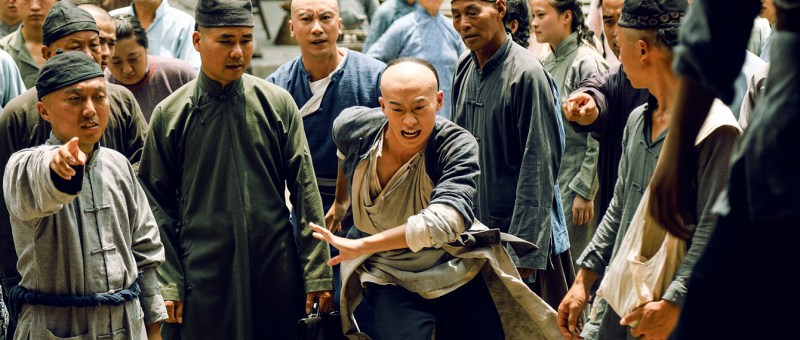
Legendary in Action! (大俠Action!, Justin Cheung & Li Ho, 2022)

An unsuccessful film director looks for new opportunities in gaining closure with the past in Justin Cheung and Li Ho’s behind the scenes comedy, Legendary in Action! (大俠Action!). Echoing classic wuxia, the film finds its heroes searching for themselves while on a quest to revitalise the Hong Kong film scene in which they must battle unscrupulous investors, idol stars with limited acting experience, divided loyalties, the changing nature of the industry, and the ghosts of wuxia’s past. 

40-ish Tiger (Bill “Tiger” Cheung) made a big splash in his earlier career but when his first feature flopped he discovered that second chances are hard to come by in the contemporary film industry. Since then, he’s been making a living shooting sleazy shorts for live streamers while privately dying inside. When a mysterious investor turns up wanting to make a retro wuxia, Tiger is the perfect fit. Shopping an old script he’d written to provide an ending to a serial he loved as a child which was abruptly cancelled, he sets about fulfilling his childhood dream even recruiting the original star to reprise his role but soon finds out that the past is not so easily resurrected. 

This fact is brought home to him by irascible former action star Master Dragon (Chen Kuan-tai) who constantly reminds him that it wasn’t like this in his day usually because they had no health and safety regulations or working rights. Yet Master Dragon is also in a sense in search of himself in that he has begun suffering with dementia and is no longer able to separate fantasy from reality. Far too into his role, he ignores the script and attacks the actors playing bad guys for real but cannot quite recall his signature move while insisting on completing dangerous stunts by himself. He’d also insisted on trying to find the original actress to play the romantic lead, but finally settles for a feisty young woman, Greta (Wiyona Yeung), who is mostly in it for the cash but gradually warms to Master Dragon happy to know that someone cared for her after he waded in on her behalf when she was bullied by lecherous customers at the bar where she was working. 

Tiger meanwhile finds himself failing in his responsibilities as a husband and soon-to-be father, pouring everything into the film while neglecting his long-suffering wife who asks him why he thought now was a good time for his one last chance. When the shoot enters a crisis, he signs up for even more “meaningless” shorts and onerous employment contracts to get the money together to finish while asking his cast and crew to do the same, each of them facing their various issues while coming together as a team squaring off against the vagaries of the independent cinema scene.

Then again, Tiger doesn’t seem to have learned much about work life balance. Nor is Master Dragon a particularly good influence instructing those around him that if film is not their lives’ work, they shouldn’t be doing it. Master Dragon is on his own journey trying to reclaim his former self while dealing with the past just as Tiger is himself trying to bring something full circle in giving his childhood favourite the ending it deserves. In a closing speech, he aligns his struggles with those of the Hong Kong film industry in general positing the wuxia serial as a symbol of faded glory while implying that the contemporary film industry has run out of steam. “At some point we lost faith in Hong Kong Cinema”, he laments, complaining about rubbish films with bad scripts and terrible production values while praising the efforts of the crazy people who give their all to make them. 

“I won’t accept fate” he goes on, like the hero of a classic wuxia fighting for justice in an unjust world while insisting that it is possible to turn things around and restore the glory of Hong Kong film. Then again, as much as his film seems to bring closure and present a place from which to move forward perhaps its unwise to look for new directions in attempting to recreate the past rather than finding new ways to bring it with you into a more positive future. 


Legendary in Action! screens at Lincoln Center 17th July as part of this year’s New York Asian Film Festival.

Original trailer (Traditional Chinese / English subtitles)

Images: © Marigold Project