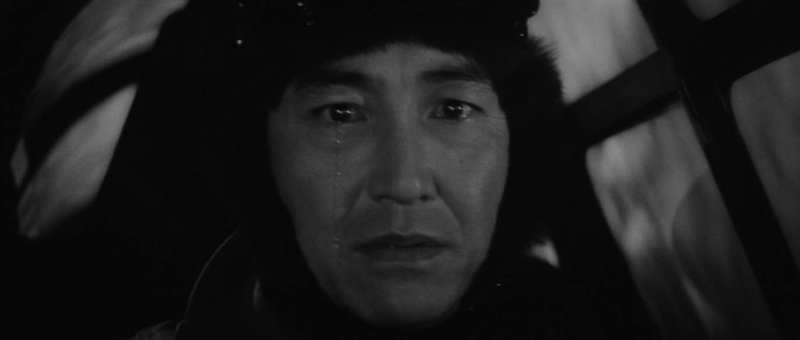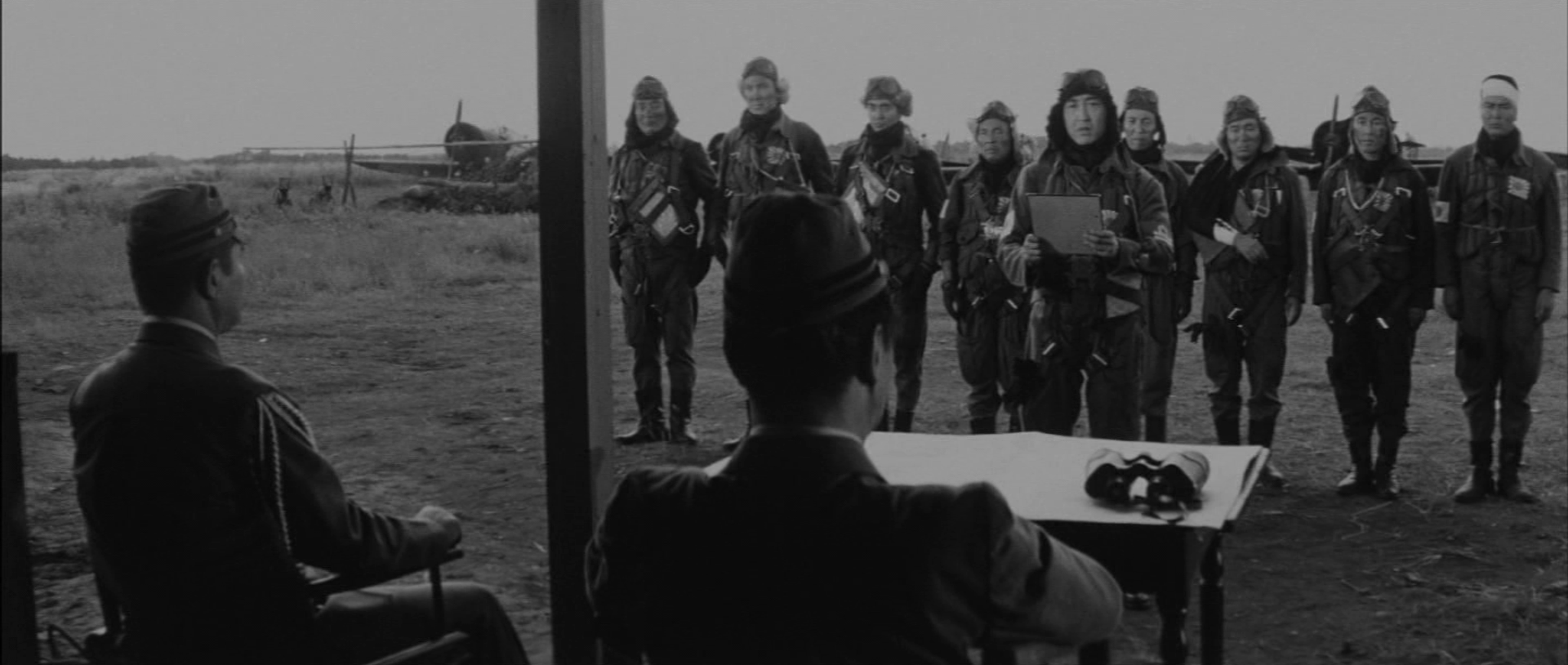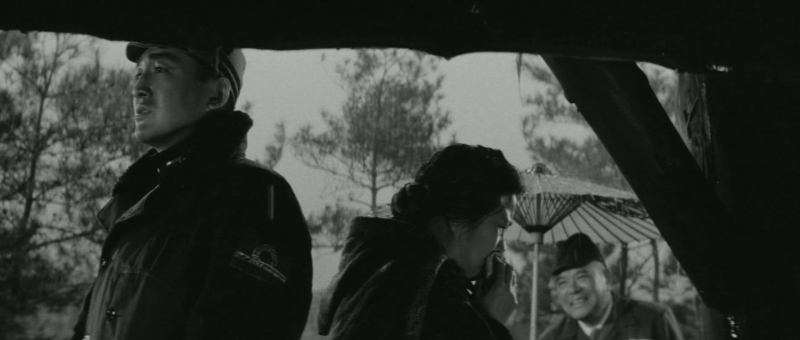
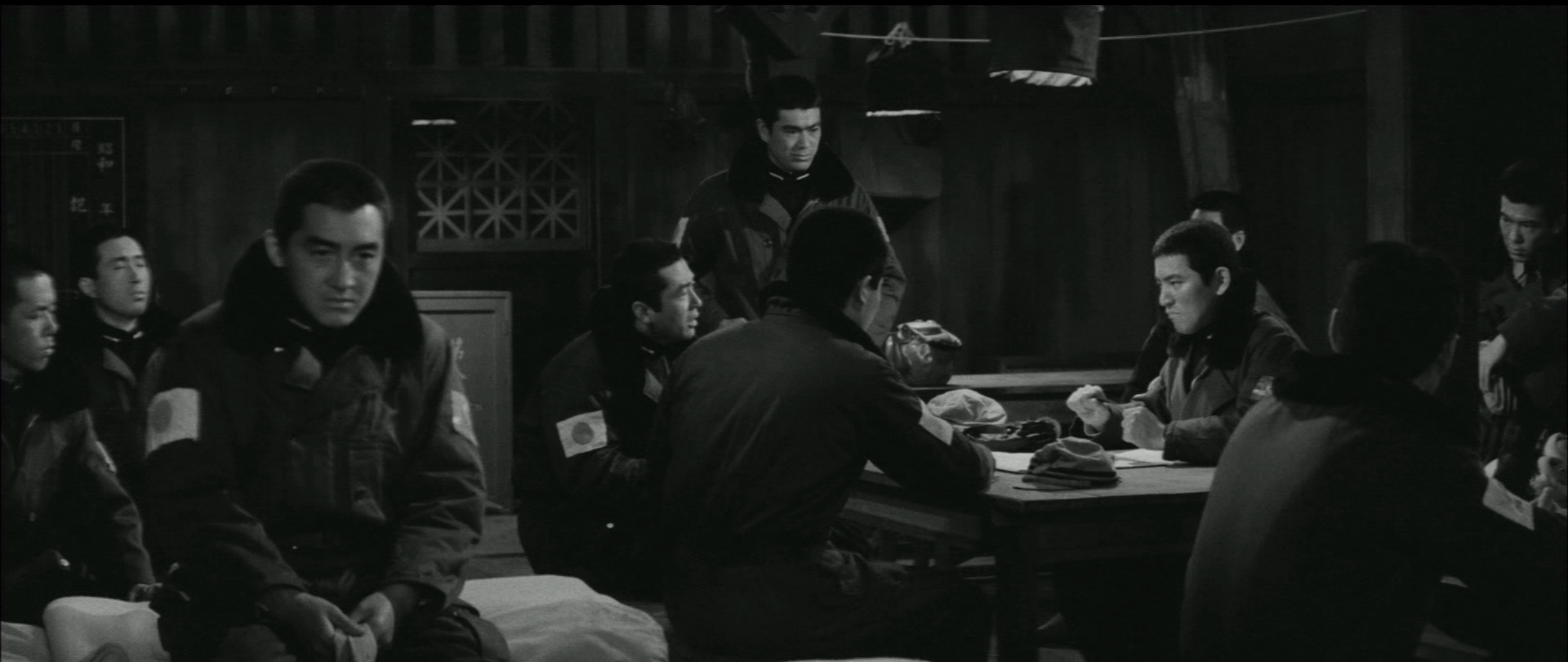
Classmates (あゝ同期の桜, Sadao Nakajima, 1967)

There had been films that dealt with the war before, but it was really with the generational shift that occurred among filmmakers in the mid-1960s that there was a greater willingness to reckon with the wartime past. Sadao Nakajima’s Classmates (あゝ同期の桜, Aa Doki no Sakura) was the first in a planned trilogy of war films at Toei, which was in other ways a studio that often leaned towards the right with its steady output of yakuza films, and most likely for that reason struggled to gain approval from studio heads. Taking its name from the military academy song, the film was inspired by a collection of essays put together from the letters and diaries kamikaze pilots had left behind. Nakajima had seen some of the letters sent back by the brother of a school friend, and reading them again on publication was determined to turn them into the film.

Nevertheless, only 25 years on from the end of the war it remained a sensitive topic. The film follows the men of the 14th class of reserve students who had previously had their draft notices deferred until they finished university but were now called up early because the war was going so badly. The majority of these men were allocated to kamikaze units and subsequently died in suicide attacks on US warships, though they received little in the way of training and mostly failed to hit their targets due to having limited fight experience. 

What might seem most surprising is that several of the men voice their opposition to the war along with the realisation that Japan is going to lose. Early on in training, one man deserts but the others are reminded that to do so amounts to treason and once caught, deserters will be executed by firing squad. This turns out not quite to be the case. Shiratori (Hiroki Matsukata), the resigned hero, encounters Taki (Mitsuki Kanemitsu) in Okinawa. where he’s working as ground staff. He’s insensible and appears to have lost his mind. The man working with him suggests that he was tortured so badly that it’s left him in a vacant state, though he’s still deployed for mindless tasks because they just don’t have the manpower.

Part of the reason for that is that they keep ordering people to die in a validation of the death cult that is militarism. On their arrival, the instructor tells the men he will have them all die, because dying for the emperor is their duty and destiny. The top brass insist this is the only way to win the war even though it’s counterproductive in that they’re running out of aircraft and skilled pilots even if one officer callously remarks that they have an endless supply of bodies. There’s also no real reason to send the planes up with two pilots as opposed to one, but they leave fully manned. The suicide missions are supposedly “voluntary”, but the men can’t really refuse due to a combination of peer pressure and military order.

When one pilot, Nanjo (Isao Natsuyagi), returns to base having been unable to reach his target, he’s immediately set upon by the others as a coward and a traitor. They accuse him of being afraid to die, leaving him feeling ashamed and frustrated by a sense of injustice while admitting that he didn’t want to die like a dog. He knows that he would not be able to go on living afterwards if he simply didn’t go through with it because the stigma of being a coward who let other men die so he could live would always be upon him. Eventually, he becomes so determined to prove himself that he insists on getting right back in his plane once it’s repaired and then blows himself up on the runway to prove a point.

Nanjo’s case is all the more poignant because he was a new father whose son was born after he was called up. He appears to have married quickly against his parents’ wishes and is now anxious that his family won’t accept his wife and child who will be left alone when he dies. His wife (Yoshiko Sakuma) desperately tries to see him to show him the baby, but manages only a few seconds before he’s forced to return to the barracks. Given a little more time, she brings a wedding dress for the impromptu ceremony they presumably skipped before, but ends up tearing it and giving Nanjo a strip as a kind of good-luck charm though like everything else it’s a gesture filled with futility.

It’s this sense of futility and resignation that seems to overtake Shiratori who knows he cannot escape his fate. To desert to is be killed anyway or to experience a spiritual death like Taki. He had introduced a friend, Hanzawa (Shinichi Chiba), to his sister and the two had become close, but he is forced to abruptly break up with her because he knows it’s unfair to string her along when he’s been sentenced to death. Reiko (Sumiko Fuji) will lose her brother and her boyfriend on the same day. Hanzawa and the other men visit a brothel on the night before their mission where they are treated as “gods”, though he sees only irony in the situation in which they are more like human sacrifices offered in prayer for an impossible victory. Their deaths will have no real meaning and are really only intended to instil fear in the enemy and weaken their morale rather than cause actual material damage to their fighting capability. Making use of stock footage, Nakajima freeze frames a plane in flight and points out at that point the men inside were still alive before cutting to a title card confirming the war ended just four months later. The title card at the beginning dedicated the film to the souls of those who died in the Pacific War, though it’s perhaps as quietly angry as it was permitted to be in 1967 in the senseless sacrifice of these men’s lives who were shamed, tricked, or forced at gunpoint into their cockpits and told they were disposable while those who stayed on the ground cheered and whooped at the grim spectacle of death.
Roppa’s Honeymoon (ロッパの新婚旅行, Kajiro Yamamoto, 1940)

One of the most surprising things about Kajiro Yamamoto’s defiantly silly comedy Roppa’s Honeymoon (ロッパの新婚旅行) is how devoid it seems to be of political import with no overt patriotic content or references to the ongoing conflict even if the central messages of the necessity of enduring hardship are otherwise very on brand. Likewise and contrary to expectation, the film is clearly influenced by Hollywood comedies and heavily features American ragtime music presented largely without prejudice. 

In fact it’s the confrontation of these different influences which eventually sparks a crisis between father and son. As the film opens, beer magnate Garamasa is sitting in his bath practicing his gidayu recitation with the help of a shamisen player in an adjacent room, but his idiot son Ichiro (Roppa Furukawa) keeps singing “stupid Western songs,” which is very annoying for him but apparently not enough to actually get out of his bath which is why he rings an employee and gets him to ring Ichiro to tell him to shut up. This seems in part to be a slightly subversive gag poking fun at fat cat CEOs with Garamasa weirdly berating the staff member for being lazy and suggesting that he’s probably only just got up despite it being already 7am even if Garasama himself is still in the bath. The employee has, however, been busily at work for quite some time and spends the rest of the film toadying up to Garamasa. Later on, Yamamoto includes a similar gag in which a maid is forced to run back and forth between Ichiro’s annex and Garamasa’s office to deliver messages between the two.

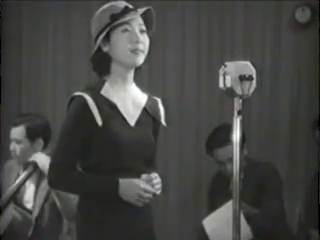
In any case, Garamasa’s grand plan to get his son to be quiet is to marry him off to someone who also likes Western music which is why he visits a pair of servants he actually kicked out of the house when they decided to get married 20 years previously but have since opened a shop selling Western records. They suggest a young woman, Eiko, known as the nightingale of Japan (real life opera singer Hamako Watanabe) who is also a member of the nobility and the daughter of one of Garamasa’s friends, yet Ichiro has been seeing a young woman, Chiyo, who works in an oden restaurant and in fact finds out he is “engaged” from the same newspaper article she does. Eventually he makes the decision to run away from home and elope only to flounder while being entirely ill-equipped to live a “normal” life in which he must attempt to support himself financially.

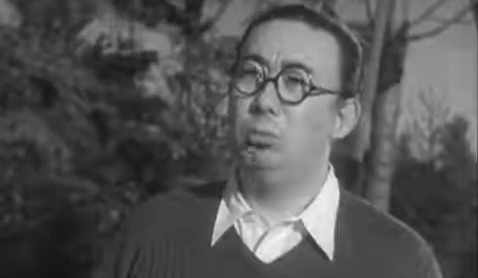
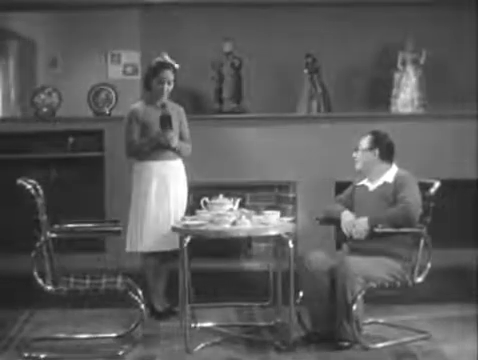
Star Roppa Furukawa was himself a member of the aristocracy and one of a small number of performers popular enough in the 1930s that their names were often inserted into the titles of the files in which they appeared even if their characters did not share it. Roppa was well known for his rather comical face, round and a little pudgy with big round glasses which seem to capture something of the zeitgeist of the interwar years. He was also an excellent singer and the film is quite notable for its use of an ironic song in which Roppa narrates his “honeymoon” in which he and Chiyo are forced to move several times, first sitting in their living room on the back of a truck before their belongings slowly decrease from truck to cart to hand. Chiyo is eventually forced to return to work at the oden restaurant while the relationship suffers because of Ichiro’s refusal to do a common man’’s job. Ironically, he is disturbed by the singing of Eiko who lives close by and on visiting to tell her to be quiet is talked into buying a pair of charity concert tickets.

Chiyo actually approves because she doesn’t like the idea of people looking down on them for not having the money to pay, but is then jealous, insisting that she’ll pay for the tickets herself while forbidding Ichiro to go. It’s this that forces him to accept a job he previously thought demeaning as the leader of a marching band singing a ragtime-themed jingle for a brand of toothpaste. All of this absurd silliness might be thought too trivial for the early 1940s in which censorship concerns usually some kind of patriotic content (aside from gidayu) but there is a message to be found in Garamasa’s eventual acceptance of their relationship in which he thanks Chiyo for introducing his son to hardship and thereby making a man of him as reminding the audience that a little bit of suffering is character building though doubtless they don’t have such wealthy parents to bail them out nor can they really look forward to better days any time soon. In any case it paints a rather rosy of picture of life in the early ‘40s, harking back to a distinctly ‘30s brand of foppish comedy with Ichiro a kind of Bertie Wooster suddenly plunged into “real” life and realising being the stupid son of a CEO obsessed with gidayu recitative wasn’t so bad after all.


Radio Queen (ラヂオの女王, Shigeo Yagura, 1935)

The conflict between warring neighbours of differing dispositions deepens when their children want to get married in Shigeo Yagura’s modernising comedy, Radio Queen (ラヂオの女王, Radio no Oujo). Against a backdrop of rising militarism, the film explores a generational shift in a new world increasingly dominated by mass media that quite literally speaks to the young not only through the newly established ubiquity of wireless radio but the talkie too leaving the old somewhat left behind confused by the rapid motion of progress.

In fact, the film opens with Kawamura, owner of a factory that makes aeroplanes that can’t fly, being woken up by his neighbours performing radio taiso callisthenics exercises. Kawamura dislikes radio on a conceptual level, though his dislike of it may also have a slightly subversive quality given the underlying element of coercive conformity that sees the nation performatively warm up for another day of national unity and hard work towards the growth of the empire. Then again, Kawamura is the film’s most ridiculous character finally giving a speech that he would be proud to sacrifice his son’s life for the nation by getting him to fly one of their biplanes to China as a kind of publicity stunt.

Publicity stunts are, however, a particular talent for Kingo who has very modern ideas about how to make not only his business but that of his father’s neighbour and frenemy Misome a success. Soon to finish university, Kingo plans to marry Misome’s daughter, Kimiko (Sachiko Chiba), who is currently working as a primary school teacher though both father fiercely object to the union. Kingo puts the kibosh on the idea of eloping mainly for practical reasons that they will be unable to support themselves financially on a running start but also for reasons of filial piety which probably do correspond with the censorship demands of the time. One of his ideas for winning over Misobe is to help him make his business of selling cough sweets for stage performers more successful through modern advertising and publicity techniques. Though originally rejecting his ideas, Misobe often takes his advice but pretends it was all his own idea further souring their relationship.

In any case, he wants to Kimiko to marry his chosen suitor, Kyuichi, who is training to become a pharmacist but also struggles with maths and has secretly been embezzling money in contrast to Kingo who is much more organised than his own father and has real business talent. Misome describes Kimiko’s job as a “hobby” and regards it as something she’s doing to keep busy until she gets married, a notion perhaps encouraged by social expectation given that it involves taking care of children which places her in a quasi-maternal position. She could presumably support herself, but the option is never given to her as even she tries to chivvy Kingo along by warning him that if he fails to win her father over she’ll end up married to the pharmacist as if she had no say in it at all. 

In any case, in a rather strange turn of events her singing in the school is heard by a film crew who’ve just had their lead actress pinched by a rival studio. They cast her in the part of a Christian nun who is also a schoolmistress but in contradictory fashion is involved in a romance which scandalises Kimiko and leads her to walk off set refusing to be exploited by the unscrupulous directors insisting that no such thing had been mentioned to her when she agreed to take the job. But it’s this that finally propels her to become the “Radio Queen,” taking a much more wholesome role singing nursery rhymes and reading fairytales for children across the nation through the new medium of the wireless. Kingo does not object to her fame and sees it as a positive sign that may cause his father’s opinion of her to change for the better despite his dislike of the device, though he does later become put out that the demands of her career leave her less time to spend with him.

In that sense, it’s also “modernity” that disrupts their relationship along with changing gender and social roles while there is also a necessarily problematic element of then largely unregulated mass media. An unscrupulous consumerism seems to have taken hold with the foolish Kawamura also addicted to collecting “antiques” many of which are akin to religious relics of an age of modernity. We see a man drop a piece of wood on the floor outside which is later picked up by dealers and sold as a piece of the propeller of the first of ever plane which Misome jokingly offers to buy for Kawamura in the hope his aircraft might actually fly one day. On entering an antiques fair, they’re confronted by an object claimed to be the clasp from Rockerfeller’s wallet echoing some of Misome’s frequent allusions to his success as a self-made man while Kawamura conversely frequently alludes to Mussolini as if making plain his own slightly priggish attachment to militarism. 

Misome concedes that Kingo is a bright and promising young man and objects to him only on the grounds that he is Kawamura’s son and he prefers the pharmacist because he thinks it more advantageous to himself before realising what sort of a man Kyuichi is really is. In the end, they’re both bamboozled by mass media when Kimiko rushes to the airfield where Kingo is about to take off having petulantly agreed to the test flight after arguing with her. As she petitions the already in motion plane, he manages to pull her up into the passenger seat while the radio announcer announces their engagement live on air granting it a new legitimacy neither of the fathers can really argue with. The film ends with them flying off into a blue sky which suggests a victory for youth and freedom even if it seems a little too simple leaving the older generation behind on the ground with only the wireless for comfort.


The Sands of Kurobe (黒部の太陽, Kei Kumai, 1968)

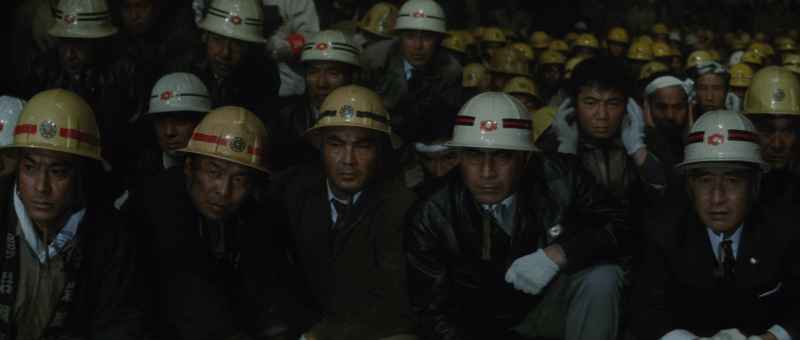
Kei Kumai’s three-hour epic of human engineering The Sands of Kurobe (黒部の太陽, Kurobe no Taiyo) opens with a titlecard to the effect that the film testifies to the courage of the Japanese people who brought the nation back to life after the war. Partly produced by Kansai Electric Power along with the production agencies of stars Toshiro Mifune and Yujiro Ishihara, the film is therefore somewhat conflicted, part bombastic celebration of Japanese engineering skill and ambivalent critique of the wilful decision to place success above all else including the welfare and safety of ordinary workers.

This critique is most evident to the flashbacks to the construction of Kuro 3 in 1938 which as many point out was conducted by the military under brutal and primitive conditions. The construction of the new Kurobe hydroelectric dam, by contrast, is a much more modern, enlightened affair in which workers have proper equipment and are not simply hacking at rocks with pickaxes wearing only a vest. But then as the conflicted Takeshi (Yujiro Ishihara) points out, it’s all effectively the same. Just because no one is pointing a gun at their heads, it doesn’t mean the men actually building the dam aren’t being exploited rather simply pressured by a vague notion of national good that they should be ready to lay down their lives. Could it be that “prosperity” is worse thing to die for than “patriotism”, especially when it appears as if your employer cares little for your physical wealth and economic wellbeing simply pledging that they will support the families of men killed during the dam’s construction. 

That there will be deaths seems inevitable. The man placed in charge of building a tunnel through the mountain, Kitagawa (Toshiro Mifune), is haunted by the vision of a man falling from a cliff that he witnessed when they first hiked to the dam site. He originally described the project as “crazy” and wanted to resign but was convinced to stay on. Kitagawa is himself fond of insisting on safety first where others are minded to cut corners, but also troubled by domestic issues in the film’s sometimes insensitive use of his daughter’s terminal leukaemia as a mirror for the dam project in considering what is and isn’t possible through human endeavour. The suggestion is that Kitagawa wants to believe the miracle of the dam is possible because needs to keep believing in a scientific miracle that can save his daughter, though obviously even if it is ultimately possible to build this dam that’s designed to fuel the post-war rocket to economic prosperity there are limits and unfortunately decades later we have still not found a cure for cancer though treatment may be more effective. 

Takeshi meanwhile has a similar battle with his hard-nosed father whose devotion to the dam project he describes almost like an addiction, suggesting that he values nothing outside of tunnelling and is willing to sacrifice everything in its name including the lives of himself and others. A flashback to to 1938 reveals that he asked his own teenage son to place dynamite and inadvertently caused his death though lax safety procedures which is the understandable reason why his wife eventually left him taking Takeshi with her. But the strange thing is for all his original opposition, Takeshi too is later captivated by the immensity of the challenge if also wary that the workers are falling victim to the same sickness as his father and are still being exploited by those like him who expect them to offer up their lives while paying them a pittance and complaining when the project does not proceed along their schedule. 

The almost nationalistic, bombastic quality of the film seems at odds with some of Kumai’s previous work save the discussion of the building of the 1938 tunnel though this largely serves as a contrast to imply that this time is different because they’re doing it for love of country rather the forced patriotism of the militarist past. Kitagawa justifies himself that if they don’t build the dam, economic prosperity will stall, companies will go bust, and people will lose their jobs but it seems somewhat hollow in the knowledge many men are certain to die while building this dam. Kumai undercuts the bombast with a series of scenes shot like a disaster movie in which supports collapse and the tunnel floods, or men are hit by falling rocks, eventually closing on an ironic Soviet-style statue dedicated to the labour of the workers that seems to question the immense loss of life along with the destruction of the natural beauty of Mount Kurobe but cannot in the end fully reconcile himself, torn between a celebration of human endeavour and its equally human costs. 


Original trailer (no subtitles)

An Osaka Story (大阪物語, Kozaburo Yoshimura, 1957)

A man who tries to escape his poverty ends up imprisoning himself in Kozaburo Yoshimura’s tragicomedy An Osaka Story (大阪物語, Osaka Monogatari). Inspired by the work of Saikaku Ihara, Kenji Mizoguchi had intended to direct but sadly passed away before shooting started with Yoshimura appointed to take over. The broadly comic overtones may be at odds with Mizoguchi’s signature style but ultimately lend weight to the film’s ironic conclusion in which the hero finds himself essentially oppressed by his own wealth in being entirely unable to relate to other people or see the world in ways undefined by money. 

It may be possible to understand Omiya’s (Ganjiro Nakamura) mania as a reflection of his intense fear of poverty, that he is so terrified of possible destitution that he can never really have enough or allow himself to enjoy what he has in case there is no more to come in the future. Even as so his daughter later says, wealth changes him. As the film opens, Omiya is a peasant farmer with a bad harvest who can’t pay the onerous taxes demanded by his exploitative lord. He decides to flee to Osaka with his family but is soon rebuffed by the man he’s gone to see who has just become a samurai and wants nothing to do with him. Wandering around the city, the kids eventually discover a thin layer of discarded rice at a storage area they manage to sweep up giving Omiya a new idea of how to save their family. 

In some ways, his fate is foreshadowed when he alone is unable to slip through the fence while his wife and children mop up grains from the floor. The image of him on one side of the bars is repeated in the closing scene, while his loyalty to the family he tried so hard to save is weakened by the influence of money. Yoshimura shows us a world founded on exploitation. “Those who worked so hard to grow it won’t see a single grain,” Omiya bitterly laments watching workmen unload vast quantities of rice while the peasants starve. When the rest of the family have finished sweeping up what others so casually discarded, Omiya does not use the rice to feed them but sells it to a broker and gives them millet instead. His life is then ruled by the doctrine of good enough, living in painful, penny-pinching austerity even after becoming wealthy as a dodgy tea merchant/loan shark. 

Omiya is one of those people who know the price of everything but the value of nothing. Back at their farm, he’d firmly rejected his wife’s offer to sell herself into sex work to save the family, asking “How could I carry on happily knowing you were suffering for it?”, but this is exactly what he proceeds to do. Omiya no longer cares about his family’s feelings and thinks only abut money but simultaneously refuses to spend any of it. One has to wonder what the point of the money is when he’s living a life not all that different from a peasant farmer save being free of the anxiety of immediate starvation. The only person he has any kind of respect for is a widow much like himself who is equally obsessed with penny-pinching and maximising profits. 

The pair bond in their parsimonious natures, but the mutual desire to get a good deal necessarily comes between them especially when Omiya decides to marry off his daughter (Kyoko Kagawa) to Mrs. Abumiya’s foppish playboy son Ichinosuke (Shintaro Katsu) who has been secretly spending money in the red light district without her knowledge. He too is being exploited, in his case by a geisha who manipulates him into getting the money to buy out her contract by threatening suicide. Meanwhile, Omiya’s meanness means he’s never actually taught his son much about handling money. His invitation to the pleasure quarters by Innosuke eventually provokes his rebellion as he starts to question his father’s philosophy and what money is for if you still can’t live a comfortable life. 

HIs daughter Onatsu asks him something similar, pleading with him to learn to understand other people’s feelings before leaving the shop to be with a kindhearted clerk, Chunzaburo (Raizo Ichikawa), with whom she has fallen in love. So little does he care for people that Omiya doesn’t even bother to live up to the image of a wealthy man. The man who turned him away after becoming a samurai eventually racks up large debts and loses his title allowing Omiya to buy his house as an act of revenge despite his wife and daughter’s protestations that they already have “enough” and did not need more. He refuses contracts the previous owners had set up, throws out a hairdresser who comes to give the ladies a more class-appropriate haircut, and refuses a loan to the daimyo in incredibly rude fashion not to mention embarrassing just about everyone by refusing to serve any food at a wake. 

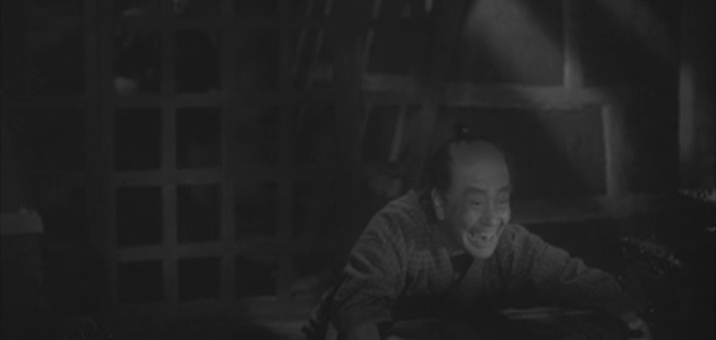
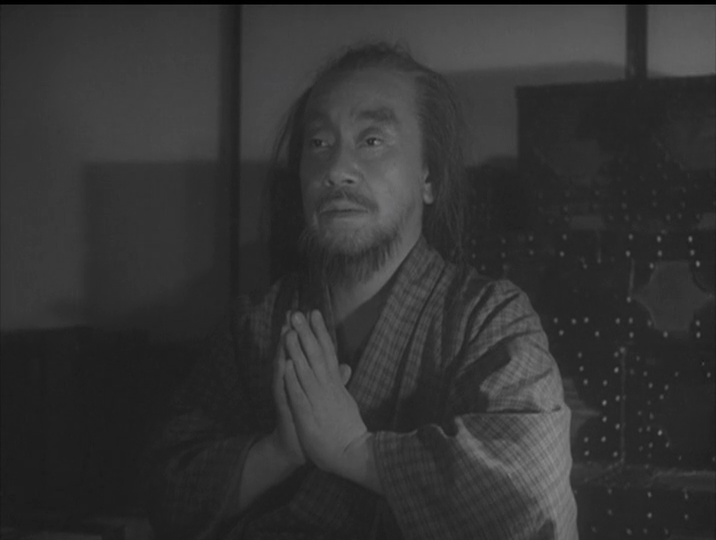
After ruining all of his personal relationships (except that with Mrs. Abumiya), Omiya experiences a kind of mental breakdown throwing himself over the chests of money in his vault and locking himself inside raving that everyone’s out to get their hands on his wealth. He’s just as much of a prisoner of this system as he was as a peasant farmer and has now imprisoned himself within a destructive delusion of capitalistic wealth. “Do what you have to do for a comfortable life,” Omiya’s son Kichitaro (Narutoshi Hayashi) had advised his sister, but this is what Omiya was trying to do too only for it massively backfire no matter what your personal definition of a “comfortable life” may be. Mrs. Abumiya tearfully wonders who’s going to inherit her money if not for her feckless son, but all Omiya can do is cackle wildly one like one possessed insisting that the money is his and his alone and not even death shall part him from it. In part a humorous take down of the contemporary society’s economic obsessions in a bid for ceaseless acquisition, the film is also a tragic tale of a man laid low by his addiction to money and the illusionary sense of comfort it provides him. 


The Last Kamikaze (最後の特攻隊, Junya Sato, 1970)

Junya Sato’s The Last Kamikaze (最後の特攻隊, Saigo no Tokkotai) opens with a title card explaining that it has nothing to do with the life of Matome Ugaki, which seems disingenuous at best given that the narrative has tremendous similarities with his life. In any case, 25 years after the war in a very different Japan which is perhaps becoming more willing to reexamine its wartime history, Sato’s film nevertheless walks an ambivalent line clearly rejecting the idea of the kamikaze special attack squadrons as absurd and inhuman yet simultaneously glorifying the deaths of the men who willingly took part in them. 

For sympathetic Captain Munakata (Koji Tsuruta) the issue is one of consent and willingness more than it is of essential immorality. Placed in charge of the very first suicide attack, he elects to go himself rather than ask someone else but is first overruled before deciding to go anyway after appealing for volunteers and coming up one short. His general, Yashiro (Bontaro Miake), who had voiced his opposition to the policy in the opening sequence reminding his own commander than even when men were given impossible missions in previous wars they were always ordered to return home if possible, takes the unprecedented step of climbing into an aircraft himself in an act of protest insisting that this be the last and final time that men were ordered to their deaths. The mission, however, does not succeed. All of the pilots bar Yashiro are shot down before reaching their targets while Munakata, injured and having lost sight of the general, aborts his mission and returns to base only to face censure from his superior officers. 

Sent back to Japan, he wrestles with himself over whether his decision was one of cowardice and he turned back because he was afraid to die rather than, as he justifies, because he did not want to die in vain and did what he thought was right. Far from cowardice, it may have taken more courage for him to ignore his orders and choose to live yet there must also be a part of him that believes dying to be heroic if not to do so is to be a coward. As the situation continues to decline and suicide attacks become the only real strategy, Munakata is recalled for an ironic mission of heading the escort squad designed to protect the pilots from enemy attack so they can reach their targets. He first turns this down too not wanting to be an angel of death but is finally convinced to accept on the grounds that the men will die anyway and at least this way their deaths will have meaning. 

Munakata was greeted on his return to Japan by the sight of his father (Chishu Ryu) being carted off by the military police for expressing anti-war views, stopping only to tell him that people should be true to their own beliefs. Nevertheless, even if Munataka objects to the tokkotai strategy he does not oppose it only emphasise that the men should should be willing and resolved rather than forced or bullied. There is indeed a shade of toxic masculinity in the constant cries of cowardice along with a shaming culture that insists a man who refuses to give his life for his country is not a real man. Munakata comes to the rescue of a young recruit, Yoshikawa (Atsushi Watanabe), who twice returns from a tokkotai mission claiming engine trouble but does not try to save him only to petition his superiors that he be given ground duty until such time as he gets used to the idea of dying. Because of Munakata’s kindness in saving him from a suicide attempt after being rejected by the mother he worried for if he were to die, Yoshikawa is pushed towards a “hero’s death” that does at least help to change the mind of Yashiro’s zealot son (Ken Takakura) who knew nothing of the reasons behind his father’s suicide and believed wholeheartedly in the necessity of the special attack squadrons. 

The younger Yashiro’s rationale had been that to show compassion to a man like Yoshikawa was to shame the memories of the men who had already died, yet even in realising the futility of the gesture he still resolves to proceed towards his own death as do others like him such as a student who had been against the war and ironically consents to the suicide mission in order to end it more quickly. “There’s nowhere to run to” Yoshikawa’s mother (Shizuko Kasagi) had said on his attempted desertion, echoing the words of another that there was no escape from this war, while poignantly crying over her son’s ashes that she wishes she had raised him to be a coward. The human cost is brought fully home as the families storm the airfield fence in an attempt to wave goodbye to their loved ones as they prepare for their glorious deaths, another pilot reflecting on the fact that each of these men is someone’s precious son rendered little more than cannon fodder in an unwinnable war. Even with the escort squads, only 30% of the special attacks succeed. Most of the pilots are so young and inexperienced that even assuming they survive the anti-aircraft fire they are incapable of hitting their targets. 

To add insult to injury, Munakata returns from his final mission to an empty airfield where a drunken engineer (Tomisaburo Wakayama) explains to him that the war is over and the generals knew it 10 days earlier but still sent these men to their deaths anyway. Overcome with remorse, Munakata posits his own suicide mission but is instructed to live on behalf of all those who died only to take off and fly into a technicolor sunset as Sato switches from the period appropriate black and white to vibrant colour elegising Munakata’s death while lending it an otherwise uncomfortable heroism. Casting ninkyo eiga icons Koji Tsuruta and Ken Takakura as the infinitely noble yet conflicted pilots and employing jitsuroku-esque narratorial voice to offer historical context the majority of the audience probably does not strictly need, Sato rams home the righteousness of these men while casting them as victims of their times trying their best to be true to what they believe but finding little prospect of escape from the absurdity of war. 


A Woman’s Place (女の座, Mikio Naruse, 1962)

“A woman’s life is so dreary” laments a disappointed woman as she sits awkwardly at a funeral in Mikio Naruse’s A Woman’s Place (女の座, Onna no Za, AKA The Wiser Age). What exactly is “a woman’s place” in the changing post-war society? The continuing uncertainties of the age begin to burrow into the Ishikawa household as it becomes plain that the house is already divided, in several senses, as daughters and sons find themselves pulled in different directions, each of them perhaps banking on an inheritance to claim a different future. 

As the film opens, the sons and daughters of the Ishikawa family have been sent telegrams to come home at once because dad is at death’s door. Thankfully, that turns out to be premature. All he’s done is put his back out overdoing it in the garden by trying to lift a big rock in defiance of his age. Oldest daughter Matsuyo (Aiko Mimasu), who runs a boarding house, is quite put out to have rushed over for nothing, but everyone is obviously relieved that there turned out to be nothing to worry about after all. Widowed daughter-in-law Yoshiko (Hideko Takamine) realises that she needs to wire Michiko (Keiko Awaji) who moved to Kyushu when she got married that there’s no need to come, but she later turns up anyway along with her goofy husband Masaaki (Tatsuya Mihashi), claiming they’ve decided to make the trip a kind of honeymoon though it seems obvious to everyone that there must be reasons they seem intent on overstaying their welcome. 

“They depend on us, everyone does when they return home” mother/step-mother Aki (Haruko Sugimura) chuckles as Matsuyo and only remaining son Jiro (Keiju Kobayashi) pocket some paper towels from the family shop on their way out. Everyone is indeed depending on the family, not least for a clue as to where they stand as much as for a permanent place to return to. Three daughters of marriageable age still live at home. The oldest, Umeko (Mitsuko Kusabue), the daughter of patriarch Kinjiro’s (Chishu Ryu) first wife, has renounced the possibility of marriage and has made a career for herself as an ikebana teacher, a traditionally respectable occupation for “independent” women. In her 30s, she has become cruel and embittered, sniping at her sisters and always smirking away in a corner somewhere being aggressively miserable (nobody in the family seems to like Umeko very much, but still they accept her). Later she offers a sad, surprisingly romantic explanation for her decision in her unrequited love for a middle school classmate who died in the war, but is in someway revived by an unexpected attraction to a young man Matsuyo brings to the house who claims to be the infant boy Aki was forced to give up when she left her former husband’s family and married Kinjiro. 

The unexpected reappearance of Musumiya (Akira Takarada) destabilises the family across several levels, firstly in highlighting Aki’s awkward status as a second wife and step-mother to the two oldest children, and then by inciting a false romantic rivalry between the widowed Yoshiko and the unmarried Umeko. Umeko at one point cruelly describes Yoshiko as the only “outsider” in the household, viewing her connection to them now that her husband has died solely through the lens of being the mother of the only male grandchild, Ken (Kenzaburo Osawa). Yoshiko, only 36 years old, is repeatedly urged to remarry, but she like Aki would be forced to leave Ken behind if she did, though he is now a teenager and perhaps old enough not to feel abandoned. Ken in fact joins in encouraging his mother to find a second husband, but partly because she is always nagging him to study harder (something which will have have tragic, unexpected consequences). Yoshiko’s “place” in the household is therefore somewhat liminal, part of the family and yet not, because her status depends on solely on her relationships to others rather than blood. 

Nevertheless, Yoshiko is clearly in charge as we witness all of the other women disturbing her while she’s cooking to enquire after missing items, whether the bath is ready, or to attend to something in the store. Umeko has built her own smaller annex on another part of the property and mostly keeps to herself, while the two younger daughters busy themselves with a series of romantic subplots. Despite her sister Matsuyo’s eye-rolling that she should “forget about working and get married”, Natsuko (Yoko Tsukasa) is trying to find another job after being laid off when the company she worked for went bankrupt. Her brother, meanwhile, is experiencing the opposite problem in that it’s impossible to find and keep delivery staff at his ramen shop and he desperately needs help because his wife is pregnant again. Natsuko is convinced to “help out” though it’s clear that working in a ramen shop wasn’t what she had in mind, but it does bring her into contact with an eccentric friend of her sister Yukiko’s (Yuriko Hoshi) while she works on the box office of a nearby cinema. 

A crisis occurs when Natsuko is presented with the prospect of an accelerated arranged marriage to a man who took a liking to her while working at the company which went bust and has since got a job which requires him to relocate to Brazil. The ramen shop guy, Aoyama (Yosuke Natsuki), meanwhile is also getting a transfer but only to the top of Mount Fuji. Natsuko is torn, but also wonders if Yukiko actually wants Aoyama herself and only tried to set them up as a sort of test. In any case, both of these younger women also feel that their “place” is defined by marriage and their status conferred by their husbands even if they are exercising a personal preference in their choice, Yukiko’s in romance while Natsuko’s is perhaps a little more calculation in that she knew and liked her suitor but would not go so far as to call it “love”. 

In her own strange way, Umeko may be the most radical of the women in that she has attempted to define her own place through rejecting marriage and making enough money to buy her own home (albeit still on the family property) in a kind of independence, later deciding that perhaps she does want marriage after all but only on her own terms. Unfortunately, she is drawn to Musumiya whose presence poses a threat to the family on several levels, the most serious being that he is quickly exposed as a conman guilting Aki into assisting him financially while also trying some kind of car sale scam on the smitten Umeko who wants to add to her independence through learning to drive. Musumiya, it seems, prefers Yoshiko and his affection may well be genuine, but she is trapped once again. While she and Aki privately express their doubts about Musumiya, they have no desire to hurt Umeko’s feelings and cannot exactly come out and say that he is no good seeing as he is Aki’s son. Yoshiko stoically keeps the secret, perhaps also attracted to Musumiya but loyal to the Ishikawas and wanting no trouble from such a duplicitous man. Still, Umeko regards Yoshiko’s attempts to discourage her as “jealousy” and wastes no time embarrassing them both in a nasty public altercation. 

While all of this going on, there has been some talk that the shop may be compulsory purchased to make way for an Olympic road, and each of the Ishikawa children is eagerly awaiting their share of the compensation money, not least Michiko and her feckless husband who turns out to have fled Kyushu after getting fired from his job for assaulting a client. The “heir”, technically is Ken as the only male grandchild and Yoshiko’s tenuous status in the household is entirely conferred on her as his mother. When that disappears, her “place” is uncertain. Most of the others are for kicking her out, she’s not a “real” member of the family and so deserves none of the money with only Natsuko stopping to defend her. But, as so often, the widowed daughter-in-law turns out to be the only filial child. Mum and dad feel themselves displaced in their own home, somehow feeling they must stand aside, but it turns out they have plans of their own and Yoshiko is very much included. They want to take her with them, and if one day she decides to marry again then that’s perfectly OK and they will even provide a dowry for her as if she were one of their own daughters. 

“We have many children but they only think of themselves” Kinjiro laments, “let’s not worry about them and live peacefully by ourselves”. It’s easy to see their decision as a strategic retreat, as if they’re being left behind by a future they cannot be a part of, but it’s also in some ways an escape from the increasingly selfish post-war society. Yoshiko may not have actively chosen her “place” but she does at least have one and reserves the right to choose somewhere else in the future. The older Ishikawas choose to be happy on their own, freeing their children and giving them their blessing so long as they’re “doing their best”. It’s a strangely upbeat conclusion for a Naruse film, if perhaps undercut with a mild sense of resignation, but nevertheless filled with a hope for a happier future and an acknowledgement that “family” can work but only when it is defined by genuine feeling and not merely by blood. 


Kisses (くちづけ, Yasuzo Masumura, 1957)

tumblr_nwj79ycwjz1tvmqcgo1_500The debut film from Yasuzo Masumura, Kisses (くちづけ, Kuchizuke) takes your typical teen love story but strips it of the nihilism and desperation typical of its era. Much more hopeful in terms of tone than its precursor and genre setter Crazed Fruit, or the even grimmer The Warped Ones, Kisses harks back to the more to wistful French New Wave romance (though predating it ever so slightly) as the two youngsters bond through their mutual misfortunes.

The film begins as Kinichi and Akiko experience a meet cute whilst visiting their respective fathers who’ve both landed up in gaol. Kinichi’s dad is a politician who’s been accused of “electoral fraud” which he swears is some kind of plot (even though this is the third time he’s been accused of it) whereas Akiko’s father is a government official who’s embezzled a large sum of money in an act of desperation to pay for her mother’s medical treatment. Just as Kinichi is leaving the prison, Akiko is getting into a situation with the rather rude receptionist because she owes something for her father’s room and board. Kinichi becomes offended on Akiko’s behalf and plonks down more than enough money alongside a few choice words for the lady on the counter before flouncing out. Akiko chases after him with his change even though he tells her to get lost in no uncertain terms. Eventually the two end up spending the day together though things turn a little sour towards the end. In this unlucky world, can two crazy kids ever make it work?

In essence, Kisses is an innocent film. Though there may be a few hints of darkness lurking around the edges, its tone is more or less cheerful and fuelled by the idealism of youth. Both Kinichi and Akiko are realists, they’re both older than their years, put-upon and a little desperate but also a little naive. Kinichi’s grumpy and sullen, perhaps nursing a wound from his mother walking out on him. Even when he asks her for the money to bail his father out of gaol she tells him to grow up before treating him like a child by declaring that he himself is collateral on the loan. Akiko’s mother is hospitalised with TB – the misfortune that’s had her father reduced to this shaming state of affairs. To make matters worse it’s not as if she can even tell her mother why her father hasn’t visited for a couple of weeks or explain why the nurse was complaining that their insurance has expired. Her father is also in poor health and likely will not cope very well with remaining in prison hence why she (briefly) considers becoming someone’s mistress or going on a date with a dangerous and unpleasant man to get the money to bail him out.

In any other seishun eiga this situation would be a recipe for a disaster, but somehow it rescues itself from the brink of despair and becomes almost more of salty rom-com than anything else. After the initial cute sea-side and roller skating date, there are crossed wires, mislaid messages and a last minute dash to work out a forgotten address but the film never loses its youthful energy and guileless wit. The world outside might be cruel, but in here it’s just normal, and if a boy and a girl want to blow some time at the races or the beach, who can blame them. They’re young, they’re kind of unhappy but they’ll figure it out and probably be OK which is a lot more than you can say for the usual protagonists of these kinds of film.

Kisses doesn’t have the searing, angry eyes of Masumura’s later work. Yes there is dissatisfaction with the world as it is, but also hope and acceptance, rather than an attempt at rebellion. Neither of the two young lovers is trying to change the world. Forced to be older than they are, both are savvy and realistic but not quite old enough to be fearful or self-centred. Full of youthful nonchalance, Kisses is a tale of innocent romance which is only improved by its layer of ironic whimsy.


Kisses is available with English subtitles on R2 UK DVD from Yume Pictures.

The only (short) clip I could find only has Russian subs…but it’s of a song which is very pretty.